KTX – Gold Standard
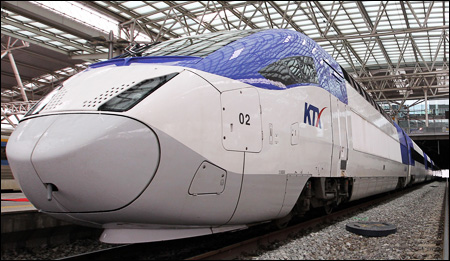
the impressive KTX, launched on April 1 2004 with speed of 186 mph (later increased to 190 mph)
KTX 1 launched April 1 2002 with top working speed of 300 kph (186 mph)
(This was later increased to 305 kph (190 mph))
KTX 2 (Sancheon) introduced March 2 2010 with top working speed of 350 kph (217 mph) It is named ‘Sancheon’ after the Cherry Salmon
KTX 3 with a top working speed now likely to be 370 kph (230 mph) is due to appear in 2015
HEMU 400X will take speeds to 400 kph (249 mph). Line test begin in 2012. This is the second of 2 experimental trains the other being the HSR-350x
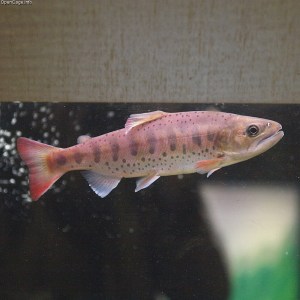
Cherry Salmon
If I hadn’t been so tired after almost 32 hours of traveling, I’d have taken some photos. I am totally in love with the Korean KTX train service and traveling first class is well worth the extra money. Though the British 125, high-speed train towing 7-8 carriages at a maximum speed of 125 mile per hour, has been the backbone of British intercity travel for thirty years, it is far from the golden standard of travel even if you sit in first class. And it might not be upgraded within the next 10 years! The KTX service is certainly a limited service, operating to only a few destinations but despite being less than 10 years old, services are being extended and new engines and rolling stock introduced. Towing 18 carriages, at a top speed of just over 200 mph, the compartments are fairly quiet and you might be fooled into thinking the train isn’t traveling so fast. However, having kept an eye on the carriage plasma screens, where the speed is constantly visible, we traveled at about 290 kph for most of the journey (that’s c. 180 mph). The KTX, modeled on the French TGV system, is a technological masterpiece but it isn’t just technology and speed that make a service ‘gold standard.’
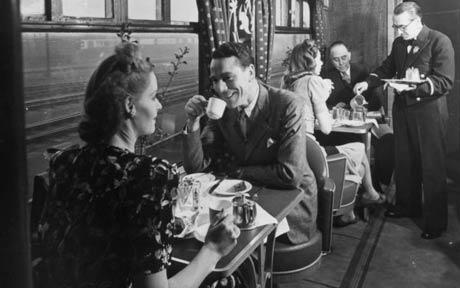
British first-class train travel when it was more than just ‘oik’ free
When trains stop at stations prior to departing for another destination, a small army of cleaners purge the train and ‘spruce it up.’ In the UK, a class divided society, first-class bestows kudos and is a great way to feel superior over fellow travelers by reminding them you have more money. Apart from the absence of ‘oiks,’ there is very little else to attract potential customers and first class on British trains can hardly be compared to business-class on airlines. KTX first-class however, is quite different and very comparable to airline business class standards. A carpet with at least a little pile cushions your feet and it’s clean, a fact you can tell because the light fawn colour highlights any dirt – which there isn’t. I don’t remember if British Rail has carpets on the first-class floor but if they do, they are certainly not a light colour but most definitely dark blue or brown or some other dirt-masking colour. The seats are broad and spacious and their backs can be adjusted with an electrically assisted motor, to provide ultimate comfort. A small buffet car provides refreshments and is the headquarters for the refreshment trolleys that service both first and second class. There are male and female toilets, baby changing and feeding stations, small recesses to power mobile devices and wi-fi internet access and sockets for powering computers are provide throughout the train. In all carriages plasma screens provide a range of information and are coordinated with the journey’s progress so that as a program ends the approaching station is announced and often there may then follow some useful information on that town or city. On first class, snacks such as peanuts or biscuits and bottled water are complimentary provisions.
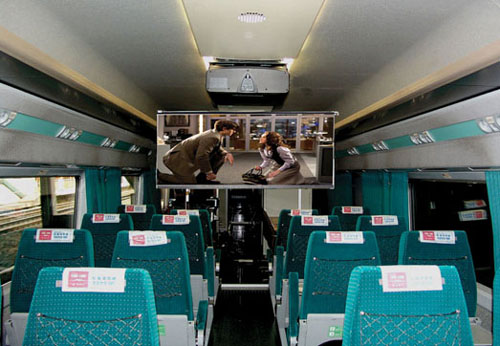
The KTX cinema carriage
Staff are highly visible on trains and their bearing and dress is impeccable and perhaps it is this more than anything else that puts the KTX service on a par with the business class of an airline. In addition, if you’re making a longer journey, the train’s cinema carriage provides a unique experience. The next wave of KTX rolling stock will have first class seats that can swivel 360 degrees and though I’m not sure how it will materialise, but several reports claim the new rolling stock will have basic cooking resources for passengers. I can’t imagine this meaning trains will have gas ranges and barbecue facilities so imagine it might mean publicly available microwaves.
THE KTX EXPRESS 2 (SANCHEON) WITH A SPEED OF 330KPH (205 MPH)
THE KTX IN SEOUL STATION
Meanwhile, back in ‘Broken Britain,’ from early 2011, London-Scotland routes will be terminating the refreshment trolley to second class carriages while first class provisions will be upgraded with passengers being served, at their seats, as many sandwiches and drinks as they can consume before reaching their destination. Management seem to think this will attract more customers but with British rail prices one of the most expensive in Europe, you have to be a retard to spend the equivalent of between the price of a two course all for the sake of some complimentary sandwiches. British rail sandwiches were never very palatable even when you paid inflated prices for them. I am reminded of the doomed Titanic and the manning of lifeboats in order of class.
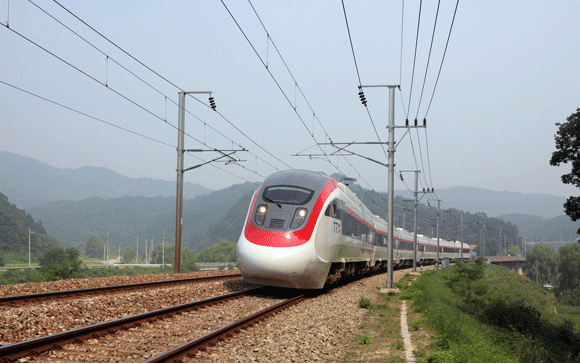
This model, currently being developed, is able to tilt
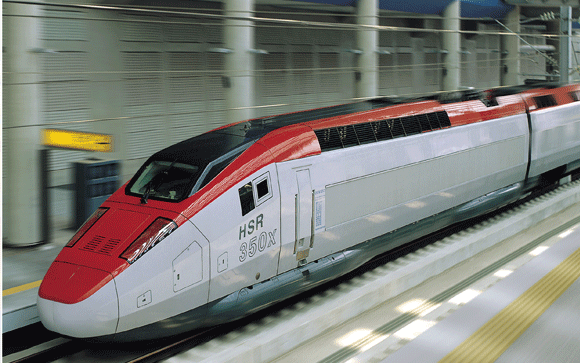
The experimental HSR 350X which reaches speeds of 350 kph (217 mph)
I am very tempted to make a first-class journey on one of East Coast’s trains simply to see how many sandwiches I could gorge myself on before the train reaches the first stop, where I would alight.
At this point I did a little research. A ticket from London King’s Cross, to Nottingham, on an East Coast train, which can be used at anytime of day making it comparable to the KTX ticket, on which there are no time restrictions, costs £64 second-class and £90 first class. That’s a difference of £26. At 2 hours 11 minutes, the traveling time is about 20 minutes longer than Seoul to Daegu. If I travel 2nd class the difference will easily buy a two course meal in a decent restaurant or, short of £9, book a room in Nottingham’s Days Hotel. If I go first-class I am sure I could eat at least ten sandwiches and a couple of cups of tea and with a sandwich or two in my pocket, I could certainly eat my way into a substantial part of the profit the company would otherwise take.
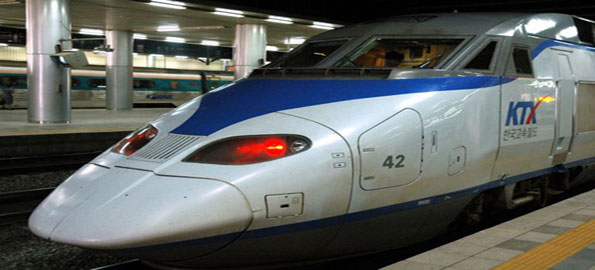
the sleek shark-like design was apparently deliberate

The blue shark. An urban myth, perhaps?
Out of interest, Seoul to Daegu cost approx £38 (first class) with the distance being 322 kilometers. King’s Cross to Nottingham is 174 kilometers. Based on departure and arrival times, I calculated the KTX travels at approx 175 kph or 108 mph while the Nottingham destined train, an intercity train, travels at 108 kph or 49 mph. Using my rather basic skills of arithmetic, this means the KTX costs 19 pence per mile (12 pence per kilometer) while the East Coast company train costs 83 pence per mile (51 pence per kilometer). Travel on a comparative service in terms of ticket usage and train service means the UK service is 4.37 times more expensive and yet 2.2o times slower than a journey on KTX. The London to Aberdeen journey is a long haul of 8 hours thirty minutes which means a second class passenger is going to be very thirsty and hungry at the end of their journey. However, simply pay the extra £50 and all the sandwiches and tea you want will be waiting for you.
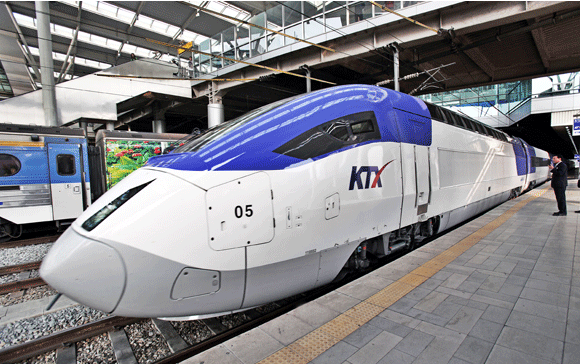
The KTX Sancheon began service on March 2 2010 and reaches 230 kph (205 mph) KTX 3, with a speed of 250 kph (217 mph) will be introduced in 2015
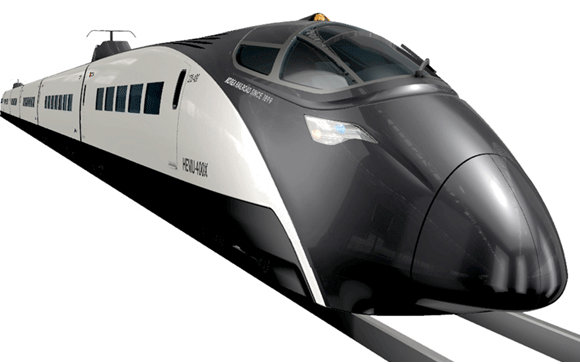
The shape of things to come. The next generation capable of speeds in excess of 400 kph (248 mph) are already being planned
Related Articles
(Several years ago Korail reduced the numbers of staff on the KTX and dismissed a large number of attendants. Many took the matter to court and even went on hunger strike. Link to Korea Times article.)
- Britain was built on its railways. Now we can’t even run them | Andrew Martin (guardian.co.uk)
- Sir Nicholas not Simply a First Class Twit (Guardian UK)
- Food trolleys to be scrapped on services (pressandjournal.co.uk)
- Koreabrand. Interesting info on KTX developments.

© 林東哲 2011 Creative Commons Licence.
Yellow Curd (노랑 묵) – Monday Market

Yellow curd, made from mung beans
I wrote about the standard curds, oak, back wheat, etc, last year. However, there are a number of other curds which you will often find and this one is a regional variety from the Cheolla province. Yellow Curd (노랑 묵), is also known as: mung bean curd, and honeybee curd (황보 묵) and is especially noticeable because of its bright yellow colour. It is an important ingredient in the Cheolla regional bibimbap (mixed rice).
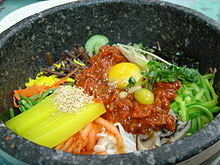
Cheolla bibimbap (mixed rice)

yellow curd accompanied with typical soy based sauce
In Daegu, this curd isn’t easily found but occasionally appears, sold by ‘specialist’ street vendors who do not tend to appear on a regular basis.
© 林東哲 2011 Creative Commons Licence.
It's Alive!
Judging by the proliferation of cooking programs on British television, you might assume we are a nation which appreciates good food and enjoys cooking. Unfortunately, with the demise of many good quality butchers and fishmongers and the ascendancy of enormous supermarkets stocked full with frozen food and microwave meals, it becomes apparent that we are more interested in watching food being cooked and positively captivated if the chef is some contrived character who has enough family members in his show to almost make it a soap drama. The fact the supermarkets and brands they endorse represent the very opposite of ‘back to basic cooking,’ is rarely acknowledged.
Over my holiday, I happened to watch a program on Korean cooking which bore all the hallmarks of cooking programs which really have nothing to do with cooking and everything to do with self promotion and the establishment of a dynasty. The entire program was filmed either in the presenter’s village or in her home and introduced us to most of her family and friends.
As for the cooking, anyone acquainted with Korean cuisine knows that kimchi, a form of spicy fermented cabbage, as well as numerous other kimchi, accompany a meal. This Korean cooking was as Korean as the standard Korean pizza is Italian. Not only was there no mention of kimchi, but some very odd items were used in some standard Korean meals. I’ve both eaten and cooked bulgogi many times but this version used beetroot, asparagus and English pear. Though you can probably buy these somewhere in Korea, I’ve never seen beetroot or asparagus. As for English pear, once again this is a fruit you do not see in Korea and yet Asian pear is not difficult to buy in the UK. The program further irritated me when it was eaten off individual plates with knives and forks and in the total absence of side dishes or a plate of assorted leaves in which to wrap the bulgogi. During the entire cooking process red chili powder and red pepper paste were absent.
With so little knowledge of Korean food in the UK, especially outside London and a few other areas, it is possible for chefs to concoct any food combination and call it Korean.
Meanwhile, here is a video from my November batch of kimchi in which I opened the lid to catch the contents in the middle of a very active bout of fermentation.
I’m currently on holiday and my usual posts will re- commence next week.
© 林東哲 2011 Creative Commons Licence.
Too Much Play

out of trouble
Sleeping in the classroom is something I’ve never seen British kids do and usually they have so much energy that whenever there is a break they play and run around. As an aging teacher however, though I disagree with the amount of time Korean students study, I prefer a society where teenagers are kept so occupied that they have little energy to waste and no time to loiter on streets causing trouble.
Westerners are quite defensive of the extensive time their youth are permitted to play and will generally condemn Korean culture accusing it of taking away or even obliterating childhood. The fact western kids have had their innocence annihilated by exposure to a range of unhealthy influences, one of which is the concept of ‘being a teenager,’ passes unnoticed. In Europe, British teenagers are more likely to be either poxed to the max with sexually transmitted diseases or pregnant and this year condoms (Hotspots) for prepubescent boys are due to be made available in the UK. In UK, the C-Card system provide boys as young as 12 with a card which can be shown at football grounds, scout halls and special designated centers and by which they can obtain condoms at the tax payers expense (Times UK).

condoms for prepubescent boys
Why are Brits and Americans so critical of the Korean system? Wouldn’t energies be better spent trying to find solutions to the myriad of problems that western teenagers cause society and their own peers rather than bemoaning how Korean students have no time to play? Personally, I would have thought that any sane society would want to curtail teenage free time thereby taking them off the streets and improving their potential. Even as a teenager I found the practice of teenagerism vacuous and boring. Rock music, dancing, partying and fashion never really interested me and I doubt I was alone.

high school students
And what is the nature of the ‘childhood’ that Korean children might miss out on? Let’s see! Not needing to clad the face in make-up if you are a 13 year old girl, or not being obsessed with the fact that you don’t know how to tongue sandwich or fellate your 12 year old boyfriend. Not having to give allegiance to one of the tribal youth subcultures which will alienate you from both other teenagers and your parents. Not having to spend time and money consuming music which often has the same artistic merits and durability as chewing gum. The list is extensive…
We give children and teenagers so much space and freedom and imbue them with notions of rights that many, but to be fair by no means all, eventually find it difficult to behave or act appropriately in other social settings. When I am with western kids I am often reminded of the gulf that separates our worlds but conversely, with Korean kids I am reminded how much we have in common. It is strange to feel a closer affinity with Korean teenagers as a foreigner than with British teenagers as a fellow native.

keep them occupied
In Britain, most kids finish school around 3.00 pm and with many school subjects no longer requiring homework, they are left with ample time to both enjoy childhood and when bored, get pissed or contract chlamydia or one of the other staple poxes on offer. How much ‘childhood’ do they need? What kind of a ‘childhood’ do we think we provide for children and youth now we have allowed tweenyville, that is those years encroaching on being teenagers, to have been sexed up and sleazified with thongs, poll dancing kits and baby condoms? I would imagine the stress and angst such precocious pursuits add to their already confused minds, enormous. I’ve known many decent teenagers but quite often they themselves do not like teenagerism or indeed, other teenagers! Sometimes it seems that the most vocal of advocates of the merits of allowing kids to, ‘enjoy their youth,’ are adults looking back in nostalgia.
Teenagers need ‘banging up,’ not in a sexual context, but in way which restricts their free time, whom they associate and identify with, and which more closely prescribes what they do. So, when I see teenagers and students collapsed on their desk in classes, or twiddling their pens between their fingers with the dexterity of majorettes, I know the directed time which chains them to study is working and both them, adults and society are better for it.
© 林東哲 2011 Creative Commons Licence.
Monday Market – Rice Cake (떡)
Rice cake (떡), of which there is a variety, isn’t always to the westerners liking probably because it has what might be deemed a strange, elastic and chewy consistency. On my first encounter with rice cake I put the box aside but being a natural glutton I returned to it a little later and was subsequently hooked by the third of fourth piece.

kyeong-dan rice cake (경단)
Kyeong-dan are covered in either yellow, brown or green powder though it doesn’t seem to alter the flavour. Inside they are filled with bean paste. I remember the first time I saw kyeong-dan, on the reception counter in my first school, I thought they were covered in chocolate flakes and was quite disappointed when I then discovered it was ground bean.

ch’ap ssal ddoek (찹쌀떡)
Ch’ap ssal ddoek is very often coated in icing sugar but it can also be found coated in various other coloured powders. Soft and somewhat floppy, this rice cake is much less chewy than other types and is also stuffed with a bean paste.

soft and powdery

- my favourite, song-byeon (송편)
Song-byeon is very popular during important festivals such as Lunar New Year and Chu’sok (autumn festival). The usual colours are pink, white and green, the green obtained from mugwort (쑥) but other colours are available but once again don’t really alter the flavour. Sometimes the white ones are almost translucent. The most common sweet, soft centers for song-byeon are based on sesame seed oil or crushed sesame seeds. The combination of chewy rice cake and then the delicious, sweet and juicy center, make them an ideal festive treat.

a box of song-byeon
© 林東哲 2011 Creative Commons Licence.
Seasonal Chill Time

chill time
Well, not exactly but I’ve reduced posts due to my being on holiday.
© 林東哲 2011 Creative Commons Licence.
Interlude (8) Pojangmacha (포장마차)
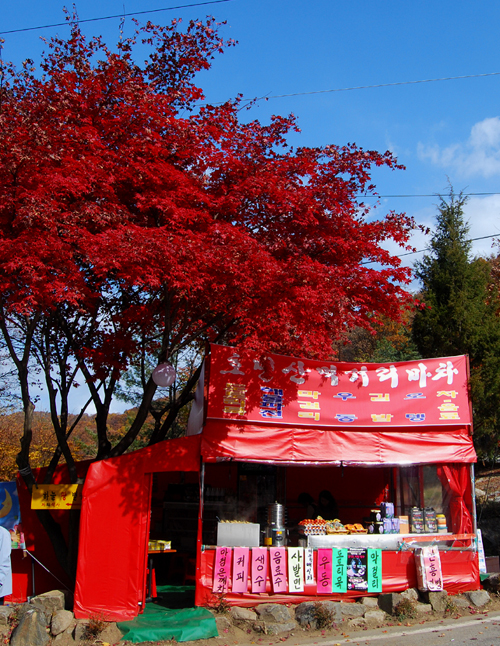
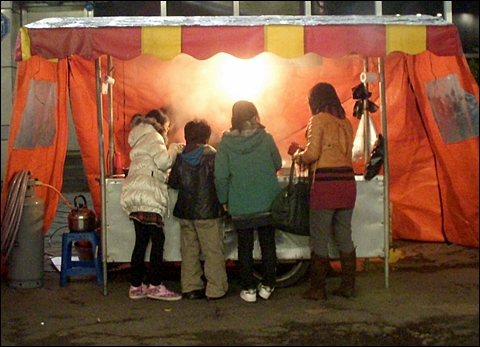
a typical snack-type pojangmacha
Like most of Korea, the area which I first visited 11 years ago has changed significantly and in Song-so, Daegu, where there now stands Mega Town with the Lotte Cinema Complex, the 24 hours jjimjilbang and a host of restaurants, I remember an enormous vacant lot, uneven and with patches of grass and bushes springing randomly across its expanse. Especially in winter, this was home to numerous large pojangmacha (포장마차).

huddling around the steam on a cold evening
Now, pojangmacha are basically tents which a range of guises from small to large, basic to elaborate, some selling snacks, other alcohol and which can stand on their own or be ‘tethered’ to a small van. I particularly remember the tents in the Song-so lot because they were large, heated and open all night and were what many refer to as a ‘soju tents.’ I remember quite a few evenings where we sat until the early hours wrapped in thick coats, even though the interior was warm, drinking soju or rice wine while enjoying a bowl of spicy cod roe soup. Maybe it’s just my imagination, because pojangmacha are around all year, but their bright lights and cozy interiors seem to associate them with winter. Even the more open versions which sell spicy cabbage and rice cake (ddeokkboki) and around which people huddle bathing in the steam wafting off the hot food, warm your spirits on a cold evening.
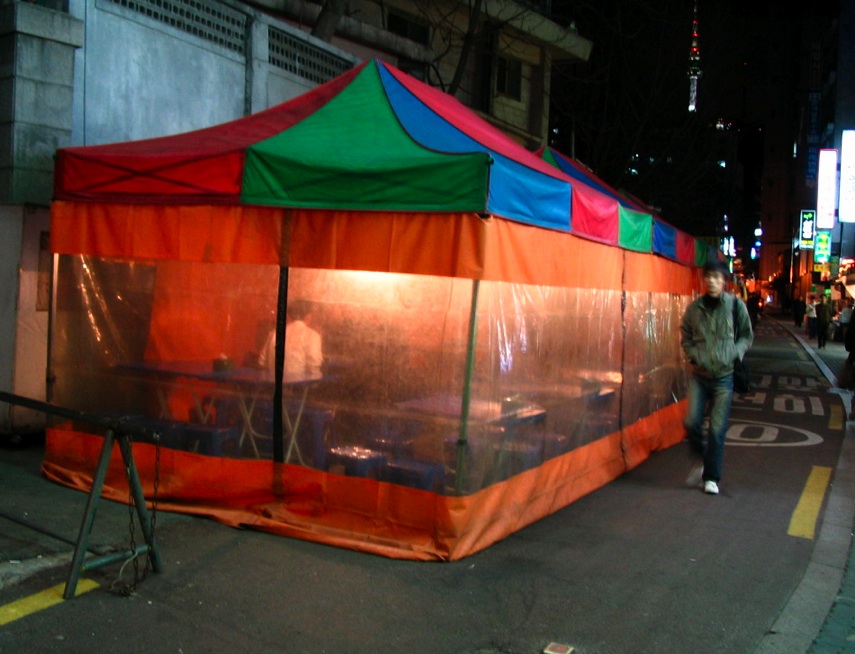
pojangmacha (포장마차)
If you walked from Song-so to the main gate of Keimyung University, 11 years ago, there were a number of vacant lots between high-rise buildings and often large pojangmacha would occupy them. Today, they are gone, the lots occupied by new buildings to such an extent that in the entire stretch of road there are no longer any soju tents.
snack time
© 林東哲 2011 Creative Commons Licence.
Hanja – Bruce K Grant

Bruce Grant
For those interested in learning or expanding their knowledge of hanja, the several thousand Chinese characters incorporated into written Korean, one of my favourite books is available outside Korea, via Amazon. A Guide to Korean Characters, by Bruce. K. Grant is an excellent book which I have previously reviewed. The first copy I bought in 2000 at a cost of 15000 Won and ten years later a second copy cost me 15500 Won (£7.50p). Kyobo books in both Seoul and Daegu often have copies readily available.
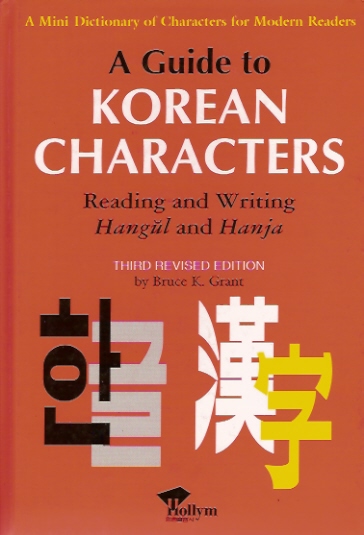
An excellent and easy to use resource
The book has excellent reviews and has probably been the most extensive source on Hanja characters since it was first published in 1979.
You don’t have to be an advanced student of Korean to use this book, even if you are a beginner who have just learned Hangul script you should get this inexpensive treasure.
This is pretty much the only book of its kind that is somewhat readily available, so if you see it – buy it.
There is unlikely to be any new books like this one.
For some reason people only seem to bother learning basic Korean, and the publishers know this so they wont bother publishing any new books like this.
But judging by all the positive reviews and remarks for this little book there is a need for material like this.
So, support the learning of Korean outside of South & North Korea and learn more than just the basics – develop and challenge yourself by learning traditional characters and expand your cultural knowledge (one of the 12 reviews currently hosted on Amazon USA).
The book is hardback and durable and even after 10 years of fingering in a sometimes humid climate, my original copy is still in good condition. Grant has also published books on Korean Proverbs: Dragons Head, Snake Tail and Frog in a Well, (1982), and White Field Korean (1982).

Also by Bruce Grant
Be careful where you buy Korean Characters as prices vary; in the USA the cost is approx $29 in the UK it is a staggering £35.
Previous review on Bathhouse Ballads
© 林東哲 2011 Creative Commons Licence.
Images of Innocence (3) – Knives
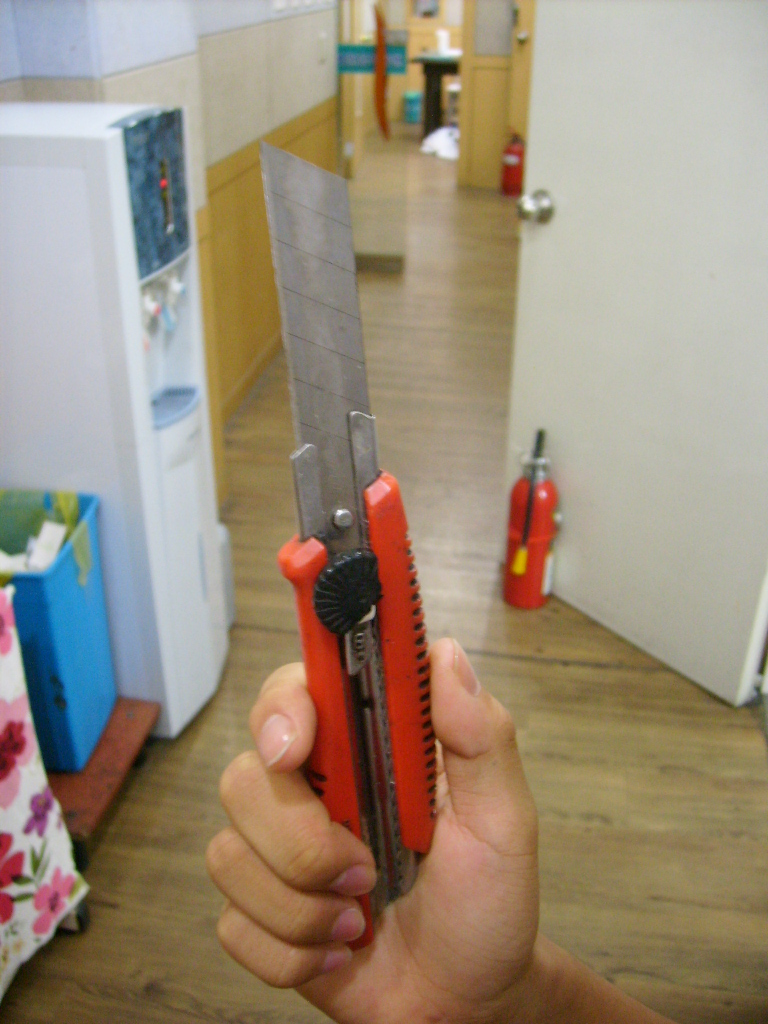
- sole purpose – sharpening pencils and cutting paper
As I write, highly civilised human beings are stabbing each other. In the UK stabbings are a regular occurrence and in 2010 19 youths were stabbed to death in London alone (Guardian UK). In 2007, 322 fatal stabbings (Guardian UK) were recorded marking the highest number of knife related deaths since records began in 1977. As the focus of media attention and political concern, definitions change and competing theories are forwarded, some related to the weather, others to disadvantage. Anti-stabbing kitchen knives are now available as are stab proof school uniforms made from kevlar and one of my local schools has installed metal detectors through which students have to pass on their way into school.
Stanley blades - every student has one
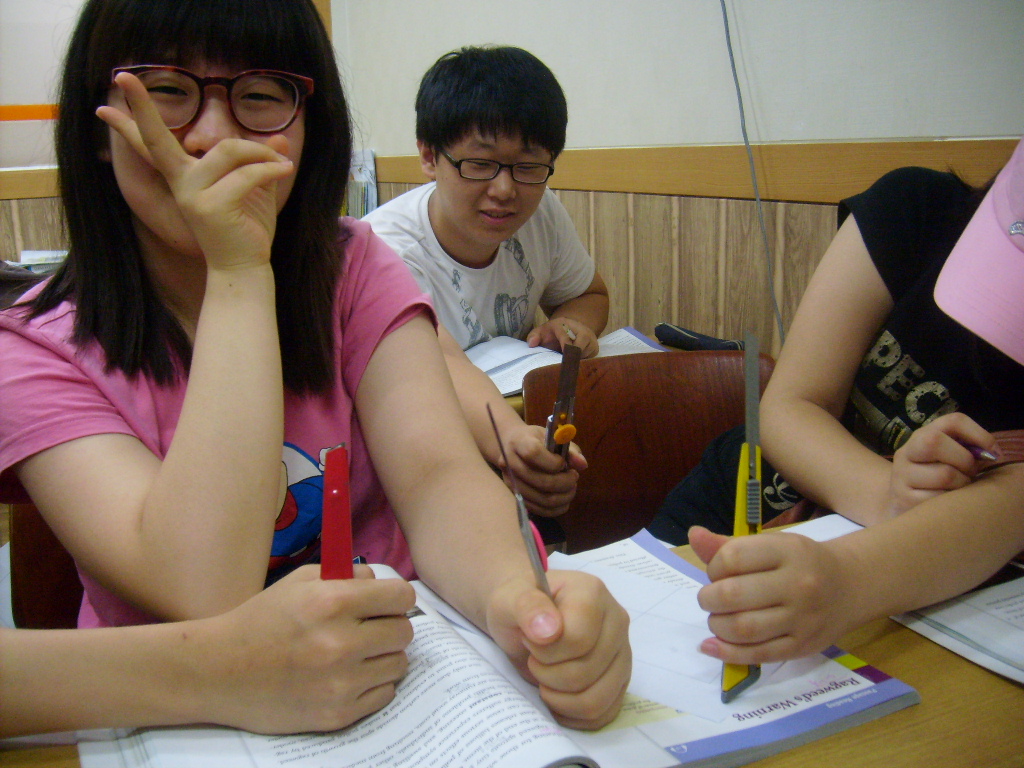
an assortment of blades
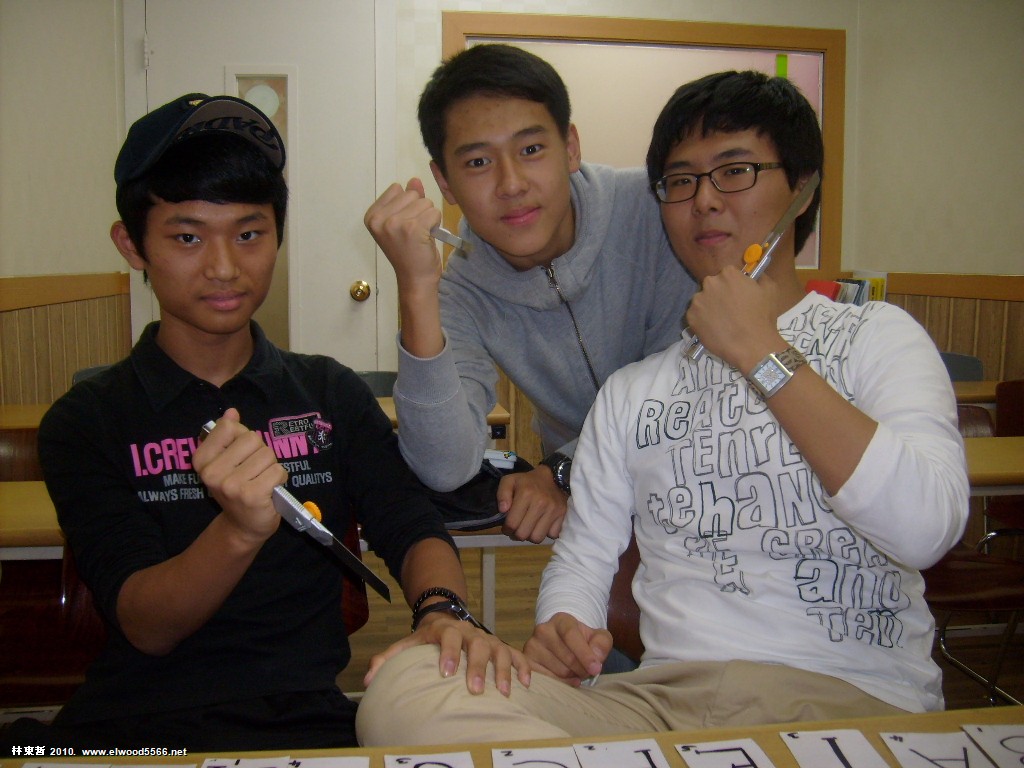
While Britain is plagued with knife related crimes, one currently being covered by the media as I write, Korean kids of all ages carry the equivalent of a stanley knife in their pencil cases and do so not to protect themselves, look cool, or as part of gang defense plans, but simply to sharpen pencils and cut paper.
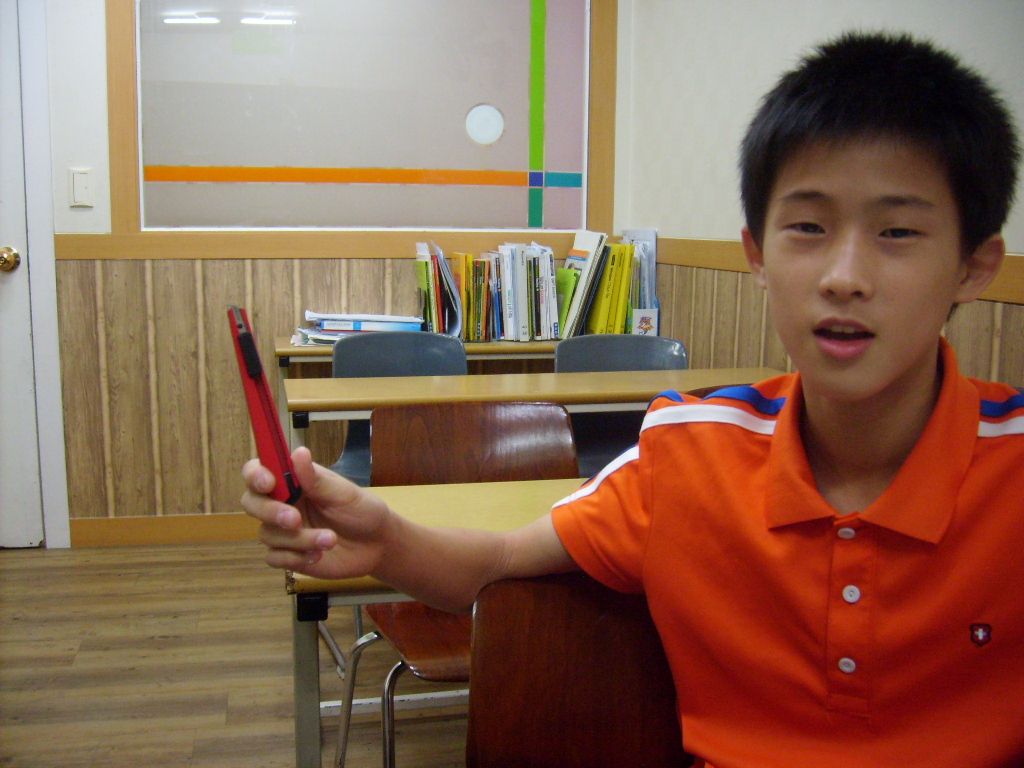
as harmless as its owner
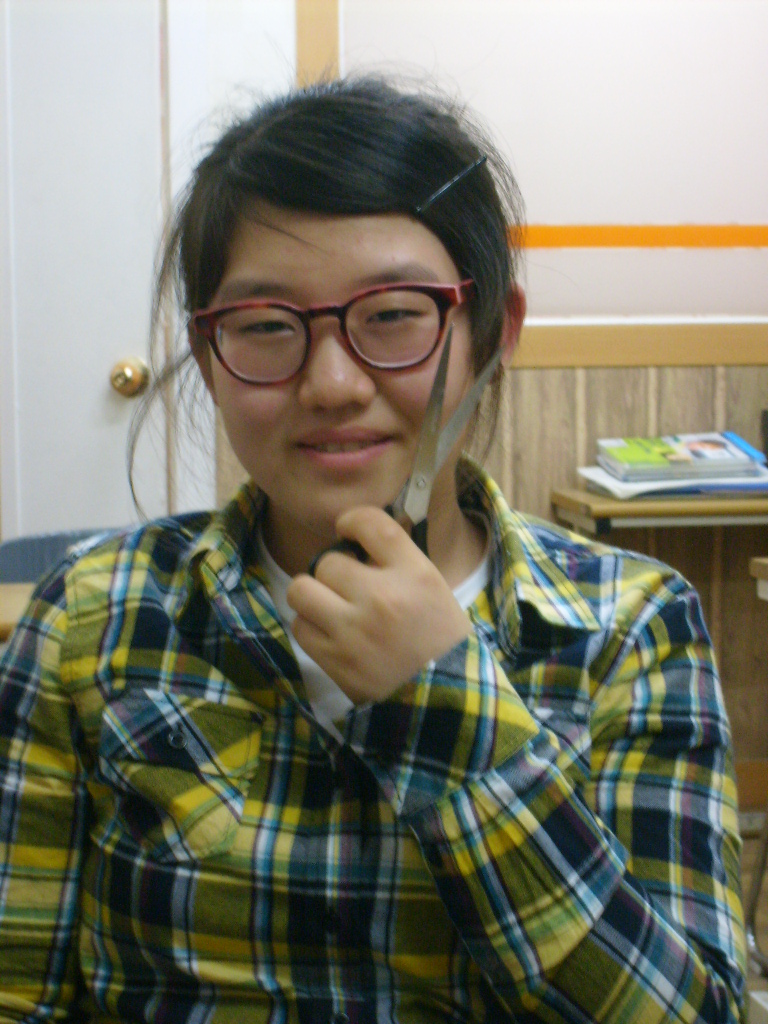
and then there are the scissors...
© 林東哲 2011 Creative Commons Licence.


 Elwood 5566
leave a comment