Bathhouse Basics (12) – The Salt Sauna 소금방

purging the skin
Salt saunas can be found in both bathhouse and jjimjilbang and they are one of my favourite destinations. They tend to be a slightly specialist facility which means you won’t find them in every establishment. You will find the salt experience differs between that offered in a bathhouse and that in a jjimjilbang. Jjimjilbang salt saunas often have walls and or ceilings made from rock salt or they have a large area filled with coarse rock salt in which you can submerse your limbs and body and enjoy the radiant warmth. In a bathhouse, a salt sauna usually has large pot of salt which you rub over your body allowing the salt to both scrub and purge you skin clean. The bathhouse salt room is often combined with other properties as it may, for example, have jade or bamboo charcoal walls walls.
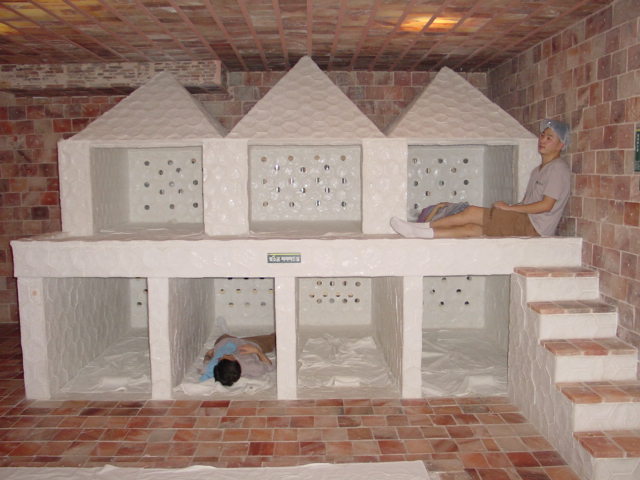
these salt saunas contain rock salt walls and large grain, pebble size salt on which you lay
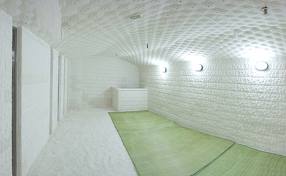
a salt sauna with walls made of rock salt
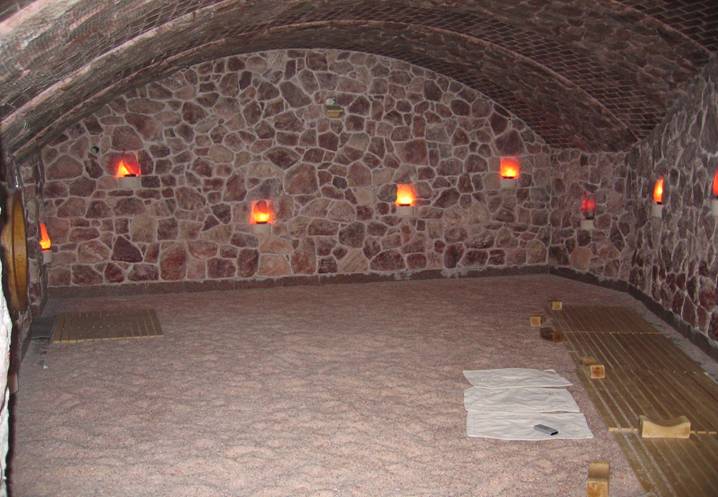
a typical jjimjilbang salt sauna
The bathhouse salt sauna is one of my favourite places and you really do feel clean after rubbing your body with salt and then allowing it to dissolve as you sweat. I usually take a small bowl of water in with me as this helps to make the salt cling to your body and don’t forget to take a towel or large scrubbing cloth in with you as often the seats are wooden and they can burn your backside.
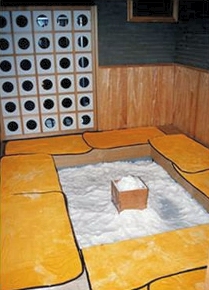
a bathhouse style salt sauna
As a point of interest, salt is very useful at removing smells and in a Korean market you can buy fresh mackerel which has been sprinkled in salt which you then wash off before cooking – it reduces the smell of the fish as it cooks. I’m not sure however, how well this works on body odours!

© 林東哲 2011 Creative Commons Licence.
Five Second Hanja (12) Winter – 겨울 – 동
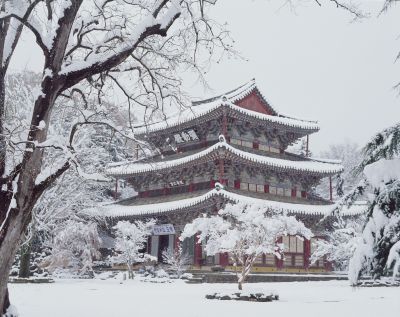
winter
This character, meaning ‘winter,’ comprises two parts; the lower two strokes are what is known as the ‘radical’ and in this case signify ‘ice.’ These two strokes never appear independently as they are a compression of the original. ‘Ice’ in fact, contains 5 strokes in its full form. Radicals convey an important part of a character’s meanings and characters can be grouped according to them.
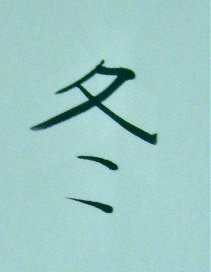
'winter' - 겨울-동
The ‘character’ above the lower two strokes, is really a pictograph which means ‘walking with legs crossed’ or ‘walking slowly.’ Together the implied meaning is ‘winter.’
winter clothes 동복
winter season 동계
Simply highlighting some of the important and simpler characters. For information on stroke order, radicals and the two elements of a character (spoken – meaning), I suggest you obtain a dictionary such as; A Guide to Korean Characters.
© 林東哲 2011 Creative Commons Licence.
Year of the Rabbit 2011 – Boring Bunnies

2011, year of the rabbit
새해 복 많이받으세요! Happy New Year! 2011 is the year of the rabbit and as the Chinese astrological calendar operates through a 12 year cycle, this means that it is particularly pertinent to those people born in 1927, 1939, 1951, 1963,1975, 1987, and 1999. I’m not particularly into any form of astrology and only today read the characteristics of my Chinese astrological animal, surprised at how closely it matched my temperament, only to discover I was reading the wrong one. It seems you can find aspects of yourself in any character, Chinese or otherwise. Call me a cynic! Apparently, rabbit people are kind and fabulous dressers, a trait also shared by sheep people which is the character presiding over my birth year. Unfortunately, I am a total slob when it comes to fashion!
I do wonder however, the extent to which astrological characters, or indeed Korean names, influence ones character. I still have an essay from a student in my last high school, who wrote that their name, Dong-jo (동조), when written in hanja (東 照), could be translated as ‘leader from Asia. His grandfather had paid a shaman 250.000 for choosing this name. Dong-jo writes:
‘But without mentioning its price, it is still special because it has a meaning that is still leading me through my whole life. Influenced by my name, I always tried to be a captain of a group which I belonged to. It has been natural for me to be class president every year and even when I spent time in New Zealand, I was captain of our school’s house.’
I have met other Koreans who tell me their names have had an influence on their lives. So, I wonder to what extent your life might change if you not only have a meaningful name, but it is also somehow connected with your zodiac character. I have never been enamored with a goat as my western astrological sign, Capricorn, and as equally uninspired by my Chinese character, a sheep, or my corresponding element, wood. In what way can you rescue anything from the ‘wood sheep?’ My Chinese zodiac sign is as boring and mundane as my western sign!
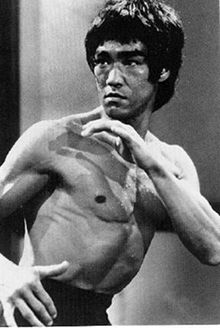
Bruce Lee, 'Little Dragon,' born in the year of the dragon (1940)
Bruce Lee (이소룡), born in San Francisco, was not only born in the year of the dragon (1940), but his elemental influence was that of metal. Lee had several names but was originally ‘Little Phoenix’ (細鳳), but as this was slightly feminine, it was later changed to ‘Return Again’ (李振藩) as his parents, having since moved back to Hong Kong, thought he would at sometime return the USA. When he started acting, he adopted the name ‘Little Dragon’ (李小龍) and it is by he is known in Korean (이소룡).
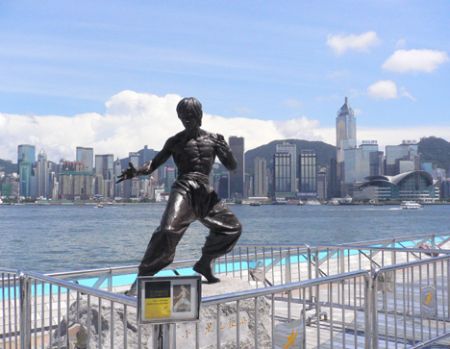
Bruce Lee's statue in Hong Kong
To what extent was the young Lee influenced by his various names and by the fact he was born in the year of the ‘metal dragon.’ I wonder how he would have fared had he been born one year earlier, in 1939, in the year of the ‘rabbit,’ and a boring ‘earth rabbit’ in terms that year’s element. A dragon suits everything about Bruce Lee’s life, his dertermination, fighting prowess and incredible physique but having him utter ‘the rabbit flicks its tail’ after kicking an opponent in the stomach, as he does in Way of the Dragon, is more suited to a character in Kung Fu Panda. I quite envy both Dong-jo and Bruce Lee for having names that gave them something to aspire to from an early age.
Happy New Year and good luck if you too have a boring astrological sign, Chinese or otherwise!
© 林東哲 2011 Creative Commons Licence.
A Man of Habit – Onigiri
the onigiri logo
I’m a man of total habit! I eat the same evening meal for up to six months at a time and can map out the last few years and corresponding seasons in Daegu by the restaurants I’ve frequented and the meals ingested therein. For the first six months I ate boiled pork (보쌈) before I started using a pork kimchi stew (김치찜) restaurant which is right next to my one room. I ate there for almost nine months. Next, it was the turn of pork cutlet (돈까스) but I didn’t stick to the same menu and flitted as my mood took me between pork cutlet filled with cheese or the curried version. In the area I live there are far too many restaurants that serve pork cutlet and an absence of Chinese style restaurants so during this period I ate the same meal in various locations including a very nice Japanese style restaurant that served the cutlet chopped on plain rice and topped with a raw egg.
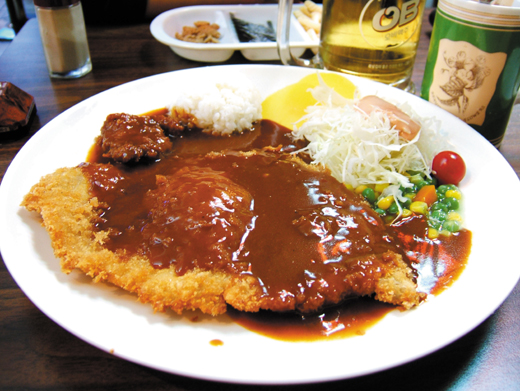
pork cutlet (돈까스)
Next, I discovered ‘Mr Big;’ not really the place to experience Korean cooking and they have some very naughty additions which I usually avoid: almost English style chips served in the German manner, with mayonnaise, sausages that are almost like bratwurst and the most enormous battered onion rings made with real onion. I spent a good six months dining on their nasigoreng before moving onto carbonara.

carbonara
When I arrived back in Korea after my 2010-2011 winter vacation, I ate carbonara in Mr Big and felt sick. Six months of eating it every evening had killed the passion and so I moved down the menu onto their pork cutlet which is very nice as it isn’t reconstituted and is made from a whole slab of real pork.
I generally read books during my dinner and if a recall one, I also recall the dinner that generally accompanied it: Robert Heinlein’s, Farnham’s Freehold, Rocketship Galeleo and Farmer in the Sky were all accompanied by nasigoreng while Dickens’ Hard Times was definitely carbonara. Their cabonara isn’t a totally Italian creation as I ask for it lazed with chili and the little burn it creates on my palate convinces me I’m not squandering my Korean experience. My current reading is Ben Bova’s, Venus and it quite suits a fat pork cutlet.

an array of sam-kak-bap (삼각밥)
Lunch times aren’t so restricted, often I cook a simple Korean meal or I eat kimbap (rice-roll) but recently I’ve been rather hooked on the new Onigiri (오니기리) store that has opened near my school. Onigiri is a Japanese ‘snack’ rather similar to sam-kak-bap (triangular rice) which is wrapped in toasted laver-bread and has a small filling. You can buy plastic moulds in supermarkets to make them at home and you can even buy even pre-cut laver-bread which wraps the rice in both a layer of laver and an outer layer of plastic to keep it fresh. However, I’ve never mastered the procedure and can’t be bothered to follow the comic like instructions on the packet. These sam-kak-bap however, like the standard shop bought snack, are really snack size.
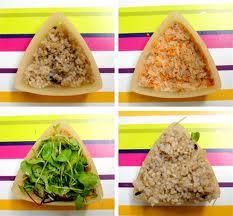
sam-kak-bap moulds

my local onigiri’s menu – eat in or take-away
The onigiri variety are more substantial and two definitely comprise lunch. Made to order, there is a choice of about 12 fillings including tuna and mayonnaise, kimchi, cheese, flying fish eggs and and tuna, and myeolchi (small dried fish) with walnuts and sesame oil. Onigiri are definitely worth trying and would probably be a hit back in the UK making a change from a boring lunchtime sandwich.

onigiri

two of my favourites: tuna-mayo and cheese, flying fish eggs and tuna
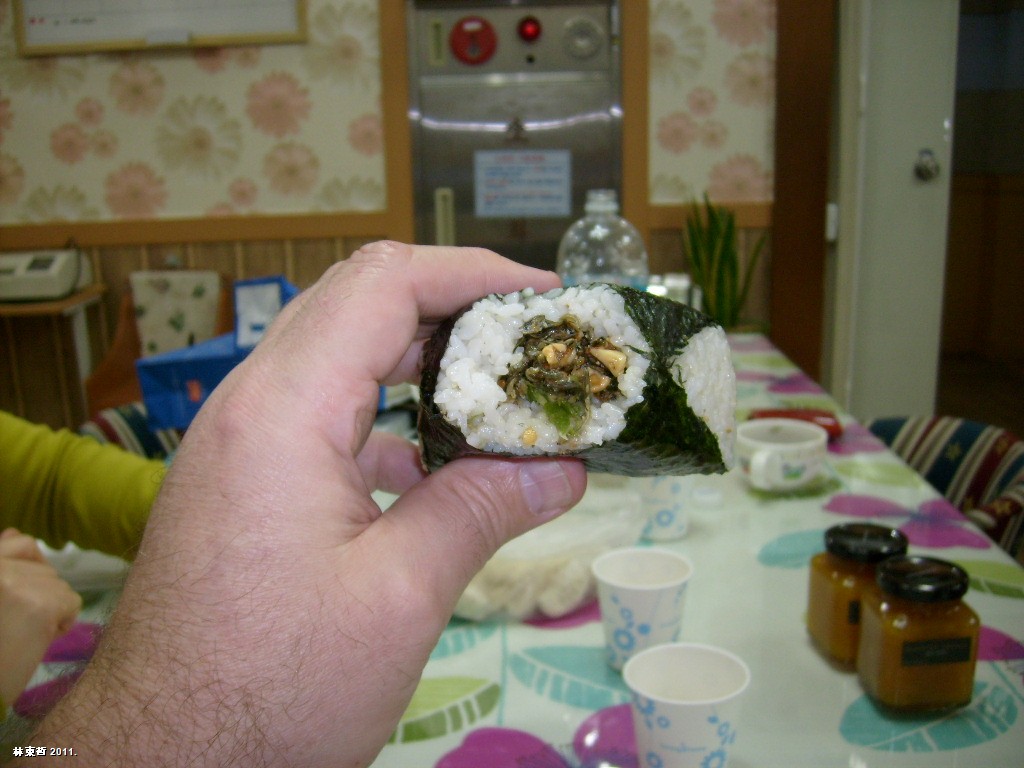
dried anchovy, walnut and sesame oil…mmm…and relatively healthy
And if you’re the least interested in breakfast, I make tofu bean-paste stew most mornings but sometimes I could kill for an unhealthy English breakfast of fried bacon, bread and egg.
© 林東哲 2011 Creative Commons Licence.
Related Articles
- Tasty Tokyo Tidbits (plentyonyourplate.com)


 Elwood 5566
1 comment