And Koreans Think They're Hot!

the hottest Korean chillies, the ch'eong-ryang chilli (청량고추)
I’ve always been a chilli-head and enjoyed trying the different chillies that have come my way. I often find it amusing that Koreans assume a westerner will find Korean food too hot where if anything, personally, I find it too mild. In Great Britain, an acquaintance with very hot food is something many of us have experienced, thanks to Indian and Thai restaurants.
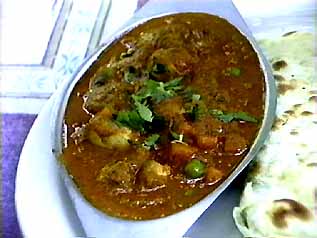
fiery
Take the famous vindaloo, a curry from Goa, India, which uses malt vinegar, potato and is probably the hottest, widely available curry in the UK. A ‘tindaloo‘ is occasionally on Indian restaurant menus but this is probably either a vindaloo spiced-up with Scots bonnet, habanero or naga chillies, all among the hottest of all chillies available or an equally, very hot curry from Bangladesh. The hottest curry likely to be found in a curry house, is a ‘phall‘ though this does not appear on menus as regularly as a vindaloo. A decent vindaloo will start your nose running and produces an after burn which when you next go to the toilet, can be quite painful.

Scots Bonnets in various stages of ripeness and potency
Scots bonnets and habaneros, which are related and similar in appearance, share a score on the Scoville Scale of between 100.000-350.000. Until recently, these chillies were often cited as the world’s hottest but several other chillies, cross breeds, now hold this honour. The Guinness Book of Records recorded the Naga Jolokia, (or Bhut Jolokia) chilli, from Bangladesh and Assam, as the hottest ever recorded, in 2007, reaching 1,041,427 on the Scoville Scale. However, the Jolokia is about to be knocked off its perch by the recent appearance of the ‘Infinity chilli,’ bred in Grantham, Lincolnshire, England, by Nick Wood.
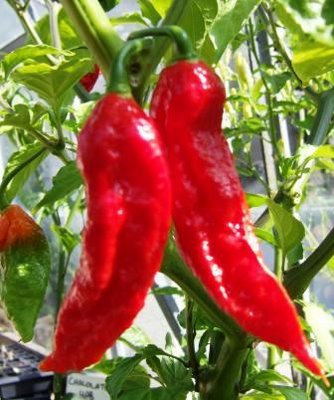
Jolokia, over a million on the Scoville Heat Scale

Nick Woods, breeder of the 'Infinity Chilli'
So, let’s put this in context; a bell pepper rates 0. SHU (Scoville Heat Units), while a Jalapeno scores between 2.500-8.000 SHU. Most people rate the Jalapeno as the first of the ‘hot’ chillies and it used as a bench mark against which to rate other varieties. For example, Tabasco Original Hot Sauce, is 50% the heat of a Jalapeno, making it very mild, and scoring 2.500 SHU. The habanero scores 100.00-350.000 and is around 70 times hotter than the jalapeno. I’ve seen a friend weep in agony after he chopped a habanero and then rubbed his eyes. With a Scoville Heat Unit of 1,041,427, the Bhut/Naga Jokolia is 208.29 times hotter than the jalapeno and 400 times hotter than Tabasco Original Hot Sauce – which by now, is as mild as milk.
Scoville scores over one million takes us into the realms of atomic chillies and while their raw culinary use begins to wane, their potential in sauces and as paint stripper, increases. The ‘Infinity chilli’ scores 1,176,182 SHU putting it around 100.000 units beyond the Jokolia. Anything hotter can no only be bought as a sauce or more likely as a food additive or pure capsaicin crystals. The heat however, is still on the rise!
Scott Roberts, a Missouri based chilihead has compiled an extensive list of sauces and chillies listing their Scoville ratings and comparisons with the jalapeno. He lists many ‘sauces’ exceeding a million Scoville units and includes, purely for interest, police pepper spray which scores between 3 and 5 million SHU, 1000 times hotter than a jalapeno. And just to give you a taste of how hot, ‘hot’ can get: at 6 million, Crazy Uncle Jester’s The Jester Sauce, 1200 times hotter than a Jalapeno and about the same as the British made, Dragon’s Blood sauce, made from the Naga Jolokia.

6.4 million SHU
Many of the highest rated ‘sauces,’ increasingly pure capsaicin suspended in oil or, in unadulterated crystal form, are collectors items, numbered and signed and in limited editions. The products are potentially dangerous and need careful handling. ‘Blair,’ a New Jersey based company, is probably one of the most rated for its line of connoisseur, high SHU scoring sauces many of which are collector’s items.

Founded by Blair Lazar
Blair’s 2007 Halloween Reserve, at 13.5 million SHU and 2700 stronger than a jalapeno, sold out within six hours of going on the company’s website. The 2009 Reserve was selling at $300 a bottle and apart from the fiery content, the bottle was a hand blown pumpkin.
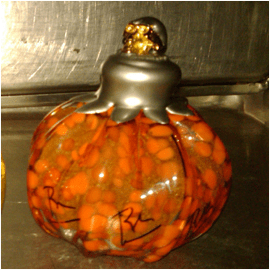
2700 times hotter than a jalapeno and at $300 a bottle.
At the top of the list, Blair’s 16 Million Reserve; pure capsaicin at 16 million SHU and 3200 times hotter than a jalapeno. On the, Scott Roberts website, Scott quotes:
“Blair’s 16 Million Reserve is the latest in the line of reserves from Blair. This reserve bottle contains 1ml of pure capsaicin crystals. 16 Million Reserve is not to be consumed or even opened without using extreme caution. Only 999 of Blair’s 16 Million will be produced, so get yours quick!”
And where do Korean chillies rate, I hear you ask? Well, despite copious searching, I can find no Scoville scores for the chillies you would usually buy in Korea. Certainly, the ‘cucumber chilli’ (오이고추) would rate only marginally above a bell pepper, at around 100-1000 SHU. The standard green chilli used in Korea probably rates between a Serrano (10.000-23.000 SHU and about 4.6 times hotter than a jalapeno) and the Thai pepper (50000-100.000 SHU). The hottest Korean chilli is the ch’eong-ryang chilli (청량고추), which I would estimate to be approximately between that of a hot Thai pepper and the bird’s-eye chilli (100.00-225.000 SHU and around 45 times hotter than a jalapeno). Certainly, Korean chillies fall substantially lower in heat than the habanero type chilli.
Some Chilli Facts
In Mexico chilli juice was used to wean a baby off the nipple.
If your mouth is on fire, water or beer will only temporarily cool your mouth. The best aid is milk as even a minimal amount of oil is enough to coast the lining of the mouth and reduce the burning sensation.
If you like the taste of chillies rather than the heat, oily or creamy based food will reduce the heat of chilli and allow the flavour to come through. Carbonara with chilli is fairly common in Korea and you can easily jack-up the chilli content to levels that would scorch your mouth in other, less oily or creamy, Korean foods.
Removing seeds from chillies will reduce their heat.
And finally, to finish with:

Lindt; a superior brand of chocolate. The chilli really works!
Chilli Related Sites
The Hot Zone (USA) Excellent chilli related blog.
UK Chile Farm (UK) suppliers of Wet Fart Chilli Sauce and Ass in the Tub Chilli Sauce.
Related Articles
- New chilli could take world record, say producers (independent.co.uk)
- New “Infinity Chili” Sounds Hotter Than Homer Simpson’s “Insanity Pepper” | Discoblog (blogs.discovermagazine.com)
- Phaal Curry Challenge – Curry with a Side of Pain (odditycentral.com)
- Couple sue after Mega Death sauce hospitalizes son (boston.com)
- A Perk of Our Evolution: Pleasure in Pain of Chilies (nytimes.com)

© 林東哲 2010 Creative Commons Licence.
Who Really 'Worships' the Wang?

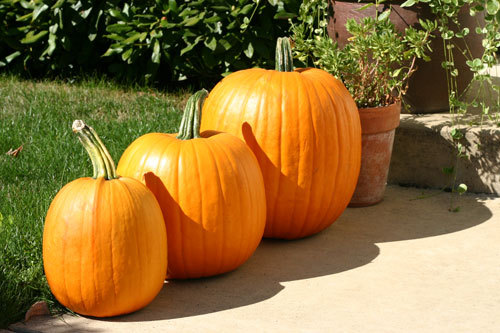
Not Suitable for pumpkin people
When I started working on this blog in earnest, I wrote in the ‘About’ page, that ‘you cannot immerse yourself in another culture without it altering how you perceive your own.’ Trying to comprehend facets of another culture is a dialogue between both your experiences and those presented by a new culture in much the same way as history is a ‘dialogue between past and present.’ Of course, I was wrong! A pumpkin lacks perception of its own environment, so to do some of the visitors that come here – often only for the briefest of visits.
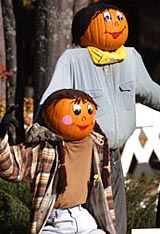
Pumpkin people
Although I have had few nasty comments, on other blogs there has been some ‘discussion’ about the nature of Bathhouse Ballads. I doubt any of these ‘pumpkins’ took the time to read its content and drew their swords based solely on snippets gleamed from other bloggers. All it took was for one blogger to highlight my sexuality, and to do that he had to read a considerable amount of text because I have only clearly and unambiguously outed myself on a few occasions, and the peripheral pumpkins started making assumptions. When I accidentally read a couple of pumpkins’ posters, I actually thought they were referring to another blog. They describe this blog about ‘boys dropping their trousers,’ a blog about ‘kiddies,’ and a ‘gay blog’ and it wasn’t until I read the title they were referring to, that I realised it was Bathhouse Ballads. Worse, a forty-five year old friend I mention becomes a ‘boy’ and one reference to ‘skinny teenagers having the biggest dicks,’ labeled me a ‘perv.’ Only a ‘pumpkin’ could read Bathhouse Ballads, sweeping aside the many other topics covered, ignoring so much in the process to enable them to bend what remains to fit the predetermined judgment, to arrive at such erroneous conclusions. Being reminded that societies are populated predominantly by pumpkins, that those pumpkins are often the voice of the majority, and that individuals with the capacity to think for themselves are rare, is never very nice but more enlightened comments were present in my defence.
Clueless
Part of the pumpkin analysis was that Bathhouse Ballads is ‘into’ Korean ‘wang-worship’ and describes Korea men as ‘wang-flashers’. ‘I assume this refers to communal bathing because I have only once mentioned anything that could be construed as ‘flashing.’ It seems that ‘skinship’ and ‘concepts such as ‘dick friends’ (고추친구), a phenomena I haven’t yet written about, and same-sex bathing in general, provokes some hostility. I initially assumed that you cannot immerse yourself in another culture without reasserting your own. Well, a pumpkin can! So, in what way has my understanding of British culture, and specifically male gender, been reconfigured in the light of a Korean experience?
The voice of the majority
It is only westerners, and certainly not all, that perceive ‘skinship’ as ‘closeted homosexuality’ and are correspondingly fearful or suspicious of same-sex bathing, the relaxed Korean attitude to nudity and physical proximity. Of course, there will be ‘gay Koreans who use such a culture for some form of ‘sexual pleasure’ but to most men the penises of other males are of little more significance than are noses. If a Korean boy sees the penis of another male he is not ravaged with guilt or accused by friends of being ‘gay,’ as I have witnessed as a teacher in the UK. I regularly meet and read about westerners who will not go bathhouses and others who while not necessarily hostile to skinship, perceive it as something that must be banished from a classroom. Why? Korean teachers themselves use it and I’ve seen this on many occasions. Isn’t it rather insensitive of waygukin teachers to cast out the cultural norms of their host society and then impose their own? This is Korea, not back water wherever and there should be no need to impose foreign cultural values on Koreans.
Ironically, it is not Korean men who are ‘wang-obsessed,’ but the westerner. Western men, myself included, are burdened with an obsession of the penis, of what is truly ‘wang-obsession.’ When westerners, and especially western pumpkins, berate this aspect of Korean culture, they do so because of the values of their culture, they do so because they have been inculcated with obsessions about the ‘penis’ which derive from a deep-seated ‘fear of ‘sex’ as demonic and chaotic.’ The most glaring manifestation of this ‘obsession’ is when westerners conflate nudity with sex, and male nudity with homosexuality. Koreans find this conflation quite bizarre, as do other cultures. And the moment you accuse Korean men of being ‘wang-worshippers’ you highlight how totally you misunderstand the nature of your very own culture, let alone that of another! If communal bathing is ‘wang-flashing,’ then it is also ‘toe-flashing’ or ‘hip-flashing’ but why the focus on the ‘penis’ unless you yourself give it more importance than it’s worth.
anthropology - not an academic pursuit for pumpkins
We westerners are so obsessed with the penis and its association with the disruptive potential of sex to the extent that men will hide them from each other. Naturally, many males shower together after sports but far more are either embarrassed by it or avoid it. We judge other men on the size of their penis and assume that a bigger penis is a sign of greater masculinity or sexual prowess and while I suspect size has some significance in Korean society, it is tempered by communal bathing where you realise that between most men there is little difference. I imagine only a very small number of Korean boys angst over dick proportions in comparisons to British boys. And if we have a problem with our dicks we would generally find it very embarrassing to confide in a friend and personally, despite close male friends back in the UK, I would find it easier to discuss such things with my Korean friends and indeed have done. Only a penis obsessed westerner could perversify this admission.
Humour is used to defuse the fear and unease caused by both a real penis and anything resembling it and this was the subject of my post, Sausages and Shit – a Comparisons in Smut Humour. Give a class of British boys anything phallic, a banana or sausage, and you can guarantee someone will connect it to with a penis and begin making jokes with it. We even pass e-mail poster jokes about taxing different length penises – a tacit acknowledgment that a big dick means you are better off and hence need penalising.

and some have a university education
And then there’s our historical legacy, often one of the medical control of the penis: the association of mental weakness and instability with masturbation helped give rise to both the Boy Scouts and Kellogg’s Corn Flakes. All were all attempts to divert boys away their penis not because they were necessarily fixated on them, but because western ideology has a long and established fear of sex and anything associated with it. A ream of illnesses, some terminal, were associated with masturbation for which Kellogg himself advocated circumcision without anesthetic, as a cure. Neither did women escape the paranoia with the vagina and uterus often identified as the source of maladies and illness, most notably hysteria which was treated by hysterectomy. The penis, as the visible manifestation of sex and all the depravity to which indulgence could drag you was naturally the greatest offender and capable, especially in youth of perverting an individuals moral character and by extension the morality of the nation. From cod-pieces to Freud and beyond, western culture has a history of inflating the worth of that little appendage. In western history and ideology, the ‘penis’ is far from unimportant, and the fear of its potential continues to obsess us sparking one witch-hunt after another.
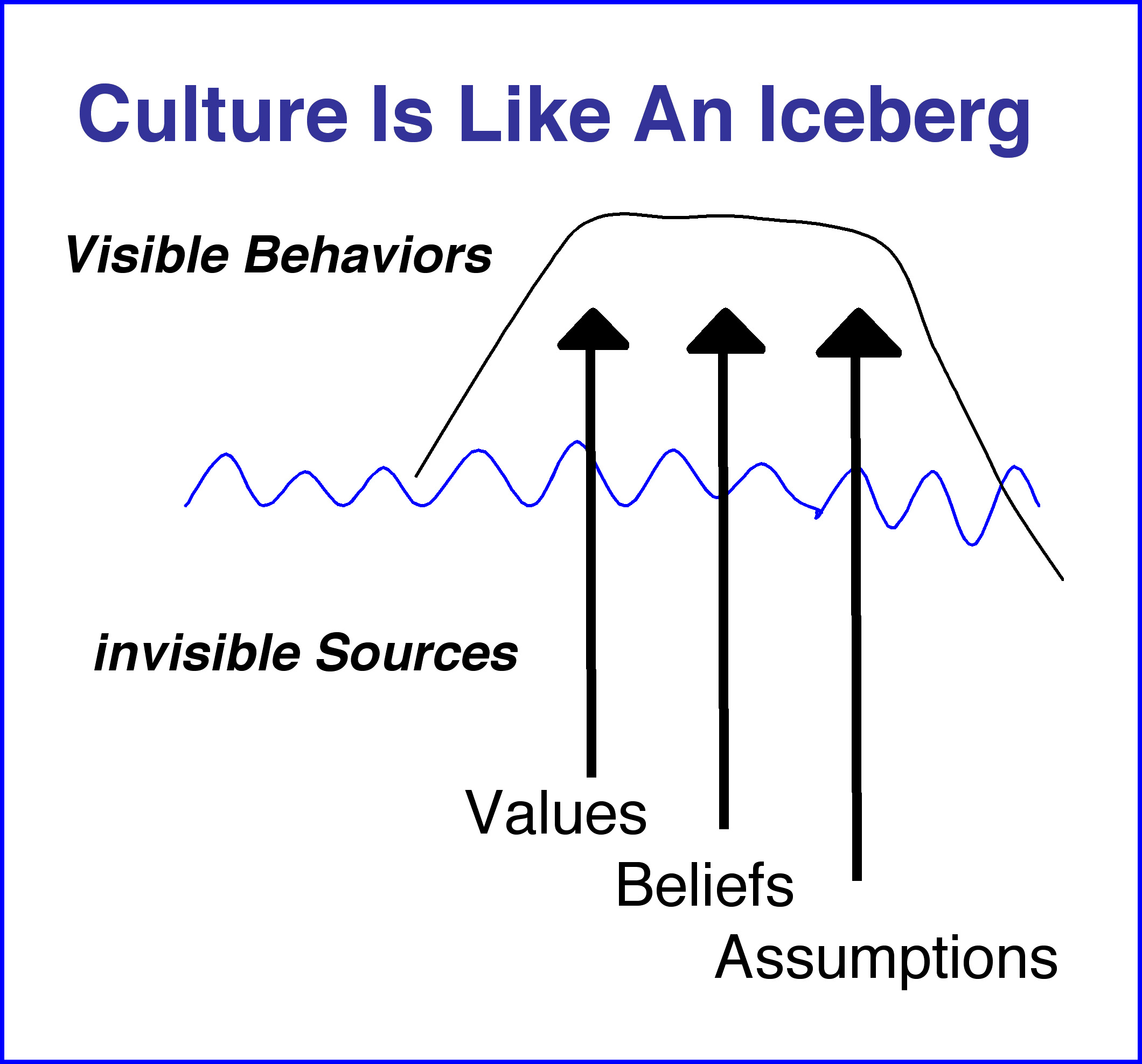
The problem is some people are tourists in their own culture
Same sex communal bathing liberates one from all that cultural baggage and to experience mixed sex bathing, as in Japan, takes it a step further. I would go as far as to say that not only does communal nudity provide a sense of liberation from the legacy of history as well as other negative baggage we carry about our bodies, but it is also a political statement. In Britain, if not indeed western society, masculinity and what comprises being male, expressed by traits such as: not showing emotion, heterosexuality, avoiding same-sex physical contact, revulsion at male nudity, aggression, etc, all focus on the penis and its capabilities and the fear that relaxing any constraints may entice engagement or may reveal more about us than we want to know. And with the taboos unnoticed, invisible and perceived as natural, they become a springboard from which pumpkins judge the world around them.
In future I will mark such posts with a logo warning readers that the content is not suitable for pumpkin people.
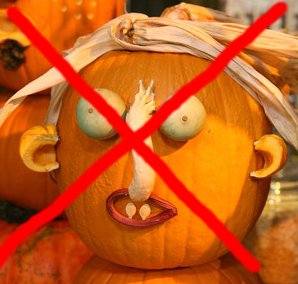
Not suitable for pumpkin people
© 林東哲 2010 Creative Commons Licence.
It Can Pay to be a Pygmy
Not suitable for Pumpkin people
My Korean girl students love camp boys, other wise known as ‘flower boys.’ Camp is totally in and the poncier and more androgynous a boy or man is, the better – provided of course, he’s straight. If you dressed a frond of ooo-wong (우엉 – burdock) in fashionable clothes, gave it a nice haircut and sent it flouncing down the street all limp and bendy, girls would swoon.
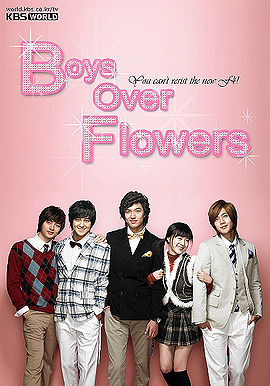
‘Boys over Flowers;’ highly successful!

Jay Park (박재범) – Handsome or Pretty? Or even pretty handsome!
Boys over Flowers (꽃보다 남자) was a highly successful drama which ran in early 2009, was aired in numerous other Asian countries and has subsequently been identified with the migration of Korean culture to other countries, a phenomena known as the ‘Korean Wave’ (할류). The first ‘wave’ (2005-2009), often associated with ‘Winter Sonata,’ consisted exclusively of drama which gradually gained a fan base outside Korea, predominantly in Asia. With the export package now including pop music, theater and musicals, a second wave (dating from 2010), can be identified. As an example, the singer Jay Park created more traffic via Twitter, on March 8th, 2010, than did that day’s Oscar nominations. Coined by some as ‘Hallyu 2.0,’ the ‘2nd ‘wave’ has encompassed Egypt, Turkey, Romania, India and even Uzbekistan. Interest in Korean has increased and a country as small as Nepal now has 30.000 people a year signing up for Korean language proficiency tests.
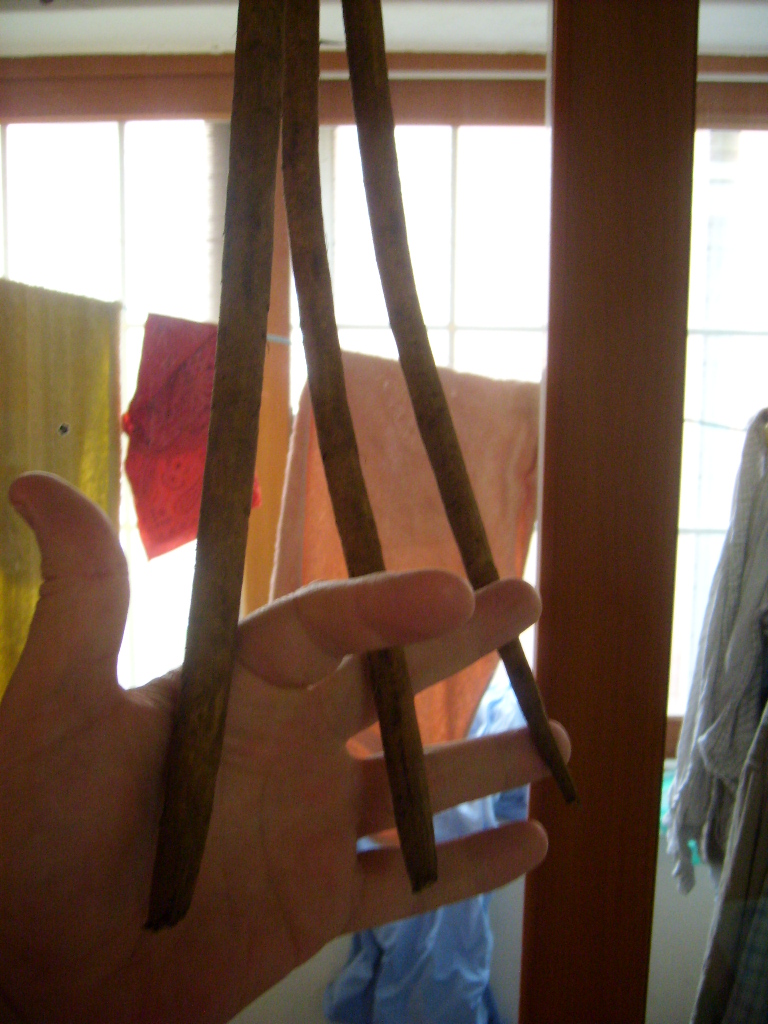
Burdock, wu-weong (우엉) Limper than a lettuce!
The incredibly popular, ‘Boys over Flowers,’ which has among other things, helped lower the fan-base age associated with the ‘Korean Wave,’ consists of 29 episodes following the intrigues of a group of high school boys. The four central characters, often refereed to as ‘F4,’ have been attributed with consolidating the interest in ‘flower boys’ and encouraging men to take more pride in their appearance. As a result, significantly more Korean men now use cosmetics and the current trend for teenage boy fashion is what Americans might call ‘preppy.’
‘Boys over Flowers‘ (꽃보다 남자) was inspired by the Japanese bi-weekly manga comic, Hana Yori Dango, by Yokio Kamio and ran from 1992-2003. The magazine was targeted at Japanese high school girls. I find the title, ‘Boys over Flowers,‘ a little clumsy and feel ‘Boy’s before Flowers,’ a frequently used alternative, much clearer. The title is a pun on the Japanese saying, ‘dumplings before flowers’, which refers to the habit of being more interested in eating snacks than viewing the cherry blossom during the famous Hanami festivals. It is the snacks and festival foods that are the most alluring; the blossom simply provides an excuse to indulge. And if you’re not eating the snacks, you’re probably watching the passing boys, especially if they are as beautiful as the blossom.
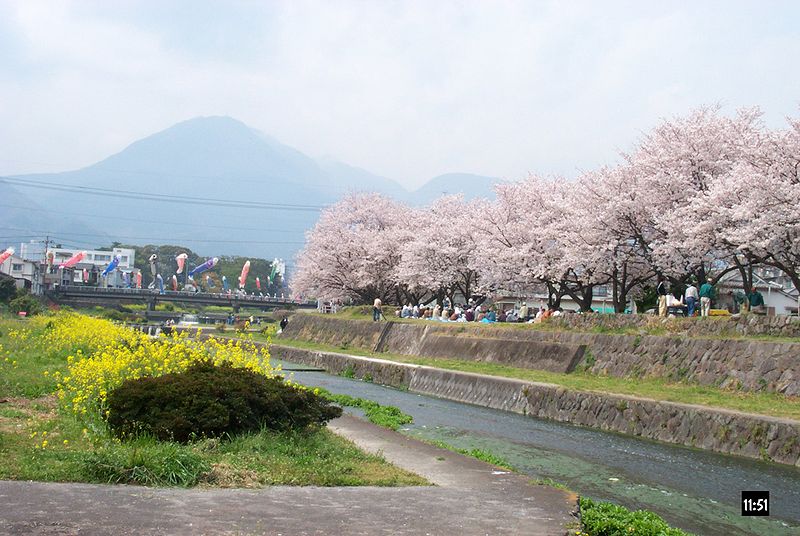
A Japanese hanami party. Beautiful blossom, beautiful boys, delicious food. What’s your priority?
‘Flower boys,’ basically meaning ‘pretty boys,’ is not in the least offensive and Korean youngsters, even boys, are able to differentiate between those who are ‘handsome’ and those who are ‘pretty.’ Neither identifying someone as ‘pretty’ or indeed being labeled ‘pretty,’ implies any accusations of homosexuality or effeminacy.
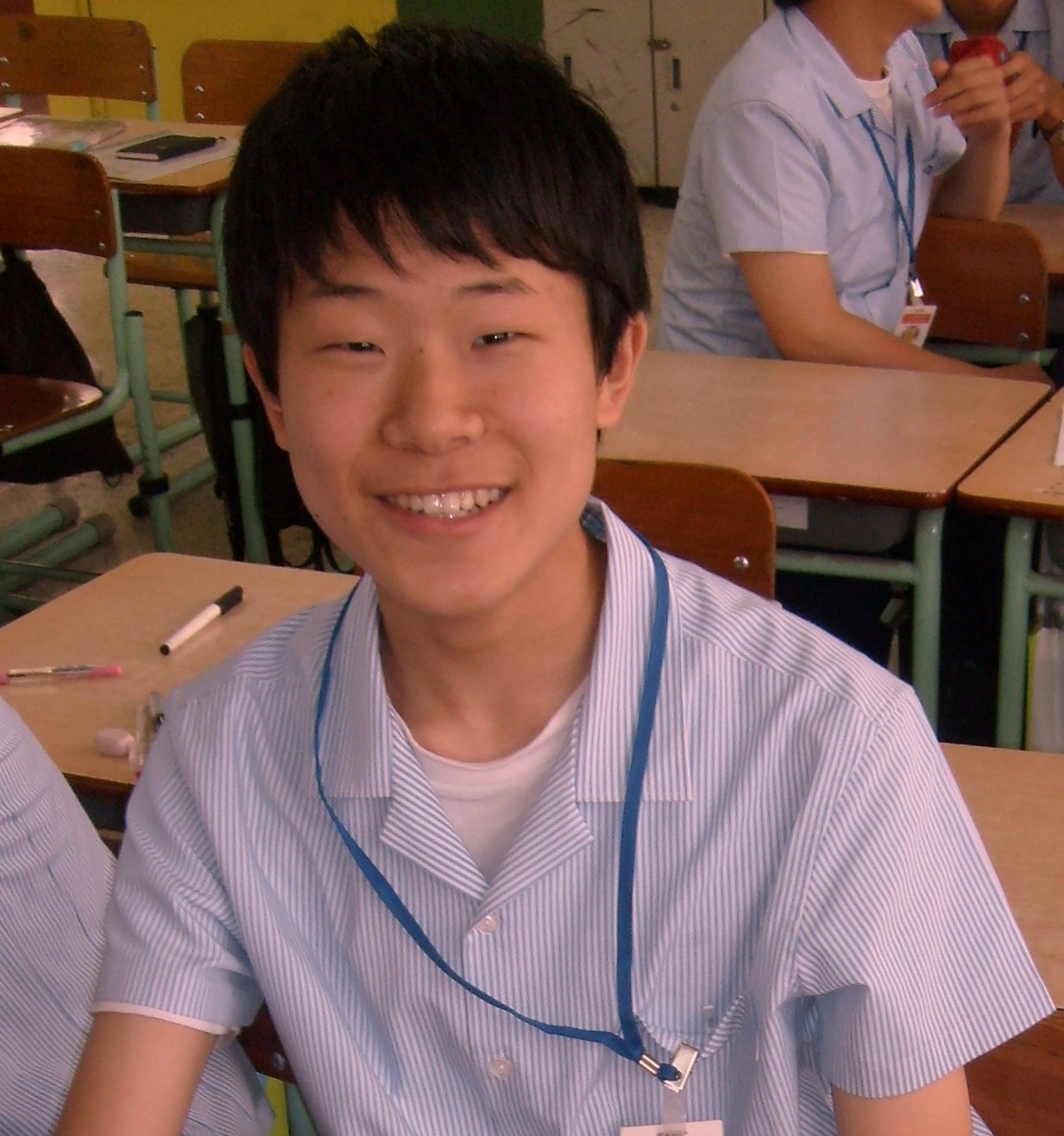
A boy nominated by his class as a ‘pretty boy.’
‘Pretty boys’ have delicate features, soft skin, and are usually a little gaunt and certainly very androgynous. In terms of western, and certainly British standards, they’d babyishly be deemed ‘gay’ and might even get the shit kicked out of them. Korean ‘flower boys’ can also get a rough ride, not because they’re gay, but because of their pin-up status and ability to capture the hearts of girls and women. One significant mystery-comedy movie, ‘Flower Boys,‘ often called by the crappy title, ‘Attack of the Pin Up Boys’ (2007), centers on the theme of ‘flower boy bashing.’ There’s no pleasing thuggy straight men who will just as quickly bash you for being gay as they will for being heterosexual and a babe magnet. Of course, Attack of the Pin Up Boys is only a story and doesn’t reflect real life. From what I’m led to believe however, the biggest problem ‘flower boys’ face, is in convincing girlfriends they are not ‘playboys’ (바람둥이) because they are often too pretty for their own good.

Leetuk, one of the Super Junior celebrities. A possible candidate for a ‘pretty boy’ nomination.
Unlike many British girls, Korean girls tend to like a boy who is well-mannered, slim and averagely muscled (which given we are talking predominantly about boys, means skinny), has broad shoulders, is fashionable and intelligent. Neither do they have to have a six pack or look manly. Indeed, a few of my female students positively dislike both aggressive boys and muscles. But the most important quality of all, one which constantly supersede all others, is that a boy has to be taller than his girlfriend. Girls can be quite cruel about this requirement and while talking to a class of girls about the celebrity Tae-Yang (태양), I overheard one call him a ‘loser.’ The reason? He is under 180 cm tall. Basically, if you’re a boy and short your fucked!

Taeyang Big Bang member. ‘Handsome’ or ”pretty?’
Though they wouldn’t understand the word even if explained to them, the definition most reflecting the sort of boys Korean girls like, is camp! In the very words of one of my students, ‘we’ like boys who ‘look like girls.’ And though ‘handsome’ boys, that is boys who look like men, are attractive and certainly seem to be preferable in terms of a solid relationship, many girls will swoon in discussions about ‘pretty boys’ even if they prefer the ‘handsome’ type.
Back in Scumland UK, when it comes to boys, many girls have no taste at all often because their priority is a quick rummage in their panties or a passionate-less poking behind the bike sheds and hence prefer boys who are one step up from brute primates and who are valued for being aggressive, butch, sporty, loud mouthed and promiscuous. If British girls demand any prettiness, it is that their lads be, ‘pretty unintelligent.’ Yes, I’m being horribly unfair but in the UK, currently riddled with anti-intellectualism, teenage pregnancy and sexual diseases, for many, any spark of brain is a turn off. The reason why the Korean predilection with ‘flower boys’ is so refreshing is that it is a kick in the mouth to the belief that the alpha male is universally appealing. I would go as far as to suggest that in Korea, even the boys and men who look like men pail into effeminacy when compared to the shaven heads and brute physogs of the men that dominant and epitomize so much of British culture. Meanwhile, if you’re a Korean girl with the stature of a pygmy or dwarf, life’s gonna be one big ride!
© 林東哲 2010 Creative Commons Licence..
For Pied and Dabbled Things

fascinating - or ''just' (그냥)?
Back in Scumland UK, the greatest disruption to a lesson would be two students having a fight, possibly assaulting the teacher or simply a student calling you a ‘fucking wanker.’ In Korea, a similar level of disruption is achieved if an insect flies into the classroom. No! I’m not referring to a gigantic hornet or a preying mantis; pandemonium can be unleashed by a simple house fly. On such occasions, students will duck their heads and even move to the other-side of a class and until the insect is removed or killed, all teaching is likely to cease. I know students, teenage boys, who will squeal and panic, if a butterfly flutters into the classroom.
I have seen some beautiful butterflies in the mountains, some the size of small birds with brightly coloured wings. As a schoolboy, my fondness for butterflies was inspired through collecting and trading cards that came with a packet of Brooke Bond PG Tips Tea. Although I’ve noticed dragonflies are admired, some kids even hate butterflies, one of the most majestic and harmless of insects. In Korean, it seems many people relegate most bugs to the same category as cockroaches.

Launched by Brooke Bond (tea) in 1963, this series of cards probably inspired my interest in butterflies
Koreans seem to have a general dislike not just of insects, but bugs in general and ‘bug’ is the preferred term as this precludes having to differentiate between insects and arachnids and many other creepy crawly things. Indeed, terms such as ‘insect’ and the characteristics they exhibit do not seem as easily understood as they might be in the west. The problem of nomenclature, despite biological taxonomy, is obviously cultural but I wonder to what extent it reflects a general disregard for nature in general, especially in a society which has so rapidly become highly urbanized.
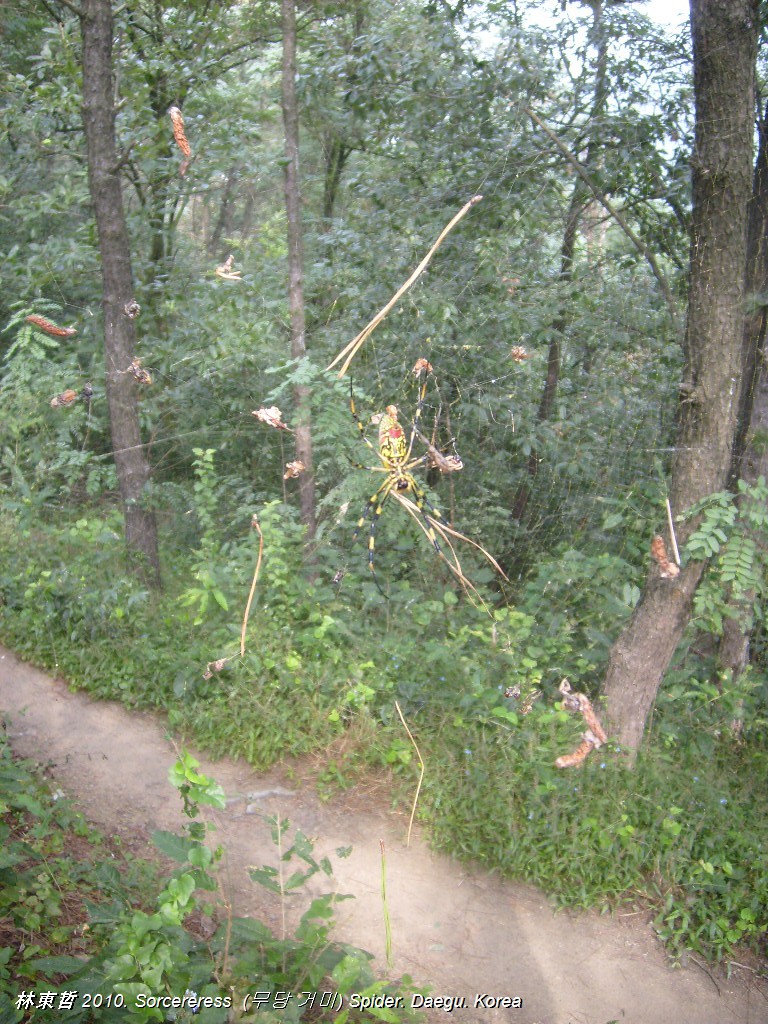
'Just' (그냥) a spider!
Korean students, and many adults I know, seem not just oblivious to nature, but indifferent and unmoved by it. Of course, I am making a sweeping generalization and fully aware many Koreans are quite the obverse as I often come across Korean nature, and nature photography blogs on the internet, but I nonetheless experience different attitudes from students and friends than I would back home. Several years ago, on a mountain trail in Ch’eonan, I was privileged to see a fox posing in profile. My fellow teachers all insisted that either foxes do not exist in Korea or that I must have seen a cat. You simply cannot confuse a cat with a fox, especially having seen the fox motionless and in profile! Every child will give you the correct name when you describe a magpie, one of the most common birds even in urban areas, but describe a jay, a common sight in the mountains, and most will have no idea of its name (산까치). The impressive sorceress spider (무당 거미), with their expansive webs dusted in a powdery yellow, and abdomens emblazoned with red and yellow markings, to all but one of the people I asked, were ‘just’ (그냥) spiders. Wasps and hornets suffer a similar fate and are often clumped together as bees (벌). And then I’m told figs trees don’t grow in Korea when there are several growing in my vicinity.
The reason I am so keen as to Koreans attitudes about nature is that most dictionaries fail to distinguish species and sub-species and hence I am compelled to make inquiries. I often encounter problems trying to discover the Korean word for particular animals or plants. For example, Koreans have a number of different names for ‘octopus’ (낙지, 문어) and will often insist that they are different from each other but this difference has more to do with ‘octopus’ as a food, rather than ‘octopus’ as a species. In Britain, we have a similar problem with ‘sardines’ and ‘pilchards,‘ both different size herrings and most of us differentiate them by the shape of can they are bought in. Sardines, as juvenile pilchards, come in small flat tins whereas the adult pilchard, comes in a round can. I doubt many Brits are capable of differentiating between sardines and pilchards in any other way than by the type of can they occupy when dead and ready to eat.

This is a pilchard
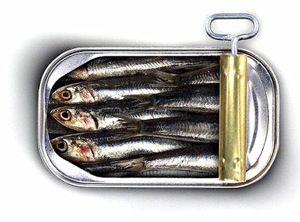
This is a sardine
Differentiating between rats and mice is also problematic and if you tell a Korean you had a mouse in your house, or even had one as a pet, they will recoil in horror. Despite ‘mice’ having a distinct name (생쥐), they are conflated with rats (쥐) and only by describing a rat as having a long leathery tail, can you be understood. Exactly the same occurs with chipmunks (줄무늬 달암쥐) and squirrels (달암쥐) both of which are described as ‘squirrels.’ (다람쥐) Yes, chipmunks are a form of squirrel but they are quite distinct from squirrel squirrels. Indeed, several online dictionaries I consulted identified both squirrels and chipmunk, as squirrels and despite chipmunks being common in the nearby mountains, most people I asked either did not know what they were or simply identified them as ‘squirrels.’

A rat - big, dirty and loves sewers and shite
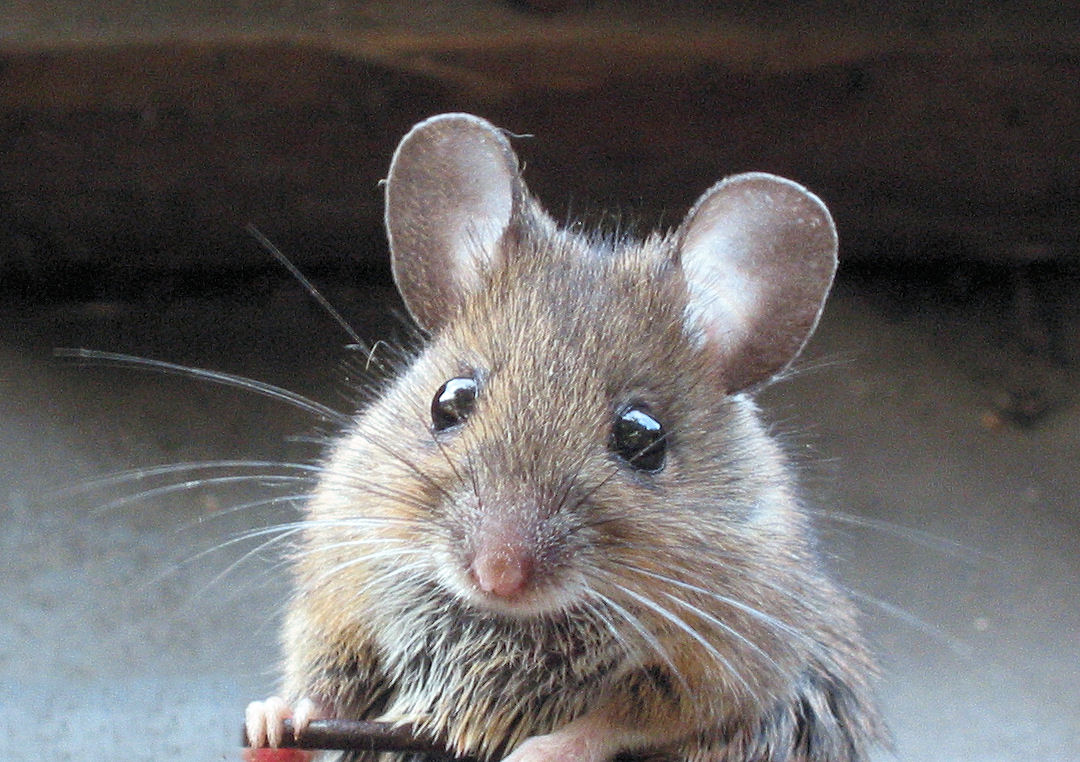
This is a mouse - small, cute, lives in fields and is a veggie
On another occasion I was with friends in the Kayasan Mountains and noticed what looked like clumps of mistletoe high in the trees. I was excited because I’d not seen mistletoe in Korea and it was prolific and thick. Mistletoe is a parasitic plant which grows in the uppermost branches of trees, the seeds being deposited via bird droppings. Not only did my friends have no idea what is was, but they weren’t very interested. As we were coming down the mountain, I noticed bags of ‘clippings’ being sold to make tea and was able to confirm it was mistletoe (겨우사리).

mistletoe can be seen growing in clumps in the high branches (Kayasan, Heinsa)
In early summer, I was looking at plants, along with a close friend, being sold by a street vendor. She was quite impressed that I was able to identify tomato, aubergine, thyme, rosemary and courgette seedlings as well as larger jade and citrus plants. She had no idea that tomato plants have a distinct smell that is imparted onto your hands if your touch them. My poor friend could only identify a chili plant and asked the vendor to name the plants to corroborate my claims.
It worries me that so many young Koreans are uninterested and uninspired by nature, if not fearful of it, because the easiest means by which species will disappear, is when there is no regard for them. In dystopian novels such as Huxley’s, Brave New World, Zamyatin’s, We, and to a lesser extent, Orwell’s, 1984, nature is perceived as abhorrent, distasteful, imperfect and dirty and hence requiring banishment beyond the confines of ‘civilization.’ Once there is a general dislike, or simply disregard for nature, or even people, and before you know it, the damage has been done. All political and social atrocities are born out of an attitude of dislike, disinterest or loathing and the same can be said of environmental atrocities.
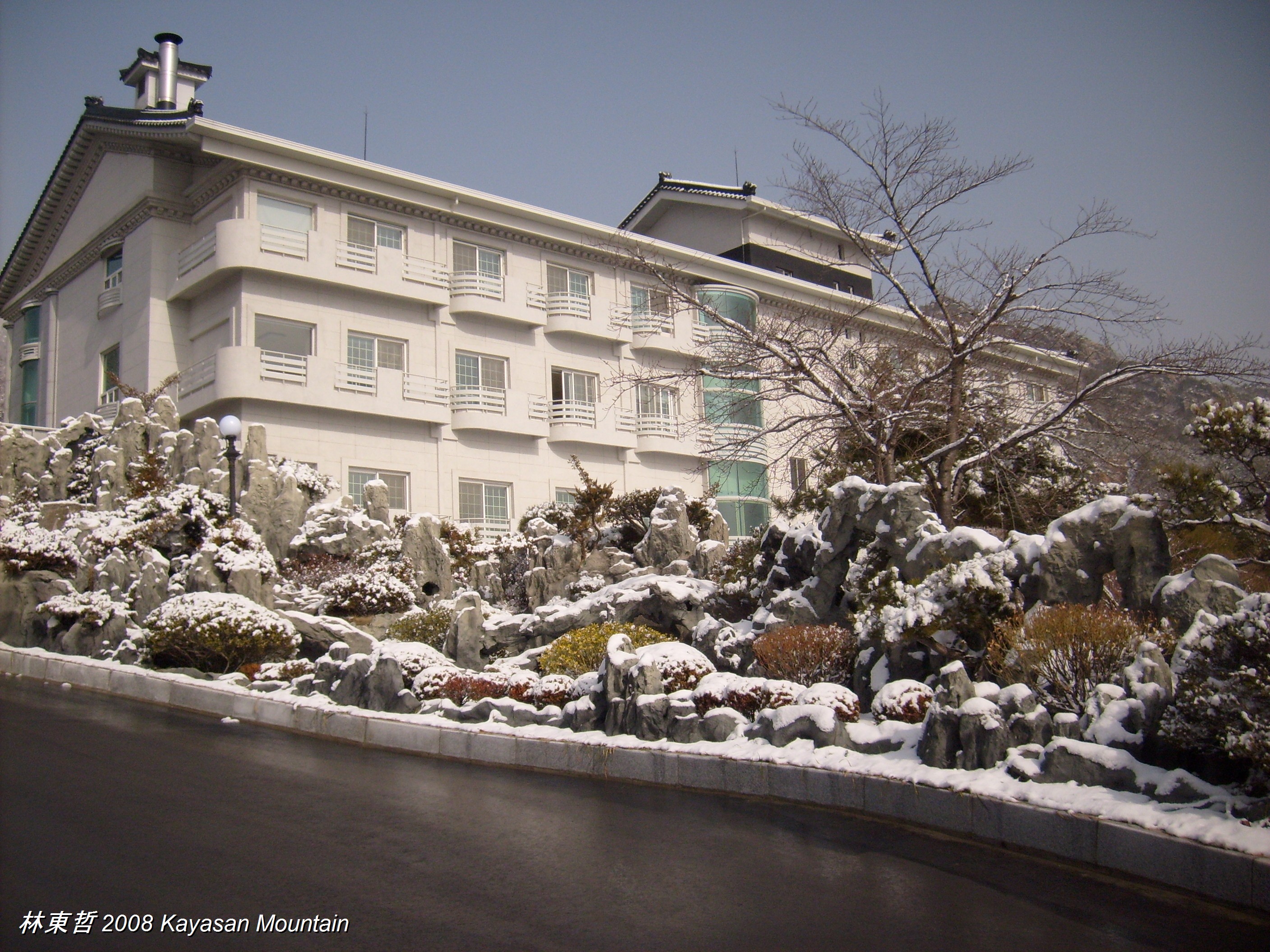
The impressive Kayasan Hotel
In Kayasan Mountain, behind the impressive Kayasan Park Hotel, next to the nature trail entrance, is a natural history museum in which are housed an extensive collection of insects which are either extinct or endangered. Some of the insects, all dead and mounted, are of gargantuan proportions, some as much as three or four inches long. The gargantuan insects that once lived in the mountains of Korea, with their chunky exoskeletons and long antennae, fascinated not just me but the numerous Korean children, ooo-ing and ah-ing around me; ironically, the same children who yelp, scream and panic when a house fly buzzes into the classroom. It seems that for many, nature only has the power to inspire wonder and awe when it’s dead, mounted, sanitized and safe.
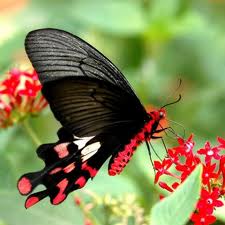
Capable of causing panic!
© Nick Elwood 2010 Creative Commons Licence.
Mountain Obsessions
I keep saying fat has arrived in Korea but of course truly fat Koreans are still rare and nothing compared with the fatties of the USA or UK. Generally, Korean fatness is chubby rather than humongous but no doubt this will gradually change. In a recent OECD report, Korea was placed 30th in terms of obesity in the world’s top 33 most economically developed countries.

Sunday, 5.51 am and the restaurant has customers
On Sunday morning I decided to walk up the mountain and watch the sunrise. I wasn’t quite early enough and actually reached the point where the mountain trail begins, as dawn was breaking, at about 6 am. But on leaving my house I was greeted by total darkness. Of course, it’s never quite quiet in Korea and near my house a 24 hour restaurant had customers who were either finishing off last night’s party or having an early breakfast. Even the small park by my house had a few visitors.
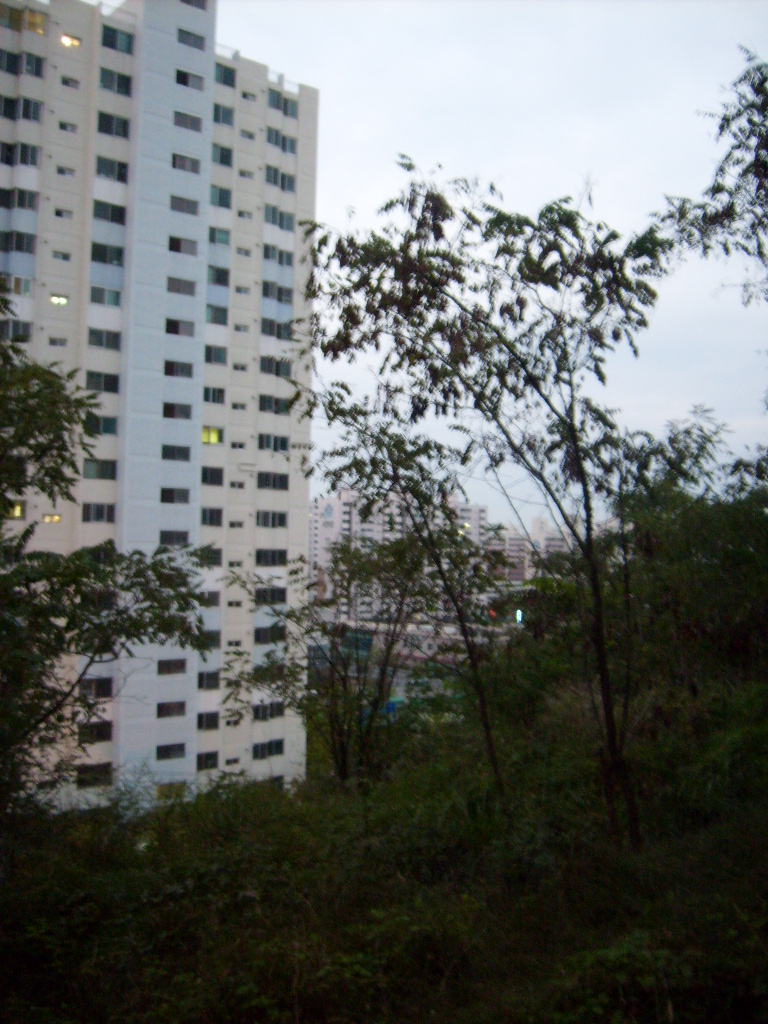
Sunday morning, 6.04 am and it's light

7.40 am Tuesday morning
The point at which Warayong mountain trail begins is directly opposite the municipal sports center and swimming pool with adjacent football pitches and tennis courts. As dawn broke there was already a football match underway and around the pitches I counted twenty two people briskly walking. As is usual in Korea, they were mostly middle-aged and older.
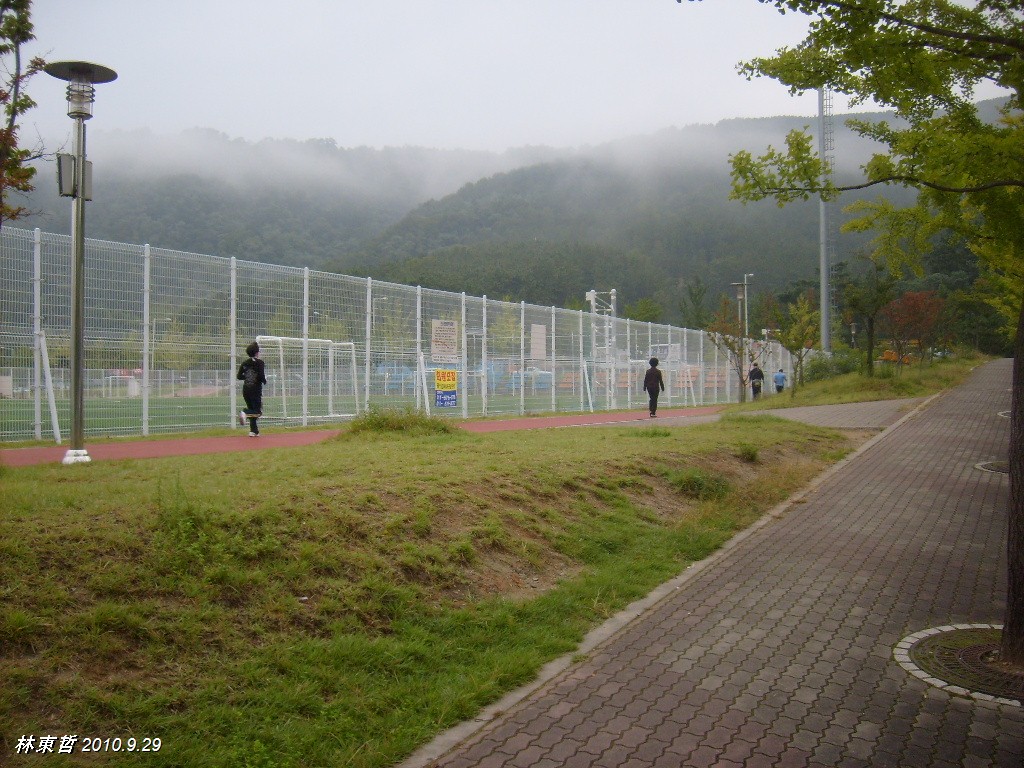
7.40 am Tuesday. Jogging and walking

6.53 am the the first peak (Dragon's Head, 용두)
Even early in the morning there are people on the trail. Koreans are quite obsessed with mountain walking and even the big climbs, up larger mountains, are perceived as a walk rather than gruesome exercise. Most Koreans have the paraphernalia necessary for a trek in any season and in any weather: walking boots, breathable clothing, hats, water bottles, walking sticks and hankies or towels to mop up the sweat. Once in the mountains, especially in the morning, it’s not unusual to hear people doing a Korean type of yodel and I have even heard someone practicing a trumpet.
After reaching the Dragon’s Head (용두), the crown of the Warayong Mountain, I walked a little further to where the refreshment stall is and there find twenty people, again mostly middle aged and over, working out on the exercise machines as well as a number of people waiting for the vendor to start serving.

This was taken on the Saturday

a mountain vendor

the long shadows of autumn
Children or young people are not as prolific on the mountain trails, they are usually too busy studying but in fairness, many will do one of the various martial arts or other sports. Walking up the mountain taxes me enormously and I frequently have to stop and catch my breath. However, I have yet to see a Korean pensioner as knackered by the mountain climb as I am. Indeed, for most Koreans, the Dragon’s Head is the point at which you begin stationary exercises, or climb the next peak, in either case, it is a warm-up. For me however, it signifies the climax of my exercise routine and once I have had a little sit down and a cup of coffee, it’s downhill all the way home.
© Nick Elwood 2010 Creative Commons Licence.
Chu-Sok Cheesecake
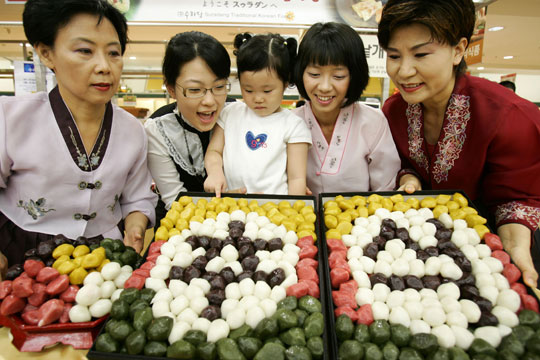
The second most important holiday – ch’u-soek (추석)
The Lurpax was back on the shelves in E-Mart and after spending exactly 9 days with a bad case of ‘red eye,’ otherwise known as conjunctivitis, I was in need of something comforting. My right eye flared up on Friday the 17th ruining my weekend and subsequently ruining the ch’u-soek holiday (추석, September 21st-23rd) as well as the following weekend. So, on the Saturday morning I had to go to my doctor who subsequently sent me to the ophthalmic hospital. Back home in Scumland UK, I’d probably have waited 4 days to see a doctor and procedures would have thrown my plans into the liquidizer. But in Daegu, there’s an eye hospital every few blocks and doctors and opticians in every block and I can easily accommodate visits to the clinic without any disruption to my plans. The eye hospital is approximately 200 paces from my front door! Just as well as I’ve had to re-visit the clinic every third day. The infection seems to be dwindling but this morning, sat in the doctor’s chair with my head in some contraption, I felt like Alex DeLarge and though there was an absence of Beethoven’s 9th Symphony, it is a strange coincidence that whilst in the waiting room, this is the music that has entertained me on my MP3 player (in fact the Liszt piano transcription). Once my head is in the constraining device, a lengthy telescope-cum-bazooka is aligned with my eye. All week he’s simply looked and prescribed medicine but today he starts poking my eye with what felt like a dental probe. Then, through eyes streaming with tears and blood, he shows me a cotton bud laced in this red gunk which is the infection membrane. Then I had to have a shot in the backside.

Alex DeLarge (Malcolm McDowell) in Clockwork Orange
It was only to be expected that my infection, which suspends using the gym or bathhouse, would concur with a major holiday, chu-sok (추석), the Korean equivalent of Thanksgiving, and I would imagine that by Monday, when normal work resumes, I will be mostly cured. There seems to be a ‘red-eye’ epidemic in Daegu and I have often seen it mentioned on the news. It seems especially prevalent in summer. At the clinic there were two families all of whom were infected and numerous other individuals with either one or two red eyes. I didn’t go out for several days but have since bought some dark glasses.

the ophthalmic clinic from my roof top (제일 안과)
So, after having my eyes attacked with a cotton bud, I went to the supermarket. The Lurpax talked to me, trying to convince me how delicious it would be on some toast and I would have bought it if a cheesecake on the nearby cake and bread stand hadn’t talked louder. I’ve eaten cheese cake only once in Korea and it was just like the traditional British cheese cake – the type with currents and full of mascarpone cheese. The cake is in a box and by Jupiter’s cock it looked very tasty!

real cheesecake, simple and unadulterated
It was pricey, 8000 Won (£4) but after a shit week and that cotton bud, plus I’d actually walked up the mountain before going to the eye-clinic, I felt I deserved it. I get home and make some fresh coffee and sit down to enjoy my belayed ch’u-soek treat and all the time the cheesecake is telling me how sexy it’s going to taste and how superbly creamy it’s going to be. And then comes the shock… where’s the fucking cheese? I cut the cake in half looking for it but the cheesecake seems to have lost half its namesake and comprises solely cake, extremely white, light cake! Nothing about it is cheesy and while it was probably a very delicious cake, it’s not a cheesecake and so, with a curse, I chuck it straight in the bin.
© Nick Elwood 2010 Creative Commons Licence.
A Squirt of Fusion

So scrumptious.....roast pork and roast potatoes
Every now and then I like a little blow out, partly as I love food and secondly, because I miss food associated with British culture. Unfortunately, few Korean foods fulfill the requirements necessary to satisfy the cultural preferences of my British palate. Flour, potato, oil, butter, bread, milk and cheese, plus copious quantities of meat, are missing from most Korean meals. Though I love Korean food, most can be described as ‘just…’ (그냥), meaning okay, satisfying, but not scrumptious. Of course, this is just my personal opinion and some waygukin may actually think a few bean sprouts chucked in boiling water compares to delights of Thai, Tom Yum or New England Clam Chowder.
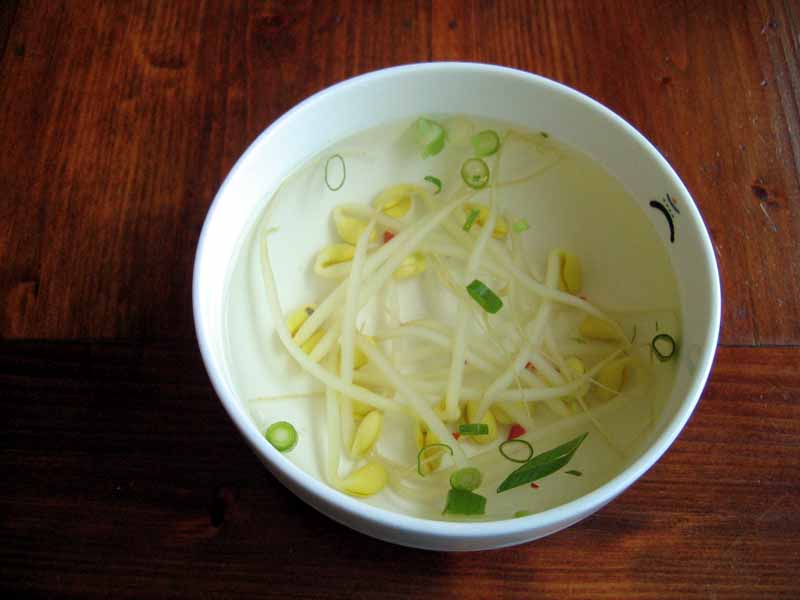
bean sprout soup (콩나물 국)
I have attended a number of ‘feasts’ in Korea and find the word as much an exaggeration as is the description ‘delicious.’ All too often Koreans will describe something as ‘delicious,’ but the moment your hypothetically offer them a choice between what ever the topic is and a Big Mac, and the Big Mac usually wins. Ironically, the Big Mac isn’t even a delicious example of a hamburger. Yesterday, one of my students told me he ‘loved’ bean sprout ‘soup’ (콩나물 국) and that it is ‘delicious’, but considering the boy is a little chubby, I suspect if it were a choice between bean sprout ‘soup’ or fried chicken, he’d choose the chicken. The Korean ‘feasts’ I have experienced could only be deemed such if you were on the brink of starvation, which is their possible origins, and comprised of the typical ‘just’ category foods such as: seaweed soup, five grain rice, and various kimchi. Sorry, but when you’re told your going to a ‘feast’ and your fed boring ban-chan (side dishes), it’s a bit of an anti-climax.
For most of my life in Korean, my cultural urges lay dormant and I find great satisfaction and pleasure in Korean cuisine but every so often I feel compelled to satiate deeper cravings and will seek out possible alternatives.
Pizza, unless it’s from Pizza Hut, Dominoes or Vince is usually disappointing; the cheese is that stretchy crap with no flavour. I once ordered a pizza with the cheese piped in the crust but when it arrived saw it was a ‘well being’ version. I order pizza so infrequently that when I do want one I don’t want ‘well being.’ Worse, the cheese had been made healthy by adulterating it with sweet potato. When Koreans make a pizza, the final touch always seems to involve squirting it with an assortment of gunk and sweet mustard and jam like sauces are all in vogue. And the final insult to any pizza, a perversion, are fruit toppings. Vince Pizza, which actually makes a fairly okay pizza, makes one topped with fruit. In Korea, with toppings such as bulgogi and sweet potato, often subsequently squirted in sweet gunk, the pizza is the epitome of fusion food.
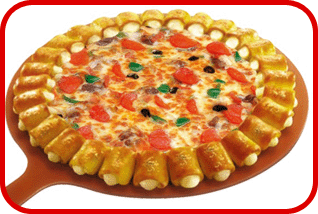
cheese-less cheese

A pizza squirted in sweet gunk
Occasionally I like a sandwich though mayonnaise is always a requirement as this replaces the lack of butter. However, I have to keep a close eye out as my local GS25 occasionally adds jam to a ham, ‘cheese’ and salad sandwich.
Corn Dog, isn’t too bad until it’s dunked in sugar and squirted with tomato sauce.
Pork Cutlet, don-gasse (돈까스) is one food that often quells my urges. This food originates from Japan where it is called tonkatsu but considering the German influence on Japanese 19th century society, I wonder if its origins are Germanic. Tonkatsu first appeared in Japan in the late 19th century and is similar to jagerchnitzel and Wiener schnitzel. It has been further fusionised by the addition, in the center, of that stretchy cheese-less cheese, and often, on the edge of the plate. an adornment of tinned, diced fruit.

Don-gasse (Tonkatsu - 돈까스) Recipe link via photo (in Korea)

Korean style - 돈까스
Ironically, if I’m absent from Korean food for too long, I begin to suffer a pon farr like yearning for kimchi, and more unusual Korean Fayre.
© Nick Elwood 2010 Creative Commons Licence.
Warayong Mountain, Song-So, Daegu
I decided to go for a little mountain walk this morning as I’ve got an eye infection and can’t use a bathhouse, so the gym was out of the question.

Warayong Mountain from Song-So Rose Park
It was going to be touch and go whether I actually left my one-room and decided that if I took a bottle of dong-dong-ju (동동주), which is unrefined rice wine, to drink at the summit, my departure might be guaranteed. However, once in my local GS25 store, I decided not to bother with the alcohol and told myself, if I really wanted some I could probably find a few old guys on the mountain top who’d give me a glass.

A 'watering-hole' on the way up Warayong Mountain

Mountainside graves

Mountainside graves
Up Warayong San, (Wikipedia start of trail) in Song-So, even at 8 in the morning, there is an army of pensioners trundling up the mountain. I was expecting the climb to be easy. I’ve been working out at Migwang on a treadmill, 3-4 times a week and walk at a brisk pace for 30-50 minutes. I never run, when you’re fat and over fifty running is totally undignified and besides, I’d probably break the walking machine. Before I’d even reached the mountain, I was sweating and once I’d climbed the first 60 steps on the mountain itself, I was ready for a coronary.
The climb to the peak closest to E-Mart, Song-So, is a baby of a mountain and much smaller than Ap-san and Pal-gong-San but the walk involves several steep climbs by steps. At the top, I was exhausted and my legs had turned to jelly.

The communal mirror at the Warayong Peak where you can fix your make-up before the decent.

A clock has been located here for over ten years. The men in the background were my source of rice wine.
I’ve written Warayong peak before, (Safe and Sound), and was pleased the clock is still on a tree where the exercise facilities are plus a mirror, which some one had affixed to a tree. Korean kids are kept too busy to turn their interests to vandalising and wrecking the efforts of others, that they so often do in Scumland UK. Sat on benches were three men who offered me rice wine. It was chilled and the drink filled with shards of ice. Then I moved down a side path to where I knew there was another exercise area, seating and usually a small refreshment area. Here I was offered red wine. The refreshment stall is a simple, large umbrella under which coffee and soft drinks are sold. When not in use the items are stored under tarpaulin. Often there are vendors selling socks, mountain wear, or baseball caps at this location and dotted around the edge of exercise areas were their tarpaulin stores.

A mountain side refreshment vendor

Mountain vendors' storage facilities

Descending
© Nick Elwood 2010 Creative Commons Licence.
Just… (그냥…) Doctor! Doctor!

Barbapapa
I’m fat. Whenever I visit my doctor he asks, ‘What do you think about your weight?’ I never know what to say. What the fuck are you supposed to say? I stifle a little laugh.
‘I love it. It’s great wobbling into a bathhouse looking like Grandpa Barbapapa.’
Once I replied, ‘not very sexy,’ but he didn’t get the joke.
I actually saw him in Samjeong Oasis bathhouse several weeks ago. I didn’t feel comfortable and left before he could see me. I should have talked to him. ‘Hey, Doc! What do you think of my weight? How would you like my awesome man tits?’
Another time, 8 years ago, I met him on the way to E Mart. A Saturday morning in autumn as I was waiting to cross the intersection. I’d just returned from the UK after having a hernia repair.
At the intersection he’s excited to see me and do you know what he proceeds to do? Examine my stomach! An on the street examination! Not many people can boast such a privilege.
Just as the lights turn green and a sea of pedestrians begin to cross the road, he pulls up my shirt, kneels on one knee, has a look at the scar and pokes around for a few moments. A little girls stood nearby, looking bewildered, stares.
It was hilarious! I didn’t even have to pay the extortionate 3000 Won (£1.50), usually charged for a consultation.
Back home in the shitty UK, your doctor doesn’t talk to you even when you’re in their surgery. If I passed my UK doctor on deserted street he wouldn’t know who I was and getting to see him in his surgery can involve waiting up to four days.
I like my Korean doc; he once gave me a tour of his new endoscopy machine but was a bit too enthusiastic as he waved about the part they stick down your gullet or poke up your backside. He was like a kid with a new toy.
Most UK local doctors don’t have such equipment and the most sophisticated toys my UK surgery have are stethoscopes and a weighing machine. Actually, two weighing machines because last time I visited them I was too heavy for one machine and had to stand on two. What surgeries in the west, ‘Lard Land,’ buy scales that only weigh up to 16 stone! Standing on two! That was embarrassing!
© Nick Elwood 2010 Creative Commons Licence.
Food to Put Hair on your Chest

Klingon Gourmet – Food to put hair on your chest! Raw stomach and liver!
‘Klingon’ was how I used to describe Korean food in my first six months of living in Korea. I’m sure many of the first Koreans I met, and probably everyone meets on their initiation into Korean culture, enjoyed taking me to places where eating was either a trial or simply difficult. Everything seemed to be either raw, alive, recently butchered, or some part of the animal associated with intestines or anuses. Even the infamous dog stew is almost an English Sunday dinner in comparison to some of the ‘Klingon’ menu. I’ve eaten dog meat twice under the assumption it was another meat and masked by copious soju, was unaware. Not the same can be said for some of the other foods which would chill your spine in all but the most extreme states of intoxication. And if the initiation to Korean cuisine isn’t focused on eating as a test of will power, basically of suppressing revulsion, getting it into your mouth is problematic.
No matter how good a westerner’s chopstick skills are, eating a bowl of noodles without a splash zone encompassing anyone sat at adjacent tables, is difficult. Usually, it’s the final little suck that whips them into the mouth and flips soup broth over yourself and your neighbours. Eating noodles is an art and Koreans only have to purse their lips as if kissing, for the noodles to levitate into their mouths. Only Koreans seem able to eat noodles so effortlessly and without actually sucking and hoovering them. Eating buckwheat noodles, traditionally eaten chilled in a broth, in the summer, is weird. If I didn’t cook naengmyon (냉면) myself, I would assume the noodles were several meters long because as you start to suck them up, more and more are dragged up into your mouth. Naengmyon must be the only food where one end arrives in your stomach as the other end is leaving your bowl.

Barfing up ectoplasm? No, but a great photo which captures the art of eating buckwheat noodles. Once you start you can’t stop!
But there are stranger foods for the ‘gourmet’ and the naive to ‘stumble’ upon: Sea squirt (멍개), the Jekyll and Hyde of Fruit de la mare, has flesh which is beautifully orange and inviting, resembling a juicy peach but the outside looks more like a biological hand grenade genetically modified from a bloated tumour. The detergent taste of its flesh certainly cleanses your palate as does the watery bile from the innards of the closely related, styela clava, midoedoek ((미더덕), which I’d trade for a silkworm cocoon or spoonful of dog-stew, any day. Then there’s ‘dog dick’ (개불 – Urechis unicinctus), which resemble large pink worms and which you’ll enjoy far more if you haven’t witnessed them in their living state. The rubbery bodies are tasteless but coated in sesame oil, they slip down the gullet with ease.

the vegetable-leaf wrap (쌈) typifies much of Korean eating
Raw fish, often killed at your table or within sight, is a mild experience, though I have to put a tissue over the heads of fish when their eyes twitch manically as they are being slowly sliced to death. And raw meat thinly sliced and eaten in a similar style to the fish, that is wrapped in various leaves (쌈) with kimchis, garlic and chili, is fairly tolerable; at least you haven’t watched the cow being slaughtered but raw liver and stomach are certainly not my choice for a delicious meal. I ate raw stomach pissed and nearly gagged and the liver I mistakenly took for acorn curd (도투리묵). In the restaurant’s lighting the colours weren’t so distinguishable.

Raw liver (생간) prettied up with sesame seeds…

acord curd (도투리묵) sprinkled with sesame seeds
If you like healthy snacks, nothing could be more natural and packed with protein than silk worm cocoon (번데기). Indeed, the silk worm was an important food along the silk routes though Chinese silk worm is generally much larger than the type eaten in Korea.

Chinese silk worm snacks – meaty!
Being pissed helps swallow this delicacy and a chaser of soju or beer will purge the mouth of the muddy flesh but will do little to remove the aftertaste which incidentally, tastes exactly like the smell they exude while being steamed. A toothpick is a necessary to dig out the numerous shards of exoskeleton that lodge between the teeth. In reality, eating this should be no different from eating a prawn or shrimp but of course the dislike is cultural and as Herodotus said, Nomos is king of all.

you can definitely taste the land in the flesh of a silk worm (Korean silk-worm)

Not my bag!
Grasshopper (메뚜기), coated in red pepper paste (고추장) is another crunchy, healthy snack and I know a few students, usually boys, who eat these and silk with as much enthusiasm as many kids eat candy. However, cultural chasms are narrowing and this year a London pizza restaurant started serving a grasshopper topping.

How to ruin a good pizza. All the rage? I don’t think so.
After a line up of insects, barbecued intestines (막창) are un-adventurous, especially after a soju and even the infamous chicken’s arse hole (똥집), in reality the gizzard which functions as a secondary stomach, or chicken feet (닭발), are palatable.

Chicken feet, (닭발), spend most of their life walking on shite and where’s the meat?
For a real experience, you can try saeng-nakji (생낙지), small octopuses swimming in a sea of sesame oil and swimming they are as they are still alive. Whether it is urban myth I am unsure, but apparently, a small number of people choke to death every year from octopi which refuse to go down without a fight.

Nakji (the small octopus) often eaten alive.
I love black pudding but some cultural obstacle stops me enjoying, sun-ji-guk (선지국) which is basically soup made with blood. Sundae (순대), is pig intestine sausage stuffed with noodle and vegetables but I find it difficult to eat perhaps because it often appears in small road side stalls accompanied by pigs intestines, and boiled lung. Most of the food you’d class as ‘Klingon’ are the types of food Koreans believe increase a man’s virility, ‘put hair on your chest,’ and are usually predominantly eaten by men (and in some cases boys). Korean food tends to leave you either in a cold sweat or totally impartial and so many examples are simply – ‘okay,’ or as Koreans might say, ‘just’ (그냥). Personally, I don’t think Korean food rates alongside Cantonese, Thai, Indian or Mexican, but there is nonetheless something alluring and fascinating about it. However, one shouldn’t think their culture aloof, I can remember, as a boy, eating pig feet and distinctly recall the bristly hairs on the shins that tickled your chin as you gnawed the meat. I can remember my mum cooking tripe, probably the only meal she cooked which I couldn’t eat and occasionally, I’d arrive home on Saturday afternoon to the welcome of a pig’s head bobbling in a pot as my father prepared brawn. When I was still a teenager I can remember traversing Limassol, Cyprus, trying to find a restaurant that served cow brain, a supposed local delicacy. Thank-god I never ate it! Most of the food we would class as ‘gross,’ we unwittingly eat, pulverised to a paste in potted meats, formed into patties or luncheon meats or destined to appear in those famous anatomical dumping grounds, the pork pie and the sausage.

Like northern English black-sausage
But don’t worry, alongside the foods fit for a full-blooded Klingon, are the burgers, pizza and fried chicken we waygukin love so much. Burgers, I can leave; I don’t trust them and the patties just don’t look like meat. At least with Korean ‘horror food’ you know exactly what you are eating, a silk worm is a silk worm but in the modern food industry, typified by the USA and Europe, knowing exactly what your food consists of is becoming both a secret and a rapidly disappearing right. And have you noticed when eating Korean pork, that it doesn’t drown the barbecue in water…?
© Nick Elwood 2010 Creative Commons Licence.


 Elwood 5566
7 comments