Korean Teas: Barley Tea – (보리차)
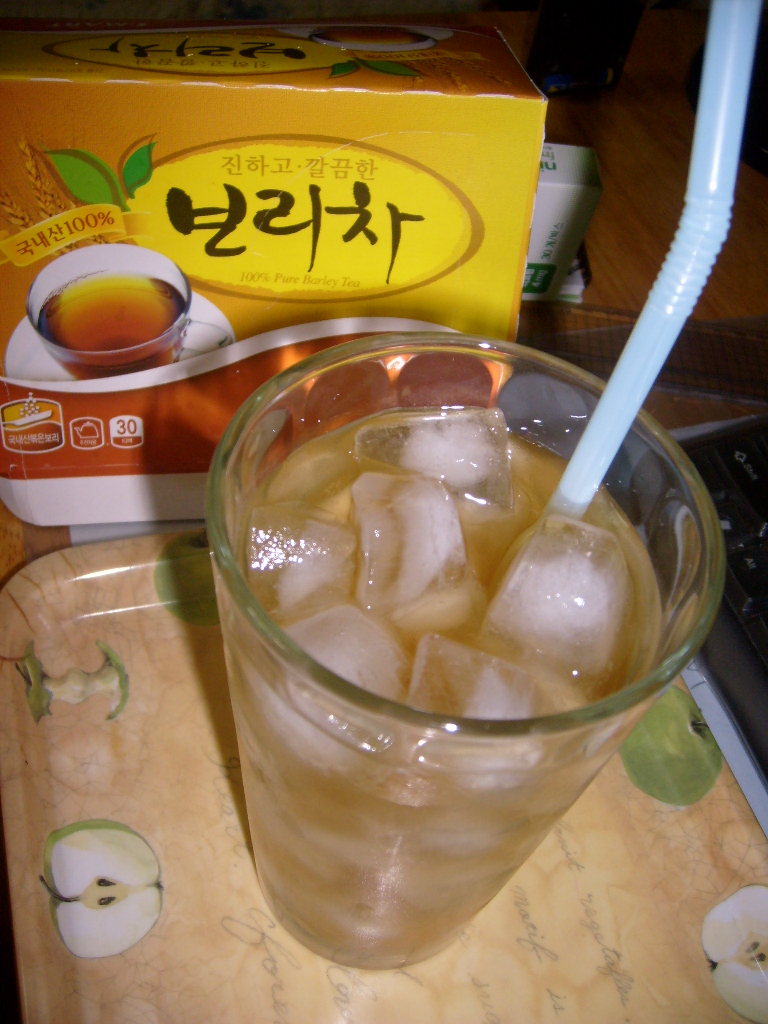
Sugar Puff water minus the sugar
Specifics: A cereal tea made from roasted barley. The tea can be made from commercially available roasted barley of purchased in tea bags ranging from single cup size to larger bags sufficient to make a litre.
Perhaps this drink, more than any other, reminds me of Korea, especially if I drink it in the UK. When I’m living in the UK a store of barley tea (보리차) or the closely related corn tea (옥수수차), are always on my shopping list. Some drinks don’t ‘transport’ well; soju for example, needs Korean weather, Korean food and a Korean ambiance to be fully appreciated but most of the cereal teas both taste the same and don’t seem out-of-place a couple of thousands miles from their point of origin.
Barley tea, made from roasted barley, can be bought as whole grain, in tea bags or already bottled. I have drunk most of the bottled varieties and don’t like them as they are often bitter and naturally, some preservative has been added. The tea bags however, make a decent drink. You can drink barley tea both hot or cold. I seldom drink it hot but along with my favourite ‘tea,’ mistletoe (겨우사리), have a two liter bottle in my fridge most of the time. Like all Korean teas, they are ‘just’ (그냥), so don’t expect anything startling. It lacks any tartness and has a mild barley taste, reminiscent of sugar-less Sugar Puffs. However, at quenching your thirst in hot weather or after a workout, Barley tea, like many other ‘teas,’ are superior to any sugary chemical concoction and infinitely cheaper (unless you buy it bottled). I tend to use a large tea bag per 1.5 liters, in the case the tea is almost the same darkness as milk-less conventional teas but I suspect many Koreans drink it much weaker.
 © Nick Elwood 2010 Creative Commons Licence.
Korean Teas: Summer Refreshment – Korean Bamboo Leaf Tea (대잎 차)
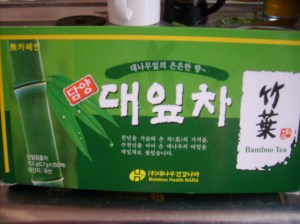
Bamboo leaf tea
Specifics: A leaf tea available in tea bags but not easy to find. Specialist deli type shops often stock it.
In summer, I prefer water or a chilled, non sweetened cereal drink or a tea as a refreshment. My favourite is probably mistletoe tea (겨우살이) but a close contender is bamboo leaf tea (데잎 차) The tea comes in bags which can be a little difficult to find though it can be bought in other forms. I couldn’t buy the bags in my local E-Mart or Home Plus but I know two small delicatessen type shops which sell them.
I have to be honest, making the tea is hit and miss and I still haven’t worked out the best way to make it. Several times I have made a very refreshing brew but repeating this seems temperamental and on some occasions the tea has been almost tasteless. When right however, the flavour is subtle and distinct and bears a similarity to mistletoe – a very mild lemony tang without any tartness or bitterness.
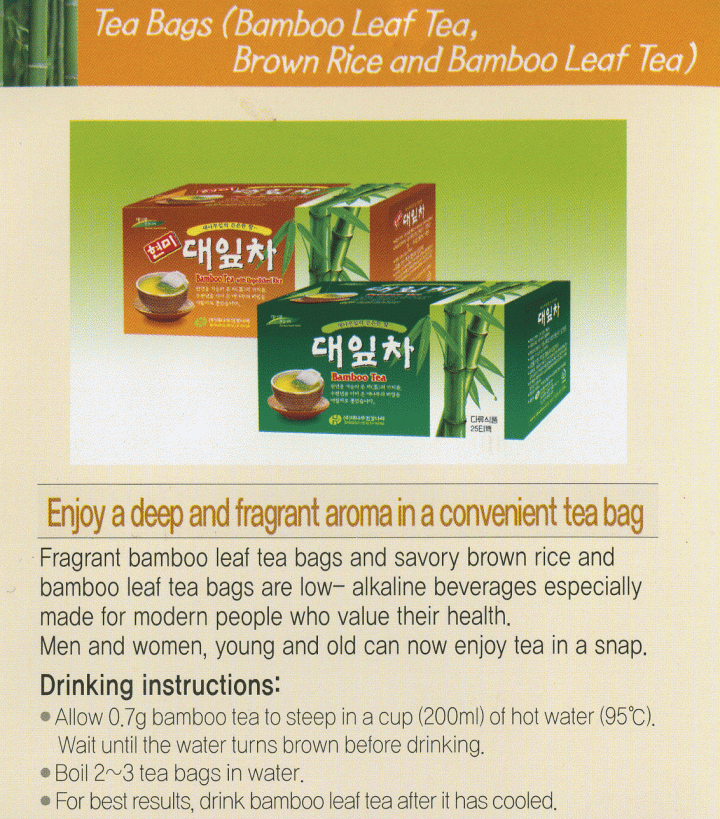
Not to be confused with Green bamboo leaf - green tea - which is from China!
Like most things that taste ‘just,’ (그냥), bamboo leaf tea has those beneficial qualities,’ it is supposedly a detoxicant and can even help you lose weight. Don’t get me wrong, I love these types of tea but can draw a distinction between refreshing and delicious. A high quality milkshake is delicious – bamboo water is ‘just’ but on a hot day or a sweaty training session, the milkshake comes second.
© Nick Elwood 2010. This work is licenced under a Creative Commons Licence.
Beating Boknal 2 (복날) Summer Foods
What do you eat when the memi are screaming and sweat is dribbling down your back and sides? There are numerous seasonal specials (보양식) which fall into the categories of either ‘hot’ or ‘cold.’ The ‘cold’ approach is probably the most popular with westerners and drinking cold drinks, eating ice cream and salads are the methods we are most likely to adopt to remain comfortable. Koreans however, stand this notion on its head when they consume ‘hot’ food to consume body heat hence fighting fire with fire. The ‘hot’ food is generally ‘hot’ in terms of temperature rather than chillies and would be similar to stuffing your face on the hottest English afternoon with a hearty casserole and dumplings; something we’d generally eat only in the depths of winter. In Korea, it isn’t a case of one or the other and most Koreans will mix the two extremes in an attempt to beat the heat. Bo-yang-shik (height of summer foods – 보양식) are seen as beneficial in either improving ones toleration of hot, muggy weather, or in cooling one down.

Boknal (복날)
Boknal (복날) is a period of around twenty days which are based on the lunar calendar and this year began on July 19th (ch’obok -초복). There are three days (sambok – 삼복) which Korean perceive as the hottest and they are ten days apart. This year, 2010, sambok are respectively, July 19th (ch’obok – 초복), July 29th (Jungbok – 중복), and August 8th (malbok – 말복). I hate the heat and especially dislike humidity but unfortunately I live in Daegu, the hottest part of Korea in the summer and the warmest in winter. This week the temperature has been as high as 37 and so the memi are particularly noisy.
Through Boknal, and on each of the consecutive sambok day it is a tradition to eat some form of special food, usually one of the ‘hot’ types such as sam-kye-tang (삼게탕 – chicken ginseng soup), or dog stew (po-shin-tang – 보신탕), but cold meals, buckwheat noodle soup (냉면 – naengmyon), or soya bean milk noodles (콩국수 – kongkuksu), are also popular.
For some, mostly older men, dog stew is a favourite and in addition to the belief it fortifies one against hot weather, it is also one of the numerous foods which are supposed to enhance male sexual stamina. I recently spoke to a friend who is quite adamant that dog stew and dodok (더덕 – codonopsis lanceolata) give him a harder erection. I eat dodok everyday and haven’t noticed anything but then I’m 54 and he’s 25. As for the dog stew, I’ll pass. I ate it for the first time with the aforementioned friend and his father, in 2000. I wasn’t enamored to it. First, I couldn’t get the image of little dogs out of my head and then there was the ‘starter,’ small bits of dog skin wrapped on a bone so that when barbecued they whirled around it. Trying to make a pouch on a platter look pretty seemed to make it more difficult to eat. I have no problem with eating any kind of animal yet have a dormant ethical problem with eating animals – per se! I would imagine many people share this weak-willed position. To be honest, I have to snigger at those waygukins who condemn Koreans for eating dog and yet raise no criticism of their own culture where eating rabbit is accepted. Koreans usually find the idea of eating rabbits distasteful. Tell Koreans you’ve eaten rabbit and quite a few will insist, ‘it’s a pet!’ As Herodotus said, ‘nomos is King of all!’ The dog issue tends to inflame passions but what should be remembered is that it is not the eating of dog that should be the offense, but the alleged manner in which they are slaughtered. And though some may argue dogs have a special relationship to humans, this is a culturally specific relationship and not one of universal, eternal properties. Personally, I’d rather have a pig for a pet than a dog. In 2001, my one room had no air conditioning and the dog stew did nothing noticeable to fortify my constituency against heat and humidity and certainly never stirred my passions.

This is my sam-kye-tang. (Click photo for link to the Queen of Korean cooking, Maangchi) )
Sam-kye-tang is one of my favourites though I prefer eating it in the winter. At lunch time that small chicken, the wadge of gluttonous rice and a gallon of broth, simply bloat my belly and start me sweating profusely. But it is delicious in the Korean sense of the word. I occasionally make sam-kye-tang if I feel tired or have a cold.
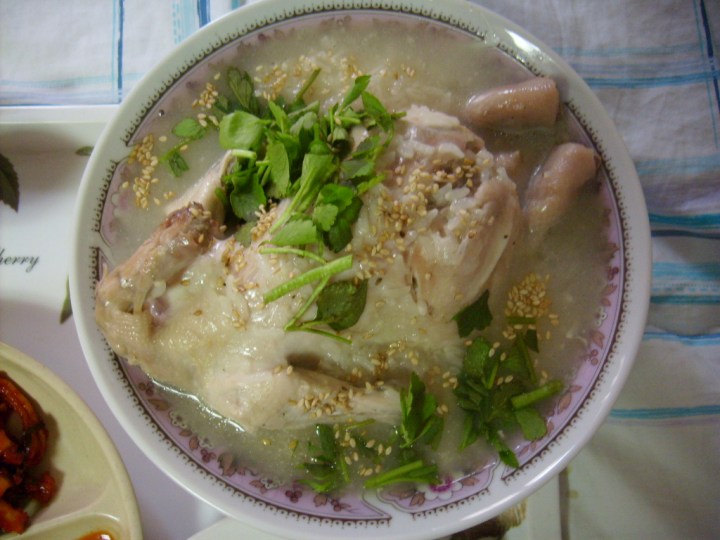
Wholesome (Maangchi link)
And I would find kong-kuk-su (콩국수) mightily refreshing if not packed with noodles. I enjoy the icy soya milk broth, with its slightly salty tang but those noodles don’t do me any good. I don’t know why it is but kong-kuk-su always seems to be served in large portions while naengmyon (냉면), for example, is often served in a smaller portion.

Soya broth milk noodles (Link to Maangchi)
Mul-naeng-myon (물냉면) is my boknal baby! I can eat this on a hot lunch time and then walk on into work without breaking into an excessive sweat. I love the tangy combination of vinegar, salt and sugar and have a hard job keeping the broth in my freezer if I have made a batch. I can remember the first time I ate naengmyon; it was on a hot Sunday afternoon, in early August, after a mountain hike in Song-So. I quite disliked it! What a freaking horrid combination; watery broth with a clump of sticky buckwheat noodles that are impervious to mastication and almost impossible to eat without sucking the whole clump up. And then there’s the slice of pear, and the ice cubes and as for the lonely, wafer thin slide of beef, you’d think it had fallen in the bowl from another meal – it’s appearance a mistake! Naengmyon is sweet, and salty, and tangy – is it a dessert or a savoury meal? And as for the vinegar and mustard which are added to it… Since then, mul-naeng-myon, and particularly Pyongyang mul-naeng-myon, have grown on me. If you have never eaten it, it must sound quite gross but when the weather is scorching hot and your covered in sweat, it is one of the most delicious and refreshing meals. Even the sound of the ice cubes tinkling and jingling against the sides of the stainless steel bowl in which it is traditionally served, are refreshing.
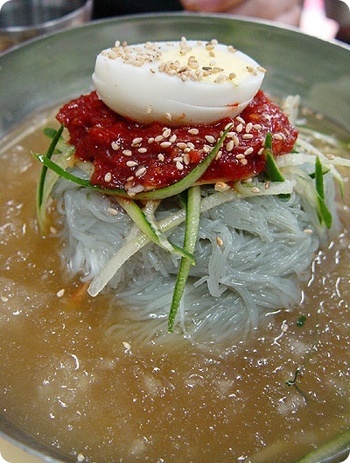
Mul naengmyon (물냉면) 시원해요!
I suppose naengmyon is the sort of food you eat at a heightened sense of reality, especially if you’ve just come down from a mountain – a feat which always seems harder than going up, and at a point when you’re body and mind feel good, it’s scorching hot and humid and you’re sweating profusely. Enjoying naengmyon at this point is an integral part of the summer experience and so I never enjoy it, or feel a need to eat it, in the middle of winter. To truly enjoy naengmyon it has to be hot, boknal hot, horribly humid, you have to be sweating and you have to be tired. Naengmyon shares a lot in common with Pimms No 1, that British summer drink, only ever drunk outside under the sun, and accompanied by ice, slices of cucumber, summer fruits and mint. One should never drink Pimm’s indoors or in winter and though this might be deemed snobbery, Pimm’s only really seems to ‘work’ when this is observed.
Finally, and wonderfully refreshing, is patpingsu (받빙수). This is rice cake, sweetened tinned fruits, red beans, and condensed milk on a bed of flaked ice which is often topped with spray cream. There are many variations of this refreshing ‘dessert.’

Patpingsu – usually shared with friends (받빙수) (click photo link to Hangook Summer)

Green tea patpinsu (photo link to Hangook Summer)
Other means of beating boknal
cereal teas
iced coffee
silver summer trousers
handkerchiefs and towels
ice rooms and cold pools
cold showers
hand fans
© Nick Elwood 2010. This work is licenced under a Creative Commons Licence.
Peaches – Monday market
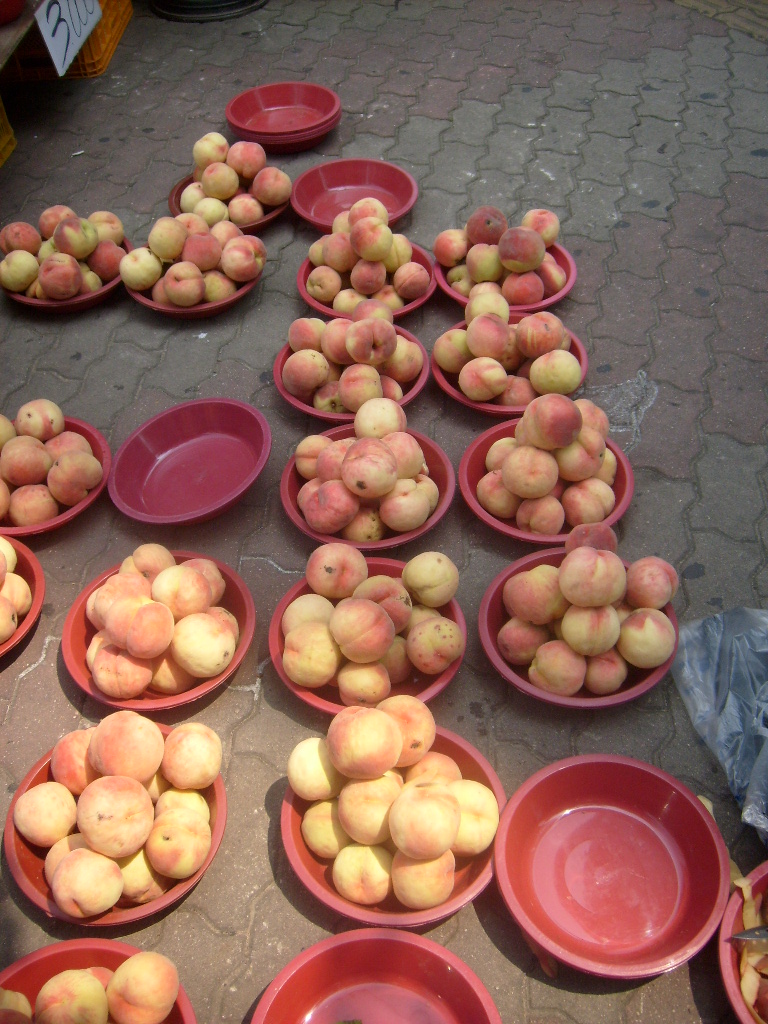
Looking at the Peaches
Koreans have this habit of eating fruit that I wouldn’t classify as ripe. Of course, it’s cultural but when I bought a ‘box’ of delicious looking peaches I discovered they were like cricket balls – hard! They do the same with persimmon. Yea, I should have poked them before purchase but didn’t. I like peaches soft and juicy. Currently, they’re sitting in my fridge in the hope they might ripen. Putting them on the window ledge is out of the question as it will attracts those annoying little ‘day flies’ which prevent you leaving any fruit or vegetable peelings in the bin for more than a couple of hours. White peaches are really delicious but I haven’t seen any this year and they are always more expensive.
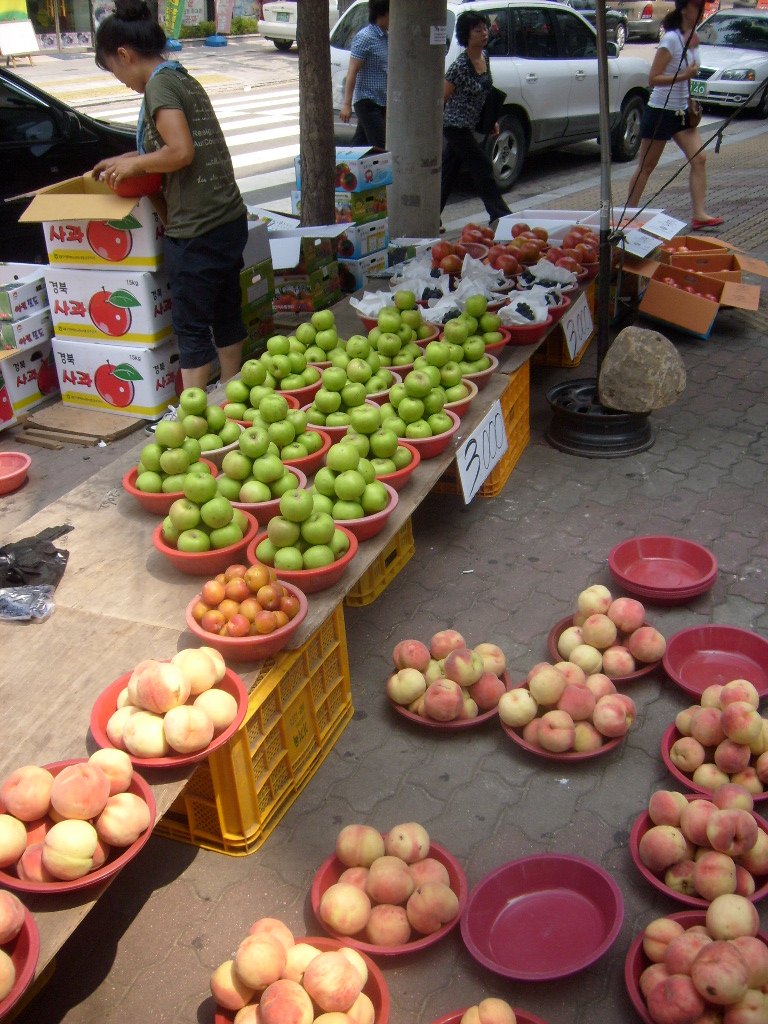
The tomatoes are even bigger than a few weeks ago and are now bigger than the first of the green apples – perhaps it’s because of all the rain.

Massive tomatoes
© Nick Elwood 2010. This work is licenced under a Creative Commons Licence.
Monster Prawns – Monday Market
Despite being inland, Daegu markets provide a tantalizing array of seafood. Cutlass fish is very popular (갈치) though it’s not one of my favourites as I don’t like fish that contain many small bones.

Cutlass Fish (갈지)
Prawns can be mammoth in size and these ones, not including the antennae, were about 7 inches long. The cost was just over 4000W (£2).

Prawns on a dinner size plate and about 7 inches long. The cost for 5 was just over 4000W (£2).

A succulent snack
© Nick Elwood 2010 This work is licenced under a Creative Commons Licence.
Feeling a little Dicky

작은 고추가 맵다! Big things come in small packages
I haven’t been to the bathhouse lately as I’ve been feeling a bit dicky after a mild touch of food poisoning and I’ve been giving some thought to the topic of dicks. It’s the fault of the GS 25 convenience store near my one room which has a tendency to hire attractive students who lure me into their domain partly because of the motto worn on the back of their jackets, fresh, friendly, fun, but also because I usually fancy something hot before bed. The latest boy also wears a pink badge which says, ‘I love you.’ They should pay him extra money to wear the jacket and badge. Those kids are crappily paid, something like 4000 Won (£2) an hour, and I’m aware I could probably lure them with some extra won, if I was in some seedy dump like Tangier or Tijuana, but no one has any free time here and besides, vibrant economies tend to put a damper on the extremes driven to by financial desperation.

Small and hot
Clacton on Sea in Essex, UK! Now there’s a place as seedy as dirt holes like Tangier or Tijuana. You don’t have to travel with a passport to find economic, intellectual and cultural poverty if you’re British, Clacton provides it all. I’ve taught in most of the senior schools in ‘Clacky,’ an experience enough to terminate any interest in teaching as a career. Here’s a snippet from a diary entry for February 2000.
I don’t enjoy my contract day as I feel responsible for the classes. It’s much more fun when I just do cover. It was an okay day but the lads in my last class, Year 10, bottom set business studies (my pet hate) spent most of the time messing around. There were only four of them and I’m sure a couple of them are prostitutes – Clacton is that sort of place and I believe that the Macdonalds in the town center is where you pick them up. The boys sit with their knees wide apart, one keeps tugging at his dick and their conversation is usually about sex.
‘Do you fancy ‘him,’ Paul?’ asked one boy hitching his head to indicate me.
‘If he’s got the money.’ Later, Paul asked me to sign his report. ‘Go on, Sir, give me a good one. Just a few good comments to keep my parents off my back. I’ll do anything you want.’ I looked at him and raised my eyebrows. ‘Even that,’ he replied. A few weeks ago I over heard this boy say he’d like to be a male prostitute. His friend asked if he’d do it with men. He told him he’d do it with anybody as long as he got paid.
I could probably pick up a local faecalapod in Clacky with as much ease as you could in Tangier, except I’m not into dirt or STI’s and the hottest thing I’m going to pick up in GS25 in Song-So is a cup of hot chocolate. The new boy is skinny and he reminds me of a former student. Because of centuries of genetic isolation, Koreans tend to look much more like each other than we mongrel wayukins. Even beyond the black hair and dark eyes, I tend to note similarities in a passing stranger with the features of old friends or former students. I don’t know if there been any research done on the subject but sometimes I think there must be less than 15 basic appearances from which most Koreans slightly deviate.
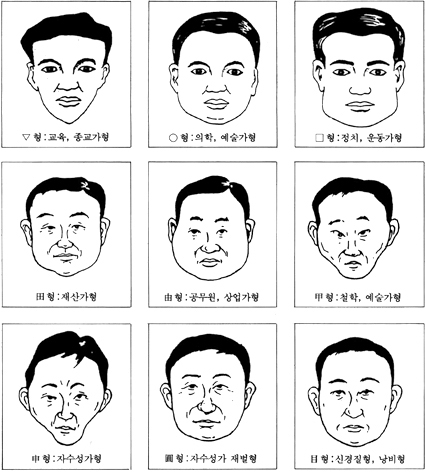
Phrenology
The skinny lad won’t last long, the students in the store tend to change about every three months. It must be a frigging bore of a job working through the night and I’ve no idea what’s on their pads ‘n’ pods but some of them seem to spend the whole evening on them and will instantly discard them as they jump to attention, when you walk into the store. Some read books but even then there is usually a pad or pod in sight.
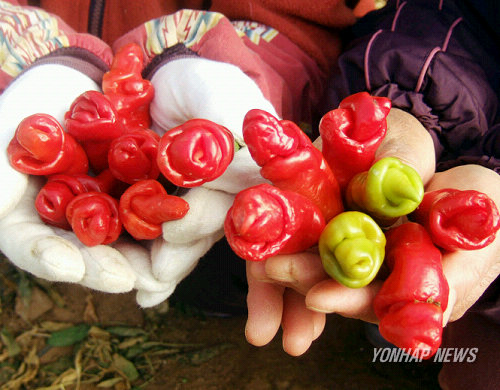
'Peter Peppers' or 'Chilli Willies' - though they may be look-a-likes (Yonhap News)
And of course, it’s chilli season. Talking of willies, phallic shaped chillies are probably a freak of nature in Korea but in Louisiana and Texas, USA, a type of chilli, the ‘Peter Pepper’ or ‘Chilly Willy,’ is renowned for producing consistently cheeky chillies. The website ‘Chilli Willy®‘ markets the appropriate seeds, provides growing tips and hosts a regular photo competition. Do they have the same kick? I’ve no idea but in Korea it’s a well-known idiom that the smallest chillies are the fiercest (작은 고추가 맵다). Globally however, Korean chillies are far from the hottest or smallest. For a wealth of information on the world of the hottest chillies visit: http://www.scottrobertsweb.com/scoville-scale.php
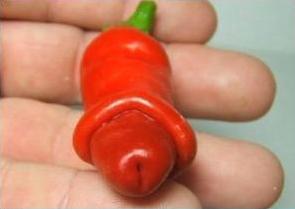
A genuine 'Chilli Willi®'
© Nick Elwood 2010 Creative Commons Licence.
Garlic (마늘)
You can smell the garlic wafting on the air before you see it.

Sunday afternoon street vendors

Sunday afternoon
This work is licenced under a Creative Commons Licence.
Monster Tomatoes – Monday Market

Tomatoes
For almost a month now, beefsteak tomatoes, the largest tomato of the family, have been in abundance in the street markets. They are truly enormous though they lack the sweetness of smaller varieties. Compared to Britain, the hotter weather, intense June-July rain fall and a long sunny day, are all factors which greatly increase the speed at which plants in Korea grow.

A box costs between 5000-8000 Won (£2-50-£4)
This work is licenced under a Creative Commons Licence.
Oriental/Japanese Apricot (매실. 梅實) Prunus Mume, and some uses

- Oriental Apricot/plum (매실)

June, and Japanese Apricot is available in the street markets and in supermarkets. A very large bagful costs about 20.000 Won (£10) and in E-Marte 1-5 kg costs 7.500 Won. The apricot (매실) appears across Asia and is used as a delicious sweet drink, flavours various alcoholic drinks most notably plum wine, it can be pickled or salted,in China it is used in the making of plum sauce and it is also made into a tea. It has plummy-almondy taste. The juice is also common as a household remedy for an upset stomach.
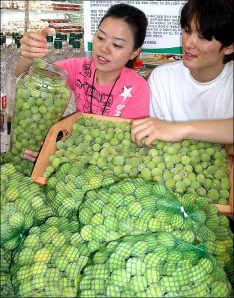
- Around 20000 Won a bag


- Non alcoholic but delicious
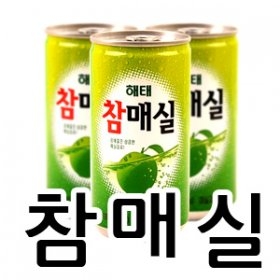
Making either Japanese Apricot juice or alcohol is straight forward. For juice, simply put the fruit into a container with the equivalent weight of sugar. Do exactly the same for the alcoholic version except cover it with soju. The sealed container should then be stored for 3 months.
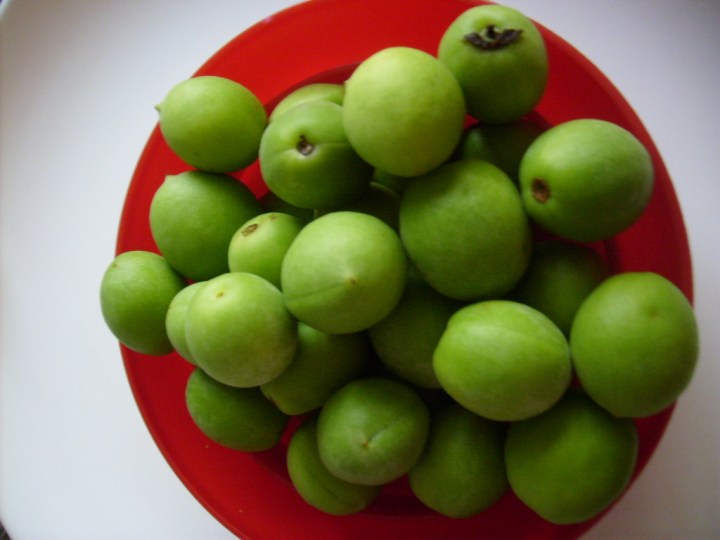
- Pretty boring in this condition

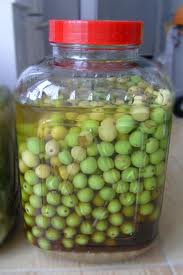
- Homemade alcohol and juice
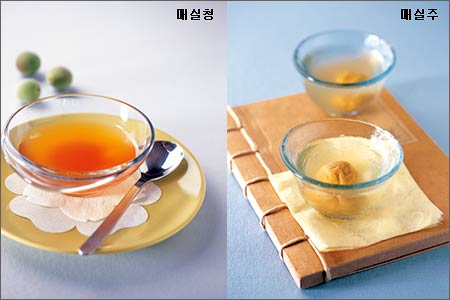
- Refreshing

This work is licenced under a Creative Commons Licence.
Death and Diet by Watermelon

Watermelon (수박)
Years ago, I watched a documentary about the problems of policing in that scummy slip of coastline on the southern Spanish coast, infamous as the holiday destination of 4.5 million Brits holiday makers and 350.000 homeowners, the Costa del Sol; aka The Costa del Crime due to the disproportionate number of British criminals in residence to evade to British law. The Costa del Sol is one sprawling Conga of destinations well-known to most British people even when they have never set foot on Spanish soil and know little about local life: Marbella, Fuengirola, Alicante, Torremolinos, and Benidorm. Formerly all isolated beautiful fishing villages, they now form one vomit ridden strip stretching from Malaga down to Los Alzacares and providing all the comforts of British culture, the bars, fish and chips, sandwiches, Sunday roasts and enough English-speaking people to attract that particular brand of clientele whose idea of a holiday is sitting on a packed beach in an environment as English as Clacton but with guaranteed sun and cheap booze.
In all fairness, the coast provides a haven to other European plebs and criminals and within the context of policing, this was the subject of the documentary. On the particular evening the cameras were rolling, and following the difficulties faced by local police, a group of Danish lads were arrested for swimming naked in their hotel pool, some Brits lads were menacing locals with knives and some drunken Scandinavians were throwing water melons off the top of their hotel onto the street below.All were young men and all were drunk!

British criminals on permanent vacation on the Costa del Sol
‘Brits with knives’ seemed typically nasty while the nude swimming and water melon bombing were amusing – until I started carrying water melons back to my Korean apartment. I’ve never bought a water melon in the UK and though you can buy them, usually in Mediterranean type delis, I don’t think they are as popular as other types of melon, the smaller varieties such as honeydew and cantaloupe. Having to lug watermelons home on a weekly basis, naturally, it dawns on me not only how heavy they are, but how catastrophic the effect of one landing on your head from 1o floors above. Suddenly, wielding a knife doesn’t seem quite so bad as bombing pedestrians with a weighty watermelon, an act I had formerly dismissed as amusing and harmless.
Water melons are one of the most common fruits in Korea over the summer and are currently my favourite especially when cold and crispy. They are supposedly highly beneficial as an antioxidant and have numerous other acclaimed benefits. With approximately 21 calories per 100g they are a healthy snack though I suspect I probably eat around half a kilo before I go to bed. (link for information on Korean watermelon).
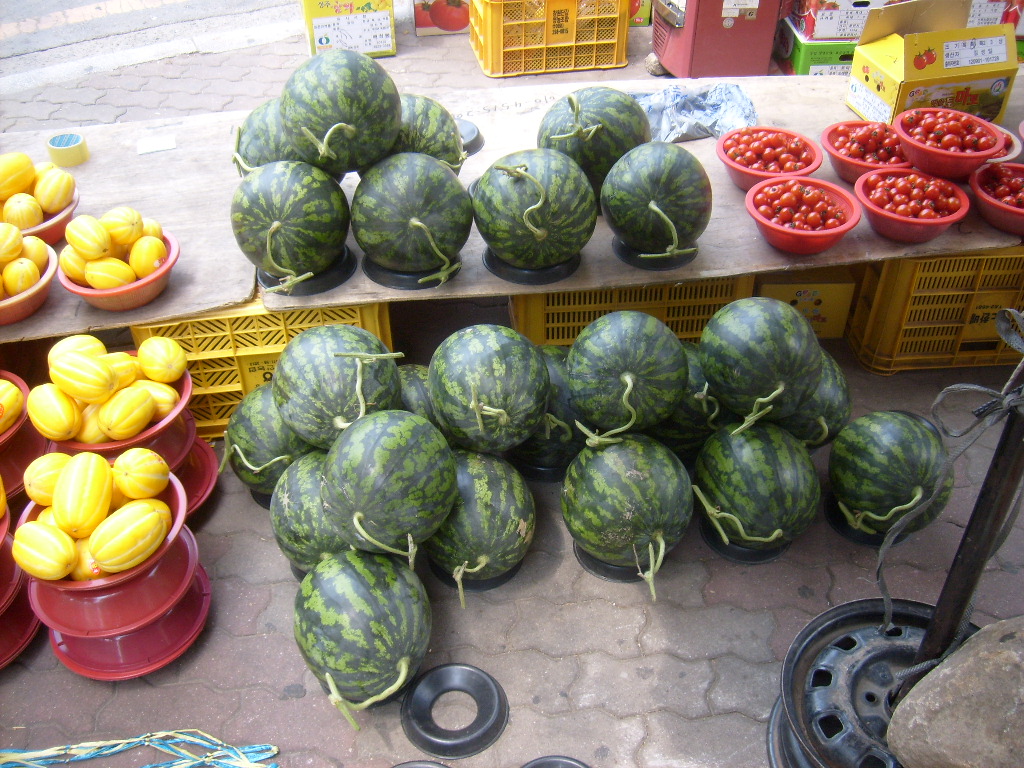
Summer fruits
This work is licenced under a Creative Commons Licence.


 Elwood 5566
leave a comment