Burdock 우엉 Monday Market
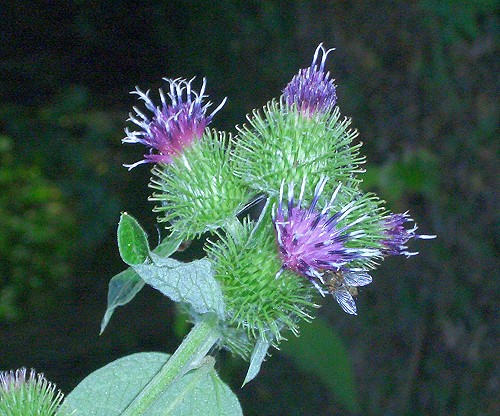
Greater-Burdock
Recognize this plant? If you’re British, it is fairly common and though simply a thistle to many, burdock, is a household name to most adults over 40. Burdock is a biennial plant the flower heads of which are burrs. When I was a boy these were infamous for sticking to your clothes and hair. However, since the advent of paedo-paranoia and personal computers, I would imagine younger generations have little experience of them. Incidentally, it were these burrs and the plant seeds that inspired George de Mestral to investigate their properties in the 1940’s and which subsequently led to the invention of Velcro.

Cross section showing the extensive taproot.
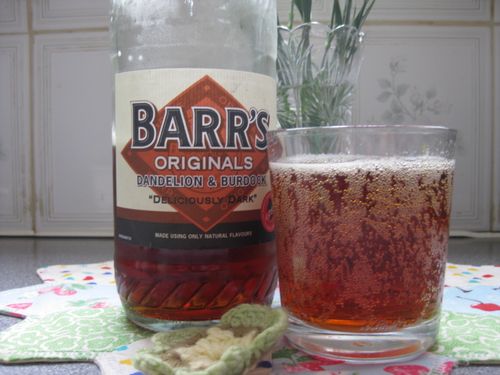
Childhood memories
In Britain, Burdock is probably most renowned as an ingredient in Dandelion and Burdock drink which has been popular in the UK since the 13th century and though it never had the same appeal as Coca-Cola or Pepsi, it joins the ranks of cult classics such as Tizer and Irn Bru. Burdock has various uses in herbal medicine. In Britain, it was also used as a food but today this practice lies in the domain of the more adventurous. (Burdock recipes UK)

probably more popular in the North of England and Scotland

a cult classic
In Korea, burdock taproot is a fairly common sight both in street markets and supermarkets and a bundle of whole root (통우엉),will cost around 2000-3000 Won (£1-£1.50.) The roots are used to make various side dishes and as a vegetable in soups etc.
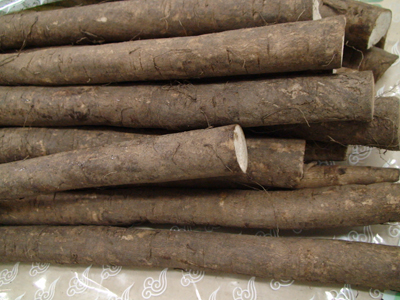
Burdock taproot
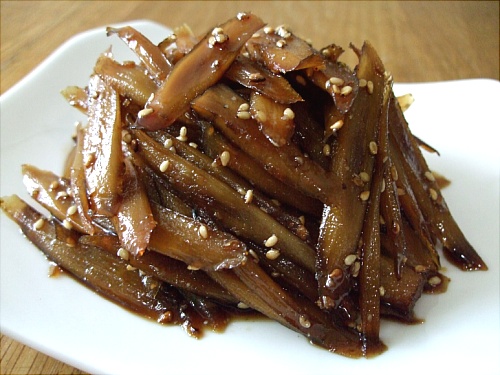
Burdock as a side dish
Burdock root as a pleasant taste, is slightly crunchy with a little woody texture and a nutty-earthy taste.

This work is licenced under a Creative Commons Licence.
Sesame Spinach (시금치 나물)
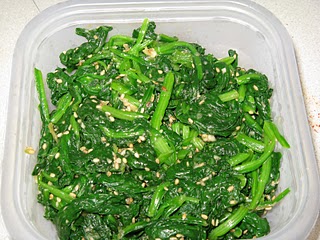
Delicious and simple to make
Vegetables! Boring! But there are a number of vegetables that can be prepared in the same way as sesame-spinach, one of my favourite Korean side dishes (반찬) which is both incredibly easy to make and tasty enough to ‘pig out’ on. I will often raid the fridge at night to snack on this. Koreans use the entire baby spinach plant which I’ve not seen in the UK but I’m sure you could probably make it with other types of spinach and indeed substitute spinach for other types of leaf.
The biggest bind to making this side dish is removing the yellowed leaves and trimming off the stalks. I recently watched the guru of Korean cooking, Maangchi performing a similar process with young radish shoots (열무) and her skills with a knife are formidable. In a flash she cut out yellowed leaves, trimmed off roots and scrapped their shafts clean. To be honest, I can’t be bothered, all that work for a couple of munches! What takes the wonderful Maangchi ten seconds takes me a minute and besides, she’s younger and not prone to backache standing over the sink. I only cook for me and once any chemicals and dust are washed off, I’m happy to eat any bits of root and yellowed leaf though I will pick them out if not too much bother.
In Korea, you usually buy spinach in bundles and it is best to put these straight in water and let them soak. Withered looking bunches will quickly revive. I recently bought a bundle and then went for a walk leaving them on the back seat of a car on a hot afternoon. On my return they had totally wilted and at home I noticed some plants were beginning to decompose . Subsequently, the water I washed them in was tainted green and smelt a little like a dirty goldfish bowl.

Baby spinach plants
Way too much work removing the few bad bits, so after thoroughly swishing them in water, they were blanched for a about a minute . Usually, I keep the stock and add it to bean paste soup which I eat for breakfast. This panful, I chucked straight down the sink.! The leaves are then washed in cold water and when properly drained, tossed in chopped red chilli, garlic, sesame seeds, a good splash of soy sauce and sesame seed oil. I’m on a diet, so I use the sesame oil sparingly but it is this which gives this side dish such a sexy aroma and compliments and transforms the spinach into something you can easily alone.

Maangchi's version, superior!
I can report, that I at no time noticed anything unpleasant about the decomposed state of some of the spinach leaves, washing, blanching and rinsing removed most of them. It still tasted delicious.
The Queen of Korean cooking, Maangchi, would be appalled at my cooking technique so if you want a first class tutorial, in various formats, on how to make this simple side dish, please click the photo below to activate. The site also contain many comments from readers who have tried various other vegetables to make a similar side dish.
I have used the same recipe using:
Baby radish sprouts (옇무).
Mung bean shoots (숙주 나물)

Make sesame spinach side dish with the Queen of Korean Cooking: Maangchi
Monday Market: Ot. 옻. Rhus Verniviflua

Ot (옻) costing 2000W (£1)
I’ve had some difficulty trying to find information on this ‘food.’ I’m not even sure how categorise it. The closest relative ‘food’ I can relate it to is cinnamon, which is a bark and a spice but Ot (옻), Rhus Verniviflua (Toxicodendron vernicifluum), is chunk of log and isn’t spicy. It is related to the poison ivy family and can cause skin irritation. When I first ate chicken and ot soup, I was warned it might upset my stomach but suffered no ill effects. It is a regular ingredient in chicken-ginseng soup (삼게탕).
Most information on Ot seems related to its use as a lacquer that is traditionally used in Korea and Japan to coat wooden chopsticks but also a range of other items, including fountain pens. The lacquer technique takes great care to apply and is extremely durable and beautiful and in this context the plant is referred to as the ‘lacquer tree.’
Ot can be seen in street markets where it is sold in a variety of sizes. It is boiled in soups and obviously removed before eating though smaller pieces of wood may be left in situ to be discarded at the table. It is also used to make a particular type of both bean and red pepper paste. In chicken-ginseng soup it provides the slightly bitter background taste.
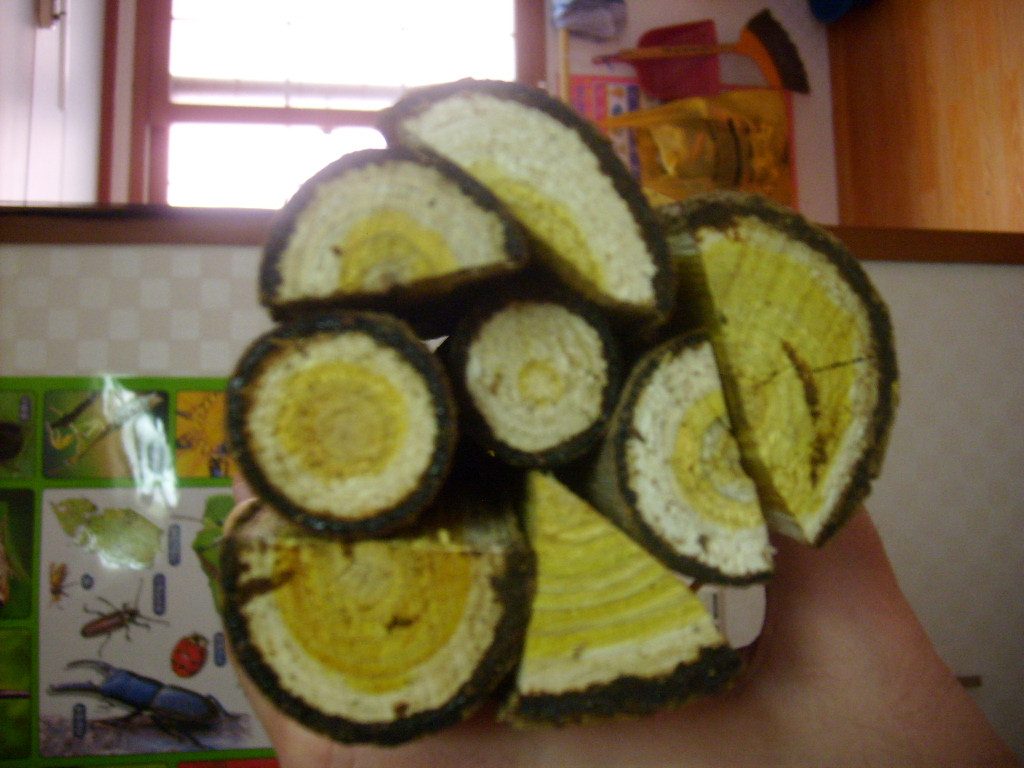
Nothing beats a log in your soup

Ot bean paste (된장)
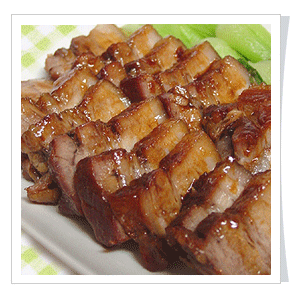
ot barbecued pork (옻 삼겹살)
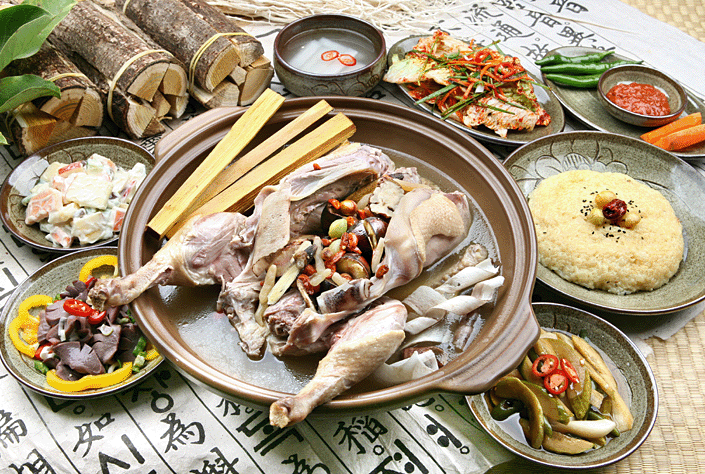
Ot as an integral ingredient in chicken ginseng soup. (삼게탕)

Ot as used to make a highly beautiful lacquer
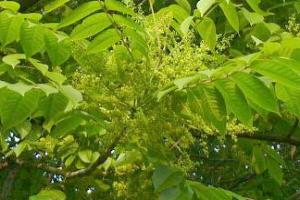
ot as it grows
Ot is also used as an oriental medicine but extensive information is difficult to find in English. If making chicken-ginseng soup, ot is one of the dried ingredients available in packets costing around 4000Won (£2) and available widely.

dried ingredients for chicken ginseng soup (삼게탕)
Monday Market: Sesame Leaf (갰잎) Perilla Frutescens

A field of sesame. (갰잎) Perilla Frutescens. (Ch'eonan) September.
I used to pass a field of sesame everyday on my way to school in Ch’eonan (천안). In the late summer, you could always smell the scent in the air especially in the muggy weather or when it was raining. The scent of sesame is quintessentially Korean. I feel in love with sesame leaves the first time I ate them though I often hear wayguks (meant endearingly), say they don’t like them. Being a fat twat, I eat most things. Indeed, after my first visit to Korea I grew sesame in my garden for a couple of years. Yes, they have a distinct taste and smell both more pronounced than the other types of leaves used to ‘parcel’ the components of a Korean barbecue. In addition, their texture, slightly furry and definitely more ‘leafy’ than lettuce, distinguishes them.

Sesame leaves with boiled pork. (보쌈)
Sesame, in all its forms, as a vegetable, kimchi, as seeds, oil and powder are an essential part of Korean cooking. The leaves are available throughout the year in portions reflecting the weather of that particular growing year. Late summer is when they are most abundant and at their largest in size, approximately the span of a large, adult hand.
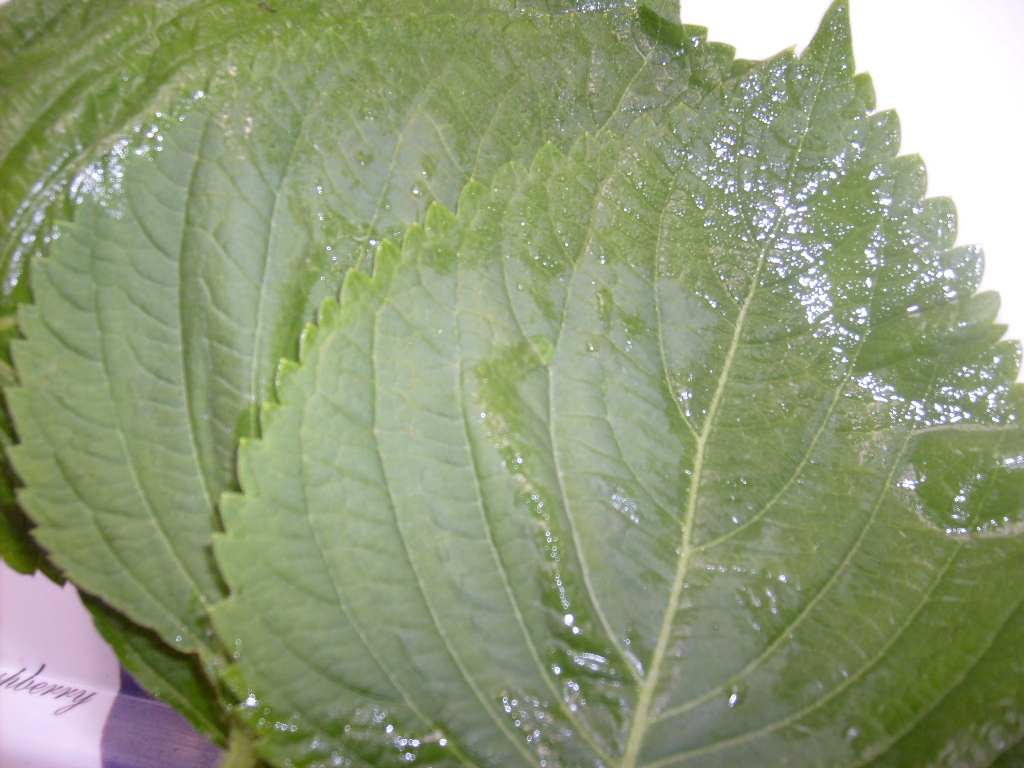
Washed leaves of sesame
The leaves can also be made into a kimchi and pickled though I find the process laborious. In supermarkets they are often sold washed in bags, or more traditionally, as in the street markets, in small bundles, folded in half and bound with a piece of twine. While not particularly tasty on their own, they are excellent when used as a wrap – provided of course, you like them in the first place. My favourite parcel – meat of some kind, a little boiled rice, raw garlic and cabbage kimchi or bean paste – delicious!
High on Mugwort (쑥) Artemisia Asiatica
After using mugwort in various soups, I decided to use it for the purpose of eliciting deep and prophetic dreams, which in the little research I did on this herb, is one of its claimed properties. You can find an interesting link for ‘dream pillows’ in my original article (mugwort). I bought two large bags of fresh mugwort, each the size of a carrier bag which I subsequently dried on my apartment floor after spreading them fairly thinly on newspaper. The drying process took about 5 days, each day, turning the ‘leaves’ to minimise the chance of decomposition. They entire two loads dried quickly with no decomposition at all. What started out as a large amount of mugwort quickly shriveled to around a quarter of the original proportion.

This was originally one entire carrier bag load of mugwort. it significantly reduces when dried.
I bought a small pillow, cost 4000W (£2) and taking out the inner pouch opened it and removed the filling. This I then replaced with the dried mugwort.

bagging the mugwort
In then replaced the inner pouch, now stuffed with dried mugwort, back into the original pillow. This in then inserted inside the larger pillow on my bed.

The 'dream pillow' - ready to go!
Now, strangely, as the mugwort was drying in my room, and it was quite a smell, like decomposing grass cuttings. I awoke one morning and instantly recalled a vivid dream about a boy who had left our school a few months earlier. Why I dreamt about him, I don’t know but I subsequently forgot the dream and started my day. However, in the evening, as I was about to leave school, my boss told me that this boy is due to return to our school later in the week. Suddenly, I remembered my dream. Yes, strange!
I subsequently slept using the ‘dream pillow’ for around a week before removing it. I have a theory that the smell of mugwort, which is reminiscent of lying on a pile of grass cuttings, actually interferes with your deep sleep, causing you to hover over the kind of sleep during which dreams are more easily recalled. So, I don’t want to dismiss mugwort as a dream enhancers as total ‘crystal crap,’ because of the one odd, and vivid dream I did have. So, next I want to try sleeping with the bag after the smell no longer wakes me up.
Mistletoe – Viscum album Coloratum (겨우살이) Not Just for Kissing Under
Specifics: a tea made with leafs and branches. I have only seen this being sold in bundles either in the mountains or street markets. It is not always easy and more common in spring. I would be very cautious of using this in Europe as the species may be poisonous, from the little I know the berries are. I can’t find any reference to its use as a tea in the West, though I have not searched extensively.
A few months ago I noticed a little old lady street vendor selling, amongst other things, what appeared to be mistletoe. I was intrigued as of course, in the West it is usually only ever seen at Christmas when it is used to kiss under. Like most of my Korean friends,when asked about this plant, none had the slightest idea what it was, nor any interest.
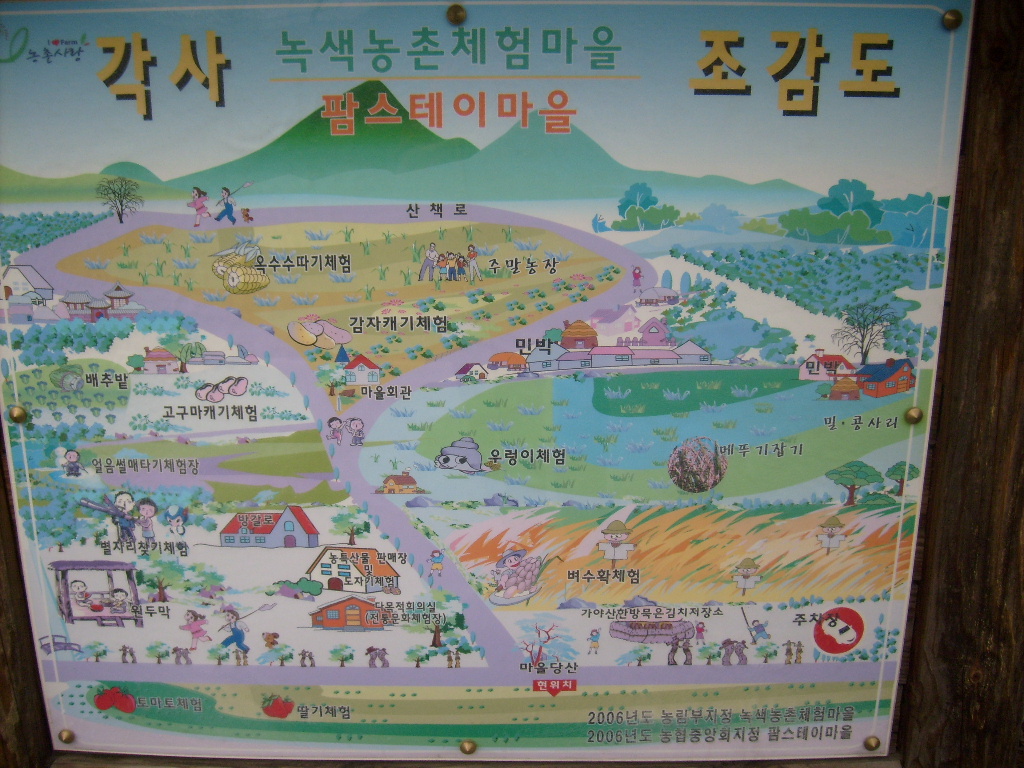
Kayasan National Park
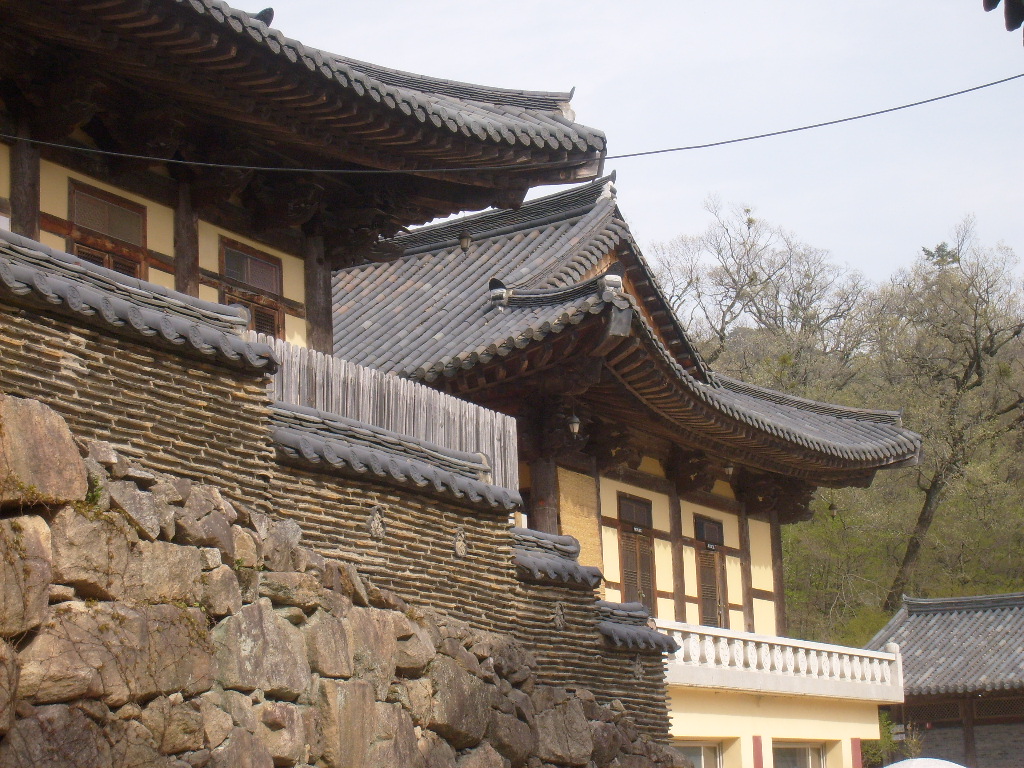
On Children’s Day, I went to Kayasan National Park (가야산) which is a short distance from Daegu. As is the custom on such days, we made a ‘pilgrimage’ to the Haeinsa (해인사) Temple, one of Korea’s most important temples and home to Korean National Treasure No. 52, the Tripitaka Koreana. These comprise 81.340 woodblock templates, carved in the 13th century and forming the most accurate, oldest, and extensive treatise of Buddhist law and scripture. With full foliage not yet set on surrounding trees, I noticed ‘balls’ of what appeared to be mistletoe growing on their upper branches. I was quite excited, an excitement my friends find quite strange and eccentric. None of them could tell me what they were but their interest was microscopically sparked when I pointed out to them that the leaf shape on the balls, only just visible, differed from that on the surrounding branches. And then we stopped by a small ‘kiosk’ selling the customary objects found in such locations, dried mushrooms, steaming silk worm cocoons, – various fresh mountain greens, herbs, onions and wood, and in one corner, a large pile of mistletoe, instantly recognizable and available either fresh or cut and dried at 10.000W (£6) a large bag.
'Balls' of mistletoe can be seen in distant the tree tops
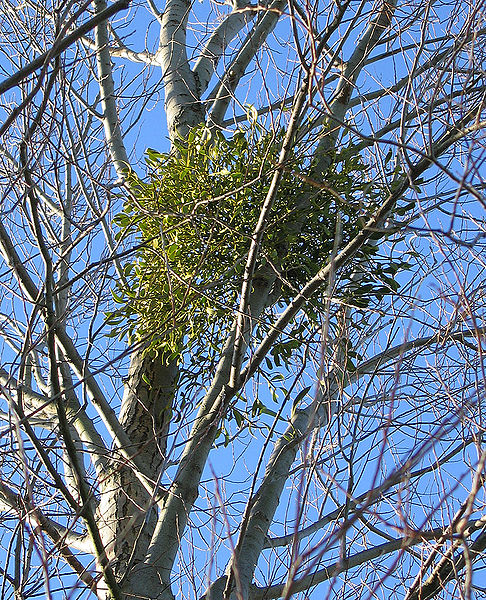
Mistletoe, Viscum album Coloratum -a hemi-parasitic plant
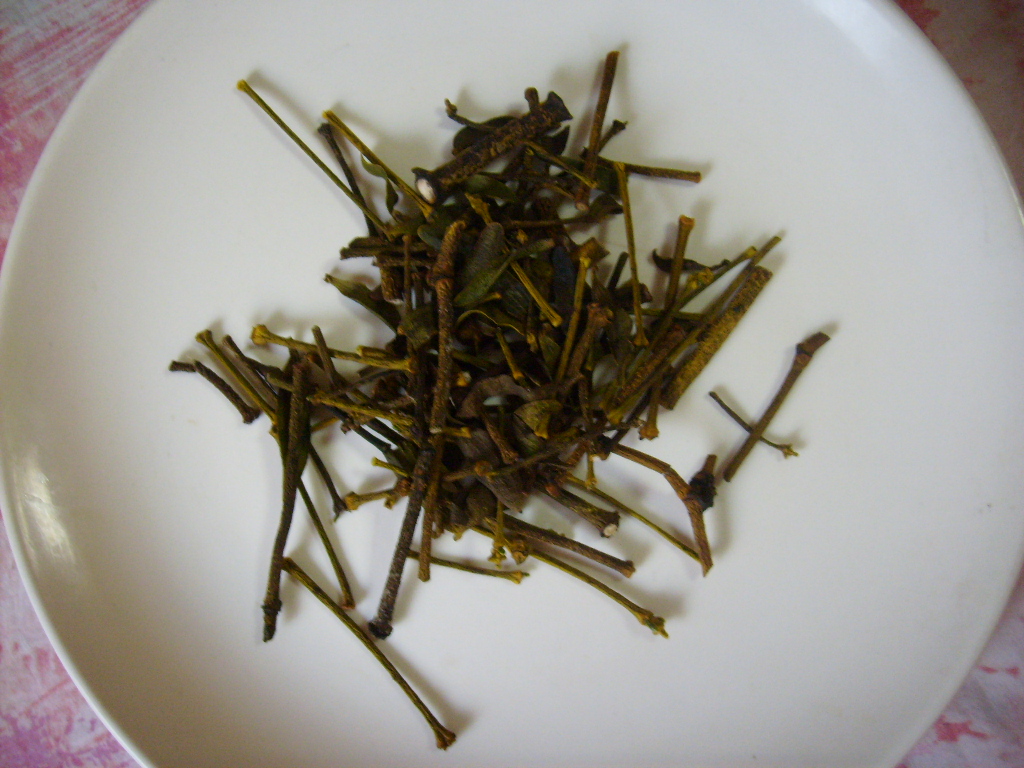
Cut and dried mistletoe
Mistletoe is a parasitic plant with an extensive and ancient history in many cultures. Myth suggests mistletoe was the wood from which the cross of Jesus was made, after which, as a punishment, the former tree was withered and reduced to a parasite. The plant has various hosts and usually grows on higher branches where seeds fall in bird droppings.
Instructions for making tea – Mistletoe can be kept in the fridge, though I was told not to store it in the freezer. A handful of twigs and leaves are then boiled in approximately 2 litres of water and the tea drank warm or chilled. I have discovered that a fuller infusion is made if the ‘leaves’ are left to steep over night before being removed. European Mistletoe can also be used for making tea herbalists claim it has numerous benefits, one of which is lowering blood pressure. Here is made by way of a cold infusion.
The taste – I am not really into hot herbal or cereal teas and generally prefer these chilled. Mistletoe surprised me as it has a very distinct and pleasant taste with a lemony aroma. The taste is remarkably similar to that of western type tea (Ceylon, PG Tips, Liptons etc) but quite soft. It lacks the bitterness or tartness associated with tannin in un-milked, un-sugared tea. Currently I prefer this ‘tea’ to Korean barley, corn or green tea.
© 林東哲 2010 Creative Commons Licence.
Monday Market. Aralia Elata – 두룹
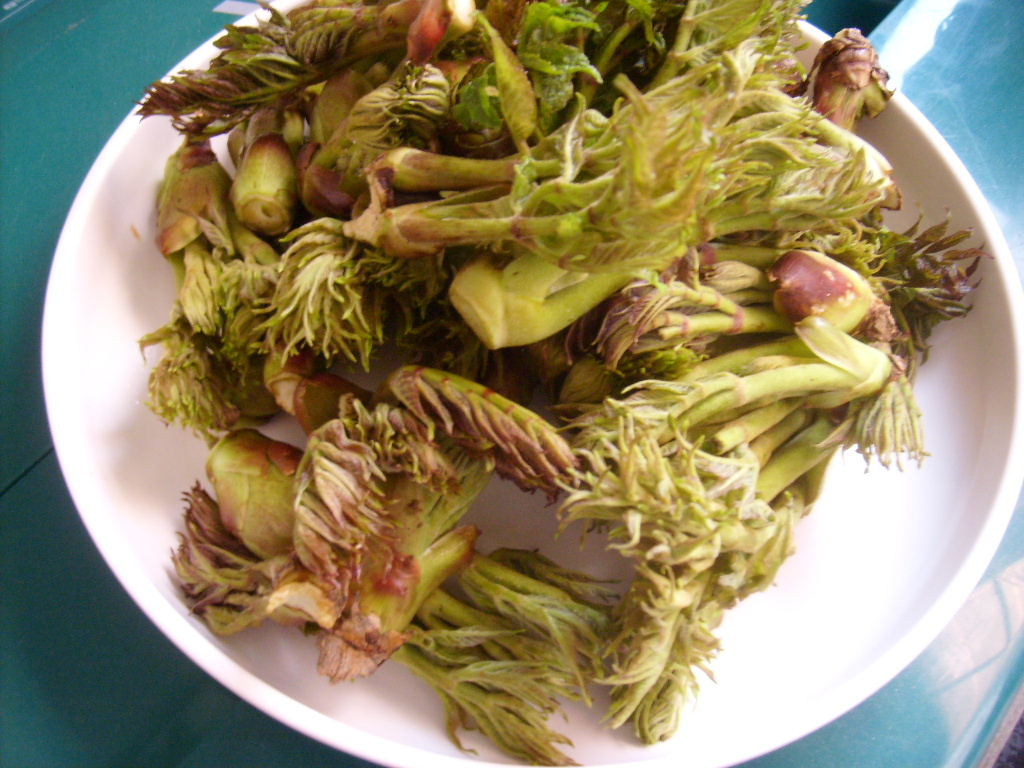
Shoots of the mountain green, Aralia Elatia. Durup (두룹)
It took me a bit of work to track down the details of this tasty mountain green which is currently in season. Durup (두룹 나무) is a deciduous tree which is rather attractive but for commercial purposes cultivation is ‘under-glass’ using small branches. The stems are thorny and the fresh young shoots, the edible part, appear in street markets and supermarkets between March and May. If you buy them from the old ladies on the street they cost about 10.000Won for a large bag of probably in the region of a hundred shoots. I noticed that in E-Marte about 6 shoots cost around 2000Won.

Aralia Elata the tree. (두룹 나무)
There are a number of ways to use durup but it is especially tasty, washed and dropped into boiling water and cooked in the same way you would broccoli. A short vigorous boil means the stems are slightly crunchy. I made a dip of a little mayonnaise, red pepper paste (고추장), and corn syrup (물엿). However, they are also used in soups, in pancakes and battered and deep fried.

A durup shoot (두룹)

Durup and dip

Durup and pancake
I don’t want to overrate this too much, I mean, how delicious is broccoli or cabbage unless swimming in butter? But honestly, this was as equally ‘tasty’ as broccoli with a somewhat nutty, asparagus-like taste. With a small bowl of dip I ate a large bowl for breakfast and then went back to the kitchen to eat what was left. Definitely worth trying! (more durup info here)
Sushi (회) and Sashimi (초밥) The briefest introduction
Many westerners conflate sushi and sashimi but the preparation and contents of each are quite different. Without offending Koreans, westerners also use the Japanese words to describe these food styles.
sashimi (회) – is uncooked and always fish and it is eaten with various leaves and sauces, the most common of which is wasabi (와사비), a stark hot, horseradish sauce. Fish, often in quite large amounts, is placed in a leaf after being dipped in a sauce and garnished, for example with sliced, raw garlic. The leaf is then formed into a ball and eaten. Basically, anything that lives in the sea can appear on a plate of sashimi (회).
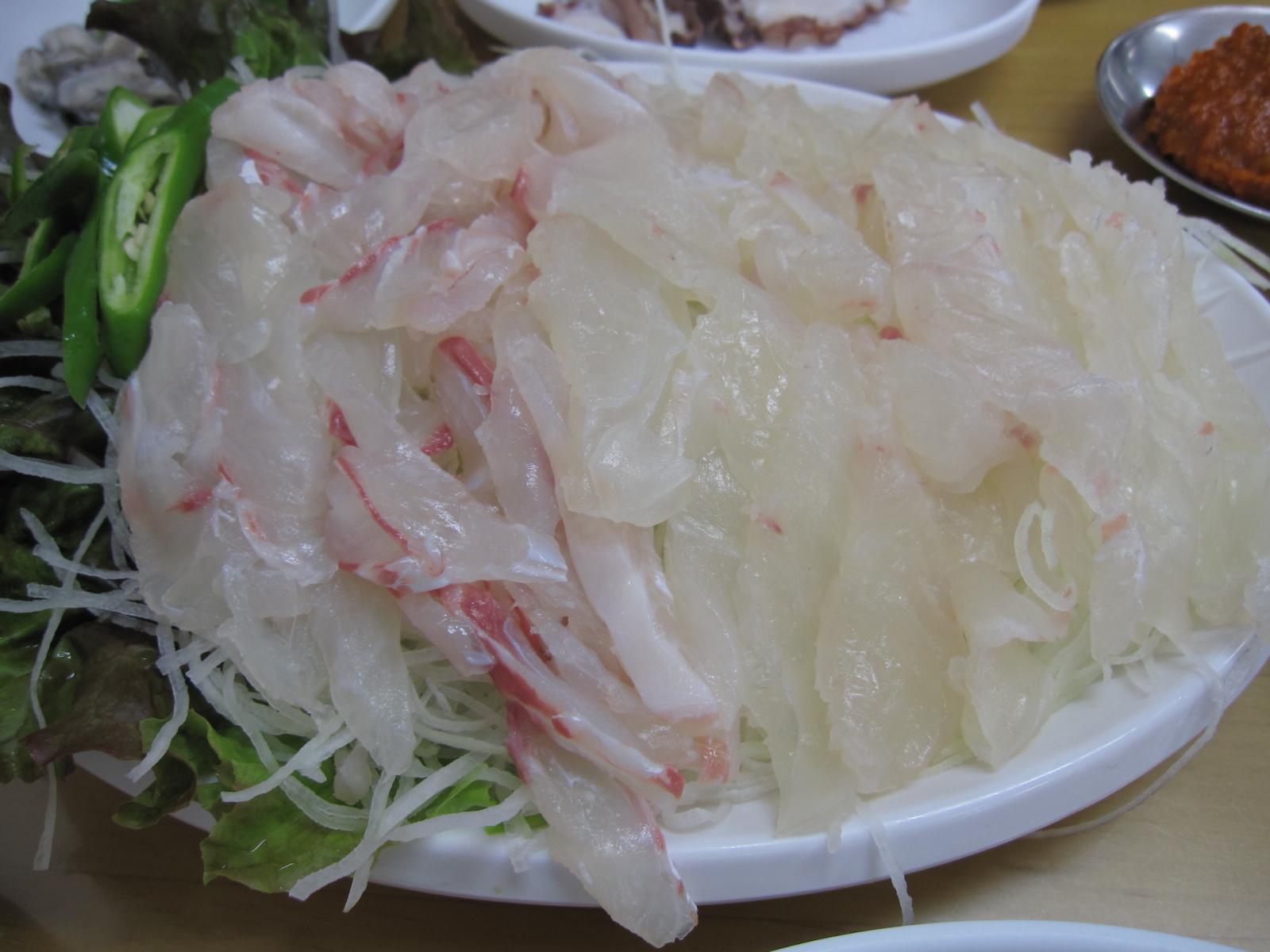
sashimi always fish - always raw (회)
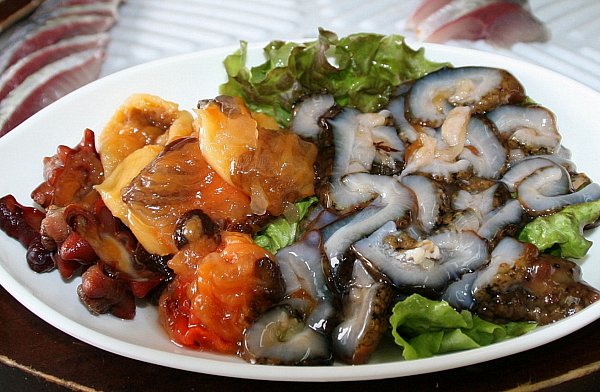
sashimi - more adventurous!
Sushi (초밥) – is vinegared rice formed into bases and topped with fish that is often cooked. Sushi can use non fish toppings such as tofu or lava seaweed.
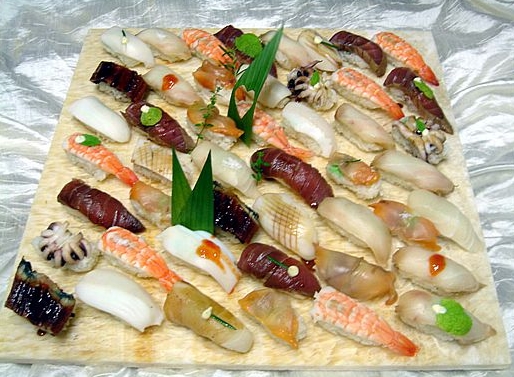
Sushi (초밥) - often cooked and sometimes no fish at all
Minari – Hemlock Water Dropwort (미나리) Monday Market.
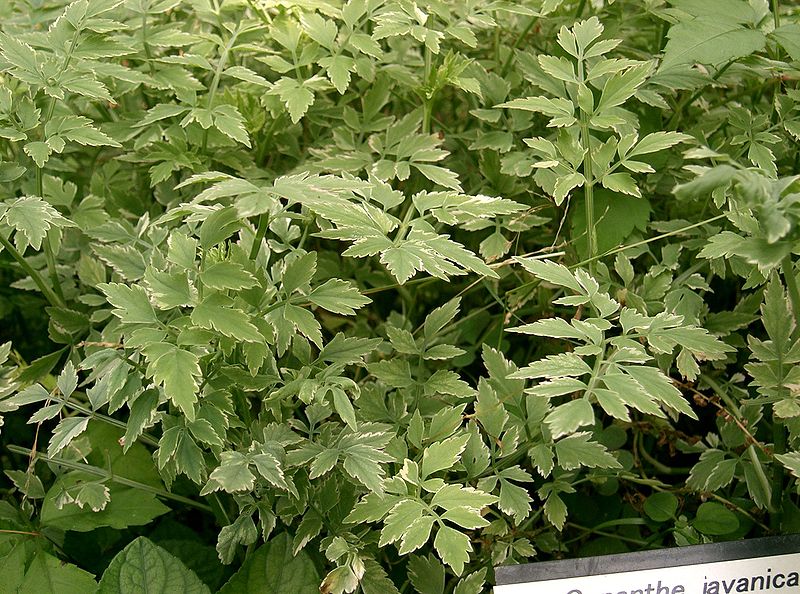
미나리 Minari
Yes, ‘hemlock’ raises alarm bells! Historically, one of the most common ways to poison enemies, ‘retire’ the aged and of course famed for its association with Socrates. Minari is probably the closest you will come to tasting hemlock and surviving to tell the tale. Rest assured however, Minari, Oenanthe Javanica, differs from the lethal variety, Oenanthe Crocata.
Minari grows all over Asia and is even used in Italy. It is a crisp, fresh herb which lacks the strength of water cress which is often recommended as an alternative in Korean cooking, (western style), when minari is unavailable. Personally, Id leave it out altogether as water cress has a very distinct taste.
Minari is used added to soups and a sprig is often used to garnish noodle dishes and it is a common component in cabbage kimchi. It is also used as a salad, often tossed in a red pepper based paste dressing. It is readily available throughout the year in street markets and supermarkets.
Quintisentially Korean – Mugwort (artemisia asiatica) 쑥

Mugwort (artemesia asiatica) 쑥
In the ebente-tang (이벤트 탕) last Thursday, the essence of the day was mugwort (쑥) which is a coincidence. This plant has a long and extensive history in both the east and west and being Spring, it is currently readily available in street markets and from the elderly women who sit on pavements with a small selection of vegetables.
I bought a very large bagful for 2000Won (£1 sterling) which I washed, drained and put straight in the freezer. Now, to be honest, I’m not sure how it is used but a quick search revealed one use is in soups. Immediately, I added some to my bean paste soup (된장 찌개) which I was making for breakfast. Don’t be fooled into think I’m a health freak, I had a BHC fried chicken last night, with a complimentary bottle of cola! My initial reactions to the mugwort were good but I’ll need to try it again.
Mugwort is also known as Felon Herb, Chrysanthemum Weed, Wild Wormwood, Old uncle Henry, Sailor’s Tobacco, Naughty Man, Old Man or St. John’s Plant. Korean uses it to colour some types of rice cake green and it is known as a blood cleanser. It is also used in the production of the small cigar shaped burners used in the oriental medical practice of moxibustion. The genus, artemisia, is extensive and one type, artemisia absinthiumm, is used in the production of absinthe, the oil of the plant giving this powerful drink, among other things, its rich green colour.

Absinthe
Mugwort pillows, also known as dream pillows, basically a pillow slip filled with mugwort, can apparently induce vivid and even prophetic dreams. I’m skeptical when it comes to ‘crystal crap’ so in my trawling for information on various aspects of mugwort, I fell upon a youtube video by ‘New Age Goddess, Djuna Wojton,’ which was too good to ignore. Djuana is a typical Earth Mother eccentric who is both entertaining and somewhat charismatic, so you can try the link and learn how to make yourself a mugwort pillow – which I intend to do when the market is next in town.
Interesting links for Mugwort:
http://en.wikipedia.org/wiki/Artemisia_vulgaris
http://www.botanical.com/botanical/mgmh/m/mugwor61.html
http://www.herbs2000.com/herbs/herbs_mugwort.htm
Absinthe – http://en.wikipedia.org/wiki/Absinthe


 Elwood 5566
leave a comment