Images of Innocence (1)

the hanja character for ‘purity’ (순수한)
In the prestigious boys high school in which I taught for a year, on sports day a class of first year students wore T-shirts on which was emblazoned the hanja character for ‘purity’ (순수한). Capturing the innocence of Korea students in writing is not only difficult, but contended; there will be many Koreans and westerns alike who see their proclaimed ‘purity and innocence’ as over rated or mistaken. But in Korea, I have never taught scum students, students who are vile human beings and whom if had to label, I would classify as violent, anti-intellectual, promiscuous, untrustworthy, grossly disrespectful, and foul-mouthed. Often they had parents who were equally as bad and in most of the UK schools in which I have taught have encountered boys and girls who basically epitomise what it is to be anti-social.
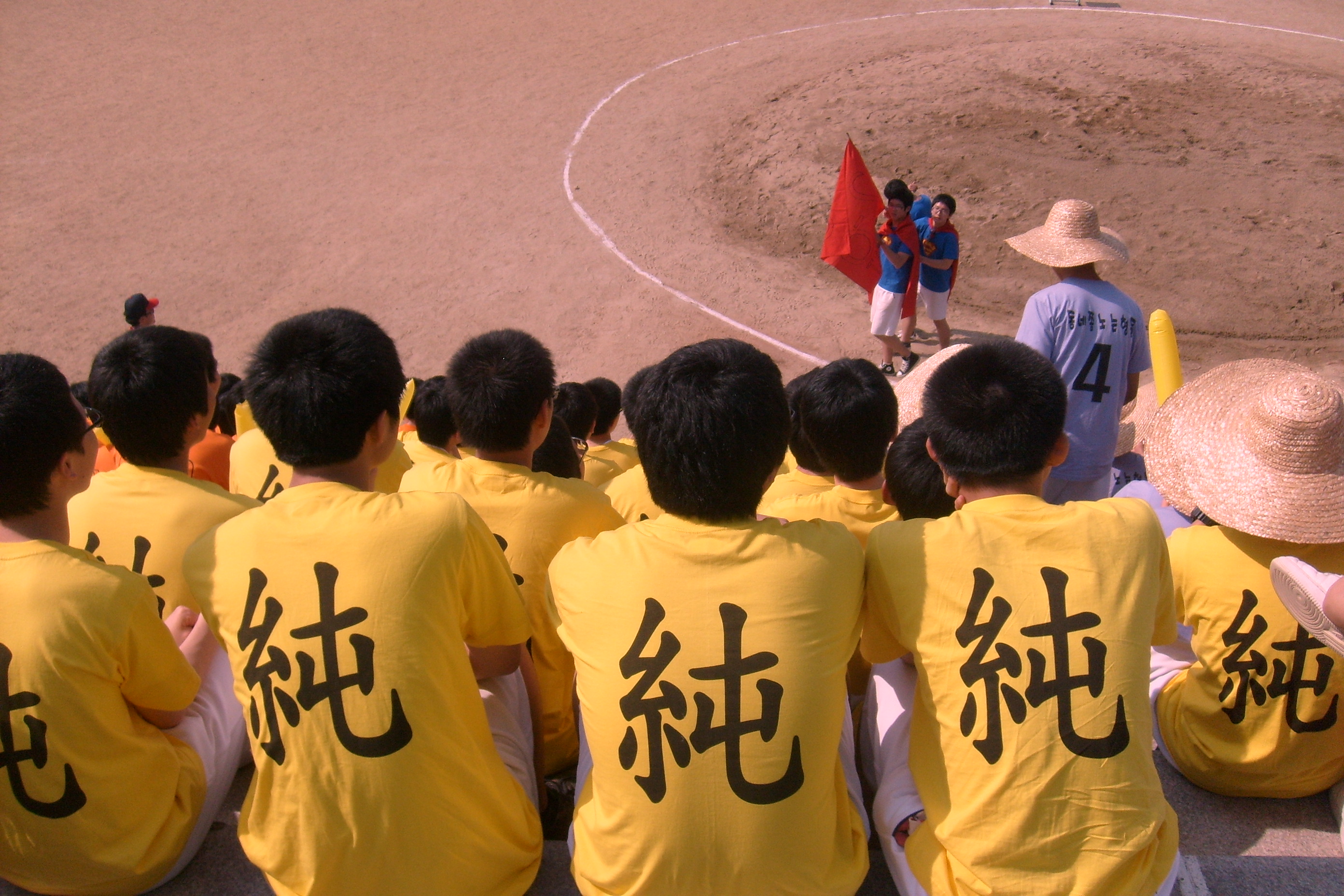
‘Pure’ – not a fashionable concept among British teenagers
Among most teenagers in Britain, ‘innocence and purity,’ which as usual we immediately associate with sexual conduct, but which I think Koreans would understand in a much broader context, is not something to be aspired to; indeed, I would suggest it is something to be shunned. I would absolutely agree that not all Korean students are angels and that there will exist some who could be classified ‘scum’ and I also agree that most British students are decent. I am suggesting, however, that standards and expectations in Korea are higher than in the UK and that associated values are currently much more effective in providing social cohesion, especially across generations. It is the values of Korean society that put the nation in the top echelons in terms of educational achievement, despite the systems pressures and flaws, and those values which produce a society with one of the world’s lowest rates of teenage pregnant, sexual activity and infection by sexually transmitted diseases.
Yes! Bad things happen in Korea and under the surface there is more nastiness than is immediately apparent. But unlike Britain, I have never seen a Korean girl of 13 giving a boy oral sex in the bike sheds and I have never taught or seen girls of 14, 15 or 16 who are pregnant. Instead of leaping to the defence of the moral and personal degeneracy of the west, which festers like an open wound and is visible at every level, instead of raising reminders that Korea too has a bad side, which I do not doubt, we need to acknowledge that in some spheres, Korean society is very successful and perhaps worthy of emulation.

© 林東哲 2010 Creative Commons Licence.
A Day of Reckoning – 'Suneung' (수능)

D Day countdown
As I write, across Korea thousands of third year high school students, known as ‘go-sam’ (고삼), will be religiously counting down the days. Some began the count at ‘D Day minus 365,’ others, more traditionally, began at ‘D Day minus 100.’ Today, is ‘D Day minus 21.’ And within the space in which I have written this post, in exactly three weeks time, the futures of thousands of teenagers will have been significantly determined.
‘D Day’ itself will present about 600.000 of the nation’s ‘go-sam’ students, with one of, if not the most, important experiences of their lives and certainly their most important exam. The suneung (수능) or CSAT (College Scholastic Ability Test) is the Korean, standardized test taken by all final year high school students and although some alternatives are now offered, and more are supposedly on the way, for most students it is the sole qualification required for entry into Korean universities.
Of all the standardized tests globally, the suneung is seen as one of the most rigorous. The path towards that moment of academic reckoning begins in elementary school and every step in the development of academic ability from infant study onwards, is a preparation for the suneung.
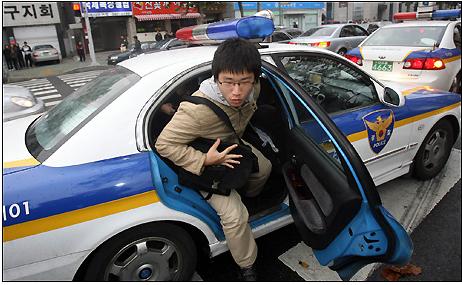
a late arrival is given a police 'escort'
Taken on the second or third Thursday in November, the suneung temporarily transforms the face of Korea and on the day there is a sense that the entire nation is backing the candidates. The transformations are a reflection of the pivotal role education plays in society and despite the professed importance other nations give to ‘education,’ in most, only a national catastrophe or war would be sufficient to suspend capitalism or national defence. In Korea education stops everything, back in Scumland UK, it stops nothing and I can remember sitting the equivalent of the suneung exam to the accompaniment of persistent rifle fire from the nearby military base.
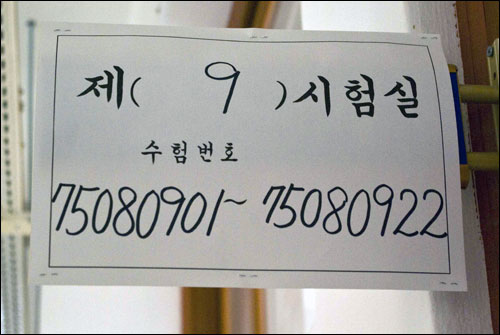
The Korean equivalent of Room 101
The exams last one day and are divided into a number of periods during which exams are taken in subjects such as: maths, social studies, English, sciences, vocational studies and foreign languages. The exams are largely multi choice. To guarantee candidates arrive in school armed with equipment, entry permits, a ‘fighting spirit’ and ready to do their best, a range of national procedures and contingencies come into effect:
♦All other students begin school after 9.am.
♦To help ensure transport system work to maximum efficiency, many businesses begin work at 10am. This includes the Stock Exchange! Yes, there’s only one Stock Exchange, it’s in Seoul and probably nowhere near a school, but it’s the thought that counts. For a few moments the success of students is of more importance than the economy.
♦During the periods when listening test are being conducted, planes cannot land at airports and those waiting to land have to circle above 10.000 feet. Even air-force movements are curtailed, within reason, to ensure silence at the appropriate times.
♦Korea Electric Power Corps places 4000 workers on standby in the event of power failures and each examination center, of which there are about a 1000, is sent a technician to monitor power supplies and await any emergency.
♦Police assist on the roads approaching schools and are also on hand to transport students who’ve encountered problems. Nerves thwart the plans of the best intentioned candidates.
♦Since 1993, there has been no evidence of suneung questions being leaked. In the days immediately prior to D-Day, specially selected professors are imprisoned in a hotel, denied any form of contact with the outside world, the hotel windows blacked out, and equipped with a library of resources, they formulate the exam questions. No doubt the hotel is 5 star, but nonetheless, they are kept in solitary confinement until the exams are officially over.
♦Schools are also supplied detectors with which to scan students for devices, hand-phones etc, which could be used to cheat.
♦Female teachers in high schools on the day of Suneung are not allowed to wear high heeled shoes or perfume.

'suneung exams transport support' provided by the military

Police support
Beyond official and bureaucratic procedures adopted to ensure both fairness and a conducive examination atmosphere, a host of other practices have developed aimed to improve the chances of success. Eating anything sticky on or before ‘D Day’ is believed to enhance ones luck. Sticky things cling to the wall and do not fall and so by chewing on toffee (엿), or sticky rice cake (찰떡), it is hoped you grades will hold fast and not slip into the gutter. Conversely, eating anything slimy, such as seaweed soup (미역 국) might incur bad luck and see your chances for the university of your choice slipping away. At the same time, one must avoided uttering any word expressing failure, falling, dropping, sinking, sliding or slipping. The reason obvious; if it’s muttered, it might happen. Parents and relatives will travel to mountain temples to say prayers and leave slips of paper on which are written the names of loved candidates, or they will attend special services in churches where small Bibles can be purchased in which you stick a photo of your son or daughter, all in the hope of currying divine favour. I doubt many believe success or failure is determined by the consistency of ones food, use of language or even prayer but anything which can be used to bolster the spirit is a valid psychological weapon in the quest for exam success and highlights the desperate measure to which the importance of exam success drives individuals.

Parents praying for the exam success of their children. I did the same thing here with a friend's family in 2001.
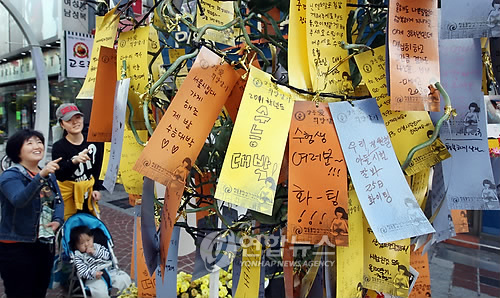
messages of good luck at the start of the final 100 day countdown
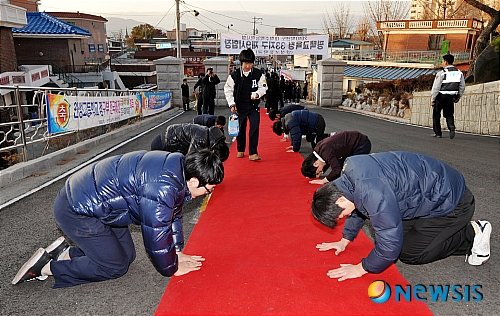
'go-sam' students being greeted by their juniors on exam day
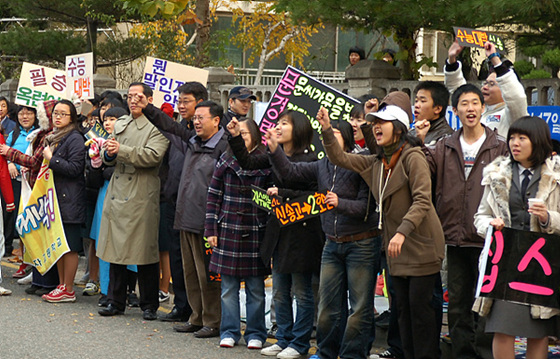
plenty of rousing support

supporters
On D-Day, parents will crowd around school gates, some will pray and other will hold their Buddhist bracelets in reverent anticipation. Candidates are often greeted by 1st and 2nd grade students as they arrive. Colourful banners wishing students good luck are waved and sometimes juniors will perform the full bow at the feet of those about to be tested. It is also common for juniors to rally the spirits of their stressed seniors by singing rousing songs before the exams commence. My last high school had almost 2000 students and it raised the hackles to hear 1200 boys singing in unison from all the classrooms under the 3rd floor, where the suneung candidates waited for their exams to commence.
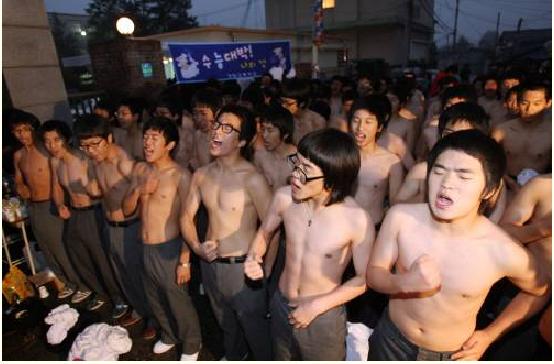
Boys singing after the completion of exams

a mother prays at the school gates
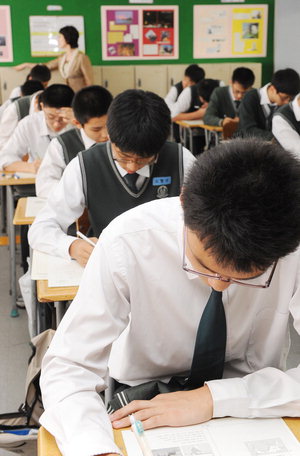
The exam
And when the exams finish, all the text books and notebooks used by the students throughout the year are unceremoniously tossed from the go-sam windows, often on the 3rd floor. Of course, the pressure isn’t off as from 6pm onwards, newspapers can publish exam questions and the agonizing process of self assessment begins until the results are finally released. And of course, as with every exam in Korea, only those with perfect scores are allowed to feel any satisfaction and even this is down played.
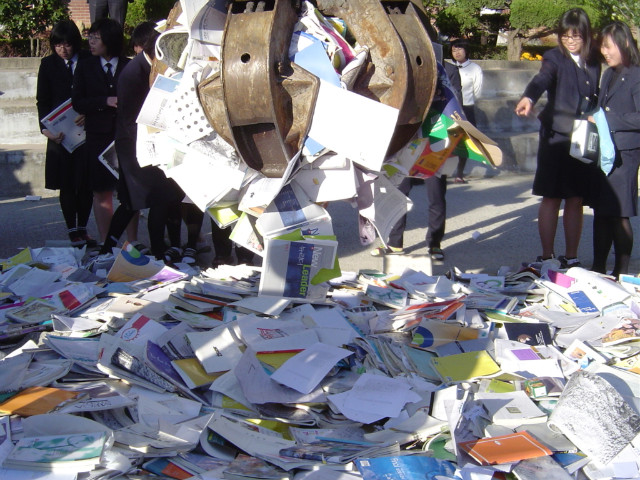
legitimate vandalism

relieving stress
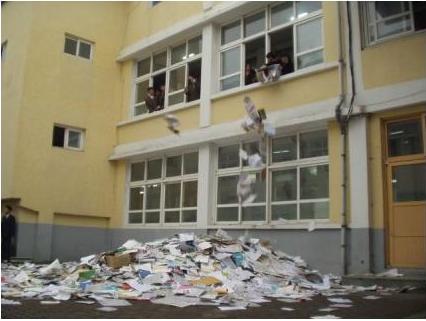
Finally!
Undoubtedly, Korea has one of the best educated populations globally and though we might want to qualify the nature of that ‘education,’ we cannot dispute their success in terms of literacy and the sciences. Objective subjects and languages are much easier to assess. When it comes to the arts and subjective thinking, Korea has problems but however flawed or misguided we might perceive the Korean education system, it has facets worthy of admiration and parts perhaps worthy of emulation. Coming from Scumland UK, where dumbing-down is fashionable, bone-idleness excused, and the fruits of study and erudition watered down into a melee where belly dancing becomes an academic pursuit which has parity with mathematics or physics, it is refreshing to work in a culture where education has too much significance rather than little at all.
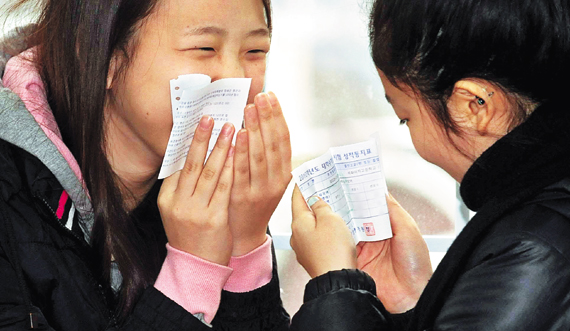
results
To all 2010 go-sam (고삼) students about to face the suneung, ‘fighting’ (화팅!)
Related Articles
♦ For a selection of video clips giving a general idea of the various suneung activities
© 林東哲 2010 Creative Commons Licence.
Laura -Korean Teenagers (3) Magical Moments
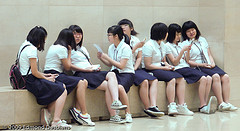
Korean school girls
Laura is perhaps one of the most pleasant girls in my school and I have now been teaching her for over 2 years. Her grades in her State school aren’t the best, which for Koreans is always 100%, but she excelled this year when she twice gained 100% in her English exams. As usual, she still comes to the academy wearing an assortment of scents and will thrust her wrist under my nose and ask my opinion. In the last few months however, she has learnt to use them with discretion and they no longer overpower the entire academy. Eye-liner is a recent addition but is only minimally applied and she doesn’t wear it in school; it isn’t allowed. Contact lenses, it seems, are tolerated and I have noticed a number of girls have started wearing them. I’m told a pair cost around 10.000 Won (£5). Although I’ve seen two girls in supermarkets with blue contact lenses, which actually looked attractive, the colours most girls seem to wear are either dark brown or more usually, black.

The Hanja character for 'innocence.'
In class one week, Laura and her friends told me the procedure for attracting a boy’s attention and then going on a date with them. The first part of the process is to offer the boy small gifts such as chocolate or candies. One of the most significant moments, and one a few girls seem to cherish, is when a boy they are interested in makes substantial eye contact. Once an interest has been established, photos might be exchanged by way of their mobile-phones. The aim of preliminary overtures is to secure going out with the boy, either on a trip to town or more significantly, a trip to the cinema. Such events give their friendship the status of ‘going out’ and it is from this date that teenagers start referring to their ‘sweetheart’ as a ‘boyfriend’ or ‘girlfriend’ and counting the days until their relationship reaches its hundredth day, a date which is usually celebrated (백일 – ‘100th day,’ is also celebrated a 100 days after a baby’s birth).
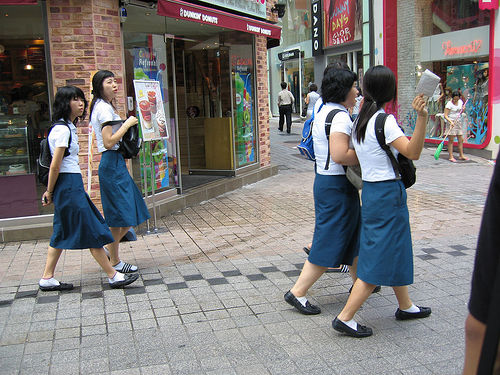
'Boy hunting'
The most significant part of going to a cinema is that soft drinks and popcorn are shared and Laura and her friends are quite excited when they talk about the ‘skinship’ involved in putting their hands in the large container of popcorn at the same time as their ‘boyfriend’ or their heads knocking or touching when drinking from straws in the same cup of drink.

...as long as there's room for two hands
Most of the girls in my academy, even ones older than Laura, who is 14 in western years, (Koreans are one year old the moment they are born), neither date boys nor express much interest in them. Indeed, despite its innocence and cuteness, many parents do not allow dating . Unlike the west, cinemas are not the venue for groping or fondling and such sexual intimacy does not seem to be anticipated or envisaged by anything other than university aged students. Boys the corresponding age of Laura profess much less interest in dating ‘rituals’ though some have crushes and I have only met a couple of boys who seemed interested in dating girls. Of course, this is only my limited observation.
Around the town young ‘sweethearts,’ probably Laura’s age and older are occasionally seen holding hands or having a meal together in a restaurant which is one of the ways in which a hundredth day celebration is marked.
Such ‘rituals’ seem trivial and naturally, they are played out in western culture, however, in Korea they are vastly more significant because more intimate physical affection between the sexes, even between adults, is frowned upon. No doubt this may be changing but other than holding hands, petting and kissing in public is a non-event. That Korean teenagers are not likely to engage in sex before adulthood, a phenomenon backed up by Korea possessing among the world’s lowest figures for teenage pregnancy and sexual transmitted diseases, places more significance on events such as eye contact and non-sexual intimacy. The very most the average teenager can expect in terms of any intimacy before adulthood, is probably a kiss on the cheek. Korean teenagers, unlike their western counterparts are under no pressure to either be, or appear to be, sexually active. Further, it seems Korean teenagers are quite scathing of the character of teenagers, boys or girls, who do engage in sexually activity while still school children.
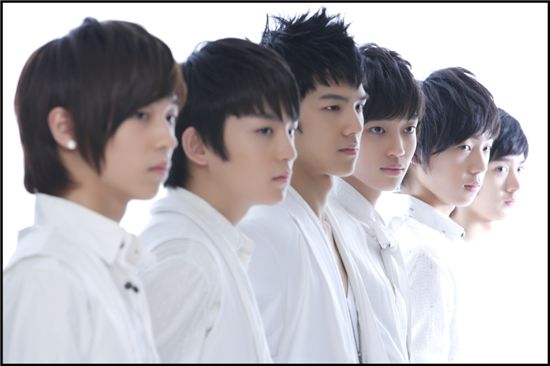
height is crucial, looks secondary
And what are the criteria for a suitable ‘boyfriend?’ As with older girls I have talked to, height is crucial and ideally the boy needs to be 10 cm taller than the girl. I have been told this is because the boy needs to be taller than the girl should she wear high heels. Boys need to be attractive, kind, considerate towards the girl, funny and smart. Not all the girls think alike and a few said they would consider a boy shorter than themselves or one academically weak.
© 林東哲 2010 Creative Commons Licence.
It Can Pay to be a Pygmy

Not suitable for Pumpkin people
My Korean girl students love camp boys, other wise known as ‘flower boys.’ Camp is totally in and the poncier and more androgynous a boy or man is, the better – provided of course, he’s straight. If you dressed a frond of ooo-wong (우엉 – burdock) in fashionable clothes, gave it a nice haircut and sent it flouncing down the street all limp and bendy, girls would swoon.
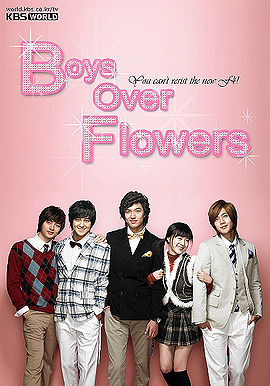
‘Boys over Flowers;’ highly successful!

Jay Park (박재범) – Handsome or Pretty? Or even pretty handsome!
Boys over Flowers (꽃보다 남자) was a highly successful drama which ran in early 2009, was aired in numerous other Asian countries and has subsequently been identified with the migration of Korean culture to other countries, a phenomena known as the ‘Korean Wave’ (할류). The first ‘wave’ (2005-2009), often associated with ‘Winter Sonata,’ consisted exclusively of drama which gradually gained a fan base outside Korea, predominantly in Asia. With the export package now including pop music, theater and musicals, a second wave (dating from 2010), can be identified. As an example, the singer Jay Park created more traffic via Twitter, on March 8th, 2010, than did that day’s Oscar nominations. Coined by some as ‘Hallyu 2.0,’ the ‘2nd ‘wave’ has encompassed Egypt, Turkey, Romania, India and even Uzbekistan. Interest in Korean has increased and a country as small as Nepal now has 30.000 people a year signing up for Korean language proficiency tests.
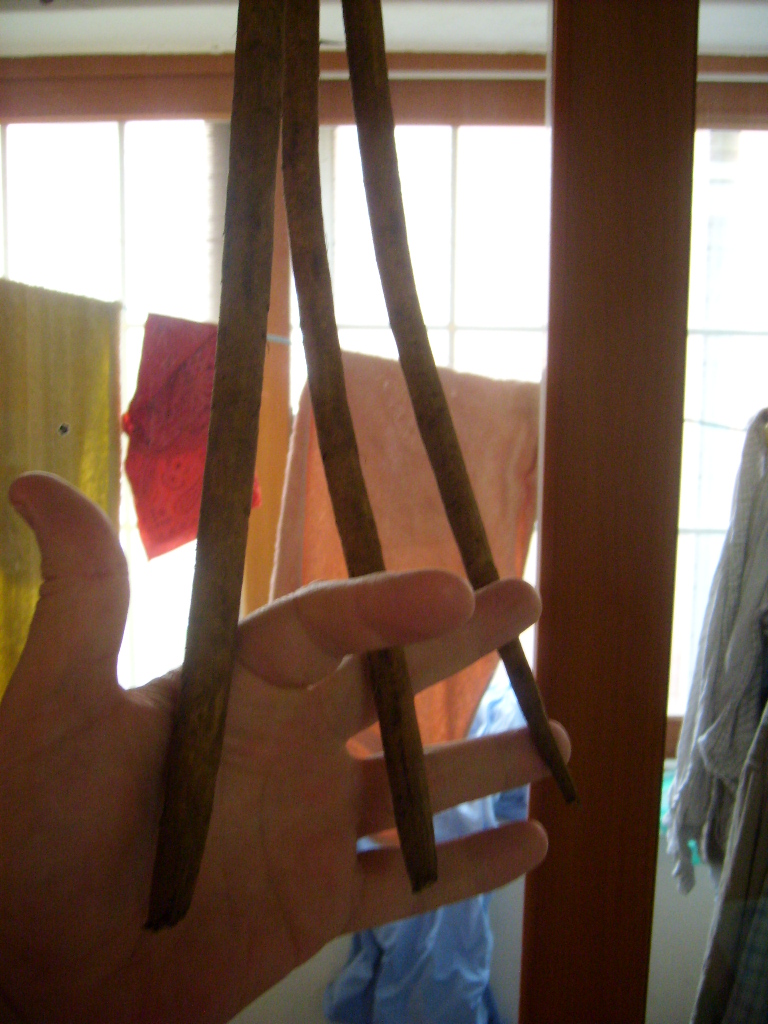
Burdock, wu-weong (우엉) Limper than a lettuce!
The incredibly popular, ‘Boys over Flowers,’ which has among other things, helped lower the fan-base age associated with the ‘Korean Wave,’ consists of 29 episodes following the intrigues of a group of high school boys. The four central characters, often refereed to as ‘F4,’ have been attributed with consolidating the interest in ‘flower boys’ and encouraging men to take more pride in their appearance. As a result, significantly more Korean men now use cosmetics and the current trend for teenage boy fashion is what Americans might call ‘preppy.’
‘Boys over Flowers‘ (꽃보다 남자) was inspired by the Japanese bi-weekly manga comic, Hana Yori Dango, by Yokio Kamio and ran from 1992-2003. The magazine was targeted at Japanese high school girls. I find the title, ‘Boys over Flowers,‘ a little clumsy and feel ‘Boy’s before Flowers,’ a frequently used alternative, much clearer. The title is a pun on the Japanese saying, ‘dumplings before flowers’, which refers to the habit of being more interested in eating snacks than viewing the cherry blossom during the famous Hanami festivals. It is the snacks and festival foods that are the most alluring; the blossom simply provides an excuse to indulge. And if you’re not eating the snacks, you’re probably watching the passing boys, especially if they are as beautiful as the blossom.
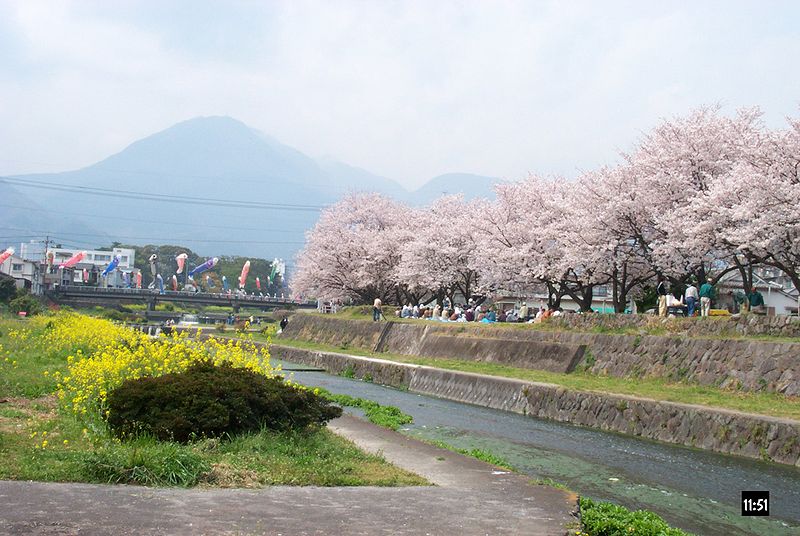
A Japanese hanami party. Beautiful blossom, beautiful boys, delicious food. What’s your priority?
‘Flower boys,’ basically meaning ‘pretty boys,’ is not in the least offensive and Korean youngsters, even boys, are able to differentiate between those who are ‘handsome’ and those who are ‘pretty.’ Neither identifying someone as ‘pretty’ or indeed being labeled ‘pretty,’ implies any accusations of homosexuality or effeminacy.
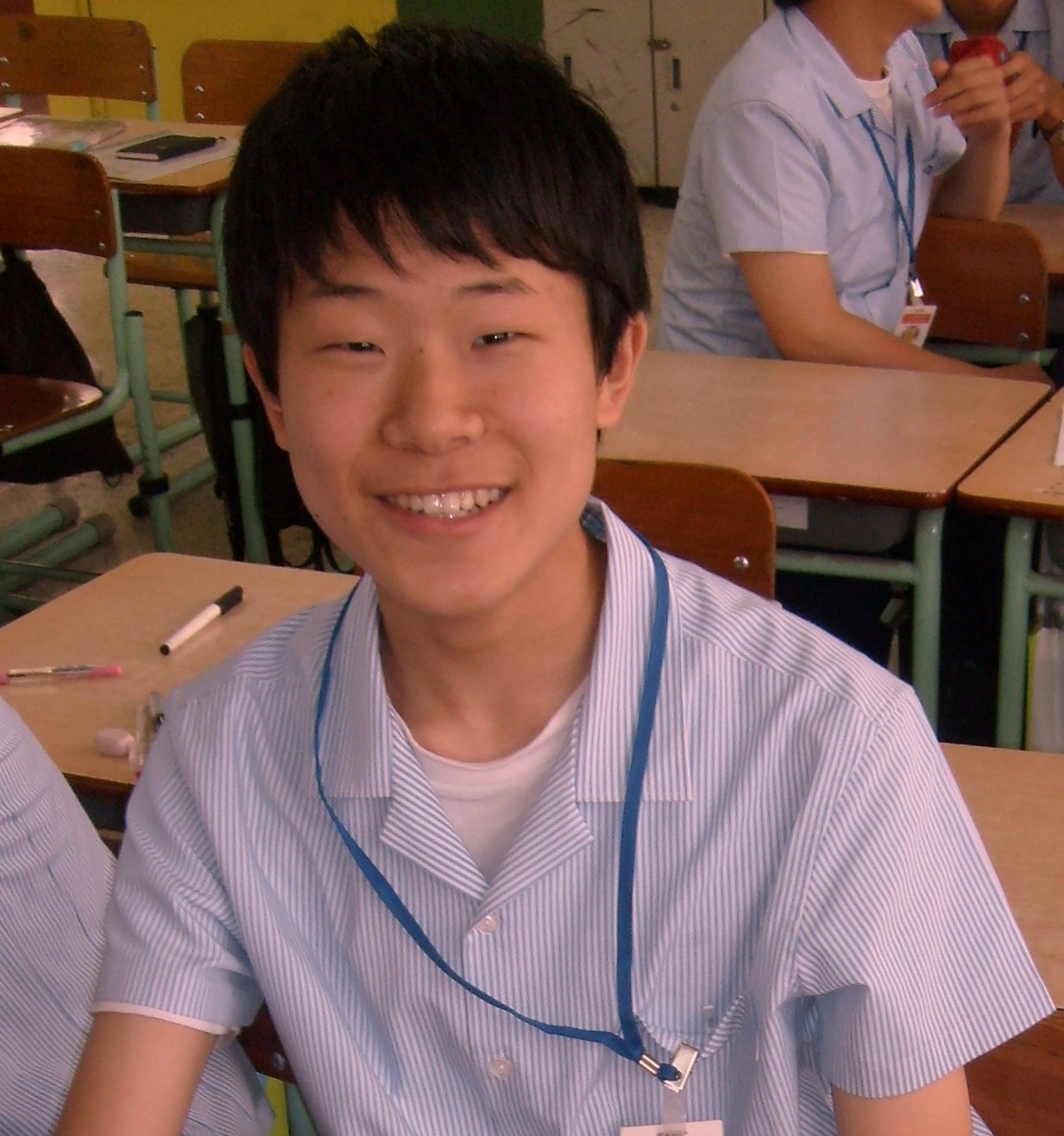
A boy nominated by his class as a ‘pretty boy.’
‘Pretty boys’ have delicate features, soft skin, and are usually a little gaunt and certainly very androgynous. In terms of western, and certainly British standards, they’d babyishly be deemed ‘gay’ and might even get the shit kicked out of them. Korean ‘flower boys’ can also get a rough ride, not because they’re gay, but because of their pin-up status and ability to capture the hearts of girls and women. One significant mystery-comedy movie, ‘Flower Boys,‘ often called by the crappy title, ‘Attack of the Pin Up Boys’ (2007), centers on the theme of ‘flower boy bashing.’ There’s no pleasing thuggy straight men who will just as quickly bash you for being gay as they will for being heterosexual and a babe magnet. Of course, Attack of the Pin Up Boys is only a story and doesn’t reflect real life. From what I’m led to believe however, the biggest problem ‘flower boys’ face, is in convincing girlfriends they are not ‘playboys’ (바람둥이) because they are often too pretty for their own good.

Leetuk, one of the Super Junior celebrities. A possible candidate for a ‘pretty boy’ nomination.
Unlike many British girls, Korean girls tend to like a boy who is well-mannered, slim and averagely muscled (which given we are talking predominantly about boys, means skinny), has broad shoulders, is fashionable and intelligent. Neither do they have to have a six pack or look manly. Indeed, a few of my female students positively dislike both aggressive boys and muscles. But the most important quality of all, one which constantly supersede all others, is that a boy has to be taller than his girlfriend. Girls can be quite cruel about this requirement and while talking to a class of girls about the celebrity Tae-Yang (태양), I overheard one call him a ‘loser.’ The reason? He is under 180 cm tall. Basically, if you’re a boy and short your fucked!

Taeyang Big Bang member. ‘Handsome’ or ”pretty?’
Though they wouldn’t understand the word even if explained to them, the definition most reflecting the sort of boys Korean girls like, is camp! In the very words of one of my students, ‘we’ like boys who ‘look like girls.’ And though ‘handsome’ boys, that is boys who look like men, are attractive and certainly seem to be preferable in terms of a solid relationship, many girls will swoon in discussions about ‘pretty boys’ even if they prefer the ‘handsome’ type.
Back in Scumland UK, when it comes to boys, many girls have no taste at all often because their priority is a quick rummage in their panties or a passionate-less poking behind the bike sheds and hence prefer boys who are one step up from brute primates and who are valued for being aggressive, butch, sporty, loud mouthed and promiscuous. If British girls demand any prettiness, it is that their lads be, ‘pretty unintelligent.’ Yes, I’m being horribly unfair but in the UK, currently riddled with anti-intellectualism, teenage pregnancy and sexual diseases, for many, any spark of brain is a turn off. The reason why the Korean predilection with ‘flower boys’ is so refreshing is that it is a kick in the mouth to the belief that the alpha male is universally appealing. I would go as far as to suggest that in Korea, even the boys and men who look like men pail into effeminacy when compared to the shaven heads and brute physogs of the men that dominant and epitomize so much of British culture. Meanwhile, if you’re a Korean girl with the stature of a pygmy or dwarf, life’s gonna be one big ride!
© 林東哲 2010 Creative Commons Licence..
Eye, Eye, Eye!

Eyes
I remember the first Korean student I taught. It was a memorable experience for both of us as it was the first time I’d been able scrutinize a Korean face at close range and for him, I was the first westerner he’d ever met. I was fascinated by his eyes and still find Korean eyes, male and female, young and old, a source of interest. Korean boys, more so than girls, often have eyebrows which extend down on to their eyelids which is something you never see on western children where fine hair above the eyebrows, on the sides of the forehead, is more common. The eyelid hair gradually disappears.


just one
© Nick Elwood 2010 Creative Commons Licence.
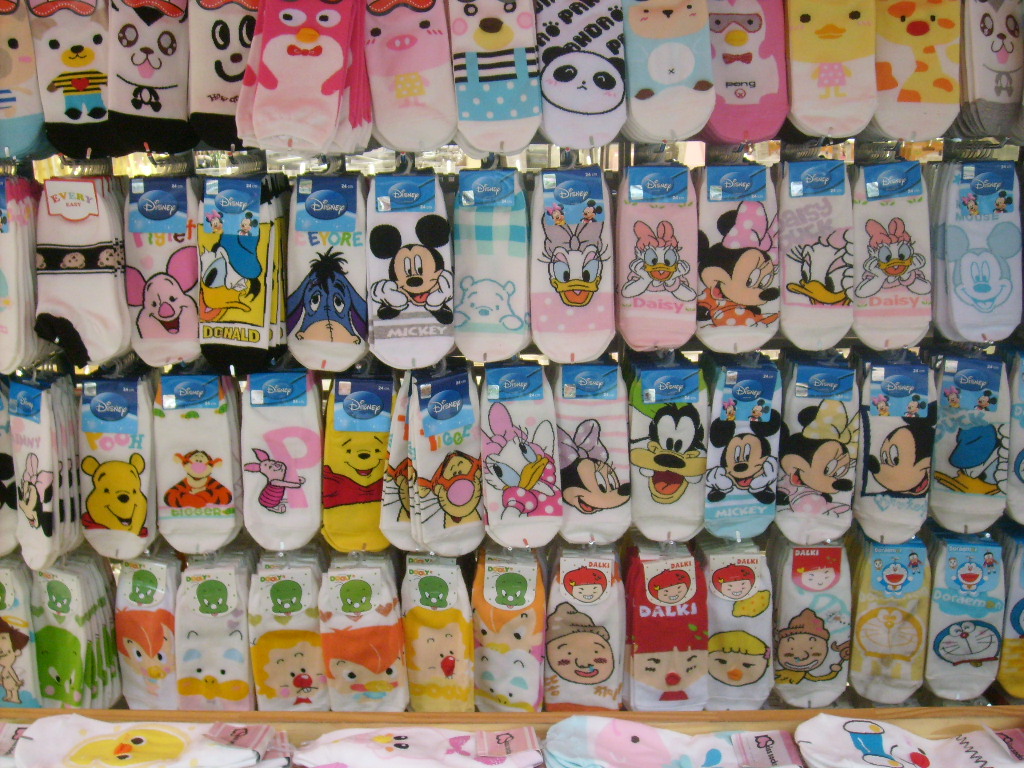
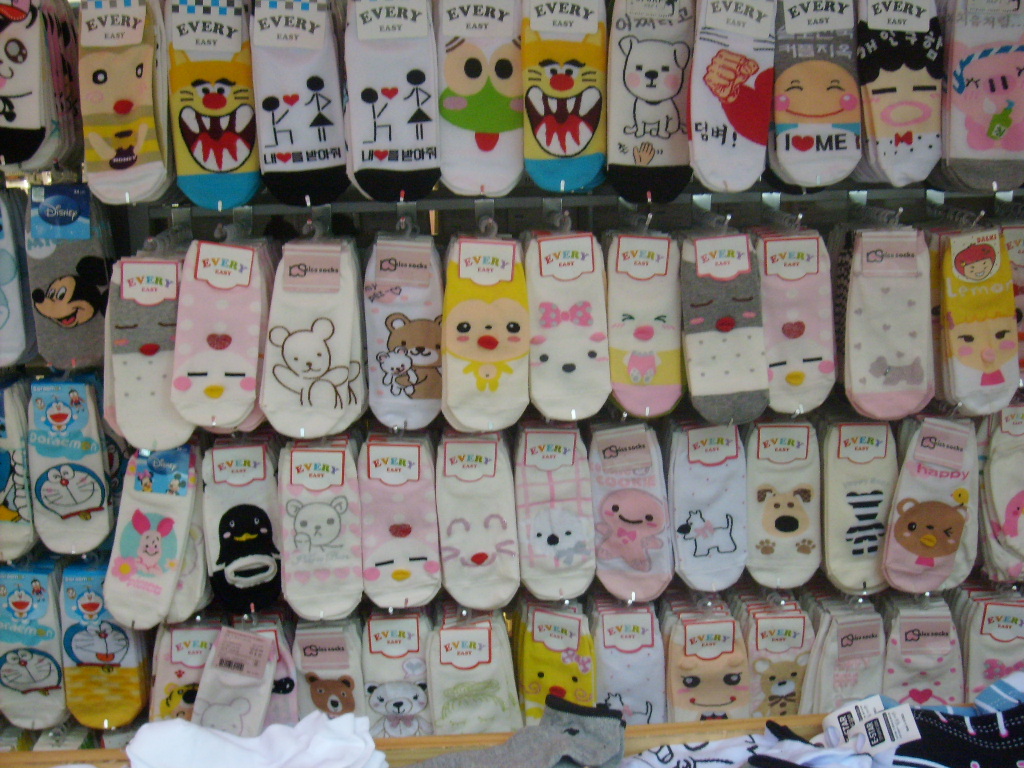


Feeding Mummy's Milk

Fab!
I’m often amazed at the blunders Koreans make in translating English and anyone who has lived in Korea even a short time will have amassed some great examples. In my writing, I write little Korean but I strive to make sure my spelling is correct. Conversely, many Koreans are quite happy to widely publicise something in crappy English, probably under the assumption that if you can tag an English sentence on your product or business sign, it is invested with greater authority. The gaff isn’t so bad, and can even be cute, on a mug or bar of chocolate; I have an old notebook on my desk on which is an enormous strawberry which a couple of years ago, when new, was scented. A caption under it reads: I’ve got a loaf of strawberries.’ But my favourite, from a packets of smoked salmon, reads:
‘Around June to September, in a something sun, 3-5 year old well-grown salmon that have brilliant gesture and swim through sea and river along the blue and dear coast of the Pacific Ocean have very good quality of flesh and taste so good and have got praised as food of low-calorie. More than one century salmon has got praise of epicures all over the world. Salmon taste from soft to strong with many nutrients and special pink colour flesh create fantastic mood and taste.’

Nursery rhymes
Ironically, the crappy English actually spurs my taste buds in anticipation of that creamy, special pink flesh, unfortunately eaten many years ago. But when the ‘company’ or individual is involved in English education or aspires to be ‘educated’, it becomes a glaring error upon which an astute reader is going to base a value judgment. Online commentary on anything regarding education demands careful checking in terms of vocabulary, grammar and spelling and should one make even the slightest mistake, it can be expected that no matter how sound the argument, your credibility will be vaporized.
I quite like nursery rhymes! No! I don’t wander around my one-room singing them to myself but as a musician, I have an appreciation for their catchy melodies. The English composer Roger Quilter wove a very successful overture, a Children’s Overture, out of nursery rhymes which I frequently happened to play as a flautist in the British Army. Quilter was a student of the extremely eccentric Australian composer, Percy Grainger.
A year ago I bought a a set of two CDs in E-Mart, badly named, English Chants and of course, a nursery rhyme is nothing like a chant. However, out of the 160 songs, I thought I was sure to find a few of use especially with classics like Humpty Dumpty, Hickory Dickory Dock and Polly put the Kettle on, included.
It was only in a bout of boredom that this week, I perused the titles of the other songs:
Time to stetch – your guess is as good as mine but I’ll go for ‘stretch’.
Going to the friend’s house – no comments!
Going to the Pediatrician, Going to the ENT Doctor and Going to Orthodontist, presume the child is both acquainted with medical terminology and of a sickly disposition.
Going the Department – I can only guess is meant to be a ‘store.’
It’s a snack time – it amusing.
Want to go Potty – Who? Hilarious
Going Back from School – simply confusing!
On birthday – and whose birthday might that be?
But the king of all gaffs is, Feeding Mommy’s Milk. One still has to ask, ‘feeding mommy’s milk’ to whom? And the lyrics are classic:
Are you hungry? Are you hungry?
Feed mummy’s milk
And taste it good.
Sucking. Sucking. Sucking. Sucking
Mummy’s milk is good.
Are you done?
Hear it for yourself – drinking a glass of milk, especially with a straw, will never be the same again!
Click link below:
© Nick Elwood 2010 Creative Commons Licence.
Giving Summer the Finger
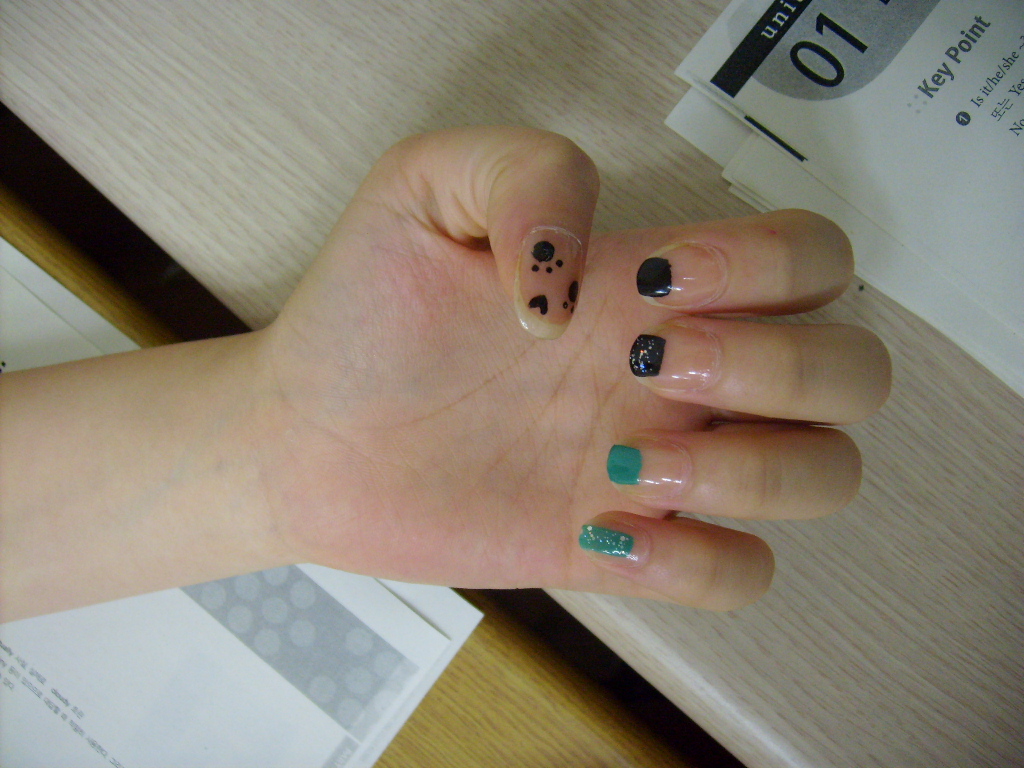
Goodbye to all that!
The summer holidays finished last week and one of my students notes in his diary.’This week school finished and we had to change our hair and faces.’ Gone are the ‘poodle perms‘ the vibrantly painted finger nails, ear-rings, temporary tattoos, and dyed hair. Unlike many western countries where teachers battle with hair styles and make up, in Korea it’s all removed before the term starts. Of course, Koreans will tell you the same battle ensues in their schools but they are skirmishes in comparison. I’ve taught one boy who was forced to run 10 times around the sandy ‘parade ground’ in only his boxers because his trousers legs were too narrow, and a beating because your hair is a centimeter too long isn’t uncommon. And the ‘budgerigar club’ that exists in every British secondary school (ages 12-16), little cliques of girls who sit for hours on end brushing each others hair, moronically starring in mirrors and slapping on cheap make-up like little Jezebels, all during lessons, is in its infancy.

Painted nails

A little re-touch needed
The irony, of course, is that school never really finished and the vacation that was, was never really a vacation. One of my students spent the entire summer at a cram but claimed he loved it. Packing your son or daughter off for the entire summer isn’t what I’d do if I was a parent. Another boy spent two weeks in a military boot camp, ‘thanks, mum!” Another three students, siblings, spent the entire summer in an English school in the Philippines but their English is no better than when they left. So, with summer drawing to a close it’s back to the study routine, constant tests, the after school classes and reading rooms and don’t forget piano lessons and taekwon-do! As for the poor the third year, high school students (고삼), they have the biggest exam (수능) of their lives looming. An exam which will not only determine their academic future but very possibly the background of their future partner as well as their occupation. DD (‘D’ Day), and that’s exactly how Koreans identify it, is 76 days away and every third year student will be counting. Their vacation was great! They didn’t have one!
© Nick Elwood 2010 Creative Commons Licence.
Ben (3) Korean Teenagers
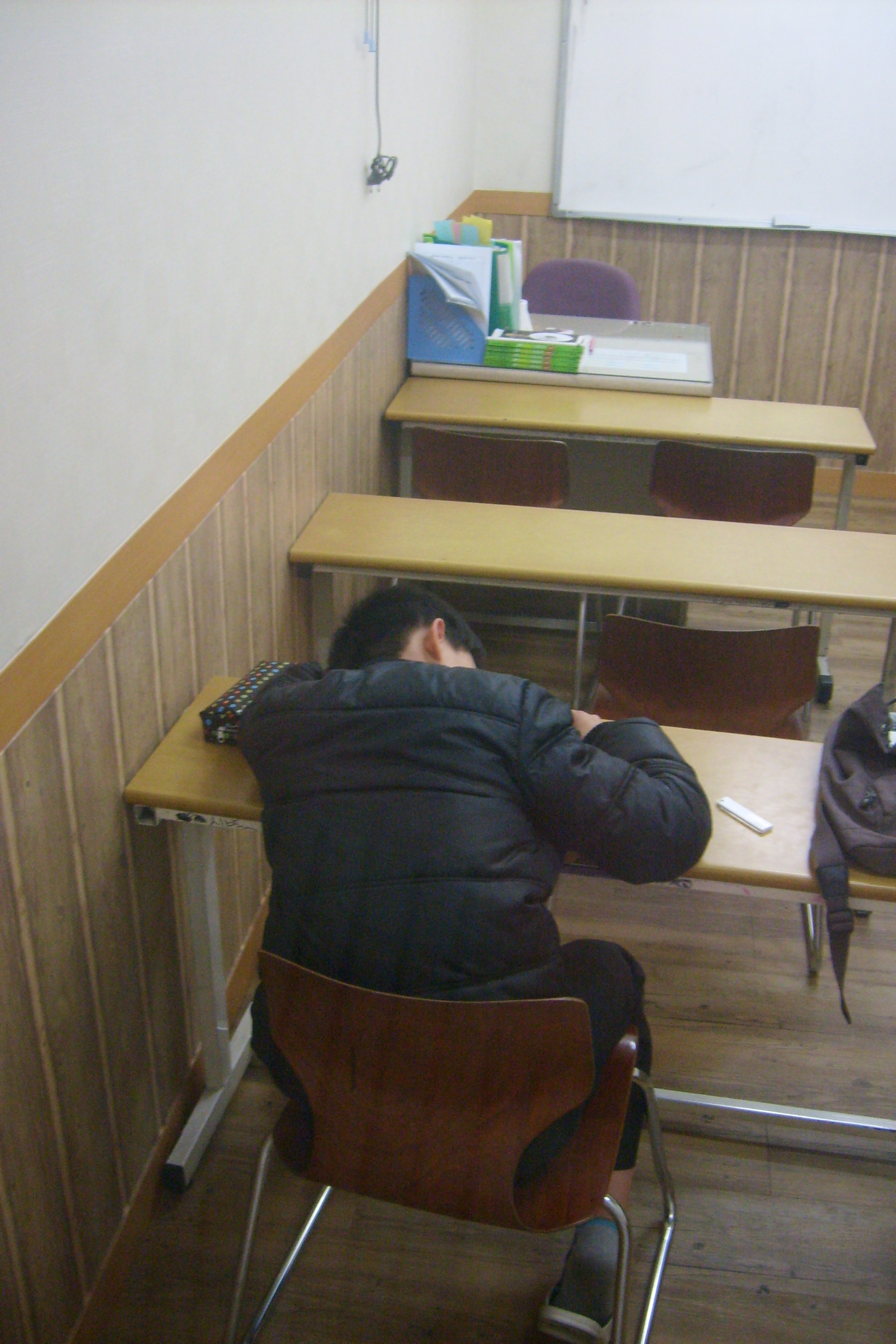
Ben on a low
Ben has been up and down lately. At the end of last term he was on a massive high after passing a string of exams with 100%. One evening, on the day he received the marks for his final set of exams, he was delirious with happiness and once again bouncing around the school declaring how he felt. In the UK I’d have assumed he was on drugs because British kids often down play any trait of intelligence as it can alienate them. And then, several days later, he finally got his reward for his efforts in the form of two small puppies. For the next week he constantly assaulted my boss and I by thrusting his hand-phone in our faces to show us the latest series of puppy pictures. His accompanying leitmotiv was ‘my puppies, my puppies,’ made all the more endearing by a mild speech impediment which renders, ‘puppies,’ ‘puppish.’
Once the joys of owning a couple of puppies had subsided however, he became markedly strange in class and seemed to flit between happy and almost depressed. Neither was he very responsive when you tried to draw him out of his mood or ask its cause. The cause was obvious and one we’ve encountered on a number of occasions. Ben’s class consisted of 6 girls and two boys and the other boy, Kyle, had left Daegu for the summer vacation to attend an intensive study school: the equivalent of an academic boot-camp. Hence the root of Ben’s mood swings was the fact he was the only boy in the class. Cherie and I tried to ride the problem for a little while but soon he was begging for us to make changes so he wouldn’t be alone.
In a Korean setting class dynamics can change drastically if someone is older or younger than the other students, or, in the case, is the wrong gender. Kids lively and confident one moment can be passive and introvert the next if a shift in personalities disadvantages them. Because peer groups are not so important for British children, such problems do not arise. British kids can easily accommodate friends or fellow classmates, older or younger than themselves and a gender divide is not as noticeable as it is in the Korean class room.

and on a high
Ben, who is 16, was disturbed enough at being the only boy in the class that despite his recent academic success, we feared we might loose him when suddenly, a new boy arrived who was ideal to place alongside him. Instantly, he returned to his old self and re-assumed his role as the class comedian but if ever the other boy is absent, he can quickly relapse into a sullen state. I’ve spent so much time slagging off teenagers in my other blogs, I’m consoled by the realization I don’t dislike teenagers, just the ones who are rotten and rotten teenagers in Korea are rare. Ben is what Koreans might call a ‘flower-boy,’ or identify as ‘pretty,’ neither term being derogatory, though he might well be when older. If anything, his body is built like a chopstick and he looks closer to twelve than sixteen, a point the girls in the class often tease him on, but both my boss and I would love him for a son. Reading other K-blogs, I know many teachers share a similar regard for the nature and personality of Korean children and teenagers.
© Nick Elwood 2010 Creative Commons Licence.


 Elwood 5566
leave a comment