Typhoon Meari Echoes in Daegu
Daegu got the back-end of Typhoon Meari, typical in the monsoon season (Chang-ma 장마), which caused havoc and took nine lives in Jeju and Pusan. Saturday morning saw torrential rain and gusts of wind which didn’t abate until Sunday evening. The photos and video, taken from the 14th floor of my friend’s apartment, provide a great view across the Song-so area of Daegu, towards the distant mountains. As for the typhoon, luckily, by the time it was inland, it was really only a big storm. All photos link to Wikimapia.
[
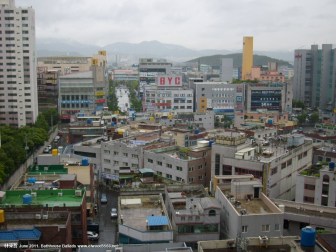
looking across Song-so with Hwa-won in the distance and Bi-sul-mountain (비슬산) in the background
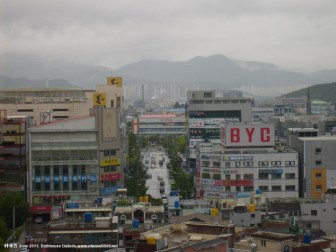
gathering storm
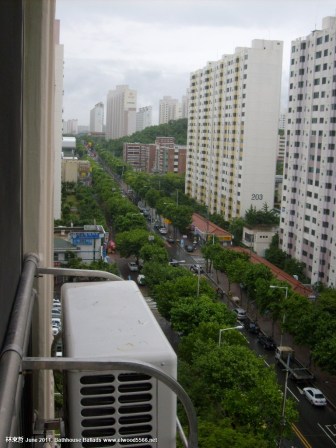
in the direction of Song-so Rose Park
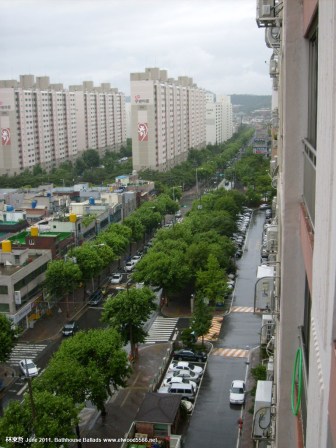
looking towards the edge of the university campus

© 林東哲 2011 Creative Commons Licence.
Looking Waeg With Mobile
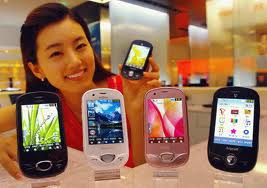
who needs one?

Podcast 85
If there’s one technological item which has the potential to do the foreigner a disservice in Korea, it’s the mobile telephone. I’ll admit I’m a technological moron and am quite proud I’ve never bothered to learn to drive a car, and have no interest in doing so, most especially in Korea, and I have neither used an ATM machine in the West or posses or want to posses a mobile phone.
Recently, I’ve been observing how Koreans use mobiles. Everyone has one, at least one, even the youngest students. Everywhere you look they are being held like little pets and are constantly accessed. As I observe, I’m wondering, what they hell are they looking at? What is everybody doing that I’m not? At crossings, when people have to stand still for a minute, there is a sudden splurge of activity and out they pop. Mobiles are total mediocrity; they take mediocre photos, make mediocre videos, have mediocre sound production and anything which entails interfacing with that piddly little screen is definitely mediocre. Even one of their saving graces, a dictionary, is mediocre as it designed for Koreans learning English and not vice-versa. Apart from the telephone facility, most of the functions built into a mobile are second-rate.
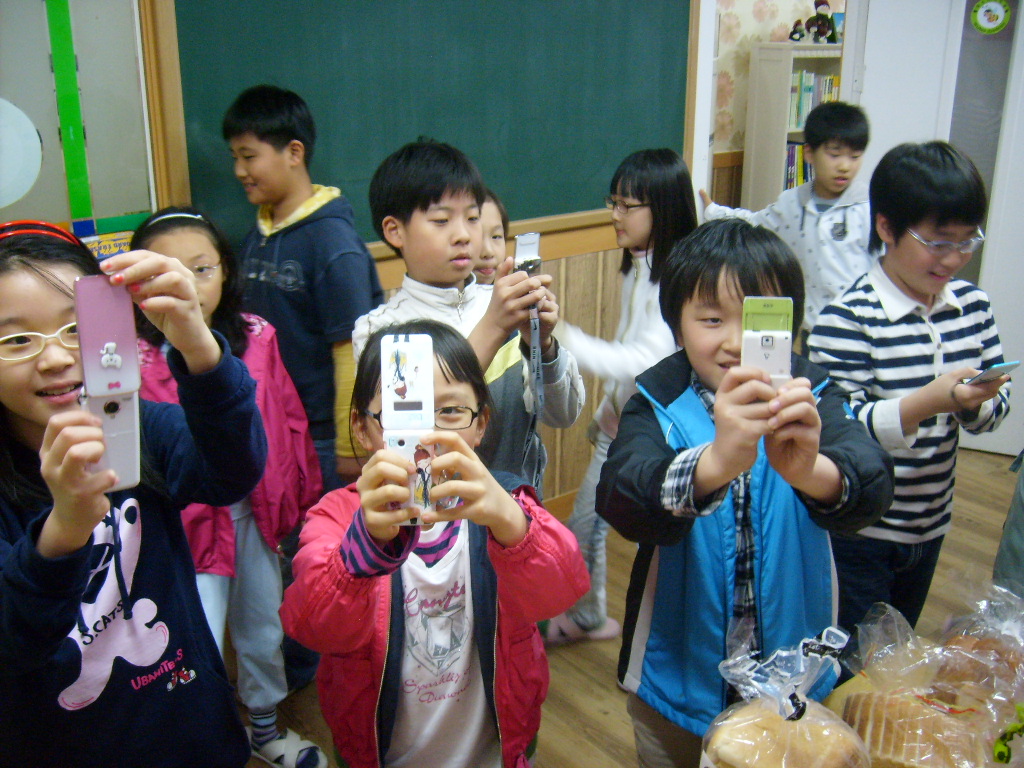
mobile mania starts at a young age
I detest they way most Korean streets are infested with mobile mania stores in much the same way beautiful English villages have been invaded with estate agents. Every time a business shuts down, usually something useful and interesting, like a bakery, café, or restaurant, someplace where I might possibly go a few times a week or simply peer in the window, it is replaced by a mobile store which I am personally never likely to enter. Even if I owned one, I doubt I’d need to access it more than a couple of times a year. But that’s not all, I’m also irritated by the way they clutter up the streets, not just with young lads tempting customers into the store but with even more shit music blaring out and with the various forms of bait stashed against the store fronts which is used to lure and entice customers. It seems that on every corner of Song-so, in the area around the Lotte Cinema Complex, not just one store has opened but several. On one corner there are three and walking past them is like running a gauntlet; first, the hideous cacophony caused by the clash of three competing hip-hop ditties and then the onslaught of lads passing out leaflets or pointing at bait. I’m lucky, they usually ignore me because I’m male and foreign but if you are a lithe little female college student, I suspect being accosted is a regular encounter.
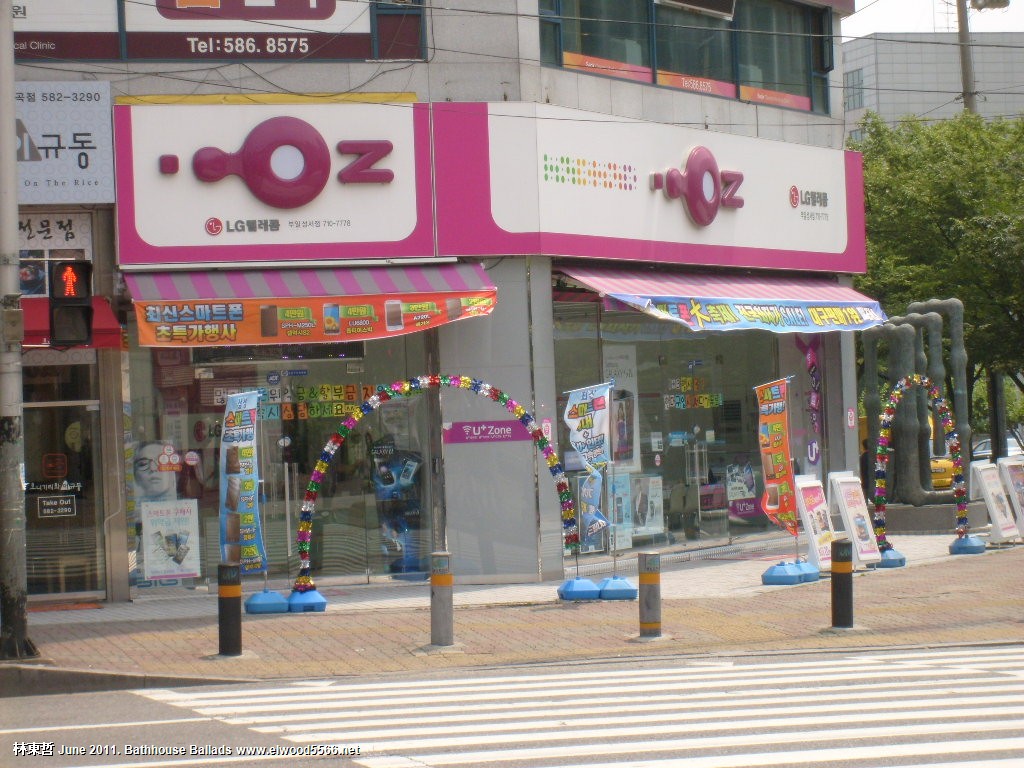
one company but two seperate shops
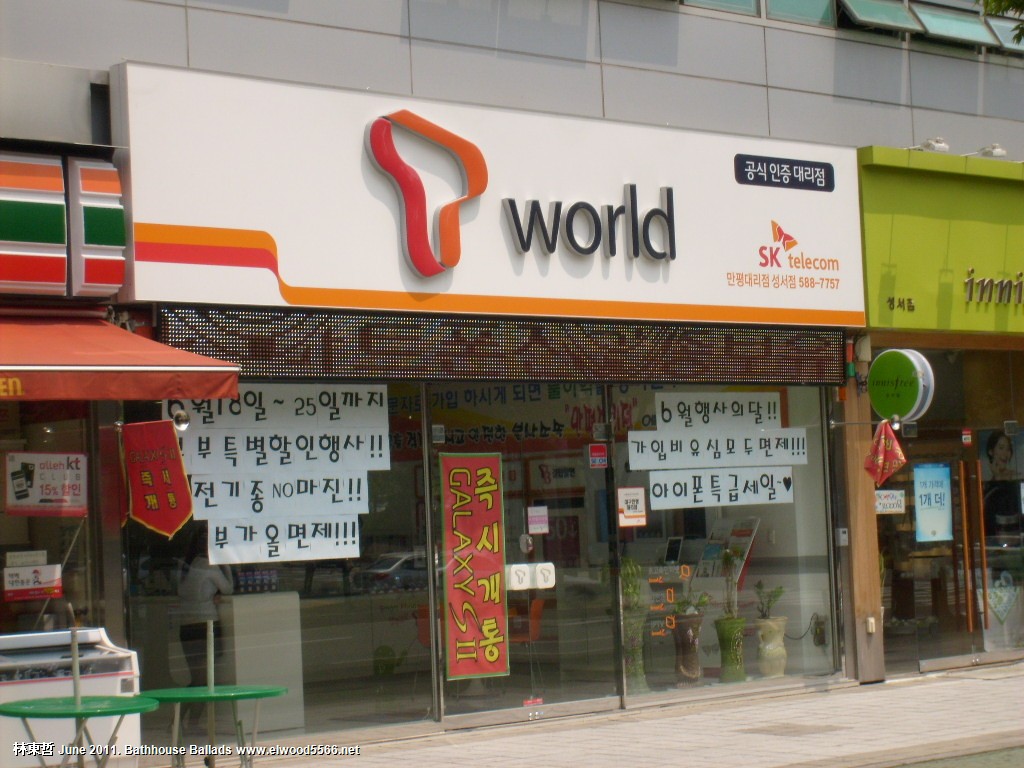
and just around the corner...
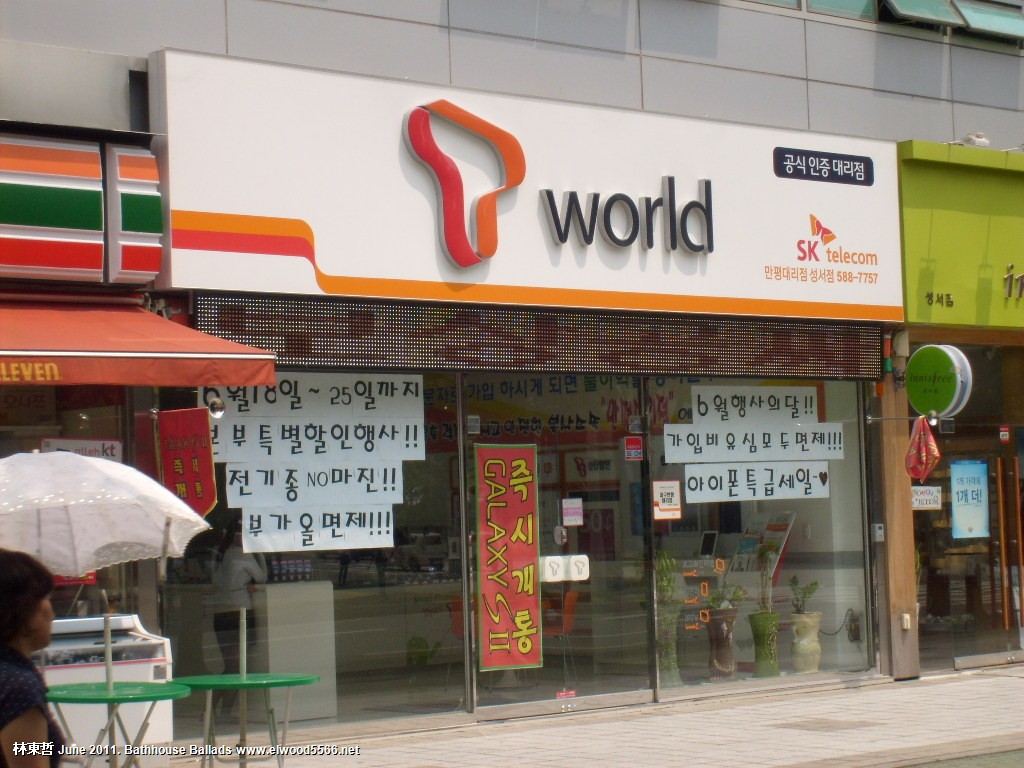
and next to the one just around the corner...
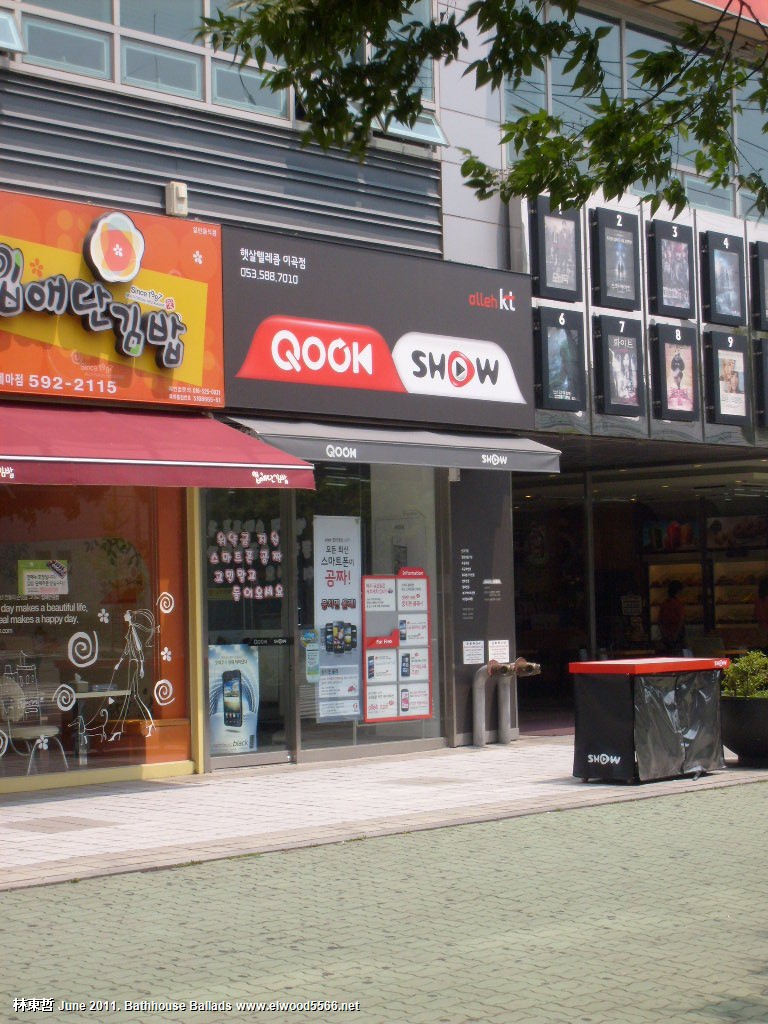
and next to that one...
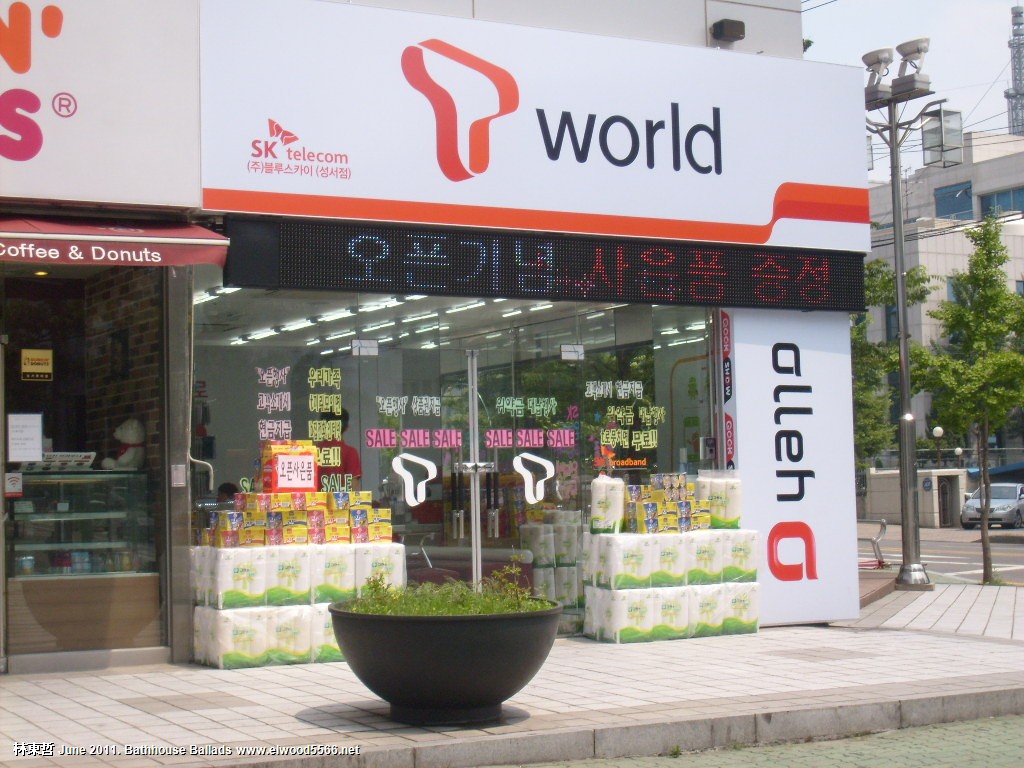
and on the next corner, you can get your ' free' toilet rolls
Most of the mobile stores in my immediate area, and there must be fifteen of them, lure custom with offers which in one store are bicycles. Further down the road, another offers large packs of toilet paper which are stacked on the sidewalk. I can understand the bicycle appeal especially as some of the bikes are actually quite attractive, though probably made in China, but do punters really get lured into signing a mobile contract because they get twenty rolls of toilet-paper? I shouldn’t be condescending or judgmental because of course, Koreans use shit paper as napkins, kitchen roll, tissue and whatever. A bumper pack lasts me a year and in Korea it’s a very versatile commodity.
...and a free bicycle
The most fascinating group who use mobile technology, however, are the waegs. I’m often bemused by westerners in Korea as they wander around with what is predominantly a piece of techno-trinketery. Most waegs can’t string together a few words in Korean, myself included, and even then it probably hasn’t been understood. This isn’t a criticism as there are a number of reason which make the learning of Korean a slow and labourious process but though we like to think we can ‘speak’ Korean, and often suggest we have an ability to ‘get by’, the reality is very much that once we have said ‘hello,’ or ‘more kimchi, please,’ that which follows is baffling and might as well be Venusian. Clearly, waeg possession of a mobile isn’t intended for communicating in Korean which leads me to conclude that its function is as a fancy address book where you compile, through numerous social media or the Boring Boroyeong (Mud Festival), the greatest waeg festival on the peninsula, a network of waeg chums. Even in my area of Daegu there aren’t many foreigners and of those many do not want to communicate, are here for the job rather than through an interest in Korean culture, or are simply weird. This is probably how I appear to many waegs as my views on life and cynical disposition towards western society, make compatibility elusive. Even back home I find it difficult ‘connecting’ and my circle of friends is small. However, every so often I met a waeg with whom there is a mutual connection and a friendship will develop. The number of foreigners I am likely to form a relationship with, and I should add, I’m not one of those waegs who passes-by and pretends not to notice you, is small and doesn’t warrant buying an address book let alone an expensive mobile. I came to Korea to experience its culture and escape the depression of Scumland UK and too many waeg chums not only takes me away from the Korean experience, but takes me too close to an expat community and many of the things I dislike about the West.

marketing through mediocrity
Naturally, I’m being cynical and modern mobiles have a range of facilities which are very useful but which we learn to need. But I can’t help but see that the more advanced the tools of communication become, the less we actually communicate. I did once use a mobile for a short period but after having to respond to frequent inane questions from friends, I chucked it out. I can remember my one and only week with a mobile phone; 7.30 in the morning on the bus to work, and a colleague is texting me: ‘wot u d-ing?’ It’s busy, I’m having to stand and I’m surrounded by teenage schools kids who are actually texting each other. What a waste of freaking technology! Texting a message which is beamed up to a satellite and instantly beamed back to Earth and all that separates the correspondents is me! Suddenly, I’m a member of the moron club! I try keying a response to my dumb-ass colleague but my fingers are too fat for the keys so I keep hitting two at a time and it doesn’t help that the bus is jiggling about. I don’t even get to send a reply before another message appears on the screen; ‘is any 1 sxy sat near u?’ This is a deep and meaningful communique! I can’t be bothered replying and chuck the phone in my bag and simply ignore it. A few moments later, a mobile starts ringing. It emanates from nearby but I don’t know from where. The horrid jangle is lost in the noise of the bus and busy morning traffic. The ring continues and people are beginning to mutter. “Answer the bloody thing!” Someone suggests, loudly. Then I realise the ringing is coming from my bag! It’s my phone! I ignore it but it persists and so I am forced to leave the bus two stops early and avoid looking back over my shoulder as I alight. I can feel eyes burning into my back as the annoying ring diminuendos with my departure.
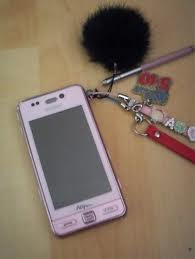
dingly-danglies
Texting, the art of communicating without really communicating, has to be one of the dumbest forms of human interchange to have evolved and has probably done more to retard those attributes that separate us from other primates, notably the manipulation of symbols, than develop them. I’m convinced that for many, texting is both a means of keeping people at bay rather than risking any real, meaningful dialogue, and giving the impression you have something to say when actually, you don’t. With a mobile phone hooked up to your various social network sites, you can very quickly have a few hundred ‘friends’ and be spared actually having to get to know them. By pumping out a continual splurge of text we not only give the impression we are important and have something to say but in the meantime, we keep others at a distance. And, of course, mobiles have a use in enhancing your image by providing a range of accessories, similar to those for toys such as Barbie Doll or My Little Pony, by which you can personalize your mobile, not just with fab jangles and cute stickers but by an infinite range of little dingly danglies.
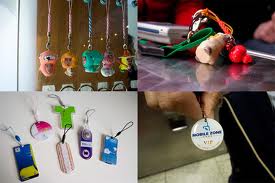
jazz it up with a dingly-dangly
For the week I trialled a mobile phone, I was pestered by the texting assault by the aforementioned colleague and suggested he phone me to talk rather than insist on using that silly digital semaphore. The problem however, was when he did phone he had nothing to say and what communication we had was filled with embarrassing black-holes. Digit-speak was far less painful than attempts to actually talk to each other. I suspect a great swathe of text communication has been rendered by individuals ‘letting their fingers do the talking’ and certainly many of the examples I’ve seen and experienced are the product of something brainless. Perhaps their really is some closer relationship between the mobile and toilet tissue.
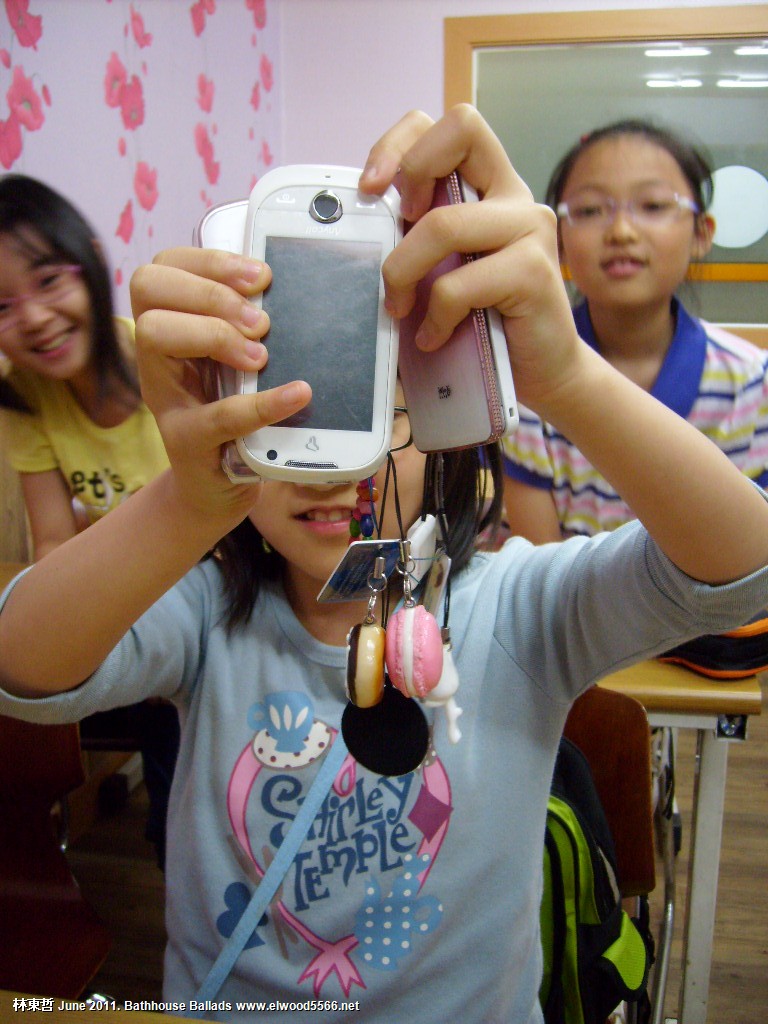
kids displaying their danglies
© 林東哲 2011 Creative Commons Licence.
Update: On the 'Art' of Brewing British Tea
A few weeks ago I posted an article on the fantastic coffee available in a small shop near E-Marte, in Song-so. The article was Seduced by a Gutamalian Beauty. Though I’m no expert in the field of either beverage, I mentioned how the art of making a perfect cup of tea, seemed somewhat random compared to coffee which, if you follow the correct procedures, produces a decent cup on demand. I refrain from describing such coffee as perfect as I don’t really know what I’m looking for; currently I’m a white belt level at ‘coffee cupping.’ However, the University of Northumbria have recently published their research on pursuing that perfect ‘cuppa’ and pinning down the process which produces it.
There have always been brewing methods but there was always disagreement about the exact sequence of the various stages. Thanks to the students at Northumbria, we now have the ultimate method which I will trial when I’m next in the UK. I’m a snob and making British tea demands British ingredients and British milk.
I do have one gripe, however! Tea bags! British tea made with a tea bag! Where is the method for making traditional British tea with loose leaf tea?
Daily Telegraph. Sunday 26 June 2011. How to make the perfect cup of tea- be patient
And if you are interested in the art of tea, you can read George Orwell’s, A Nice Cup of Tea, published in the Evening Standard, January 12th 1946.
© 林東哲 2011 Creative Commons Licence.
Korean Teas: Solomon's Seal Tea – 둘굴레 차
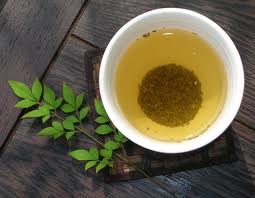
I prefer it cold when it is wonderfully refreshing
Specifics: Solomon’s Seal (둥굴레 차). Made from a root but available in tea bags.
Okay, you can easily buy this in boxes of 50 or so tea bags at most decent stores. However, if you’ve wandered around Korean markets you may actually have seen this tea’s main ingredients, in the form of dried roots looking a little like brown turmeric.
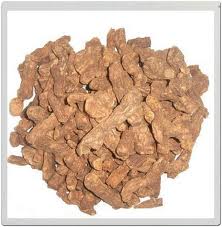
the roots, according to one company, are 'pan fried' to dry them
Solomon’s Seal is a tea made from the roots of plants bearing the same name. The plant is one of an extensive group, similar to lilies, and known by its botanical name, Polygonatum. The species in Korea, is specifically Polygonatum Sibiricum. The Korean species is particularly noted for its medicinal properties due to its demulcent properties, that is its ability to soothe and protect swollen ligaments and tissue. However, it has numerous other applications and widespread medicinal uses. Naturally, it can also be enjoyed simply as a beverage.
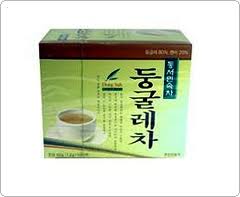
Solomon's Seal tea bags
Like most of the Korean teas I drink, I usually drink it cold and it is probably one of my more favourite teas with a distinct flavour which lacks any bitterness and is quite smooth. It has a slightly sweet smell which is reminiscent of caramel.
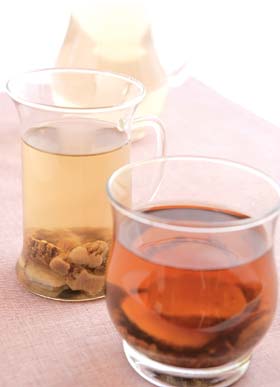
'caramel' aroma
© 林東哲 2011 Creative Commons Licence.
Kimchi Potato Croquettes – My Recipes

delicious!
A local Japanese restaurant I use makes the most excellent potato croquettes and as cabbage and potato work well together, I tried combining them. The results were excellent and I ate far more than I should have done.
INGREDIENTS
•Potato (approx 5 medium sized)
•kimchi (finely chopped) 1 cup
•1 onion (diced finely)
•minari (미나리-though parsley would make an ideal substitute) Chopped.
•1 tablespoon of sugar
•1 tablespoon of soy sauce
•1 egg (beaten in a bowl)
•plain flour (in a bowl)
•breadcrumbs (in a bowl)
•oil for deep frying
Optional Fillings
•Mozzarella, Brie, ham etc, even that pseudo Korean stretchy cheese

the assembled ‘balls’
METHOD
1. Boil the potatoes until cooked and then mash them over a low heat to remove moisture.
2. To the potato add the kimchi, onion, minari, sugar and soy sauce and mix together.
3. Arrange, in order, the mixture, and bowls of flour, egg and breadcrumbs
4. Taking the mixture, fashion it into a ball a little larger than a golf ball. At this stage you can insert a cube of cheese into its center. Place each ‘ball’ on a plate until you have as many as you need.
6. Take each ball and and coat first with flour, then the egg and finally the breadcrumbs. Place on a plate and complete the process with all ‘balls.’
7. Heat the oil until it is suitable for deep frying.
8. Carefully place the ‘balls’ into the oil and fry until golden brown when you can remove them onto greaseproof paper and continue with the next batch.
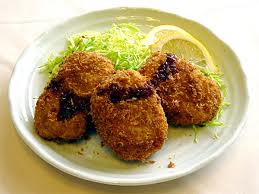
with a drizzle of sauce and salad
OBSERVATIONS
Mashing the potato over a low heat is crucial as removing any excess liquid stops the potato ‘balls’ falling apart.
VARIATIONS
I have also added 1 tablespoon of mushroom wine at stage 2
SERVING
Kimchi potato croquettes make an excellent snack or side dish but can easily constitute a lunch. I’ve eaten them cold and they are delicious but you can’t beat them straight from the fryer, hot and crispy. A suitable sauce, used in Japan and Korea is “Bulldog’ which is a brown sauce made with Worcester sauce. A drizzle of Terriyaki, Worcester Sauce or other brown-type sauces would be ideal but this is a matter of taste.
©Bathhouse Ballads – 努江虎 – 노강호 2012 Creative Commons Licence.
The Chang Ma Arrives in Daegu
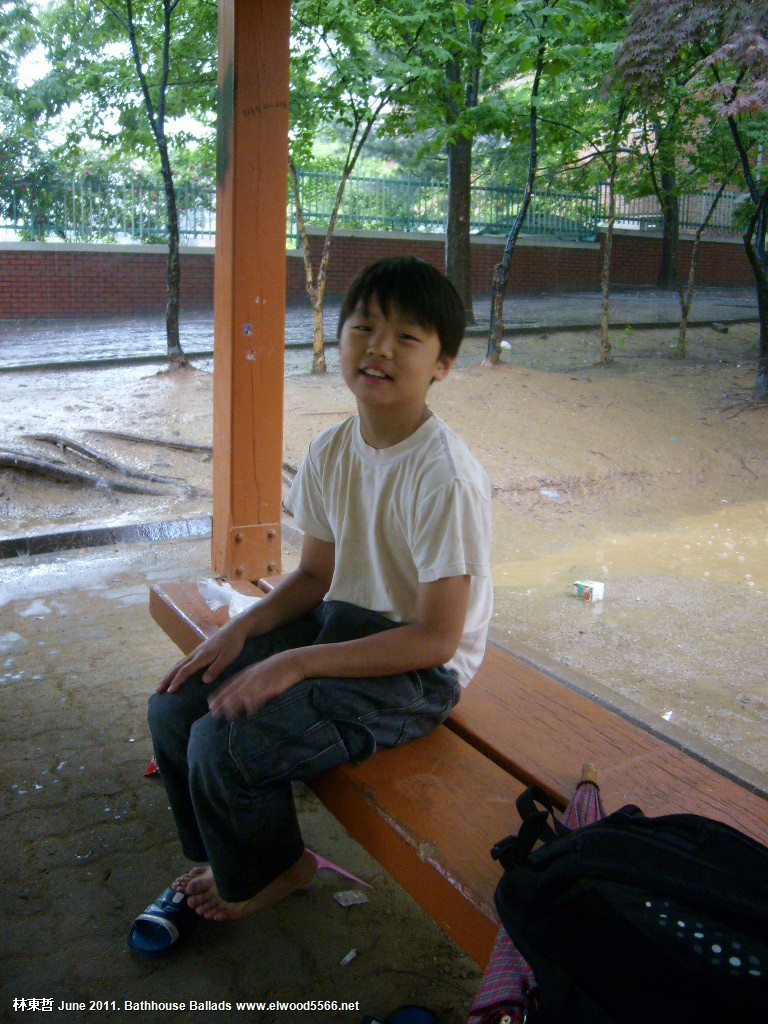
watching the chang-ma under the cheong-cha
I always find it strange how Koreans know almost every adjective to describe the weather apart from what I consider one of the most important and certainly one of the most impressionable. And as I write, I can already recall as song I taught years ago entitled: ‘How’s the Weather? It’s Sunny…’ etc, etc. There are probably numerous versions of this but the one my inner ear is currently playing has a particularly memorable tune. Apart from not rhyming very well, ‘humid’ would have fitted but when it comes to learning the weather in Korea, this manifestation is usually ignored. And come to think of it, the weather that produces this condition is also absent from the average Korean lexicon.
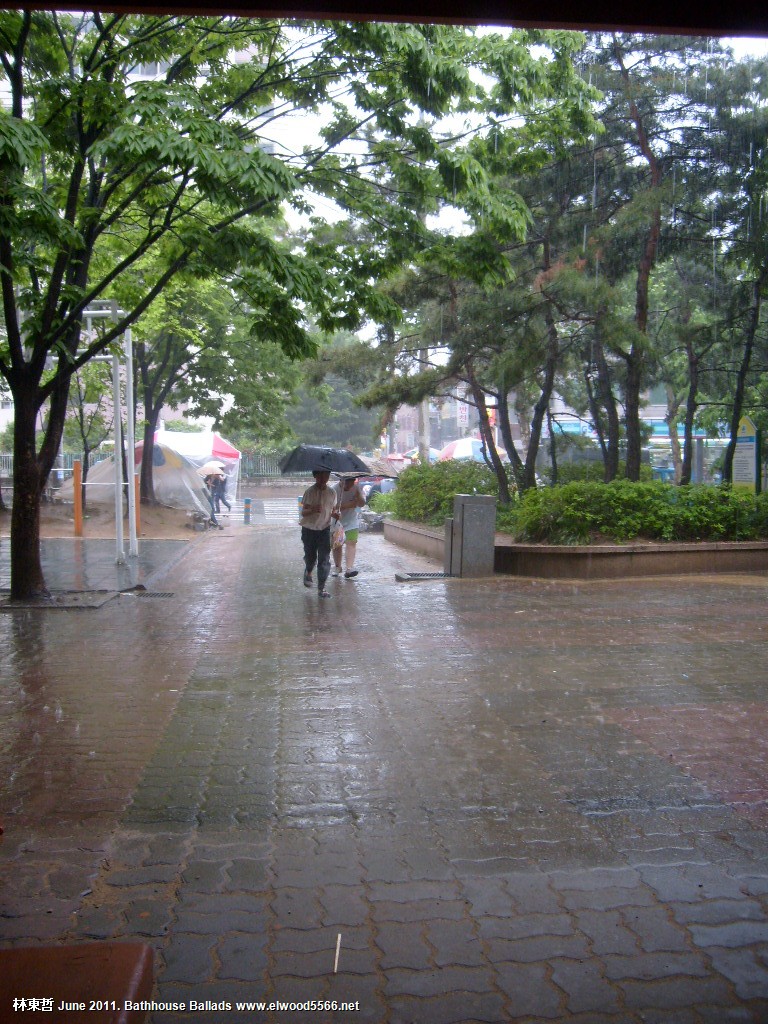
Chang Ma in Daegu
I can tolerate the heat but once the Chang Ma (장마 – monsoon) arrives, as it has this afternoon in Daegu, and Korean weather becomes horribly humid and particularly uncomfortable. Arriving in Korea in August, ‘humidity’ (습기) was one of the first words I learnt and being British and noted for their obsession with the weather, it is one of my most frequently used words through the sticky, muggy months.
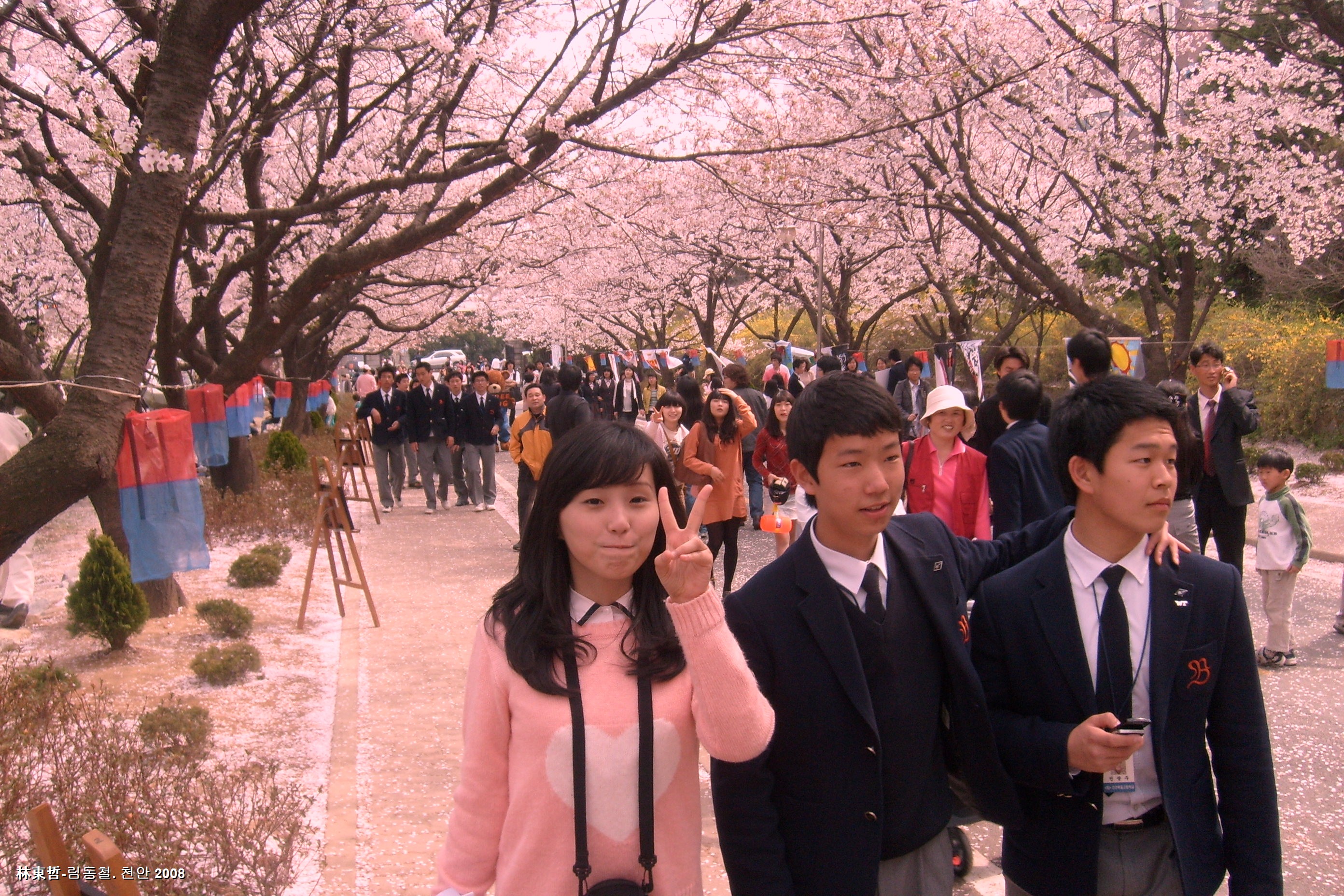
cherry blossom festival - Korean blossom is more predicable than its British counterpart
When it comes to the change of seasons in the UK, they have a mind of their own and winter, for example, might arrive in November one year and January the next. British seasons tend to be technical and the season it is supposed to be is not necessarily representative of the weather you are experiencing. Several years ago, I attended a Korean spring festival in a school I had previously taught in and it has been scheduled for the weekend when the cherry blossom was supposed to be at it’s most spectacular, on this occasion, April 13th. I arrived to find the blossom so prolific, when the breeze blew it fell from the trees like snow. That same year I had been in Britain in January and a cherry blossom and magnolia spasmed into bloom in the street in which I live. Days later, a frost viciously wreaked decimation.
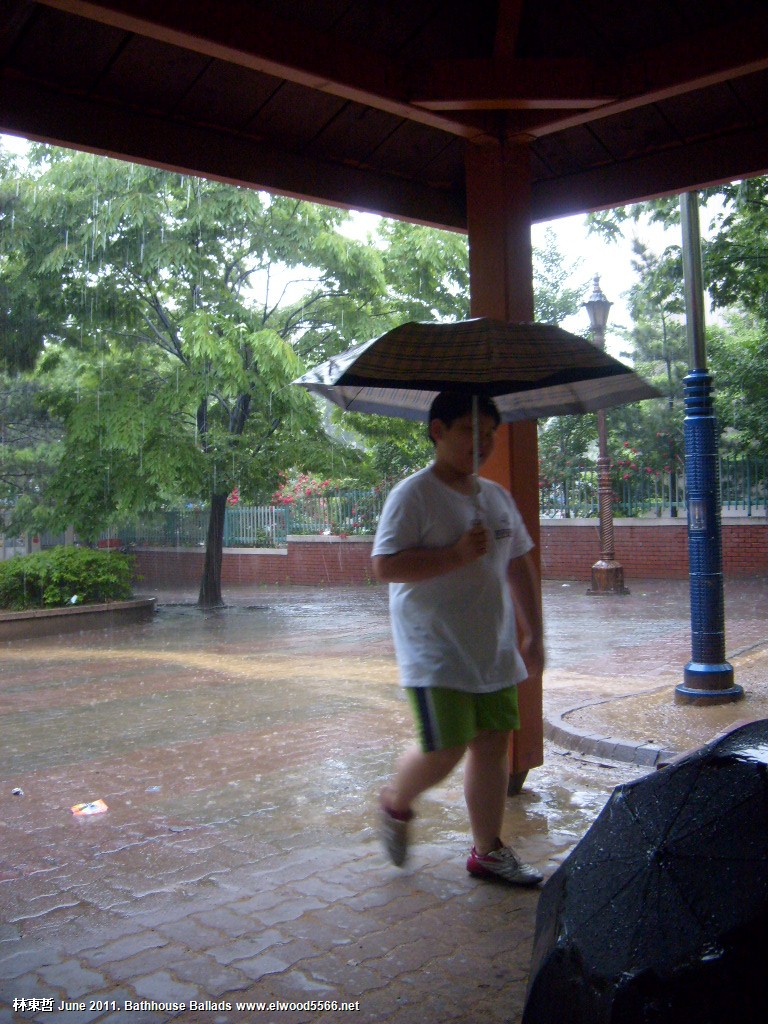
for a Brit, warm rain is quite strange
Back to the Chang Ma; several people told me it would arrive on Wednesday, and that is exactly what happened and as I write, the rain is beating down outside. Though the Chang Ma has been hanging in the air for around a week, it now seems to be fully here and so, from which ever date you take as its arrival in Daegu, they fit within an 8 day window of 2010 (June 17th) and 2009’s (June 15th) Chang Ma. That’s a fairly consistent pattern!
© 林東哲 2011 Creative Commons Licence.
FURTHER REFERENCES
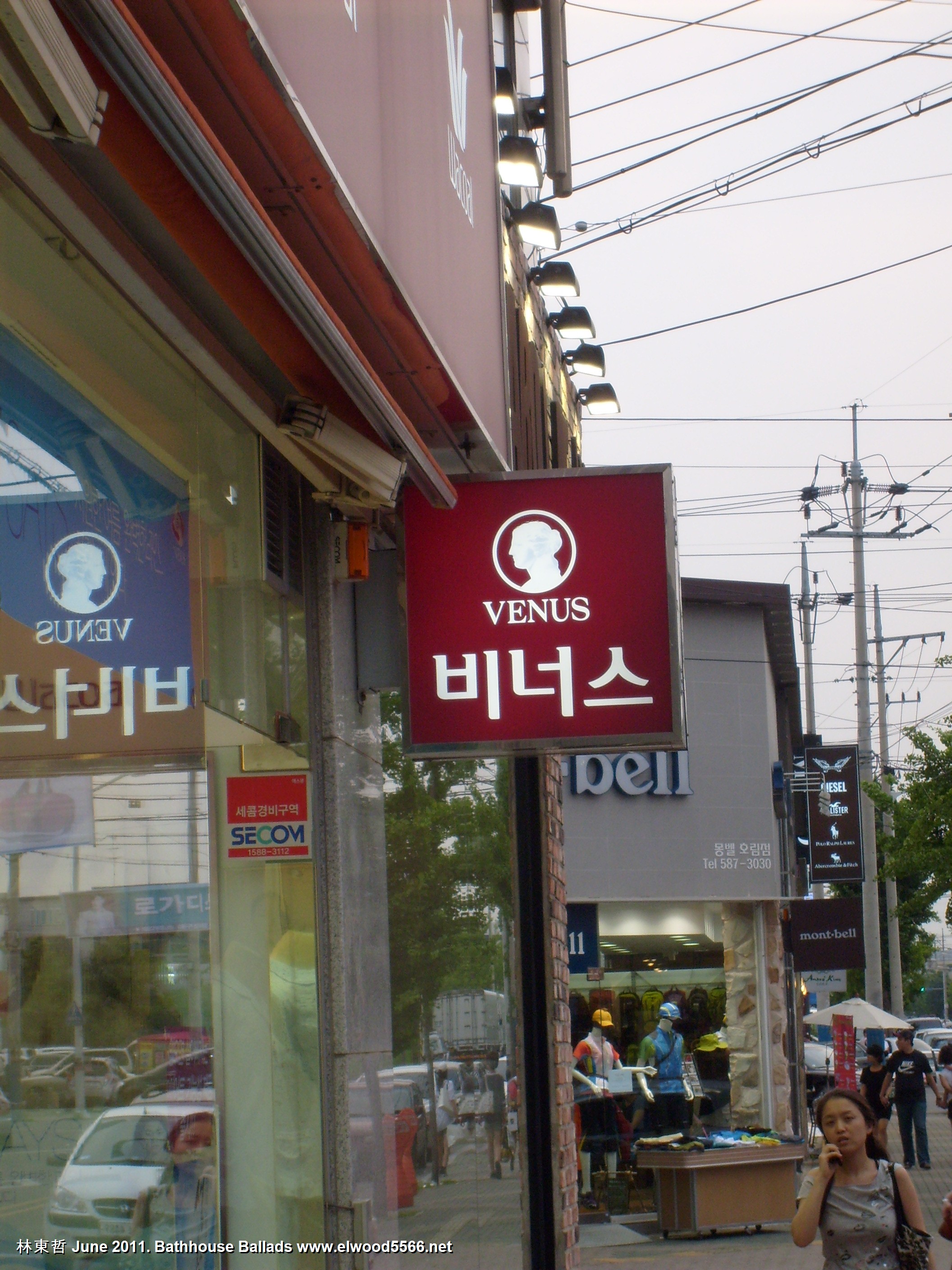
Most Likely Made in China

When looking good means expensive, shite quality. Converse made in China!
When I was a boy of about 10, I would walk to school with a simple draw string PE bag in which you kept your sports clothes, including a pair of black, slip-on plimsolls. They were all made in China and even then we used to joke about Chinese quality but they were cheap and lasted the year. Little were we to know that in years to come the top fashions and brand items would all come from China, and probably from the very same factories that made our simple, black pumps. Today, China is the point of origin, if not for many products, then for their component parts and while the big companies berate the production of imitation, especially of their precious logos, and denounces them as poor quality, think nothing of shifting production to countries which have the lowest production cost, pay the least to workers and use the cheapest materials.
I’ve recently noticed students wearing training shoes which no longer have traditional laces and which I imagine will quickly wipe out that dumb-ass ‘in-the-hood’ habit of wearing sneakers and basketball boots with enormous tongues and the laces left undone. A new piece of shoe technology, the Boa Closure Device, replaces the need to tie laces, or not, as the case may be, to the simple turning of a knob and considerably advances shoe technology.
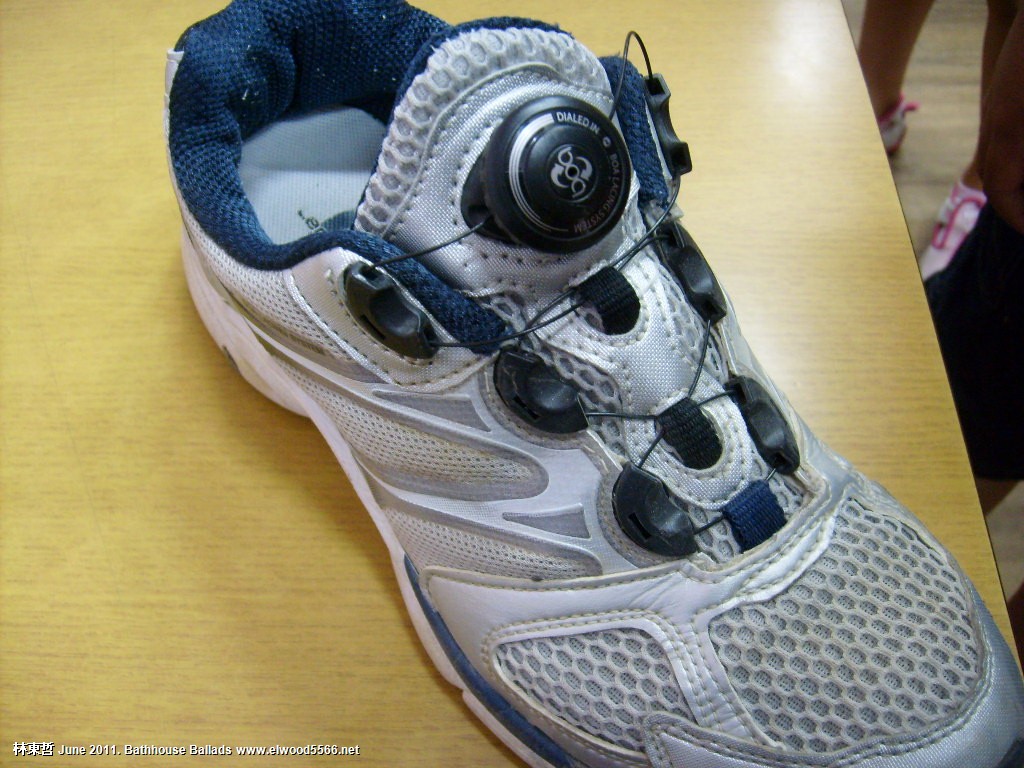
A leap into the 21st century
In the Moda Outlet, in the Industrial Complex of Song-so, Daegu, a significant number of the walking boots and trainers on sale utilise the Boa device. I noticed that while new lace technology is popular in the USA, it currently seems only available on cycling shoes in the UK. No doubt it will hit British shores at sometime in the future.
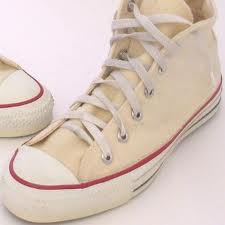
Converse quality, made in USA, is now a collector’s item
I can’t help but make a snipe at Converse which is popular in the UK and Korea. I wore them in the late 1970’s and throughout the 80’s when they were produced in the USA. I actually wore them for taekwondo while training outside and a pair would usually last around two years before the soles or heels gave out. Considering I trained most afternoons for several hours at a time, they were severely put to the test especially with spinning type kicks where all the body weight is on one foot.
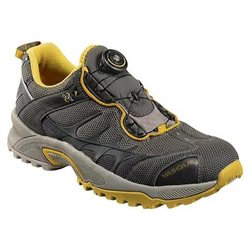
most likely made in China!
Around 1988, it was difficult to buy a pair in the UK as their production moved to S. Korea. Since then, considerably cheaper labour cost has seen the production shift to China. Of course, when Converse Korean-made trainers appeared on the shelves in the UK, they were subsequently more expensive and worse, I discovered a marked reduction in quality. In 2001, Converse were bought by Nike and the quality deteriorated further with the traditional 2 ply canvas being replaced by single ply textile. The life expectancy of a pair was around a year and you no longer need to worry about the heels or soles giving out, long before that the cheapo, micro-thin toe-cap will degrade until your big toe bursts out. Converse! They sure look good but they are expensive shite and like most Nike products produced by a cheap labour force, a rip off.
© 林東哲 2011 Creative Commons Licence.
The Secret World of Bathhouse Interiors
It’s always difficult finding photos of bathhouse interiors; the reasons being obvious. However, I have recently discovered how to capture photographs and render them into the correct format. The photographs have been placed in their respective locations but I thought it useful to post them here as they provide a much clearer insight into bathhouse interiors. The additions are for Goong Cheon Lavender, Migwang Spolex and Wonderful Spa Land.

the unique Dead Sea bath at Goong Cheon Lavender
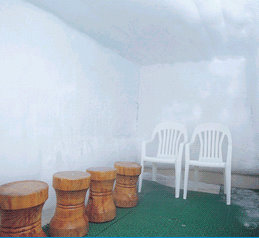
the ice sauna (Goong Cheon Lavender)
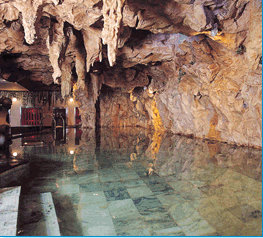
Lavender’s cold water cave
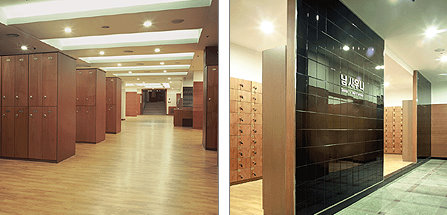
Large and spacious changing facilities (Lavender)
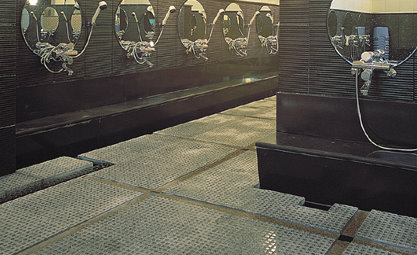
Migwang’s sit down shower units
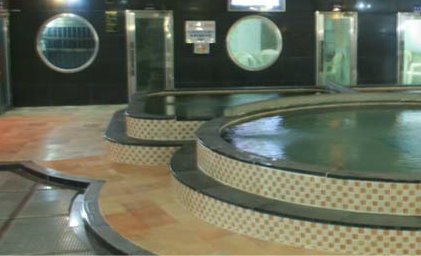
The warm pool with the pine, steam and ice room in the background. A large TV sits above the central circular window (Migwang Spolex)
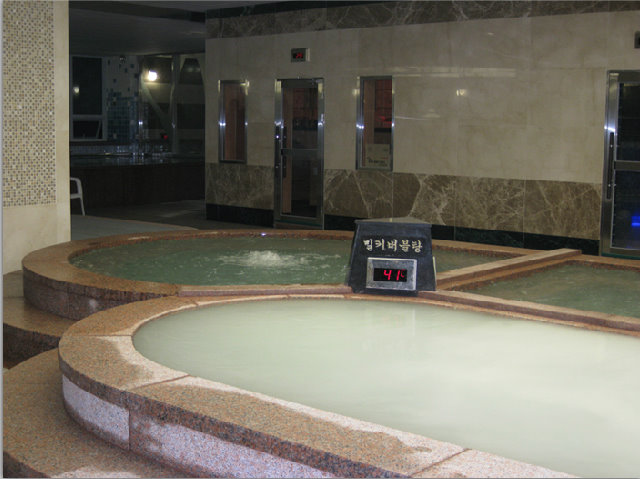
Wonderful Spaland’s luxurious ‘milky bubble tang’ with two ‘event’ pools in the background
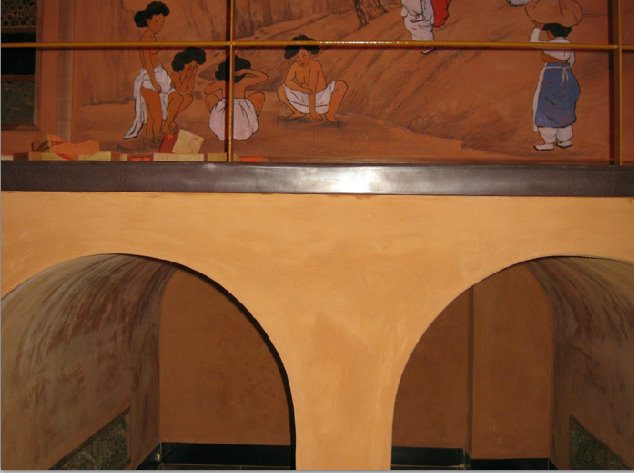
The tiered yellow clay room – for sleeping (Wonderful Spaland)
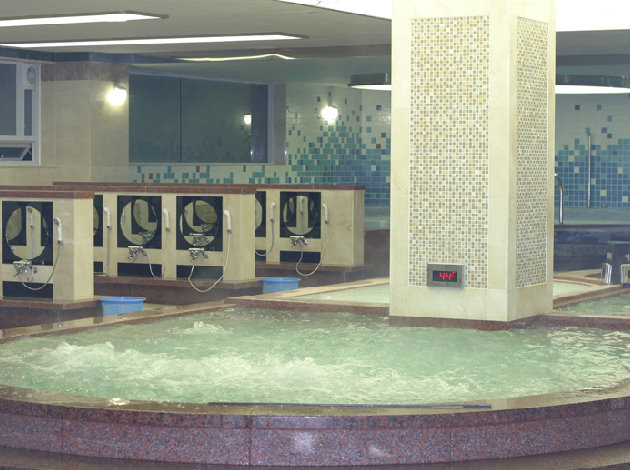
Wonderful Spaland’s warm pool
© 林東哲 2011 Creative Commons Licence.
Images of Innocence (5) – James
James, is eight years old and my youngest student. He sleeps in a tent in his bedroom with three teddy bears, one named Aloo. Here’s his story.
© 林東哲 2011 Creative Commons Licence.


 Elwood 5566
leave a comment