Interlude (8) Pojangmacha (포장마차)
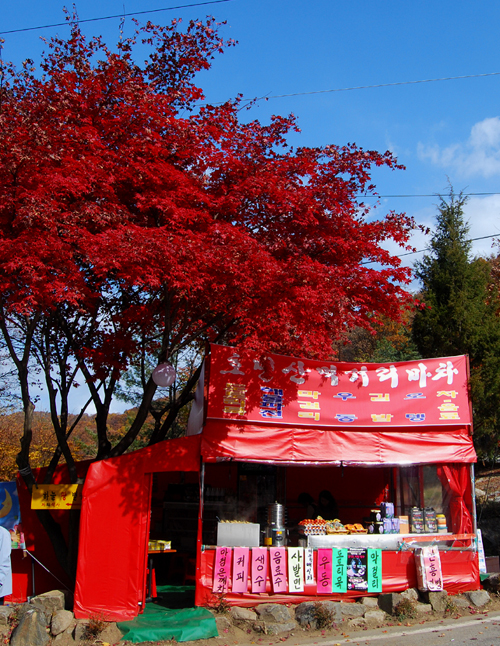
a typical snack-type pojangmacha
Like most of Korea, the area which I first visited 11 years ago has changed significantly and in Song-so, Daegu, where there now stands Mega Town with the Lotte Cinema Complex, the 24 hours jjimjilbang and a host of restaurants, I remember an enormous vacant lot, uneven and with patches of grass and bushes springing randomly across its expanse. Especially in winter, this was home to numerous large pojangmacha (포장마차).

huddling around the steam on a cold evening
Now, pojangmacha are basically tents which a range of guises from small to large, basic to elaborate, some selling snacks, other alcohol and which can stand on their own or be ‘tethered’ to a small van. I particularly remember the tents in the Song-so lot because they were large, heated and open all night and were what many refer to as a ‘soju tents.’ I remember quite a few evenings where we sat until the early hours wrapped in thick coats, even though the interior was warm, drinking soju or rice wine while enjoying a bowl of spicy cod roe soup. Maybe it’s just my imagination, because pojangmacha are around all year, but their bright lights and cozy interiors seem to associate them with winter. Even the more open versions which sell spicy cabbage and rice cake (ddeokkboki) and around which people huddle bathing in the steam wafting off the hot food, warm your spirits on a cold evening.
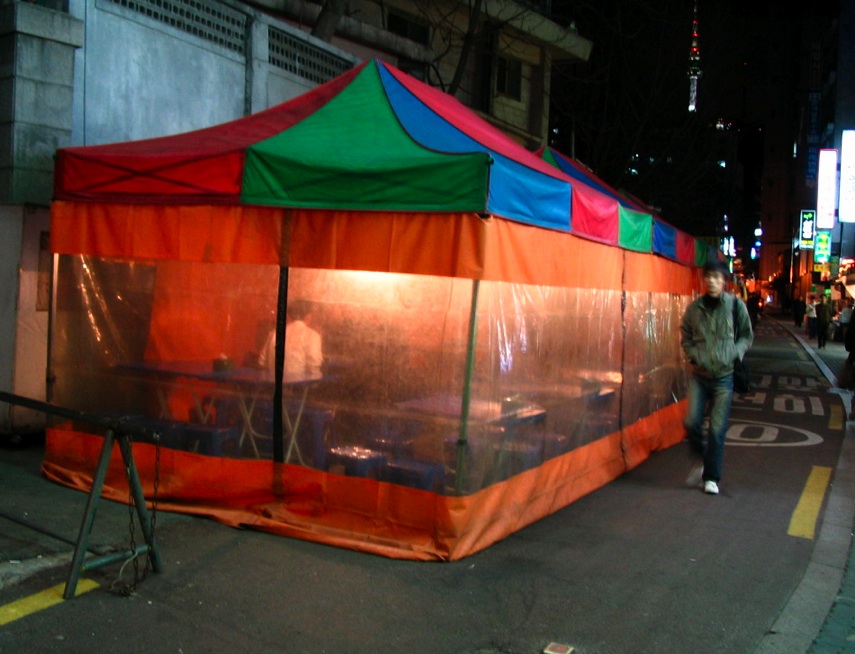
pojangmacha (포장마차)
If you walked from Song-so to the main gate of Keimyung University, 11 years ago, there were a number of vacant lots between high-rise buildings and often large pojangmacha would occupy them. Today, they are gone, the lots occupied by new buildings to such an extent that in the entire stretch of road there are no longer any soju tents.
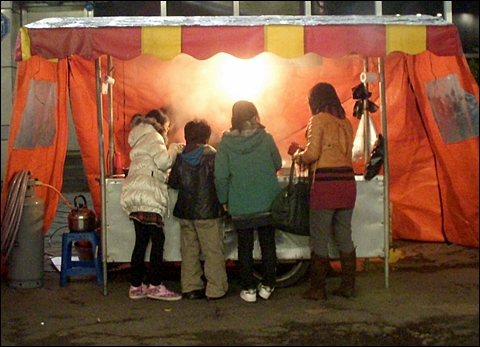
snack time

© 林東哲 2011 Creative Commons Licence.
Hanja – Bruce K Grant
Bruce Grant
For those interested in learning or expanding their knowledge of hanja, the several thousand Chinese characters incorporated into written Korean, one of my favourite books is available outside Korea, via Amazon. A Guide to Korean Characters, by Bruce. K. Grant is an excellent book which I have previously reviewed. The first copy I bought in 2000 at a cost of 15000 Won and ten years later a second copy cost me 15500 Won (£7.50p). Kyobo books in both Seoul and Daegu often have copies readily available.
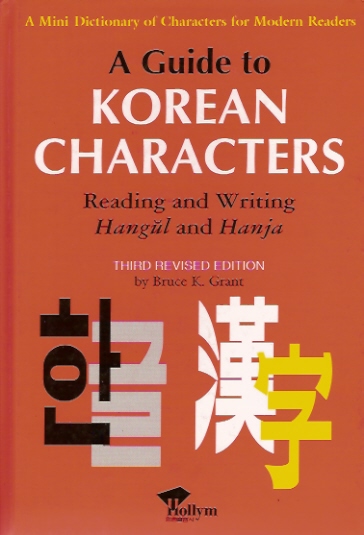
An excellent and easy to use resource
The book has excellent reviews and has probably been the most extensive source on Hanja characters since it was first published in 1979.
You don’t have to be an advanced student of Korean to use this book, even if you are a beginner who have just learned Hangul script you should get this inexpensive treasure.
This is pretty much the only book of its kind that is somewhat readily available, so if you see it – buy it.
There is unlikely to be any new books like this one.
For some reason people only seem to bother learning basic Korean, and the publishers know this so they wont bother publishing any new books like this.
But judging by all the positive reviews and remarks for this little book there is a need for material like this.
So, support the learning of Korean outside of South & North Korea and learn more than just the basics – develop and challenge yourself by learning traditional characters and expand your cultural knowledge (one of the 12 reviews currently hosted on Amazon USA).
The book is hardback and durable and even after 10 years of fingering in a sometimes humid climate, my original copy is still in good condition. Grant has also published books on Korean Proverbs: Dragons Head, Snake Tail and Frog in a Well, (1982), and White Field Korean (1982).

Also by Bruce Grant
Be careful where you buy Korean Characters as prices vary; in the USA the cost is approx $29 in the UK it is a staggering £35.
Previous review on Bathhouse Ballads
© 林東哲 2011 Creative Commons Licence.
Images of Innocence (3) – Knives
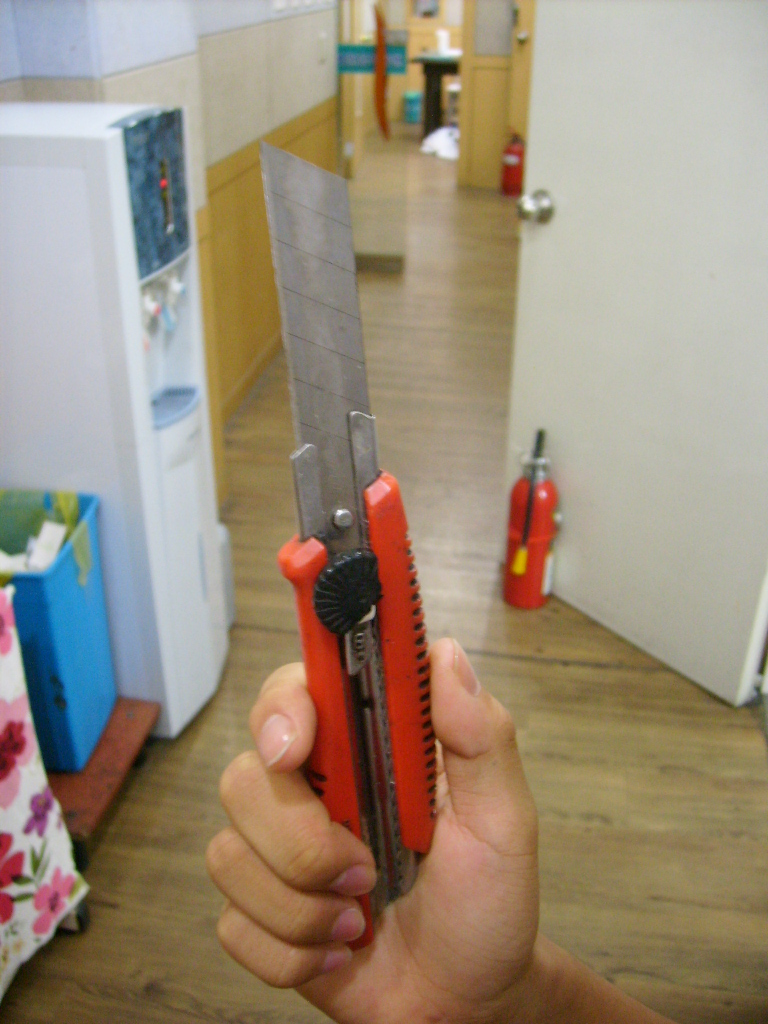
- sole purpose – sharpening pencils and cutting paper
As I write, highly civilised human beings are stabbing each other. In the UK stabbings are a regular occurrence and in 2010 19 youths were stabbed to death in London alone (Guardian UK). In 2007, 322 fatal stabbings (Guardian UK) were recorded marking the highest number of knife related deaths since records began in 1977. As the focus of media attention and political concern, definitions change and competing theories are forwarded, some related to the weather, others to disadvantage. Anti-stabbing kitchen knives are now available as are stab proof school uniforms made from kevlar and one of my local schools has installed metal detectors through which students have to pass on their way into school.
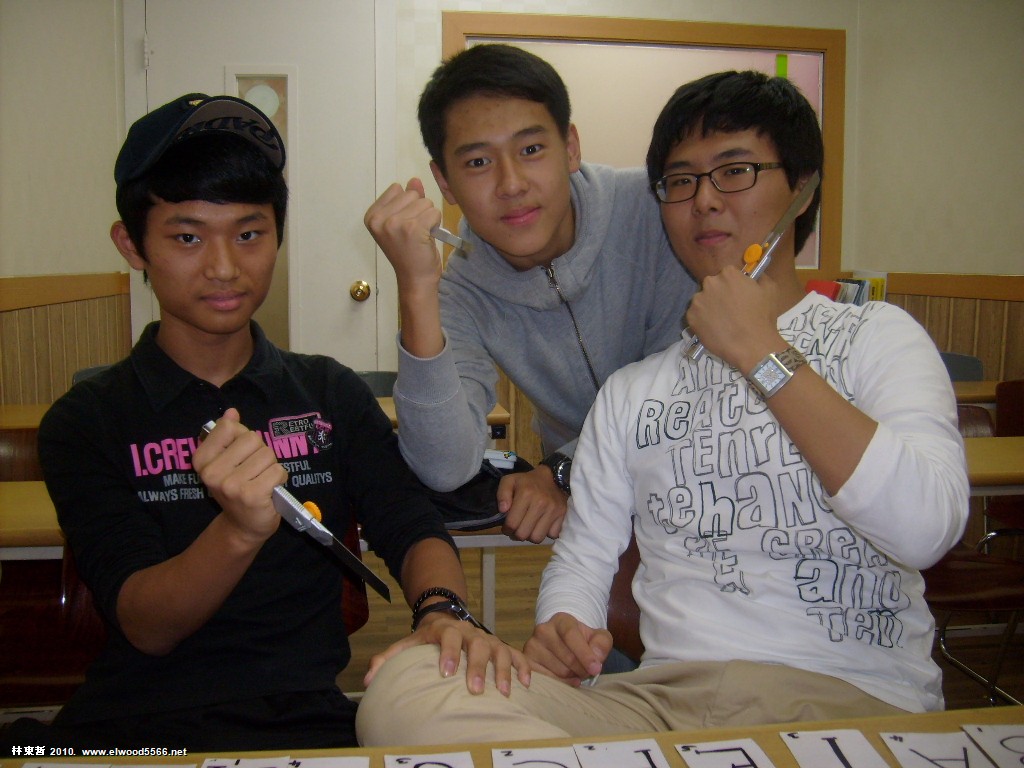
Stanley blades - every student has one
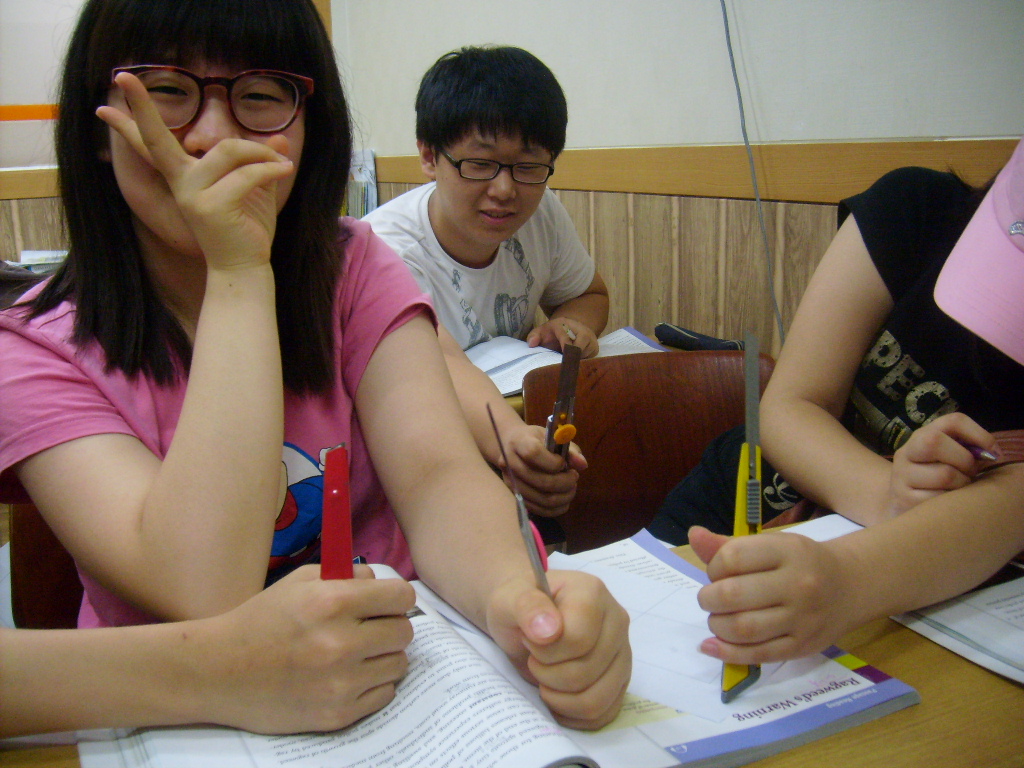
an assortment of blades
While Britain is plagued with knife related crimes, one currently being covered by the media as I write, Korean kids of all ages carry the equivalent of a stanley knife in their pencil cases and do so not to protect themselves, look cool, or as part of gang defense plans, but simply to sharpen pencils and cut paper.
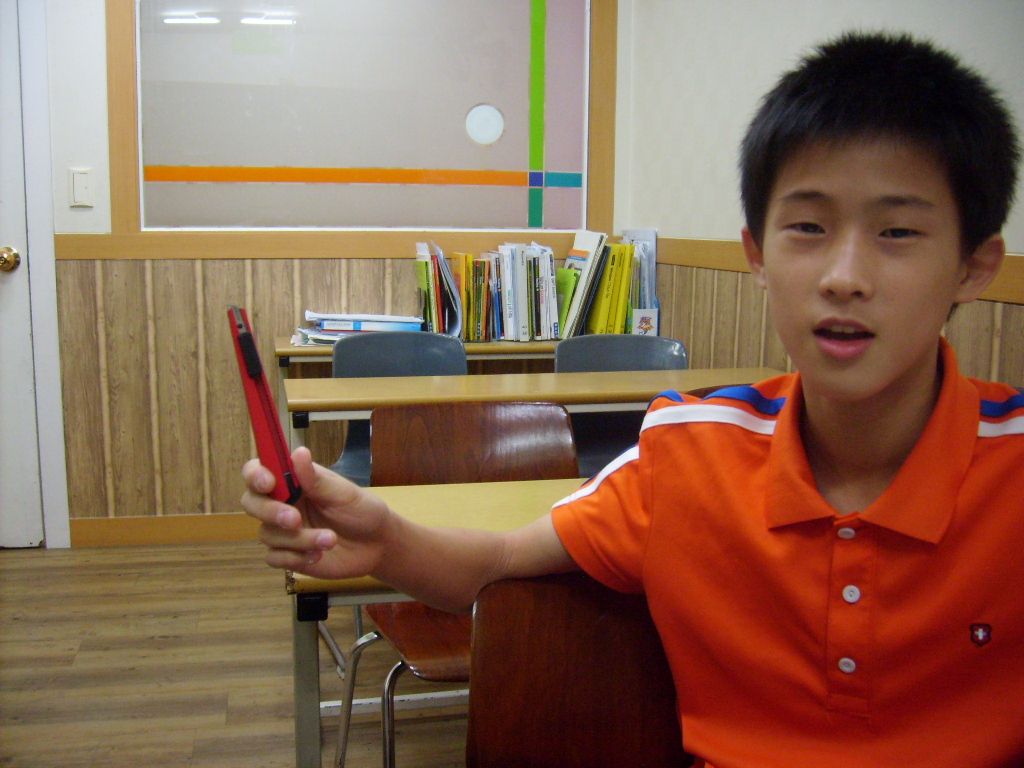
as harmless as its owner
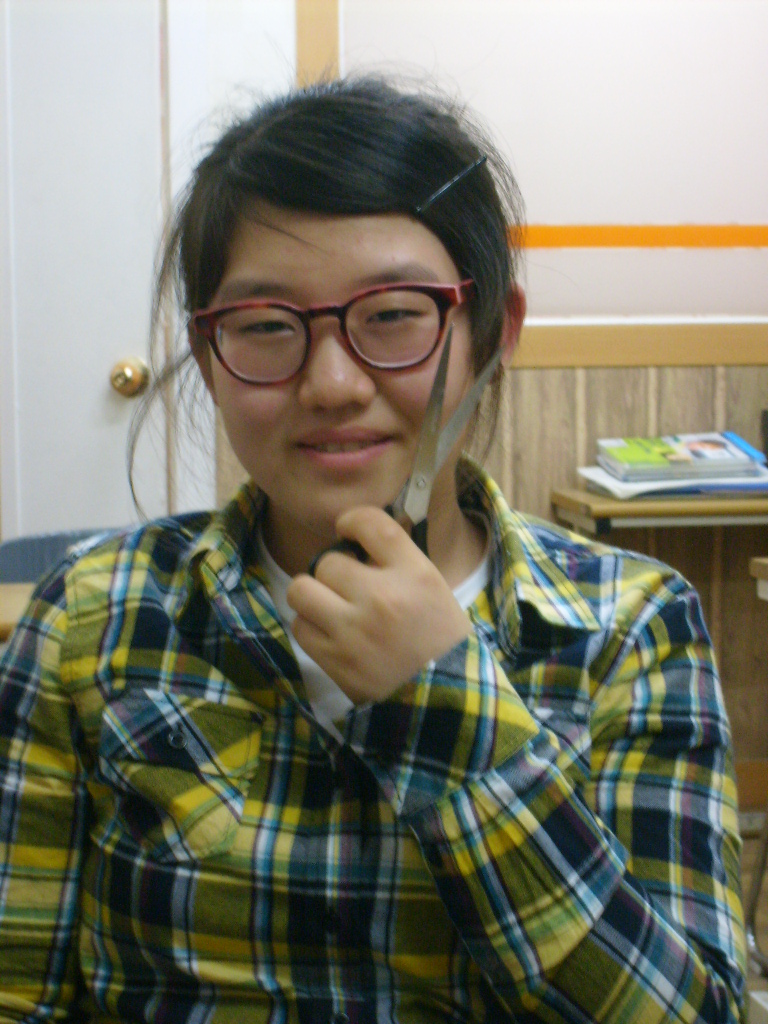
and then there are the scissors...
© 林東哲 2011 Creative Commons Licence.
Pomegranate
Throughout 2010 I took regular photos of a pomegranate tree near my one-room. Boring! Perhaps, but in the UK I have never seen this tree growing except in my garden. I planted this from a seed I took from a fruit bought in a supermarket some 13 years ago. Although the bush has never fruited, it regularly flowers and I’m told that last summer it was covered in a magnificent display of red flowers.

May 3rd 2010
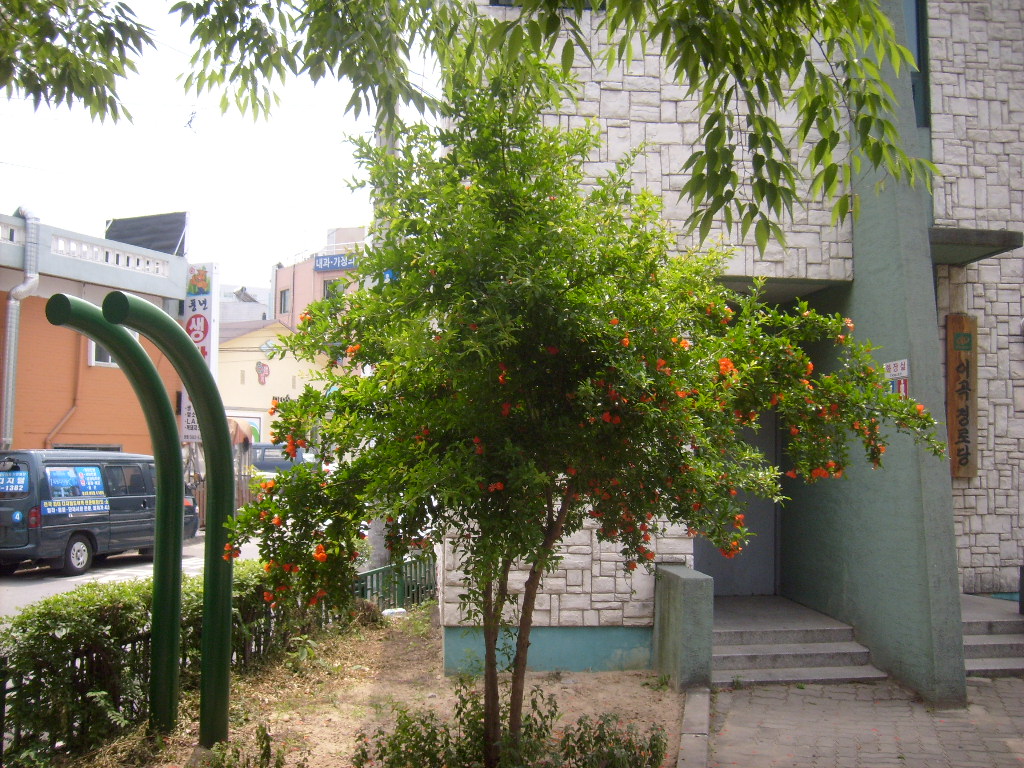
July 20th 2010

July 20th 2010
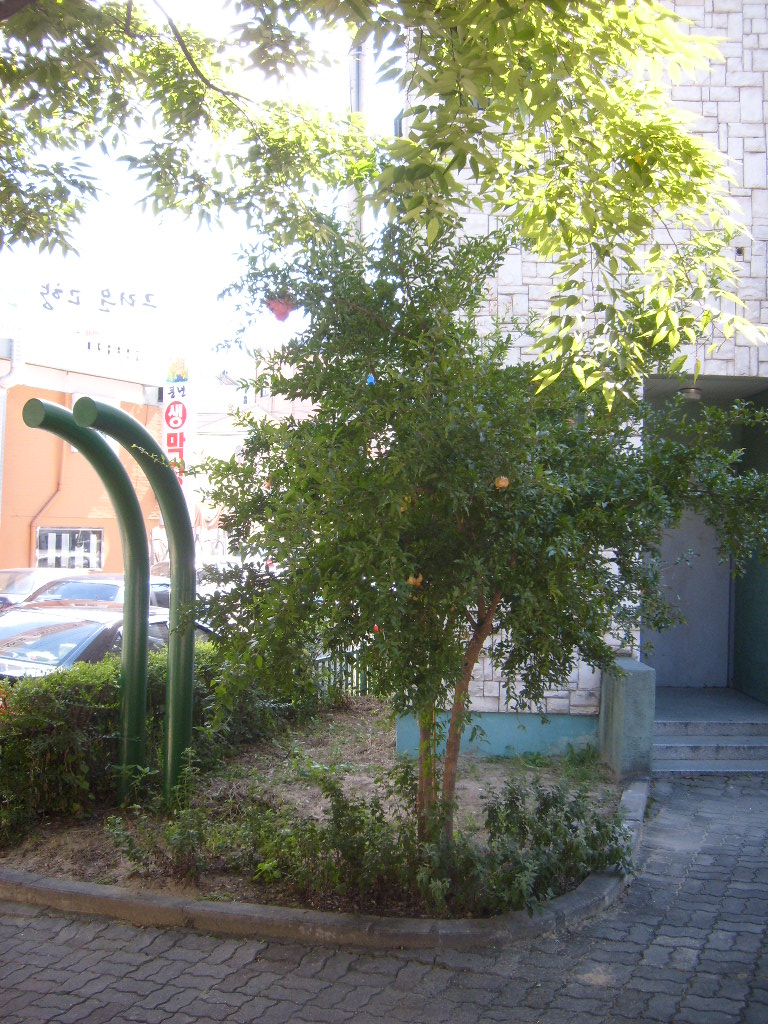
August 2010
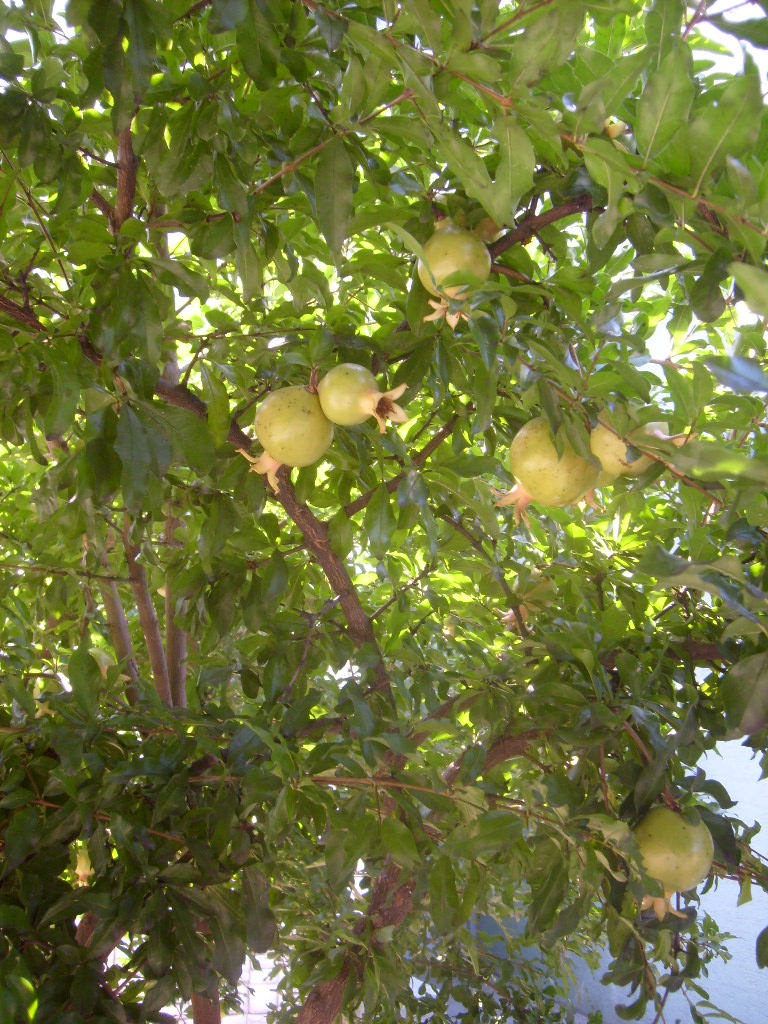
September 2010
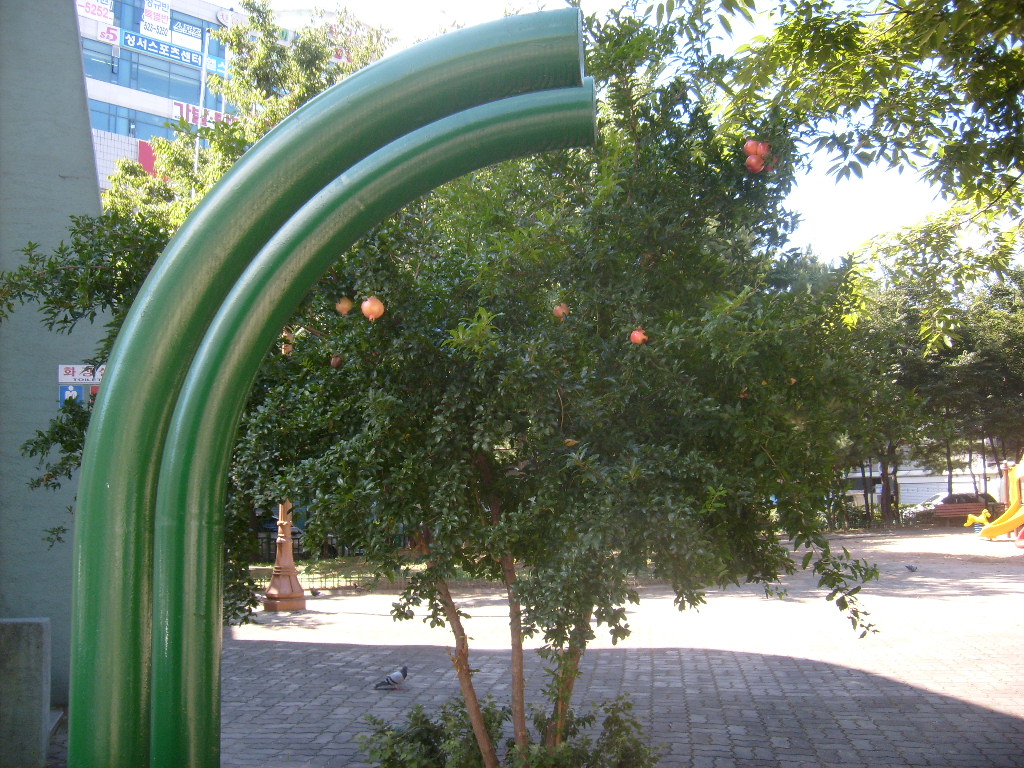
September 24th 2010
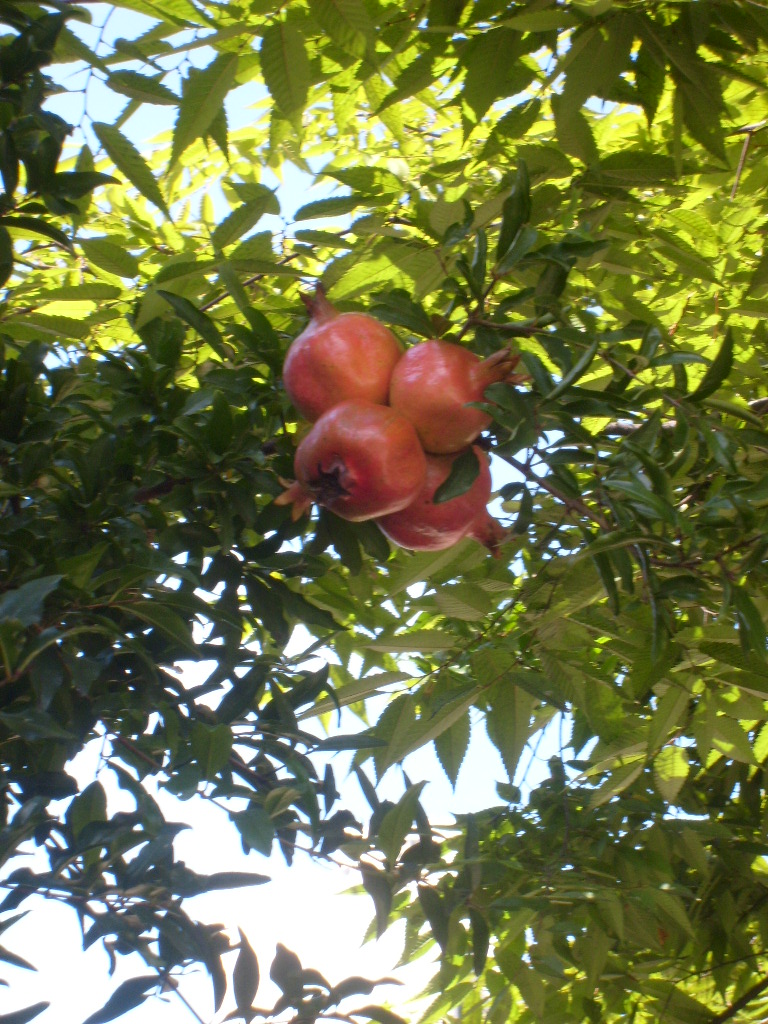
September 24th 2010

September 24th 2010
Though the fruits were red and shiny, when I picked one last year and tasted the fruit I immediately spat it back out. As delicious as they look, pomegranates growing on street corners tend to be horridly bitter despite their juicy appearance.
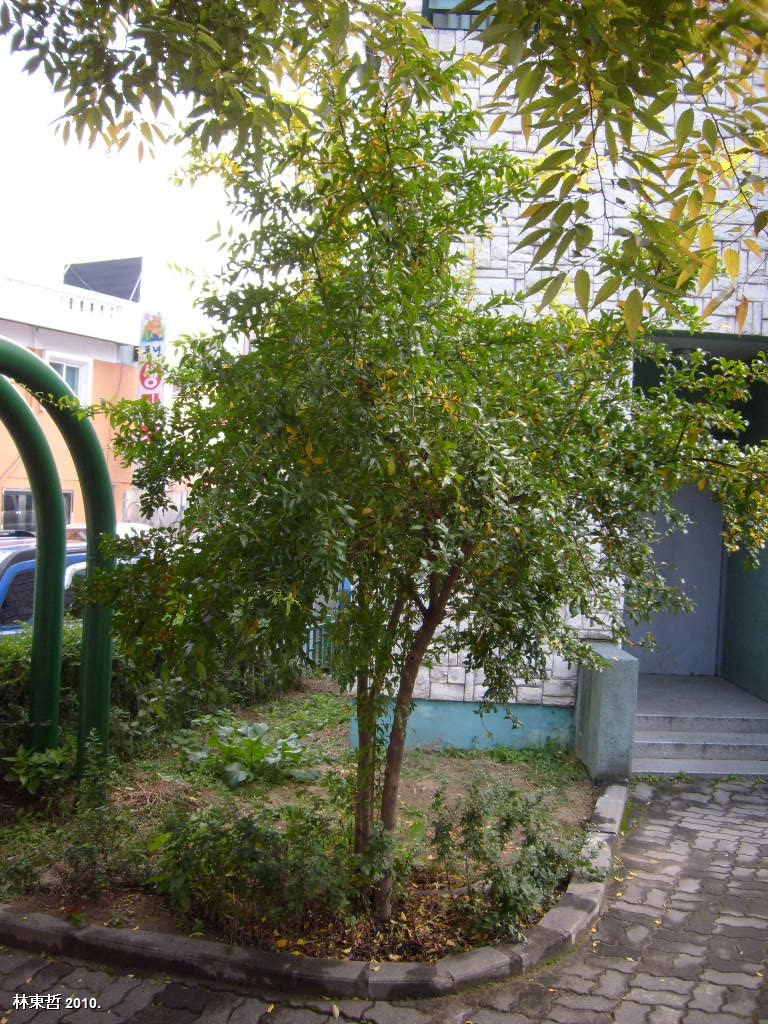
October 23rd 2010
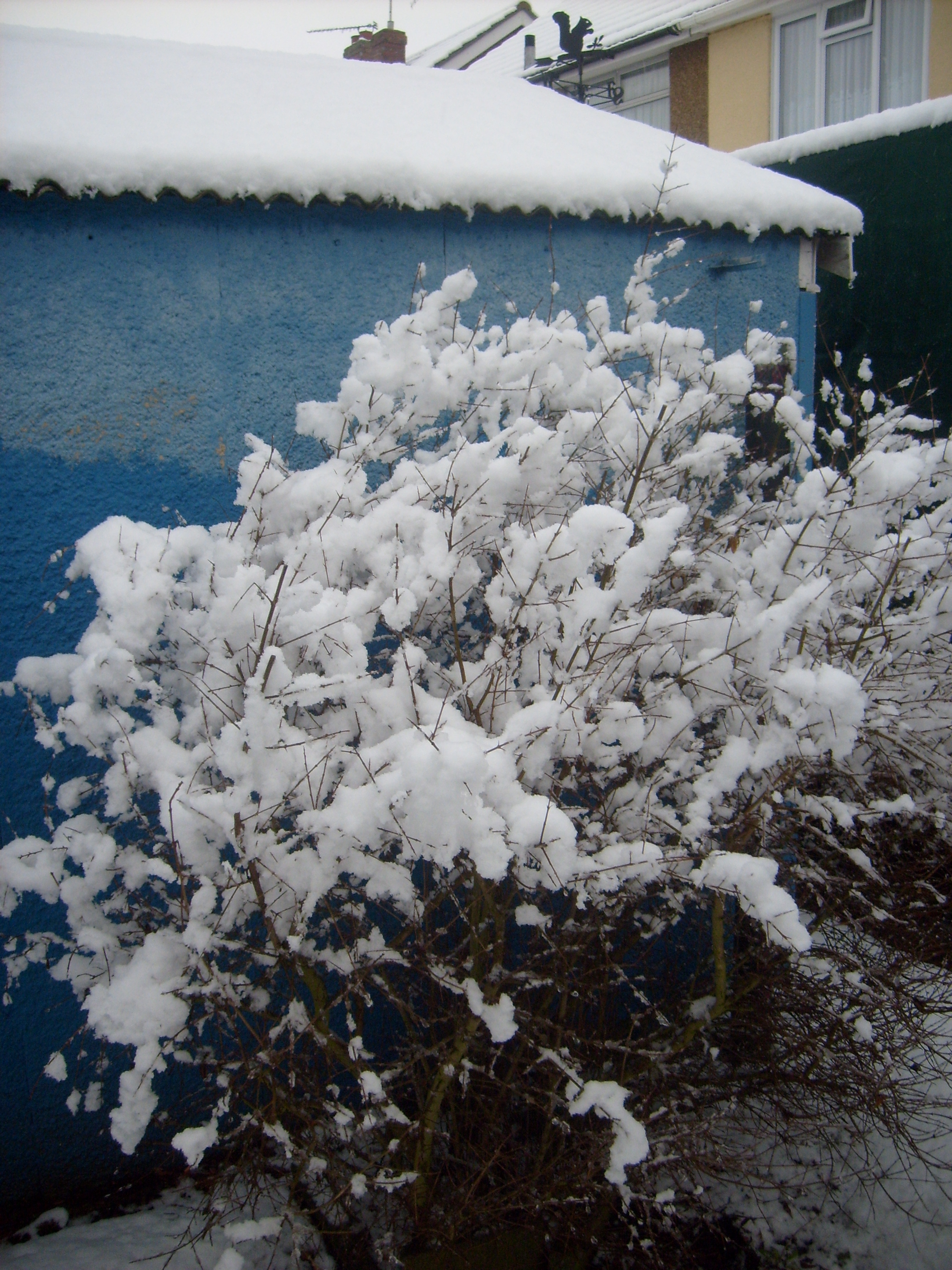
My UK pomegranate, January 2010. (12 years of age)
© 林東哲 2010 Creative Commons Licence.
Cultural Contradictions and Anomalies
Korean culture is rich in a number of contradictions mammoth enough in their magnitude to be classed Orwellian and in some cases subsequently rendered as oxymorons.

Perhaps the most famous oxymorons
With two types of school systems in operation, the state school (hakkyo) and the academy (hakkwon)’, the term ‘school holiday’ is a fine example. Kids yearn for the start of school holidays but unfortunately a holiday they are not as academies, private schools offering every subject from art to English, not only continue operating but increase the hours which they are open. Any free hours remaining can be easily plugged by enrolling in the sports academies which provide taekwondo, happkido, comdo (kendo), ballet and dancing, etc, and which also adjust their hours to take advantage of closure of state schools.
Oxymoron – School holidays are academy days

Whoppee...a Korean holiday and business as usual in the academies
Holidays are nothing like they are in the west and the idea of someone taking two or three weeks off work in which to laze about or go abroad, are rare. For Koreans a vacation usually amounts to couple of days at the most usually taken at the same time as the rest of the nation. As a result, travelling is extremely stressful and vacation locations packed and busy. And of course, vacations are curtailed by the fact all the academies are open and as such all kids should be studying.
Contradiction – ‘holidays/vacations’ – infrequent, short and usually very stressful
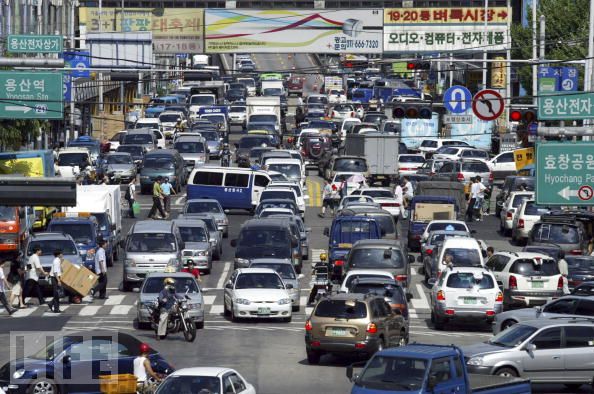
an annual mass vacation day (courtesy of Life)
‘What do you do when you play?’ I once asked a student.
‘I play the violin.’
‘No, what do you do when you play?’
‘I play the computer.’
‘No! What do you do in your free time?’
‘I play the piano.’
Well, maybe they misunderstood the word ‘play’ but you probably get the idea. Korean kids often have no experience of ‘playing’ as English children might and a playground packed with children enjoying a range of games such as tag, football, acting out wrestling moves or doing dance routines, etc, is something I’ve seldom seen in Korean schools. Some students will even tell you that studying is their hobby! However, I’ve seen plenty of students sleeping at their desk in the five or ten minute intervals in which British kids would be playing.
Oxymoron – ‘play’ is extracurricular study

- a ‘vacation’ speciality – the bootcamp
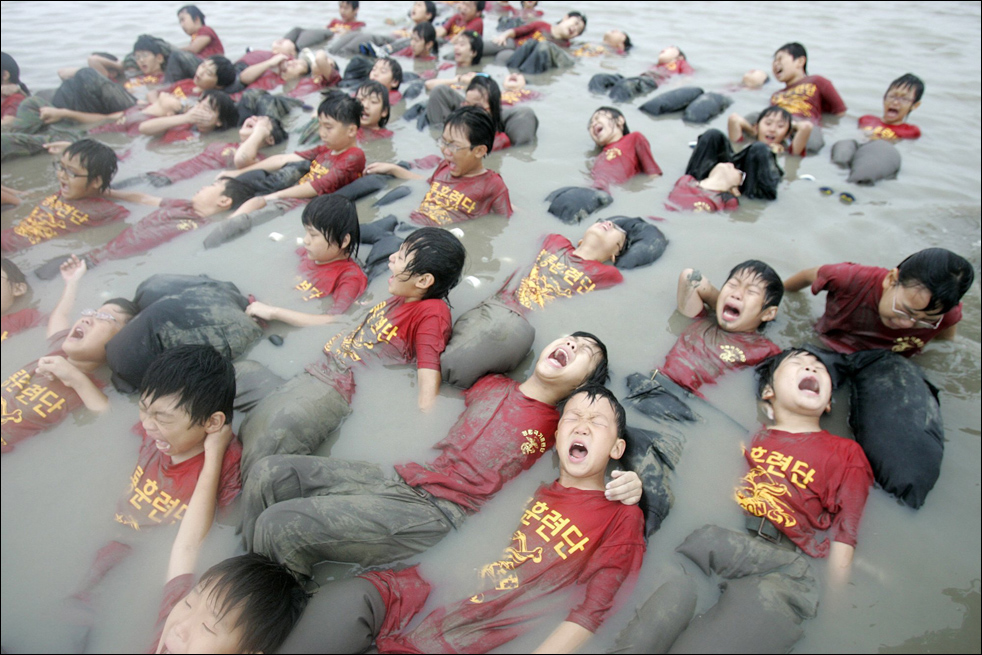
And then there are exams! Korean students are always taking exams and shortly before they finish you will hear some reference to their ‘last exam.’ The irony is of course, that this is never their final exam but simply an exam which concludes the current batch.
Oxymoron – final exams are a prelude to the next exam

mild compared to a vindaloo
Koreans are usually always concerned that their food is either ‘too hot’ or ‘too spicy’ for westerners. Most often they conlfate ‘spicy’ and ‘hot’ both of which it is not. Although one meaning of ‘spicy’ is ‘pungent’ or ‘hot,’ in terms of range of spices, Korean food is limited with chilli, garlic and ginger, being the dominant ingredients. Cinnamon makes an occasional appearance, usually as a sweet drink but undoubtedly Korean food lacks the range of spices used by Indian, Thai or even Chinese cuisines. Neither is Korean food particularly hot when compared with some Caribbean, Mexican and Indian recipes. The Korean chili is substantially milder than the Habanero and Scotch Bonnet and I have not yet eaten a Korean meal which burns ‘at both ends.’ Several years ago I gave a bottle of habanero based sauce to some Korean friends introducing them to the point that there exist foods far hotter than kimchi. However, a raw, hot Korean chili still has the capacity to burn the mouth but it won’t incinerate it as some hotter chillies will.
True – Korean food is spicy – as in pungent
False/True – Korean food is spicy in as much as it uses a three main spices
False/True – Korean food is ‘hot’ – well it’s all relative and depends on personal preference but other national cuisines are typically hotter.
© 林東哲 2010 Creative Commons Licence.
Bathhouse 'Zen' (Part 2)
I’m working through some ideas here and not only have another part to follow this post, but will make amendments here. If you want to add your views, more educated and sociological ones welcomed, please do so however, I won’t bother publishing the usual offensive crap that this kind of post sometimes generates. (Hence the pumpkin logo) Part one can be accessed here: Bathhouse Zen (Part 1)

Once you have recognised your own cultural inhibitions and prejudices that prevent you entering bathhouse complexes or get in the way of your fully enjoying the experience, it is time to look at how bathhouse culture can be seen in a broader context.
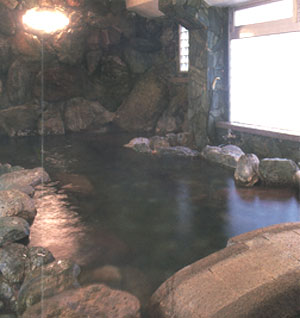
a cave pool
The bathhouse is an environment where social rank and hierarchy either cease operating or do so at a minimal level. In an environment divested of the clothes which we use to mask and manipulate our personalities, communication is both more direct and honest. Mutual nudity brings participants into a closer relationship where friendships and ties are strengthened. The Korean phenomena of ‘testicle friends’ (불알 친구) or ‘penis friends’ (고추 친구) clearly demonstrate that a relationship enters a deeper level through familiarity with the naked body. This is further consolidated through ‘skinship’ ‘rituals’ such as scrubbing each others backs or bodies. Skinship is an important bonding process in all human interaction though it needn’t be restricted exclusively to mother-child or sexual relationships. In the Korean context ‘skinship’ has an important function in wide range of platonic relationships and even serve to form a bridge between relationships that are normally unequal. Unlike western culture, in which physical contact might be substantially altered in a naked or semi-naked state, in the bathhouse ‘skinship’ practices do not alter.
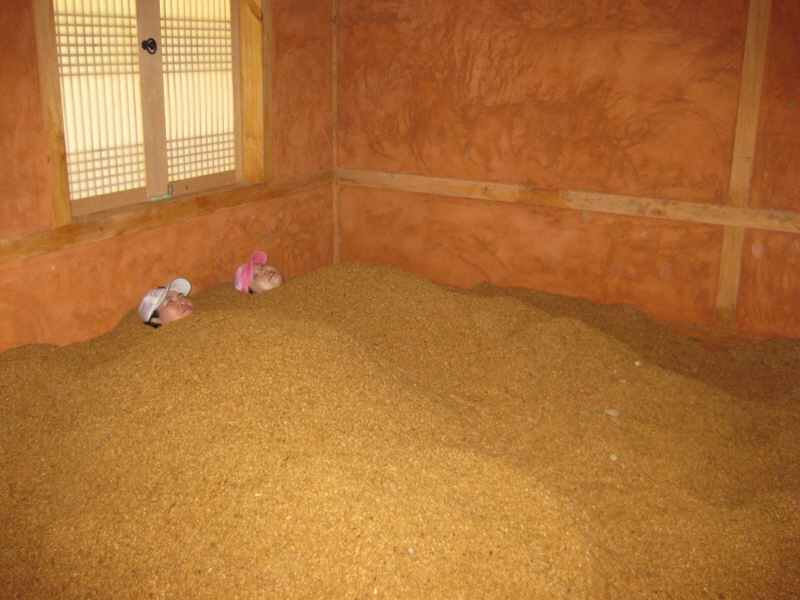
a cypress chipping bath
Additionally, bathhouse nudity also rekindles our relationship to nature and it is not unusual to see individuals sat in pools or quiet corners meditating or simply contemplating. Most bathhouses reinforce the connection with nature and rock, wood, salt, soil, sea water, wood chippings, charcoal, bamboo, herbs, jade etc, are all common features incorporated into bathhouse design. The artificial worlds we inhabit in our regular lives, often fast paced and technologically dependent, all evaporate in the presence of a bathhouse’s watery symphony of splashing, pulsing, lapping, dripping and hissings. Water as water, ice, spray or steam, incorporated with suitable lighting and other elements rich in association with nature combine to create and ambience that can lure us into psychological states conducive to meditation or reflection. A state of nudity fully exposes the body to various transitions in temperature, textures, aroma and humidity.
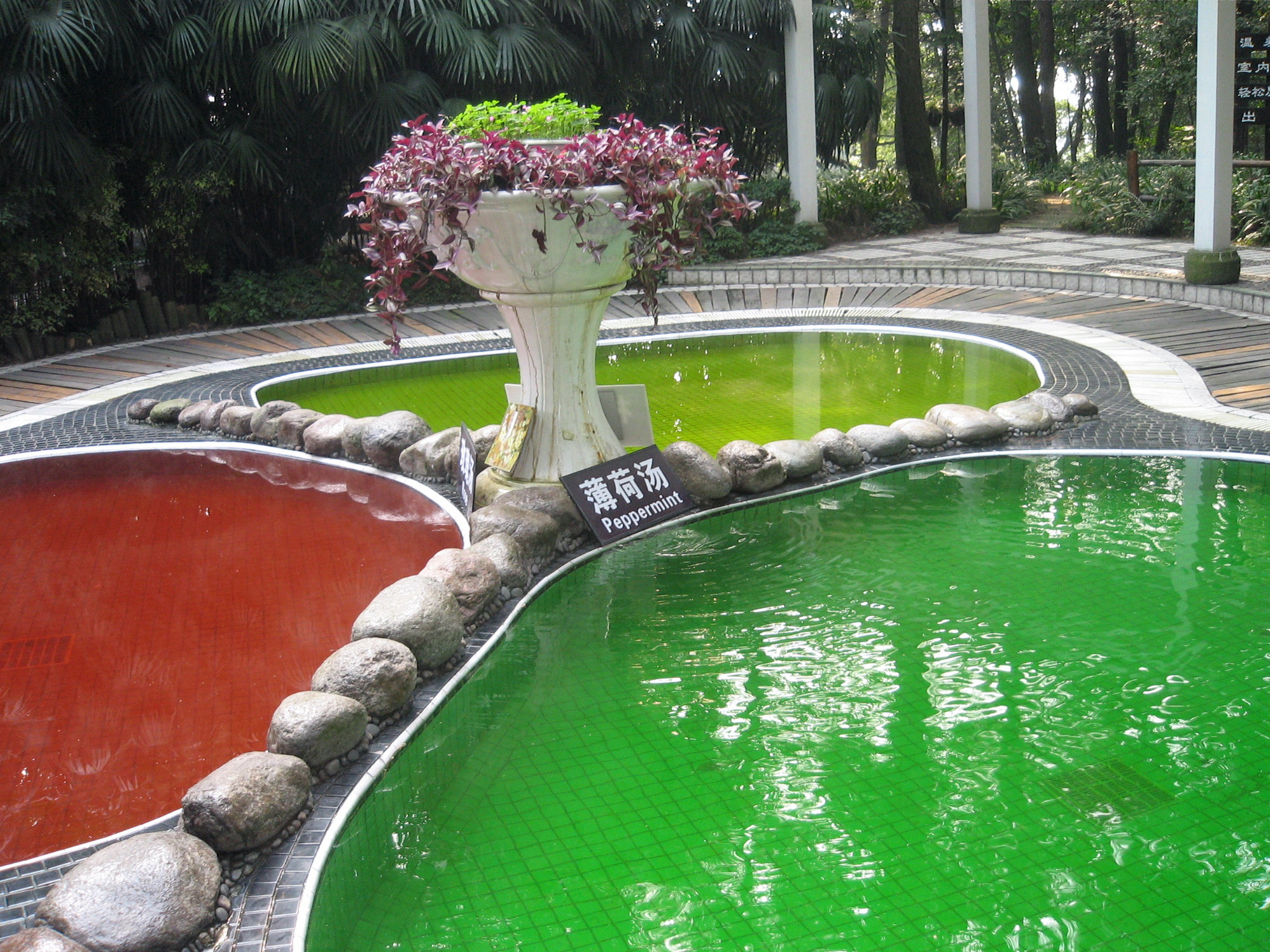
various aromatic baths
Most bathhouses have something unique to offer and an awareness of the ambience of bathhouses at differing times of the day or week mean that it is possible to bathe in a manner that suits not just differing emotions but physical states. Some establishments are better suited for taking a sleep, others for relaxing in various types of pool or experiencing various types of hydro-therapy and some more suited for those times of year when the weather is hot, humid or cold. And if one finishes a session properly they should leave the bathhouse feeling both mentally and physically revitalised.
© 林東哲 2010 Creative Commons Licence
Freebies in the Hotel of Love
I stopped over in Ch’eonan to visit an old friend and stayed in the’ Hilton Hotel.’ Of course, it wasn’t the exclusive ‘Hilton’ and some would dispute it was a ‘hotel’ at all but a ‘love motel’ and certainly as I checked in a couple of teenagers were doing the same and looking very eager to get down to business. The boy, lucky in more ways than one, looking a little sheepish, was stood holding a bag from which some snacks and a bottle of coke poked while his girlfriend paid the bill. The room was 50.000 Won (£25) and I wasn’t really expecting too much but it was impeccably clean and well sized.
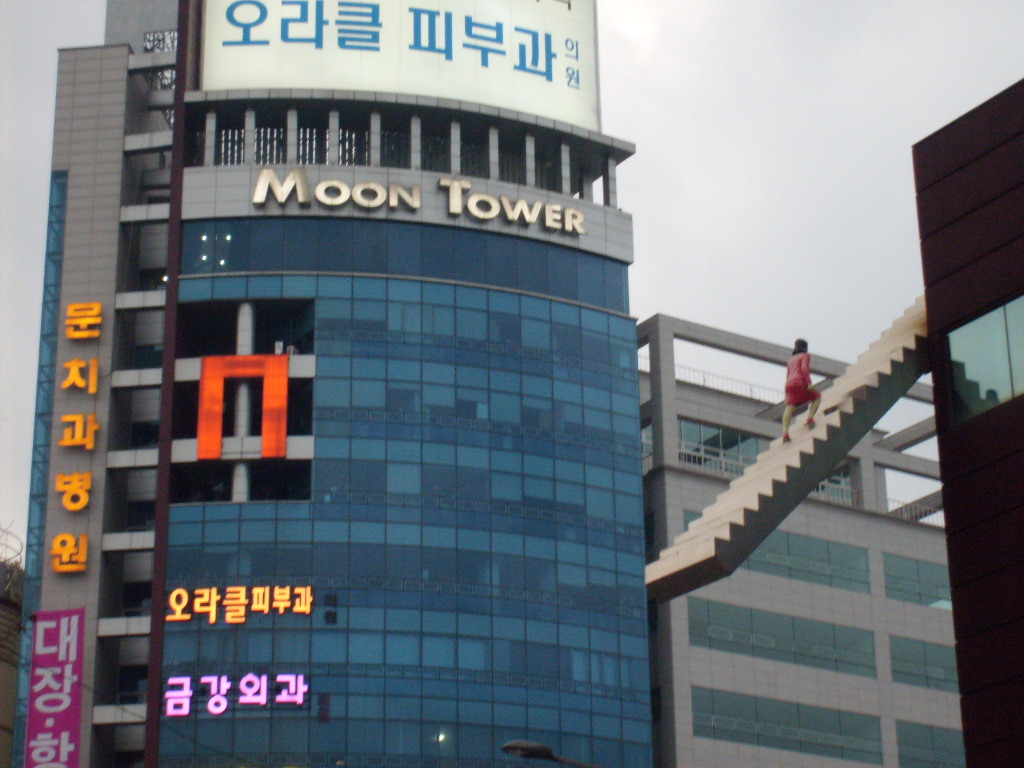
central Ch’eonan
I’m always lauding the Korean system of ‘service’ and all the little freebies customers are given to encourage their patronage. My room had a small refrigerator stocked with bottled water and a few cans of coffee. Unlike the real ‘Hilton Hotel’ where the exact same cans would cost you 4000 Won (£2), these were complimentary. Likewise, large bottles of hair shampoo, conditioner, body gel and a large tube of toothpaste were provided in the bathroom and a hair dryer and various items for women stocked a small dressing table. On the wall was a large plasma screen under which sat a computer which provided access to the internet, games and movies, including pornography, all of which were complimentary.
The only item I didn’t particularly like was the enormous mirror which ran alongside the bed and which, as I was sleeping nude, I couldn’t face until the lights were off. The final touch, an amusing one, were the complimentary condoms and toothbrushes in a small basket on the table. The condoms, described as ‘specially designed skin for her,’ were called ‘Salama’ but somehow it seemed more appropriate to read the brand as ‘Salami.’
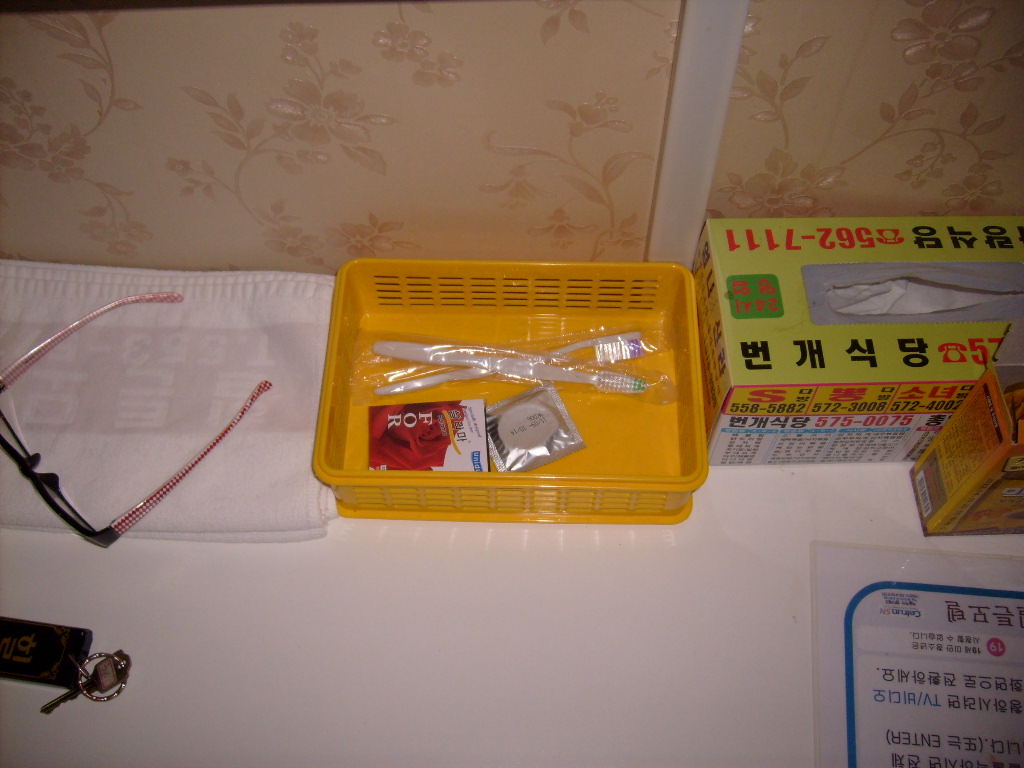
Specially designed ‘skin’
© 林東哲 2010 Creative Commons Licence.
‘Just’ – Revelations
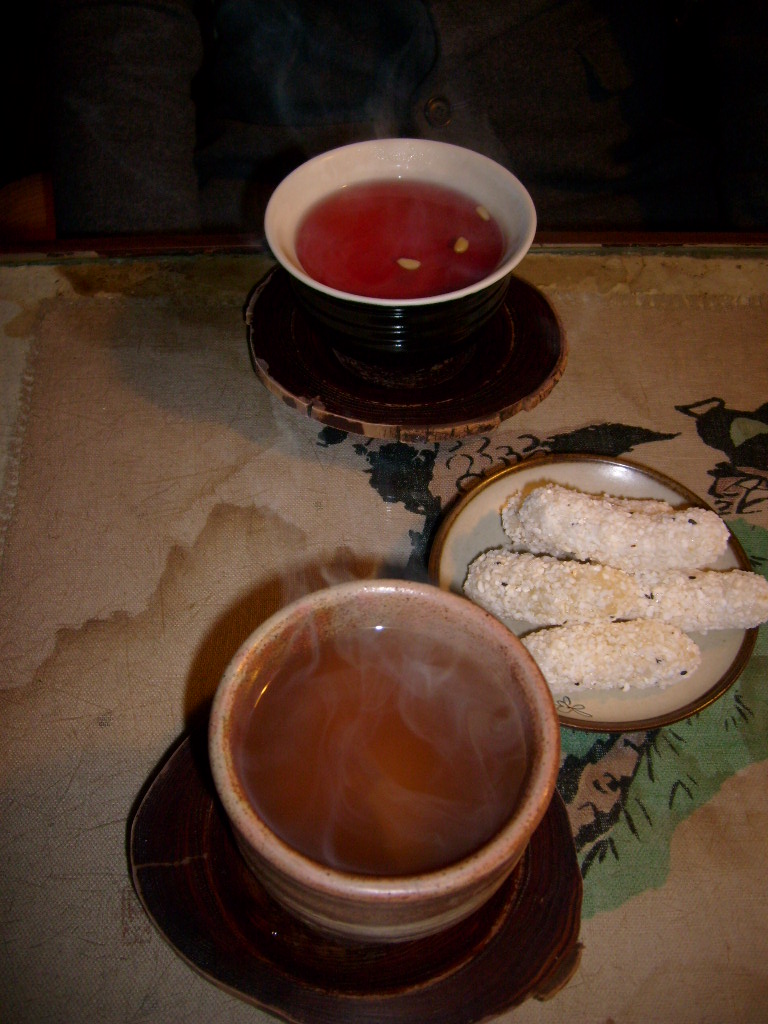
traditional tea in Insadong, Seoul
I was given a guided tour of Insadong (Seoul), on Monday by two ex-high school students. The tour was interesting for several reasons; firstly, because few British kids would have the least interest in taking their old teacher out for the day unless it was to lure them to some secluded alley and then assault them. Teachers are not particulalrly cool in the UK. However, this is Korea and for students, taking your old teacher out has considerable kudos attached to it. Both boys call me ‘teacher’ despite the fact they graduated high school over a year ago and even though I invite them to call me by my first name, both tell me this is rude and uncomfortable and continue calling me ‘teacher.’
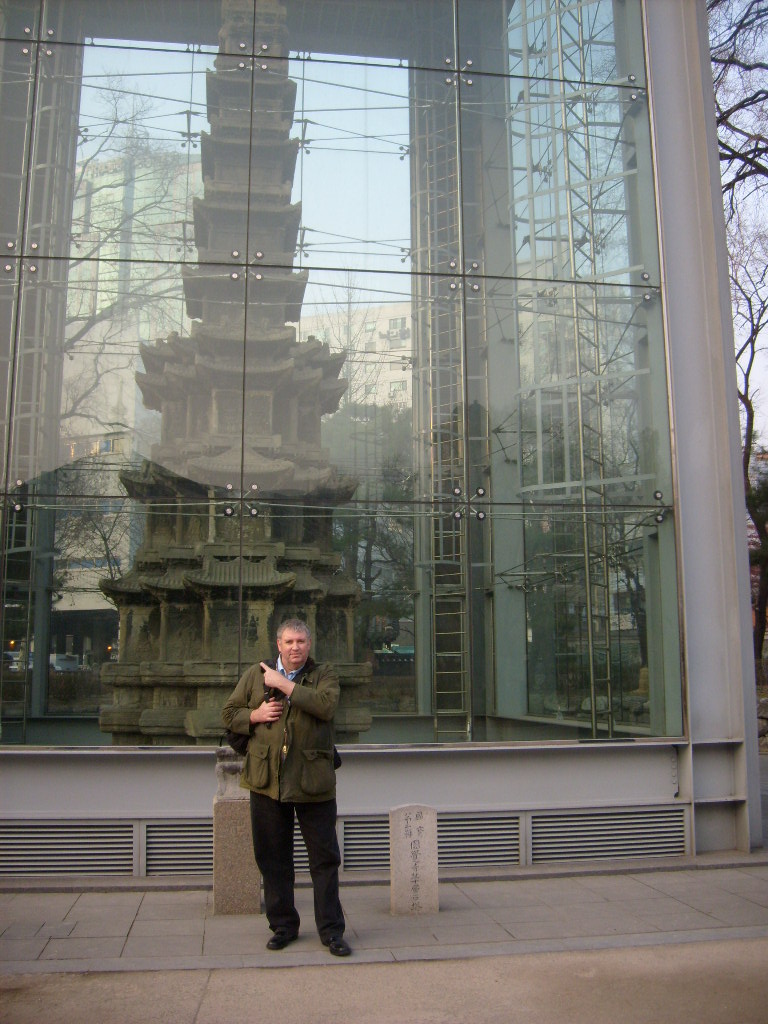
15th century pagoda in Tapgol Park in Jongno, Seoul
Secondly, in a relationship with Korea that spans ten years, I have managed to avoid Seoul for all purposes except leaving and entering the country. Considering I live in a city, namely Daegu, which could easily pass for a location in Seoul, this avoidance is pretty stupid. However, the size and complexity of the metropolis will continue to scare me away unless suitably chaperoned.
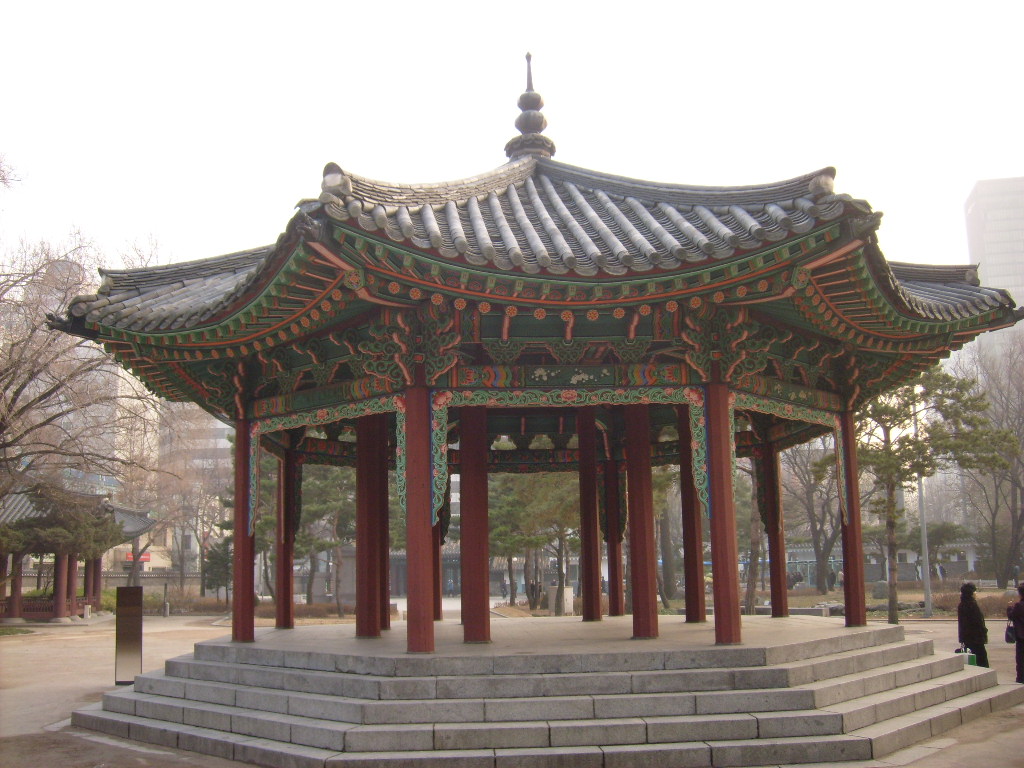
Palgakjeong Pavillion, Tapgol Park, Seoul
With a guided tour of some important locations and quince tea in a traditional tea shop, the day is memorble but mostly because I ask one of the boys if he has a girl friend. The reply he provides is one only a Korean could utter and epitomizes that cute Korean innocence that many teenagers exhibit. ‘Oh teacher,’ he laughs, ‘I don’t have any interest in girls; I like boys, but I’m not gay!’
© 林東哲 2010 Creative Commons Licence.
Goong-Cheon Lavender Jjimjilbang – Daegu 공전 라벤더
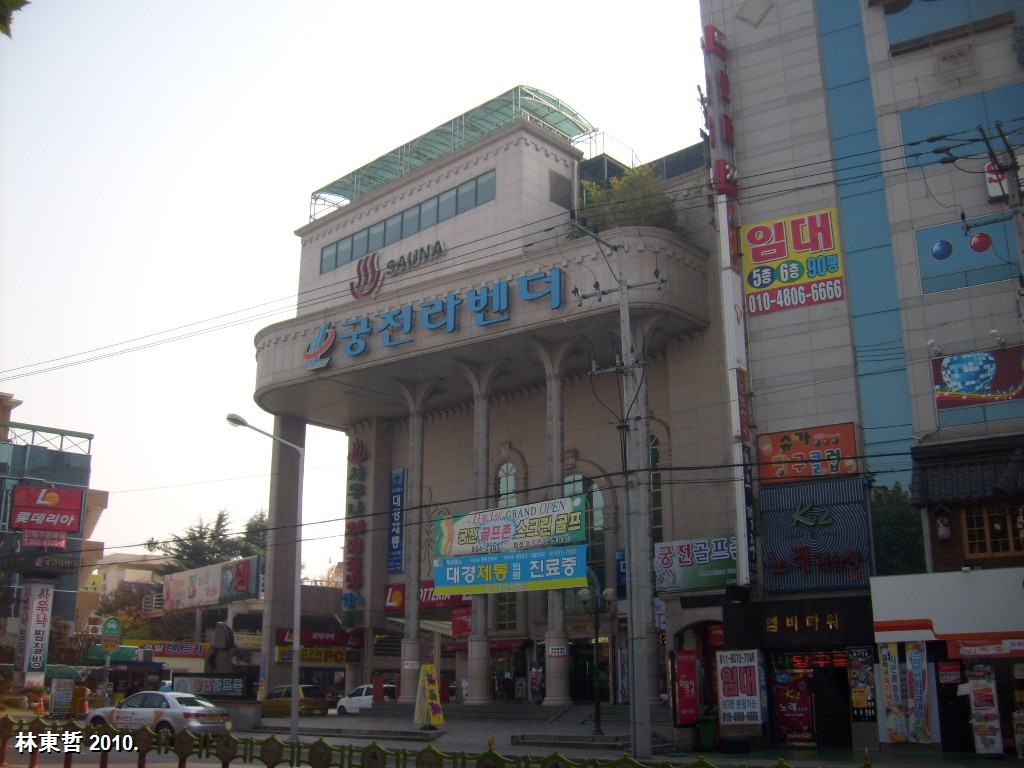
Goong-Jeon Lavender
Only the Bats were Missing
First visited September 10th 2010. You might very well walk past without giving it a second glance; save for the fact a Lotteria is nestled in one corner. From the somewhat clumsy building amidst a sprawling melee of hotchpotch architecture, reminiscent of pre-1988 Korea, you might not expect to be impressed. However, Goong-Jeon Lavender Jjimjilbang, close to Dong Daegu railway station, is not only one of the largest bathhouse I have visited but one of the richest in character and interest.
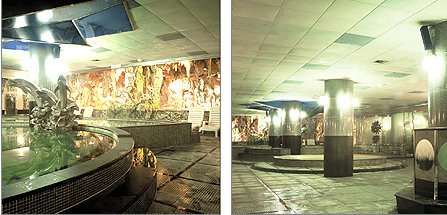
Goong-Cheon Lavender
When leaving the elevator and entering the changing rooms, Goong-Cheon Lavender certainly spoils the visitor with space and the reception area, with a snack bar fronted by cute, if not bizarre pink, white and gold baroque imitation tables and chairs, occupies an area the equivalent to that of many other changing rooms. An atmosphere of spaciousness and intrigue is imparted before one has even collected their locker key.
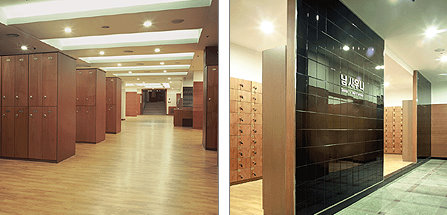
Large and spacious changing facilities
Access between the bathhouse and changing area is via large ramps and on entering the bathing complex you are confronted with a very large showering facility with stand-up showers organised in a multitude of partitions around the periphery, and an army of seated showers relegated to the centre. I usually count shower units but on this occasion there were simply too many and besides, the blue glow emanating from pools beyond the shower area, were demanding my exploration.
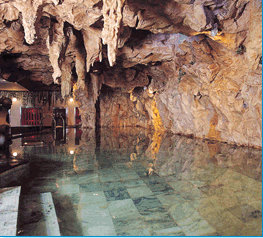
the impressive 'cave'
In the distance, at the far end of the complex, I was attracted to the large ‘cave bath’ (동굴), the water of which was shimmering on the cave roof. On the partitions between the sit-down showers, between which you walk to reach the pools, large crystalline ‘stones,’ appear to be lit from beneath, added to the subterranean atmosphere. Three pools occupy the area before the ‘cave feature’ with various smaller pools on one side and four saunas on the other. The largest pool is a round warm-water pool but my favourite, located almost in one corner and portioned by glass, is a Dead Sea salt bath (사해소금방). The water is dark blue and the high salt content certainly made my body more buoyant.
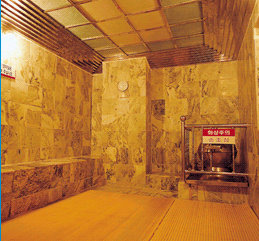
one of Lavender's Sauna
Among the four saunas were, a steam sauna, and a salt sauna all constructed from either jade or some other ‘well-being’ material. There is also an ice room. However, the central feature of Goong-Cheon Lavender, are the two pools at the head of the pool complex which are designed like caves. Small windows provided enough light for real ivy to grow from the ‘rock formation’ walls and from the ceiling hang impressive, realistic stalactites. Both pools are cold, more suited for hot weather and one has a number of power showers useful for massaging an aching back.
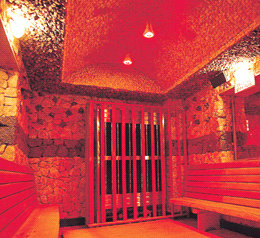
a jewelry room
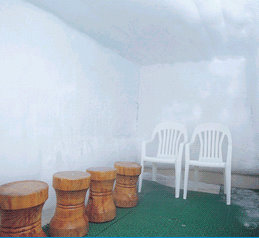
the ice sauna

the unique Dead Sea bath
Non-invasive lighting, various scents from the saunas such as rose, pine and mugwort plus beautifully soft and fresh smelling towels all enhance the atmosphere and though there is a television in one sauna, which is piped into other rooms, levels of noise are low. Numerous pools also use silver ionised water which is subsequently microbe-free.
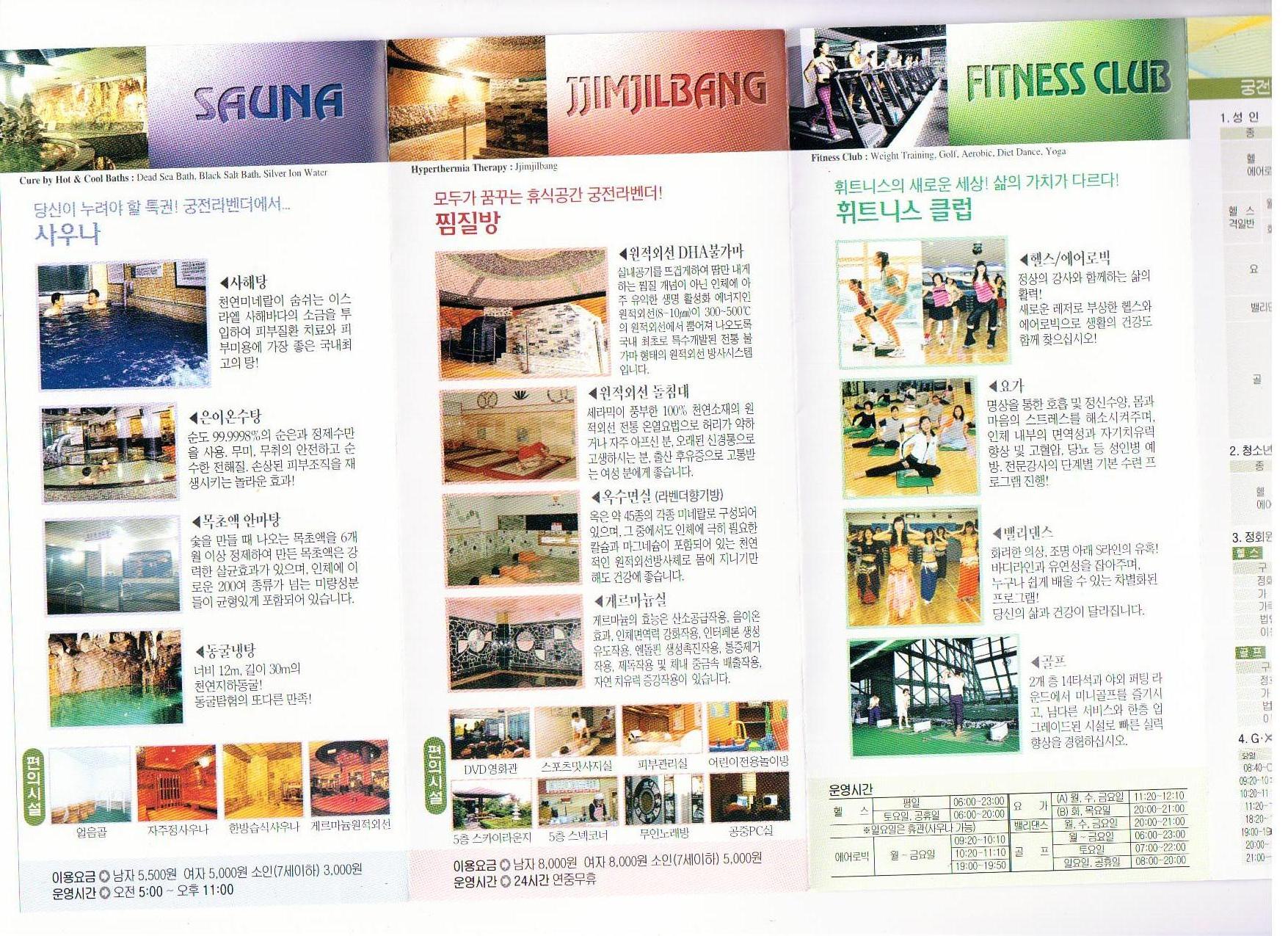
well worth a visit
Goong-Cheon Lavender also boasts sporting facilities, including general fitness, weight training, yoga and golf as well as a jjimjilbang equipped with various ‘jewellery’ rooms. Similar to the bathhouse saunas, these are rooms constructed out of stone or metal with ‘well-being’ qualities. A roof garden is also accessible from the jjimjilbang. This is an impeccably clean and exciting complex to which I was welcomed in English. There is much to explore and the size, atmosphere and unique bathing experiences make this a great venue to relax. My only criticism… there were no bats!
Plan
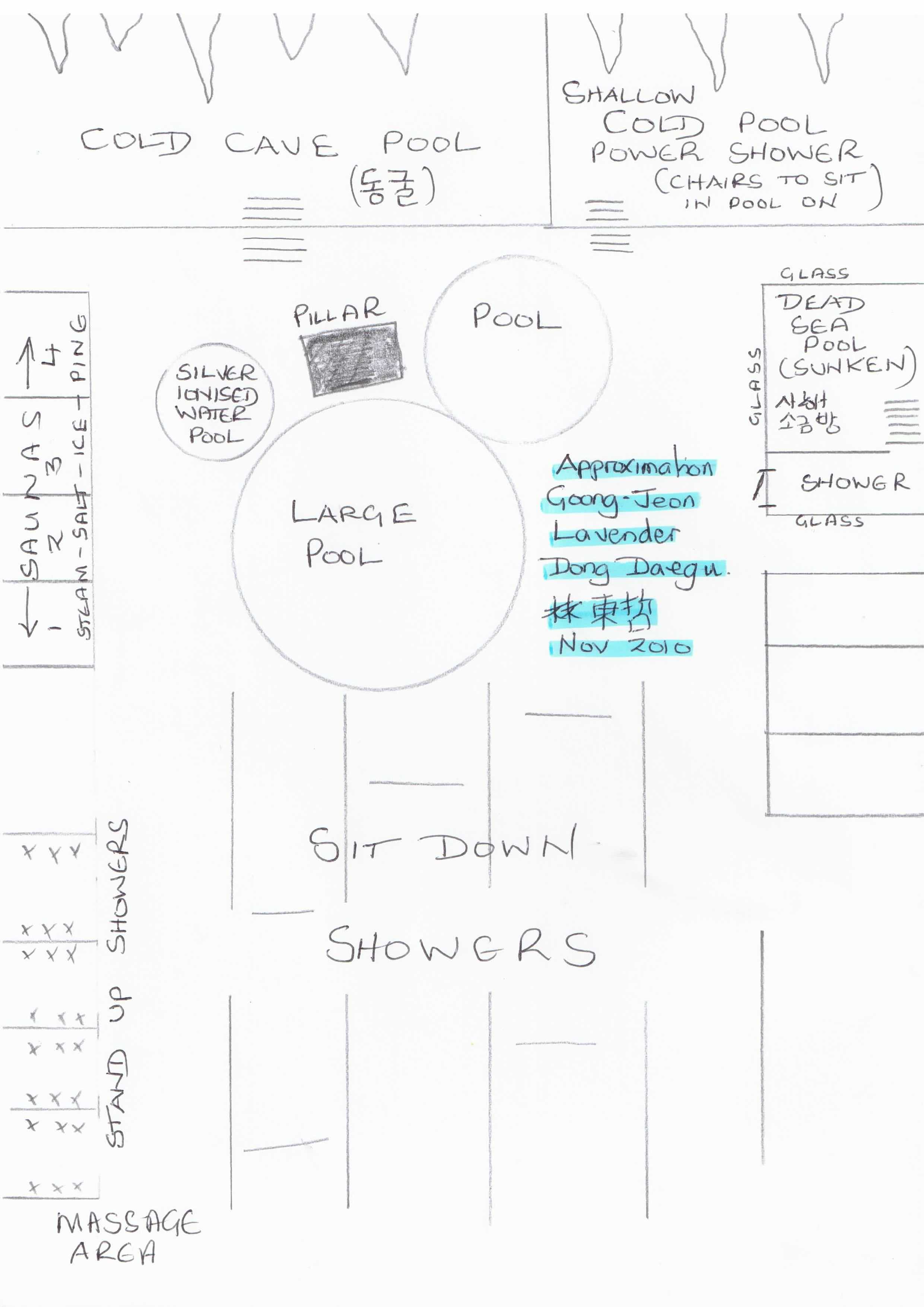
Goong Jeon Lavender bathhouse design (male)
Times – 24 hour jjimjilbang (찜질방) and bathhouse.
Facilities – women’s ‘bathhouse, jjimjilbang, men’s bathhouse, coffee shop, shoe shine, barbers, sports complex, belly dancing, aerobics, screen golf, massage, children’s play room, pc room, roof garden, yoga, etc
Jjimjilbang – (pending)
Bathhouse (men) – an extremely large stand-up and sit-down shower area. Cold pool cave, Dead Sea salt bath, Black Sea bath, silver ionised water, steam room, salt room, and various ‘jewelery rooms.’
Cost – bathhouse 5000 Won.
Others – hairdressers, massage and rub downs, parking, cafe..
Ambiance – very relaxing and friendly.
Waygukin – None.
Address – Goong-Cheon is located a very short taxi ride from Dong Daegu Station (KTX). (Wikimap)
© 林東哲 2010 Creative Commons Licence.


 Elwood 5566
leave a comment