Monday Market – Apples (사과)
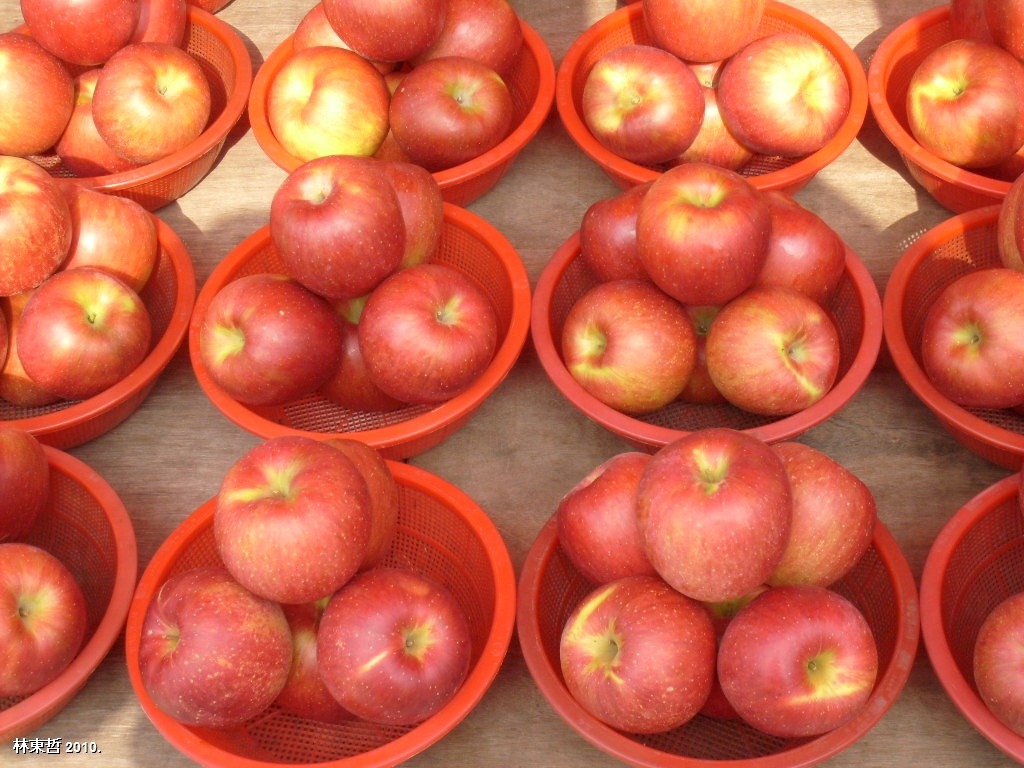
early autumn apples
When I first visited Daegu in 2010, the city’s link with apples, a local product, seemed very strong. Ten years later, and on the odd occasion I have mentioned Daegu in relation to apples, and some people look at me blankly. Regardless, apples in Daegu, and perhaps further afield, are delicious. I rarely buy apples back home partly as the varieties are never constant and the taste and texture never guaranteed. Like many fruit and vegetables in Britain, they are rarely home produced. There is a lot to be said for seasonal fair as the quality is far superior and at the moment, cabbages (배추), apples, Asian pears (배), persimmon (감) and oranges (귤) from Jeju-do) are all in season. I have become quite used to watching the passing season through what’s available in the street markets and am currently waiting to see an abundance of of ginkgo nuts (은행).

Crispy, sweet and delicious
Korean apples are big, crispy, sweet and juicy. I’ve never had an apple that is soft or sour and would imagine sweetness is guaranteed because of the hot summers. Most apples are best about Christmas time and there are five popular varieties all grown in Korea:
‘National Glory’ (국광) – deep red with green stripes
‘Golden Delicious,’ (골덴 딜리셔스) – clear yellow
‘Huji’ or ‘Pusa’ (후지 / 부사) – light red
‘Indian’ (인도) – green
‘Red Jade’ (홍옥) – bright red which is best slightly earlier than Christmas.

Monday market
However, as I write, I read that in the UK, this years season of apples, though outstripped by imports, are especially delicious as they generally tend to be approximately once every seven years.

© 林東哲 2010 Creative Commons Licence.
Related Articles
- Consuming Issues: Why English apples are the pick of the crop (independent.co.uk)
An Autumn morning in the Rose Garden (장미공원)

blaze of autumn
In Autumn, you can often kick or push a small tree and the leaves fall like snow. Last weekend I noticed several people , mostly couples, kicking trees and then getting all excited as they stood in the brief leaf storm. In England, the air to usually too damp for the leaves to turn crispy and English leaves, sodden, soggy and sloppy, are notorious for sabotaging our rail network. Indeed, in just a few days the trees in one road, golden yellow, have been blown barren by a bitter wind that bites your face. In my UK garden, the defoliation of summer’s leaves is a long and slow process and even late December some leaves will have avoided being blown off.
These photographs were taken on or around 18th of November, which is actually winter rather than autumn, when most of the trees still had leaves and they were at their most dramatic. Most were taken around 7.30 in the morning with a frost over the ground and light mist in the air.

autumn colours

Autumn across the rose garden

contrasts

while I took these photos, suneung was just about to begin

the chong-cha (정자) at the rose garden's center
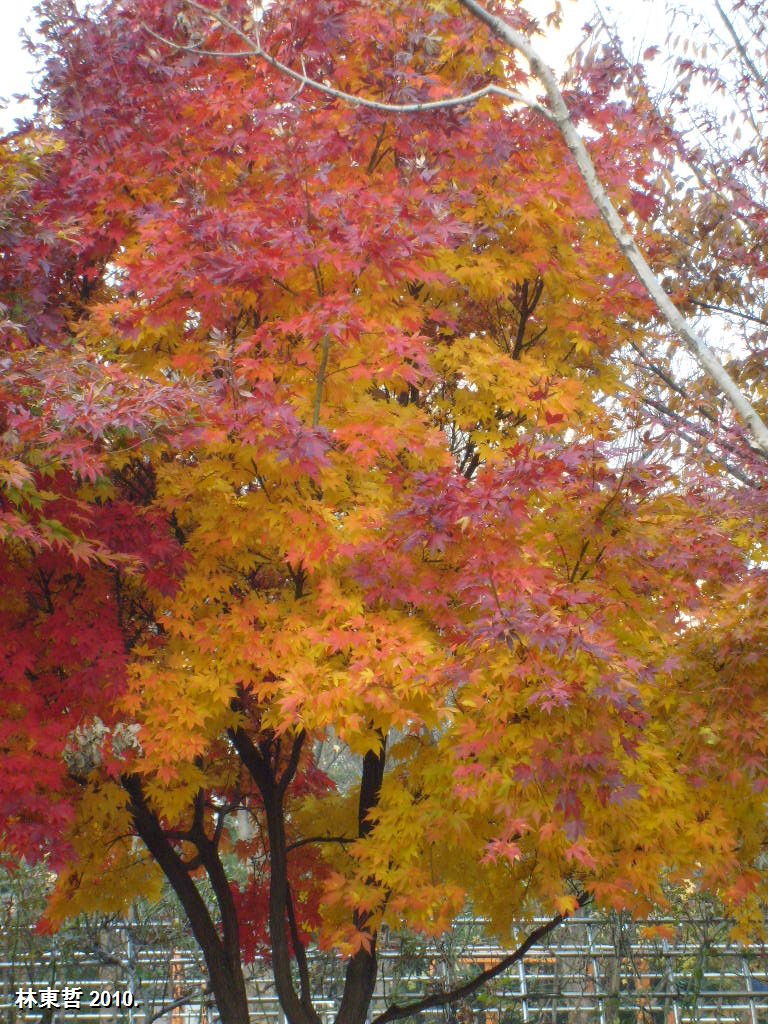
it's easy to see why the hanja character for autumn, is a combination of tree and fire
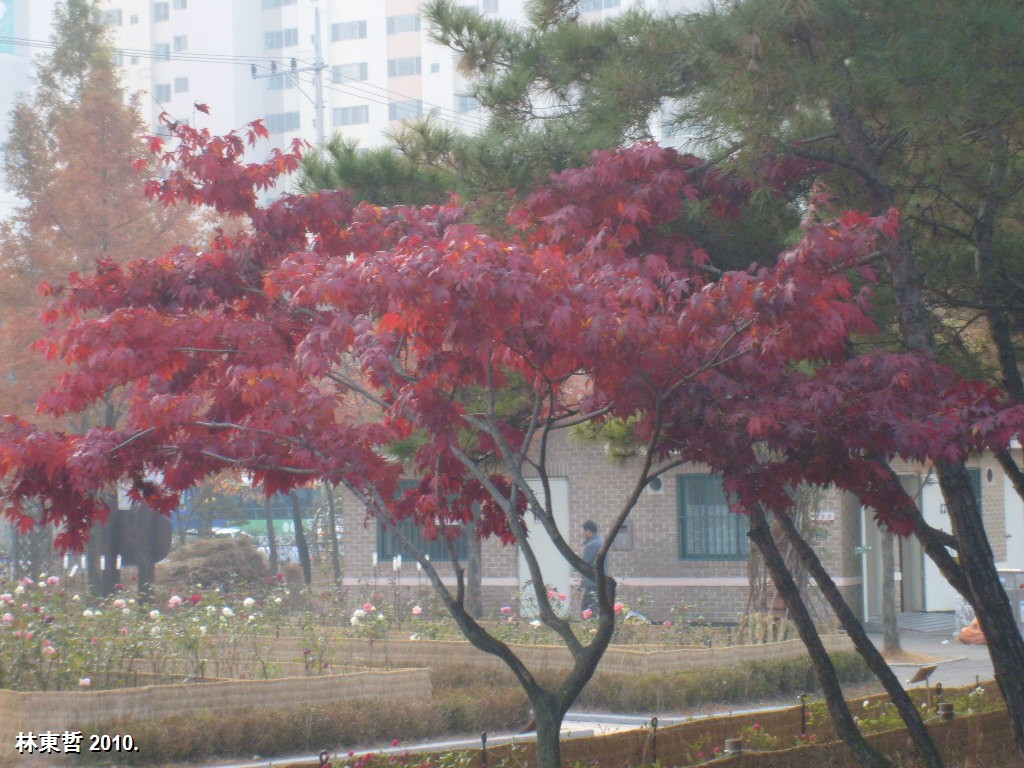
another blaze

rose, high rise and mountain

in the background is the boys' high school where the suneung was about to start

rose and high rise
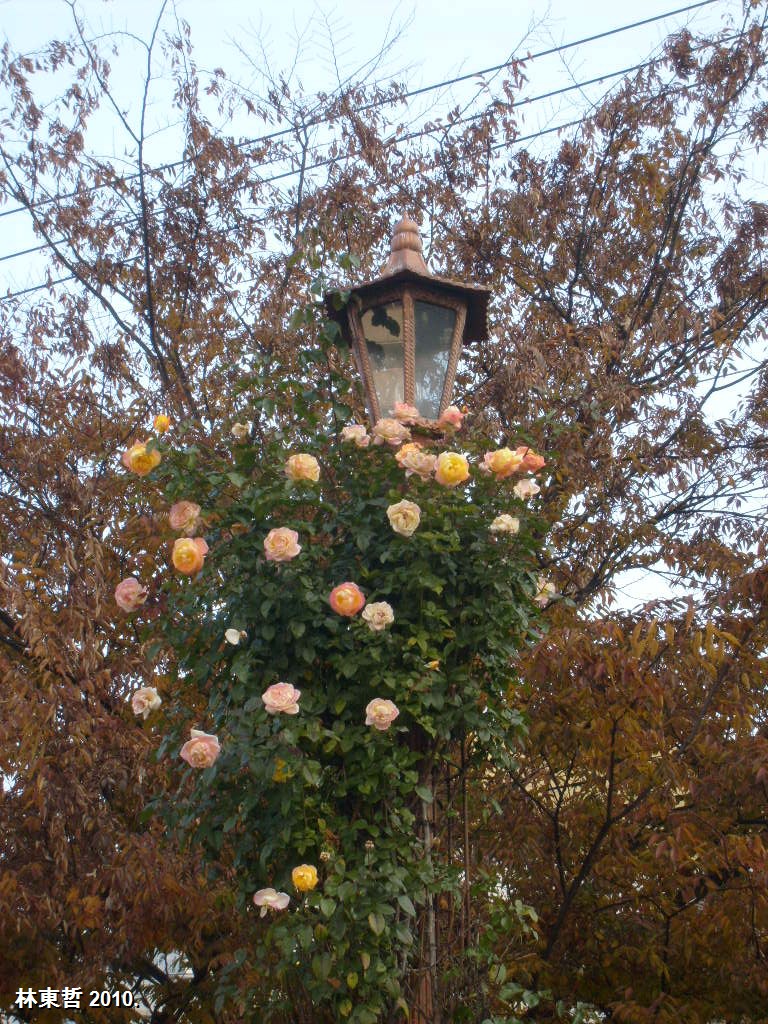
and then home
© 林東哲 2010 Creative Commons Licence.
Comparing the Intensity of the Memi (매미) Song Across Summer
This is just a boring snippet for those interested in insects and in particular, the memi (cicada – 매미). Suprisingly, my posts on the memi have attracted considerable hits so I have put the three video-clips together. Before watching, I’d advise you turn down your volume, especially if you are wearing headphones. The memi song can damage your hearing!
All vodcasts were recorded in the same location at approximately the same time of day.
© 林東哲 2010 Creative Commons Licence.
‘Pedal’ (배달)Blunder
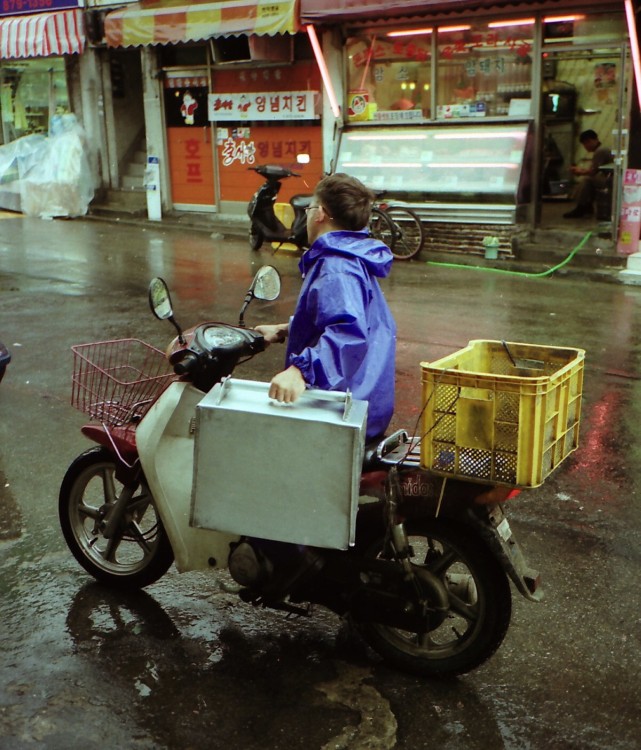
take-away Korean style – the ‘hay-box’ has been voted one of the most uniquely Korean innovations (courtesy of Anttinen)
Occasionally, I order a delivery of food over the telephone. I’ve become quite adept at ordering a pizza, chicken or po-ssam (보쌈) and provided there are no hitches, usually whatever it is that I have ordered, will arrive. If you know your address and can repeat it in Korean and are able to read a menu, ordering is not too difficult.

McDonald’s delivery service
Delivery is known as ‘pedal,’ (배달) and many businesses that deliver food, which is most of them, have the technology, when you call, to identify your address and all they need do is check it. A few places, such as McDonald’s have a centralized call center and staff that often speak some English. However, unless you are familiar with a McDonald’s which has significantly cooled resulting in a dry and bland wadge of assembled parts which no longer blend into a satisfactory taste, I wouldn’t bother. Once you have successfully made an initial order from a business, the second time is easier. If they start gabbling on and you lose the gist of everything, just say sorry and hang-up.
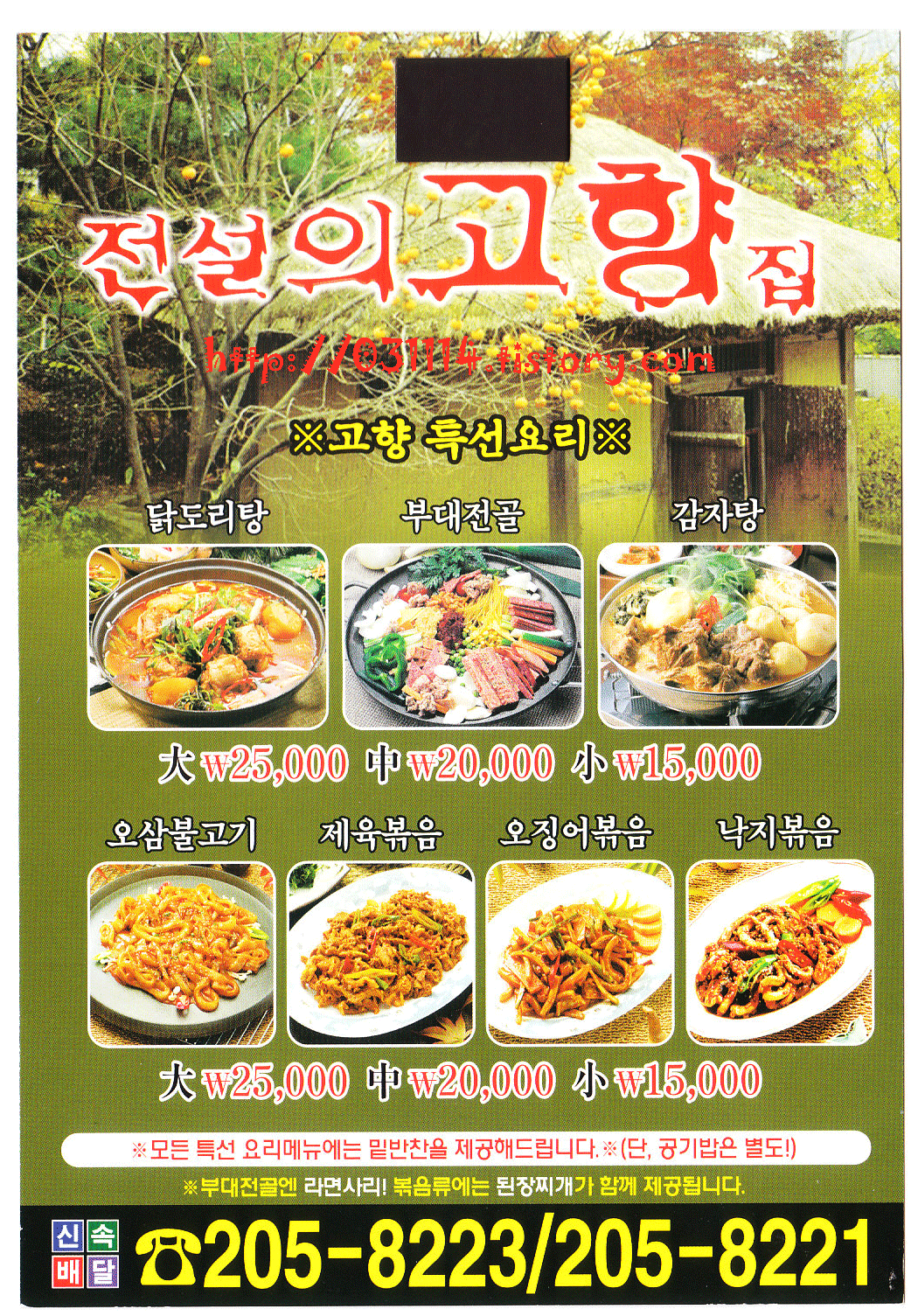
typical delivery (배달) menu
This week, I ordered a burger as I fancied some western style, non-well being food. I didn’t want McCrap and ordered from ‘Mr Big’ whose burgers actually contain meat which is meat in both colour and consistency and not a pallid, compressed meat paste patty. I distinctly ordered a regular size which along with a bottle of coke and chips, Mr Big do real chips as opposed those piddly French fries, should have cost a total of 12000 (£6). I should have listened carefully as my order was read back because when it arrived I was confronted with a bill of 30000 Won (£15). I didn’t have sufficient Korean skills to argue and though not planned the mega meat feast I could see dangling from the delivery man’s hand, called like a Siren. I not so reluctantly handed over the money to be given what looked like a large cake in a box, with a cellophane lid. The burger was enormous, measuring about 18cm in diameter. It was definitely ‘king-size’ and would easily have satisfied three people. When I told one of my students she said her family of four order this size burger to share but I didn’t feel too bad because she’s built like a chopstick. Besides, once I’d thrown away the enormous bun, the size of a hat, I was left with what was possibly a pound of pure Australian beef and there was no mistaking it was quality meat. Unlike pasty-patties, it smelt of meat, it looked and felt like meat and was deliciously juicy. The only time you ever see any juice in a McCrap burger is in the advertisement photos. I occasionally eat McCrap and when warm and burger-science is working at maximun capacity, they are quite tasty and satisfying but isolate the individual components, or eat them when the loss of heat has killed the flavour, and they are crap. I can eat most things cold, but a cold McCrap burger is disgusting. This monster hamburger you could easily eat cold because unlike a McCrap which are only hamburgers by suggestion, this was real. Along with the accompanying salad it was a wholesome meal.
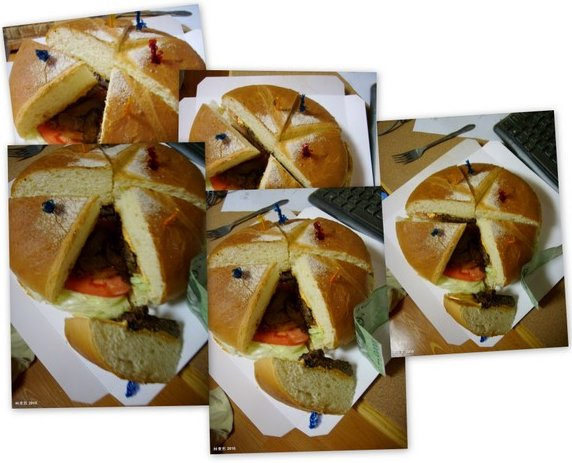
king-size
© 林東哲 2010 Creative Commons Licence.
Customer Support Paradise
Ah, an interesting day! My electronic dictionary was burnt out by a faulty USB on my old computer almost two years ago. So, on Thursday, I took it to the Nurian Service Center, which is actually at Tesco’s Home Plus in Yong-San-Dong, in Daegu. This Home Plus, one of Korea’s first, is enormous and opened during my second trip to the peninsula, around 2003. So, I hand them my white elephant of an electronic dictionary and head back home.
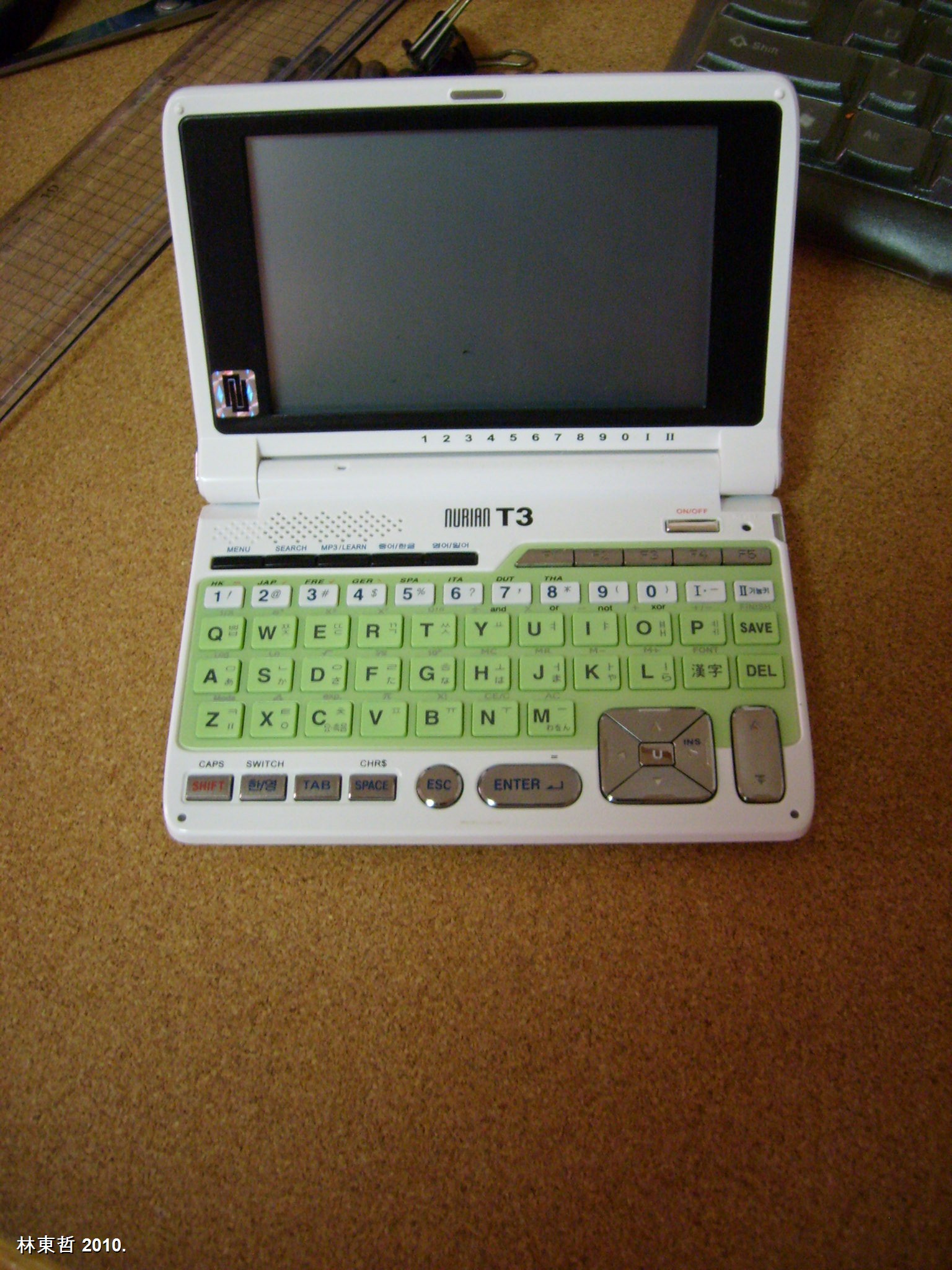
My Nurian T3
On Friday morning, I discover my internet connection isn’t working which means not just no internet, but no telephone or television. And then, to compound matters, my washing machine is leaking, not seriously but enough to wet my feet and cause a nuisance. I telephone my boss from the school office at 9.30. By 10.15 , forty-five minutes earlier than arranged, I receive another call from my boss telling me the internet repair man is waiting outside my one-room. Five minutes later, I find not one, but two internet engineers sitting outside my building in their van. One of the engineers is a woman and her uniform is not much dissimilar to that of an airline stewardess. The first thing they do, without checking anything is to replace the modem. Twenty minutes later, a washing machine repair engineer arrives and a new hose is fitted in the back of the machine. The cost for this job is 40000 Won (£20).
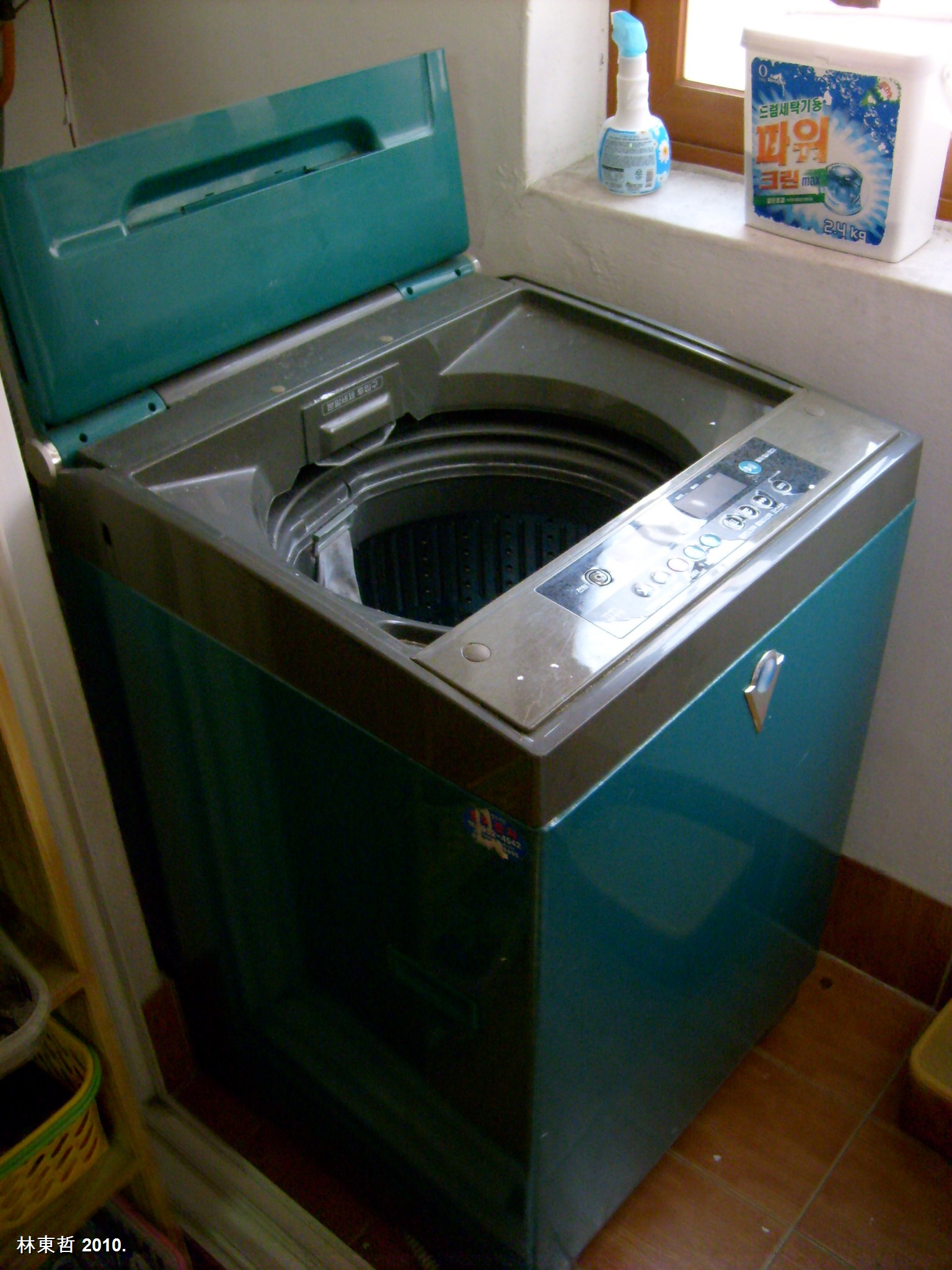
my washing machine
Now several years ago, I had to get a new washer fitted to a tap but there were complications as there is with anything in that shitty country, the UK. Firstly, you have to be to be fairly wealthy to afford to pay for any breakdowns you want repairing after 5 pm. The cost of a the new part, a washer and some other device which fits inside the tap, was 8000 Won (£4) but the final bill 380.000 Won (£190). The next day a local plumber told me if I could have waited, he’d have fitted a new tap for around 150.000 Won (£75). The second problem you always face in the UK, and not much dissimilar to our health care, is often having to wait weeks to get it repaired. I pay nothing for service maintenance in Korea but in my UK property I cover plumbing, the heating system, electrics, gas and my items such as refrigerators, washing machine and cooker, with maintenance and break down insurance. Despite the monthly fees, any breakdown can see me waiting up to two weeks for the required attention. Of course, if I want it repairing within a few days, I can pay an extortionate fee which for an item like a refrigerator, will almost make it more cost-effective to buy a new one. ‘Instant service’ in the UK doesn’t exist and unless you call out ’emergency’ (after 5pm) engineers, you generally have to wait and that will involve taking a morning or afternoon off work because they can never give you a specific time other than before or after 1 pm.
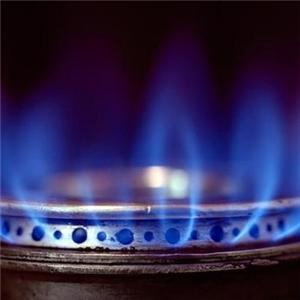
gas safety checks- part of the service
The washing machine engineer leaves after my paying him a paltry 40.000 Won (£20). By now the internet engineers have repaired the fault but using my computer to translate from Korean to English, tell me they want to disable my anti-virus and install a different one. The different one, when loaded, is in Korean but they spend a further thirty minutes trying to install the program in English and when it transpires this is not possible, proceed to write out instructions, and show me, how to use the program in Korean. Non of this is their responsibility!
It is now 11.30 – exactly two hours since I first phoned my boss and informed her of my problems. At 11.35 my phone rings; it’s Home Plus, my electronic dictionary has been repaired and is ready to be collected. It’s been in their possession for less than 24 hours. The fee, 10000 Won (£5), is exactly the same price I used to pay my local electrical store to investigate a problem and provide a quote and it had to be paid even if you decided not to go ahead with a repair. However, that was five years ago and I can assume it is now significantly more.
12.30, or thereabouts and the doorbell rings. It is the gas company who regularly visit, perhaps at three or six month intervals, to check the system. They carry a small detector and poke it around the room, then around the gas range and piping, and finally, all around the boiler. I pay for a regular check in the UK the last one of which I have just paid at a staggering £52 (110.ooo Won). In Korea it’s part of the service.
Finally, on the way to school, in the afternoon, I stop at the small computer shop near my one-room because I want them to scan some paper work and transfer it to a USB memory stick. The job takes around 5 minutes and when finished I take out my wallet to pay but I needn’t have bothered as the service is free!
© 林東哲 2010 Creative Commons Licence.
More Crappy Ingrish
Crappy Korean English is great especially when practiced by schools that specialize in teaching English as a foreign language.
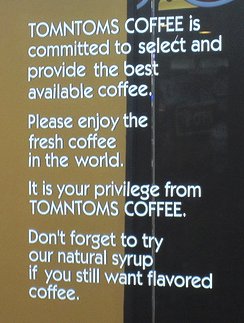
Entertaining!

even better with a pint of Cass

one of my student’s shirts
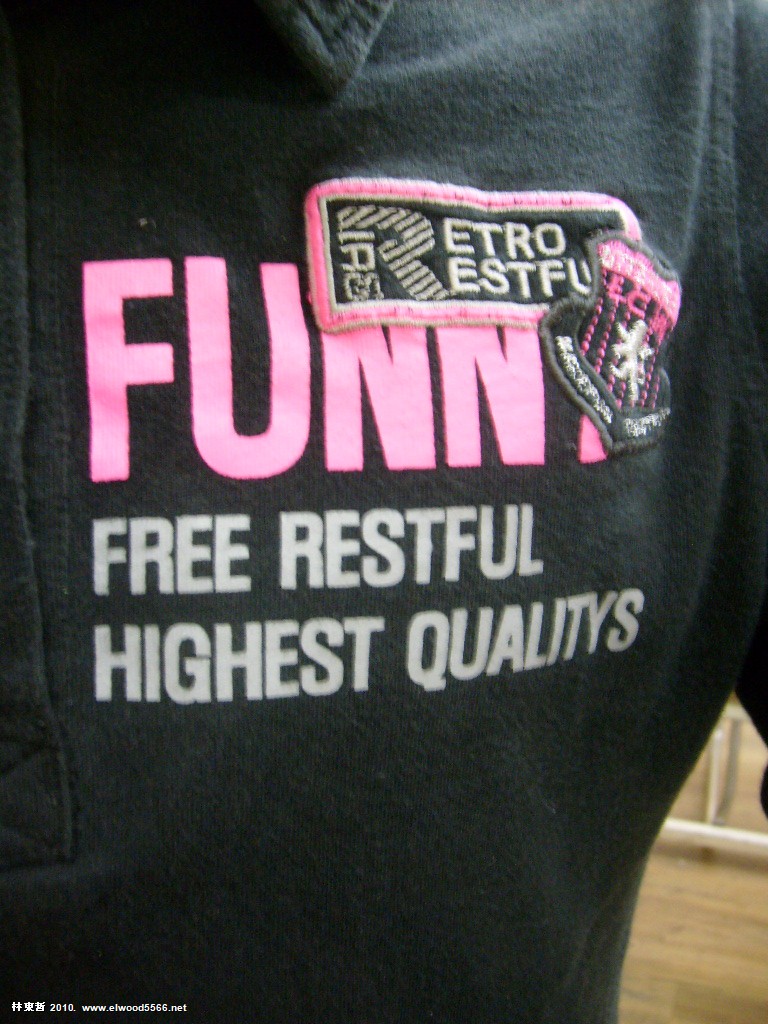
Almost as good as my all time favourite, ‘Milky Boy’
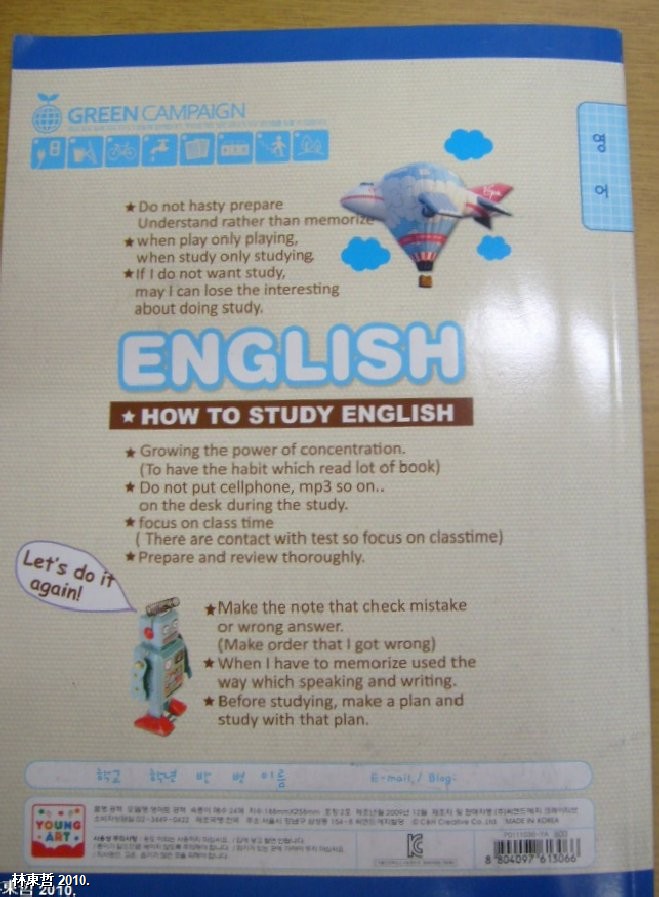
Fantastic! Great advice… if you can actually decipher it
© 林東哲 2010 Creative Commons Licence.
‘Bad North Korea’

Yeonpyeong Island. S Korea. (link to Guardian UK)
Crazy world with another loony display of military machoism. Oh! Don’t bother attributing blame! They’re all at it; Britain, the USA, China, Israel are all either peddling and promoting war with their sales of weaponry, either violating or facilitating the violation of human rights or involved directly in war. Some nations can multi-task all four.

In the UK, you have to hold raffles and charity events to buy a new MRI scanner, while this baby, the European Typhoon, well over 65 million pounds, (the most conservative estimate I can find), are produced in droves. One sources quoted they were offered to S. Korea at 95 million a-piece.
There is a boy in one of my classes, he is twelve and for his age is quite big. He could easily push and shove his way around demanding what he wants of his peers. Instead, he is the gentlest of boys and on a few occasions I’ve been moved by his little acts of compassion. A few weeks ago, he accidentally hit a girl on the head as he stood up from his table. The girl, hurt, immediately buried her head in her hands and started crying. Andy, crouched down at her feet and cradled her head in his arms, patting her on the back and saying he was sorry. Remember, these are Korean kids and at 12, even 15, boys and girls are not comfortable mixing and physical contact such as this usually only occurs with members of the same-sex. And he will help weaker students in the class despite the fact he is not the best English speaker. I do not doubt for one moment he can be naughty and has flaws, but when he handed me his diary, yesterday, I was again moved.

Andy
We have become so obsessed with the rights of children, and in policing their protection in so many arenas but when it comes to war, poverty or even the nature of the environment which they are to inhabit, their suffering is either ignored or justified. War, of course, is the greatest abuser of children in a multitude of ways. The lobby who so constantly demand we ‘think of the children,’ are often the ones most outspoken in justifying the need to commit to war, to continue the battle, or in maintaining the numerous systems of abuse, of which arms sales is one and which devastate the lives of so many young people. The rights and wrongs of warfare, as with many other nasty phenomena, are not based on morality or ethics but more sinister, Machiavellian principles.
Andy can have the last word because you can be assured when any decision is taken to either engage in war or facilitate it, few will give him, his peers or their plight, much thought. Despite all the hype and considering they lack immediately exploitable skills, require support and sustenance, in times of ’emergency,’ children are probably more expendable than the rest of us. They are certainly of infinitely less value than a high-tech piece of military machinery!

An Appeal for Peace
© 林東哲 2010 Creative Commons Licence.
Related Articles
Interlude (7) A Friendlier version of ‘Mr’ ‘Mrs,’ etc. (샘)
Okay, here is the point. The term ‘sem’ (샘), is a contraction of ‘son-seng-nim’ (선생님 – teacher) using a letter from each syllable block. The contraction is slightly less formal than the full rendition. Perhaps the closest translation of ‘son-seng-nim,’ and its contraction, ‘sem,’ is ‘Mr’, ‘Mrs’ or ‘Miss’, etc.
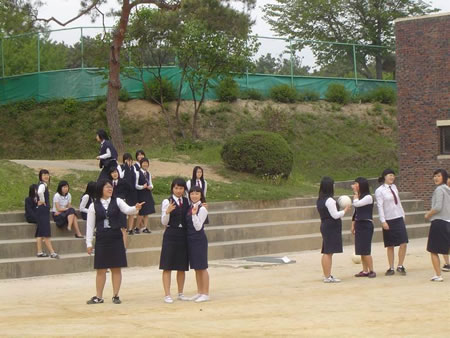
Education has more than a token value
And here is my ‘twisted’ analysis, a micro-rant. Though translated as ‘teacher’ either word fails to slip directly into English and presently, in British culture ‘teacher’ is both not too short of being a ‘slur’ and is a bordering on a euphemism for someone who though highly educated, professional and constantly vetted by the world’s most rigorous system, is regarded with great distrust. The same situation applies to numerous other professions – doctors, nurses, etc. Even the Korean media is learning to pick up on the distrust in which countries like Britain and America hold their teachers and subsequently use it nefariously.
Rooted in Confucian ethics, ”teacher’ (선생님 – 샘) is a term of respect with teachers and education being held in high regard – though less so if you are western. Though not perfect, the Korean education system plays a far greater role in shaping Korean society than it does in many western countries.
As someone permanently struggling with Korean these are my notes on words and phrases I find useful and which are usually not in a dictionary. Any amendments, recommendations or errors, please let me know.
© 林東哲 2010 Creative Commons Licence.
Five Second Hanja (9) – hand – 손수
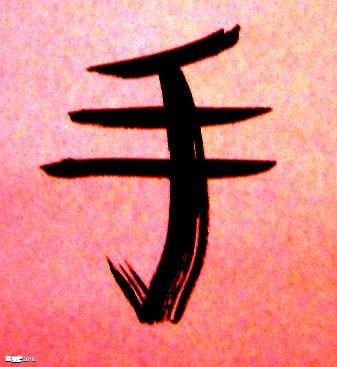
hand, 손수
The simple pictogram for hand.
Simply highlighting some of the important and simpler characters. For information on stroke order, radicals and the two elements of a character (spoken – meaning), I suggest you obtain a dictionary such as; A Guide to Korean Characters.
© 林東哲 2010 Creative Commons Licence.
Village Sentinels – Totems (장승)

a totem (장승) being carved
In more rural Korean areas totems, changseung (장승) often guard the passage to villages. Their design varies from simplistic to elaborate and encompass original and artistic designs as well as ones either explicitly ‘pornographic’ or with ‘pornographic’ elements. At other times they are humorous or simply bizarre. I am fascinated by the manner in which Korean wood is twisted and knotted by the landscape and weather and as I wrote previously, in (Penis Paradise), I see so much of the character of Korean people and their history embodied in wood. In the mountains one often sees the most interesting examples of contorted wood wood that almost seems to have been tortured.

a rather obvious example of ‘releasing’ the qualities inherent in the ‘raw’ material.
A few months ago, when I visited Palgongsan Park in Daegu, I bought a small carving which cost 10000 Won (£10), the nature of the wood is interesting; a section of branch or small stem which on one side, a burr (burl – US English) has caused to ‘explode’ in a fascinating manner. I’m indebted to a reader for identifying this feature and also drawing my attention to the fact it is highly weathered. The wood has been used to carve a totem-like face while the burl, now forming the back of the head, forces one to seek meaning in the combination. From another angle, a second, half face can be imagined.

resembles the face of a totem (chang-seung)

the back reveals some former ‘explosion’ caused by a burl

in profile
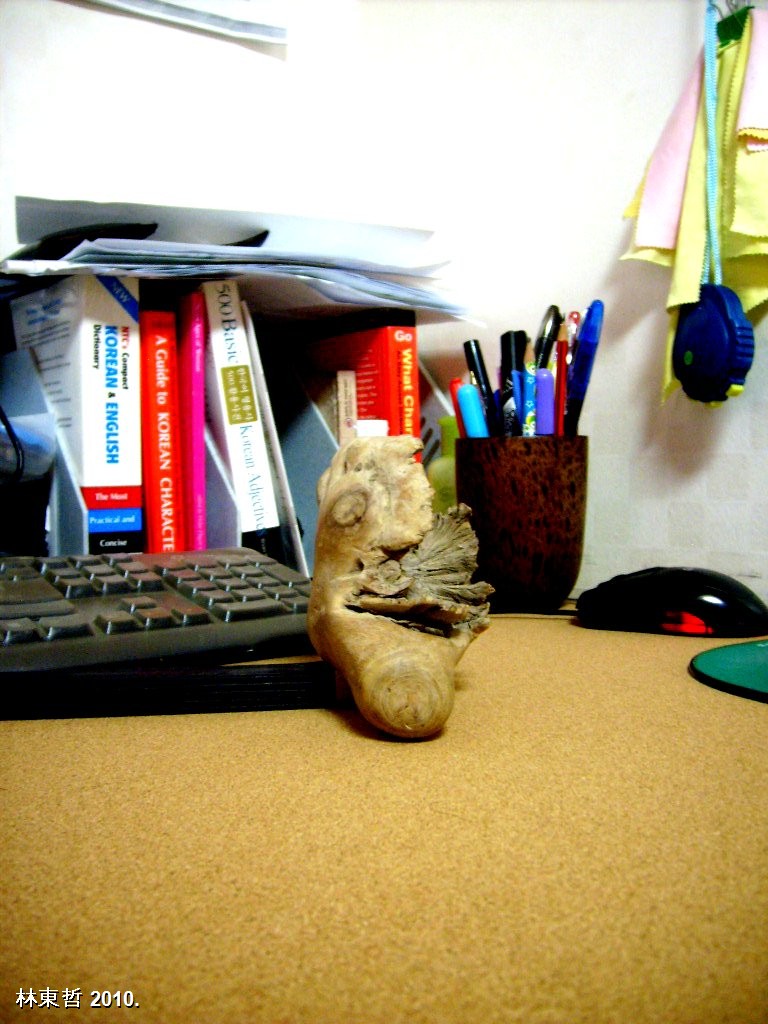
a further resemblance of a face

projects in the process
Several months ago, I was visiting Kayasan National Park when in the middle of nowhere, our minibus broke down. We pulled down a slip road next to a basic cheong-cha (정자), to await recovery.

a basic cheong-cha (정자), they harbor breezes and shelter you from the sun.
Stood in a row along the small road, warding away demons and evil, were a number of totems (jang-seung 장승) Totems guard the approaches to villages and scare away evil spirits and were, and in some cases still are worshiped (tutelary deities). Different parts of Korea have different totems and they are closely associated with shamanism.
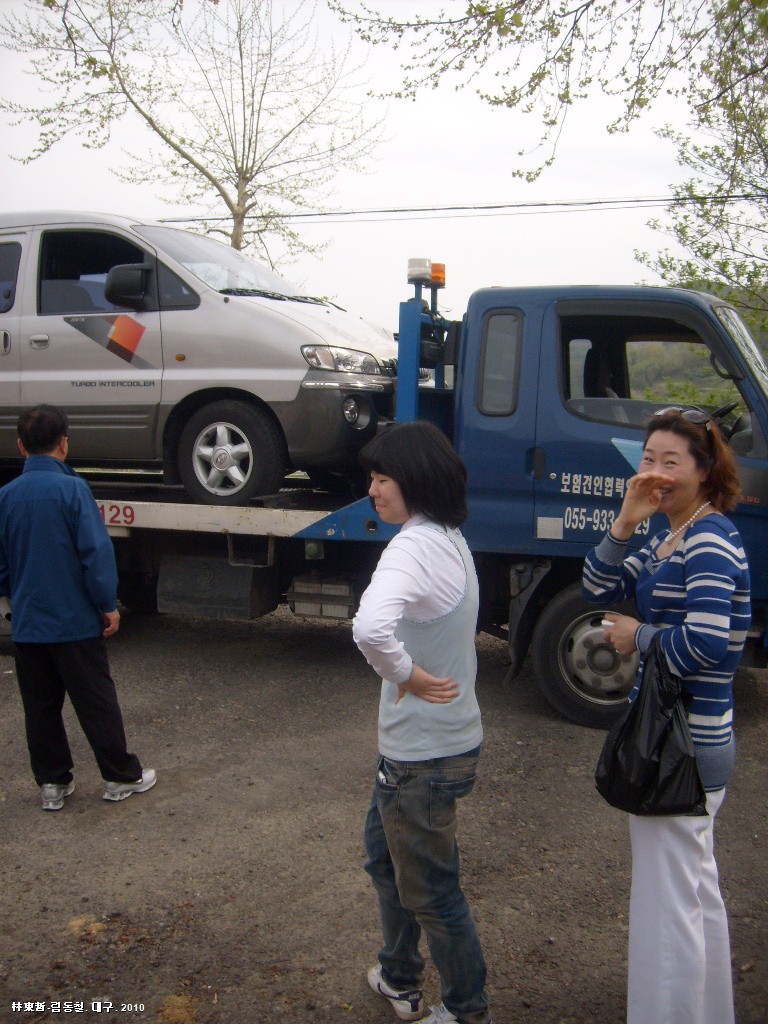
Broken Down but even stuck in the mountains our mini-bus is picked up and repaired within 2 hours
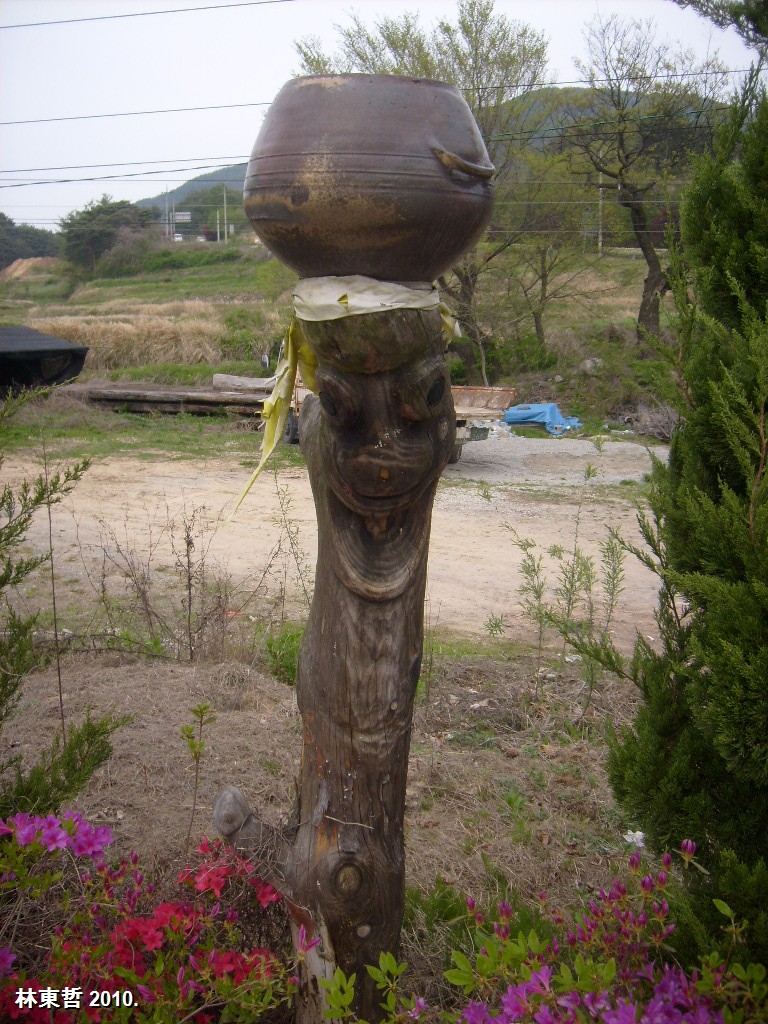
with a kimchi pot on the head

angry

who’s your dentist?

I was the only one giving them any attention!

looking glum

another kimchi head

and every opportunity to carve a dick
© 林東哲 2010 Creative Commons Licence.


 Elwood 5566
1 comment