Tissue Trauma

Not suitable for pumpkin people
I was cooling off last night in the cold pool at the bathhouse. With the evenings still a little warm, at least if you’re western, the cold pool is still not too cold. Many Koreans started wrapping themselves up three weeks ago. The memi (매미) only had to stop singing, at just under 29 degrees, for some to start complaining about ‘the cold.’ The last memi I heard was on Saturday 25th of September and given Daegu is one of the warmest parts of Korea throughout the year, I would imagine the Memi stopped singing earlier, further north.
The following week, was still warm and I sweated in class despite the use of air conditioning and a fan but already some students had begun shimfing about it being cold. ‘Teacher! Teacher! I cold! Turn off air-con!” They whined. Like it’s fucking 28 degrees Celsius! That week I really enjoyed walking home in the evening because there was just the tiniest touch of coolness floating in the air. Suddenly there were only a handful of people on the street in short-sleeved shirts. And now it’s mid-October, I notice my shower is a little too uncomfortable to use without increasing the temperature. For the last few months even the coldest setting had become warm. And in my school some teachers have already started that typically Korean custom of wearing a coat all day long.
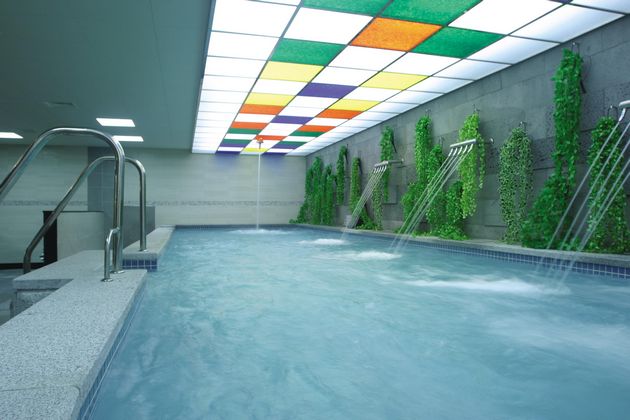
cooling off
So, in the bathhouse the cold pool (냉탕) is empty. Six weeks ago it was at its busiest. A friend I haven’t seen for a while came and spoke to me. He’s slightly older than me and incredibly fit. He has a short stocky body and is a regular in the gym where he runs for 45 minutes on the treadmill, at a fast pace. He has this habit of entering the cold pool, which you can just about swim in, by springing over its side and into the water. Most of the schoolboys don’t do that and instead enter by the steps or climb into the pool.

tissue trauma
We chat for a while, me draped over the pool ledge and him standing. Then he takes his leave and tells me he wants to have a shower and will come back and join me. As he turns around, I notice a white flash from his buttock and walking into brighter light realise he has a few inches of toilet paper dangling out of his crack. I grin to myself and then momentarily ponder which is the greater embarrassment, a bogey hanging out of your nose or residue bog paper clamped between your checks like an insistent napkin.? Instantly, I choose the bog paper because you can so easily tell someone they have a bogey hanging, you simply touch your nose in a particular manner, and they will understand; it’s a discrete and universally understood hand sign. But how do you convey to someone they have paper hanging out their arse? There’s no universal ‘sign’ and I wouldn’t want to risk saying anything in Korean which might compound the problem. Do you discretely touch your buttocks or point around to them?
Without actually verbalizing the problem, I would imagine the only way you could draw attention to it would be to tug on it, like yanking a doorbell or pulling the chain of a toilet! You wouldn’t want to tug on it too much or it might pull out and who knows what’s on the other end or how much might be dragged out. Best is probably a small tug, just enough to announce a presence rather than raise an alarm. By the time I’d finished pondering, the dilemma was over and he was safely in the shower where the offending bog paper, sloughing down the backs of his legs, started its voyage to the drain. And luckily for him, I don’t think anyone else noticed.

envirnomentally friendly method

all too often the problem in Korea

© 林東哲 2010 Creative Commons Licence.
Cricket Song (귀뚜라미)
I captured the sound of a lonesome cricket (귀뚜라미) on a recent trip up the mountain.
© 林東哲 2010 Creative Commons Licence.
Who Really 'Worships' the Wang?
Not Suitable for pumpkin people
When I started working on this blog in earnest, I wrote in the ‘About’ page, that ‘you cannot immerse yourself in another culture without it altering how you perceive your own.’ Trying to comprehend facets of another culture is a dialogue between both your experiences and those presented by a new culture in much the same way as history is a ‘dialogue between past and present.’ Of course, I was wrong! A pumpkin lacks perception of its own environment, so to do some of the visitors that come here – often only for the briefest of visits.
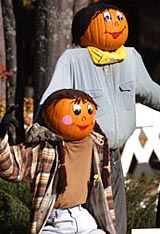
Pumpkin people
Although I have had few nasty comments, on other blogs there has been some ‘discussion’ about the nature of Bathhouse Ballads. I doubt any of these ‘pumpkins’ took the time to read its content and drew their swords based solely on snippets gleamed from other bloggers. All it took was for one blogger to highlight my sexuality, and to do that he had to read a considerable amount of text because I have only clearly and unambiguously outed myself on a few occasions, and the peripheral pumpkins started making assumptions. When I accidentally read a couple of pumpkins’ posters, I actually thought they were referring to another blog. They describe this blog about ‘boys dropping their trousers,’ a blog about ‘kiddies,’ and a ‘gay blog’ and it wasn’t until I read the title they were referring to, that I realised it was Bathhouse Ballads. Worse, a forty-five year old friend I mention becomes a ‘boy’ and one reference to ‘skinny teenagers having the biggest dicks,’ labeled me a ‘perv.’ Only a ‘pumpkin’ could read Bathhouse Ballads, sweeping aside the many other topics covered, ignoring so much in the process to enable them to bend what remains to fit the predetermined judgment, to arrive at such erroneous conclusions. Being reminded that societies are populated predominantly by pumpkins, that those pumpkins are often the voice of the majority, and that individuals with the capacity to think for themselves are rare, is never very nice but more enlightened comments were present in my defence.
Clueless
Part of the pumpkin analysis was that Bathhouse Ballads is ‘into’ Korean ‘wang-worship’ and describes Korea men as ‘wang-flashers’. ‘I assume this refers to communal bathing because I have only once mentioned anything that could be construed as ‘flashing.’ It seems that ‘skinship’ and ‘concepts such as ‘dick friends’ (고추친구), a phenomena I haven’t yet written about, and same-sex bathing in general, provokes some hostility. I initially assumed that you cannot immerse yourself in another culture without reasserting your own. Well, a pumpkin can! So, in what way has my understanding of British culture, and specifically male gender, been reconfigured in the light of a Korean experience?
The voice of the majority
It is only westerners, and certainly not all, that perceive ‘skinship’ as ‘closeted homosexuality’ and are correspondingly fearful or suspicious of same-sex bathing, the relaxed Korean attitude to nudity and physical proximity. Of course, there will be ‘gay Koreans who use such a culture for some form of ‘sexual pleasure’ but to most men the penises of other males are of little more significance than are noses. If a Korean boy sees the penis of another male he is not ravaged with guilt or accused by friends of being ‘gay,’ as I have witnessed as a teacher in the UK. I regularly meet and read about westerners who will not go bathhouses and others who while not necessarily hostile to skinship, perceive it as something that must be banished from a classroom. Why? Korean teachers themselves use it and I’ve seen this on many occasions. Isn’t it rather insensitive of waygukin teachers to cast out the cultural norms of their host society and then impose their own? This is Korea, not back water wherever and there should be no need to impose foreign cultural values on Koreans.
Ironically, it is not Korean men who are ‘wang-obsessed,’ but the westerner. Western men, myself included, are burdened with an obsession of the penis, of what is truly ‘wang-obsession.’ When westerners, and especially western pumpkins, berate this aspect of Korean culture, they do so because of the values of their culture, they do so because they have been inculcated with obsessions about the ‘penis’ which derive from a deep-seated ‘fear of ‘sex’ as demonic and chaotic.’ The most glaring manifestation of this ‘obsession’ is when westerners conflate nudity with sex, and male nudity with homosexuality. Koreans find this conflation quite bizarre, as do other cultures. And the moment you accuse Korean men of being ‘wang-worshippers’ you highlight how totally you misunderstand the nature of your very own culture, let alone that of another! If communal bathing is ‘wang-flashing,’ then it is also ‘toe-flashing’ or ‘hip-flashing’ but why the focus on the ‘penis’ unless you yourself give it more importance than it’s worth.
anthropology - not an academic pursuit for pumpkins
We westerners are so obsessed with the penis and its association with the disruptive potential of sex to the extent that men will hide them from each other. Naturally, many males shower together after sports but far more are either embarrassed by it or avoid it. We judge other men on the size of their penis and assume that a bigger penis is a sign of greater masculinity or sexual prowess and while I suspect size has some significance in Korean society, it is tempered by communal bathing where you realise that between most men there is little difference. I imagine only a very small number of Korean boys angst over dick proportions in comparisons to British boys. And if we have a problem with our dicks we would generally find it very embarrassing to confide in a friend and personally, despite close male friends back in the UK, I would find it easier to discuss such things with my Korean friends and indeed have done. Only a penis obsessed westerner could perversify this admission.
Humour is used to defuse the fear and unease caused by both a real penis and anything resembling it and this was the subject of my post, Sausages and Shit – a Comparisons in Smut Humour. Give a class of British boys anything phallic, a banana or sausage, and you can guarantee someone will connect it to with a penis and begin making jokes with it. We even pass e-mail poster jokes about taxing different length penises – a tacit acknowledgment that a big dick means you are better off and hence need penalising.

and some have a university education
And then there’s our historical legacy, often one of the medical control of the penis: the association of mental weakness and instability with masturbation helped give rise to both the Boy Scouts and Kellogg’s Corn Flakes. All were all attempts to divert boys away their penis not because they were necessarily fixated on them, but because western ideology has a long and established fear of sex and anything associated with it. A ream of illnesses, some terminal, were associated with masturbation for which Kellogg himself advocated circumcision without anesthetic, as a cure. Neither did women escape the paranoia with the vagina and uterus often identified as the source of maladies and illness, most notably hysteria which was treated by hysterectomy. The penis, as the visible manifestation of sex and all the depravity to which indulgence could drag you was naturally the greatest offender and capable, especially in youth of perverting an individuals moral character and by extension the morality of the nation. From cod-pieces to Freud and beyond, western culture has a history of inflating the worth of that little appendage. In western history and ideology, the ‘penis’ is far from unimportant, and the fear of its potential continues to obsess us sparking one witch-hunt after another.
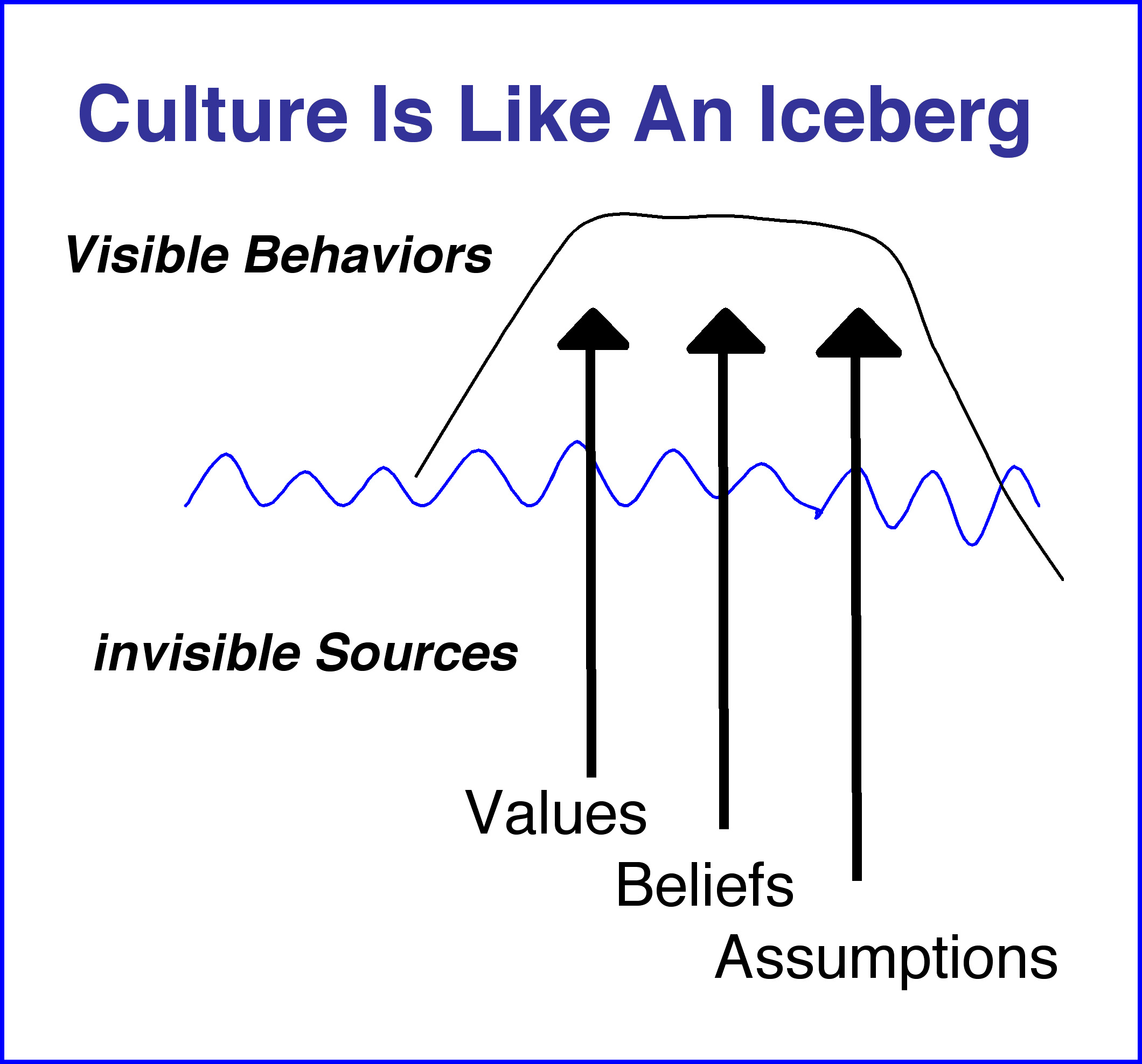
The problem is some people are tourists in their own culture
Same sex communal bathing liberates one from all that cultural baggage and to experience mixed sex bathing, as in Japan, takes it a step further. I would go as far as to say that not only does communal nudity provide a sense of liberation from the legacy of history as well as other negative baggage we carry about our bodies, but it is also a political statement. In Britain, if not indeed western society, masculinity and what comprises being male, expressed by traits such as: not showing emotion, heterosexuality, avoiding same-sex physical contact, revulsion at male nudity, aggression, etc, all focus on the penis and its capabilities and the fear that relaxing any constraints may entice engagement or may reveal more about us than we want to know. And with the taboos unnoticed, invisible and perceived as natural, they become a springboard from which pumpkins judge the world around them.
In future I will mark such posts with a logo warning readers that the content is not suitable for pumpkin people.
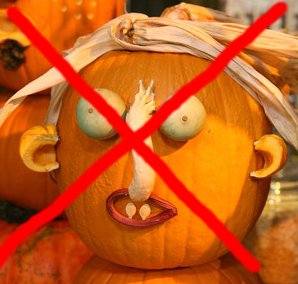
Not suitable for pumpkin people
© 林東哲 2010 Creative Commons Licence.
Sorcerer Spider Webs (무당거미)
There were from my last mountain trip at the end of September. The ‘sorcerer or ‘shaman’ spider (무당거미) webs all measured around 1.5 meters in diameter. (These spiders have a number of other names)
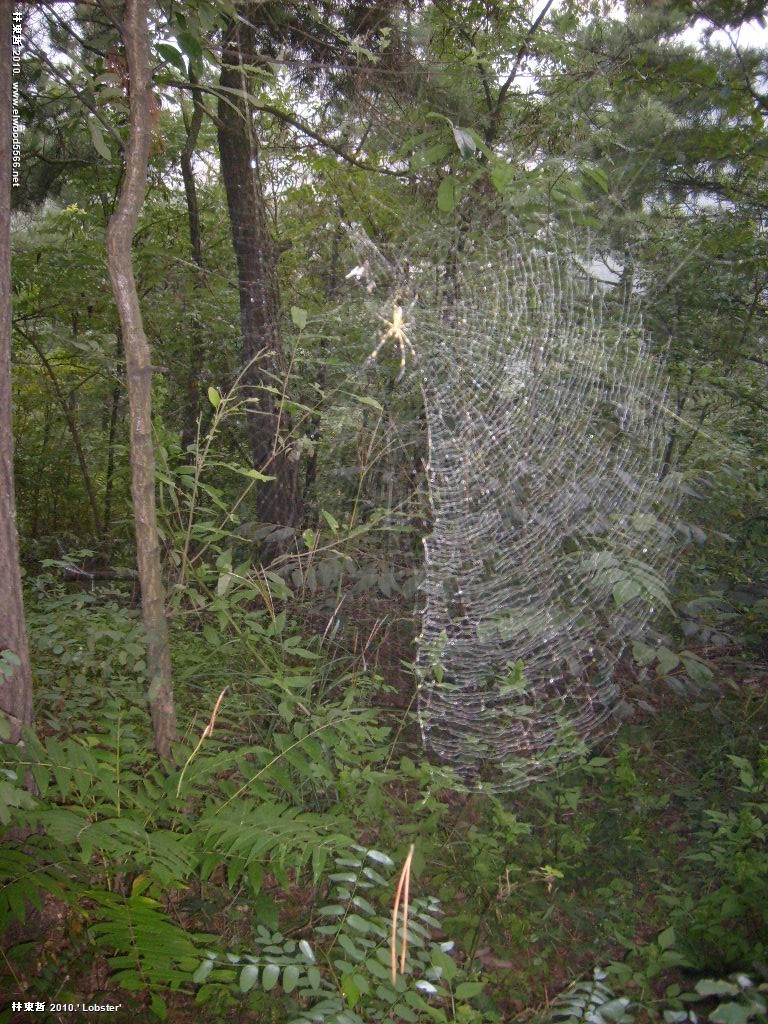
male sorcerer spider (무당거미)
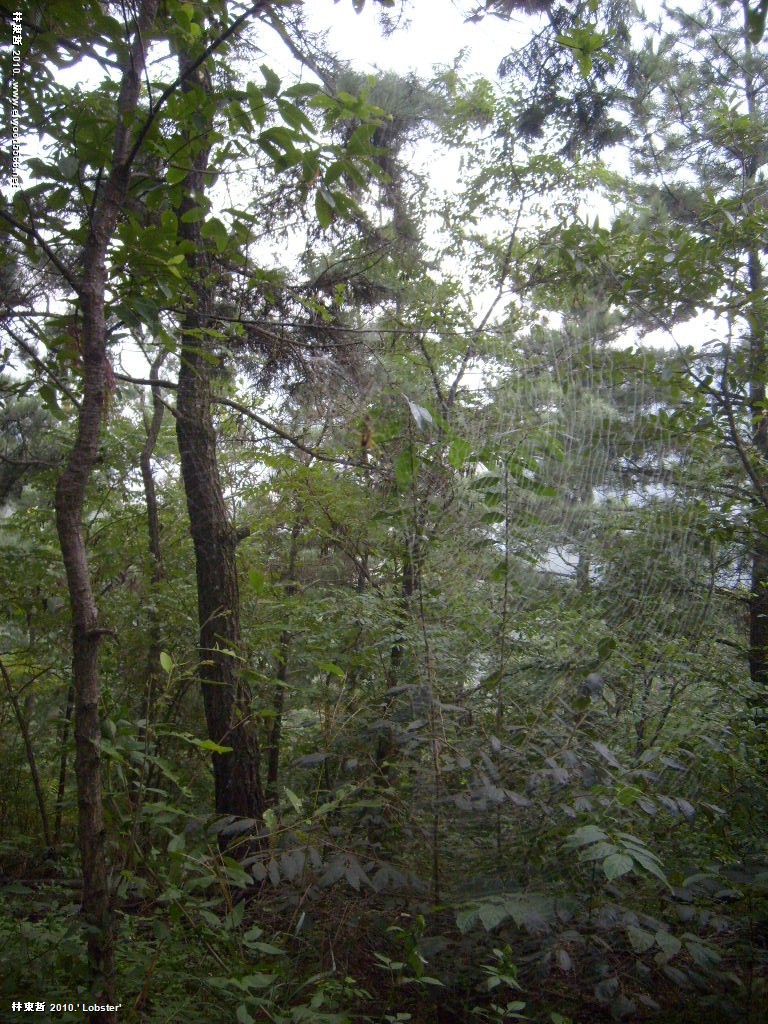
the sorcerer spider has one of the strongest and largest known webs
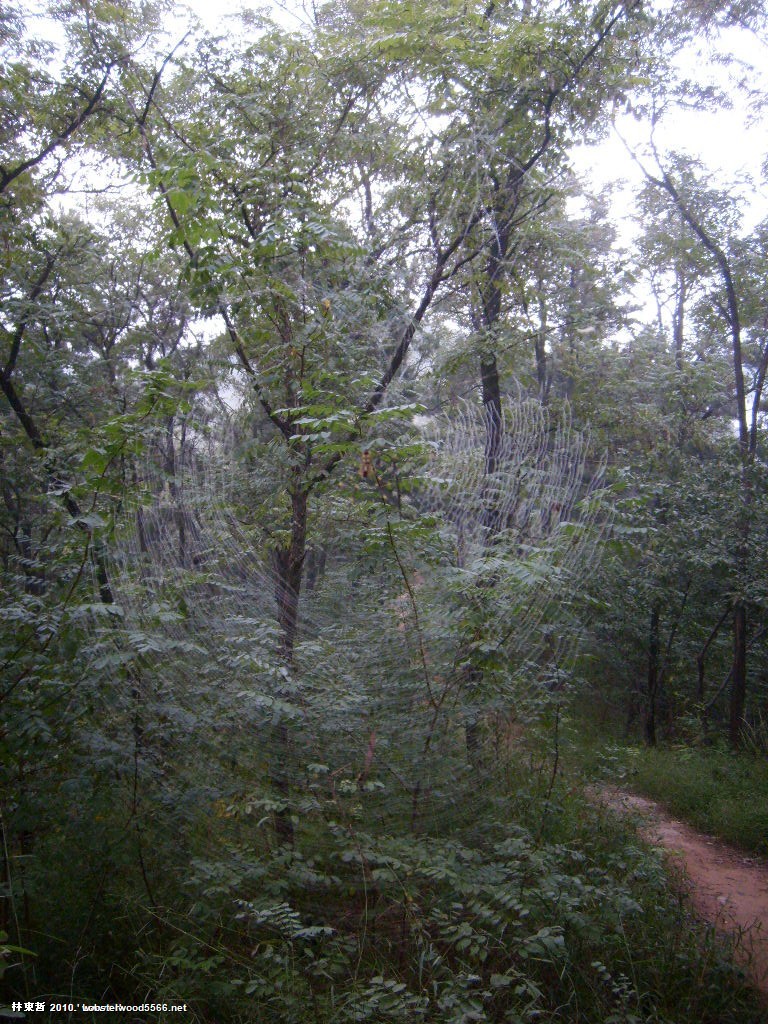
Often the web has a greeny-yellow tinge
© 林東哲 2010 Creative Commons Licence.
Hyu-Lim-Won Sauna. Da-sa – 휴림원 사우나. 다사

A Bathhouse Review
First visited October 9th 2010. Most recent visit, 19th May, 2012. This bathhouse and jjimjilbang is an absolute must in terms of a visit. It is situated in the rapidly developing area of Da-sa (다사), Daegu. I got to know Da-sa ten years ago when it was noted for being an up and coming area to live. Since then, it has exploded into a small town on the edge of west Daegu and it is still expanding. Impressive high rises dominate its approach and though it is separated from the main part of the city by the river, giving it a sense of being outside Daegu, the new buildings and their size are very much ‘big town.’ It’s a short ride from Song-so, perhaps 5000 Won (£2.50) in a taxi and on the metro system. Da-sa lies at the back of Keimyung University campus. From the area of Song-So E-Mart, several buses go to Dasa, including the 527. The facility is directly opposite bus stops.
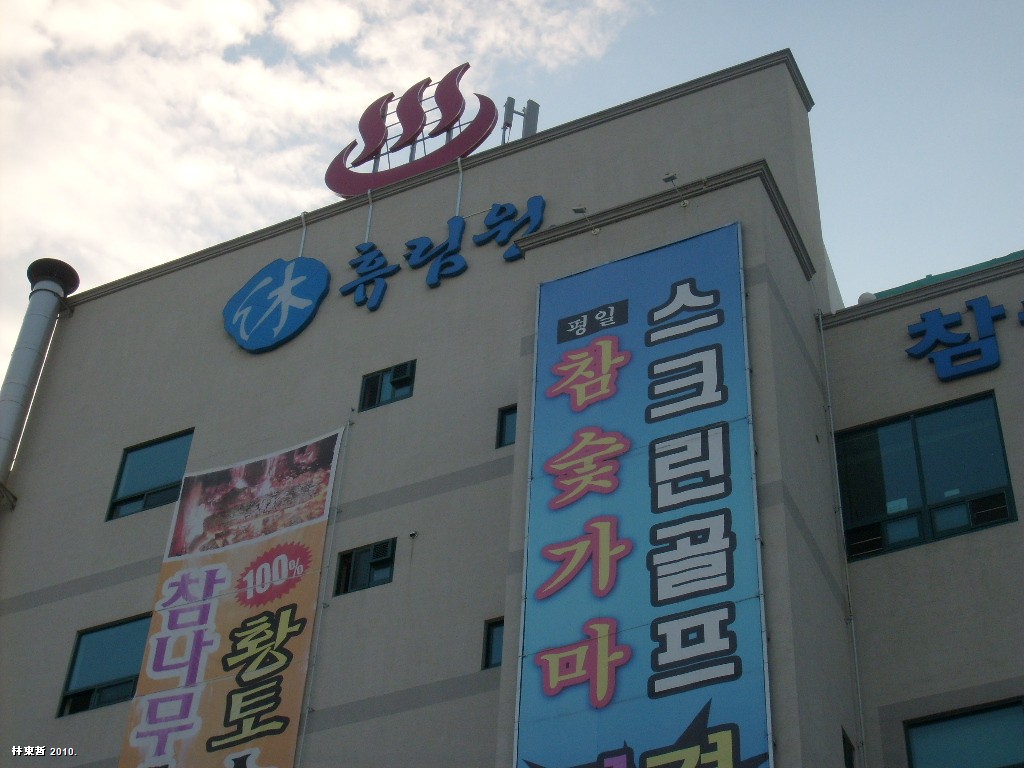
Hyu-lim-won Sauna in Da-sa, Daegu
Hyu-lim-won is a very new complex which I need to explore more, so this is a cursory ‘report.’ My first visit was to the bathhouse (목욕탕). Being a ‘play Saturday’ (놀토- when kids have no State school)- at a time when many students have finished their mid-term exams, it was busy. The changing area was very comfortable, though a little small after the spacious Migwang Spolex (미광) in which you can get lost. A large decked seating area occupies the center of this area with numerous facilities, a snack machine, barbers etc, on the periphery.
The Bathhouse pool complex (male ): As you enter you notice the layout is on two levels with the back pools being accessed by a large inclined walk-way. There are about twenty stand up showers directly on your right and beyond these perhaps 30 sit down showers. On the left is the massage and scrub down area and various saunas: a dry sauna, very hot steam room and a salt sauna (소금방). Between the sit down showers and the saunas are three pools: a large warm pool (온탕), which at 42 degrees makes it as warm as many hot pools. Beyond this pool are two smaller pools one of which is the hot pool (열탕) which was 48 degrees. Beyond these and to the right is a large cold pool (냉탕), at 17 degrees. Access to the cold pool is via the inclined walk-way, to the left of which are a few lido deck chairs and a sleeping area (수면실) with floor heating (온돌), and at the head of which are steps into the cold pool, on the right. Standing at the peak of the inclined ramp walk-way, are steps into the furthest pool, a large therapy pool at 33 degrees. The therapy pool was very interesting with lots of facilities I’ve not seen before. On the far side are seven ‘pods,’ slightly sunken and in which you stand using handrails and after pressing the activation button are treated to a hydro massage, on your back. The jets are powerful, and if you maneuver yourself, you can give your butt a deep clean but you should have cleaned this area before entering any pools. On the right side is a glass pod in which you stand and again, after activating the button, a very powerful shower blasts your shoulders or back. Next to this is a similar shower, but not as powerful, and then three ‘pods’ which blasts jets of water onto the soles of your feet. On the left hand side are four sunken stone beds on which you lie for an alternative back and leg hydro therapy.
To the left of the central sleeping area, beyond the salt sauna, is the event pool (이벤트탕), and of all the event pools I’ve used, this was the most eventful. The pool was 36 degrees and had a powerful continual jacuzzi, while the water, scented with lemon, mint, lavender and rose, was bright yellow. Tucked into the corner behind this, and next to the therapy pool, is a sleeping area (수면실) with unheated flooring.
Like the changing area, the ‘powder room’ felt a little small but as mentioned earlier, this is because I use Migwang Spolex, in Song-so, on a regular basis and it’s very spacious.
Plan
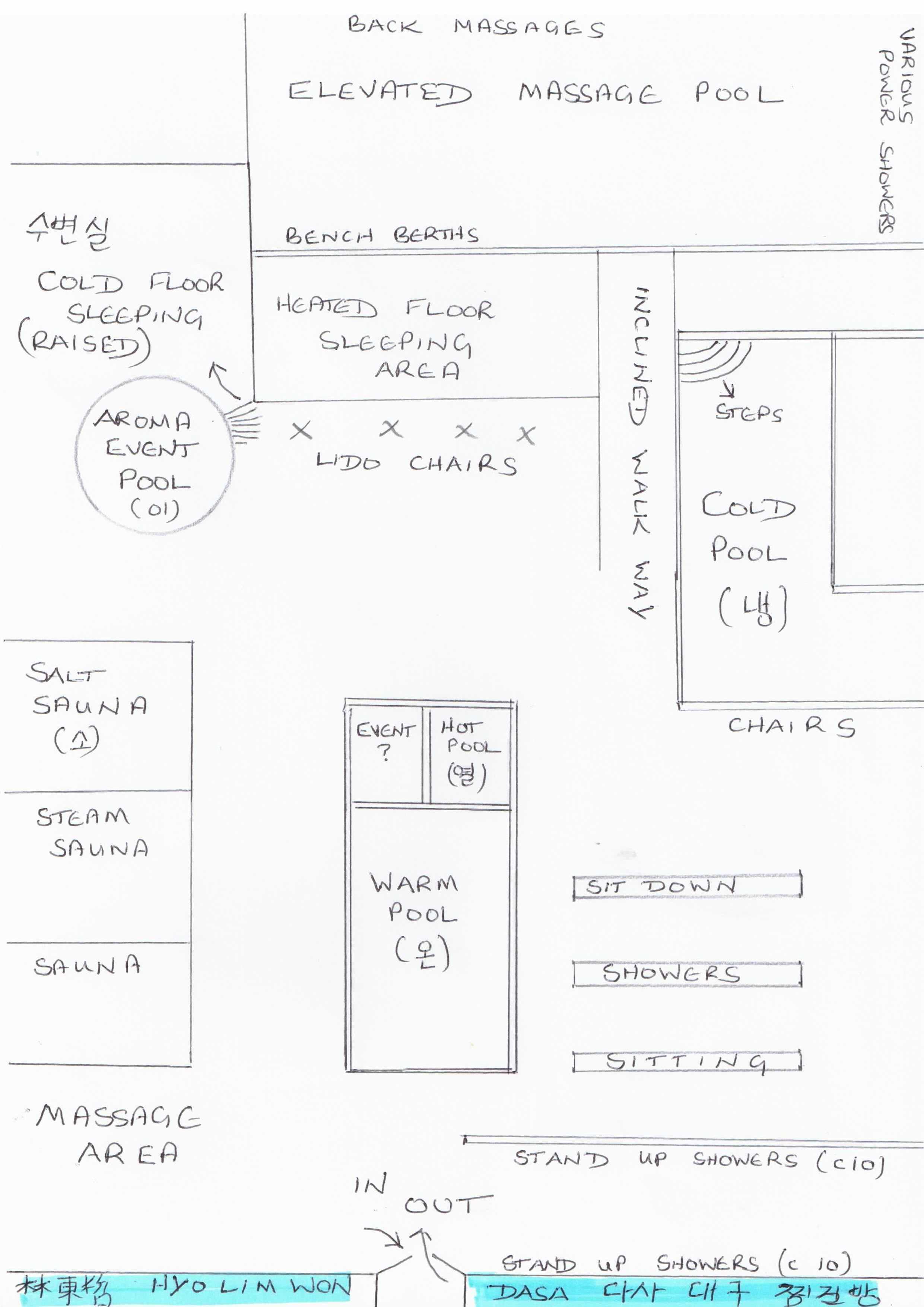
Hyu Lim Won, Dasa. Bathhouse design (male)
Location – (Wiki Map link ) Fifteen minutes by taxi or bus from Song-so. As you enter Da-sa, it is on the left and easily seen. Alternatively, you can use the metro underground from Song-so but it is easier to get to from Daeshil Subway rather than Dasa.
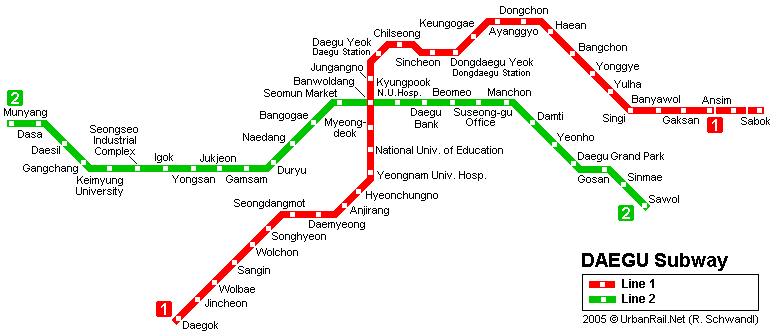
Daegu metro system
Times – 24 hour jjimjilbang (찜질방) and bathhouse.
Facilities – (in process of being researched) 1st floor reception, women’s bathhouse, jjimjilbang, men’s bathhouse, coffee shop, shoe shine, barbers.
Jjimjilbang – (pending)
Bathhouse (men) – around 20 stand up shower facilities and 30-40 seated. Event pool with jacuzzi, (이벤트탕), hot pool (열탕), large warm pool, another unknown pool, large cold pool (냉탕), large therapy pool, steam room, dry sauna, salt sauna, 2 pool room relaxation areas, heated and unheated, changing room.
Cost – bathhouse 5000 Won.
Others – hairdressers, massage and rub downs, parking, cafe. Opposite impressive new development.
Ambiance – not my favourite, I prefer a little more subdued, but impeccably clean, new and bright. I didn’t notice any televisions. Friendly, but I would imagine one of the busier saunas.
Waygukin – None.
Address – Da-sa (다사). Daegu.
Hyu-lim-won Updates
© Nick Elwood 2010. Creative Commons Licence.
Interlude (2) – 놀토 – ‘Play Saturday’
놀토 (nol-t’o)
Because Korean uses syllable blocks to build words, ‘syllable acronyms’ are a common means of putting words together to express ‘something.’ School children and students, for example, often use syllable acronyms’ to express ‘things’ to do with school. 놀토 fits this category and depending on your viewpoint, is either a colloquialism or slang. Usually such syllable acronyms are spoken rather than written.
놀토 simply puts together the stem of the verb ‘play’ (놀다) and ‘Saturday’ (토요일) and identifies the 2nd and 4th Saturdays of the month when Korean State schools are closed and students enjoy what is in effect, a long weekend.
Note – in March 2012, nol-to was abolished for Elementary and Middle School students. Now every Saturday is free. However, schools have increased the hours of the working week or in some cases shortened holidays.
© 林東哲 2010 Creative Commons Licence.
Korean Language – Project in the Process

you might find it... then again you might not
I am no authority on the Korean language, in fact, despite my study, when I generally speak Korean, Koreans look at me in dumbstruck confusion. I’m sure the experience is common.
Back in 2000, when I first experienced living in Korea, there was little on the internet either in terms of Korean language, history (other than the Korean War) and culture. Indeed, if you wanted to write Korean on a computer outside Korea, you had to buy Microsoft Proofing Tools. Korean language courses and dictionaries, certainly in the UK, were few and far between. It’s not really surprising, despite my having traveled fairly extensively, I can put dates to the first four Koreans I met before coming to Korea: Richard Koo, 4th degree Taekwon-do, instructor, Twickenham, London, 1979, Rhee Ki Ha, 8th degree, August 1988, a student in a British school in 1994 and a student in the Philippines in 1996. My university, which boasted 14% overseas students (in 1989), had no Korean students between 1988-1992 and it was a similar situation in a subsequent university in London, where I was a ‘live-in,’ hall of residence counselor, between 1992 and 1996. My house in the UK, only a fifteen minute walk from my original university of study, now boasts a small Korean community and you can even buy kimchi in the campus supermarket.
An early scarcity of anything Korean taught me to record even basic words and I continued this practice up until about 5 years ago. Now, I record only words which are obscure and absent from dictionaries because you can guarantee if you don’t, that when you need them, they’ll have been forgotten. I do exactly the same with hanja. Information in relation to Korea is so new, that dictionaries often contain mistakes, misinformation or simply do not list a word you might be searching. As an example, ‘persimmon,’ ‘peach’ and ‘chili’ appear in most dictionaries but there are there are several different types of each. Persimmon can be bought very sort, soft, hard, and dried and all have different names which are not so easily tracked down. The problem regularly occurs and though you can ask people to clarify, experience has taught me they too, often make mistakes or simply don’t know the answers.
So, I have decided to place a small dictionary ‘page,’ accessed through my side-bar, to list words that are obscure and/or interesting. Of course, they are a personal list and like anyone else learning Korean, each of us has a batch of words pertinent to our own interests and experiences. However, it can be shared and added to and corrected by anyone who is interested and is prepared to send a comment. Most words I will generally look up in my mediocre dictionary, and will always check in an online dictionary such as Babblefish. However, often words I want translating, are simply not there. I do not intend this resource to be for anything other than obscure words and words often missing from dictionaries because their is no direct English equivalent. You can access Interesting and Obscure Korean here.
© Nick Elwood 2010 Creative Commons Licence.
Spotted Darter Dragonflies (고추잠자리)
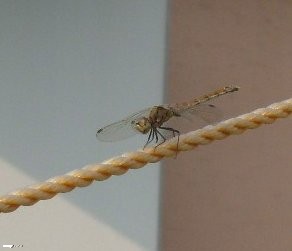
Female 'chili dragonfly' lazing in the sun
October sees the second flush of dragonflies, the first being around mid-summer. The specie dominating this flush is the ‘Spotted Darter,’ (definetly –Sympetrum and possibly – Depressiusculum). In Korean these are known as ‘chili dragonflies’ (고추잠자리) as the males are bright red. Unfortunately, my one-room roof seemed only to attract females.
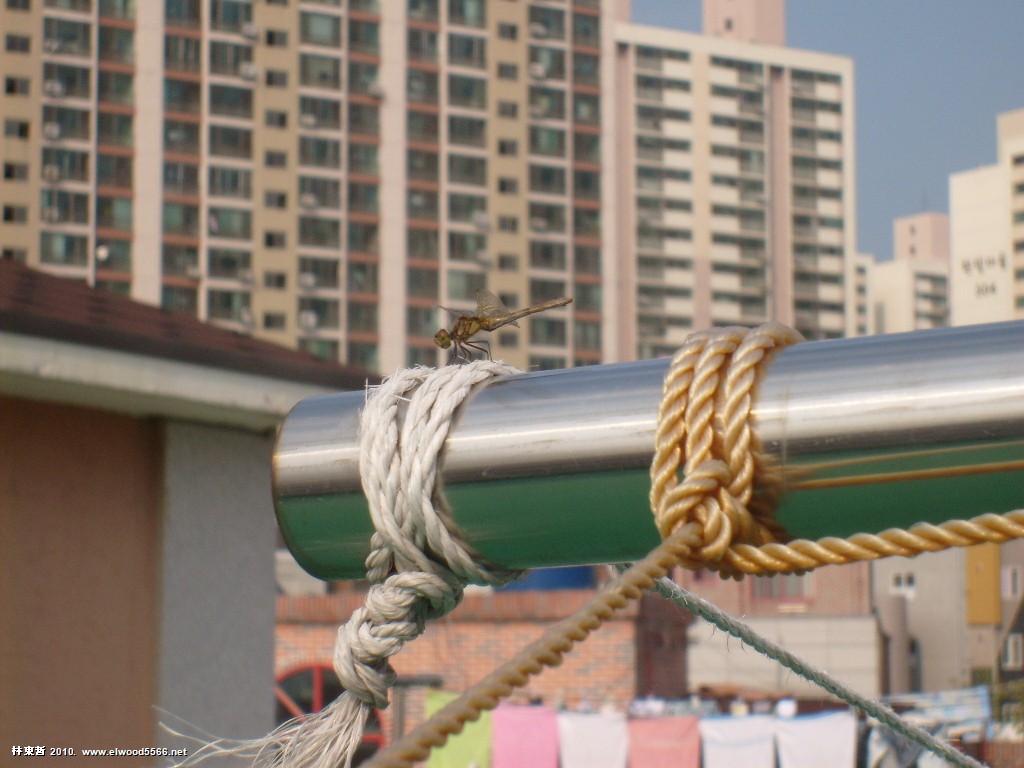
a temporary rest
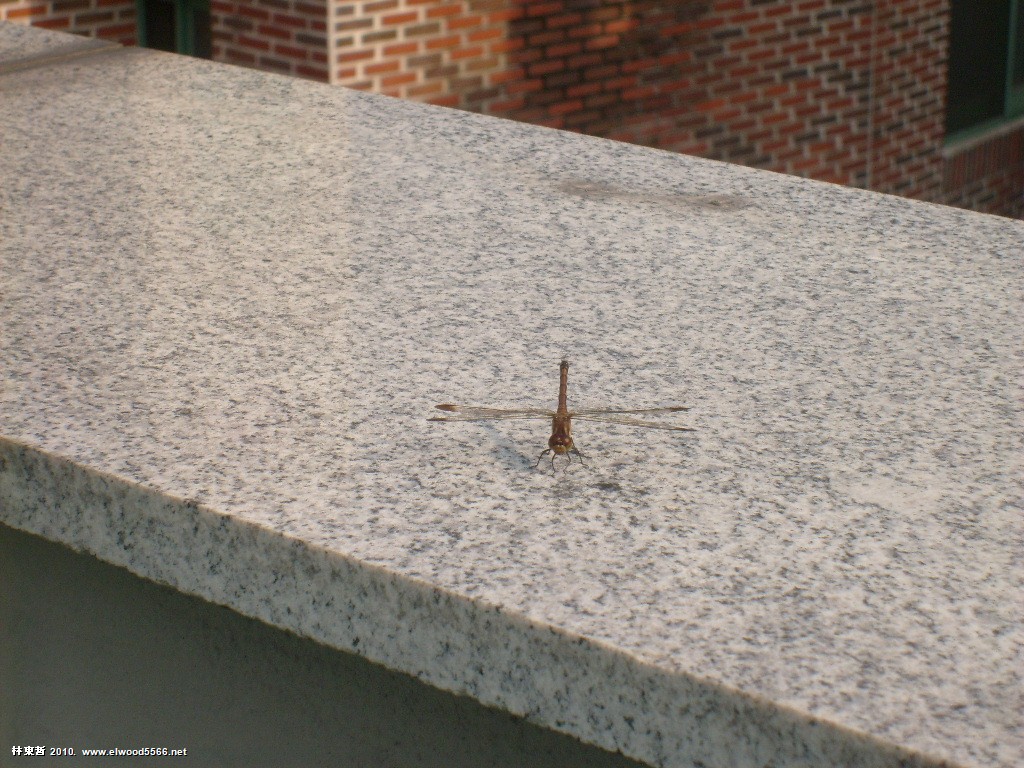
the male is bright red in colour
© Nick Elwood 2010 Creative Commons Licence.
Kayasan Hotel Bathhouse – 가야산 관광호텔

Kayasan Hotel (가야산 관광호텔), near Daegu
Before I give an account of the bathhouse, I want to review the hotel because this a truly impressive location and well worth a visit, either for an overnight break or simply for coffee. Kayasan Hotel (가야산), Kyongsangbukdo Province, is around an hours drive from Daegu and is situated in the heart of the Kaya Mountains. This hotel truly impressed me as my first glimpse of it was on an early morning , after substantial snow.

Kayasan Hotel in snow
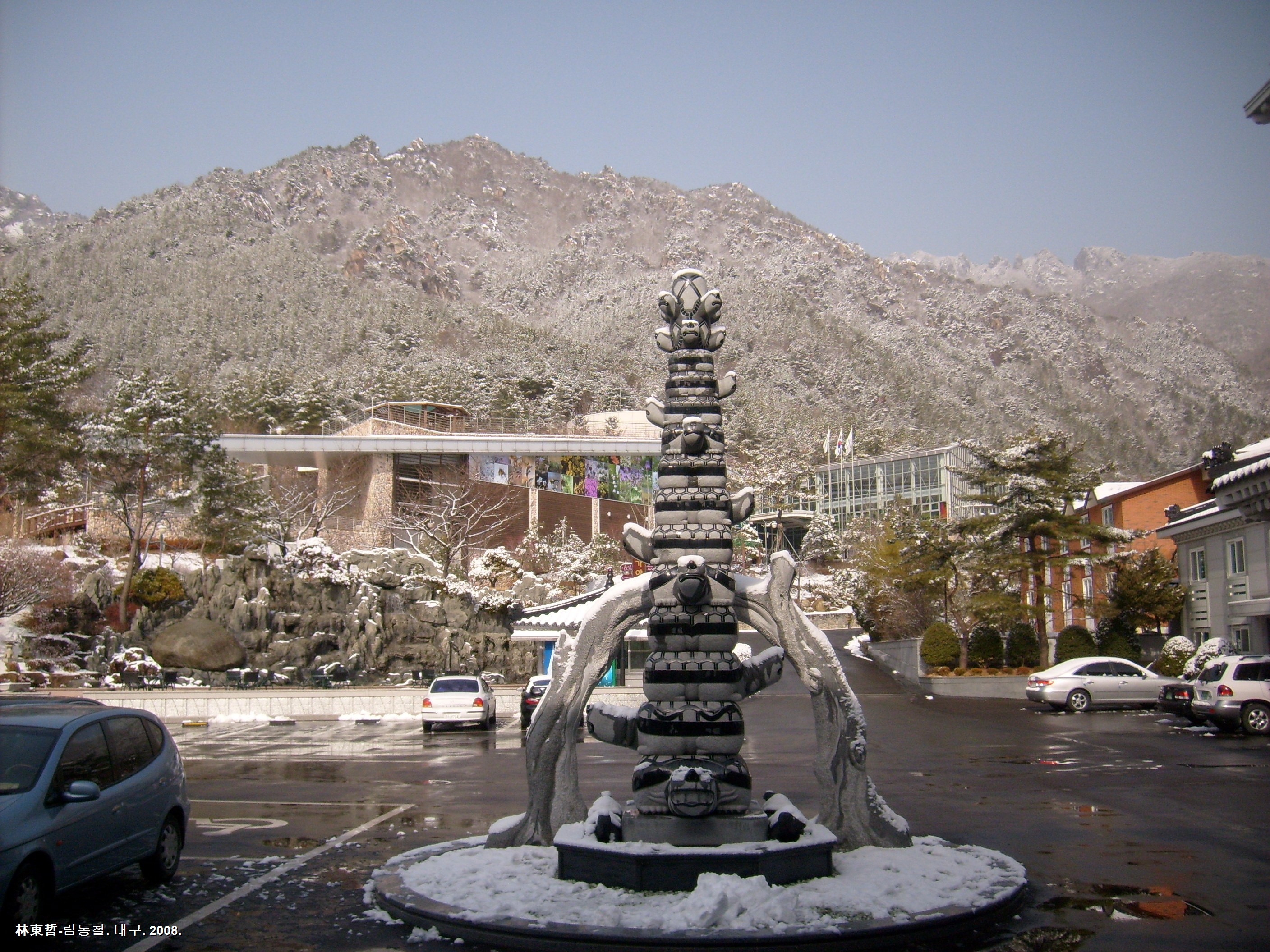
View from the hotel entrance
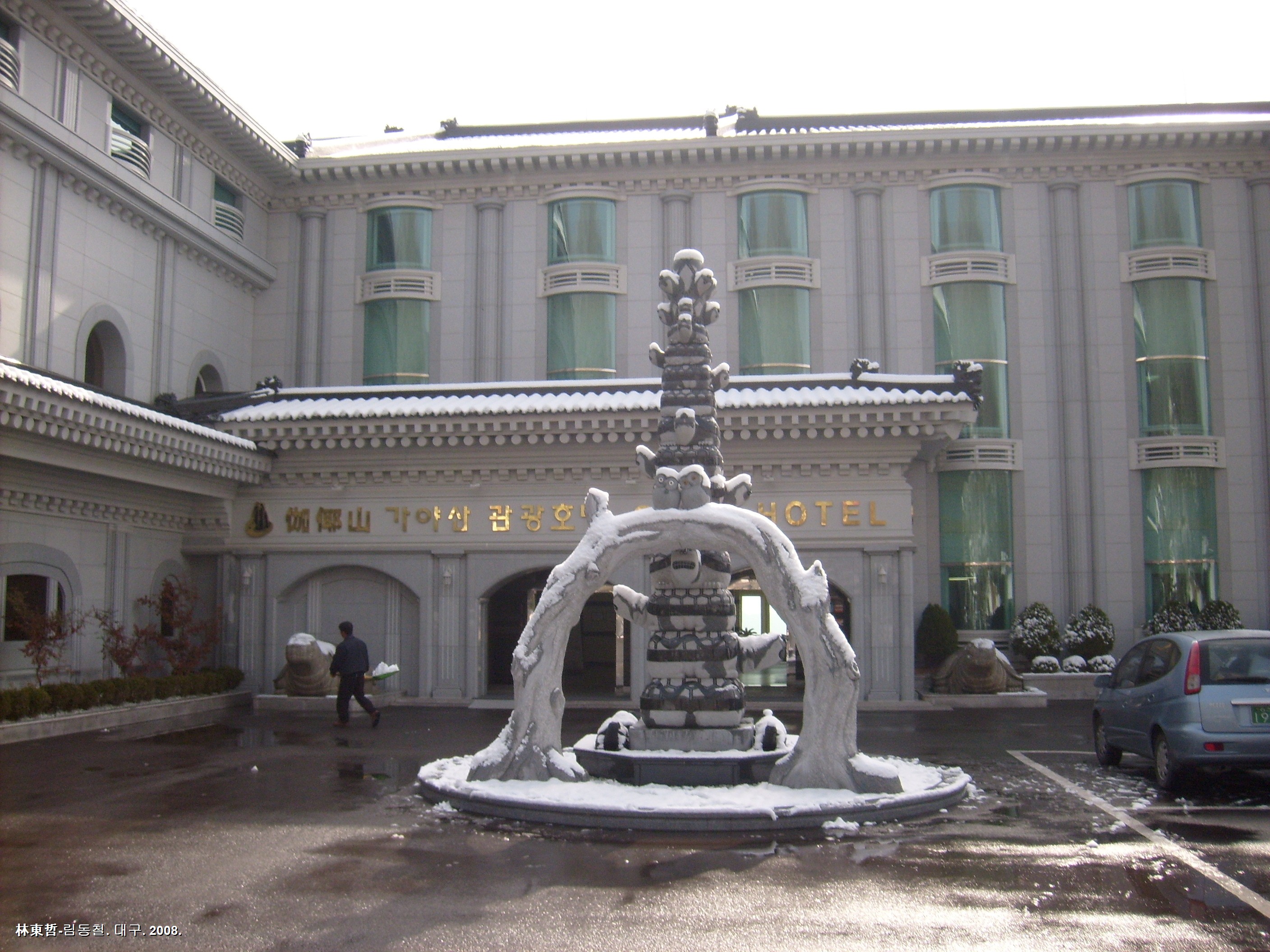
Kayasan Hotel entrance
The hotel has a restaurant and cafe, as well as an open-air bar/cafe, situated next to a small cascading waterfall-feature, which is open in good weather. A couple of smaller restaurants, including an adjoining traditional Korean restaurant, are close-by. The hotel sits right by the entrance to a nature park next to which is a natural history museum containing some very interesting displays.
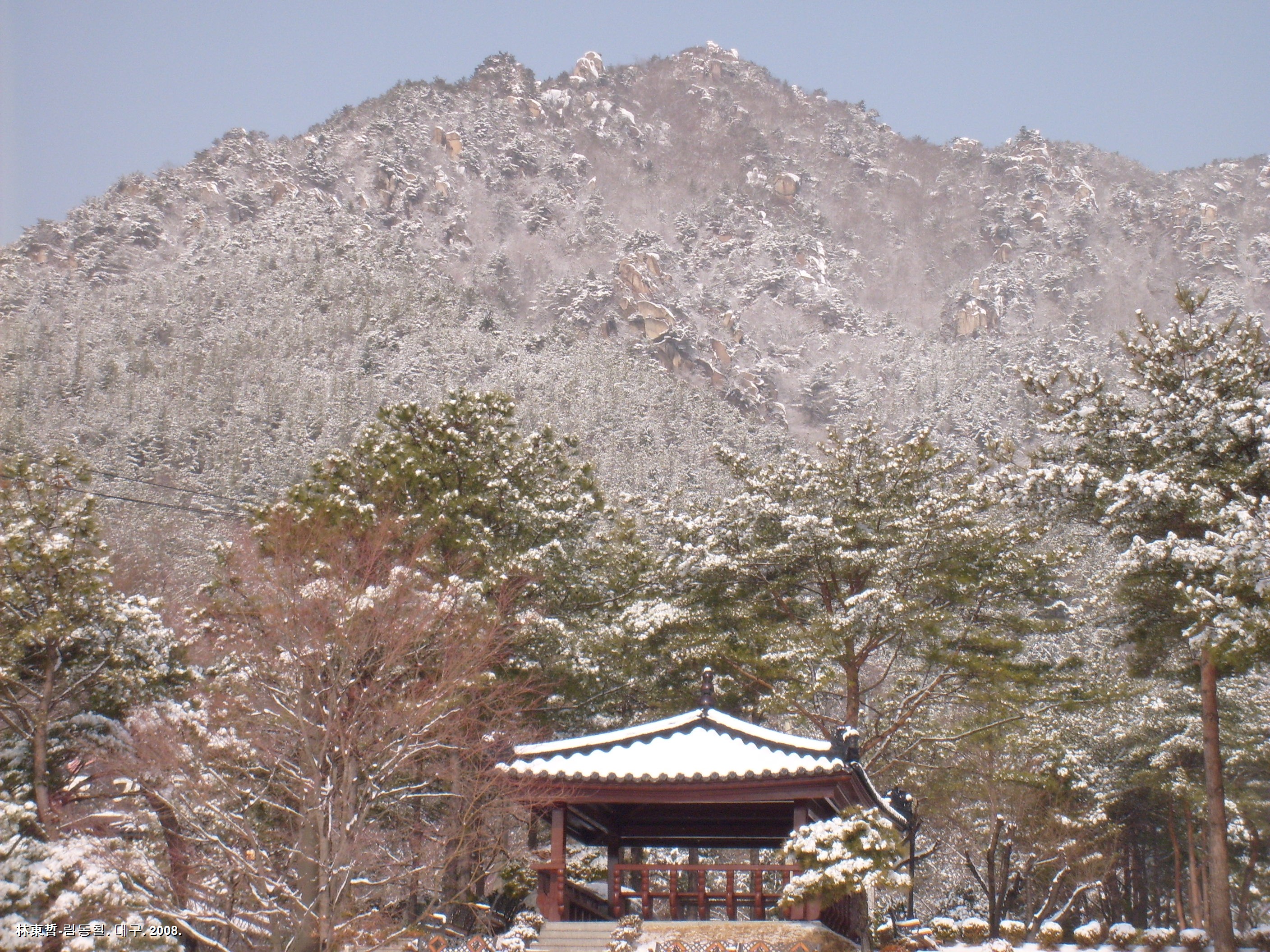
invigorating

Dining room
The hotel is large and spacious and the emphasis on white marble and white tiles, both in the facilities and hotels rooms, gives an airy, if not slightly clinical atmosphere. I found the bedrooms a little strange but pleasant. The one we’d booked was simply, a tiled white room with all the facilities you’d expect but an absence of anything soft either in texture or shape – other that is, than the bedding. Looking thorough the brochure, rooms with western style beds and sofas are available.

a western style bedroom (photo from hotel website)
However, at times I was unsure whether or not I was in a hospital, space ship or heaven and had an angel, nurse, or spaceman appeared, I wouldn’t have been surprised. The lounge, restaurant and cafe maintained the white theme, contrasting it occasionally with black tiling, but were tastefully and luxuriously decorated. The hotel design made maximum use of the panoramic views of the mountains both in the lounge, bathhouse and the more expensive bedrooms.

The grand lounge and bar
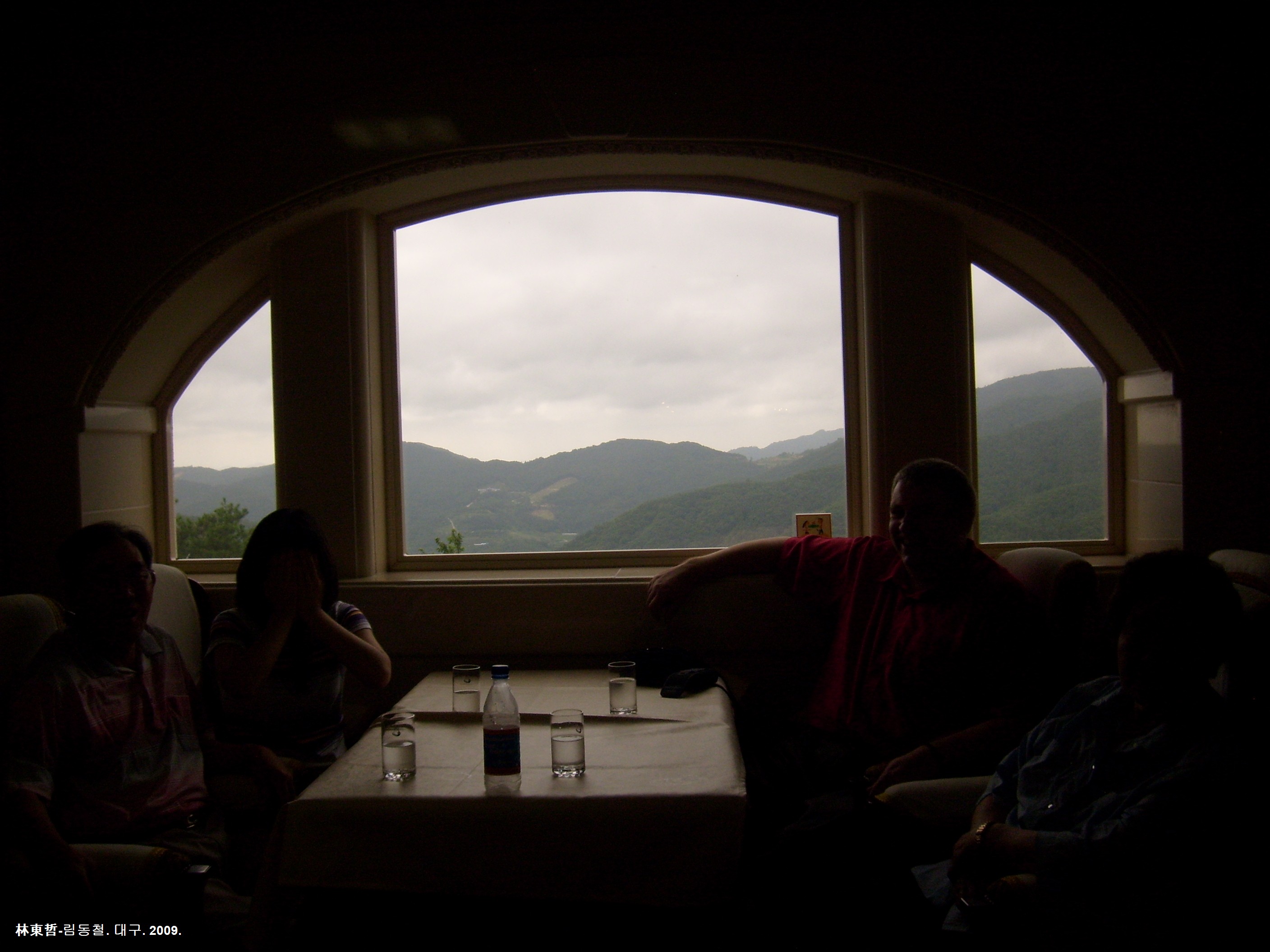
panoramic view similar to the ones provided in the bathhouse
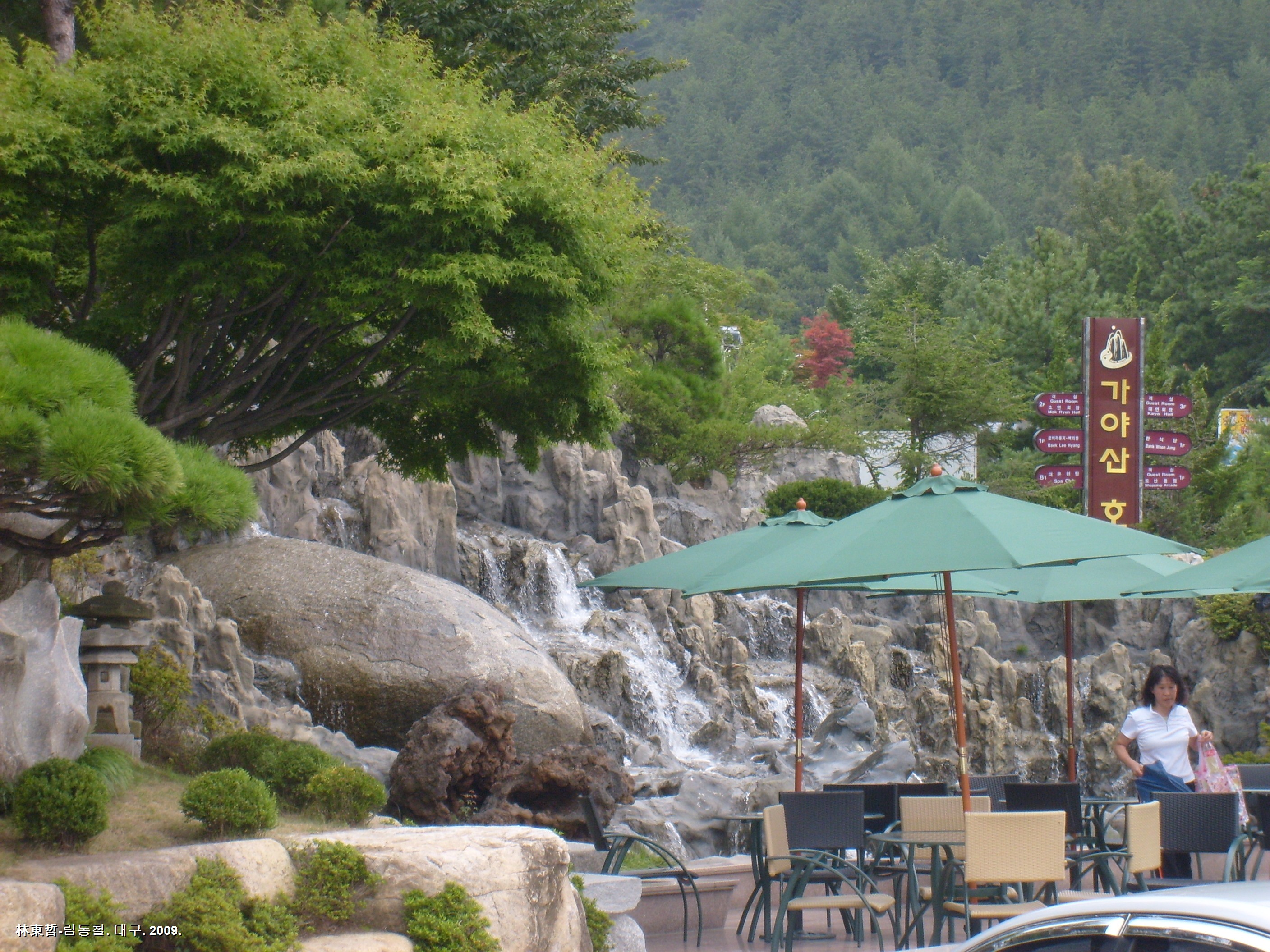
open air cafe/bar
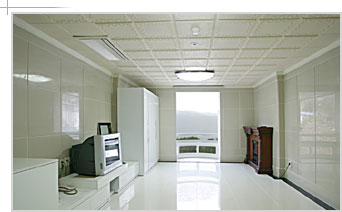
Family room korean style (photo from hotel website) Costing about 143.000 Won per night (70 pounds)
I was eager to use the bathhouse as this was a central feature in the hotels advertising and it looked very inviting. If staying in the hotel, entrance is free and the facility is open from 6 am. Once again, pure white tiling pervaded on floors, walls and ceilings. The changing area was very relaxing and spacious though there was an absence of relaxation area with the usual TV screen and snacks. In the bathhouse, the most alluring feature were large arched windows that looked out onto the adjacent mountains and the various pools were designed so you could lounge and admire the view. A number of monks were busy scrubbing each other or shaving their heads and given the Heinsa Temple is close-by, monks are regular visitors. Stereotypically, one doesn’t associate a monk’s lifestyle with opulent bathhouses and grand hotels but I would imagine the hotel bathhouse is a wonderful place in which to meditate.
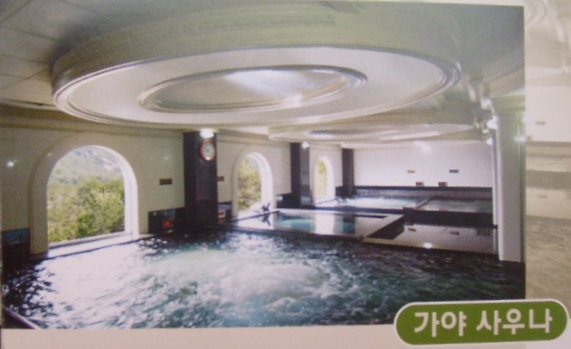
The bathhouse (photo from Hotel's brochure)

a large geode in one of the saunas
All the standard showers and pools were available, as were saunas. Particularly impressive was a jewel sauna (보석 사우나) which contained an enormous geode which I managed to photograph. I’m also sure there was a salt sauna but I actually can’t remember as, so far, I have only visited the bathhouse on one occasion. However, the panoramic views, monks and secluded mountain location, provided a relaxing and invigorating atmosphere.

the lounge

one of the crystal displays in the lounge
Location

Kayasan Hotel and surrounding area
Facilities – hotel, bathhouse, restaurants, bar, lounge, out door cafe/bar, sport facility, arranged tours, nearby nature park and museum, numerous restaurants, panoramic views and lots more.
Hotel website – http://www.gayasanhotel.co.kr/ Actually, the photos here are limited and do not do the place justice.
Address – 경북 성주군 수륜면 백운리 1282-4. Tel. (0540) 931-3500 Fax. (054) 931-7771
© 林東哲 2010 Creative Commons Licence.
Bathhouse Ballads Pocket Version

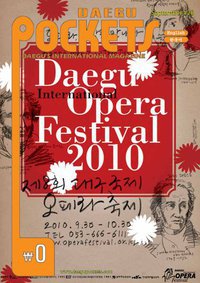
information to suit many tastes - Daegu Pockets
Bathhouse Ballads now has a monthly feature, specifically on bathhouses and bathhouse culture, in the magazine, Daegu Pockets. The first article was in the September edition with October’s hot off the press. Daegu Pockets is an international magazine that is published online and conveniently sized – capable of fitting in your pocket alongside your hard-earned Won!
Launched in 2009, the magazine has a number of full-time staff and team of dedicated Korean and expat volunteers all of whom work together to produce a useful bilingual resources for local Koreans and expats alike. The magazine is locally funded and edited by Craig White. More information on Daegu Pockets can be found at Galbijim. The magazine is also on Facebook.
On a personal note, a great resource which is provides a range of information to suit many tastes – as a snob who likes opera, very refreshing!
Link to Daegu Pockets website
© Nick Elwood 2010 Creative Commons Licence.


 Elwood 5566
leave a comment