When the Cuckoo Dies

Cute Cuckoo
Sitting in my kitchen is a cuckoo rice cooker; it’s pink, not my first choice of colour but at the time of purchase there were only 2 smaller rice cookers both identical, both pink. It sits on a shelf either on duty or turned off but generally it is turned on for months at a time only being ‘stood down’ while I refill it. I suppose it’s one of my most fundamental and important cooking implements, certainly more useful than a microwave even in the absence of an oven, and yet I treat it with little regard. Occasionally it will get a clean, inside and out though last time I opened the lid in anticipation of a clean, I forgot about it and a few days later discovered it was still operating.
My refrigerator, air conditioner and washing machine all warrant the luxury of some consideration because they are problematic to replace and any breakdown would cause a major inconvenience. In an attempt to prolong their lives I regularly adjust the fridge temperature, so as not to over work it, or I will use the fan instead of the air conditioner and then washing machine I will occasionally treat to lime dissolving powder. However, I am aware that all are prone to failure and steel myself for that moment. The poor little cuckoo, as cute as it is, doesn’t even get a look in! I wouldn’t dream of boiling rice in a pan to prolong its life and when it dies it will be chucked in the bin without sadness or ceremony and a replacement, another cuckoo, will be in situ within a few hours of terminal failure.
A lot of teachers in Korea probably feel like cuckoos. I arrived for my first spell in Korea in late August 2000 and looking back over my diary I had deduced an attitude towards foreigners, and especially English teachers, within my first day. I arrived at Kimpo International Airport in the late evening, believing I was going to Ilsan to teach middle to high school age students, a condition agreed upon before I accepted a post. The next day, I was dragged to five different schools in what was clearly an attempt to sell the Letterland system and I was the cuckoo being used to promote it. Even in the car being driven between schools, neither of my hosts saw fit to give me any commentary as I gawked in awe at a culture far removed from my own. And when I asked when I was going to be taken to my school, or what it was like, or where it was, their English suddenly seemed to evaporate. Not much after 10 am and the jet lag began to kick in and in one school I feel asleep in the bosses office. Despite knowing nothing about the Letterland system, a book was thrust into my hand in several schools and I was asked to talk to ‘teach’ the kids. In the evening I was taken back to Kimpo Airport and while I sat intermittently sleeping my hosts were busy on their mobile phones. After an hour of nothing they burst into life and hurried me to a ticket booth and before I knew it I was boarding a plane for Daegu and a post that involved teaching elementary school and kindergarten.
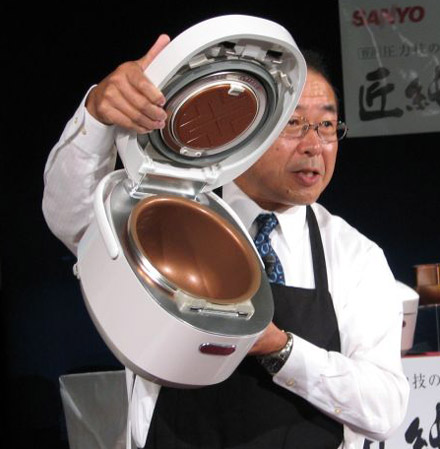
Introducing the new English teacher.
I can imagine the discussions prior to my arrival: ‘If you collect the new cuckoo at Kimpo you can borrow it for the day. Take it around some prospective clients and turn it on, get it to do some work, show it off! Just being a western cuckoo will impress them! Then, in the evening, when you are finished, pack it onto the last plane bound for Daegu and we can have it collected from the airport.’
On my third stint in Korea, teaching in Ch’eonan, I arrived on a Sunday evening, in early September. My new boss collected me at the airport and then took me to my one room. I had to spend my first night sleeping in unwashed bedding with the previous teacher’s dribble stained pillow. It was like sleeping with a stranger; I could smell the guy all night and without a doubt his bedding hadn’t been washed for months. It was horribly humid and no one had thought to put a bottle of water in the fridge, or some toilet paper in the bathroom. When I asked if the school could arrange for me to have internet access, I was simply told it wasn’t possible. The school also took the liberty of billeting me alongside 36 boxes which belonged to the outgoing teacher who was planning to return to Korea at sometime in the future. The boxes took up a third of my floor space and transformed what could have been a fairly pleasant, if not small one room complex, into a warehouse. After a few months they were a daily reminder of my cuckoo status and on more than one occasion I launched a barrage of kicks against them or stabbed them in a crazed carving knife attack. Eventually, I tore a few open and tossed the contents about my room, then claimed I’d been burgled. The next day the school provided a small truck to move the boxes into the school. But guess who supplied the labour?
Just like the cuckoo rice cooker, the cuckoo teacher should have no special needs or requirements. once un-boxed the cuckoo should be ready to function until failure when it can be chucked out and replaced.
Just like you never bother to tell your cuckoo what your plans are or give it some notice prior to activation, many Korean bosses spring things on you at the last moment – often through the school secretary. One boss would occasionally drag me to other towns, always under the pretense of sightseeing and we’d suddenly pull into a school. After meeting the principal and being given a brief tour and lunch, it would then be ‘sprung’ on me that I had to teach for an hour. In the UK we call this kind of teaching ‘door knob teaching’ as generally you have no idea what your supposed to be doing until you enter the classroom.
In the Ch’eonan high school, foreign teachers would arrive at school to find it was a day off or all the staff except you would be in casual clothes because it was a sports day. The status of rice cooker is no more obvious than when you are ill – the equivalent of your cuckoo being broken and of course, carting it to the nearest service center is beyond the question. When I had a particularly nasty flu and had to stay in bed three days, my first boss didn’t even bother to call in and see me and on the third day sent the landlord to summon me. When I returned to school he pointed to the classrooms and simply shouted, ‘do your duty!’ I called him a ‘fucking wanker!’ and promptly resigned. Rice cookers aren’t supposed to talk back! An accident, long illness or some similar calamity and you realise very quickly how disposable you are.
On occasion I’ve been quite proud of my cuckoo, partially because its cute but also because it has a novelty value as they are fairly rare back home. And likewise, there are times when bosses will wheel out foreign teachers to show off. When my high school had a contingent of teachers visiting from the USA, for negotiations concerning a potential partnership, we were summoned to the principal’s office, a space approximately twice the size of a classroom, and were prompted to chat and be friendly while the press took photos. Another boss hated any foreign teacher speaking or learning Korean, except when potential parents were visiting when he’d giggle and ask you to introduce yourself in Korean. I was never quite sure whether he did this to impress parents or provide them a little humour.
Unlike my cuckoo, which firmly belongs to me, teachers are almost seen as public utilities. Every English-speaking waygukin will have experienced those fleeting interactions with passers-by who will use you to speak English or nudge their kids forward for a free lesson. Whereas I am the only person accessing my cuckoo, every Korean sees it as legitimate to finger my buttons. Even when we are ‘stood down’ we frequently get turned back on.
A few years ago I bought a rice cooker in the UK, it’s crap as it cooks rice and then automatically turns itself off as it has no ‘warm’ mode and hence, can’t be so easily abused. As much as I love Korea and enjoy teaching, I often wish I were similarly designed.

© Nick Elwood 2010 Creative Commons Licence.
Garlic (마늘)
You can smell the garlic wafting on the air before you see it.

Sunday afternoon street vendors

Sunday afternoon
This work is licenced under a Creative Commons Licence.
Freebies
When you frequent a business in Korea it is usually the case that at some point the staff will repay your loyalty with what is known in Konglish as, ‘service-a,’ (서비스). In a restaurant or bar, ‘service’ may take the form of a free drink or side-dish and in other shops in mat be some small items. For example, in chemists it may be a bottle of vitamin drink and my butcher often throws in a pound or two of free flesh.
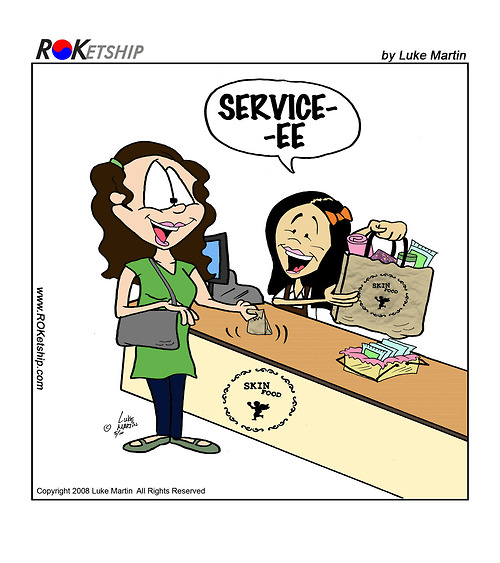
Link to Roketship
I would imagine the more Korea becomes westernised the more this custom will be whittled away until like London on a hot summer afternoon, your can of coke or mountain dew has an extra 30 pence added if it has been chilled. When you’re in the city and parched you’re hardly going to opt for a warm 7 Up because it’s cheaper than the cold one! Only a total stingy blades would do that, which is what the shop owners are for increasing the prices on chilled drink in the first place. A drink should be chilled in hot weather and charging extra is sheer exploitation no different from charging extra for a hot cup of tea or a cold ice cream. A few years ago I ate bibimbap (mixed rice and vegetables) at a small Korean restaurant near the British Museum in London. Bibimbap is hardly an exotic meal and I would imagine the only unusual vegetable in it was bracken fern (고사리), if indeed there were any. Regardless, the meal cost me £8 which is an extortionate price. To compound matters, I was charged £2 (W4000) for an extra portion, ie spoonful of kimchi. That’s actually more expensive than a bowl of bibimbap in my local Kimbap Nara. In the UK no shop owner would dream of handing you a bar of chocolate for free and if they did you probably think they were up to no good!
I like the idea of providing ‘service’ especially as in all but the big supermarkets ordinary staff, even the youngest and most junior, are able to ‘award prizes.’ In Mr Big, New York, New York, and Misoya, all chain companies with branches throughout Korea, the staff are able to dish out the goodies to customers they like. Even in friendly, fresh, fun land, GS25, the sexy student occasionally plies me with a bar of chocolate.
In the last six days my ‘service earnings’ have been substantial. I’ve eaten three times in Mr Big where I only ever eat the nasi-goreng and on each occasion I’ve had a free glass of beer (W7.500). In Misoya, there is a sexy lad who two months ago was on the street outside a new mobile phone shop, trying to hook customers. Now he is two doors along working as a chef and twice this week he’s served me a complimentary dish of two large tempura prawns (W4000 = W11.500). Next door to Misoya is the chemist where I buy nicotine gum. I stopped smoking five years ago but still chew the gum and here I get W1000 off every time I buy a packet (W13.500). Yesterday my butcher gave me some extra meat which astthe least would have cost W2000 (W15.500). In New York, New York, I am given a complimentary coffee after every meal knowing I like roast potatoes, a rarity in Korea, they always serve me two instead of one (coffee 2x – W2000 = W17.500) Finally, every time I have a green tea latte in my favourite coffee shop, I get a persimmon honey cookie (약과) for free; they cost W800 each (W19.100). So, in six days my ‘service earnings’ amount to approx £10 – enough to feed me for 2 days.
This work is licenced under a Creative Commons Licence.
No Pain no Gain – The Korean Bootcamp

The ebente-tang (야벤트탕). Mugwort (쑥)
As the weather gets hotter I spend increasingly more time in the cold pool than in the e-bente-tang (이벤트탕) which today was scented with mugwort (쑥). In the cold pool (냉탕) it was so cold I found it difficult swimming underwater but in another few weeks, when we are right into that horrid monsoon, it will be a welcomed sanctuary.
In the cold pool a couple of boys are messing around a little noisily and so some middle-aged man asks them to be quiet. The boys are summoned to attention by the word ‘hakseng’,’ (학생 – student) and simply told to stop mucking about. A little later they have to be asked again though this time the man raps them on their heads with his knuckles. In pansy Britain that’s assault.
I’m thinking about Daech’eon (대천) which is on the west coast, not too far from Ch’eonan, and a beautiful stretch of beach. The freshmen boys in my last high school used to visit there in summer just after their end of semester exams. As beautiful as Daech’eon is, I imagine that whenever they are reminded of the place they will tremble and break out in a sweat. For them, Daech’eon was a place where you both met yourself and your limitations, a place from which you returned a different person and it was feared! In the months leading up to the summer I often heard mention of Daech’eon, always with a mix of reverence, fear and foreboding.
Kids can learn a lot from a smack around the head and some discomfort and pain. In the west we’ve molly-coddled kids to such an extent they’ve had to invent ‘extreme’ sports in order to make themselves feel alive. Anything potentially dangerous in the playground has been removed and that nasty hard and rough floor replaced with a comforting rubber mat. Of course, there’s nothing ‘extreme’ about their sports other than a scratched knee or bruised shins. ‘Extreme ‘is playing on a playground without the protective rubber floor, getting into the boxing ring or doing some of the more strenuous of martial arts with instructors who take pleasure in grueling sessions. In one taekwondo school I attended in Korea, the instructor put a ‘naughty boy’ in a headlock until the boy’s legs went limp and he flopped to the floor – that’s ‘extreme.’ Back in the UK I’ve trained in schools so strenuous, 200 front rising kicks and 200 hundred sit ups just for a warm up, that membership was limited to less than ten students – that’s ‘extreme.’ My military training was 12 weeks which included 6 weeks at a school of physical training. The day commenced with an eight mile run and the remainder was spent in the gymnasium – that was ‘extreme.’ Bungee Jumping would freak me out and definitely pump me full of dopamine especially as I’d be terrified the rope would break given my extreme weight. Personally, I see little ‘extreme’ about such ‘sports’ especially as they are associated with fun and a poncy lemonade, Mountain Dew, and anyone who aligns their personality with a carbonated corporate beverage is gullible and totally un-extreme.
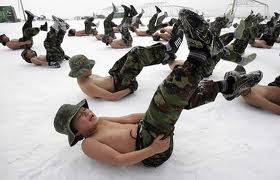
Most kids would think this ‘extreme’
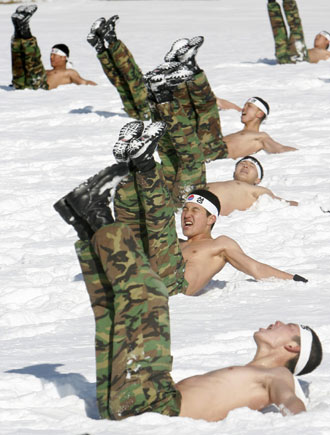
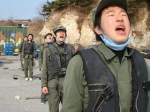
Korean special forces training – ‘extreme’
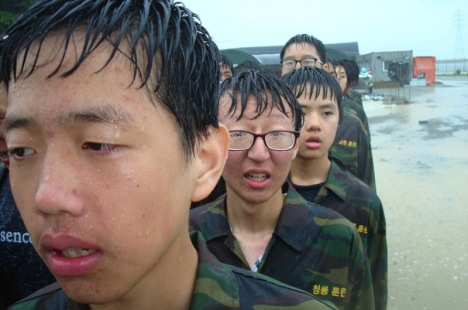
Facing your own limitations
In order to keep kids in post 16 education Britain, has introduced colleges of football, basketball, dancing, and most likely tiddly-winks. In contemporary teenagers’ jargon, most ‘extreme’ sports as well as the sports offered in sports colleges are ‘gay.’ Most British boys wouldn’t last the day in my last high school and they certainly wouldn’t last if subjected to a real training session. Many of the teenagers in British sports colleges have no idea what it takes to become a professional athlete because the ‘training’ they have been subject to is largely based on making it fun. By sanitizing all unpleasantness and removing all threats, kids are no longer forced to confront their own limitations, let alone attempt to push beyond them and in terms of both sport and academia, most are still crouched in the starting blocks.
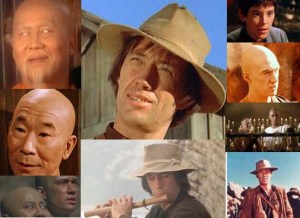
The TV Series ‘Kung Fu’
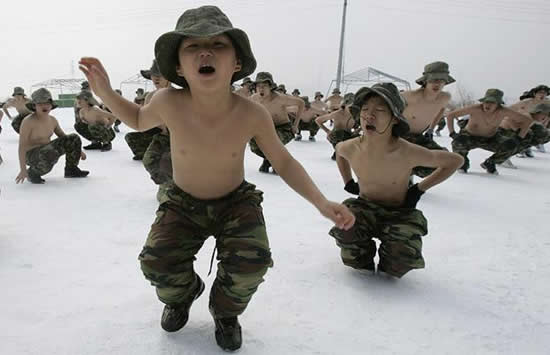
No Mountain Dew? Brutally Extreme!
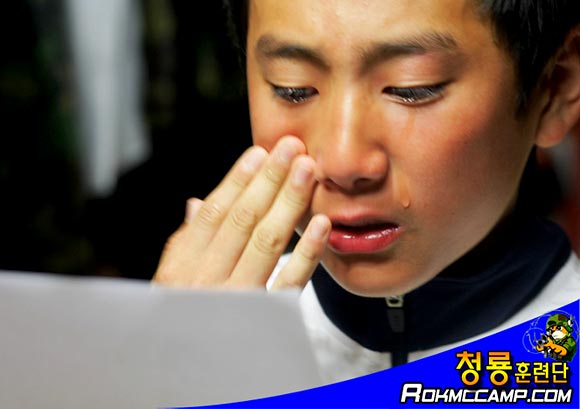
Boy crying as he reads letter from home (Link to Rokmccamp.com)
Permeating much of the general life philosophy of Korea, is a belief that through discomfort, even pain, we become stronger. I was aware of this ‘philosophy’ when I first started training in taekwondo in the 1970’s and it is an attitude prevalent throughout the east. In the opening sequences of the 1970’s, Kung Fu, Kwai Chang Caine (David Carradine) is seen taking the final initiation which marks him as a Shaolin monk, lifting a heavy cauldron of glowing coals between his arms. The cauldron bars his way forward and in moving it the symbols of the Shaolin Temple, the tiger and the dragon, are seared onto his forearms. The initiation is one of pain and marks the transition novice to master, from the hermitage of the monastery to life beyond its confines. Of course, the initiation, symbols and hot-pot are probably historical baloney but it made excellent TV and encapsulated much of the spirit of the time which included an intense interest in eastern mysticism, the orient and martial arts.
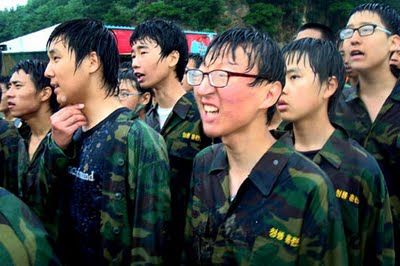
Perseverance (인내)

Team work
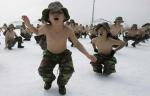
In the late 1970’s I remember reports and photos about the Japanese Karate team practicing punching solid surfaces while kneeling on broken glass. The glass must have been ground as anything other would be highly foolish. General Choi’s (최홍희) Taekwon-do ‘bible’ (the first book about taekwondo published in English) advocated training in the snow to develop ones resilience, something still undertaken by Korean soldiers and school kids where the philosophy of discomfort and pain strengthening the human ‘spirit’ is still alive and kicking. Indeed, the five tenets of both the ITF (International Taekwon-do Federation) and the WTF (World Taekwondo Federation) include: perseverance (인내), self-control (극기), and indomitable spirit (백절불굴).
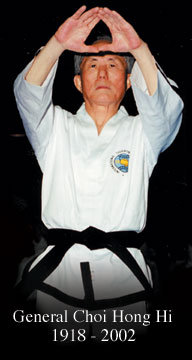
- A central figure in the history of Taekwon-do, ignored by the WTF
Korean teenagers often attend trips, organised by schools or private organisations, designed to bond them, develop leadership and strengthen the character and coming from both an ex-military and marital arts background, as much as I dislike macho-militarism, I belief there are some benefits in such pursuits. Without doubt my training in martial arts heightened my mental power and my ability to ‘tap into’ a superior mental state, now that I no longer train, is severely weakened. The heightened state of reality, caused by the body being flooded with endorphins, gives rise to a euphoria which can make a lasting impression on the mind and this state, though somewhat perverse to subject ones self to, is rewarding in itself. Confronting ourselves is a revealing experience.
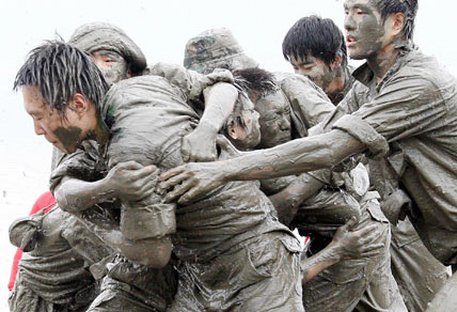
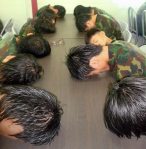
Getting messy hair – ‘extreme’
Part of the economic success of Korea has been attributed to the hard work and discipline of older generations. My closest friend often tells me about his childhood and the constant hunger he faced. His mother used to make dong-dong-ju (a rice wine alcohol) which he carted to the local market to sell. By western standards he is working class and for the ten years I have known him he and his wife have struggled to ensure their son and daughter had a good education and entered a decent university. For the last five years he has worked in a car factory in Ulsan and lives away from home returning only every second weekend. His wife runs a street pancake stall where she will freeze or sweat, depending on the season. I can think of few individuals back home who work as hard as they do but their experience is one shared by majority of Koreans who were children in the wake of the 1950’s. It is this hardiness which on the one hand is often attributed to Korean economic success and on the other, to the both the pampering of their children and the occasional desire to provide their children a taste of harshness that might make them better citizens or students.
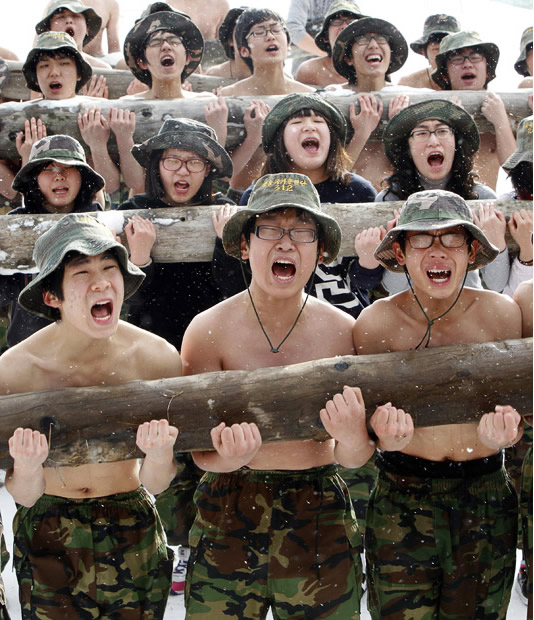
Korean Kids at a ‘camp’ near Asan
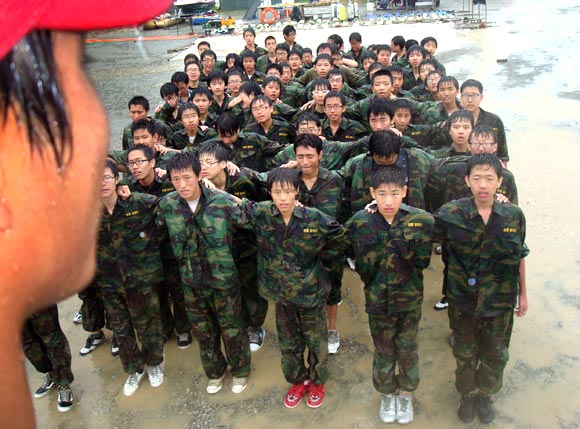
I’ve taught in English schools where you weren’t allowed to shout at children and had to ignore bad language unless aimed at you personally

Knowing your’re alive doesn’t happen very often
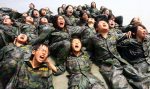
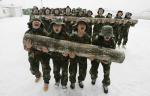
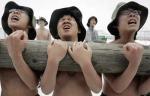
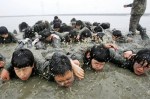
Across Korea are various ‘boot’ camps which specialize in providing today’s youth with a taste of hardship. The courses are designed to bond, facilitate team work, and develop perseverance and tenacity. Trekking up mountains, standing still for an hour, twice a day, military style discipline and exercises, training in snow, mud, rain or the sea are all common. Some of my middle school students recently went on a trip which involved sleeping on graves in the mountain without any adults – however, how widespread this is I don’t know. Sure, lots of people will see such training as harsh and wicked but for even the most average sports person or averagely talented person, facing your limitations is a common experience. While many of today’s rich and famous have ascended to stardom by virtue of a mixture of luck and looks, most of us will only achieve great things by guts and determination. As much as I dislike football, Beckham is talented but then he spent many hours hammering balls into goal to hone his skill. Molly-coddling kids and protecting them from facing themselves simply teaches them to be less than mediocre. In addition, discipline subjects children to the will of adults which is no bad thing. I’d rather live in a society where the kids are controlled than in one where they run amok doing exactly as they please.
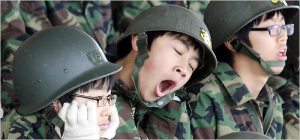
Link to New York Times article
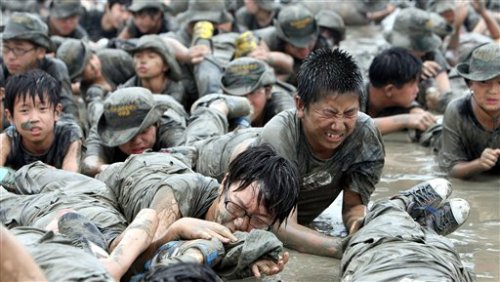
Indomitable spirit (백절불굴) And it does them good!
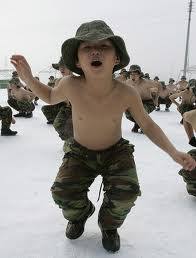
It’s only pain!
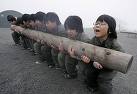
The British army stopped log training many years ago and burpees in the mid 1970’s.
All young men are required to undertake 24 months military service and for young boys this kind of training is a taste of things to come. Considering the relationships between North and South Korea, and the fact the war has never officially ending, conscription is a practical preparation for the unspeakable event. When your country prefers to wage war on distant shores, you can rely on a professional army but when the enemy is on your doorstep such luxuries evaporate.
Circumcision and the freshman summer camp were probably the two most feared events in the lives of the freshmen in my high school. The morning the buses rolled up onto the school grounds to cart them off was especially silent, as if an execution were about to be detailed. A week later they returned exhausted, sunburnt, bruised and very proud. All the boys were scarred, all had badly friction burned knees or elbows, there were cuts and bruises and a few returned with broken legs or arms. Though the boys still had two years of one of the most demanding schools systems in the world to endure, the friction burns, cuts and bruises, like the Shaolin tiger and dragon, were badges of belonging, symbols of esprit de corps. Daech’eon was an intensely private and intimate experience and once recovered, and confined to history, mention of that beach stirred memories and emotions and at such times I felt both an intruder and outsider. In a preface to one of his James Bond novels, Flemming writes: You only live twice; once when you’re born and once when you die. I think the Daech’eon boys, and any other kids who attend such boot camps, have already experienced a second brush with ‘living.’
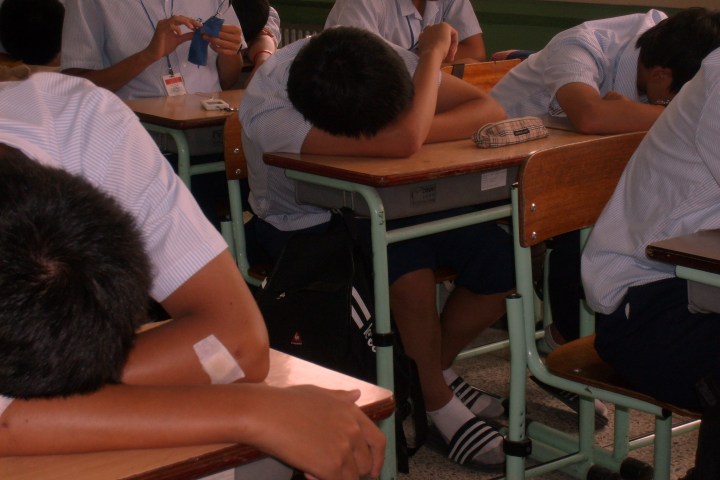
After the Daech’eon camp
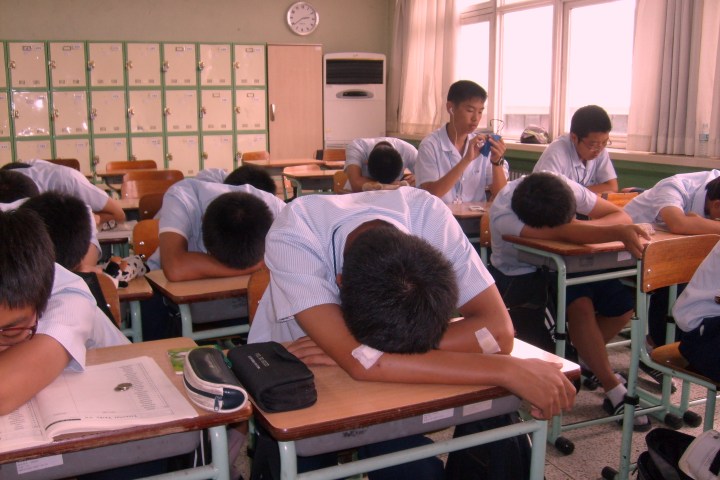
Tired
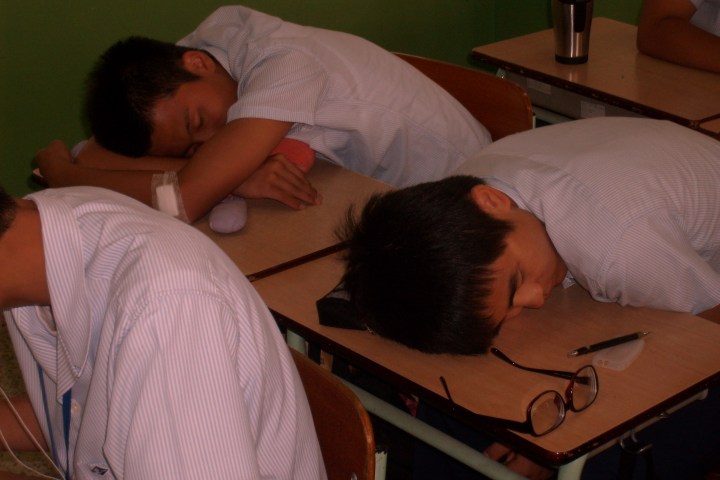
Post dopamine lull
LINKS TO VIDEO CLIPS OF KOREAN TEEN BOOT CAMPS
ITN News Report
Reuters 1
Reuters 2
Nocommenttv
NTDTV
———————————————————————————————————————————–
LINKS TO WRITTEN ARTICLES ON KOREAN BOOT CAMPS
Jjujund. Translation from the Chicago Tribune Sept 2009
Link to ABC News
———————————————————————————————————————————————–
© 林東哲 2010 Creative Commons Licence.
Monster Tomatoes – Monday Market

Tomatoes
For almost a month now, beefsteak tomatoes, the largest tomato of the family, have been in abundance in the street markets. They are truly enormous though they lack the sweetness of smaller varieties. Compared to Britain, the hotter weather, intense June-July rain fall and a long sunny day, are all factors which greatly increase the speed at which plants in Korea grow.

A box costs between 5000-8000 Won (£2-50-£4)
This work is licenced under a Creative Commons Licence.
When 'Gay' is 'Gay!'


Not suitable for Pumpkin people
How do you know if another boy is gay? I asked some 15 year old boys.
1. A gay boy stands close to other boys
2 A gay boy strokes other boys
3. Gay boys likes to hold your hand
4. Gay boys kiss other boys
5. Gays hug people
As for gay girls, I’m told: you can’t really tell if a girl is gay because all girls hold hands with their friends.
So! It would appear most Korean boys and many men are gay!
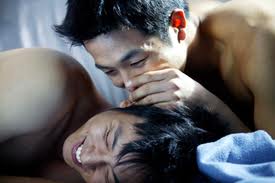
'No Regret' (2008) Korean gay movie
The use of the term ‘gay’ in Korea is fairly new to me and I certainly don’t recall it being as prevalent in the past as it is now. However, the term is only ever used within the context of ‘homosexual’ and doesn’t carry the broader western connotation, ‘bad,’ ‘crap,’ ‘shit’. etc, which can be applied to anything. In Korea, you won’t find any ‘gay’ books, or ‘gay’ movies and unlike my last UK school, where even chairs had ‘gay’ graffitied on them, there are no ‘gay’ objects. Though they might react differently if they someone were gay, their use of the word lacks all nastiness. I imagine that the idea of someone really being gay, is so alien that the the term can be used without emotion. That someone could be ‘gay’ is as likely as someone being a ‘martian.’ In the west, when kids use the word as an accusation its purpose is very often to assert an appearance of heterosexuality, the rationale being if you want to appear heterosexual, simply behave in a homophobic manner. When ‘gay’ is used as a derogatory term in the west, it’s never simply spoken and is often heavily invested in emotion even to the point of being spat out with hatred. The Korean use of the term ‘gay,’ by comparison, is the most naive and innocent I have ever heard. Indeed, Koreans use the term ‘gay’ in the gayest of ways. Of course, for Koreans in the closet, derogatory comments are as insulting as they are in the west and that they seem to be voiced in the absence of malice probably symptomatic of the success with which society has oppressed/suppressed same sex relationships.
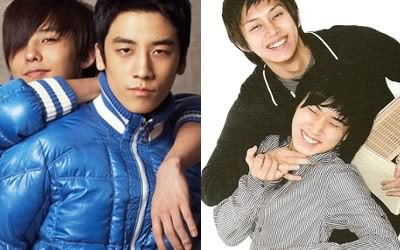
Skinship by Hee Chul and Sung min
Most of my classes are co-ed but a few weeks ago, as we were trying to group abilities more closely, we were left with one class which is solely boys. I’ve read a few posts by teachers who get annoyed at displays of skinship during lessons and have to admit, since the girls left, the amount of petting and pawing has increased. The class consists of 5 boys , divided into 2 groups (3;2) and which are very tight peer groups, that is to say boys who attend the same school, same classes and in many cases will have been friends for a long time. Both groups are inseparable and are by their own definition ‘dick friends.’ (고추 친구). In Korean culture, between men or boys, one cannot count a friend close until you have seen each other naked, eg at a bathhouse, at which point you become ‘goch’u ch’ingu,’ (고추 친구). The last thing most western lads want to see is their mates dick and any interest expressed in this direction would be a deemed ‘gay.’
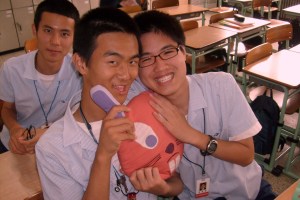
Korea, camp minus gay
The main protagonist of the skinship is Mark, a boy of about 15 (English reckoning). While the other boys sit in the same seats, all the front row, Mark seems to change seats each lesson and will paw and fiddle a different lad correspondingly. Stroking hair, massaging shoulders, holding hands are all common but on two occasions he has also kissed other boys on the cheek, albeit as a joke. His friends tell me he claims to be ‘in love’ with a different boy each day and accuse him, in the nicest and gayest way possible, that he’s ‘gay’ – on two occasions this has been the point he has kissed the current object of his interest.
As for the list supplied by the boys:
1. A gay boy stands close to other boys – in the school office this afternoon one boy was laying on top of another one (aged 12)
2 A gay boy strokes other boys – in every class boys fiddle with each other
3. Gay boys likes to hold your hand – that means all my best friends are gay. And yesterday in the bathhouse I actually saw two boys, most likely brothers aged around 12 and 7 respectively, the older boy of which was sat on the side of the pool holding his brothers dick as he talked to him and when the younger boy went to run off the older boy pulled him back with a tug.
4. Gay boys kiss other boys – I don’t see this often but I have had Korean male friends (certainly straight) kiss me.
5. Gays hug people –again, my male friends have hugged me.
Perhaps a more pertinent question might be how do you tell if a Korean man or boy is ‘straight?’ Any insights into Korean homosexuality warmly welcomed!
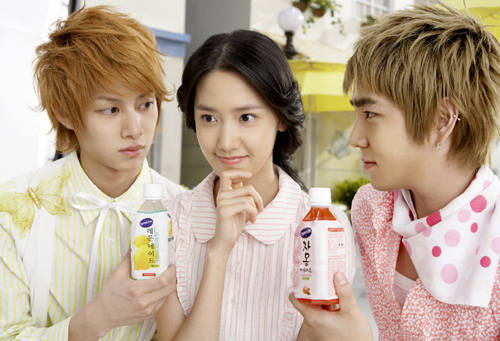
K-pop - Kamp-pop. And are the lads eying each other up?
© 林東哲 2010 Creative Commons Licence.
Song-So in Transition
E-bente-tang (이벤트탕)
In the Ebente Tang (이벤트 탕) today the additional essence was pine (솔입). It was slightly busier than usual for a lunch-time and I got talking to the westerner who isn’t afraid to bend over. It’s actually the first time I have sat with a westerner, naked in a bathhouse, since I visited Korea a few years ago with a friend. I passed another westerner on the way in; I was taking my shoes off as he was putting his own. He didn’t want to talk, I could tell, and he was a dirty looking backpacker type with grungy looking clothes and a month’s stubble. I almost let him escape then said, ‘hello,’ after which he had to exchange some conversation with me. I’ve not really seen him around before but of course, he’s lived here for a few years, which means probably 13 months.
I’ve had a few drinks. This evening, as I left work, I felt like a stroll down to where my old school used to be which involves crossing a large cross-road near the Lotte Cinema. I hardly ever go Keimyung University side unless I want some Baskin Robbins ice cream. The cross-road forms a barrier, an asteroid belt between my realm, a few blocks, and what is basically another universe. I usually experience a sense of adventure as I cross it and begin journeying where I haven’t been before. Of course, I probably have been in this location before but the transformation of the buildings and businesses occupying it generally make me feel passing them is a first encounter. I’d started the journey from my bank and half way towards my old school, as it starts to rain, I realise my umbrella is in the bank foyer. It’s pointless turning back and beside, this is Korea and the chances are very high it will be there when I return.
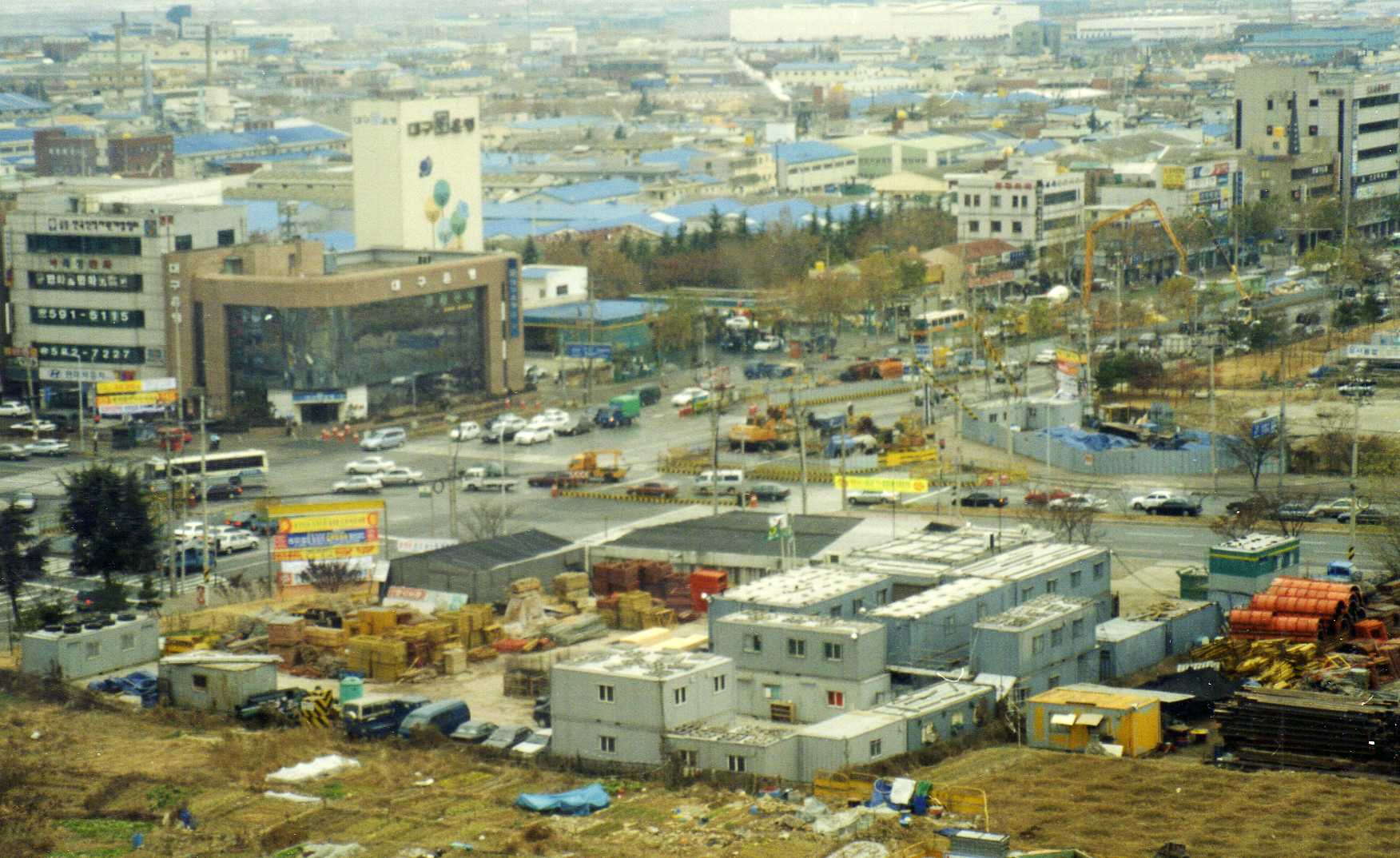
Song-So in 2000 from the top of E-Marte. This area still had patches of farmland all since developed
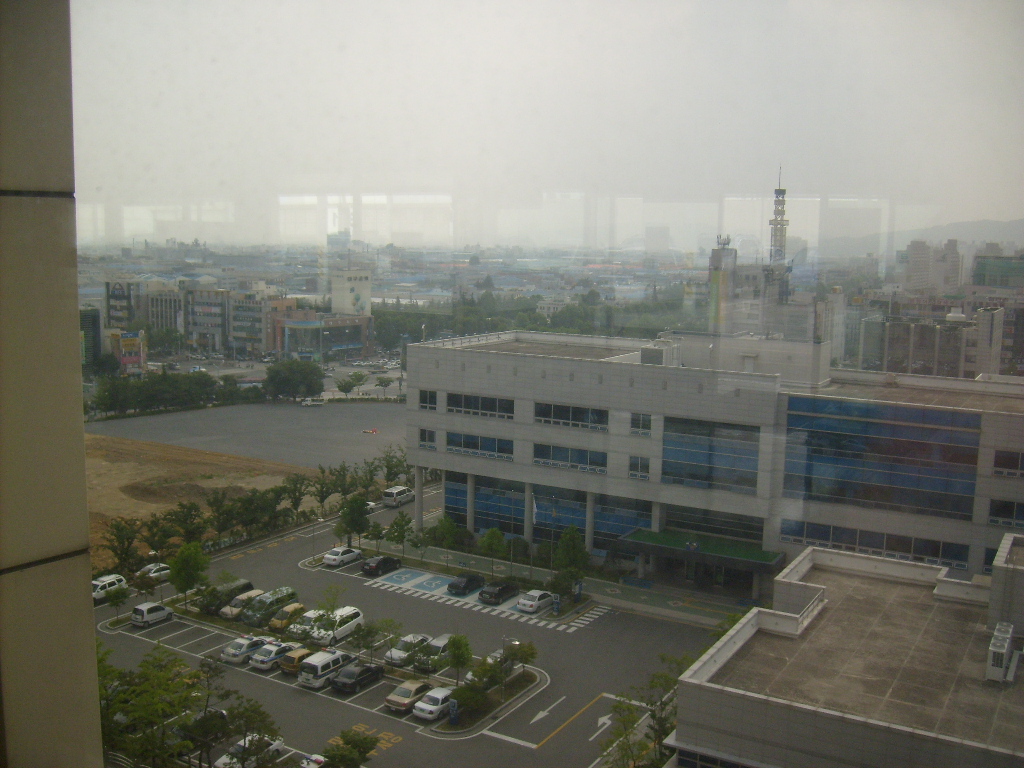
2010. Same location
The businesses towards my old school, a hideous factory in which I worked for 18 months, have changed. KFC has gone – the first pace I ate on my own in Korea, so too has Lotteria burger bar where I’d hang out in the most humid part of summer because contracts back then didn’t include air conditioning, and where a bedding shop used to be I’m treated to a reminder of life back home in the form of a Tesco’s Home Plus. Not content to have invaded every corner of England, they are now starting to terminate all small businesses in Korea. My old school is no longer Di Dim Dol but some other school, still run by a money grabbing businessman boss. On the huge poster on the third floor, some round-eyed western kiddy stares out at Korea, pen in hand, looking studious. Of course, the truth is most western kids couldn’t give a fuck about English and the native language skills of both Britain and the USA fall behind that of Korea, which for all its faults, has one of the most successful education systems in the world. My old Taekwondo Academy has gone and so too has the Pizzaland underneath it.
This entire stretch of road used to be the most affluent part of Song-So but since a mega cinema complex, known as Mega Town, was built some 6 years ago, opposite where I currently live, the money has moved into the next block. It was an obvious transition; near the Cinema is the E-Marte supermarket and surrounding it are buffet restaurants, pizza restaurants, coffee shops and a Dunkin Donut. Further down the road towards the university, the area in which my old school used to be the atmosphere is now slightly shabby and deserted. When I cross the large crossroads and venture into the unknown I often feel guilty of being lazy but nowadays I just remind myself I rarely come here as there isn’t really much to see.
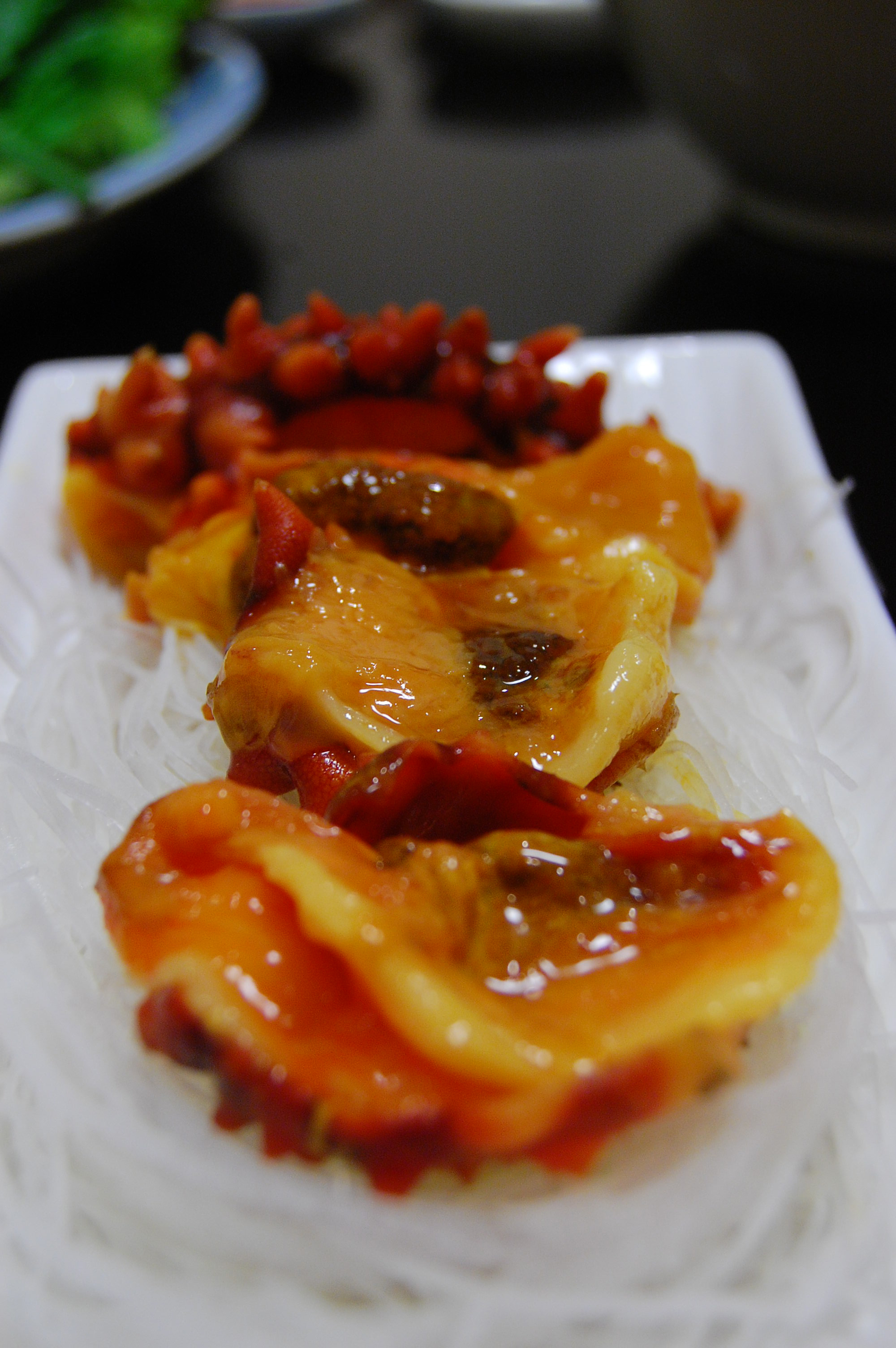
Sea squirt (멍개)
I end up eating dinner in an Oyster restaurant where I know the owner. It’s one of the hardiest local businesses. The first thing he says to me is that I have put on weight when indeed I have lost it. Not a good start to the evening especially as my favourite food here was oyster tempura. Ten years ago this restaurant was a North Korean restaurant and was where I regularly used to meet my friend Cherie, currently my boss after she quit Di Dim Dol Factory School. The owner is really pleased to see me and wanting an excuse to drink, plies me with plenty of ‘service’ in the form of beer, makkalli, sea squirt, and sliced jellyfish.
If you’ve ever wanted to know what its like to eat a boil, Sea Squirt (멍개) is a close approximation. I’ve eaten them before and never found them delicious. Sliced jellyfish (햅아리) however, I like especially if in a sauce. The specialty in this establishment is oyster. My home town in the UK, Colchester, has existing oyster pens built when the Romans occupied Britain. Indeed the oyster trade dates back 2000 years. You wouldn’t really know this as oysters are probably no more visible in Colchester than in any other town especially as they cost about a pound a shot – approximately 2000 Won each. My basket of delicious Oyster cost 20000 Won (£10) and there are probably 30 oysters – enough to make me feel a bit sick. And this is where I have to laugh because they cost the same price back in 2002!
I left the Oyster restaurant feeling a little sick and pissed and on the walk home passed a restaurant in which sat a group of around 6 waygukins. I stopped for a moment and spied on them. They were all young and shabby, the men unshaven and clearly back-packer types with a touch of goth about them as they were all mostly dressed in black and drab colours. One dumb-ass had a tea cosy on his head and sat next to him was the guy I met going into the bathhouse today. No wonder he didn’t want to talk as he obviously has a gaggle of mates to chat with.
I ended up back at the bank where my little sojourn had begun and there, where I had left it, was my umbrella.
This work is licenced under a Creative Commons Licence.
Friendly Fresh Fun

GS 25 is my local store and is a mere 60 paces from my front door. It opened only a few months ago after replacing a small business which I passed for 18 months but cannot recall. The GS 25, which I assume means ‘general store,’ opens 24 hours day though equally, it could be the abbreviation for, ‘Get Some.’ The ’25?’ That’s the ’25’ the usual Korean ‘term’ for ’24/7. With its blue and white neon lighting, the GS 25 has brightened up a formerly dull corner which opens onto the main road.
Recently the store has made some new innovations: with summer here, chairs and tables have been placed on the pavement and yesterday I was given a loyalty card. The GS25 company however, truly like to service their customers and this evening when I pop in to buy my bedtime beverage, a cup of milky coffee, I notice the student working within, at 8.30 in the evening it’s always the same boy, has a GS25 jacket on the back of which is emblazoned, in large yellow letters, ‘Friendly, fresh and fun!’
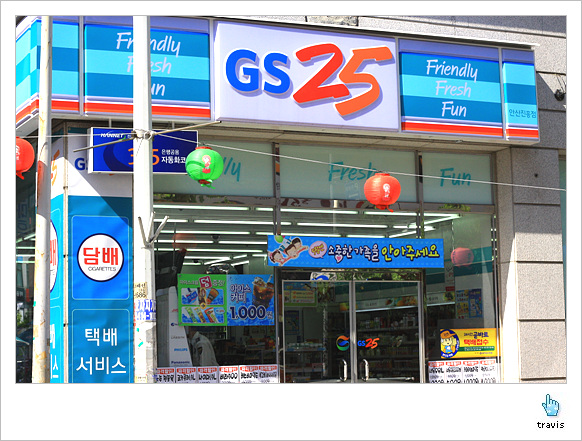
Where?
There are a couple of places on my walk home in which I could buy a cup of milky coffee but over the last few months what has attracted me to this small shop is the boy. He’s a university student, studying English at the local university and though I’ve spoken to him in English on one occasion, a sort of invite for him to try out his English on me, I always have to speak to him in my poor Korean. He probably 24 and at my age, 54, I don’t have the slightest anticipation of anything developing beyond a customer-employee relationship but after a day’s teaching checking out the front his jeans as he correspondingly checks my small change, provides a little light entertainment.
Tonight I’d had a few sojus and the world always looks better when you’re mildly tipsy. The jacket, in particular, grabs my attention. It’s not really a jacket, it’s more like a light vest made of some mesh material and today, he also has a new baseball cap. The three ‘F’s’ are going through my mind as I stare at the arsenal of coffee in the cool cabinet. I always buy the same one, ‘Mild Caffe Latte,’ but not an evening goes buy when I don’t glare at the other 20 or so different types before making my regular selection. ‘Friendly,’ the jacket reminds me, so I smile as I hand him my the money, always the same 1200 Won but tonight it’s in loose change. He returns my smile but it’s nothing overtly friendly, more like averagely ‘friendly, the standard ‘friendly’ I’d could expect in E-Marte, or Paris Baguette. Then I get a little fresh; ‘You’ve got a new hat?’ He raises his eyes from the change in his hand, smiles and lifts the cap off of his head. ‘Oh, and a new haircut! Very handsome!’ He thanks me but has no idea I’m being ‘fresh.’ He understands ‘fresh’ only within the context of sell-by dates. You can’t really get to the ‘fun’ level without a little more ‘freshness’ and as he almost finishes counting my change, I have a fleeting urge to have some ‘fun’ and fondle the front of his jeans. I don’t bother, it’s the soju effect and besides, ‘fondle,’ despite the alliteration, isn’t on his jacket.
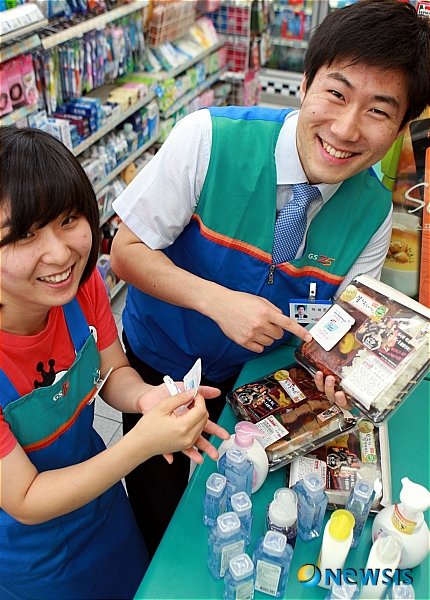
The staff, though friendly and fresh fall short on providing some fun
Disappointed? Of course I am! Whats the point in advertising to customers that you are ‘friendly fresh and fun’ when you are no more of any of them than any other store. And to be honest, I expect ‘friendly’ service wherever I spend my money as well as fresh items. As for fun? How can shopping for a bar of chocolate, a packet of batteries or a smoked boiled egg be ‘fun?’ If it’s ‘fun’ shopping in a pokey little convenience store with a small range of products it must be ecstatic shopping in a place like E-Marte or Tesco’s Home Plus – which of course it never is. And to make matters worse, next morning, when I pop in to buy breakfast, another member of staff is wearing the same jacket. However, when he turns around he’s a granddad who apart from being very friendly, is neither ‘fresh’ nor ‘fun’ and personally, spots are preferable to crinkles any day!
This work is licenced under a Creative Commons Licence.
Toss English
I should have known better but after a hard day’s work, feeling clammy and tired, my brain wasn’t functioning. I ‘d stopped to take a photo of one of the school’s mini buses which was parked on the sidewalk, doors wide open to vent the heat before being crammed full of students. I’d no sooner got my camera out of my bag when a waygukin came around the corner. Being caught with your camera out, a sure sign you are a white belt waygukin, is embarrassing and the equivalent to being caught tossing or picking your nose. Like most of the boring western tossers in Korea, there was an avoidance of eye contact and a reticence to acknowledge another foreigner lest it taint their air of being a waygukin who thinks they’re either Korean or the only westerner in Korea.. I’d passed another two in exactly the same spot earlier in the day – one I’d nodded at but behind his dark glasses he totally ignored me. The other was walking into his school wearing a pair of Bermuda shorts that made him look like a tosser and then there were the flip-flops. I find it a form of racism for waygukins to go and work in a school dressed like they’ve just sauntered up from the beach as it demonstrates a complete lack of any understanding of or sensitivity to Korean culture and short of working for Mediterranean Beach Club 18-22, you wouldn’t dress as such back home.
The minibus I am photographing belongs to Toss English Academy and ‘toss’ is a British-English slang term for ‘masturbate’ or ‘crap.’ The school has been in situ for well over 10 years and I often smile when I see one of their buses passing. You’d really think companies, especially the big ones and ones which teach English, would ask a native speaker to check their English so as to avoid making such gaffes! Other alternatives conveying the same sense of meaning and range of nuances would be: ‘Wank English Academy,’ Masturbate English Academy,’ and ‘Shit English Academy.’ And for some examples:
Going for a toss – to have a wank, to toss off
tosser – a wanker or masturbator
to call something ‘toss’ – to state it is ‘rubbish,’ ‘shit,’ or ‘crap.’
a tosspot – a stupid person, an arsehole or a boozer.
As I’m taking the photo the driver comes up and asks me why I want a photo. I’m sensitive enough to gauge how appropriate it is to tell him what ‘toss’ means and even assume he might find it amusing and as he’s approximately the same age as I am, I go ahead and explain. My pronunciation of ‘wank’ is impeccable as I’d heard it so often in my last school, a boys’ high school as whenever you asked a student any question about what they did, are doing, or might do, someone would mutter, ‘wank.’ Now, initially I assumed the driver understood me because with a little look of surprise on his face, he reiterates the word, ‘wank?’ I repeat myself and point to the word but suddenly he is looking a little annoyed and walks back to the little group of drivers from which he had initially emerged.
Poor guy has probably been driving one of those mini-buses for ten years and then discovered from a stupid waygukin that ‘toss’ means ‘wank.’ That’s a mighty kick to a Korean ‘kibun.’ I should have kept my mouth shut! I explain my faux pas to a friend who sees nothing wrong or offensive in my comments and the context they were made in but suggests he may have been worried about ‘company’ image. However, as I replay the event through my mind I am beginning to wonder if he understood what I meant by ‘wank’ but misunderstood the rest of my Korean. If such were the case then they guy probably thinks I’m a weirdo. Maybe he thought I was after a ‘wank’ in his bus or maybe he thought I was suggesting I ‘wank’ him. Now I’m going to have to avoid that stretch of road to by-pass the Toss Buses and their drivers.
©努江虎-노강호 2010 Creative Commons Licence.
Toss English went bankrupt in 2012.
June 2010
Chemo-Concoction Coffee
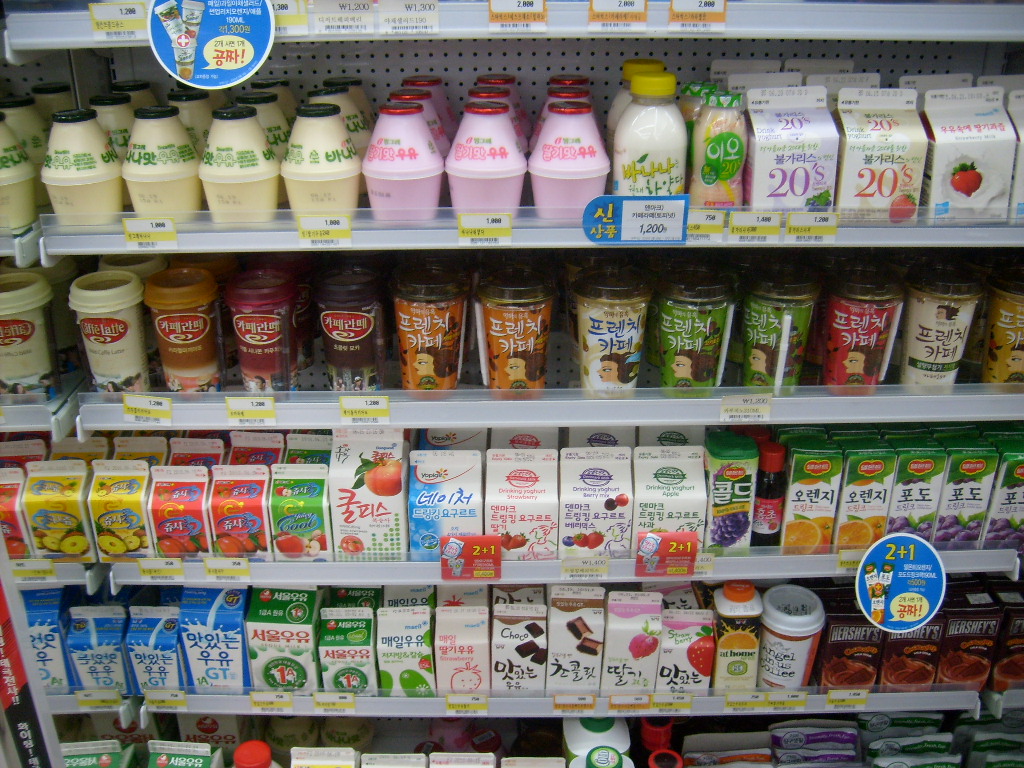
Coffee galore! In plastic cartons.
The kimchi is great but what the fuck have you done to the coffee? As much as I love Korea their coffee is generally crap! I remember being in E-Marte ten years ago when a working coffee filter machine was on display, it attracted a small crowd. ‘Coffee’ shops at the time were in their infancy and I can remember paying around 4000 Won (£2) for a pretty poor cup. Buying coffee beans or ground coffee was difficult. Today there are coffee shops on every street corner and while their individual atmospheres and ambiances are amazing, the coffee served has usually been castrated. I like my coffee barbaric and with balls! I like it thumping my system first thing in the morning and I like a strong taste and aroma. There is more coffee sediment in the dregs of my one-room coffee cup than in any coffee you will drink in a Korean coffee shop and have you noticed that cafes rarely even smell of coffee!
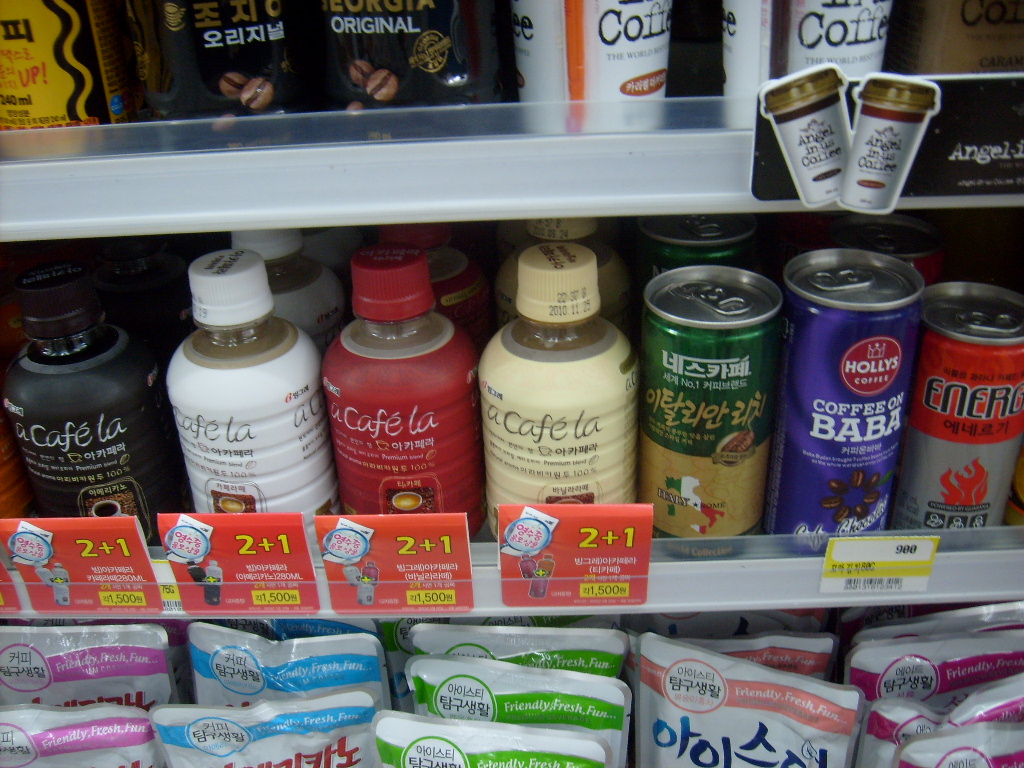
Bottled coffee
Recently, I was eating in one of my favourite western style restaurants, New York, New York; you’d be tempted to think they might make a decent coffee, coffee that can put hairs on your chest but an association, however tenacious with the USA, is no guarantee; the most disgusting coffee ever is that muck served in McDonalds, and I don’t particularly rate Starbucks but then the USA has always excelled at reinventing the cultural achievements of other nations and in the process both destroying them and creating some abortion which subsequently becomes a defining icon of US culture. Hershey’s pseudo chocolate, American mustard, hamburgers, hot dog sausages are all abominations recreated for a largely undiscerning population in whose tracks most other nations follow. The hamburger was a respectable food item until the USA assaulted it and much the same can be said of Hollywood’s rape of Charles Dickens, Wells, Wyndham and Golding. There should be a law forbidding the USA from cultural rape. Yes, they have definitely produced some awesome assets, weaponry for one, but cynicism aside, the Simpsons, Science Fiction, Copland and a string of great authors etc, provide the US with enough credibility without having to recreate the rest of the world in its image.
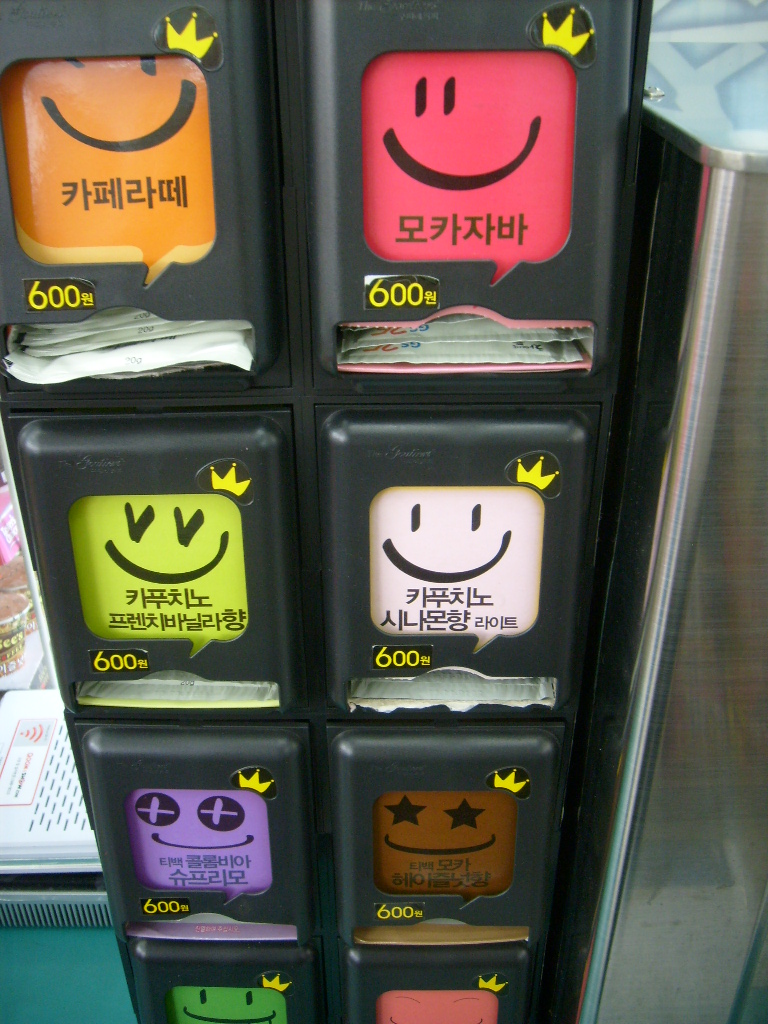
Castrated coffee -there's something in the bag but it ain't balls!
My New York, New York coffee was served as ‘serbis-a,’ which in Korean means it’s a loyalty perk for which you aren’t billed. Being a regular customer along with my boss and friends, the coffee is generally ‘on the house’ which passifies me as I’d hate to pay for it. Neither is it cheap and costing about the same price per bag or cup as it does in the UK, makes it an expensive item. It was insipid and looking into the mildly tainted water, I could see the bottom of the mug. I doubt it contained more than a few beans worth of coffee probably dipped in it at that. More disturbing is the fact I find it palatable, even pleasant. The dumbing-down of humanity on a global level is largely facilitated by sweeping aside all forms of discernment. The most successful market is one where consumers seek pleasure in shit, shit at every level. The perfect economy would be one where consumers brains and mouths are simply plugged into a sewer system and subsequently billed for both consuming shit and expelling it. You know discernment is disappearing when you hear kids praise fast food as ‘delicious,’ or claim books are boring, (ie their own imaginations are boring), when it is assumed the opposite of ‘fast food’ is ‘slow food,’ or hear people argue about pop music versus classical music. It’s for this reason I don’t want to enjoy that pseudo coffee as it’s only a step away from being plumbed into a sewer society where everything shit is superior.
I wouldn’t mind the billion other ‘coffee’ products available in Korea if I could actually enjoy a real coffee but, if you don’t approach these beverages with expectations, and that’s the disturbing part, they fulfill the role of most hot or cold drinks. Not including cafe coffee, coffee flavoured beverages appear as instant powders in plastic cups, ready-made in bottles, cans, cartons and plastic cups. Most of the coffee probably contains no more coffee than the banana milk contains banana, but they are quite pleasant. However, some of the bottled and canned versions are revolting. Maxim Espresso T.O.P, ‘Master Blend,‘ has neither the slightest aroma of coffee or is reminiscent of an espresso. Cantata, ‘black, with a hint of sweetness,’ is rank, pure polyphenol in your face and ironically, named after Bach’s Coffee Cantata, Bwv 211, which highlighted the problem of coffee addiction in 18th century, Leipzig, would be enough to terminate any such association. Considering the rather stylish Cantata advert from several years ago, I can’t belief this horrid drink is the advertised product!
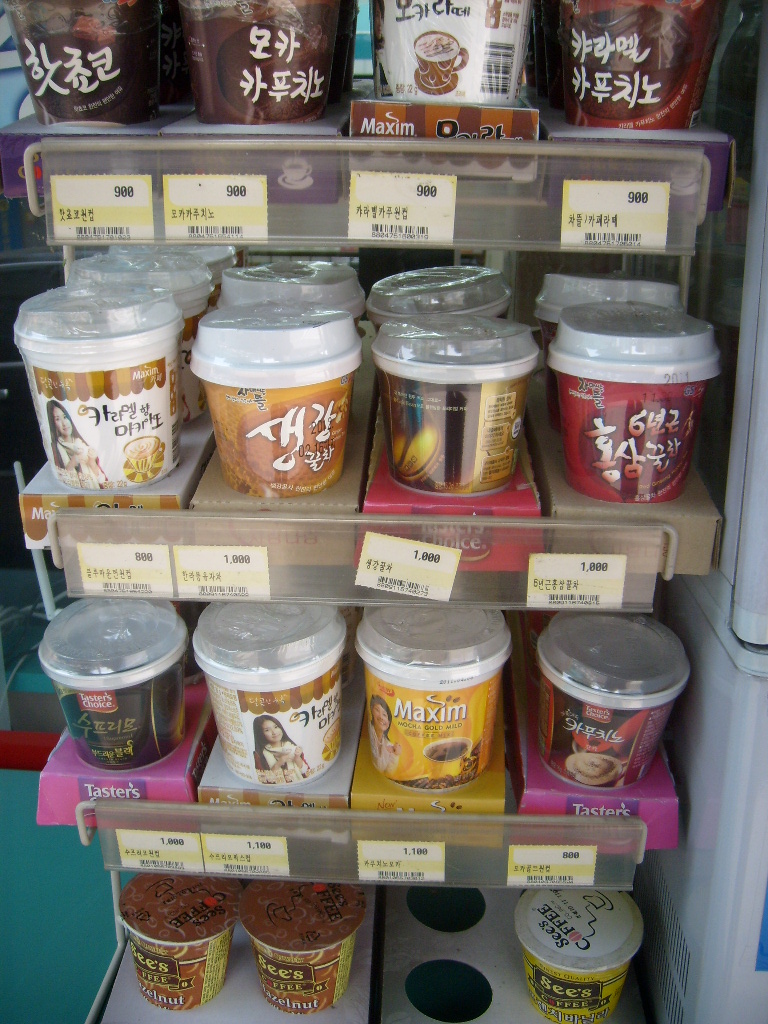
Instant coffee in plastic cups
Cafe coffee is much better though I have never really had a cup that ‘kicks.’ If I find a coffee insipid I’ll generally add sugar and if I know it’s going to be such I’ll order a fancified one, with milk or laced with some kind of syrup supplement – hazelnut, vanilla or caramel and usually topped in cream which is decorated with a pretty pattern. It’s all a facade to detract you from the fact it’s pretty coffee-less but having a sweet tooth I find these types of drink, basically hot milkshakes, closer to sweets (desserts) than actual coffee.
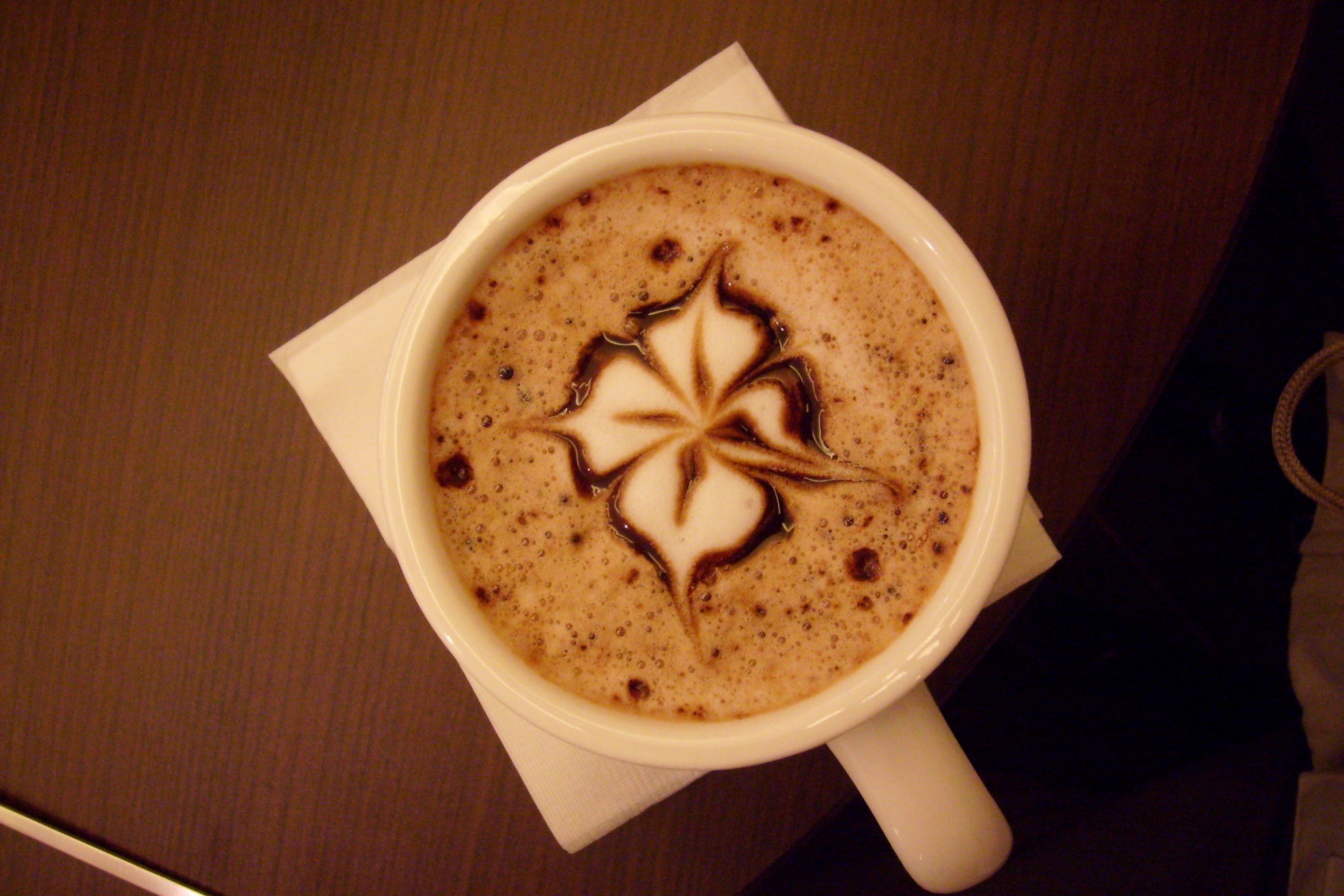
Minimal coffee - maximum pretty
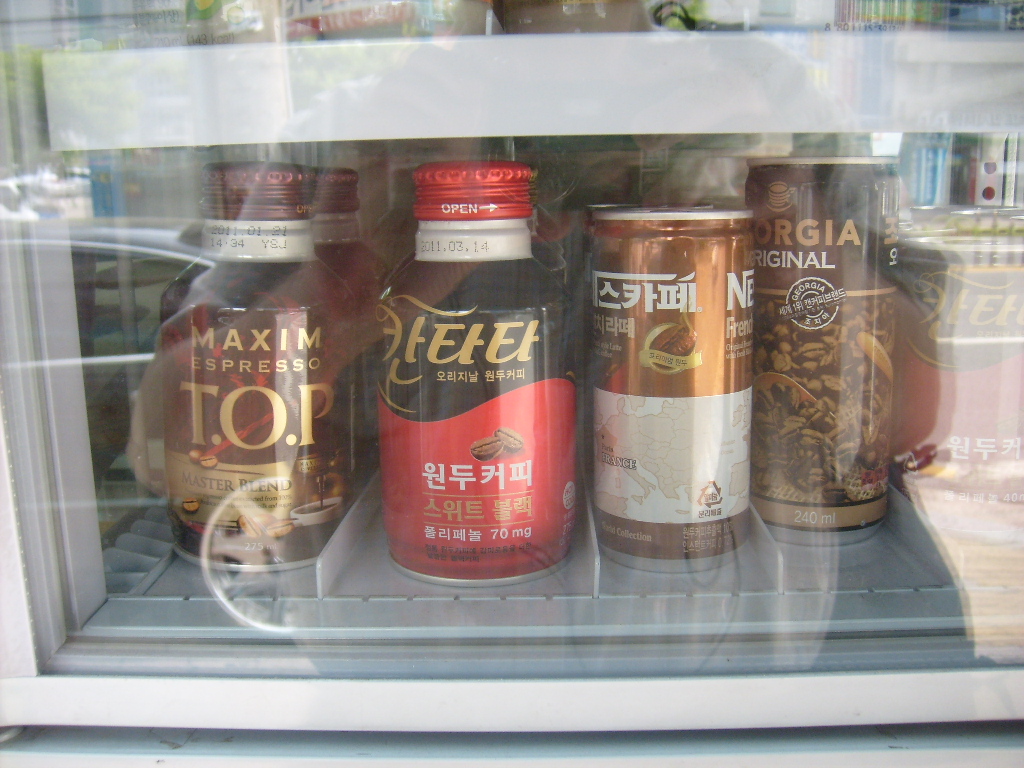
Coffee at its worst!.
If you want a partially decent coffee in Korea you have to buy whole beans, avoiding ones drenched in essences, and grind them yourself. Even then there is something missing but it’s minimal enough to fade within a few months taking you one step closer to enjoying chemo-concoctions.
This work is licenced under a Creative Commons Licence.


 Elwood 5566
leave a comment