The Ebente-Tang (이벤트 탕)

The 'special event' pool?
This evening, I wallow for a while in the ‘special event’ pool, amusingly, in Konglish, called the ‘ebente-tang’ (이벤트 탕). Next to the pool is a sign announcing the ‘special event’ of the day and advertising forthcoming ‘attractions.’ Though you won’t see anything as special as synchronized swimming or a killer whale display, you will be treated by a variety of subtle scents, frequently changed, that float gently on the rising steam or at times bask in vibrantly coloured water, purple and green being the most common. In some establishments, lighting in the water adds a retro appeal, probably lost on most Koreans but for westerners over a certain age, reminiscent of 70’s larva lamps. In other places, the ‘special event’ pool might be a large jacuzzi that froths into life intermittently.
Yesterday’s olfactory treat was lavender, today, its pine needle aroma which must have been recently added as the scent is quite heady though not in the least overpowering. Pine is probably one of the most common scents in bathhouses and very reminiscent of Korea. The smell is quite natural and shouldn’t be associated with the overstated, chemical guff of propellant toilet and room fresheners all designed to neutralize unpleasant smells and bludgeon your nasal passages in the process. Tomorrow’s scent will be jasmine, I can’t wait!
Hanja 'Dictionary' (漢字) PDF

Hanja
Even after years of studying Hanja, I find my skills random and inconsistent. When I first started studying Korean and Hanja, 10 years ago, you had to buy ‘Proofing Tools’ in order to write in various languages and accessing anything on the Korean language or Hanja was difficult. Indeed, even five years ago the information for example, on Korean food or any historical period other than the Korean War, was limited. On my first trip to Korea in 2000, not that long ago, the biggest book shop in the UK, Foyles, only stocked 2 basic language books and a pretty crappy dictionary. A year later I bought a dictionary online and my choice was very limited. Much has changed today.
I started compiling Hanja characters I’d learned and still do today partly as you can’t always rely on IME interfaces and with numerous compatibility problems something can always go wrong. Currently, for example, I have no IME pad, it just doesn’t activate and I see on various forums this seems to be a widespread problem. Neither does ‘Help’ work on my Language Bar. Often I have had difficulty in finding characters and have imported them from else where. So I have learned not to rely comprehensively on programs and packages as they are so apt to mutate or disappear.
So, I have included here PDF and ‘Word’ copies of my working Hanja dictionary which currently has 602 characters. Of course, I can’t guarantee it is 100 % accurate,but it may be useful to others as you can tailor the ‘Word’ copies to your own needs. You will note there are two ‘Word’ copies; on my pc I use the one with an additional side column in which are various notes. However, if you want a more user-friendly A4 size, the version with ‘no sidebar.’ is ready to go.
HANJA DICTIONARY PDF AUGUST 2010
HANJA DICTIONARY AUGUST 2010. (side-bar)
HANJA DICTIONARY AUGUST 2010. (no side-bar)

© Nick Elwood 2010. This work is licenced under a Creative Commons Licence.
Westerners Who Think They're Korean
Okay, Sunday morning at 8 am and I’m off for a quick splash at a bathhouse. In the distance I spot a western woman who is perhaps 35. We are the only two on the pavement and despite passing almost shoulder to shoulder, starring straight ahead, she ignores me. All it requires is a marginal turning of her head, a raising of her eyes for us to make eye contact but she clearly wants to blank me. This happens several times a week with different westerners, indeed it happened this afternoon. Once again, we passed close to each other but as she neared me she began to focus intensely on the fizzy drink or coffee plugged into her face via a straw.
Why is it that so many westerners behave in this manner? I am not homesick for my own kind but as the only western teacher in my school, it is sometimes a little luxury to talk in a manner I might do at home and it is even more of a luxury to mutually exchange humour, sarcasm, irony and all those facets of conversation so culturally specific. Perhaps I am being a snob, but is the only way to get a courteous acknowledgment or a simple nod by sporting a goatee, wearing baggy cargo cut-offs and looking like I’ve just returned from a backpacking trip around Thailand? I am familiar with perhaps 10 westerners in the vicinity in which I live and yet few will speak or say hello and couples and groups are even worse.
Now you’re probably thinking, well why don’t you say hello or be friendly? The problem is it is strange to initiate a greeting in the absence of eye contact especially as it suggests the other person doesn’t want to acknowledge you. I’m tempted to think such behaviour is symptomatic of those with insecurities; that to acknowledge another westerner is to appear novice and new and so at all times one must walk through their presence without seeing them. Of course, they freaking know you’re there, they saw you coming a mile off but to acknowledge you is uncool as it suggests being a beginner at Korean life. Unfortunately, when you’ve been exposed to such blanking for a long period, you begin to expect it and so when confronted with someone who I know is going to blank me, I fix my eyes on their face, and look directly at them, craning my head around as they pass, until I see the nape of their neck. I’m sure they’re quite nice people but come on! You’re not fucking Korean. You probably can’t string a sentence together in Korean, or read a simple text, you probably do most of your eating in the fast food joints and you’re probably not a teacher by vocation. Hey, we have a lot in common! I don’t need mates or boozing buddies or even an extensive dialogue, simply some eye contact and a smile.
An Interlude of Insects

A memi
The memi; every summer there’s one hiding near whichever window is open. Of course, it could be a cricket type thing. I always forget which one sings first in the year and which last. Koreans never seem to know either and if I ask I’m even more confused. I think I generally fathom it out by October, by the time they’re all dead, but when spring comes back, I’ve forgotten. ‘Listening to the Locust,’ well I like the alliteration but locusts are too much like cockroaches and ‘Listening to the Gweedorami,’ too off track. Last year I remember hearing a memi almost at the end of Autumn. I came over all nostalgic as it must have been the last memi of the year – (but maybe it was a cricket thing!) It’s solitary chirping was quite pathetic as there were no other memi chirping back. I know they’re ugly but what a bum way to go! Do they hibernate? A memi is a cicada but I never know how to pronounce the word and of course, we don’t have them in Britain, so they’re a little special.
I saw my first cockroach of the year last week. It was freaking big. It was late afternoon and with the kitchen window open, the warm afternoon temperature, which obviously coaxed it from its hidey-hole, had dropped and stranded it, almost frozen, on the wall. I didn’t look at it too long as I was expecting it to scuttle away but I saw it long enough to notice that despite its length, about 3 cm, it looked quite gaunt. I rapidly picked up a floor brush and bashed it on the wall but the bristles hit it and it fell to the floor where it lay on its back dazed. Between the fridge and wall, this horrid piece of God’s creative genius, was almost safe, it only need drag itself a few centimeters to be under the fridge, but the fall and cold were taking their effect and I had just enough time to grab my spray can – unused since last year. I pointed the nozzle between the space by the fridge. There it was, with those revolting antennae bibbling and bobbling, trying to hide behind the electric cable. I’ve noticed the spray works excellent on flies and mosquitoes. The mosquitoes drop almost instantly, dead after a few twitches, while those big fat flies which Koreans so aptly call ‘Shit Flies,’ fly around for a minute before nosediving into the floor where they suddenly go all spastic-spasm and then stop – dead! Sometimes they’ll lie still for several seconds and then buzz crazily back into life, usually whirling round on the floor like they’ve been hit by the most enormous dose of amphetamine. Then, dead, they stop for good. But the cockroaches, you can spray them and they simply run away. Even neat bleach doesn’t seem to affect them. I don’t think the spray really works unless you spray so much on them they drown. If it wasn’t for the fact the spray kills other insects I might think it simple water. So, cornered and behind the power cable, I spray the thing so hard it’s blown onto its back where it sticks to the wall, weirdly cruciform. I didn’t stop spraying until I knew it couldn’t escape. I left it down there for a day, until it had dried and fallen from its sticking place, then I swept it out, chucked it in the sick, and washed it away. Even though it didn’t touch any of the stainless steel, I tipped a whole kettle of boiling water down the sink hole to purge its passage.

Kill 'em! (click-pic for company site)
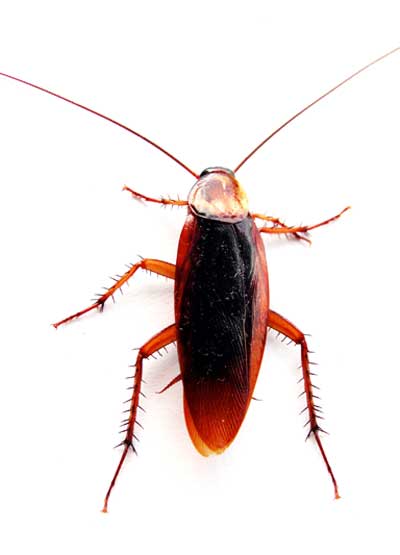
In class, kids tell me never to splat them as if it’s a female it can deposit eggs and I know they carry an egg sack, even that sounds revolting, an ootheca. They also tell me they can crawl back up sinks and climb out of toilets and that microwaving them is the best method of disposal. Would you want to heat your toasty in the microwave after baking a roach in it? I’ve now strategically placed roach (Combat) stations all around my flat. I only saw about 8 roaches last year and know they were coming under my front door, from outside.What fucking planet was God on when he designed a bloody cockroach? That’s an animal absent from ‘All things Bright and Beautiful!’
© 林東哲 2011 Creative Commons Licence.
FURTHER REFERENCES
It’s all in the Touch – Skinship. (스킨십)

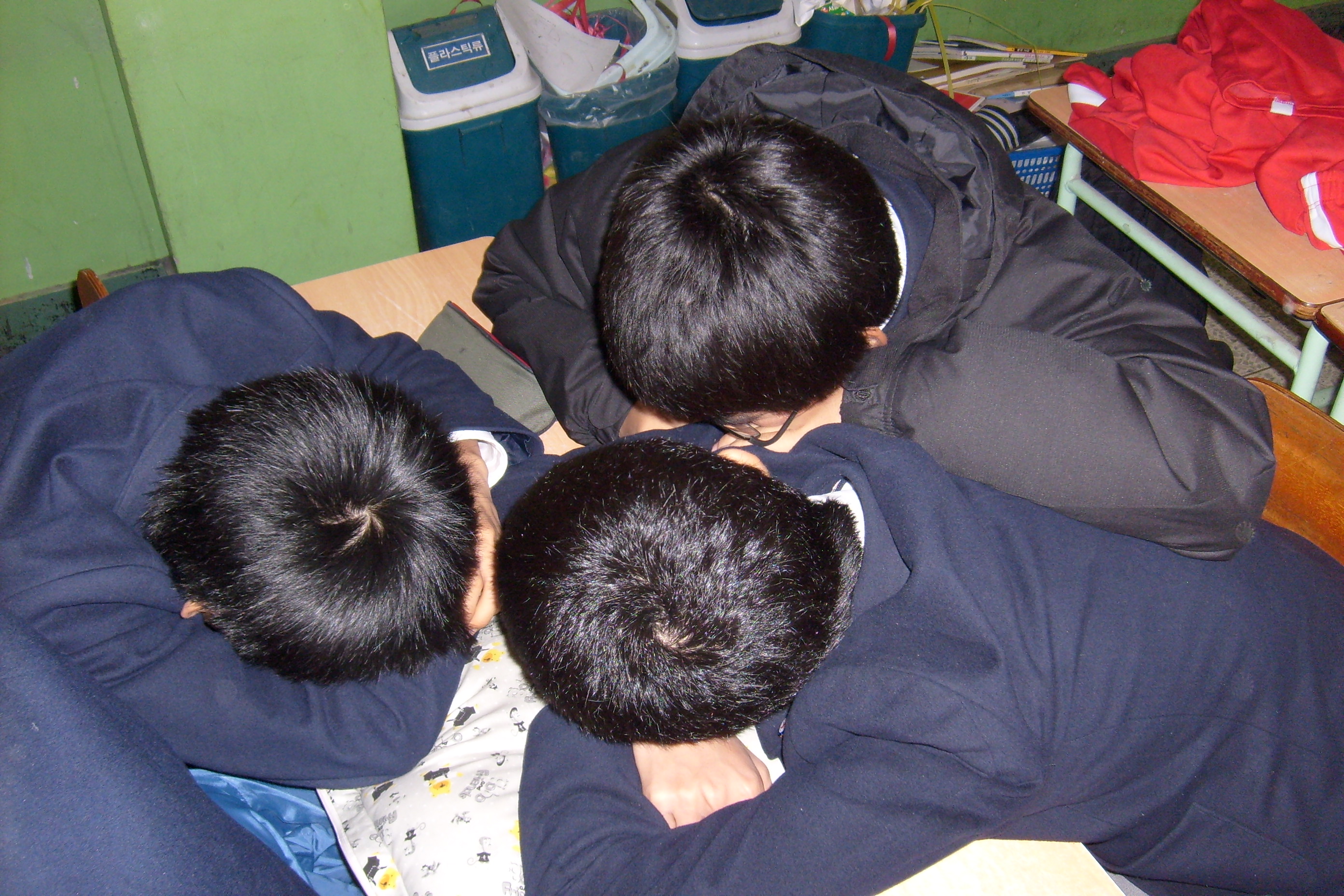
This week, I was invited to the apartment of a student’s father who, after a soju session, happened to find me alone, eating dinner in a small restaurant. I’d been both training and to the bathhouse and at 10.10pm, after an intense day, I didn’t really want to party. Unlike many in a similar state of being a little tipsy, he refrained from coaxing me into drinking and so, feeling in control, I agreed to accompany him to his apartment. Needles to say, my dinner was paid for. Outside, on the street, he led me by the hand and throughout the hour or so we sat on the floor in his apartment, surrounded by his family, he kept giving me ‘high fives’ after which he’d hold my hand, interlocking his fingers around mine or squeezing my palm with both his hands and every so often, in a slightly inebriated fashion, he’d say ‘Nick, I love you,’ or ‘Nick, you are my friend.’
A communal pillow
I can imagine how intensely invasive such situations can be for many western men. From the age 18 to 27, I lived in West Germany and in my free time I trained with friends in a taekwondo school. Although most of the students were German, a fair few were Turkish and whenever they shook your hand, which as is the custom in Germany, was upon every meeting, they’d shake it and continue to hold it. It seemed they held it for minutes and as each second passed, I could feel my body tensing. Worse however, was when they began caressing it between their hands until with temperature rising, you could feel your palm becoming horribly clammy. Today, such innocent intimacy doesn’t bother me and I can as easily initiate it as be the recipient; but, if I think back to my first experiences of such behaviour, I can relive the horror. Without any doubt, it was invasive, almost like going in your zipper, but of course, you couldn’t pull your hand away, that would have been quite rude. And despite the fact my friends and I were only 18 or 19, that we’d never been to university and were soldiers, we had enough experience to know the discomfort stemmed from a simple clash of cultures. It just had to be endured. By the time I returned to England some years later, I wasn’t shocked when a Kenyan friend held my hand in Richmond, London, on a busy Saturday afternoon.
Skinship
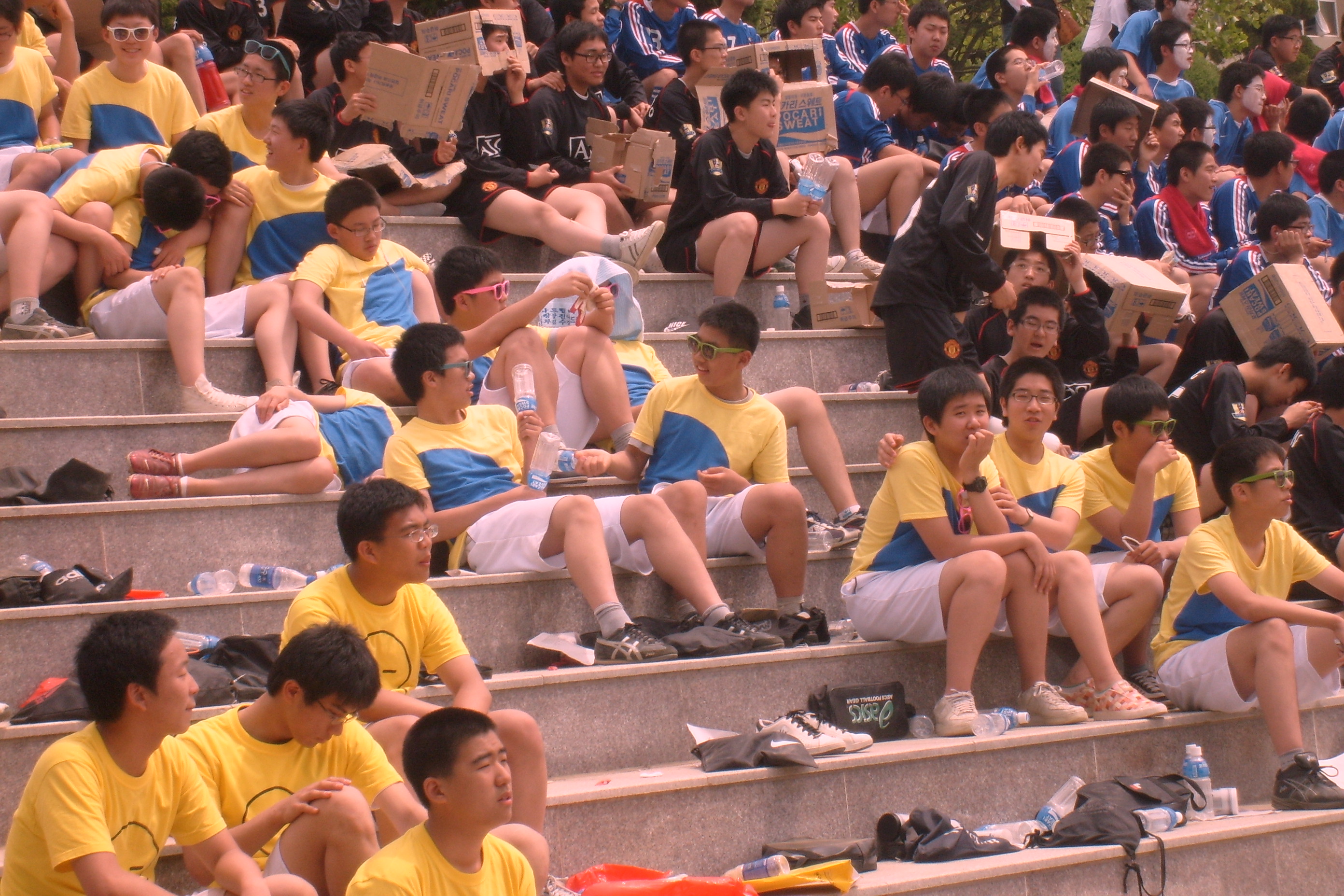
Within a Korean context, my new friend, Jae-seong'(재성), is behaving quiet naturally and his intimacy should not for one moment be construed as sexually motivated. In a male to male setting, Koreans are much quicker to initiate ‘skinship,’ than are British or North Americans and when initiated it is quickly upgraded to a level we would construe as ‘almost sexual,’ ‘certainly suggestive,’ and ‘definitely alarming.’ Men and boys sharing umbrellas, arms draped over each other shoulders, sometimes holding hands, that’s the sort of stuff homos do! I googled ‘skinship’ prior to writing this entry and the fifth reference on the very first site, Urban Dictionary, began: ‘disturbingly intimate skin-to-skin relationship between adolescent boys in Japan.’ This value judgment itself struck me as disturbing. However, more judgments were to follow:
(a new English teacher in Japan working in a junior high school) ”Man, I went into one of my classes today, and this one boy was sitting on the lap of another one right there and he had his one hand in his half-buttoned down shirt feeling up the other boys chest, and with the other hand he was playing with the other boys hair. Both of them seemed fine with it, and nobody else seemed to care at all. And I knew both of the kids have girlfriends because I talk to them after class. It was so weird…”
(a veteran English teacher) ”It’s called ‘skinship.’ I don’t know why, but they all love that shit over here.”
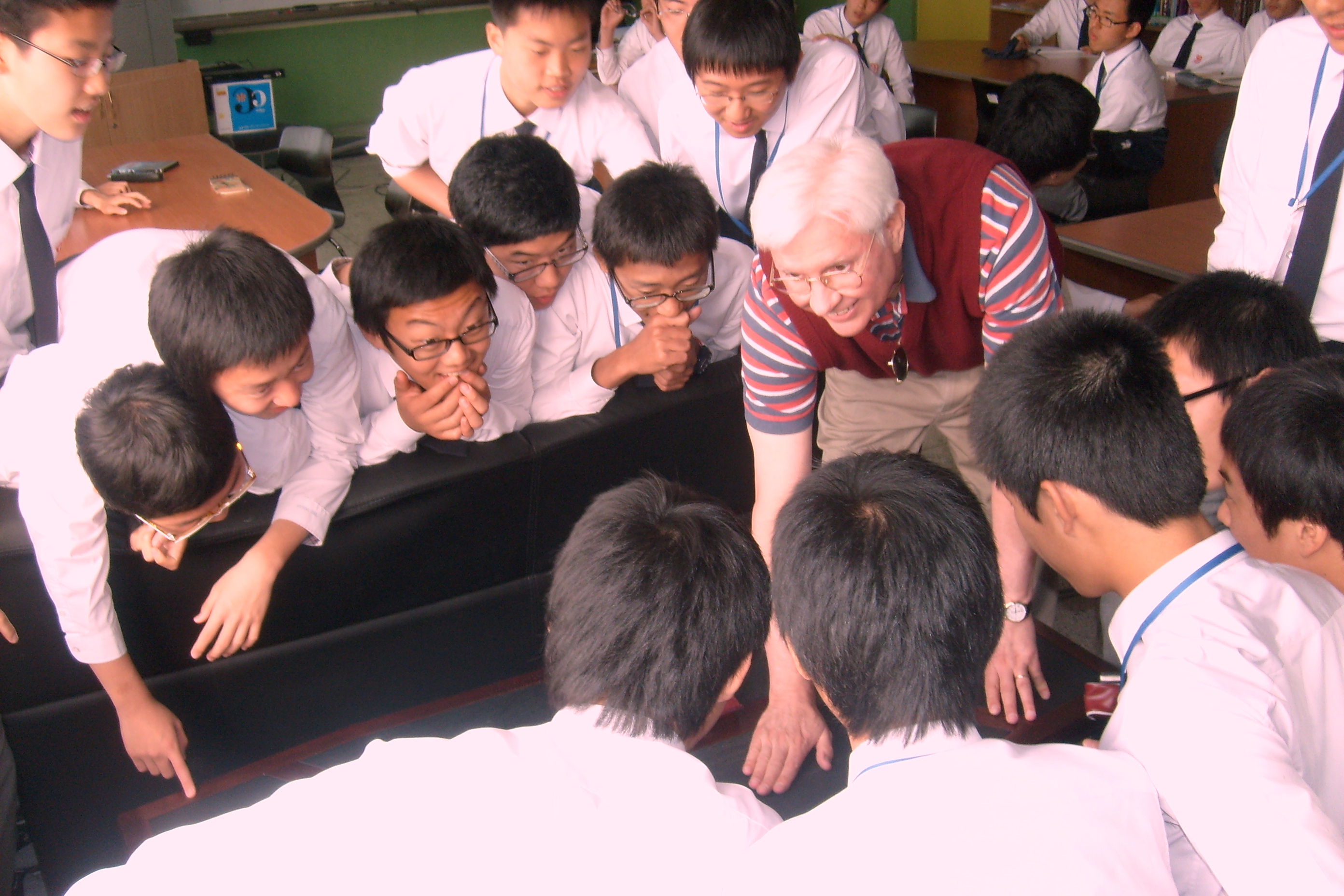
I am tempted to dismiss such comments as I know some people can be blind to travel, that travel doesn’t necessarily broaden the mind. I met a very pleasant fellow countryman a few weeks ago. We were roughly the same age, both ex army, having in fact served at the same time and in the same area, both professional school teachers and with a lot in common. He had only been in Korea a few weeks so I pass no judgment on him, but when I asked if he’d like to go to the movies, he rapidly declined assuming Koreans would think two men watching a film together, gay! I have to ask myself whether I’m weird to find the intimacy of skinship endearing and should the hostility and masculine bravado I am accustomed with back home, be preferable? That girls can be intimate with each other without being labeled ‘lesbian’, while for boys the only opportunity for physical contact is generally through a contact sport, in my opinion epitomizes the lives of insects, where every other insect, even of ones own species, is a potential threat.
‘hierachical collectivism’
‘Skinship,’ is both a Japanese and Korean concept, derived originally from the relationship between mother and baby where physical contact is an important bonding process. The term is used to describe general intimate physical contact, as between parents and children, as well as more a more sexual expression involving petting, especially between teenagers. The Korean term, an example of Konglish, appears to differ in practice from Japanese ‘skinship’ as it is practiced between men, and especially teenage boys. It involves a range of common and not so common practices including: draping arms over each other, sharing umbrellas, sitting in each other’s laps, massaging, stroking, toying with each other’s hair, holding hands, playing with fingers, resting head on another’s lap or thigh, playing with ears, etc, etc. It can also be used to describe bonding with someone through sports or games and which are often common practices among business men.
In the west, I have always found that even cursory physical contact between people, for example, touching of an arm or shoulder, signifies a deeper level of relationship. I can remember touching the arms of parents on parents evening in schools 10 years ago, parents whom I only met once, yet seemed to have an empathy with, which resulted in the fleeting touching of a hand or arm. And I have noted in the past, that a short cut to bonding is through physical touch but its initiation has to be mutual and stress free for it to be successful. Of course, physical contact and its importance in bonding, form the basis of courses designed to promote workplace relationships – those courses where a partner has to fall backwards and you catch them or some such activity.
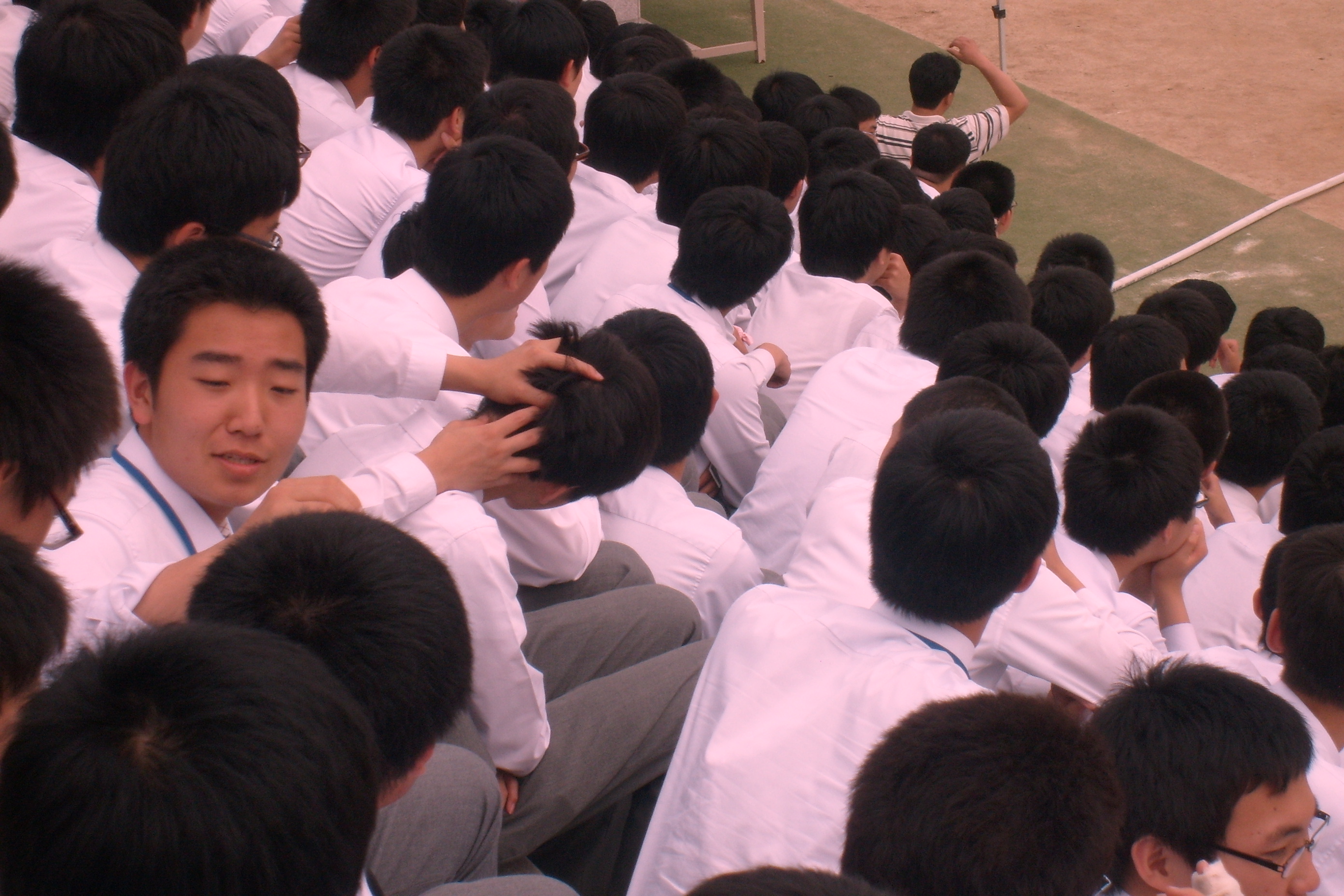
Normal behaviour
However, digressing momentarily, forced intimacy can occasionally have a negative effect. I recall, once going to a friend’s birthday party. She was English but practiced an Indian religion and along with twenty or so other friends, sat in a large and busy North London restaurant, and ‘forced’ to sit in designated seats next to people you didn’t know, we had to close our eyes, turn to the person next to us and then simultaneously, begin feeling the contours of each other’s face. The cringingly stressful procedure was accompanied by new age whale music. Oh, my God! It was horrible! Not because of the intimacy but because you knew the rest of the restaurant were watching you in disbelief. Then we had to turn to the other partner and massage their shoulders. All I could think was, Karl Marx’s grave is just down the road and I’ve never seen it! There’s a time and place for physical intimacy, for skinship but not in a busy restaurant on a Friday night to the serenade of migrating humpbacks.
So, after a coffee, some strawberries, some holding of hands and intertwining of fingers, I actually feel closer to Kim Jae-seong than several hours earlier. Already, he’s inviting me to the beach at Pusan and even suggest a date. The chances are it will materialise. And then he progresses to ask me if Id take his son to the UK when I go on my next holiday. I agree and then to make light of it, as I know it’s probably the soju talking, I joke about how he’d fit in my bag. And meanwhile Ben, his son, is eagerly taking a photograph of me and muttering ‘ that his friends won’t believe his teacher has been to his house.’
I have probably taught more students back in the UK than in Korea but I have never sat in a parent’s house, I have never been invited into a parent’s house, I have never socialized with a parent, I have never been invited on a trip with them, I have never had a student photograph me because they needed proof a teacher had been in their house, I have never had a student hold my hand or do anymore than fleetingly touch me, and the same goes for a parent, and neither parent or student has really ever wanted to associate with me. And all in instance I feel both a yearning to be back home with my friends and family and a sense that this is home. Certainly, it is where I’m valued.
© 林東哲 2010 Creative Commons Licence.
A Little 'Outing'

Not suitable for Pumpkin people
I don’t want to turn this blog into a critique and rant about that shitty country from which I come, namely the UK. I have already expended considerable resources writing the backbone of two books focusing on my experiences of both British education and British culture. When faced with new experiences, especially ones culturally orientated, it is difficult, if not impossible, not to relate them to the culture with which you are most familiar. I’m not particularly bothered about accusations of being a ‘kimcheerleader,’ I have lived long enough and had enough experiences to have confidence in my opinions though I’m may not always be right. I am unashamedly a Koreaphile and reaching this acknowledgment has grown out of my relationship with Korea. Unlike a patriotic stance, which is conferred simply by being born in a country, my allegiance may change and won’t remain static and nonjudgmental. There is nothing particularly wrong with patriotism until it suggests that those who are not are inferior, mistaken, or traitorous. I prefer to give my loyalty to that I find most rewarding, especially in terms of quality of life. Why else would I elect to work thousands of miles from home for a salary inferior to that I could earn in Britain as a high school teacher. Despite all the flaws with Korean society, and there are many, I have much greater respect and admiration for this small country than I do for washed out Britain. We might have a monarchy and an intriguing past, but Britain is a dirty, insular country whose once proud, if not questionable history and culture, is currently being swept aside in a politically correct invasion that condemns anything British while humbling before everything alien. The country for which I served fourteen years in the military forces, is now ruled by the values of the lowest strata of society and if you take any pride in something British or English you are a racist. Celebrate Christmas and you are suspect but come Hanukkah or Diwali and you can light your candles with pride and everyone has to be reverent. Every cultural import into Britain has been canonised while the native culture is systematically demonized.
Recently, I was reading a post on Chris Backe’s AKA, Chris in Korea, in which readers were asked to respond to a photograph. ‘Are you racist?’ Chris asks. The post was interesting and sparked some lively commentary but what amused me most was that before I had even read the article, I had judged the photo, ‘typically British!’ Indeed, by British standards, and talking as an ex-squaddie, the photo was somewhat tame; nice pair of shoes, looks like his pants (not jeans), are pressed and a clean white shirt! The chances, are if I met this guy when sober, assuming of course, he is pissed, he’d probably be a decent chap. Hang around Daegu even at past midnight and kids from school, in uniform, are still to be seen going home from the hagwons, study rooms and even high schools. In my home town, Crappy Colchester, many adults avoid the town and that’s early evening! Pissed up people in the gutter, predominantly the same age as Korean high school students, puking and fighting on the streets, are now a common site in most British towns and a point of social and political concern. The ‘pissed up’ includes, pissing in public, fighting , vandalism and general anti-social behaviour all of which are menacing. Most unpleasant is a tension which pervades town centers and many other places, throughout most of the day, though specifically at night and which is the result of uniquely British form of aggression.

Is Korea making you racist? (from AKA Chris in Korea)
My point? There is an ugly side to Britain, especially in terms of gender where men, especially working class men, and despite all attempts to render a facade of equality, Britain is still class divided, have to appear masculine, ie: aggressive, sexually rampant, staunchly heterosexual and prolific boozers. And now, many women behave in the same Brutish way. It is difficult not to compare my Korean experiences with those internalized through my socialization in, and experience of, British culture. No doubt there are plenty of horrid Korean men but I have experienced far more nasty Brits as a bouncer in a McDonald’s, in a town of 155.000 people, than on the streets of Daegu with a population somewhere around 3 million. Even on holiday in a quaint little German ‘dorf,’ my spaghetti ice cream was interrupted by the lurching appearance of a distant Brit ‘lad’ and two accompanying trollopes, arms wrapped about their breasts, flimsily dressed and tottering on high heels. Even before they were close enough to aurally confirm our suspicions, their gait and their body language unequivocally announced, Brits were in town!
I regularly find Korean men endearing and compared to many British men, they are both camp and effeminate. I do not intend this as a slur but as a compliment as I wish British men could temper their particular obnoxious form of masculinity. Personally, I find something uniquely British in photographs of individuals such as Wayne Rooney, and Vinny Jones who, even when not snarling an expletive, look like they just staggered out of prehistory. One reason I can’t abide watching movies starring Vinny Jones is his nastiness is too accurate, too realistic a facet more likely to do with his character than his acting ability. Yes, there are countless exceptions and Beckham is much nicer but the problem football is having with homophobia, and the fact there are so few, if any, famous ‘out’ football players is a reflection of the games dominating masculine attitudes. Of course, I realise Korea is far from accepting of homosexuality, but at least Korean men aren’t so obsessively homophobic as to aspire to a model of masculinity the purpose of which, as in the west, is to both to deflect any suggestions of homosexuality in the ‘owner’ and to suggest it by contrast, in others. This might not be the intention but it is certainly how it operates. In general, Koreans might have a dislike for homosexuality but that’s where it ends and their dislike isn’t turned into an obsession which subsequently becomes a mandate and ubiquitous template for male behaviour.

definitely Brit

A common expression of Brit masculinity
When you work in a British high school it is highly apparent that British boys are under enormous pressure to appear both masculine and anti-intellectual. I have taught many British boys who are vile humans and who you could tell were vile before you even attempted teaching them. Yet, I have still to meet a Korean teenager who I can predict is going to be a violent criminal. And when it comes to girls, Brits seem experts at producing promiscuous trollopes obsessed only with make up, tarty fashions and sex. Our rates of teen alcohol consumption, sexually transmitted infections and teenage pregnancy, all some of the highest in Europe, are testament to my vitriolic comments. Snarled at, threatened, abused, assaulted or jeered at , I have no experience of in Korea, but ask British teachers about their experiences, especially non-managers in non-selective schools, and it quickly becomes apparent such behaviour is general rather than exceptional.

And that's just the women!
Having thus painted a fairly lengthy account of the Britain with which I am acquainted, I naturally find Korean ‘masculinity’ intensely refreshing and in many respects something to both celebrate and take hope in.
© 林東哲 2010 Creative Commons Licence.
Ten Tips for Taking the Plunge
So you want to go to the bathhouse but have reservations.? Read on…

Once you’re naked and the same as everyone else, the apprehensions that originally plagued you gradually, though not completely, begin to lift. I wore my military dog tags and a watch on my first occasion and, for the next few months, continued to do so on subsequent visits. These became invested with a new sense of worth as for some ridiculous reason, I didn’t feel totally naked wearing them. As psychological props, there came a stage several months or maybe even weeks later, when they were no longer necessary and I clearly remember deciding to leave them in the changing room and finally go completely naked. Initially, I missed them because I used to fiddle with them or glance at my watch obsessively, when I felt uncomfortable.

You might want to avoid that white bucket seat on your first visit!
Ironically, my first visit to a bathhouse was on Independence Day, March 1st 2001 (삼일). I traveled with my best friend, my boss, whom I now work for, to visit her family in Changwon (창원). The bathhouse visit had been unplanned and presented to me as a choice, the other being to stay at home and play games with the women. I decided, for the sake of my image, to accompany the 5 men, all related and one of whom my friend’s husband. They were all sympathetic to my novice status and were especially thoughtful and empathetic. Despite my trepidations and the fact I had been wanting to have this experience, my diary comments, were positive and my only apparent fears were bending down to pick up the soap, a little unease at being the only adult who wasn’t circumcised and sitting in that ‘undignified’ position on the little plastic stool. One of my friends even scrubbed my back which though strange was endearing and made me feel both part of our group and bathhouse community. What surprised me most however, was the depth of intimacy between fathers and their sons, an intimacy which went far beyond scrubbing backs. It seemed there were no taboos.

No gigantic towels to hide under
Under the shower next to me, a boy of 13 or 14, lay on the floor while his father vigorously scrubbed him. This included holding aside the boy’s genitals while he scrubbed his groin and, when the boy rolled over onto his stomach, he scrubbed his buttocks. When this was finished, they traded places and the procedure was reversed. I have since seen this performed countless times, in many other bathhouses and in all possible variations. Though no longer surprised, I’m always aware of the cultural differences that in the West deems this intimacy, not just sexual, but a perversion. Yet in Korea, I find such ‘rituals’ bonding, even cute. When leaving the bathhouse, one of my friends proudly informed me, I was now ‘a new man.’ I don’t know whether he meant physically or mentally and while there was no doubt I felt impeccably clean, most notable was a sense that I had overcome a deep-seated fear.
One trip to a bathhouse however, wasn’t enough to defeat my inhibitions or to satisfy my curiosity about this cultural phenomenon. A few weeks later, another friend took me sightseeing in the mountains which culminated in a visit to some form of bathhouse. Of course, I had no idea of this at the time and assumed that we were visiting a mountain foot clinic, as my friend, Hyo-son, was a foot doctor. I imagined I was going to have a foot massage and then perhaps a meal at the small restaurant situated on one side of the building. After being introduced to the establishment’s hosts and a teenager, I was ushered to a changing room and then, via a series of isolated English words and hand gestures, instructed to undress. So, I began stripping off, assuming my friend, Hyo-son, was going to join me. Instead, the three of them stood chatting and ignored me until I was naked. Then, like a lamb being led to the slaughter, Hyo-son coaxed me by the hand into a shower room. More hand signals follow and I take a shower while they stand in the doorway and continue their conversation. Meanwhile, confused, I begin muttering to myself, a habit which manifests when I am in intense, embarrassing situations. Next, I am led through a small bathhouse in which there are perhaps 5 men. In the far corner of the room is what I now know to be a mud sauna (황토방 ). Looking like a gigantic wasps nest, this is basically a small room built out of yellow mud which when dried, houses a dry sauna. I was instructed to enter the sauna through a flap on the floor – a flap similar to the ones used to allow the passage of a cat into and out of its house, and not much bigger. Any remaining pride was dispelled as I got onto all fours and proceeded, pig-like into the sauna. Beyond humiliation, I lay on the sauna matting laughing aloud in total disbelief at events. Sometime later, the teenager was sent to summon me and I re-emerged, on all fours. I was directed for another shower and then, in the bathhouse section, and with my little entourage all present, I was instructed to lay in an enormous stone bath which was already being filled with what looked like dark green slime. The bath was hot, but every time I tried to dangle my arms over the sides of the bath, or move myself out of the water, the boy pushed me back. Then Hyo-son began massaging my body with an enormous tea bag which smeared a herbal smelling paste over me . I was thankful when the water rose to a sufficient depth to cover me completely. Even to this day, I don’t know whether this was a mud or herb bath or perhaps even both but several showers were required to remove the slimy residue from my body. After a period of relaxation in the small bathhouse, I was finally able to dress and join the group in the restaurant.

And permanently accompanied by a symphony of water
I can empathize with anyone facing apprehensions about taking the plunge into this strange world. Ironically, even after such experiences, I remain apprehensive about swimming pools and changing rooms in the UK where there is always a sense that either something sexual or aggressive is about to happen. What shades and informs such experiences is the culture from which it stems. Back home, the body is dominated by a sort of fascism, predominantly external but also internally generated, which classifies and critiques bodies according various categories. Sometimes I hear myself commenting on individuals and not necessarily in a negative manner but negative ones I don’t like partially as one target of criticism is my own body. The most obvious category for western men of course, is dick size. On this subject, I don’t truly know what significance Koreans place on penal proportions, but I would imagine that bathhouse culture renders any pretty unimportant. There may be some variations in dimensions but you quickly learn they’re all basically the same and it’s all pointless and unfair anyway as the winners are invariably 13-year-old skinny boys whose accompanying bodies are still 10 and in which any triumph, if there is any, is temporary. When the clothes are off and we are reduced to our basic components, everything is demystified.
As an ex-gay man, I have to add that bathhouses are fairly unsexy. I’m not saying nothing ever appeals to me, on the contrary, I am very aware of attractive looking males, but what is most bizarre is that even from my first visit to a bathhouse, the experience was non sexual. Ironically, this is one of the most fascinating aspects of my bathhouse experiences, as my sense of liberation stems not just from shedding my clothes, but from shedding that most dominant and basic urge. Necessary as that urge is to the proliferation of humanity, in individual terms it is probably the most wasteful, driving us like lemmings in the selfish pursuit of satiating our own chemical impulses, consuming our time, diverting our attention and draining our energies in the process. I’m talking as a single man, in my fifties, of course, were I in a romantic situatiom, I wouldn’t be so dismissive; but I don’t think I miss the mark accusing this urge of being the most greedy in its wants and least rewarding once they have been acquired. And Oh! Isn’t it a merry-go-round; once satiated it’s only a matter of time before it rears its head again and we’re compelled onto that journey to nowhere. What an utter waste of human energy! Well, don’t ask me how, but in the Korean bathhouse those urges are extinguished. Rent apart is that conflation of nudity and sex, for me at least, so that I can enjoy nudity and the equality and liberation it brings without the sexual urge kicking in and can do so while appreciating the occasional beauty that passes my way. Cocks are really only interesting when hidden and once they are flopping about all around you, other things become of more interest – the trickling of water on old man’s skin, the contours of someones hip, the interplay of someone’s muscles, someone with a belly fatter than mine, a father bathing their baby, the sounds of water – it can be anything.

Cute!
Friends often ask me why there are no such establishments back home or what might happen if one were opened. I could write a substantial amount in response but basically, I wouldn’t enjoy bathing in a western context and certainly not in a British one. A gay bathhouse would terrify me but then I was never very good at being gay!! Besides, I’d hate being eyed up by someone like me and I quite pity all my victims back in the days when I was lecherous! My home town has a spa facility but the need to wear bathing costumes immediately seems restrictive and puerile. Several years ago, when it ran single sex naked sessions, it attracted so many gay men seeking sex, it subsequently reintroduced costumes. Recently, I’ve considered nudism in the UK as I am tempted to believe attitudes among nudists might be healthier. This consideration has grown out of an awareness that while in Korea, attending a bathhouse imposes no social judgment, in Britain it would label me either ‘gay’ or as some kind of ‘swinging nudey.’ Unfortunately, while we conflate sex with nudity, bathhouses, spas, and places of semi nudity will continue to encourage all mannerisms of sexual activity, passive and active.
Ready to take that plunge? No doubt, many will have no worries entering a bathhouse but if the experience is likely to stress you, here are some tips.
1. Keep a watch on. It’s really useful as a diversionary play thing should you feel uncomfortable.
2. Choose a quiet time for you first encounter. Early morning, eg. 5 am, though anytime before 7am on the weekend is good. Alternatively, if the establishment closes, a good time to attend is on a weekend a couple of hours before closing time.
3. Avoid public holidays, unless you’re prepared for a full house and avoid both ‘play Saturdays’ (놀토) when there are no schools, and school and university vacation periods.
4. Sometimes, fitness centers have adjacent bathhouses and jjimjilbang. If this is the case, you can use the sports facilities a few times in order to familiarise yourself with everything, before using the bathhouse.
5. On your first encounter you’ll probably head straight for the bathhouse complex blotting out everything on the way. Try to remember to pick up a towel and a wash cloth, usually located around the complex entrance. These can be used the same way as your watch, when you get stressed or ultimately, to bury your face in.
6. Remember, if you head straight for the showers which are situated at floor level, you will have to sit on a bucket sized seat. All bathhouses have regular, standing showers which provide a good vantage point to familiarise yourself with the bathhouse layout and practices and don’t necessitate sitting in an undignified position.
7. Soap, towels, toothpaste are all provided. If you drop the soap and find this embarrassing, park your arse in a corner before bending down, or with your knees together, bend with the knees and not from your waist. Alternatively, rapidly kick the soap into the drain and ignore it.
8. If you remember to take a towel in with you, you can use this to dry off, prior to leaving. On your first visit you will probably want to escape quickly and this will be prolonged if you are dripping wet. If there is an ice room, five minutes sat in this, especially in summer, will quickly dry you but this procedure has a detrimental effect on males.
9. Male and worried about willy size? Instantly add an extra centimeter by trimming surrounding hair. I once read that every forty pounds lost, assuming you are that fat to begin with, increases the appearance of the size, by one inch. One the other hand, if you’re as fat as I am, an extra few stone would supply enough lagging to provide an overhang sufficient enough to hide it completely.
10. Of course, there is nothing to prevent you wearing a swimming costume and I have known people do this. They were women so I never actually witnessed reactions. I’d imagine you would attract far more attention wearing something than going naked and besides, no matter how good-looking you are, you’d look a total twat.
Good luck. If you too have suggestions, please add them here. Thanks
© 林東哲 2010 Creative Commons Licence.
Related Articles
- Because we’re worth it. – Busan, Korea Rep. (travelpod.com)
- Seungri and Taeyang put on a naked show at a sauna? (allkpop.com)
Magnolias (목련) and 'Sudden Spring Colds' (꽃샘추위)

The glorious magnolia (목련) provides a sure sign that spring is here. This is one of my favourite flowers but unfortunately, as magnificent as it looks with large, waxy, petals, it’s has a strange, low-key, chemical scent. Early spring is typified by cool or cold mornings and evenings and increasingly warmer days but temperatures can change suddenly – a phenomenon known as (꽃샘추위). From my understanding this means ‘sudden spring colds’ or, what in English we might call ‘cold snaps’ except a cold snap can occur throughout the year. Any further insight into this term would be appreciated.
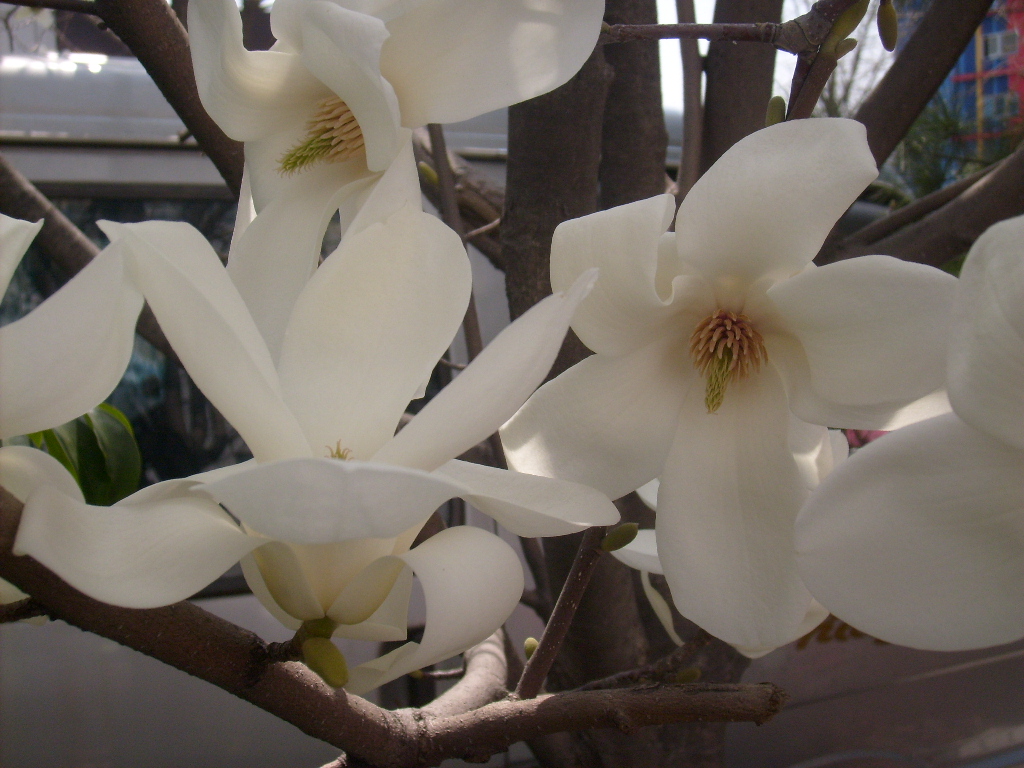
Magnolias
Cleaning them Teeth

Image via Wikipedia
For a long time, the obsessive way Koreans cleaned their teeth amused me. Several years ago I taught kids aged between 3-6 and after lunch they would line up, tooth brushes in hand, and proceed in a conga to the bathroom, to clean their teeth. It is a common practice for Koreans to depart to the bathroom and administer themselves some oral hygiene after eating lunch. Of course historically, Britain is famous for its poor dental hygiene but with a predominance of privatised dentists, we can now boast services comparable to those in the USA and with fees to match. But most Brits, even those with good teeth, myself included, usually only brush them twice a day – once in the morning and once at night. On the other hand, Koreans are quite fastidious about a thrice a day brushing and I have come to the conclusion this practice has more to do with nature of Korean food, than with keeping cavities at bay.
First, many Korean foods, kimchi being the most obvious, contain copious amounts of chili powder. This powder is nothing like the chili powder we buy in Europe. Korean chili powder, (고추 가루), isn’t really ‘powder’ at all and should be called ‘flaked chili’ or ‘coarse chili powder.’ With a tendency to adhere and an ability to resist being flushed with fluids, chili speckled teeth have never been fashionable. Those flakes grip the surfaces of the smoothest enamel and easily embed themselves between the teeth.
Kim, (김), seasoned lava, though not as prehensile, certainly looks worse. Substantial, dark green patches on the teeth can be mistaken for missing or severely rotted teeth or an advanced fungal infection.
Sesame seeds have a predilection for embedding themselves in oral recess with such success that they are impervious to assault by pencil tips, pens, paper clip ends and any other object with the exception of a toothbrush or floss.
Perhaps the worst offenders, adept at seeking out any small gap between the teeth and attaching like limpets therein, are seaweed and baby mooli tops ( 우거지). Unlike meat, which being protein based, decays rapidly in the mouth until it can eventually be sucked out, seaweed and mooli leaves offer more resistance. Their thin slimy surfaces, braced with some fibrous support, have the propensity to remain wedged between teeth for hours. Their slimy texture and ability to mold to underlying contours makes them especially impervious to sucking and probing.
A noseful of someone’s garlic breath can be off-putting but I have learnt that the only time garlic is noticeable on someone’s breath, is in the interim between arriving at the airport, and eating kimchi. The best defence against garlic breath is to eat it yourself as this masks the smell emanating from other people. When Kimpo was Seoul’s only international airport and you walked into the tiny arrivals, nothing much more than a big lobby, the stench of garlic almost knocked you over. I have never noticed garlic hanging in the air at Inchon International but maybe this is because I eat kimchi even when back home. Anyway, cleaning your teeth to remove the smell of garlic never seems to work, even when garlic is eaten in moderation. When it’s in everything and even eaten raw, brushing the teeth to dispel its odour is pointless.
A Korean diet has gradually raised my awareness of the location of various oral weak spots with more precision than disclosing tablets and when cleaning my teeth, I now focus on the places which attract sesame seeds and are likely to ensnare slivers of seaweed and mooli leaf. If I eat anything other than a sandwich for lunch, I usually clean my teeth. All the prodding with tongue and sucking of teeth is irksome and a mouthful of ensnared seeds, chili and vegetation, especially when you’re British, isn’t a good advert.
© Nick Elwood 2010 Creative Commons Licence.
Hanja (한자. 漢字)
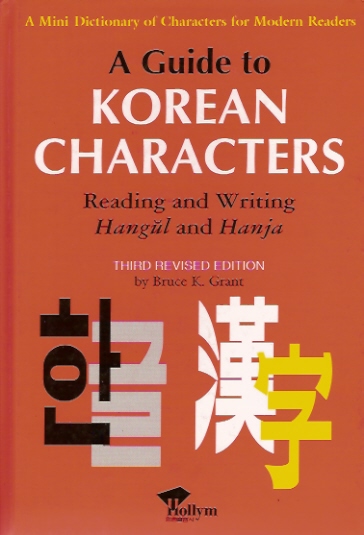
An excellent and easy to use resource.
Bruce K Grant. Published by Hollym. ISBN – 0-930878-13-2
This has been my favourite hanja resource for a number of years and to such an extent that I recently ordered a second copy. The book is organised in stroke order which means characters easily be found especially if you are familiar with the radical. Each character’s stroke order is provided plus a number of examples given highlighting the use of the character. The book lists the 1800 characters (basic 1 stroke through to 26) taught in Korean schools. In addition, there is an interesting introduction to the history of Chinese characters and an insight into the various types of characters. The author also provides a radical index and a list of the hanja characters associated with Korean family names.
The book hardback and durable, and unlike some books I have bought in Korea, the quality of both the paper and printing is excellent.
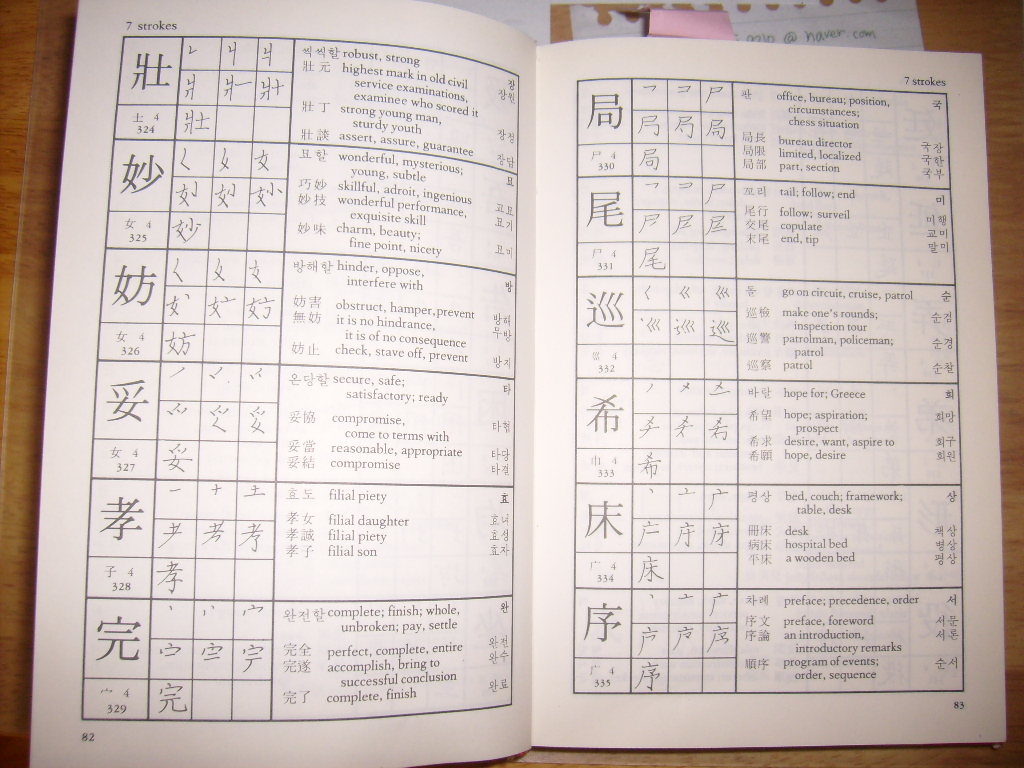
A glimpse inside the book. My photo doesn't do it justice!
I originally bought a copy in Kyobo Books, Seoul, in 2002 and last year ordered a copy from Kyobo Books, in Daegu. My original copy cost 15000W (approx £8.80.) and the most recent copy was still 15000 won, something!
Link -for a more recent review with links to Amazon
This work is licenced under a Creative Commons Licence.


 Elwood 5566
leave a comment