Home Spa World – Apsan, Daegu
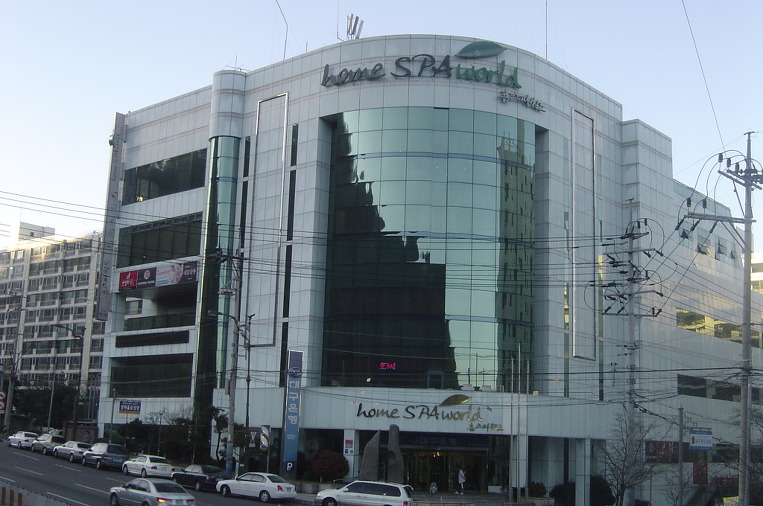
Home Spa World
Rating – Luxury
First visited on February 10th 2012. This is a large complex situated right on the edge of Apsan mountain between Dae Myeong Middle School (대명중학교) and Samdong Bridge (삼동교). It lies almost directly on the perimeter of Camp Walker. This is probably the largest bathhouse I’ve so far visited in Daegu and the length of the changing facilities and the bathhouse itself, took me 80 paces. The reception is on the ground floor along with some shops, a bank, restaurants and a Paris Baguette. The male changing facility and bathhouse is on the 3rd floor with the corresponding female facility on floor 2,
The changing facilities are very spacious and divided into numerous partitioned areas. Once you have your ticket, you use your ticket number to find your shoe locker and the key from this then opens your clothes locker. My key number was 637 and there were several more partitioned areas after mine so the changing area must accommodate a thousand people. The changing facility runs the entire length of the bathhouse and is enormous. In the center of the changing area are the entrance to, and exit from, the bathhouse.
You enter the bathhouse onto a raised plinth which at the front has steps to the floor level and to the side slopes down to the floor. Standing on the plinth, the entire complex can be viewed. Inside the bathhouse, on the right hand side are 80 sit down shower areas with 25 standing showers lining the wall. On the opposite side to the entrance, which is raised, are the saunas and on to the left, the bathing areas.
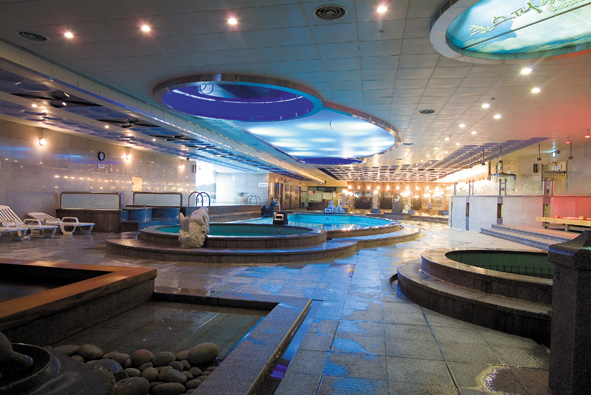
(The steps to the plinthed exit are on the right). This photo, taken from the entrance to the no-cheon and between the hinoki and 'event' pools, gives a good sense of the size of this facility. The row of lights at the far end are the stand up showers with the seated showers beyond the furthest pool.
The bathing area is pleasantly lit by diffuse lighting under dark blue paneling which mirror image the pools. Two rounds pool, one hot and one cool sit on either end of a large semi-circular pool from which one can watch television. On the far side of the entrance is a large cold pool (냉탕) which is slightly recessed and on the wall of which is a large alpine mountain panorama, illuminated from behind. On the left of the cold pool are three individual, sunken bubble baths (거품탕) which you climb down into. On the same wall, but in the opposite direction adjacent to the showers, are three saunas, one of yellow mud (황토방), a steam sauna and a yellow stone sauna (황석). Next to these, in the corner is a partially enclosed scrub down area and a urinal.
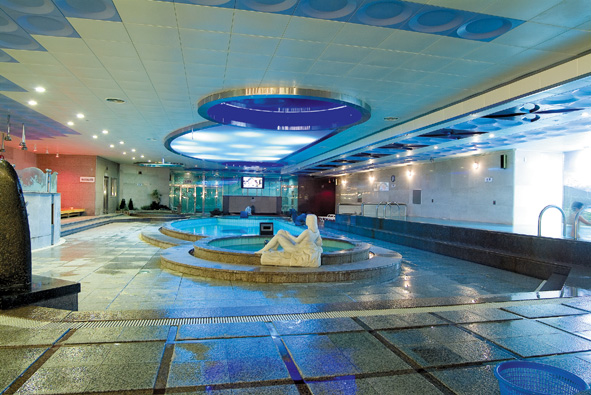
This photo is taken from the center of the room, back to the showers and facing the no-cheon where the previous photo was taken. The entrance is on the left and the cold pool on the right.
Standing on the raised entrance and looking in the opposite direction, to the left far end, are two more baths one being a large square, wooden, Japanese cypress bath (히노끼) which is situated under the television, and in the left-hand corner a round ‘event pool’ (이벤트탕). The ‘event’ pool has a large menu on the wall detailing the daily essences added to the bath, herb, schisandra (오미자), jasmine etc, and their medicinal qualities. In the far right-hand corner are three cold ‘waterfall’ showers and in the opposite corner, next to the ‘event’ pool is a pine wood, herb sauna. Directly to the left of the entrance for this is a raised sleeping area with a heated floor. Dotted here and there on the edge of pools are stone mermaids, dolphins and other such features, pouring water into the pools.
The far left of the entrance contains the entrance to an area exposed to the outside temperature and known as a no-cheon (노천). Of the indoor no-cheons I have visited, this was the most successful. The area comprises most of the width of the bathhouse area and contains a cold pool (냉탕) and a steaming, large ‘forage bath’ (목초탕). The area is pleasantly decorated, although the plants are plastic, with spouting water features and in one corner are even a pair of small male and female totem poles. In this area is also a Finnish style sauna. A couple of seats allow for relaxation and provide a view, upwards. to the edge of the mountain. Usually, for the sake of privacy, indoor no-cheon areas have slated type windows which are frosted and though they allow the breeze to enter, hence providing outside temperatures, they usually have no view. The mountain at this point is steep enough to be void of footpaths and public and though there is a large frosted panel blocking any horizontal view, one can look up and glimpse the mountain slope. The no-cheon area is pleasantly decorated, though the plants are plastic, with stone features, water spouts and there is even a pair of small, male and female totem poles (장승) guarding the area. The no-cheon area also has a Finnish-style sauna.
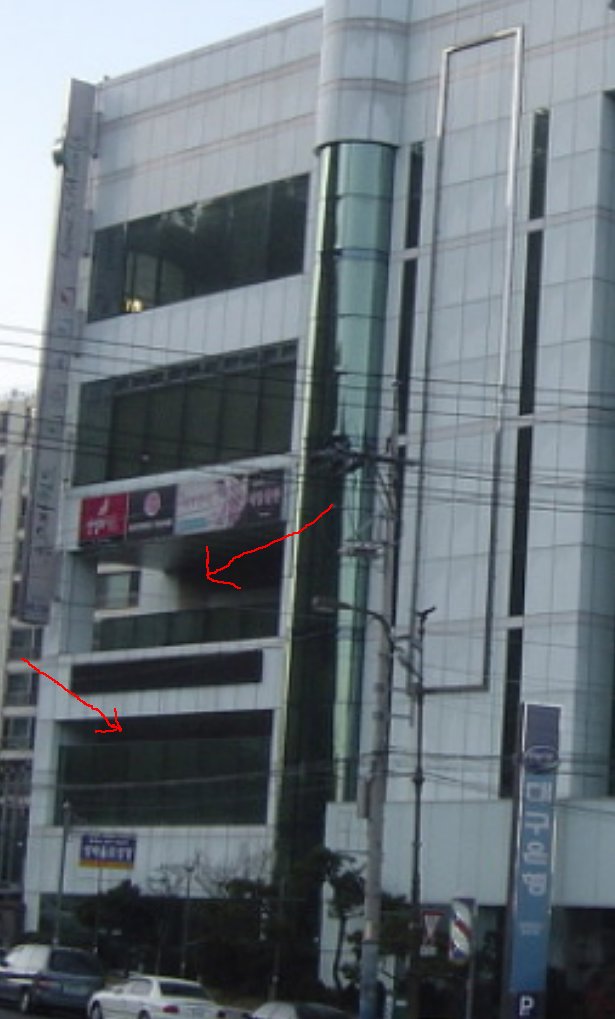
The location of Home Spa's no-cheons (노천). The male no-cheon, on the third floor, seems to have greater visibility and the window of the Finnish sauna is just visible.
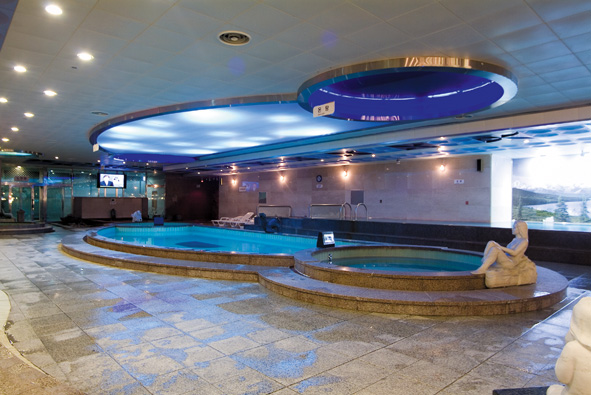
a view of the bathing area with the entrance to the no-cheon in the far left-hand corner
The ‘powder room’ is comfortable with the usual array of fans, hair dryers, lotions and skin bracers. The changing area is massive and spacious and in particular, the TV area had an enormous table with four large leather sofas.
Getting there – (Wiki Map link )
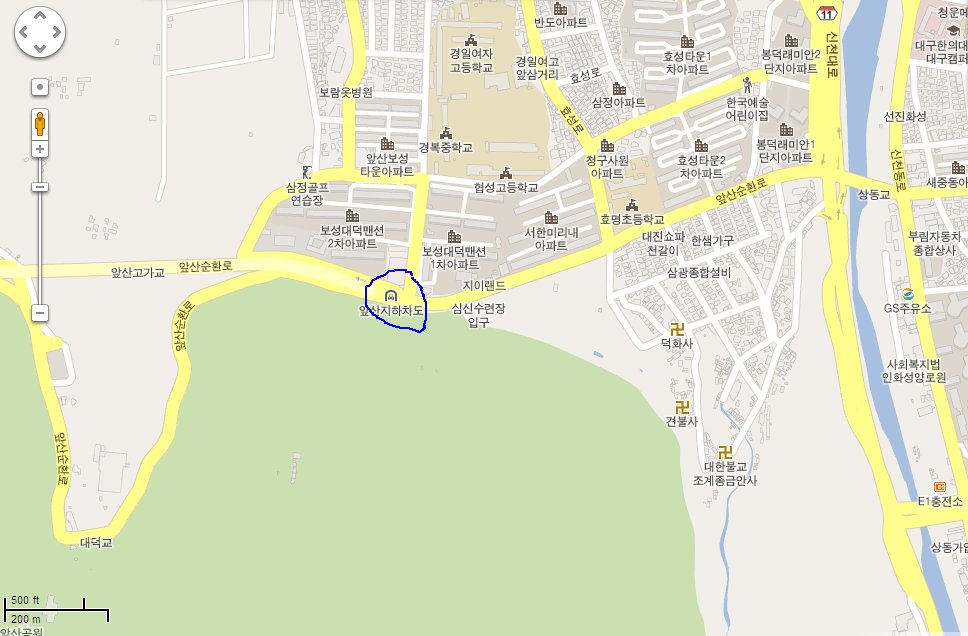
Location of Home Spa World
Bus Lines: 410, 730, 349, and others stop in the immediate area.
By Subway – the closest subway to Home Spa is Daemyeong (대명) from here it’s possible to walk but a taxi might be easier.
Times – opens at 0600 and closes at 2300.
Cost – 7000W
Facilities –
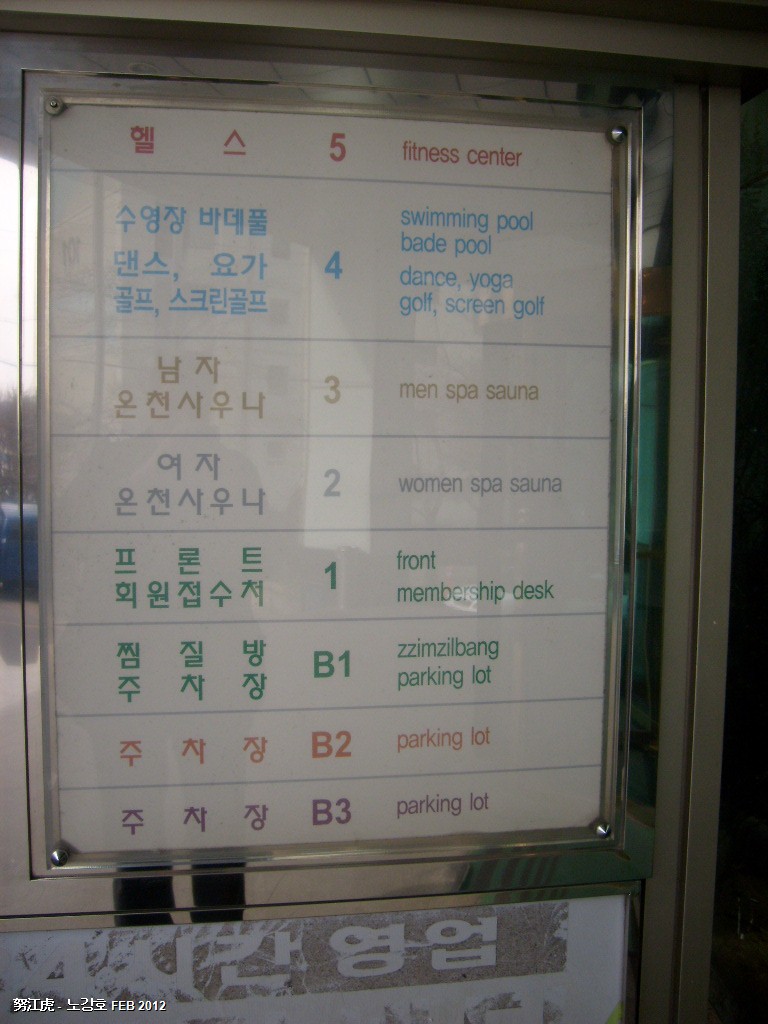
Facilities
Bathhouse (men) – barbers, 4 saunas, 8 pools, 95 showers, TV relaxations area, TV access in pool area and in saunas, shoe shine, snack area
Others – swimming pool, golf, yoga, fitness, jjimjilbang,
Waygukin – none
Address –
Tel: 053-470-1100-3
Website – http://www.h-spa.com/
Layout (coming)

©努江虎 – 노강호 2012 Creative Commons Licence.
All Camp in Korea

In your face
I’m always amused at the way some of my friends in the UK assume that because a country doesn’t ram gay issues down your throat and a significant number of the population constantly proclaim themselves out, that it must therefore be rabidly homophobic to the point of executing or imprisoning transgressors. When in Britain, it suddenly became possible, within certain settings, to pronounce your sexuality with pride, we did so with embarrassing drama. As a student teacher, I remember numerous people introducing themselves to working groups and seminars with their name and then, in the same breadth, declaring their sexuality. Usually, it was a simple one liner such as, ‘and I’m gay’ but in the early 90’s, with the growth of ‘queer politics,’ it was more usual to throw down the gauntlet and declare, ‘and I’m a queer.’ Then they’d glare around the room daring anyone to object. It was the spirit of the times but it now seems so ‘old hat’ and I cannot help but stifle a cringe at such honesty.
Back in the UK, being gay has become boring! There was a time when ‘coming out’ was an act with as much destructive capability as an atomic detonation and wielding that potential gave one an immense sense of power. I’ve known people drop to their haunches and seen jaws drop in disbelief. Coming out had the capacity to traumatize friends who often needed a period of acclimatization which in some cases meant not talking to you for several weeks. The whole process made you feel very special which at least went some way to compensating your lack of relationships and access to physical intimacy. Now, ‘coming out’ rarely creates a stir and those that do have a problem with it are compelled to silence by the dictates of political correctness but in the current climate, where half the population of young people declare themselves bisexual, the prospects of intimacy and relationships are probably greatly enhanced. Today, the atomic bomb you detonate is more likely to fizzle into oblivion as the person being confided in calmly tells you, ‘why, I’ve known all along.’
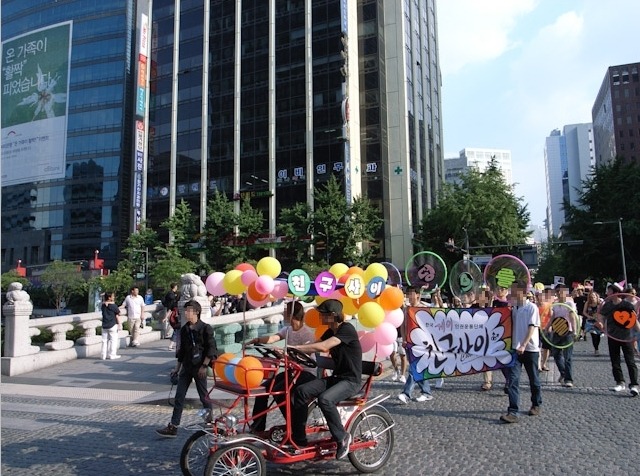
Yes, it’s still evolving and nothing like London Pride. Susan Morgan describes it as a ‘parade of shame’ rather than pride, but it’s evolving.
However, even with advances in civil rights and changes in legislation, gays in the armed forces, gay marriage, LGBT rights etc, I still feel that while you are guaranteed to keep your job, you are more likely to get your face kicked in. While Korean gays do suffer physical abuse, I think their greatest problem come from employers and family. In the UK, there are still those with rabid homophobic views and who in the right environment will verbally abuse and gay bash. I have a fleeting suspicion that in the street, in my home town, there are a significant number of ‘homophobic sleepers,’ individuals forced to silence their opinions in the current political climate but a potential source of hate should things change. While I’ve met Koreans who are not particularly supportive of gay rights, they are never as outspoken, particularly hateful or vehemently opposed to such rights as those I’ve met in ‘liberal’ Britain (but this is only my experience). While a number of outed celebrities have committed suicide, I also remember Harisu (이경업), Korea’s first transgender entertainer who in 2001 was a pin-up to many of my male students.

Violence in the UK
Part of this ‘ingrained’ hatred stems from the fact that in Britain (and in the West in general), there are more codes governing what it is to be male and which inform and consolidate practices concerning male emotion, male physicality, body language, interests and other facets of masculinity. That women aren’t usually the object of gay bashing possibly stems from the fact that lesbianism is quite appealing to many heterosexual men and has not had the same history of legislation levied against it. However, though British women aren’t subject to such rigid gender codes as men, they are still required to behave within certain parameters. Meanwhile, in Korea, I perceive less difference between male and females gender roles.
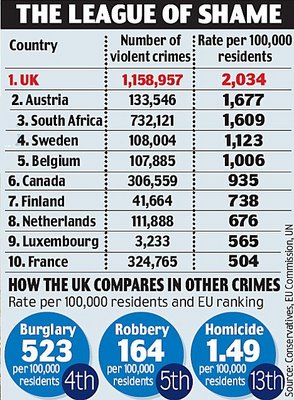
Shameful – and most perpetrators will be men
I’ve never met a butch Korean male and neither have I met a Korean man who in any way made me feel threatened or intimidated. Does Korea even have any macho, aggressive type men, the type who will shove a glass in your face if you so much as look at their girlfriend or knock into them in a bar? And when I have seen them fighting it has been quite hilarious. I saw a fight a few months ago and stopped to watch. There were three men, all in their fifties, all drunk and shouting while intermittently smacking each other with their umbrellas. The fight was wonderfully cute, like it was being performed by ducks or rabbits or some other animals incapable of actually causing real damage. And despite their anger they wielded their umbrellas in a manner that might be described as totally pussy. An umbrella can be a particularly nasty weapon especially if the spike is jammed into your eyeball or mouth, or the hooked handle swung upwards into your testicles or used to cause damage to the windpipe. I can think of an entire arsenal of umbrella techniques all the result of earning a taekwon-do black belt in Europe, which took a minimum of four years study with the ITF (International Taekwon-do Federation) as opposed to the taekwondo taught in Korea (WTF), where black-belts and dan grades are handed out like candy, often in less than a year.
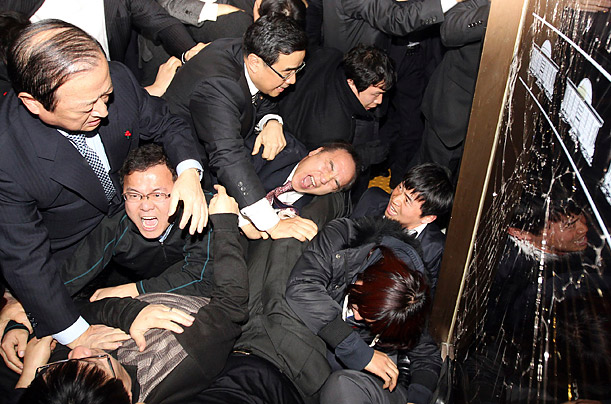
S Korean politicians pussying about
Yes, no butch men in Korea, thankfully! And neither are you likely to find examples of the rough and aggressive type of female that seems particularly common in the UK. Maybe they exist on the Mainland of Europe or the USA, though I don’t remember their type in Germany, but we have women in the UK, and don’t think they are necessarily lesbian, who are more masculine than a significant number of British men and certainly more masculine than the majority of Koreans. I suppose they are a product of our class society because they are always found in poor areas or on sprawling estates and are typified by their hardened faces, aggressive sneers, tattoos and propensity to physical and verbal violence.
In the UK, the number of social transgressions which would predispose you to being labelled ‘gay’ are far larger than in Korea. In the UK, no matter which way your sexuality swings, you’re a homo and less of a man if you play any musical instrument, like art or classical music and enjoy drama. One reason which can be attributed to why Britain is so dumbed-down is that the dominant ideology concerning male masculinity is largely one determined by the dregs of society. In Britain, all classical music, literature, ballet, art, poetry, drama, books and even the ability to read, or subjects or institutions related to learning and the intellect, are deemed arty-farty, poncy, nancy, boffin, elitist, or gay – and you will note I use the lexicon of this dominant ideology, a lexicon that is immediately understood by any British person regardless of their status. The movie Billy Elliot is a prime example of the view held by some British people, but understood by all, that arty-farty is poofda!
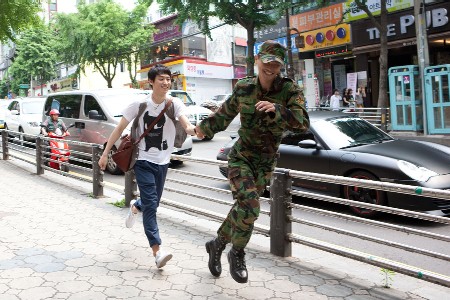
From the Korean movie, ‘Between Friends'(친구사이). I once saw a complete squad of riot police holding hands in Daegu. as they marched in a double file to a demonstration
Yesterday, I attended a middle school graduation ceremony during which year books were handed out to the graduating students. I had to suppress a smile at the photos of the boys’ classes. In every photos of 6 classes of boys, there are not only boys draped over each other, sometimes sitting in each others laps but a significant number were in ‘girly’ poses and while not ‘girly’ to the point of being knock-kneed, pouting and with their bottoms sticking out, were still ‘girly’ enough within a British context, to question their masculinity and label them ‘gay.’ Don’t forget, in the UK you can be 100% heterosexual but still be homosexual. And amidst the boys hugging and draping their arms over each other and the significant number of ‘girly’ poses with hand-like paws held on either side of their cheeks, are the boys cuddling little white fluffy dolls. ‘Affectionately cuddling’ is perhaps a more precise description, sometimes against their chest and at others nestled against their faces and with their heads tilted to one side in a manner which if girls, would be slightly flirtatious, slightly titillating. As far as I know, the Korean language has no word for ‘camp’, but campness permeates so much of Korea to the point that camp behaviour is quite acceptable and normal without it being any slur on your gender. Most of the boys I teach play musical instruments, I’ve had boys who do ballroom dancing and those girls who have not the least interest in make-up or enjoy playing Sudden Attack, are not deemed less of a girl.
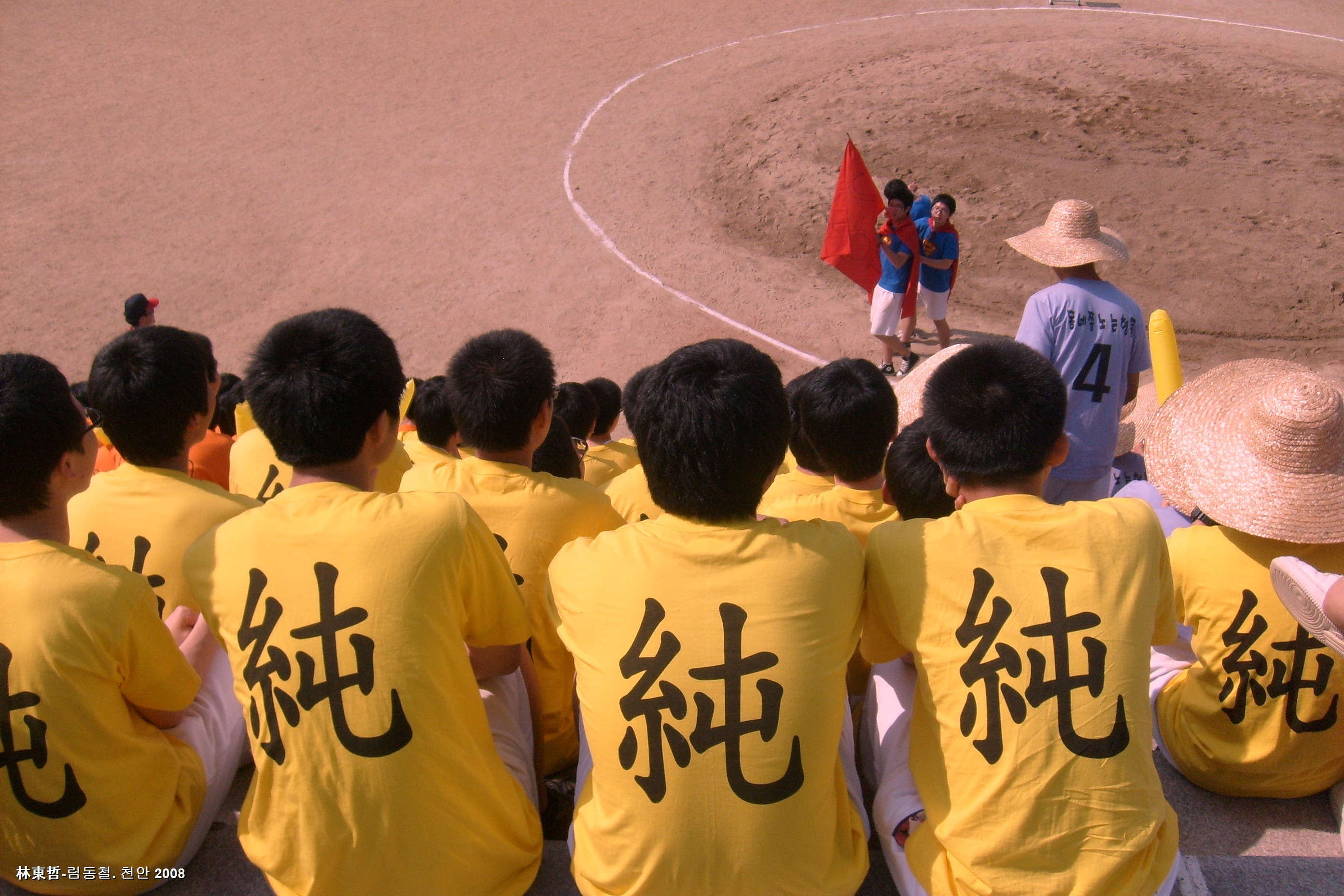
first year high school students with the hanja character for “innocence’ (순소한) emblazoned on the t-shirts
While we have more freedoms and rights in relation to sexuality in the UK, we are crippled and damaged by both anti-intellectual and hyper-masculine ideologies which have help spawn a very unpleasant breed of men and women who are quite uniquely British. While Korea might not be the best place to live if you are gay, it is not the worst place to live as a ‘human’ and I always feel more ‘human’ in Korea as a foreigner than I do in the UK as a citizen with the rights of a gay person and the potential to label myself as I choose. It’s all a matter of how much importance and significance you attribute to different parts of your identity. I might feel very different if I was younger but at 56 years of age my happiness as a ‘person’ is of more importance than one of sexual identity.
For those who think Korea tortures gays and imprisons them for their sins, I provide and interesting and rather cute, short gay movie, Boy Meets Boy (소년 소년을 만나다) which I recently discovered while researching information on the actor Kim Hye-Seong ( 김헤성).
I am no authority on LGBT issues within a Korean context and these are my views based on my limited experiences. For a ‘wart and all’ expose of the gay side of Seoul see Susan Morgan’s blog post, The Evolution of Homosexuality in South Korea. I believe there are several gay clubs in Daegu one of particularly long-standing.
©努江虎 – 노강호 2012 Creative Commons Licence.
Related articles
- Why is school such a hard place to be gay? (guardian.co.uk)
More Westphalian Winters
I recently found these photos lurking in the bottom of an old BFPO box. They were taken in Osnabrück, Imphal Barracks, either in 1979, in the winter before Dave Smith and I went to Kneller Hall, or in 1981/82, after we returned. I’m making this guess as Andy Coombes is in a similar winter photo (Westphalian Winters) and had left the band by the time we returned from KH.

Charlie Harris posing in the snow

Mick Pickering and Phil Watson
©努江虎 – 노강호 2012 Creative Commons Licence.
Lineage of the Voice – Pansori (판소리)
Having been a life long musician, both as a player and listener, I love Korean music. I don’t mean K-pop which though at times tuneful, is as much cultural chewing-gum as any western ‘fast-food’ pop music, but examples which are uniquely Korean such as pansori (판소리), pungmulnori (풍물노리) and even trot (트로트). I am not ashamed to admit owning the collected works of the Korean Daddy of trot, Nahuna which in a western context would be the equivalent of owning the works of Des O’Connor.
In the West, as well as in Korea with K-pop, tonality is usually diatonic, only a small number of chords are used and their sequence is always predictable, tunes seldom modulate and if they do it is most likely to the dominant, the time structure is nearly always 2 or 4 beats per bar and perhaps ocassionally, three. As for the lyrics, they best described as repetitive and vacuous. However, I’m not a total snob, after all, I have Nahuna’s life works and I do listen to and enjoy ‘pop’ as much as I can enjoy eating a ‘Mcburger’ or chewing a stick of gum. If there is one quality that pop has, it’s the ability to represent, to surmise periods of time not in large spans like classical music, but in much smaller chunks such as the 6o’s or 80’s. Pop can rekindle specific periods of your life, evoking emotions and memories with far greater intensity and emotional accuracy than grander music which is quite amazing given the paltry array of tools it utilizes. Naturally, there have been pop musicians with great insight and innovation, though they are often overlooked or marginalised.
The music of Captain Beefheart, (when he was with his Magic Band,’circa 1968) has examples of intricate rhythmic patterns and shifts in modality which would confuse less capable performers. And who remembers the 1976 ‘hit of the year,’ Music, by John Miles with the driving 4/4-3/4, (or is it 7/4?), time pattern. With most pop rigidly confined to the same old formula, such exotic innovation is rare. As a boy, Steeleye Span’s use of modes captivated me, an interest that hasn’t diminished as I now find myself mesmerized by medieval rock groups such as In Extremo and of course, Korean traditional music is modal. And there are many other phenomenal popular song writers/performers who have shaped the sound of history, though our choices in this matter are personal: Abba, Queen, the Beatles, Meatloaf to name of few of my favourites.
My interest in traditional Korean music (국악) derives from my attraction to difference, and specifically to the different world of sound created by tonality, timbre, rhythm, instrument as well as visual differences. l would like to include my interest in lyrics but unfortunately my Korean is not good enough to appreciate them without the aid of a translation. This situation is not much different faced with opera and as I write I am listening to Verdi’s, Rigoletto; having no idea what the plot is about the singers become instruments and I gleam a sense of an emotion without knowing the specifics. This is not an ideal situation but I don’t think too different to how we sometimes listen to a great deal of pop music where the lyrics aren’t really that important or are vacuous and aren’t really needed to convey a sense of meaning.
Korean pansori contains all the elements to engage my interest and whenever I hear performances I am compelled to stop and listen. What’s it about? I haven’t a clue and it’s even difficult to sense the emotional content! Nevertheless, it’s captivating and as alien to my ear and its cultural conditioning, as it could possibly get.
Pansori is basically a vocal line accompanied by a single drum and performances are epic in proportion, usually taking several hours or more, to perform. The texts are satires and love stories, known as madang (마당) which alternate between spoken dialogue and song. Popular in the 18th century, only five of the original 12 now survive: Heungbuga, Shimcheongga, Chunhyangga, Jyeokbyeoga and Sugunga. The singer carries a fan which is used to emphasize emotions and when opened, to mark changes of scene.
I recently came across an excellent Korean documentary, with translation following the lives of two boy pansori singers as they trained for an important competition. The program unveils many of the mysteries of this strange form of Korean art and better, provides snippets of song with accompanying translation – this has subsequently deepened my interest in pansori. Like many things Korean, it has only been in the last few years that reliable information has appeared on the internet but I still have not been able to find examples of madang with English translations. The documentary is disturbing in places as one of the boys has a well-meaning, but drunken father who frequently beats the boy.
Unfortunately, for some reason, the series of 10 clips I originally linked to here have been removed from Youtube but different clips have been added and are provided below. These new clips provide a deeper insight into madang in translation than did the previous clips.
The DVD of the documentary is also available for purchase.
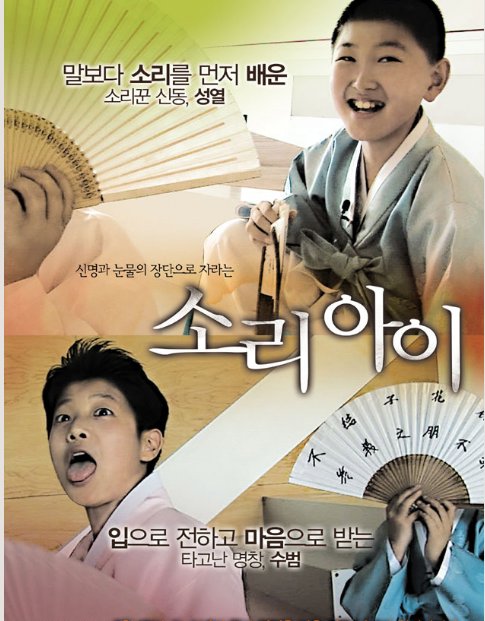
Lineage of the Voice
©努江虎 – 노강호 2012 Creative Commons Licence.
Fascinating Physogs – A Tour of Some Korean Totem Poles

an assembly of jangseung
I am always fascinated by the designs of Korean totem poles, known as jangseung (장승) and have previously written about their character in relation to the nature of Korean wood (Village Sentinels Nov, 2010). I recently visited Dong Nae Traditional Folk Village in Cheollanamdo, near Suncheon Bay, where there is a large collection of old and new jangseung. Some were functional village guardians performing their traditional role of protecting the village while others were either decorative or provided directions.
Jangseung are incredibly emotional and part of their allure lies in the relationship between the form of the wood and the manner in which it has been carved. The carving below, actually the sign for the toilets, is a good example of this synthesis. The nature of the wood, twisted and buckled has been enhanced by the knotted and gnarled face that so clearly conveys ‘agony, discomfort and urgency.’ ‘Bursting for the bathroom’ is expressed both by the face and the ‘buckled’ wood and though you can’t see the knees, you know they’re probably ‘knock-kneed.’ So successful is this synthesis you can feel the discomfort. The symbiotic relationship between wood and carving is so entwined they seem inseparable and even if the face were to be carved away the remaining form would still convey ‘urgency’ and ‘discomfort.’ Of course, there are other emotional expressions to which this one piece of wood could be adapted.

'bursting'
This example, a newly erected jangseung, bore an inscription in hanja. Most jangseung are either inscribed in hangeul or hanja. The first four characters of this inscription are probably from the Thousand Character Classic (千字文) and basically means ‘good son, good father’ (휴자휴부) but the full meaning is more complex and is related to the concept of ‘filial piety’ (효도-효 -孝), one of the most fundamental principles of Confucian philosophy and still of importance in modern Korea. Among many other things, ‘piety’ involves taking care of one’s parents, being respectful to them and not being disobedient. The fifth character is that of village, so the inscription loosely means, ‘village of pious sons and fathers.’

'village of filial piety'

'dreams come true'

another hanja inscription - 'the place where you can fulfil your desire'

a rather amusing uninscribed jangseung
Jangseung often appear in male and female pairs and are distinguished by their head apparel; the male hat is more elaborate. Quite often, the inscriptions refer to ‘generals,’ major generals’ or male and female generals. Korean folklore has a special place for the mischievous ‘ghost,’ known as the dokkaebi (독깨비) who haunt mountains and forests. This ‘ghost’ is quite dissimilar to the European ghost and is actually a transformation of an inanimate object rather than a dead person. Dokkaebi tease and punish bad people and reward good deeds by way of a strange club, or ‘wand’ which when struck ‘summons’ things. They also wear a spiky hat known as a ‘gamtu’ which can render them invisible. Below are the ‘Female Ghost General’ and the ‘Ghost Major General.’

A pair of 'ghost' guardians

an uninscribed jangseung with a large 'burr' for a nose

Weathered jangseung. Note the phallic incorporation of the flanking poles

a female general, (protector of the ground?)

A typical male design. This is the Major General protector, for Suncheon, the town closest to Dongnae Village.

Grandmother protectors


Leaving the village with a newly purchased teacher's stick (actually on my birthday)
©努江虎 – 노강호 2012 Creative Commons Licence.
FURTHER REFERENCES
Village Sentinels – Totem Poles (Bathhouse Ballads November 2010)
The ‘Whale Hunt’ and Vacation Misery
vacation misery!
Most of my lessons have at least one student whose character is strong enough to shade a class’s persona. Sometimes there are a few and usually, though not always, their characters are beneficial as they enliven lessons with their humour and marginal misbehaviour. Most of the characters, at least in classes with girls and boys, tend to be the boys but on their own or when boys are outnumbered, the characters of girls are just as entertaining. Among elementary and even high school students, girls and boys in the same class can cause a tension and rarely do they like to be partnered together. Elementary aged girls and boys seem to have much less problems working together. I’ve seen middle school and high school boys with strong and personalities, often the class comedian and prankster, totally silenced when outnumbered by girls. Indeed, nothing silences a boisterous boy more than a handful of girls, all except that is, when they’re involved in the ‘whale hunt.’
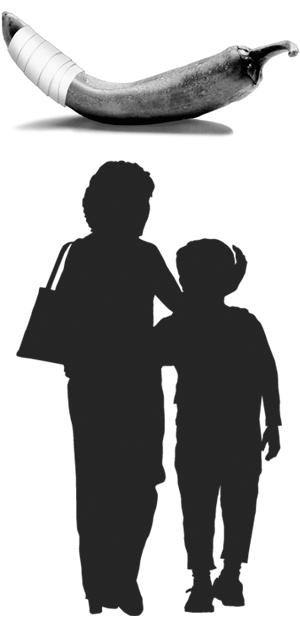
The ‘whale-hunt’ (포경) is the Korean euphemism for circumcision which many boys are subject to on the verge of entering either middle school or high-school. The winter vacation is the most preferred season for the procedure as there is ample time to recuperate and infection less likely in the dry, as opposed humid weather of summer.
In the last ten days, a few of the boys in my classes have been muted by either having undergone the procedure, and they are often in class the next day, or muted by the impending prospect. I would imagine the Lunar New Year vacation has been totally ruined if their appointment with the ‘hunt’ falls in the next few days, as it does with several of my students. Unlike other cultures, circumcision in Korea is not a celebrated rite of passage and apart from the obvious trepidation, seems no more socially significant than a trip to the dentist. Indeed, the procedure, currently costing between 80.000-100.000W (£40-50), is cheaper than most dental work and infinitely cheaper than in the USA where the medical profession has a history of exploiting the public (see link below). Though I can understand the reasons parents and boys fall for the myths surrounding the need for this surgery, the normal rubbish about it improving hygiene or facilitating a bigger penis, I certainly can’t understand why you would ruin a boy’s vacation by booking an appointment a day or two after a major holiday and worse, sending them to school the next day!
©努江虎 – 노강호 2012 Creative Commons Licence.
FURTHER REFERENCES
Searching for a Pathology to Fit the Procedure of Circumcision (Bathhouse Ballads, March 2011)
Chicken Tonight?
I am still fascinated by the differences in culture between gyms in Korea and those back in the UK. British gyms are always male dominated, not necessarily in terms of numbers but by the hyper-masculine aura that many men exude and if there are two places which demand a more masculine manner, they are the gym and the changing room. Numerous inflictions conspire to induce this aura: strutting about like a peacock, chest out and arms slight bowed, minimal eye contact, and an intense, focused facial expression. And the small group of hard-core muscle-men are always visibly aggressive, snorting, huffing and puffing as they pump their muscles often encouraging each other, if they have ‘spotters,’ with raised voices not too dissimilar in tone and content from the old-school drill-sergeants I remember from basic training. British culture oozes aggression but you are only ever likely to notice it if you have lived abroad for long periods of time.
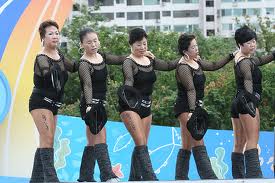
exercising ajummas
Most days my Korean gym is dominated by glitzy ajummas. Ajummas are married women, between 30-60, who have usually had children. There are numerous images of ajummas lingering among the expat community and they are the butt of many jokes and perhaps one of the most common stereotype of the ajumma are of middle class ajummas who have salaried husbands who have free time to frequent coffee shops, restaurants and gyms in little gaggles. The ones frequenting my gym often wear sequined bling-bling tops, silver or gold stockings and wear make-up that is impervious to sweat. Despite intense workouts to high energy gay-pop (aka, K-pop), few seem to either perspire or grimace. With the school vacations the second most noticeable group are graduating high school boys who train in small groups pumping weights of little more than a few kilograms after which they enthusiastically compare their stick insect biceps. Among the migratory crowd of students and the ajummas, are a small group of hard core trainers who can be found exercising on most days. They are never loud, they train without making an aggressive exhibition and will always smile or talk to you.
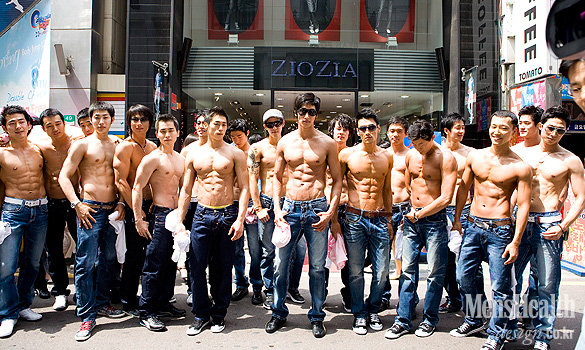
apparently, though I can’t be bothered to source it, South Korea has the world’s highest percentage of men with six packs
I don’t think I’ve ever met a macho, hyper-masculine male in a Korean gym! Indeed, some of the Muscle Marys I know, despite their bulging biceps six packs and inflated chests, are quite camp. Six months ago, on a Sunday evening, I was sat in a coffee shop which specializes in cup cakes. I’ve never eaten their ‘fancies but if they’re anything like Korean cakes in general, they will be a disappointment. However, lined up in the cafe window they look visually tempting but you shouldn’t be fooled by the whirls of syntho-cream and Hershey-type chocolateless chocolate. My grandmother was a baker so perhaps I was spoilt and additionally, in my youth, most mothers actually knew how to bake cakes. The Muscle Mary hadn’t even got his frame in the front door before he’d spotted me and beamed a big smile. A little later, as he was leaving, he stopped by my table, and opened his box of cup cakes, under my nose, in a manner reminiscent of a wine waiter. The collection consisted of six exceedingly camp cakes bedecked with ‘hundreds and thousands,’ little whirls and here and there ornamented with the Korean equivalent of smarties. The he invited me to take one in a manner that was both cute and poncy.
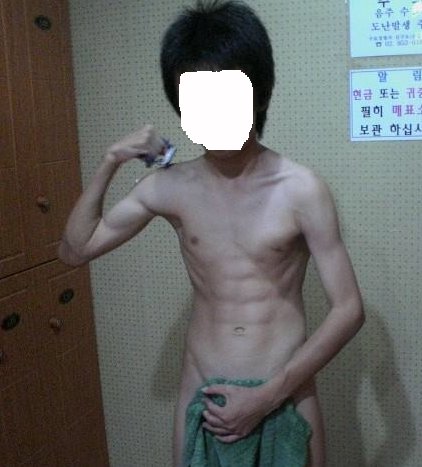
this typifies the high school boys who train in my gym next to the ajummas
A few weeks ago I was working out next to a Muscle Mary I hadn’t seen before. He spent an hour pumping weights and squatting before going to the adjoining gym, which doubles as an indoor tennis court, putting on some gay-pop and then spending 30 minutes doing the campest of dance routines part of which included shuffle dancing – a dance trend which is currently popular in Korea. Another Muscle Mary is Min-su, a twenty six year old student who in addition to being close to six foot six tall, has the body of a muscled Adonis. He works out most days either pumping weights, doing aerobics or practicing taekwondo or judo, (he has third degree black belts in both). Everything about Min-su is male but his soft, smooth face is that of a big school boy.
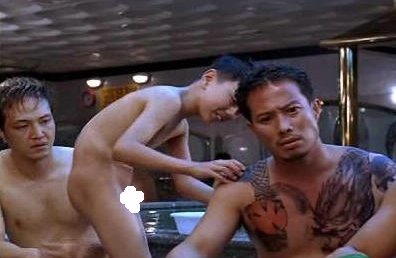
a rather amusing photo of boy scrutinizing a yakuza-type’s tattoos in the bathhouse
All the Korean Muscle Mary’s I know, and even some of the tattooed yakuza-types who frequent the bathhouses, are camp. The Yakuza guys usually have a dragon on their back, or perhaps a large tattoo on their thigh. One, whom I regularly see is covered by a busy, interweaving design of dragons, tigers, manga and hanja script that is so dense he looks like he is wearing a blue, short sleeved kimono. The intriguing tattoo stops above his neck, below his biceps and below his knees. Last week I watched a couple of Yakuza’s in the ‘powder room’ drying their hair, pubic and otherwise, with hairdryers and thought to myself that in the west, and armed with a photo you could easily blackmail them. You can find all the Muscle Marys, and indeed most men and boys in the powered room preening themselves, patting their faces with lotions and gels and now it’s the academic vacation, there are always a couple of teenagers sat naked on the sofa in front of the powder-room television, pawing, loitering and lingering over each other in a manner totally homo and yet homo-less. No matter how camp Korean men behave, no matter how ‘unmasculine’ (and I’m using that straight jacket of a western definition), it is rarely interpreted as ‘gay’ or ‘unnatural’. Within reason, and in Korea that leaves immense scope, campness has little or nothing to do with sexuality and indeed seems to be a natural expression of masculinity, especially among younger men and teenagers.
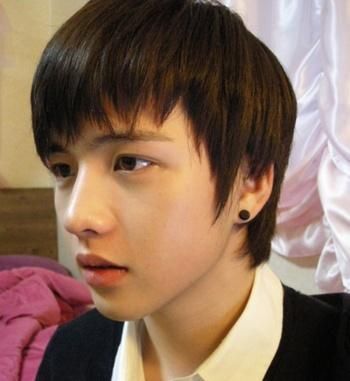
The actor and ‘pretty boy’ Kim Hye-seong. All of 20 but looking 14. He is currently undergoing compulsory military service.
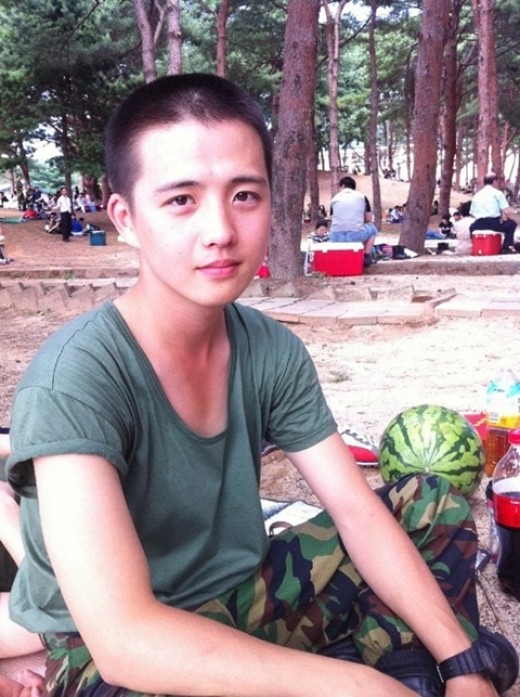
and after four-weeks basic training and now aged 24, Kim Hye-seong looks even younger…
The Korean star Jo Kwon, has a massive following both at home and abroad and has to be, by western definitions, one of the world’s campest male celebrities let alone the campest in Korea where gay-pop and nanciness are fashionable. But ask Korean girls and even boys why they like him and they will often tell you it is because he is ‘pretty’ or ‘handsome.’ To call any British boy ‘pretty’ is a slur that isn’t to short of accusing them of being gay and most British teenage boys will refrain from making any positive comments about the appearance of other boys as to do so is not just unmanly, but verging on ‘homosexual.’ I know plenty of gay men who can make a value judgement on the attractiveness of women and no matter how much they might do this it fails to make them straighter, but unfortunately, for many British men, to even ponder on the appearance of another male in anything but a derogatory fashion is likely to turn them gay. Most Korean teenagers I know seem quite shocked that in the West we would perceive Jo Kwons behaviour as ‘gay’ or ‘homo.’
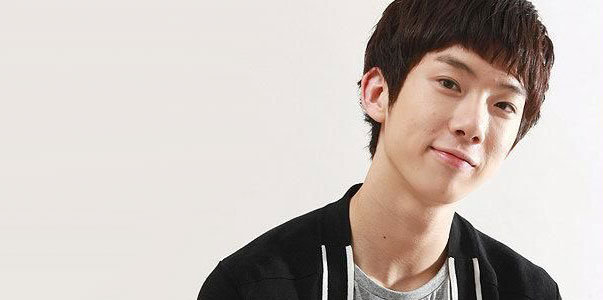
Korean pretty-boy supremo, Jo-kwon
Here follows a little biography I found on a fan-site, the source of which is acknowledged in the footnotes below:
‘Jo Kwon (Hangul: 조권, born August 28, 1989) is a South Korean singer and entertainer, leader of ballad boyband 2AM.
Jo Kwon is the longest-serving male trainee in JYP entertainment, having trained for 2567 days; exactly 7 years and 10 days since joining JYP.
He was chosen as the last members of Park Jin Young’s “99% Challenge Project” along with Sunye of Wonder girls.
In 2008, he appeared on MNET’s Hot Blood, a program that showed the intense physical training that 13 male trainees had to go through for the opportunity to debut in either 4-member ballad group 2AM or 7-member dance group 2PM under JYPe.
After getting through the eliminations, Jo Kwon was given the position of 2AM’s leader.
Jo Kwon regularly appears as a regular guest on variety shows such as “Star King” and “Sebakwi”.
He also the permanent member of Family Outing 2.
He is also known as “kkap kwon” because of his kkap dance.
He is the member of Wonder Boys,Boys Generation,Bracademy and Dirty Eyed Girls which are the group which contain idol boys who perform girlgroup’s songs.
He joined the cast of We Got Married on October 3, 2009, coupled up with Brown Eyed Girls member Ga-in.
On June 30,2010 he released his first digital single titled ” the day i confessed”.’
Jo Kwon not only dances like a girl, jiggling his hips, pouting his lips and bending over to extenuate his butt in a manner reminiscent of a lewd Lollita but does so with such accuracy that it exposes the extent to which male and female body movements are gendered at least from a western perspective where men are supposed to dance like men and women like women.
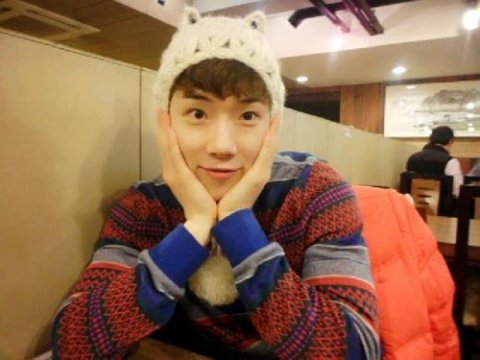
Jo Kwon (born 1989)
It’s always difficult trying to perceive such imagery as Koreans themselves might see it but there is clearly an element who see nothing out of the ordinary with Jo Kwon’s masculinity and indeed, many Koreans, especially teenagers, find it alluring. The fan-site previously quoted, notes that Jo Kwon’s:
‘room is full with dolls from fans and cosmetics. Even his bedsheet is pink.’ (it was only recently in the UK that men have been able to wear anything pink without some derision)
‘People who call his house and talked to him always think that Kwon is a girl’ (that would be a mortifying insult to levy at a British boy)
‘Kwon’s voice is so high’ (another slur on masculinity)
‘During pre debut days,Kwon is famous for being the male version of actress Choi Ji Wo’ (and another)
However, there are plenty of comments about Jo Kwons muscles and six pack to suggest that there is a subtle mix of girly and masculine traits required to attach the label ‘flower boy’ to a celebrity or individual – a status greatly admired in Korea and Japan. Recently, he appeared in the Korean edition of Men’s Health, shirtless!
A COLLECTION OF FLOWER-BOY PERFORMANCES
2
3
4. JO KWON WOWING THE TROOPS
Finally – There’s nothing like a piece of chicken…
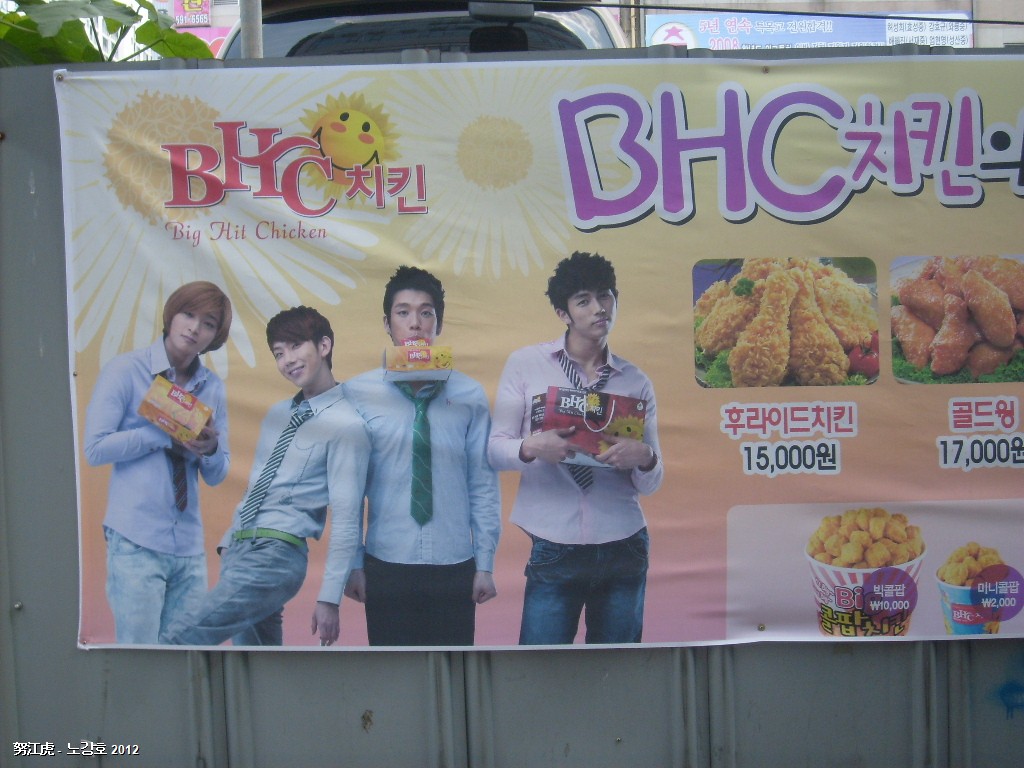
Big Hit Chicken (BHC). Advertising the allure of ‘chicken’ with pretty boy power
PS. I have no issue with gay-pop (K-pop) or indeed with what my culture would deem ‘camp’ men and would much rather be surrounded by ‘camp’ Koreans than the butch and aggressive type men that dominate much of British and American society. Incidentally, one of Kim Hye-seong first roles was in the gay themed short movie, ‘Boy Meets Boy’ (소년 소년을 만나다).
©努江虎 – 노강호 2012 Creative Commons Licence.
REFERENCES
Autumn Fruits on Winter Trees
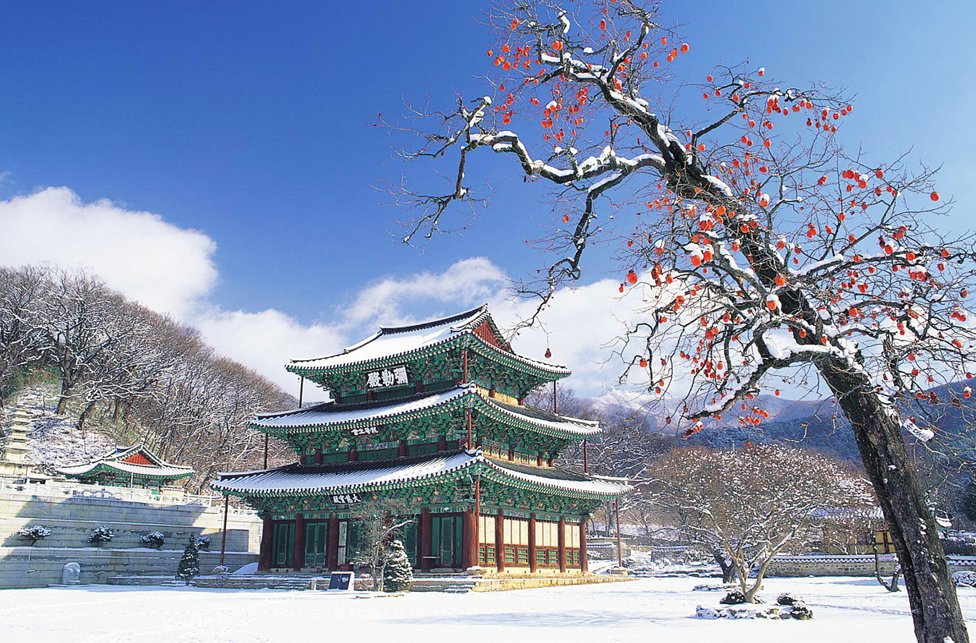
A persimmon tree in snow. (Geumsansa Temple, Gimje, Jeollabuk-do. Source – KTO)
I was recently out of the city, in Jeollanam-do, on a wintry coastline that was especially decorated with both persimmon and ginkgo trees. I’ve written numerous posts focusing on one aspect or another of persimmons and have intended over two years to write a post dedicated to the ginkgo. Seeing the ginkgo (은행) and persimmon (감) in a winter setting, when void of leaves yet still bearing their autumn fruit, evoked images of the Korean and possibly Japanese and Chinese, traditional paintings I’d seen over the years but never really appreciated. A persimmon in the depth of winter which still carries its bright orange flames of fruit, especially against a cold and bleak backdrop, is a beautiful sight. The ginkgo, though perhaps not as noticeable, nonetheless has the capacity to intrigue us with it busy array of nuts. The Ginkgo is an amazing tree which can grow to a considerable size and in autumn, with its bright yellow foliage, it is a wonderful sight. Then there is the schizandra tree (오미자), the bright red berries of which are current feature in markets.
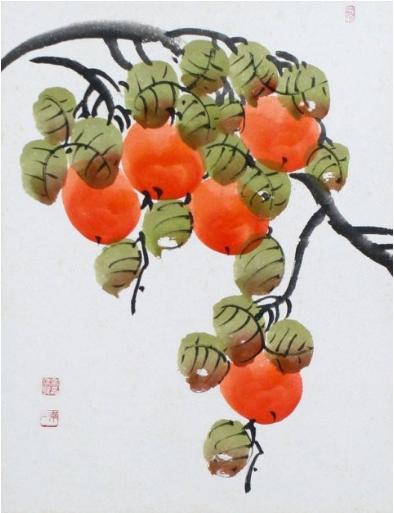
‘Persimmons’ by Nam Jun.
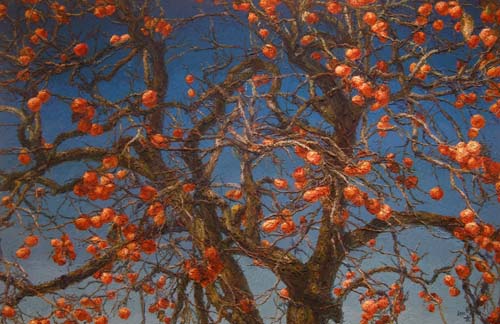
winter persimmons – unknown
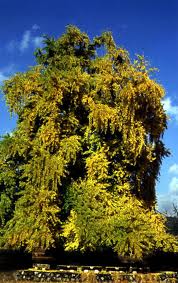
a large ginkgo in summer
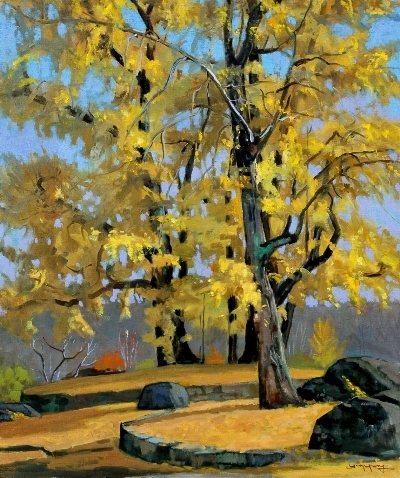
An autumn ginkgo
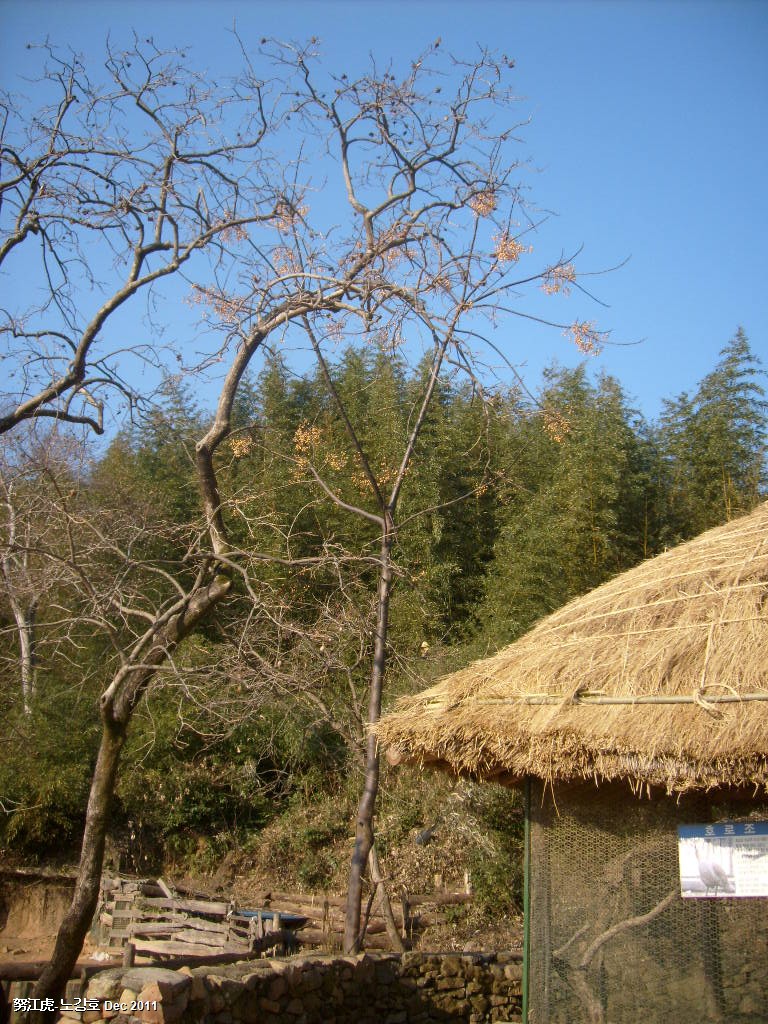
winter ginkgo
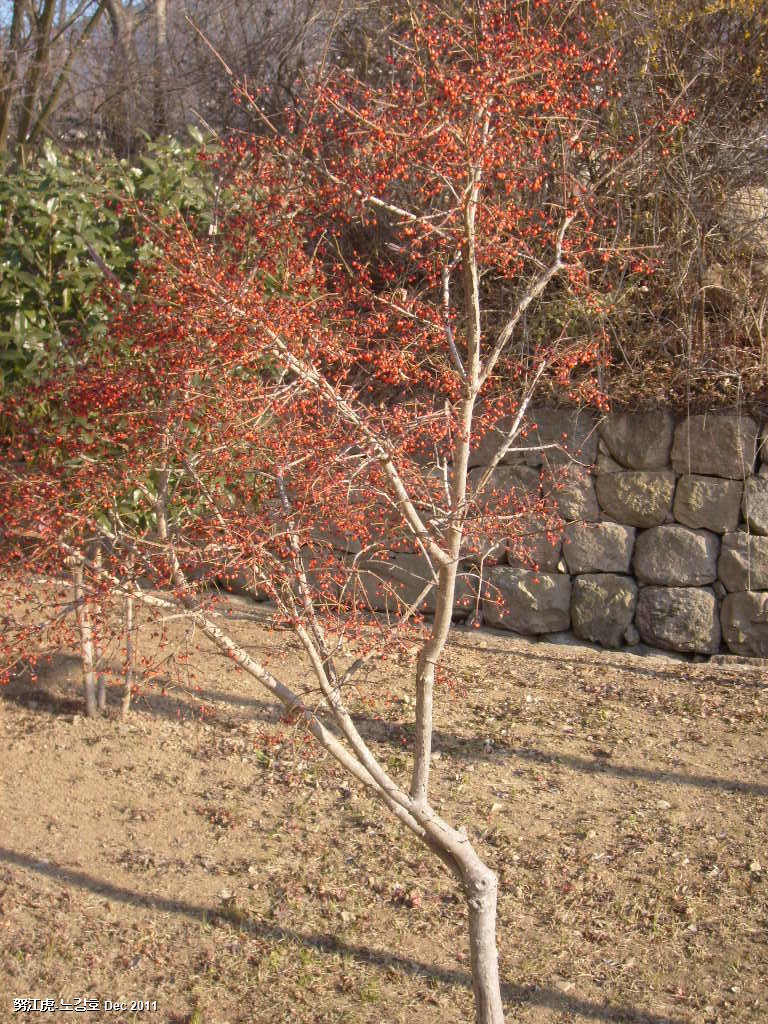
a schizandra tree in winter (오미자)
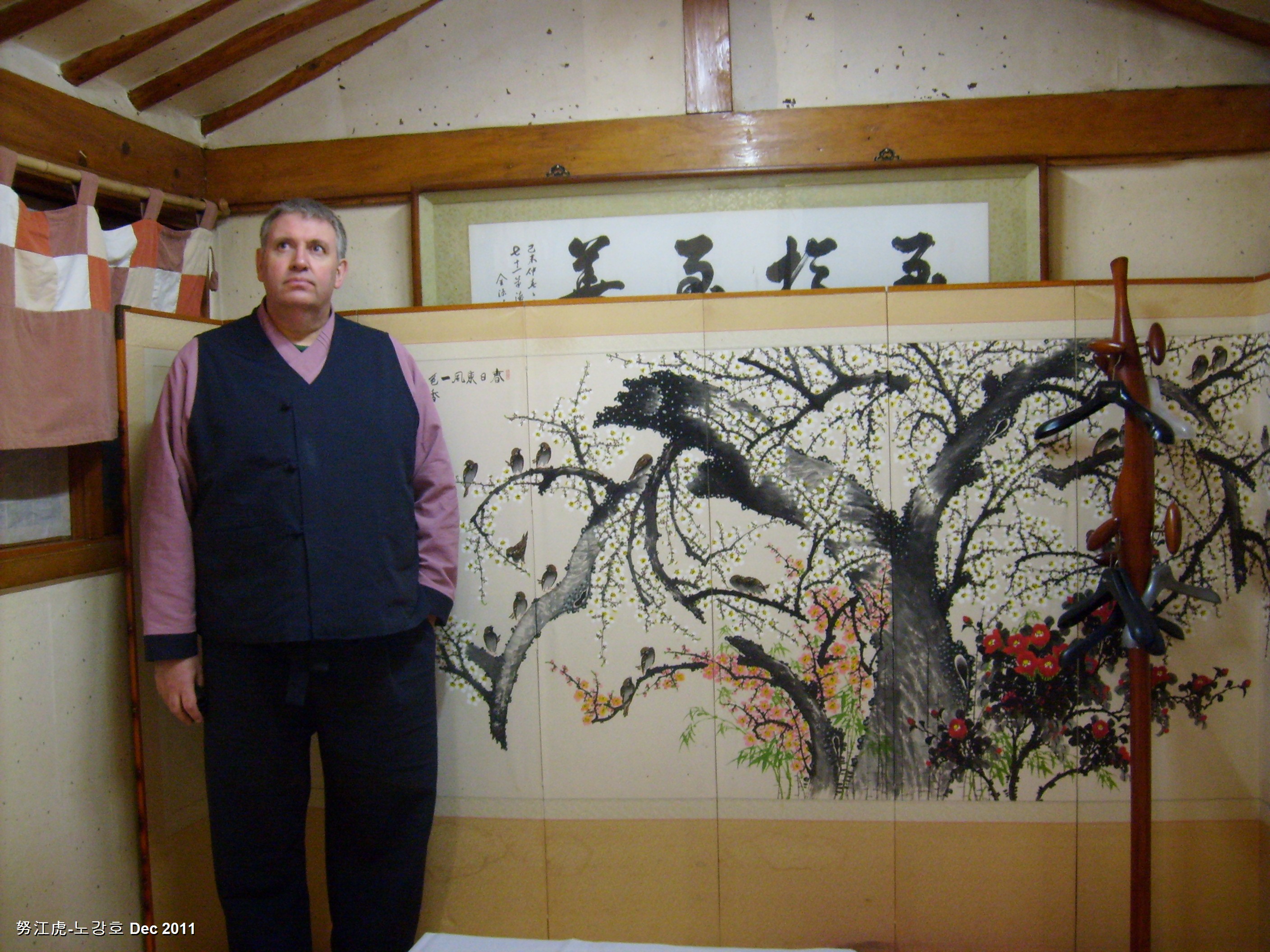
Korean traditional art
©努江虎 – 노강호 2012 Creative Commons Licence.
Cabbage Kimchi (Sun-hee version) My Recipes
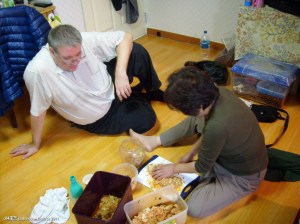
‘Kimjang’ – the Korean kimchi making season between mid November and December
Without doubt, cabbage kimchi is the most important item in the Korean kitchen. Not only is it an important side dish, accompanying most meals, but essential base in a number of other recipes. Kimchi is a ‘keynote,’ a defining feature of Korean culture and mastering its production will gain you much respect in the eyes of Koreans. There are not only geographical variations on the recipe, but family and personal ones and homemade kimchi is infinitely superior to that bought in supermarkets. This recipe was taught to me by my friend Sun-hui (순희) and it has proved to be a very successful.
Key Features: very healthy / relatively easy to make/ an essential Korean food
MY DEFINITIVE RECIPE
1 cup = 180ml. T=tablespoon (15ml), d=dessert spoon (10ml) t=teaspoon (5ml)
SHOPPING LIST
1 large Chinese leaf cabbage (Napa) weighing about about 1.25 kilograms
I cup of mooli (무)
0.5 cup of red pepper powder (고추가루)
2T rice flour
0.25 cup of Fish sauce (액젓) plus more if required
24 cloves of crushed garlic
1. inch piece of fresh root ginger, grated
1cup of chives or wild leek (실파/부추)
0.75 cup of salt (sea salt, kosher, rock, 호렴)
1d Sugar
3 cups of water
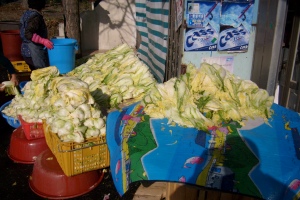
Kimjang in Cheonan
SUBSTITUTES IF YOU’RE LIVING IN THE UK
Mooli can be substituted with white turnip but I would grate it rather than dice it.
Red pepper powder must be Korean (고추가루) and not chili powder.
Rice flour can be replaced with standard flour and many Koreans use this in Korea.
Fish sauce (액젓) can be either anchovy (멸치) or sand-lance (까나리) but Thai type squid sauces will suffice.
Chives are best but wild leek is better and after these small spring onions without the bulbs.
Salt – sea salt (Maldon) and rough salt such as rock salt or kosher salt are highly important. Table salt is totally ineffective at wilting the cabbage leaves!
EQUIPMENT
A large plastic basin
A plastic Tupperware type container
Possibly a muslin type bag
Rubber gloves
SALTING
- If the cabbage is a large one, cut it lengthwise into quarters and wash it. Then chop the cabbage into pieces about 1 wide and a few inches long. Wash the chopped cabbage and drain. Next dice the mooli into small pieces approx an inch square and a quarter of an inch thick and add them to the cabbage. Put the mixture in a large bowl, sprinkle with salt and then and 1.5 cups of water. Fold the mixture, pat down firmly and leave for about 12 hours turning once after six hours or so. 12 hours should ensure the cabbage is fully wilted but often it is ready much earlier than this. You should notice the volume of cabbage reduces by about half as wilting occurs.
PREPARING THE PASTE
When the cabbage is ready, wash it three times in clean water and thoroughly drain. I use a muslin bag for this process so I can squeeze out excess water. This process ensures the paste doesn’t become too watery though some people prefer it such. Set the cabbage aside.
2. Chop the chives into pieces about an inch long
3. Crush the garlic and chop the ginger into small slivers.
4. In a large plastic bowl, put the:
Red pepper powder (0.5 cup)
Chives (1 cup)
Ginger
Garlic
0.25 of a cup of fish sauce
sugar (1d)
5. Mix the flour in a little cold water and then heat a pan containing 1.5 cups of water. Add the flour mixture to this and stir until it is starts to boil. The flour paste needs to be the consistency of porridge so add more flour as required. When ready add this to the ingredients in the large bowl.
6. Mix the ingredients with a spoon and then, when you are not in danger of scalding, with your hands (you might want to wear rubber gloves for this process).
7. Add the cabbage mixture to the paste and thoroughly fold them together.
8. You can now taste the kimchi and if necessary add additional fish sauce to increase the saltiness. I hold back on using 0.5 of a cup to allow me more control over saltiness.
9. Put the kimchi in a Tupperware type container and pack down firmly to remove air pockets.
Kimchi does not need to be fermented and many people prefer kimchi when it is fresh. However, fermentation will begin immediately, indeed it has already begun. It can be kept in part of the fridge where it won’t freeze though you can leave it in room temperature for a few days to speed up fermentation. The lid will pop off the tub every day as gases build up but the smell grows on you!
Kimchi keeps for a very long time and even after a year it has its uses. Personally, I have used kimchi older than a year and have read of people using kimchi that was 3 years of age. My year old kimchi had a small layer of mold on the top but this washed off. Aged kimchi, tart and sour, is a delicious basis for kimchi stew (kimchi jjim – 김치 찜) and far superior to fresh kimchi.

delicious..
ON GOING NOTES
None! The recipe is perfected!
© 努江虎 – 노강호 2012 Creative Commons Licence.
One Word – Vile!
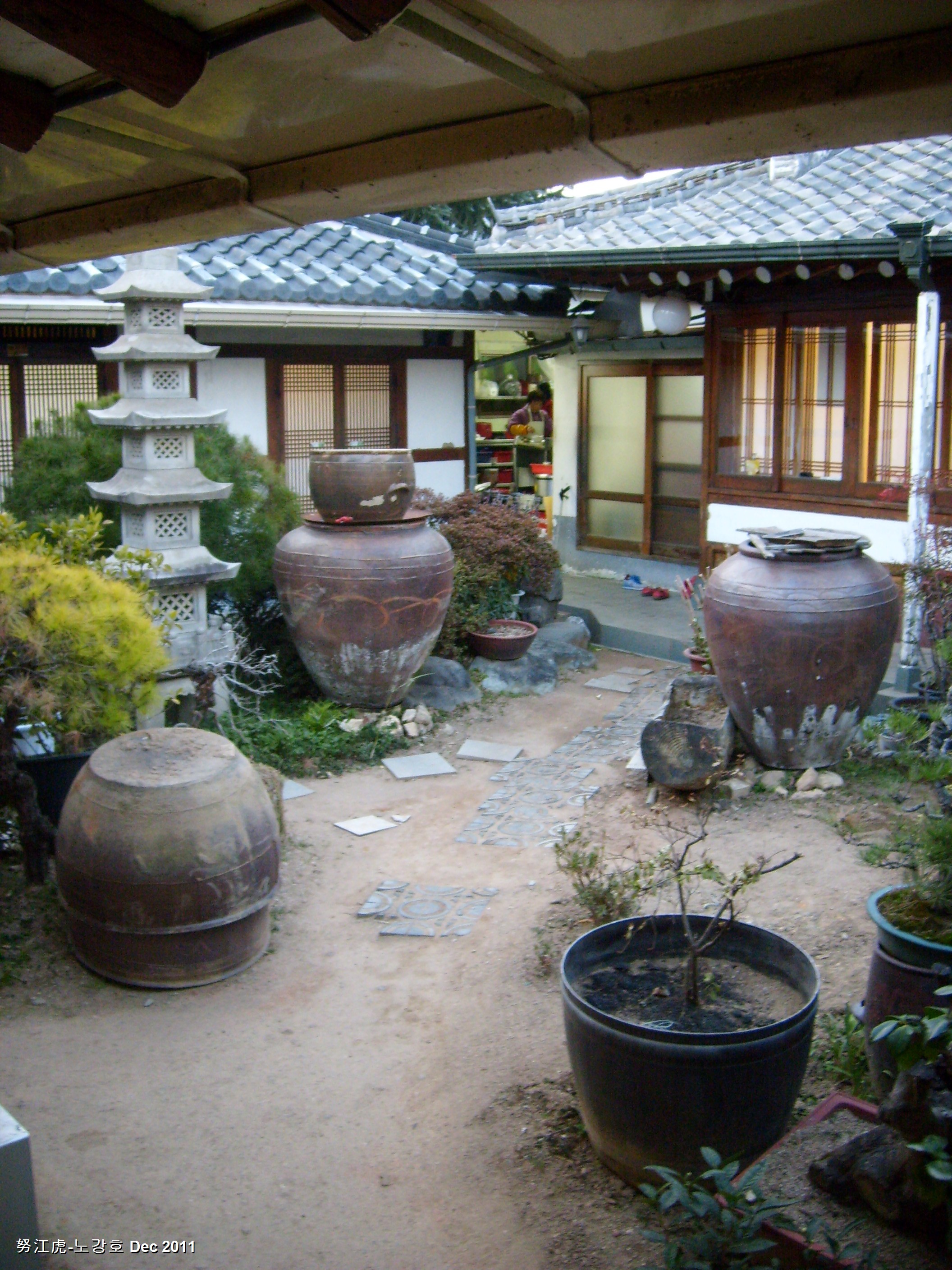
the garden of a traditional Korean restaurant
Even for westerners with eclectic palates who enjoy flitting between the spicy and tantalizing subtleties of Thai, Indian, Mexican and Chinese food, a Korean specialty can chuck a spanner in the works. Of course, most of our knowledge of such cuisines has been doctored and what comprises their menu has been selected to appeal to our tastes. Chinese food in the UK is nearly always Cantonese or Peking and the enormous silk worm cocoon sautéed with scorpion, a cuisine typical of the Gobi region of China, is not likely to appear on the menu of your local takeaway. I’ve never seen the boiled duck embryo, khai khao, cooked alive and served with the shell intact, in my local Thai restaurant and some of the food I ate in India I doubt appears on any menu outside the country itself.
Korea has a number of foods which cause a foreigner, especially those accustomed to European traditions, to stifle a retch. Dog meat is perhaps the most infamous and is likely to shock us with as much revulsion as Koreans find at the thought of eating rabbit. And if a westerner gags at the idea of sushi they are likely to do far worse if faced with sashimi (known in Korea as ‘hoe’ – 회) against which sushi is positively tame. Anything which crawls, swims, floats, buries itself in the mud or simply hangs about on rocks, is fair game for the sashimi platter where it is usually eaten raw. If raw fish isn’t enough to empty your stomach, there is variety of raw meats, the tamest of which is thinly sliced beef steak but venturing into the Klingon domain are raw tripe and liver. However, a few cooked meats, intestine and boiled lung, are likely to repulse a healthy hunger after which steamed silkworm cocoon or pan-fried grasshopper seem almost civilised.
Over the New Year, I ate at two traditional seafood restaurants. The first specialised in a particular kind of clam and the entire menu, apart from side dishes, focused on this local delicacy. I wasn’t too happy when the hors d’oeuvre arrived; an unceremonious bowl of clams which had been warmed rather than cooked, and hence the shells required prizing open with a tool I’m sure I’ve seen in an electricians tool-bag. Have you ever been dumped on by a passing pigeon? Once prized open, the clams’ innards were just that; a messy splurge of white and brown pudding that dripped onto the paper table-cloth like diarrhoea. I silently cursed my Korean friend and prepared to stifle the retch reflex that was sure to follow but surprisingly, they were very delicious. The rest of the meal contained clams in one form or another – in pancakes, as sweet and sour, skewered, in a soup, and in the sauce of a bibimbap.
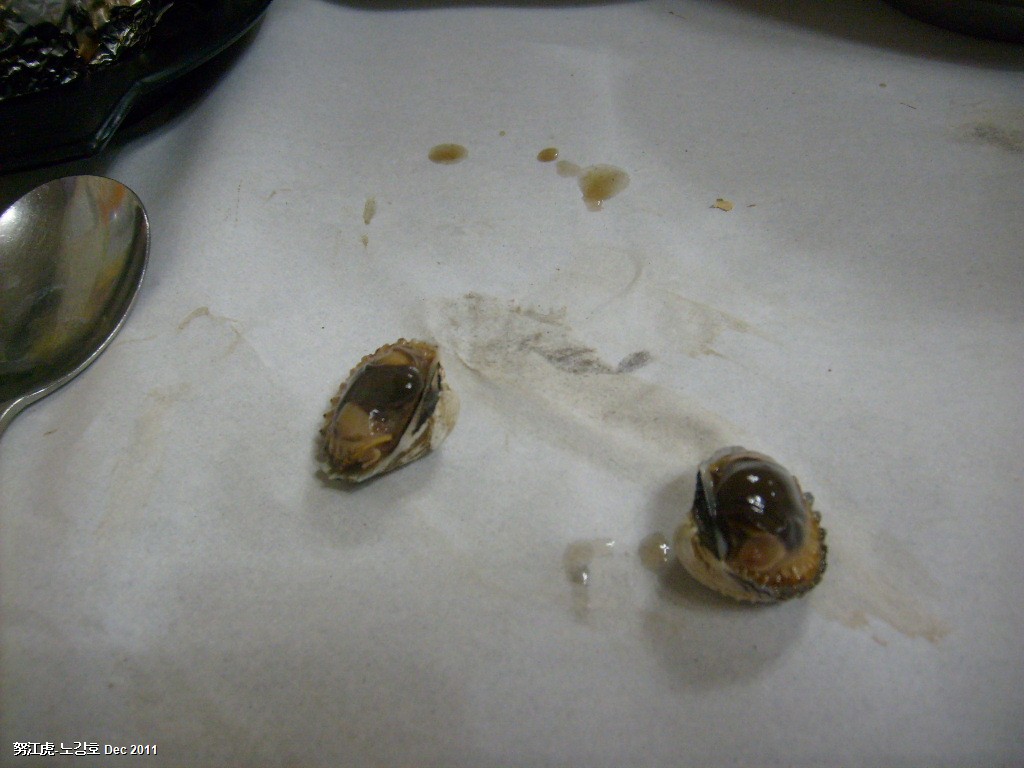
painful on the eye but pleasing on the tongue
My evening delight was in an enchanting traditional restaurant in a small outhouse. Here I was served the entire gamut of food at which the European usually cringes. Apart from insects and dog, there was a selection of all the nautical nasties, sea squirt – which resembles an acned, bulbous boil (멍게), ‘dog dick’ (개불 – Urechis unicinctus) – a slimy type of spoon worm which has no English name, a type of shellfish with the texture of slightly meaty, raw cauliflower, raw squid, the unpleasant orphaned testicle thing known as mideodek (미더덕 – styela clava) which many Koreans hate. Other delicacies, less shocking, included raw oyster and I even managed some raw sliced beef. Along with a fine spread of kimchies and as a veteran of Korean food, I managed to eat with apparent pleasure.
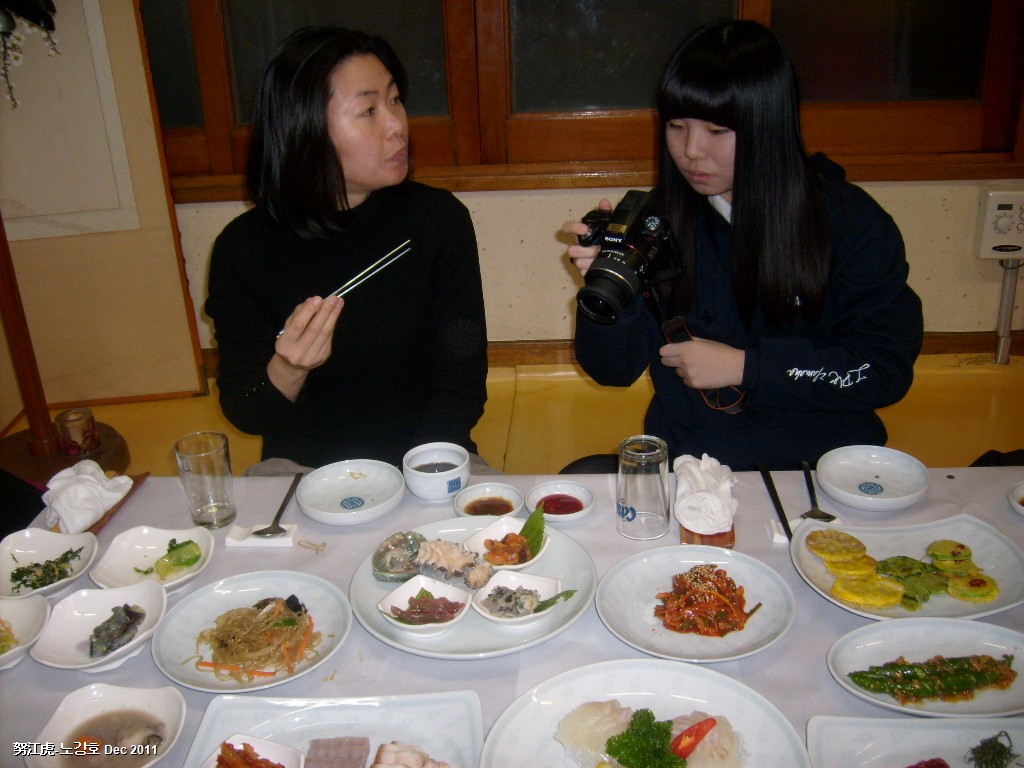
more still to come
Then I picked up what looked like raw tuna, which I actually like, and slipped it onto my tongue. I hadn’t even shut my mouth when there was a sensation of something very unpleasant. ‘Can you smell it?’ my friend asked. ‘Ugh,’ I managed to mutter without moving my teeth for fear of stirring whatever was on my tongue. I wanted to swallow it but it had bones, cartilaginous bones which demanded chomping and I could smell what seemed like neat ammonia invading my nasal passage. ‘Urgh!’ I gagged again. I couldn’t spit it out, that really isn’t an option with Koreans and though I scanned the ‘banquet’ fom some friendly food that might speed it into my stomach, everything was both raw and slimy. It was truly like a mouthful of smelling salts and my eyes were beginning to water. ‘Ugh, ugh! ‘I gagged as I furtively eyed the table from the dish of raw oyster on one plate, the messy sea squirt on another to the slivers of sliced dog dick. In the end I was rescued by a bowl of seaweed soup from which I slurped before swallowing the entire slice of fish, unchomped cartilage as well.
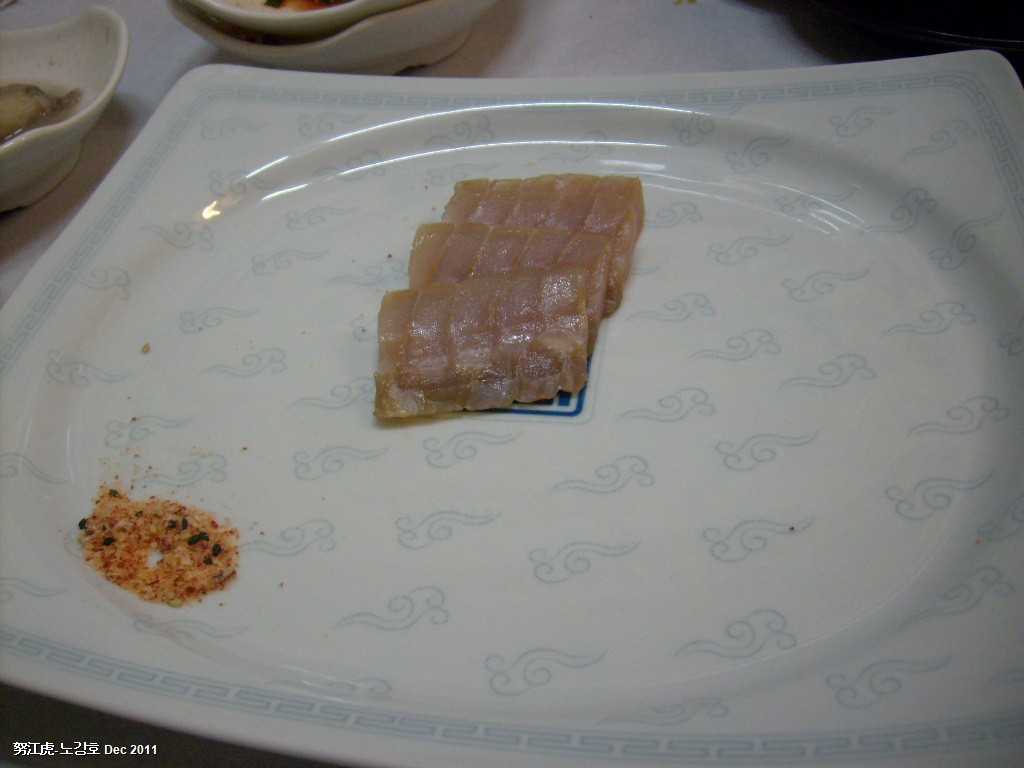
raw ray fish (홍어) – revolting!
I’ve eaten dried ray fish in sauce and really enjoyed it but fresh (홍어) and uncooked it is the most revolting thing I’ve ever eaten; worse than all the crud of the sea, the insects, dog and probably worse than boiled lung – which I don’t ever intend eating! If you want to eat something truly awful, something that makes even live octopus tame, this is your baby.
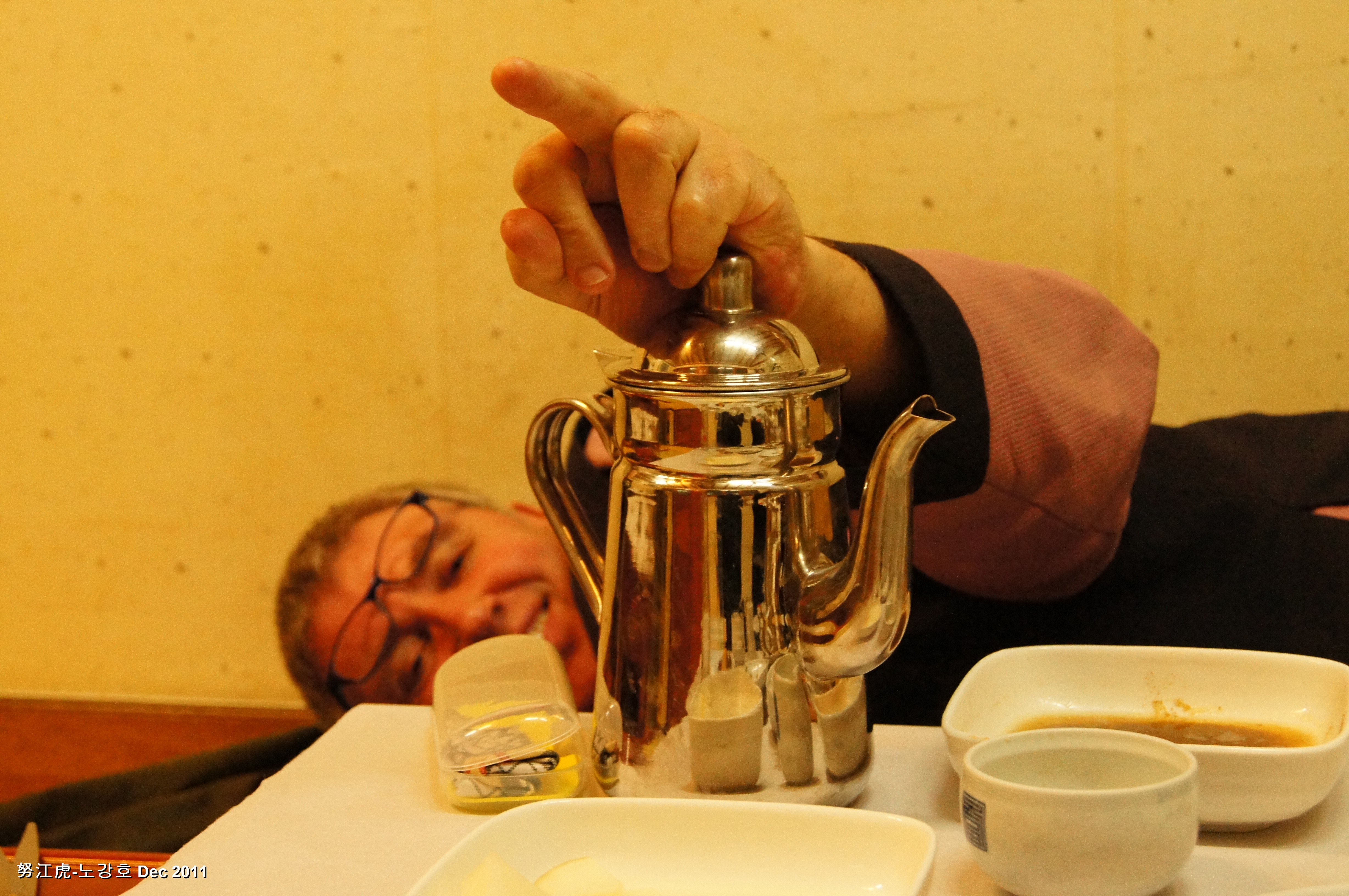
recuperating
©努江虎 – 노강호 2012 Creative Commons Licence.
FURTHER REFERENCES
Food to Put Hair on Your Chest (Bathhouse Ballads Sept 2010)
As Tasty as it Looks (Mideodeok). (Bathhouse Ballads Sept 2010)
Monday Market – Sea Squirt (멍게) (Bathhouse Ballads May 2010)


 Elwood 5566
11 comments