Bathhouse Basics (10): The Hinoki Tang (히노끼탕)
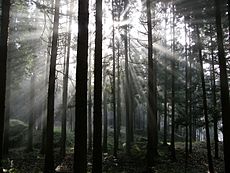
the Hinoki conifer in Japan
All bathhouses have their own individual character which is why it is always good to be familiar with a range of establishments that you can use when you feel the need. Some places are more suited to nursing a hangover or the flu while others offer particular experiences, perhaps an ice-room which is particularly welcome in summer or has water therapy pool should you have back or neck ache, etc. And the temperatures of various pools tend to differ between establishments. Temperatures can differ in cold pools between one bathhouse and another though I am not sure whether or not this is by design or coincidence. There is an excitement in visiting a new bathhouse in the anticipation of what will be experienced. I have only visited one bathhouse that I never felt compelled to return to and indeed have found that most bathhouses offer something unique.
The scent of nature lingers in bathhouses; fragrances such as mugwort, ginseng, pine, rose, or lavender drift over the e-bente-tangs (이벤트탕) and saunas are often rich in the primeval aroma. One of my local bathhouses articulates its atmosphere by the subtle use of rock, wood and pine and one of its central features is the Japanese hinoki tang (히노끼탕). Initially, I found this pool quite boring. A wooden bath is hardly very motivating especially as I like temperatures at the extreme rather than simply comfortable and approaching body temperature. But once again, as with so many aspects of bathhouse culture, something calls you back and I’m beginning to realise the bath’s appeal lies both the pools natural materials and its texture, which at first is quite strange.
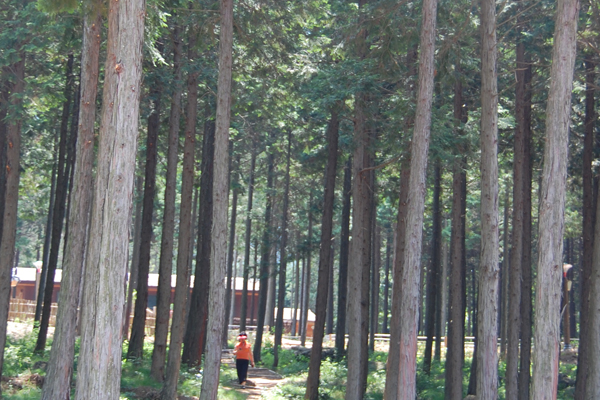
Hinoki (편백) cypress forest in Korea
The hinoki tang, is a Japanese style bath and is made from the conifer, Chamaecyparis and in particular the Chamaecyparis Obtusa. The tree is also known as the Japanese Cypress, Hinoki Cypress or simply, Hinoki, (편백나무) and are common throughout Asia and especially Japan and Korea. The wood, hard and almost white in colour, has been traditionally used for buildings, a good example being Osaka Castle, in Japan but also has uses in crafting beds, floors and even the wooden pillow, mok ch’im (목침) used in bathhouses.
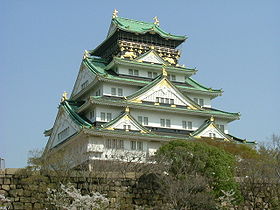
The Impressive Osaka Castle, built from the hinoki cypress
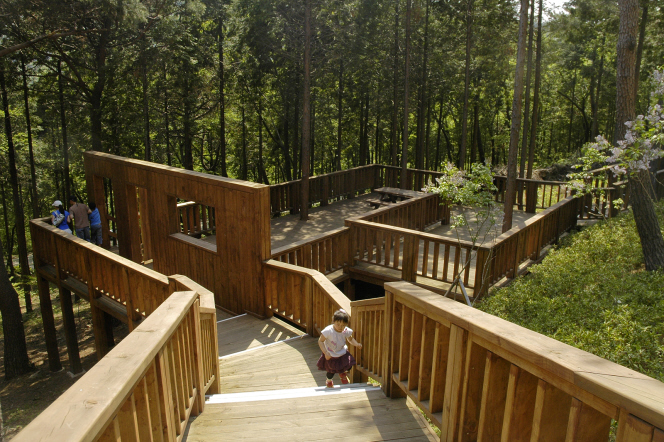
hinoki cypress wood
The first time you bathe in a wooden bath is quite strange. Most of us have spent our entire lives bathing in baths or pools made from enamel or some form of porcelain and the feel of wood against the skin is odd especially as it has a slightly slimy texture. However, in the right atmosphere, a wooden pool enhances a bathing experience, helps produce a more natural ambiance and certainly feels pleasant against the skin.
A hinoki tang in the full traditional Japanese style, with a roof and a constant flow of water into the pool by way of what looks like a wooden box, is a pleasing sight.
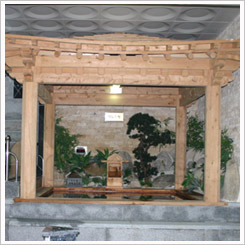
hinoki tang with a traditional ‘roof’
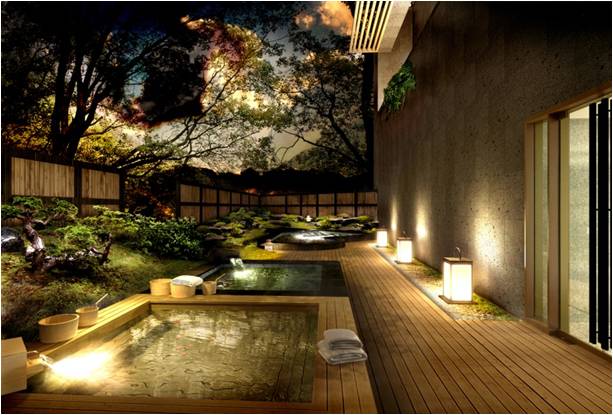
a tranquil hinoki tang situated outside and in a beautiful setting
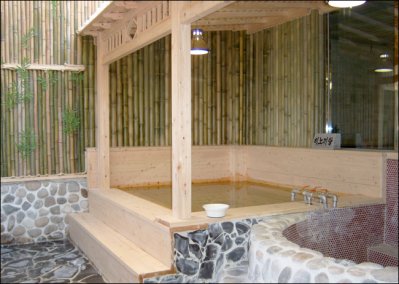
an hinoki tang with the addition of a roof, a frequent feature based on the traditional Japanese model
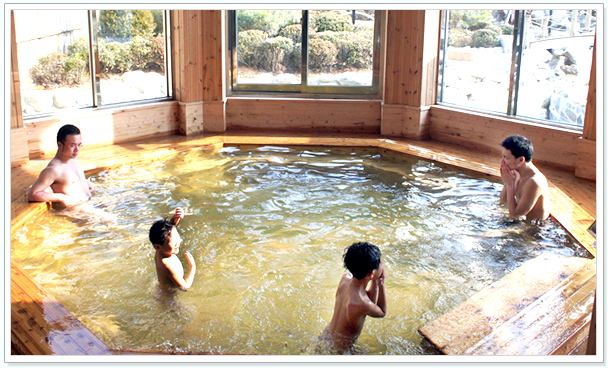
a bathhouse hinoki-tang
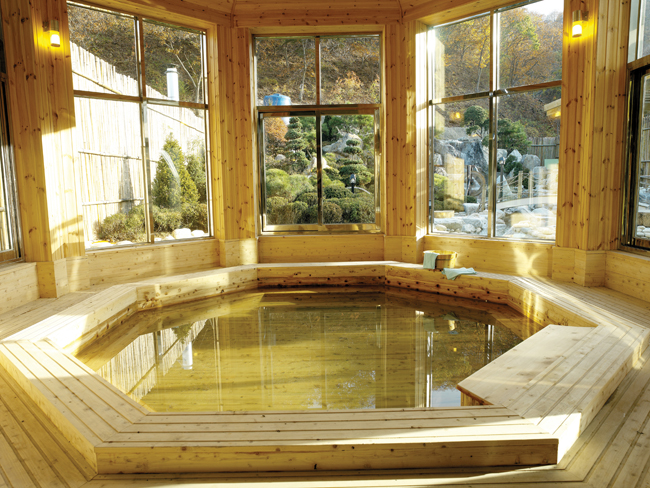
the same hinoki-tang as above, but empty
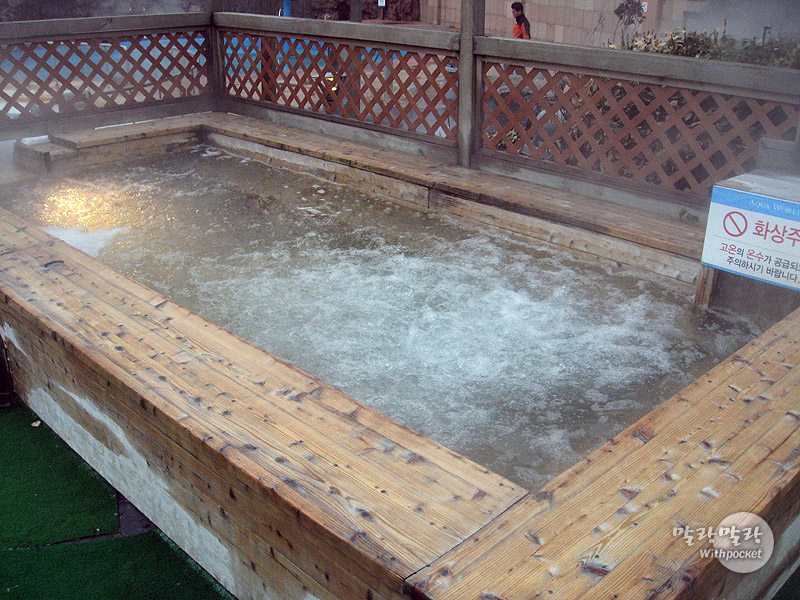
the texture and smell of the wood enhances the experience
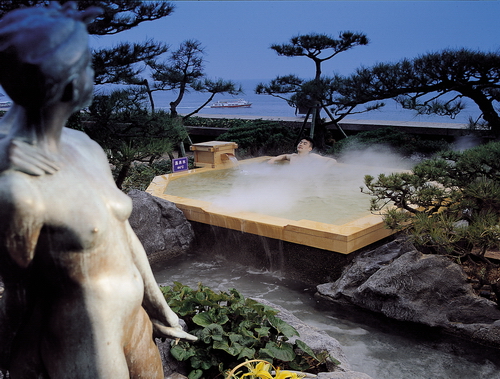
who needs a partner to spoil the ambiance. The beauty of an hinoki-tang in a truly awesome setting
The Hwang-So Sauna in Song-So, Daegu, has a hinoki tang (히노끼탕).

© 林東哲 2010 Creative Commons Licence.
Related Articles
- Kai Shun 18″x12″ Hinoki Cutting Board (woot.com)
Tissue Trauma

Not suitable for pumpkin people
I was cooling off last night in the cold pool at the bathhouse. With the evenings still a little warm, at least if you’re western, the cold pool is still not too cold. Many Koreans started wrapping themselves up three weeks ago. The memi (매미) only had to stop singing, at just under 29 degrees, for some to start complaining about ‘the cold.’ The last memi I heard was on Saturday 25th of September and given Daegu is one of the warmest parts of Korea throughout the year, I would imagine the Memi stopped singing earlier, further north.
The following week, was still warm and I sweated in class despite the use of air conditioning and a fan but already some students had begun shimfing about it being cold. ‘Teacher! Teacher! I cold! Turn off air-con!” They whined. Like it’s fucking 28 degrees Celsius! That week I really enjoyed walking home in the evening because there was just the tiniest touch of coolness floating in the air. Suddenly there were only a handful of people on the street in short-sleeved shirts. And now it’s mid-October, I notice my shower is a little too uncomfortable to use without increasing the temperature. For the last few months even the coldest setting had become warm. And in my school some teachers have already started that typically Korean custom of wearing a coat all day long.
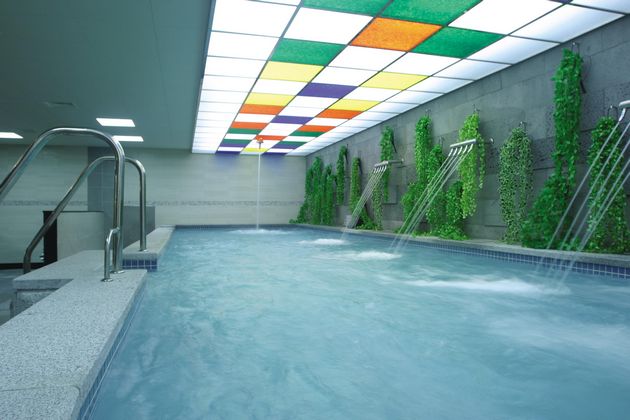
cooling off
So, in the bathhouse the cold pool (냉탕) is empty. Six weeks ago it was at its busiest. A friend I haven’t seen for a while came and spoke to me. He’s slightly older than me and incredibly fit. He has a short stocky body and is a regular in the gym where he runs for 45 minutes on the treadmill, at a fast pace. He has this habit of entering the cold pool, which you can just about swim in, by springing over its side and into the water. Most of the schoolboys don’t do that and instead enter by the steps or climb into the pool.

tissue trauma
We chat for a while, me draped over the pool ledge and him standing. Then he takes his leave and tells me he wants to have a shower and will come back and join me. As he turns around, I notice a white flash from his buttock and walking into brighter light realise he has a few inches of toilet paper dangling out of his crack. I grin to myself and then momentarily ponder which is the greater embarrassment, a bogey hanging out of your nose or residue bog paper clamped between your checks like an insistent napkin.? Instantly, I choose the bog paper because you can so easily tell someone they have a bogey hanging, you simply touch your nose in a particular manner, and they will understand; it’s a discrete and universally understood hand sign. But how do you convey to someone they have paper hanging out their arse? There’s no universal ‘sign’ and I wouldn’t want to risk saying anything in Korean which might compound the problem. Do you discretely touch your buttocks or point around to them?
Without actually verbalizing the problem, I would imagine the only way you could draw attention to it would be to tug on it, like yanking a doorbell or pulling the chain of a toilet! You wouldn’t want to tug on it too much or it might pull out and who knows what’s on the other end or how much might be dragged out. Best is probably a small tug, just enough to announce a presence rather than raise an alarm. By the time I’d finished pondering, the dilemma was over and he was safely in the shower where the offending bog paper, sloughing down the backs of his legs, started its voyage to the drain. And luckily for him, I don’t think anyone else noticed.

envirnomentally friendly method

all too often the problem in Korea
© 林東哲 2010 Creative Commons Licence.
Hyu-Lim-Won Sauna. Da-sa – 휴림원 사우나. 다사
A Bathhouse Review
First visited October 9th 2010. Most recent visit, 19th May, 2012. This bathhouse and jjimjilbang is an absolute must in terms of a visit. It is situated in the rapidly developing area of Da-sa (다사), Daegu. I got to know Da-sa ten years ago when it was noted for being an up and coming area to live. Since then, it has exploded into a small town on the edge of west Daegu and it is still expanding. Impressive high rises dominate its approach and though it is separated from the main part of the city by the river, giving it a sense of being outside Daegu, the new buildings and their size are very much ‘big town.’ It’s a short ride from Song-so, perhaps 5000 Won (£2.50) in a taxi and on the metro system. Da-sa lies at the back of Keimyung University campus. From the area of Song-So E-Mart, several buses go to Dasa, including the 527. The facility is directly opposite bus stops.
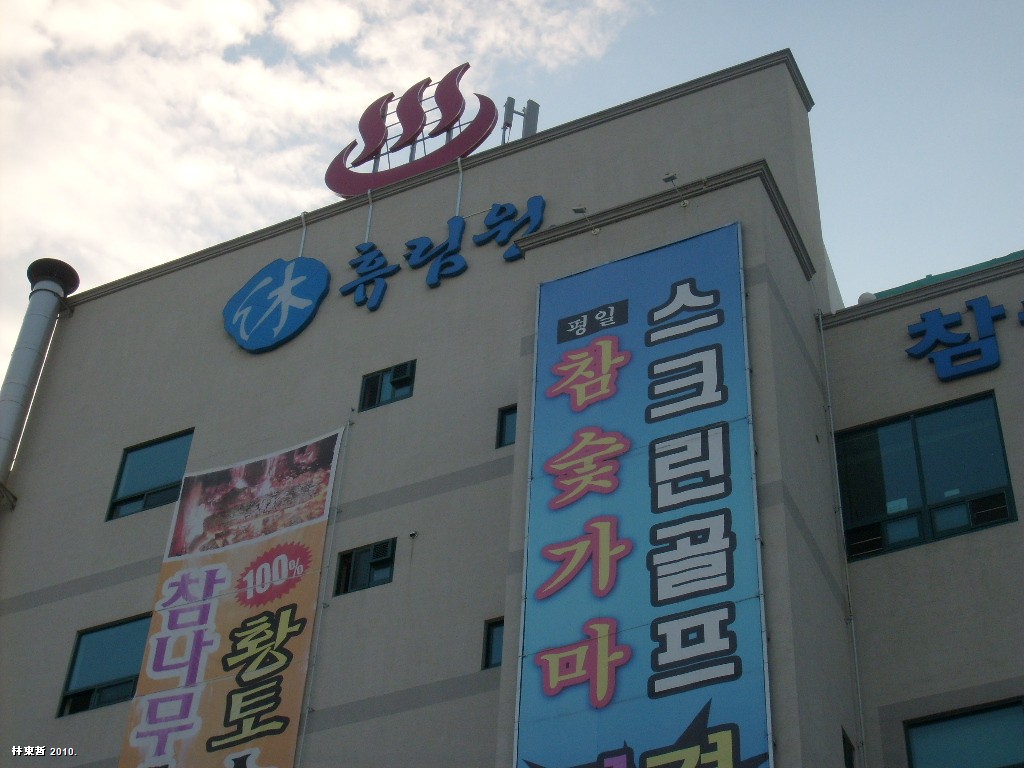
Hyu-lim-won Sauna in Da-sa, Daegu
Hyu-lim-won is a very new complex which I need to explore more, so this is a cursory ‘report.’ My first visit was to the bathhouse (목욕탕). Being a ‘play Saturday’ (놀토- when kids have no State school)- at a time when many students have finished their mid-term exams, it was busy. The changing area was very comfortable, though a little small after the spacious Migwang Spolex (미광) in which you can get lost. A large decked seating area occupies the center of this area with numerous facilities, a snack machine, barbers etc, on the periphery.
The Bathhouse pool complex (male ): As you enter you notice the layout is on two levels with the back pools being accessed by a large inclined walk-way. There are about twenty stand up showers directly on your right and beyond these perhaps 30 sit down showers. On the left is the massage and scrub down area and various saunas: a dry sauna, very hot steam room and a salt sauna (소금방). Between the sit down showers and the saunas are three pools: a large warm pool (온탕), which at 42 degrees makes it as warm as many hot pools. Beyond this pool are two smaller pools one of which is the hot pool (열탕) which was 48 degrees. Beyond these and to the right is a large cold pool (냉탕), at 17 degrees. Access to the cold pool is via the inclined walk-way, to the left of which are a few lido deck chairs and a sleeping area (수면실) with floor heating (온돌), and at the head of which are steps into the cold pool, on the right. Standing at the peak of the inclined ramp walk-way, are steps into the furthest pool, a large therapy pool at 33 degrees. The therapy pool was very interesting with lots of facilities I’ve not seen before. On the far side are seven ‘pods,’ slightly sunken and in which you stand using handrails and after pressing the activation button are treated to a hydro massage, on your back. The jets are powerful, and if you maneuver yourself, you can give your butt a deep clean but you should have cleaned this area before entering any pools. On the right side is a glass pod in which you stand and again, after activating the button, a very powerful shower blasts your shoulders or back. Next to this is a similar shower, but not as powerful, and then three ‘pods’ which blasts jets of water onto the soles of your feet. On the left hand side are four sunken stone beds on which you lie for an alternative back and leg hydro therapy.
To the left of the central sleeping area, beyond the salt sauna, is the event pool (이벤트탕), and of all the event pools I’ve used, this was the most eventful. The pool was 36 degrees and had a powerful continual jacuzzi, while the water, scented with lemon, mint, lavender and rose, was bright yellow. Tucked into the corner behind this, and next to the therapy pool, is a sleeping area (수면실) with unheated flooring.
Like the changing area, the ‘powder room’ felt a little small but as mentioned earlier, this is because I use Migwang Spolex, in Song-so, on a regular basis and it’s very spacious.
Plan
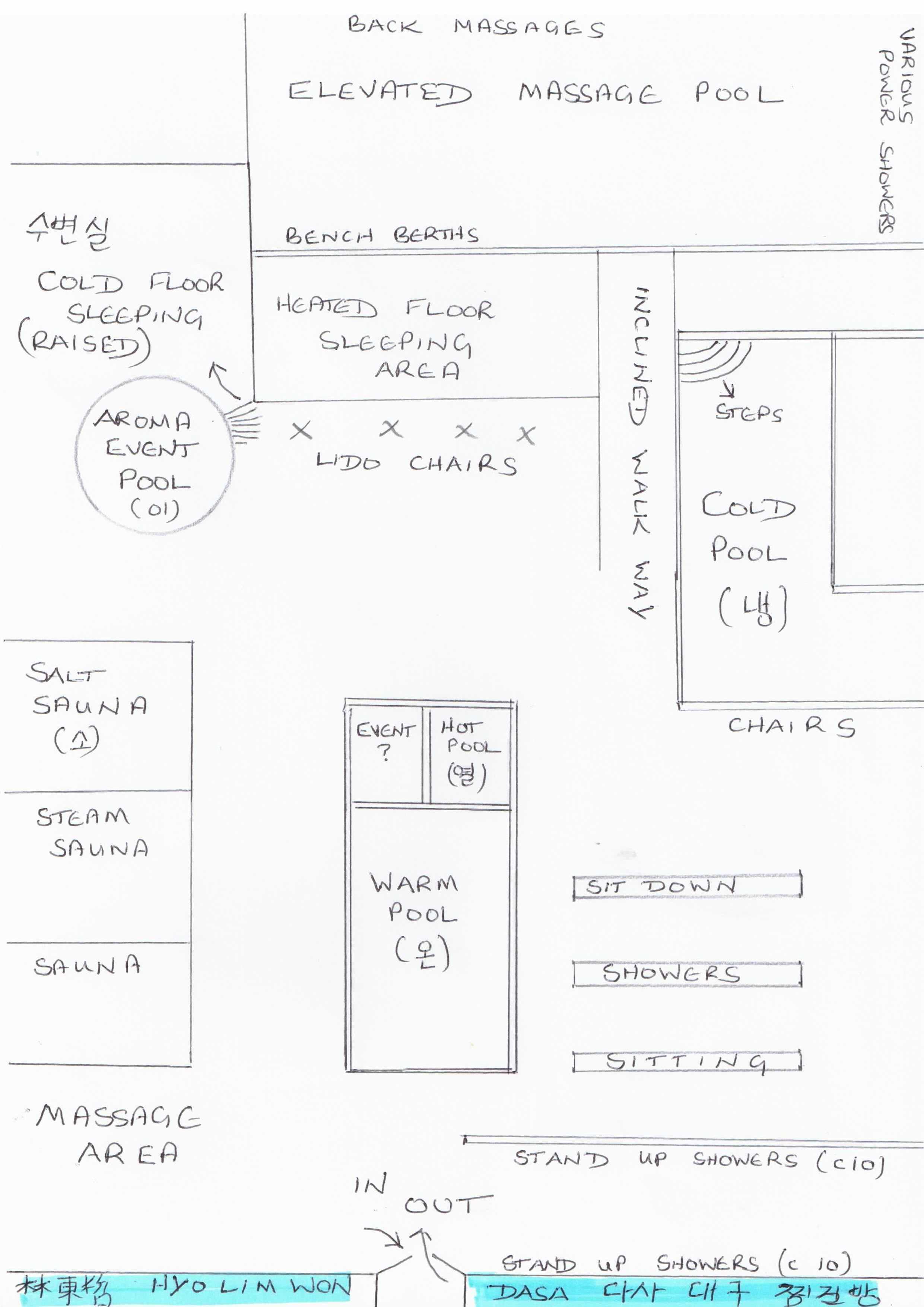
Hyu Lim Won, Dasa. Bathhouse design (male)
Location – (Wiki Map link ) Fifteen minutes by taxi or bus from Song-so. As you enter Da-sa, it is on the left and easily seen. Alternatively, you can use the metro underground from Song-so but it is easier to get to from Daeshil Subway rather than Dasa.
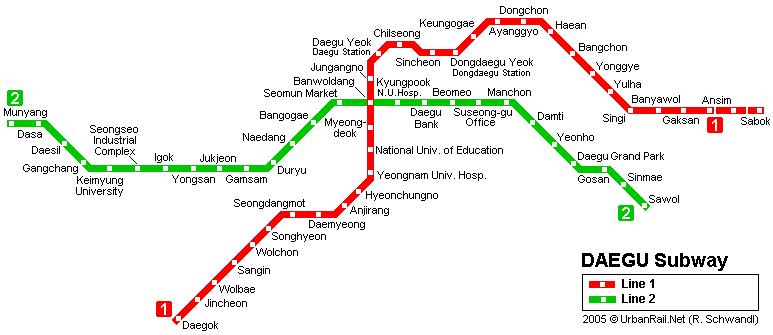
Daegu metro system
Times – 24 hour jjimjilbang (찜질방) and bathhouse.
Facilities – (in process of being researched) 1st floor reception, women’s bathhouse, jjimjilbang, men’s bathhouse, coffee shop, shoe shine, barbers.
Jjimjilbang – (pending)
Bathhouse (men) – around 20 stand up shower facilities and 30-40 seated. Event pool with jacuzzi, (이벤트탕), hot pool (열탕), large warm pool, another unknown pool, large cold pool (냉탕), large therapy pool, steam room, dry sauna, salt sauna, 2 pool room relaxation areas, heated and unheated, changing room.
Cost – bathhouse 5000 Won.
Others – hairdressers, massage and rub downs, parking, cafe. Opposite impressive new development.
Ambiance – not my favourite, I prefer a little more subdued, but impeccably clean, new and bright. I didn’t notice any televisions. Friendly, but I would imagine one of the busier saunas.
Waygukin – None.
Address – Da-sa (다사). Daegu.
Hyu-lim-won Updates
© Nick Elwood 2010. Creative Commons Licence.
Kayasan Hotel Bathhouse – 가야산 관광호텔

Kayasan Hotel (가야산 관광호텔), near Daegu
Before I give an account of the bathhouse, I want to review the hotel because this a truly impressive location and well worth a visit, either for an overnight break or simply for coffee. Kayasan Hotel (가야산), Kyongsangbukdo Province, is around an hours drive from Daegu and is situated in the heart of the Kaya Mountains. This hotel truly impressed me as my first glimpse of it was on an early morning , after substantial snow.

Kayasan Hotel in snow
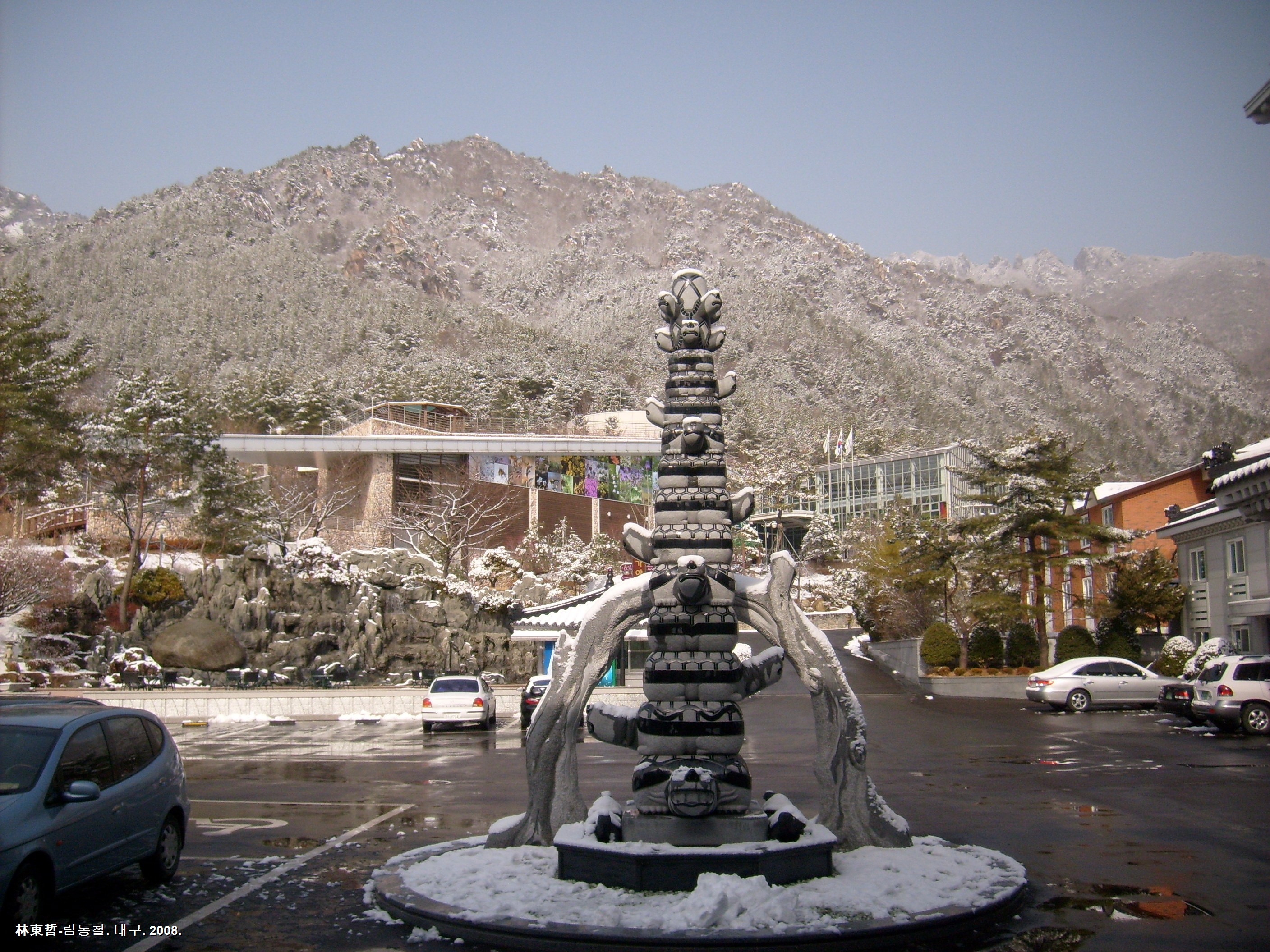
View from the hotel entrance
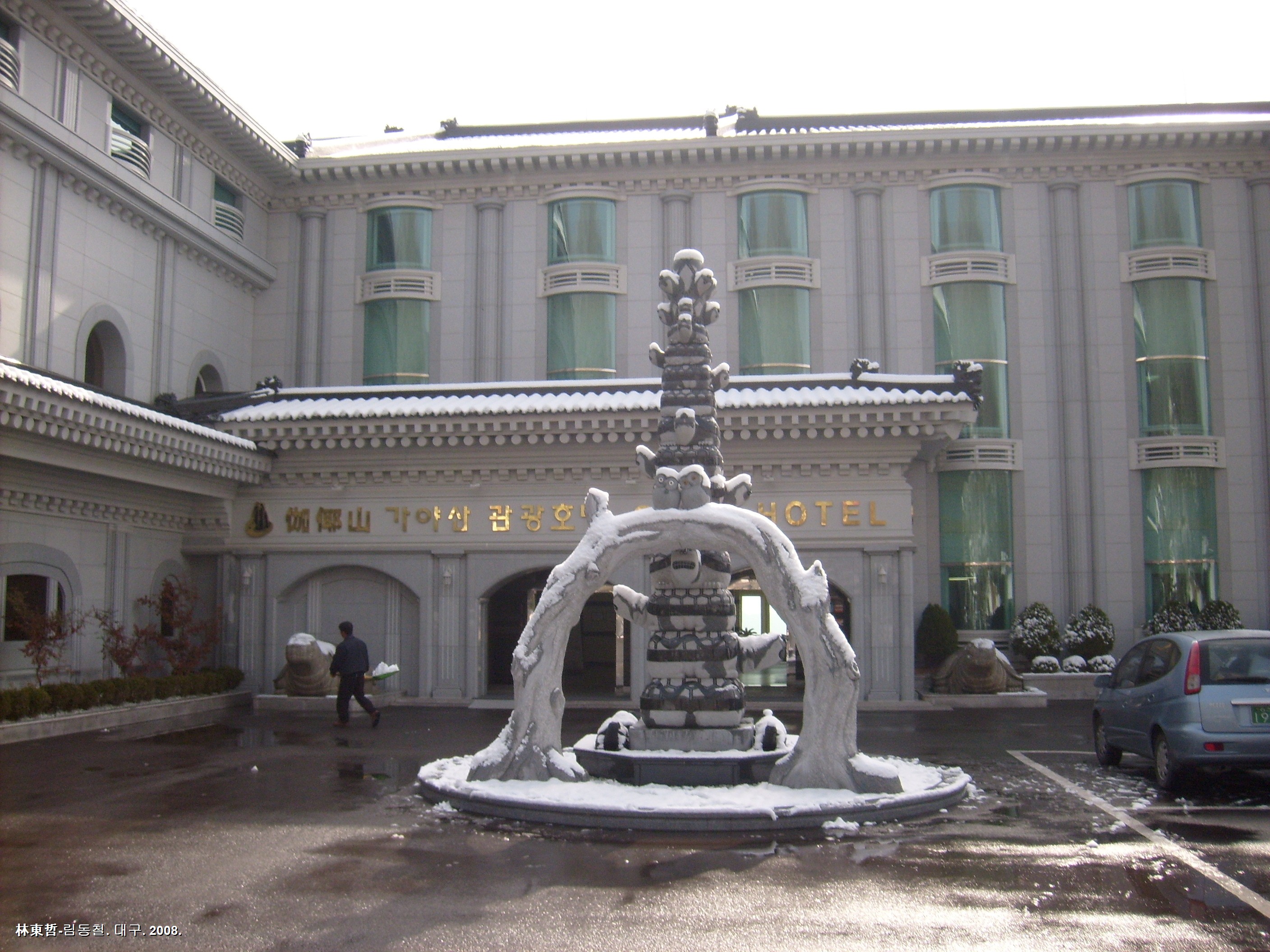
Kayasan Hotel entrance
The hotel has a restaurant and cafe, as well as an open-air bar/cafe, situated next to a small cascading waterfall-feature, which is open in good weather. A couple of smaller restaurants, including an adjoining traditional Korean restaurant, are close-by. The hotel sits right by the entrance to a nature park next to which is a natural history museum containing some very interesting displays.
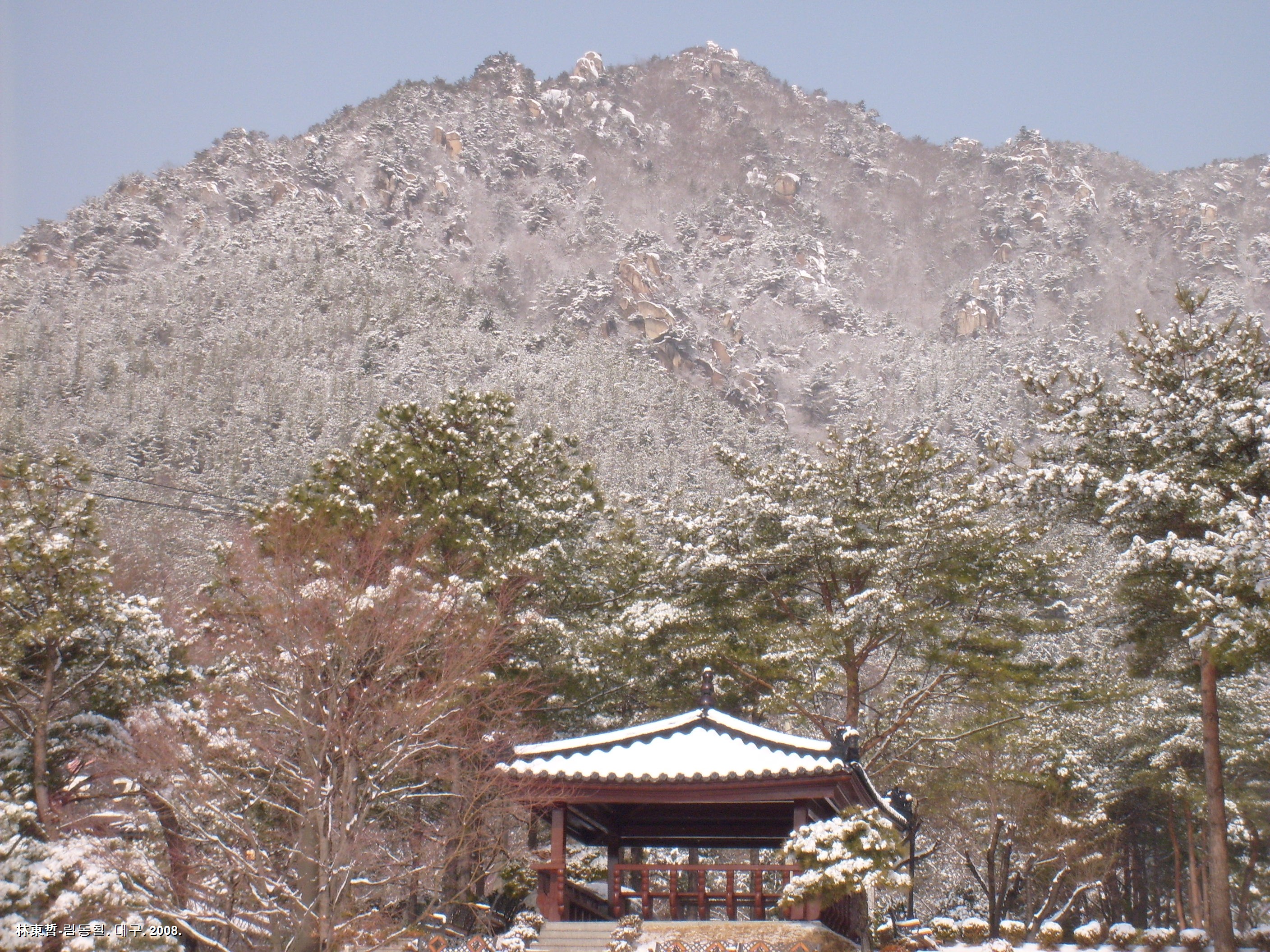
invigorating

Dining room
The hotel is large and spacious and the emphasis on white marble and white tiles, both in the facilities and hotels rooms, gives an airy, if not slightly clinical atmosphere. I found the bedrooms a little strange but pleasant. The one we’d booked was simply, a tiled white room with all the facilities you’d expect but an absence of anything soft either in texture or shape – other that is, than the bedding. Looking thorough the brochure, rooms with western style beds and sofas are available.

a western style bedroom (photo from hotel website)
However, at times I was unsure whether or not I was in a hospital, space ship or heaven and had an angel, nurse, or spaceman appeared, I wouldn’t have been surprised. The lounge, restaurant and cafe maintained the white theme, contrasting it occasionally with black tiling, but were tastefully and luxuriously decorated. The hotel design made maximum use of the panoramic views of the mountains both in the lounge, bathhouse and the more expensive bedrooms.

The grand lounge and bar
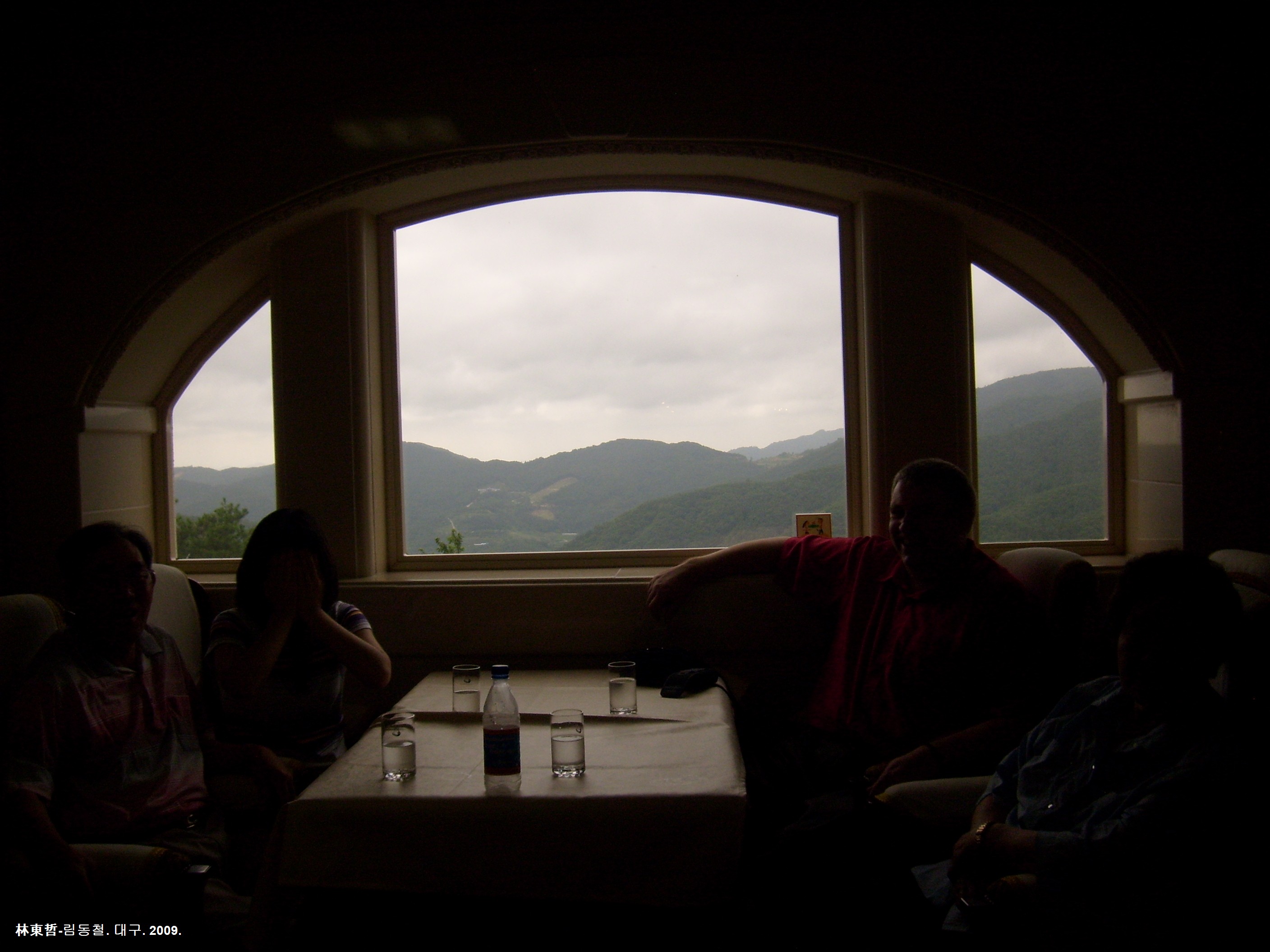
panoramic view similar to the ones provided in the bathhouse
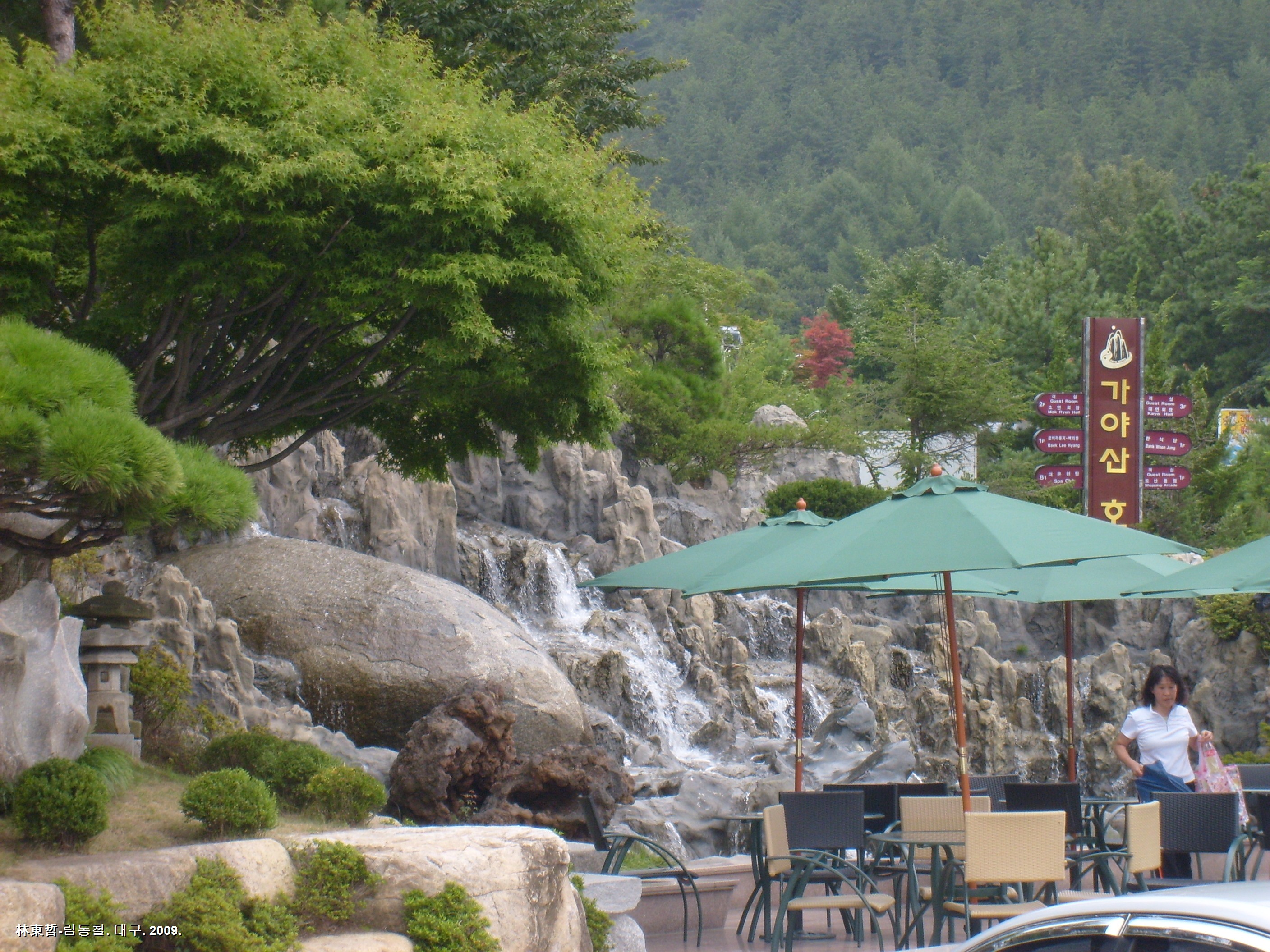
open air cafe/bar
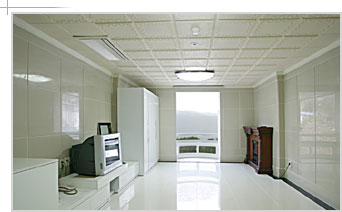
Family room korean style (photo from hotel website) Costing about 143.000 Won per night (70 pounds)
I was eager to use the bathhouse as this was a central feature in the hotels advertising and it looked very inviting. If staying in the hotel, entrance is free and the facility is open from 6 am. Once again, pure white tiling pervaded on floors, walls and ceilings. The changing area was very relaxing and spacious though there was an absence of relaxation area with the usual TV screen and snacks. In the bathhouse, the most alluring feature were large arched windows that looked out onto the adjacent mountains and the various pools were designed so you could lounge and admire the view. A number of monks were busy scrubbing each other or shaving their heads and given the Heinsa Temple is close-by, monks are regular visitors. Stereotypically, one doesn’t associate a monk’s lifestyle with opulent bathhouses and grand hotels but I would imagine the hotel bathhouse is a wonderful place in which to meditate.
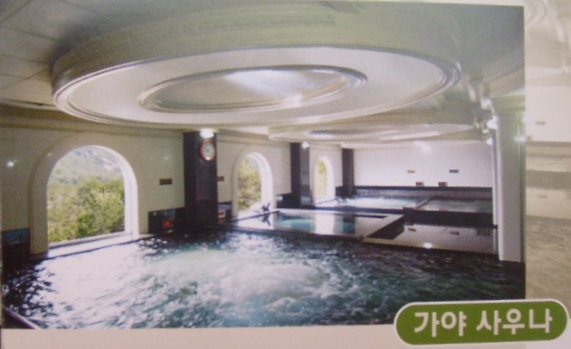
The bathhouse (photo from Hotel's brochure)

a large geode in one of the saunas
All the standard showers and pools were available, as were saunas. Particularly impressive was a jewel sauna (보석 사우나) which contained an enormous geode which I managed to photograph. I’m also sure there was a salt sauna but I actually can’t remember as, so far, I have only visited the bathhouse on one occasion. However, the panoramic views, monks and secluded mountain location, provided a relaxing and invigorating atmosphere.

the lounge

one of the crystal displays in the lounge
Location

Kayasan Hotel and surrounding area
Facilities – hotel, bathhouse, restaurants, bar, lounge, out door cafe/bar, sport facility, arranged tours, nearby nature park and museum, numerous restaurants, panoramic views and lots more.
Hotel website – http://www.gayasanhotel.co.kr/ Actually, the photos here are limited and do not do the place justice.
Address – 경북 성주군 수륜면 백운리 1282-4. Tel. (0540) 931-3500 Fax. (054) 931-7771
© 林東哲 2010 Creative Commons Licence.
Bathhouse Basics (9): – The Hot bath (열탕)
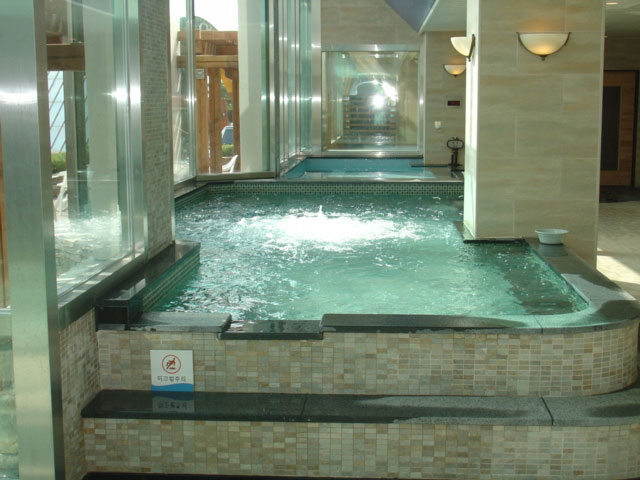
A typical yeol-tang (열탕)
The yeol-tang, (열탕) is the hottest bath in a bathhouse with temperatures somewhere between 38-48 degrees. As always with pools that are at the extremes, bathhouses often keep them at around specific temperatures and these may vary depending on the season. Hence the hottest and coldest pools vary between establishments. If you have aching muscles, for example, you might prefer the hotter end of the scale.
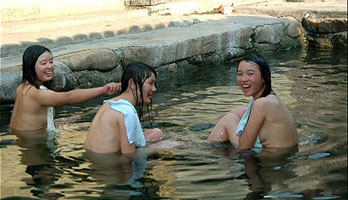
Having fun in a yeol tang
Sometimes yeol-tang are built with health inducing stone and in some cases plated with gold or silver, in which case they will be small. The most common stone is probably jade. Sometimes they may also have a jacuzzi or contain medicinal herbs in which case they may be called a han-yak-tang (한약탕), but this may not necessarily be the hottest pool.

a hot pool in a golfing complex
Among the various bathhouses in Song-So, Daegu, Migwang (미광) has one of the hottest yeol-tang which is usually between 48-50 degrees, whereas Hwang-So (황소) is usually much cooler but recently the temperature gauges have not been working. Han -Seong (한성) for many years had a very hot han-yak-tang but in the last few months the temperature has been lowered and the largest pool, with an intermittent jacuzzi, has been designated the hottest pool. I don’t know if it is intentional, but Samjeong Oasis (삼정 오아시스), at Yong-San-Dong, has a yeol-tang which seems to operate between between two temperatures and when the pool cools to a certain temperature, it suddenly heats up.

relaxing
© Nick Elwood 2010 Creative Commons Licence.
Bathhouse Basics (8): The ‘Special Event Pool’ (이벤트탕)

- a ‘special event pool’ (이벤트탕)

I’ve always found e-bente-tangs to be the biggest disappointment in bathhouses and always a tongue-in-cheek anti-climax. I can remember sitting in e-bente-tangs in the past, waiting for something to happen and rarely anything did. Most often, the ‘event’ I anticipated was already in play. Don’t let the title mislead you, e-bente-tang are much like the ‘Korean holiday,’ or ‘final exam,’ by which I mean they are usually the opposite of what they claim to be.

- Special event pools outside

E-bente-tang are smaller sized pools which are usually mid range in terms of temperature and which have some added feature such as: coloured or scented water or coloured lighting radiating from within the pool. They may also uses a combination of features or have the capabilities of a jacuzzi.The most frequent colours are green, red or blue and the most common scents are ginseng, lavender, berry, herb, mugwort (쑥) and pine.

- Coloured water ‘event’ pools’

Despite being less eventful than the name suggests, e-bente-tang are great places to relax and are often one of the pools in which you can languish for long periods without getting too hot or cold. The addition of coloured water or aromas adds a touch of pampering to the experience.
© Nick Elwood 2010 Creative Commons Licence.
Bathhouse Basics (7): The Naeng Tang (Cold Pool 냉탕)

The naeng tang (냉탕)
If there is one pool, usually the biggest, you are guaranteed to find at every bathhouse (목욕탕), it is the naeng tang (cold pool – 냉탕). Naeng tang are also often the deepest pool in bathhouses, usually as deep as an average adult’s waist and with the pool length, long enough to be able to swim in.

The cold pool (냉탕)
In summer, they are wonderfully refreshing and for many bathhouse goers, moving between a hot sauna or hot pool to the cold pool is a great sensation. Lounging in the cold pool on a hot summer’s day, before you exit the bathhouse complex to ‘powder’ and dress, will help delay the inevitable onset of sweating.
The temperature of naeng tang pools tend to vary between establishments though this is probably more noticeable in summer. Many bathhouse pools and sauna display their associated temperatures but this is not so common with naeng tang. Throughout the hot summer the cold pools are busy and their size and depth means they are often the playground of boys and even university students.

My favourite pool
In mid-winter however, the fact they are freezing means getting into one can require Spartan constitution; they are cold enough to knock the breath out of your lungs. Often the pool has a large shower which can be turned on by an adjacent button and which is powerful enough to massage your back and shoulders. Its force takes a little getting used to.
© Nick Elwood 2010 Creative Commons Licence.
Samjeong Oasis – Lotte Castle (용산동) Daegu.

삼정 오아시스
First visited August 14th August 2010. Last visited July 2nd 2012. This is a relatively new and very pleasant bathhouse with an adjoining health club located on the edge of the prestigious Lotte Castle Apartments. I have visited here several times and it is very clean. This is a good bathhouse to take a nap in as it has a pleasant raised sleeping area down the far wall and also a large sauna room in which the TV is located. This room is fairly humid and you can easily nod off laying on the floor. Next to this is a steam room with very high humidity. The steam must be pumped in or the boiler situated behind a wall as I didn’t see one. Personally, I love the enormous cauldron that bubble away in a corner and hiss out bursts of steam.
A smaller sauna with no humidity has a jade studded ceiling and the television in the adjacent sauna can be viewed through a window.
There are three central pools, basically a warm pool in the center with a hot pool at one end and a pool in which you lay and press a button to have jets of water squirted onto you spine and legs, at the other. The hot pool temperature varied between 38 degrees and 44 and it heated very quickly. This pool is at the hot and of the spectrum. Conversely, the large cold pool, is colder than some other bathhouses.
For my friend, this is his favourite local bathhouse with Migwang coming second. Personally, I prefer Migwang. Samjeong Oasis is certainly a great place to relax and nap but I find it a little bright and find the rectangular and very open plan, a little dull.
Plan

Sam Jeong Oasis. Yong San Dong. Bathhouse design. May 2011
Location – five to ten minute walk from the Tesco Home Plus at Yong San Dong (용산동). Samjeong Oasis sits behind Home Plus at the furthest right hand corner of the large apartment complex that lays behind the supermarket. (Wiki Map link )
Times – Unsure of timings but I believe the bathhouse is closed on Tuesdays.
Facilities – ground floor ticket booth, women’s bathhouse, men’s bathhouse, health club.
Jjimjilbang – none.
Bathhouse (men) – around twenty stand up shower facilities and fifty sitting down shower units, event pool, (이벤트탕), hot pool (열탕), large warm pool (온탕), large cold pool (냉탕), therapy pool, steam room, jade sauna, humid sauna with television, heated sleeping area. Changing room with television and benches.
Cost – bathhouse 5000 Won.
Others – massage and rub downs, shoe shine, health club, smoking room. Many nearby restaurants and shopping facilities.
Ambiance – relaxing, brightish, somewhat open planned and symmetrical. New and very clean.
Waygukin – Only my second visit but no foreigners.
Address –
Dream Sauna, Daegu, Yong San Dong (드림)
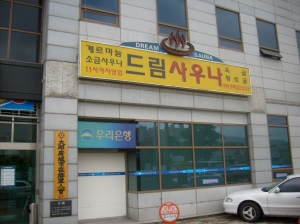
Dream Sauna (드림)
First visited in July 2010. Last visit 6th May 2011. Dream Sauna is a smallish bathhouse in Yong San Dong (용산동), Daegu and is a five-minute bus ride from Song-So, Mega Town where the Lotte Cinema Complex is. Since my last visit there seems to have been a few changes and I found more to appreciate than on my first visit.
The bathing facilities are modern and clean with a large cold pool, large warm pool and smaller hot and ‘event’ pools. The saunas include a steam room, pine sauna and a yellow mud sauna (황토방) with a charcoal wall, interesting art work and a resident television. The salt room (소금방) is fantastic as the salt is ankle deep on the floor and at first you think you’re entering a room of snow. You can even lay in it though the room is not specifically designed for this. The salt ‘font’ and seats have all been decorated to look like they are encrusted in rock salt. Quite an enchanting room. The salt sauna houses the television which can also be viewed from two other sauna rooms.
The large cold pool, beside a small jade, ondol sleeping area, has tiled artwork of dolphins above which three windows with colourful ocean scenes, are illuminated by sunlight. The smaller windows down the side of the bathhouse have floral designs. With bright tiling, the ambiance is light and roomy and a contrast to the black marble of Hwang So.
Plan
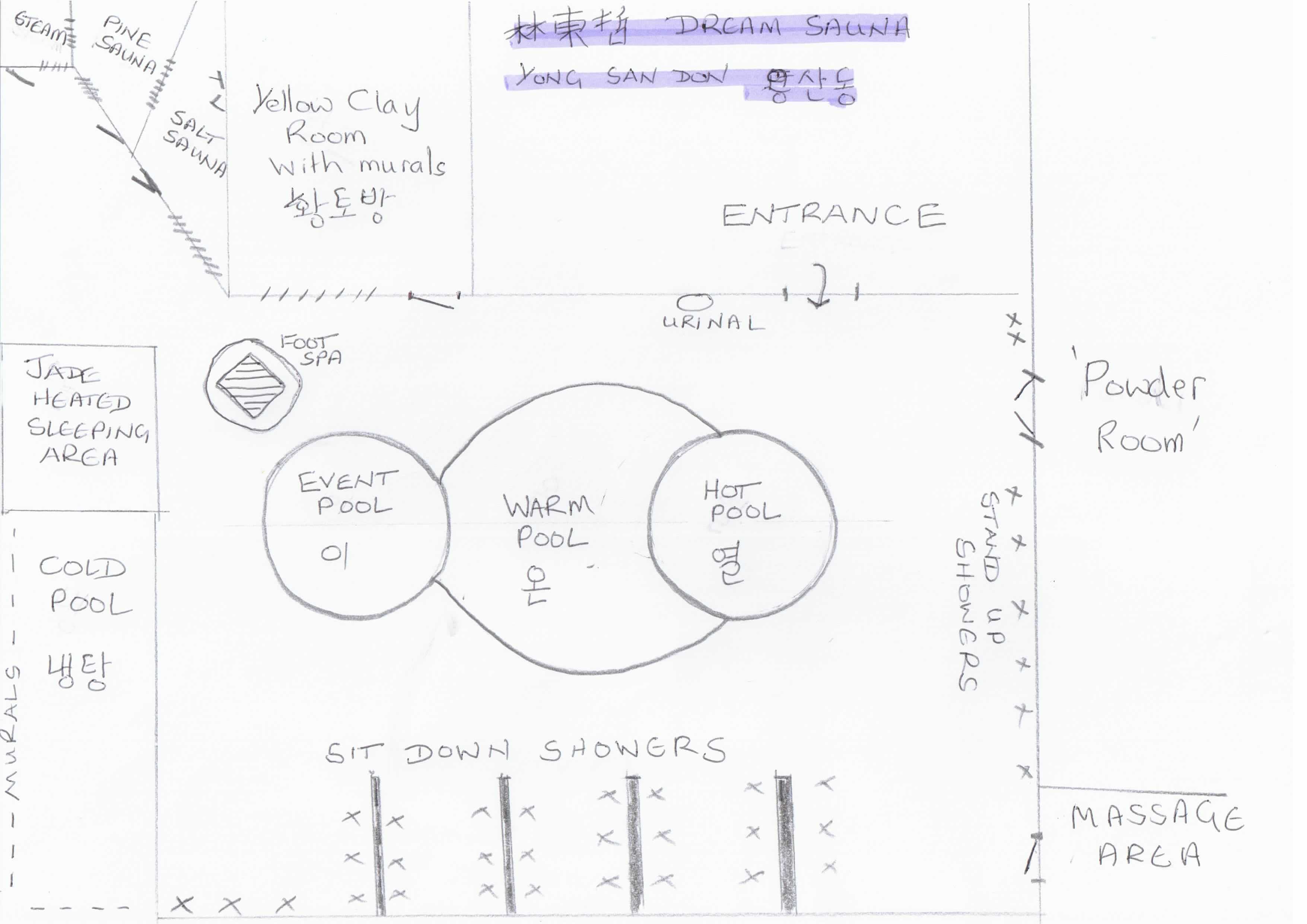
Dream Sauna - Bathhouse design (male)
The bathhouse: has a large rectangular changing area with a small recess containing a television and sofas for relaxation. There are around twenty sit down shower units and a bout the same number stand up showers. Shoe shine and a barber are on site.
Cost: 4000 Won
Location: This is very easy to find as the sauna is right next to Tesco Home Plus in Yong San Dong. If you come out of Home Plus and turn left, you will find Dream Sauna less than 3 minutes walk on the left hand side. There is a large opening on the ground floor with a sign over it and the ticket booth is in the lobby. (Wikimapia Link)
Ambience – bright, very clean bathhouse.
Waygukin – none but only my second visit.
© 林東哲 2010 Creative Commons Licence.
Migwang Spolex (Jjimjilbang), Daegu, Song-So. (미광스포랙스)
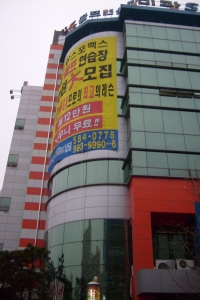
Migwang Spolex (미광, 성서, 대구)
First visited February 2009. Last visited September 28th 2012. Migwang Spolex is my favourite local jjimjilbang, bathhouse sports complex. Migwang has five stories of amenities including squash courts, billiard rooms, and a very well equipped and friendly gymnasium. It is very clean and has well laundered towels which smell fresh. The bathhouse, a large one, is one to enjoy and relax in rather than to use solely for washing and cleaning. Sunday afternoons and holidays can be very busy. The gym is very well equipped and spacious and home to many Muscle Marys, especially in the evenings. In summer, the ice rooms, of which there are two, one in the bathhouse and one in the jjimjilbang, are a refuge from the summer heat and humidity. I particularly like the changing areas as there are very roomy and with small poofes on which to sit while putting on socks’ etc – I hate having to do that sat on the floor or while trying to balance on one leg. Friendly staff.
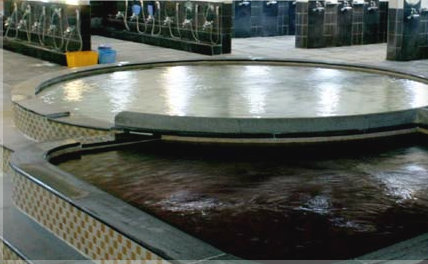
The ‘event’ and warm pool (male)
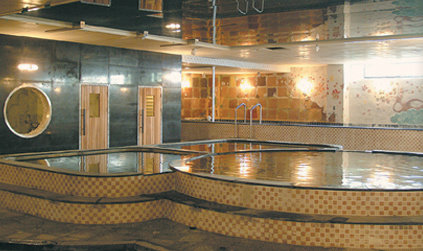
The warm and hot pools in the female complex
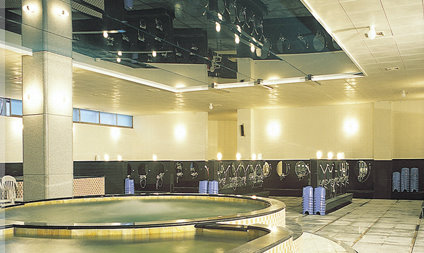
Women’s facility
Unlike many other businesses in Korea, many which simply border on existing, I think Migwang is doing very well, financially. I’m told it has over 1000 members with a monthly membership. More to the point, I notice Migwang regularly installs or renovates features during major holidays. A new ceiling and what looks like a new water feature is currently being built (October 2010). However, the water feature seems to have stopped mid program. In April 2011 new poofes appeared. Migwang is always impeccably clean and the staff very friendly – oh, apart from some grumpy old guy!
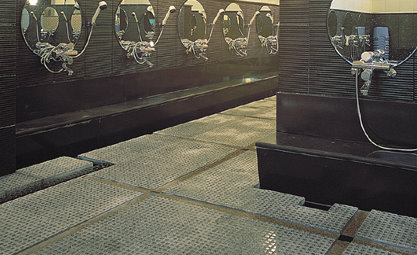
Migwang’s sit down shower units
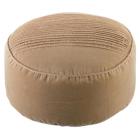
This is what the British call a ‘poofe.’
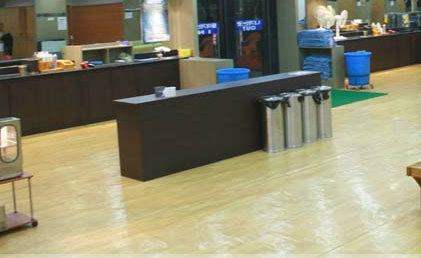
The male ‘powder’ room
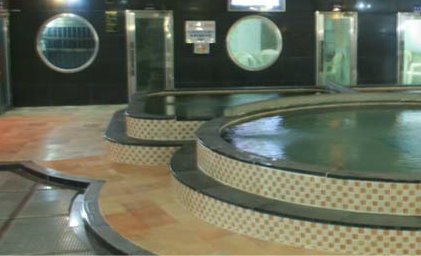
The warm pool with the pine, steam and ice room (L-R) in the background. A large TV sits above the central circular window
Plan
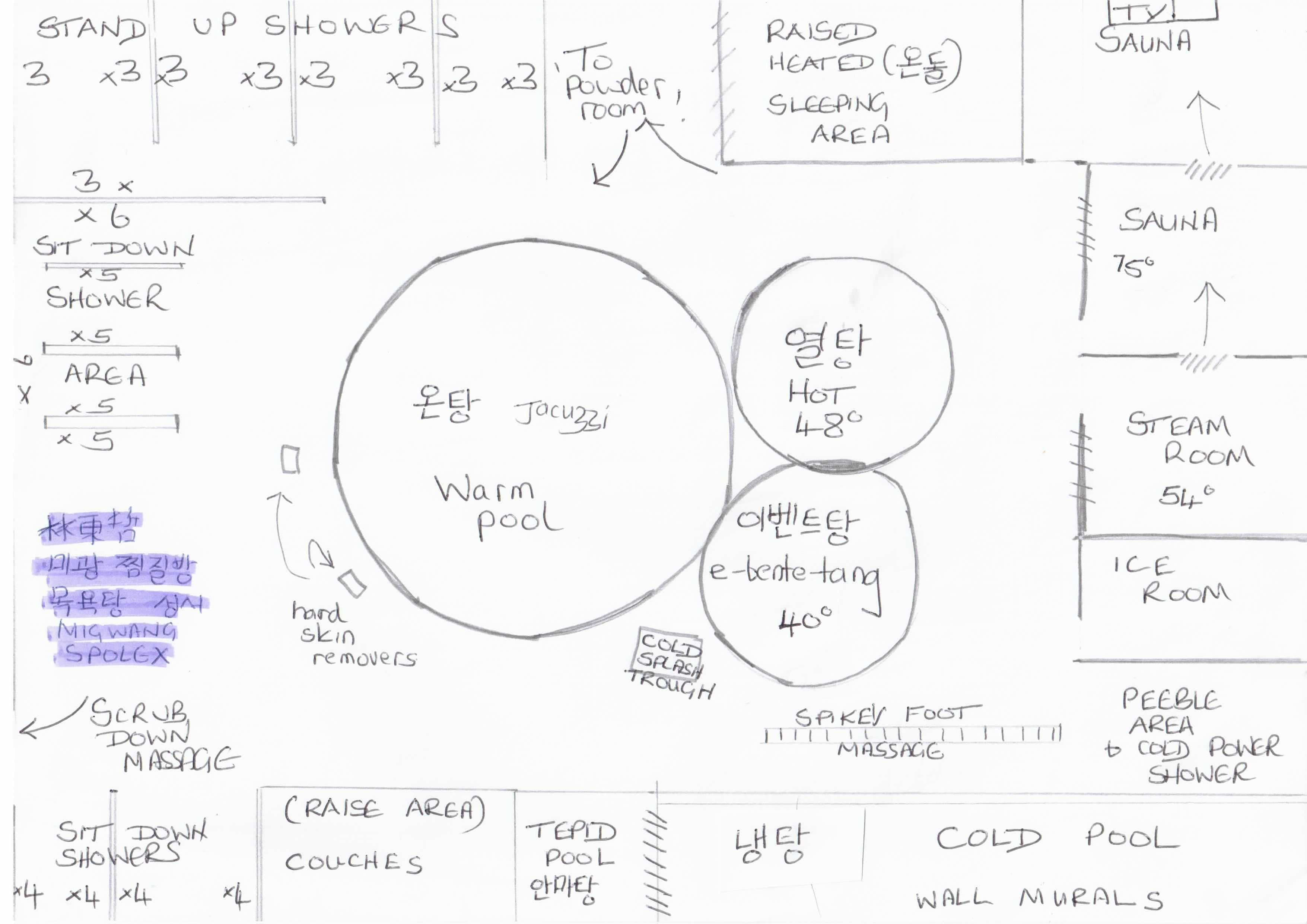
Migwang Spolex. Bathhouse Design (male)
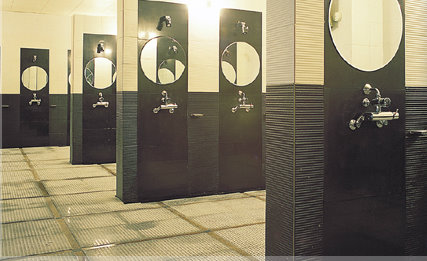
The stand up showers (male)
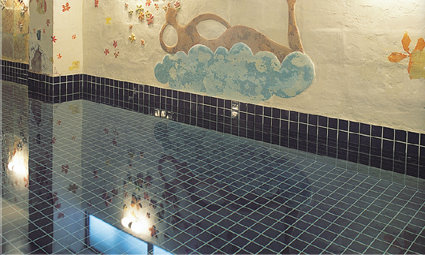
The women’s cold pool
Location – five minutes walk from the Song-So (성서) industrial Complex subway station and just 2 minutes walk from E-Marte. Come out E-Marte, turn right, turn right again at the cross roads and walk to the crest of the hill where the road bears left. The complex sits on the turning on the left hand side. (Wiki Map link )
Times – 24 hour jjimjilbang and bathhouse. Gym open from around 6 am Mon-Sat until around 11 pm. Sundays 8 am – 8 pm. Double check opening and closing times as they occasionally change.
Facilities – 2nd floor, reception, women’s bathhouse, women’s hair dressers. 3rd floor jjimjilbang, 4th floor men’s bathhouse, 5th floor gymnasium. Also squash facilities, martial arts, aerobics classes etc.
Jjimjilbang – ice room, various saunas, sleeping rooms, children’s play area, refreshments and food, small pc room, televisions, etc.
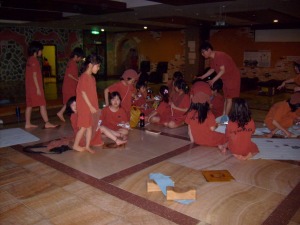
Jjimjilbang area
Bathhouse (men) – around fifty stand up shower facilities and around the same number of sitting down shower units, event pool, (이벤트탕), hot pool (열탕), large warm pool with jacuzzi (온탕), large cold pool (냉탕), small tepid pool (안마탕), ice room, steam room, 2 jade saunas, relaxation area, heated sleeping area. Large changing room with television and sofas. Televisions are also located in front of the e-bente-tang and hot pool, and in one sauna room but which can be viewed via from the other saunas.
Cost – bathhouse 5500 Won, jjimjilbang 7000 won. Monthly all-inclusive (including the gym) once a day usage, 100.000 Won (£50).
Others – hairdressers, massage and rub downs, parking, associated buffet restaurant opposite (Arden Hills), and Screen Golf Range. Various seasonal discounts. Very close to E-Marte and from there the Song-So Industrial Complex subway station, and surrounded by various restaurants and some excellent coffee shops Vincent Van Gogh, Hands Coffee, Sleepless in Seattle). The barbers now seems to offer massage, haircut and shave all being a euphemisms for a hand-job – cost 30.000Won. Barber’s is closed on Monday and residency of the barber’s now seems to shift between the actual barber and the ‘girls’
Ambiance – relaxing, mid-level lighting, subdued television, very clean, very comfortable, friendly.
Waygukin – I’m gradually seeing more and more westerners here. For a year I didn’t see any, but in the last year I have seen a total of 5. Some just shower, while others use the pools, some are friendly, some clearly do not want to speak.
Address – Daegu, South Korea, 1250-14번 지 (behind E-mart)
Website – (Migwang Spolex Website Link)
Migwang Updates
Migwang on a Sunday Morning (August 1st 2010.)
© 林東哲 2010. Creative Commons Licence.


 Elwood 5566
leave a comment