Five Second Hanja (10) Carpenter (목수)
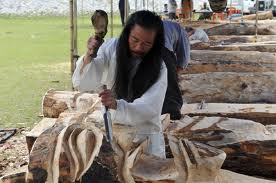
A totem pole being carved
Combining the characters for ‘wood’ (나무-목 =木) and ‘hand’ (손-수 =手) produce the word ‘carpenter’ (목수). This is a combination of two pictograms.
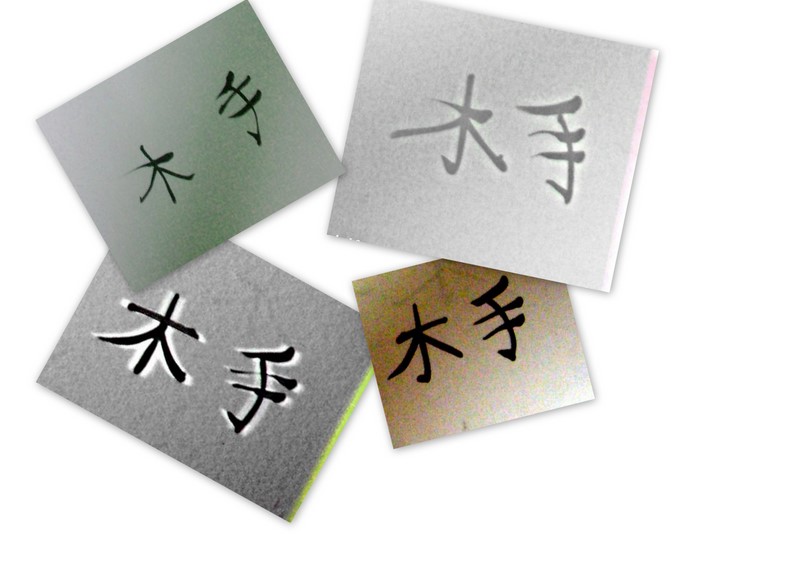
carpenter - 목수
Simply highlighting some of the important and simpler characters. For information on stroke order, radicals and the two elements of a character (spoken – meaning), I suggest you obtain a dictionary such as; A Guide to Korean Characters.
 © 林東哲 2010 Creative Commons Licence.
Five Second Hanja (9) – hand – 손수
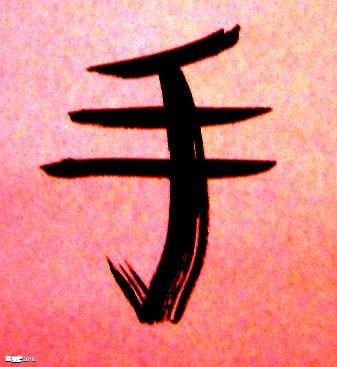
hand, 손수
The simple pictogram for hand.
Simply highlighting some of the important and simpler characters. For information on stroke order, radicals and the two elements of a character (spoken – meaning), I suggest you obtain a dictionary such as; A Guide to Korean Characters.
© 林東哲 2010 Creative Commons Licence.
Five Second Hanja (8) Volcano – 화산

Volcano - 화산
The compound character for volcano is produced by combining ‘fire’ with ‘mountain.’
Simply highlighting some of the important and simpler characters. For information on stroke order, radicals and the two elements of a character (spoken – meaning), I suggest you obtain a dictionary such as; A Guide to Korean Characters.
© 林東哲 2010 Creative Commons Licence.
Five Second Hanja (7) Fire – 불 – 화
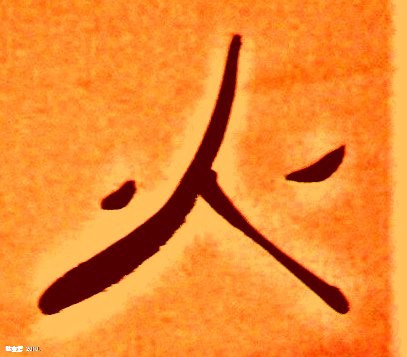
Pictogram. Fire
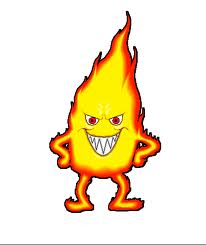
the similarities are obvious
Simply highlighting some of the important and simpler characters. For information on stroke order, radicals and the two elements of a character (spoken – meaning), I suggest you obtain a dictionary such as; A Guide to Korean Characters.
© 林東哲 2010 Creative Commons Licence.
Five Second Hanja (6) Tree – 나무 – 목
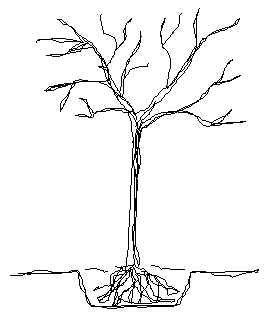
tree
A simple pictogram of a tree showing stem, roots, and branches. Only a small leap of the imagination is needed to visualize the character.
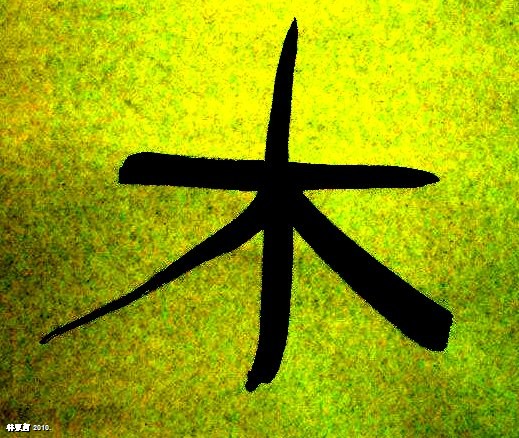
tree- 나무-목
This series of posts is not aimed to teach hanja, I am not in the least qualified for such a task, but to simply highlight some of the important and simpler characters. For information on stroke order, radicals and the two elements of a character (spoken – meaning), I suggest you obtain a dictionary such as; A Guide to Korean Characters.
© 林東哲 2010 Creative Commons Licence.
Five Second Hanja (5) Day – 날-일 (sun, daily, Japan)

날-일-Day
Another easily remembered pictogram. With a slight twist of the imagination, ‘Day’ resembles the sun and is the character used for days of the week, eg: Friday – 금요일, and Birthday – 생일. It is also used for sun, Japan and daily.

Get the idea?
This series of posts is not aimed to teach hanja, I am not in the least qualified for such a task, but to simply highlight some of the important and simpler characters. For information on stroke order, radicals and the two elements of a character (spoken – meaning), I suggest you obtain a dictionary such as; A Guide to Korean Characters.
© 林東哲 2010 Creative Commons Licence.
Five Second Hanja (4) Small – 작을-소

Small
This character, meaning small or little, is common on menus denoting a smaller portion.

Small
This series of posts is not aimed to teach hanja, I am not in the least qualified for such a task, but to simply highlight some of the important and simpler characters. For information on stroke order, radicals and the two elements of a character (spoken – meaning). I suggest you buy a dictionary such as; A Guide to Korean Characters.
© Nick Elwood 2010 Creative Commons Licence.
Five Second Hanja (3) Month, Moon – 달-월
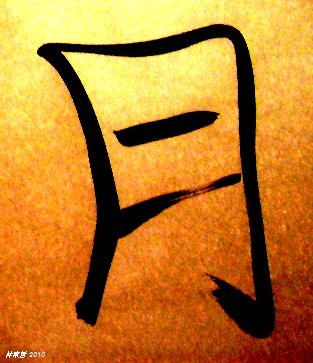
month, moon - 달-월
A pictogram of a crescent moon with two clouds traversing the center. As a pictogram it probably would have been slightly rotated.

Sometimes a little leap of the imagination is required for the pictogram's meaning to materialise
This series of posts is not aimed to teach hanja, I am not in the least qualified for such a task, but to simply highlight some of the important and simpler characters. For information on stroke order, radicals and the two elements of a character (spoken – meaning). I suggest you buy a dictionary such as; A Guide to Korean Characters.
© Nick Elwood 2010 Creative Commons Licence.
Five Second Hanja (2) Mountain – (메-산)

mountain - 메-산
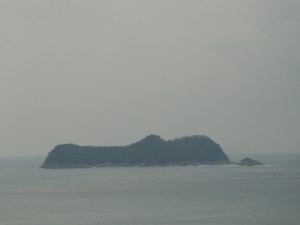
Looks like the character
The character for ‘mountain,’ a simple pictogram depicting three mountains.
This series of posts is not aimed to teach hanja, I am not in the least qualified for such a task, but to simply highlight some of the important and simpler characters. For information on stroke order, radicals and the two elements of a character (spoken – meaning). I suggest you buy a dictionary such as; A Guide to Korean Characters.
© Nick Elwood 2010 Creative Commons Licence.
Five Second Hanja (1) Big-Large (큰-대)
大
This character is very common and means big or large. Originally a pictogram, it is easily remembered as a representation of a person holding their arms outstretched, as you might do when telling someone how big something is.

(큰-대) Remove the outstretched arms and you're left with person (사람-인)
Found in restaurants, place names, rock inscriptions as such as well as Korean names.
Dae-gu – 大邱
Dae-chon – 大田
Dae-Han-Min- Guk (대한민국) – 大韓民國
Dae-Po – (artillery) – 大砲
This series of posts is not aimed to teach hanja, I am not in the least qualified for such a task, but to simply highlight some of the important and simpler characters. For information on stroke order, radicals and the two elements of a character (spoken – meaning). I suggest you buy a dictionary such as; A Guide to Korean Characters.
© Nick Elwood 2010 Creative Commons Licence.
ks
|
一 |


 Elwood 5566
leave a comment