Death and Diet by Watermelon

Watermelon (수박)
Years ago, I watched a documentary about the problems of policing in that scummy slip of coastline on the southern Spanish coast, infamous as the holiday destination of 4.5 million Brits holiday makers and 350.000 homeowners, the Costa del Sol; aka The Costa del Crime due to the disproportionate number of British criminals in residence to evade to British law. The Costa del Sol is one sprawling Conga of destinations well-known to most British people even when they have never set foot on Spanish soil and know little about local life: Marbella, Fuengirola, Alicante, Torremolinos, and Benidorm. Formerly all isolated beautiful fishing villages, they now form one vomit ridden strip stretching from Malaga down to Los Alzacares and providing all the comforts of British culture, the bars, fish and chips, sandwiches, Sunday roasts and enough English-speaking people to attract that particular brand of clientele whose idea of a holiday is sitting on a packed beach in an environment as English as Clacton but with guaranteed sun and cheap booze.
In all fairness, the coast provides a haven to other European plebs and criminals and within the context of policing, this was the subject of the documentary. On the particular evening the cameras were rolling, and following the difficulties faced by local police, a group of Danish lads were arrested for swimming naked in their hotel pool, some Brits lads were menacing locals with knives and some drunken Scandinavians were throwing water melons off the top of their hotel onto the street below.All were young men and all were drunk!

British criminals on permanent vacation on the Costa del Sol
‘Brits with knives’ seemed typically nasty while the nude swimming and water melon bombing were amusing – until I started carrying water melons back to my Korean apartment. I’ve never bought a water melon in the UK and though you can buy them, usually in Mediterranean type delis, I don’t think they are as popular as other types of melon, the smaller varieties such as honeydew and cantaloupe. Having to lug watermelons home on a weekly basis, naturally, it dawns on me not only how heavy they are, but how catastrophic the effect of one landing on your head from 1o floors above. Suddenly, wielding a knife doesn’t seem quite so bad as bombing pedestrians with a weighty watermelon, an act I had formerly dismissed as amusing and harmless.
Water melons are one of the most common fruits in Korea over the summer and are currently my favourite especially when cold and crispy. They are supposedly highly beneficial as an antioxidant and have numerous other acclaimed benefits. With approximately 21 calories per 100g they are a healthy snack though I suspect I probably eat around half a kilo before I go to bed. (link for information on Korean watermelon).
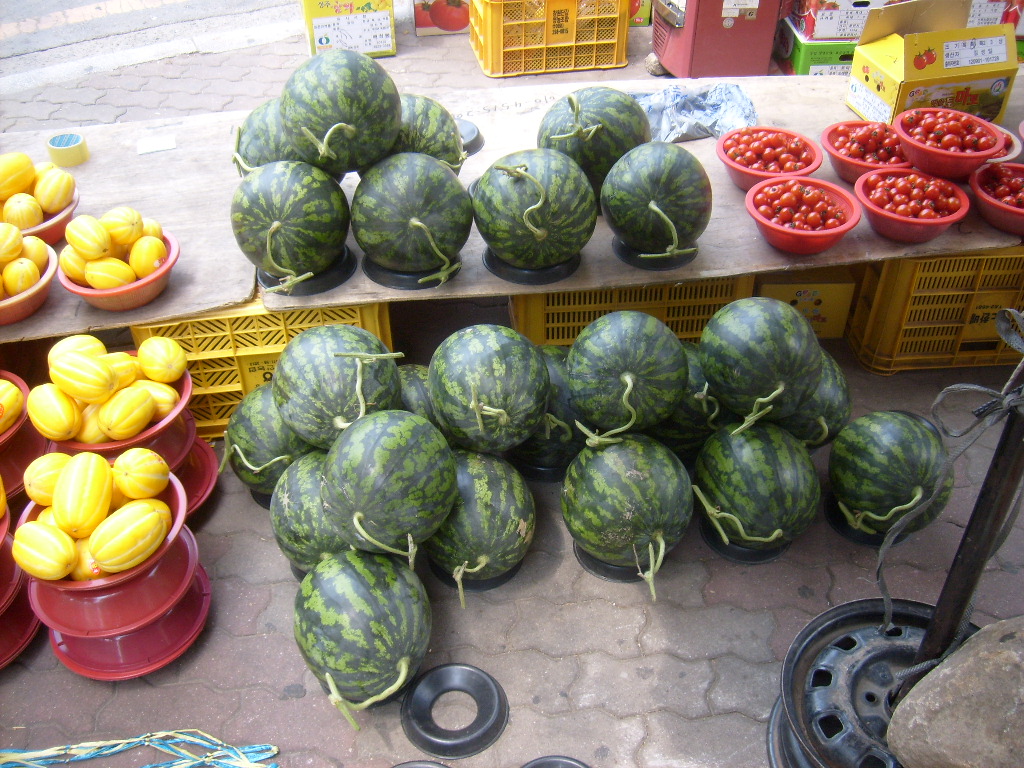
Summer fruits

This work is licenced under a Creative Commons Licence.
Faherenheit 84 (29 °C)
In the last few days, whenever I leave my relatively cool ‘one room,’ and step into the stairway, I can both feel the rising humidity and smell it. The smell, difficult to describe, is not unpleasant and if you can ‘smell ‘humidity, that is how I would characterise it. Then, when you step outside you instantly get zapped by both the sun and its heat reflected off of the pavement. With a little breeze in the air, and cool mornings and evenings, it’s not unpleasant but soon, venturing outside will become a torturous experience reminiscent of being stuck in a sauna-like microwave in which life is reduced to seeking sanctuary wherever there is air conditioning. As the middle English song goes; ‘Sumer is icumen in, Lhude sing cuccu! Rivulets of sweat trickling down your back and amassing in little crescents under your man-boobs, if you’re unfortunate to have them, as I do, all necessitate keeping a towel in your bag and one of those bright coloured handkerchiefs in your pocket. As a winter baby, I’ve always hated summers but maybe my dislike of Korean summer is shaded by life in a one room before an air-conditioner was a normal part of an employment contract. Sitting around a small fan, clad only in underpants, as it gyrated from you to your flat-mate, granting you intermittent coolness, or spending the evening freezing in MacDonald’s, were the only reprieve from summer’s muggy heat.
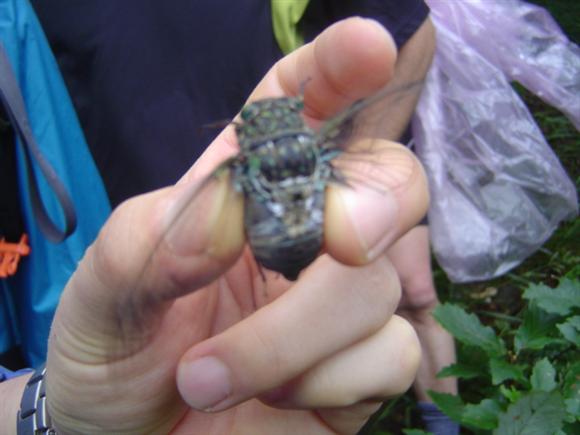
A memi (매미), cicada
Spring, which this year seems to have been skipped, as beautiful as it is, is an unpleasant reminder of what is to follow. And then there are the memi (매미). I have never heard cicadas in Northern Europe and associate them with hotter climates and in Korea, as summer’s leitmotiv, whose chirping, an incessant white noise, will dominant. Memi are bizarre looking things especially if you come from a climate with much smaller insects. I remember, before I’d seen one, you would pass a tree in mid-day and a chorus of memi would be ‘screaming’ at you. I could never see them and if you stopped and walked back to investigate, the ‘screaming’ would diminish, as if they were watching your approach. The sound is so intense, a crazy-crispy buzzing that it would suggest one tree is host to many memi. How many make that intensity of sound? A handful? Thousands? I am no memi expert but I think when the temperature falls a little, in the evenings of early summer, emerging memi migrate from the ground, either by flight, climbing the trunks, or a combination of both, to find a perch in branches. This is the time when, if you look carefully, you can sometimes see them on tree trunks. At other times, I have seen them in-flight as their bright colours, hidden when resting, flash vividly, probably to warn off predators. If you’ve never seen one, they certainly look ugly, fascinating and definitely prehistoric.
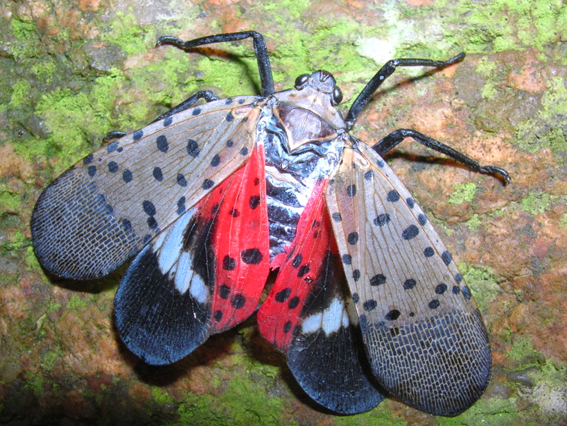
Not on my pillow!
I don’t know if I like memi or not, that screaming symphony is at its peak at the hottest time of day, usually as I am on my way to work, scuttling between one air-conditioned sanctuary and another. I don’t know if I like them because they are a harbinger of summer’s heat. My bollocks positively dislike like them! When you hear the first memi you can assume the temperature is approaching 29 degrees and at the same time you will probably notice sweat trickling down your back . Once their chirping is symphonic, amassed and intense you can assume the temperature is in the 30’s and if you’re male, your balls, dangling in what has now become an E-Mart carrier bag, are probably stuck to you leg.
Here are some facts to remember when you hear your first memi this summer:
Desert cicadas are the only insects known to sweat in order to lower body temperature!
While Koreans often translate ‘cicadas,’ and many Americans term them, ‘locust,’ they are not! Cicadas belong to an entirely different family of insect.
One species of cicada is native to the UK. (Melampsalta montana)
Cicadas lay eggs in tree bark from which hatched nymphs fall to the ground where they live, burrowing, throughout this stage. Many cicada species emerge from the ground annually, but some, with much greater life spans, emerge at 13 or 17 year periods.(eg: magicicada).
Should a memi park on you’re pillow and sing in your ear-hole, with a capacity of 120dB, you can expect permanent damage to your sense of hearing.
However, here is the most important fact: Fahrenheit 84, (29 °C), the approximate temperature from which both the memi will begin to sing and a pair of bollocks will start to stick to an inner thigh!
If your bollocks were stuck to your leg when you heard the memi screaming, I’d like to know! It’s a sort of survey!
(Link: for more comprehensive memi facts and the source of most information here)



 Elwood 5566
leave a comment