Andong and the Mask Dance
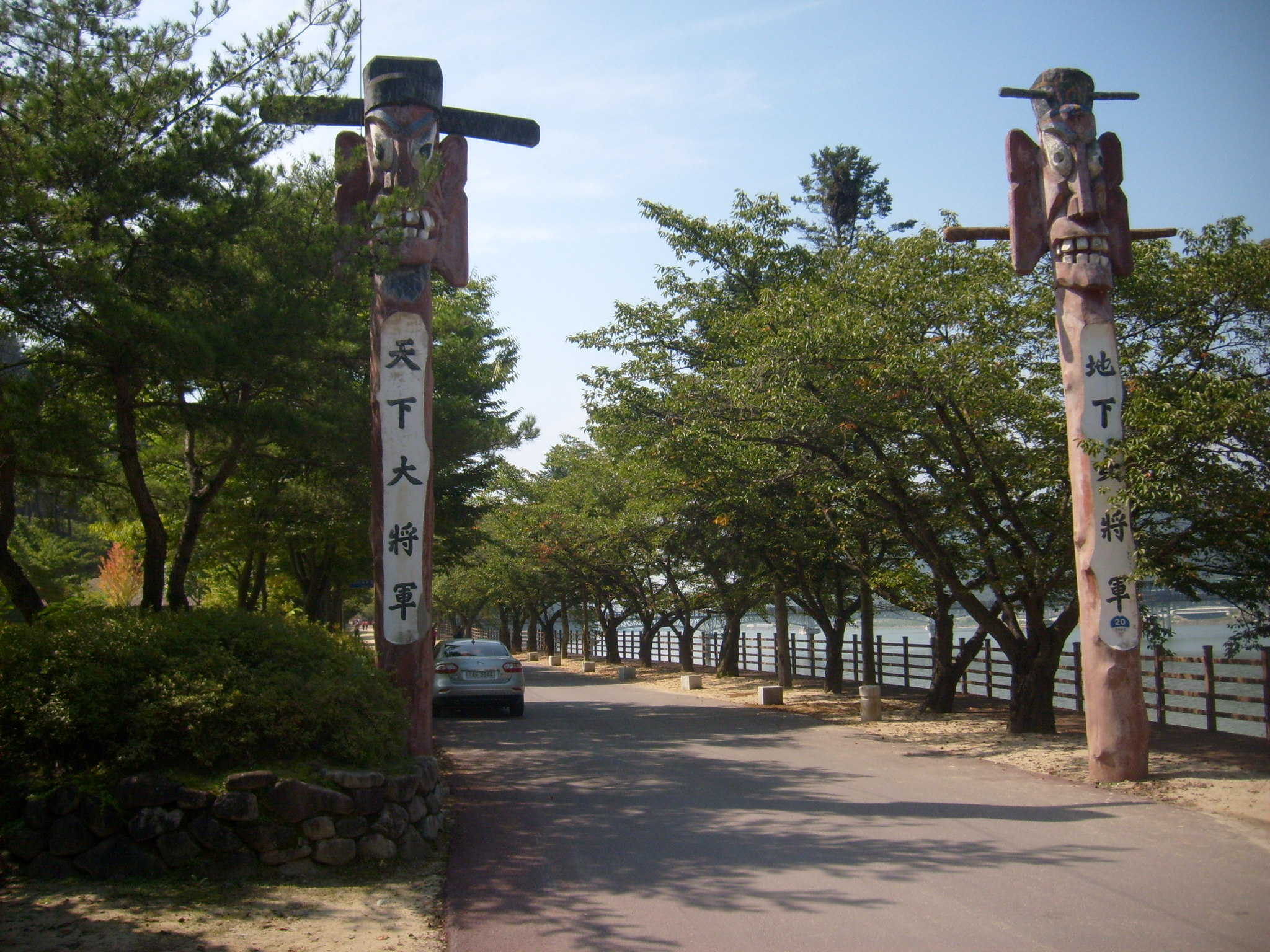
Totems standing close to the longest wooden bridge in Korea (Andong)
On September 22nd, I travelled to Andong with my komdo teacher’s family, some students and ‘LC.’ I last visited Andong in 2000 and it was a brief visit of only a few hours during which there was no time for sightseeing.
First, we visited the longest wooden bridge in Korea which spans the Nakdong River just outside Andong. Incidentally, the Nakdong meanders northwards to pass through Daegu. We walked across the bridge and visited a park where traditional games can be played, (these are always popular on holidays) and then visited a nearby cultural museum. We then ate Andong chicken stew in the city. In the afternoon we headed to Hahoe Village.

The traditional swing
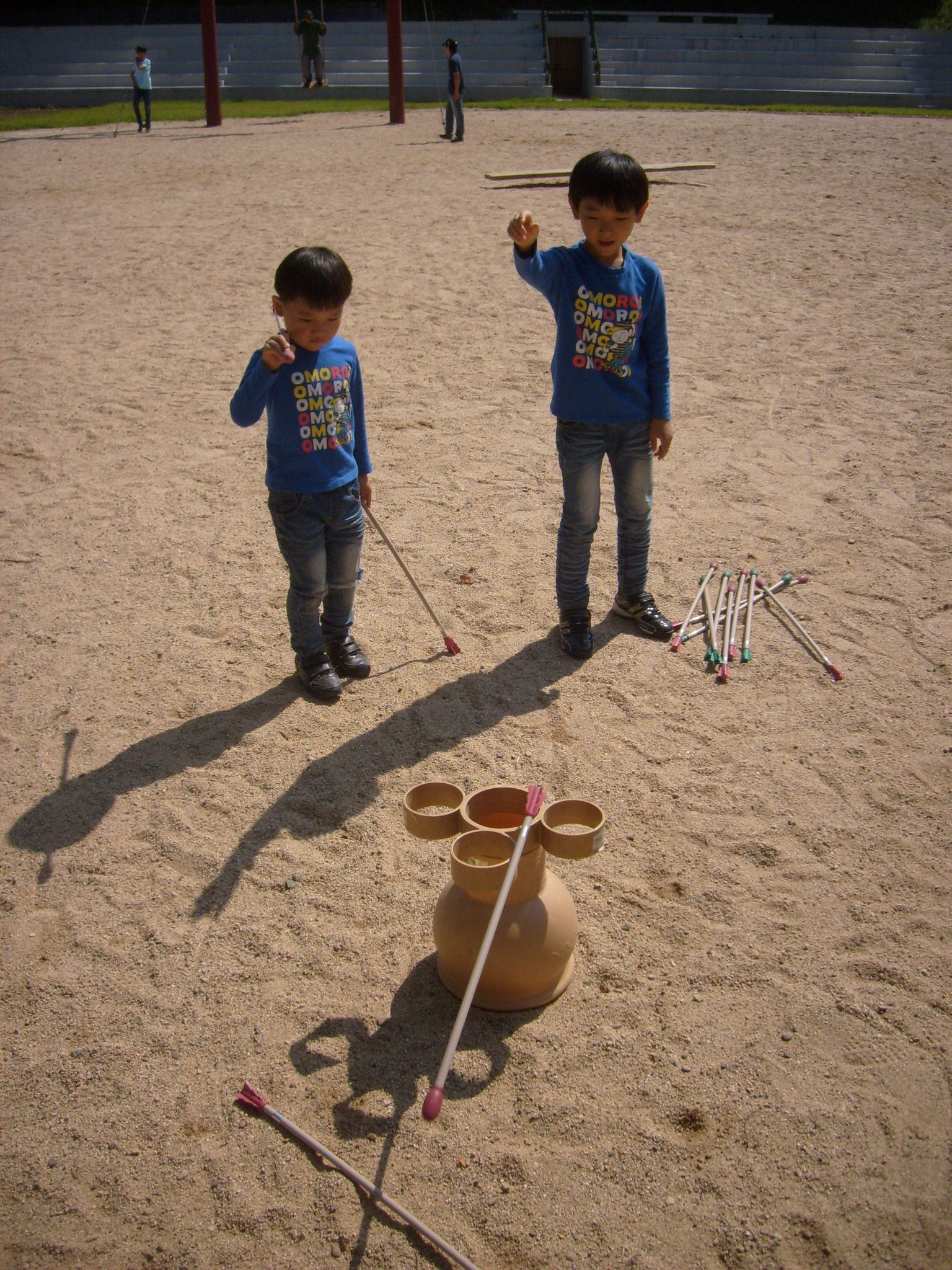
Another traditional game rather like darts but the target is a pot.
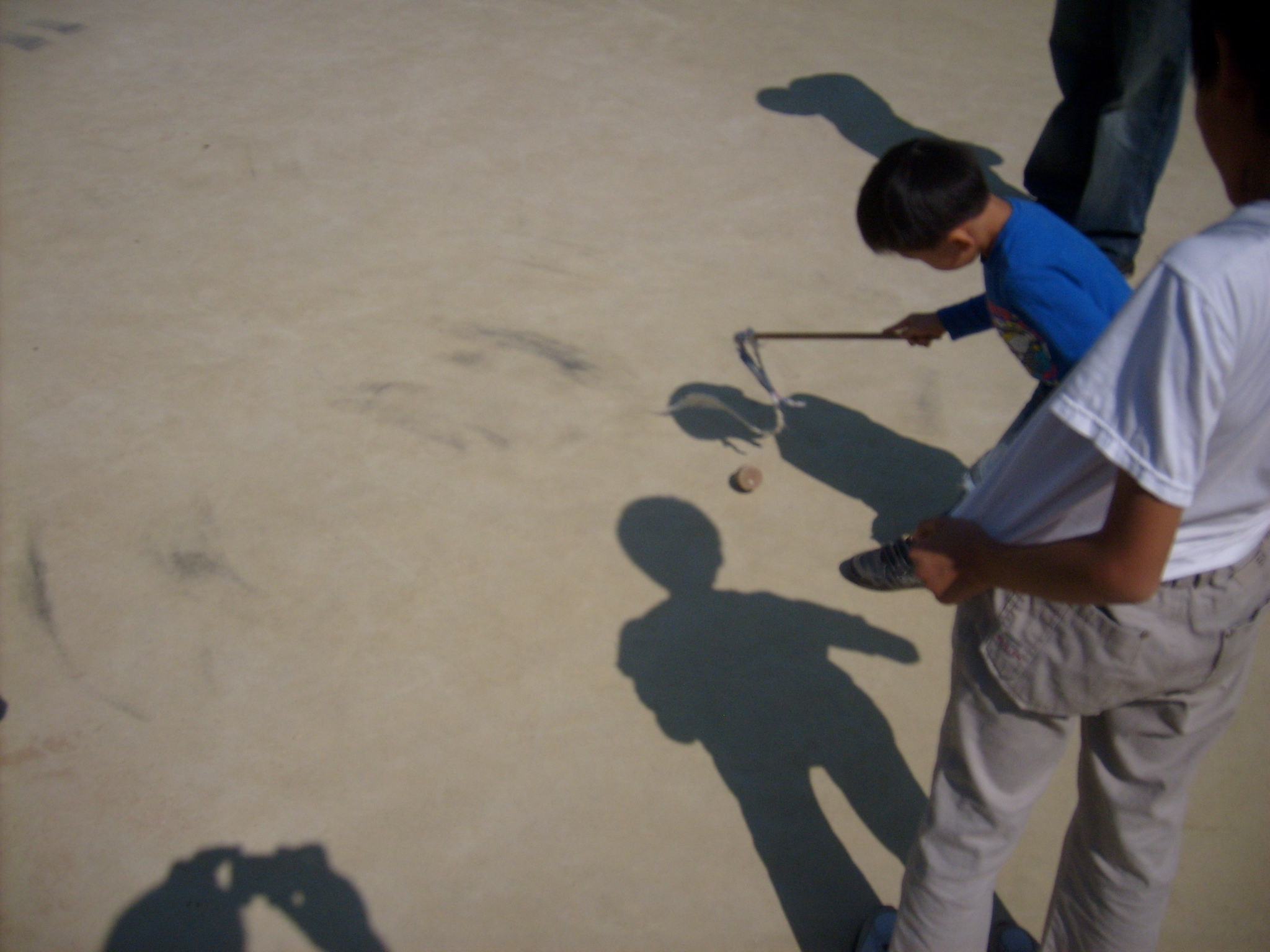
This game consist of a spinning top which is whipped to keep the momentum.

The traditional hoop
Every Korean town and province is famous for something. In Ch’eonan it was the walnut cookies while in Daegu it is the apples, textiles and mak ch’ang. Andong is famous for its spicy chicken stew, mackerel, soju and of course, the mask dance. Back in 2000, I remember several Koreans proudly reminding me that Queen Elizabeth 2nd had watched a mask dance in Andong on her birthday in 1999. Indeed, a small building at the entrance to Hahoe Village houses various artifacts and photos from her visit and in the garden nearby, grows a pine tree she planted. At one time, one of the underpasses in Daegu was painted with a large mural commemorating her visit but I think it has since been painted over.
Masks have a long tradition in Korea and were used both by soldiers in war, in burial rituals and in shamanistic ceremonies. There are several types of mask dance, better described as mask dramas but the Hahoe version is probably the most famous. Typically, there are a number of characters including a monk, a scholar, a simpleton and some nobles (yangban). The Hahoe drama is an exorcist play dating back to the Goryeo Dynasty (918-1392). The dance is performed regularly but the actual International Mask Festival is only once a year. I had no idea what the play was actually about but it was amusing and after a short while the masks begin to become quiet realistic.

The Andong Mask Dance.
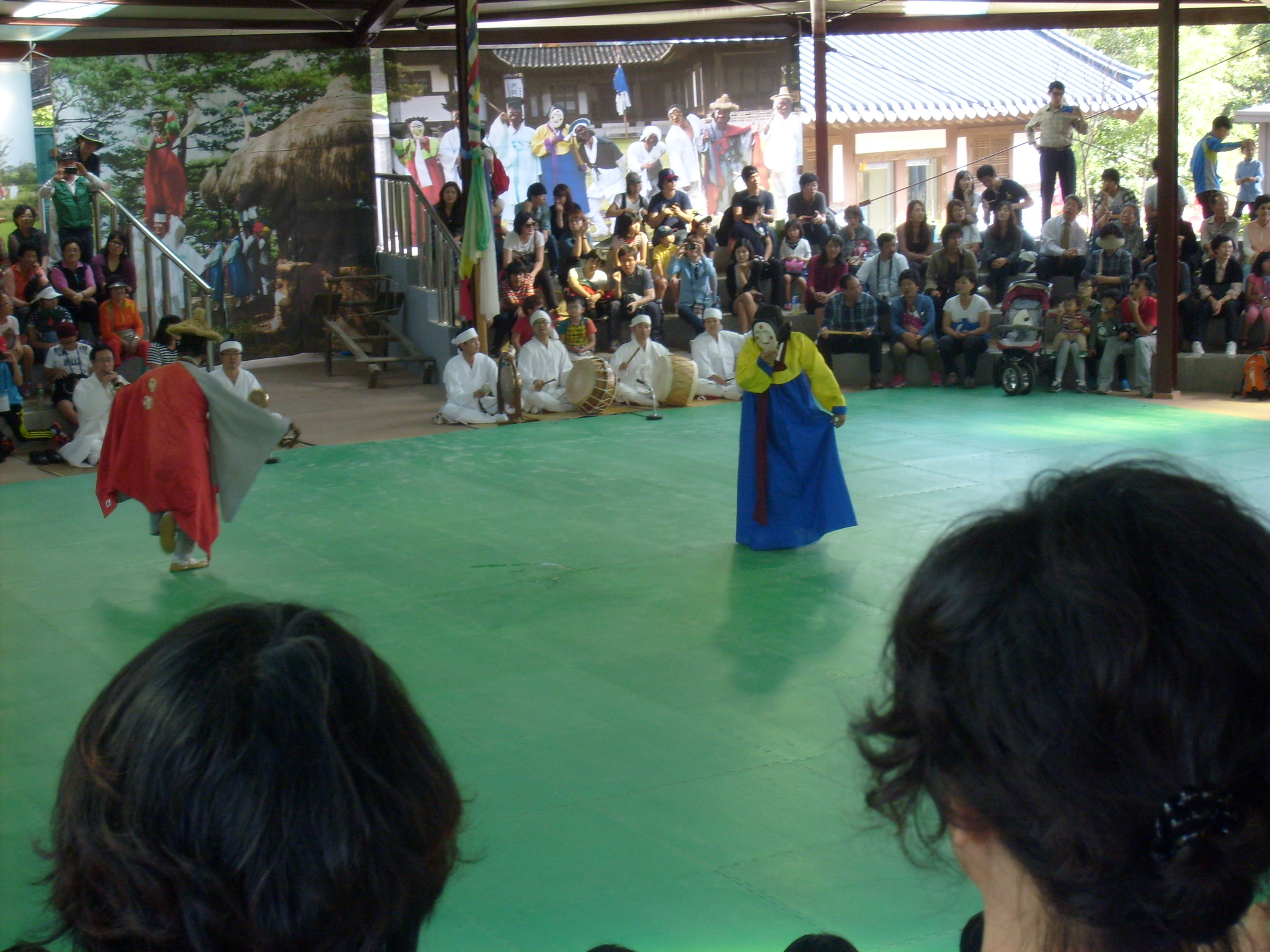
I had no idea about the plot, but it was amusing
Close to the dance site is the traditional folk village of Hahoe where you can find a museum dedicated both to Korean masks and masks from around the world. The village is a working one with a small population who are engaged in traditional crafts which you can often watch. As in other folk villages, there are numerous guest houses, known as minbak, which give a taste of a former lifestyle.
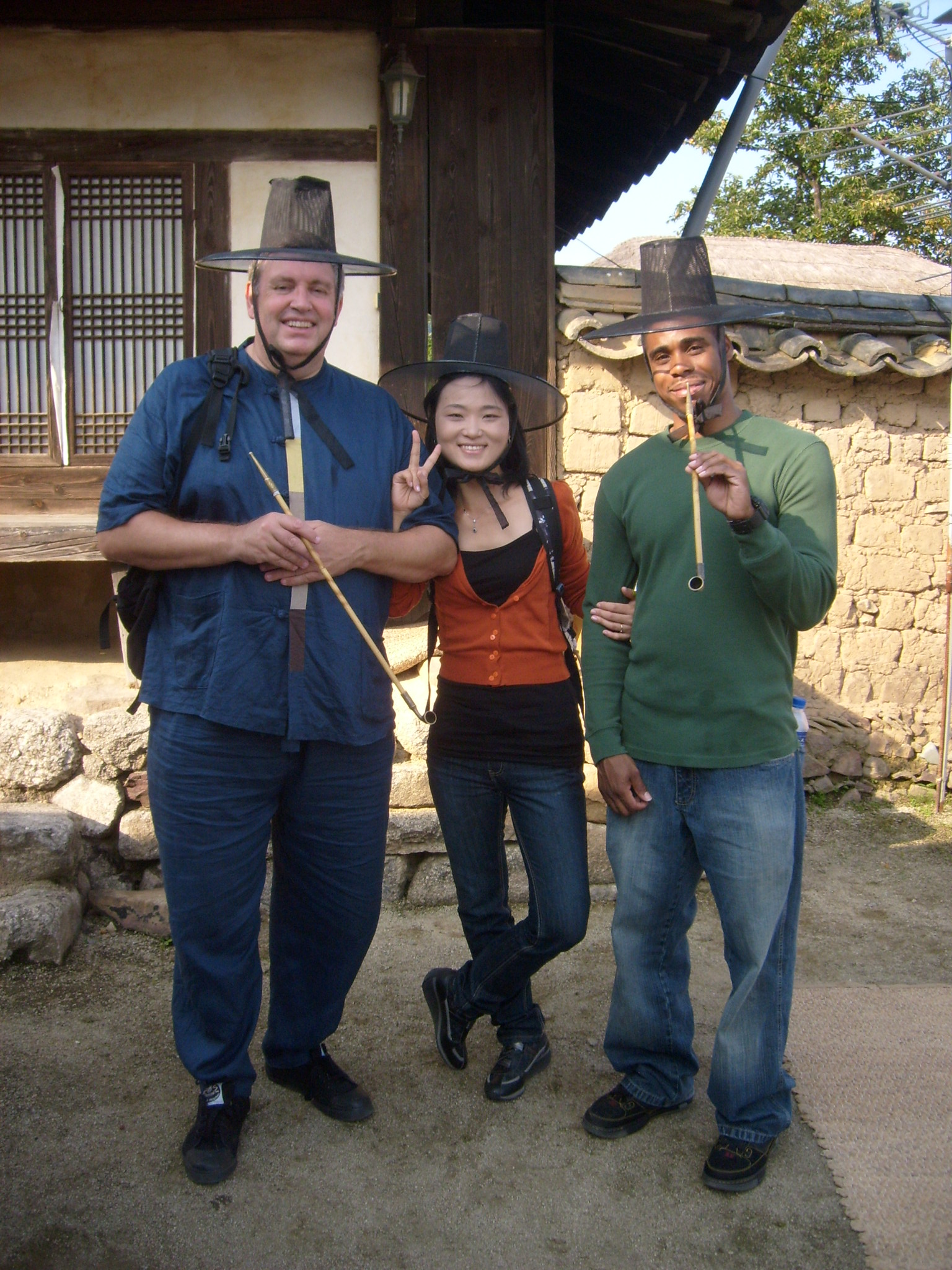
In Hahoe Traditional Folk Village

Persimmon herald Autumn
Close to the entrance of the village is a ‘graveyard’ of abandoned totems (장승 – jang-seung). I love Korean totems and wrote about them in: Fascinating Physogs. Jan 2012.
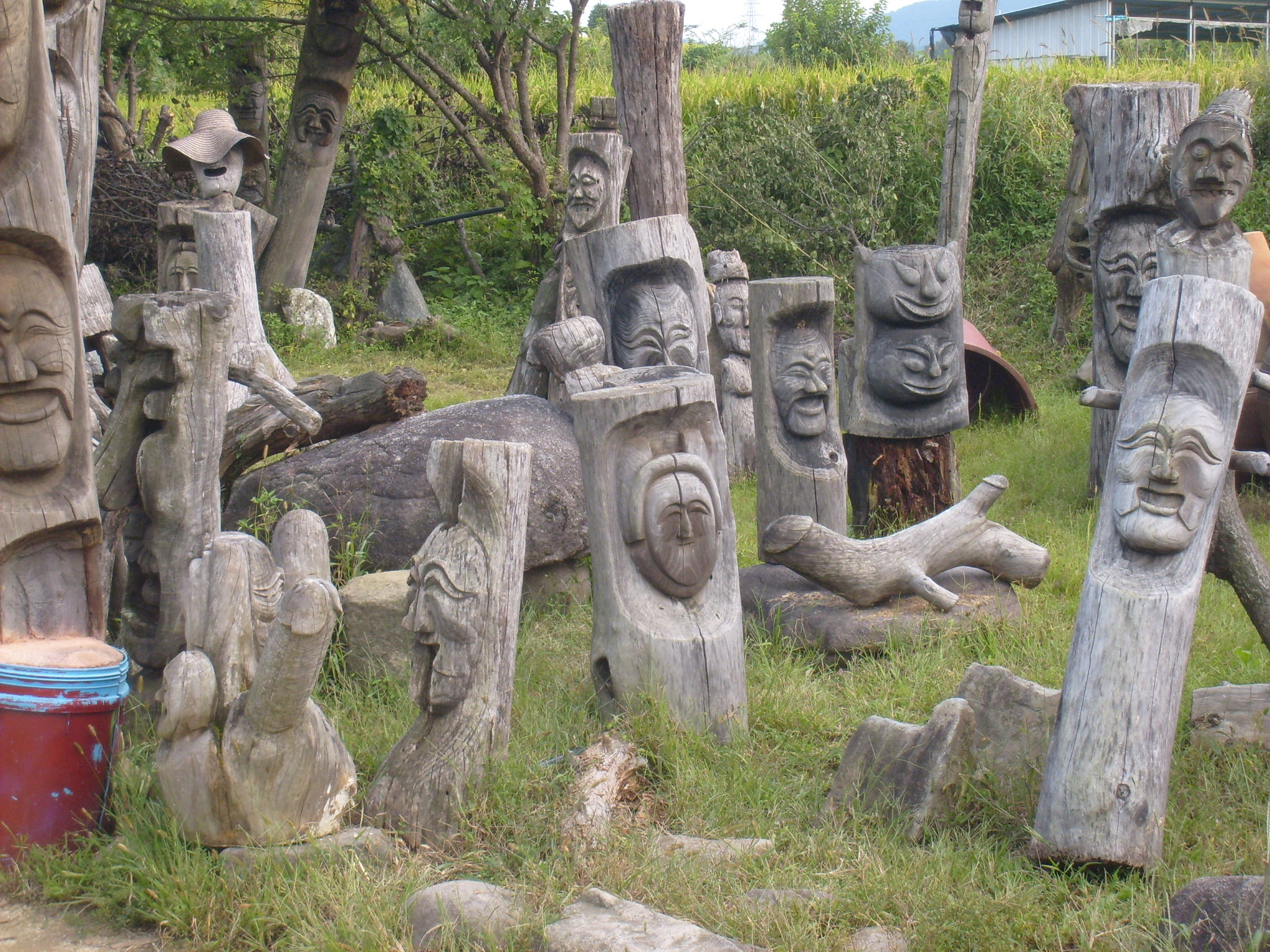
A ‘graveyard’ of totems
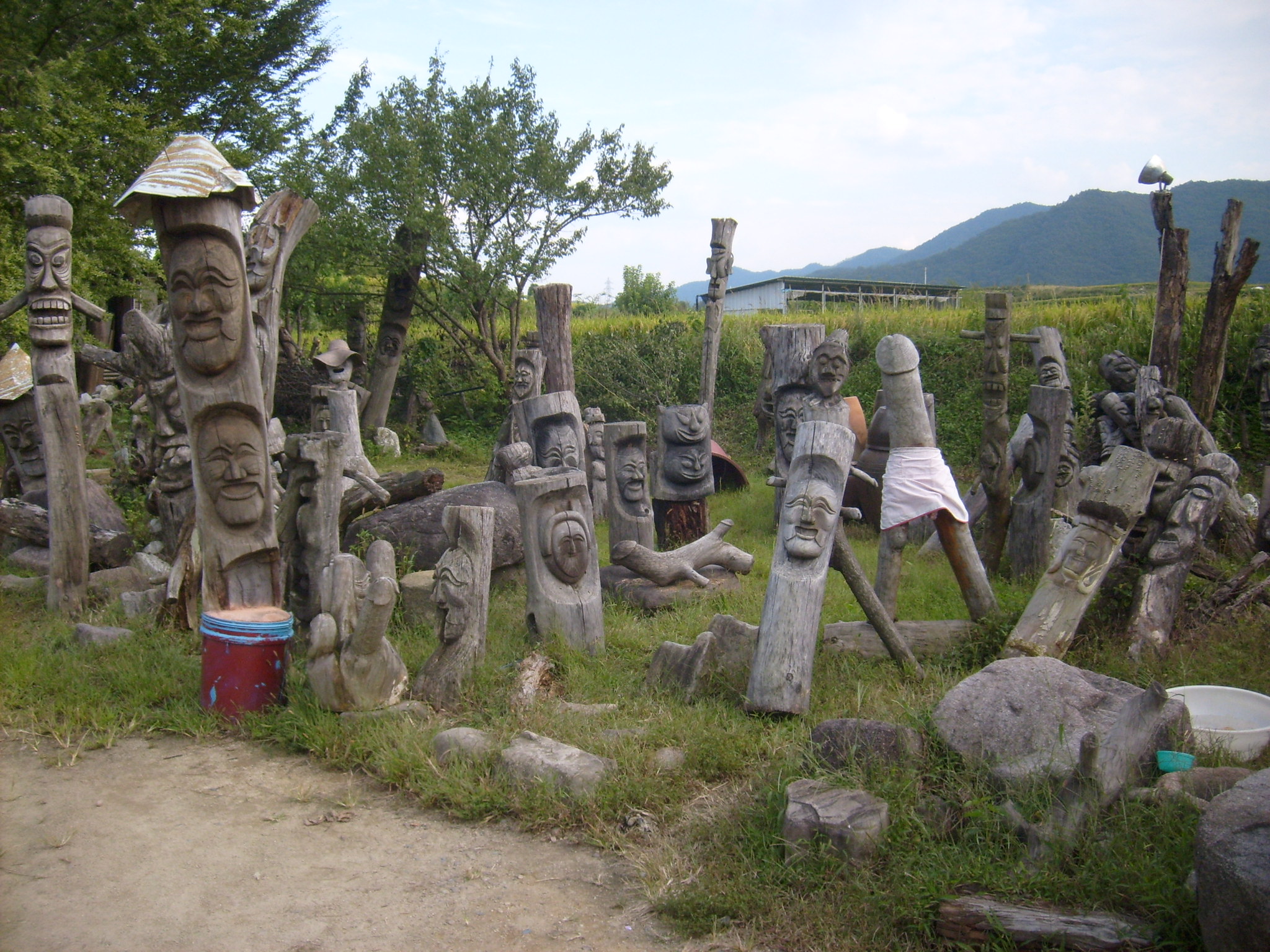
Spot the rude embellishments!

I guess the Korean equivalent of Gothic

And even more!

One last shot from a different angle.

©Amongst Other Things – 努江虎 – 노강호 2012 Creative Commons Licence.
Naganeupseong Traditional Folk Village – Suncheon
I visited the Naganeupseong Traditional Folk Village, Suncheon, Jeollanam-do, in January. Here are a few of my photographs. Jeollanam-do is one of the southernmost provinces (Provinces of South Korea).
The village is enclosed within a ‘castle,’ though it probably closer to say a ‘fort’ as there really only remains a fortified wall. The village has around a hundred residents and numerous small guest houses.The village had a fantastic collection of totem poles (장승) which were the subject of an earlier post (Fascinating Physogs).
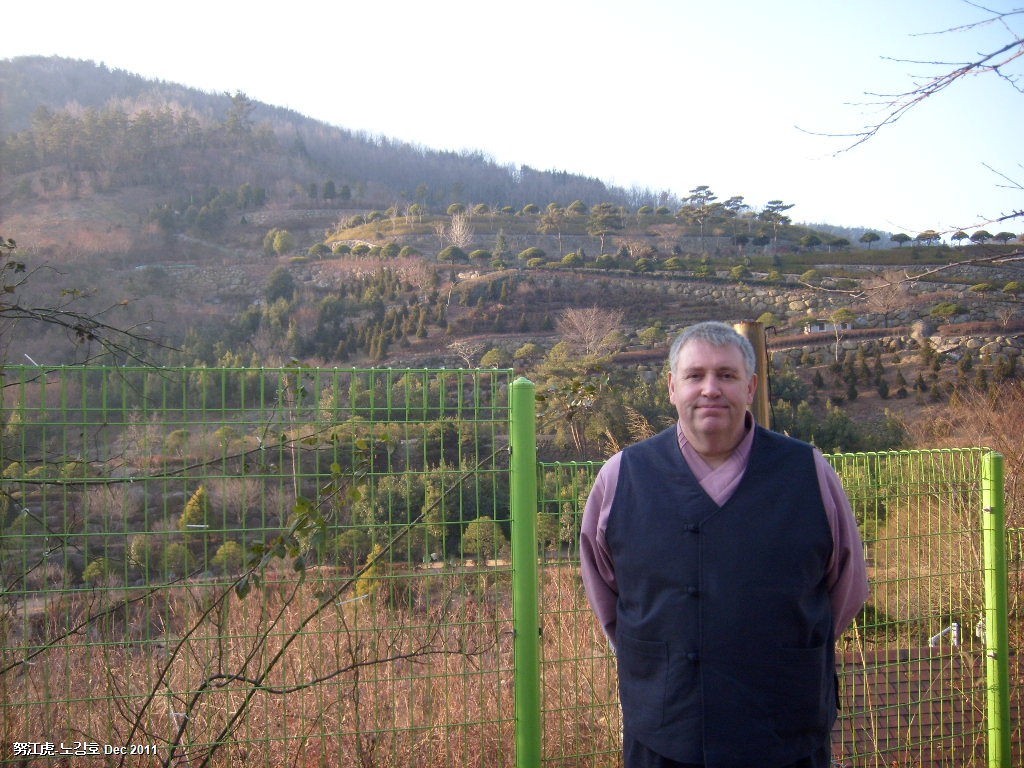
an interesting valley on the way to Nagan village
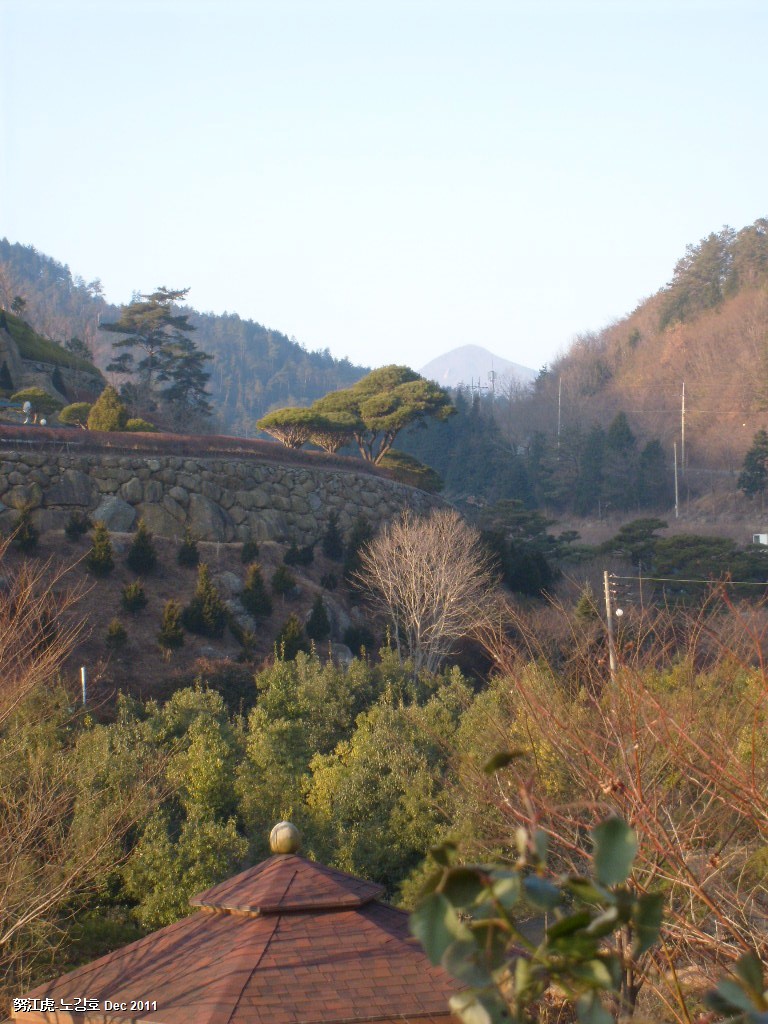
quite an spectacular valley
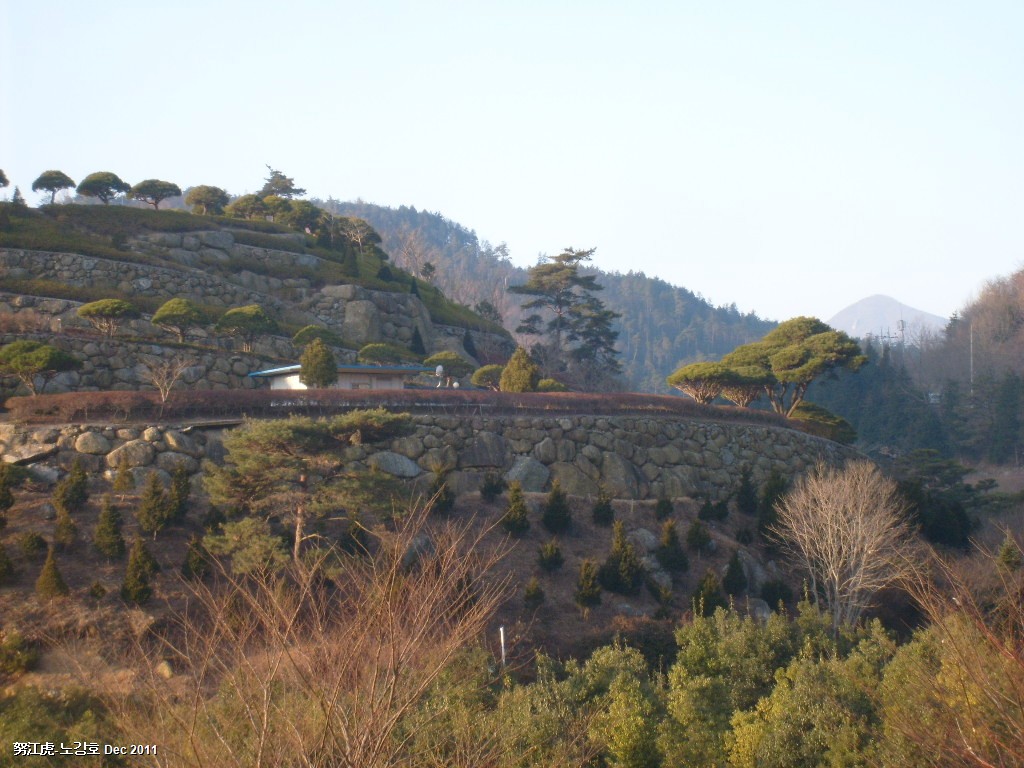
landscaped scenery
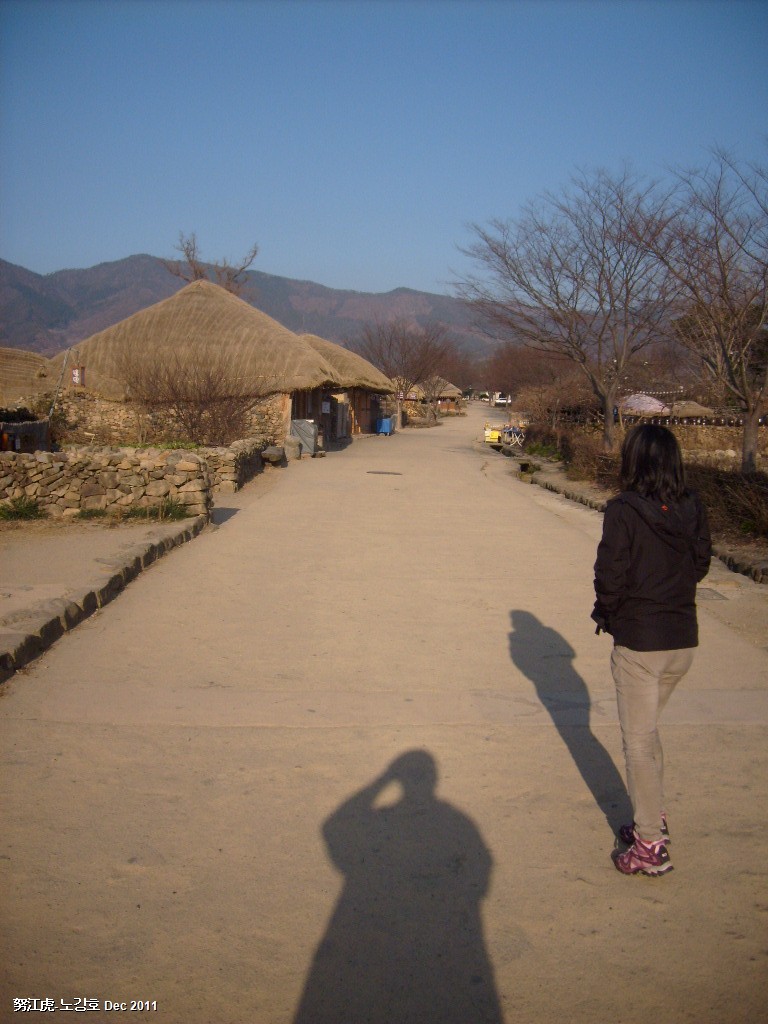
Entrance
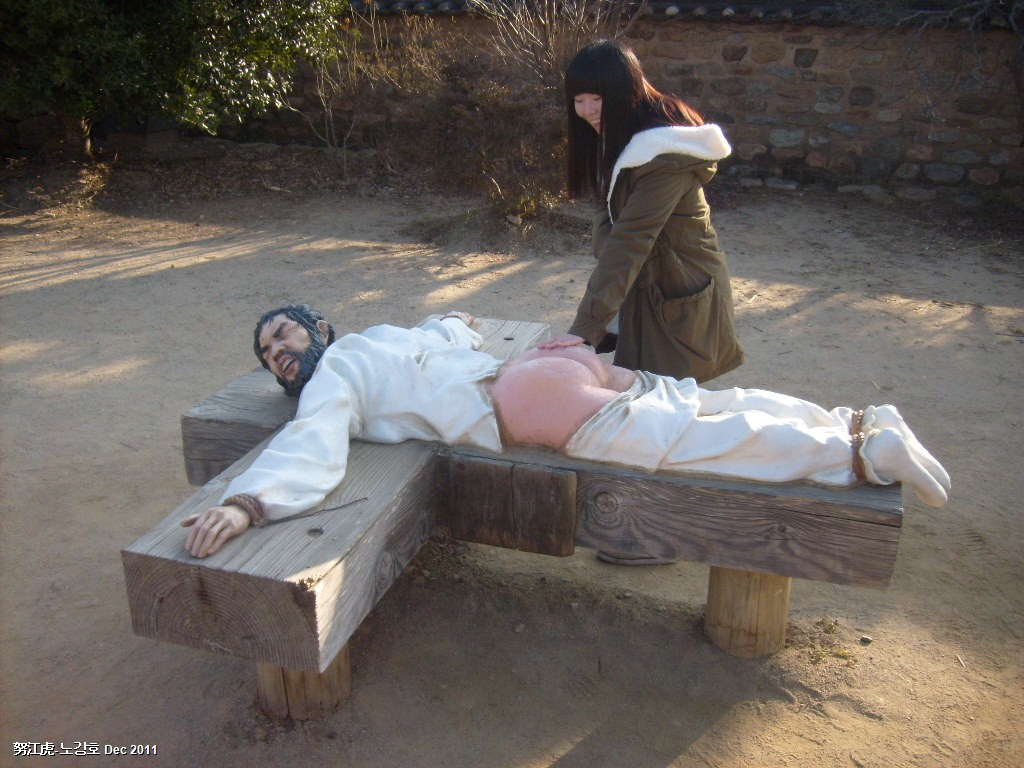
one of the models outside the Magistrate's Office building
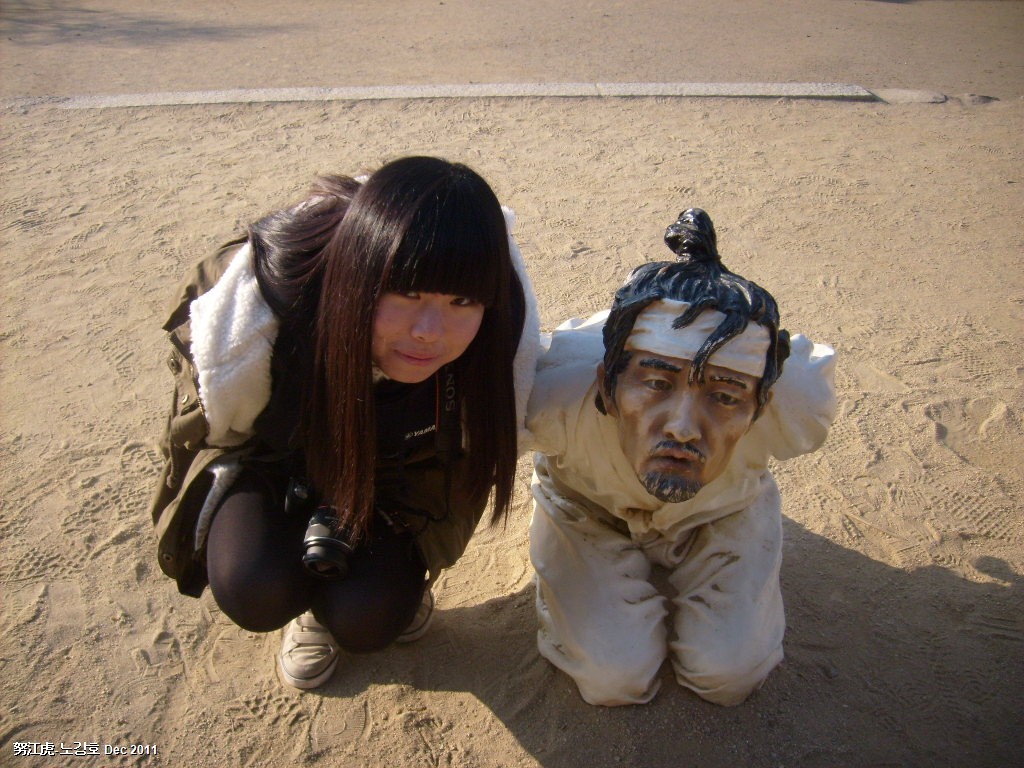
another model
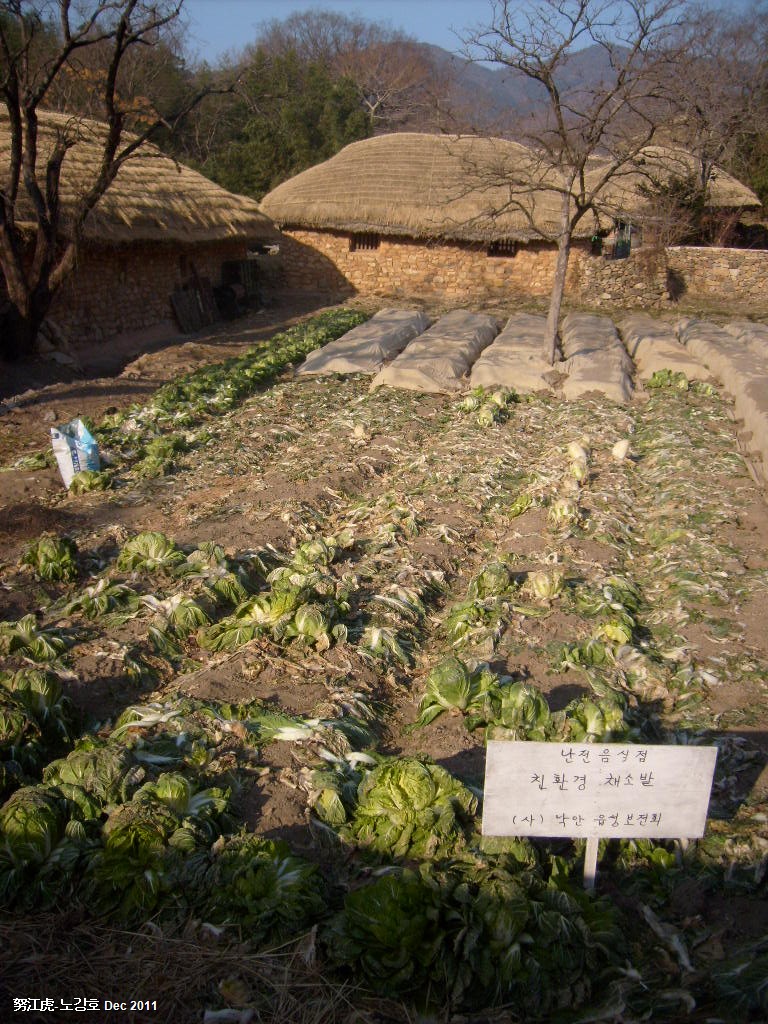
cabbage field
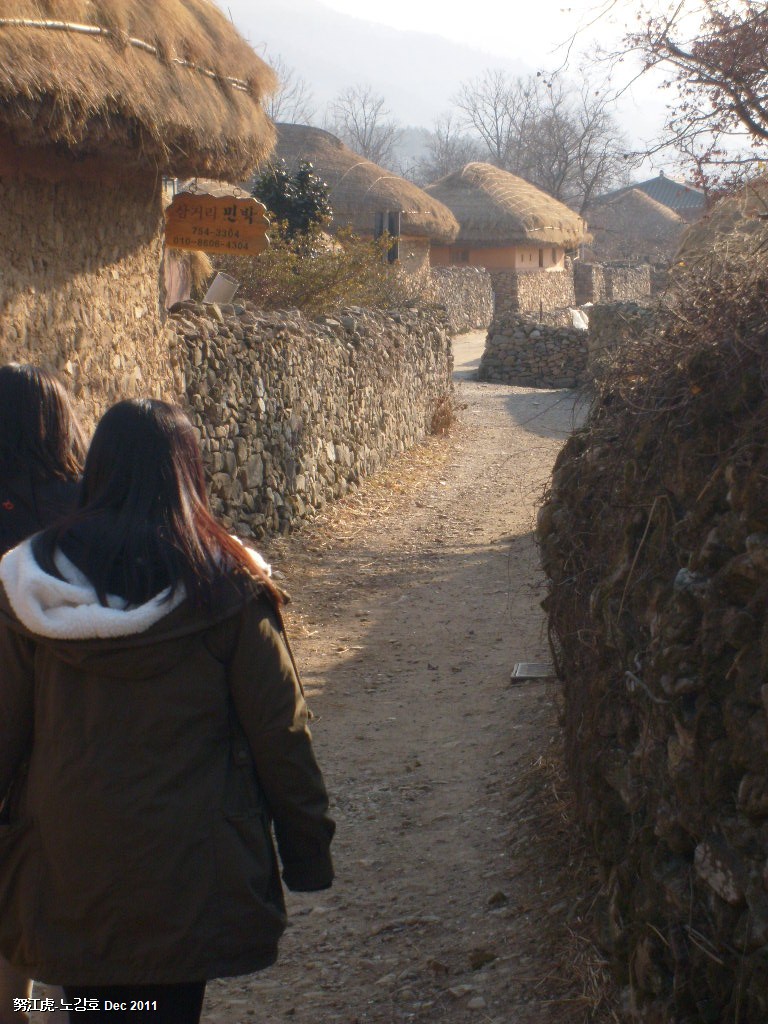
an alley within the village
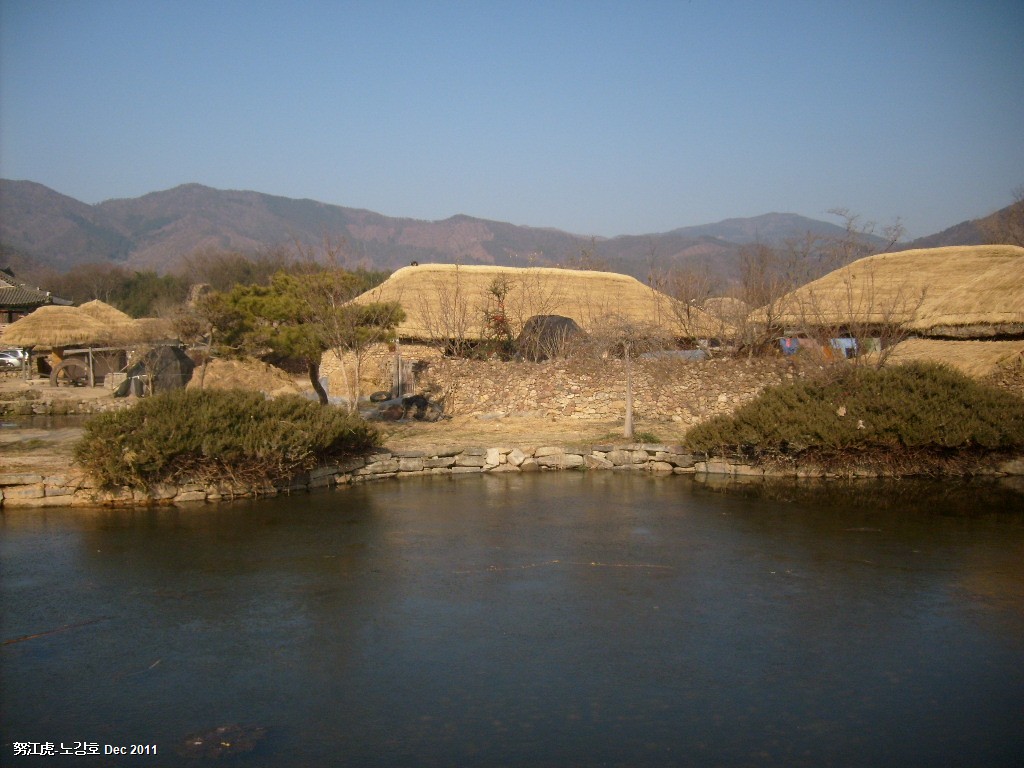
the village pond
Bathhouse Ballads chronicles many aspects of my life in South Korea. Kimchi Gone Fusion focuses on ‘the way of the pickled cabbage’ while Mister Makgeolli is dedicated to Korean rice wine.
©Bathhouse Ballads – 努江虎 – 노강호 2011 Creative Commons Licence.
Further references
Fascinating Physogs – A Tour of some Korean Totem Poles (Bathhouse Ballads Jan 2012)
Village Sentinels – Totems (장승)

a totem (장승) being carved
In more rural Korean areas totems, changseung (장승) often guard the passage to villages. Their design varies from simplistic to elaborate and encompass original and artistic designs as well as ones either explicitly ‘pornographic’ or with ‘pornographic’ elements. At other times they are humorous or simply bizarre. I am fascinated by the manner in which Korean wood is twisted and knotted by the landscape and weather and as I wrote previously, in (Penis Paradise), I see so much of the character of Korean people and their history embodied in wood. In the mountains one often sees the most interesting examples of contorted wood wood that almost seems to have been tortured.

a rather obvious example of ‘releasing’ the qualities inherent in the ‘raw’ material.
A few months ago, when I visited Palgongsan Park in Daegu, I bought a small carving which cost 10000 Won (£10), the nature of the wood is interesting; a section of branch or small stem which on one side, a burr (burl – US English) has caused to ‘explode’ in a fascinating manner. I’m indebted to a reader for identifying this feature and also drawing my attention to the fact it is highly weathered. The wood has been used to carve a totem-like face while the burl, now forming the back of the head, forces one to seek meaning in the combination. From another angle, a second, half face can be imagined.

resembles the face of a totem (chang-seung)

the back reveals some former ‘explosion’ caused by a burl

in profile
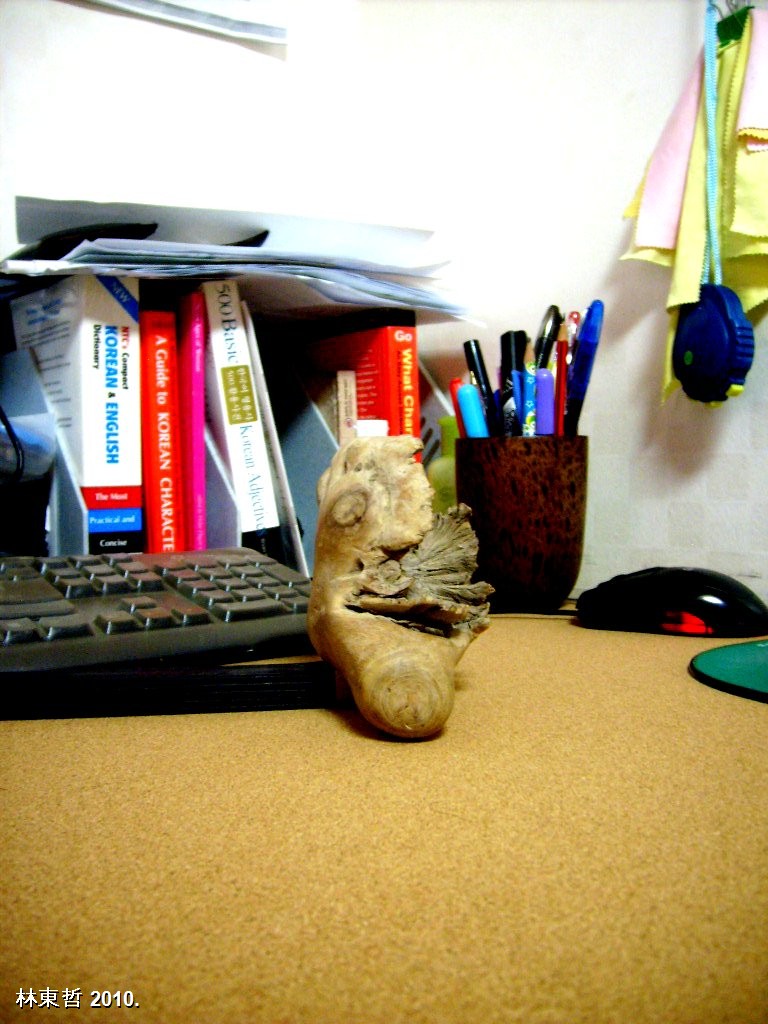
a further resemblance of a face

projects in the process
Several months ago, I was visiting Kayasan National Park when in the middle of nowhere, our minibus broke down. We pulled down a slip road next to a basic cheong-cha (정자), to await recovery.

a basic cheong-cha (정자), they harbor breezes and shelter you from the sun.
Stood in a row along the small road, warding away demons and evil, were a number of totems (jang-seung 장승) Totems guard the approaches to villages and scare away evil spirits and were, and in some cases still are worshiped (tutelary deities). Different parts of Korea have different totems and they are closely associated with shamanism.
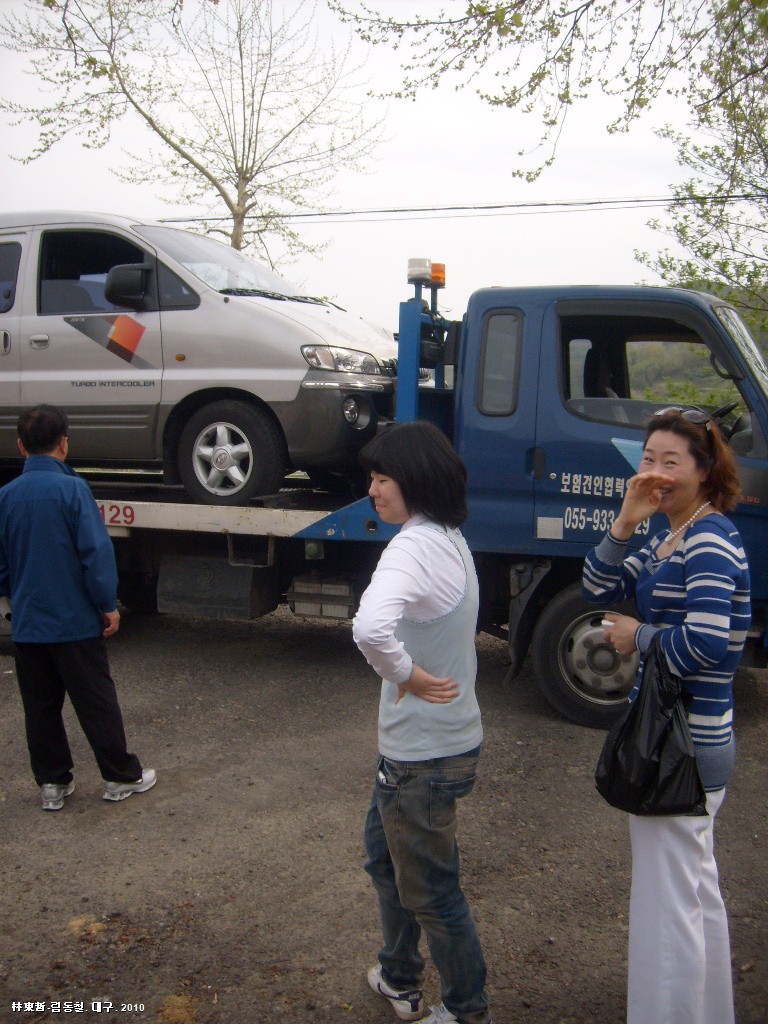
Broken Down but even stuck in the mountains our mini-bus is picked up and repaired within 2 hours
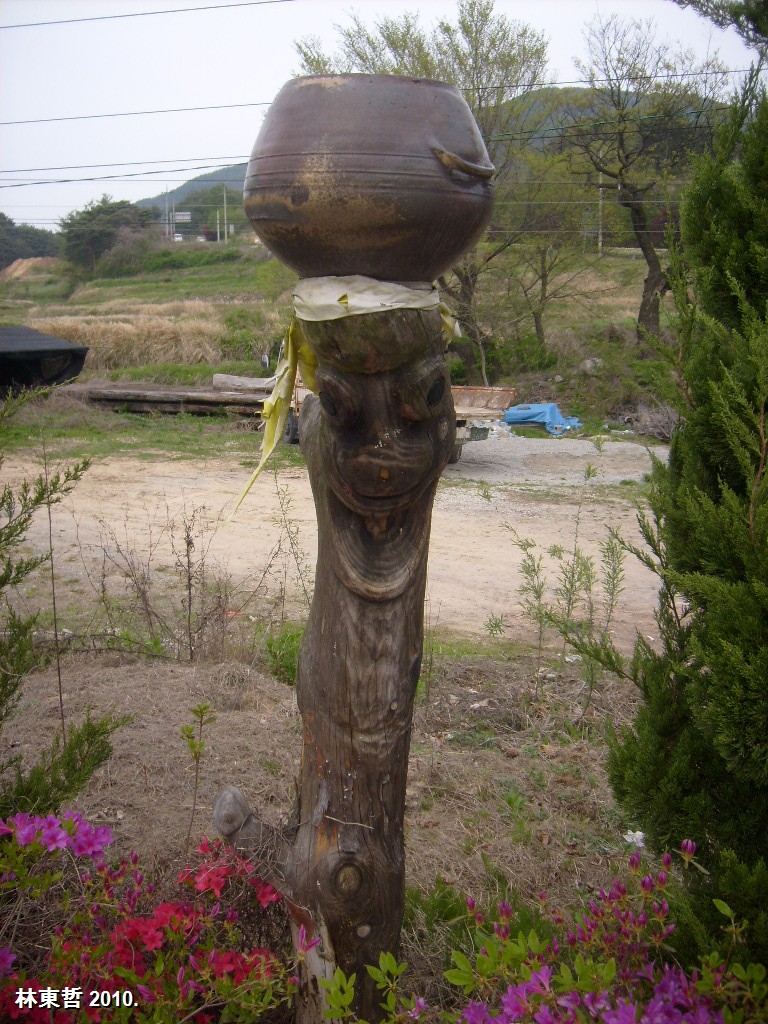
with a kimchi pot on the head

angry

who’s your dentist?

I was the only one giving them any attention!

looking glum

another kimchi head

and every opportunity to carve a dick
© 林東哲 2010 Creative Commons Licence.


 Elwood 5566
leave a comment