It’s Kimchi Time – April 26th 2011
This batch of kimchi turned out to be a further improvement on my technique. My cabbages were large and I have since been told that the best cabbages are not the largest, but ideally more middle sized ones.

3 large Chinese leaf cabbages (Napa)

washing the cabbages
- Preparation – Unless the outer leaves are very damaged or spoiled, keep them as they are excellent for use in bean paste soup and numerous other recipes.

slightly damaged leaves can be kept for other uses

if the right type of salt isn’t used wilting won’t occur

table salt is ineffective
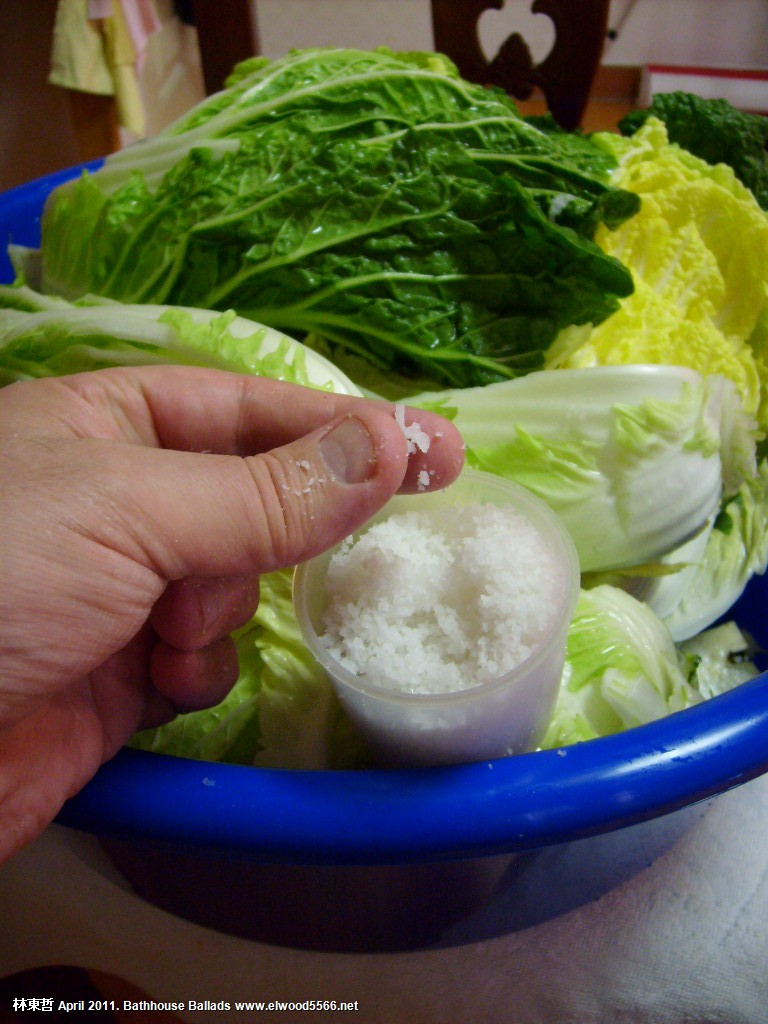
coarse salt is best, preferably sea salt

the leaves after salting
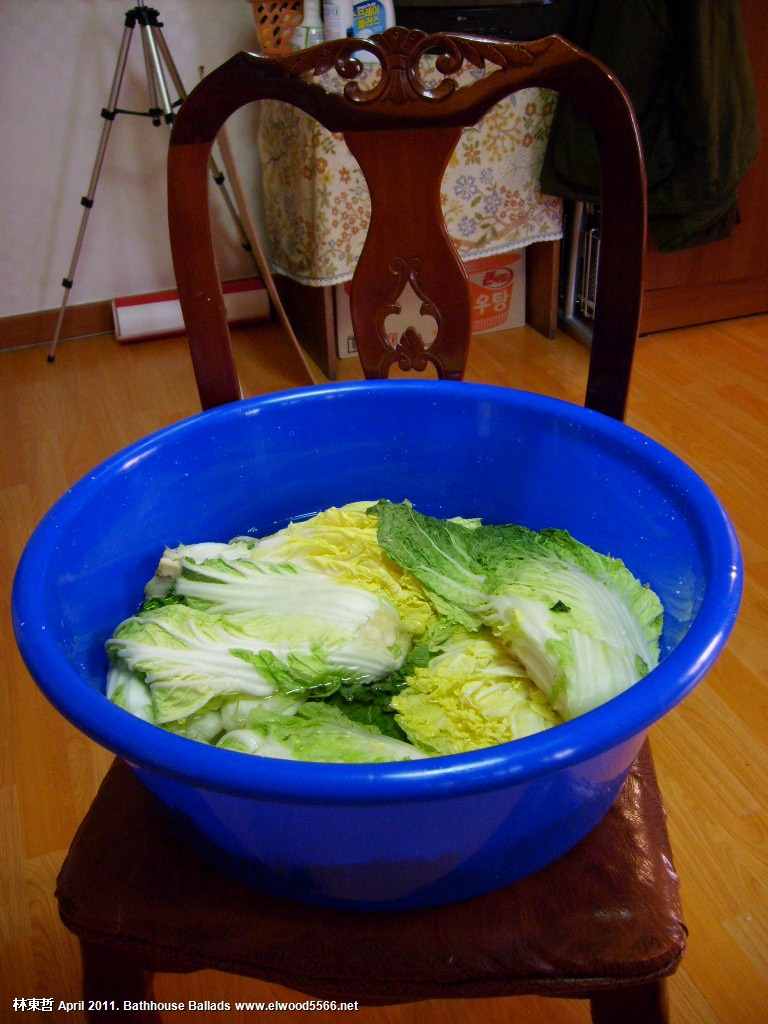
in successful wilting there is around a 50% reduction in bulk
-
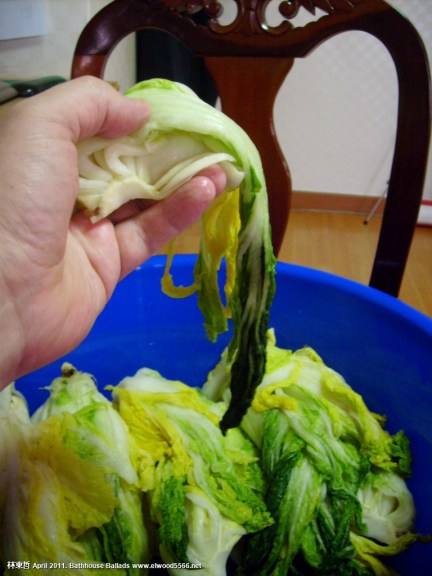
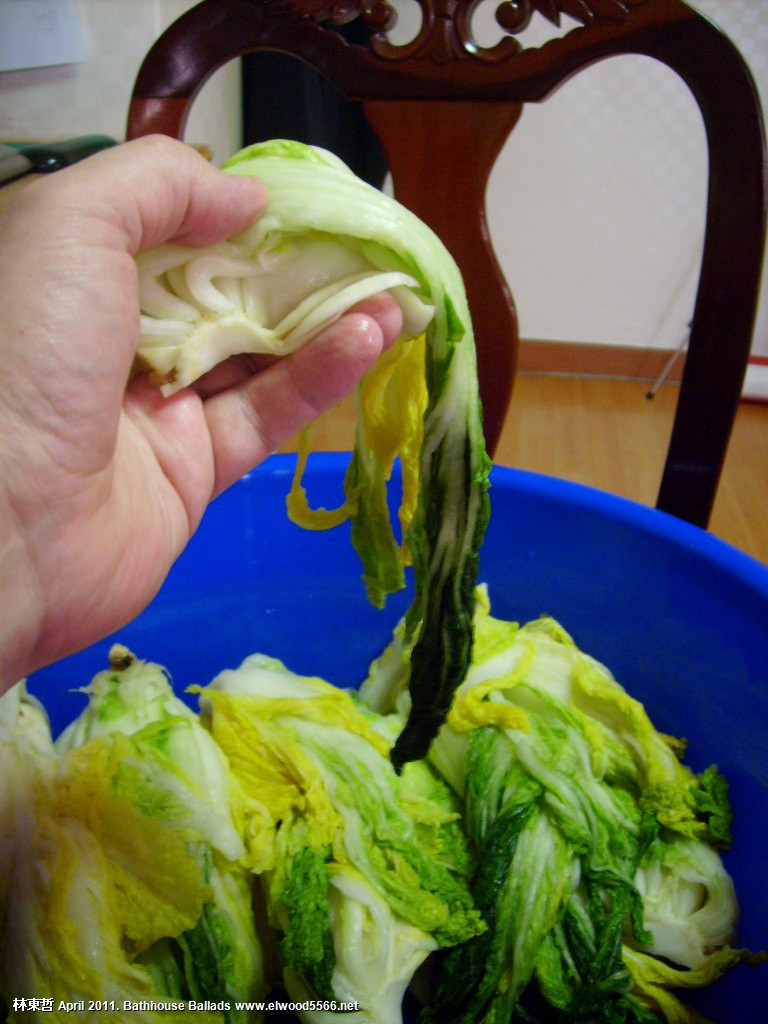
wilted – floppy and rag, like, can be bent without breaking, can be wrung like a dish-cloth
Pasting – I usually add ginger but decide to omit it from this batch. Further, I reduced the amount of down to 2 cups but I feel this is still too hot. When I later made bo-ssam kimchi, I decided that one cup for two fairly large cabbages was still a little to hot and intend reducing it a little more.
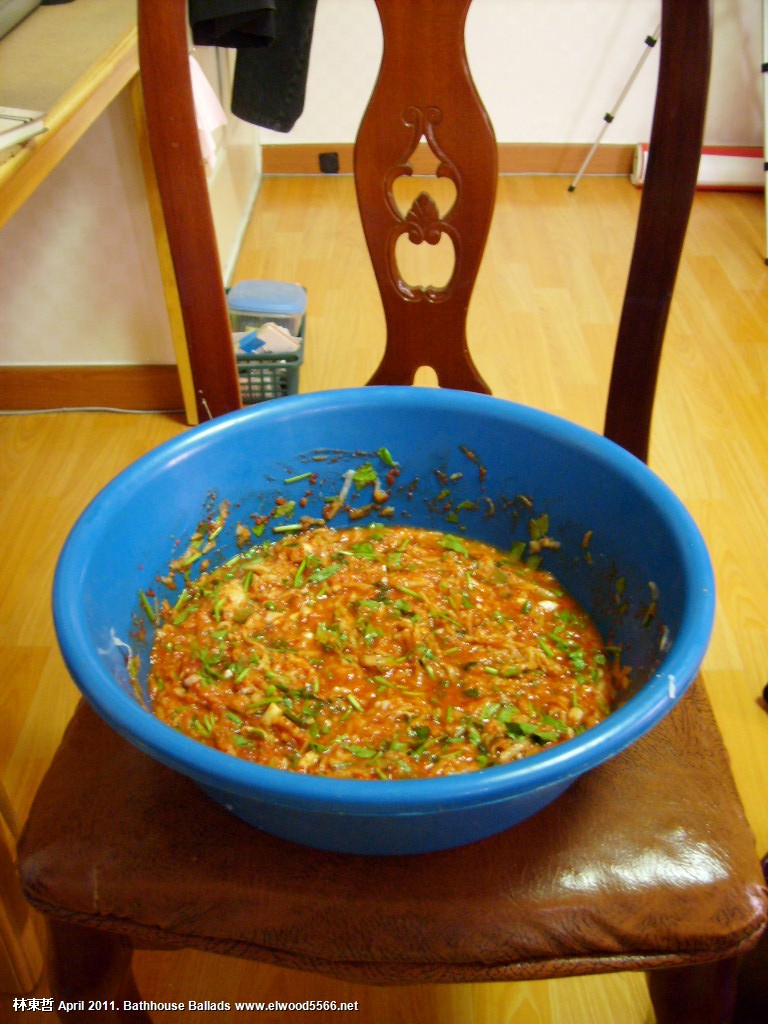
the paste ready to go
-

pasting the segments

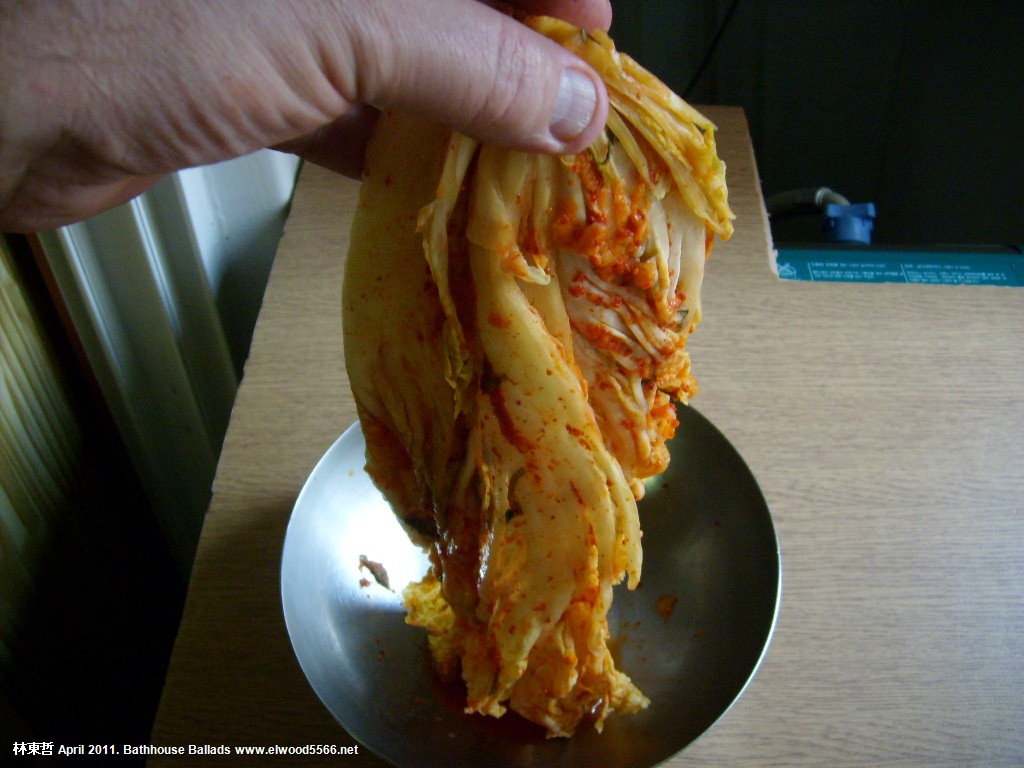
ready to ‘pack’
For the most up to date and effective recipe for Kimchi, check My Recipes.




leave a comment