Snacking Out on a Lobster – Monday Market

so delicious
Recently, there seems to have been a glut of both lobster and the most enormous ‘banana prawns’ in my market and the local supermarket. Indeed, I’ve eaten more lobster in the last week than I’ve probably eaten in my entire life. They weren’t necessarily the biggest lobsters you could buy but to do that I’d have to take home a living one and despite my fondness for their flesh, I’m not sure if I’d be capable of committing one to a cauldron of boiling water.
As for the prawns – I’ve never seen banana prawns in the UK. First they are big, in some cases close to six inches in length, head to tail and discounting their antennae and second, lovely and plump. I’m not sure if their name is derived from their size, or their slightly yellowy-pink colour. One evening, I treated myself to both a lobster and banana prawns, serving them with a salad. I couldn’t resist the purchase as they were reduced to 6000W (£3) but usually the price for a single lobster or around 15 prawns varies between this and 10000W (£5).
When I was considering the extravagance of a lobster and prawn dinner, and being dissuaded, I had to remind myself how much that is in the UK, a piddly £6! And I had to remind myself that while I can buy a bag of prawns for around the same price back home, they are always the little things, probably caught off the coast of Scotland, shipped to China for processing, and then stored in a refrigerator warehouse for 2 years. Half their weight is glaceed water and they are totally tasteless. I think many British people have completely forgotten the taste of an unadulterated, fresh prawn just as much as they forgotten about pork or bacon that doesn’t piss a puddle of water into the pan when you try to fry it! This week, I’ve eaten five lobsters and two were just for a snack!

©努江虎 – 노강호 2012 Creative Commons Licence.
Lion’s Mane Mushroom – Monday Market (노루궁뎅이 버섯)
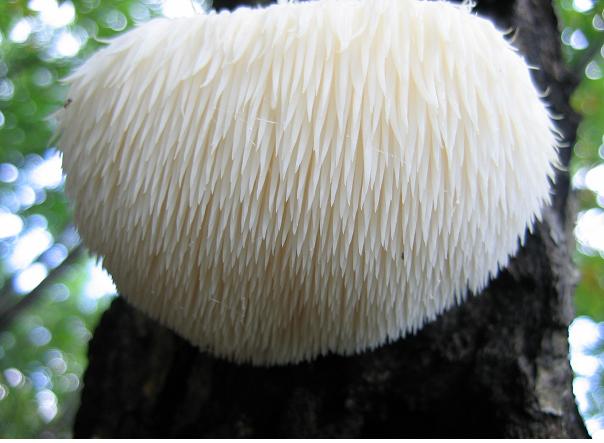
the impressive Lion's Mane Mushroom - aka Pom Pom Mushroom
The strange shape of this mushroom, which I’ve only seen once, immediately attracted my attention though the ones I bought are nothing as spectacular as ones that can be found in the wild. The Lion’s Mane Mushroom, Hericium erinaceus, is also known as the Bearded Tooth Mushroom, Satyr’s Beard, Bearded Hedgehog Mushroom and the Pom Pom Mushroom. In the more spectacular examples, ‘pom pom, is an apt comparison.

spongy
The size of this mushroom varies from that of a golf ball to not much less than a regular football and its natural habitat is on the side of trees. The mushroom is particularly prized when small as it has a seafood texture and taste and is sometimes compared with lobster. The mushroom has a long history of medicinal use in the Orient and is currently of interest in the treatment of Alzheimer’s.
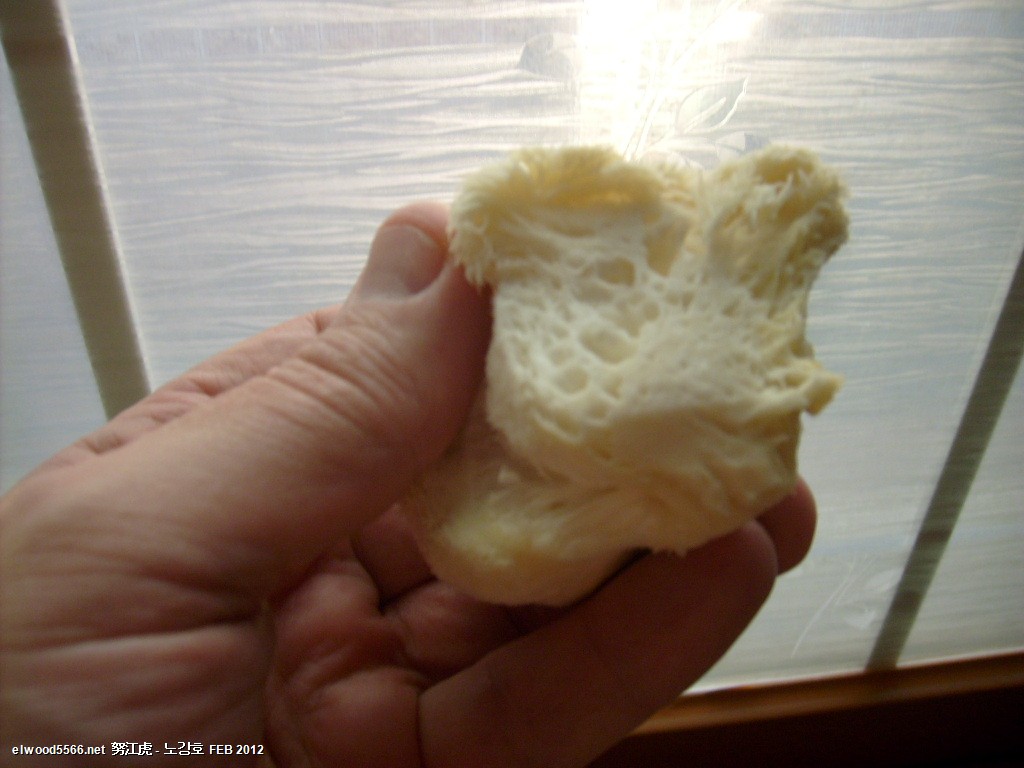
and watery
I had no idea what to expect or the best way to cook them so I simply fried slices in sesame oil. I was surprised by their weight as they are are heavier than they look and neither are they solid having substantial ‘air pockets’ inside. Indeed, in terms of cutting and feel, they are both spongy and watery. I didn’t find their taste particularly memorable though they were extremely succulent but because this was a first experience, I didn’t what to expect. Now I know a little about them, I’d like to try them again. However, currently, they are more expensive than lobster. Two, each between the size of a golf ball and tennis ball, cost 2700W (about £1.50); my last lobster cost 6500W (£3.25).
Here is a Youtube video by Don King, a mushroom hunter…
©努江虎 – 노강호 2012 Creative Commons Licence.
Club Korea
I have a love hate relationship with Korean discrimination! Hating discrimination is obvious, but ‘loving’ it! Why? I hear you ask; because we’ve done such a good job fucking our own societies that the more opposition to the west, in any form, the better. I know, it’s puerile, Even though I’m a ‘wayguk,’ I can tolerate being an outsider if it is a barrier to the acceptance of some of the western values which are currently rotting places like the US and the UK.
Personally, I place quality of life above all else and as a foreigner in Korea, I have a far better quality of life than I would back home. Now, I don’t mean solely in economic terms, though even with significantly higher pay in the UK, I was never able to save half my earnings as I can in Korea, but in terms of things like access to health care, gyms, things to do after work, eating out, etc, etc. With many of the transactions I make in the UK, often ones accompanied with running and maintaining a house or traveling, there is an accompanying sense of having been suckered. The same sensation is evoked whenever I travel to countries where you have no idea of the relative values of things, perhaps because you are supposed to barter but in the process you know that the item you are buying is extortionately overpriced but there is nothing you can do about it because the next guy will rip you off just as badly – if not worse. I suppose the feeling is akin to being divested of your dignity, a bit like you might feel if your house were burgled and it’s especially intense when you know the other guy thinks you’re a total fool for paying whatever you did. Transactions of whatever kind are always more tolerable, even rewarding, if you feel the deal was mutually beneficial and fair but unfortunately, in the UK, you’re usually exploited and there’s nothing you can do about it!
My sister recently wanted her son to see a dermatologist and was faced with a six week wait. Can you imagine waiting six weeks to see a doctor in Korea? I caught ‘red eye’ last year and went straight from seeing my own doctor to an ophthalmologist in the space of half an hour and both practices were less than 3 minutes from my front door and probably one minutes walk from where I work. Then there was the cost; both visits totaled less than £5 (10.000W). Meanwhile, to secure quicker treatment for her son, my sister had to pay £170 (340.000W). I gather in the US this would be significantly higher.
Then there’s my gym. I pay £50 (100.000W) a month for access to bathhouse, gym and jjimjilbang. I know there are cheaper places but it is my favourite bathhouse and is impeccably clean. Back home, even exclusive gyms pale into mediocrity compared to those on offer in Korea while all others are basic, usually just a gym and claustrophobic changing room. And of course, you couldn’t have a bathhouse in the UK without it being usurped for sexual purposes because in the west nudity and sex are conflated. Then there are the restaurants, singing rooms, jjimjilbang, pc rooms, twenty-four hour services, coffee shops and taxis to take you wherever you want at prices a fraction of the cost they are in the west.
However, these aren’t the main reasons I find Korean culture preferable to that of my home country. Unfortunately, it’s the British aggression, violence and apathy of British students that exiles me to foreign shores. I have much experience with aggression and violence and due to my military background and training in taekwon-do, I worked in several different places as a bouncer while I was a student. One such place was in a MacDonalds in a fairly mediocre town. I doubt there is one MacDonalds on the entire Korean peninsula that requires a bouncer – except perhaps when they are in the vicinity of US military bases.
Now, to give you some idea of the kind culture I experience in the UK, in a fairly average British town, let me share a piece I wrote around 8 years ago. The extract is taken from my blog, Scumland UK.
Outside the local newsagent, which is only a few minutes’ walk from my front door, I am treated to the headlines of the newspapers, all utterly depressing. Of course, I know I shouldn’t read them but I can’t help it. I’m the inquisitive type of person, the type who if I think I’ve stepped in dog shit will poke it with my finger and then sniff. Newspaper headlines have the same magnetic allure and very often cause the same repugnant reaction. ‘Boy knifed in a school playground,’ reads the headline in the national press. This story has some local significance as only a few weeks earlier a teacher colleague told me about a 12-year-old girl who had been arrested on the school premises for producing a carving knife with which she intended to kill her ex-boyfriend. The police were called to the school and took her away in handcuffs. Come to think of it, that was only a few weeks after a local teacher was beaten senseless by a gang of nine boys after he tried to break up a fight. Another school has recently installed a metal detector at its points of entrance in order to detect those arriving for lessons carrying knives. Meanwhile, the local newspaper contains a massive headline about increased disorder and yobs terrorising the drivers of local bus companies.
I’ve been standing at the bus stop for over half an hour despite the fact that buses are supposed to service this stop every twenty minutes. As I am wondering whether yob behaviour on buses is the result of them arriving late, a girl of about 13 passes on a bicycle, all her stomach is exposed and as she passes I notice that her buttock crack is totally visible. Am I supposed to find that alluring? I’m not talking about just a centimetre or two of crack but almost half her backside. I wonder if her parents allow her to expose so much of her body in public and I conclude that her Daddy and his mates probably find it very erotic. However, I’m not too shocked as recently I saw a girl at the same bus, stop and of a similar age, wearing a black T-shirt on which was emblazoned, in lovely gold letters, ‘Fuck Me.’ I can’t remember if the words were mitigated by the addition of an exclamation mark, on a young girl it doesn’t really matter.
Once on the bus the assault continues; a young mother is sat with a baby in a pram. I can’t help but begin assessing her character and remind myself not to assume too much on the basis of stereotypes. While you don’t solely judge a book by its cover, you can certainly use it to make a formative assessment. I know for example, that if I pick up a book and Jane Goody or that Jordan person whose surname I don’t know, is on the front cover, I can assume its going to be superficial crap with smatterings of smut. The young mother has enormous hooped earrings and a cheap, blue tattoo has been branded onto her hand by a tattooist who was clearly pissed. The tattoo intrigues me as I cannot discern whether it is a rose or a red cabbage. The difference is important in my assessment of her; a representation of cabbage would constitute some kind of statement, be it artistic or intellectual and I would be tempted to ask her what the cabbage symbolized. A rose however, would simply constitute a brand and might easily be substituted by a number.
Now I’m on the bus my mood has improved and I tell myself not to be such a negative, nasty person and at just that moment, just as I am about to reconcile myself with society, she goes and spoils it all; her mobile phone rings, not a discreet ring but some cacophonous jangle that stuns everyone within earshot. Next she begins shouting into the phone in that horrid Estuary English twang which political correctness demands we respect. ‘What the fark do you wan now? I already told ya, I’m on the farkin bus! What d’ya fink I’m farkin doin? I’m dropin’ the baby at me mum’s and I’ll met ya in town. Like I farkin said already.” Her baby stairs at me, its big eyes full of wonder. I want to smile at it but its grotesque mother will probably get aggressive and assume I’m some pervert. Hundreds of thousands of babies have been born to such hideous parents and yet no rhetoric or public debate seems to exist which calls into question their parents’ ability to rear children. Having a mother like this freak is child abuse but questioning parenting is a social taboo.
It’s a hot afternoon, probably the hottest day of the year and as I get off the bus I’m thrust into the middle of a small crowd of teenage lads, all aged 16 upwards, stripped to the waist and drinking from cans of beer. You can see the aggression and sense it in an aura which engulfs them like a plague. Aggression snarls their baby faces; it pervades the gait of their walk, a sort of strut which involves little steps; like they have pokers or shards of peanut debris up their arses. Their tight arsed strut is accompanied by an exaggerated shoulder swagger and arms swing at a forty-five degree angle to their bodies. Their beer cans, their gait, their little gang, their aggressive faces warn all on-comers not just to step aside, but to ‘fuckin’ get out-of-the-way!’
Friday afternoon is never a good afternoon to travel into town as even in the late afternoon the assault to your sense and sensibilities can be particularly fierce. The experience is intensified if it’s a school holiday. In front of me a boy lurches from side to side, clearly drunk. As with most of the other trash I’ve encountered in the space of 45 minutes, traveling from my house in a small village, into the town center, he’s a teenager. For the benefit of some approaching girls he opens the front of his jeans, sticks his hand down the front of his black boxers and contorting his face in a lustful manner, asks: D’ya wanna suck me fuckin’ knob, gals?’ The girls giggle, clearly honoured by the attention of this slob. I try to ignore him but he steps into my path, flies still open, hand still in boxers. ‘Hey mate, give us a pound!’ It’s more of an order than a request. I’m tempted to ask if he is touting for business given that his hand is still rooting in his boxers and his jeans are fully open at the front, but somehow I don’t think he would comprehend my humour. I ignore him. ‘Fuckin wanker,’ he calls after me.
Eventually, I arrive at my destination but worse is yet to come; I have to escape from this hell hole on the ten o’clock bus and the High Street, like so many other British towns, is no place to be at that time of night on a Friday evening, or indeed any evening! I only have to walk about a third of a mile to my bus stop but it is like walking through a zoo where the animals have been freed from their cages. The streets are crawling with loud, brash, aggressive, drunken youngsters. A lad is vomiting in a doorway; he sees me looking and gargles inarticulately, something with the word ‘fucking’ in his sentence. In the recess to the opening of one of the town’s most prestigious department stores, a girl is squatting; her stupefied eyes struggle to focus on my passing blur. Supported by the store doors against which she has collapsed, piss streams out from between her legs onto the marble floor which only a year ago the Queen herself walked on. However, she manages to retain some dignity by not pulling down her jeans and underwear. In another alleyway’, one that formed part of the original grid system when the Romans occupied the town some 2000 years ago, I notice a young teenage girl laying face down on the floor, her hand clutches a cheap handbag. She is scantily dressed with the obligatory exposed stomach and cheap, tight t-shirt that hugs her pubescent contours. Her friend, or should I say ‘mate,’ shouts at some passing men: ‘Don’t just fuckin’ look! Help her!’ The girl on the floor lifts her head and with a strangulated moan gargles vomit onto the payment. Like a marionette with severed strings, her head collapses back towards the dirty pavement, her hair and gargantuan hooped earrings cascade over her alcoholic sick. The passing men ignore her and walk by. This is someone’s daughter lying comatose on a grotty pavement, someone’s child and I wonder what sort of upbringing, what kind of society has led her to have so little self-respect than she is now lying drunk and dangerously vulnerable. If I was her parent I would be very concerned but then if I was her parent she wouldn’t be in this situation.
Outside the main night club a line of teen punters, mostly male, are being searched by burly bouncers before being allowed entry. Again there is that aura of aggression, the same nasty, scowling faces that warn you violence is about to erupt at any moment. You know you can’t make eye contact with them as to do so would invite hostility. They shout vulgar comments at passing females, adopt macho postures and grunt at each other and every other word is ‘fuck,’ ‘fucking’ or ‘fucked.’
Most of my friends back home hate the tone of Scumland UK and I can understand why; when you have terminal cancer you don’t like to be reminded, if you’re living in shitty conditions or your house stinks, you’d prefer not to have the fact rubbed in your face. And of course, people have different perceptions. Many British people have been completely desensitized to the nature of the society around them while others have never lived abroad and only experienced other countries as holiday destinations. Others, often the middle classes with managerial jobs and houses in the leafy suburbs, especially ones who earn a living out of the degeneration and decay around them, simply deny there is a problem.
Meanwhile, back in Korea, I lead a life in which I have never faced a threat on the streets or been insulted or assaulted as a teacher – all of which I’ve experienced in the UK. Hence, I’m in favour of any barrier to the spawning of western values in Korea which might change this. I’m what you might call a ‘wayguk’ separatist and in a sense would be quite happy if Korea expelled all foreigners and closed its borders. Yes, Korea has a multitude of problems and things that need improving but where in the world are young people so mild-mannered, innocent, the streets so safe, and pregnancy, drug and pox not a scourge on the young; where in the world is it possible to do a multitude of things on an evening at a price that doesn’t rob you of your dignity or put you in danger of getting your face kicked in!
On the peninsula, you can speak fluent Korean and marry into clan-Korea but you’re never really Korean. You’re always on the edge. So many aspects of Korean culture conspire to highlight the fact you are a ‘wayguk.’ Even the language conspires to expose your barbarian genes. I forget the amount of times I’ve been talking to a Korean and wanted to mention, ‘my mother,’ ‘my sister ‘or ‘my university’ and stopped short because for Koreans such words are ‘prefixed’ with ‘our,’ indeed it would be improper to say ‘my mother.’ And in that instance in which I fumble for the correct pronoun, I am reminded of my foreignness. My mother is from a country thousands of miles away and clearly not part of clan-Korea, not part of the all-embracing ‘our’ sentiment and mentioning her or indeed a member of my family exposes my alien status.
Every time I go into a restaurant or shop with a Korean friend, and even if I do the talking, staff will confirm my ‘request’ with them, instantly marginalizing me. They don’t mean to be rude, they’re just being helpful but it’s the irritating assumption that any wayguk trying to speak Korean has probably got it wrong and maybe wanted hot chocolate rather than coffee! And how many times have you walked past people handing out leaflets on the street and they ignore you? Even this weekend I was walking into E-Mart and woman handing out leaflets simply let me walk past. Sometimes they turn their back or look away but she just looked and was probably thinking, ‘wayguk,’ he can’t read Korean, pointless wasting one on him.’ Imagine doing that in London! Apart from the fact that so many Londoners are clearly not… and there I run into a problem…clearly not what? Native? White? British? you wouldn’t dream of thinking, ‘foreigner, they can’t read English.’ In Britain, it’s sort of taboo to identify anyone as a ‘foreigner,’ unless they’re clearly on vacation, and that’s one reason, even though they have contributed greatly to British culture, that the UK is in a mess and British culture currently seen as offensive, imperialist and something to apologize about. The UK has promoted every other culture, religion and ethnicity but its own and British culture is currently a dirty word which can be slagged off with impunity.
There are times when Koreans can be quite callous in their treatment of dedicated, professional foreign workers. Last weekend, one of my friends left his high school after five years service. Of course, it was never really ‘his’ high school and certainly not ‘ours.’ Many, though not all, foreign workers in Korea, are treated much like a rice cooker. The rice cooker has no ownership, semantic or otherwise over the school. The rice cooker belongs to the school and is a tool of the school and when it breaks or has a problem – you chuck it out. In five years he’d taken 6 days six leave, four after suffering a heart attack. Of course, this was partly because they would have chucked him out should he have been absent longer. Even when a parent knocked him down in their car, while on a mobile phone and on school premises, he only took two days off. As an aside, he received no financial compensation for the accident and the school did all in its power to make sure the parent wasn’t made to fork any more than hospital and doctors bills. You can trust good old ‘club-Korea’ to kick-in when threatened or protecting their own and it operates much like an enormous ‘old boy’ network.
In the same school, a Korean teacher with one years service, moved schools and in his last week was taken out for dinner and given the usually wadge of money in an envelope. In reality, he was only moving into the adjacent girls’ high school but as a member of ‘club-Korea’ he deserved the highest accolade. Meanwhile, my friend departed for the airport without even a handshake or a word of thanks from the principal! And even the school’s foreign, non-esl teachers with Ivy League / Red Brick qualifications, high salaries (in the region of 4 million won per month) and with apartments rather than one-rooms to house their families, all of which are flown to Korea by the school, receive the same rice cooker treatment. Yes, not all schools are like this but don’t get too complacent because you are rarely part of the school or the business – you will not rise through the ranks of management though, as is the case in some franchise hakgwons, they might pay you a little extra and give you some authority over other waygukin, never other Koreans, so that you can at least feel part of the program. For most foreigners working in Korea, your status as a metic exiles you to loiter on the periphery.
Then there are the drug tests, medical tests and police checks – only for foreign E2 visa holders. But can you blame Koreans for this? We don’t trust fully trained and qualified teachers, doctors, nurses in our own countries and even after intense screening, they remain suspect, so why should we expect Korea to open the crèche doors for those whose only qualifications are BA’s or MA’s?
Such treatment is appalling but I find it bearable because it helps keep foreign values at bay or at least slows the process of their possible assimilation. I can imagine some of the policies ‘wet’ western teachers would employ could they gain influential positions within Korean schools – especially ones with no practical experience of the problems faced by teachers in their own county. In two separate nationwide polls, around fifty percent of British teachers and parents were in favour of reinstating corporal punishment. Let westerners into the policy implementation process and it wouldn’t be too long before they’d be banning corporal punishment, banning any form of physical contact between student and teacher, empowering kids with all sorts of rights, teaching kids that every adult is a potential pervert and then allowing them to interview prospective teachers. Then, when the rot had set in, compelling teachers to take courses in class control, behaviour and riot management and then dumbing down the curriculum to make it entertaining for the kids who have little or no interest in study. The one thing I dislike about many westerners, is the overriding assumption, even in the face of extensive research on the tide of apathy, pox, violence, drugs and teenage pregnancy infecting their own countries, that their culture is somehow superior, that it knows best and is something to which Korea should aim. Indeed, many westerners assume that the westernization of Korea is both inevitable and desirable.
Don’t get me wrong however, because I’d hate to be Korean. Korean society is too restrictive, pre-determined, too work orientated and too homogenous. It’s a bizarre irony because the liberalism of the west that’s made me who I am and given me a strong sense of individual identity, is the same liberalism I don’t want to see polluting Korea. That’s a totally selfish stand point! I agree! As much as I love Korea, it’s as a foreigner who at one and same time is both an exotic source of fascination and an outsider. And you can’t have it both ways; you can’t be ‘Korean’ without being enslaved to work or study and all those western idiosyncrasies which Koreans love about our personalities, and which would be deemed flaws in Korean society, would have to be drastically subdued.
But the process goes both ways! As much as Koreans blatantly use us either as metics, as foreign workers with limited rights, or as a tool to learn English, there are times when your foreign physog is an advantage and gains you concessions and privileges. I can nearly always walk into my local E-Mart without being asked to put my bag in a locker at the entrance. The poor English skills of staff always encourage them to look the other way when I stroll past. And over a year a foreigner probably gets more ‘service’ from shops and restaurants than the average Korean. My doctor once examined my stomach as I was stood waiting to cross the road, another time he gave me a tour of his surgery and I once had breakfast with his mother – do Koreans get such privileged treatment? Try sitting on first class of KTX with an economy seat ticket and there’s a very good chance the stewards will allow you to remain in the seat without asking you to move or insisting you pay more. And of course, whenever you want to avoid some question, some request, whatever, you can simply play dumb and say you don’t understand!
Yep! Living in a country which is both fascinated with your exoticness and does its utmost to remind you of your foreignness, chucks you a mixed bag. Personally, I feel life is much better stuck somewhere in the middle of this muddle, perhaps even out on the edge, than being given equality and running the risk the same problems will emerge that I have managed to escape by leaving my home country.
©努江虎 – 노강호 2012 Creative Commons Licence.
Further Information
‘Be strong, Be Gentle, Be Beautiful’ – Keiko Fukuda
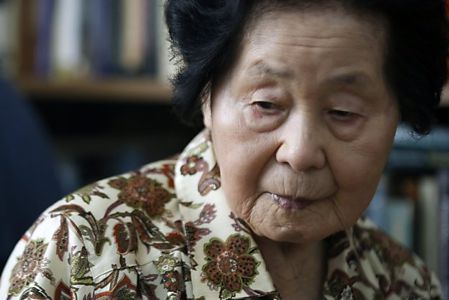
Keiko Fukuda
”This was my life…I chose to live judo over marriage.’ Says the aged Keiko Fukuda as tears begin to fall down her face. This clip of a documentary in the making is incredibly intense and moving. Born in 1913, Fukuda, the highest ranking woman judo-ka, is also the last surviving student of Kano Jigoro, founder of judo. Fukuda’s personal motto is ‘be strong, be gentle, be beautiful,’ and there is no doubt she epitomizes such virtues.
In today’s world, where everyone on the internet is a master of something and so many individuals derive pleasure from condemning the efforts of others, Fukuda’s gentleness, her humility are a reminder, perhaps a relic of a reminder, that there is more to martial arts than simply defeating an opponent. Perhaps my assumptions are an idealization, a fabrication derived from a fascination with the oriental that anyone training in the 1970’s will recall, but when I began taekwon-do, in 1977, there was a real sense among many practitioners and teachers, that qualities such as perseverance, determination, courage, humility and respect were equally, if not of greater importance than simply bashing an opponent.
I remember an excellent book on Karate by C.W Nichols, (Moving Zen) which recounted a westerner’s experience learning Karate in Japan in the late 60’s or early 70’s. In his school, a student had just been promoted to first degree black belt and shortly after was made to fight one black belt after another until he fell to the ground from exhaustion. When the instructor was asked why the new black belt was being treated in this manner, he replied that, when a nail sticks out from the wood, you bang it back into place. Yes, it’s harsh, but in life sometimes there is more to learn from defeat than there is from victory. There are bad people in every walk of life but in my first martial arts school, all the dan grades were role models, they were all gentle, all strong and in their own way, all were beautiful.

A book that teaches you the stuff omitted in many martial arts school and styles
While the movie clip of Keiko Fukuda is inspirational to genuine martial artists, regardless of their rank or ability, the comments that followed the Youtube clip demonstrated how either many people don’t understand the breadth and complexity of martial arts, or simply inhabit a completely different mindset. Kata, for example can never be mastered because perfection is beyond grasping. The goal of kata is to better your spirit in the pursuit of a perfection that cannot be acquired. And they miss the myriad of skills which pursuing martial arts encompass, precision of technique, the art of teaching, power, character, timing, rhythm, strategy, focus, beauty, the moving Zen! When it comes to learning a martial art, a good teacher is of far greater value than a competition champion who can’t teach.
I would have thought that any expert in their field who had dedicated their life to some pursuit, in this case over 70 years, who had risen to the top of their field before many of us were even born, would be an ideal candidate to hold in unreserved reverence but no, the internet provides the perfect anonymity for every armchair expert to promote their own ignorance. Sadly, instead of a celebration of effort and achievement, much of the response to the Fukuda clip was a litany of criticism. Yes, Fukuda is old, and of course she cannot defeat a younger, less experienced even untrained assailant and there are probably thousands of kiddies who could push her in the gutter! Of course you could easily mug her or knock her over and of course she is frail! She’s 90 years of age! But let’s not be too serious, how can anyone who lashes out at the abilities, mental or physical, of a little 90-year-old woman be taken seriously. Perhaps the proliferation of martial arts as sport, as solely competition and sometimes savagery have led us in the wrong direction and if so it is the likes of frail Fukuda who remind that we’re missing part of the picture.
Suddenly I am reminded of that cringy scene in the opening of Way of the Dragon, where Bruce Lee, a Shaolin monk, scolds a young student for kicking without ’emotional content.’ ‘It’s like pointing a finger at the moon,’ he tells the boy. ‘Don’t focus on the finger or you’ll fail to see all the heavenly glory.’ Suddenly, the scene is a lot less cringy!
©努江虎 – 노강호 2012 Creative Commons Licence.
Pork Kimchi Jjim – 돼지 김치찜 – My Recipes
Key Features: Korean fusion / very healthy / adaptable

Pork Kimchi Jjim
I’ve lived for almost five years with one of Daegu’s best pork kimchi jjim restaurants less than 10 seconds walk from my front door. I very quickly developed a taste for this tasty dish and over the years have managed to gleam a few tips to help me reproduce it. This recipe is best with sour, aged kimchi, indeed the older the better. Even kimchi of a year old and which has started to grow a layer of mold on the top, can be washed clean and used for this truly satisfying and healthy meal.
The best cut of meat for this is pork leg and if you have time to cook on a low heat for an hour or more, you can cut the meat in large chunks about 1.5-2 inches square. My local restaurant cooks the pork, in large chunks, for several hours until it melts in your mouth. For quicker versions you can reduce the cooking time by cutting meat into smaller portions. If this is the case avoid more fatty cuts of meat – such as pork leg.
MY DEFINITIVE RECIPE
1 cup = 180ml. T=tablespoon (15ml), d=dessert spoon (10ml) t=teaspoon (5ml)
This recipe is ideal for one large portion – double ingredients for each additional person
SHOPPING LIST
240 grams pork tenderloin (목살) or front leg (앞다리). If you have time, leg is preferable.
2T Wine
1d Soy Sauce (간장)
1T Sesame oil
1d Sugar
1 cube or 4 cloves of crushed garlic
Half an inch of finely chopped ginger
Half a Spanish onion roughly chopped
Mooli – about same amount as onion, diced, but omit if this is a main component in your kimchi. White turnip is a good substitute.
0.5t of dashida or a stock cube
1t of sesame powder
1T Mild bean paste
1t Red pepper powder
1 cup of Kimchi, sour is preferable
Sesame powder
Sesame seeds and or pine nuts for garnish
3-4 cups of water
See also suggested accompaniments at the bottom of the page.
EQUIPMENT
Ideally as an earthenware pot or ‘ttukbeki’ (뚝배기) or a heavy bottomed sauce pan.
RECIPE
1. MARINADE
Cut the meat into cubes about an inch square. Then, make a marinade with:
2T wine, soy sauce (간장), 1T sesame oil, 1d sugar,1 cube or 4 cloves of crushed garlic, half an inch of finely chopped ginger (7 items)
Put the pork in the marinade and leave from two hours or overnight.
2. COOKING
In a heavy bottomed pot or Korean earthenware ‘ttukbeki,’ place:
Half a Spanish onion roughly chopped and the same amount of mooli (or white turnip) omitting this if it features in the kimchi. (2 items)
0.5t of dashida or a stock cube and 1t of sesame powder. (2 items)
1T Mild bean paste
1t Red pepper powder
1 cup of Kimchi
Then add the marinade and bring back to the boil, boiling for five minutes before reducing the heat to a simmer for 25 minutes. You will need to add around 1 cup of extra water during simmering. If my meat is cut larger than inch cubes, and if I’m using the more fatty leg meat, I will cook on a low heat for up to an hour – until the meat is at a stage where easily falls apart. Stir occasionally and add extra water to maintain the original level.
Before serving and an extra teaspoon of sesame oil, some sesame seeds and/or pine nuts.
SERVING SUGGESTIONS
Serve with an accompanying bowl of rice and a selection of side dishes (반찬) and laver bread (김).
ONGOING NOTES:
©努江虎 – 노강호 2012 Creative Commons Licence.
Home Spa World – Apsan, Daegu
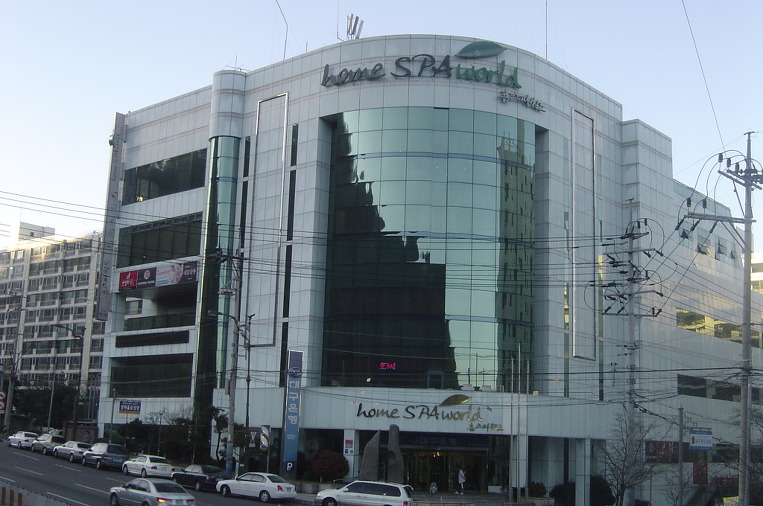
Home Spa World
Rating – Luxury
First visited on February 10th 2012. This is a large complex situated right on the edge of Apsan mountain between Dae Myeong Middle School (대명중학교) and Samdong Bridge (삼동교). It lies almost directly on the perimeter of Camp Walker. This is probably the largest bathhouse I’ve so far visited in Daegu and the length of the changing facilities and the bathhouse itself, took me 80 paces. The reception is on the ground floor along with some shops, a bank, restaurants and a Paris Baguette. The male changing facility and bathhouse is on the 3rd floor with the corresponding female facility on floor 2,
The changing facilities are very spacious and divided into numerous partitioned areas. Once you have your ticket, you use your ticket number to find your shoe locker and the key from this then opens your clothes locker. My key number was 637 and there were several more partitioned areas after mine so the changing area must accommodate a thousand people. The changing facility runs the entire length of the bathhouse and is enormous. In the center of the changing area are the entrance to, and exit from, the bathhouse.
You enter the bathhouse onto a raised plinth which at the front has steps to the floor level and to the side slopes down to the floor. Standing on the plinth, the entire complex can be viewed. Inside the bathhouse, on the right hand side are 80 sit down shower areas with 25 standing showers lining the wall. On the opposite side to the entrance, which is raised, are the saunas and on to the left, the bathing areas.
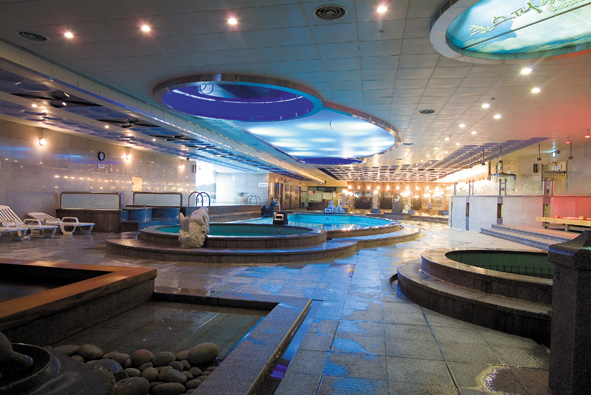
(The steps to the plinthed exit are on the right). This photo, taken from the entrance to the no-cheon and between the hinoki and 'event' pools, gives a good sense of the size of this facility. The row of lights at the far end are the stand up showers with the seated showers beyond the furthest pool.
The bathing area is pleasantly lit by diffuse lighting under dark blue paneling which mirror image the pools. Two rounds pool, one hot and one cool sit on either end of a large semi-circular pool from which one can watch television. On the far side of the entrance is a large cold pool (냉탕) which is slightly recessed and on the wall of which is a large alpine mountain panorama, illuminated from behind. On the left of the cold pool are three individual, sunken bubble baths (거품탕) which you climb down into. On the same wall, but in the opposite direction adjacent to the showers, are three saunas, one of yellow mud (황토방), a steam sauna and a yellow stone sauna (황석). Next to these, in the corner is a partially enclosed scrub down area and a urinal.
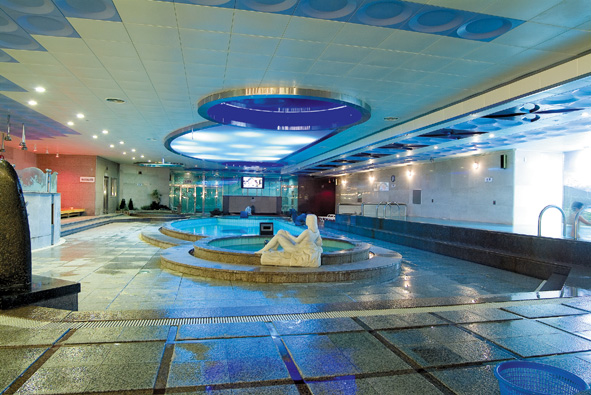
This photo is taken from the center of the room, back to the showers and facing the no-cheon where the previous photo was taken. The entrance is on the left and the cold pool on the right.
Standing on the raised entrance and looking in the opposite direction, to the left far end, are two more baths one being a large square, wooden, Japanese cypress bath (히노끼) which is situated under the television, and in the left-hand corner a round ‘event pool’ (이벤트탕). The ‘event’ pool has a large menu on the wall detailing the daily essences added to the bath, herb, schisandra (오미자), jasmine etc, and their medicinal qualities. In the far right-hand corner are three cold ‘waterfall’ showers and in the opposite corner, next to the ‘event’ pool is a pine wood, herb sauna. Directly to the left of the entrance for this is a raised sleeping area with a heated floor. Dotted here and there on the edge of pools are stone mermaids, dolphins and other such features, pouring water into the pools.
The far left of the entrance contains the entrance to an area exposed to the outside temperature and known as a no-cheon (노천). Of the indoor no-cheons I have visited, this was the most successful. The area comprises most of the width of the bathhouse area and contains a cold pool (냉탕) and a steaming, large ‘forage bath’ (목초탕). The area is pleasantly decorated, although the plants are plastic, with spouting water features and in one corner are even a pair of small male and female totem poles. In this area is also a Finnish style sauna. A couple of seats allow for relaxation and provide a view, upwards. to the edge of the mountain. Usually, for the sake of privacy, indoor no-cheon areas have slated type windows which are frosted and though they allow the breeze to enter, hence providing outside temperatures, they usually have no view. The mountain at this point is steep enough to be void of footpaths and public and though there is a large frosted panel blocking any horizontal view, one can look up and glimpse the mountain slope. The no-cheon area is pleasantly decorated, though the plants are plastic, with stone features, water spouts and there is even a pair of small, male and female totem poles (장승) guarding the area. The no-cheon area also has a Finnish-style sauna.
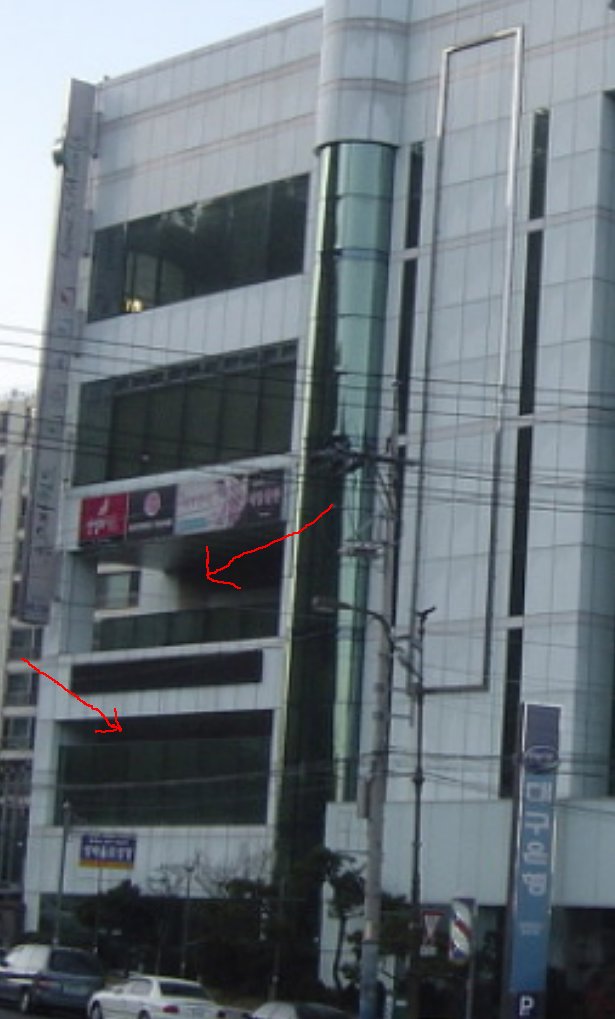
The location of Home Spa's no-cheons (노천). The male no-cheon, on the third floor, seems to have greater visibility and the window of the Finnish sauna is just visible.
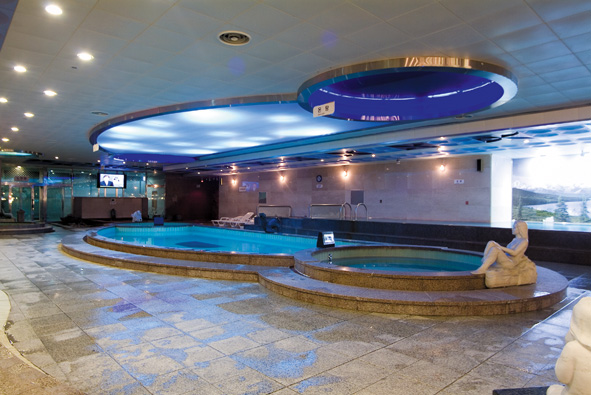
a view of the bathing area with the entrance to the no-cheon in the far left-hand corner
The ‘powder room’ is comfortable with the usual array of fans, hair dryers, lotions and skin bracers. The changing area is massive and spacious and in particular, the TV area had an enormous table with four large leather sofas.
Getting there – (Wiki Map link )
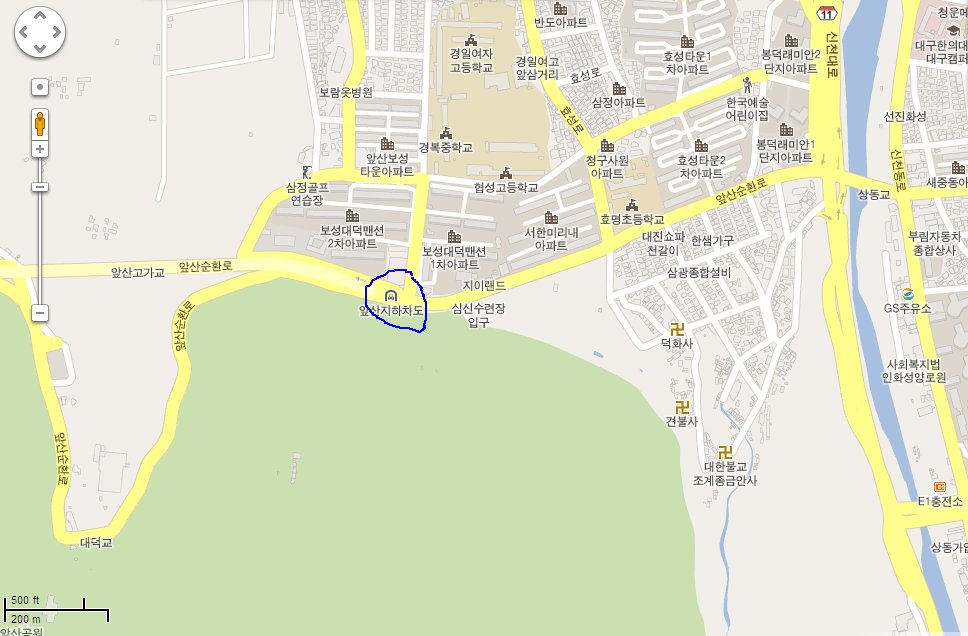
Location of Home Spa World
Bus Lines: 410, 730, 349, and others stop in the immediate area.
By Subway – the closest subway to Home Spa is Daemyeong (대명) from here it’s possible to walk but a taxi might be easier.
Times – opens at 0600 and closes at 2300.
Cost – 7000W
Facilities –
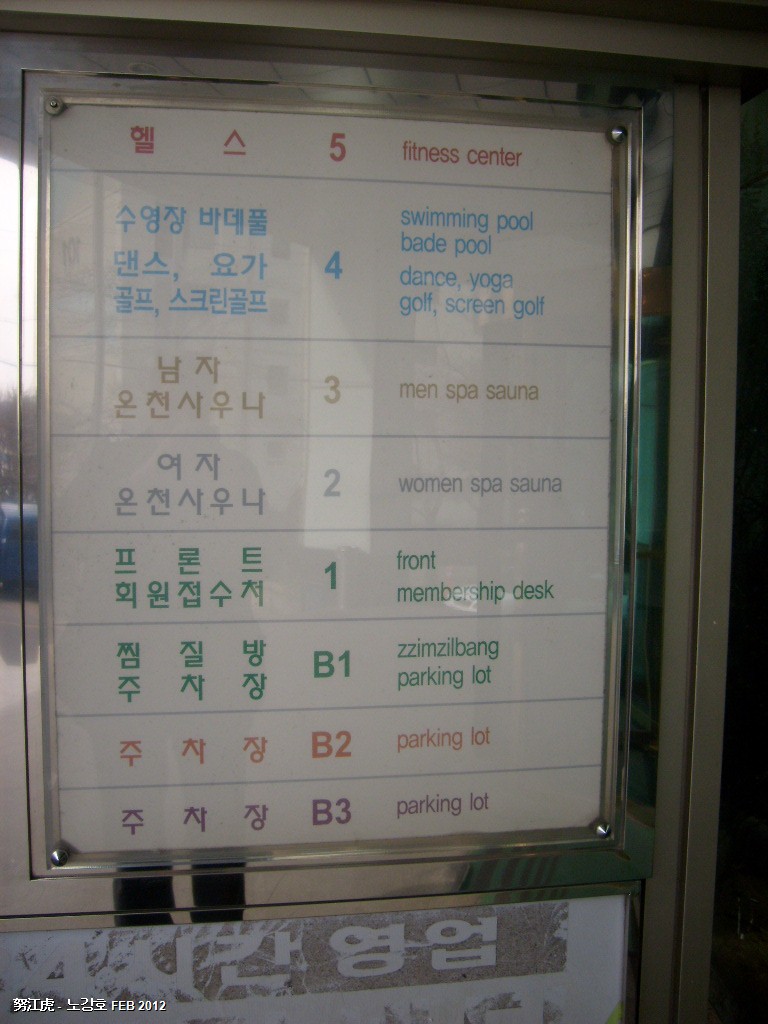
Facilities
Bathhouse (men) – barbers, 4 saunas, 8 pools, 95 showers, TV relaxations area, TV access in pool area and in saunas, shoe shine, snack area
Others – swimming pool, golf, yoga, fitness, jjimjilbang,
Waygukin – none
Address –
Tel: 053-470-1100-3
Website – http://www.h-spa.com/
Layout (coming)
©努江虎 – 노강호 2012 Creative Commons Licence.
All Camp in Korea

In your face
I’m always amused at the way some of my friends in the UK assume that because a country doesn’t ram gay issues down your throat and a significant number of the population constantly proclaim themselves out, that it must therefore be rabidly homophobic to the point of executing or imprisoning transgressors. When in Britain, it suddenly became possible, within certain settings, to pronounce your sexuality with pride, we did so with embarrassing drama. As a student teacher, I remember numerous people introducing themselves to working groups and seminars with their name and then, in the same breadth, declaring their sexuality. Usually, it was a simple one liner such as, ‘and I’m gay’ but in the early 90’s, with the growth of ‘queer politics,’ it was more usual to throw down the gauntlet and declare, ‘and I’m a queer.’ Then they’d glare around the room daring anyone to object. It was the spirit of the times but it now seems so ‘old hat’ and I cannot help but stifle a cringe at such honesty.
Back in the UK, being gay has become boring! There was a time when ‘coming out’ was an act with as much destructive capability as an atomic detonation and wielding that potential gave one an immense sense of power. I’ve known people drop to their haunches and seen jaws drop in disbelief. Coming out had the capacity to traumatize friends who often needed a period of acclimatization which in some cases meant not talking to you for several weeks. The whole process made you feel very special which at least went some way to compensating your lack of relationships and access to physical intimacy. Now, ‘coming out’ rarely creates a stir and those that do have a problem with it are compelled to silence by the dictates of political correctness but in the current climate, where half the population of young people declare themselves bisexual, the prospects of intimacy and relationships are probably greatly enhanced. Today, the atomic bomb you detonate is more likely to fizzle into oblivion as the person being confided in calmly tells you, ‘why, I’ve known all along.’
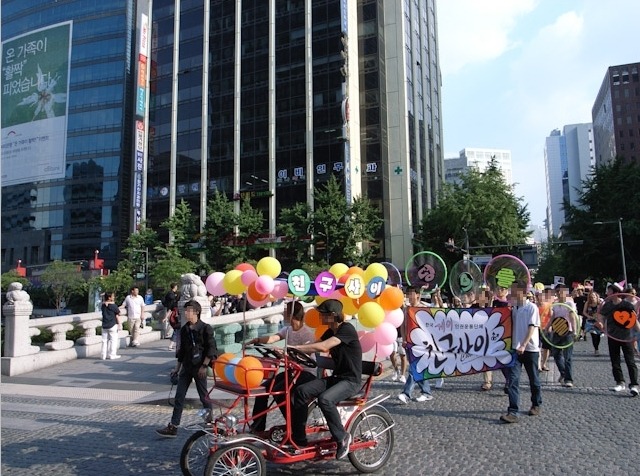
Yes, it’s still evolving and nothing like London Pride. Susan Morgan describes it as a ‘parade of shame’ rather than pride, but it’s evolving.
However, even with advances in civil rights and changes in legislation, gays in the armed forces, gay marriage, LGBT rights etc, I still feel that while you are guaranteed to keep your job, you are more likely to get your face kicked in. While Korean gays do suffer physical abuse, I think their greatest problem come from employers and family. In the UK, there are still those with rabid homophobic views and who in the right environment will verbally abuse and gay bash. I have a fleeting suspicion that in the street, in my home town, there are a significant number of ‘homophobic sleepers,’ individuals forced to silence their opinions in the current political climate but a potential source of hate should things change. While I’ve met Koreans who are not particularly supportive of gay rights, they are never as outspoken, particularly hateful or vehemently opposed to such rights as those I’ve met in ‘liberal’ Britain (but this is only my experience). While a number of outed celebrities have committed suicide, I also remember Harisu (이경업), Korea’s first transgender entertainer who in 2001 was a pin-up to many of my male students.

Violence in the UK
Part of this ‘ingrained’ hatred stems from the fact that in Britain (and in the West in general), there are more codes governing what it is to be male and which inform and consolidate practices concerning male emotion, male physicality, body language, interests and other facets of masculinity. That women aren’t usually the object of gay bashing possibly stems from the fact that lesbianism is quite appealing to many heterosexual men and has not had the same history of legislation levied against it. However, though British women aren’t subject to such rigid gender codes as men, they are still required to behave within certain parameters. Meanwhile, in Korea, I perceive less difference between male and females gender roles.
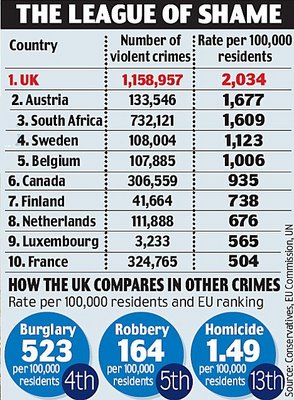
Shameful – and most perpetrators will be men
I’ve never met a butch Korean male and neither have I met a Korean man who in any way made me feel threatened or intimidated. Does Korea even have any macho, aggressive type men, the type who will shove a glass in your face if you so much as look at their girlfriend or knock into them in a bar? And when I have seen them fighting it has been quite hilarious. I saw a fight a few months ago and stopped to watch. There were three men, all in their fifties, all drunk and shouting while intermittently smacking each other with their umbrellas. The fight was wonderfully cute, like it was being performed by ducks or rabbits or some other animals incapable of actually causing real damage. And despite their anger they wielded their umbrellas in a manner that might be described as totally pussy. An umbrella can be a particularly nasty weapon especially if the spike is jammed into your eyeball or mouth, or the hooked handle swung upwards into your testicles or used to cause damage to the windpipe. I can think of an entire arsenal of umbrella techniques all the result of earning a taekwon-do black belt in Europe, which took a minimum of four years study with the ITF (International Taekwon-do Federation) as opposed to the taekwondo taught in Korea (WTF), where black-belts and dan grades are handed out like candy, often in less than a year.
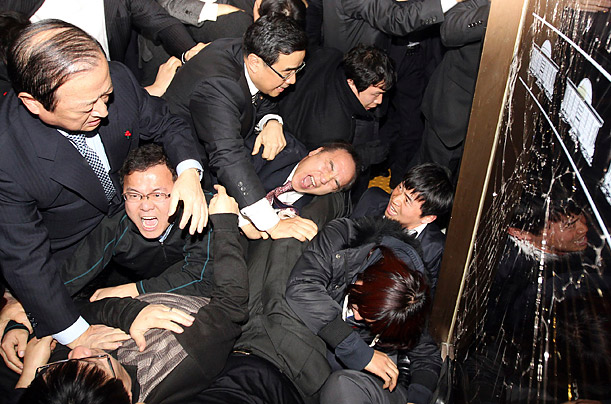
S Korean politicians pussying about
Yes, no butch men in Korea, thankfully! And neither are you likely to find examples of the rough and aggressive type of female that seems particularly common in the UK. Maybe they exist on the Mainland of Europe or the USA, though I don’t remember their type in Germany, but we have women in the UK, and don’t think they are necessarily lesbian, who are more masculine than a significant number of British men and certainly more masculine than the majority of Koreans. I suppose they are a product of our class society because they are always found in poor areas or on sprawling estates and are typified by their hardened faces, aggressive sneers, tattoos and propensity to physical and verbal violence.
In the UK, the number of social transgressions which would predispose you to being labelled ‘gay’ are far larger than in Korea. In the UK, no matter which way your sexuality swings, you’re a homo and less of a man if you play any musical instrument, like art or classical music and enjoy drama. One reason which can be attributed to why Britain is so dumbed-down is that the dominant ideology concerning male masculinity is largely one determined by the dregs of society. In Britain, all classical music, literature, ballet, art, poetry, drama, books and even the ability to read, or subjects or institutions related to learning and the intellect, are deemed arty-farty, poncy, nancy, boffin, elitist, or gay – and you will note I use the lexicon of this dominant ideology, a lexicon that is immediately understood by any British person regardless of their status. The movie Billy Elliot is a prime example of the view held by some British people, but understood by all, that arty-farty is poofda!
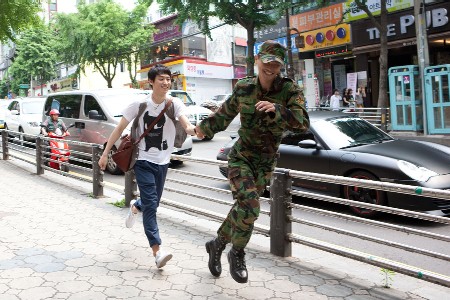
From the Korean movie, ‘Between Friends'(친구사이). I once saw a complete squad of riot police holding hands in Daegu. as they marched in a double file to a demonstration
Yesterday, I attended a middle school graduation ceremony during which year books were handed out to the graduating students. I had to suppress a smile at the photos of the boys’ classes. In every photos of 6 classes of boys, there are not only boys draped over each other, sometimes sitting in each others laps but a significant number were in ‘girly’ poses and while not ‘girly’ to the point of being knock-kneed, pouting and with their bottoms sticking out, were still ‘girly’ enough within a British context, to question their masculinity and label them ‘gay.’ Don’t forget, in the UK you can be 100% heterosexual but still be homosexual. And amidst the boys hugging and draping their arms over each other and the significant number of ‘girly’ poses with hand-like paws held on either side of their cheeks, are the boys cuddling little white fluffy dolls. ‘Affectionately cuddling’ is perhaps a more precise description, sometimes against their chest and at others nestled against their faces and with their heads tilted to one side in a manner which if girls, would be slightly flirtatious, slightly titillating. As far as I know, the Korean language has no word for ‘camp’, but campness permeates so much of Korea to the point that camp behaviour is quite acceptable and normal without it being any slur on your gender. Most of the boys I teach play musical instruments, I’ve had boys who do ballroom dancing and those girls who have not the least interest in make-up or enjoy playing Sudden Attack, are not deemed less of a girl.
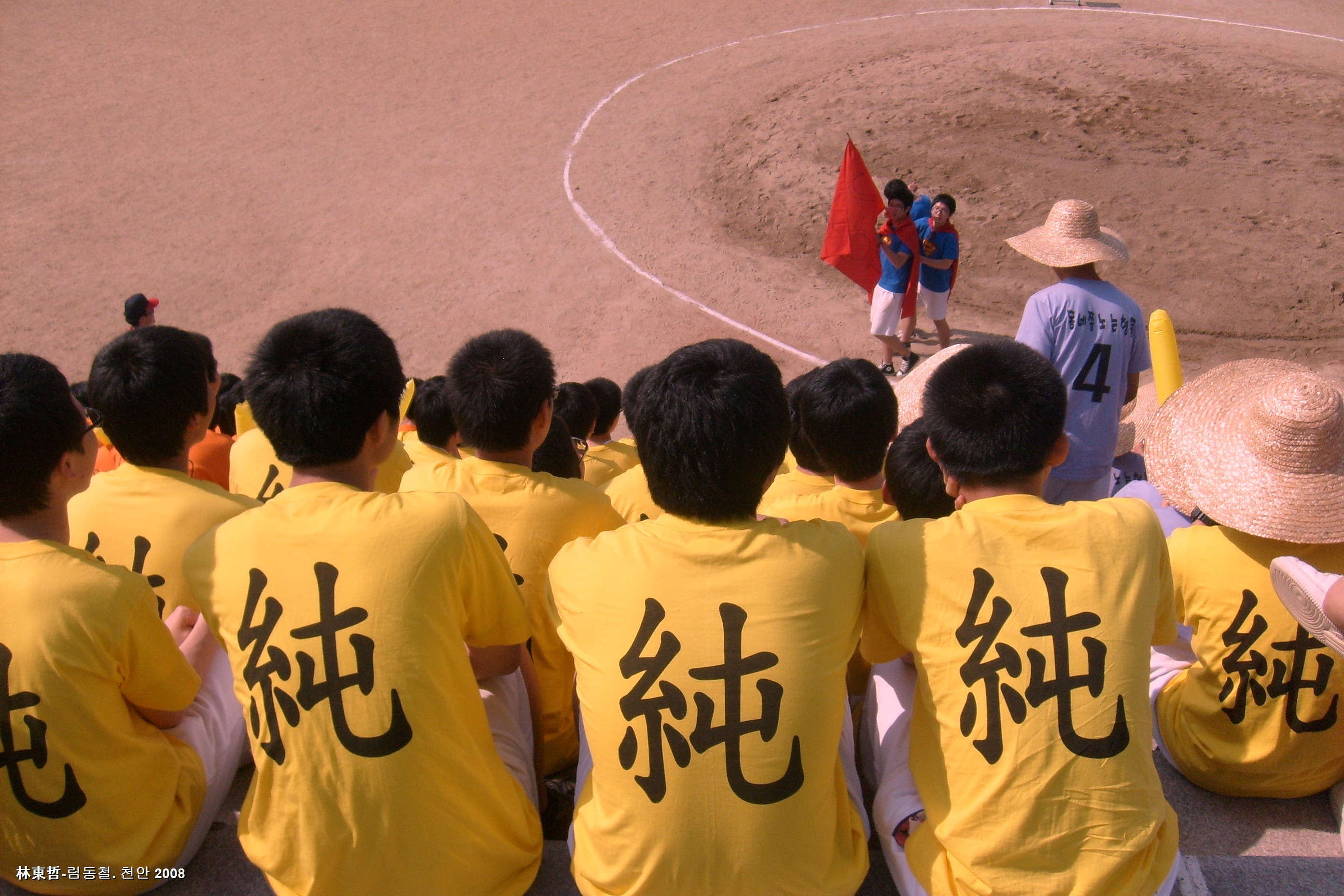
first year high school students with the hanja character for “innocence’ (순소한) emblazoned on the t-shirts
While we have more freedoms and rights in relation to sexuality in the UK, we are crippled and damaged by both anti-intellectual and hyper-masculine ideologies which have help spawn a very unpleasant breed of men and women who are quite uniquely British. While Korea might not be the best place to live if you are gay, it is not the worst place to live as a ‘human’ and I always feel more ‘human’ in Korea as a foreigner than I do in the UK as a citizen with the rights of a gay person and the potential to label myself as I choose. It’s all a matter of how much importance and significance you attribute to different parts of your identity. I might feel very different if I was younger but at 56 years of age my happiness as a ‘person’ is of more importance than one of sexual identity.
For those who think Korea tortures gays and imprisons them for their sins, I provide and interesting and rather cute, short gay movie, Boy Meets Boy (소년 소년을 만나다) which I recently discovered while researching information on the actor Kim Hye-Seong ( 김헤성).
I am no authority on LGBT issues within a Korean context and these are my views based on my limited experiences. For a ‘wart and all’ expose of the gay side of Seoul see Susan Morgan’s blog post, The Evolution of Homosexuality in South Korea. I believe there are several gay clubs in Daegu one of particularly long-standing.
©努江虎 – 노강호 2012 Creative Commons Licence.
Related articles
- Why is school such a hard place to be gay? (guardian.co.uk)
More Westphalian Winters
I recently found these photos lurking in the bottom of an old BFPO box. They were taken in Osnabrück, Imphal Barracks, either in 1979, in the winter before Dave Smith and I went to Kneller Hall, or in 1981/82, after we returned. I’m making this guess as Andy Coombes is in a similar winter photo (Westphalian Winters) and had left the band by the time we returned from KH.

Charlie Harris posing in the snow

Mick Pickering and Phil Watson
©努江虎 – 노강호 2012 Creative Commons Licence.
Lineage of the Voice – Pansori (판소리)
Having been a life long musician, both as a player and listener, I love Korean music. I don’t mean K-pop which though at times tuneful, is as much cultural chewing-gum as any western ‘fast-food’ pop music, but examples which are uniquely Korean such as pansori (판소리), pungmulnori (풍물노리) and even trot (트로트). I am not ashamed to admit owning the collected works of the Korean Daddy of trot, Nahuna which in a western context would be the equivalent of owning the works of Des O’Connor.
In the West, as well as in Korea with K-pop, tonality is usually diatonic, only a small number of chords are used and their sequence is always predictable, tunes seldom modulate and if they do it is most likely to the dominant, the time structure is nearly always 2 or 4 beats per bar and perhaps ocassionally, three. As for the lyrics, they best described as repetitive and vacuous. However, I’m not a total snob, after all, I have Nahuna’s life works and I do listen to and enjoy ‘pop’ as much as I can enjoy eating a ‘Mcburger’ or chewing a stick of gum. If there is one quality that pop has, it’s the ability to represent, to surmise periods of time not in large spans like classical music, but in much smaller chunks such as the 6o’s or 80’s. Pop can rekindle specific periods of your life, evoking emotions and memories with far greater intensity and emotional accuracy than grander music which is quite amazing given the paltry array of tools it utilizes. Naturally, there have been pop musicians with great insight and innovation, though they are often overlooked or marginalised.
The music of Captain Beefheart, (when he was with his Magic Band,’circa 1968) has examples of intricate rhythmic patterns and shifts in modality which would confuse less capable performers. And who remembers the 1976 ‘hit of the year,’ Music, by John Miles with the driving 4/4-3/4, (or is it 7/4?), time pattern. With most pop rigidly confined to the same old formula, such exotic innovation is rare. As a boy, Steeleye Span’s use of modes captivated me, an interest that hasn’t diminished as I now find myself mesmerized by medieval rock groups such as In Extremo and of course, Korean traditional music is modal. And there are many other phenomenal popular song writers/performers who have shaped the sound of history, though our choices in this matter are personal: Abba, Queen, the Beatles, Meatloaf to name of few of my favourites.
My interest in traditional Korean music (국악) derives from my attraction to difference, and specifically to the different world of sound created by tonality, timbre, rhythm, instrument as well as visual differences. l would like to include my interest in lyrics but unfortunately my Korean is not good enough to appreciate them without the aid of a translation. This situation is not much different faced with opera and as I write I am listening to Verdi’s, Rigoletto; having no idea what the plot is about the singers become instruments and I gleam a sense of an emotion without knowing the specifics. This is not an ideal situation but I don’t think too different to how we sometimes listen to a great deal of pop music where the lyrics aren’t really that important or are vacuous and aren’t really needed to convey a sense of meaning.
Korean pansori contains all the elements to engage my interest and whenever I hear performances I am compelled to stop and listen. What’s it about? I haven’t a clue and it’s even difficult to sense the emotional content! Nevertheless, it’s captivating and as alien to my ear and its cultural conditioning, as it could possibly get.
Pansori is basically a vocal line accompanied by a single drum and performances are epic in proportion, usually taking several hours or more, to perform. The texts are satires and love stories, known as madang (마당) which alternate between spoken dialogue and song. Popular in the 18th century, only five of the original 12 now survive: Heungbuga, Shimcheongga, Chunhyangga, Jyeokbyeoga and Sugunga. The singer carries a fan which is used to emphasize emotions and when opened, to mark changes of scene.
I recently came across an excellent Korean documentary, with translation following the lives of two boy pansori singers as they trained for an important competition. The program unveils many of the mysteries of this strange form of Korean art and better, provides snippets of song with accompanying translation – this has subsequently deepened my interest in pansori. Like many things Korean, it has only been in the last few years that reliable information has appeared on the internet but I still have not been able to find examples of madang with English translations. The documentary is disturbing in places as one of the boys has a well-meaning, but drunken father who frequently beats the boy.
Unfortunately, for some reason, the series of 10 clips I originally linked to here have been removed from Youtube but different clips have been added and are provided below. These new clips provide a deeper insight into madang in translation than did the previous clips.
The DVD of the documentary is also available for purchase.
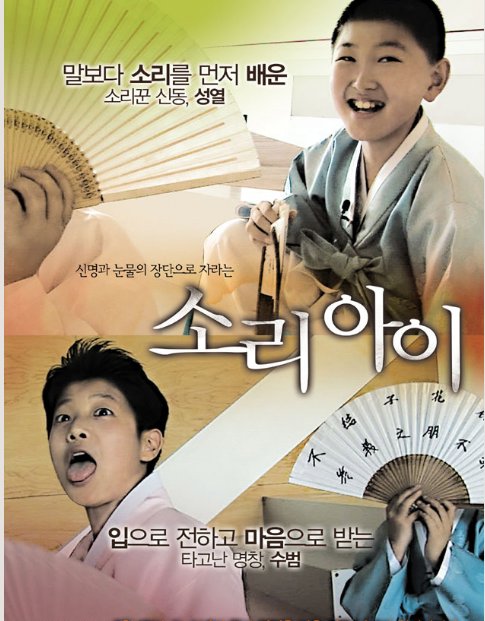
Lineage of the Voice


 Elwood 5566
leave a comment