Bathhouse Basics – The No-ch’eon (노천)
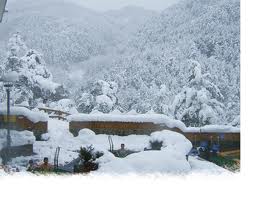
a wintry mountain no-ch'eon (노천)
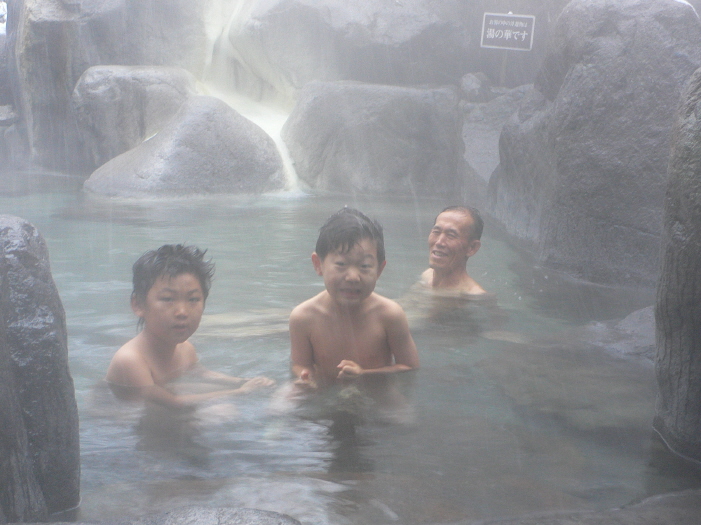
No-ch’eon are one of my favourite types of facility though my experience of the proper type is limited. A real no-ch’eon is a bathing facility fully exposed to the elements and often using a hot spring as a source of water. They are rural and located in scenic settings and though some are male and female together, and require bathing costumes, others involve being au naturel. Usually, no-ch’eon are an external part of a bathhouse or a jjimjilbang so if it is part of the jjimjilbang it will require a costume, and if part of a bathhouse, you go naked.
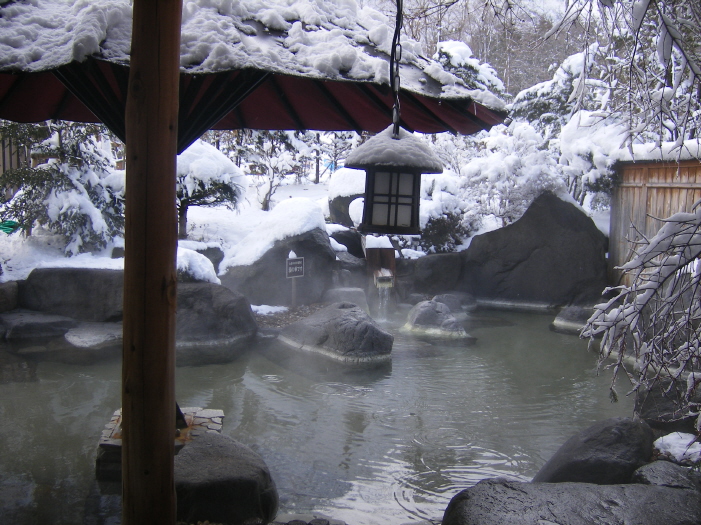
winter, snow and ice bring an added dimension to the no-ch'eon
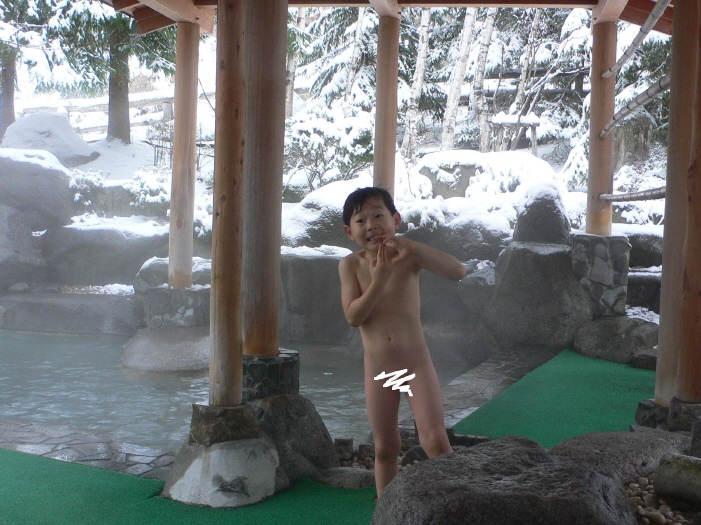
I doubt there's any poolside sleeping here
I first experienced a real no-ch’eon in the winter of 2007, while staying in a small island off the west coast. We visited a sea-water bathhouse on several occasion, one of them being 3 am in the morning and from the bathhouse you could go outside and enjoy either a hot or cold pool. Sitting in a hot pool in mid December during a snow storm at 4 am in the morning was an awesome experience and all that was missing was the makalli or champagne.
The appeal of the no-ch’eon is the combination of the elements, scenic settings and nature and to this purpose the ‘furniture’ can only be but natural. You can expect to see plenty of cypress pine (hinokki) with even the water vents being made of wood. I don’t yet know the name for these but they are a fairly common feature in bathhouses. Hot spring water, a natural source, is commonly used and coastal no-ch’eon will use sea-water.
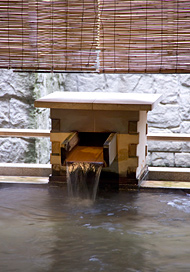
does anyone know the name or origin of these?
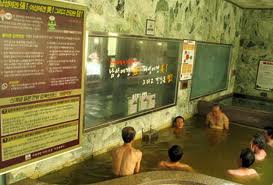
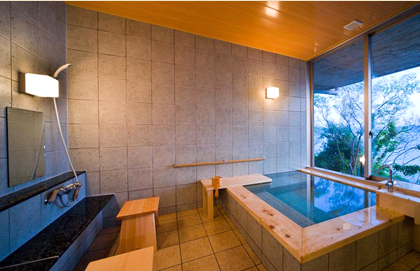
this no-ch'eon (enclosed), is at Na Seong Hawaii, Daegu
For an experience predominantly governed by the whims of the weather, the partially enclosed no-ch’eon falls way short of the real thing however, they too, can be very enjoyable when a cool, or cold wind drifts across your skin. These no-ch’eon tend to have large, milky-glassed windows or even sliding doors beyond which probably lays slatted wooden panels. Usually built on the corner of the building, they are ideal for trapping and directing any breeze.
wish I was there

© 林東哲 2011 Creative Commons Licence.
Looking Waeg With Mobile
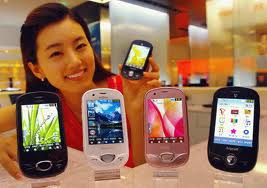
who needs one?

Podcast 85
If there’s one technological item which has the potential to do the foreigner a disservice in Korea, it’s the mobile telephone. I’ll admit I’m a technological moron and am quite proud I’ve never bothered to learn to drive a car, and have no interest in doing so, most especially in Korea, and I have neither used an ATM machine in the West or posses or want to posses a mobile phone.
Recently, I’ve been observing how Koreans use mobiles. Everyone has one, at least one, even the youngest students. Everywhere you look they are being held like little pets and are constantly accessed. As I observe, I’m wondering, what they hell are they looking at? What is everybody doing that I’m not? At crossings, when people have to stand still for a minute, there is a sudden splurge of activity and out they pop. Mobiles are total mediocrity; they take mediocre photos, make mediocre videos, have mediocre sound production and anything which entails interfacing with that piddly little screen is definitely mediocre. Even one of their saving graces, a dictionary, is mediocre as it designed for Koreans learning English and not vice-versa. Apart from the telephone facility, most of the functions built into a mobile are second-rate.
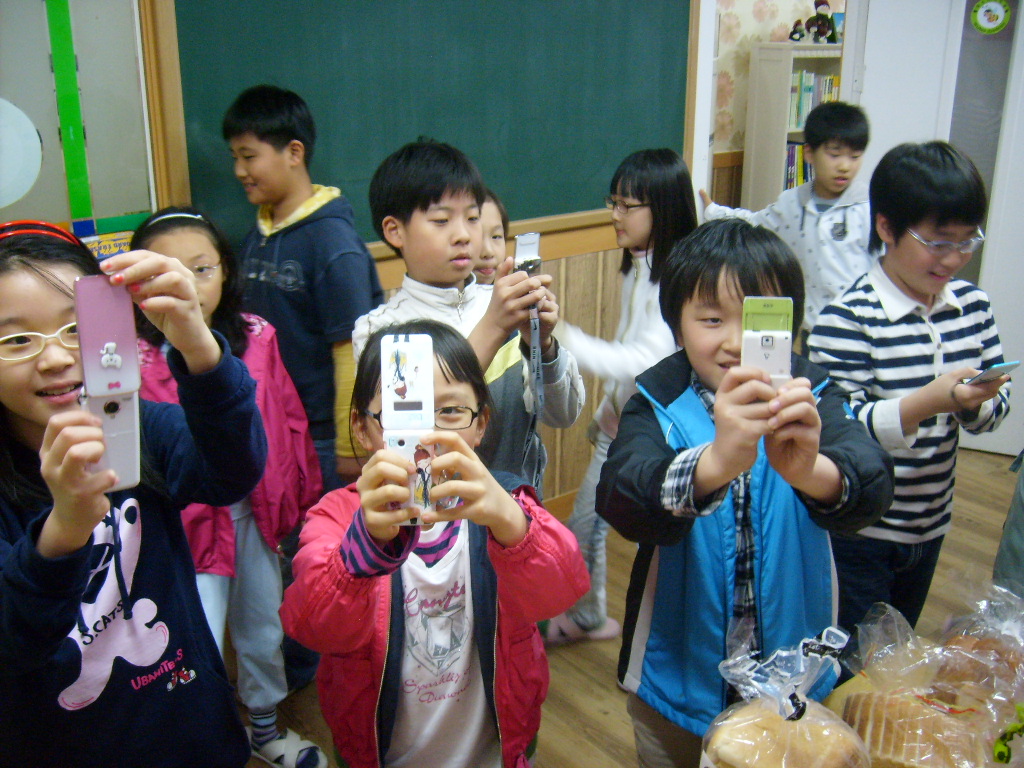
mobile mania starts at a young age
I detest they way most Korean streets are infested with mobile mania stores in much the same way beautiful English villages have been invaded with estate agents. Every time a business shuts down, usually something useful and interesting, like a bakery, café, or restaurant, someplace where I might possibly go a few times a week or simply peer in the window, it is replaced by a mobile store which I am personally never likely to enter. Even if I owned one, I doubt I’d need to access it more than a couple of times a year. But that’s not all, I’m also irritated by the way they clutter up the streets, not just with young lads tempting customers into the store but with even more shit music blaring out and with the various forms of bait stashed against the store fronts which is used to lure and entice customers. It seems that on every corner of Song-so, in the area around the Lotte Cinema Complex, not just one store has opened but several. On one corner there are three and walking past them is like running a gauntlet; first, the hideous cacophony caused by the clash of three competing hip-hop ditties and then the onslaught of lads passing out leaflets or pointing at bait. I’m lucky, they usually ignore me because I’m male and foreign but if you are a lithe little female college student, I suspect being accosted is a regular encounter.
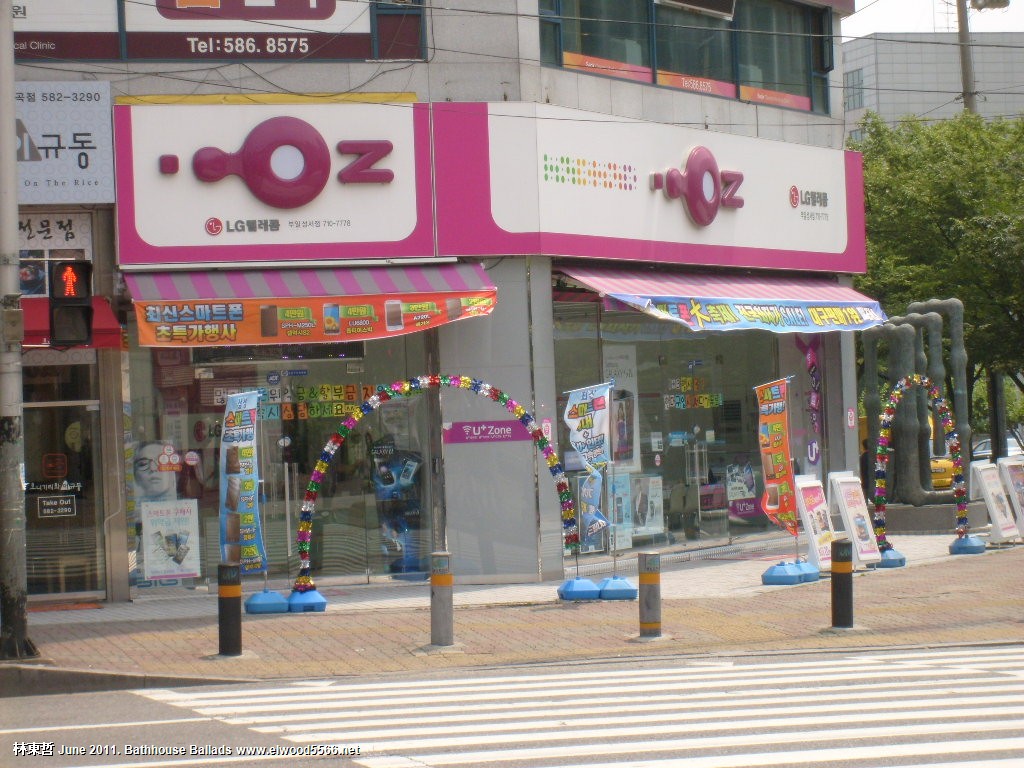
one company but two seperate shops
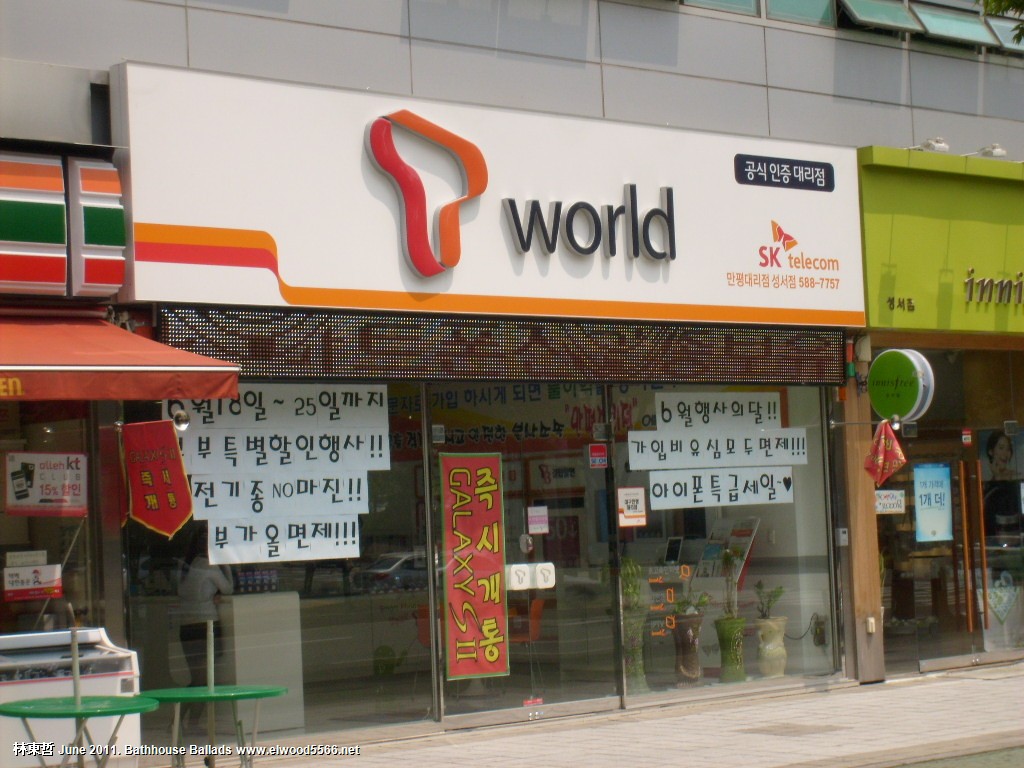
and just around the corner...
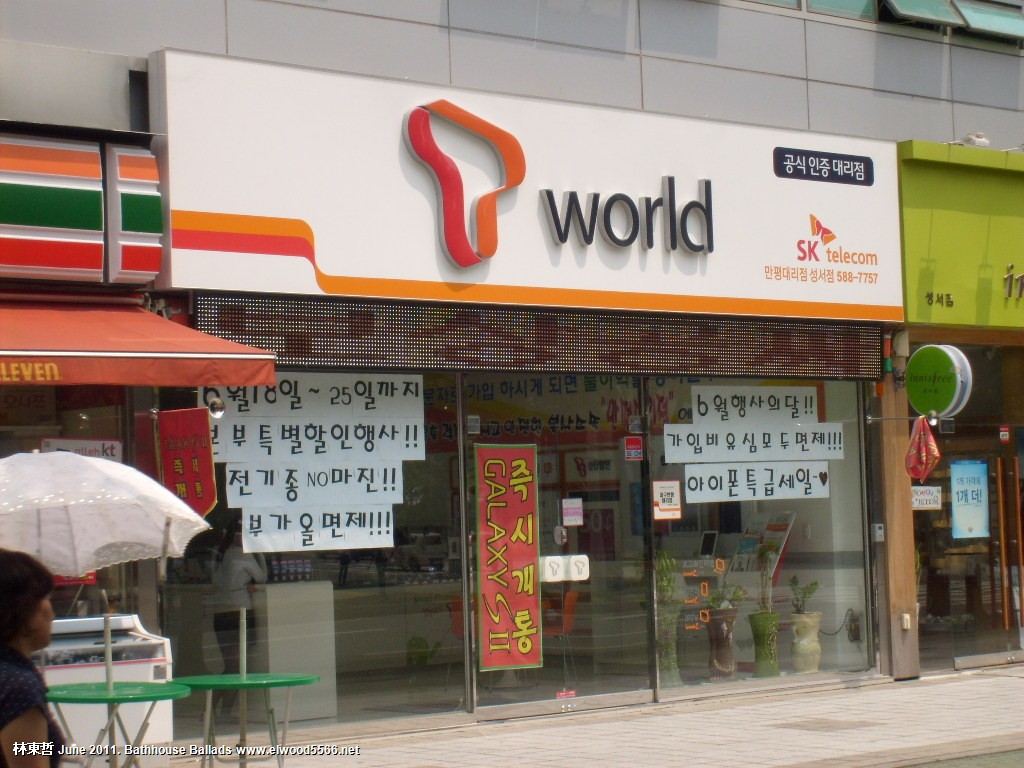
and next to the one just around the corner...
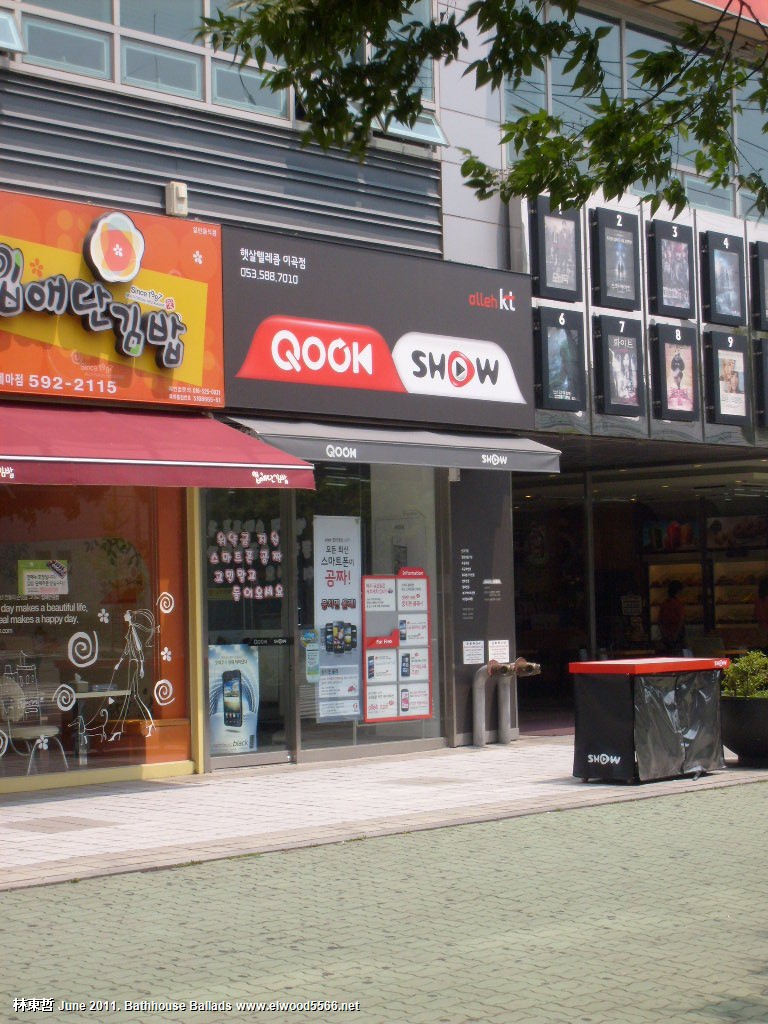
and next to that one...
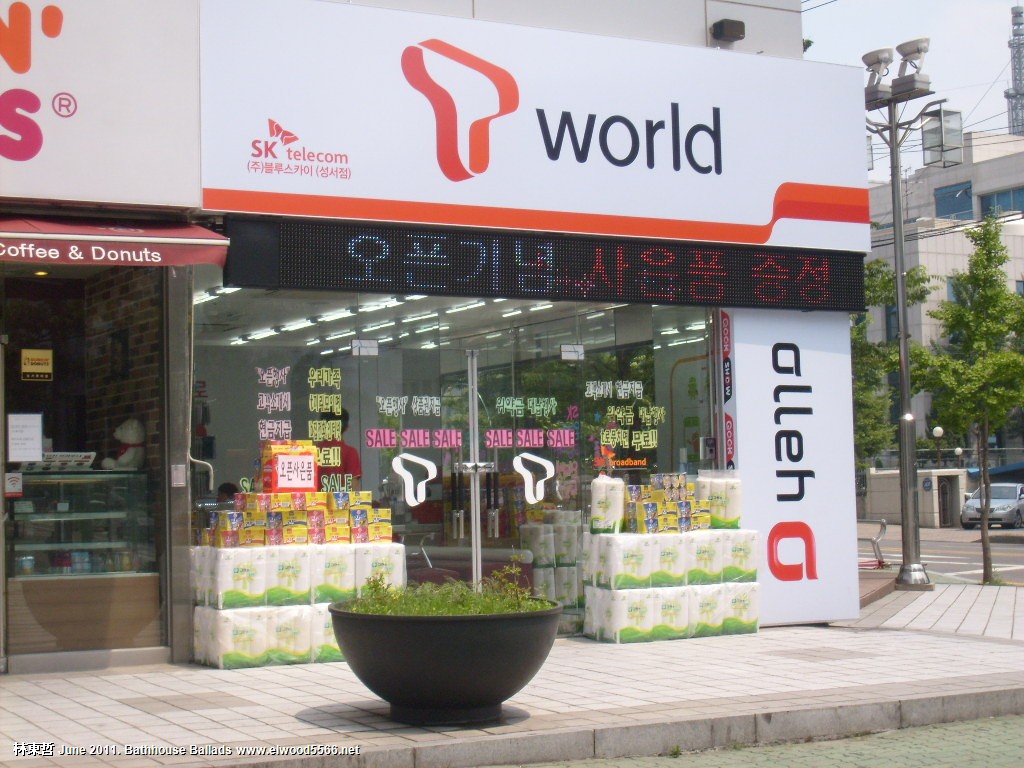
and on the next corner, you can get your ' free' toilet rolls
Most of the mobile stores in my immediate area, and there must be fifteen of them, lure custom with offers which in one store are bicycles. Further down the road, another offers large packs of toilet paper which are stacked on the sidewalk. I can understand the bicycle appeal especially as some of the bikes are actually quite attractive, though probably made in China, but do punters really get lured into signing a mobile contract because they get twenty rolls of toilet-paper? I shouldn’t be condescending or judgmental because of course, Koreans use shit paper as napkins, kitchen roll, tissue and whatever. A bumper pack lasts me a year and in Korea it’s a very versatile commodity.
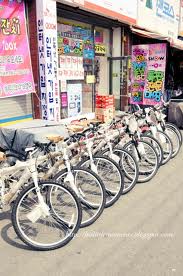
...and a free bicycle
The most fascinating group who use mobile technology, however, are the waegs. I’m often bemused by westerners in Korea as they wander around with what is predominantly a piece of techno-trinketery. Most waegs can’t string together a few words in Korean, myself included, and even then it probably hasn’t been understood. This isn’t a criticism as there are a number of reason which make the learning of Korean a slow and labourious process but though we like to think we can ‘speak’ Korean, and often suggest we have an ability to ‘get by’, the reality is very much that once we have said ‘hello,’ or ‘more kimchi, please,’ that which follows is baffling and might as well be Venusian. Clearly, waeg possession of a mobile isn’t intended for communicating in Korean which leads me to conclude that its function is as a fancy address book where you compile, through numerous social media or the Boring Boroyeong (Mud Festival), the greatest waeg festival on the peninsula, a network of waeg chums. Even in my area of Daegu there aren’t many foreigners and of those many do not want to communicate, are here for the job rather than through an interest in Korean culture, or are simply weird. This is probably how I appear to many waegs as my views on life and cynical disposition towards western society, make compatibility elusive. Even back home I find it difficult ‘connecting’ and my circle of friends is small. However, every so often I met a waeg with whom there is a mutual connection and a friendship will develop. The number of foreigners I am likely to form a relationship with, and I should add, I’m not one of those waegs who passes-by and pretends not to notice you, is small and doesn’t warrant buying an address book let alone an expensive mobile. I came to Korea to experience its culture and escape the depression of Scumland UK and too many waeg chums not only takes me away from the Korean experience, but takes me too close to an expat community and many of the things I dislike about the West.

marketing through mediocrity
Naturally, I’m being cynical and modern mobiles have a range of facilities which are very useful but which we learn to need. But I can’t help but see that the more advanced the tools of communication become, the less we actually communicate. I did once use a mobile for a short period but after having to respond to frequent inane questions from friends, I chucked it out. I can remember my one and only week with a mobile phone; 7.30 in the morning on the bus to work, and a colleague is texting me: ‘wot u d-ing?’ It’s busy, I’m having to stand and I’m surrounded by teenage schools kids who are actually texting each other. What a waste of freaking technology! Texting a message which is beamed up to a satellite and instantly beamed back to Earth and all that separates the correspondents is me! Suddenly, I’m a member of the moron club! I try keying a response to my dumb-ass colleague but my fingers are too fat for the keys so I keep hitting two at a time and it doesn’t help that the bus is jiggling about. I don’t even get to send a reply before another message appears on the screen; ‘is any 1 sxy sat near u?’ This is a deep and meaningful communique! I can’t be bothered replying and chuck the phone in my bag and simply ignore it. A few moments later, a mobile starts ringing. It emanates from nearby but I don’t know from where. The horrid jangle is lost in the noise of the bus and busy morning traffic. The ring continues and people are beginning to mutter. “Answer the bloody thing!” Someone suggests, loudly. Then I realise the ringing is coming from my bag! It’s my phone! I ignore it but it persists and so I am forced to leave the bus two stops early and avoid looking back over my shoulder as I alight. I can feel eyes burning into my back as the annoying ring diminuendos with my departure.
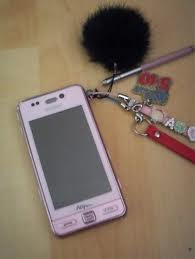
dingly-danglies
Texting, the art of communicating without really communicating, has to be one of the dumbest forms of human interchange to have evolved and has probably done more to retard those attributes that separate us from other primates, notably the manipulation of symbols, than develop them. I’m convinced that for many, texting is both a means of keeping people at bay rather than risking any real, meaningful dialogue, and giving the impression you have something to say when actually, you don’t. With a mobile phone hooked up to your various social network sites, you can very quickly have a few hundred ‘friends’ and be spared actually having to get to know them. By pumping out a continual splurge of text we not only give the impression we are important and have something to say but in the meantime, we keep others at a distance. And, of course, mobiles have a use in enhancing your image by providing a range of accessories, similar to those for toys such as Barbie Doll or My Little Pony, by which you can personalize your mobile, not just with fab jangles and cute stickers but by an infinite range of little dingly danglies.
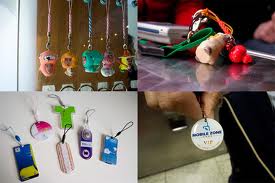
jazz it up with a dingly-dangly
For the week I trialled a mobile phone, I was pestered by the texting assault by the aforementioned colleague and suggested he phone me to talk rather than insist on using that silly digital semaphore. The problem however, was when he did phone he had nothing to say and what communication we had was filled with embarrassing black-holes. Digit-speak was far less painful than attempts to actually talk to each other. I suspect a great swathe of text communication has been rendered by individuals ‘letting their fingers do the talking’ and certainly many of the examples I’ve seen and experienced are the product of something brainless. Perhaps their really is some closer relationship between the mobile and toilet tissue.
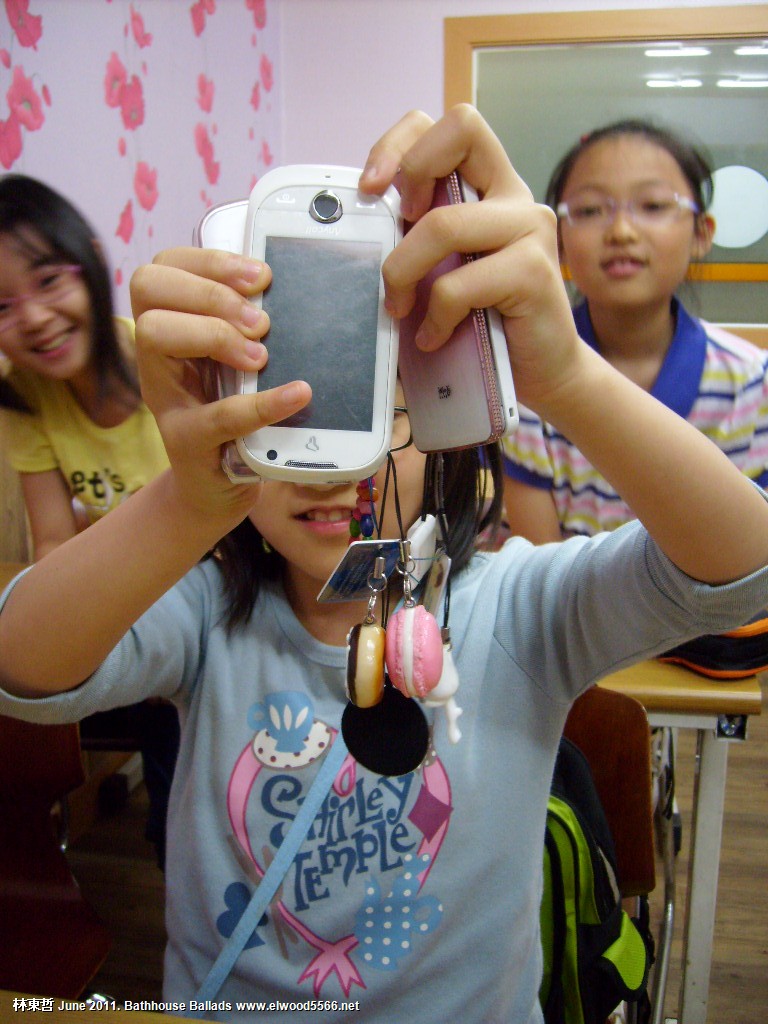
kids displaying their danglies
© 林東哲 2011 Creative Commons Licence.
The Secret World of Bathhouse Interiors
It’s always difficult finding photos of bathhouse interiors; the reasons being obvious. However, I have recently discovered how to capture photographs and render them into the correct format. The photographs have been placed in their respective locations but I thought it useful to post them here as they provide a much clearer insight into bathhouse interiors. The additions are for Goong Cheon Lavender, Migwang Spolex and Wonderful Spa Land.

the unique Dead Sea bath at Goong Cheon Lavender
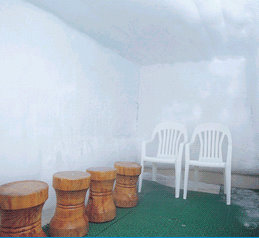
the ice sauna (Goong Cheon Lavender)
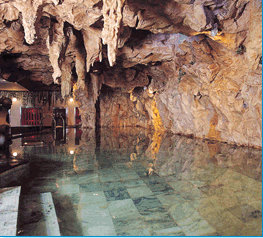
Lavender’s cold water cave
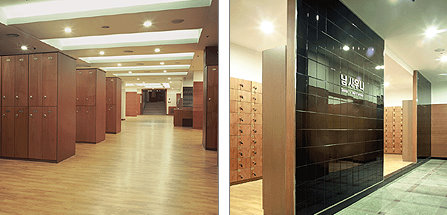
Large and spacious changing facilities (Lavender)
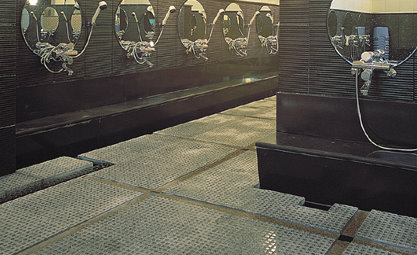
Migwang’s sit down shower units
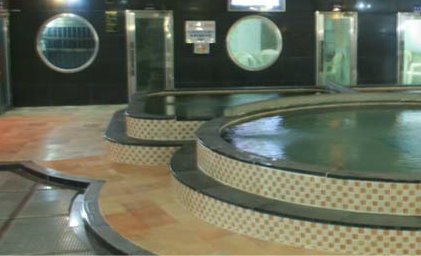
The warm pool with the pine, steam and ice room in the background. A large TV sits above the central circular window (Migwang Spolex)
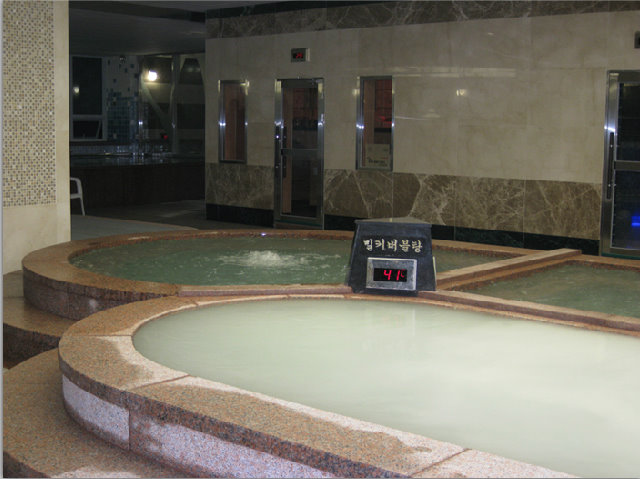
Wonderful Spaland’s luxurious ‘milky bubble tang’ with two ‘event’ pools in the background
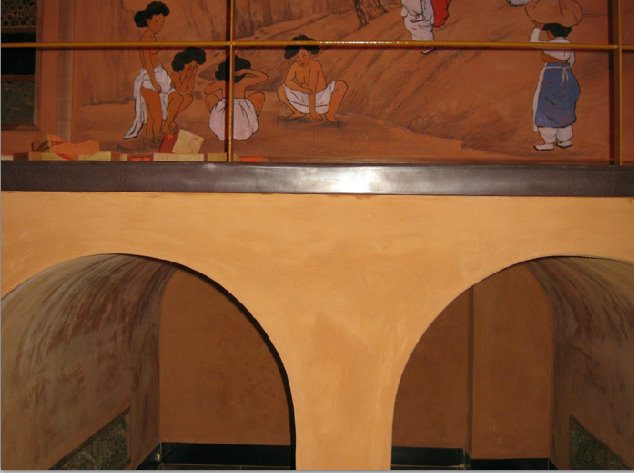
The tiered yellow clay room – for sleeping (Wonderful Spaland)
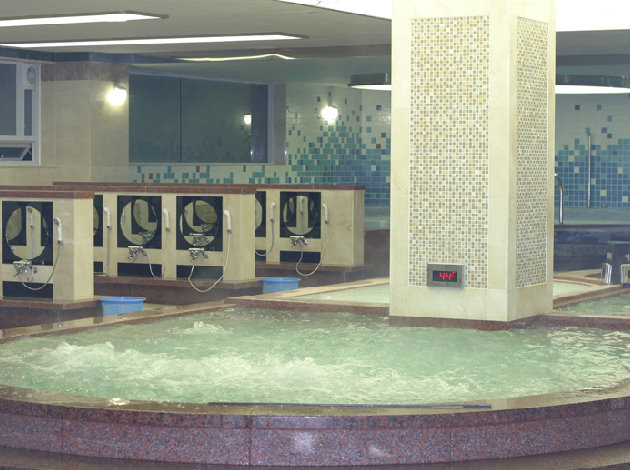
Wonderful Spaland’s warm pool
© 林東哲 2011 Creative Commons Licence.
Where Nature Fills the Air

The Korean Jay - 산까치
Podcast 84
Maybe it’s the nature of the information and blogs I read but there seems to be some agreement that Korean young people have less interest or awareness of the nature around them than their British peers. I have met so many Koreans who do not know the name for the beautiful Jay (산까치) that flashes through the trees on the slopes of mountains, do not know that there are several species of woodpecker (딱다구리) or do not know which tree produces an acorn. Subsequently, it has taken me years to grope my way to knowing the correct names for a bumble bee, wasp and a hornet. Because many Koreans are not reliable at classifying and differentiating wildlife, I’m often forced to use photographs on the internet but I have learnt to be cautious as even here anomalies can appear. And I don’t think I’ve ever met a British kid who hates butterflies – but I know several Korean teenagers who positively detest them.

The smallest of Korean woodpeckers - the pygmy woodpecker (쉬딱다구리)
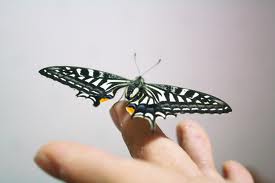
(산호랑 나비) The swallow-tail, 'mountain tiger,' terrifies some boys I know
Living in the city, as I do, it doesn’t take long to forget the beauty of the countryside and worse, to begin to generalise that Koreans, all Koreans, are ignorant of nature. The ignorance, I now realise, is solely mine and having hung around the city too long, where most of my students and friends have been born and bred, I have forgotten that a significant part of the population live in the country. I rarely meet any enthusiasm for wildlife among those Koreans I know and even though they love hiking, the mountains are not really conducive to walking ‘off trail,’ or random exploration. The mountain trails are always busy and as the borders between the human world and the ‘wild,’ provide only a window into the diversity of Korean nature. However, ask Koreans about the camel cricket (곱등이), thread worms (연가시) or cockroach (바퀴벌레) and you elicit animated, revolted responses.
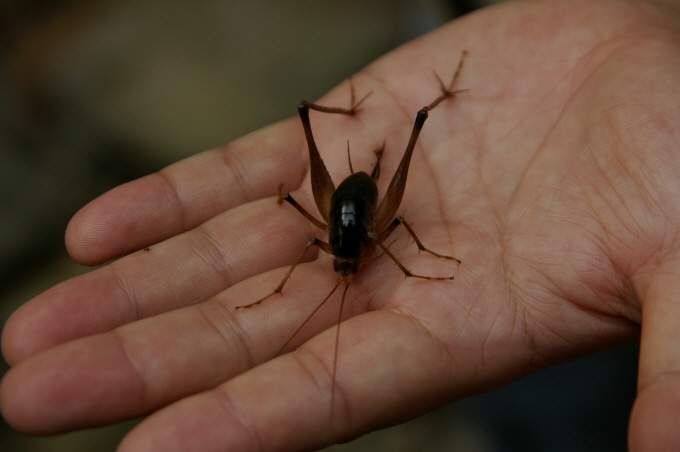
for many Koreans, the camel cricket (곱등이) is probably more revolting than the cockroach partly because of the thread worm it is often believed to be infested with (연가시)
I recently saw a bumble bee (호박벌레) while with a Korean friend and it terrified him. The sight of it actually caused him to step backwards. It was on the floor and suffering the common bumble bee problem, of not being able to take off. It was at the start of spring and in cooler weather they need to ‘warm-up,’ much like cars or humans in the cold. I put my hand down and let it climb on my finger and raising my arm skywards, it was able to launch itself, first plummeting before finally gaining altitude and eventually soaring away on the breeze. My friend was shocked I had dared let it on my hand, not because it could have stung me, which bumble bees rarely do, but because it was ‘dirty,’ but he’s city born and city bred. To date, this is the only bumble bee I’ve seen in Korea. In the UK, one often hears rumours that some of London’s inner city kids have no idea where potatoes come from and have never actually seen a cow. However, I wouldn’t be fool enough to make generalizations from such myopic observations as I seem to have done in Korea where I have prejudged most Koreans to be disinterested in nature and wildlife.
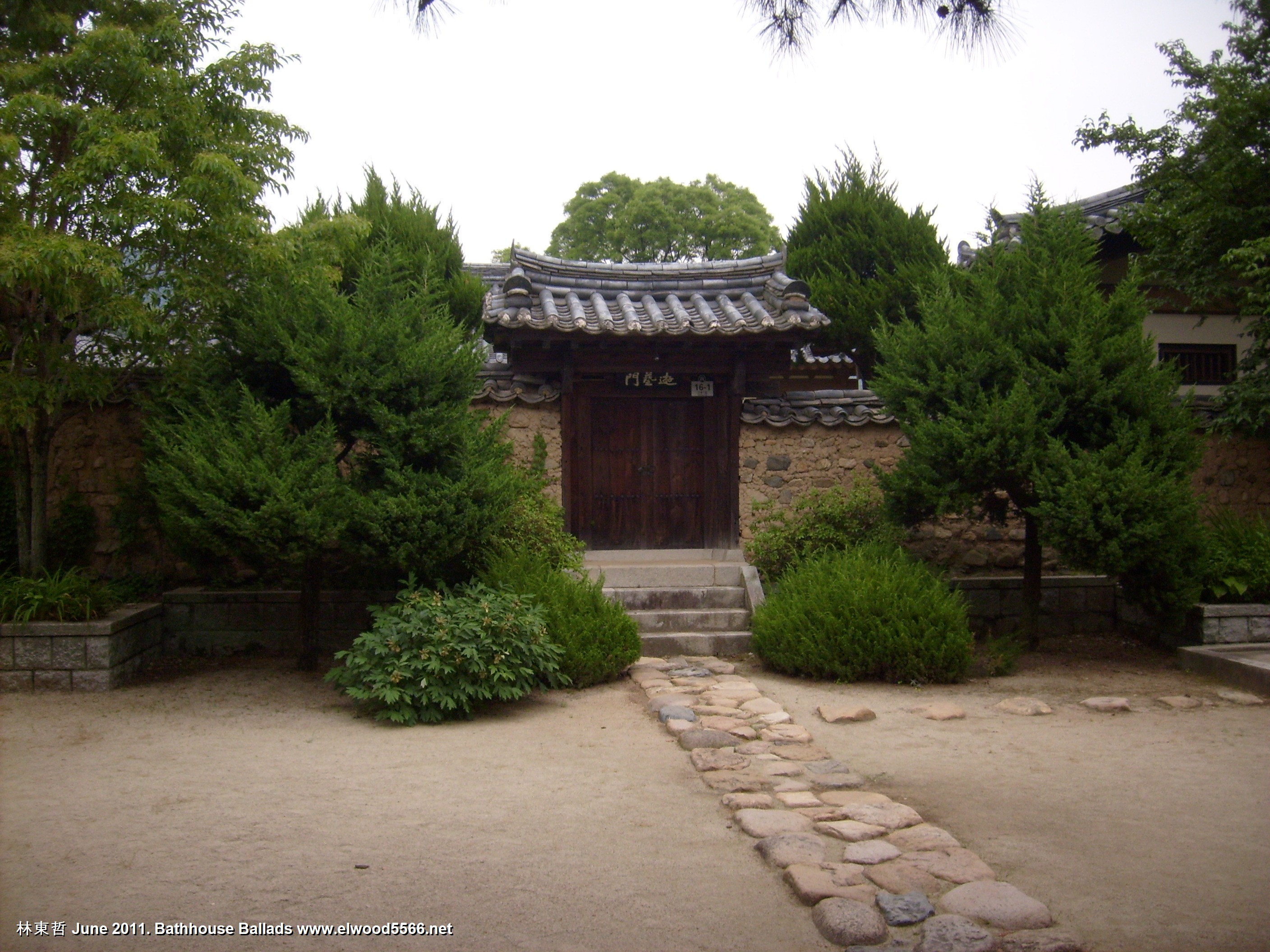
Hwa-won clan village
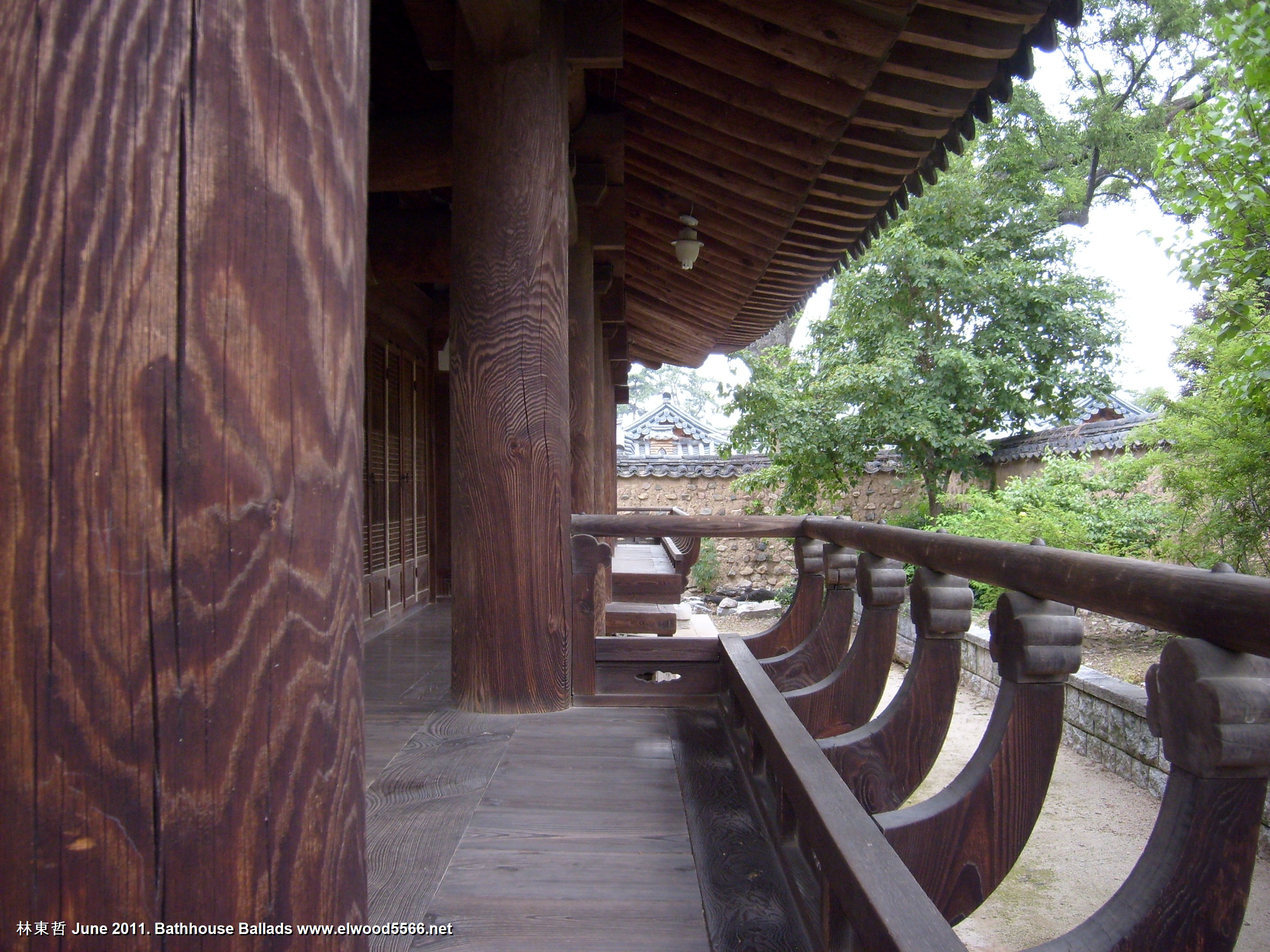
The main building of the complex
Last week, I spent the morning no more than a twenty-minute car drive from bustling Song-so, in the area of Hwa-won. I’m with a friend whose teenage cousin lives in the area and who is able to tell me the names of wild life not just in Korean, but English. Although the city is blocked from view by one mountain, and the fact it lies only a few kilometers away, the distance might as well be a few hundred kilometers and our teenage guide is definitely more rural than high-rise townie. When I spot a preying mantis in the grass, only a few inches long, he deftly picks it up between finger and thumb, in a manner which seemed practiced and was as excited with it as I was. Okay, I know this is one Korean and that my perception of the relationship between Koreans and nature is being radically transformed by him, but there is farmland as far as I can see; is it really possible to live in such an environment without imbuing some knowledge of and passion for, the surrounding beauty?
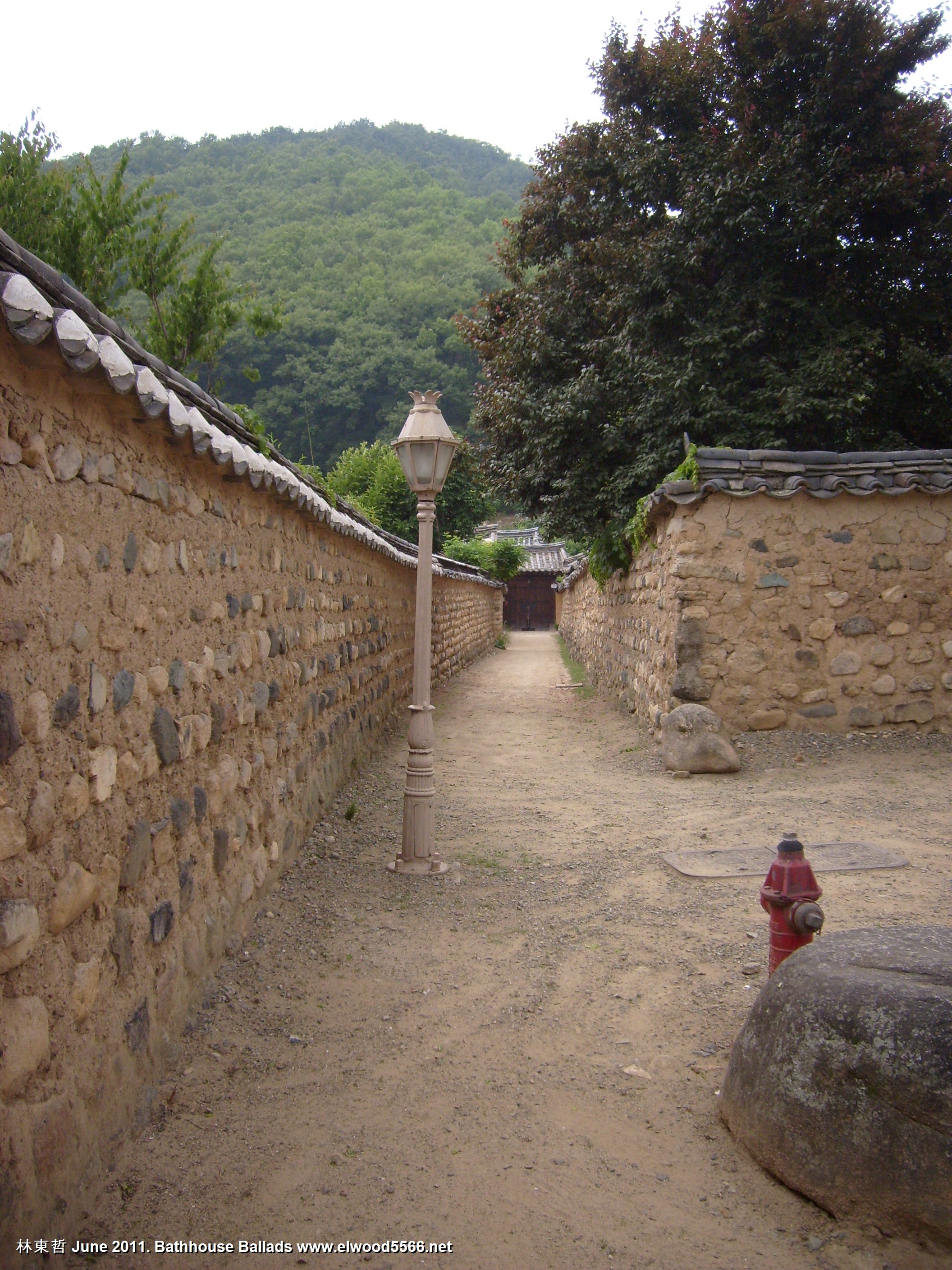
one of the quaint side streets
The number of times that Korea evokes in me a heightened sense of reality, where I am reminded of the uniqueness of my experience and how amazing it is to be in a culture thousands of miles away from my own, has diminished. Not only is Korea crawling with other waegs, myself included, but it has gradually become home from home. The internet, Skype, messenger, and a foreign EPIK teacher in every school has tamed the ‘Hermit Kingdom’ and brought it much closer to West than it was ten, twenty or thirty years ago. And a browse across the Klogosphere tends to dampen the numinous when it is stirred because a zillion others, just like myself, are having a similar experience. But I remember the times I was inspired by my first glimpse of the Milky Way from Korea, my first rice paddy and experienced the break of dawn from the top of a small mountain. Such moments were uplifting, somewhat mystical and quite moving and all the more so in the absence of the internet and an army of fellow foreigners, both of which dull the uniqueness of your experience.
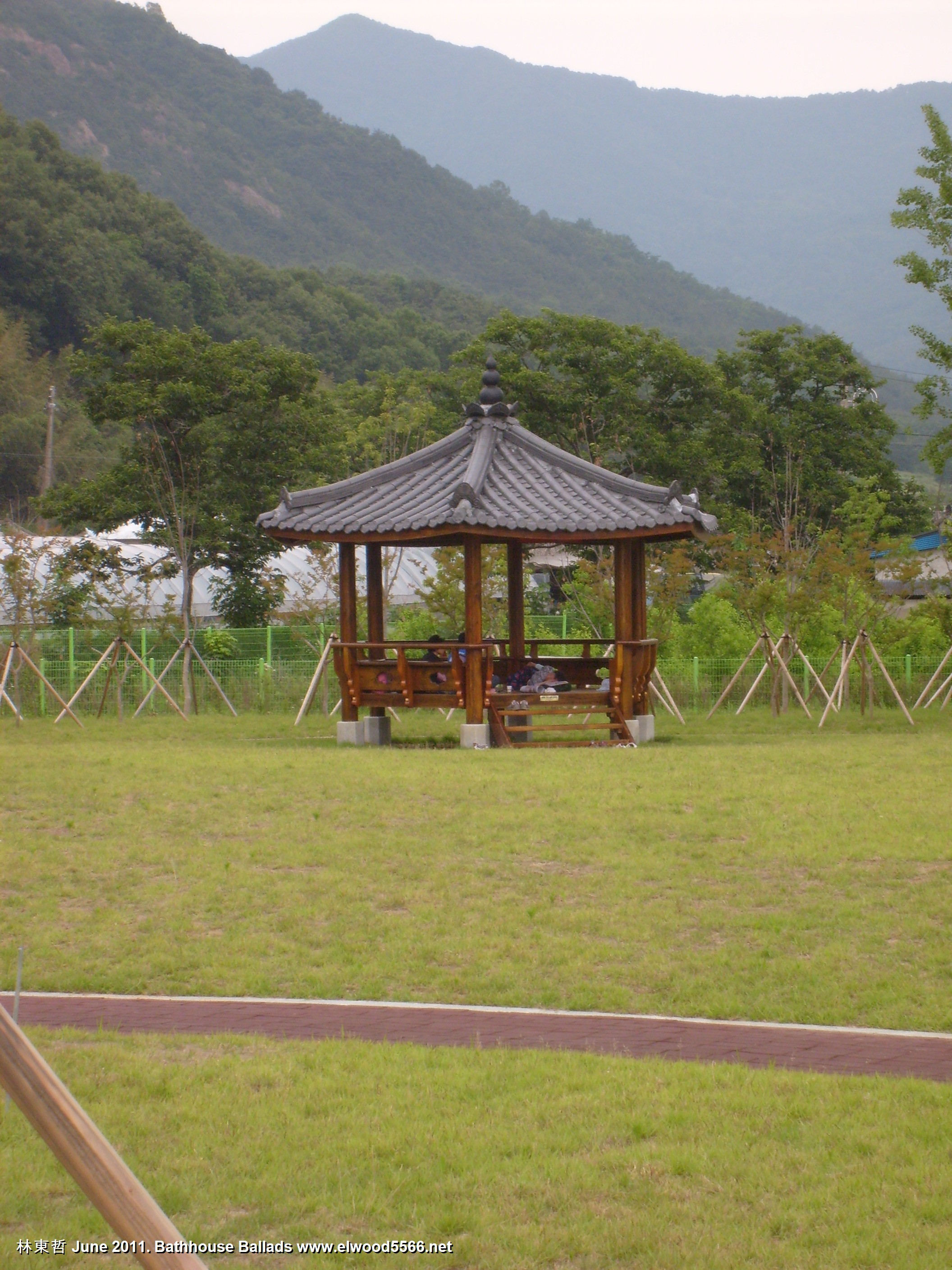
locals chilling under a chong-cha
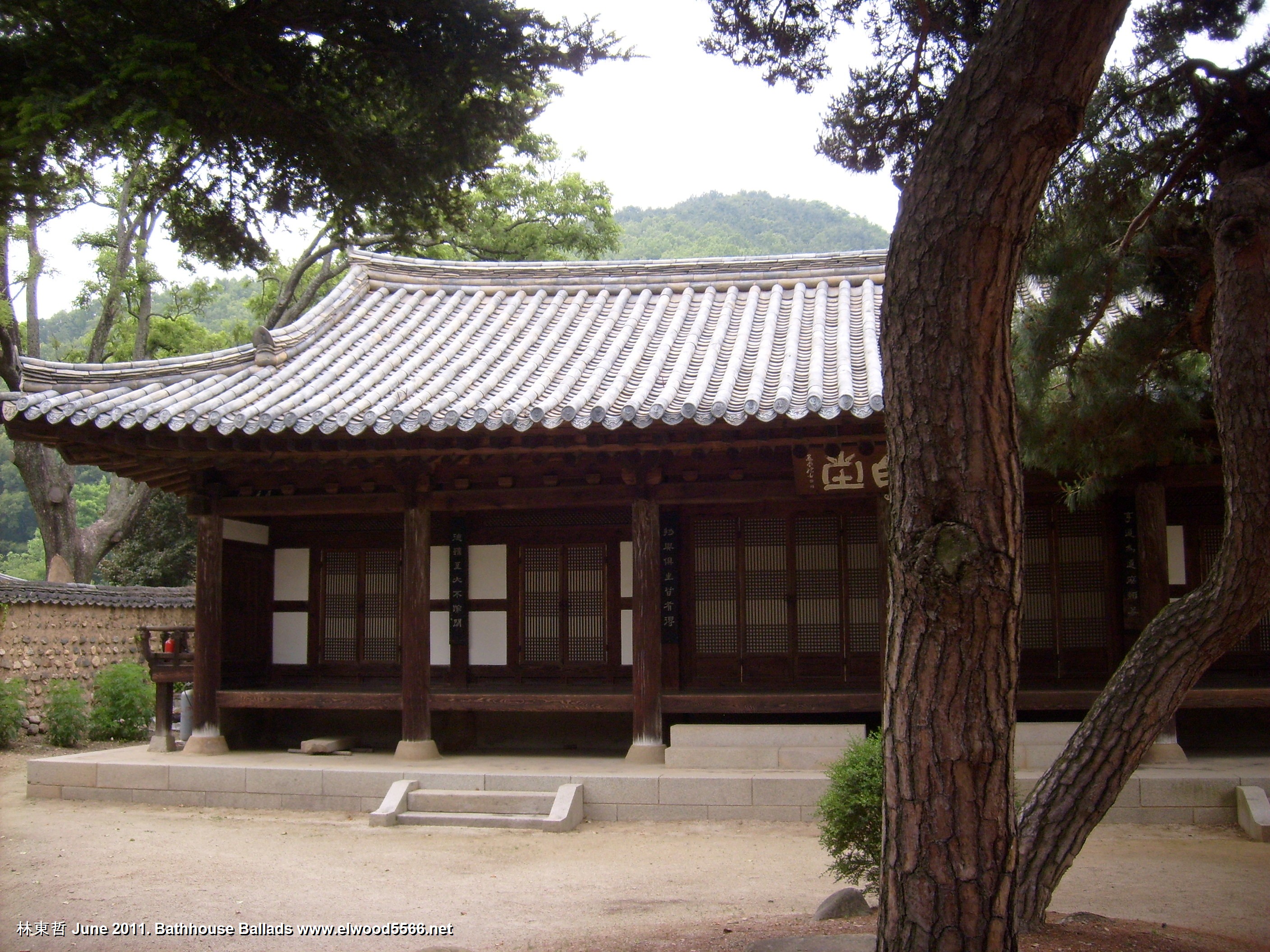
Hwa-won clan village, main building and former yang-ban residence
In the base of the Hwa-won valley, the rice paddies are flooded and newly planted with crops. In the distance I heard not just the first cuckoo in late spring, but my very first Korean cuckoo per-se; and all around the air frantically buzzed with busy insects. Of course, the season of the memi has yet to come as the weather is still cool. What was most incredible however, was the air; it was alive with the scent of grass, wild flowers and the humidity of the paddy. I don’t think I’ve ever experienced such an alive and pregnant smell and it was so heady and rich I snorted it loudly, laughing to myself in what was almost giddy glee. I suspect, if I were to spend more time in this environment, I would quickly discover locals with a love for and knowledge of the nature around them. There was far more to discover here in the broad valley than up the mountain manacled by a trial frequented by an army of hikers.
And I am gradually coming to realise that perhaps Koreans aren’t as ignorant of nature as I had at first thought and now suspect I have been drawing conclusions about them based on the assumption that a bumble bee or hornet are universally significant. If I asked British people about camel crickets and memi, I could arrive at exactly the same conclusion…
© 林東哲 2011 Creative Commons Licence.
Wonderful Spaland – Where Heaven Comes Cheap (원드풀 스파낸드)
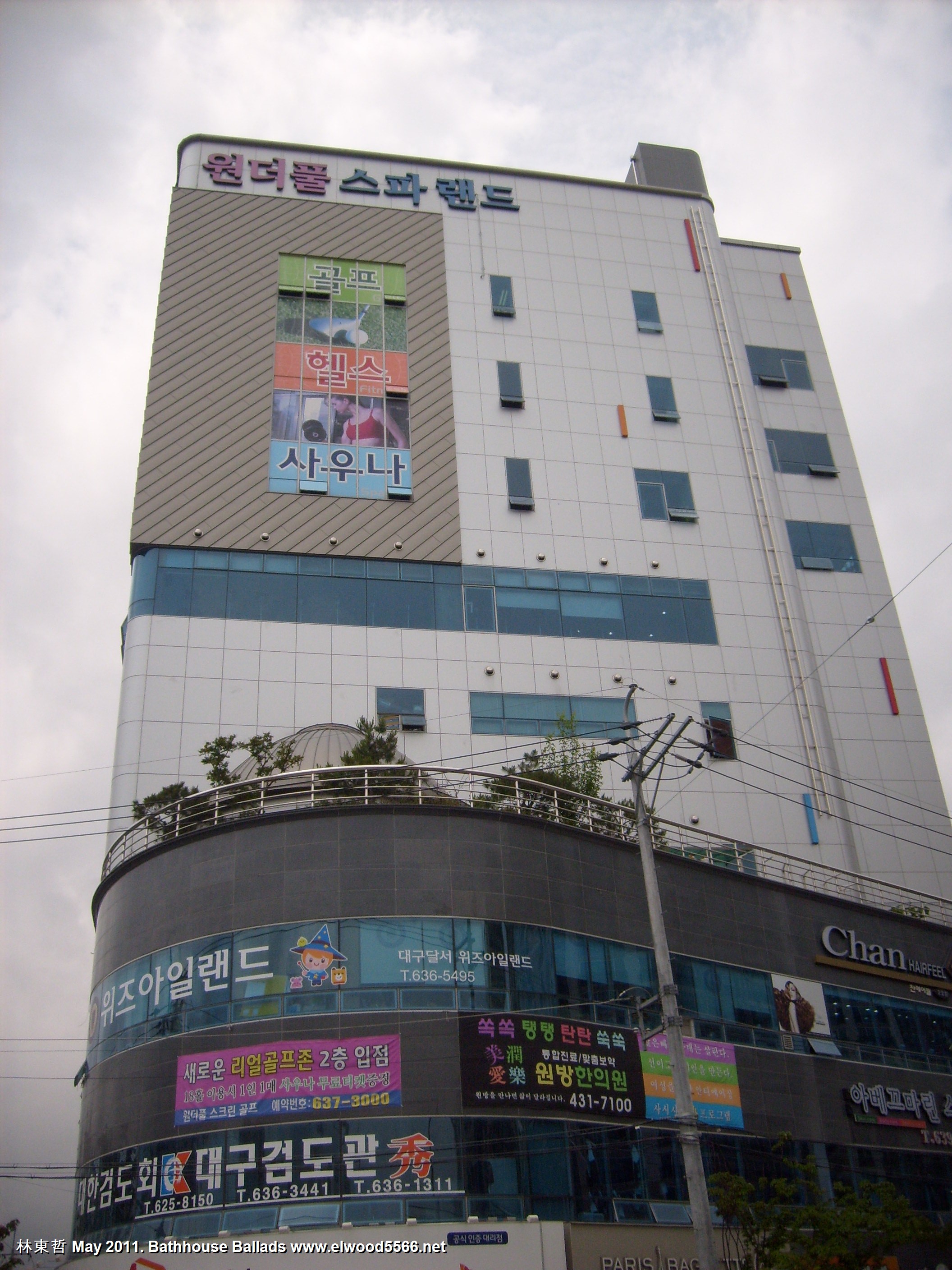
on the opposite side of the roof are the large golfing nets – visible from quite a distance
(First visited on May 20th 2011. Last visited on 15th September 2012) You know a bathhouse can be designated ‘luxury’ when you visit on consecutive days, even when you are impeccably clean, and during your stay spend substantially more time in the pools and saunas than engaged in ablutive processes. It’s my opinion, but currently, I consider Wonderful Spaland, Wol-Seong-Dong, as one of the best bathhouses in Daegu, and certainly what I would rank as a’ luxury bathhouse’ where one goes to relax, spend time with friends and do more than simply get clean. It’s failing are few and trivial. First, it isn’t a 24 hour establishment and second, it has no jjimjilbang. I can live with that! However, it does have several floors dedicated to golf, a large fitness center and besides being impeccably clean, is fairly new.
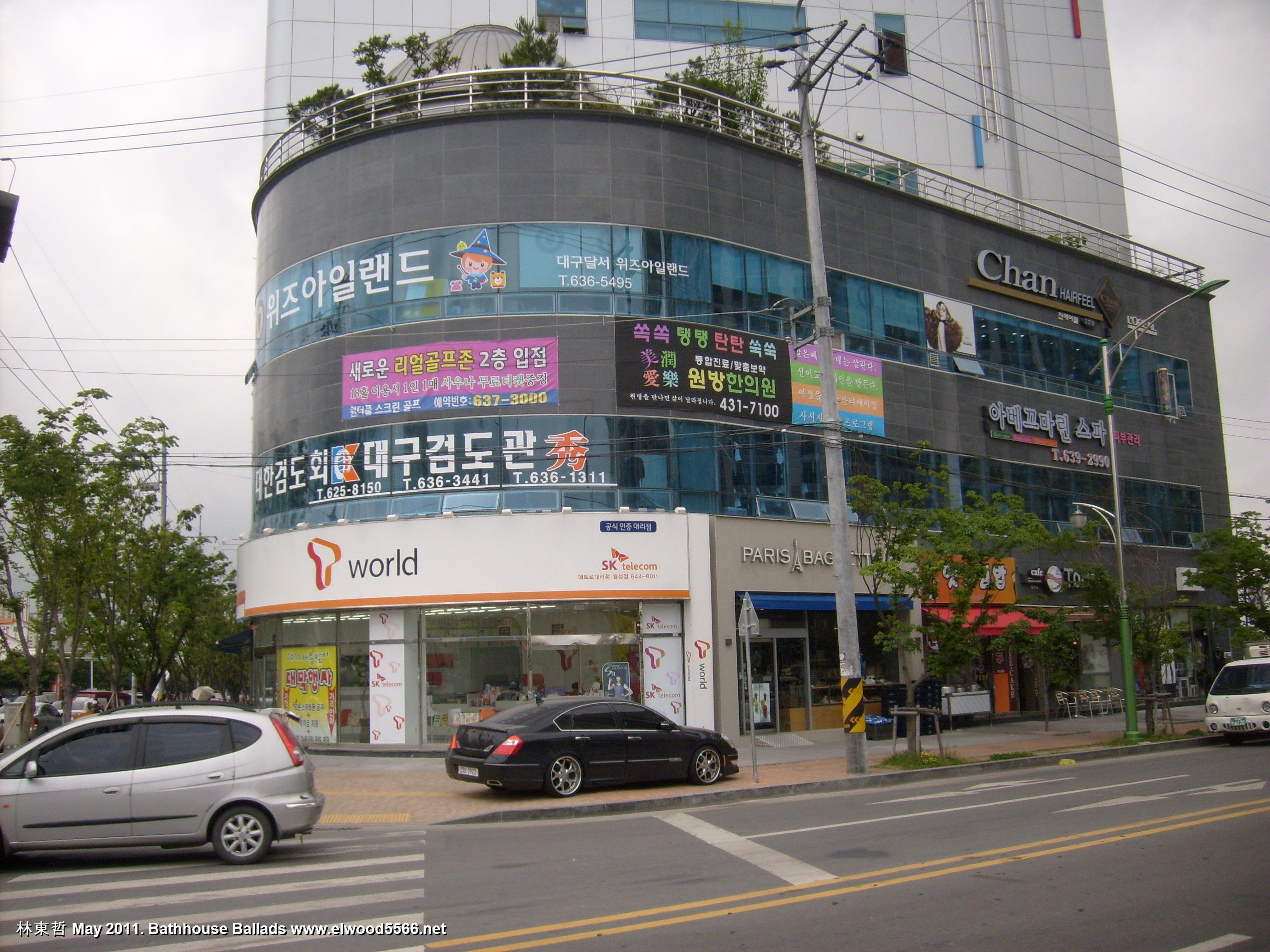
entrance
I often joke about how bathhouse ‘event pools’ are event-less. Personally, pretty coloured water, even with a few bubbles gurgled through it, doesn’t constitute much of an event. And so often, the added aromas are scent-free. In Wonderful Spaland you can expect a surprise and on my last visit the scent of one pool lingered on my skin for a few days.
Wonderful Spaland’s luxurious ‘milky bubble tang’ – the yellow clay sauna is on the left and the Roman mosaic sauna to the right
The tiered yellow clay room – for sleeping
The Wonderful complex is slightly on the edge of the built up area of Wol-Seong-Dong and noticeable by the green golfing nets on its roof. A large foyer on the ground floor, next to a Paris Baguette, welcomes visitors. The changing area (male) is bright and very spacious with decent size lockers, barbers and shoe shine. This is probably one of the largest bathhouses I’ve been to and there are plenty of areas to enjoy. The event pool was a ruby-red brew of intense red ginseng opposite which was ‘milky bubble bath’ with beautifully silky soft water. The bath really does look like a vat of milk. Other pools included hot (열), warm (온) and a second event pool, which on various visits has included lavender and mugwort additives. The largest pool (안마) comprises about 25 massage facilities with 6 different types of massage. Next is the cold pool (냉), significantly colder than many other establishments and very bracing. In another corner is a partitioned area where slatted wooden panels provide privacy so that large sliding doors can be opened reducing the temperature to that of the outside. Though not strictly a no-ch’eon (노천), which is usually fully outside, this is what it is often called. Nearby is a salt sauna (소금 사우나), small sleeping area and a fantastically intense oak charcoal bath (짬나무 / 목초탕).
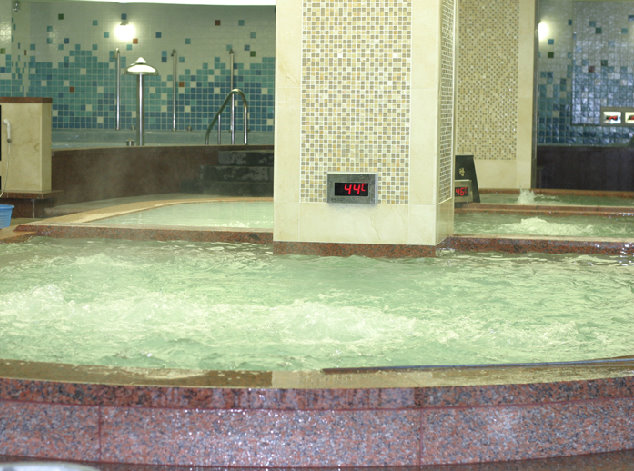
The warm pool with a large overhead TV screen beyond which is the milky bubble tang (left) and two ‘event’ pool on the right

information brochure side 1
Alongside the pools are 4 large saunas: a three leveled yellow mud sleeping sauna (황토), a steam sauna (안개) and a pine sauna (핀란드). However, the most enjoyable was the Roman sauna (로만 사우나), a large circular room with a conical ceiling. The entire room, a large mosaic at the center of which is a boxed-in steam vent. The entire room and conical ceiling where either covered in mosaic or various ‘jewels.’ However, the crowning feature was the heady scent of cinnamon and what might possibly have been aniseed. The humid aroma, blasted intermittently out of the large steam chamber seemed to shift and shade between the two key notes with spells when they seemed to blend equally.

information Brochure side 2
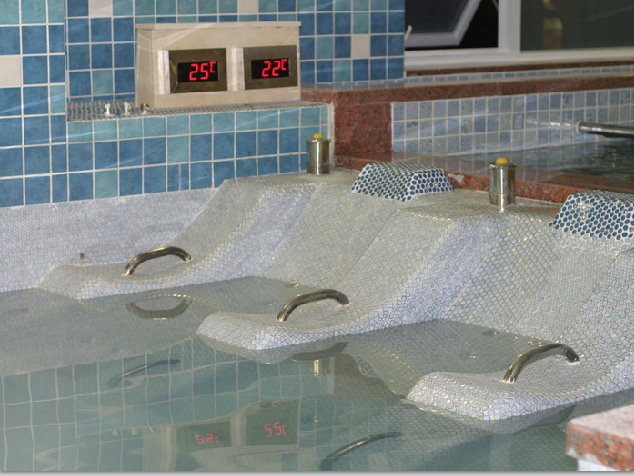
the massage benches, one of a battery of 6 different massages facilities with 26 individual massage stations
I have to say, I have a sensitive nose and there was something almost ‘trippy’ in the Wonderful Spa Land olfactory experience so much so that I feel disappointed by its absence in other bathhouses. If you’re only going to visit one bathhouse during your stay in Daegu, this is at the top of my recommendations and while you body relaxes, you can guarantee your nose will be subject to a comprehensive and pleasurable workout.
warm pool, milky bubble tang (left) and ‘event’ pool (right) The fourth pool, of which only the edge is in sight
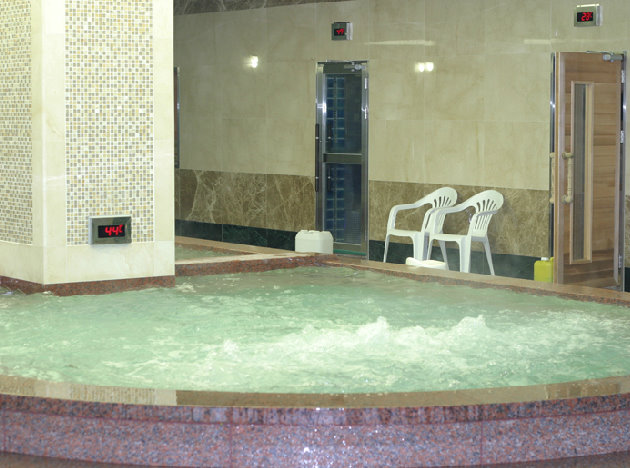
The warm pool with the Roman (mosaic) sauna on the left and the pine (Finland) sauna on the right
Location – Daegu, Wol-Seong-Dong (Wikimapia link ) near Wolbae Subway. It is within easy walking distance of Wolbae subway and by taxi from Lotte Cinema in Song-so, it is 5000 Won. A taxi from Wolbae subway will be little more than 2500 Won. It is also on the route of the 655 bus (Daegu Metropolitan City Bus Guide). (The brochure above has a small map).
click to enlarge. Wolbae – line 1
Rating – Luxury
Times – 0500=2300
Facilities – car parking, screen golf, golf driving area, fitness training, first floor Paris Baguette, coffee shop, small restaurant.
Jjimjilbang – No jjimjilbang
Bathhouse (men) – around 65 sitting down and twenty standing up
Cost – Bathhouse – 5500 Won
Others – hairdressers, shoe shine, massage and rub downs, various seasonal discounts, numerous televisions. About a five minute walk from the ‘meat fest’ barbecued buffet restaurant, Gong-Ryong (공룡 – ‘Dinosaur.).
Ambiance – new, impeccably clean, busy at peak times, wonderful aromas permeating the whole complex, comfortably bright but with darkened yellow mud sauna and quieter, exposed to outside, no-ch’eon (노천)
Waygukin – none
Address – Wol-Seong-Dong, Tel: 053-565-7000
Website – Wonderful Spaland Website Link
Layout (Male Bathhouse)
Updates
Wonderful Spaland – a Little Less Wonderful. Update 1 (October 2011. Bathhouse Ballads)
© 林東哲 2011 Creative Commons Licence.
Pray it’s a Foreigner Serving Your High Tea
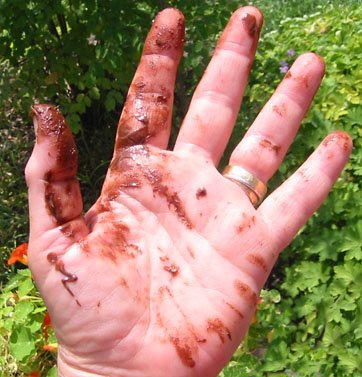
chocolate fingers – as British as high tea
(Originally published March 15th 2011) Here’s something to ponder. You’re going to be forced to stick your nose up someone’s butt. They might be clothed, they might not. The only choice you have in the matter is what nationality they will be.
Podcast 75
When I used to train and teach taekwondo in the UK, sweaty sessions often produced brown watery stains on the butts of students’ white suits. I used to refer to it as ‘bum lick’ and basically, after rubbing shit around your arse smearing it clean, residue remains which when mingled with sweat produces shitty water which then stains your pants. Despite the hideously hot summers in Korea, I have never seen ‘bum lick’ on kids taekwondo pants probably because their diet is substantially different. The moment you convert to loading up on pizza, big mac, bread and pastries plus a churn load of milk, cheese, butter and cream and it takes five minutes and half a roll of toilet paper to smear yourself clean.
Now, I’m not into backsides but if I were forced to stick my nose up someone’s crack, but could choose the nationality of the backside, it would most definitely be Korean. I base my choice on two reasons, firstly: a Korean diet leaves less mess and secondly, Koreans are simply more fastidious about personal hygiene.

guess where they’ve been?
With a culinary repository heavily based on soupy type recipes, Korean food never hangs about in the gut too long and when it is expelled it is ejected with such force that suction drags out any loitering debris. Typical British food however, loiters in the intestines and has to be squeezed out of the body like toothpaste. It passes through the body at such a slow pace that the entire intestinal track contains one enormous fecal sausage, a gigantic colonic conga which congests the entire gut like an enormous traffic jam as it slowly worms its way downward. Kimchi jjim, or a bowl of bean curd soup however, is ingested and processed at such speed that by the time it is blown out not only is the consistency unchanged but so too is its temperature. With such force is it ejected from the body that it cleans your backside as it departs. And I have to say, cleaning-up up after a Korean meal is not much different to dabbing your mouth after a drink of water whereas a British diet can only be compared with trying to smear-up a muddy hole.
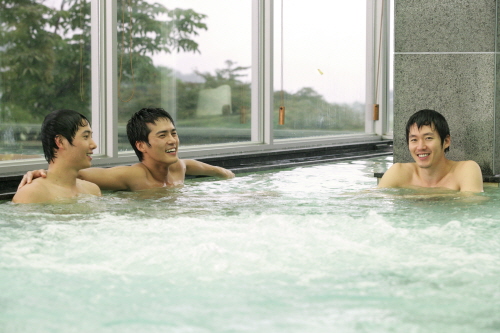
despite what you might hear, most Koreans do shower before getting in a pool
And you know most Koreans wash their backsides thoroughly because you can watch them doing it in a bathhouse. Many people in the UK still use bathtubs as a primary source of personal hygiene but how can you wash your arse in a little swaddling tub that binds your knees together and prevents easy access. Worse, the same water than cleans your body, that contains dead skin cells, hair, and other scud, the same water that rinsed out your backside and crotch, is then wallowed in. Yew! What a filthy habit and one almost as revolting as fitted carpets or cotton handkerchiefs. British showers aren’t much better being taken standing in restrictive bathtubs or in shower cubicles that provide as much freedom of movement as would a coffin. Have you ever seen a westerner clean their backside? And how do western kids learn how to clean themselves in that area? Are they just left to learn for themselves or do they simply let their underwear soak it up? I assume most westerners clean out their arses but I’ve never seen them doing it.
Nothing annoys me more than those who condemn Korean bathhouses, especially if they’ve only been a few times, and consider them places of moral and physical corruption or seething with rampant contagious infections; or those who like to bash Koreans because they use chopsticks in communal bowls of food or because they once had to use a crappy toilet. Yes, of course somethings in Korea seem ‘dirtier than they do back home but traveling shouldn’t just spotlight the inadequacies in your host country but should also expose ones you hadn’t considered back home. Last year I came across a commentary by a westerner who complained:
And my 02. worth. Korean bathhouses? Dirty. Think about this for a minute.
The hot and cold pools. The water is NOT filtered. You have people who scrub their body and DON’T rinse off and still jump into the pools. I’ve seen it and I’m sure you have also. Leave the sauna, sweat pouring off you and hop into the cold pool! I have never seen a sauna in Korea that filters the water. It gets changed once or twice a day. Japan? Yes the water is filtered and cleaned. Not Korea. I know a few people who caught the crabs in these saunas. The blankets in the sleeping rooms are not washed daily. The towels that the saunas give you to dry off usually are not washed in hot water. I’m not bad mouthing Korea saunas, I have been to a few but most are dirty. Even the fancy looking saunas that are expensive to enter do not filter the hot/cold pool water. People are peeing in them also. I’d think twice. The saunas are good things but many are lacking customers who use good hygiene. If you are lucky enough, you might have been using one when it was being cleaned. I was and never did return.
Actually, I don’t totally disagree! People, me included, go from the various saunas into one of the pools, bodies sweating, and occasionally I see kids get straight in a pool without showering and some bathhouses are cleaner than others. I’m sure some people must pee in the water and I’ve certainly seen people pee in the showers. Is the water filtered? Well, I know water is sucked in through vents and in other places blown out. Is this filtration? I’m no more aware of filtration systems than I would be in British swimming pools where people often swim without showering, and if they do it’s only in a cursory manner, and in which they do urinate. I’ve even seen a turd floating in a British swimming pool but most of us aren’t too bothered about pool hygiene because chlorine sanitizes not just the watery environment but mentally as it leads us to believe the environment is biologically sanitized. British pools might be bug free, but are they clean? Would you wallow in a cesspit if it were purged with a bottle of chlorine?
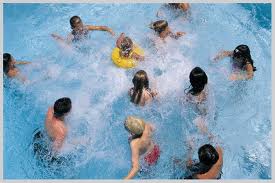
with a chlorinated pool one can wash their muck off in the water
Without doubt some infections are passed in bathhouses, ‘red eye’ (conjunctivitis) being one and possibly a nasty infection of the testicles but even a mild infection of the bollocks is nasty as it results in them needing to be groped by your GP. Personally, such risks I consider small and I’m happy to gamble infection for the pleasures bathhouses provide. In years of using bathhouses I only ever had one infection and it’s debatable where it would have been contracted. I can identify a number of practices I consider unsavoury in Korea, some examples being how individuals might dump garbage at collection points which isn’t bagged, or dipping odeng (오댕 -fish cake snacks) into communal soy sauce bowls, a habit which I think might actually have almost phased out. Then there is the habit many kids have of coughing in your face without covering their mouth with a hand.
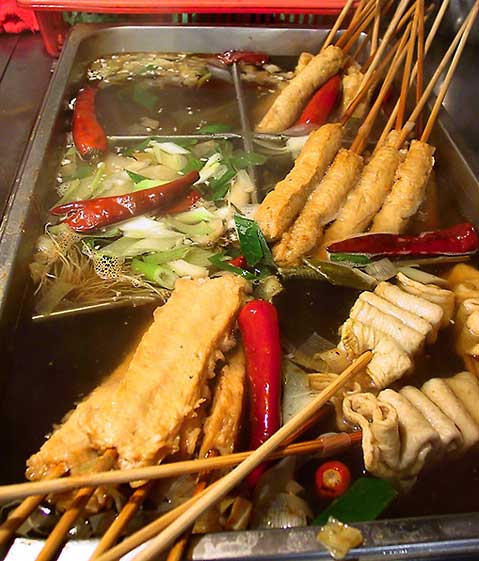
beware the communal soy sauce dip – great for herpes
Some restaurants, especially small ones, have dubious cooking areas but once again I’ve seen just as bad in the UK where kitchens are usually hidden from public view. Several years ago I attended a course which was hosted in a prestigious yacht club. When the caterer didn’t turn up, we took it upon ourselves to use the kitchen to make tea and coffee and what we found was alarming; filthy fridges containing curdled milk and atrophied onions, meat placed above vegetables and shelves tacky with sugary residue on which cups were stored upside down. I made a complaint to the local authorities which resulted in the restaurant being fined several thousand pounds. The head chef, who was subsequently sacked, had previously owned a swanky sea food restaurant in the same village. Though lots of westerners will bemoan the state of many public toilets, I’ve seen far worse examples in the UK. I taught in one school where kids would deliberately urinate on the toilet floor, and even, on occasion, defecate beside the toilet rather than in it. There’s good and bad in all cultures but I will admit to being more lenient in terms of standards when I am eating something that costs next to nothing than I am when confronted with bad practices in an expensive, pretentious eatery. When eating out is expensive and an exception rather than the rule, as it is in the UK, I don’t expect Faecal Fingers or dirty anything.
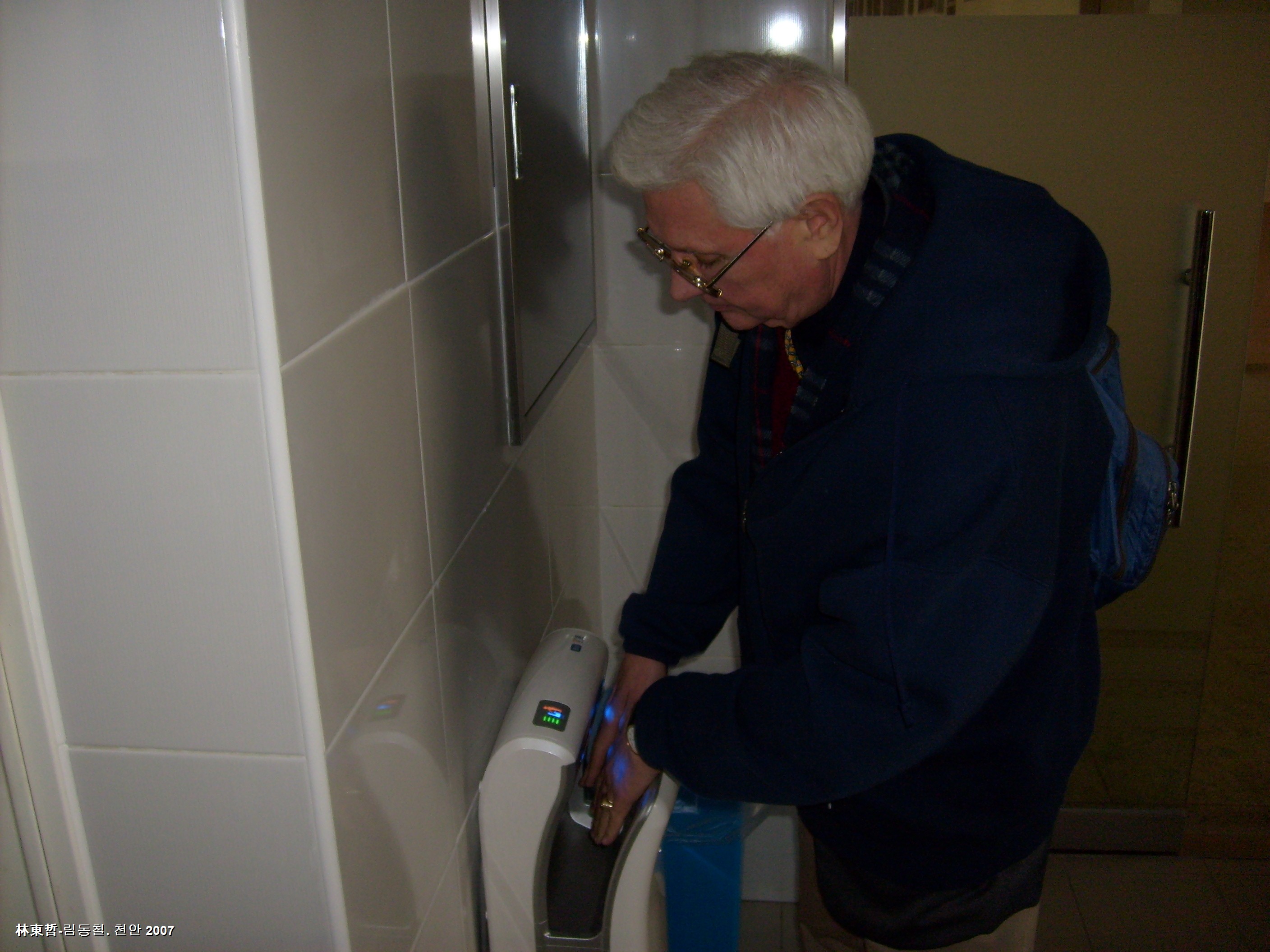
an ultra-violet sanitizer in my last Korean high school
Generally, I do not think standards differ too much between Britain and Korea except in terms of personal hygiene, which unfortunately is one of the most important criteria. It’s great having no rubbish lying in your streets or chlorine in public bathing water but it makes little odds if the community around you are filthy fuckers. Several years ago, research by a British University revealed that between 6 and 53% of city commuters had faecal matter on their hands. (BBC News 2008) Apparently, the further north you go in Britain, the higher the rates of contamination. This is especially alarming when you consider British people will usually fully unwrap a burger before eating it and are much more likely to put things like fingers and pens in their mouths. I’m the first to admit I unwrap my burger fully in order to consume it and find comfort in fingering the bun but Koreans always eat it from the wrapper even after washing their hands.

my students find this a dirty habit
A person’s hands are the prime tools of first contact, they touch people, open doors, activate buttons and knobs, finger and prepare food and much more; they are the tools which, with an opposing thumb, not only define us as primates, but facilitate and make possible our interaction with the physical world. You can have all the brains in the world but without thumbs – you’re screwed! At the other end of the scale, your bum-hole does very little and generally spends a large proportion of the day sitting on its arse. If a person fails to sanitize their hands after a dump , if they can’t even be bothered to keep clean such an important tools, what horrendous microscopic offenses are lurking in that dark and humid crevice. And then there are the peanuts in bars which in the UK are usually contaminated with multiple traces of urine. My Koreans students often call me ‘dirty’ if I stir my coffee with a pen or put a pen end in my mouth and they are unaware that so many Brits have faecal fingers. Now I know why a number of British confections focus on ‘fingers.’ I have rarely met a dirty Korean student and the pissy urine smell that I’ve noted in numerous infant schools in Britain certainly never existed in the Korean kindergartens in which I taught.
I suspect much of the animosity towards bathhouses is simply the result of nudity; some westerners clearly perceive bathhouses physically ‘dirty’ because they consider nudity morally dirty. As one commentator wrote: I’ve also been here since 2001 and have never gone to a bathhouse. I’m not into sausage fests. I work out every day and shower at home. The room of soapy Koreans just doesn’t appeal to me. For some westerners, all it takes for a clean environment is a piece of cloth over a cock and buttock and suddenly the environment is clean; splash a bit of chlorine around and we will happily swim in each other’s neutralized dirt. In 2008, when I first read how widespread faecal matter was on the hands a large chunk of its population, I made a resolution to be extra vigilant in terms of personal hygiene and not only do I wash my hands after using the toilet, but I sanitize them with a spray or anti-bacterial hand cream. I have not once broken this resolution!
there are times when nudity is undoubtedly preferable (Borat)
It’s pointless getting defensive about our lack of hygiene, for years the British have been the butt of jokes about bad teeth. I once meet an Australian who told me he’d been taught Brits changed their trousers once every few weeks and I’ve seen the skid marks in changing rooms and smelt the effects of using underwear as blotting paper, in British schools. If you’re British at least, observing how fastidious Koreans are about personal hygiene should prompt you to realise your own cultural failings. What’s important is that you learn from such observations and of course, the process goes both ways. Koreans are also fastidious about dental hygiene and I recently read that brushing teeth three times a day over decades can lead to receding gums. A number of sources now suggest only cleaning teeth with a brush, twice a day. As I said, there are good and bad practices in all cultures.

to contract -E-coli!
Okay, so now you’re going to be forced to stick your nose up someones butt. It’s time to choose. What nationality are you going to pick?
© 林東哲 2011 Creative Commons Licence.
Who’s Pissing in the Pool?

pissing in the pool
Podcast 83
Here are three Korean habits which I find displeasing: spitting, littering and pissing in public. Now, before getting on a cultural high horse, all three habits can be observed in Britain and certainly, in my hometown on most evenings of the week, you can observe both public spitting and urinating. I have even seen a teenage girl squat against a shop door and urinate without even pulling her jeans or knickers down. A month earlier the Queen herself had walked through the very same doorway (William and Griffith’s in Colchester). Not only can you see the displays of public urination, spitting, as well as vomiting, but in the daytime every recess oozes the reek of urine. And then there is a habit among British teenage boys and low-class men which you will not see in Korea, and which was taboo when I was a boy, of one or both hands down the front of ‘trousers’ toying with genitalia. I’m sure this habit has evolved along with the spreading popularity of ‘trackie’-type trousers where an elasticated waistband provides ease of access. I once watched a young man in a supermarket constantly first contacting his tackle intermittently touching fruit and vegetables and worse, other people!
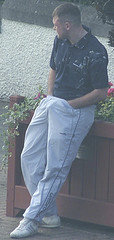
there is even a Facebook for this practice
It has taken me a while to ascertain how common urinating is in the bathhouse. I’m afraid I don’t go for those waygukin (foreigners) who claim Koreans golden shower all over bathhouses, piss in the pools and constantly gawk at their nudity. Such accusations are normally levied as a means of excusing yourself the bathing experience because you fear an unclothed environment. Of course Koreans stare! They stare everywhere you go but if you have any cultural awareness you will know that all you need do is look around busily, instead of lowering your gaze which you naturally do when embarrassed, and make eye contact. Koreans will instantly look away because starring is considered rude and eye contact exposes this. Better still, make eye contact and smile. Nothing dispels the tension caused by starring quicker than a smile and instantly, a stressful encounter is made friendly. As for accusations about pissing in the showers, from my experience, they are exaggerated. Firstly, it is not easy to determine if someone is pissing at the same time they are showering. Indeed, from my own ‘experimentation’ it seems that if you stand in a certain position you can actually manipulate the flow of water so it appears you are urinating. How you determine someone is urinating while in a pool eludes me. With considerable bathhouse hours clocked-up over a long period of time in many different bathhouses, I have only witnessed a few people who were definitely urinating in the shower.
One such occasions occurred a few days ago when a teenage boy entered the complex with his friends. I immediately noticed him as he spat onto the pile of used towels by the entrance. Teenage boys often spit as they enter the bathing complex and I perceive this a territorial act an animal might make when it urinates on ‘its patch.’ Then, as he stood in the shower, he arched his back and pissed as high as he could up the shower wall. In the meantime, he is busy talking with his friends. I am also reminded that not too long ago, I watched two boys larking in the showers during which boy golden showered on his friend’s leg. Considering it is deemed dirty to blow your nose in a handkerchief and rude to even blow it in public, I would have thought pissing on your friend’s leg totally taboo. However, they found the act highly entertaining.
as long as I don't see it
I have no problem with snorting or spitting in the bathhouse provided it is expelled in a gully and not on the areas walked over. For most cases this is what happens, often with a spray or douse of water to speed the emission on its way. However, last week a man bathing next to me, noisily coughed up a projectile and spat it onto the floor. He did this several times and without the usual habit of throwing water over it to wash it away. This was particularly revolting especially as I was about to eat breakfast.
Yes, Koreans have some grotty habits but so do most cultures and teenage boys aren’t the best candidates on which to judge a nation’s hygiene. Personally, pissing in the bathhouse, by which I mean pissing on the floor or tiles doesn’t bother me if it’s done discretely; in other words don’t let me see you doing it or if you do at least make the act ambiguous. Blatant disregard of protocol is more an act of disrespect than of pollution. I’m sure people sometimes piddle in the pool but I am not that bothered unless I see them doing it when I would be angered, not by urine contaminating my bathing water, but by the perpetrator’s gall at pissing in front of me and hence challenging my adult authority.
As for the third offence I began this post with, namely, littering,’ there is no doubt Koreans excel at this anti social habit. Korean refuse collection leaves much to be desired both in terms of public provision and personal standards. It is one thing to put out garbage in the legally required bin-bag, and quite another to simply empty the contents against a lamppost, as many seem to do. In terms of littering the street, teenage boys are the worst offenders and seem to assume that rubbish can be dropped anywhere and cleaned up by someone else – which it generally is. This isn’t much different to the misguided attitude many British school kids have, that you can drop little on the floor because cleaners are paid to pick it up. Now that dog muck has been largely banished from British streets, and ten years ago it was tolerated, it is only fair to say British streets are far cleaner than their Korean counterparts and littering is clearly anti-social and illegal.
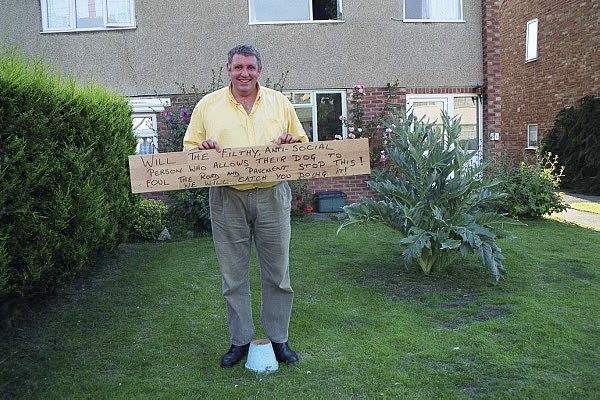
(2002) in around eight years it has become anti-social to let your dog foul the pavement
So, how prevalent is pissing while in the pool?
© 林東哲 2011 Creative Commons Licence.
Greenvill Sauna – Banwoldang, Jung-gu, Daegu
First visited on Thursday 19th of May 2011. Greenvill is very easy to find given its location to the main road downtown and the nearby Banwoldang subway. Though situated in the Samjung Greencore Apartments (삼정 그린코어) complex, it is only a five minute walk from the subway itself. At the bottom of this post you will find comprehensive instructions on locating the premises.
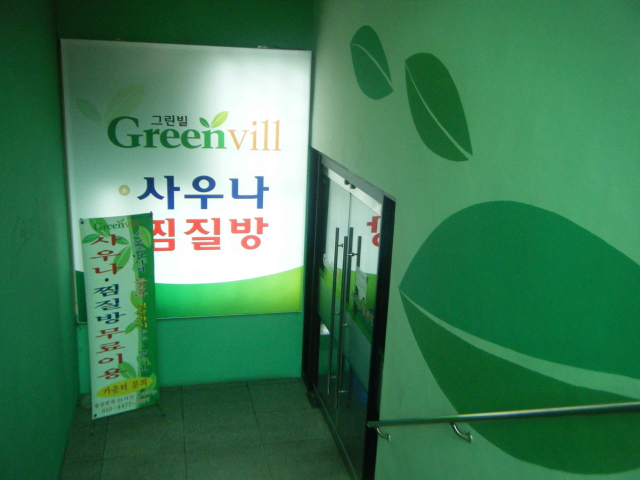
Greenvill Jjimjilbang in Banwoldang
The changing facilities are large and spacious and the staff friendly. I was visiting on a lunchtime and there were only a few customers but I would suspect it might be busier in the evenings. The bathhouse itself is not large but it bright and fresh with numerous murals on the walls and interesting features, for example, a large dolphin stands in the corner of one pool, as if rising out of the water. The bathhouse (male) itself is approximately an ‘L’ shape with the main pools in three corners. There are probably around twenty stand up showers, giving some guide to the more experienced bathhouse user, as to the size of the premises, and close to these the hot (열), warm (온) and event (이벤트) pools. I often joke about the event pools being uneventful but this one was more exciting and a large ‘poster’ on a nearby pillar forecast the weekly aroma schedule: I was there on a Wednesday so the aroma was ‘grape’ and beside looking like a gigantic glass of wine, there was a pleasant hint of grape juice. Other aromas, changed on a daily basis, include menthol, lemon, chrysanthemum, mugwort, ginseng and pine.
In the far corner is a small massage pool (안마탕) with six massage stations. Beside this are stairs leading up to an open planned, infra-red lit, sleeping room. In another corner was a large and very cold, cold pool (냉탕) with attractive blue tiling and a large mural backdrop. There are two saunas: a steam sauna and a spacious pine sauna with various levels of decking and room to sleep.
In all, a very new, clean and relaxing bathhouse though perhaps not providing the most extensive facilities, it is certainly well worth a visit especially if you are in the vicinity or need a place to stop overnight.
Location – The Wikimapia site already had a marker for Greenvill but it was not in the right place. Locating it exactly is difficult as it is within the apartment complex so I took the liberty to update the map. However, the complex is easy to find and I have given some extra pointers. I used a taxi to Banwoldang and my directions are from the subway on the side of the road where traffic is heading downtown and the massive Donga building is directly in front of you.
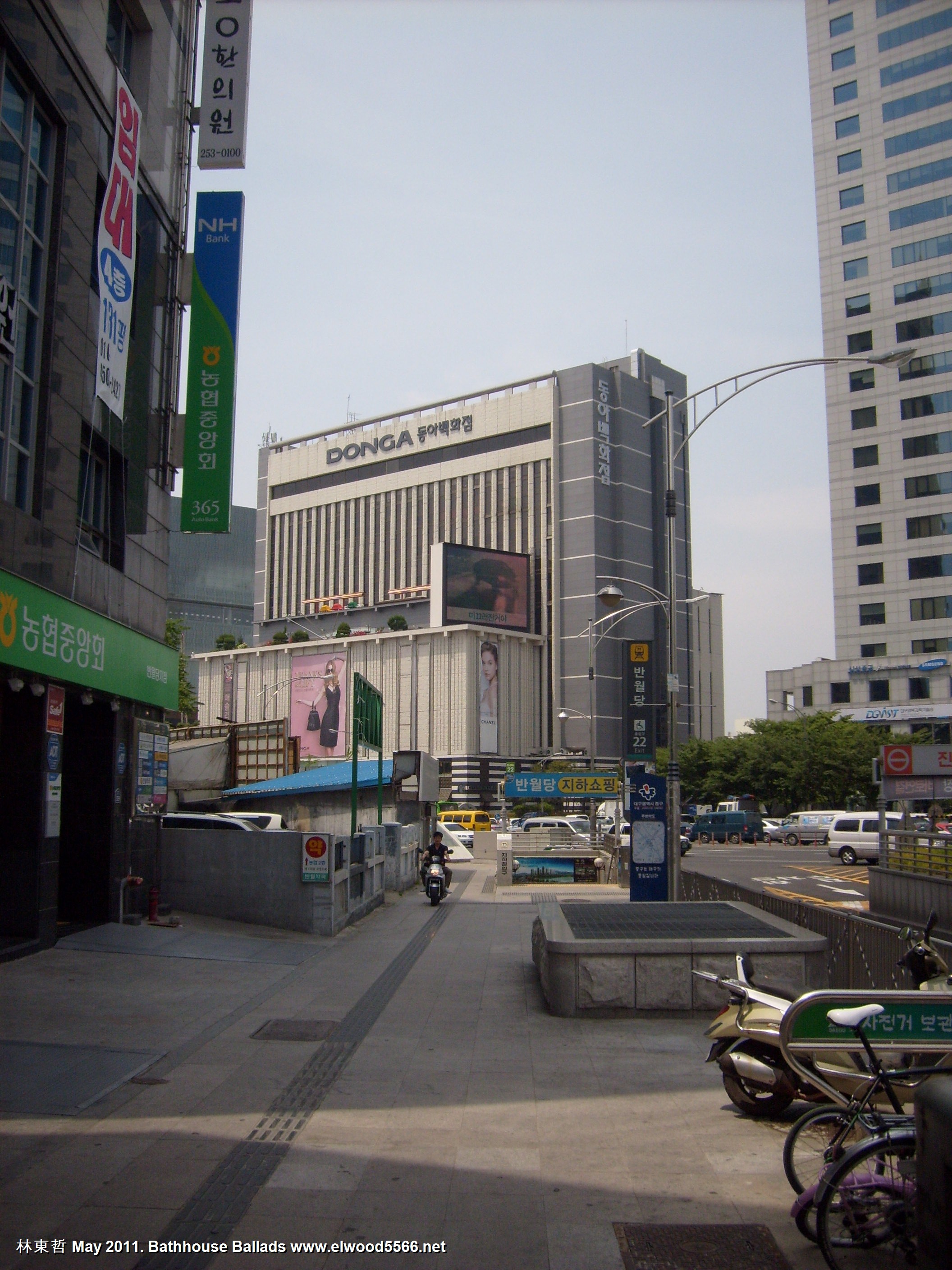
stand in directly in front of Donga with the subway exit on your right. This photo is slightly around the corner from Donga
Behind you you should see a flower shop with a small road leading up to an apartment complex. At the foot of the apartments on the hill you should see the Buddhist symbol as there is a temple here.
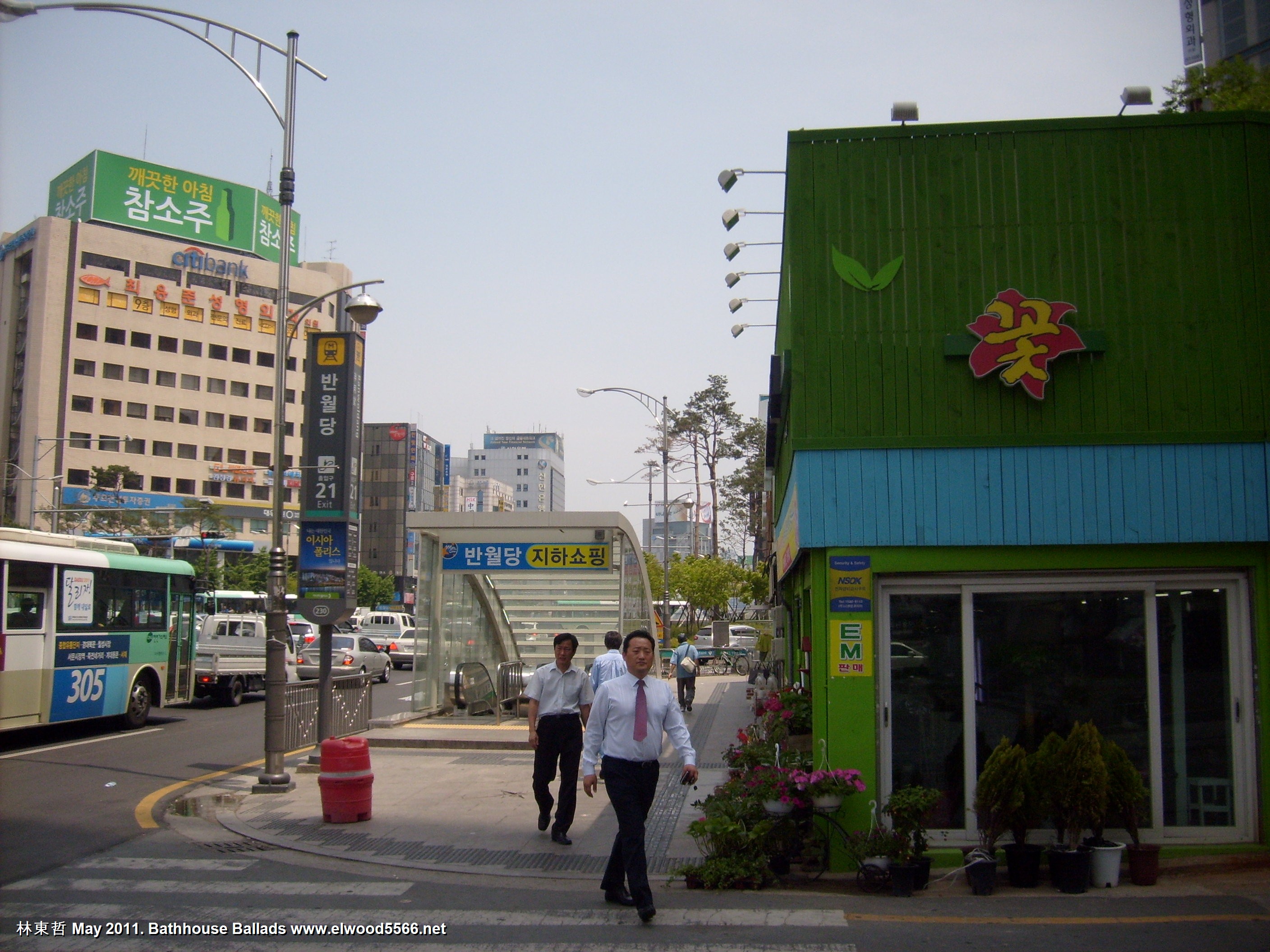
The subway on your right and Donga directly in front, the flower shop is behind you. Start up this road…
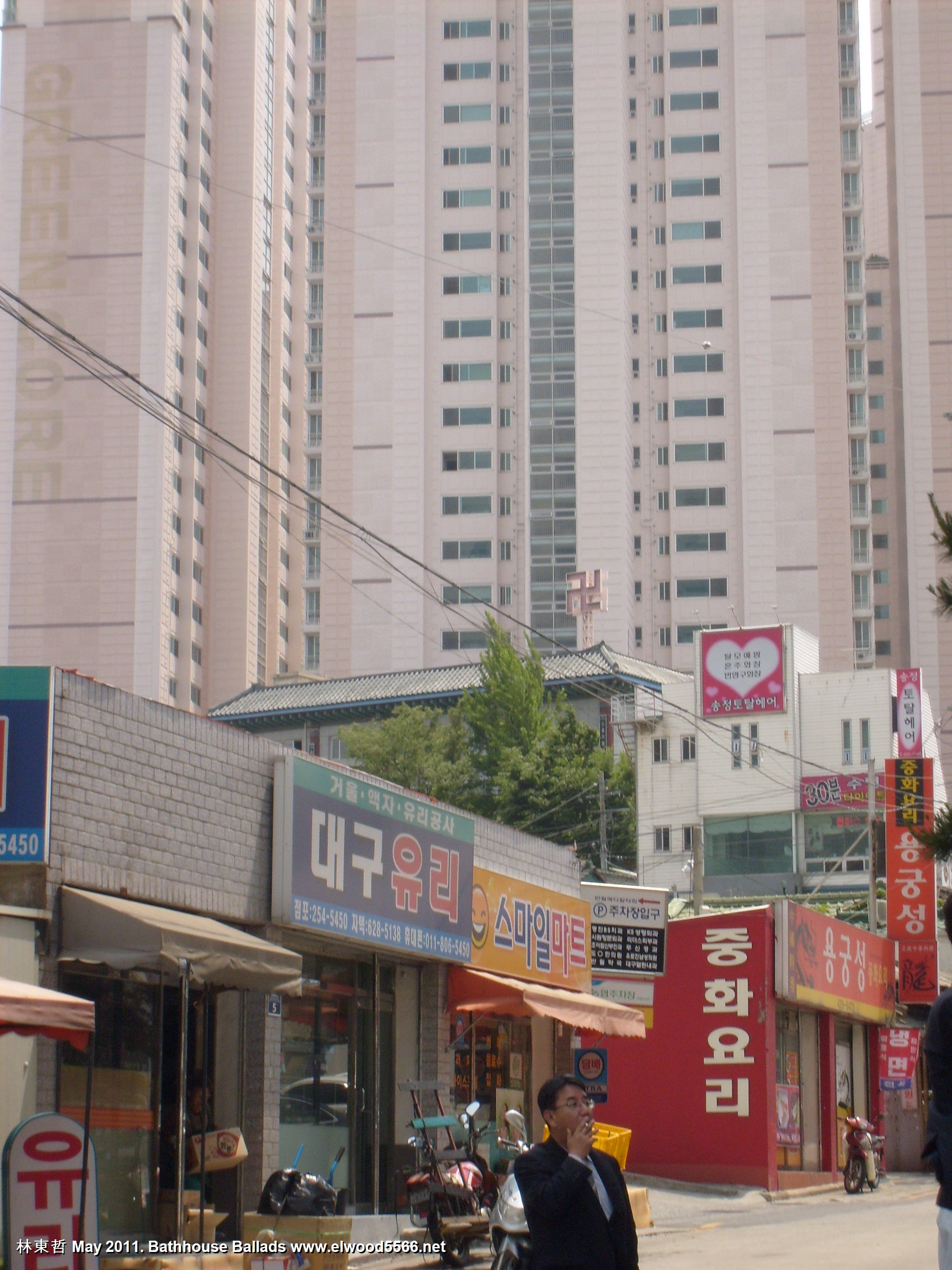
The Buddhist temple is on the top of the hill at the foot of the apartments
Go up to the temple and turn right in front of it. You will then see the turning on your right taking you into the Samjung Greencore Apartments (삼정 그린코어) complex. A small square sits in the middle at the opposite side of which you will see a flight of stairs. Go down these. You are now going past the sauna, it is actually on your right and when you reach the foot of the stairs you will find the entrance.
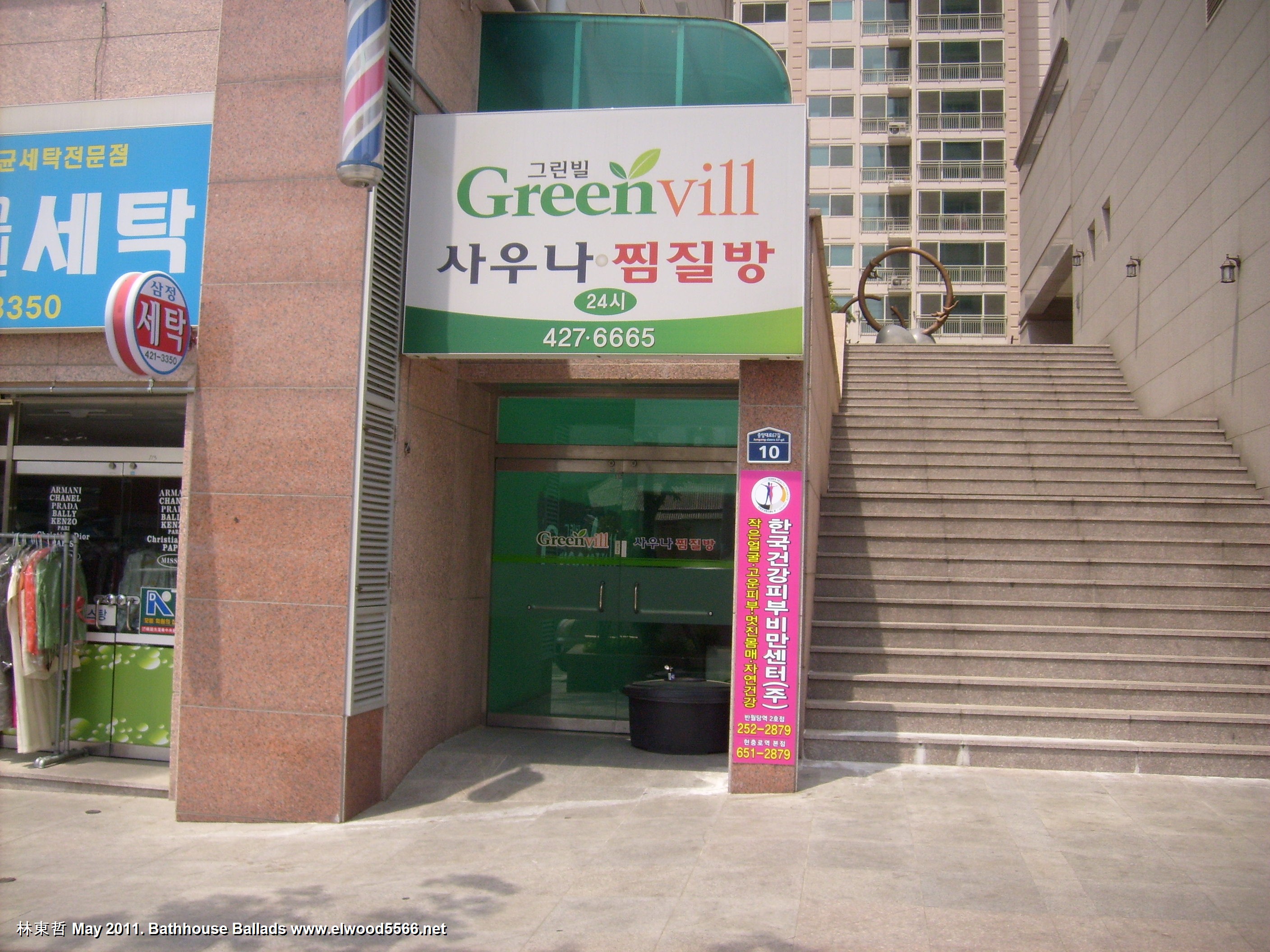
one of several entrances – the other is via the apartment car park
If you come out the exit and take a right and a right, or a left and a left, you will easily find you way back to the Donga building area. Coming out and taking a left and left will take you past a string of Buddhist shops. (Wikimapia link )
Times – 24 hour
Facilities – barber, shoe shine, large changing room with TV.
Jjimjilbang – includes an ice room, DVD room and various other facilities.
Bathhouse (men) – around twenty stand up and perhaps 30 sit down ones.
Cost – 4.500 Won for the bathhouse
Others – Basement car parking. Right next to Banwoldang subway line and on the main bus route (405). An interesting area with many shops and department stores.
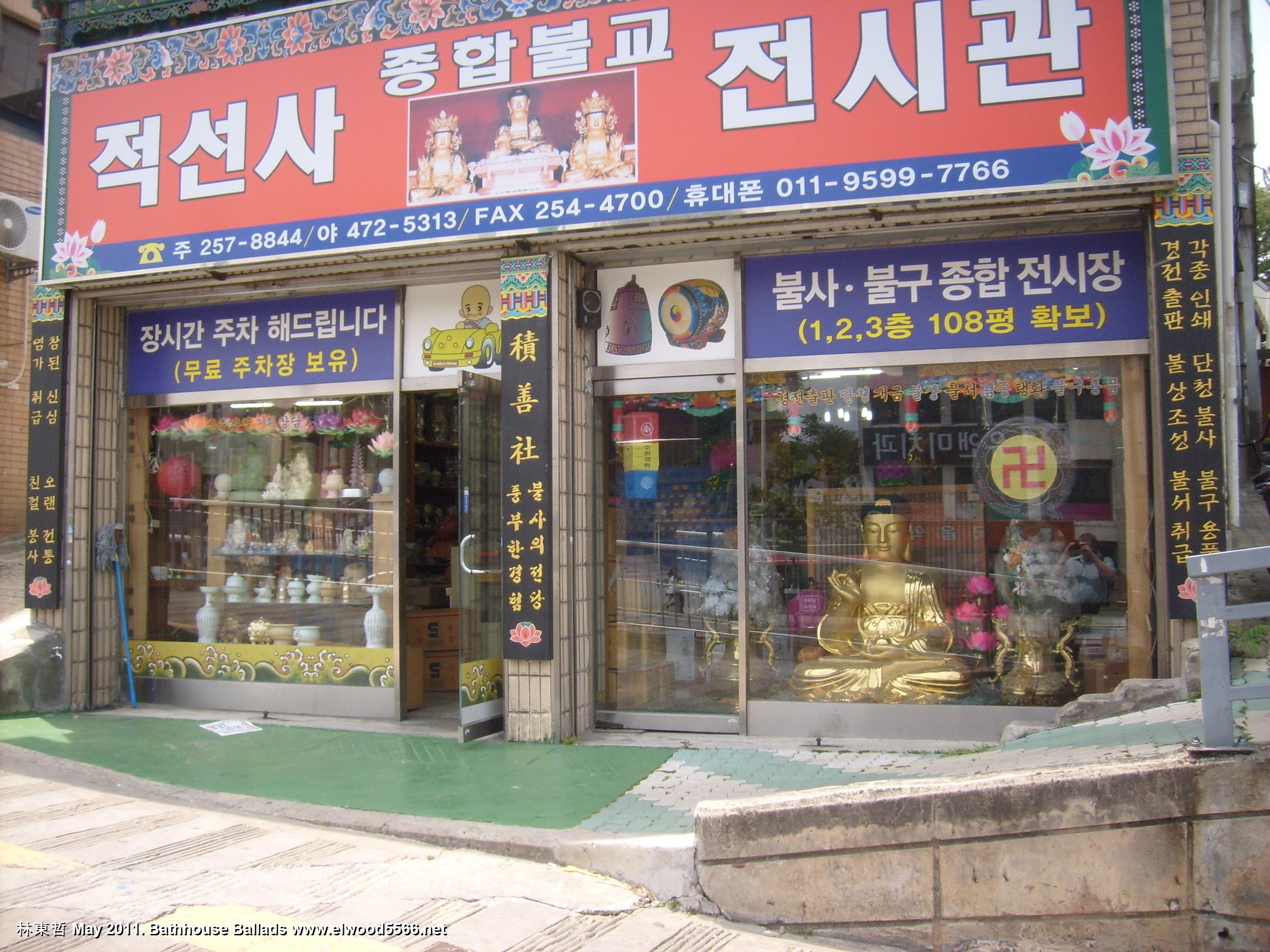
one of the numerous Buddhist shops in the area
Ambiance – bright, airy with a subdued infra-red sleeping area.
Waygukin – first visit – none
Address – 대구 중구 남산2동 665번지, Daegu, Jung-gu, Namsan-2-dong 665. Tel:053-427-6665.
Website –
Updates
© 林東哲 2011 Creative Commons Licence.
FURTHER REFERENCES
There is a very useful review of Greenvill at Jjimjilbang and Saunas in Korea (October 2010)
Collected Bathhouse Designs
(Originally published in September 2010) A collection of bathhouse designs that can be used for contrasting design and facility. Some plans are being added to and they are not to scale – they are very rudimentary but will give those with no knowledge of bathhouses an idea of their layout, approximate dimensions and the amenities available. Click plans for establishment reviews.
DAEGU

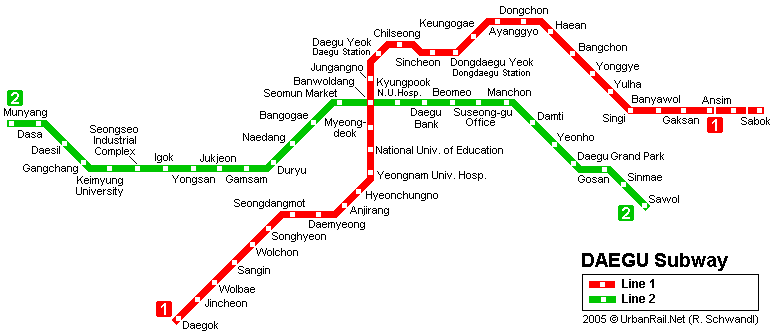
Daegu subway map (click for legible resolution)
LINE 1
WOLBAE 월배 SUBWAY, LINE 1,
BANWOLDANG (반월당) LINE 1 AND 2. WITHIN WALKING DISTANCE OF SUBWAY
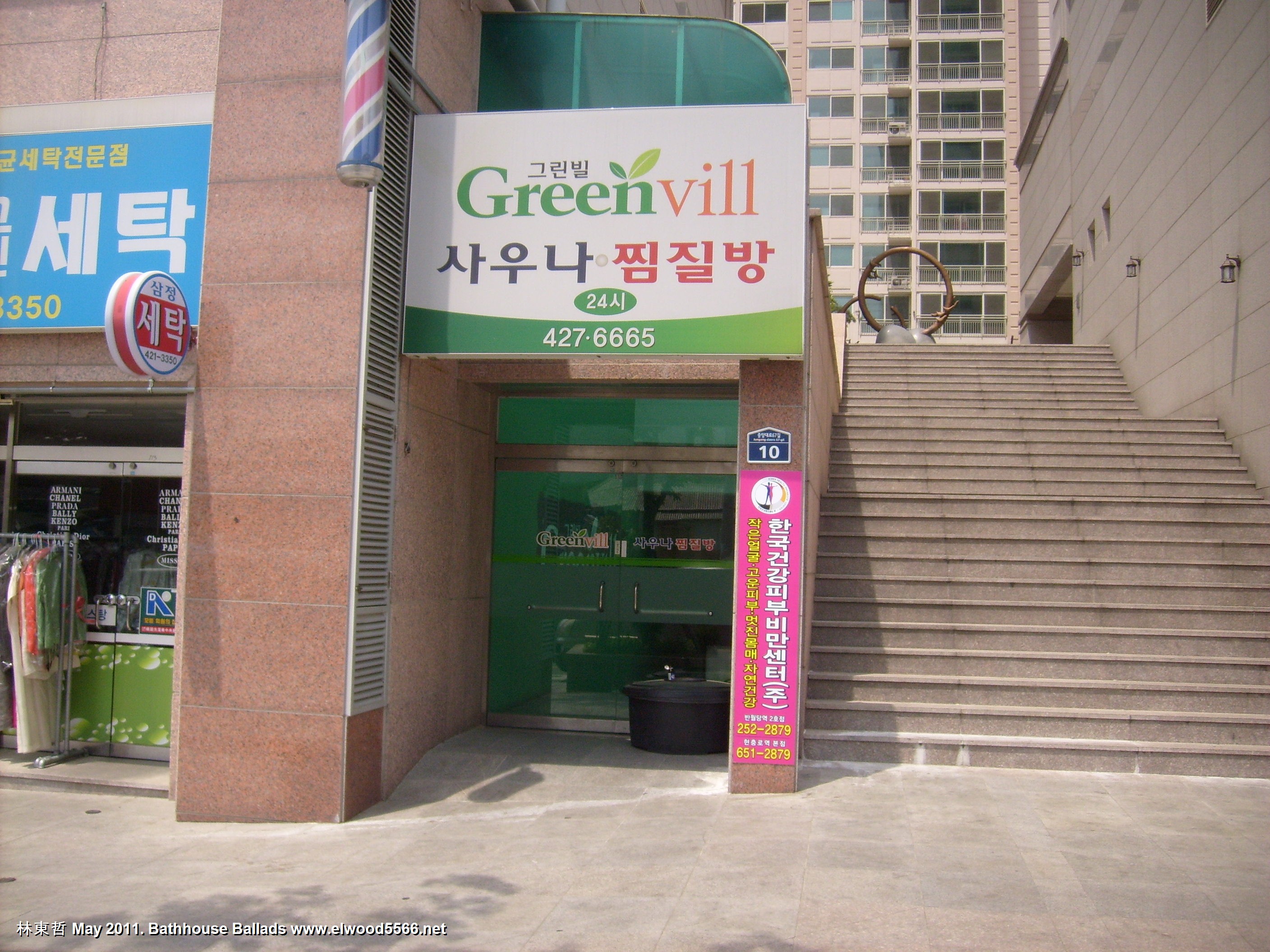
Greenvill Sauna in the Greenvill Apartments, Banwoldang

Greenvill Sauna bathhouse design. Male
DONG DAEGU STATION (동대구) LINE 1. WITHIN WALKING DISTANCE OF MAIN RAILWAY STATION
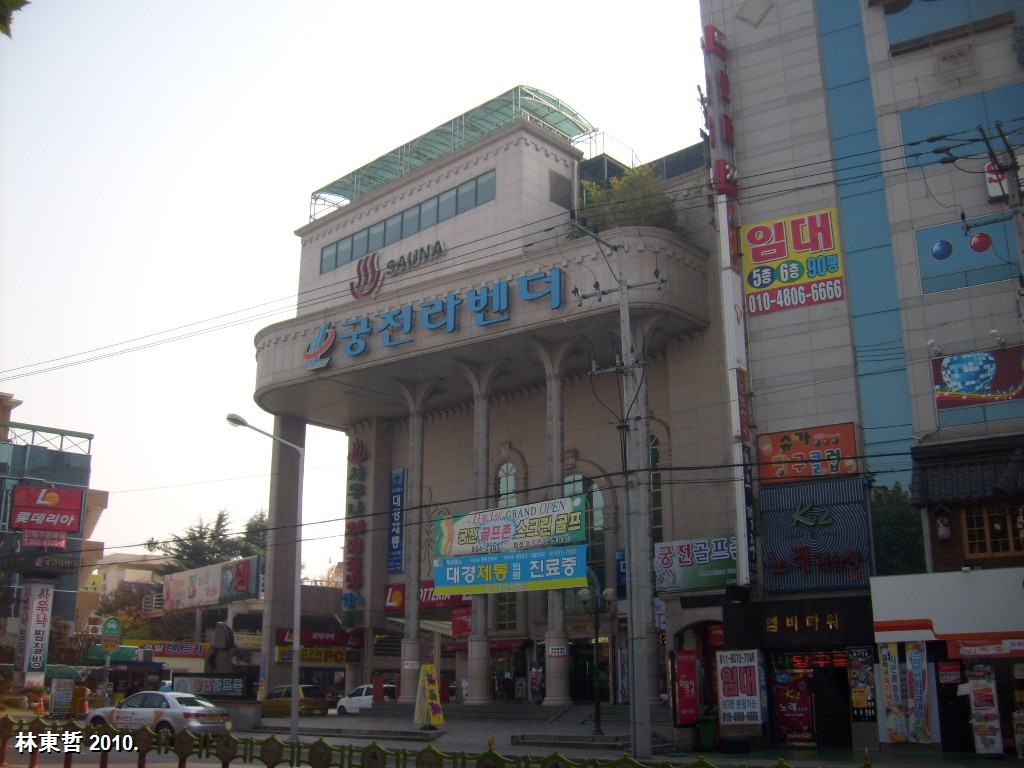
GOONG JEONG LAVENDER
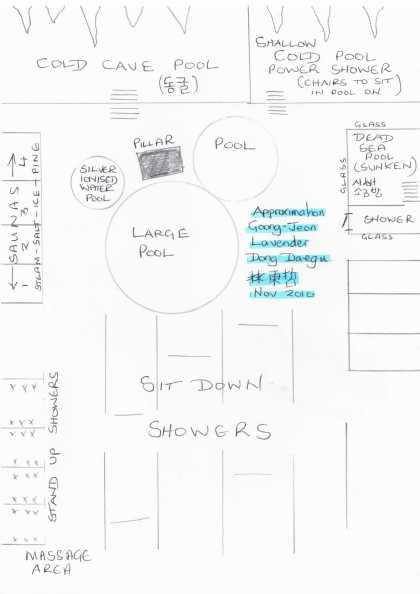
Goong Jeong Lavender bathhouse design (male)
LINE 2
DASA (다사) LINE 2. WITHIN WALKING DISTANCE OF DAESHIL OR DASA SUBWAYS
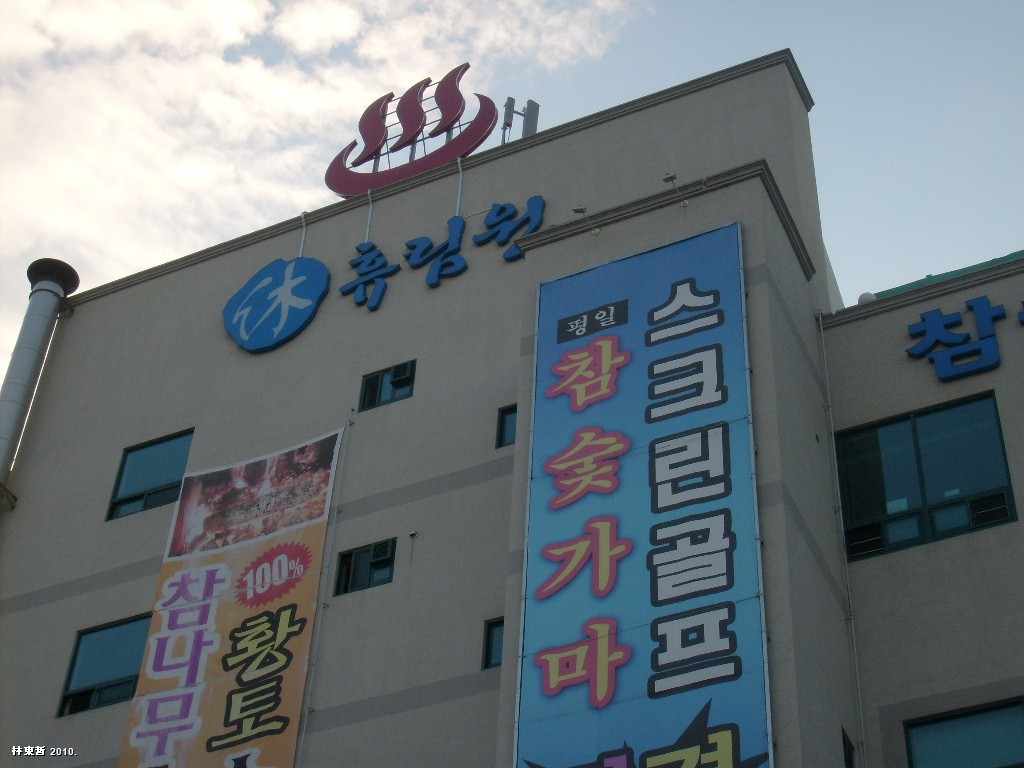
Hyu Lim Won JJimjilbang. Dasa (Closest subway Daeshil)

Hyu Lim Won, Dasa. Bathhouse design (male)
SONG SEO (성서) LINE 2. WITHIN WALKING DISTANCE OF SEONGSEO INDUSTRIAL COMPLEX SUBWAY
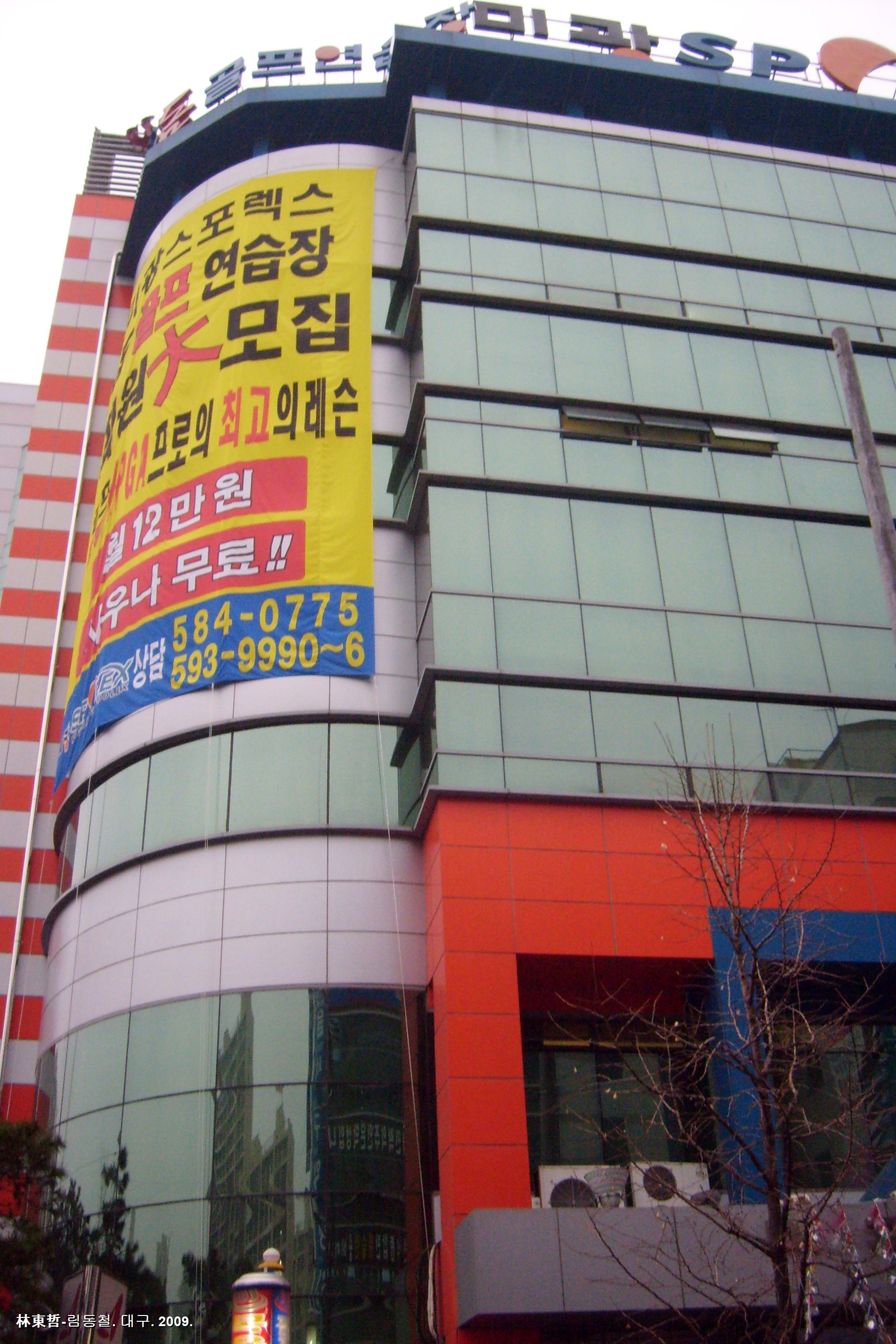
Migwang, Song So, Close to E Mart
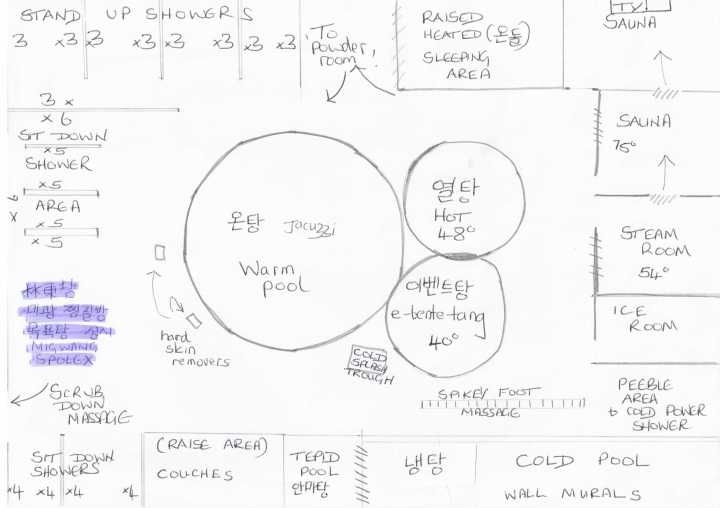
Migwang Spolex. Bathhouse Design (male)

Hwang So. Next to Mega Town and Lotte Cinema Complex

Hwang So, Song So, Bathhouse Design (Male)

Han Song Bathhouse, Song-So. Near MacDonalds

Han Song, Song So. Bathhouse Design (male)
YONGSANDONG (용산동) LINE 2. WITHIN WALKING DISTANCE OF YONGSAN SUBWAY
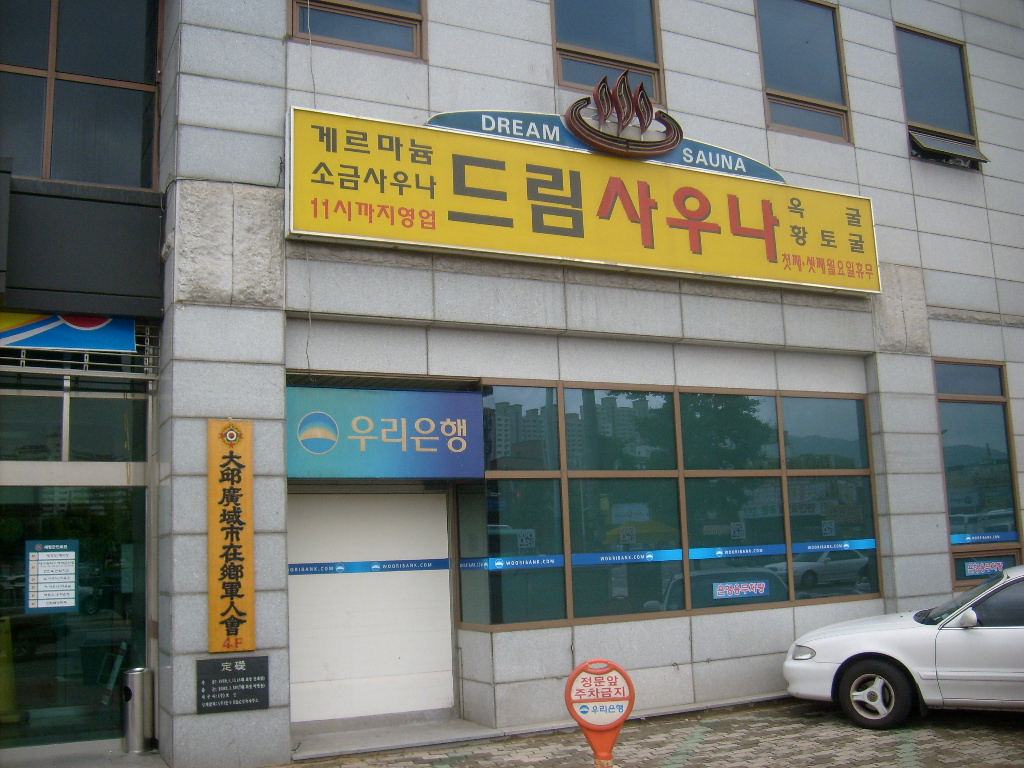
Dream Sauna, next to Home Plus

Dream Sauna. Bathhouse design (male)
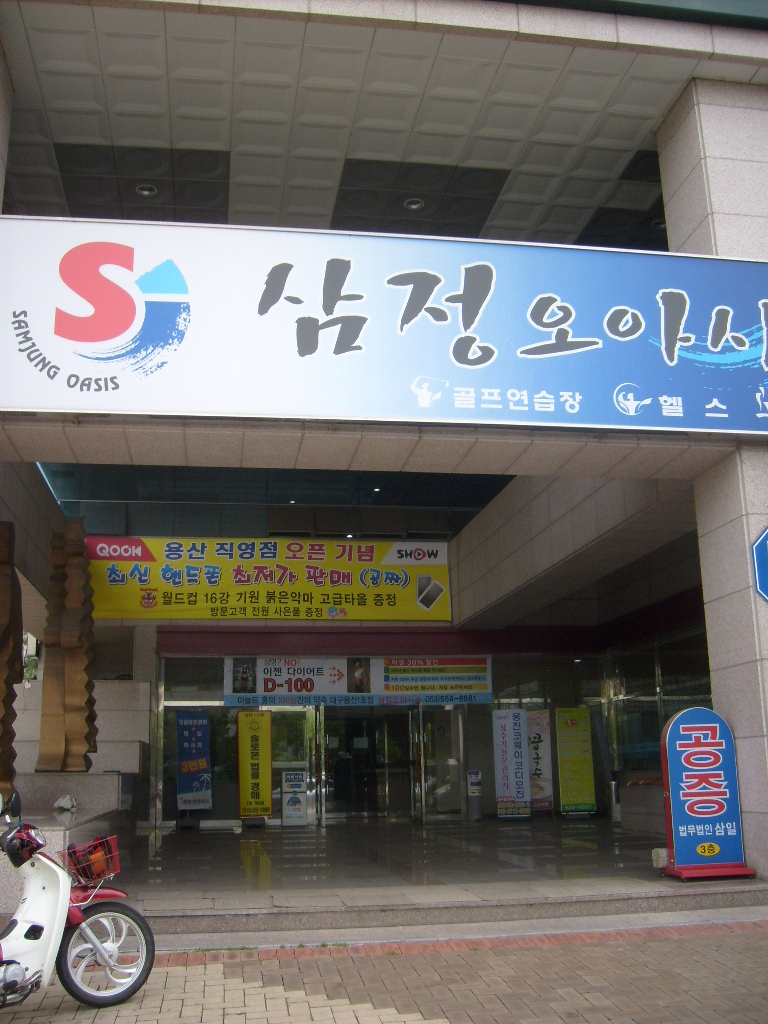
Sam Jeong Oasis Sauna. Behind Lotte Castle

Sam Jeong Oasis. Yong San Dong.Bathhouse design. May 2011
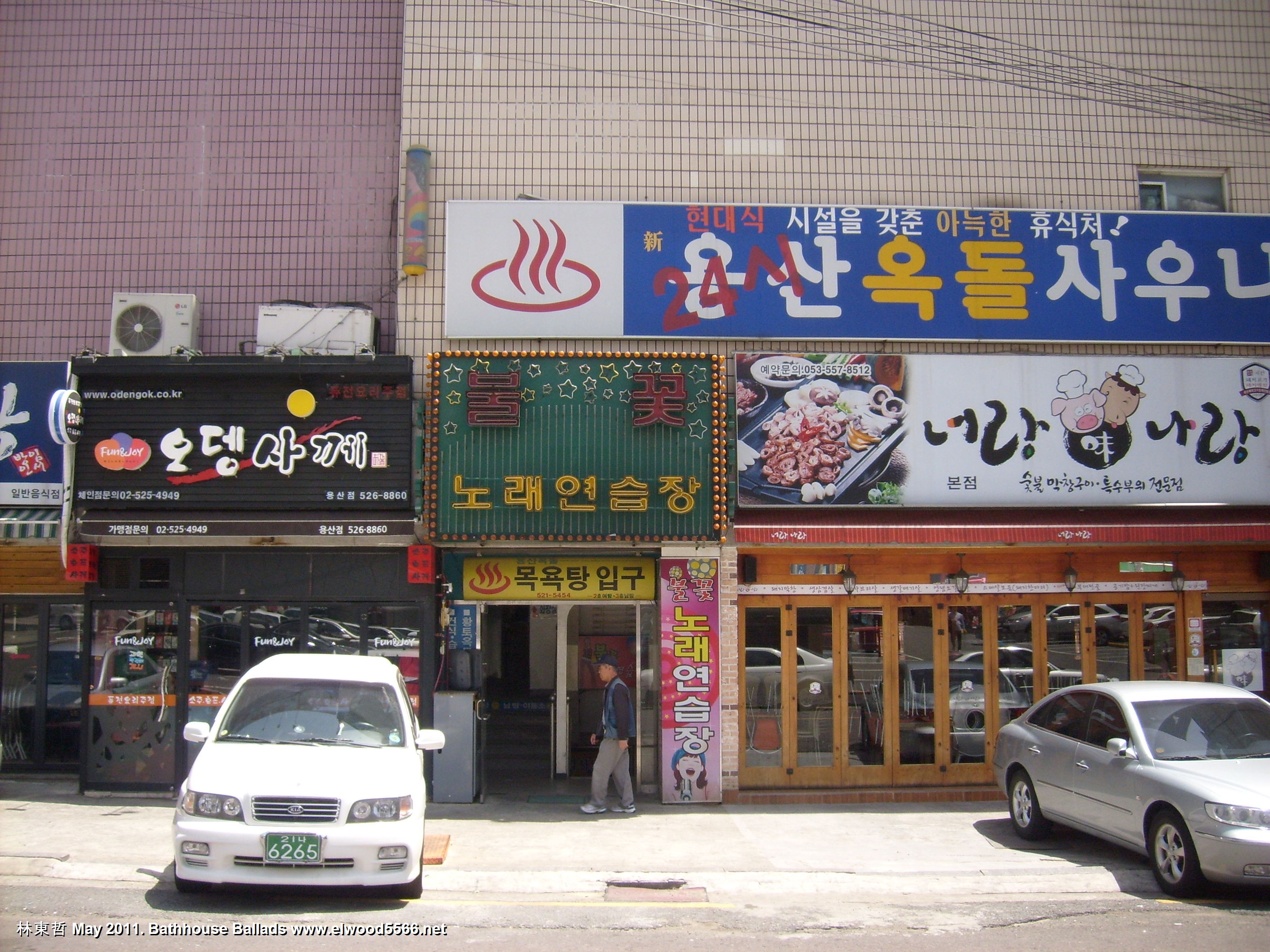
Jade Sauna in Yongsandong

Jade Sauna bathhouse design. Male
WOLBAE (월배) LINE 1. WITHIN WALKING DISTANCE OF WOLBAE SUBWAY.
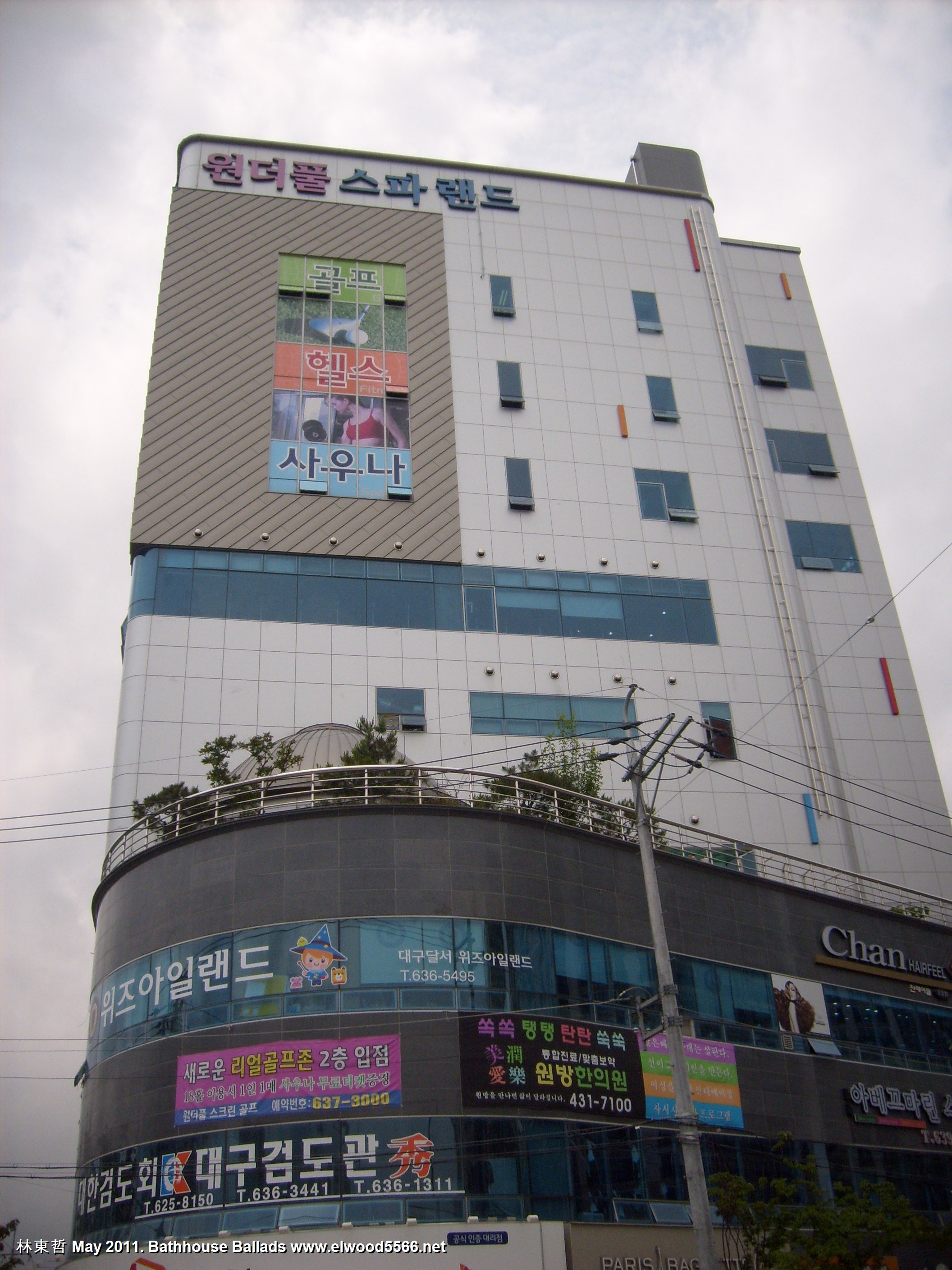
Wonderful Spa Land. Wolbae - awesome!
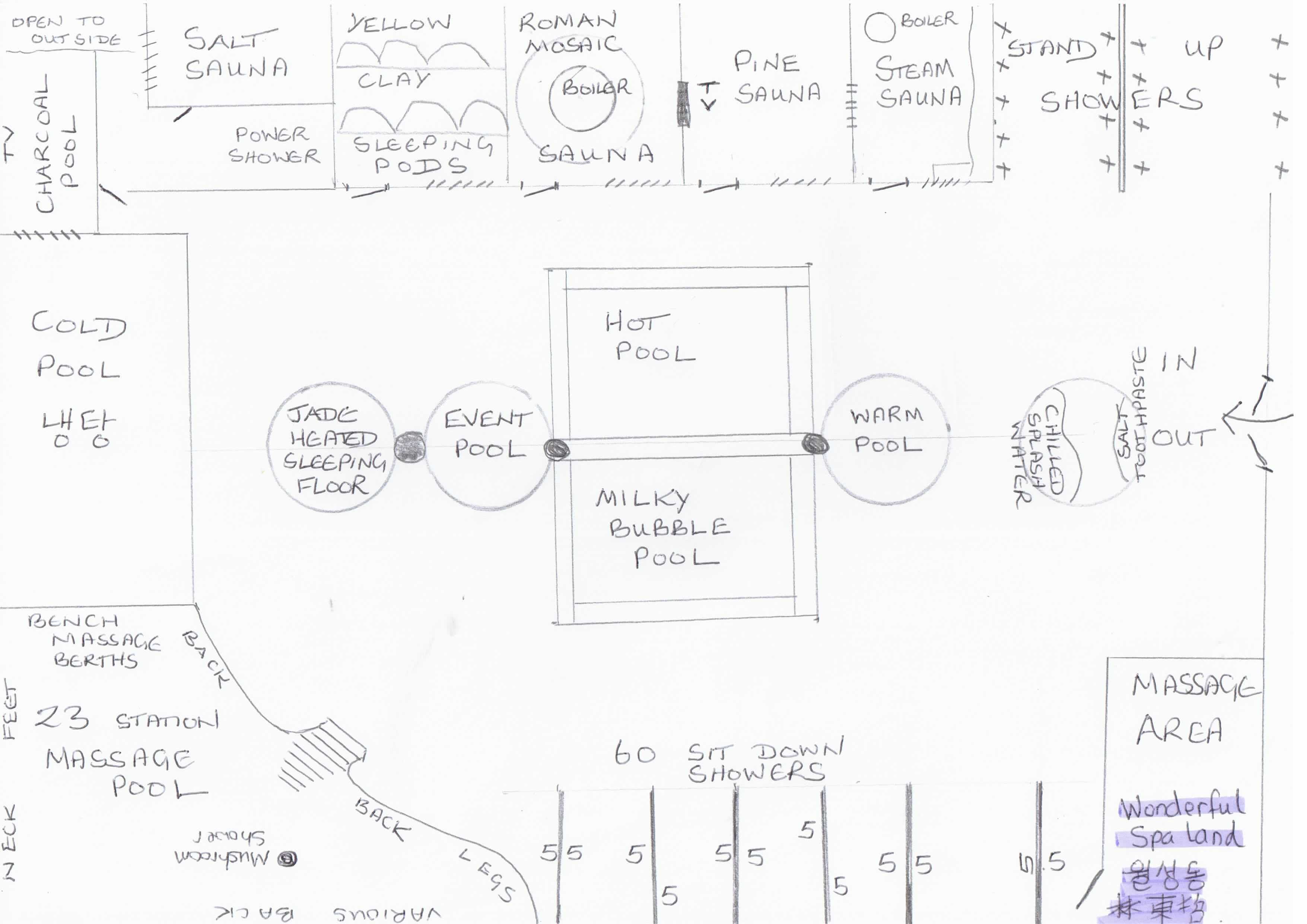
Wonderful Spa Land. Bathhouse design (male)
© Nick Elwood 2010 Creative Commons Licence.
Bathhouse Intimacy – Fathers and Sons

Podcast 82
I never really enjoy writing about some of the intimate moments I observe in bathhouses or even in everyday life as many western readers have a real problem with both the authors of such texts, whom they perceive as a perverts, and with the nature of its content, which they categorise, as ‘gay’ and ‘sickening’.
When fathers and sons are mutually washing each other I don’t like to sit and stare but over the last six months and through discussions with Korean friends I have managed to piece together how this process, which might possibly be defined as a ‘ritual,’ functions. At times of the week, usually the weekend, many fathers and sons visit the bathhouse and while for some the cleaning process is the prime function of the visit, for others it is simply for relaxation. I regularly see fathers and sons who will spend as much time cleaning each other, as I might in the pools and it is not in the least unusual for some to spend well over an hour cleaning either cleaning themselves or, in the case of a father, their son.
The process begins with showering under the stand-up showers and entails much the same as a standard ablution – washing the body, shampooing, shaving and brushing teeth. We have now reached the point at which most westerners would consider themselves clean but which for the majority of Koreans is only the preamble to a meticulous ablution. After the stand up shower some visitors go straight to the sit down shower units while others will spend some time enjoying the various pools and saunas. For younger children, this often means playing while older boys are content to sit with their fathers. Most of my Korean friends will soak and sweat in the various facilities for anything up to several hours, at which point dead skin cells and callouses have absorbed water and are easily removed.
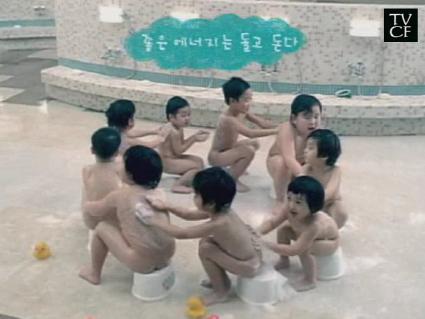
the bathhouse, where ‘skinship’ is taken to the extreme
Between friends, scrubbing each others’ backs is an accepted intimacy and it is not unusual to see peer groups, especially school boys, university students or even monks sat in a line each scrubbing the person in front. Several years ago an advert depicted young boys doing exactly this and attracted some negative and hostile comments from foreigners living in Korea. Unless you opt for a scrub down by a bathhouse attendant, the scrubbing of backs is probably the most intimate extent to which friendships, even between the closest friends, goes and seems much the same as from son to father. However, from father to son, the level of intimacy is much greater and certainly, into middle adolescence, a boy is often totally passive in this procedure. Indeed, there isn’t much difference between how some fathers clean their sons, and how you might wash a car, care for a baby or invalided person.
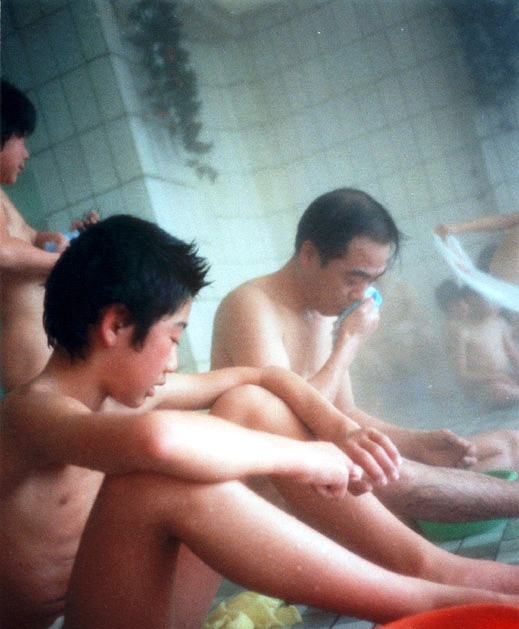
The cleaning process reflects a close bond between fathers and sons
The procedure often takes place in silence and begins with the boy bending over and supporting themselves on the ledge that runs under the mirrors so that their father can vigorously scrub their back with an Italy towel progressing down their buttocks, backs of thighs and calves. For anyone who has visited a bathhouse and seen for themselves this type of ritualistic cleaning, the process isn’t brief or cursory. The Italy towel is used with only the smallest amount of soap, not enough to even produce a lather and in a rough enough manner to produce a visible line of dead skins cells. Once an area has been ex-foliated, it is showered after which the Italy towel is again used, this time with a generous amount of soap.
Next, the boy sits down facing his father and puts each leg, in turn, on his father’s thigh and the same process is repeated from the soles of the feet to the thighs. Then the boy sits with his back, neck or shoulders supported over his father’s knee so that his chest and stomach can be scrubbed. It is not in the least unusual for boys or even their fathers, to hold their genitals to one side while scrubbing the groin. Finally, with head resting on their dad’s thigh, their face is scrubbed even to the extent of cleaning noses and ears. The meticulous process ends with a session under the stand up shower. Sometimes the procedure is organised slightly differently, for example if the boy is not very tall, he might stand for much of the ablution. What is most bizarre for the westerner is the proximity between the face and genitals or backside of another person. Even between friends, if someone is standing and someone sitting, as for example might sometimes be the case when one person is scrubbing another’s back, there is no concern about the distance between the face of one and the genitals of another.
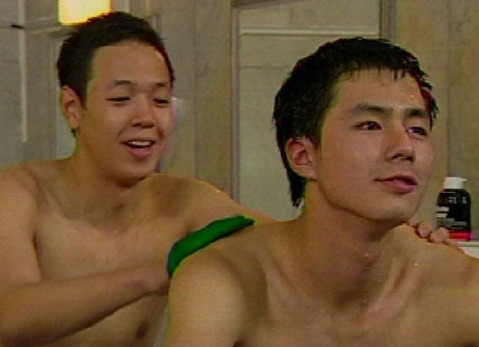
the Italy towel in action
Often the process is performed by a bathhouse attendant and every bathhouse has an area with one or several couches on which you lay for this purpose. I rarely see young children receiving a scrub down but older boys, sometimes unaccompanied and at other times with their fathers, will subject themselves to this ritual. A scrub down from an attendant is every bit as intimate, and for the westerner, invasive, as the one between fathers and sons. Koreans are so used to the cleaning ritual, they subconsciously place their limbs in the required position or require only the briefest prompt, for westerners however, the process is awkward and the body, unaccustomed to the procedure, is antagonistic to the attendant’s manipulation. And yes! They do hold your ‘bits’ to one side as they’re scrubbing. However, the experience is invigorating as well as liberating.
Clearly, father-son, as well as mother-daughter bathhouse rituals are an integral expression of ‘skinship’ and undoubtedly provide the most extreme example of intimacy between individuals in a platonic setting. On several occasions I have witnessed a father bathing his severely mentally and physically disabled son and much that was sad and tragic in the procedure was nullified by the close bond they clearly shared. But it is also possible to see such parent-child intimacy as one aspect of a broader cycle and sons can often be seen tending their aged fathers in the exact reversal of the father-son ritual.
Koreans do not carry the same cultural baggage as regards the body as many westerners either in terms of prudery or propriety and appear much less judgmental about the bodies’ of other people. I recently read a very interesting article by a Korean grandfather who was approached by a little girl in a bathhouse who wanted lifting into a hot pool, because she was cold (link). In many other cultures, racked with obsessions which perversify any contact between minor and adult, such intimacy, and many other intimacies observed in a bathhouse setting, are taboo. It would also seem that what is observed between those of the same gender remains private. To discuss or gossip about the body of another person would be highly inappropriate and improper and certainly, between males and females, would constitute a cultural taboo. And one of the greatest Korean attributes, especially when you’re naked and vulnerable, is that they are excellent at complimenting those parts of your body you don’t like. I wouldn’t wish my body on anyone but even naked many Koreans are able to make you feel very good about yourself.
© 林東哲 2011 Creative Commons Licence.


 Elwood 5566
leave a comment