Freebies
When you frequent a business in Korea it is usually the case that at some point the staff will repay your loyalty with what is known in Konglish as, ‘service-a,’ (서비스). In a restaurant or bar, ‘service’ may take the form of a free drink or side-dish and in other shops in mat be some small items. For example, in chemists it may be a bottle of vitamin drink and my butcher often throws in a pound or two of free flesh.
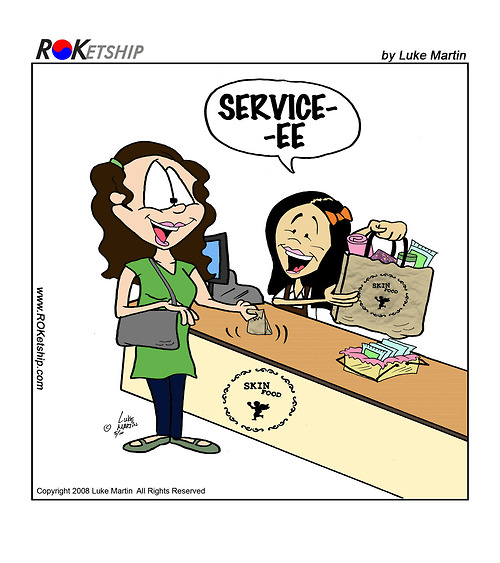
Link to Roketship
I would imagine the more Korea becomes westernised the more this custom will be whittled away until like London on a hot summer afternoon, your can of coke or mountain dew has an extra 30 pence added if it has been chilled. When you’re in the city and parched you’re hardly going to opt for a warm 7 Up because it’s cheaper than the cold one! Only a total stingy blades would do that, which is what the shop owners are for increasing the prices on chilled drink in the first place. A drink should be chilled in hot weather and charging extra is sheer exploitation no different from charging extra for a hot cup of tea or a cold ice cream. A few years ago I ate bibimbap (mixed rice and vegetables) at a small Korean restaurant near the British Museum in London. Bibimbap is hardly an exotic meal and I would imagine the only unusual vegetable in it was bracken fern (고사리), if indeed there were any. Regardless, the meal cost me £8 which is an extortionate price. To compound matters, I was charged £2 (W4000) for an extra portion, ie spoonful of kimchi. That’s actually more expensive than a bowl of bibimbap in my local Kimbap Nara. In the UK no shop owner would dream of handing you a bar of chocolate for free and if they did you probably think they were up to no good!
I like the idea of providing ‘service’ especially as in all but the big supermarkets ordinary staff, even the youngest and most junior, are able to ‘award prizes.’ In Mr Big, New York, New York, and Misoya, all chain companies with branches throughout Korea, the staff are able to dish out the goodies to customers they like. Even in friendly, fresh, fun land, GS25, the sexy student occasionally plies me with a bar of chocolate.
In the last six days my ‘service earnings’ have been substantial. I’ve eaten three times in Mr Big where I only ever eat the nasi-goreng and on each occasion I’ve had a free glass of beer (W7.500). In Misoya, there is a sexy lad who two months ago was on the street outside a new mobile phone shop, trying to hook customers. Now he is two doors along working as a chef and twice this week he’s served me a complimentary dish of two large tempura prawns (W4000 = W11.500). Next door to Misoya is the chemist where I buy nicotine gum. I stopped smoking five years ago but still chew the gum and here I get W1000 off every time I buy a packet (W13.500). Yesterday my butcher gave me some extra meat which astthe least would have cost W2000 (W15.500). In New York, New York, I am given a complimentary coffee after every meal knowing I like roast potatoes, a rarity in Korea, they always serve me two instead of one (coffee 2x – W2000 = W17.500) Finally, every time I have a green tea latte in my favourite coffee shop, I get a persimmon honey cookie (약과) for free; they cost W800 each (W19.100). So, in six days my ‘service earnings’ amount to approx £10 – enough to feed me for 2 days.

This work is licenced under a Creative Commons Licence.
No Pain no Gain – The Korean Bootcamp

The ebente-tang (야벤트탕). Mugwort (쑥)
As the weather gets hotter I spend increasingly more time in the cold pool than in the e-bente-tang (이벤트탕) which today was scented with mugwort (쑥). In the cold pool (냉탕) it was so cold I found it difficult swimming underwater but in another few weeks, when we are right into that horrid monsoon, it will be a welcomed sanctuary.
In the cold pool a couple of boys are messing around a little noisily and so some middle-aged man asks them to be quiet. The boys are summoned to attention by the word ‘hakseng’,’ (학생 – student) and simply told to stop mucking about. A little later they have to be asked again though this time the man raps them on their heads with his knuckles. In pansy Britain that’s assault.
I’m thinking about Daech’eon (대천) which is on the west coast, not too far from Ch’eonan, and a beautiful stretch of beach. The freshmen boys in my last high school used to visit there in summer just after their end of semester exams. As beautiful as Daech’eon is, I imagine that whenever they are reminded of the place they will tremble and break out in a sweat. For them, Daech’eon was a place where you both met yourself and your limitations, a place from which you returned a different person and it was feared! In the months leading up to the summer I often heard mention of Daech’eon, always with a mix of reverence, fear and foreboding.
Kids can learn a lot from a smack around the head and some discomfort and pain. In the west we’ve molly-coddled kids to such an extent they’ve had to invent ‘extreme’ sports in order to make themselves feel alive. Anything potentially dangerous in the playground has been removed and that nasty hard and rough floor replaced with a comforting rubber mat. Of course, there’s nothing ‘extreme’ about their sports other than a scratched knee or bruised shins. ‘Extreme ‘is playing on a playground without the protective rubber floor, getting into the boxing ring or doing some of the more strenuous of martial arts with instructors who take pleasure in grueling sessions. In one taekwondo school I attended in Korea, the instructor put a ‘naughty boy’ in a headlock until the boy’s legs went limp and he flopped to the floor – that’s ‘extreme.’ Back in the UK I’ve trained in schools so strenuous, 200 front rising kicks and 200 hundred sit ups just for a warm up, that membership was limited to less than ten students – that’s ‘extreme.’ My military training was 12 weeks which included 6 weeks at a school of physical training. The day commenced with an eight mile run and the remainder was spent in the gymnasium – that was ‘extreme.’ Bungee Jumping would freak me out and definitely pump me full of dopamine especially as I’d be terrified the rope would break given my extreme weight. Personally, I see little ‘extreme’ about such ‘sports’ especially as they are associated with fun and a poncy lemonade, Mountain Dew, and anyone who aligns their personality with a carbonated corporate beverage is gullible and totally un-extreme.
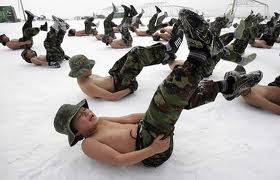
Most kids would think this ‘extreme’
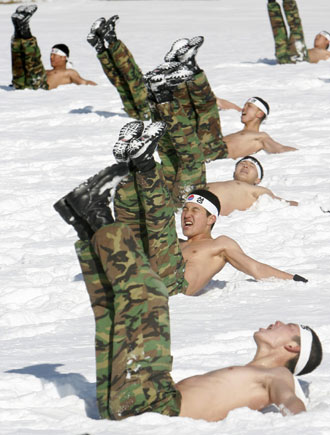
Korean special forces training – ‘extreme’
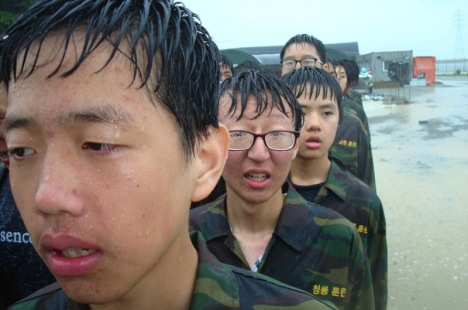
Facing your own limitations
In order to keep kids in post 16 education Britain, has introduced colleges of football, basketball, dancing, and most likely tiddly-winks. In contemporary teenagers’ jargon, most ‘extreme’ sports as well as the sports offered in sports colleges are ‘gay.’ Most British boys wouldn’t last the day in my last high school and they certainly wouldn’t last if subjected to a real training session. Many of the teenagers in British sports colleges have no idea what it takes to become a professional athlete because the ‘training’ they have been subject to is largely based on making it fun. By sanitizing all unpleasantness and removing all threats, kids are no longer forced to confront their own limitations, let alone attempt to push beyond them and in terms of both sport and academia, most are still crouched in the starting blocks.
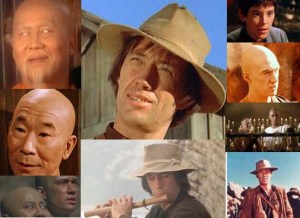
The TV Series ‘Kung Fu’
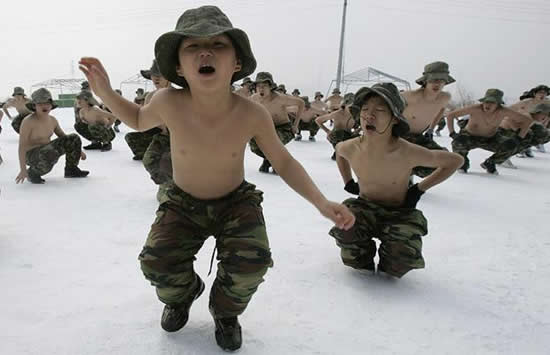
No Mountain Dew? Brutally Extreme!
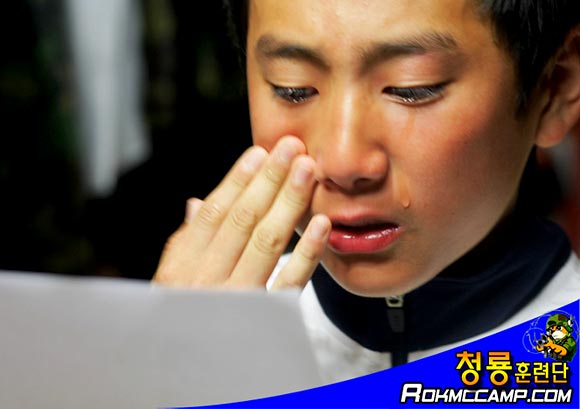
Boy crying as he reads letter from home (Link to Rokmccamp.com)
Permeating much of the general life philosophy of Korea, is a belief that through discomfort, even pain, we become stronger. I was aware of this ‘philosophy’ when I first started training in taekwondo in the 1970’s and it is an attitude prevalent throughout the east. In the opening sequences of the 1970’s, Kung Fu, Kwai Chang Caine (David Carradine) is seen taking the final initiation which marks him as a Shaolin monk, lifting a heavy cauldron of glowing coals between his arms. The cauldron bars his way forward and in moving it the symbols of the Shaolin Temple, the tiger and the dragon, are seared onto his forearms. The initiation is one of pain and marks the transition novice to master, from the hermitage of the monastery to life beyond its confines. Of course, the initiation, symbols and hot-pot are probably historical baloney but it made excellent TV and encapsulated much of the spirit of the time which included an intense interest in eastern mysticism, the orient and martial arts.
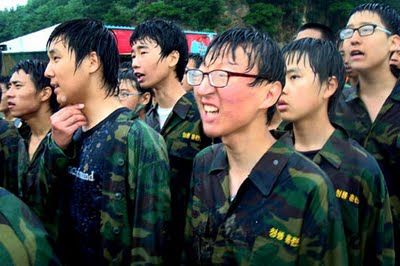
Perseverance (인내)

Team work
In the late 1970’s I remember reports and photos about the Japanese Karate team practicing punching solid surfaces while kneeling on broken glass. The glass must have been ground as anything other would be highly foolish. General Choi’s (최홍희) Taekwon-do ‘bible’ (the first book about taekwondo published in English) advocated training in the snow to develop ones resilience, something still undertaken by Korean soldiers and school kids where the philosophy of discomfort and pain strengthening the human ‘spirit’ is still alive and kicking. Indeed, the five tenets of both the ITF (International Taekwon-do Federation) and the WTF (World Taekwondo Federation) include: perseverance (인내), self-control (극기), and indomitable spirit (백절불굴).
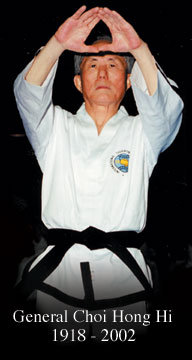
- A central figure in the history of Taekwon-do, ignored by the WTF
Korean teenagers often attend trips, organised by schools or private organisations, designed to bond them, develop leadership and strengthen the character and coming from both an ex-military and marital arts background, as much as I dislike macho-militarism, I belief there are some benefits in such pursuits. Without doubt my training in martial arts heightened my mental power and my ability to ‘tap into’ a superior mental state, now that I no longer train, is severely weakened. The heightened state of reality, caused by the body being flooded with endorphins, gives rise to a euphoria which can make a lasting impression on the mind and this state, though somewhat perverse to subject ones self to, is rewarding in itself. Confronting ourselves is a revealing experience.
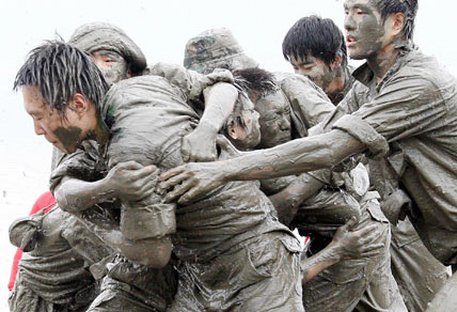
Getting messy hair – ‘extreme’
Part of the economic success of Korea has been attributed to the hard work and discipline of older generations. My closest friend often tells me about his childhood and the constant hunger he faced. His mother used to make dong-dong-ju (a rice wine alcohol) which he carted to the local market to sell. By western standards he is working class and for the ten years I have known him he and his wife have struggled to ensure their son and daughter had a good education and entered a decent university. For the last five years he has worked in a car factory in Ulsan and lives away from home returning only every second weekend. His wife runs a street pancake stall where she will freeze or sweat, depending on the season. I can think of few individuals back home who work as hard as they do but their experience is one shared by majority of Koreans who were children in the wake of the 1950’s. It is this hardiness which on the one hand is often attributed to Korean economic success and on the other, to the both the pampering of their children and the occasional desire to provide their children a taste of harshness that might make them better citizens or students.
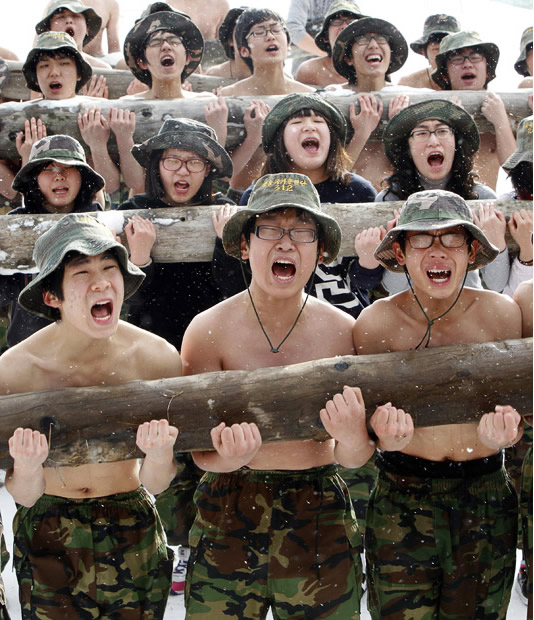
Korean Kids at a ‘camp’ near Asan
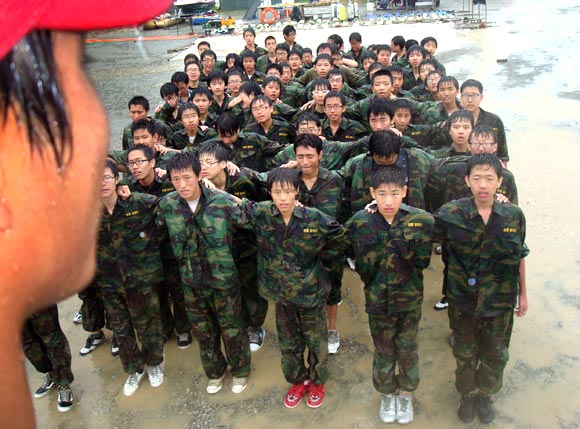
I’ve taught in English schools where you weren’t allowed to shout at children and had to ignore bad language unless aimed at you personally

Knowing your’re alive doesn’t happen very often
Across Korea are various ‘boot’ camps which specialize in providing today’s youth with a taste of hardship. The courses are designed to bond, facilitate team work, and develop perseverance and tenacity. Trekking up mountains, standing still for an hour, twice a day, military style discipline and exercises, training in snow, mud, rain or the sea are all common. Some of my middle school students recently went on a trip which involved sleeping on graves in the mountain without any adults – however, how widespread this is I don’t know. Sure, lots of people will see such training as harsh and wicked but for even the most average sports person or averagely talented person, facing your limitations is a common experience. While many of today’s rich and famous have ascended to stardom by virtue of a mixture of luck and looks, most of us will only achieve great things by guts and determination. As much as I dislike football, Beckham is talented but then he spent many hours hammering balls into goal to hone his skill. Molly-coddling kids and protecting them from facing themselves simply teaches them to be less than mediocre. In addition, discipline subjects children to the will of adults which is no bad thing. I’d rather live in a society where the kids are controlled than in one where they run amok doing exactly as they please.
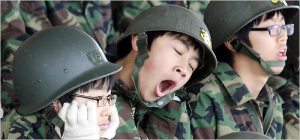
Link to New York Times article
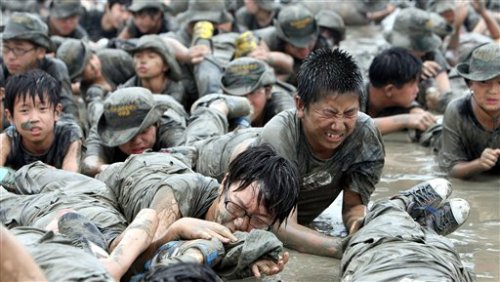
Indomitable spirit (백절불굴) And it does them good!
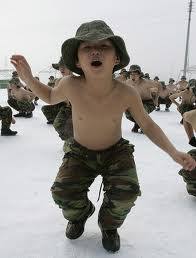
It’s only pain!
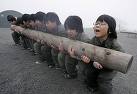
The British army stopped log training many years ago and burpees in the mid 1970’s.
All young men are required to undertake 24 months military service and for young boys this kind of training is a taste of things to come. Considering the relationships between North and South Korea, and the fact the war has never officially ending, conscription is a practical preparation for the unspeakable event. When your country prefers to wage war on distant shores, you can rely on a professional army but when the enemy is on your doorstep such luxuries evaporate.
Circumcision and the freshman summer camp were probably the two most feared events in the lives of the freshmen in my high school. The morning the buses rolled up onto the school grounds to cart them off was especially silent, as if an execution were about to be detailed. A week later they returned exhausted, sunburnt, bruised and very proud. All the boys were scarred, all had badly friction burned knees or elbows, there were cuts and bruises and a few returned with broken legs or arms. Though the boys still had two years of one of the most demanding schools systems in the world to endure, the friction burns, cuts and bruises, like the Shaolin tiger and dragon, were badges of belonging, symbols of esprit de corps. Daech’eon was an intensely private and intimate experience and once recovered, and confined to history, mention of that beach stirred memories and emotions and at such times I felt both an intruder and outsider. In a preface to one of his James Bond novels, Flemming writes: You only live twice; once when you’re born and once when you die. I think the Daech’eon boys, and any other kids who attend such boot camps, have already experienced a second brush with ‘living.’
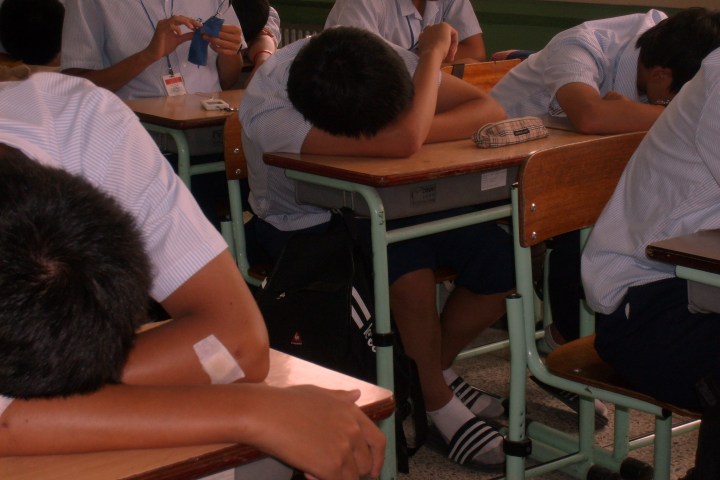
After the Daech’eon camp
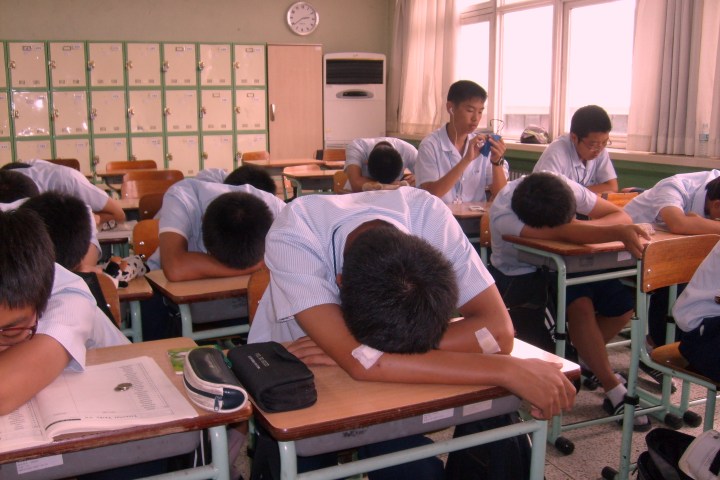
Tired
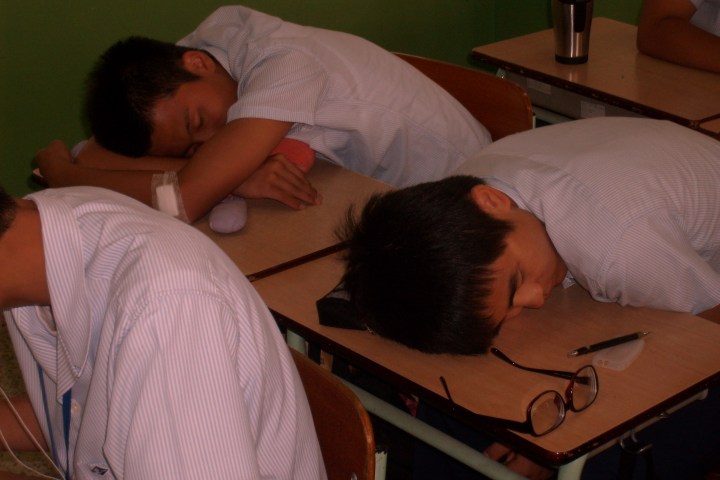
Post dopamine lull
LINKS TO VIDEO CLIPS OF KOREAN TEEN BOOT CAMPS
ITN News Report
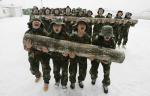
Reuters 1
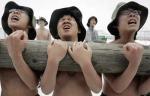
Reuters 2
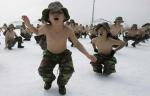
Nocommenttv
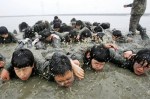
NTDTV
———————————————————————————————————————————–
LINKS TO WRITTEN ARTICLES ON KOREAN BOOT CAMPS
Jjujund. Translation from the Chicago Tribune Sept 2009
Link to ABC News
———————————————————————————————————————————————–
© 林東哲 2010 Creative Commons Licence.
When 'Gay' is 'Gay!'
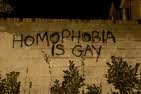

Not suitable for Pumpkin people
How do you know if another boy is gay? I asked some 15 year old boys.
1. A gay boy stands close to other boys
2 A gay boy strokes other boys
3. Gay boys likes to hold your hand
4. Gay boys kiss other boys
5. Gays hug people
As for gay girls, I’m told: you can’t really tell if a girl is gay because all girls hold hands with their friends.
So! It would appear most Korean boys and many men are gay!
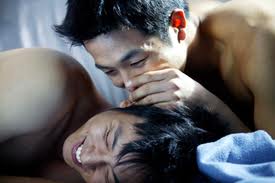
'No Regret' (2008) Korean gay movie
The use of the term ‘gay’ in Korea is fairly new to me and I certainly don’t recall it being as prevalent in the past as it is now. However, the term is only ever used within the context of ‘homosexual’ and doesn’t carry the broader western connotation, ‘bad,’ ‘crap,’ ‘shit’. etc, which can be applied to anything. In Korea, you won’t find any ‘gay’ books, or ‘gay’ movies and unlike my last UK school, where even chairs had ‘gay’ graffitied on them, there are no ‘gay’ objects. Though they might react differently if they someone were gay, their use of the word lacks all nastiness. I imagine that the idea of someone really being gay, is so alien that the the term can be used without emotion. That someone could be ‘gay’ is as likely as someone being a ‘martian.’ In the west, when kids use the word as an accusation its purpose is very often to assert an appearance of heterosexuality, the rationale being if you want to appear heterosexual, simply behave in a homophobic manner. When ‘gay’ is used as a derogatory term in the west, it’s never simply spoken and is often heavily invested in emotion even to the point of being spat out with hatred. The Korean use of the term ‘gay,’ by comparison, is the most naive and innocent I have ever heard. Indeed, Koreans use the term ‘gay’ in the gayest of ways. Of course, for Koreans in the closet, derogatory comments are as insulting as they are in the west and that they seem to be voiced in the absence of malice probably symptomatic of the success with which society has oppressed/suppressed same sex relationships.
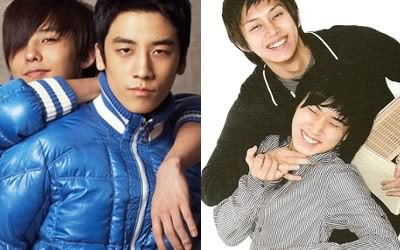
Skinship by Hee Chul and Sung min
Most of my classes are co-ed but a few weeks ago, as we were trying to group abilities more closely, we were left with one class which is solely boys. I’ve read a few posts by teachers who get annoyed at displays of skinship during lessons and have to admit, since the girls left, the amount of petting and pawing has increased. The class consists of 5 boys , divided into 2 groups (3;2) and which are very tight peer groups, that is to say boys who attend the same school, same classes and in many cases will have been friends for a long time. Both groups are inseparable and are by their own definition ‘dick friends.’ (고추 친구). In Korean culture, between men or boys, one cannot count a friend close until you have seen each other naked, eg at a bathhouse, at which point you become ‘goch’u ch’ingu,’ (고추 친구). The last thing most western lads want to see is their mates dick and any interest expressed in this direction would be a deemed ‘gay.’
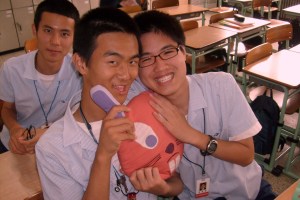
Korea, camp minus gay
The main protagonist of the skinship is Mark, a boy of about 15 (English reckoning). While the other boys sit in the same seats, all the front row, Mark seems to change seats each lesson and will paw and fiddle a different lad correspondingly. Stroking hair, massaging shoulders, holding hands are all common but on two occasions he has also kissed other boys on the cheek, albeit as a joke. His friends tell me he claims to be ‘in love’ with a different boy each day and accuse him, in the nicest and gayest way possible, that he’s ‘gay’ – on two occasions this has been the point he has kissed the current object of his interest.
As for the list supplied by the boys:
1. A gay boy stands close to other boys – in the school office this afternoon one boy was laying on top of another one (aged 12)
2 A gay boy strokes other boys – in every class boys fiddle with each other
3. Gay boys likes to hold your hand – that means all my best friends are gay. And yesterday in the bathhouse I actually saw two boys, most likely brothers aged around 12 and 7 respectively, the older boy of which was sat on the side of the pool holding his brothers dick as he talked to him and when the younger boy went to run off the older boy pulled him back with a tug.
4. Gay boys kiss other boys – I don’t see this often but I have had Korean male friends (certainly straight) kiss me.
5. Gays hug people –again, my male friends have hugged me.
Perhaps a more pertinent question might be how do you tell if a Korean man or boy is ‘straight?’ Any insights into Korean homosexuality warmly welcomed!
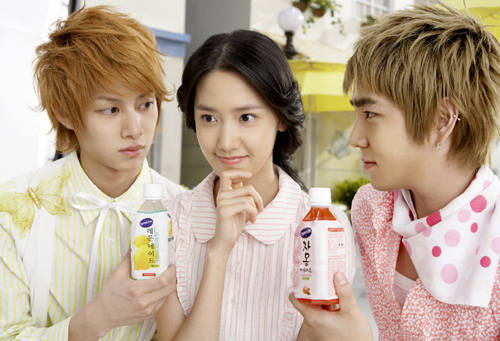
K-pop - Kamp-pop. And are the lads eying each other up?
© 林東哲 2010 Creative Commons Licence.
Chemo-Concoction Coffee

Coffee galore! In plastic cartons.
The kimchi is great but what the fuck have you done to the coffee? As much as I love Korea their coffee is generally crap! I remember being in E-Marte ten years ago when a working coffee filter machine was on display, it attracted a small crowd. ‘Coffee’ shops at the time were in their infancy and I can remember paying around 4000 Won (£2) for a pretty poor cup. Buying coffee beans or ground coffee was difficult. Today there are coffee shops on every street corner and while their individual atmospheres and ambiances are amazing, the coffee served has usually been castrated. I like my coffee barbaric and with balls! I like it thumping my system first thing in the morning and I like a strong taste and aroma. There is more coffee sediment in the dregs of my one-room coffee cup than in any coffee you will drink in a Korean coffee shop and have you noticed that cafes rarely even smell of coffee!

Bottled coffee
Recently, I was eating in one of my favourite western style restaurants, New York, New York; you’d be tempted to think they might make a decent coffee, coffee that can put hairs on your chest but an association, however tenacious with the USA, is no guarantee; the most disgusting coffee ever is that muck served in McDonalds, and I don’t particularly rate Starbucks but then the USA has always excelled at reinventing the cultural achievements of other nations and in the process both destroying them and creating some abortion which subsequently becomes a defining icon of US culture. Hershey’s pseudo chocolate, American mustard, hamburgers, hot dog sausages are all abominations recreated for a largely undiscerning population in whose tracks most other nations follow. The hamburger was a respectable food item until the USA assaulted it and much the same can be said of Hollywood’s rape of Charles Dickens, Wells, Wyndham and Golding. There should be a law forbidding the USA from cultural rape. Yes, they have definitely produced some awesome assets, weaponry for one, but cynicism aside, the Simpsons, Science Fiction, Copland and a string of great authors etc, provide the US with enough credibility without having to recreate the rest of the world in its image.
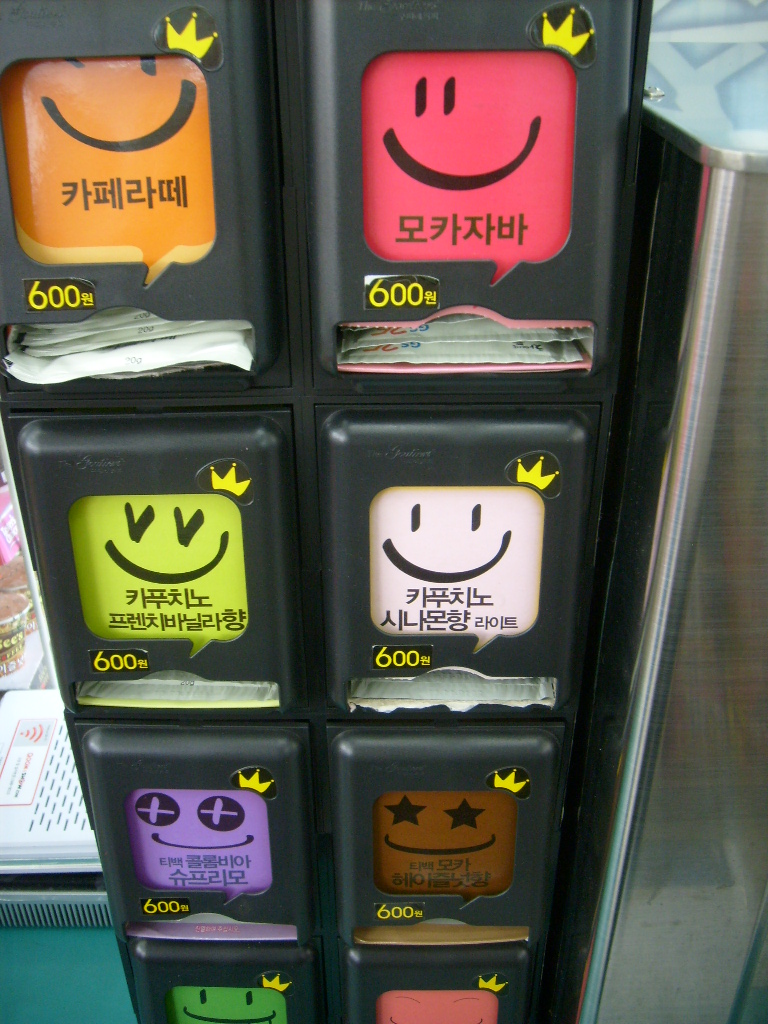
Castrated coffee -there's something in the bag but it ain't balls!
My New York, New York coffee was served as ‘serbis-a,’ which in Korean means it’s a loyalty perk for which you aren’t billed. Being a regular customer along with my boss and friends, the coffee is generally ‘on the house’ which passifies me as I’d hate to pay for it. Neither is it cheap and costing about the same price per bag or cup as it does in the UK, makes it an expensive item. It was insipid and looking into the mildly tainted water, I could see the bottom of the mug. I doubt it contained more than a few beans worth of coffee probably dipped in it at that. More disturbing is the fact I find it palatable, even pleasant. The dumbing-down of humanity on a global level is largely facilitated by sweeping aside all forms of discernment. The most successful market is one where consumers seek pleasure in shit, shit at every level. The perfect economy would be one where consumers brains and mouths are simply plugged into a sewer system and subsequently billed for both consuming shit and expelling it. You know discernment is disappearing when you hear kids praise fast food as ‘delicious,’ or claim books are boring, (ie their own imaginations are boring), when it is assumed the opposite of ‘fast food’ is ‘slow food,’ or hear people argue about pop music versus classical music. It’s for this reason I don’t want to enjoy that pseudo coffee as it’s only a step away from being plumbed into a sewer society where everything shit is superior.
I wouldn’t mind the billion other ‘coffee’ products available in Korea if I could actually enjoy a real coffee but, if you don’t approach these beverages with expectations, and that’s the disturbing part, they fulfill the role of most hot or cold drinks. Not including cafe coffee, coffee flavoured beverages appear as instant powders in plastic cups, ready-made in bottles, cans, cartons and plastic cups. Most of the coffee probably contains no more coffee than the banana milk contains banana, but they are quite pleasant. However, some of the bottled and canned versions are revolting. Maxim Espresso T.O.P, ‘Master Blend,‘ has neither the slightest aroma of coffee or is reminiscent of an espresso. Cantata, ‘black, with a hint of sweetness,’ is rank, pure polyphenol in your face and ironically, named after Bach’s Coffee Cantata, Bwv 211, which highlighted the problem of coffee addiction in 18th century, Leipzig, would be enough to terminate any such association. Considering the rather stylish Cantata advert from several years ago, I can’t belief this horrid drink is the advertised product!
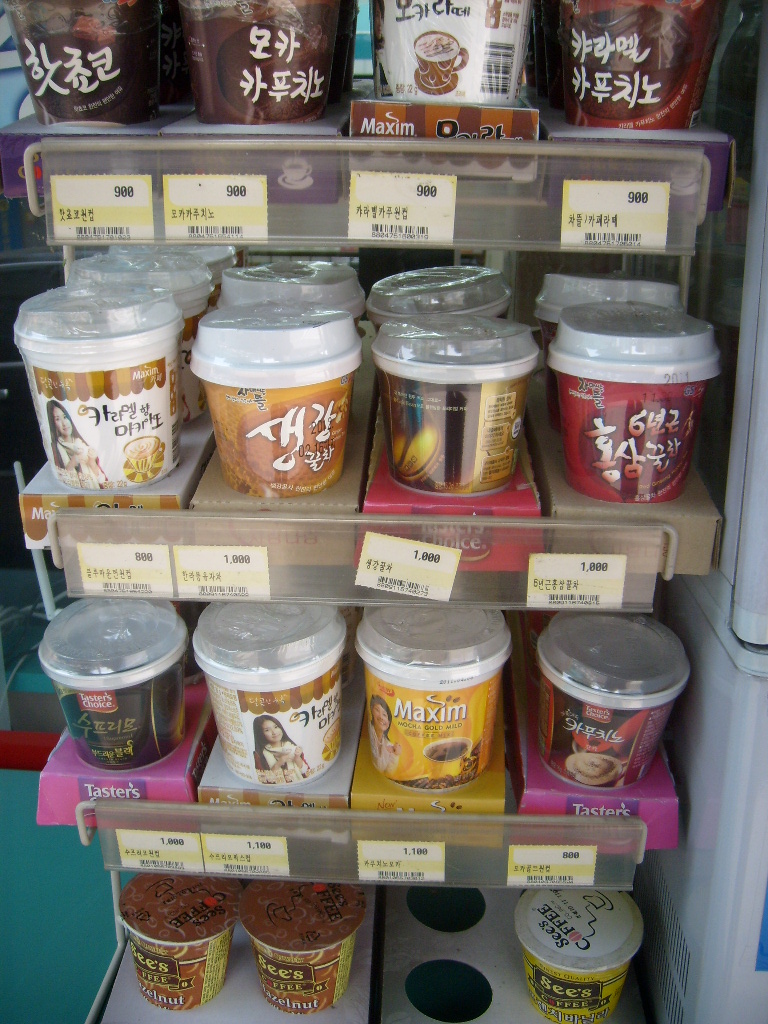
Instant coffee in plastic cups
Cafe coffee is much better though I have never really had a cup that ‘kicks.’ If I find a coffee insipid I’ll generally add sugar and if I know it’s going to be such I’ll order a fancified one, with milk or laced with some kind of syrup supplement – hazelnut, vanilla or caramel and usually topped in cream which is decorated with a pretty pattern. It’s all a facade to detract you from the fact it’s pretty coffee-less but having a sweet tooth I find these types of drink, basically hot milkshakes, closer to sweets (desserts) than actual coffee.
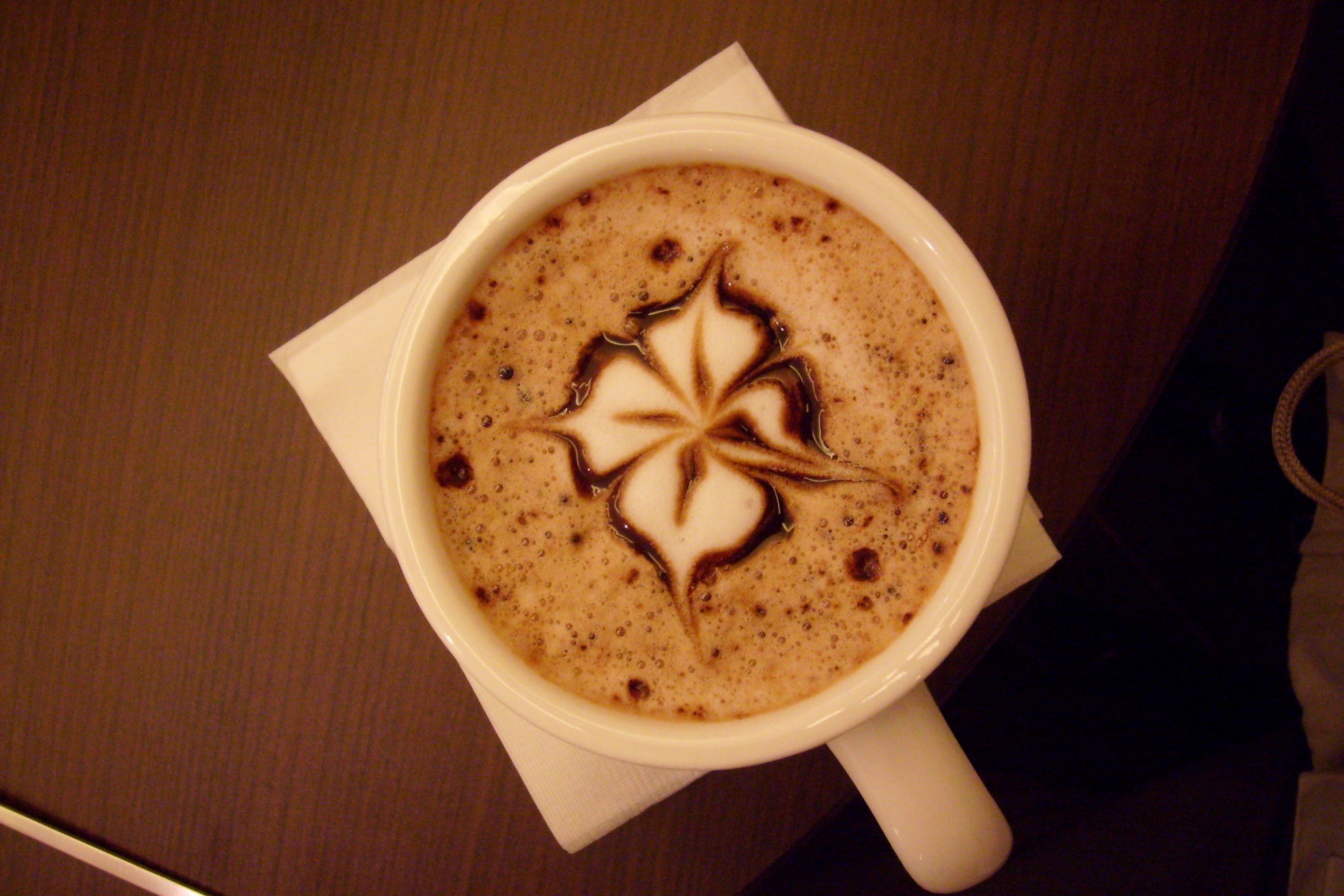
Minimal coffee - maximum pretty
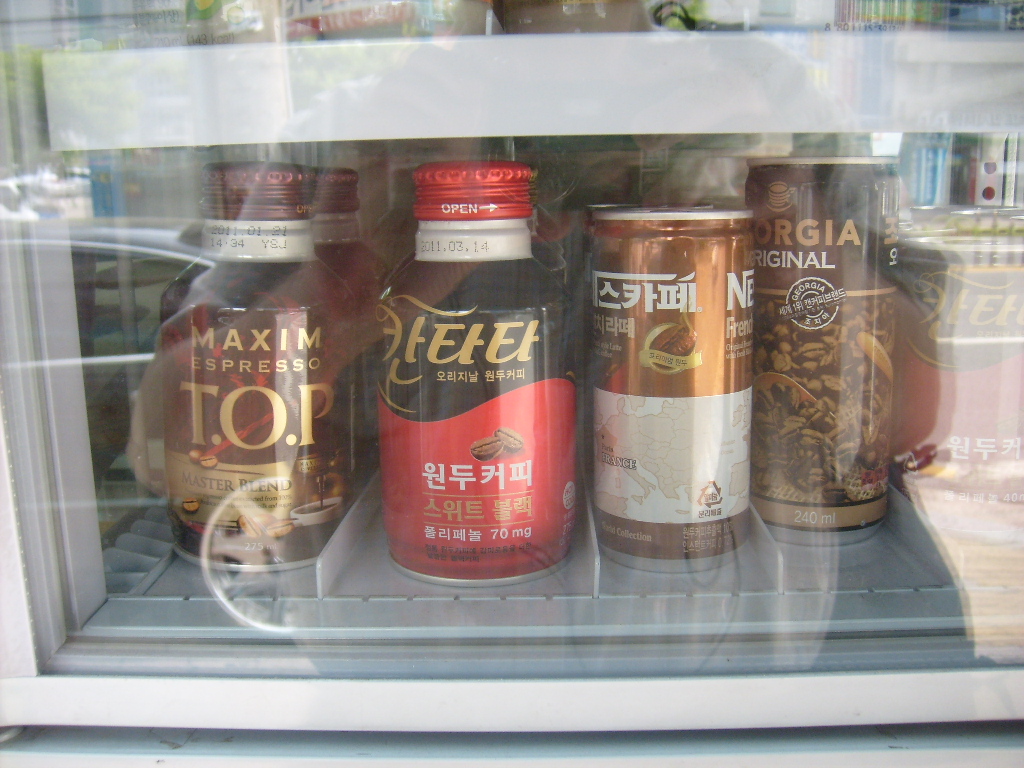
Coffee at its worst!.
If you want a partially decent coffee in Korea you have to buy whole beans, avoiding ones drenched in essences, and grind them yourself. Even then there is something missing but it’s minimal enough to fade within a few months taking you one step closer to enjoying chemo-concoctions.
This work is licenced under a Creative Commons Licence.
Death and Diet by Watermelon

Watermelon (수박)
Years ago, I watched a documentary about the problems of policing in that scummy slip of coastline on the southern Spanish coast, infamous as the holiday destination of 4.5 million Brits holiday makers and 350.000 homeowners, the Costa del Sol; aka The Costa del Crime due to the disproportionate number of British criminals in residence to evade to British law. The Costa del Sol is one sprawling Conga of destinations well-known to most British people even when they have never set foot on Spanish soil and know little about local life: Marbella, Fuengirola, Alicante, Torremolinos, and Benidorm. Formerly all isolated beautiful fishing villages, they now form one vomit ridden strip stretching from Malaga down to Los Alzacares and providing all the comforts of British culture, the bars, fish and chips, sandwiches, Sunday roasts and enough English-speaking people to attract that particular brand of clientele whose idea of a holiday is sitting on a packed beach in an environment as English as Clacton but with guaranteed sun and cheap booze.
In all fairness, the coast provides a haven to other European plebs and criminals and within the context of policing, this was the subject of the documentary. On the particular evening the cameras were rolling, and following the difficulties faced by local police, a group of Danish lads were arrested for swimming naked in their hotel pool, some Brits lads were menacing locals with knives and some drunken Scandinavians were throwing water melons off the top of their hotel onto the street below.All were young men and all were drunk!

British criminals on permanent vacation on the Costa del Sol
‘Brits with knives’ seemed typically nasty while the nude swimming and water melon bombing were amusing – until I started carrying water melons back to my Korean apartment. I’ve never bought a water melon in the UK and though you can buy them, usually in Mediterranean type delis, I don’t think they are as popular as other types of melon, the smaller varieties such as honeydew and cantaloupe. Having to lug watermelons home on a weekly basis, naturally, it dawns on me not only how heavy they are, but how catastrophic the effect of one landing on your head from 1o floors above. Suddenly, wielding a knife doesn’t seem quite so bad as bombing pedestrians with a weighty watermelon, an act I had formerly dismissed as amusing and harmless.
Water melons are one of the most common fruits in Korea over the summer and are currently my favourite especially when cold and crispy. They are supposedly highly beneficial as an antioxidant and have numerous other acclaimed benefits. With approximately 21 calories per 100g they are a healthy snack though I suspect I probably eat around half a kilo before I go to bed. (link for information on Korean watermelon).
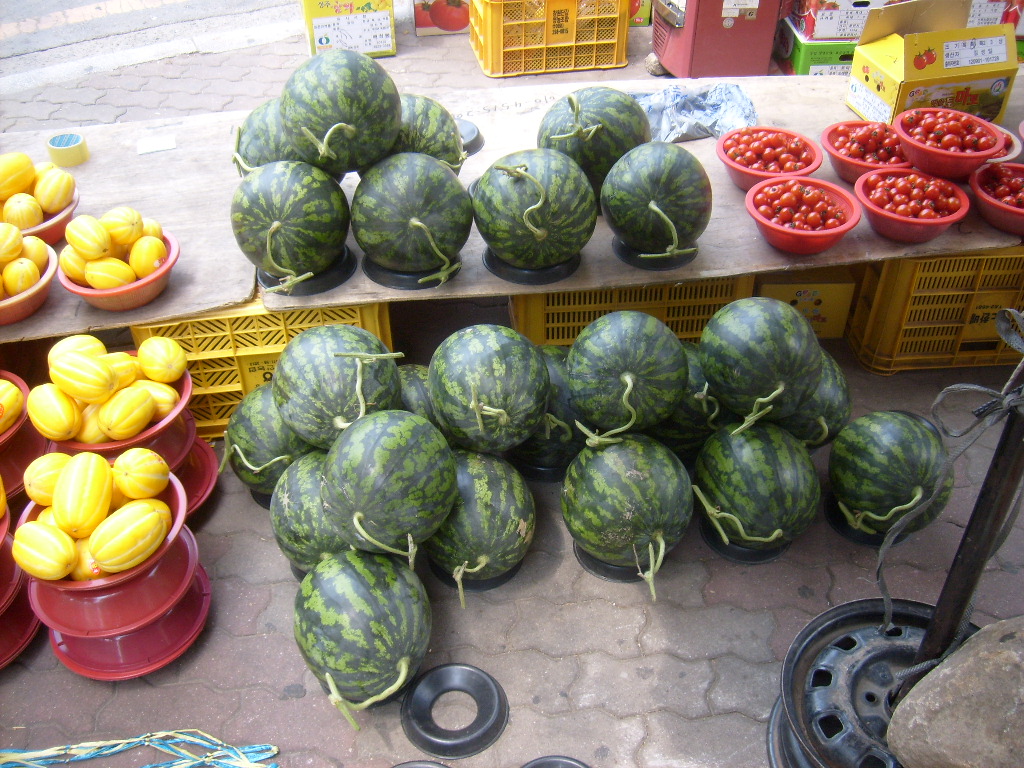
Summer fruits
This work is licenced under a Creative Commons Licence.
Ben – Korean Teenagers (2) and other stuff…
Japanese youth icons: 'Camp' is not a universal recognition
I’m always intrigued by the campness and expressions of skinship displayed by Korean men and boys. In a class today, Mark, one of my 16-year-old students was leaning across his desk to write his name on a sheet of paper. Meanwhile, two boys behind him start stroking his arse and putting their fingers in the waistband of his boxers, his shirt having ridden up to expose them. Mark doesn’t even twitch even as one of the lads put his hand right under his crotch. Earlier in the lesson, and this has happened on more than one occasion, I noticed Mark’s arm behaving in a very suspicious manner in the proximity of the boy’s lap sat next to him. Of course, any suspicions are solely in my own dirty western imagination as Korean teenagers always appear to be totally innocent in terms of sexual behaviour.
I remember when I taught a class of 13-14 years olds in a British Boys’ school and was constantly noticing lads with erections. So prolific were these manifestations I nicknamed the class, ‘erection city.’ And boys wanking in class? One of my colleagues, a female teacher, walked around the side of a boy’s desk only to see him, grinning in a manner that suggested he anticipated some erotic development, with his erection exposed and being toyed in his hand. There were even occasions when I caught boys with their hands on the front of each others trousers. There was an obsession with penises and sex throughout the school and even the head teacher, a seedy character, used to shower with Year 9 boys when the weather was hot, or interrogate them in lessons about issues such as masturbation and puberty. Penises were everywhere, drawn on desks, scrawled on walls, in books and constantly referred to. Some went beyond scrawling and meticulous in detail, were clearly the result of much study, observation and affection.
I used to teach religious education and the class text books we used had penises graffitied in appropriate places wherever possible. When they couldn’t be inserted naturally they were simply drawn sprouting from foreheads. And distance was no barrier for these fantastical phalli; even when bodies were at the extremes of opposing pages, immense penises connected them. I kept a copy of the most graffitied text-book as the creativity and imagination of the boys was staggering. In parts I was reminded of Hieronymus Bosch’s, Garden of Earthly Delights, which in the boys’ hormone-fired imagination, was exactly the landscape they were trying to express.

Hieronymus Bosch: The Garden of Earthly Delights
One of the photos depicted a priest offering a kneeling woman Holy Communion. What idiot designs a school book with such a photo! If boys hadn’t already graffitied the page, I would have to have done it on their behalf. So, a great monster of a penis miraculously sprouted from the front of his cassock, meandered into a suitable position to be held in his hand, obliterating the communal wafer and finally, was plugged into the woman’s face. More in line with the Catholic Clergies clandestine predilection for young lads, a more topical candidate might have been a kneeling boy. Meanwhile, the flanking attendants and congregation were suitably adorned with penises sprouting from under cassocks and from their foreheads. And in the air, a small chorus of body-less penises, hovering like wingless angels, jettisoned copious ejaculate wherever faces were visible and gagged and subsequently force-fed any open mouth. Manna from heaven! Graffitied cocks are seldom seen in Korea and personally, I’ve only seen three.
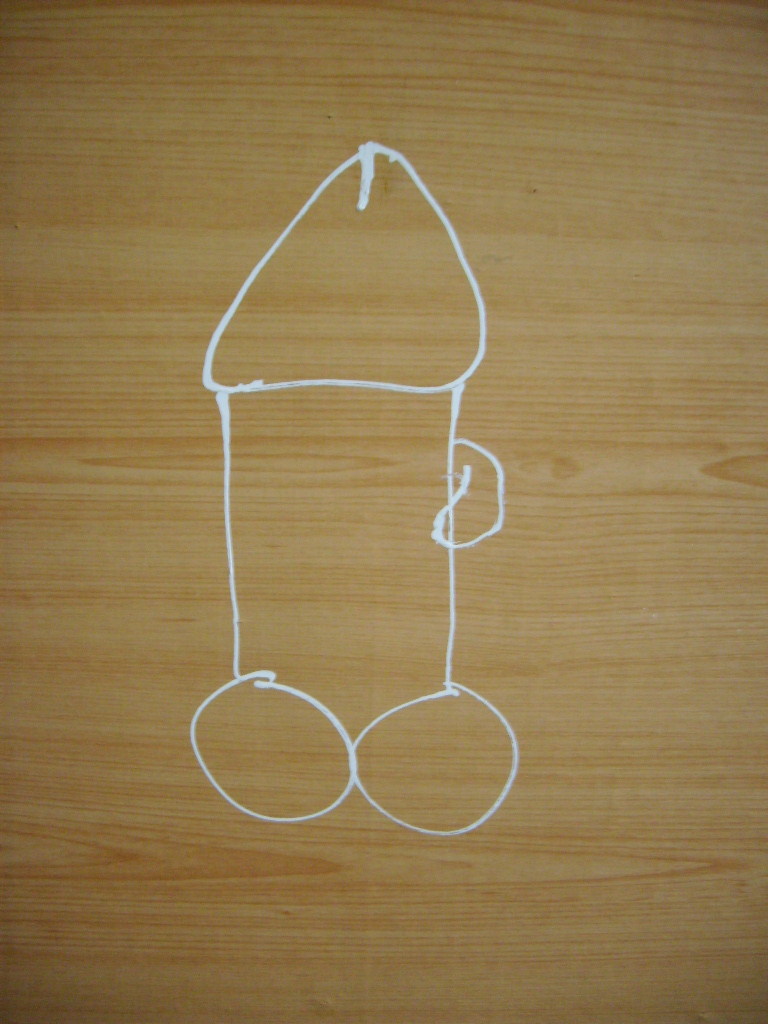
'Obscene' Korean graffiti - a rarity
In the UK, Ben, one of my students and an adorable boy, would be bullied for being a little faggot. Earlier in the year he dropped 2 marks from his English paper, scoring 98%. In the west, and rightly so, that’s an achievement worth celebrating but in Korea, if it’s not 100% it’s basically a fail. Even in essay competitions students who don’t win first, second, or third, will tell you they failed. Despite being the cream of their school and competing at province level, anything other than gold, silver or bronze is a failure. Distraught and ashamed, Ben spent an entire evening sitting alone, crying. Apprehensive about facing his parents, my boss had to comfort him and then drive him home. On this occasion, his ‘kibun’ was so damaged he couldn’t talk to me for several days.
Ben
More recently, he’s been quite excited. His dad has promised to buy him a puppy if he does well in the end of semester exams. Ben is ecstatic and is bouncing around the school like an amphetamine doped gazelle. ‘A puppy, a puppy,’ his constant cry. I’m thinking: a fucking puppy! The boy’s sixteen and he’s totally thrilled by the prospect. In the UK, his mind would be polluted with plans to simultaneously get pissed and loose his virginity.
Faggoty is fashionable!
My school, like my last high school is full of faggoty boys. One is a local champion in ballroom dancing. He’s 14 and always turns up at school meticulously dressed. He often wears a pair of trainers with laces the colour of his top. He obviously has a stash of coloured laces at home and I’ve noted his array include green, red, yellow and blue. Like many Korean students who don’t use a back pack, he uses a bag which is fairly common, and nothing short of a big handbag. Usually, he’ll mince into school with an arm extended like a tea-pot and from the crux of his elbow dangles his bag appropriately emblazoned with the logo, ‘Kamp.’ Last week he had a new pair of silver trainers and a matching black and silver baggy top with large lapels. I didn’t particularly like the top’s design as it reminded me of 80’s fashions and the clothes Wham used to parade in when singing shit like, Wake Me up Before you Go-Go. Besides ballroom dancing, he has a third degree taekwondo black-belt!

What...um.......yes!
Have you noticed the mincy little walk many Korean men have? The first time I saw a teenage boy mince, I was quite amused. I’ve since realised that mincing, basically walking with little steps while swinging the hips a little, is the product of wearing open back sandals. In my last high school boys had to wear sandals in school and there really is no better tool adept at emasculating males. If you want to feminise or at least androgynise men or teenage boys, simply force them to wear sandals, the type that have no back to them. You can’t run in them without taking small steps and as a result you shuffle along like a Geisha. Running up or down stairs is positively dangerous. In the same way you dispose a girl to femininity by making her wear a skirt and subsequently deterring her from the rough and tumble of boys pursuits, you emasculate boys with a pair of sandals. As a result, many Korean men mince even when wearing shoes.
Jason is another student I have taught for almost two years. He’s a quiet boy aged about 15 and who talks in a whisper. A few weeks ago he was asked to write an essay on what he would do if he could do anything he wanted, for one evening. His response eventually concluded with spending the night in a luxury hotel, and ordering room service to deliver him steak and lobster. My western brain clicked into action: 15-year-old boy in a hotel? on his own? lots of money? – naughty, naughty! Risky Business and all that stuff! But Jason avoided the alcohol, call girls and his luxury evening ended by watching TV, and having a double bed. ‘Double bed!’ I repeated suggestively. ‘Why do you want a double bed?’ I asked. His response was typically Korean; ‘to sleep in!’ ‘I laughed and was going to explain why, which of course is futile. Prostitutes, shagging, throwing parties when mummy and daddy are away, getting pissed – are all phenomena which exist at the furthest corner of Jacob’s universe. That’s where they belong until he is 19! The Garden of Earthly Delights, for a Korean student isn’t dependent on sex, alcohol or defying parents and all that is required to pave the way to paradise is no school and no homework! Meanwhile faggoty is fashionable, and mincy and kamp are cool and civilised.
This work is licenced under a Creative Commons Licence.
Bathhouse Basics 3: The Italy Towel
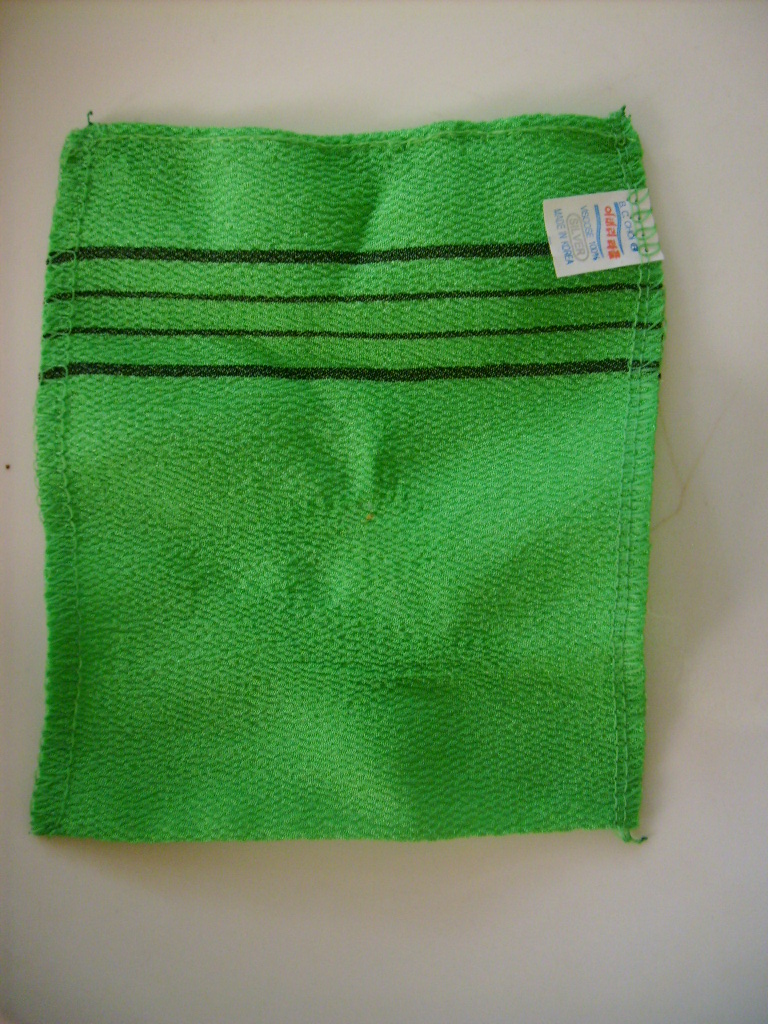
The Italy Towel. (이타리 타월)
Other than water, the Italy towel is probably the most universal item in a bathhouse and in some quarters, “Korea Design Heritage 2008,” has been ranked as number 5 among items over the last 50 years, which have defined Korea. Apparently, Gil Pil-gon who ran a textile factory in Pusan, discovered the cloths’ ex-foliating properties in a piece of fabric imported from Italy. The rest, as they say, is history.
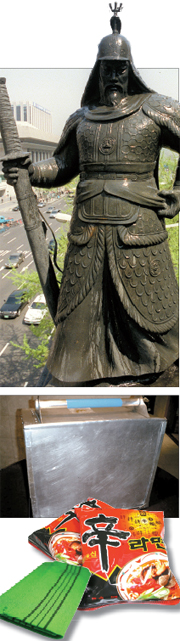
Defining icons, food delivery boxes, Nong-Shin ramyon and the Italy Towel.
Though available in a range of colours, the predominant colour is ‘silver,’ which is actually the green one. In addition, they all seem to be made by the same company, BC Choi and hence, the towels, manufactured in Korea, are 100% Korean! Like sandpaper, Italy Towels come in different gradients and these are denoted by the colour. ‘Pink is the least abrasive, followed by ‘silver’ (green) with the most abrasive and capable of removing the deepest ingrained grime, being yellow.
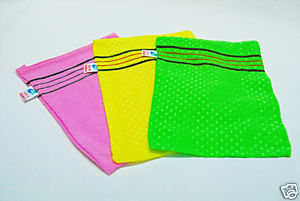
Other colours are manufactured, including red. The green one is actually described as 'silver.'
Italy towels are not to be confused with the larger version cloth which is also supplied in a bathhouse and which is usually red.
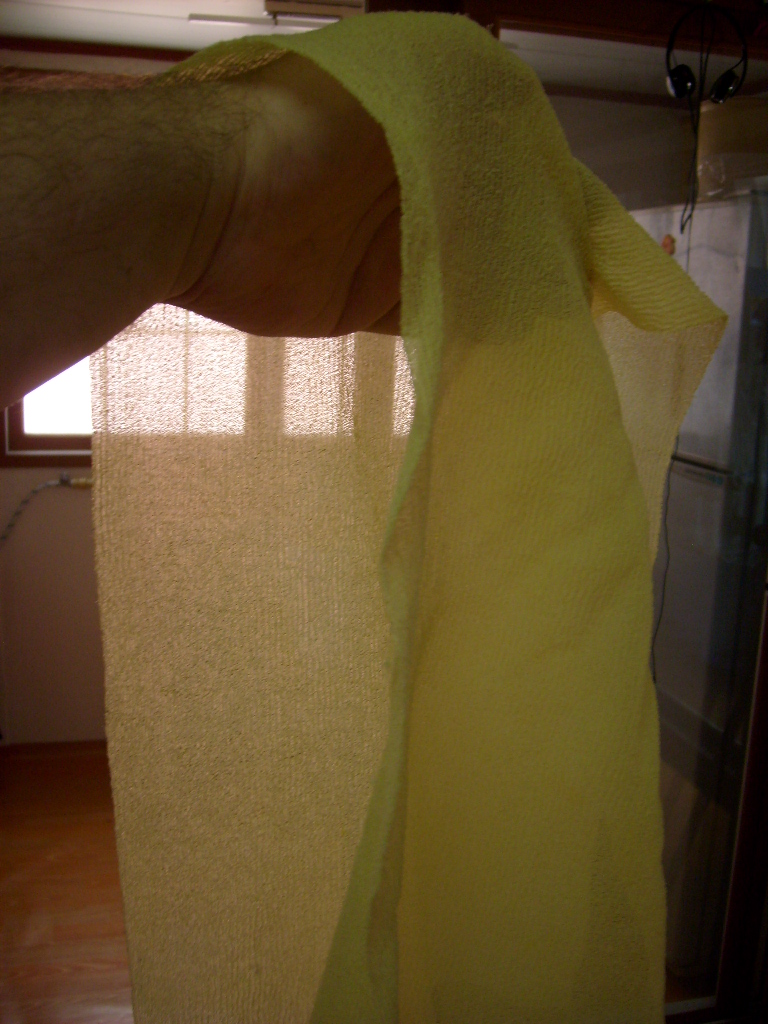
The larger, and milder, ex-foliating cloth
What typifies the Italy Towel is its size. My hand barely fits into it. The cloth is used to scrub the skin, usually in one direction, top to bottom and in straight lines and if used effectively a line of gray, dead skin is produced. The towel is fairly abrasive and needs to be used with caution on the face. Minimal soap is used in order to maximise the towel’s abrasive quality. Koreans will scrub their entire body with this cloth in a process which can last well over an hour.
If anyone accompanies you to the bathhouse, a friend or relative, it is natural for you to scrub each-other’s back. Usually you sit behind the person whose back you a rubbing, though people sometimes stand. For men, that your ‘partners’ dick is dangling in you face is no more of an issue than any other part of their body. Between men, one of the defining features of a ‘go-ch’u-ch’ingu’ (고추 친구), literally translated as a ‘penis friend,’ basically a close friend, is that penises are ‘acknowledged’ rather than shunned with fear. It is this tacit, sometimes even verbalised ‘acknowledgment’ which helps define a close, male relationship. In the western male, heterosexual psyche, a penis is threatening and ‘acknowledging’ your male friend has ‘one,’ seeing ‘it,’ talking about ‘it,’ and even being too close ‘it,’ have the potential to terrify. It is not at all uncommon to see a row of school boys or students all sat in a chain as they have their backs scrubbed while scrubbing the back of the person in front. Between family members the towel is used much more intimately and again, it is very common to see parents and children mutually scrubbing each other’s entire body. This is not restricted to small children. Mutual cleaning and the intimacy involved are an expression of the concept of ‘skinship.’
How often one should use the Italy Towel is a personal preference. If used frequently, the process can rub-away body hair – though I wouldn’t recommend this as a method of waxing. Some Koreans use it every few days, others once a week. Perhaps the best guide is simply whether or not you have a layer of skin which needs removing. I use a pumice stone on my feet regularly and if no skin is being removed I stop the process – this is perhaps the best guide to using the Italy Towel.
I have noticed that you can scrub yourself meticulously and regularly with the larger, less abrasive towel, the one usually provided free in all bathhouses, and that this does not remove dead skin with the effect of the Italy Towel. I was very surprised when after a period of not using an Italy Towel, a friend scrubbed my back and arms and then made a joke about how dirty I was. It is surprising what that little towel removes.
Unlike the larger cloth and towels for drying, the Italy Towel has to be purchased, costing about 1000 Won. I usually keep one for months at a time and have even seen the odd person use ones discarded in the used towel bin.
This work is licenced under a Creative Commons Licence.
Nancying in the Powder Room. Bathhouse Ballads
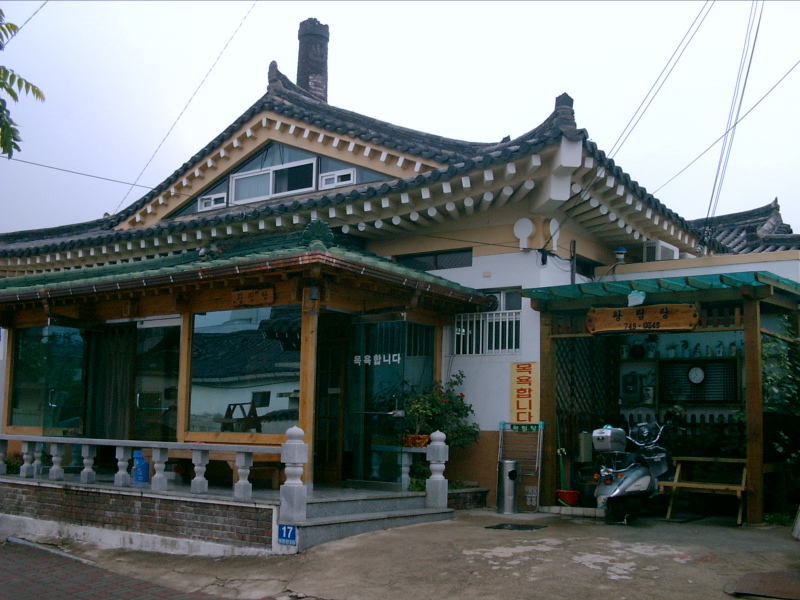
A Bathhouse Ballad
In this particular bathhouse (목욕탕) you can sit in the ebente-tang (이벤트탕) and watch the men and boys nancying about in the little ‘powder room’ that are provided in all bathing establishments. This particular ebente-tang doesn’t have any added aromas or coloured water and you might be forgiven for wondering why indeed it is even called an ‘ebente-tang,’ until the pool starts frothing and chomping quite crazily. The jets of water from inside the pool, should you be unfortunate enough to be sat over one as it starts and you fart, are powerful enough to administer a surprise enema. As I’m being buffeted by the jacuzzi jets, I’m busily watching three middle-aged men in the ‘powder room.’ All are stood, independent of each other and two are in straddle stances, or in what martial artists would recognise as a ‘horse stance.’
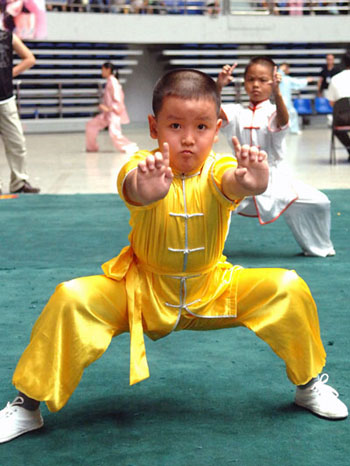
A 'wushu' version of the 'horse stance'
Traditionally, this stance is used to strengthen the legs and as a position from which to practice various blocks and strikes. As a combat stance it is redundant as it renders a male a potential gelding should a strike to the groin be forthcoming. Don’t forget, the men in the ‘powder room’ are totally naked. Rather than blocking and striking, feet rigidly anchored to the ground, both men are drying their sack and crack with hairdryers. I’m thinking they must have studied at the same school because despite all the variations of horse stance, both are in identical style, technique and positions. Most likely it’s a taekwondo derived stance as it is much higher than in the Chinese version above yet not as high as the one featuring Bruce Lee (이소룡), below. This version is in-between.
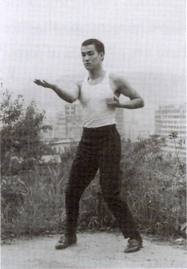
이소룡 (Bruce Lee) practicing the sack 'n' crack stance.
The accompanying arm movements are identical: first the dryer is held pointing at the sack ‘n’ tackle before being swung between the legs to windy the crack area. The latest event in the tub, an eruption, has quelled and I’m chuckling to myself as a third man in the ‘powder room’ demonstrates his technique. Clearly, he has been trained in a totally different school. After fiddling with one of the big fans on the long dressing table, angling it into the required position, he turns, get into a straddle and bends over, parking his exposed butt in the fan’s stream. The technique is very different but the stance is identical to that of the other two men and with head almost touching the floor, the fan is probably capable of drying his sack ‘n’ crack all at the same time.
Jeez, Korean men are such ponces! That’s why I like them. Back in the UK, a room such as this would terrify most westerners not just because you nancy about in it naked, but because the purpose of the room involves preening oneself. Actually, I much prefer the safety of the ebente-tang to watch how different men occupy themselves in this task. I never stay long in the ‘powder room,’ not because I don’t like being naked in front of other men, but because I don’t like being naked in front of myself, and like most ‘powder rooms,’ the walls are covered in mirrors.
All the flaws of being western are magnified in the array of mirrors and bright lights. Our skin tone tends to be more varied; my face is slightly ruddy, my buttocks lily white, my forearms as tanned as any Koreans and my neck brown. The rest of my body is whitey- pink, like a giant maggot. Then there’s the hair; back hair, chest hair, arm hair and leg hair and it’s all different in colour, texture and shape. My arm hair is smooth, my chest hair a little coarser and the hair on my back is somewhat like the hair on the backs of my arms, long and straggly and the sort of hair a neanderthal might have. I can’t stand looking at myself in those mirrors and always find the ‘powder room’ a little stressful.
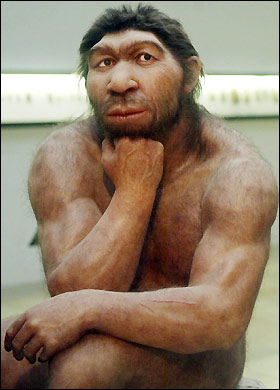
All that hair. Yuk!
I touched on the subject of body hair several months ago, in relation to living in an environment free of carpets. It’s only in this type of environment that you realise just how much hair we shed. I am not especially hairy and I sweep my floor everyday with one of those magical wipes to which hair and fluff adhere. Despite this, I find hair everywhere. I’ve found them in the fridge, freezer and only a few days ago I was eating a slice of water melon when what I thought was a little crack on my plate, was in fact a pubic hair. I’m 54 and have a full head of hair non of which I see anywhere, but pubic hair, chest hair and those unsightly, straggly back of arm and back hairs, get everywhere. Korean bodies are so much nicer, more alike in proportions, colour and apart from having pubes that are long enough to perm and which often seemed to be straight rather than curly, are usually pretty hairless. Hair, its antediluvian and barbaric! As I get older I notice my eyebrows becoming wilder and if I don’t trim them I start to develop antennae. Nasal hair is a bugger but is kept at bay with regular burst from a cigarette lighter. And I dread getting ear hair as that looks especially alien.
No hairs in his fridge!
In the ‘powder room’ a couple of men and a boy are preening; an old man is methodically combing his hair with a brush from the selection of brushes and combs which are always available. I’ve never seen any hairs on brushes and assume they are cleaned regularly and in many ‘power rooms’ are small steam boxes similar to those used in doctors surgeries and dentist, to sanitize such items. A boy is cleaning out his ears with cotton buds (q-tips), an item as standard as towels and soap. On the long dressing tables, there is always a collection of face creams, hair gel and skin brace. As with everything in bathhouse and jjimjilbang culture, no two places are exactly alike.
Have Stick Will User It

Discipline Korean style
Has anyone teaching in high schools noticed that if a student is rude or disrespectful, they are generally the ones who have had a sojourn studying in the west – usually in the USA and much less frequently the UK? Now, before I get started, I am not saying that all Korean students who have studied outside Korea are tainted or that Koreans who have never studied abroad are never rude or disrespectful. With considerable experience teaching in the UK as well as experience in Korea, I am making comparisons based on my own experiences in addition to an awareness of the general standards of behaviour both in the UK and Korea.
First of all, I have never been fouled mouthed or insulted by Korean students. No Korean student has ever sworn or shouted at me and the only time I can recall when I was shown disrespect was on an isolated incident when a student addressed me in intimate level speech (반말). As my Korean is rudimentary, students may have been taking the piss and insulting all along but I have never been led to believe they were and even if this were the case it pales into insignificance in comparison to my experiences in the UK.
Before getting defensive about Britain or the USA, there are numerous blogs, and indeed books written by teachers appalled at the conditions under which they have to teach. I too have an extensive blog dedicated to teaching in the UK. There is a small but significant number of professional teachers working in Korea, all who have abandoned teaching in their home countries because of poor discipline, low standards, anti-intellectualism, dumbing down, violence and so forth. So, while there might be bad apples in Korea, they are not likely to attack you or call you a ‘fucking wanker,’ or indeed a ‘cunt.’ These are my experiences but I know many other teachers have had similar experiences and worse. No Korean student has never attempted to hit or spit at me. Indeed, when I was spat at in the UK, the headteacher didn’t even bother asking to see the boy and simply asked to see my planner. That was in Southborough Boys School, in Hook, Surbiton, where I quickly deduced that it was acceptable for a student to spit at a teacher if the lesson wasn’t deemed enjoyable. If I had been a more seasoned teacher at the time, I would have used the attack to claim psychological or physical injury and earned myself several months paid sick leave. Clacton County High School (CCHS) is another school where I’ve had students call me a ‘cunt’ or ‘a ”wanker’ and they were never reprimanded by management. Given the abysmal examples of leadership and staff support, I am not surprised standards are so low in the UK. Outing shit schools and shit practice is something all citizens should do especially when management in those establishments prefer to pretend nothing is amiss.
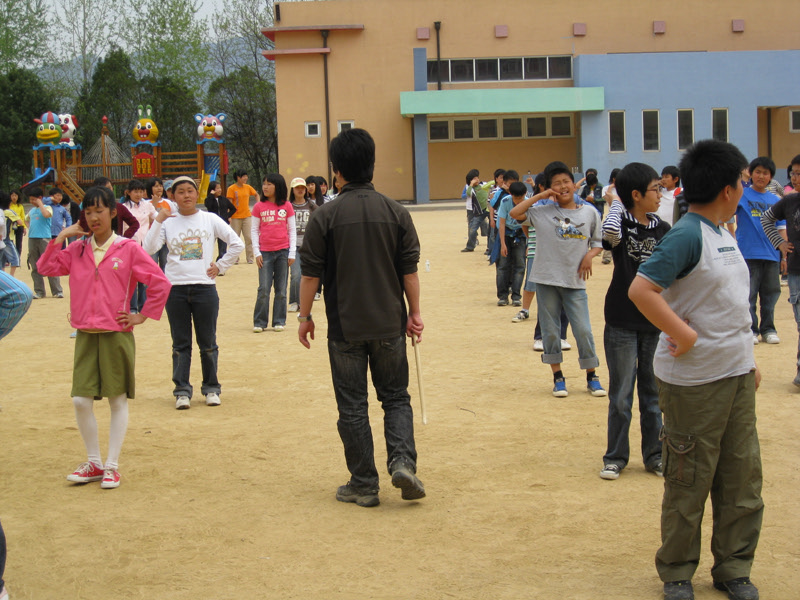
Korean teacher with stick
In Korea, I carry a stick, affectionately called ‘Billy.’ And occasionally, perhaps once a week, I will use it. I have never hurt a student with it though if I wanted to, this would be acceptable. My boss actually encourages me to hit students and I’m sure she sees it as a weakness on my part that I don’t do so more often. When students are being naughty, I’ll call for the stick. ‘Billy? Billy? Where are you?’ Then, I’ll poke around in my draw. Within seconds there is silence. ‘Billy, come on out! Someone’s arse needs a clout!’ Then, like un-sheathing Excalibur, I draw Billy from his lair and brandish him. Even with older students, this pantomime elicits a sigh of awe as if I really have drawn a sword or sparked-up a light saber.
Billy is pretty pathetic! Thirteen inches of stick not much thicker than a pencil and not very springy. Being six-foot six and large, I find him the perfect companion and actually traded him for real stick designed for pointing and striking which I’d bought for 5000 Won (£2.50). We have now been together for two years and at Christmas I took him back to the UK in order to treat him to a lick of linseed oil that I keep in my garage, for use on my front room floor. Ironically, I traded my real stick, which resembled the narrower end of a snooker cue, and which many high school teachers posses, with that of the smallest female teacher in a boys high school. Both of us preferred each others tool. Despite a recent oiling, Billy’s arthritic state spares the kids a real whacking as I am conscious of not snapping him in two.
By now, whatever the problem was has vanished or, if it is an issue of homework, the offender will be awaiting punishment. I always make lack of homework punishments quick and will strike without any prior warning. Sometimes, the offender actually thinks they’ve been spared. I usually hit them on the head. Yes, I know I shouldn’t, but for the PC brigade, anywhere is liable to cause injury and the safest place, on the bum or back of legs demand a sort of procedure, like bending over, which almost serves to ritualise the punishment and which I personally find a little pervy. And of course, Billy is too much of a light weight to have much effect in that area without the risk of being broken. So, the head it is! One short snap, never very hard and certainly much less damaging than the game Korean boys play where they do ‘rock, scissor, paper’ and the winner gets to ‘flick’ a finger on his opponents forehead.
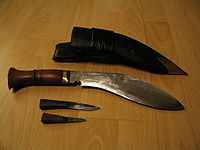
A Gurkha kukri, supposedly never sheathed without drawing blood
I usually treat Billy like a kukri, the Gurkha traditional knife, supposedly, never sheathed without first drawing blood. Last year, I threw a crazy with a class, probably the one and only crazy I’ve thrown in Korea. For a minute or so I shouted and screamed and smacked Billy on the desk. Two children started crying and the rest were terrified. That was a year ago, but one the odd occasion I need to call for Billy’s help, those students still in the class, and who remember that day, put their head in their hands in trepidation.
I actually find it difficult to hit a student and after striking them feel very bad if they start crying . As in the UK, if you are not careful kids make excuses for lack of homework on a weekly basis but Billy cures this problem instantly; no lectures, no debates, no pleading, no detentions or phoning parents, not wasting valuable time, just a thwack of Billy on the head and you can guarantee the issue will be resolved and a homework subsequently forth coming. Western teachers, fooled by the PC claptrap that corporeal punishment is barbaric, are misguided. If I make a joke and strike my stick on the head of a kid they will laugh but should I use the same force when angry, and the child’s ‘kibun’ is damaged, they will often have tears in their eyes. This should tell you how minuscule my punishment is! It is not the force of my stick hitting them that castigates and punishes them, but the loss of face within the class. Joking aside however, I witnessed some brutal punishments in my former High School.
In a Korean class, there is absolutely no mistaking who is the boss and this difference creates a chasm in standards between British and Korean schools. In Korea, the teacher is always boss and ultimately students know this. Korean kids will push their chances and intimidate you in their own Korean way but they know that they can be physically punished. British kids however, are equally aware that teachers can do nothing about bad behaviour. In many British schools, it is children who rule the class room and permit or hinder a lesson as they see fit. Bad management structures, of which students are unwittingly aware and will use to their advantage, have created schools where classroom teachers are powerless while managers can saunter into lesson and demand compliance because students know they have direct access to contacting their parents – a power usually denied non managers.
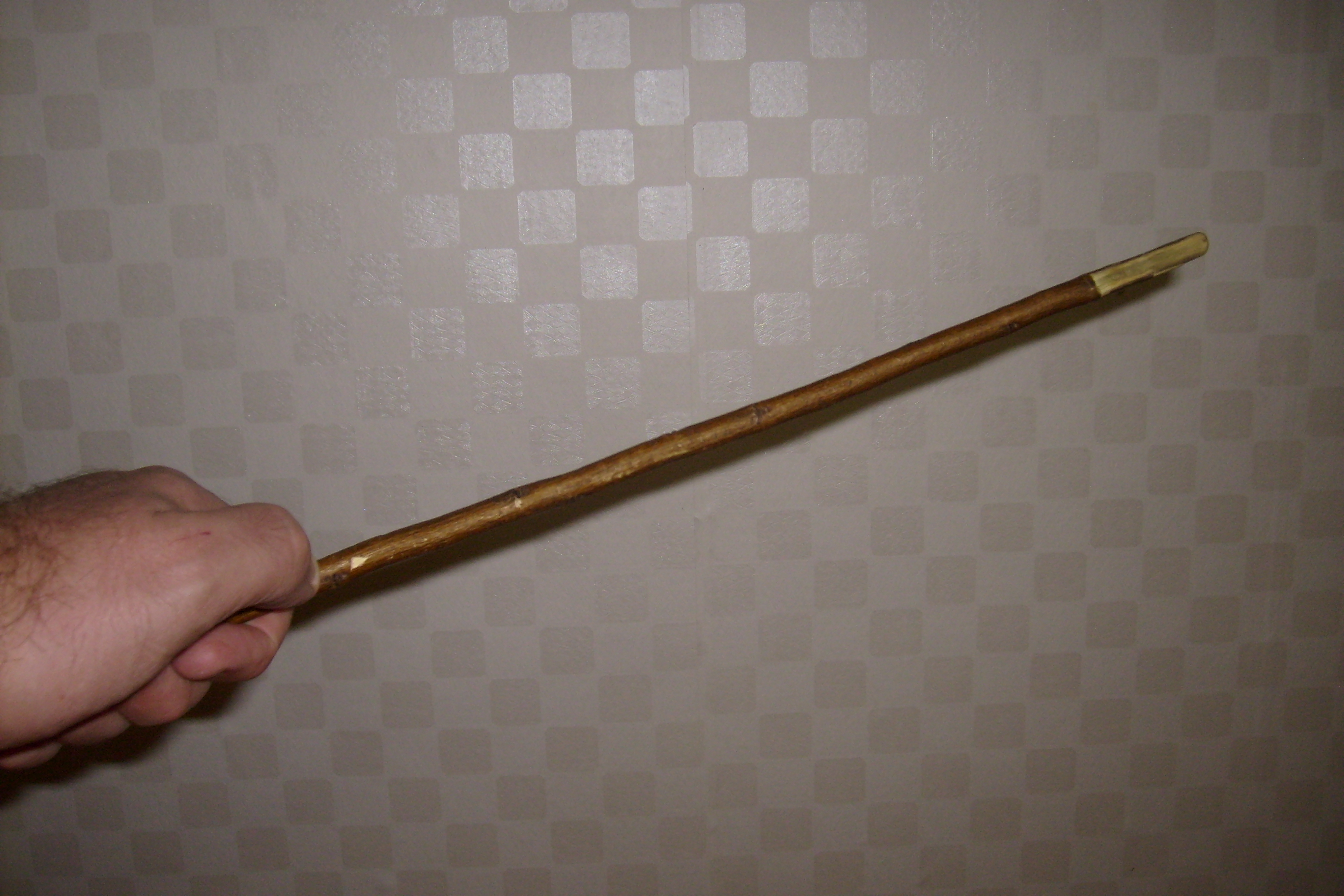
My stick, 'Billy.'
Ah, Korea. A different world where for most cases, even the most horrible student is an angel by comparison. And instead of being shunned like a leper when out shopping, Korean students want to introduce their parents to you or simply say hello. Today, a student’s mum bought me a large cake, last week I received a bag of six homemade soaps, and so forth. Anyone who has taught in Korea will have been presented gifts such as these. In the UK, I didn’t even get a fucking apple from the class creep! So, when I have been confronted by ‘disrespect’ from Korean students who have studied abroad, it’s more like ‘indifference’ and familiarity than lack of respect. I have frequently had to interview high school students and a substantial number of those who have studied abroad will slouch in front of you, talk to you in a familiar way and are the quickest to tut or talk back. On a few rare occasions, I’ve even heard them mutter expletives under their breath.
Experience of the west must have a profound effect on them as it exposes them to a range of experiences, not all of which are bad, which are denied them in Korea. Most will have been exposed to drugs, anti-intellectual attitudes, educational mores that encourage and prompt them to be sexually active, homosexuality, trans-gender, a society that empowers students well in advance of them being able to yield that power responsibly, and a system that often polarizes teachers and students and charges that relationship with antagonism and distrust most pertinent the notion that every adult is a potential perv. In the UK, Billy would have been assassinated! There is no doubt students would have sought him out when not in my company and snapped him in half. More disturbing, they would have done so with glee.
The Times Newspaper (UK), conducted a survey in 2008 which revealed a fifth of all teachers support the use of corporeal punishment. This week in New Zealand (May 15 2020), it was revealed half the population support the return of the cane especially in the light of figures highlighting the corresponding rise in crimes within school that has occurred since corporeal punishments was banned.
Ministry of Justice statistics for pre-teen violence released just last month also showed a disturbing trend. From 1998-2008, the number of police apprehensions for grievous/serious assaults by 10-13 year olds increased by more than 70%. For each of the most recent two years, there has been almost 1,000 apprehensions for 10-13 year olds for all violent offences, which include aggravated robbery, sexual violation, indecent assault, and serious assaults – an increase of a third since 1998. (link to NZNEWSUK)
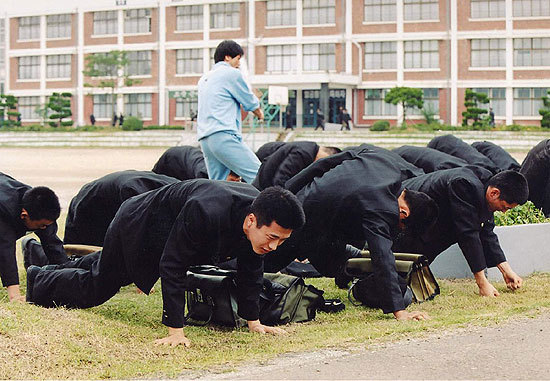
High School discipline: harsh but less severe than two years compulsory military service!
If you care for the development of children, the occasional smack is absolutely necessary. If my son or daughter were caught sticking their fingers in the electric socket, I would administer them a good clout as failure to instill in them the danger of doing this, puts their lives at risk. It is widely believed in Korea, that corporeal punishment reflects caring for youngsters’ development and the stick is often referred to as the ‘stick of love’. Personally, reflecting on some of the hideous scum I have had the misfortune to teach in the UK, it is clear we neither respect them, ourselves or other members of society – most notably other students. Of course British teachers can’t say they ‘love kids,’ not without having to spout a diatribe to explain themselves, which is just as well as judging by the scum we have allowed to pollute wider society, we clearly don’t. You will hear the phrase ‘spare the rod and spoil the child’ far more in Korea than you do in Britain. The politically correct lobby has compelled us to obsess about the rights of bad children and generally bad people in a plethora of contexts, has helped facilitate a society where all of us, including children, in one way or another, are now victims of, or held ransom by, the very scum we molly-coddled and subsequently empowered.
Postscripts
This is true, a few weeks ago my boss gave her class a vocabulary test. One of the words requiring translation into English was, ‘몽둥이.’ (stick). Two students answered, ‘Billy.’
I don’t know how long this link will remain on Daum, but here is a brief recording of a very disturbing, and brutal corporeal punishment.
http://tvpot.daum.net/clip/ClipView.do?clipid=13660273&lu=m_rc_main_recentcommentlist_10
Laura (1) Korean Teenagers
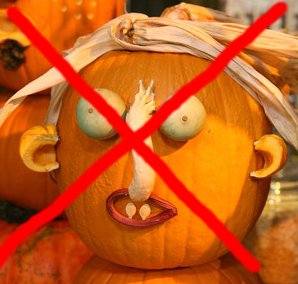
Not suitable for pumpkin people
If there’s one thing I love about Korean teenage girls, it’s that you rarely meet one who is a slag. No doubt slags exist in Korea and no doubt there are examples of Korean 15-year-old girls who trowel on make-up, wear Satan’s panties and are promiscuous, but I haven’t met any. In the UK, unless you teach in a top girls school, and I was fortunate enough to have taught stints in two of the top schools, notably Colchester Royal Grammar School (a boys school) and Colchester Girls’ High School, a large percentage of the girls are strumpets. Many of them were good students and decent kids but they still dressed and behaved in a way I didn’t think appropriate: obsessed with their bodies, with looking sexy, obsessed with sex, with behaving in a sexual manner and in flaunting their undeveloped bodies all of which comprised to denude them of personality. From childhood recollections to my more recent experiences as a teacher, being a slapper, in the UK at least, drastically improves a girls popularity among both other girls, and naturally, among the boys. My sister is convinced that had she been in those elite ranks, she’d have had a more interesting life. Amusing though this comment is, I’m glad she wasn’t.
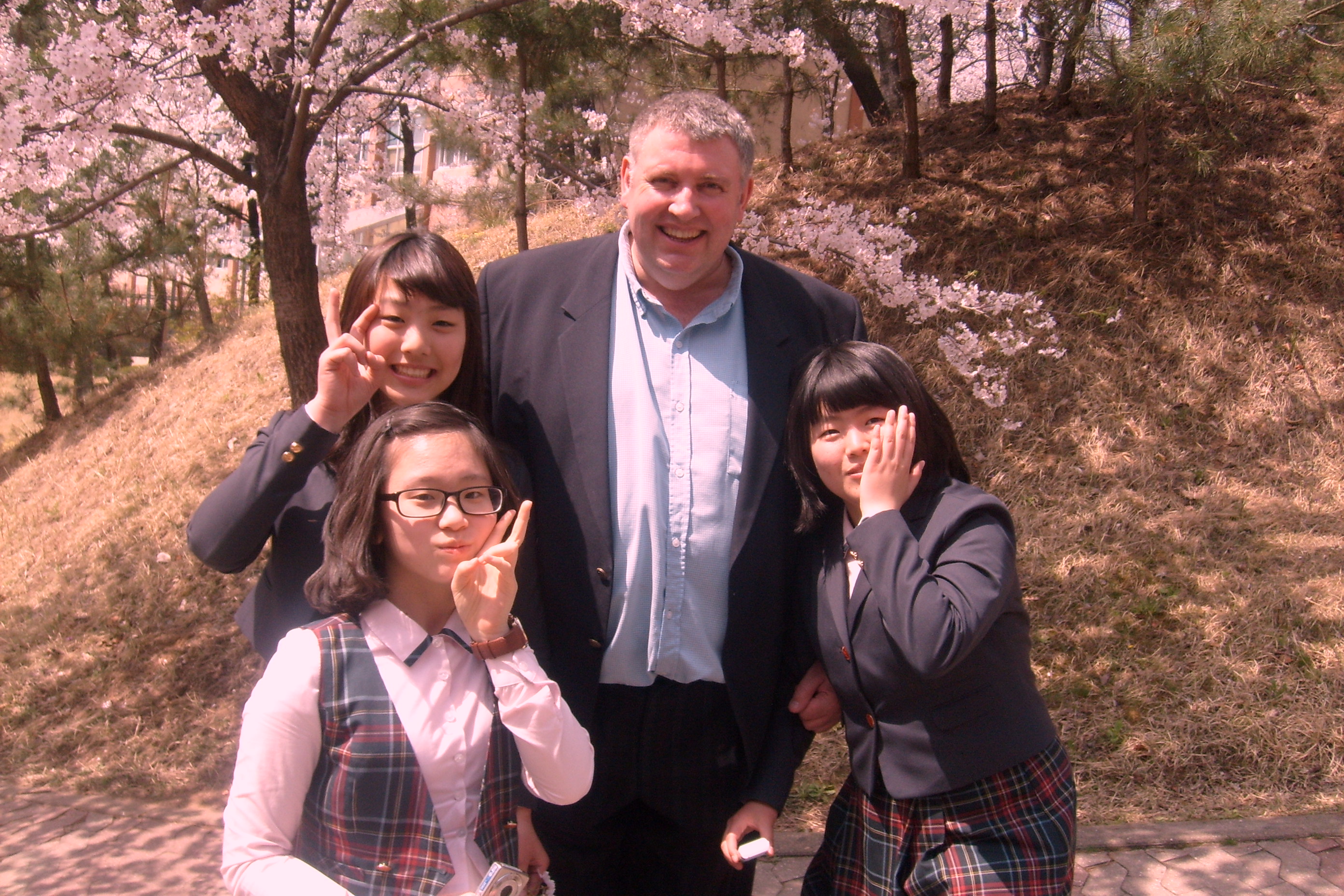
High school students in the 2nd grade. ( aged around 16-17) Absolutely no make-up at all was permitted in this particular school.
Laura, one of my Korean students, is 15 and totally adorable and like many Korean teenagers, a country with the lowest rate of teen pregnancy in the world, she is, in the cute Korean way, ‘innocent.’ Laura definitely has an interest in boys and one of our regular conversation topics centers on which boy band she is currently into and which boys she finds attractive. Recently, she has started using perfume which I would imagine she applies after leaving her school and before she comes to the haggwon in which I teach. The ‘safest’ place for her to do this is probably on the elevator up to the third floor, where the school is located. Her perfume predilection started about 2 months ago and in the initial stages of pioneering application, I think she doused herself in it. The smell was ‘in your face’ and strong enough to remain in class and around the school, long after she had left.
To compliment the perfume, she has also started wearing the faintest traces of make-up, basically lipstick and some mascara. The make up isn’t applied in the manner many English strumpet’s apply it, which is by slapping it on in the manner a plasterer might plaster a wall. I’ve seen plenty of young teenage girls with such thick mascara it looks more like cladding and usually little pebbles of it will be stuck to their eyelashes or face and will occasionally flake off like little pieces of a crusty, albino scab. The art of teenage make-up, like their interest in sex, is uniquely British, which is to say, is an overstatement and hence pots of mascara and eyeliner and all the other accouterments of teen tartery are used with as much subtlety as that of a circus clown. For the most part, Korean teenage girls, certainly under the age of 18, are discouraged and often forbidden from make-up and so when a little is used, forced into subtlety of application, it often enhances their features. You probably wouldn’t notice Laura’s make-up if it weren’t for the fact that when applied, she’s incredibly sheepish and self-conscious. As for her lipstick, it is so faint I imagine it’s simply lip balm with the slightest trace of added colour.
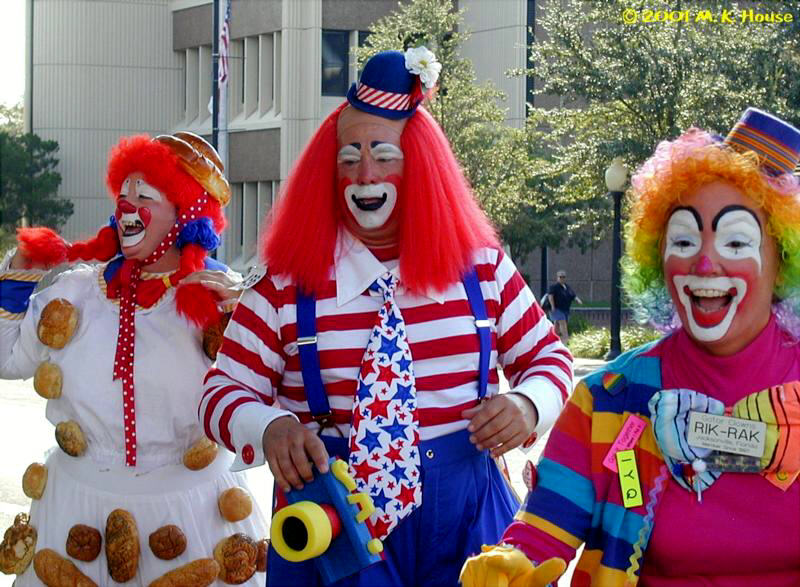
One particularly common style of British teen make-up
Discerning how much make up Korean girls do wear, is difficult as girls, like children everywhere, will ‘push the limits’ and hence I hear stories of girls wearing ‘short’ skirts to school or who wear make up but in Korea a ‘lot’ of make-up is actually very little and a ‘short’ skirt doesn’t mean you can see their knickers.
In British schools, I often saw tell-tale signs that girls were wearing a pair of Satan’s panties and it wasn’t unusual to see that flimsy bit of ‘string’ riding above a girl’s waistband. This is a sight I’ve never seen in Korea and Korean adults are often mortified to know that western girls, often not yet teenagers, are permitted to wear, or even want to wear, such sexualised clothing. Indeed, in Korea, I’ve never caught glimpse of a girls knickers. While it is solely an opinion based on my observations, and which doesn’t include routing through the children’s underwear section in my local E-Marte, I would imagine that Laura’s knickers, like those of her friends, are void of the translucent panels, little bows and lacy frill edges that are used to sexualise the bodies of little kids. Her knickers probably reach to her navel and are styled like the baggy blue things, British girls were compelled to wear for PE in the 60’s and 70’s.
I mention knickers, panties and thongs, not for any perverse reason but to highlight the divergence of social values between Korean and western societies. How children ‘choose’ to adorn their bodies, the extent to which this adornment is encouraged or tolerated, how it is subsequently received by societies both at home and abroad, expresses and exposes important attitudes and values. In Britain at least, there is a difference between ‘knickers’ and ‘panties;’ ‘knickers’ are functional whereas the purpose of ‘panties’ is two-fold, to induce arousal in the observer and a sense of sexiness in the wearer. Satin’s panties take this to a totally different level. In Britain, many girls, will tart up their twat with ‘sexy’ panties or a thong while still children and often before using make up. In Korea, while a little experimentation with make-up might occur whilst still at school, the transition from knickers to panties, from innocence to awareness, probably occurs at about the same time a girl becomes an adult.
Over the duration of a week or so, Laura’s perfume gradually mellowed until it was actually quite pleasant and on a few occasions, when it hung faintly in the air, I was reminded of my mother who always wore floral type perfume. It has become a regular habit of hers to hold her wrist under my nose and ask for my opinion on her latest scent. I then discovered, from her brother, that the various perfumes she parades, are her mother’s and are sneaked on when no one is at home.


 Elwood 5566
1 comment