Five Second Hanja (9) – hand – 손수
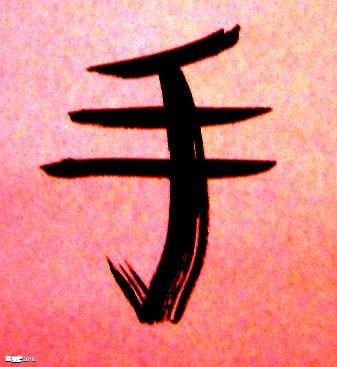
hand, 손수
The simple pictogram for hand.
Simply highlighting some of the important and simpler characters. For information on stroke order, radicals and the two elements of a character (spoken – meaning), I suggest you obtain a dictionary such as; A Guide to Korean Characters.

© 林東哲 2010 Creative Commons Licence.
Interlude (6) The coolest chili -the ‘cucumber’ chili. 오이고추
Okay, this is a really tasty chili with absolutely minimal heat probably just a few steps up from the green paprika (green pepper). It is usually slightly lighter in colour than hotter chillies, long and fat and fairly juicy. Rather boring on its own, but instantly transformed if dipped in ssam-jang (쌈장).
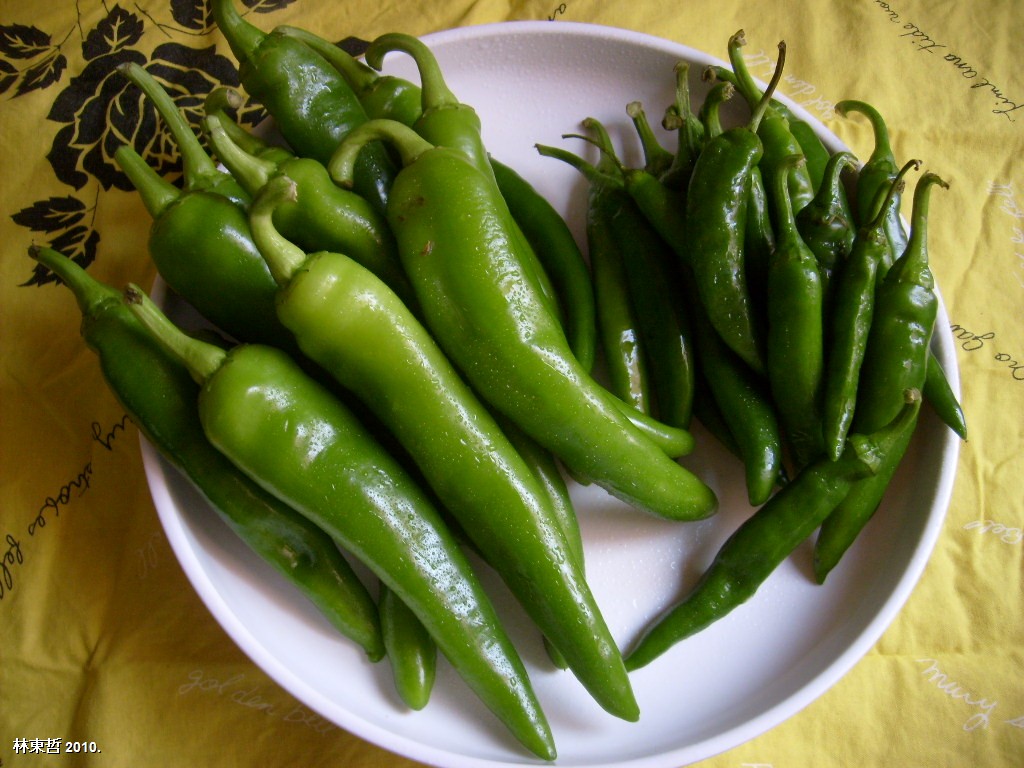
the 'cucumber' chili (left) and hottest Korean chili (청량)

'cucumber chili' (오이고추) and bean paste (쌈장) - an excellent combination
Ssam-jang (쌈장) is widely available and is usually in a green container differentiating it from other pastes. It is is a great dip for otherwise boring ‘well-being’ snacks such as carrot or celery.
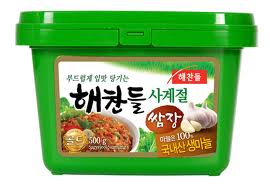
ssam-jang (쌈장)
As someone permanently struggling with Korean these are my notes on words and phrases I find useful and which are usually not in a dictionary. Any amendments, recommendations or errors, please let me know.
© 林東哲 2010 Creative Commons Licence.
Interlude (5) and Suneung Countdown – 수능대박
D-Day Minus 3

Suneung Dae Pak (수능대박)
Dae-Pak (대박), means ‘awesome,’ ‘excellent,’ ‘jackpot,’ and so suneung dae-pak (수능대박) can be translated as ‘suneung jackpot,’ or, ‘have an awesome suneung.’ Of course, you still need the ‘fighting’ spirit. (화이팅!)
As someone permanently struggling with Korean these are my notes on words and phrases I find useful and which are usually not in a dictionary. Any amendments, recommendations or errors, please let me know.
© 林東哲 2010 Creative Commons Licence.
Interlude (4) Su-neung 수능
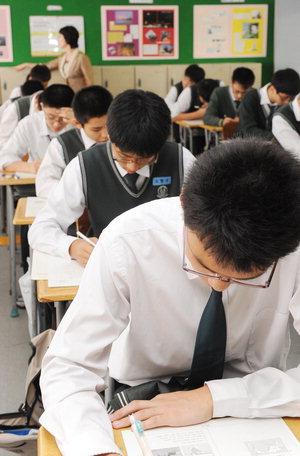
Su-neung
This word strikes trepidation into the heart of every Korean student, but most especially those who are third year high school students. The Su-neung exams take place every November, this year on Thursday 18th, and are the culmination of years and years of hard study – well for most students that is.
As someone permanently struggling with Korean these are my notes on words and phrases I find useful and which are usually not in a dictionary. Any amendments, recommendations or errors then please let me know.
© 林東哲 2010 Creative Commons Licence.
Interlude (3) – The Hottest Chili – 청량고추
Ch’eong-ryang go-ch’wu (청량고추) is the hottest of Korean chillies and is small and dark green in colour. I approach any smaller chili with caution just in case it’s this variety. It is common throughout the year but specially so in Autumn (Link to post on chillies and the Scoville Heat Scale).
© 林東哲 2010 Creative Commons Licence.
Five Second Hanja (8) Volcano – 화산

Volcano - 화산
The compound character for volcano is produced by combining ‘fire’ with ‘mountain.’
Simply highlighting some of the important and simpler characters. For information on stroke order, radicals and the two elements of a character (spoken – meaning), I suggest you obtain a dictionary such as; A Guide to Korean Characters.
© 林東哲 2010 Creative Commons Licence.
Five Second Hanja (7) Fire – 불 – 화
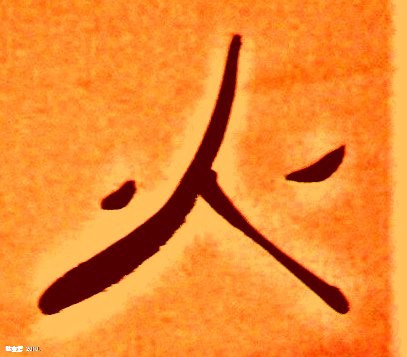
Pictogram. Fire

the similarities are obvious
Simply highlighting some of the important and simpler characters. For information on stroke order, radicals and the two elements of a character (spoken – meaning), I suggest you obtain a dictionary such as; A Guide to Korean Characters.
© 林東哲 2010 Creative Commons Licence.
Five Second Hanja (6) Tree – 나무 – 목
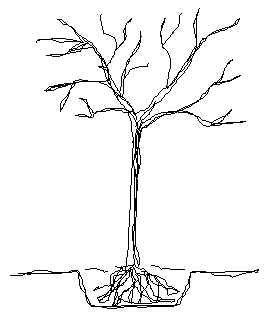
tree
A simple pictogram of a tree showing stem, roots, and branches. Only a small leap of the imagination is needed to visualize the character.
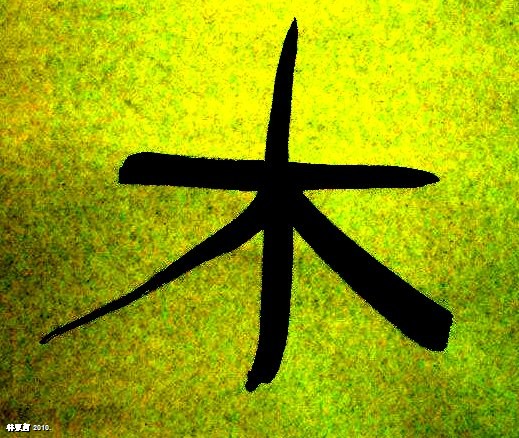
tree- 나무-목
This series of posts is not aimed to teach hanja, I am not in the least qualified for such a task, but to simply highlight some of the important and simpler characters. For information on stroke order, radicals and the two elements of a character (spoken – meaning), I suggest you obtain a dictionary such as; A Guide to Korean Characters.
© 林東哲 2010 Creative Commons Licence.
Interlude (1) – 홍시 – Soft Persimmon
They’re like a bright orange bag of jelly, the shape of a tennis ball and although they’re relatively tasteless, basically just very sweet, there is something pleasant about them. Like a number of Korean foods, the most noted probably being octopus, one ‘product’ can have several different names rather like the English ‘grape,’ when dried, can be a ‘currant,’ ‘raisin,’ or ‘sultana.’ While persimmons, are generally called, ‘kam’ ( 감), the specific name for the highly ripened variety is, ‘hong-shi’ ( 홍시). ‘Yeon-shi’ (연씨) is a similar soft variety but smaller and rounder.

'hong-shi; - like a bag of jelly
© 林東哲 2010 Creative Commons Licence.
Interlude (2) – 놀토 – ‘Play Saturday’
놀토 (nol-t’o)
Because Korean uses syllable blocks to build words, ‘syllable acronyms’ are a common means of putting words together to express ‘something.’ School children and students, for example, often use syllable acronyms’ to express ‘things’ to do with school. 놀토 fits this category and depending on your viewpoint, is either a colloquialism or slang. Usually such syllable acronyms are spoken rather than written.
놀토 simply puts together the stem of the verb ‘play’ (놀다) and ‘Saturday’ (토요일) and identifies the 2nd and 4th Saturdays of the month when Korean State schools are closed and students enjoy what is in effect, a long weekend.
Note – in March 2012, nol-to was abolished for Elementary and Middle School students. Now every Saturday is free. However, schools have increased the hours of the working week or in some cases shortened holidays.
© 林東哲 2010 Creative Commons Licence.


 Elwood 5566
leave a comment