Sorcerer Spider Webs (무당거미)
There were from my last mountain trip at the end of September. The ‘sorcerer or ‘shaman’ spider (무당거미) webs all measured around 1.5 meters in diameter. (These spiders have a number of other names)
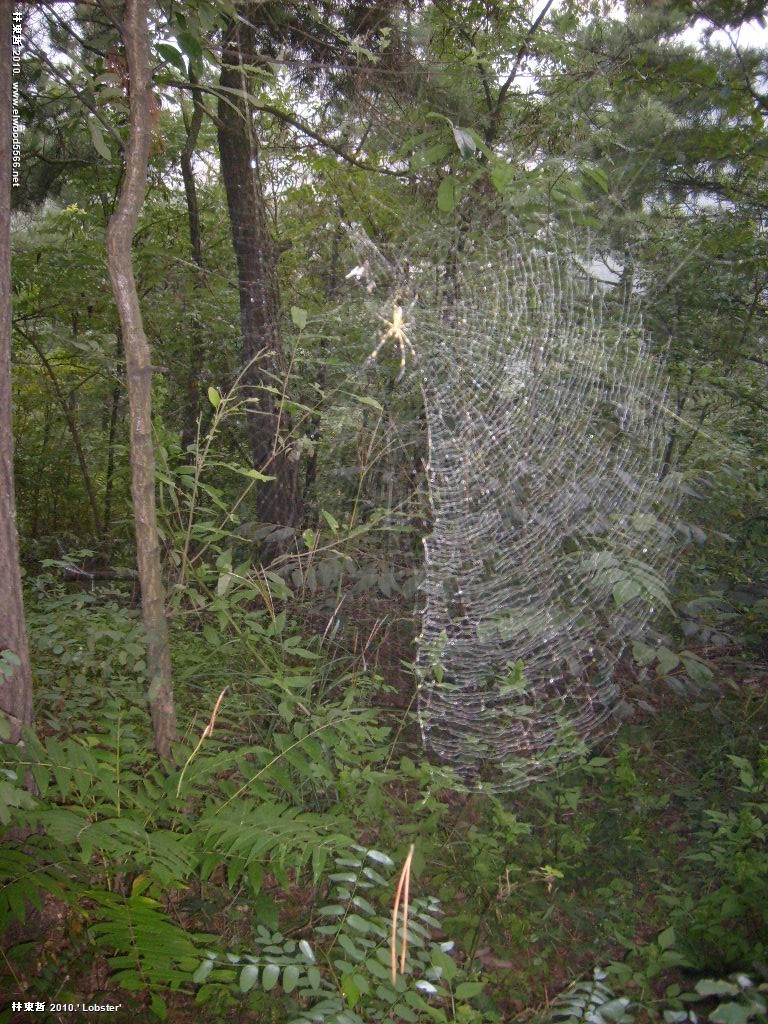
male sorcerer spider (무당거미)
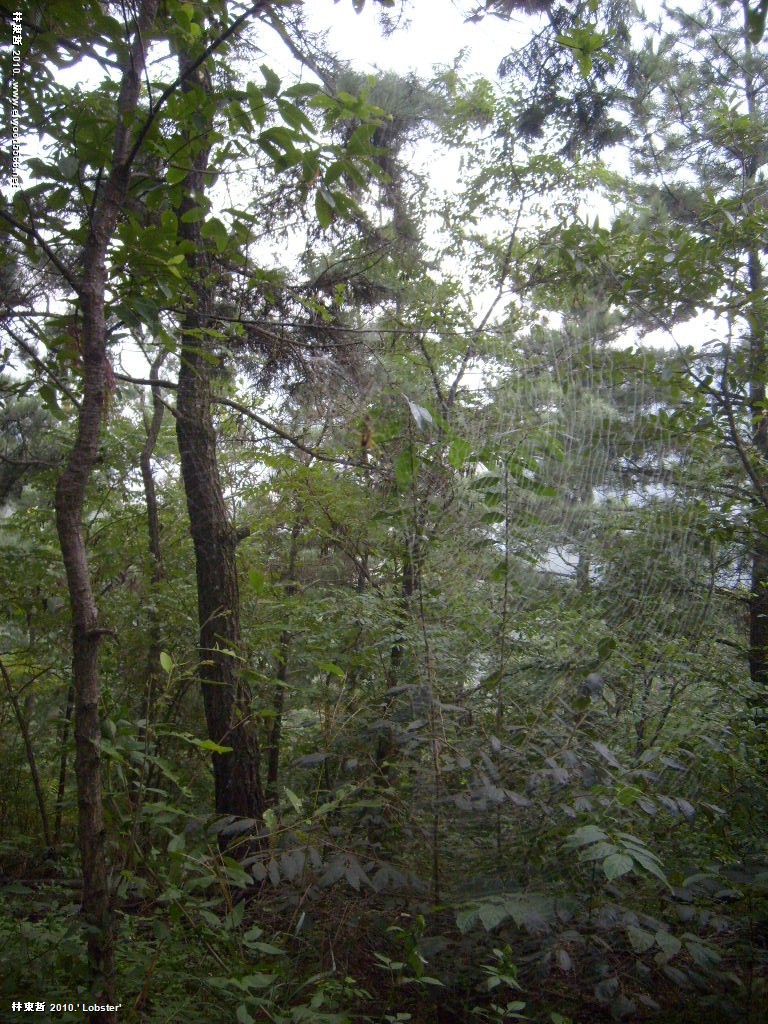
the sorcerer spider has one of the strongest and largest known webs
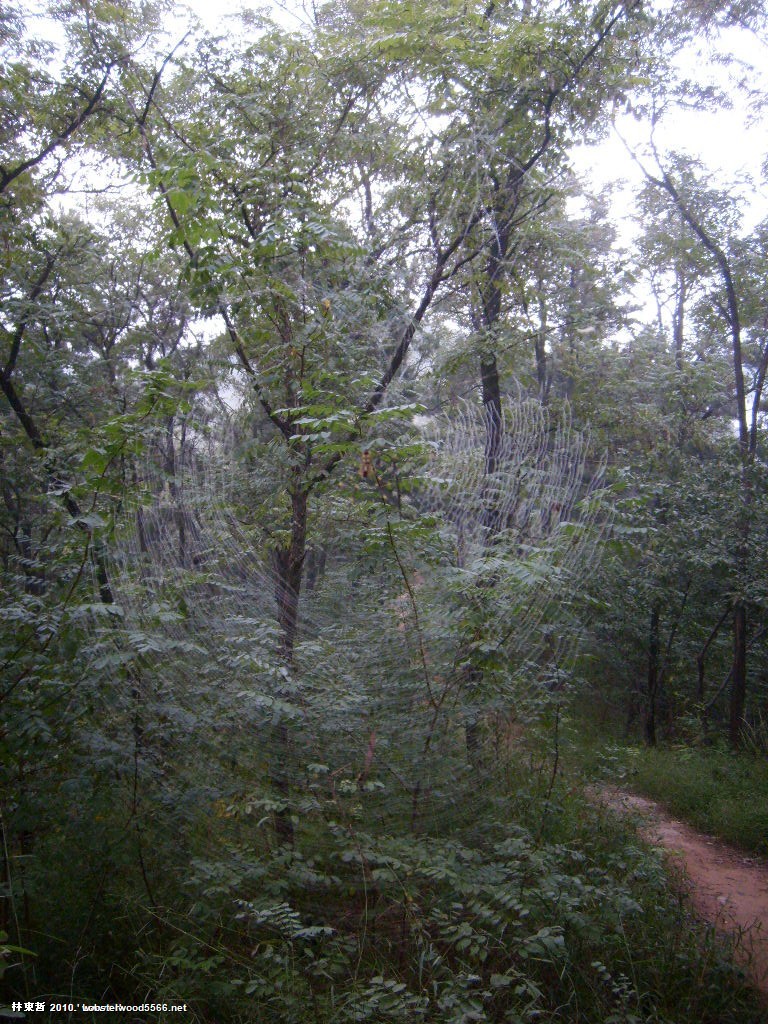
Often the web has a greeny-yellow tinge
 © 林東哲 2010 Creative Commons Licence.
Spotted Darter Dragonflies (고추잠자리)
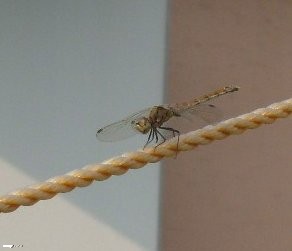
Female 'chili dragonfly' lazing in the sun
October sees the second flush of dragonflies, the first being around mid-summer. The specie dominating this flush is the ‘Spotted Darter,’ (definetly –Sympetrum and possibly – Depressiusculum). In Korean these are known as ‘chili dragonflies’ (고추잠자리) as the males are bright red. Unfortunately, my one-room roof seemed only to attract females.
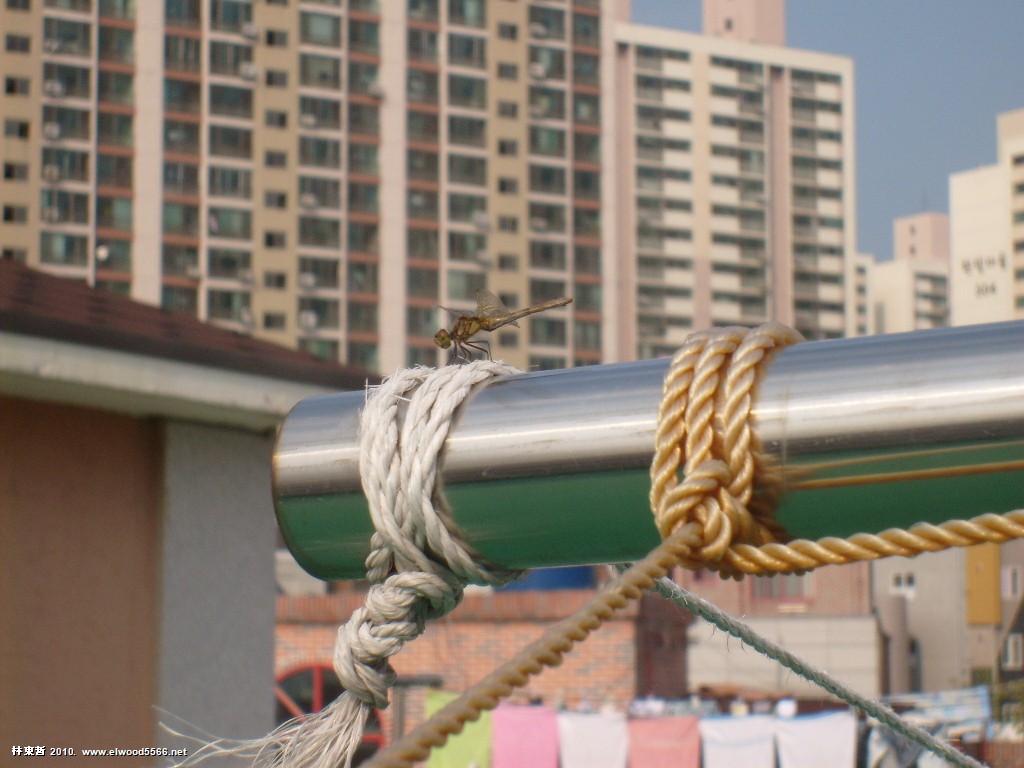
a temporary rest
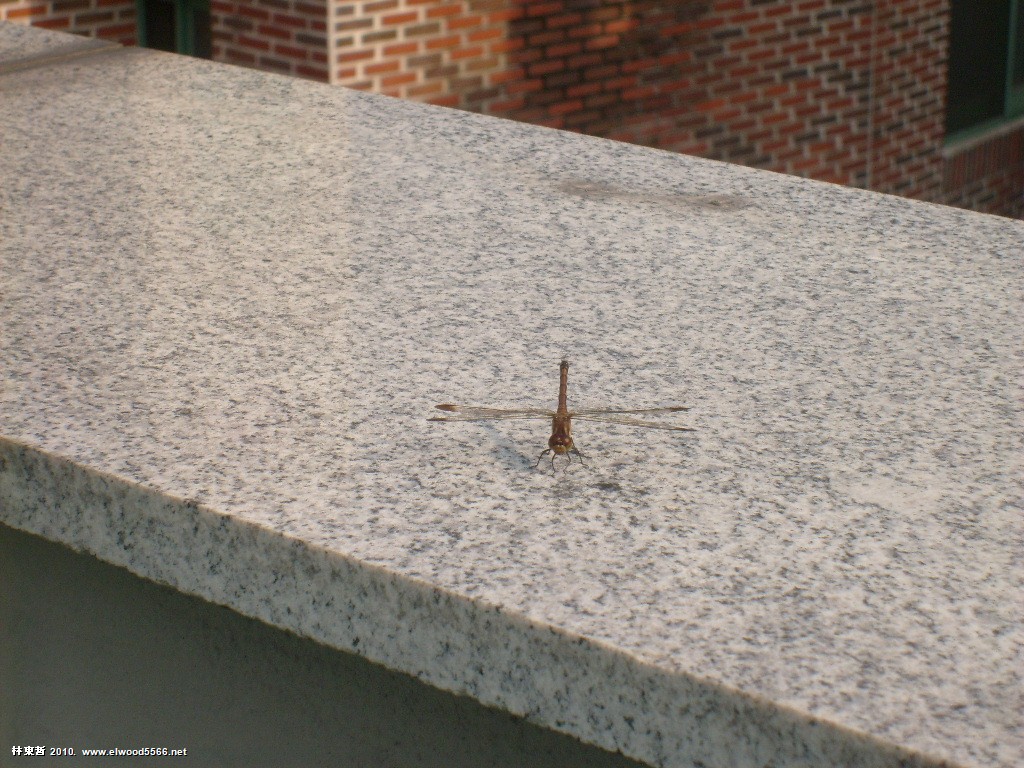
the male is bright red in colour
© Nick Elwood 2010 Creative Commons Licence.
Monday Market – Groundnuts (땅콩)

Groundnuts
The ‘fruits’ which epitomize autumn are peanuts, pumpkins, persimmon, apples and the Chinese or Napa cabbage of which there is currently a shortage. In the last week peanuts have become very prolific in street markets. They are somewhat unlike the monkeynuts (ground nuts) you buy in the UK in that they are still moist and have an earthy taste to them. Koreans often boil them for a few minutes, un-shelled, after which they taste much nicer. In this state they can be frozen. I still have a few in my freezer from last year though I do not know how long they safely keep.
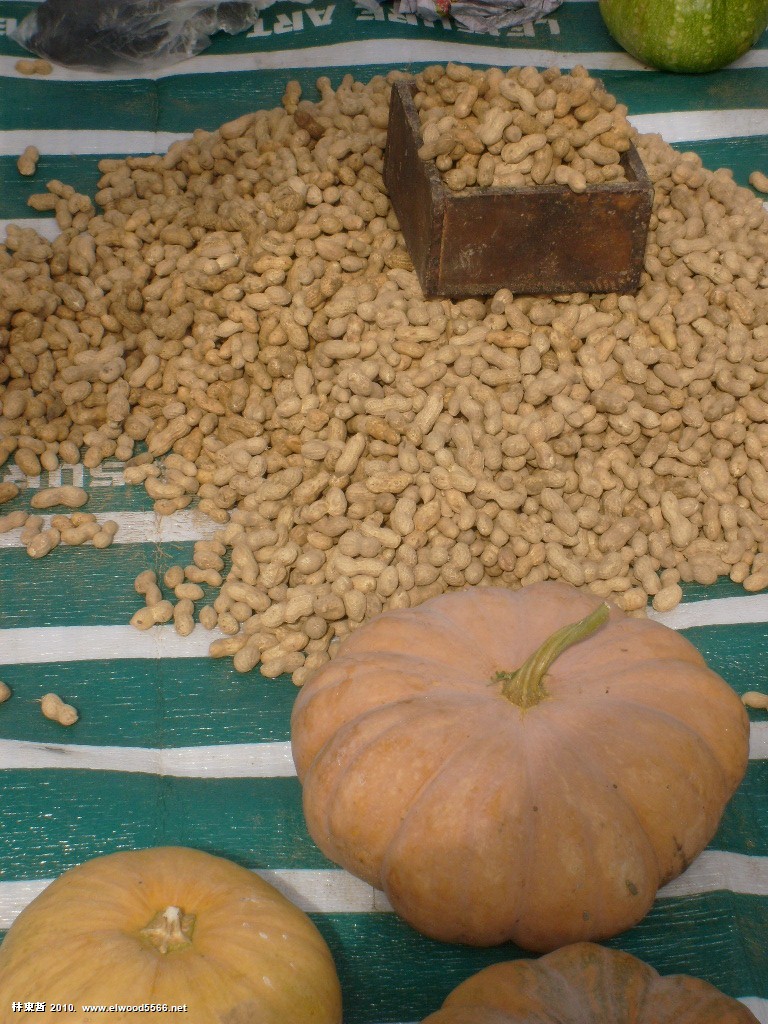
Groundnuts at 4000 Won a boxful (sterling - 2 pounds)

Peanuts and pumpkins
The Memi’s Lament
Last Saturday (25th September), I heard my last memi (매미 – cicada), and with it ends the song that has accompanied the entire summer. The temperature certainly wasn’t much over 84 degrees Fahrenheit, the temperature at which memi ‘sing,‘ and in the slight breeze which heralds autumn, it felt cooler. I always find the song of a single memi sad, a lament to summer and suppose they epitomize the lives of many humans who end their days ‘singing’ to no one. Had the memi been around a month ago, it would have been surrounded by others and its voice would have joined summer’s paean, screaming from the trees. Now, it’s a lonely, solitary dirge to which there is no crescendo and no response. I would imagine the best thing that can happen to the final memi, those that have arrived a little too late and missed the party, is an early frost.
© 林東哲 2010 Creative Commons Licence.
Shaman Spider (무당 거미)
I’ve had an infection or ‘red-eye’ and haven’t been able to use the gym or bathhouse so instead I’ve been walking up Warayong Mountain (Wikipedia location) in Song-So.
I noticed a wasp nest on a tree and watched it over several mornings. These wasps are much smaller than European ones.

wasp nest
This is the shaman spider (무당 거미), which is often translated as ‘sorcerer.’ In English it is known as the golden banana spider or joro spider (nephila clavata). ‘ It probably measured about three inches long and can inflict a mildly painful but non-deadly bite. Autumn signals the mating season for spiders and these beautiful, if not scary looking specimens are also cannibalistic. The female is larger than the male and has red markings towards the back, underside of her abdomen.

Female shaman spider (무당 거미) nephila clavata

female shaman spider with distinctive red markings on the underside of abdomen.

the nephila family spin one of the largest size webs – often in excess of 2 meters.
The web was about 4 feet across and slightly yellow in colour and at one point I walked into a supporting strand. It did not break and I noted at the time how resilient it was. Apparently, genes from this spider have been injected into silk worm cocoons and as a result they subsequently produce a much stronger silk. This product is being launched on the market, in the form of extra durable socks, in 2010.
© Nick Elwood 2010 Creative Commons Licence.
Hanyeoreum Evenings (정자)
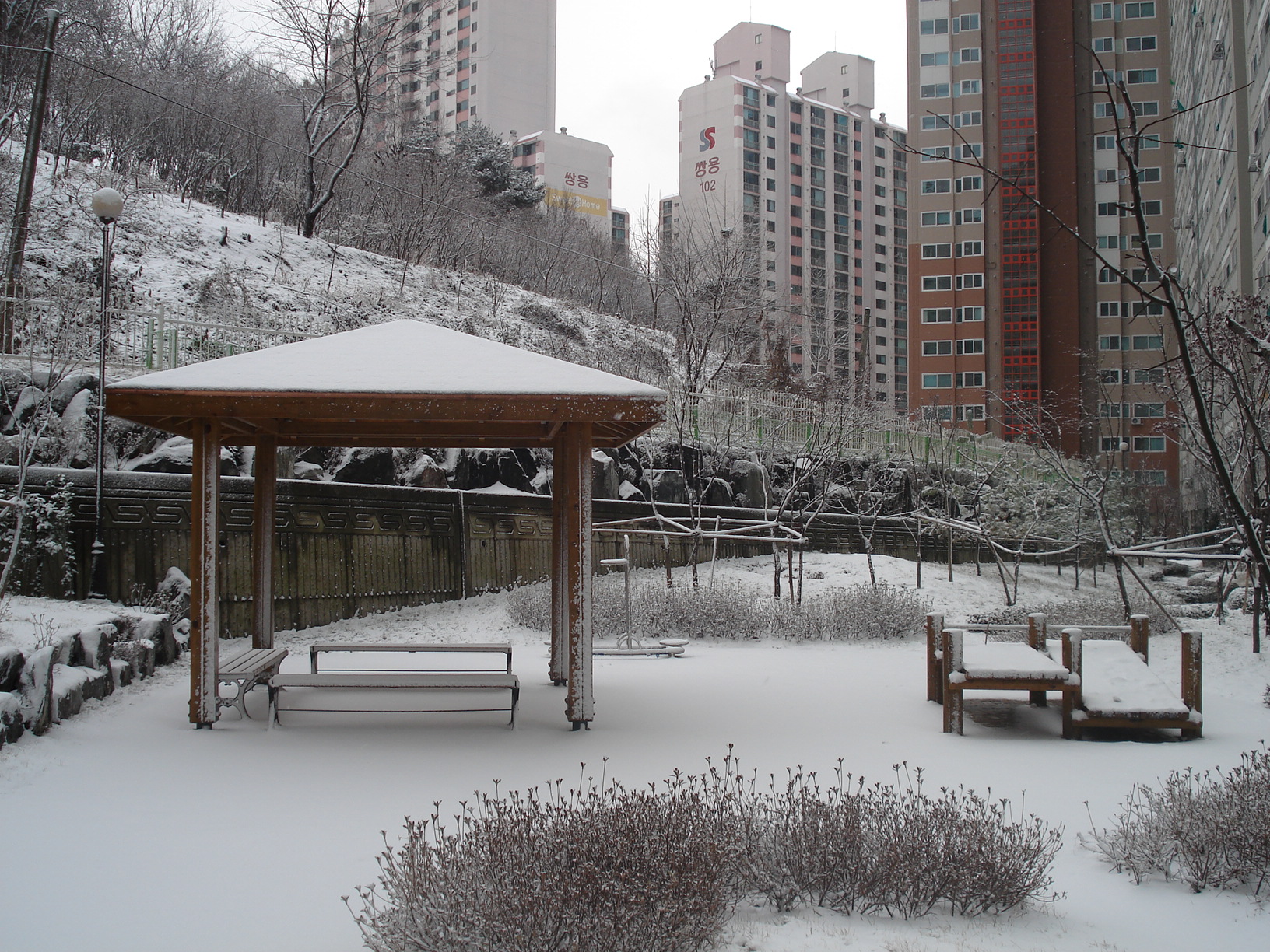
Waiting for winter...
Summer is drawing to a close and outside Daegu is on the edge of typhoon Kompasu. Last night, was the first in many weeks that my air-conditioning wasn’t active. The rain was constant and woke me several times and like most one-rooms, a view of the world beyond is limited, but the concrete walkway between my window and the next building isn’t flooded. Further north, the story is quite different.
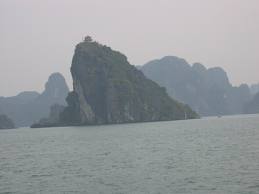
- an isolated chong-cha
And once the sun reigns in the sky, the humidity is going to soar. Hanyeoreum (한여름), the Korean term for midsummer which is the period between the chang-ma (장마) monsoon season and its brief reappearance in September when it returns from Manchuria, isn’t over and though it’s probably peaked, the afternoons are still hot and humid and the evenings balmy and uncomfortable. In the heat of the sun people amble rather than walk, always picking out a path via shaded areas. Only boys seems to run and hurry and in classes it is a regular sight to teach lads with sweat trickling down their faces and spiking their blue-black hair. I can’t recall teaching a girl soaked in sweat! At road crossings people will stand in the shade, even that provided by a meager lamp-post. And all the time fans are fanning faces, parasols, only ever used by women, are open and school boys walk about with one trouser leg rolled up, sometimes both or lift their shirts to cool their stomachs. In the city, hanyeoreum evenings take on a lazy, laid back atmosphere. Around the haggwons (private schools), mini bus drivers crouch in groups in doorways or sprawl over seats in their buses, dozing in the sultry heat and outside cafes people sit chatting or watching the world float by.
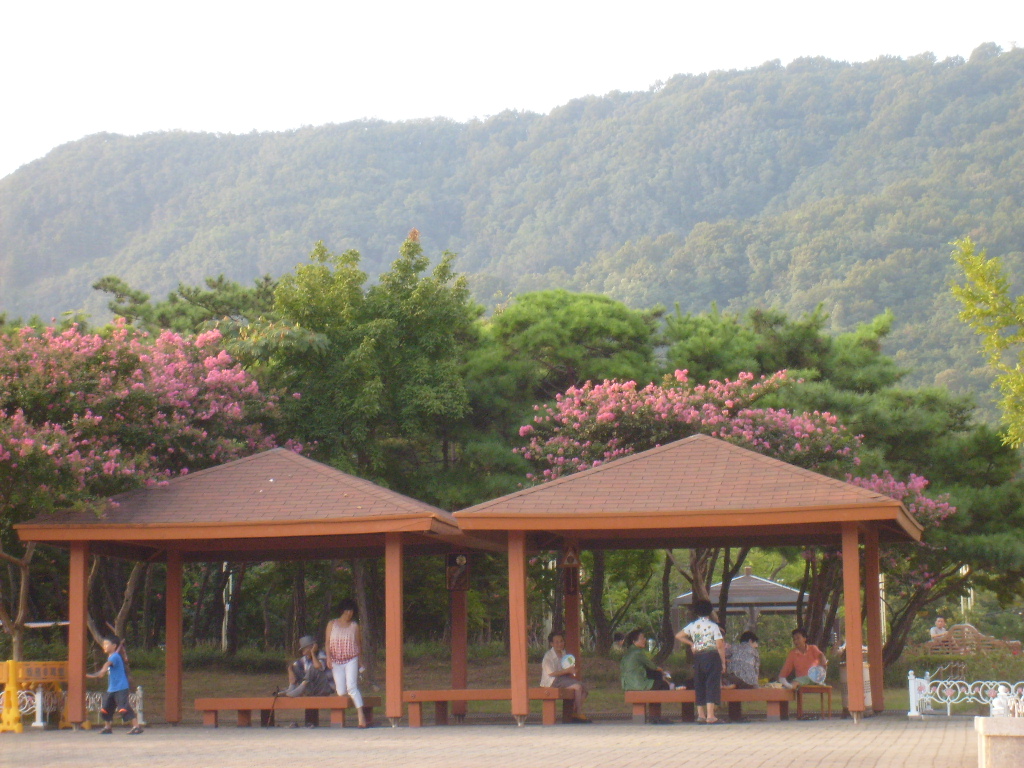
summer chong-cha
In the small parks between apartment complexes and larger parks around the city, people exercise, stroll or laze in the arbors (정자). Arbors are as synonymous with Korea as are kimchi or taekwon-do and in the fierce sun they offer sanctuary and in the evenings a small enclave which traps even the slightest breeze. They are home to little groups of men playing traditional games, gaggles of gossiping women, student sweethearts, small children and those seeking solitude. In hanyeoreum evenings, when the air is still and stifling, they are a place to stretch out and take a nap – especially after a few glasses of soju or makgeolli.
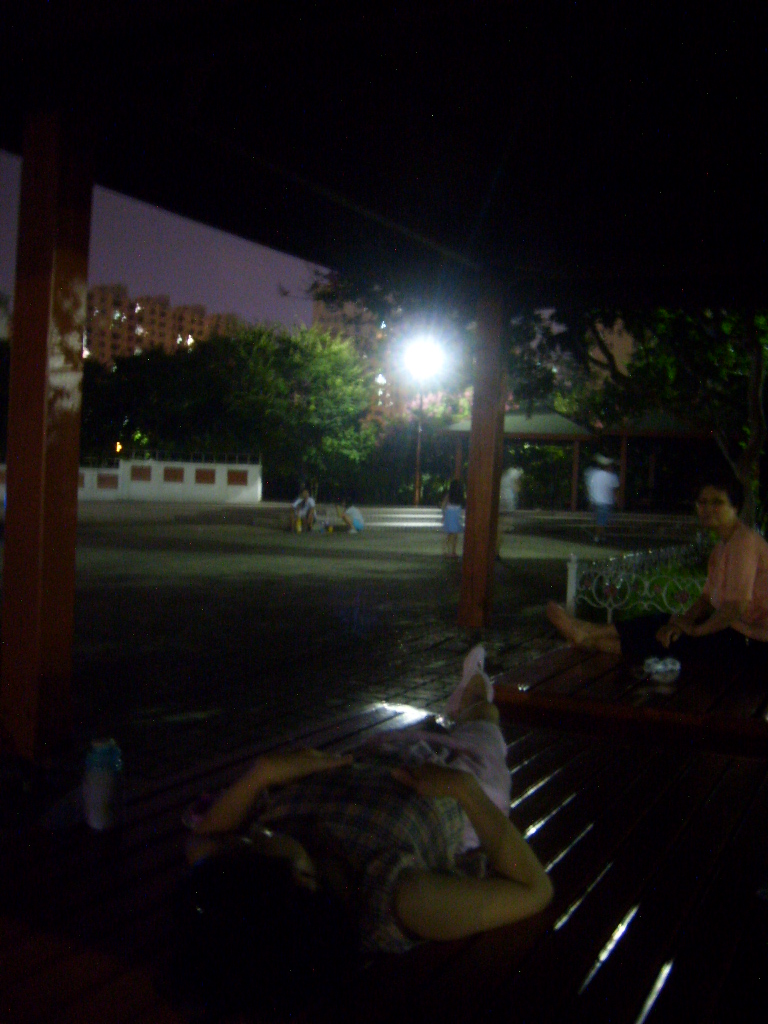
Hanyorum evenings - sitting out the sultry weather
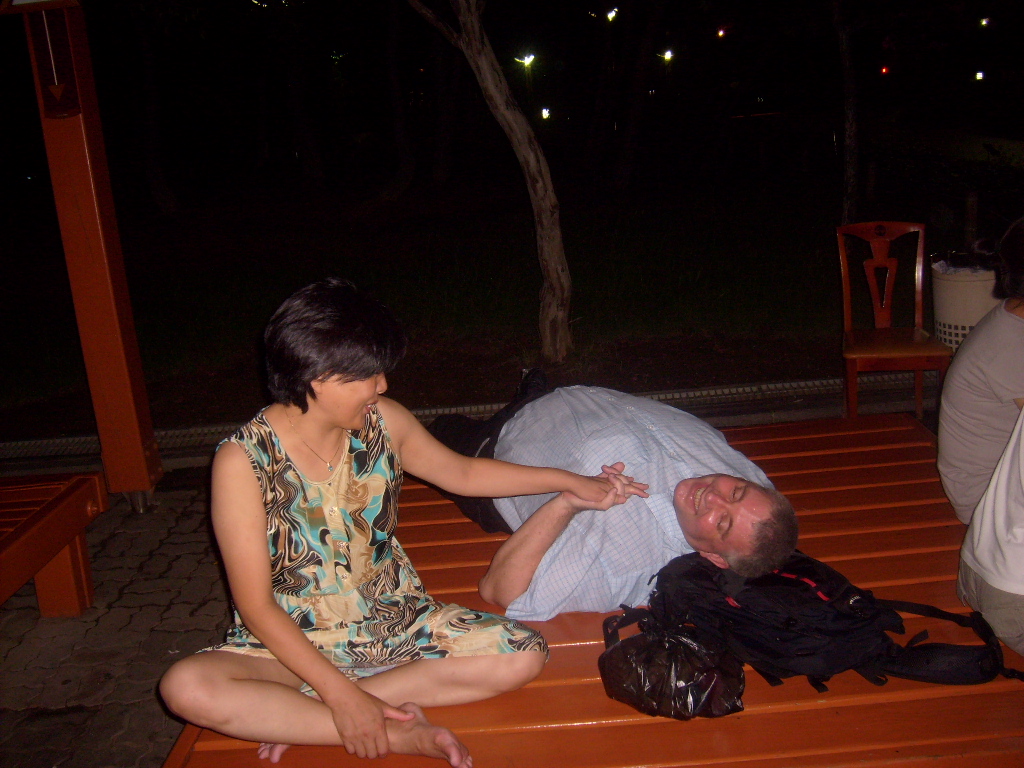
and after a makgeolli, chong-cha are great for a nap
Chong-cha are always made of wood and designs vary from simple, functional structures as found in small parks between apartments, to the more elaborate and traditional ones, made without nails, with intricate inlaid art work and bowed roofs and with which Korea is associated. These are usually built in places of significance, on mountain summits, or isolated areas of natural beauty.
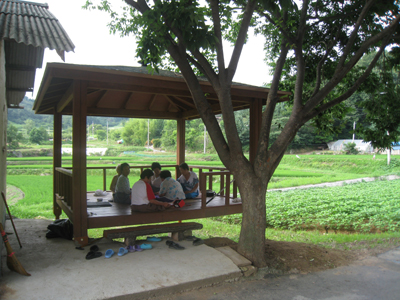
A great place to gossip
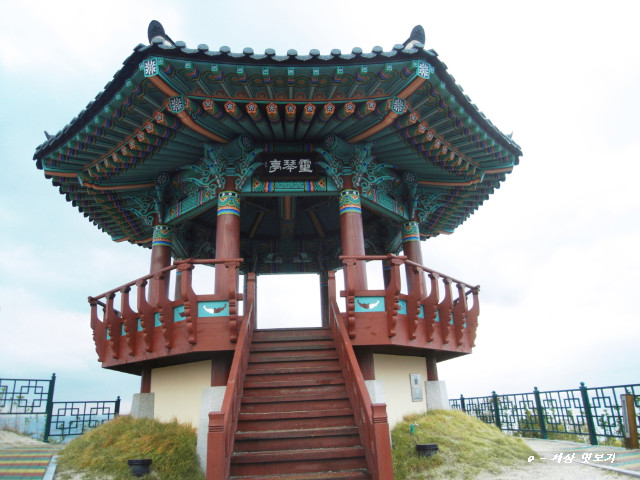
The majesty of a traditional chong-cha
© Nick Elwood 2010 Creative Commons Licence.
Memi Update – (매미)Continuing my obsession…

Hot...
Two weeks ago (August 23, 2010), when the temperature in Daegu, the hottest part of Korea, hit 36 degrees, the memi (매미-cicadas) chorus screamed from the pomegranate tree and bushes near my one-room. I made a recording in exactly the same location as I recorded the first memiI heard, on July 7th, of this year. There was one day, Saturday 30th of August, when it was refreshingly cool with little humidity and a fresh breeze. That was a strange day as the memi were silent. It’s an interesting feeling to leave your one-room and the sanctuary of air-conditioning, to step out into intense sunlight that actually seems to have weight, and be surrounded all the time by muggy humidity and that incessant scream from the trees. In the two recordings here you can hear the different levels of intensity. In the second recording, on one of the hottest days of the year, the memi song was verging on painful.
Alternative Links
Link to Flickr video: On Hearing the First Memi of Summer, 2010
Link to Flickr video: Memi in Full Chorus August. 2010.
© Nick Elwood 2010 Creative Commons Licence.
Grapes – 포도. Monday Market

Grapes – Autumn is approaching!
With the scent of black grapes drifting on the air, you know that autumn is not to far off. Korean grapes are quite different from varieties available in Europe; the skins are much thicker and slightly chewy and often removed. The flesh is juicy and sweet and the seeds, big, crunchy and bitter. As a fruit, I certainly prefer the seedless variety but the juice of Korean grape, usually the Kyoho grape, is ‘thicker’ and carries both the scent and taste of the grape British children will be familiar with. Personally, the smell and taste of Korean black grapes always reminds me of Pez candy, which was popular when I was a child. Korean grape juice is very popular as is Welch’s Grape Juice. Welch’s is an American company which uses a variety of grape, Concord, which is similar to the Kyoho grape.

Korean black grape juice
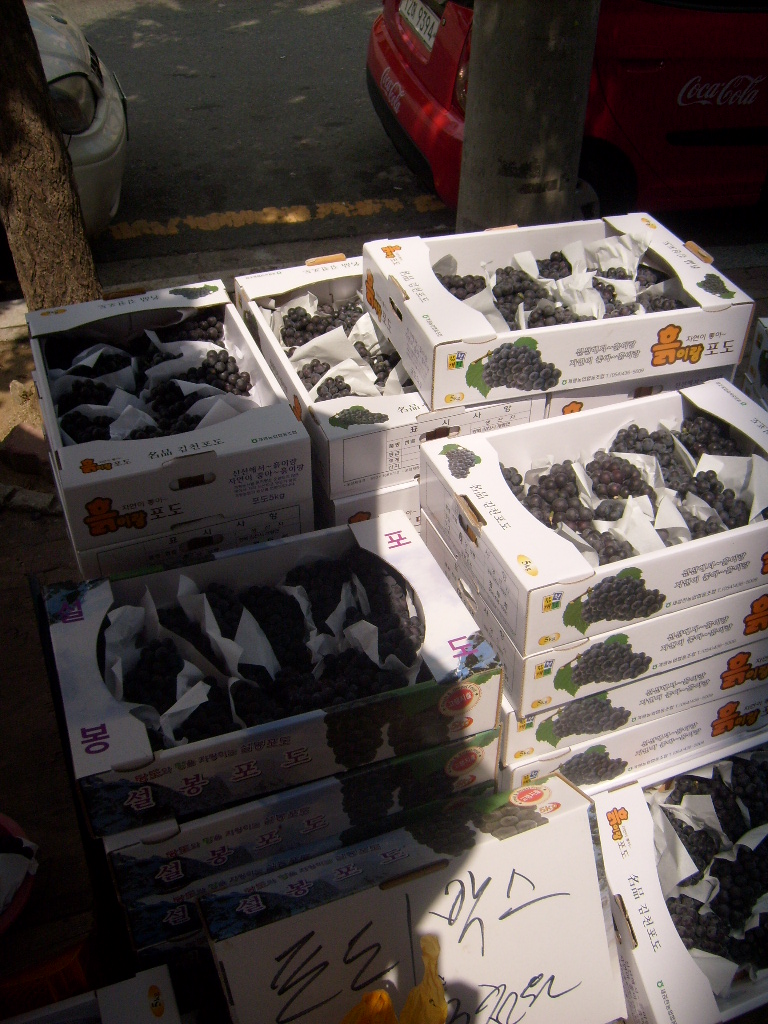
Grapes, fat and juicy
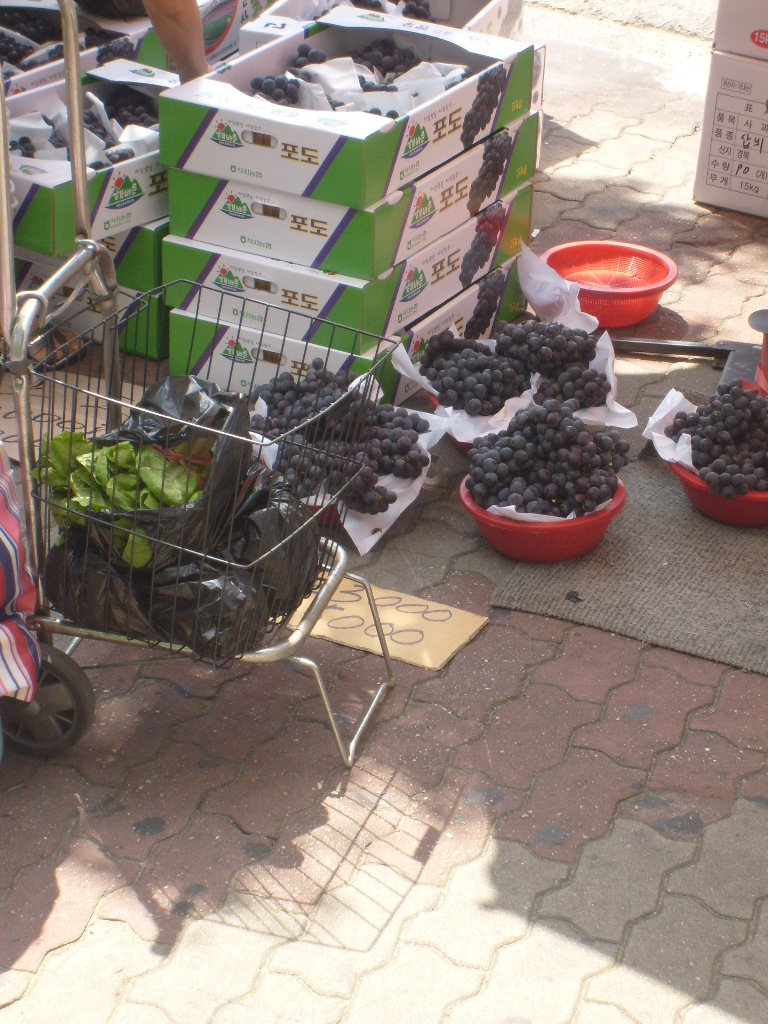
Grapes in the shade

Remember Pez?
© Nick Elwood 2010 Creative Commons Licence.
Kimchi-ism
It smells bad, it can taste revolting, and is a major cause of conflict in university accommodation kitchens worldwide, where the sharp smell oozing from refrigerators upsets non-Koreans. It hangs on your breath with greater offence and persistence than any French gastronomical delight. Garlic can certainly be rude but enhanced and enlivened by numerous chemical processes and suspend in cabbage water and the pungent juices of fermented anchovy, the power to offend becomes a chemical and biological capability. Nothing is polite about it, it is totally ‘in your face’ in its onslaught of your taste buds, nasal passages and doesn’t look too pleasant either. It lacks any refinement or subtlety and amongst ‘offensive’ foods ranks as a weapon of mass destruction. You wouldn’t gorge or binge on it, indeed I wouldn’t even call it delicious and I could certainly live without it. If I were to be isolated on a dessert island for a year it wouldn’t be on my list of essential items. And yet paradoxically, it is one of the most exciting taste sensations in the world. If there is one food so aptly capable of defining a nation, so synonymous with a people, it is cabbage kimchi(배추 김치).
There are many types of kimchi, and of those types many variations, and of those variations many permutations depending on a range of factors. Kimchi is one of numerous Korean, fermented foods, others including makkalli, bean paste (된장), and soy sauce (간장). Only when kimchiis old enough for the initial processes of fermentation to have ceased, will the flavour be consistent. At all other times, you can’t eat the same kimchi twice as the taste is always in a state of transition. Canned and packeted kimchi are available but these should only ever be eaten as a last resort. Canned kimchi, often from China, is especially disgusting!

Welcome to Korea!
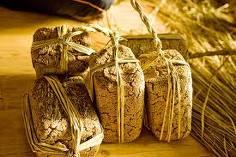
Traditional fermented beans (메주)
The most popular type of kimchi, and the one most armed in terms of offensive capability, is cabbage kimchi (배추 김치). Cabbage is well known for its powers to unleash unpleasant odours once its fibers have traversed the intestinal tract and are approaching a transmuted reincarnation via the human Cloaca Maxima. With cabbage kimchi however, your digestive organs can take a break as most of the chemical process which release those aromas, have already been activated and are in a chemical flurry approximate to final stages of processing via the large intestine. Indeed, I would go as far as suggesting that function of that plastic Tupperware tub or kimchi pot in which kimchi is stored upon being made, is basically a portable large intestine containing the numerous biological processes. In that Pandora’s box of mischief: the most infamous kiss-killer of all, garlic, is present in its most potent form, crushed! Added to this is minced ginger, a Korean type of chive (실파) and mooli (무) which while not individually notorious, collectively possess powers of repetition which help strengthen the garlic and intensify its potency. Even at this stage, a burp of this concoction is lethal. Added to this, is the cabbage which after having been submersed in salted water, is already chemically active.
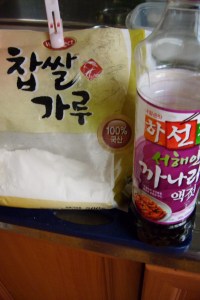
Kkanari - fish sauce - the concentrated odour of a million sweaty feet
The addition of fish sauce, (액젓) famous across the Asia, which is another fermented product made from anchovy or kkanari (까나리 – sand lance), completes the recipe. Of all the noxious odours added to kimchi, anchovy or sand lance sauce is the most vile. I’ve often entertained myself by inviting guests to sniff an open bottle as I’m casually cooking, with a little encouragement such as: ‘smell this, it’s lovely,’ or, ‘this has got to be my most favourite smell.’ Usually, a good whiff will propel them back a few meters with as much force as would a couple of hundred volts of electricity. Once amassed and fizzling away, the flavours and smells blend in a process which can last a considerable amount of time, depending on temperature.
Comparing the kimchi pot (김치독) or Tupperware tub to a colon is not an exaggeration. I have slept in the same room as as my gestating kimchi and in the first week of fermentation, gasses produced within the Tupperware colon would cause the lid to pop-off about once every twenty-four hours. If this occurred at night, the escaped aroma was initially enough to wake me. I have since become quiet comfortable sleeping in the same room as fermenting kimchi and find the smell highly evocative – ironically, not evocative of life in Korea, but life back in the UK where living with friends necessitated containing kimchi smells to my bedroom and not the shared kitchen.
Kimchi encapsulates Korea at many levels. Many countries have a national food with which they are identified: Italy – pizza, Germany – sausages or sauerkraut (which is also fermented cabbage), France – smelly, soft cheeses, frog legs, snails and cordon-bleu cooking, England – fish and chips, roast beef and tea, Scotland – shortbread and haggis, but few have the ability to represent their nation with such precision as does kimchi. While kimchi comes in blaze of spicy colour, the foods of other nations, delicious as they are, remain purely monochrome.
Kimchi is a pot-pourii of Korea, a culinary collage of so many integral Korean elements – garlic, ginger, Korean chili powder (고추 가루), mooli (무) and fish sauce. These ingredients are the basis of almost all Korean cooking and representative of so much of the peninsula’s farming. You can hardly step in a direction without seeing pots of chili, patches of mooli and even on the mountains sides I’ve seen small plots painstakingly hoed out of the rocky soil, blossoming with such vegetables. Local variation on the cabbage kimchirecipe, as well as banchan side dishes in general, and most other Korean foods, adds a further interesting dimension. While many national foods are now factory produced, often resulting in grossly inferior products (shortbread is a good example), kimchi, even when sold in markets, is homemade and its production evokes a great sense of pride. Korean women, and even some men, are proud of their kimchi making prowess and whenever a gift of kimchi is given, it should be respected.
The making of kimchi is very much determined by the seasons with particular kimchibeing made at certain times of year, and for cabbage kimchi, this is late Autumn to early winter. One of my most memorable images of Korea was seeing an enormous stack of Chinese cabbage (배추) outside Shinoo Supermarket, in Song-So, swathed in wintry mist and beside which a couple of store workers huddled around a bonfire burning on the pavement. I’ve never see such a sight since. And when it is time to make kimchi, members of the family or friends, sometimes communities, females more than males, are brought together.
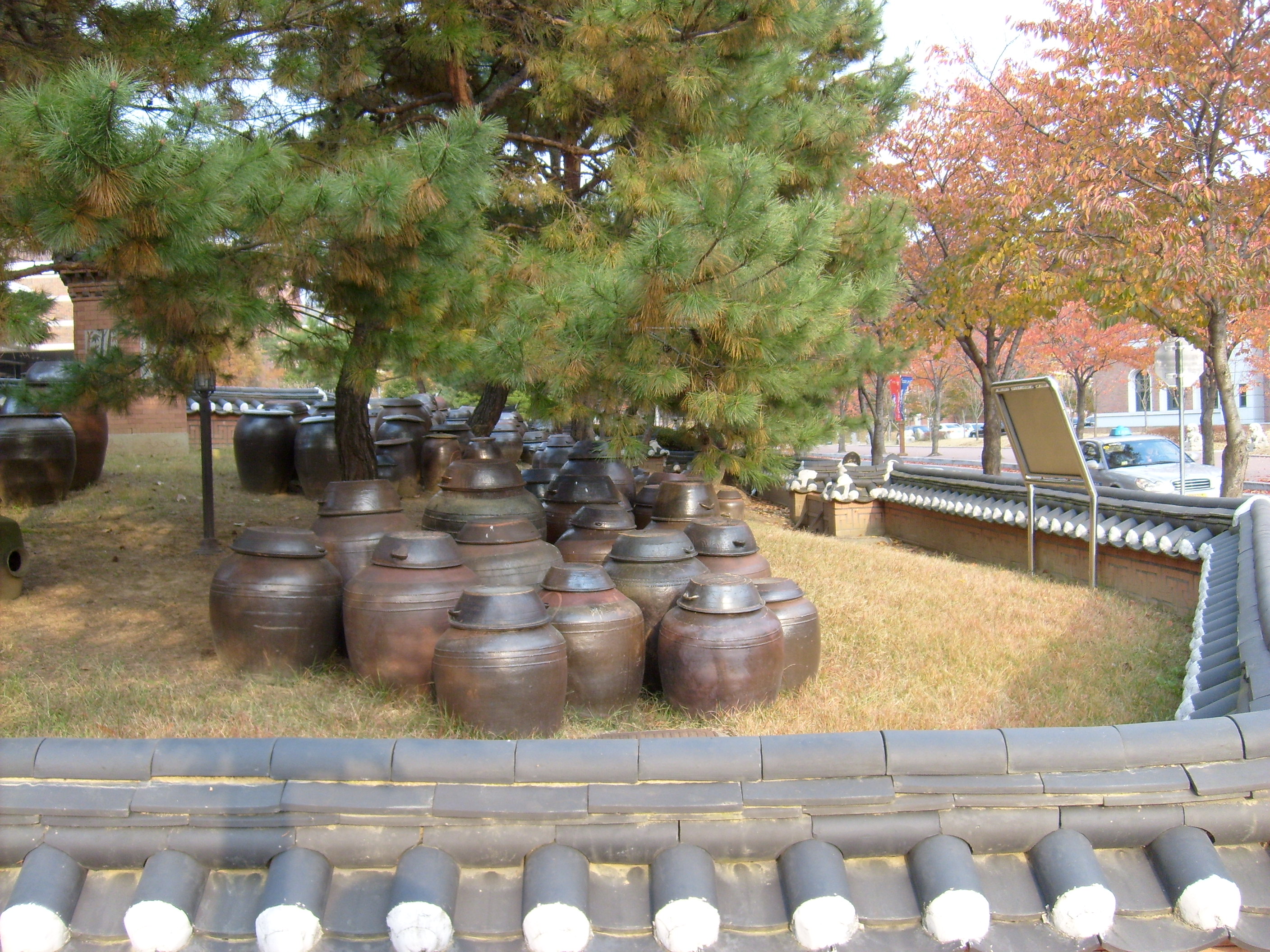
Kimchi pots (김치독) at Keimyung University
There is always a random element in kimchi production, something beyond the control of the ‘cook’, and hence tasting the final product is always an exciting moment. Like making English tea, you can follow the recipe and time the brewing meticulously, but the production is influenced by factors beyond the recipe, it might be the temperature, the humidity or the quality of ingredients of that particular season. Part of the fun involved in kimchi making is the pursuit of perfection in the light of random influences. And if the kimchi itself isn’t synonymous with Korea, the pots (김치독) in which it is traditionally stored, can be seen sitting in vacant corners, on rooftop and apartment verandas across the entire peninsula. The kimchi pot is as Korean as soju, mountain temples and the cawing of the magpie and their production an ancient and noble art. But the making of kimchihas also kept abreast of modern developments. Kimchi has traveled into space and the kimchi refrigerator is now a popular sight in many Korean homes.

My kimchi 'colon'
Learning how to make kimchi and any of the extensive range of side dishes collectively known as banchan (반찬) and of which cabbage kimchi is the King, is difficult. In my area of Daegu are three small shops which produce homemade banchan but they staff don’t like being photographed or watched whilst working. My grandmother, the daughter of a Scottish baker, was just as defensive about her shortbread which was superior to any factory produced shortbreads.
Waygukins and Koreans alike will never grasp the potential of their smelly delicacy until they are able to eat and smell it in isolation, basically, outside of Korea. Like, garlic, the best defense from the offensive smell is to ingest it yourself and once you do that you no longer notice it. You can walk in and out of Koreans homes and their restaurants and never really smell kimchi and yet the whole nation reeks of it and everywhere everyone chuffes out its pungent odours. The only reason you don’t smell it is partly because you have acclimatised to it and because you eat it. I remember arriving at Kimpo International Airport after a holiday, and as I walked into the arrivals hall I suddenly noticed the smell of kimchibut no sooner had I noticed it, than it disappeared. But if you visit Korean friends in the UK, or they visit your house, the odour of kimchiand of garlic is very strong and even unpleasant. I often notice how Korean Air and Emirates, provide Korean meals and kimchi on flights into Seoul and wonder if this is to acclimatise passengers to the guff of garlic and kimchi, prior to landing.
The taste of kimchi has a bizarre appeal and every Korean has a liking for a particular type; for some it’s fresh kimchi in which the fermentation hasn’t really started, for others it’s the tangy bite of old kimchi which draws your tongue like cold tea or strong red wine. And it can be used in a multitude of ways: barbecued, added to stews, used for soup, put into pancakes, fried with rice, minced into hamburger patties, rinsed in water and added to cold soups chilled with ice cubes. When the fermentation process has stopped, and kimchi is left standing, sometimes for months, it is often attacked by a glueppy white mold which lays over the uppermost leaves. At this stage the kimchi is at its sourest and is ideal for cooking kimchi stew (김치찌개), the mold simply being washed off. I don’t think any westerner truly enjoys kimchi first time, but the more we familiarise ourselves with its guises, idiosyncrasies and long and ancient history, the more entrenched our love affair with it becomes and the more we defend it to those barbarians who claim it stinks or tastes revolting!

Kimchi Stew
Twisting and weaving into Korea’s distant past, like one of the gnarled and knotted roots on the mountains, Kimchi, like its people, has endured and adapted. Originally it wouldn’t have contained chili, this being an addition sometime after 1500, when the chili plant arrived in Korea. Of all the foods capable of representing a nation, kimchi is the most personal, the most intimate and the most capable of embodying Korea. It transcends simply being a product of the soil, its production etches out a seasonal calendar, it brings families and communities together, it provides both national and regional identity with space for a little individual flare, and at tables across the country people bond as individual batches are critiqued, compared and celebrated. Even the frosty bite of winter and the hot balmy days of hanyorum (high summer) have a role to play in determining the flavour. In the past, Koreans believed that the foods that suited individuals best were the ones grown in the soil in which their ancestors had both toiled and been buried. It was the ‘fruits’ of the soil which powered families across the generations. When companies produce canned kimchi, or even packeted kimchi, they grossly miss the mark because not only is it supposed to be alive and active, but it has to be Korean. Dead kimchi, kimchi castrated of its chemical process is not kimchi and indeed Koreans have taken foreign kimchi producers to international court over such issues. You can eat French brie or Camembert made in Spain and probably not notice a difference, but kimchi that is dead or not even from Korea, is simply not kimchi.
Useful Resources:
Beyond the Blog – Maangchi: Queen of Korean Cooking
© Nick Elwood 2010 Creative Commons Licence.
Hanyorum – High Summer (한여름)

Hanyorum in Daegu - stifling!
Hanyorum (한여름) is the period of high summer and generally occurs in early August when the changma (장마) has moved North into Manchuria. Hanyorum is typified by high temperatures, reaching 38 degrees Fahrenheit, (100 degrees Celsius), in the afternoons and hot and humid nights.
One characteristic of hanyorum is the appearance of crickets (귀뚜라미), though you are more likely to hear them than see them. I both saw and heard crickets yesterday (August 24th), though they may have been chirping earlier than this. Crickets differ from grasshoppers (메뚜기) in that they are nocturnal and the song of both differ from the omnipresent scream of the cicadas (매미).

A cicada - or memi (매미). The sound of summer!
Grasshoopers (메뚜기), which some Koreans enjoy eating, are diurnal insects and their chirp is often drowned by the memis’ summer shriek, so you need to listen carefully to hear them. Their chirp is more noticeable when there is a lull in the memi scream. They are bright or vivid green, have antennae which are always shorter than their body, and long wings which when in flight are often coloured.
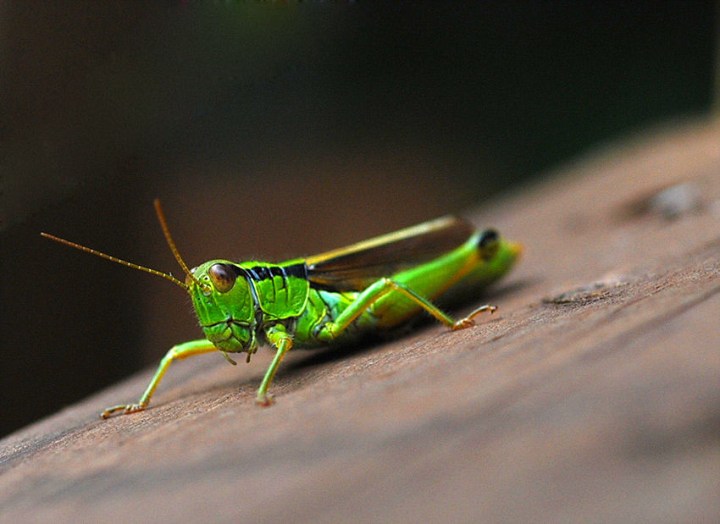
Grasshopper - (메뚜기). Mmmm- delicious!
Crickets (귀뚜라미), are nocturnal and as such require darker camouflage, usually pale green or brown. Their antennae are often the equivalent length of their abdomen and have atrophied or even absent wings and hence, do not fly. They also have ears located on their legs in the form of a white spot or mark. In hanyorum, the chirping of crickets (귀뚜라미) fill the evening air and as such they chirp at lower temperatures than the memi. While memi (cicadas) start screaming at 29 degrees Celsius, the cricket will chirp at cooler temperatures, as low as 13 degrees Celsius. Using Dolbear’s Law (based on Snowy Tree Crickets), it is possible to work out the approximate temperature in Fahrenheit by counting a cricket’s chirps over 14 seconds and adding 40. An interesting if not useless equation unless you happen to have a cricket in isolation, but on one or two occasions, I have had one chirping inside my ‘one room.’

Cricket (귀뚜라미). The clearly visible ears, located on the legs, and absence of wings distinguish it from the grasshopper.
Interesting links and sources:
Telling a grasshopper from a cricket
© Nick Elwood 2010. This work is licenced under a Creative Commons Licence.


 Elwood 5566
leave a comment