Death and Diet by Watermelon

Watermelon (수박)
Years ago, I watched a documentary about the problems of policing in that scummy slip of coastline on the southern Spanish coast, infamous as the holiday destination of 4.5 million Brits holiday makers and 350.000 homeowners, the Costa del Sol; aka The Costa del Crime due to the disproportionate number of British criminals in residence to evade to British law. The Costa del Sol is one sprawling Conga of destinations well-known to most British people even when they have never set foot on Spanish soil and know little about local life: Marbella, Fuengirola, Alicante, Torremolinos, and Benidorm. Formerly all isolated beautiful fishing villages, they now form one vomit ridden strip stretching from Malaga down to Los Alzacares and providing all the comforts of British culture, the bars, fish and chips, sandwiches, Sunday roasts and enough English-speaking people to attract that particular brand of clientele whose idea of a holiday is sitting on a packed beach in an environment as English as Clacton but with guaranteed sun and cheap booze.
In all fairness, the coast provides a haven to other European plebs and criminals and within the context of policing, this was the subject of the documentary. On the particular evening the cameras were rolling, and following the difficulties faced by local police, a group of Danish lads were arrested for swimming naked in their hotel pool, some Brits lads were menacing locals with knives and some drunken Scandinavians were throwing water melons off the top of their hotel onto the street below.All were young men and all were drunk!

British criminals on permanent vacation on the Costa del Sol
‘Brits with knives’ seemed typically nasty while the nude swimming and water melon bombing were amusing – until I started carrying water melons back to my Korean apartment. I’ve never bought a water melon in the UK and though you can buy them, usually in Mediterranean type delis, I don’t think they are as popular as other types of melon, the smaller varieties such as honeydew and cantaloupe. Having to lug watermelons home on a weekly basis, naturally, it dawns on me not only how heavy they are, but how catastrophic the effect of one landing on your head from 1o floors above. Suddenly, wielding a knife doesn’t seem quite so bad as bombing pedestrians with a weighty watermelon, an act I had formerly dismissed as amusing and harmless.
Water melons are one of the most common fruits in Korea over the summer and are currently my favourite especially when cold and crispy. They are supposedly highly beneficial as an antioxidant and have numerous other acclaimed benefits. With approximately 21 calories per 100g they are a healthy snack though I suspect I probably eat around half a kilo before I go to bed. (link for information on Korean watermelon).
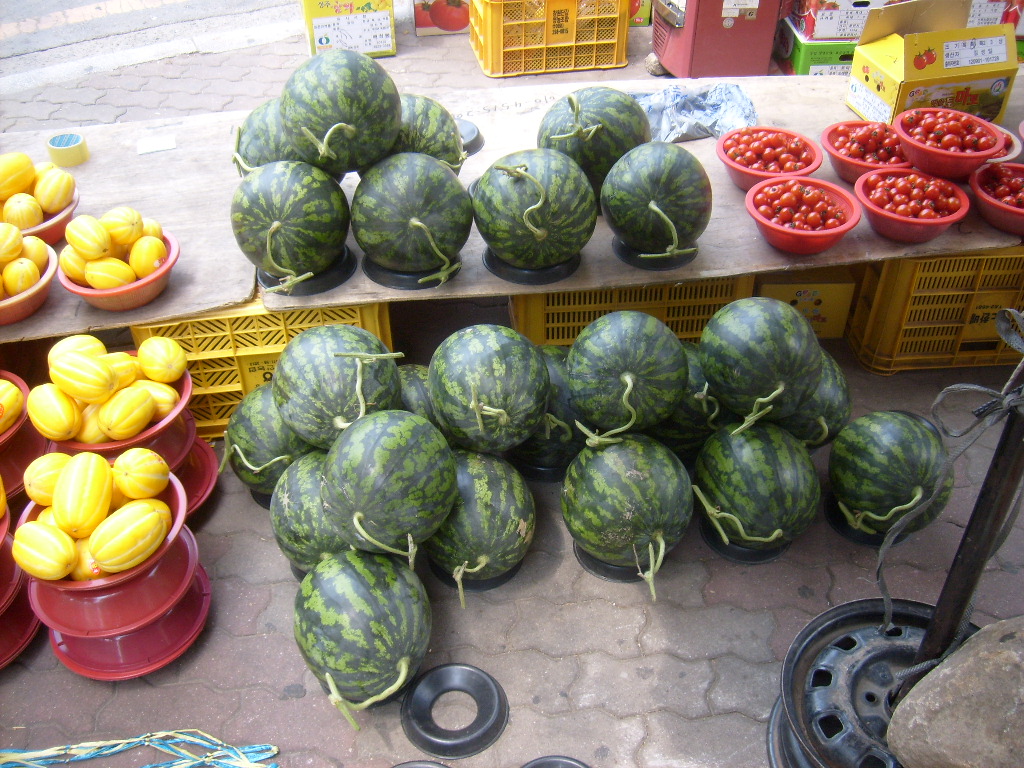
Summer fruits

This work is licenced under a Creative Commons Licence.
Monday Market: Sesame Leaf (갰잎) Perilla Frutescens

A field of sesame. (갰잎) Perilla Frutescens. (Ch'eonan) September.
I used to pass a field of sesame everyday on my way to school in Ch’eonan (천안). In the late summer, you could always smell the scent in the air especially in the muggy weather or when it was raining. The scent of sesame is quintessentially Korean. I feel in love with sesame leaves the first time I ate them though I often hear wayguks (meant endearingly), say they don’t like them. Being a fat twat, I eat most things. Indeed, after my first visit to Korea I grew sesame in my garden for a couple of years. Yes, they have a distinct taste and smell both more pronounced than the other types of leaves used to ‘parcel’ the components of a Korean barbecue. In addition, their texture, slightly furry and definitely more ‘leafy’ than lettuce, distinguishes them.

Sesame leaves with boiled pork. (보쌈)
Sesame, in all its forms, as a vegetable, kimchi, as seeds, oil and powder are an essential part of Korean cooking. The leaves are available throughout the year in portions reflecting the weather of that particular growing year. Late summer is when they are most abundant and at their largest in size, approximately the span of a large, adult hand.
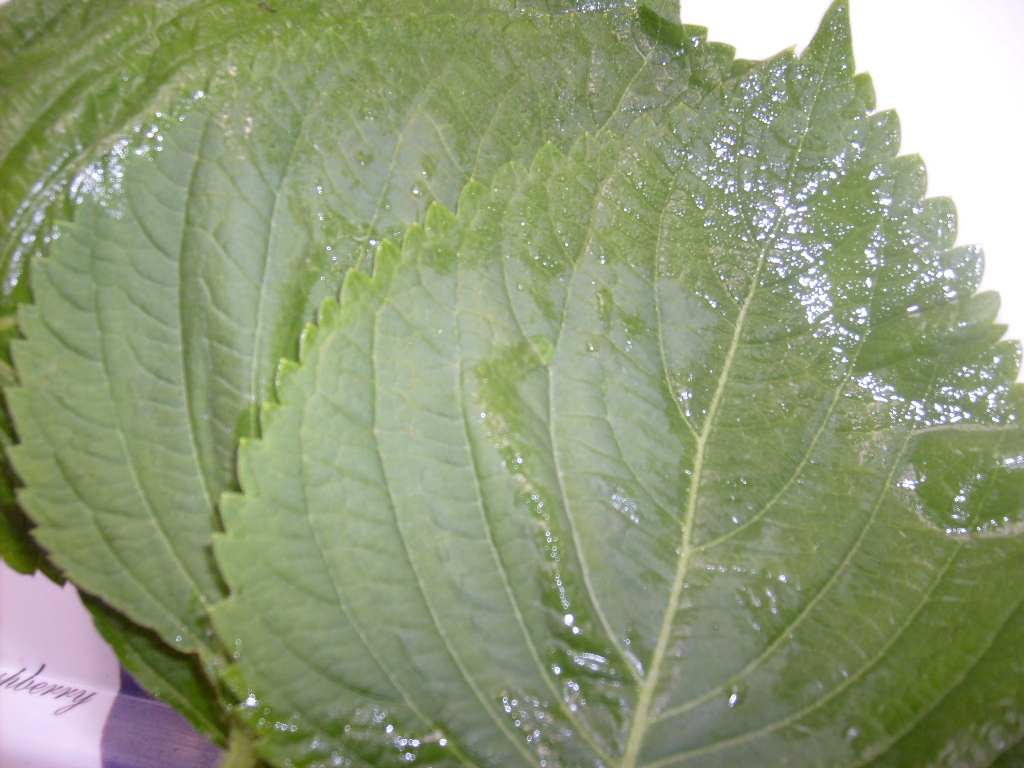
Washed leaves of sesame
The leaves can also be made into a kimchi and pickled though I find the process laborious. In supermarkets they are often sold washed in bags, or more traditionally, as in the street markets, in small bundles, folded in half and bound with a piece of twine. While not particularly tasty on their own, they are excellent when used as a wrap – provided of course, you like them in the first place. My favourite parcel – meat of some kind, a little boiled rice, raw garlic and cabbage kimchi or bean paste – delicious!
Monday Market. Aralia Elata – 두룹
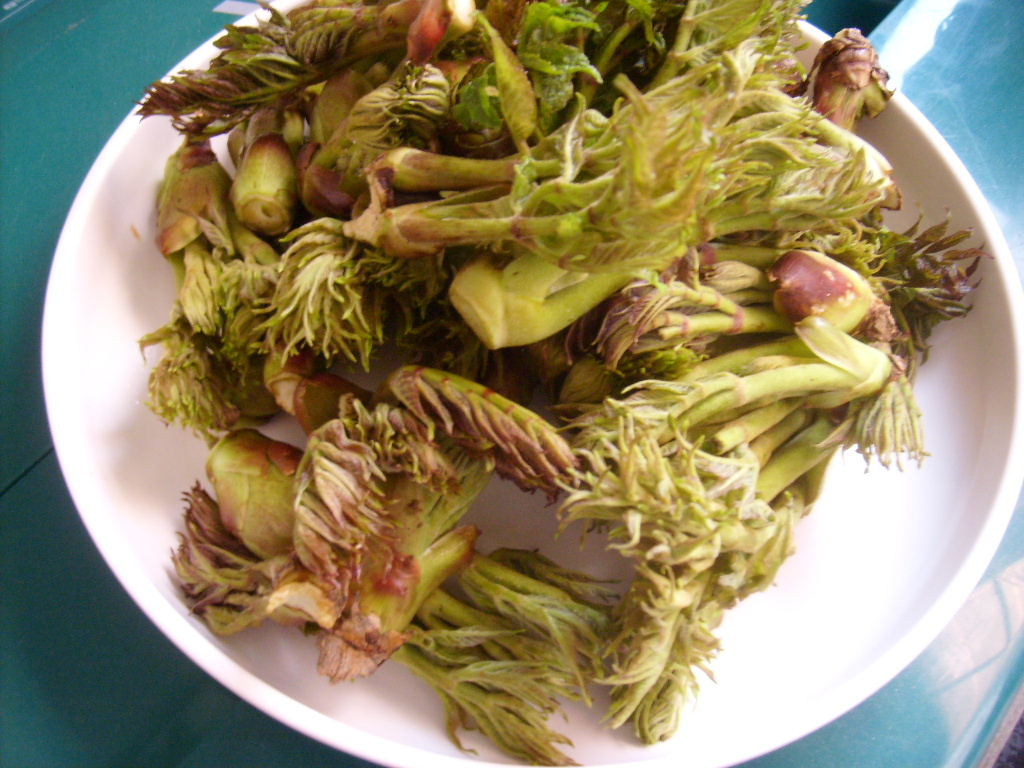
Shoots of the mountain green, Aralia Elatia. Durup (두룹)
It took me a bit of work to track down the details of this tasty mountain green which is currently in season. Durup (두룹 나무) is a deciduous tree which is rather attractive but for commercial purposes cultivation is ‘under-glass’ using small branches. The stems are thorny and the fresh young shoots, the edible part, appear in street markets and supermarkets between March and May. If you buy them from the old ladies on the street they cost about 10.000Won for a large bag of probably in the region of a hundred shoots. I noticed that in E-Marte about 6 shoots cost around 2000Won.

Aralia Elata the tree. (두룹 나무)
There are a number of ways to use durup but it is especially tasty, washed and dropped into boiling water and cooked in the same way you would broccoli. A short vigorous boil means the stems are slightly crunchy. I made a dip of a little mayonnaise, red pepper paste (고추장), and corn syrup (물엿). However, they are also used in soups, in pancakes and battered and deep fried.

A durup shoot (두룹)

Durup and dip

Durup and pancake
I don’t want to overrate this too much, I mean, how delicious is broccoli or cabbage unless swimming in butter? But honestly, this was as equally ‘tasty’ as broccoli with a somewhat nutty, asparagus-like taste. With a small bowl of dip I ate a large bowl for breakfast and then went back to the kitchen to eat what was left. Definitely worth trying! (more durup info here)
Quintisentially Korean – Mugwort (artemisia asiatica) 쑥

Mugwort (artemesia asiatica) 쑥
In the ebente-tang (이벤트 탕) last Thursday, the essence of the day was mugwort (쑥) which is a coincidence. This plant has a long and extensive history in both the east and west and being Spring, it is currently readily available in street markets and from the elderly women who sit on pavements with a small selection of vegetables.
I bought a very large bagful for 2000Won (£1 sterling) which I washed, drained and put straight in the freezer. Now, to be honest, I’m not sure how it is used but a quick search revealed one use is in soups. Immediately, I added some to my bean paste soup (된장 찌개) which I was making for breakfast. Don’t be fooled into think I’m a health freak, I had a BHC fried chicken last night, with a complimentary bottle of cola! My initial reactions to the mugwort were good but I’ll need to try it again.
Mugwort is also known as Felon Herb, Chrysanthemum Weed, Wild Wormwood, Old uncle Henry, Sailor’s Tobacco, Naughty Man, Old Man or St. John’s Plant. Korean uses it to colour some types of rice cake green and it is known as a blood cleanser. It is also used in the production of the small cigar shaped burners used in the oriental medical practice of moxibustion. The genus, artemisia, is extensive and one type, artemisia absinthiumm, is used in the production of absinthe, the oil of the plant giving this powerful drink, among other things, its rich green colour.

Absinthe
Mugwort pillows, also known as dream pillows, basically a pillow slip filled with mugwort, can apparently induce vivid and even prophetic dreams. I’m skeptical when it comes to ‘crystal crap’ so in my trawling for information on various aspects of mugwort, I fell upon a youtube video by ‘New Age Goddess, Djuna Wojton,’ which was too good to ignore. Djuana is a typical Earth Mother eccentric who is both entertaining and somewhat charismatic, so you can try the link and learn how to make yourself a mugwort pillow – which I intend to do when the market is next in town.
Interesting links for Mugwort:
http://en.wikipedia.org/wiki/Artemisia_vulgaris
http://www.botanical.com/botanical/mgmh/m/mugwor61.html
http://www.herbs2000.com/herbs/herbs_mugwort.htm
Absinthe – http://en.wikipedia.org/wiki/Absinthe
Strawberries and Musk Melon – Monday Market
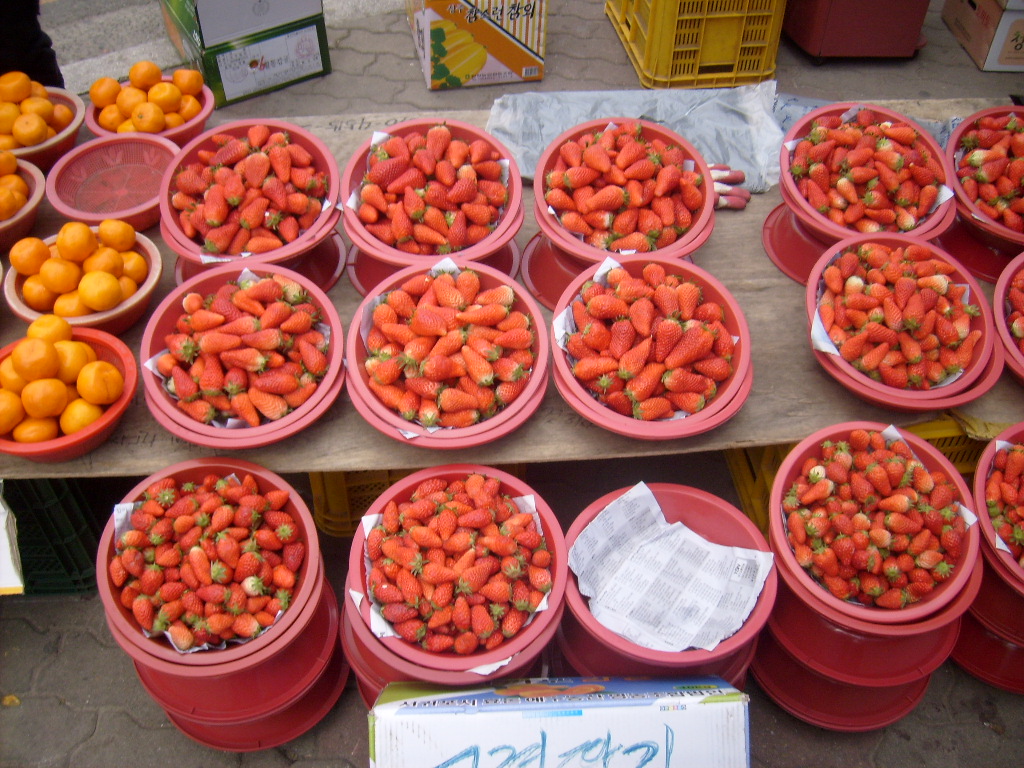
딸기
Ahh, the smell of these strawberries was delicious. A common sight now spring is here as is the musk melon. The strawberries can be fairly large, some the size of golf balls.

Syrupy sweet
Musk melon is okay but personally, I don’t find it as delicious as the much larger, and sweeter, honeydew melon.

참외
An Interlude of Insects

A memi
The memi; every summer there’s one hiding near whichever window is open. Of course, it could be a cricket type thing. I always forget which one sings first in the year and which last. Koreans never seem to know either and if I ask I’m even more confused. I think I generally fathom it out by October, by the time they’re all dead, but when spring comes back, I’ve forgotten. ‘Listening to the Locust,’ well I like the alliteration but locusts are too much like cockroaches and ‘Listening to the Gweedorami,’ too off track. Last year I remember hearing a memi almost at the end of Autumn. I came over all nostalgic as it must have been the last memi of the year – (but maybe it was a cricket thing!) It’s solitary chirping was quite pathetic as there were no other memi chirping back. I know they’re ugly but what a bum way to go! Do they hibernate? A memi is a cicada but I never know how to pronounce the word and of course, we don’t have them in Britain, so they’re a little special.
I saw my first cockroach of the year last week. It was freaking big. It was late afternoon and with the kitchen window open, the warm afternoon temperature, which obviously coaxed it from its hidey-hole, had dropped and stranded it, almost frozen, on the wall. I didn’t look at it too long as I was expecting it to scuttle away but I saw it long enough to notice that despite its length, about 3 cm, it looked quite gaunt. I rapidly picked up a floor brush and bashed it on the wall but the bristles hit it and it fell to the floor where it lay on its back dazed. Between the fridge and wall, this horrid piece of God’s creative genius, was almost safe, it only need drag itself a few centimeters to be under the fridge, but the fall and cold were taking their effect and I had just enough time to grab my spray can – unused since last year. I pointed the nozzle between the space by the fridge. There it was, with those revolting antennae bibbling and bobbling, trying to hide behind the electric cable. I’ve noticed the spray works excellent on flies and mosquitoes. The mosquitoes drop almost instantly, dead after a few twitches, while those big fat flies which Koreans so aptly call ‘Shit Flies,’ fly around for a minute before nosediving into the floor where they suddenly go all spastic-spasm and then stop – dead! Sometimes they’ll lie still for several seconds and then buzz crazily back into life, usually whirling round on the floor like they’ve been hit by the most enormous dose of amphetamine. Then, dead, they stop for good. But the cockroaches, you can spray them and they simply run away. Even neat bleach doesn’t seem to affect them. I don’t think the spray really works unless you spray so much on them they drown. If it wasn’t for the fact the spray kills other insects I might think it simple water. So, cornered and behind the power cable, I spray the thing so hard it’s blown onto its back where it sticks to the wall, weirdly cruciform. I didn’t stop spraying until I knew it couldn’t escape. I left it down there for a day, until it had dried and fallen from its sticking place, then I swept it out, chucked it in the sick, and washed it away. Even though it didn’t touch any of the stainless steel, I tipped a whole kettle of boiling water down the sink hole to purge its passage.

Kill 'em! (click-pic for company site)
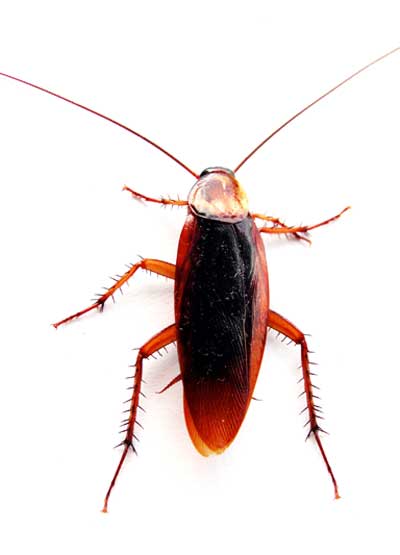
In class, kids tell me never to splat them as if it’s a female it can deposit eggs and I know they carry an egg sack, even that sounds revolting, an ootheca. They also tell me they can crawl back up sinks and climb out of toilets and that microwaving them is the best method of disposal. Would you want to heat your toasty in the microwave after baking a roach in it? I’ve now strategically placed roach (Combat) stations all around my flat. I only saw about 8 roaches last year and know they were coming under my front door, from outside.What fucking planet was God on when he designed a bloody cockroach? That’s an animal absent from ‘All things Bright and Beautiful!’
© 林東哲 2011 Creative Commons Licence.
FURTHER REFERENCES
Magnolias (목련) and 'Sudden Spring Colds' (꽃샘추위)

The glorious magnolia (목련) provides a sure sign that spring is here. This is one of my favourite flowers but unfortunately, as magnificent as it looks with large, waxy, petals, it’s has a strange, low-key, chemical scent. Early spring is typified by cool or cold mornings and evenings and increasingly warmer days but temperatures can change suddenly – a phenomenon known as (꽃샘추위). From my understanding this means ‘sudden spring colds’ or, what in English we might call ‘cold snaps’ except a cold snap can occur throughout the year. Any further insight into this term would be appreciated.

Magnolias
Shepherd's Purse (냉이)

Shepherd's Purse (Capsella bursa-pastoris)
With the approach of spring many seasonal ‘vegetables’ are appearing on the streets and one of the most common is Shepherd’s Purse. This costs about 2000W (£1 sterling) for a large bunch and can be bought from the elderly women who usually sit on the pavements selling various ‘vegetables.’ I haven’t yet seen it in my local E-Mart. Two of my Korean friends didn’t even know the name for this ‘vegetable’ and neither did they know how to use it. My best Korean friend is a total muppet when it comes to cooking so a much younger colleague gave me instructions. Shepherd’s Purse grows in the UK where for most people it would probably be classified as a weed and indeed when I initially tried it in a soup it tasted as one might imagine boiled grass to taste. Subsequent experiences revealed a subtle taste which some students describe as ‘medicine.’ However, not giving up easily, I have cooked this several times and find it pleasant.
Shepherd’s Purse doesn’t seem to keep long, even in the fridge and it will need washing and the small roots trimmed off. If you buy a bagful this job is tedious! Subsequent purchases, I prepared, chopped and then put in a plastic zip bag in the freezer. It makes a subtle addition to bean paste soup (된장찌개)and is quite often used with oyster soup. I have also used it in fish soup (해물탕). Shepherd’s Purse won’t win any taste awards and although I haven’t quite decided the extent to which I like it, it does provide a distinct but gentle background flavour.
Additional Note
(Three weeks later) Shepherd’s Purse has grown on me. In bean soup it definitely provides a pleasant flavour. I decided to buy some more later in the week. It keeps well stored in the freezer.
FURTHER INFORMATION
Monday Market – Shepherd’s Purse (March 2011)
© Nick Elwood 2010 Creative Commons Licence.
Winter Returns to Daegu

Top of Apsan Mountain (앞산)
Just when you thought it was safe to ditch the duck down thermal anorak, and winter suddenly reappears. After several afternoons with spring in the air, Sunday morning saw Apsan Mountain, Daegu, dusted in snow. So, after an invigorating bowl of chicken and ginseng soup, we took the cable car to one of Apsan’s summits. It was freezing with icy patches underfoot and a wind that stung the ears. Icicles hung from the summit buildings and surrounding trees were covered in a powdery snow.

Frosted!

Daegu and even much of the lower mountain however, remained spring-like, if not a little cold.
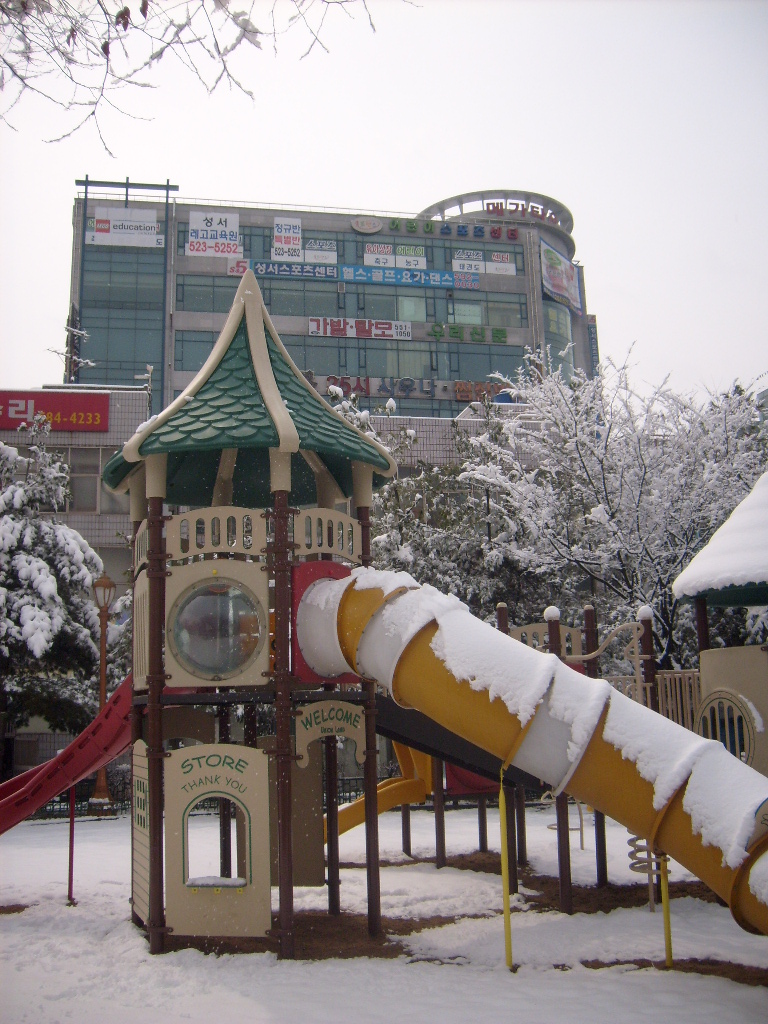
When the sun rose on Thursday morning, most of the city was under snow. Unlike England however, the buses were all running and no schools closed.

Close to Mega Town, Song-So
A Small park

Through the trees

By mid-morning the world was slushy!
!
Celebration of the First Full Moon

Full moon
Sunday the 28th of February (2010) is the celebration of the new year’s first full moon. (대보름). This occurs on the 15th day of the lunar new year. I was wondering why the markets and supermarkets were suddenly full of nuts, walnuts being the most popular, and discovered that one of the celebration’s traditions is to crack open nuts with one’s teeth as this is supposed to guarantee their health throughout the coming year. Other traditions include mountain climbing, especially to see the rising moon as well as eating five grain rice (오국밥). Yakshik (약식), a tasty rice cake containing chestnuts, pine nuts, honey and sesame oil, is also eaten. Celebration is more noted in rural areas where dried grass is burnt. Originally, this occurred between rice fields and was probably a means of killing insect pests.



 Elwood 5566
leave a comment