Penis Paradise. Palgongsan National Park
Highly recommended
If there’s one thing I’ve learned about life in Korea, it’s that cocks can turn up in the oddest places and at the most unexpected times. Of course, if you’re a westerner you might be surprised as we so often perceive Korea as conservative in its values. Well of course it’s freaking conservative! If you’ve been socialised and educated in one of those degenerate moral and ethical cesspits, such as the UK or USA, you cannot fail to perceive Korea as naive and innocent. Most westerners, myself included, are so used to cesspit values we hardly notice the toilet paper and bits of turd clinging to our bodies as we travel the globe. Being British and from the land where teenage pregnancy and STI’s are at ‘epidemic proportions,’ in Korea, with one of the lowest teen pregnancy rates in the world, 2.1 per thousand, it is quite natural to perceive the country as conservative and even innocent. Ironically, despite Korea’s low rate of STI’s and teenage pregnancy, the existing figures are a current social and political concern! I am neither religious nor particularly moralistic but, I prefer my students, especially ones under 14, to be innocent as opposed promiscuous, predatory, precocious, tarty and cheap.
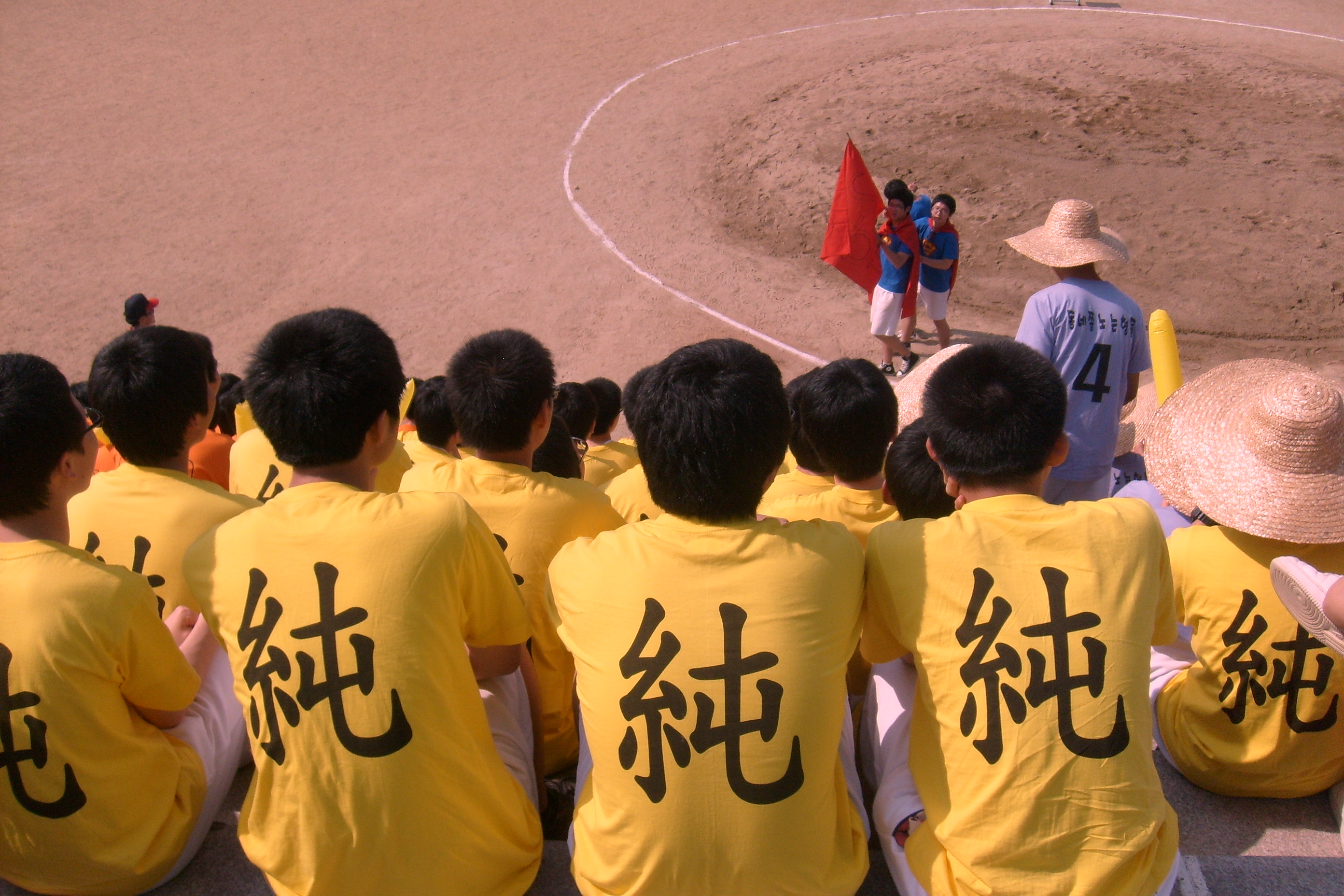
純 순수한 - 'Innocent '
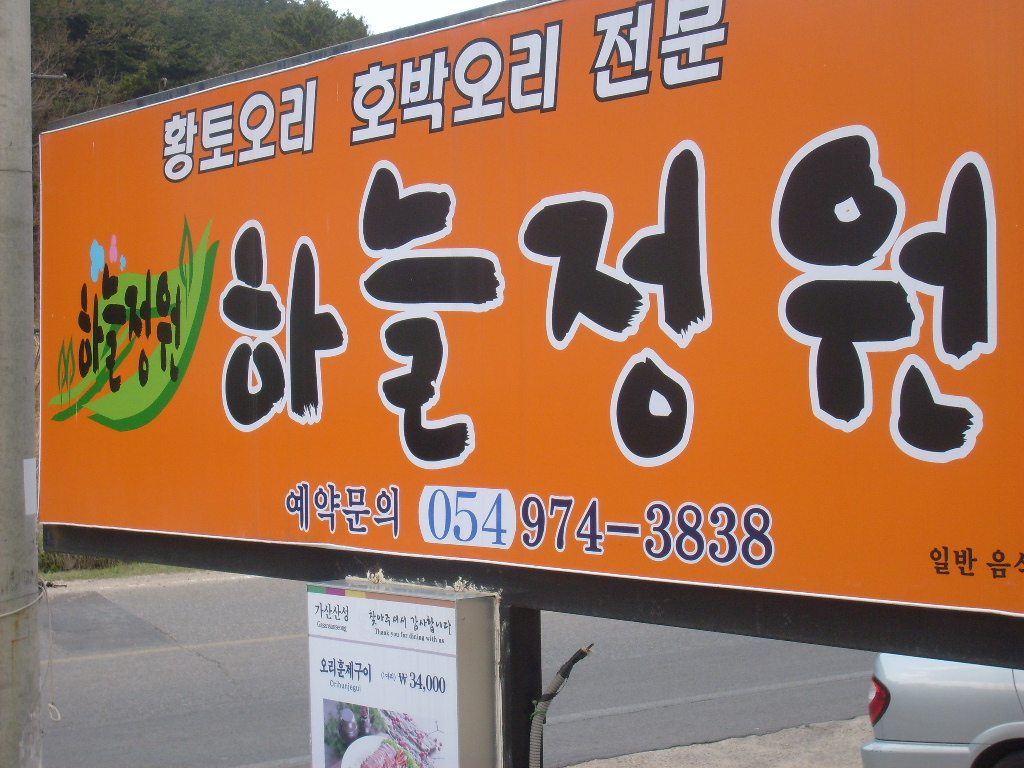
In Autumn last year, I visited Palgongsan National Park, on the edge of Daegu. After a very delicious smoked duck barbecue, I took a little troll around the restaurant grounds only to discover 42 penises, (yes, I actually counted them!), all poking skywards and congregated in an area about the size of a large living room. This little patch of cock I endearingly referred to as Penis Paradise. On my initial trip, I’d forgotten to take my camera and all year I’d been planning to go back and capture, albeit it on a digital, the only cocks I am probably likely to get close enough to touch between now and the grave. You can imagine how gutted I was when I enthusiastically arrived at my little paradise, tucked away in some obscure corner of the mountains, only to discover all but one cock remained. The adjoining restaurant had made some alterations but even after trolling around the building and snooping in tucked away corners, it became apparent I’d missed my one and only opportunity.
Where a patch of proud penises had majestically stood there remained one solitary cock which poked up pathetically from a surrounding pile of junk robbing it of any remaining grandeur. Up closer it retained an air of pride despite probably being the poorest specimen with a shaft looking hacked, holed and even split as if old or simply unfinished. The other ones had been smooth, perfected and each imbued with particular qualities suggested by both the nature of their wood as well as their individual design; qualities that only someone who likes natural wood and cock could appreciate.
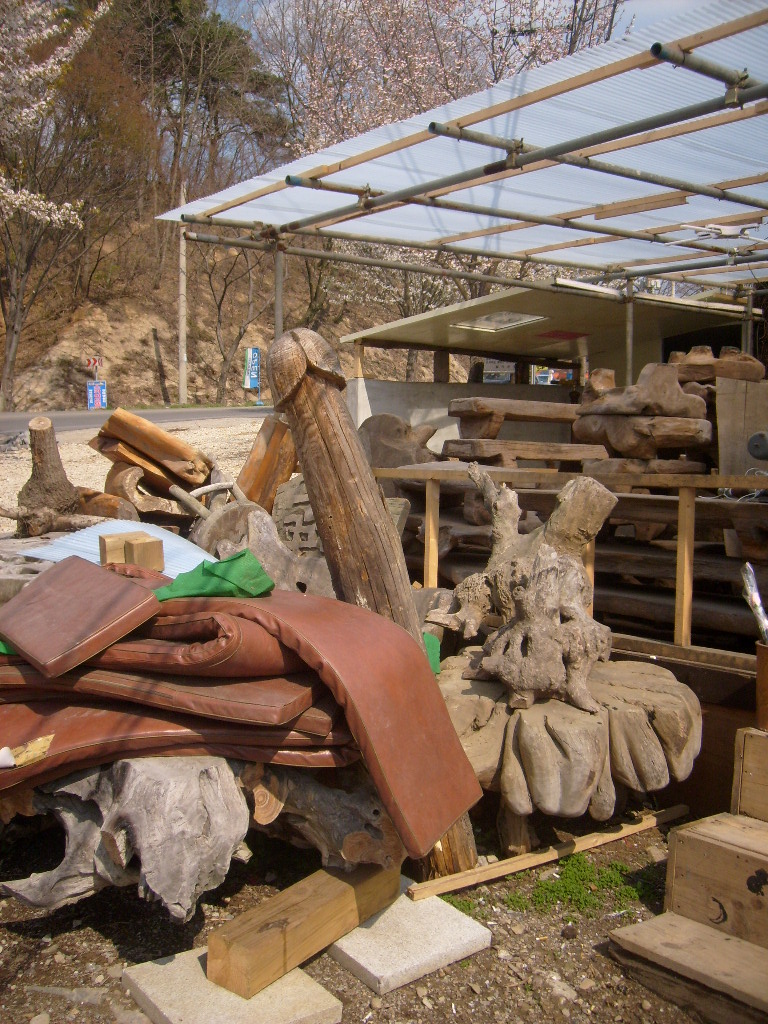
Surrounded by junk - Sacrilege!
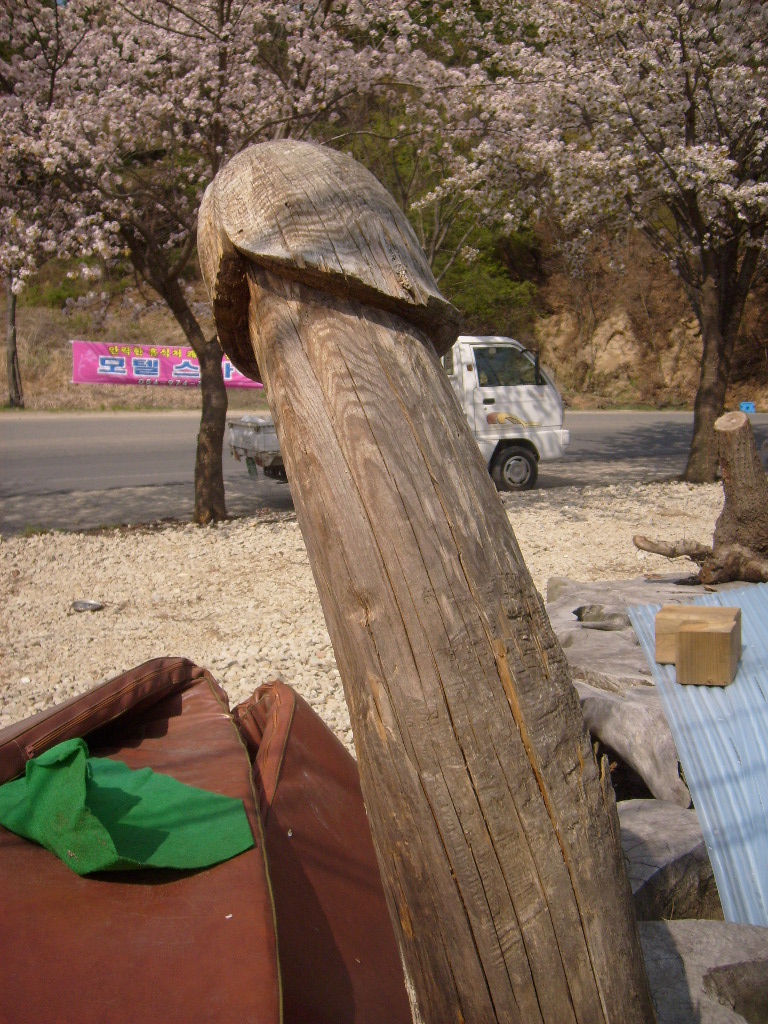
A badly hacked shaft in need of some oil!
Penis Paradise had originally stood outside a carpenter’s workshop/gallery and inside I found another penis. It was a big fat number, somewhat interesting but with a face carved on one side which I didn’t particularly like but it had the bonus of and added appendage ….yet another cock.
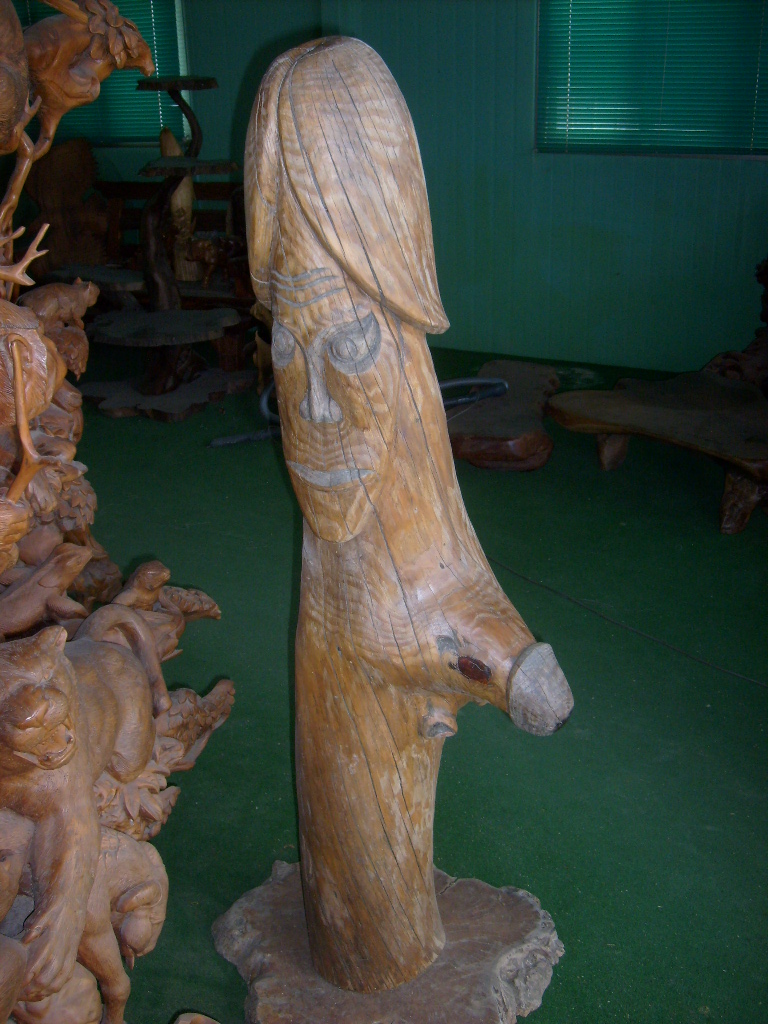
Two for the price of one
The epitomisation of Korea
Knotted and gnarled were the qualities that had enamored me when I first encountered that patch of penises. Korean wood is invested with a strange quality probably induced by struggling into life in quite difficult surroundings. Back in England, near where I live, are some examples of the most enormous oak trees and in a five-minute cycle I can be stood under trees that Constable himself painted. Korean mountain forests exude a sense of gargantuan Bonsai and walking in one, especially when daylight is ebbing, is like wandering through a Mahler symphony, most especially, his fourth. It’s a dark, warped, and knotted world, with craggy imposing crops of rock, mossy and lichened, the perfect background for goblins, ghosts and other imaginary forest creatures. There are no immense oaks on those rugged rocky slopes where every tree has had to fight its way into existence with roots seeking out and voraciously burrowing into nutritious gaps and fissures in that dense, granite-like base. Tress are wind swept, stunted, knotted, gnarled and twisted in manners which betray both pain and tenacity.
In my last high school, the top class of first, second and third year students, were called, ‘so-namu’ (소나무), ‘pine tree, classes,’ and the boys affectionately called, ‘so-namu.’ ‘He’s ‘so-namu’ would be used to describe and explain a boy’s exam success or identify the fact he was in the top class. That pained-tenacious existence, evident in Korean forests where life has been fought for, exists on other plains: you see it in the bodies of old men and women, bodies muscled and knotted, damaged and strengthened by an arduous life, yet supple enough to sit cross-legged, all a rarity in the west. I have seen old grannies who cannot stand up straight and are forced to walk with a right angle between their spine and legs, bodies damaged by a lifetime of carrying children or heavy loads on their backs, sit into a cross-legged position, and rise, without using their hands or moving their feet. Even at forty, I had to get on all fours to escape this position. Sometimes you see it in the bodies of younger children, but this is without doubt rapidly disappearing. I have several nine-year olds, usually ones whose hobbies are taekwondo, hapkido, or komdo, with six packs and thighs looking like they regularly squat. You see it in the faces of students as they trudge, bleary eyed from school to haggwon and on to another haggwon and then to the reading room, life a constant round of tests and assignments. Pain and tenacity are features of Korea which are engraved into the education system, their martial arts, encapsulated by the popular phrase ‘fighting!’ and also a reflection of their history. Penis Paradise was intriguing because wrought in the bodies of each penis, in both the nature of the wood and their design, was a sense of that pain-and tenacity – the struggle for life and triumph at its persistence.

'Tenacity' is often a key concept in Taekwondo, Hapkido and Komdo tenets

A reflection of Korea on many levels
Only one cock stood, an epitaph to its vanished members. Where had they gone? In fact, they’d been sold for exhibition at the Haeshindang Folk Village, Samcheok, also known as Penis Park.

Family Fun at Penis Park
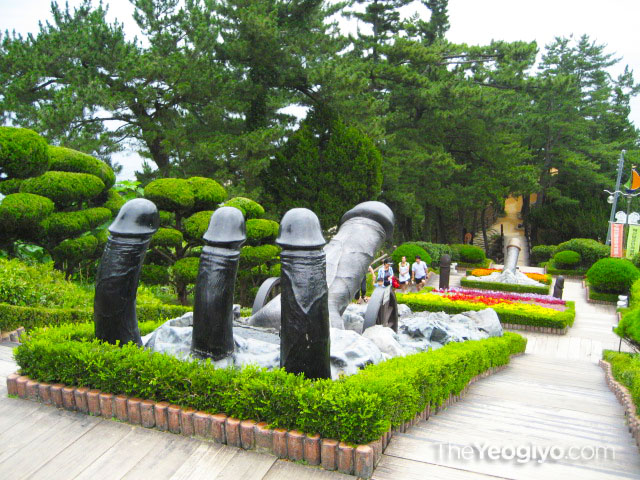
Penis Park, Samcheok, A Collection of colossal Cocks
With only one cock standing, the juicy aroma of barbecued smoked duck, attracted my attention. Putting my camera away, I went and enjoyed a wholesome meal. It’s no substitute for the real thing, but here is the menu:
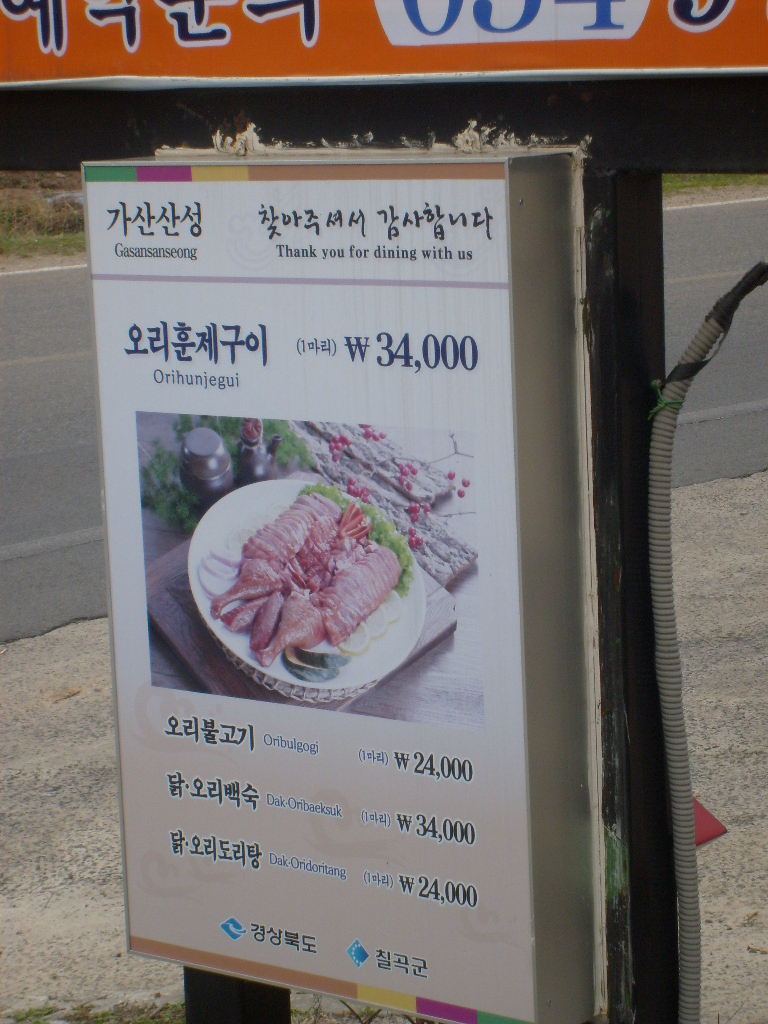
Smoked barbecued duck a specialty
Monday Market: Sesame Leaf (갰잎) Perilla Frutescens

A field of sesame. (갰잎) Perilla Frutescens. (Ch'eonan) September.
I used to pass a field of sesame everyday on my way to school in Ch’eonan (천안). In the late summer, you could always smell the scent in the air especially in the muggy weather or when it was raining. The scent of sesame is quintessentially Korean. I feel in love with sesame leaves the first time I ate them though I often hear wayguks (meant endearingly), say they don’t like them. Being a fat twat, I eat most things. Indeed, after my first visit to Korea I grew sesame in my garden for a couple of years. Yes, they have a distinct taste and smell both more pronounced than the other types of leaves used to ‘parcel’ the components of a Korean barbecue. In addition, their texture, slightly furry and definitely more ‘leafy’ than lettuce, distinguishes them.

Sesame leaves with boiled pork. (보쌈)
Sesame, in all its forms, as a vegetable, kimchi, as seeds, oil and powder are an essential part of Korean cooking. The leaves are available throughout the year in portions reflecting the weather of that particular growing year. Late summer is when they are most abundant and at their largest in size, approximately the span of a large, adult hand.
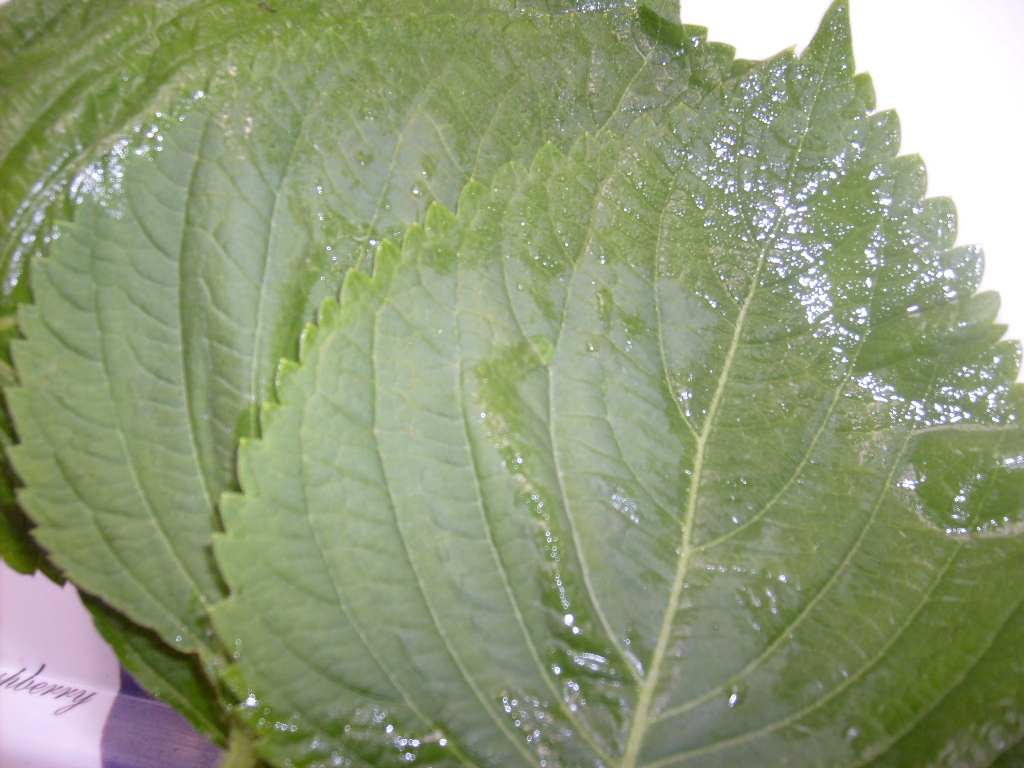
Washed leaves of sesame
The leaves can also be made into a kimchi and pickled though I find the process laborious. In supermarkets they are often sold washed in bags, or more traditionally, as in the street markets, in small bundles, folded in half and bound with a piece of twine. While not particularly tasty on their own, they are excellent when used as a wrap – provided of course, you like them in the first place. My favourite parcel – meat of some kind, a little boiled rice, raw garlic and cabbage kimchi or bean paste – delicious!
Cabbage Kimchi

Salted cabbage
You can’t have a blog on Korea without there being a post on Kimchi. Oh, I’m not going to recite a recipe as there are a number of brilliant sites able to do this much better than I. Ten years ago there was nothing on the internet about making kimchi, Korean history, Hanja and so forth but now it all awaits you at the stroke of a key. This week some one asked me if I prefer Korean food or western food? Well, being a fat twat, I like all food. But at this moment a roast dinner consisting roast potatoes, pork with crackling, homemade gravy and garden peas and sprouts would be my choice. Yes, in Korea I miss English food but I only have to be back in the UK a few days to pine for Korean food. Nowadays, I’ve usually prepared a batch of kimchi within a day or two of arriving back home, ready for when I suffer kimchi withdrawal symptoms. Making kimchi in the UK can often be a little problematic so I’ve include some suggestions here should it prove difficult to find quintessentially Korean ingredients.
Moo (무), usually called Mooli. Be prepared to have to buy moo which looks like a big white carrot and is so stale you can bend it in half without it snapping. Tesco’s often sell them. If you can’t buy moo, white turnips are a good substitute.
Thread Onion (실파) – a good substitute is spring onion or better still, chives.
Anchovy fish sauce – (액젓) the Thai version, easily available, is indistinguishable (in my opinion).
Minari (미나리) – I have read some people use water cress for this but I’ve never tried it. Parsley might also be an option but I’d choose the flat leaf rather than curled. If I cant use minari, and in the UK, I have never been able to buy it though it is probably available in areas with a Korean population (eg, New Malden), I have simply left it out.
Chinese leaf cabbage (배추) – bought in a place such as Tesco’s are always shit quality. Small, probably four times smaller than an average real cabbage, almost pure white, and around £1 (2000W) each. They are difficult to cut properly and I have often cut them up rather than try to keep them in sections.
MAKING KIMCHI TIPS (these are my tips recorded for my own benefit. If you want to jump straight to Maangchi’s kimchi making video, providing clear instructions in several different formats, click the photo below.

Maangchi! The Queen of Korean cooking
One sure way to impress both Koreans and wayguks is to be able to say you can make kimchi. No! despite what you have been told, it is not a difficult process. After some trials and experimentation you will find it easy to ‘fine tune’ kimchi to your own particular preferences. There are very many different versions of cabbage kimchi both in terms of individuals recipes and in the taste of kimchi as it ‘matures.’
The price of seasonal goods in Korea can alter drastically depending on the weather and other factors. Currently Chinese cabbage (배추) is increasing in price due the late start of spring but in December, when I made my last batch, one large cabbage was 1000W (50 pence) and two of these were enough to provide me kimchi for about six weeks. This morning I found it very difficult to but cabbage in the market and when I did find some it was rather manky and expensive. Currently, cabbage is a bout 300% more expensive than in December. Make sure you scrutinize the underlying leaves and beware of ones which appear eaten as some pest burrow into the cabbage. A tell tale sign are brown smudges on the leaves. If you’re buying cabbages in the west you won’t encounter this problem but the quality will be much poorer. A cabbage, apart from the outer leaves, should be tight.
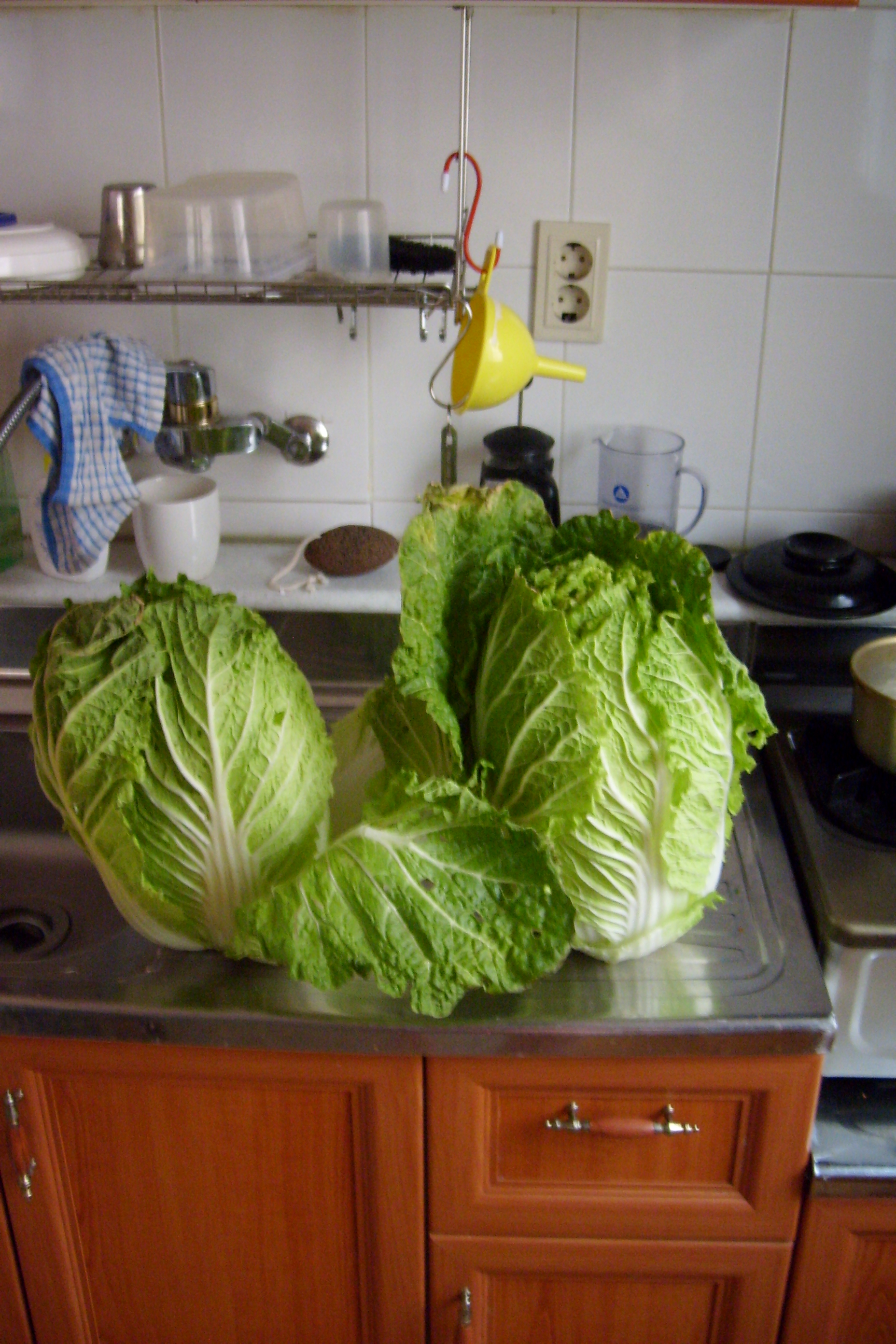
Two good size cabbages

Outer leaves removed
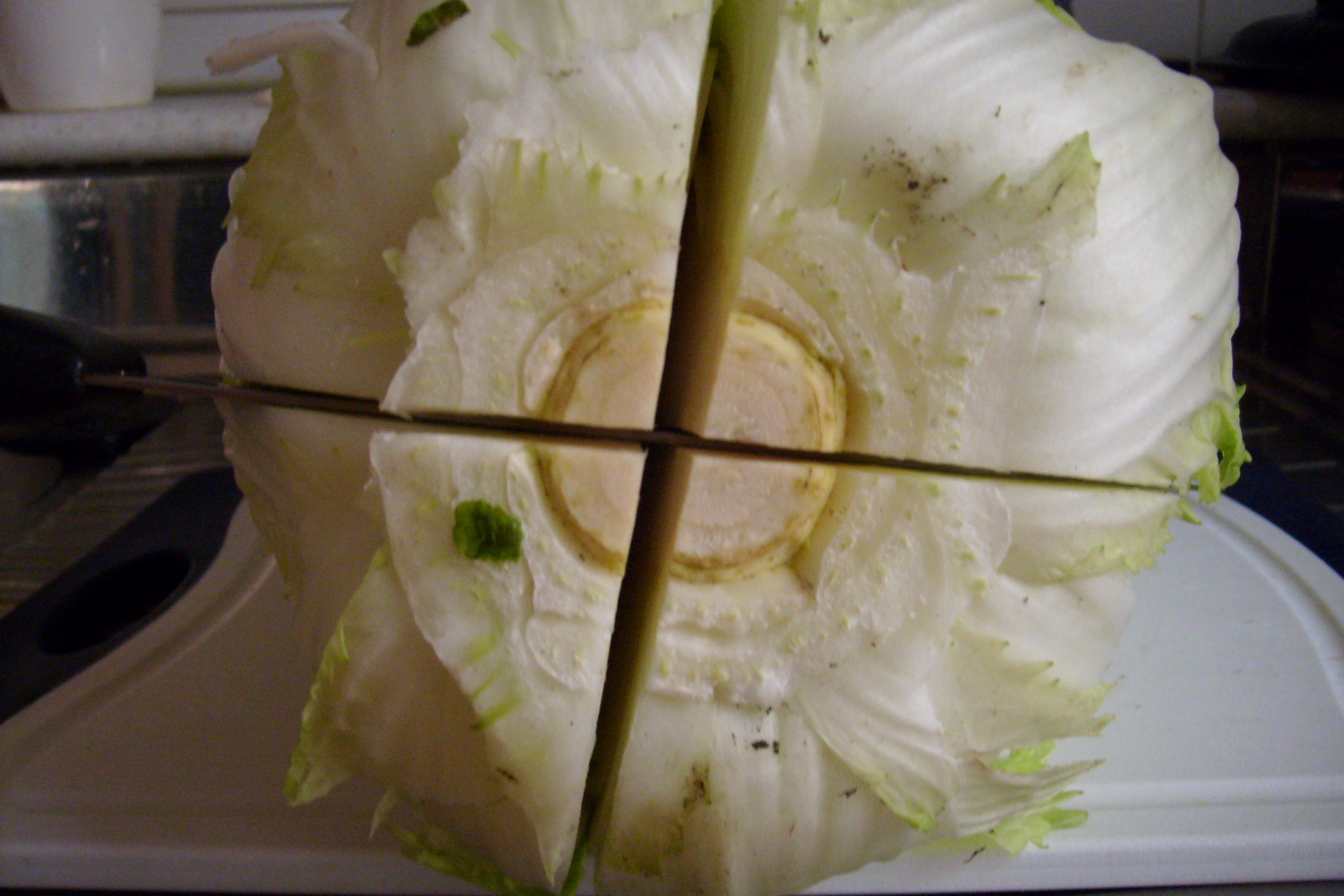
Quarter about 2-3 inches into the base and tear apart rather than cleave them into sections
The most boring part is salting between the leaves. I was originally taught to rub the salt into leaves but on several web sites, Maangchi, for example, they leaves are sprinkled. I found this just as effective and much less tiresome.

standing in salt
When the cabbage section are adequately salted, they should be floppy,and in a state where they can be ‘rung’ like a cloth without tearing. They will also have reduced significantly in volume.

Limp and floppy
Other ingredients include:
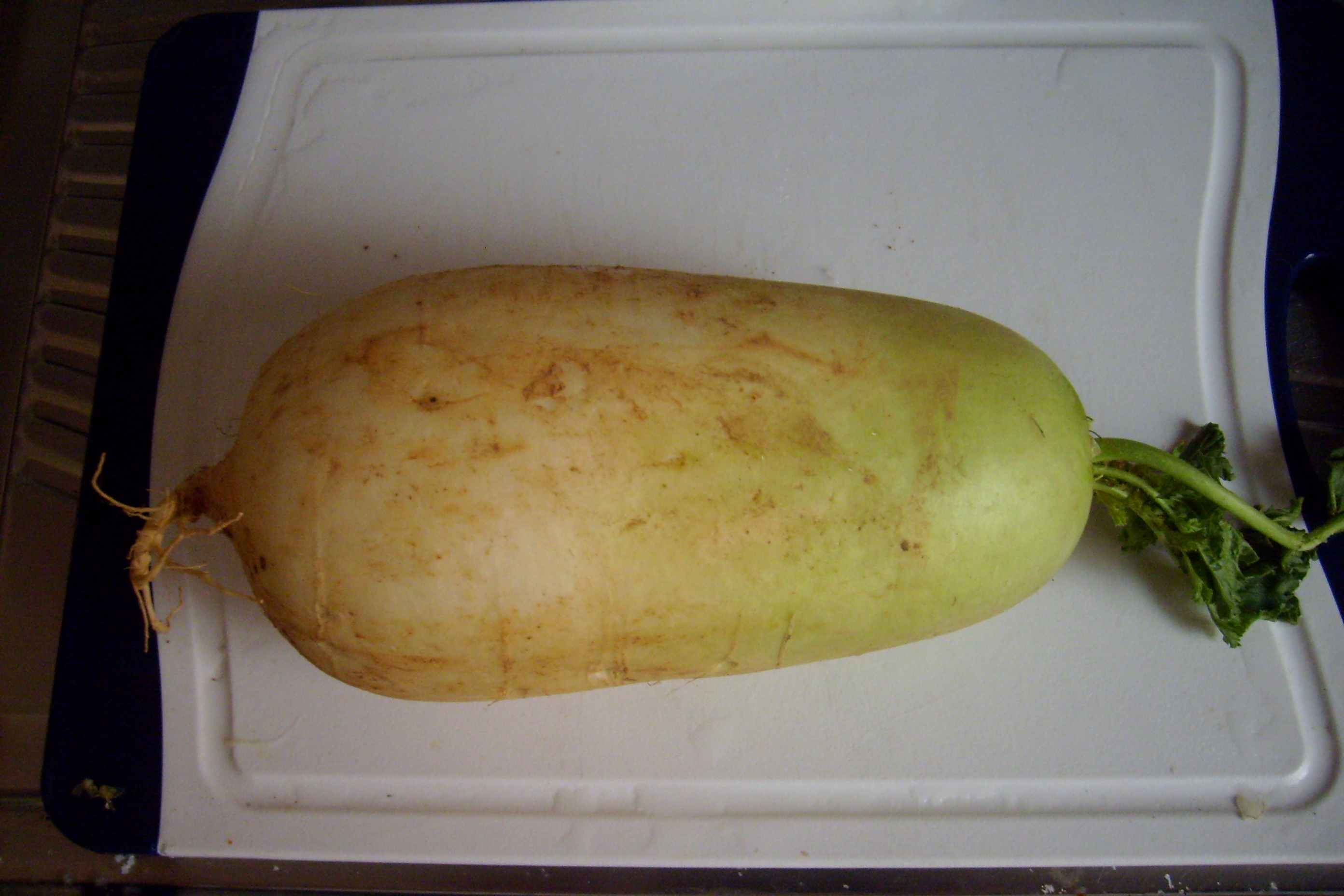
Mooli (moo) 무

Minari and thread onion (미나리, 실파)
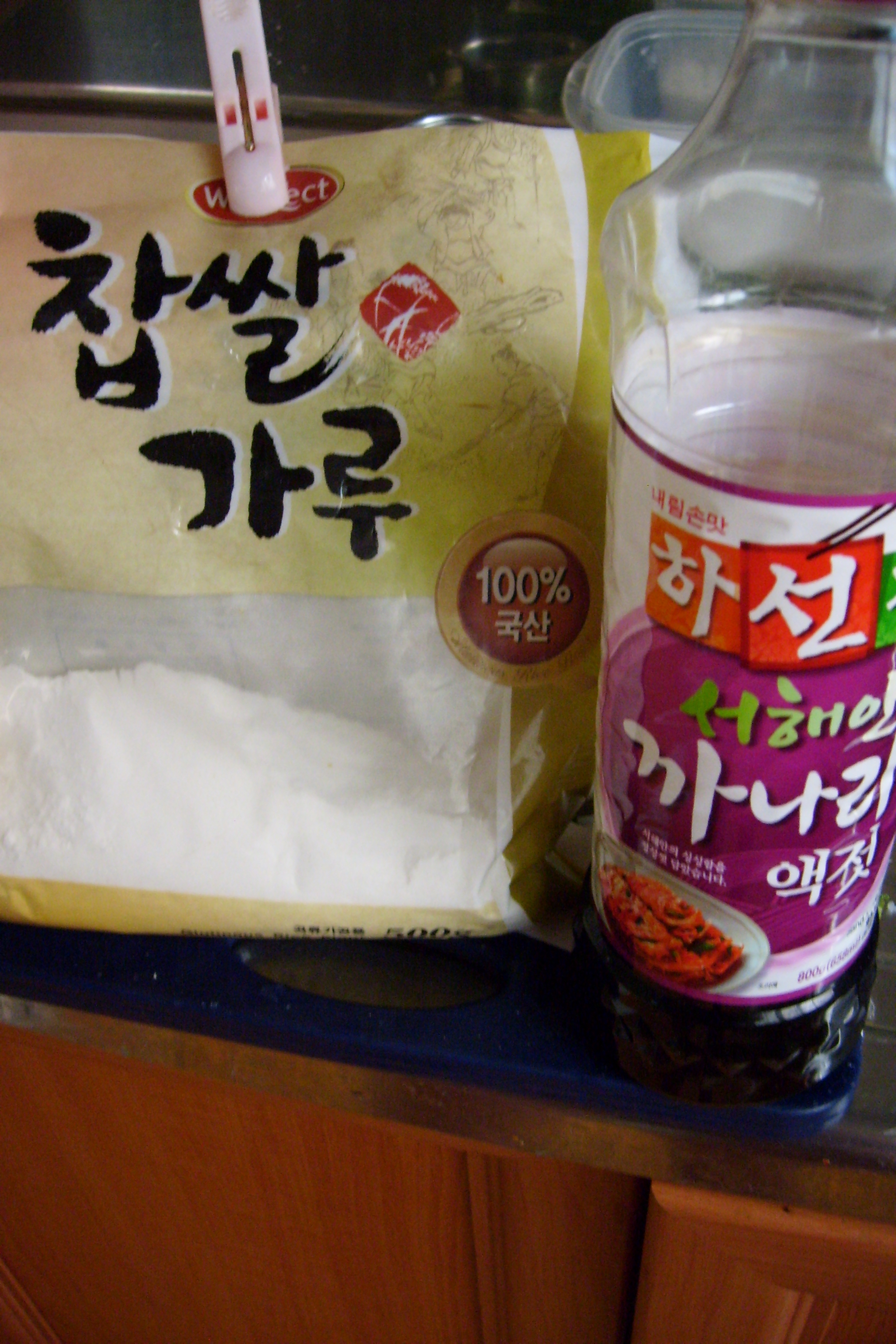
Rice flour and fish sauce

Ready to be stored

Storage in a Kimchi pot
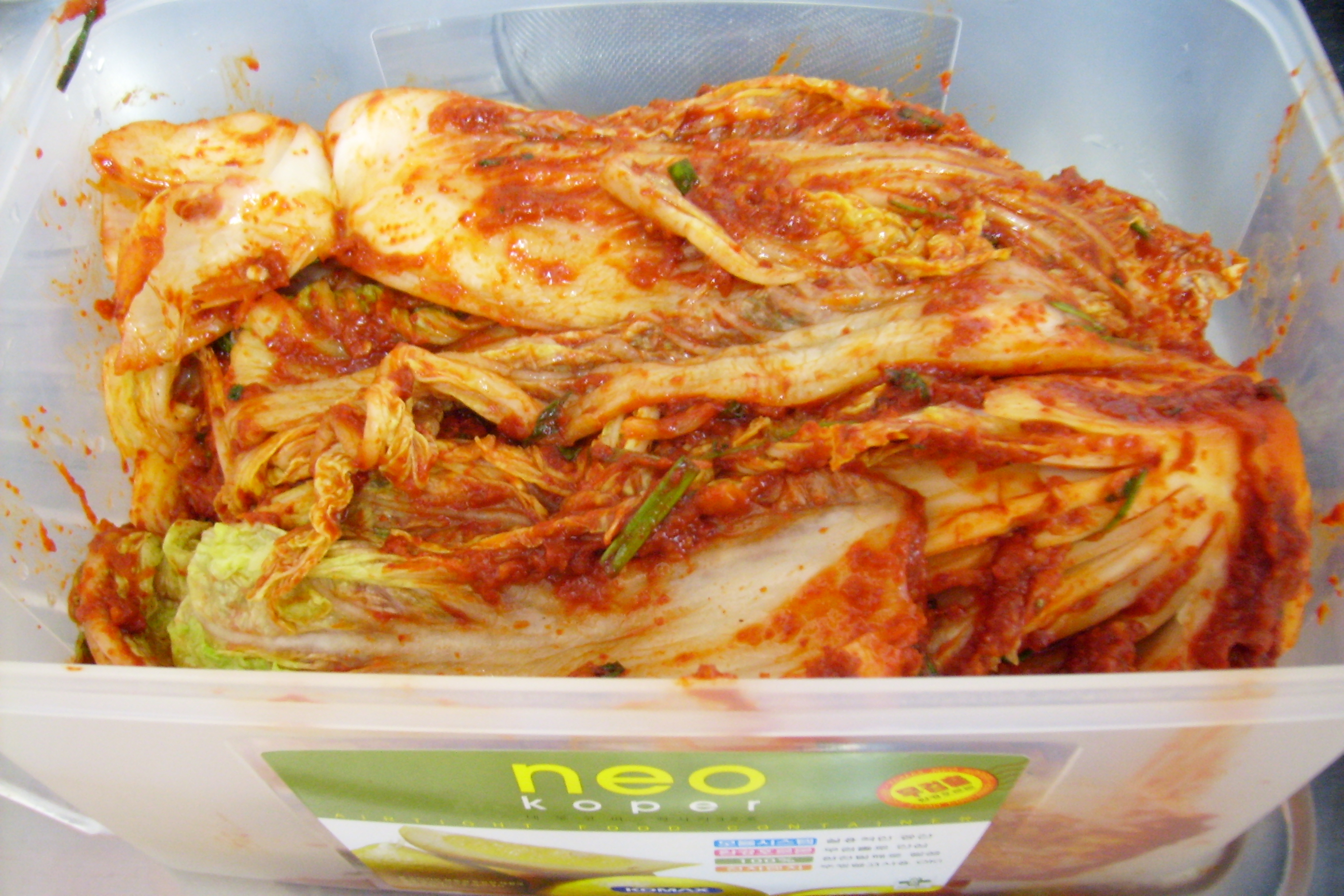
Or in a 'Tupperware' box
Great links for making Kimchi: Maangchi
High on Mugwort (쑥) Artemisia Asiatica
After using mugwort in various soups, I decided to use it for the purpose of eliciting deep and prophetic dreams, which in the little research I did on this herb, is one of its claimed properties. You can find an interesting link for ‘dream pillows’ in my original article (mugwort). I bought two large bags of fresh mugwort, each the size of a carrier bag which I subsequently dried on my apartment floor after spreading them fairly thinly on newspaper. The drying process took about 5 days, each day, turning the ‘leaves’ to minimise the chance of decomposition. They entire two loads dried quickly with no decomposition at all. What started out as a large amount of mugwort quickly shriveled to around a quarter of the original proportion.

This was originally one entire carrier bag load of mugwort. it significantly reduces when dried.
I bought a small pillow, cost 4000W (£2) and taking out the inner pouch opened it and removed the filling. This I then replaced with the dried mugwort.

bagging the mugwort
In then replaced the inner pouch, now stuffed with dried mugwort, back into the original pillow. This in then inserted inside the larger pillow on my bed.

The 'dream pillow' - ready to go!
Now, strangely, as the mugwort was drying in my room, and it was quite a smell, like decomposing grass cuttings. I awoke one morning and instantly recalled a vivid dream about a boy who had left our school a few months earlier. Why I dreamt about him, I don’t know but I subsequently forgot the dream and started my day. However, in the evening, as I was about to leave school, my boss told me that this boy is due to return to our school later in the week. Suddenly, I remembered my dream. Yes, strange!
I subsequently slept using the ‘dream pillow’ for around a week before removing it. I have a theory that the smell of mugwort, which is reminiscent of lying on a pile of grass cuttings, actually interferes with your deep sleep, causing you to hover over the kind of sleep during which dreams are more easily recalled. So, I don’t want to dismiss mugwort as a dream enhancers as total ‘crystal crap,’ because of the one odd, and vivid dream I did have. So, next I want to try sleeping with the bag after the smell no longer wakes me up.
Mistletoe – Viscum album Coloratum (겨우살이) Not Just for Kissing Under
Specifics: a tea made with leafs and branches. I have only seen this being sold in bundles either in the mountains or street markets. It is not always easy and more common in spring. I would be very cautious of using this in Europe as the species may be poisonous, from the little I know the berries are. I can’t find any reference to its use as a tea in the West, though I have not searched extensively.
A few months ago I noticed a little old lady street vendor selling, amongst other things, what appeared to be mistletoe. I was intrigued as of course, in the West it is usually only ever seen at Christmas when it is used to kiss under. Like most of my Korean friends,when asked about this plant, none had the slightest idea what it was, nor any interest.
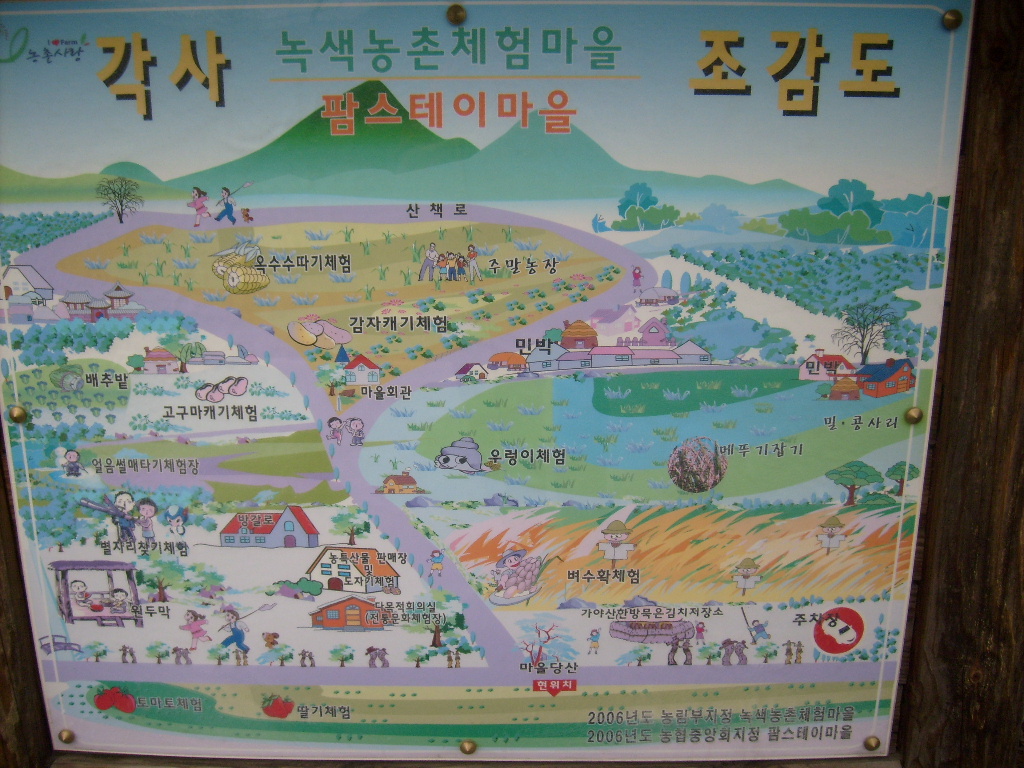
Kayasan National Park
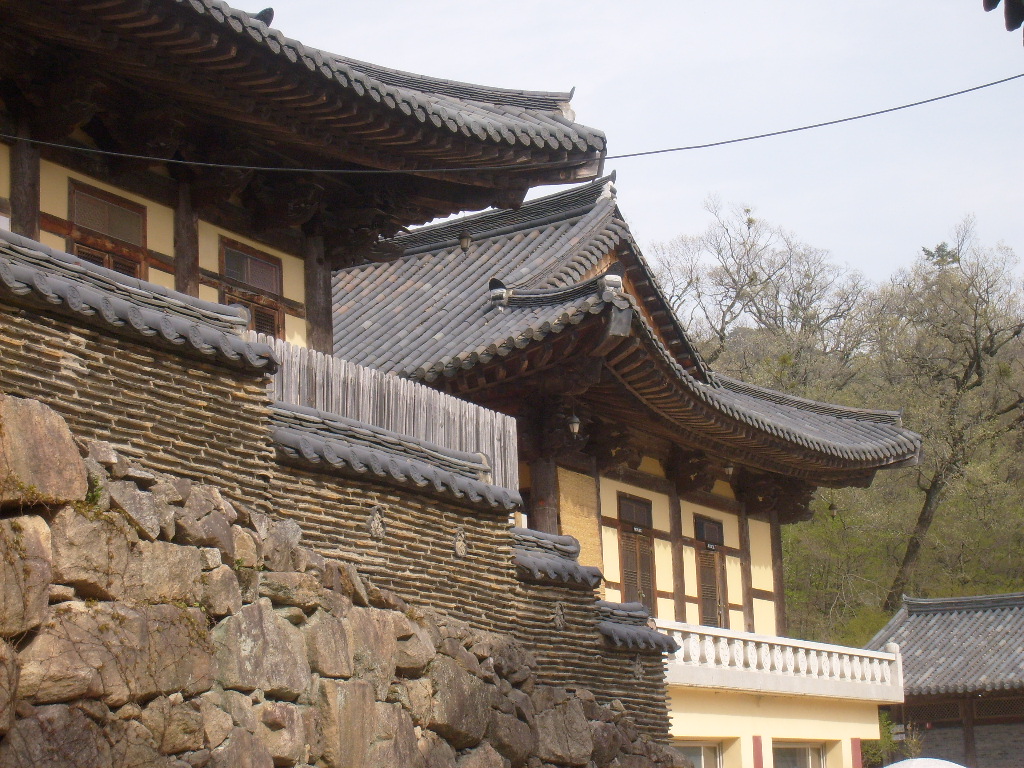
On Children’s Day, I went to Kayasan National Park (가야산) which is a short distance from Daegu. As is the custom on such days, we made a ‘pilgrimage’ to the Haeinsa (해인사) Temple, one of Korea’s most important temples and home to Korean National Treasure No. 52, the Tripitaka Koreana. These comprise 81.340 woodblock templates, carved in the 13th century and forming the most accurate, oldest, and extensive treatise of Buddhist law and scripture. With full foliage not yet set on surrounding trees, I noticed ‘balls’ of what appeared to be mistletoe growing on their upper branches. I was quite excited, an excitement my friends find quite strange and eccentric. None of them could tell me what they were but their interest was microscopically sparked when I pointed out to them that the leaf shape on the balls, only just visible, differed from that on the surrounding branches. And then we stopped by a small ‘kiosk’ selling the customary objects found in such locations, dried mushrooms, steaming silk worm cocoons, – various fresh mountain greens, herbs, onions and wood, and in one corner, a large pile of mistletoe, instantly recognizable and available either fresh or cut and dried at 10.000W (£6) a large bag.
'Balls' of mistletoe can be seen in distant the tree tops
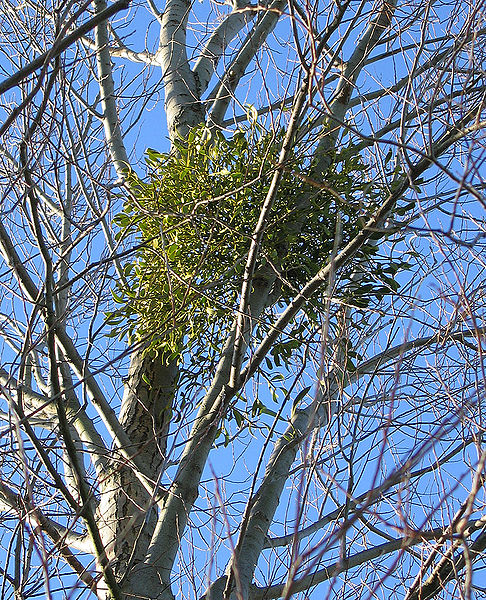
Mistletoe, Viscum album Coloratum -a hemi-parasitic plant
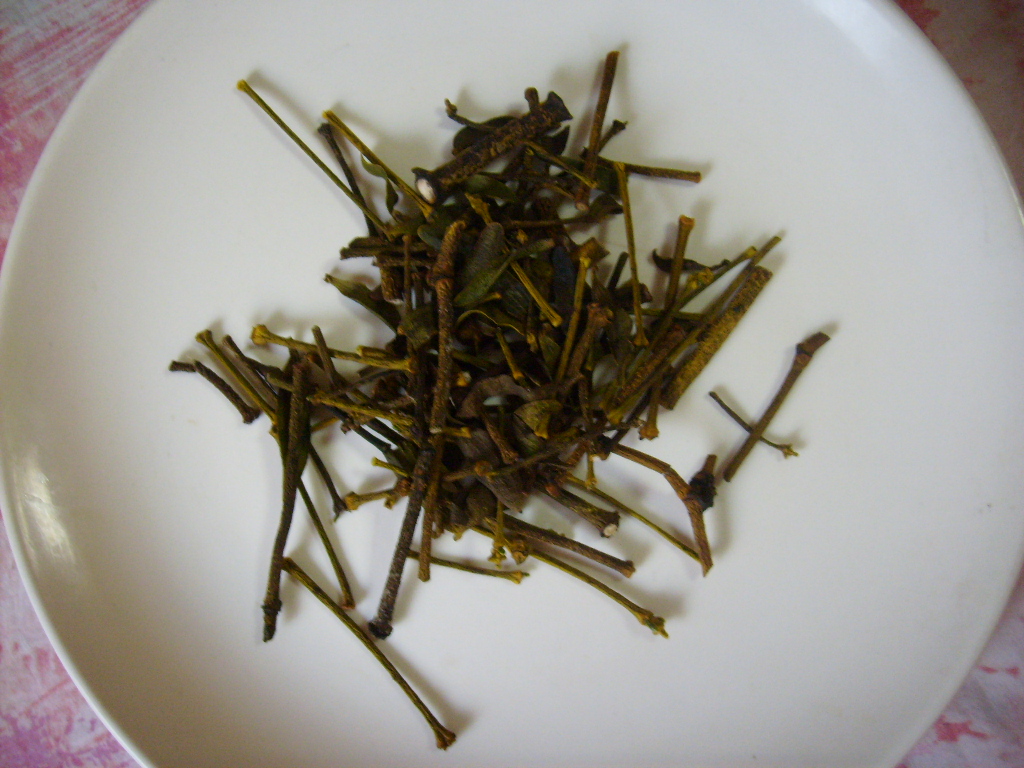
Cut and dried mistletoe
Mistletoe is a parasitic plant with an extensive and ancient history in many cultures. Myth suggests mistletoe was the wood from which the cross of Jesus was made, after which, as a punishment, the former tree was withered and reduced to a parasite. The plant has various hosts and usually grows on higher branches where seeds fall in bird droppings.
Instructions for making tea – Mistletoe can be kept in the fridge, though I was told not to store it in the freezer. A handful of twigs and leaves are then boiled in approximately 2 litres of water and the tea drank warm or chilled. I have discovered that a fuller infusion is made if the ‘leaves’ are left to steep over night before being removed. European Mistletoe can also be used for making tea herbalists claim it has numerous benefits, one of which is lowering blood pressure. Here is made by way of a cold infusion.
The taste – I am not really into hot herbal or cereal teas and generally prefer these chilled. Mistletoe surprised me as it has a very distinct and pleasant taste with a lemony aroma. The taste is remarkably similar to that of western type tea (Ceylon, PG Tips, Liptons etc) but quite soft. It lacks the bitterness or tartness associated with tannin in un-milked, un-sugared tea. Currently I prefer this ‘tea’ to Korean barley, corn or green tea.
 © 林東哲 2010 Creative Commons Licence.
Wanted: A Plastic Professorship
Have you noticed its predominantly university teachers who hand you business cards? Fingering the little stash I’ve collected over the years, not one is from a Haggwon teacher. I’ve never owned business cards, but then as I’ve never sent a text message and only used an ATM machine once in the UK. I’m slightly odd.

I pine, you pine, he pine, she pine!
I wouldn’t mind handing out a name card from a university, even a crap one but like most teachers, I would probably feel a little ashamed handing out something from an institution one notch up from a kindergarten or the kids’ party entertainer at Mac Donald’s. Even though haggwon and university pay are now fairly similar, in status there’s a world of difference between Coco the Clown’s English Academy and a University.
No matter how hard a haggwon tries to give itself credibility, names like ‘academy’ or ‘colleges’ don’t hide what most really are, factories (공장). ‘TOSS English‘ reads the bright neon strip over a college near where I live. Despite the amusing name, it must be successful as it has a fleet of mini buses and has been in situ for at least 8 years. However, back in the UK, ”Toss’ is slang for ‘shit’ or ‘masturbation.’ And then there’s ‘Kolon English Academy;’ Colon is the destination of the doctor’s digit when you have an extremely bad gut. Then there are the logos, the cap and mortar board, the pillars of some classical order column. Sometimes they use letters of the Greek alphabet which in the UK would be unrecognized to all but the students of British grammar schools.
In Britain, any awareness of the roots of western civilization is relegated to 5 or 6 year-olds and hence denuded of its significance as the cradle of western civilization. The invasion of ‘ ‘Greece” by Darius in 490BC and Xerxes, 480BC, had they succeeded, would have radically altered the face of western history possibly resulting in an Islamic Europe. Mention Thermopylae to most British people and it is now associated predominantly with a comic or a partly animated, fantastical movie. Many Korean kids can recite or narrate the Battle of Thermopylae or Marathon and some have even ‘explained to me how Socrates came to commit suicide. As a history teacher in the UK, I can put my hand on my heart and tell you I have never seen or heard any mention of Thermopylae , Marathon or Socrates in a British school. For various reasons, the most significant aspects of our history, often due to political imperatives, are demnatio memoriae. Koreans students certainly have more awareness of classical history than do their western peers and so the column, pediments, alpha and omega, and other little symbols of academia and learning are common but ironically, the ‘colleges’ they represent are as genuine as the Phrontesterion in Aristophanes’ The Clouds; the silly little ‘Thinkery’ where students bend over, bum holes gazing intently at the heavens in the quest for knowledge.
Much as I love Korea, their method of teaching English needs a total overhaul and the dependence on memorizing phrases, a number of which are clumsy and strange, needs scraping. Koreans have a similar attitude to teaching English as they do cooking bean paste soup. I’ve told several friends I add a dash of black pepper powder to my dwaen-jang. They were shocked and repeated ‘pepper’ several times as though I’d said I piss in it. Then they told me that black pepper wasn’t part of ‘the recipe,’ as if there is only one recipe, only one way to do it. Korean education is very successful, but their standard of English, despite the haggwons and schools, is dire. Perhaps if they treated English education more like ‘pushion pood (fusion food), squirting jam over pizzas, replacing mozarella with that stretchy, play cheese, or sweet potato and dipping bistro hotdogs in a concoction of syrup, mustard and red pepper paste, standards might improve. ”I’m pine,’ ‘Have a nice day,’ ‘pleased to meet you,’ ‘ drive you to suicide. And then there’s the constant American twang but that can wait until a future post!
Currently, I’m waiting for my business cards to arrive and they will probably carry my school’s logo, a cartoony character but I’m not particularly bothered. I’ve worked in enough language factories and a high school, to know that my boss has genuine intentions and besides, my loyalty is won because my conditions are probably superior to those of most university teachers whose pay is no longer way in advance of a haggwon teacher and whose holidays, at one time a guaranteed four months have been whittled down and interpolated with various obligations. My boss and her family have been close friends of mine for over ten years and have even vacationed with me in England. Though I would love to become a professor, albeit a plastic one, working in a university, for me at least, would be a step down.

A teacher from the Coco the Clown Phrontesterion of English. (I'm Pine and You)
Of course, most university teachers, instructors, give you a name card not because they teach in a university, but to impress on you the fact they are ‘professors.’ Professors are the officer class of Korean teachers with haggwon teachers relegated to ‘rank and file.’ Yes, I would probably do exactly the same but it is non the less amusing in its snobbery. Name cards of the highest status carry ‘professor’ in both Korean (교수) and hanja (敎授) in order to separate them from ones simply in English. I’d probably have mine embossed in gold. In reality however, it’s the knowledge and skills of a ‘professor’ I would like and not merely a hollow title. By English standards, I’m not too clear how it works in the USA, a ‘professorship’ is a position, ‘a chair,’ awarded to top academics and not a title conferred merely by teaching in a university. Despite the demise of standards in the UK and the ascendancy of ape values, you still read or hear of academics being ‘invited’ to a professorship.
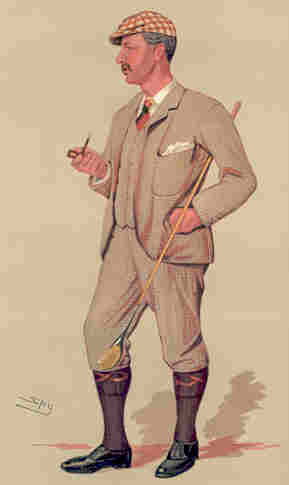
What, by gad! No dickie?
Last year I spent several days adjudicating a speaking competition with three professors all of whom gave me name cards. Two wore little silk dickie bow ties and the other a complete set of plus fours and matching walking cane. When I first saw him, from a distance, I thought it was Sherlock Holmes until I heard his American accent. He didn’t have a pipe but his plus fours were real and actually made of tweed. Ironically, I’d met this chap before, some 6 years previously when we worked together in an academy ‘factory.’ Before the plus fours and business card, and of course, ‘professorship,’ he used to turn up for work looking like a backpacker, his hair never combed and his clothes disheveled and scruffy. One day, I recall my old boss consulting me as to whether it was acceptable to offer to buy him some new clothes. If I’d known at the time what I now know I’d have simply suggested conferring a professorship upon him and buying him some appropriate name cards. The rest would have taken care of itself.
Even when I’ve known teachers who for one reason or another moved from university to hagwon, from the status of ‘plastic professor’ to that of a boring ‘teacher,’ they’ve initially introduced themselves, or been introduced to me as, ‘professor.’ Further, not only have they continued wearing the dicky bow, but they’ve insisted students call them by title.
I’m a snob, academia, the classics, the entire gamut from music, art literature to history, Oxford, Cambridge, public schools, grammar schools, dickie bows, waist coats and plus fours, professors, even plastic professors, I adore them all. When I was a boy, this was what constituted education and refinement and through out my twenties I aspired to it. Sadly, by the time I got to university, in my early thirties, the gown, mortar board and anything ‘classical,’ if not already on a heap in the college quad, were on their way! And now, well, every Tom, Dick and Harry have a degree – usually in hair dressing or business studies. As much as I mock plastic professors, tongue in cheek, a least the title sets you apart from the herd. Sadly, of all my university friends, some of whom are university lecturers, professors, some even renowned in academic circles, few embraced ‘the classical’ with any passion in little other than their individual subjects. I don’t want to leave my current occupation, that would be foolish, but secretly, I would love one of those business cards and the snobbery of calling myself a ‘professor.’ Is it possible to teach a lesson or two a week in a university, even a poxy one, and ‘earn’ the title ‘professor,’ or even ‘associate professor?’ If so, pathetic as it is, I want the job!”
Fart Pants (방귀 바지) 코딱지
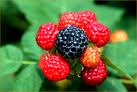
rubus coreanus (복분자) 'wildberry'
In the E-bente Tang (이벤트 탕) today was a an aroma I’d not encountered before, black raspberry, or wild berry (복분자). Translating is always a problem. First of all, the ‘information board’ advertising the aroma had a picture of black and red berries and so too did a bottle of berry ‘wine (more like liquor) I subsequently bought (복분자 주). To compound the problem, I suspect in the UK we call these berries blackberries and raspberries and these are quite different in taste. When I looked up this berry on the internet, I noticed the red and black berries were growing on the same stem. So, I discover that the Korean berry, bokbunja (복분자), is actually a member of rose family and of the genus rubus of which there are hundreds of species divided into 13 sub-genera, one of which contains 12 sections. (more rubus info) Indeed, if you want to be pedantic, bokbunja is rubus coreanus. Interesting, but all academic as from the scent emanating from the pool I couldn’t tell whether I was wallowing in blackberry, blackcurrant, or indeed, rubus coreanus.
I’ve been meticulous in bathhouse ablutions today as I am feeling particularly dirty. The source of this dirt is both mental and physical; increasingly I come to realise that by socialization westerners are dirty species both mentally and physically but also, short of being showered in shit, I was fouled upon. Not having used a bathhouse for 4 days, and yet despite showering twice a day, I was amazed at the scum that washed off my body into the gutter. As I was on the end of a row of sit down showers, I could see it collecting in the drainage grill and it was gray and creamy, more like sludge than scum. Neither was my ablution particularly stringent and was made using the normal, mildly abrasive bathhouse towel than by the rasp of one of those little green ‘Italy towels.’
Once lovely and clean, and basquing in my favourite patch in the hot pool, I got thinking…
I’ve recently had a new pupil called Fart Pants (방귀 바지) who is currently sitting on the fence between the kids who have a brain and the ones, and there are not many, who I deem ‘hobaks’ (호박). Hobaks are pumpkin head kids who are just incredibly slow and tiring to teach. Most professional teachers, back home at least, will castigate the practice of pigeonholing kids in such a derogatory manner and will certainly condemn me for printing her name except of course, it is not Fart Pants. But let’s not get holy, holy, most teachers pigeonhole kids in one form or another but usually deny they do so and as is the case in Korea, you can still call one kid intelligent and another a mong without offending the silly sensibilities of political correctness that demand all kids are equal.
definitely worth licking
I’ve always maintained that if ever I had to lick a bum hole, if I was forced on pain of death, if I couldn’t choose a baby to lick upon, it would be a Korean. Of course there’s a ranking system: all babies first, followed by males (preferably younger) females (preferably younger), old men, old women. I would think this ranking would be a fairly common for anyone forced to comply but given some preferences. Personally, I think a hierarchy much different from this, for example, preferring to lick ancient butt to baby butt, a truly rank preference, would be suggestive of some sexual perversion.
Although I wouldn’t want to lick any bum, not even for pleasure, if I had to my first choice would be that of a baby. Anyone other than a baby I could probably never look in the face again ether from a sense of guilt or revulsion. A baby would no more remember the act than having its nappy changed. As a baby has no personality it’s not like licking the arse of a real person, and once out of its nappy it’s not much more than a dirty doll. Denied a baby, I’d select a Korean. Perhaps some Koreans don’t scrub their butts out but I know lots do because I’ve seen them. On the other-hand, I’ve never seen a westerner clean out their arse.
Koreans must have the cleanest arse holes in the world. I doubt you’ve ever seen a westerner scrub out their bum hole so you don’t really know if they do. I suspect most westerners just flush their butts with a blast from the shower which isn’t very hygienic considering its a deep, dark, dank, dirt dump which we sit on all day and despite its catalogue of offenses is subject to significantly less scrutiny than our mouths and teeth. There is a veritable arsenal of mouth wash and gargle to both freshen and kill oral bacteria but nothing of a similar nature with which to douche your arse.

Like most arses, Pluto has been exiled
With an arse hole as distant as Pluto, the first time I saw a bide abroad, I assumed it was either for bathing a baby or washing your feet. And even though its design should have announced its purpose, the idea was repugnant. A device for washing your arse! A filthy idea! To have deduced the purpose of that alien bide would have required a morally degenerate mind and the inclinations of a pervert. You dump out of a bum and after mopping up you forget the filthy offence. Poohing is a sin and a sin of such gargantuan proportions that even though ‘cleanliness is next to Godliness,’ the Bible avoids any mention of that dirty orifice. You don’t talk about poohing, you don’t share the experience and you certainly don’t make devices to clean it. If there’s one reason, why westerners are so distrustful of Islamic culture it’s because their poohing customs, ie. mopping up with a hand wetted with water from an old baked bean can, force infidels to confront the one place we hate to go. For the westerner forced to muck-out a la Mohammad, having to touch that unspeakable place, especially when adopting the most undignified of postures, is a significant form of first contact. Touching down in that dark and alien cavity and being compelled to blindly explore it contours without the comfort of a wad of tissue, is something you never forget. It is a first contact not just in that you are forced to acknowledge that there is life on Pluto and that is not as nearly as far away as you thought, but that in all the years leading up that significant event, you staunchly upheld the prime directive of non-interference (and if you were interfering with one, even your own, you never talked about it!) A working definition of a seasoned traveler? Someone who has had first contact with their own arse hole. Hence, I imagine most arses, especially non Korean arses, have permanent bad breath and while you can have the pseudo medical condition ‘halitosis,’ there is no corresponding medical term for a smelly bum. Unfortunately, considering their propensity for filth, bum holes are sorely neglected.
But of all Korean butts in Korea, there’s one exception, Fart Pants! Fart Pants (방귀 바지) is the dirtiest Korean to date I have met. And though her parents aren’t poor, her dirtiness has more to do with her habits than being physically dirty. Admittedly, her favourite coat, salmon pink, looks like it has been used to clean the floor but this didn’t bother me until she started farting in class. The pink coat, being padded, has insulating properties and a fart is always more unpleasant when heated. I don’t know how universal it is in Korea, but I’m told that teachers rarely say anything to a kid who farts because it draws attention to them which of course, they don’t like. In common with the rule of vile farts, hers are silent but I know they’re hers because her eyes will be sparkling and she will be salivating heavily in a manner that suggests she’s either been fingering her own butt or sucking a turd up and down her back passage. Either way, there is an intense look of pleasure and glee on her face.
The smell, still warm, then looms up from under the desk around which we sit and it’s truly hideous. As the foetid guff engulfs me, I sit up, then press my neck as far back in my collar as possible, before moving my chair back after which there is no escape. A few days ago, after trying to hold my breath I knew was going to retch and had to leave the classroom. Betty, who is sat right next to her, must have had her nasal passages cauterized as she doesn’t seem to notice a thing. Fart Pants lets one-off in most lessons. When she first started classes, nerves probably clenched her butt shut but now she’s in the swing of things and relaxed, she blows off with as much ease as someone with a prolapsed rectum. I find her farts incredibly intense and personal and being subject to them is a form of abuse. Apparently, she farts in other teacher’s classes but no one has heard her which makes me suspect she might have a punctured colostomy bag. If she moves about too much, even a considerable time after issue, a residual smell, loitering under the lagging of that pink coat, will waft up.
If this hasn’t been bad enough, there have now been a number of occasions when I have noticed her toying with a bogey (코딱지) between the tips of her index finger and thumb. She seems to keep a bogey in play for several minutes, massaging it around like a piece of sticky glue or a grain of cooked rice. Then her hand goes under the table and I anticipate it being dropped. Moments later however, it re-emerges only this time its on another hand. It’s magical! Not in the sense she can keep amusing herself with one bogey for so long or that it seems to matter transport from one digital location to another, but because the things are so moisture retentive. A few days ago, she must have forgotten about one of her nasal playthings: it had been rolled, stretched, palpitated, passed between various fingers and hands. Suddenly she went still which was quite noticeable because she is always fiddling and tears welled in her eyes. Another fart was being primed! The intense pleasure its production provided distracted her enough to evaporate that offensive entity being entertained predominantly between her fingers. When I asked a question which necessitated pointing in a book, her hand reappeared from under the table. From this stage on it’s a guessing game; which hand? which finger? When she pointed to the page, on the end of her right index finger, perched a pale green bogey still looking fairly fresh despite the copious palpitations. Next moment, her hot fart smacked me in the face.
Over the weekend I bought some anti-bacterial hand cream, the choice was amazing as this item is currently very fashionable. I also bought a bottle of Febreeze as I noticed that the farts clung to my clothing like fried food or tobacco smells.
Monday afternoon! First class of the week and Betty is on her own. Fart Pants has left the school and I shalln’t miss her!
Bathhouse Basics 2 – The Jjimjilbang (찜질방)

'25 hour' JJimjilbang (찜질방) Song-so, Daegu.
Jjimjilbang (찜질방) – while bathhouses often provide predominantly water related ‘entertainment, jjimjilbangs provide a space where families and friends, regardless of gender, can intermingle. There is no English term for a jjimjilbang and as they contain saunas and adjoining bathhouses, they are often conflated with ‘saunas,’ ‘bathhouses’ or ‘spas.’ In practice, they are very different.
Common to all jjimjilbang are clothing, ondol heating (underground), large sleeping areas, an adjoining bathhouse and a broad range of entertainment. Television are conveniently located, PC rooms, children play areas, a variety of dry saunas using various minerals, mud or salt rooms, ice rooms, restaurants, libraries, refreshments and in some cases cinemas. Massage chairs, are fairly common and are coin-operated. There are usually other features to provide both comfort and visual appeal – large tree trunks, for example, on which you can sit or play, and various levels of floor decking. Blankets are available in abundance. The size of establishments varies but very often can accommodate several thousand people and like the bathhouses, jjimjilpang may have restricted hours and or a days closure a week, or be open 24 hours.
When you purchase your ticket at the booth and you ask for the jjimjilpang you will be given some form of costume, sometimes a gown or t-shirt and shorts. Usually these are emblazoned with the establishments logo and the may be colour coordinated, one of my local jjimjilbang provides blue for men, pink women and yellow for children.
A selection of jjimjilbang photos giving you an insight into the range of facilities and individual establishment ambiances.
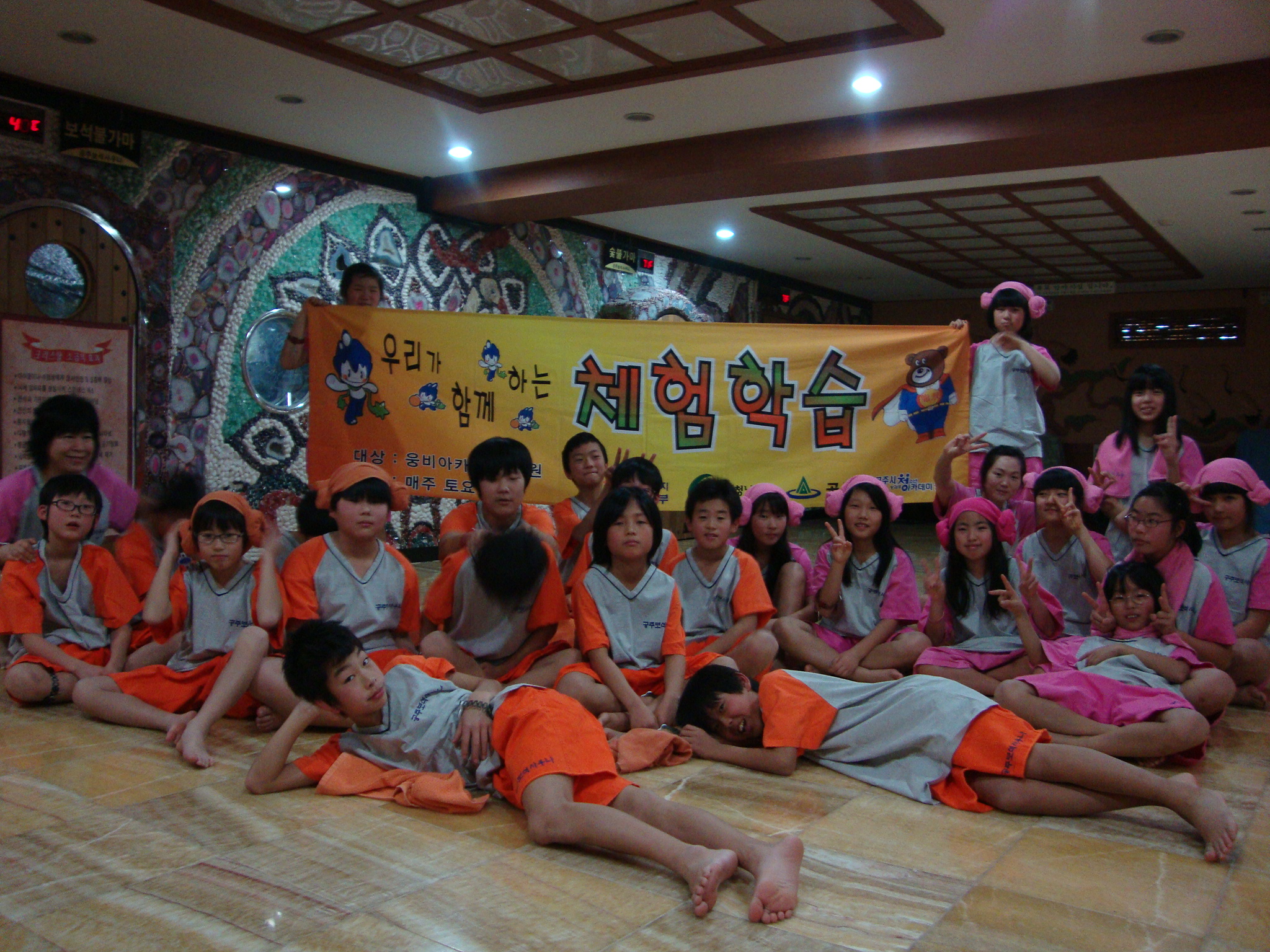
A group outing
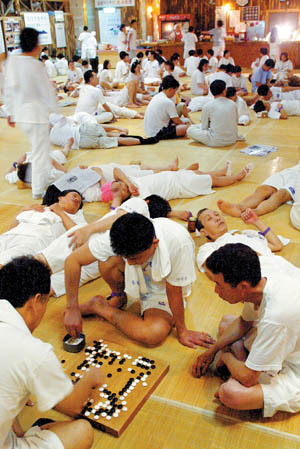
Games
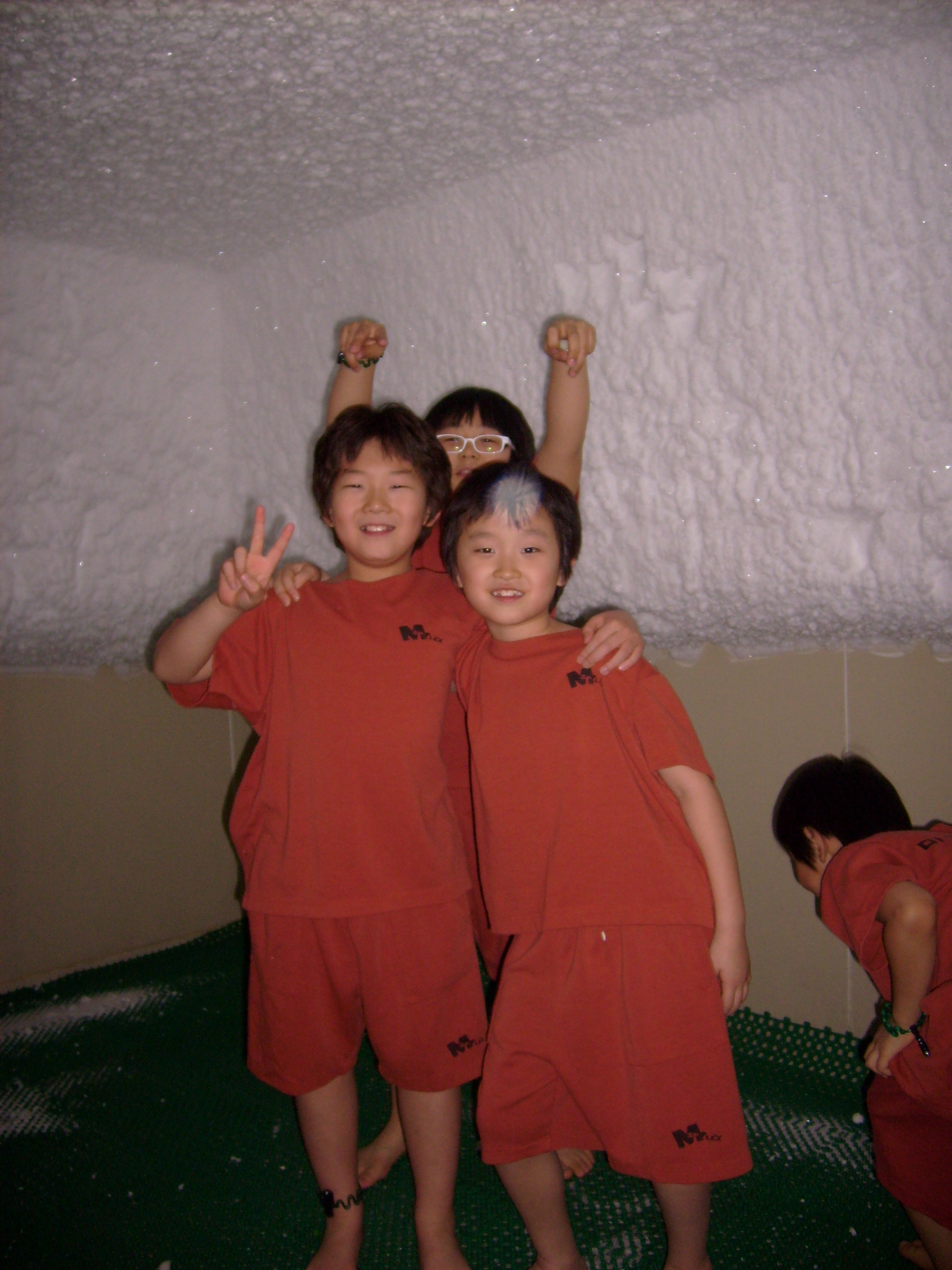
An ice room

Busy and buzzing
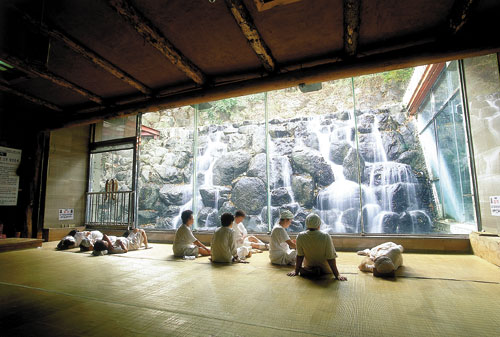
Tranquility

Early morning - weekday

With a library

Weekends and holidays are usually busy (spot the beer cans!)

It has to be a drama!
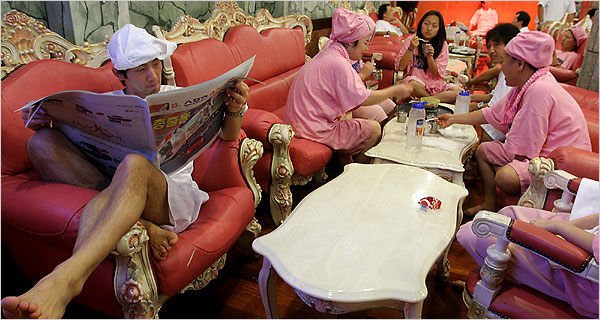
Baroque?
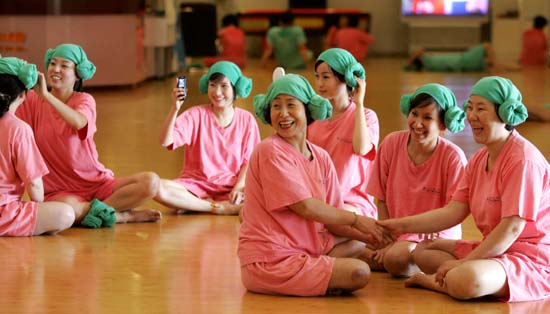
Mother's meeting

Poker?
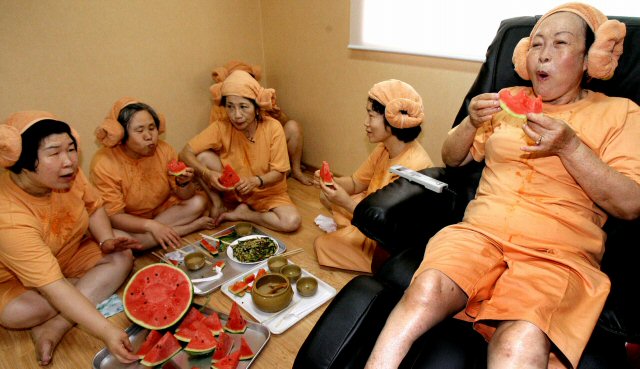
Refreshments

Skinship
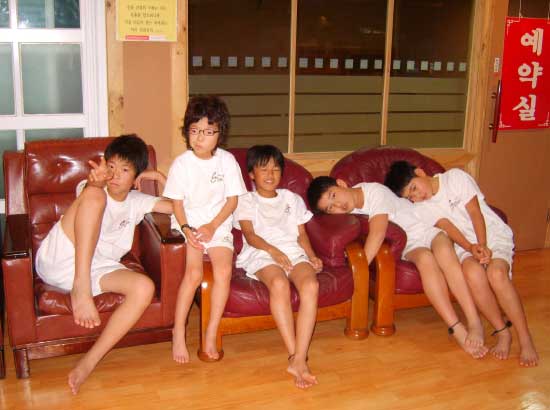
Even the kids can 'chill.'
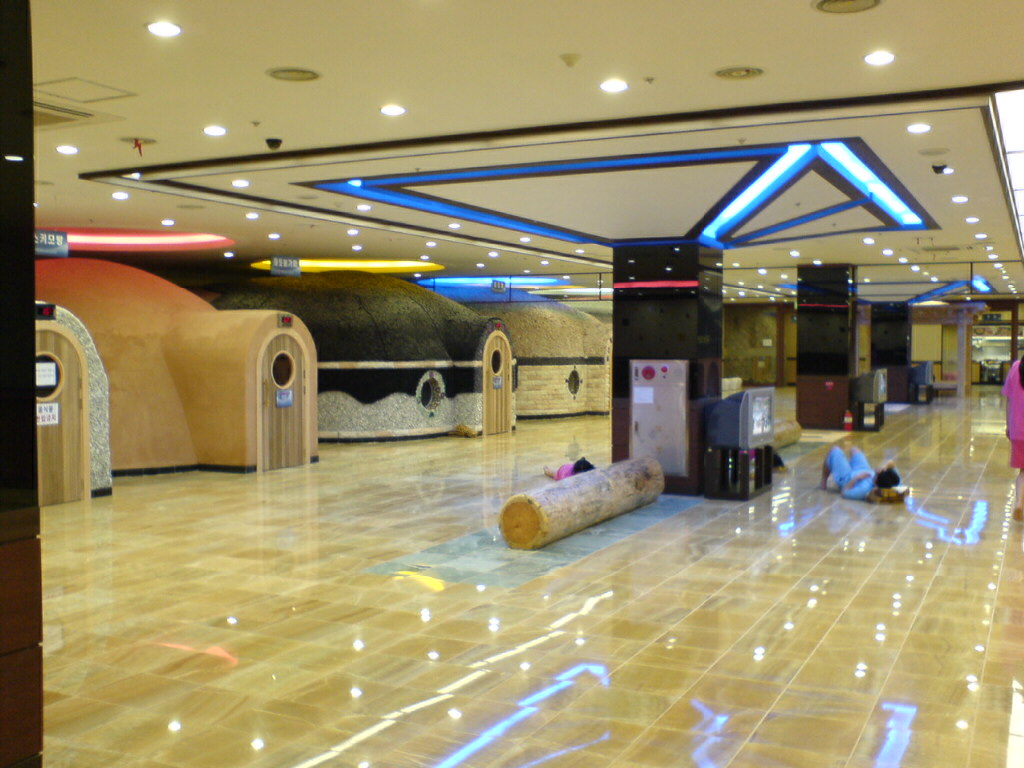
Main jjimjilbang area with numerous side sauna, ice rooms etc.
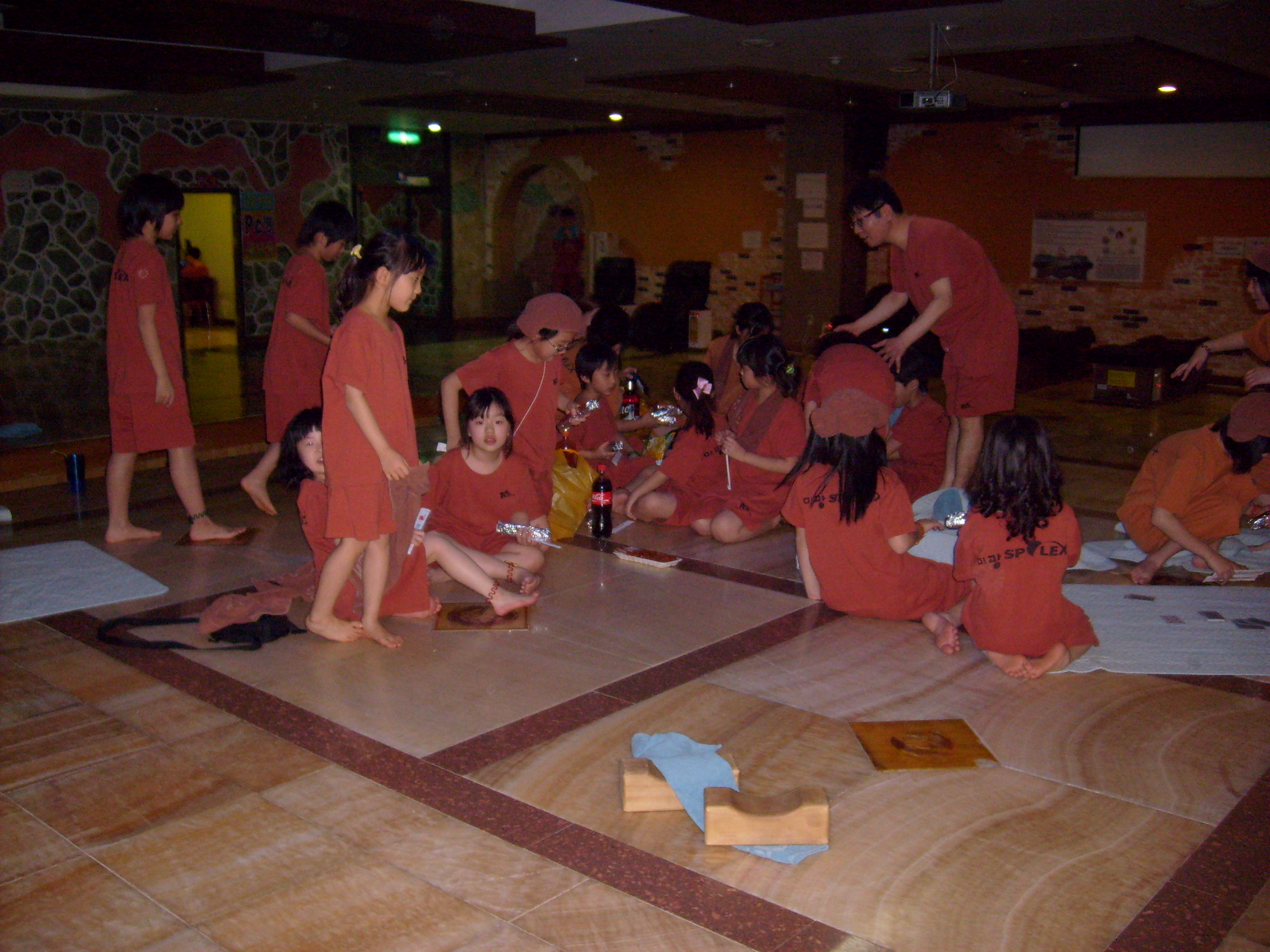
Jjimjilbang uniformity
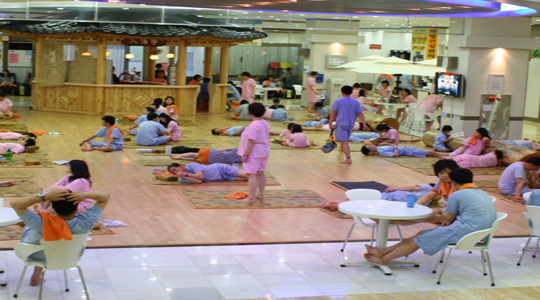
Colour coordinated
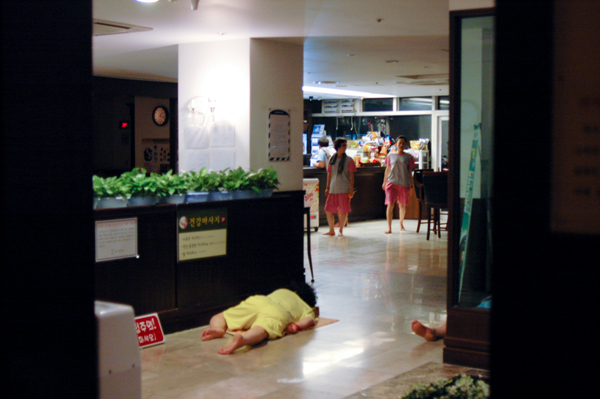
Crash out - wherever!

A children's play room
Monday Market. Aralia Elata – 두룹
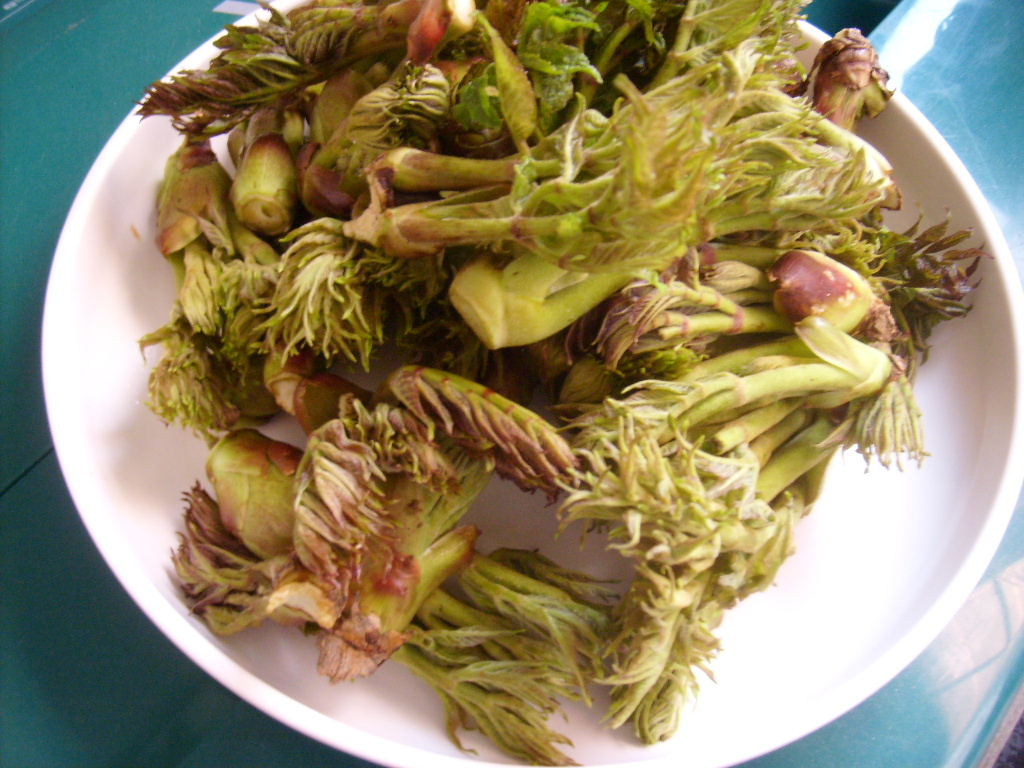
Shoots of the mountain green, Aralia Elatia. Durup (두룹)
It took me a bit of work to track down the details of this tasty mountain green which is currently in season. Durup (두룹 나무) is a deciduous tree which is rather attractive but for commercial purposes cultivation is ‘under-glass’ using small branches. The stems are thorny and the fresh young shoots, the edible part, appear in street markets and supermarkets between March and May. If you buy them from the old ladies on the street they cost about 10.000Won for a large bag of probably in the region of a hundred shoots. I noticed that in E-Marte about 6 shoots cost around 2000Won.

Aralia Elata the tree. (두룹 나무)
There are a number of ways to use durup but it is especially tasty, washed and dropped into boiling water and cooked in the same way you would broccoli. A short vigorous boil means the stems are slightly crunchy. I made a dip of a little mayonnaise, red pepper paste (고추장), and corn syrup (물엿). However, they are also used in soups, in pancakes and battered and deep fried.

A durup shoot (두룹)

Durup and dip

Durup and pancake
I don’t want to overrate this too much, I mean, how delicious is broccoli or cabbage unless swimming in butter? But honestly, this was as equally ‘tasty’ as broccoli with a somewhat nutty, asparagus-like taste. With a small bowl of dip I ate a large bowl for breakfast and then went back to the kitchen to eat what was left. Definitely worth trying! (more durup info here)
Learning Hanja Through Pictures
 I bought this series of children’s Hanja in 2002 and I’ve been using them on and off for eight years. Currently I’m 20 pages into book 3 and at the earliest I should finish them when I retire. Don’t ask me why! I find scribbling hanja intensely therapeutic.
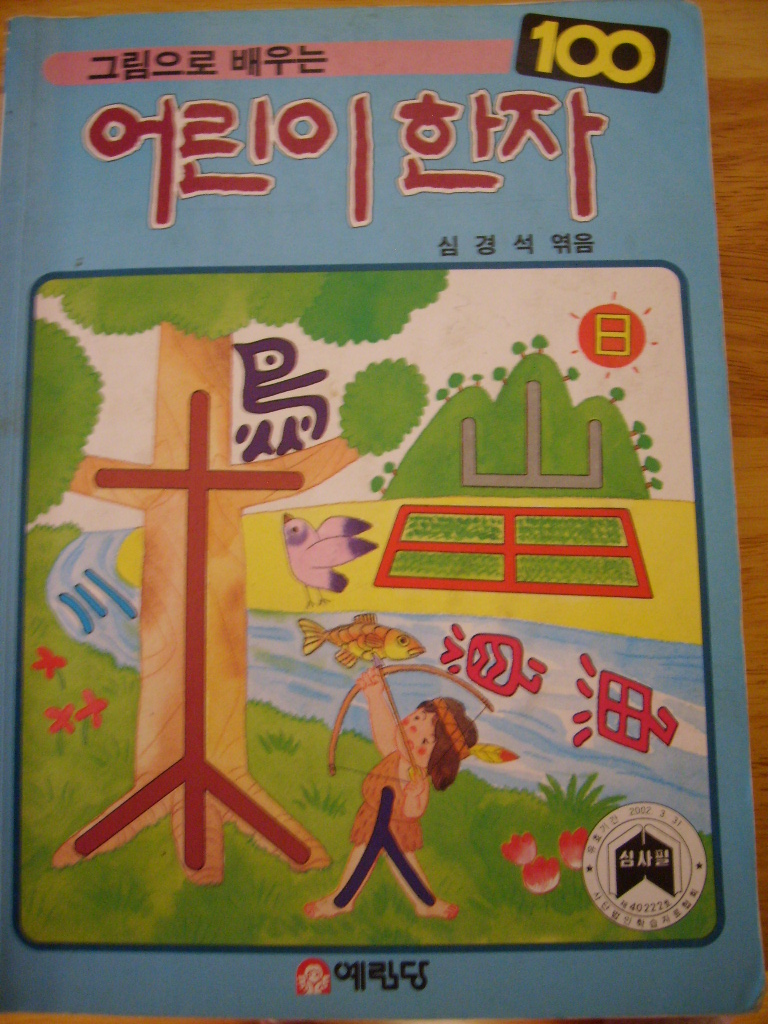
Children's Hanja: Study through Pictures.
The series will introduce you to around 1000 of the required 1800 main hanja characters. Book 1 is particularly useful and is self explanatory despite being written in Korean. 100 basic characters are introduced using between 2 and about 10 strokes. The characters are grouped in themes such as numbers, compass directions, seasons, etc. Characters are introduced individually and in groups of two. EG: 동,방. (東, 方), east, direction = 동방 – (東方), eastern. At the back of each book is a listing for all the introduced characters.
Each book has ample space for practicing the strokes, a relevant cartoon containing many Confucian Idioms plus small explanatory passages. However, unless your Korean is fairly good, you will need a Hanja dictionary to explain the characters.
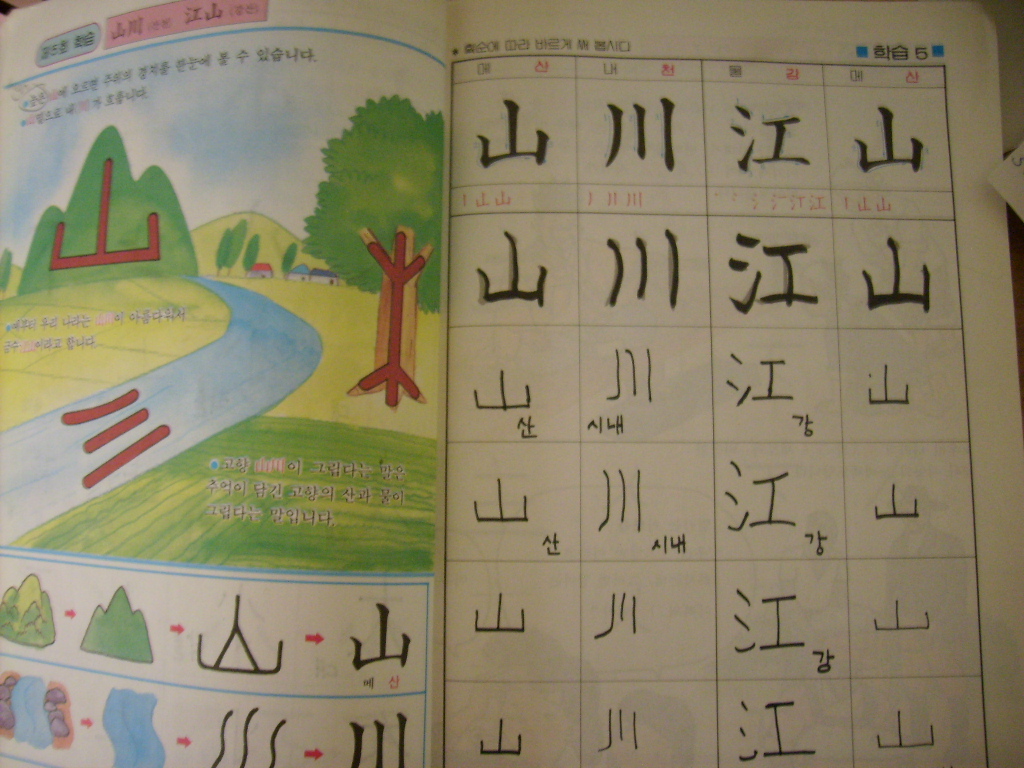
Book 1
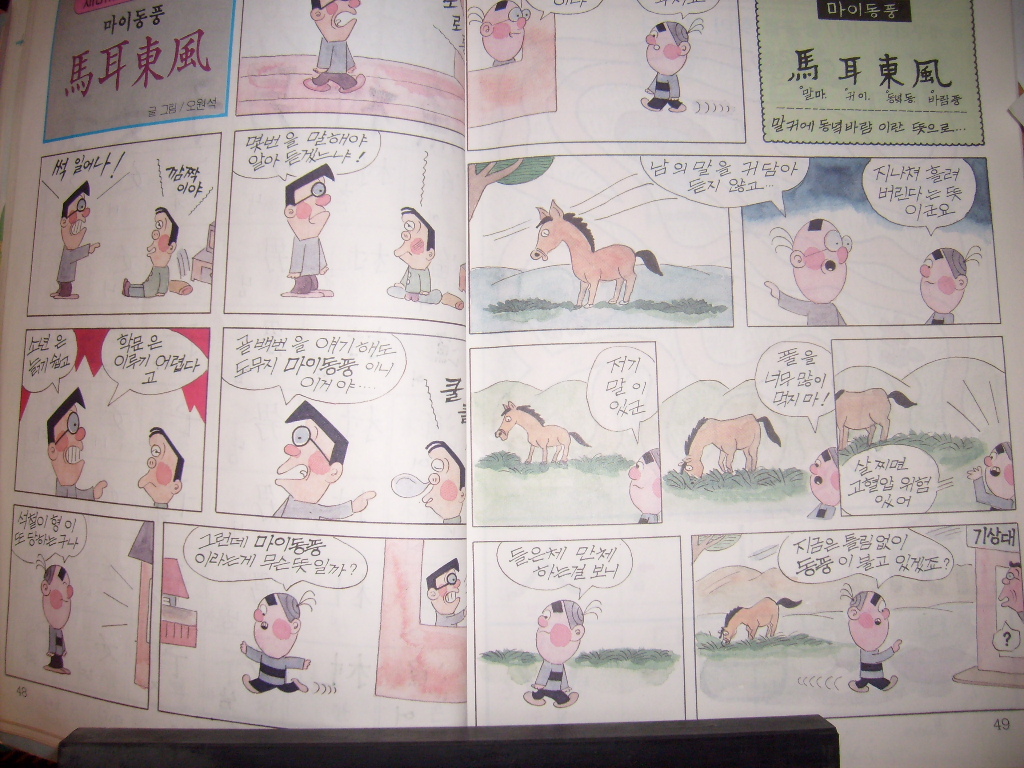
Cartoon strip

Characters introduced in Book 1
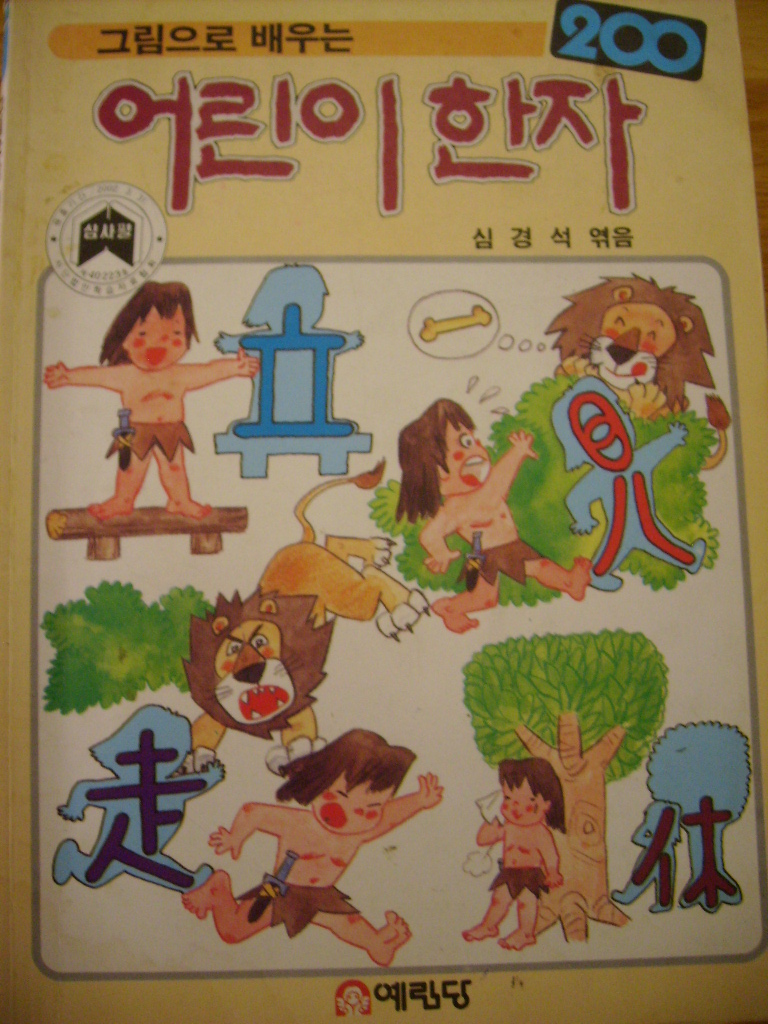
Book 2
Books 2 gets progressively more difficult as the required strokes increase.
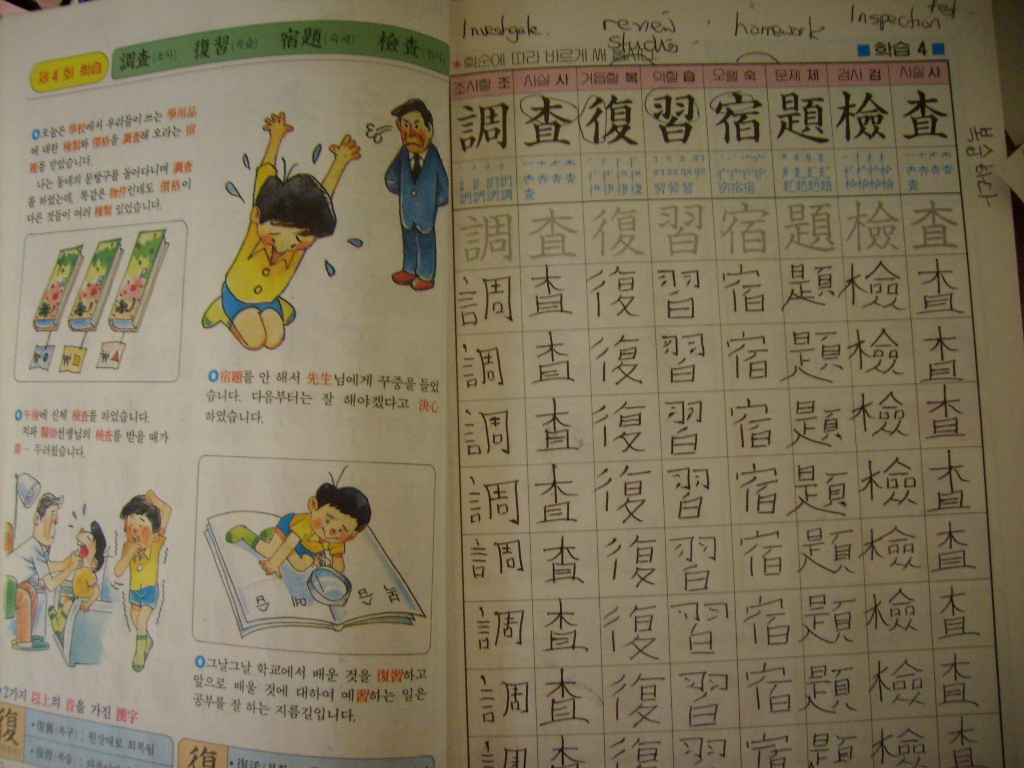
Book 2, More complex characters
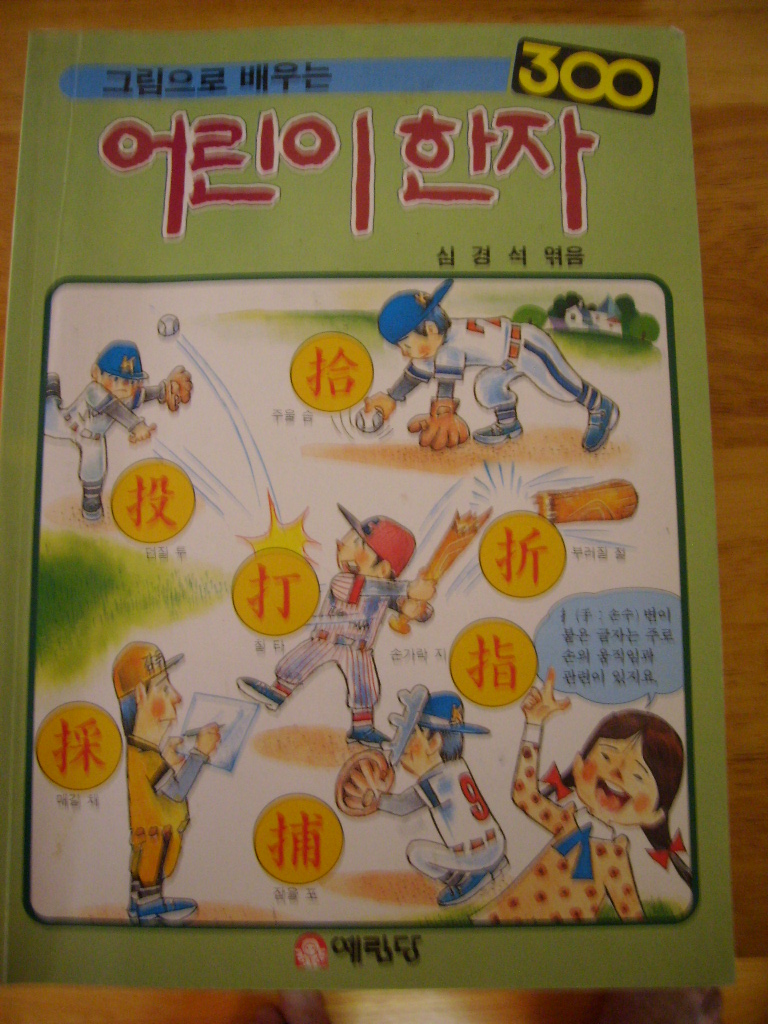
Book 3
Books 3-4 are no more difficult than the latter stages of book 2 the only problem is remembering characters.
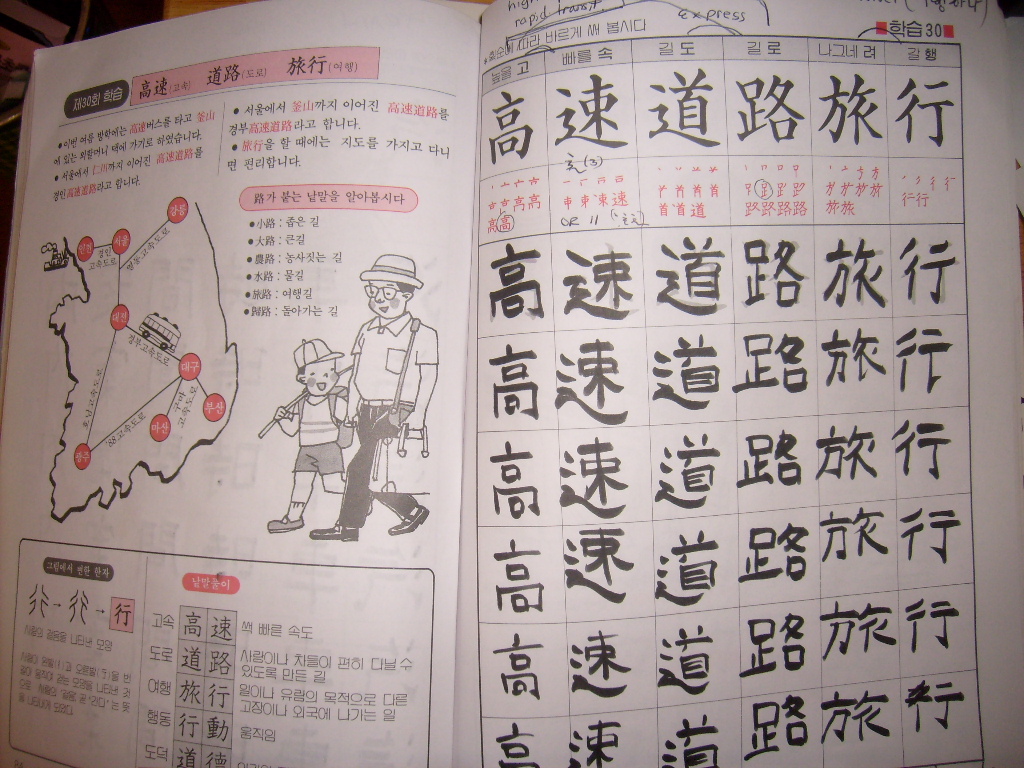
Book 3
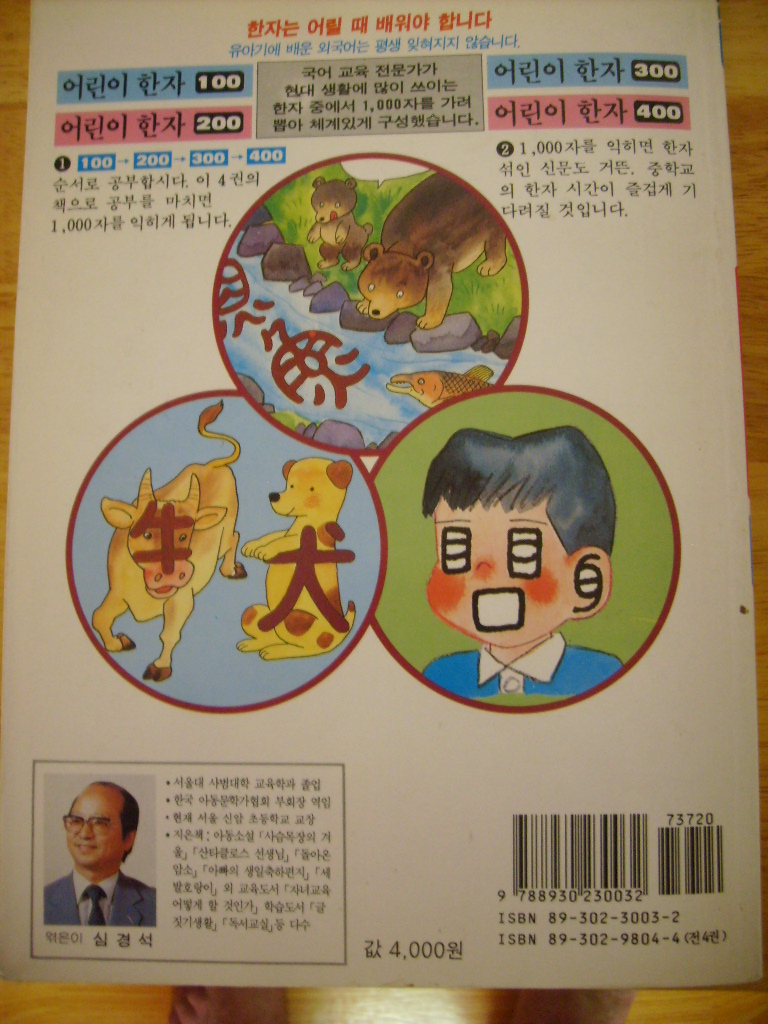
Back cover details
When I bought these books they were probably one of the most popular middle school supplementary support materials. Once well into book 2 it takes time discovering the meaning of each character as this necessitates using a dictionary, discovering radicals and so forth. Asking Koreans isn’t always helpful as often they are unable to clarify the meaning adequately in English. Understanding hanja, unless you’re in a unique position, is an uphill struggle. If you’re just wanting to learn some simple, basic hanja, book 1 is excellent.
Title: 어린이 한자 (100, 200, 300, 400)
Cost; 4000W each.
Published by 예림당.
Author 심경석. (엮음)
ISBN (전 4권) 89-302-9804-4
Published in 2001.
http://www.yearim.co.kr (The series is still available and the site information is in both Korean and English however, if you use the online catalogue you may have to key ‘한자’ into the search facility to find relevant information)


 Elwood 5566
1 comment