Keo Beer
I currently live in Daegu, South Korea, and recently my local supermarket, E-Mart, was selling imported beers, on of which was Keo beer, from Cyprus. Anyone posted to Cyprus under the United Nations will instantly recognise the distinct, yellow and blue can.

How did it taste after all these years? I have to say watery but possibly better than Korean beer which is notoriously boring. Perhaps my taste buds were influenced by nostalgia…
© 努江虎 – 노강호 2012 Creative Commons Licence.
Killing Kimchi and Murdering Makgeolli!
I’ve recently posted my new video on how to make makgeolli, but before that…
One of my Korean friends recently questioned the point of making makgeolli when it is so much easier to buy! Where do you begin? I love randomness! I hate straight cucumbers, regimented onions and all vegetables that have been forced to conform. Back in Europe, the big supermarkets, citadels of conformity, reject fruit and vegetables that aren’t a specific size and shape and I can remember a few years ago when it was a common sight to see piles of onions on the edge of a field that farmers couldn’t sell and to which you could help yourself. If I recall, it was a kind protest by farmers against the big buyers. One of the vegetables I hate buying in Korea is the courgette-like vegetable which you only seem able to buy encased in a plastic straight-jacket. Trapped inside its constraint, every vegetable grows to exactly the same dimensions and no more. What ‘ fascist farmers’ forum’ decide on the specific dimensions of a courgette?
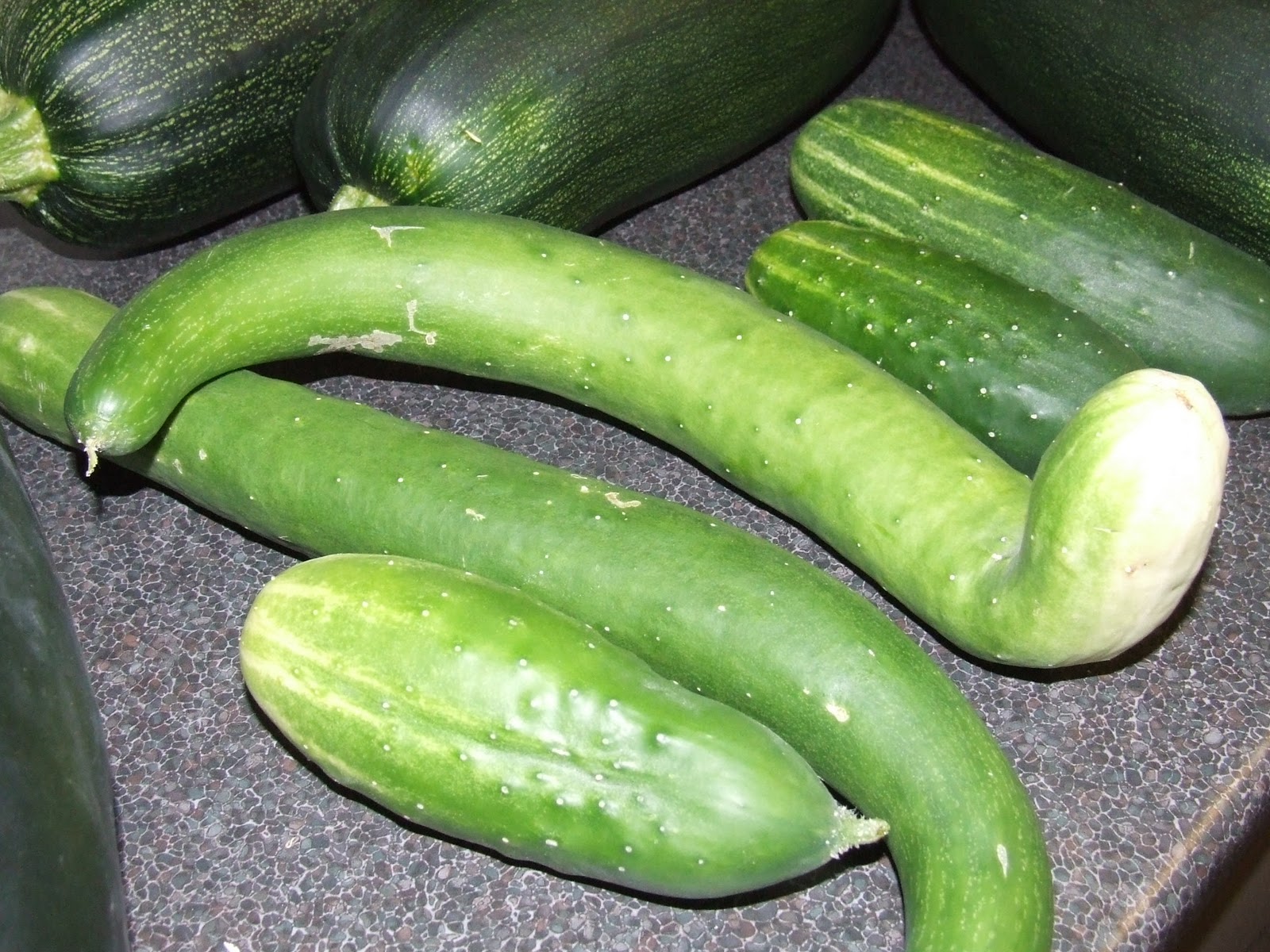
bent and wonky – banned by the big supermarkets
Market forces have already started killing kimchi and makgeolli. Fermentation processes, in which the development of something continues post the point of production, hinder the standardization that supermarkets encourage. It might seem an irrelevant point now, but I know several Korean women who can’t make kimchi and instead rely on their mothers for a regular supply. As for Korean men, most just about have the culinary skills to add water to a pot of ramyon (noodles) or make a cup of coffee – with mix. Sorry guys! . When the older generation of kimchi makers have died out, I would imagine a lot of women will turn to supermarkets for their fix of kimchi and from that point the gradually numbing of taste buds will lead to shit, factory made kimchi becoming the bench mark.
MacDonald’s have done exactly the same with the noble burger. If you’ve ever had a real American burger, ‘loaded,’ you’ll know how superior they are. In the USA, I’d say most people have no idea what real chocolate tastes like after years of rape by crap like Hershey’s. British people aren’t more discerning. I once gave a class of 17-year-old British kids decent chocolate (Lindt 70% milk, Excellence) and the most common and mediocre of British chocolate (Cadbury’s Dairy Milk, around 26% chocolate), which is substantially better quality the Hershey’s ersatz chocolate. They didn’t know which was which but they mostly voted the inferior chocolate the best. And British people are beginning to forget what real pork and bacon is like after years of abuse by pork that is pumped full of water and bacon that is similarly sodden with water and then ‘smoked’ by chemicals. Most British pork and bacon you can no longer fry as it ends up swimming in so much water they are effectively braised. Impregnation with water is what is probably going to happen with pork in Korea, which will rain torrents on samy-kyeop-sal (Korean pork barbecue) and kimchi and mekgeolli, in the hands of factory processes and supermarkets, will probably end up being similarly adulterated.
Take kimchi for example, the taste changes over anything up to several years and ‘maturation’ is greatly affected by temperature. Fermentation introduces random elements into food production that factory systems don’t like and it is safer for the image of brands to have products that are always mediocre, and hence reliable in their mediocrity, than ones where random elements occasionally deal both superb and inferior products. Most of our factory food, whether it be fast food burgers to almost anything in a supermarket, has been reduced to mediocrity. I remember when Indian restaurants in Britain all differed from each other. Not only was chicken served ‘on’ or ‘off the bone,’ choices you are never given today, but every restaurant cooked differently because the companies that were to supply all the ‘cook in sauces,’ standardise them and dominant the industry, had not yet been developed. Restaurants depended on the skills and creative talents of their chefs and eating out in an Indian was a culinary experience. I’ve even eaten curry garnished with melted silver leaf (varq) but again, you no longer see this creative addition. Standardization has killed the curry to the point crap factory products become the bench mark and preferred taste and in the process the chef is deskilled and becomes a ‘cook.’ Now, you can eat a korma in Newcastle or Cornwall and it will taste and look exactly the same – usually sickly yellow, sweet, and populated by uniform cubes of tasteless chicken. Yes, it’s cooked in a restaurant but the components are produced by mass factory processes. Even the pickles are now mass-produced.
It was the variation and randomness of British Indian restaurants that made them so exciting and it is currently the same variation that enlivens the experience of kimchi and makgeolli. Like most of the makgeolli type drinks you can now buy, and most of the packaged kimchi, the fermentation process has been terminated. Ten years ago, all makgeolli bottles had a hole on the top to allow the fermentation process to continue and so was packeted kimchi. Today, they are treated to kill the micro-organisms which so miraculously collaborate to transform a pile of boring cabbage into kimchi and rice into makgeolli. You don’t really appreciate the explosive potential of makgeolli until you’ve brewed it and believe me, it can pack a punch far more powerful than champagne.
The allure of making your own makgeolli and kimchi, lies in the fascinating interplay, a kaleidoscope of activity, that is produced when enzymes and environment collide and every production is a little different – and the difference continues to develop. And they are so very much alive; both kimchi and real makgeolli have a ‘zing’ that is absent when bottled or packeted. No matter how good a commercial makgeolli or kimchi is there is something they lack and quite simply, it is life. Homemade kimchi and makgeolli are full of ‘zeng’ (ie – ‘saeng,’ 생 -生), which is the Hanja (Character) for ‘life’ or ‘living.’ The moment you taste real kimchi or real makgeolli you taste life, it has a quality that with clinically dead food is only ever an approximation. Bottled makgeolli, boiled to death, is artificially resuscitated and put on a carbonated life support but despite the bubbles and facade of life, it is a zombie in comparison to makgeolli that has been allowed to retain its miraculous micro-organic population.
If you want kimchi that is always ever just, ‘just’ (그냥), well, the Chinese are making it in abundance. In my local Chinese store in the UK you can buy Kimchi made in the PRC that has not only been killed prior to packaging, but suitably embalmed in liquid chemical environment hostile to any micro-organic activity and then entombed in a can! And believe me, it tastes as bad as it sounds.
Kimchi and makgeolli are incredibly easy to make and doing so is fun. Homemade kimchi is much cheaper than the packet, supermarket variety and you can make around 8 liters of makgeolli from about 1.3 kilograms of rice (costing about 6000W – £6) which compared with shop bought makgeolli, is about half price. But more to the point, it is more about preserving taste and culture, than cost!
For more information on making makgeolli, visit Mister Makgeolli , and for information on making kimchi, visit: Kimchi Gone Fusion.
Bathhouse Ballads chronicles many aspects of my life in South Korea. Kimchi Gone Fusion focuses on ‘the way of the pickled cabbage’ while Mister Makgeolli is dedicated to Korean rice wine.

©Bathhouse Ballads – 努江虎 – 노강호 2011 Creative Commons Licence.
An Old Favourite – ‘The Supplanter’
I’ve always enjoyed reading The Supplanter. Being a fellow Brit I enjoy his humour and we seem to share a common ground in our experience and analysis of Korean culture. Of more importance, it nearly always elicits a smile. When I first stumbled upon The Supplanter, around three years ago, I remember sitting up to the early hours of the morning reading some very amusing posts. Originally based in Korea, The Supplanter has relocated to China but he still publishes occasional posts on issues relevant to South Korea. The following is an extract from Teacher Bloopers:
Middle School, speaking test preparation after school class:
Me: ‘What’s your Father’s job?’
Student: ‘He no work’
Me: ‘He doesn’t work. Or you can say He is unemployed’
Student: ‘No, my Father dead’
Me: ‘Oh, erm, sorry to hear that’
***
Women’s University, Seoul, speaking test:
Me: ‘Describe your ideal man’
Student: ‘I don’t like men’
Me: ‘Why?’
Student: ‘I’m a lesbian’
Me: ‘Good answer’
***
At Elementary Summer Camp, Seoul, speaking to a parent about her son’s strange behaviour:
Me: ‘Your son pulls out his hair and tries to eat it. I’m very worried about him’
Mother: ‘Yes, he does that’
Me: ‘Do you know why?’
Mother: ‘The doctor says he’s worried about things. Stressed’
Me: ‘Yes, clearly he’s very stressed. What did the doctor say to do?’
Mother: ‘Oh doctor said he’d grow out of it and if it gets bad we can get a …? I don’t know the English …’ (Mimes)
Me: ‘A wig?’
Mother: ‘Yes! That’s it – Wig!’
***
Exiting from building in a Chinese university:
Me: [Walks into knee high metal bollard] OH FUCK ME!!!
[Shocked students turn to observe foreign teacher hobbling away in agony]
Me: [Looking up] ‘Oh, hello Dean … I …’
***
In conversation with a teaching assistant, University, China:
Me: ‘I really think you should change your English name, Enoch is not a good name if you’re British’
TA: ‘Why? I like it’
Me: ‘Well, it tends to make British people think of Enoch Powell, who was a racist politician’
TA: ‘You mean he hated black people?’
Me: ‘Well yes, amongst others …’
TA: ‘Me too’
Me: ‘Umm, that’s a terrible thing to say, but he’d also hate you too!’
TA: ‘Why? I’m not black!’
Me: ‘He didn’t like anyone who wasn’t white – or British – or not Christian’
TA: ‘Well, I’m not Christian, maybe he’d like me!’
Me: ‘… I think you’ve misunderstood, let me put it another way … Just change your name, ok?’
***
Responding to text from Female Chinese Student in Advanced English class:
Student: ‘I really like your class! Your so funny! But, I need some help, can I come and see you?’
Me: ‘Thank you, glad you enjoy the class. Come and see me before or after the lesson’
Student: ‘No, I mean we should meet up’
Me: ‘Yes, before or after lesson is fine’
Student: ‘No, I want to come to your apartment. We can hang out, watch a movie. I stay with you because dormitory close at midnght. Too early’
Me: ‘I don’t think that’s a good idea. Bye’
***
Middle school, Seoul, in conversation with the baseball coach:
Korean Teacher: ‘Discipline is hard these days … students think they can do what they want …’
Me: ‘Well, they’re much better behaved than English students’
KT: ‘Really? I always thought English people were well behaved’
Me: ‘No’
KT: ‘Hmmnn … I got suspended last semester because I disciplined a student’
Me: ‘Really? What happened?’
KT: ‘Oh I just hit his legs with a baseball bat … and not broke but …’
Me: ‘Fracture?’
KT: ‘Yes – fracture! His parents complain … so I got suspended. You can’t harm students these days, parents complain about everything …’
Me: ‘…’
***
Eliciting from low-level students, University, China
Me: ‘So, here are things you like [indicates board] But what about things you don’t like – or dislike?’
Students: [Silence]
Me: ‘What do you dislike? Don’t like?’
Student 1: ‘Hate?’
Me: ‘No. Too strong. Dislike – Don’t like.’
Student 1: ‘Japanese?’
Me: ‘What?’
Student 1: ‘Hate Japanese’
Me: ‘No, no … not hate … and not Japanese. Dislike – don’t like – Hate [gesticulates] too strong’
Student 2: ‘Japanese people?’
Me: ‘No, no, no!’
Student 3: ‘Japanese culture?’
Me: ‘No! something else – forget the Japanese’
[Silence]
Me: ‘Anything else you dislike – don’t like – but not the Japanese’
Student 1: ‘Chinese people … Chinese people cannot forget Japanese’
Me: ‘Ok – write on your sheets things you don’t like – dislike – but NOT JAPANESE’
Me: [Checking answer sheets] ‘So, everyone has written Japanese …’
©努江虎 – 노강호 2012 Creative Commons Licence.
Further References:
Doboks Galore – Photo Diary
I feel quite at home among taekwondo and martial arts clothing. With twenty years experience of taekwon-do, I got to the stage I could go shopping in a supermarket in the UK or Germany, in a ‘dobok’ and not feel out-of-place. I find something quite ‘homely’ about the various uniforms you see on Korea streets and in schools and again this is probably because I was also fifteen years in the British army. Wherever you go in Korea, uniforms are part of the scenery and one of the most popular is the taekwondo ‘dobok.’
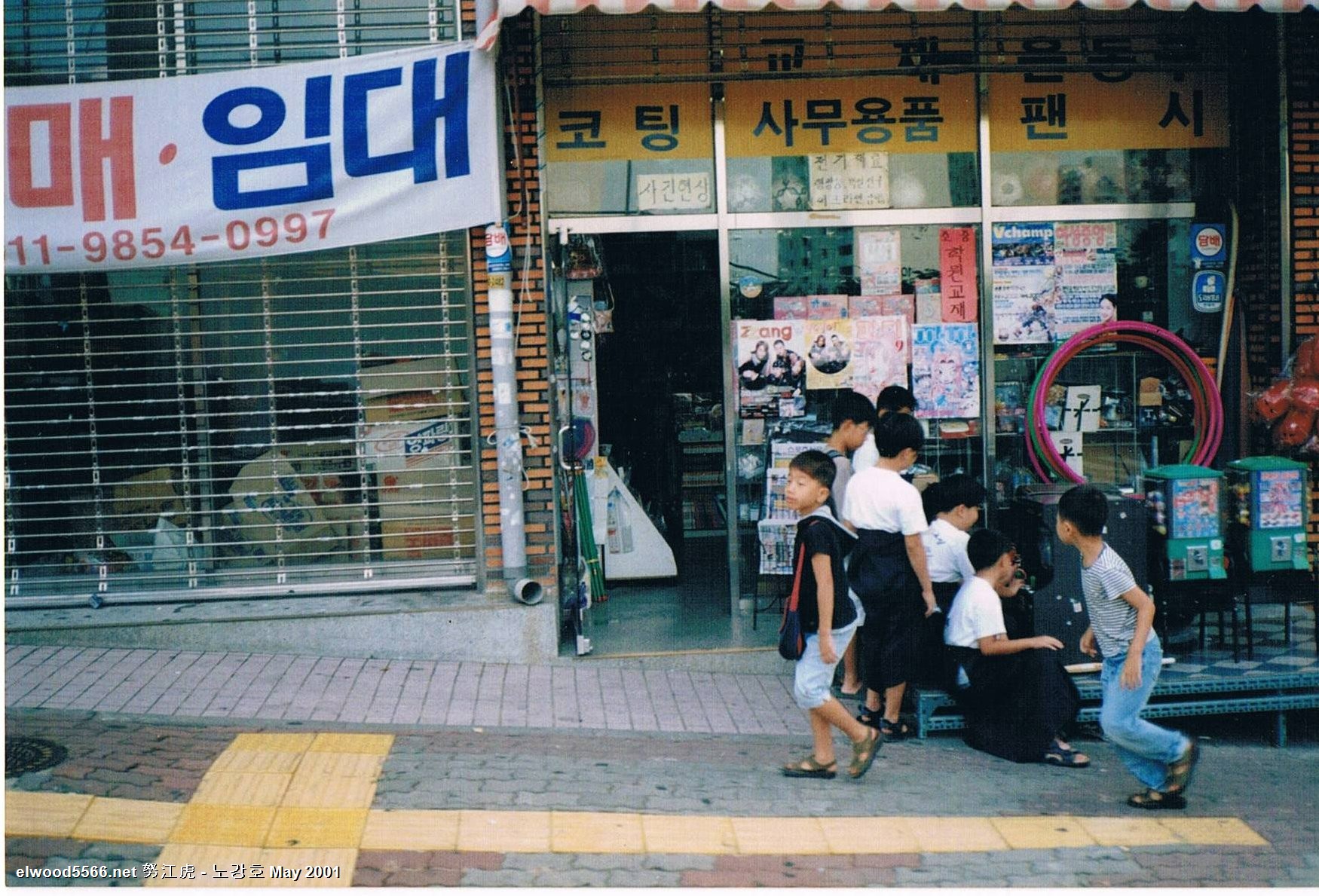
2001: Boys in summer komdo (kendo) uniforms with the baggy pants, playing an arcade game
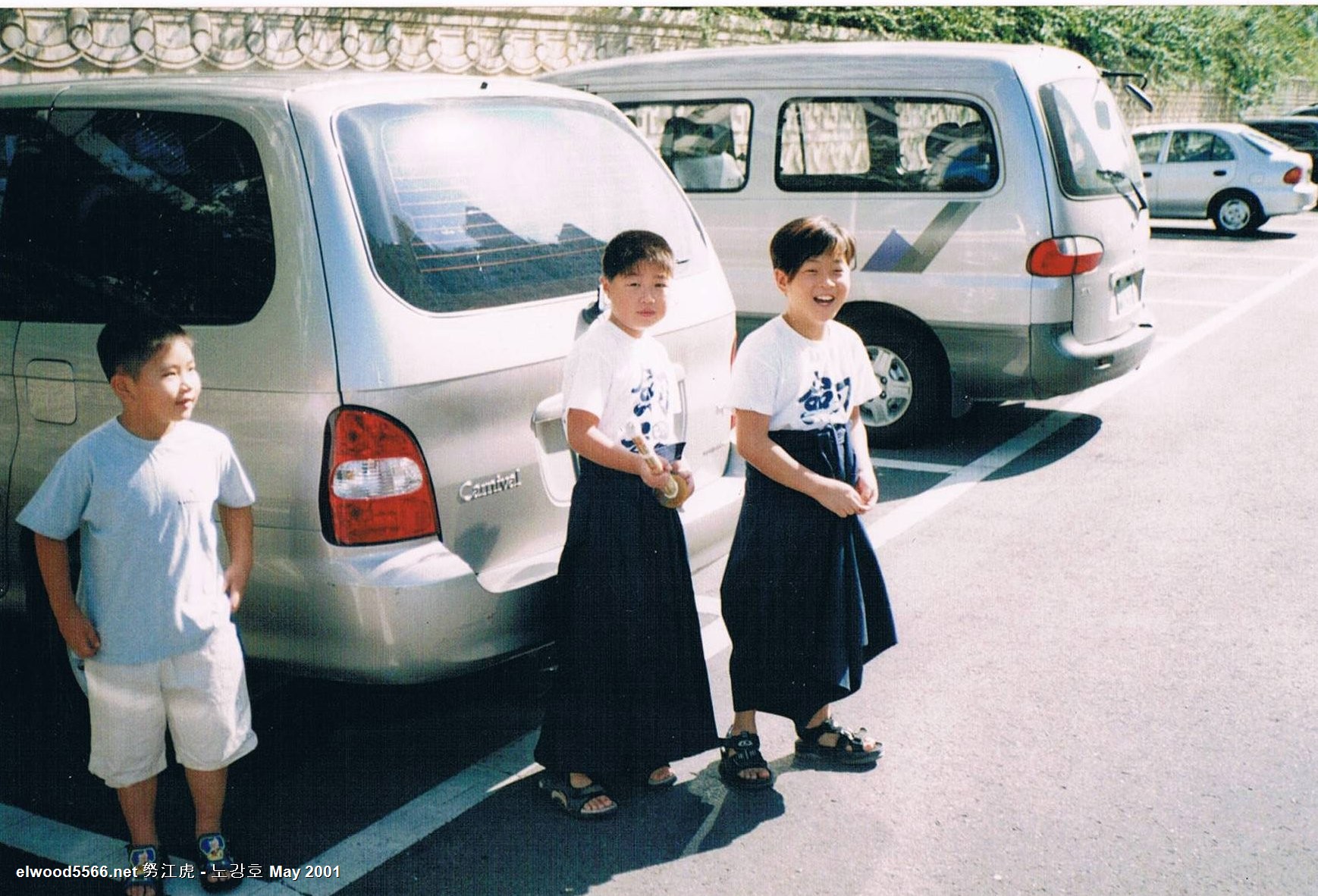
2001: Two komdo boys in summer dress. One carries a bamboo 'shinai' (don't know the Korean term for this)
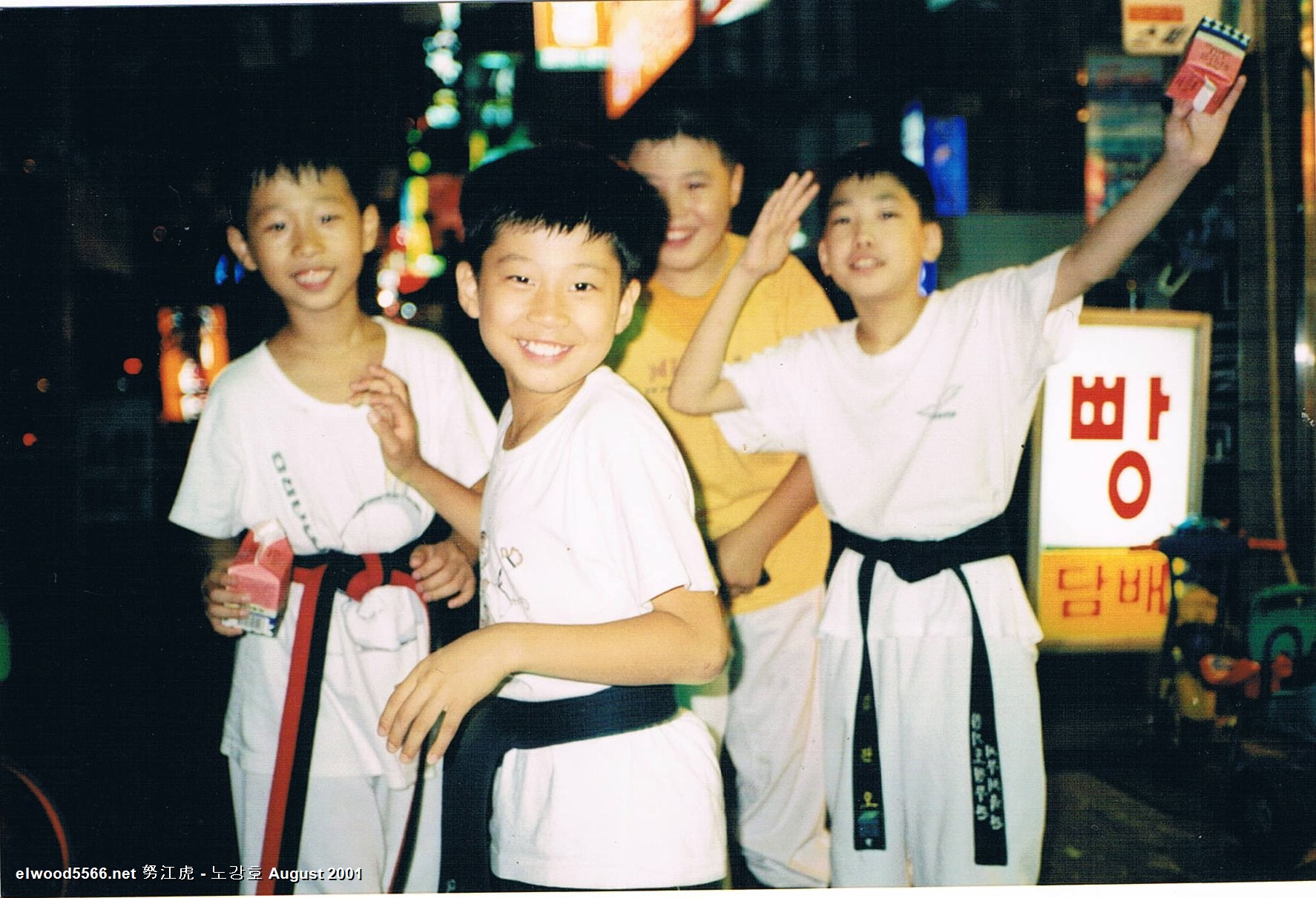
2001. Hapkido boys in summer uniform. This school is still training ten years later.
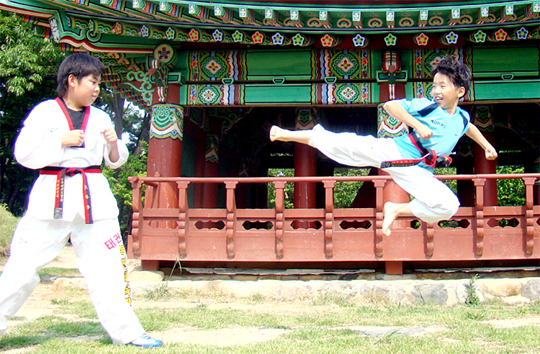
flying side kick

A couple of taekwondo boys resting. WTF 'dobok' are always blinged to the max!
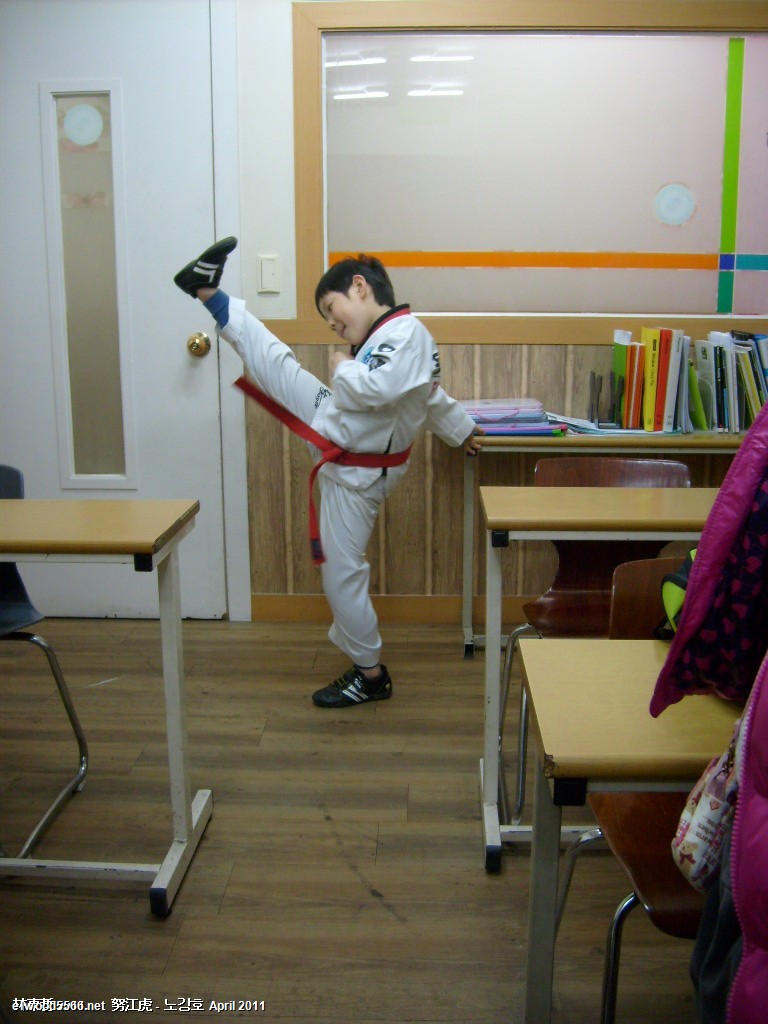
one of my younger students demonstrates his front kick
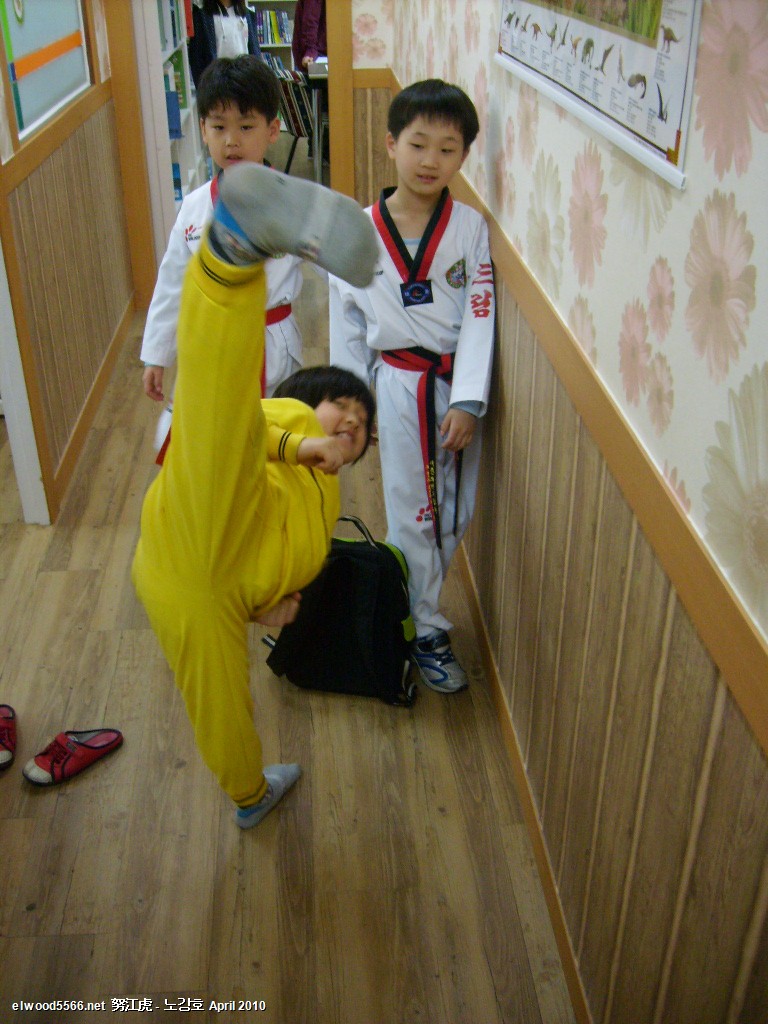
Jay is a third degree black-belt (WTF). This is a fantastic side kick!

Some older taekwondo boys on a wet morning in the monsoon season
Jay performing a side kick
©努江虎 – 노강호 2012 Creative Commons Licence.
A Gully of Urine and Discarded Cigarette Ends – Vacation Finished!
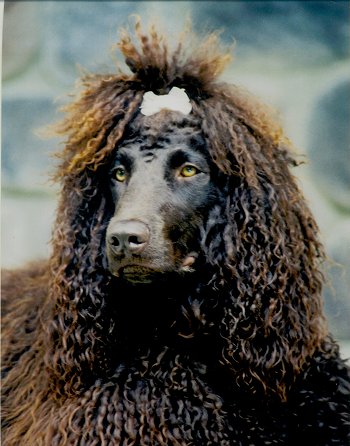
Vacation fashion – the shaggy perm
These past few weeks I’ve experienced the naughtiest behaviour many Korean kids, especially boys, get up to. I live in an area of one and two room accommodations close to a university and sandwiched between high rises on three sides. One-rooms are basically studio type accommodation for one person which range from spacious and comfortable to poky and claustrophobic. Two-rooms are the same but have two bedrooms. The bathroom is always an additional room even if a one-room and often, though not always, so is the kitchen. Usually there is an enclosed veranda bordering the ‘rooms’ and in which you can hang washing, store items and is often the best location for a washing machine. The enclosed veranda provides an excellent insulation in the winter as it effectively produces an enormous form of double glazing. I’ve lived in most of the variations. The worst was in Cheonan and though it was clean and pleasant, it was on the ground floor and as usual, there were bars on the windows. Worse however, was that the kitchen was in the bedroom area and it was small, small enough so that I could sit on my bed and prepare meals. Indeed, I could do everything either sat at my bed or by taking one-step. A ‘one-step’ would have been a far better description for this type of accommodation.
A small table pulled out from the kitchen unit alongside the bed so that I could prepare food and eat from the comfort of my bed, ideal for invalids and the infirm. Then, by standing and taking one small step, I could wash dishes and cook. For several years I was always embarrassed to say I lived in a ‘one-room’ because it sounds so much like a dingy UK bedsit but I’ve learnt there is great variation in size and comfort. My first two-room, in 2000, for example, had no air-conditioning; ten years ago air-con wasn’t a standard part of a teacher’s accommodation contract and we weren’t even supplied with a fan. My current one room is quite large and probably four times the size of my ‘one-step’ room in Cheonan. I suppose the worst thing about such accommodation, and purely based on my experience, is the lack of any view. Ground floors feel like prison cells due to the barred windows and very often the only glimpse of life beyond is that of the adjacent building’s wall. And of course, the outer windows of one rooms are generally frosted so even if you have a view it’s obstructed by this and the mosquito screen.
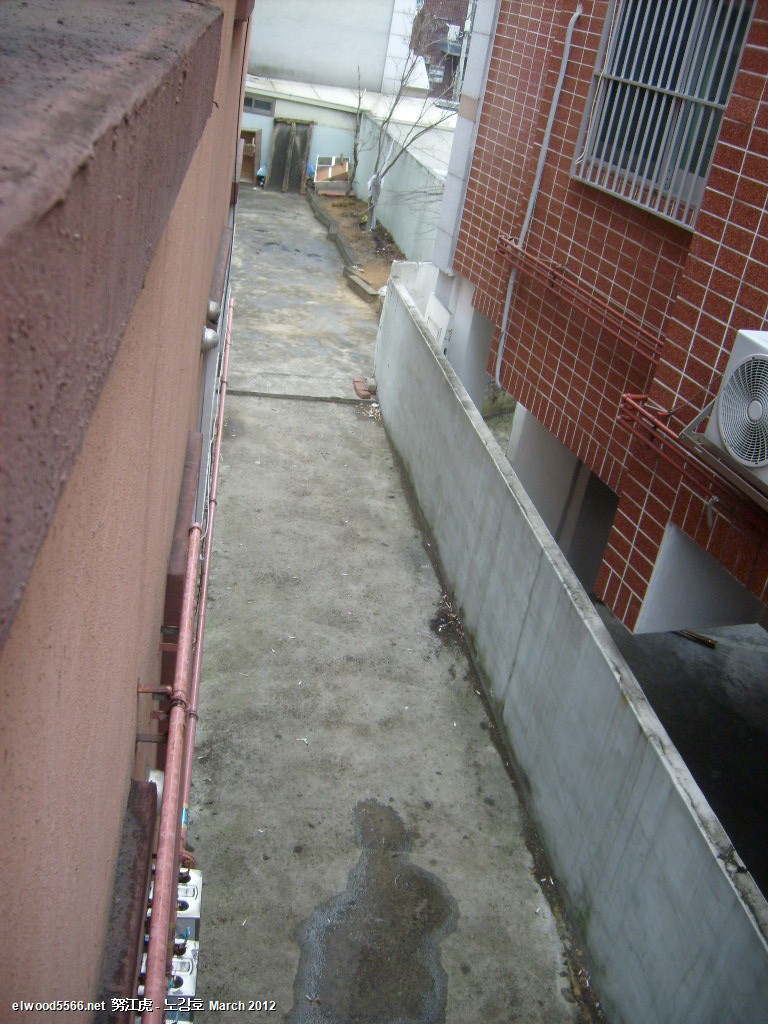
the alleyways around my one-room
Around and between the tightly packed one-rooms/two rooms in the area in which I live, are a maze of small passage ways. These provide access to down pipes, gas pipes and air conditioning units rather than a means of walking from one place to another. For nimble and athletic school boys however, capable of climbing over the walls which separate them, they are perfect recesses to hide from the adult world. For most of the year these passages are void of life but during vacation month they are frequently visited by groups of lads up to the Korean equivalent of ‘no good.’
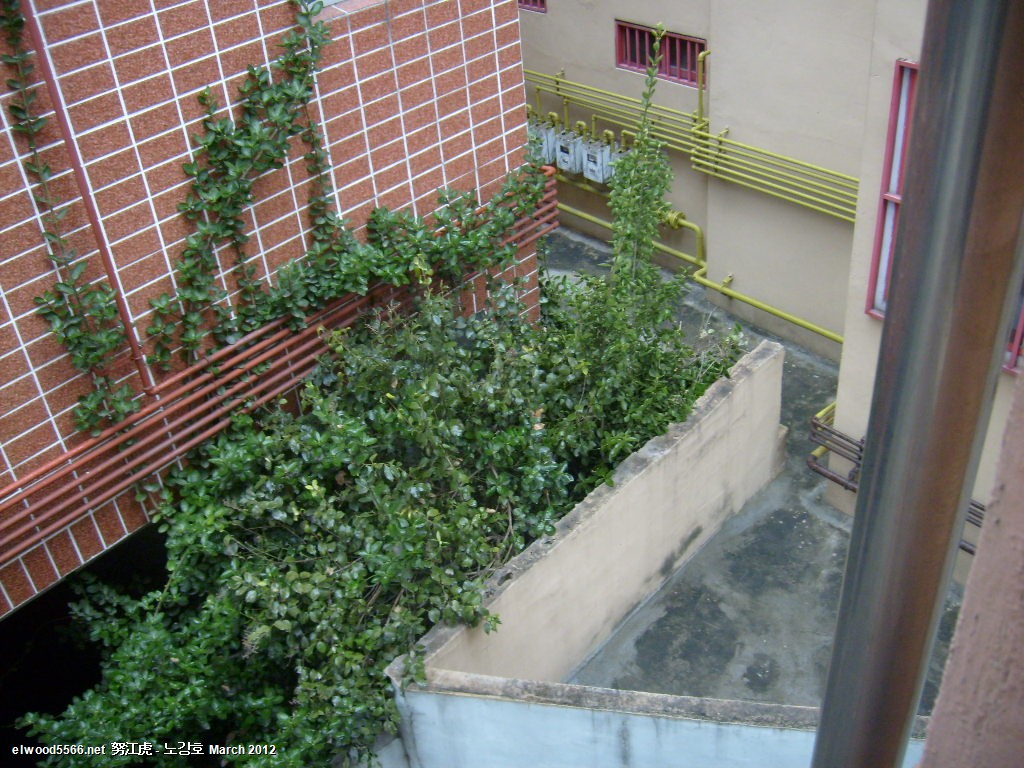
a myriad of hidden recesses
So, this afternoon, March 1st, a national holiday (삼일) marking the earliest public display of resistance to the Japanese occupation which took place on March 1st 1919, the last gaggle of school boys huddle on their haunches under my kitchen window to commit some of the naughtiest acts possible for Korean teenagers. The first of these is smoking which is always accompanied by dribbling spit onto the pavement. This act has a sort of fashion to it and spit is rarely spat out but dribbled with an accompanying intense interest and fascination practiced by the performer. Next comes the pissing, which two boys do against the wall of my building. This is naughty but it’s not an altogether uncommon site in public. The third offence is their noise, boisterous and lively, but too loud! After the cigarette session, they run around a little playing chase and wrestling, almost deliriously happy. One of them throws a stone, not at a window or another person, but simply on the floor. Then I am spotted! There are a few seconds when they freeze, rather like a pack of wolves, in this case toothless, and stare in my direction, sniffing the air, motionless and silent. Then, without any discussion, they are gone. I am still able to hear their chattering and laughing but from a passage I can’t see. Their final offence is in the litter left from the visit, cigarette ends and a discarded packet. However, Koreans litter with impunity and this is only deemed an offence by foreigners. For school boys, such behaviour is about the closest Koreans come to being hoodlums or delinquents.
Today is the last day of the long winter and spring vacation, two holidays interrupted by a few days school, which preceded the start of the new academic year. Of course, nothing is ever quite as it seems in Korea and despite the fact students have a school vacation, most attend the private academies in the afternoon and evenings or school academic camps. High school students have hardly any vacation and attend academies on the weekend.
The long holiday period, spanning about seven weeks, allows elementary and middle school students to truly let their hair down. In academies they are often tired from playing lengthy sessions of video games or watching TV until the early hours of the morning and dyed hair, painted nails, earrings and perms are all tolerated. After seven weeks the shorts back and sides of many lads have been groomed into more lengthy and fashionable styles and I’ve even noticed boys tossing their head to flick hair out of their eyes, in a manner reminiscent of Justin Bieber. It’s all been tolerated, even encouraged, that is until today. I’m sparing a thought for the thousands of kids who will be washing out the dye, getting their haircut and scrubbing their nails clean as they prepare for school in the morning. My fitness center will be void of the peer groups of teenage boys and girls whose chatter and laughter have accompanied my training sessions for the last two months. Going back to school in the UK, after the summer vacation, was always depressing but the respite of a week’s half term holiday was at the most only ever about six weeks away. With the obsessive and intense nature of Korean education and the next vacation laying far in the distance amidst the screaming memis’ song of summer, the end of the spring vacation, the beginning of a long, long haul marked by a chain of exams and the relentless daily trudge from one academy to another, must be especially gloomy.

a gulley of urine, cigarette ends and a discarded cigarette packet mark the remains of the long vacation
©努江虎 – 노강호 2012 Creative Commons Licence.
FURTHER REFERENCES
Patriotic Taekwon-do and Sam Il – (Bathhouse Ballads March 2011)
Korean Teenagers’ Wacky World of ‘Vacation’ Fashions – (Bathhouse Ballads July 2010)
Snacking Out on a Lobster – Monday Market

so delicious
Recently, there seems to have been a glut of both lobster and the most enormous ‘banana prawns’ in my market and the local supermarket. Indeed, I’ve eaten more lobster in the last week than I’ve probably eaten in my entire life. They weren’t necessarily the biggest lobsters you could buy but to do that I’d have to take home a living one and despite my fondness for their flesh, I’m not sure if I’d be capable of committing one to a cauldron of boiling water.
As for the prawns – I’ve never seen banana prawns in the UK. First they are big, in some cases close to six inches in length, head to tail and discounting their antennae and second, lovely and plump. I’m not sure if their name is derived from their size, or their slightly yellowy-pink colour. One evening, I treated myself to both a lobster and banana prawns, serving them with a salad. I couldn’t resist the purchase as they were reduced to 6000W (£3) but usually the price for a single lobster or around 15 prawns varies between this and 10000W (£5).
When I was considering the extravagance of a lobster and prawn dinner, and being dissuaded, I had to remind myself how much that is in the UK, a piddly £6! And I had to remind myself that while I can buy a bag of prawns for around the same price back home, they are always the little things, probably caught off the coast of Scotland, shipped to China for processing, and then stored in a refrigerator warehouse for 2 years. Half their weight is glaceed water and they are totally tasteless. I think many British people have completely forgotten the taste of an unadulterated, fresh prawn just as much as they forgotten about pork or bacon that doesn’t piss a puddle of water into the pan when you try to fry it! This week, I’ve eaten five lobsters and two were just for a snack!
©努江虎 – 노강호 2012 Creative Commons Licence.
Lion’s Mane Mushroom – Monday Market (노루궁뎅이 버섯)
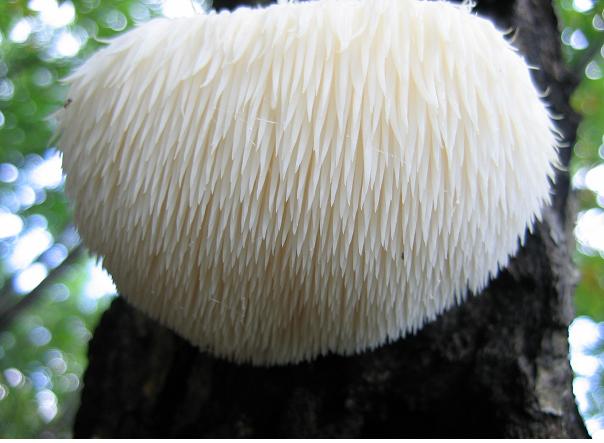
the impressive Lion's Mane Mushroom - aka Pom Pom Mushroom
The strange shape of this mushroom, which I’ve only seen once, immediately attracted my attention though the ones I bought are nothing as spectacular as ones that can be found in the wild. The Lion’s Mane Mushroom, Hericium erinaceus, is also known as the Bearded Tooth Mushroom, Satyr’s Beard, Bearded Hedgehog Mushroom and the Pom Pom Mushroom. In the more spectacular examples, ‘pom pom, is an apt comparison.

spongy
The size of this mushroom varies from that of a golf ball to not much less than a regular football and its natural habitat is on the side of trees. The mushroom is particularly prized when small as it has a seafood texture and taste and is sometimes compared with lobster. The mushroom has a long history of medicinal use in the Orient and is currently of interest in the treatment of Alzheimer’s.
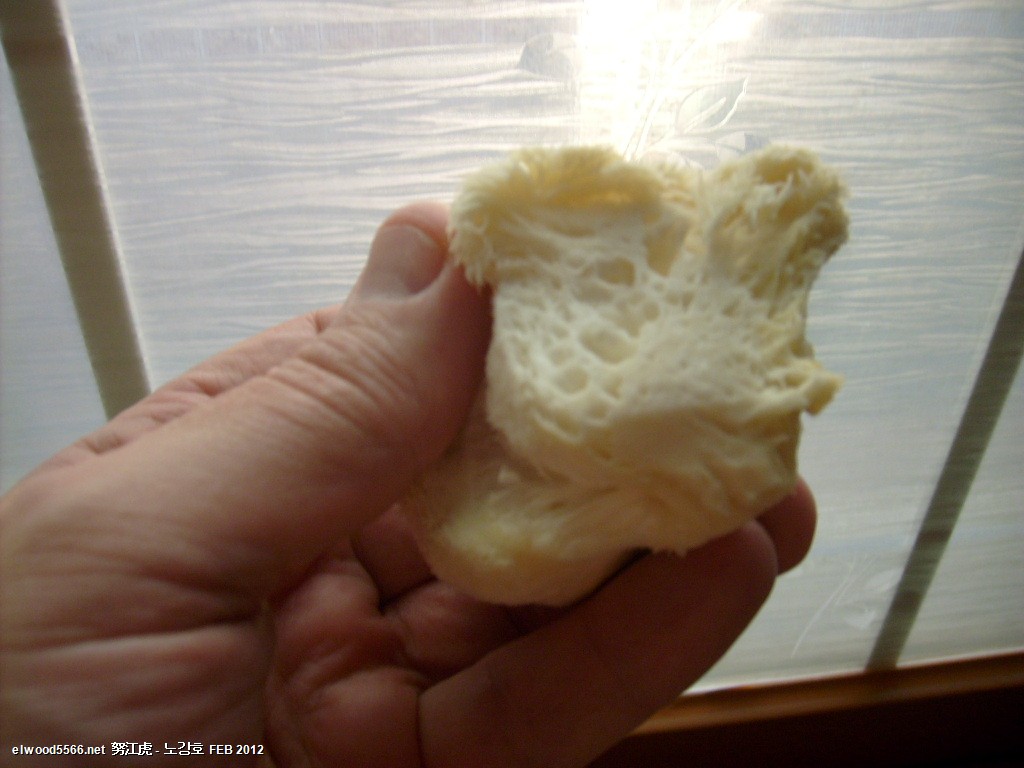
and watery
I had no idea what to expect or the best way to cook them so I simply fried slices in sesame oil. I was surprised by their weight as they are are heavier than they look and neither are they solid having substantial ‘air pockets’ inside. Indeed, in terms of cutting and feel, they are both spongy and watery. I didn’t find their taste particularly memorable though they were extremely succulent but because this was a first experience, I didn’t what to expect. Now I know a little about them, I’d like to try them again. However, currently, they are more expensive than lobster. Two, each between the size of a golf ball and tennis ball, cost 2700W (about £1.50); my last lobster cost 6500W (£3.25).
Here is a Youtube video by Don King, a mushroom hunter…
©努江虎 – 노강호 2012 Creative Commons Licence.
Club Korea
I have a love hate relationship with Korean discrimination! Hating discrimination is obvious, but ‘loving’ it! Why? I hear you ask; because we’ve done such a good job fucking our own societies that the more opposition to the west, in any form, the better. I know, it’s puerile, Even though I’m a ‘wayguk,’ I can tolerate being an outsider if it is a barrier to the acceptance of some of the western values which are currently rotting places like the US and the UK.
Personally, I place quality of life above all else and as a foreigner in Korea, I have a far better quality of life than I would back home. Now, I don’t mean solely in economic terms, though even with significantly higher pay in the UK, I was never able to save half my earnings as I can in Korea, but in terms of things like access to health care, gyms, things to do after work, eating out, etc, etc. With many of the transactions I make in the UK, often ones accompanied with running and maintaining a house or traveling, there is an accompanying sense of having been suckered. The same sensation is evoked whenever I travel to countries where you have no idea of the relative values of things, perhaps because you are supposed to barter but in the process you know that the item you are buying is extortionately overpriced but there is nothing you can do about it because the next guy will rip you off just as badly – if not worse. I suppose the feeling is akin to being divested of your dignity, a bit like you might feel if your house were burgled and it’s especially intense when you know the other guy thinks you’re a total fool for paying whatever you did. Transactions of whatever kind are always more tolerable, even rewarding, if you feel the deal was mutually beneficial and fair but unfortunately, in the UK, you’re usually exploited and there’s nothing you can do about it!
My sister recently wanted her son to see a dermatologist and was faced with a six week wait. Can you imagine waiting six weeks to see a doctor in Korea? I caught ‘red eye’ last year and went straight from seeing my own doctor to an ophthalmologist in the space of half an hour and both practices were less than 3 minutes from my front door and probably one minutes walk from where I work. Then there was the cost; both visits totaled less than £5 (10.000W). Meanwhile, to secure quicker treatment for her son, my sister had to pay £170 (340.000W). I gather in the US this would be significantly higher.
Then there’s my gym. I pay £50 (100.000W) a month for access to bathhouse, gym and jjimjilbang. I know there are cheaper places but it is my favourite bathhouse and is impeccably clean. Back home, even exclusive gyms pale into mediocrity compared to those on offer in Korea while all others are basic, usually just a gym and claustrophobic changing room. And of course, you couldn’t have a bathhouse in the UK without it being usurped for sexual purposes because in the west nudity and sex are conflated. Then there are the restaurants, singing rooms, jjimjilbang, pc rooms, twenty-four hour services, coffee shops and taxis to take you wherever you want at prices a fraction of the cost they are in the west.
However, these aren’t the main reasons I find Korean culture preferable to that of my home country. Unfortunately, it’s the British aggression, violence and apathy of British students that exiles me to foreign shores. I have much experience with aggression and violence and due to my military background and training in taekwon-do, I worked in several different places as a bouncer while I was a student. One such place was in a MacDonalds in a fairly mediocre town. I doubt there is one MacDonalds on the entire Korean peninsula that requires a bouncer – except perhaps when they are in the vicinity of US military bases.
Now, to give you some idea of the kind culture I experience in the UK, in a fairly average British town, let me share a piece I wrote around 8 years ago. The extract is taken from my blog, Scumland UK.
Outside the local newsagent, which is only a few minutes’ walk from my front door, I am treated to the headlines of the newspapers, all utterly depressing. Of course, I know I shouldn’t read them but I can’t help it. I’m the inquisitive type of person, the type who if I think I’ve stepped in dog shit will poke it with my finger and then sniff. Newspaper headlines have the same magnetic allure and very often cause the same repugnant reaction. ‘Boy knifed in a school playground,’ reads the headline in the national press. This story has some local significance as only a few weeks earlier a teacher colleague told me about a 12-year-old girl who had been arrested on the school premises for producing a carving knife with which she intended to kill her ex-boyfriend. The police were called to the school and took her away in handcuffs. Come to think of it, that was only a few weeks after a local teacher was beaten senseless by a gang of nine boys after he tried to break up a fight. Another school has recently installed a metal detector at its points of entrance in order to detect those arriving for lessons carrying knives. Meanwhile, the local newspaper contains a massive headline about increased disorder and yobs terrorising the drivers of local bus companies.
I’ve been standing at the bus stop for over half an hour despite the fact that buses are supposed to service this stop every twenty minutes. As I am wondering whether yob behaviour on buses is the result of them arriving late, a girl of about 13 passes on a bicycle, all her stomach is exposed and as she passes I notice that her buttock crack is totally visible. Am I supposed to find that alluring? I’m not talking about just a centimetre or two of crack but almost half her backside. I wonder if her parents allow her to expose so much of her body in public and I conclude that her Daddy and his mates probably find it very erotic. However, I’m not too shocked as recently I saw a girl at the same bus, stop and of a similar age, wearing a black T-shirt on which was emblazoned, in lovely gold letters, ‘Fuck Me.’ I can’t remember if the words were mitigated by the addition of an exclamation mark, on a young girl it doesn’t really matter.
Once on the bus the assault continues; a young mother is sat with a baby in a pram. I can’t help but begin assessing her character and remind myself not to assume too much on the basis of stereotypes. While you don’t solely judge a book by its cover, you can certainly use it to make a formative assessment. I know for example, that if I pick up a book and Jane Goody or that Jordan person whose surname I don’t know, is on the front cover, I can assume its going to be superficial crap with smatterings of smut. The young mother has enormous hooped earrings and a cheap, blue tattoo has been branded onto her hand by a tattooist who was clearly pissed. The tattoo intrigues me as I cannot discern whether it is a rose or a red cabbage. The difference is important in my assessment of her; a representation of cabbage would constitute some kind of statement, be it artistic or intellectual and I would be tempted to ask her what the cabbage symbolized. A rose however, would simply constitute a brand and might easily be substituted by a number.
Now I’m on the bus my mood has improved and I tell myself not to be such a negative, nasty person and at just that moment, just as I am about to reconcile myself with society, she goes and spoils it all; her mobile phone rings, not a discreet ring but some cacophonous jangle that stuns everyone within earshot. Next she begins shouting into the phone in that horrid Estuary English twang which political correctness demands we respect. ‘What the fark do you wan now? I already told ya, I’m on the farkin bus! What d’ya fink I’m farkin doin? I’m dropin’ the baby at me mum’s and I’ll met ya in town. Like I farkin said already.” Her baby stairs at me, its big eyes full of wonder. I want to smile at it but its grotesque mother will probably get aggressive and assume I’m some pervert. Hundreds of thousands of babies have been born to such hideous parents and yet no rhetoric or public debate seems to exist which calls into question their parents’ ability to rear children. Having a mother like this freak is child abuse but questioning parenting is a social taboo.
It’s a hot afternoon, probably the hottest day of the year and as I get off the bus I’m thrust into the middle of a small crowd of teenage lads, all aged 16 upwards, stripped to the waist and drinking from cans of beer. You can see the aggression and sense it in an aura which engulfs them like a plague. Aggression snarls their baby faces; it pervades the gait of their walk, a sort of strut which involves little steps; like they have pokers or shards of peanut debris up their arses. Their tight arsed strut is accompanied by an exaggerated shoulder swagger and arms swing at a forty-five degree angle to their bodies. Their beer cans, their gait, their little gang, their aggressive faces warn all on-comers not just to step aside, but to ‘fuckin’ get out-of-the-way!’
Friday afternoon is never a good afternoon to travel into town as even in the late afternoon the assault to your sense and sensibilities can be particularly fierce. The experience is intensified if it’s a school holiday. In front of me a boy lurches from side to side, clearly drunk. As with most of the other trash I’ve encountered in the space of 45 minutes, traveling from my house in a small village, into the town center, he’s a teenager. For the benefit of some approaching girls he opens the front of his jeans, sticks his hand down the front of his black boxers and contorting his face in a lustful manner, asks: D’ya wanna suck me fuckin’ knob, gals?’ The girls giggle, clearly honoured by the attention of this slob. I try to ignore him but he steps into my path, flies still open, hand still in boxers. ‘Hey mate, give us a pound!’ It’s more of an order than a request. I’m tempted to ask if he is touting for business given that his hand is still rooting in his boxers and his jeans are fully open at the front, but somehow I don’t think he would comprehend my humour. I ignore him. ‘Fuckin wanker,’ he calls after me.
Eventually, I arrive at my destination but worse is yet to come; I have to escape from this hell hole on the ten o’clock bus and the High Street, like so many other British towns, is no place to be at that time of night on a Friday evening, or indeed any evening! I only have to walk about a third of a mile to my bus stop but it is like walking through a zoo where the animals have been freed from their cages. The streets are crawling with loud, brash, aggressive, drunken youngsters. A lad is vomiting in a doorway; he sees me looking and gargles inarticulately, something with the word ‘fucking’ in his sentence. In the recess to the opening of one of the town’s most prestigious department stores, a girl is squatting; her stupefied eyes struggle to focus on my passing blur. Supported by the store doors against which she has collapsed, piss streams out from between her legs onto the marble floor which only a year ago the Queen herself walked on. However, she manages to retain some dignity by not pulling down her jeans and underwear. In another alleyway’, one that formed part of the original grid system when the Romans occupied the town some 2000 years ago, I notice a young teenage girl laying face down on the floor, her hand clutches a cheap handbag. She is scantily dressed with the obligatory exposed stomach and cheap, tight t-shirt that hugs her pubescent contours. Her friend, or should I say ‘mate,’ shouts at some passing men: ‘Don’t just fuckin’ look! Help her!’ The girl on the floor lifts her head and with a strangulated moan gargles vomit onto the payment. Like a marionette with severed strings, her head collapses back towards the dirty pavement, her hair and gargantuan hooped earrings cascade over her alcoholic sick. The passing men ignore her and walk by. This is someone’s daughter lying comatose on a grotty pavement, someone’s child and I wonder what sort of upbringing, what kind of society has led her to have so little self-respect than she is now lying drunk and dangerously vulnerable. If I was her parent I would be very concerned but then if I was her parent she wouldn’t be in this situation.
Outside the main night club a line of teen punters, mostly male, are being searched by burly bouncers before being allowed entry. Again there is that aura of aggression, the same nasty, scowling faces that warn you violence is about to erupt at any moment. You know you can’t make eye contact with them as to do so would invite hostility. They shout vulgar comments at passing females, adopt macho postures and grunt at each other and every other word is ‘fuck,’ ‘fucking’ or ‘fucked.’
Most of my friends back home hate the tone of Scumland UK and I can understand why; when you have terminal cancer you don’t like to be reminded, if you’re living in shitty conditions or your house stinks, you’d prefer not to have the fact rubbed in your face. And of course, people have different perceptions. Many British people have been completely desensitized to the nature of the society around them while others have never lived abroad and only experienced other countries as holiday destinations. Others, often the middle classes with managerial jobs and houses in the leafy suburbs, especially ones who earn a living out of the degeneration and decay around them, simply deny there is a problem.
Meanwhile, back in Korea, I lead a life in which I have never faced a threat on the streets or been insulted or assaulted as a teacher – all of which I’ve experienced in the UK. Hence, I’m in favour of any barrier to the spawning of western values in Korea which might change this. I’m what you might call a ‘wayguk’ separatist and in a sense would be quite happy if Korea expelled all foreigners and closed its borders. Yes, Korea has a multitude of problems and things that need improving but where in the world are young people so mild-mannered, innocent, the streets so safe, and pregnancy, drug and pox not a scourge on the young; where in the world is it possible to do a multitude of things on an evening at a price that doesn’t rob you of your dignity or put you in danger of getting your face kicked in!
On the peninsula, you can speak fluent Korean and marry into clan-Korea but you’re never really Korean. You’re always on the edge. So many aspects of Korean culture conspire to highlight the fact you are a ‘wayguk.’ Even the language conspires to expose your barbarian genes. I forget the amount of times I’ve been talking to a Korean and wanted to mention, ‘my mother,’ ‘my sister ‘or ‘my university’ and stopped short because for Koreans such words are ‘prefixed’ with ‘our,’ indeed it would be improper to say ‘my mother.’ And in that instance in which I fumble for the correct pronoun, I am reminded of my foreignness. My mother is from a country thousands of miles away and clearly not part of clan-Korea, not part of the all-embracing ‘our’ sentiment and mentioning her or indeed a member of my family exposes my alien status.
Every time I go into a restaurant or shop with a Korean friend, and even if I do the talking, staff will confirm my ‘request’ with them, instantly marginalizing me. They don’t mean to be rude, they’re just being helpful but it’s the irritating assumption that any wayguk trying to speak Korean has probably got it wrong and maybe wanted hot chocolate rather than coffee! And how many times have you walked past people handing out leaflets on the street and they ignore you? Even this weekend I was walking into E-Mart and woman handing out leaflets simply let me walk past. Sometimes they turn their back or look away but she just looked and was probably thinking, ‘wayguk,’ he can’t read Korean, pointless wasting one on him.’ Imagine doing that in London! Apart from the fact that so many Londoners are clearly not… and there I run into a problem…clearly not what? Native? White? British? you wouldn’t dream of thinking, ‘foreigner, they can’t read English.’ In Britain, it’s sort of taboo to identify anyone as a ‘foreigner,’ unless they’re clearly on vacation, and that’s one reason, even though they have contributed greatly to British culture, that the UK is in a mess and British culture currently seen as offensive, imperialist and something to apologize about. The UK has promoted every other culture, religion and ethnicity but its own and British culture is currently a dirty word which can be slagged off with impunity.
There are times when Koreans can be quite callous in their treatment of dedicated, professional foreign workers. Last weekend, one of my friends left his high school after five years service. Of course, it was never really ‘his’ high school and certainly not ‘ours.’ Many, though not all, foreign workers in Korea, are treated much like a rice cooker. The rice cooker has no ownership, semantic or otherwise over the school. The rice cooker belongs to the school and is a tool of the school and when it breaks or has a problem – you chuck it out. In five years he’d taken 6 days six leave, four after suffering a heart attack. Of course, this was partly because they would have chucked him out should he have been absent longer. Even when a parent knocked him down in their car, while on a mobile phone and on school premises, he only took two days off. As an aside, he received no financial compensation for the accident and the school did all in its power to make sure the parent wasn’t made to fork any more than hospital and doctors bills. You can trust good old ‘club-Korea’ to kick-in when threatened or protecting their own and it operates much like an enormous ‘old boy’ network.
In the same school, a Korean teacher with one years service, moved schools and in his last week was taken out for dinner and given the usually wadge of money in an envelope. In reality, he was only moving into the adjacent girls’ high school but as a member of ‘club-Korea’ he deserved the highest accolade. Meanwhile, my friend departed for the airport without even a handshake or a word of thanks from the principal! And even the school’s foreign, non-esl teachers with Ivy League / Red Brick qualifications, high salaries (in the region of 4 million won per month) and with apartments rather than one-rooms to house their families, all of which are flown to Korea by the school, receive the same rice cooker treatment. Yes, not all schools are like this but don’t get too complacent because you are rarely part of the school or the business – you will not rise through the ranks of management though, as is the case in some franchise hakgwons, they might pay you a little extra and give you some authority over other waygukin, never other Koreans, so that you can at least feel part of the program. For most foreigners working in Korea, your status as a metic exiles you to loiter on the periphery.
Then there are the drug tests, medical tests and police checks – only for foreign E2 visa holders. But can you blame Koreans for this? We don’t trust fully trained and qualified teachers, doctors, nurses in our own countries and even after intense screening, they remain suspect, so why should we expect Korea to open the crèche doors for those whose only qualifications are BA’s or MA’s?
Such treatment is appalling but I find it bearable because it helps keep foreign values at bay or at least slows the process of their possible assimilation. I can imagine some of the policies ‘wet’ western teachers would employ could they gain influential positions within Korean schools – especially ones with no practical experience of the problems faced by teachers in their own county. In two separate nationwide polls, around fifty percent of British teachers and parents were in favour of reinstating corporal punishment. Let westerners into the policy implementation process and it wouldn’t be too long before they’d be banning corporal punishment, banning any form of physical contact between student and teacher, empowering kids with all sorts of rights, teaching kids that every adult is a potential pervert and then allowing them to interview prospective teachers. Then, when the rot had set in, compelling teachers to take courses in class control, behaviour and riot management and then dumbing down the curriculum to make it entertaining for the kids who have little or no interest in study. The one thing I dislike about many westerners, is the overriding assumption, even in the face of extensive research on the tide of apathy, pox, violence, drugs and teenage pregnancy infecting their own countries, that their culture is somehow superior, that it knows best and is something to which Korea should aim. Indeed, many westerners assume that the westernization of Korea is both inevitable and desirable.
Don’t get me wrong however, because I’d hate to be Korean. Korean society is too restrictive, pre-determined, too work orientated and too homogenous. It’s a bizarre irony because the liberalism of the west that’s made me who I am and given me a strong sense of individual identity, is the same liberalism I don’t want to see polluting Korea. That’s a totally selfish stand point! I agree! As much as I love Korea, it’s as a foreigner who at one and same time is both an exotic source of fascination and an outsider. And you can’t have it both ways; you can’t be ‘Korean’ without being enslaved to work or study and all those western idiosyncrasies which Koreans love about our personalities, and which would be deemed flaws in Korean society, would have to be drastically subdued.
But the process goes both ways! As much as Koreans blatantly use us either as metics, as foreign workers with limited rights, or as a tool to learn English, there are times when your foreign physog is an advantage and gains you concessions and privileges. I can nearly always walk into my local E-Mart without being asked to put my bag in a locker at the entrance. The poor English skills of staff always encourage them to look the other way when I stroll past. And over a year a foreigner probably gets more ‘service’ from shops and restaurants than the average Korean. My doctor once examined my stomach as I was stood waiting to cross the road, another time he gave me a tour of his surgery and I once had breakfast with his mother – do Koreans get such privileged treatment? Try sitting on first class of KTX with an economy seat ticket and there’s a very good chance the stewards will allow you to remain in the seat without asking you to move or insisting you pay more. And of course, whenever you want to avoid some question, some request, whatever, you can simply play dumb and say you don’t understand!
Yep! Living in a country which is both fascinated with your exoticness and does its utmost to remind you of your foreignness, chucks you a mixed bag. Personally, I feel life is much better stuck somewhere in the middle of this muddle, perhaps even out on the edge, than being given equality and running the risk the same problems will emerge that I have managed to escape by leaving my home country.
©努江虎 – 노강호 2012 Creative Commons Licence.
Further Information
‘Be strong, Be Gentle, Be Beautiful’ – Keiko Fukuda
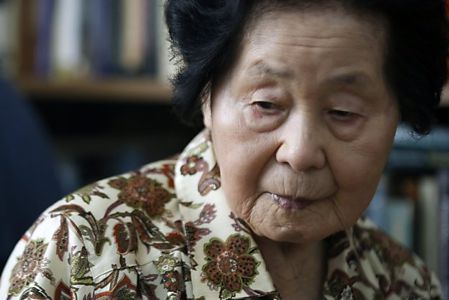
Keiko Fukuda
”This was my life…I chose to live judo over marriage.’ Says the aged Keiko Fukuda as tears begin to fall down her face. This clip of a documentary in the making is incredibly intense and moving. Born in 1913, Fukuda, the highest ranking woman judo-ka, is also the last surviving student of Kano Jigoro, founder of judo. Fukuda’s personal motto is ‘be strong, be gentle, be beautiful,’ and there is no doubt she epitomizes such virtues.
In today’s world, where everyone on the internet is a master of something and so many individuals derive pleasure from condemning the efforts of others, Fukuda’s gentleness, her humility are a reminder, perhaps a relic of a reminder, that there is more to martial arts than simply defeating an opponent. Perhaps my assumptions are an idealization, a fabrication derived from a fascination with the oriental that anyone training in the 1970’s will recall, but when I began taekwon-do, in 1977, there was a real sense among many practitioners and teachers, that qualities such as perseverance, determination, courage, humility and respect were equally, if not of greater importance than simply bashing an opponent.
I remember an excellent book on Karate by C.W Nichols, (Moving Zen) which recounted a westerner’s experience learning Karate in Japan in the late 60’s or early 70’s. In his school, a student had just been promoted to first degree black belt and shortly after was made to fight one black belt after another until he fell to the ground from exhaustion. When the instructor was asked why the new black belt was being treated in this manner, he replied that, when a nail sticks out from the wood, you bang it back into place. Yes, it’s harsh, but in life sometimes there is more to learn from defeat than there is from victory. There are bad people in every walk of life but in my first martial arts school, all the dan grades were role models, they were all gentle, all strong and in their own way, all were beautiful.

A book that teaches you the stuff omitted in many martial arts school and styles
While the movie clip of Keiko Fukuda is inspirational to genuine martial artists, regardless of their rank or ability, the comments that followed the Youtube clip demonstrated how either many people don’t understand the breadth and complexity of martial arts, or simply inhabit a completely different mindset. Kata, for example can never be mastered because perfection is beyond grasping. The goal of kata is to better your spirit in the pursuit of a perfection that cannot be acquired. And they miss the myriad of skills which pursuing martial arts encompass, precision of technique, the art of teaching, power, character, timing, rhythm, strategy, focus, beauty, the moving Zen! When it comes to learning a martial art, a good teacher is of far greater value than a competition champion who can’t teach.
I would have thought that any expert in their field who had dedicated their life to some pursuit, in this case over 70 years, who had risen to the top of their field before many of us were even born, would be an ideal candidate to hold in unreserved reverence but no, the internet provides the perfect anonymity for every armchair expert to promote their own ignorance. Sadly, instead of a celebration of effort and achievement, much of the response to the Fukuda clip was a litany of criticism. Yes, Fukuda is old, and of course she cannot defeat a younger, less experienced even untrained assailant and there are probably thousands of kiddies who could push her in the gutter! Of course you could easily mug her or knock her over and of course she is frail! She’s 90 years of age! But let’s not be too serious, how can anyone who lashes out at the abilities, mental or physical, of a little 90-year-old woman be taken seriously. Perhaps the proliferation of martial arts as sport, as solely competition and sometimes savagery have led us in the wrong direction and if so it is the likes of frail Fukuda who remind that we’re missing part of the picture.
Suddenly I am reminded of that cringy scene in the opening of Way of the Dragon, where Bruce Lee, a Shaolin monk, scolds a young student for kicking without ’emotional content.’ ‘It’s like pointing a finger at the moon,’ he tells the boy. ‘Don’t focus on the finger or you’ll fail to see all the heavenly glory.’ Suddenly, the scene is a lot less cringy!
©努江虎 – 노강호 2012 Creative Commons Licence.
Pork Kimchi Jjim – 돼지 김치찜 – My Recipes
Key Features: Korean fusion / very healthy / adaptable

Pork Kimchi Jjim
I’ve lived for almost five years with one of Daegu’s best pork kimchi jjim restaurants less than 10 seconds walk from my front door. I very quickly developed a taste for this tasty dish and over the years have managed to gleam a few tips to help me reproduce it. This recipe is best with sour, aged kimchi, indeed the older the better. Even kimchi of a year old and which has started to grow a layer of mold on the top, can be washed clean and used for this truly satisfying and healthy meal.
The best cut of meat for this is pork leg and if you have time to cook on a low heat for an hour or more, you can cut the meat in large chunks about 1.5-2 inches square. My local restaurant cooks the pork, in large chunks, for several hours until it melts in your mouth. For quicker versions you can reduce the cooking time by cutting meat into smaller portions. If this is the case avoid more fatty cuts of meat – such as pork leg.
MY DEFINITIVE RECIPE
1 cup = 180ml. T=tablespoon (15ml), d=dessert spoon (10ml) t=teaspoon (5ml)
This recipe is ideal for one large portion – double ingredients for each additional person
SHOPPING LIST
240 grams pork tenderloin (목살) or front leg (앞다리). If you have time, leg is preferable.
2T Wine
1d Soy Sauce (간장)
1T Sesame oil
1d Sugar
1 cube or 4 cloves of crushed garlic
Half an inch of finely chopped ginger
Half a Spanish onion roughly chopped
Mooli – about same amount as onion, diced, but omit if this is a main component in your kimchi. White turnip is a good substitute.
0.5t of dashida or a stock cube
1t of sesame powder
1T Mild bean paste
1t Red pepper powder
1 cup of Kimchi, sour is preferable
Sesame powder
Sesame seeds and or pine nuts for garnish
3-4 cups of water
See also suggested accompaniments at the bottom of the page.
EQUIPMENT
Ideally as an earthenware pot or ‘ttukbeki’ (뚝배기) or a heavy bottomed sauce pan.
RECIPE
1. MARINADE
Cut the meat into cubes about an inch square. Then, make a marinade with:
2T wine, soy sauce (간장), 1T sesame oil, 1d sugar,1 cube or 4 cloves of crushed garlic, half an inch of finely chopped ginger (7 items)
Put the pork in the marinade and leave from two hours or overnight.
2. COOKING
In a heavy bottomed pot or Korean earthenware ‘ttukbeki,’ place:
Half a Spanish onion roughly chopped and the same amount of mooli (or white turnip) omitting this if it features in the kimchi. (2 items)
0.5t of dashida or a stock cube and 1t of sesame powder. (2 items)
1T Mild bean paste
1t Red pepper powder
1 cup of Kimchi
Then add the marinade and bring back to the boil, boiling for five minutes before reducing the heat to a simmer for 25 minutes. You will need to add around 1 cup of extra water during simmering. If my meat is cut larger than inch cubes, and if I’m using the more fatty leg meat, I will cook on a low heat for up to an hour – until the meat is at a stage where easily falls apart. Stir occasionally and add extra water to maintain the original level.
Before serving and an extra teaspoon of sesame oil, some sesame seeds and/or pine nuts.
SERVING SUGGESTIONS
Serve with an accompanying bowl of rice and a selection of side dishes (반찬) and laver bread (김).
ONGOING NOTES:


 Elwood 5566
leave a comment