Migwang Spolex (Jjimjilbang), Daegu, Song-So. (미광스포랙스)
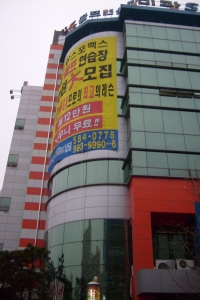
Migwang Spolex (미광, 성서, 대구)
First visited February 2009. Last visited September 28th 2012. Migwang Spolex is my favourite local jjimjilbang, bathhouse sports complex. Migwang has five stories of amenities including squash courts, billiard rooms, and a very well equipped and friendly gymnasium. It is very clean and has well laundered towels which smell fresh. The bathhouse, a large one, is one to enjoy and relax in rather than to use solely for washing and cleaning. Sunday afternoons and holidays can be very busy. The gym is very well equipped and spacious and home to many Muscle Marys, especially in the evenings. In summer, the ice rooms, of which there are two, one in the bathhouse and one in the jjimjilbang, are a refuge from the summer heat and humidity. I particularly like the changing areas as there are very roomy and with small poofes on which to sit while putting on socks’ etc – I hate having to do that sat on the floor or while trying to balance on one leg. Friendly staff.
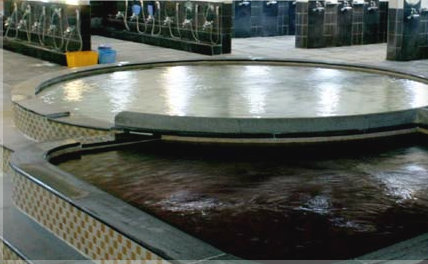
The ‘event’ and warm pool (male)
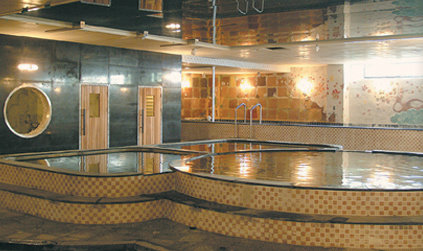
The warm and hot pools in the female complex
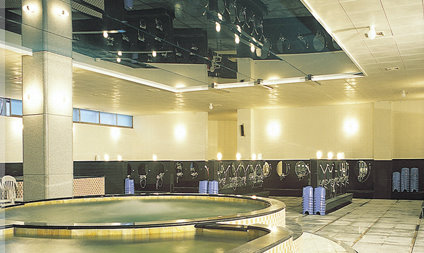
Women’s facility
Unlike many other businesses in Korea, many which simply border on existing, I think Migwang is doing very well, financially. I’m told it has over 1000 members with a monthly membership. More to the point, I notice Migwang regularly installs or renovates features during major holidays. A new ceiling and what looks like a new water feature is currently being built (October 2010). However, the water feature seems to have stopped mid program. In April 2011 new poofes appeared. Migwang is always impeccably clean and the staff very friendly – oh, apart from some grumpy old guy!
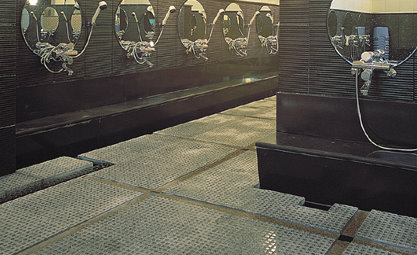
Migwang’s sit down shower units
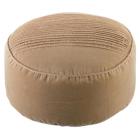
This is what the British call a ‘poofe.’
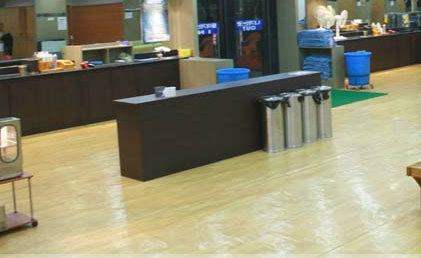
The male ‘powder’ room
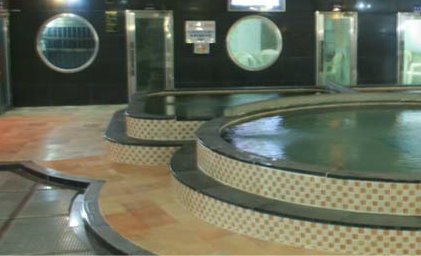
The warm pool with the pine, steam and ice room (L-R) in the background. A large TV sits above the central circular window
Plan
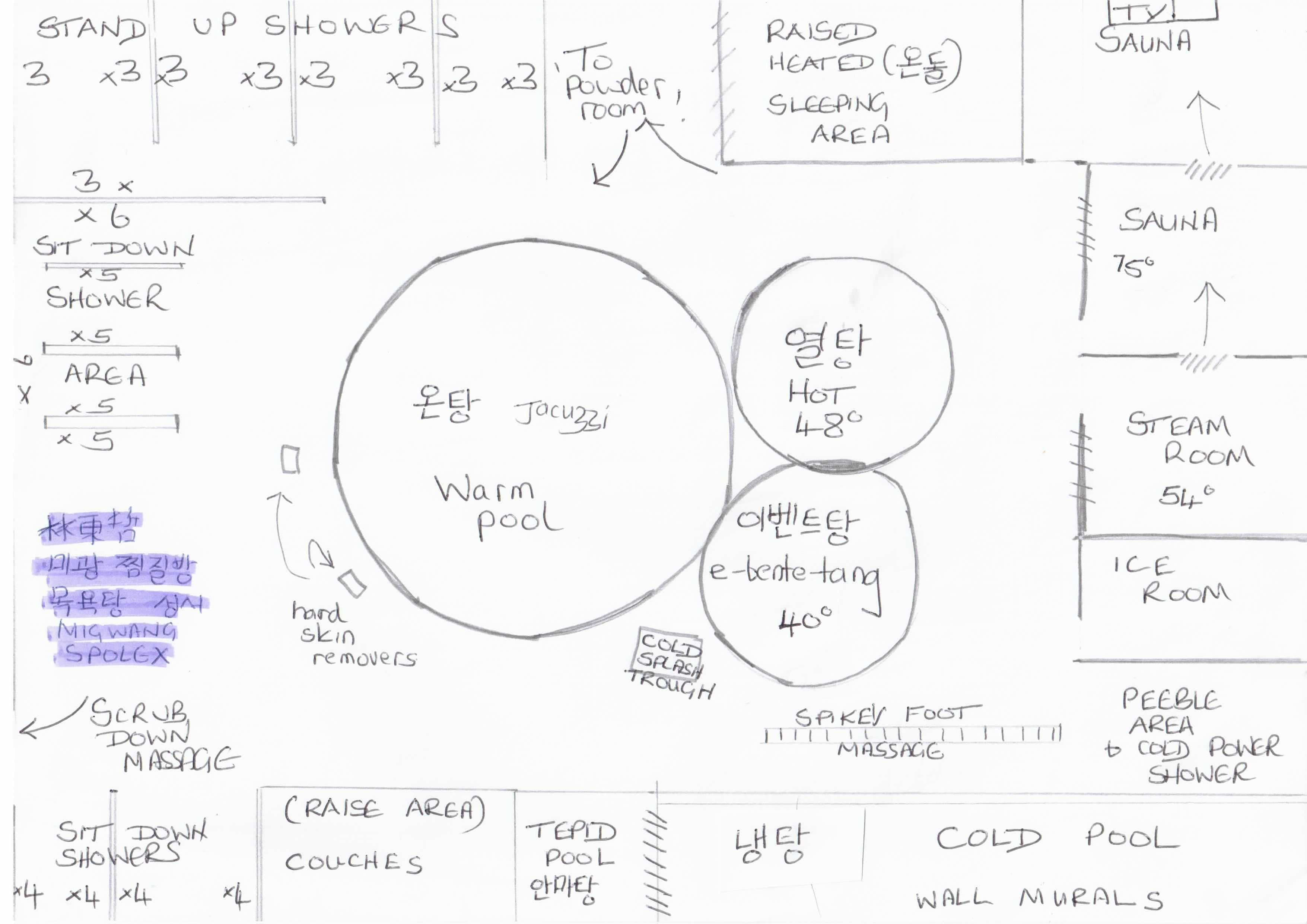
Migwang Spolex. Bathhouse Design (male)
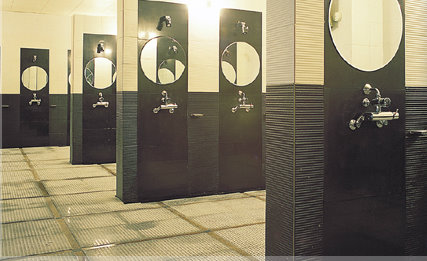
The stand up showers (male)
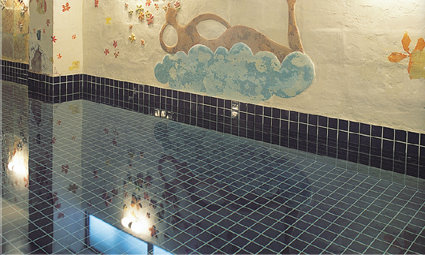
The women’s cold pool
Location – five minutes walk from the Song-So (성서) industrial Complex subway station and just 2 minutes walk from E-Marte. Come out E-Marte, turn right, turn right again at the cross roads and walk to the crest of the hill where the road bears left. The complex sits on the turning on the left hand side. (Wiki Map link )
Times – 24 hour jjimjilbang and bathhouse. Gym open from around 6 am Mon-Sat until around 11 pm. Sundays 8 am – 8 pm. Double check opening and closing times as they occasionally change.
Facilities – 2nd floor, reception, women’s bathhouse, women’s hair dressers. 3rd floor jjimjilbang, 4th floor men’s bathhouse, 5th floor gymnasium. Also squash facilities, martial arts, aerobics classes etc.
Jjimjilbang – ice room, various saunas, sleeping rooms, children’s play area, refreshments and food, small pc room, televisions, etc.
Jjimjilbang area
Bathhouse (men) – around fifty stand up shower facilities and around the same number of sitting down shower units, event pool, (이벤트탕), hot pool (열탕), large warm pool with jacuzzi (온탕), large cold pool (냉탕), small tepid pool (안마탕), ice room, steam room, 2 jade saunas, relaxation area, heated sleeping area. Large changing room with television and sofas. Televisions are also located in front of the e-bente-tang and hot pool, and in one sauna room but which can be viewed via from the other saunas.
Cost – bathhouse 5500 Won, jjimjilbang 7000 won. Monthly all-inclusive (including the gym) once a day usage, 100.000 Won (£50).
Others – hairdressers, massage and rub downs, parking, associated buffet restaurant opposite (Arden Hills), and Screen Golf Range. Various seasonal discounts. Very close to E-Marte and from there the Song-So Industrial Complex subway station, and surrounded by various restaurants and some excellent coffee shops Vincent Van Gogh, Hands Coffee, Sleepless in Seattle). The barbers now seems to offer massage, haircut and shave all being a euphemisms for a hand-job – cost 30.000Won. Barber’s is closed on Monday and residency of the barber’s now seems to shift between the actual barber and the ‘girls’
Ambiance – relaxing, mid-level lighting, subdued television, very clean, very comfortable, friendly.
Waygukin – I’m gradually seeing more and more westerners here. For a year I didn’t see any, but in the last year I have seen a total of 5. Some just shower, while others use the pools, some are friendly, some clearly do not want to speak.
Address – Daegu, South Korea, 1250-14번 지 (behind E-mart)
Website – (Migwang Spolex Website Link)
Migwang Updates
Migwang on a Sunday Morning (August 1st 2010.)
 © 林東哲 2010. Creative Commons Licence.
Beach Bum Teachers
I took a walk around Keimyung University, Daegu, and passed a couple of plastic professors one of whom wore a three piece suit and the other, white trousers, jacket and a Panama hat. True there were a few casually dressed waygukins kicking about but I assume these to be students so as not to spoil my myopic view of the world.
Keimyung is a beautiful campus and supposedly, one of the ten most attractive campuses in Korea. I was lucky enough to have attended Essex University in the UK, and indeed own a house only 15 minutes walk from the campus. As a first year student in halls of residence, my room looked out over Wivenhoe Park which was the subject and title for John Constable’s 1816 painting. I never really appreciated the importance of beautiful surroundings and university campus life until I subsequently studied in London where the University probably owned one tree – everything else being brick and tarmac.

For a year, this was my view as I ate breakfast
Swanning about in a boater or three piece suit with a dickie bow, even if you’re professorship is plastic, is so much more sophisticated with a beautiful campus as a backdrop. True, Oxford and Cambridge aren’t set in beautifully rural settings but the sense of the numinous imparted by ancient architecture is just as effective and maybe more so.
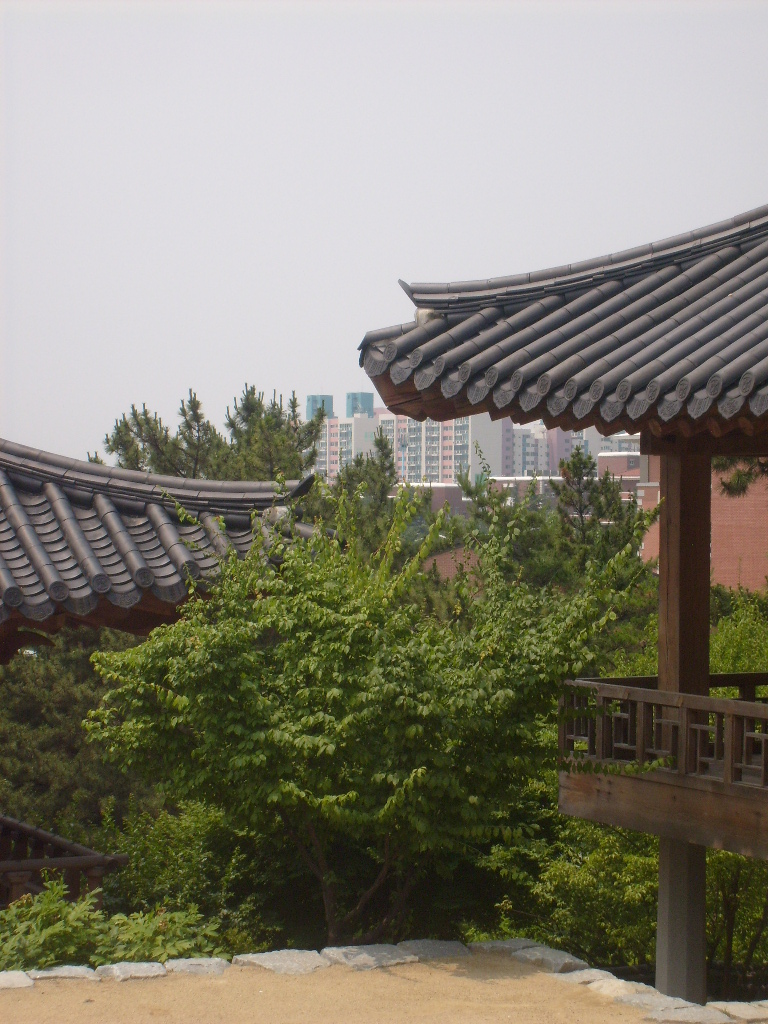
Keimyung traditional architecture and the distant city
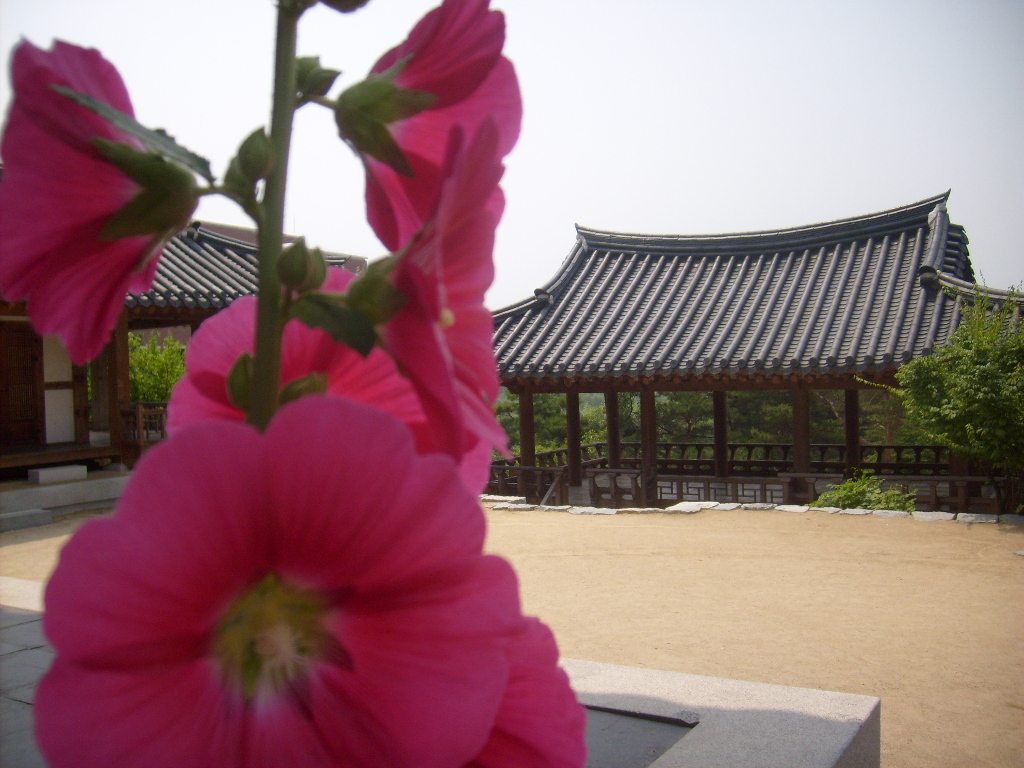
Traditional and modern typify Keimyung campus
Two miles down the road from Keimyung, in Song-So, there are no boaters or dickie-bows. When you’re teaching in a haggwon a three piece suit is an overstatement. Around Song-So’s haggwons the predominate form of dress for teachers is casual and hence cargo shorts, shorts, flip flops, vests and all manner of clothing suitable to a Thai beach, building site or the set of a Pirates of the Caribbean movie, are common.
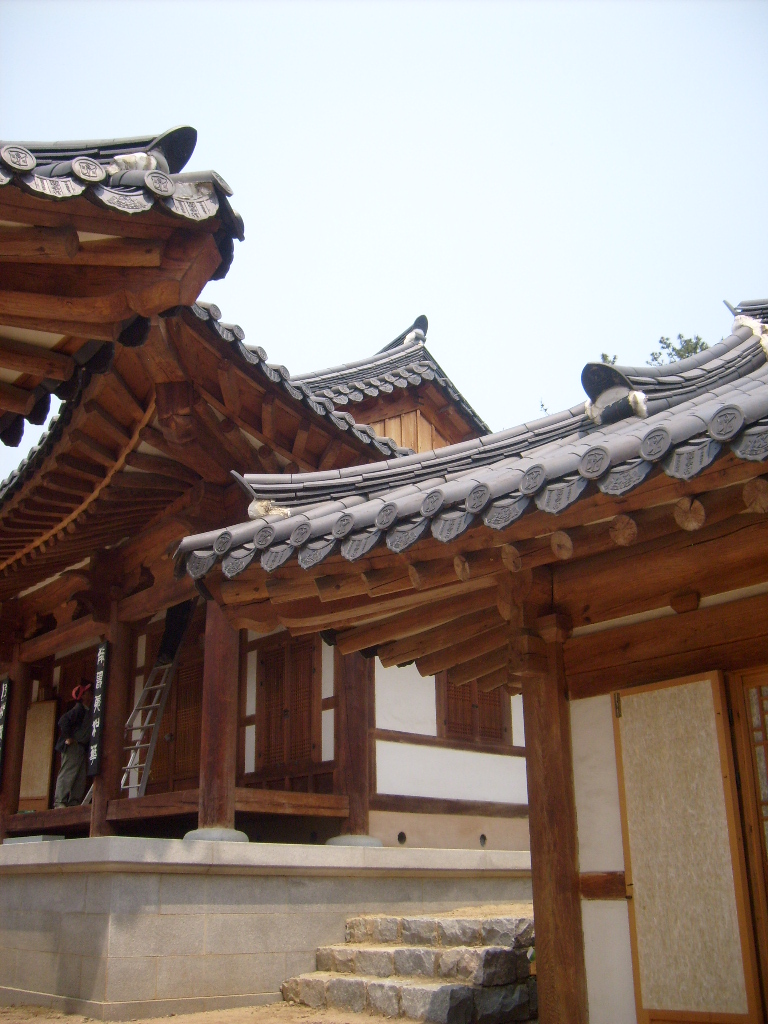
Traditional architecture
Now, I come from Britain where the weather is notoriously shitty and where you can generally wear the same type of clothing all year. The same thickness of jeans material will suffice throughout the year but may be a little warm in summer but the need for three types of clothing, basically, winter, summer and spring/autumn, as in Korea, is not necessary. However, in many parts of Canada and Australia, and definitely the USA, the summer temperatures and even precipitation are not a lot different to that of Korea. I used to play in a military band and have marched through Calgary, Canada, in a temperature of 44 degrees and I wore full ceremonial uniform and not a pair or cargo shorts and flip flops. I remember Washington DC being very uncomfortable and air conditioning, something of a domestic rarity in the UK, was a necessity. What I didn’t see however, were Americans or Canadians going to work, certainly not professional work, dressed like beach bums.
I get annoyed seeing westerners going into schools dressed like they’re on vacation and see it as a form of racism and symptomatic of cultural ignorance. In my high school, and in haggwons in which I have taught, the dress code, set by co-workers, certainly wasn’t beach wear. Eighteen months ago, we hired a Canadian gyopo (교포). He had never lived or worked in Korea and spoke little Korean but would turn up for work wearing torn jeans which he wore so far past his hips his boxers were constantly on display. Meanwhile, his hems were worn away from having been constantly walked on. Dressing like a shit-bag puts immense pressure on haggwon bosses and while some, like bosses everywhere, are tossers and deserve it, many are decent and well meaning. Neither is it fair on Korean co-workers when foreign staff dress for a beach party while they dress, like professionals, for work.
If I were employing a waygukin, I’d certainly want to see a photo and I’d probably want to ask: what they would intend to wear to school? If they can get themselves to school via the shower and shaver, and if they piss it up every evening? But then I’m inclined to fascism! Easier, I’d probably employ waygukin’s with professional teaching qualifications beyond the month long TEFL, ESL certificate and who’d actually had real jobs to both check out references and as a means of assuming they will be acquainted with what to wear to work, and how to behave in work. You read so many gripes about westerners not being treated fairly and while a lot are genuine, many will be the result of waygukins who treat working in Korea as part of a backpacking holiday. It is disrespectful, even racist to treat your host culture with less consideration than you would you own culture, regardless of your personal opinions, more so when there is little or no difference between them in terms of work place etiquette and its associated expectations.
© Nick Elwood 2010 Creative Commons Licence.
Bathhouse Basics 4. The Bucket Seat
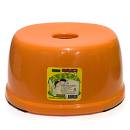
I have seen only a handful of westerners in bathhouses though if I were in downtown Seoul I’d probably see more but one thing I have yet to see is a waygukin sitting on a bucket seat!
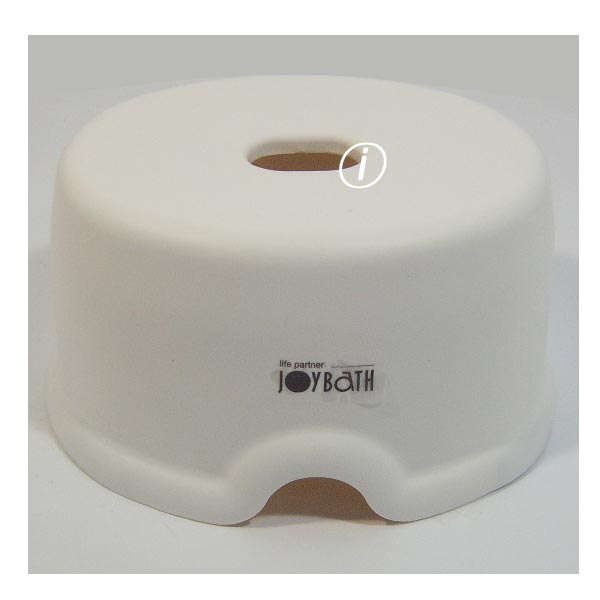
A Bathhouse 'bucket' seat.
In orange
These are simple plastic seats the size of a bucket and on which you sit at the sit down shower units. Bathhouses always have stand up shower units and rows of sit down facilities. Initially, I avoided sitting as I felt the squat position required undignified but you quickly adjust. Koreans often spray the shower over the top of them before sitting and often, once they have finished using them. Some Koreans also sit on the floor especially when cleaning their feet.
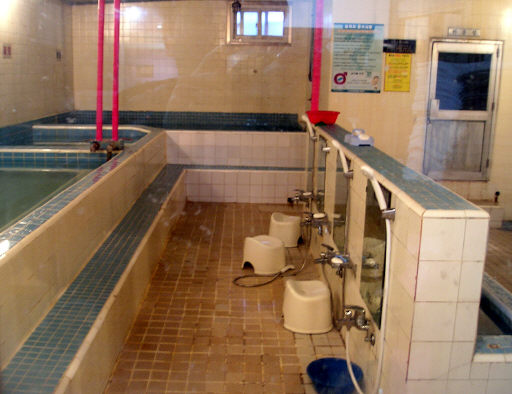
Bathhouse sit down shower units
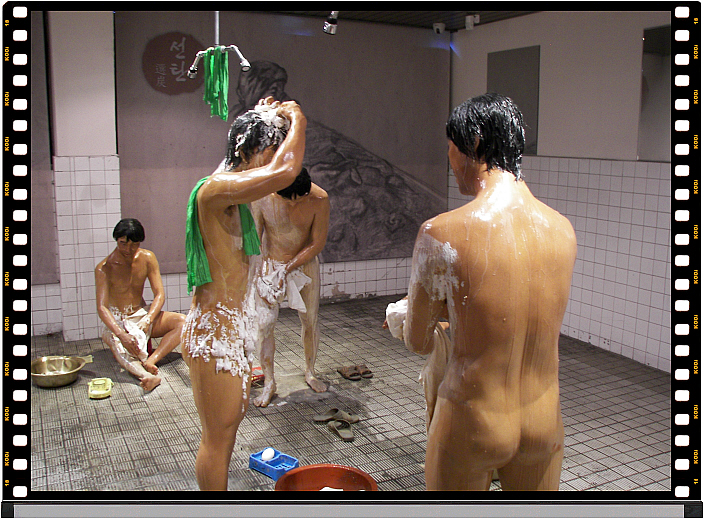
Sitting on the floor is also common
This work is licenced under a Creative Commons Licence.
Bathhouse Basics 3: The Italy Towel
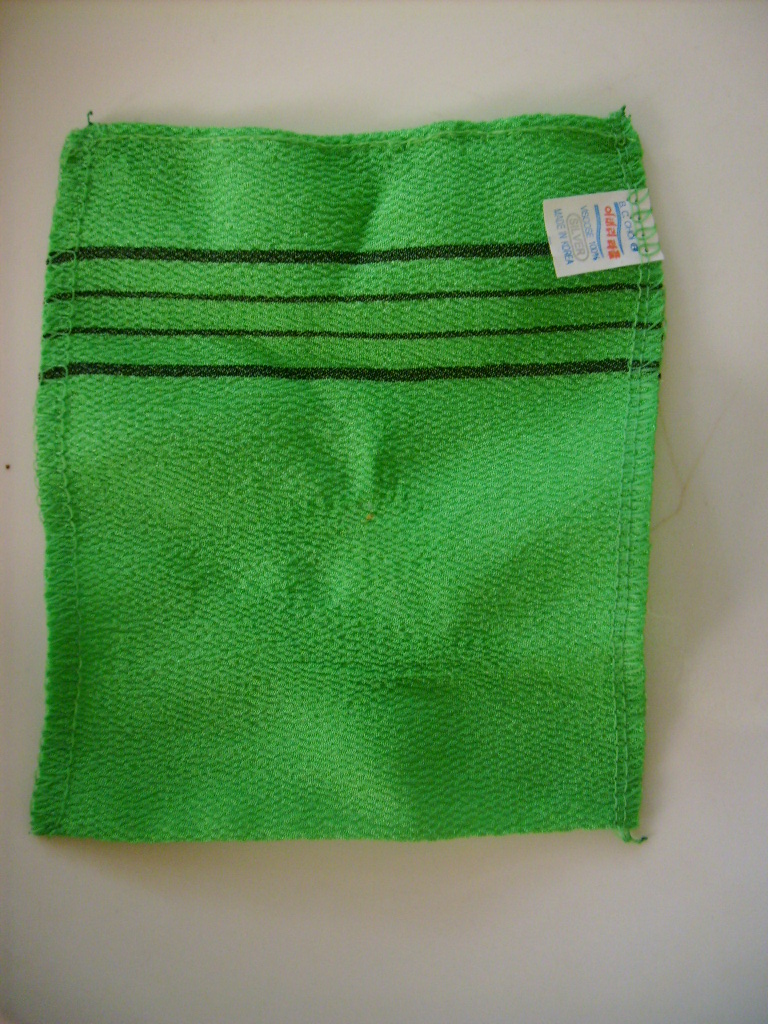
The Italy Towel. (이타리 타월)
Other than water, the Italy towel is probably the most universal item in a bathhouse and in some quarters, “Korea Design Heritage 2008,” has been ranked as number 5 among items over the last 50 years, which have defined Korea. Apparently, Gil Pil-gon who ran a textile factory in Pusan, discovered the cloths’ ex-foliating properties in a piece of fabric imported from Italy. The rest, as they say, is history.
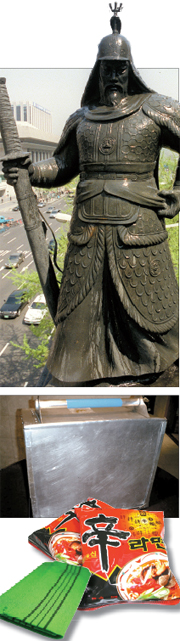
Defining icons, food delivery boxes, Nong-Shin ramyon and the Italy Towel.
Though available in a range of colours, the predominant colour is ‘silver,’ which is actually the green one. In addition, they all seem to be made by the same company, BC Choi and hence, the towels, manufactured in Korea, are 100% Korean! Like sandpaper, Italy Towels come in different gradients and these are denoted by the colour. ‘Pink is the least abrasive, followed by ‘silver’ (green) with the most abrasive and capable of removing the deepest ingrained grime, being yellow.
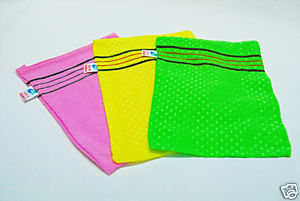
Other colours are manufactured, including red. The green one is actually described as 'silver.'
Italy towels are not to be confused with the larger version cloth which is also supplied in a bathhouse and which is usually red.
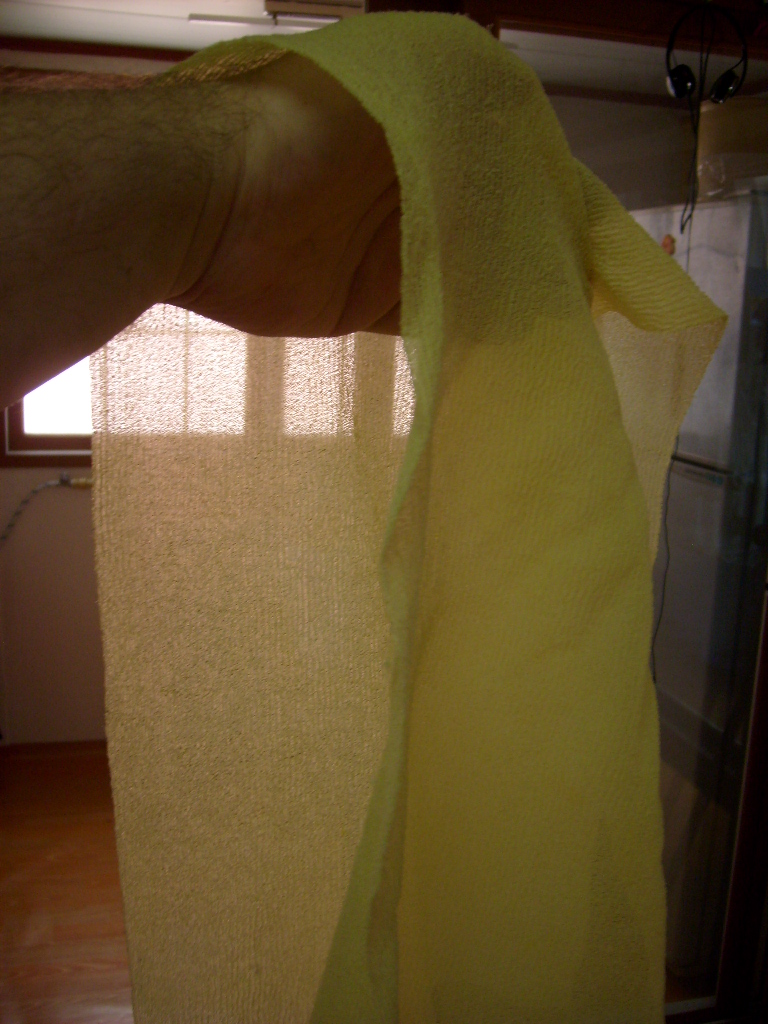
The larger, and milder, ex-foliating cloth
What typifies the Italy Towel is its size. My hand barely fits into it. The cloth is used to scrub the skin, usually in one direction, top to bottom and in straight lines and if used effectively a line of gray, dead skin is produced. The towel is fairly abrasive and needs to be used with caution on the face. Minimal soap is used in order to maximise the towel’s abrasive quality. Koreans will scrub their entire body with this cloth in a process which can last well over an hour.
If anyone accompanies you to the bathhouse, a friend or relative, it is natural for you to scrub each-other’s back. Usually you sit behind the person whose back you a rubbing, though people sometimes stand. For men, that your ‘partners’ dick is dangling in you face is no more of an issue than any other part of their body. Between men, one of the defining features of a ‘go-ch’u-ch’ingu’ (고추 친구), literally translated as a ‘penis friend,’ basically a close friend, is that penises are ‘acknowledged’ rather than shunned with fear. It is this tacit, sometimes even verbalised ‘acknowledgment’ which helps define a close, male relationship. In the western male, heterosexual psyche, a penis is threatening and ‘acknowledging’ your male friend has ‘one,’ seeing ‘it,’ talking about ‘it,’ and even being too close ‘it,’ have the potential to terrify. It is not at all uncommon to see a row of school boys or students all sat in a chain as they have their backs scrubbed while scrubbing the back of the person in front. Between family members the towel is used much more intimately and again, it is very common to see parents and children mutually scrubbing each other’s entire body. This is not restricted to small children. Mutual cleaning and the intimacy involved are an expression of the concept of ‘skinship.’
How often one should use the Italy Towel is a personal preference. If used frequently, the process can rub-away body hair – though I wouldn’t recommend this as a method of waxing. Some Koreans use it every few days, others once a week. Perhaps the best guide is simply whether or not you have a layer of skin which needs removing. I use a pumice stone on my feet regularly and if no skin is being removed I stop the process – this is perhaps the best guide to using the Italy Towel.
I have noticed that you can scrub yourself meticulously and regularly with the larger, less abrasive towel, the one usually provided free in all bathhouses, and that this does not remove dead skin with the effect of the Italy Towel. I was very surprised when after a period of not using an Italy Towel, a friend scrubbed my back and arms and then made a joke about how dirty I was. It is surprising what that little towel removes.
Unlike the larger cloth and towels for drying, the Italy Towel has to be purchased, costing about 1000 Won. I usually keep one for months at a time and have even seen the odd person use ones discarded in the used towel bin.
This work is licenced under a Creative Commons Licence.
Nancying in the Powder Room. Bathhouse Ballads
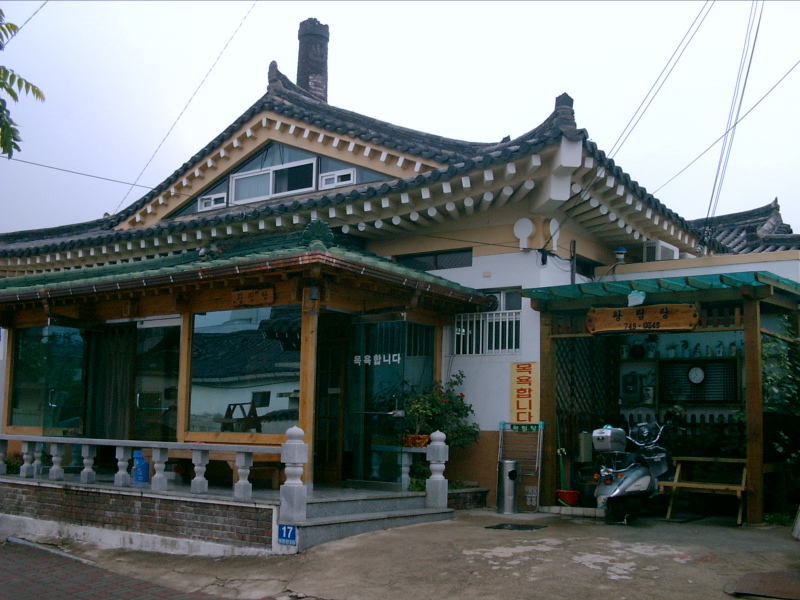
A Bathhouse Ballad
In this particular bathhouse (목욕탕) you can sit in the ebente-tang (이벤트탕) and watch the men and boys nancying about in the little ‘powder room’ that are provided in all bathing establishments. This particular ebente-tang doesn’t have any added aromas or coloured water and you might be forgiven for wondering why indeed it is even called an ‘ebente-tang,’ until the pool starts frothing and chomping quite crazily. The jets of water from inside the pool, should you be unfortunate enough to be sat over one as it starts and you fart, are powerful enough to administer a surprise enema. As I’m being buffeted by the jacuzzi jets, I’m busily watching three middle-aged men in the ‘powder room.’ All are stood, independent of each other and two are in straddle stances, or in what martial artists would recognise as a ‘horse stance.’
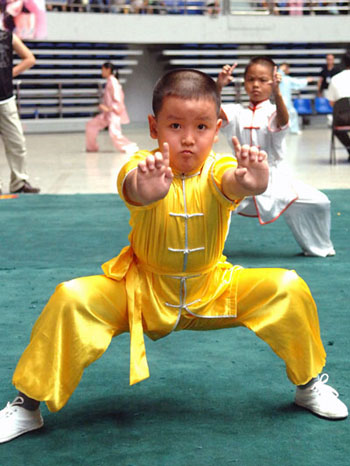
A 'wushu' version of the 'horse stance'
Traditionally, this stance is used to strengthen the legs and as a position from which to practice various blocks and strikes. As a combat stance it is redundant as it renders a male a potential gelding should a strike to the groin be forthcoming. Don’t forget, the men in the ‘powder room’ are totally naked. Rather than blocking and striking, feet rigidly anchored to the ground, both men are drying their sack and crack with hairdryers. I’m thinking they must have studied at the same school because despite all the variations of horse stance, both are in identical style, technique and positions. Most likely it’s a taekwondo derived stance as it is much higher than in the Chinese version above yet not as high as the one featuring Bruce Lee (이소룡), below. This version is in-between.
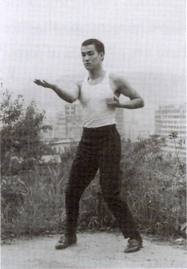
이소룡 (Bruce Lee) practicing the sack 'n' crack stance.
The accompanying arm movements are identical: first the dryer is held pointing at the sack ‘n’ tackle before being swung between the legs to windy the crack area. The latest event in the tub, an eruption, has quelled and I’m chuckling to myself as a third man in the ‘powder room’ demonstrates his technique. Clearly, he has been trained in a totally different school. After fiddling with one of the big fans on the long dressing table, angling it into the required position, he turns, get into a straddle and bends over, parking his exposed butt in the fan’s stream. The technique is very different but the stance is identical to that of the other two men and with head almost touching the floor, the fan is probably capable of drying his sack ‘n’ crack all at the same time.
Jeez, Korean men are such ponces! That’s why I like them. Back in the UK, a room such as this would terrify most westerners not just because you nancy about in it naked, but because the purpose of the room involves preening oneself. Actually, I much prefer the safety of the ebente-tang to watch how different men occupy themselves in this task. I never stay long in the ‘powder room,’ not because I don’t like being naked in front of other men, but because I don’t like being naked in front of myself, and like most ‘powder rooms,’ the walls are covered in mirrors.
All the flaws of being western are magnified in the array of mirrors and bright lights. Our skin tone tends to be more varied; my face is slightly ruddy, my buttocks lily white, my forearms as tanned as any Koreans and my neck brown. The rest of my body is whitey- pink, like a giant maggot. Then there’s the hair; back hair, chest hair, arm hair and leg hair and it’s all different in colour, texture and shape. My arm hair is smooth, my chest hair a little coarser and the hair on my back is somewhat like the hair on the backs of my arms, long and straggly and the sort of hair a neanderthal might have. I can’t stand looking at myself in those mirrors and always find the ‘powder room’ a little stressful.
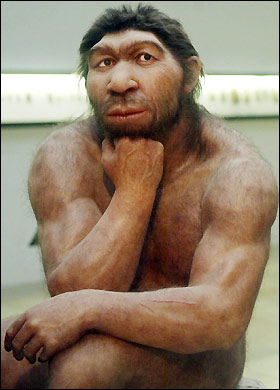
All that hair. Yuk!
I touched on the subject of body hair several months ago, in relation to living in an environment free of carpets. It’s only in this type of environment that you realise just how much hair we shed. I am not especially hairy and I sweep my floor everyday with one of those magical wipes to which hair and fluff adhere. Despite this, I find hair everywhere. I’ve found them in the fridge, freezer and only a few days ago I was eating a slice of water melon when what I thought was a little crack on my plate, was in fact a pubic hair. I’m 54 and have a full head of hair non of which I see anywhere, but pubic hair, chest hair and those unsightly, straggly back of arm and back hairs, get everywhere. Korean bodies are so much nicer, more alike in proportions, colour and apart from having pubes that are long enough to perm and which often seemed to be straight rather than curly, are usually pretty hairless. Hair, its antediluvian and barbaric! As I get older I notice my eyebrows becoming wilder and if I don’t trim them I start to develop antennae. Nasal hair is a bugger but is kept at bay with regular burst from a cigarette lighter. And I dread getting ear hair as that looks especially alien.
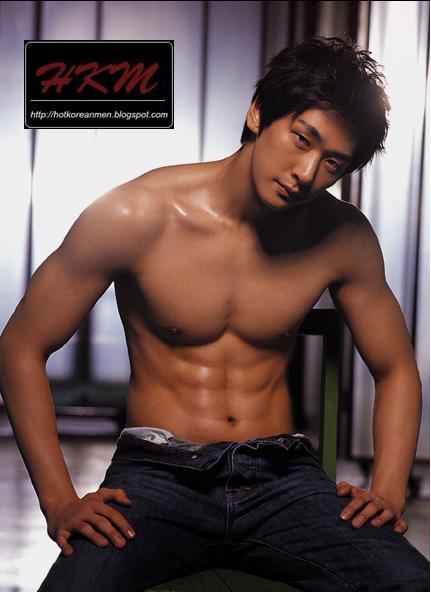
No hairs in his fridge!
In the ‘powder room’ a couple of men and a boy are preening; an old man is methodically combing his hair with a brush from the selection of brushes and combs which are always available. I’ve never seen any hairs on brushes and assume they are cleaned regularly and in many ‘power rooms’ are small steam boxes similar to those used in doctors surgeries and dentist, to sanitize such items. A boy is cleaning out his ears with cotton buds (q-tips), an item as standard as towels and soap. On the long dressing tables, there is always a collection of face creams, hair gel and skin brace. As with everything in bathhouse and jjimjilbang culture, no two places are exactly alike.
Have Stick Will User It

Discipline Korean style
Has anyone teaching in high schools noticed that if a student is rude or disrespectful, they are generally the ones who have had a sojourn studying in the west – usually in the USA and much less frequently the UK? Now, before I get started, I am not saying that all Korean students who have studied outside Korea are tainted or that Koreans who have never studied abroad are never rude or disrespectful. With considerable experience teaching in the UK as well as experience in Korea, I am making comparisons based on my own experiences in addition to an awareness of the general standards of behaviour both in the UK and Korea.
First of all, I have never been fouled mouthed or insulted by Korean students. No Korean student has ever sworn or shouted at me and the only time I can recall when I was shown disrespect was on an isolated incident when a student addressed me in intimate level speech (반말). As my Korean is rudimentary, students may have been taking the piss and insulting all along but I have never been led to believe they were and even if this were the case it pales into insignificance in comparison to my experiences in the UK.
Before getting defensive about Britain or the USA, there are numerous blogs, and indeed books written by teachers appalled at the conditions under which they have to teach. I too have an extensive blog dedicated to teaching in the UK. There is a small but significant number of professional teachers working in Korea, all who have abandoned teaching in their home countries because of poor discipline, low standards, anti-intellectualism, dumbing down, violence and so forth. So, while there might be bad apples in Korea, they are not likely to attack you or call you a ‘fucking wanker,’ or indeed a ‘cunt.’ These are my experiences but I know many other teachers have had similar experiences and worse. No Korean student has never attempted to hit or spit at me. Indeed, when I was spat at in the UK, the headteacher didn’t even bother asking to see the boy and simply asked to see my planner. That was in Southborough Boys School, in Hook, Surbiton, where I quickly deduced that it was acceptable for a student to spit at a teacher if the lesson wasn’t deemed enjoyable. If I had been a more seasoned teacher at the time, I would have used the attack to claim psychological or physical injury and earned myself several months paid sick leave. Clacton County High School (CCHS) is another school where I’ve had students call me a ‘cunt’ or ‘a ”wanker’ and they were never reprimanded by management. Given the abysmal examples of leadership and staff support, I am not surprised standards are so low in the UK. Outing shit schools and shit practice is something all citizens should do especially when management in those establishments prefer to pretend nothing is amiss.
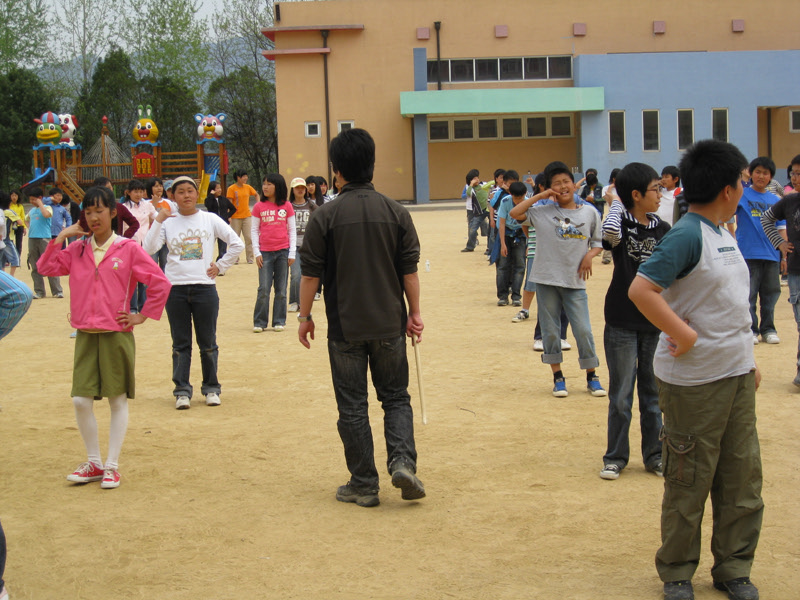
Korean teacher with stick
In Korea, I carry a stick, affectionately called ‘Billy.’ And occasionally, perhaps once a week, I will use it. I have never hurt a student with it though if I wanted to, this would be acceptable. My boss actually encourages me to hit students and I’m sure she sees it as a weakness on my part that I don’t do so more often. When students are being naughty, I’ll call for the stick. ‘Billy? Billy? Where are you?’ Then, I’ll poke around in my draw. Within seconds there is silence. ‘Billy, come on out! Someone’s arse needs a clout!’ Then, like un-sheathing Excalibur, I draw Billy from his lair and brandish him. Even with older students, this pantomime elicits a sigh of awe as if I really have drawn a sword or sparked-up a light saber.
Billy is pretty pathetic! Thirteen inches of stick not much thicker than a pencil and not very springy. Being six-foot six and large, I find him the perfect companion and actually traded him for real stick designed for pointing and striking which I’d bought for 5000 Won (£2.50). We have now been together for two years and at Christmas I took him back to the UK in order to treat him to a lick of linseed oil that I keep in my garage, for use on my front room floor. Ironically, I traded my real stick, which resembled the narrower end of a snooker cue, and which many high school teachers posses, with that of the smallest female teacher in a boys high school. Both of us preferred each others tool. Despite a recent oiling, Billy’s arthritic state spares the kids a real whacking as I am conscious of not snapping him in two.
By now, whatever the problem was has vanished or, if it is an issue of homework, the offender will be awaiting punishment. I always make lack of homework punishments quick and will strike without any prior warning. Sometimes, the offender actually thinks they’ve been spared. I usually hit them on the head. Yes, I know I shouldn’t, but for the PC brigade, anywhere is liable to cause injury and the safest place, on the bum or back of legs demand a sort of procedure, like bending over, which almost serves to ritualise the punishment and which I personally find a little pervy. And of course, Billy is too much of a light weight to have much effect in that area without the risk of being broken. So, the head it is! One short snap, never very hard and certainly much less damaging than the game Korean boys play where they do ‘rock, scissor, paper’ and the winner gets to ‘flick’ a finger on his opponents forehead.
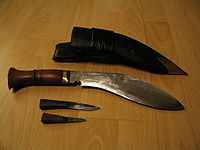
A Gurkha kukri, supposedly never sheathed without drawing blood
I usually treat Billy like a kukri, the Gurkha traditional knife, supposedly, never sheathed without first drawing blood. Last year, I threw a crazy with a class, probably the one and only crazy I’ve thrown in Korea. For a minute or so I shouted and screamed and smacked Billy on the desk. Two children started crying and the rest were terrified. That was a year ago, but one the odd occasion I need to call for Billy’s help, those students still in the class, and who remember that day, put their head in their hands in trepidation.
I actually find it difficult to hit a student and after striking them feel very bad if they start crying . As in the UK, if you are not careful kids make excuses for lack of homework on a weekly basis but Billy cures this problem instantly; no lectures, no debates, no pleading, no detentions or phoning parents, not wasting valuable time, just a thwack of Billy on the head and you can guarantee the issue will be resolved and a homework subsequently forth coming. Western teachers, fooled by the PC claptrap that corporeal punishment is barbaric, are misguided. If I make a joke and strike my stick on the head of a kid they will laugh but should I use the same force when angry, and the child’s ‘kibun’ is damaged, they will often have tears in their eyes. This should tell you how minuscule my punishment is! It is not the force of my stick hitting them that castigates and punishes them, but the loss of face within the class. Joking aside however, I witnessed some brutal punishments in my former High School.
In a Korean class, there is absolutely no mistaking who is the boss and this difference creates a chasm in standards between British and Korean schools. In Korea, the teacher is always boss and ultimately students know this. Korean kids will push their chances and intimidate you in their own Korean way but they know that they can be physically punished. British kids however, are equally aware that teachers can do nothing about bad behaviour. In many British schools, it is children who rule the class room and permit or hinder a lesson as they see fit. Bad management structures, of which students are unwittingly aware and will use to their advantage, have created schools where classroom teachers are powerless while managers can saunter into lesson and demand compliance because students know they have direct access to contacting their parents – a power usually denied non managers.
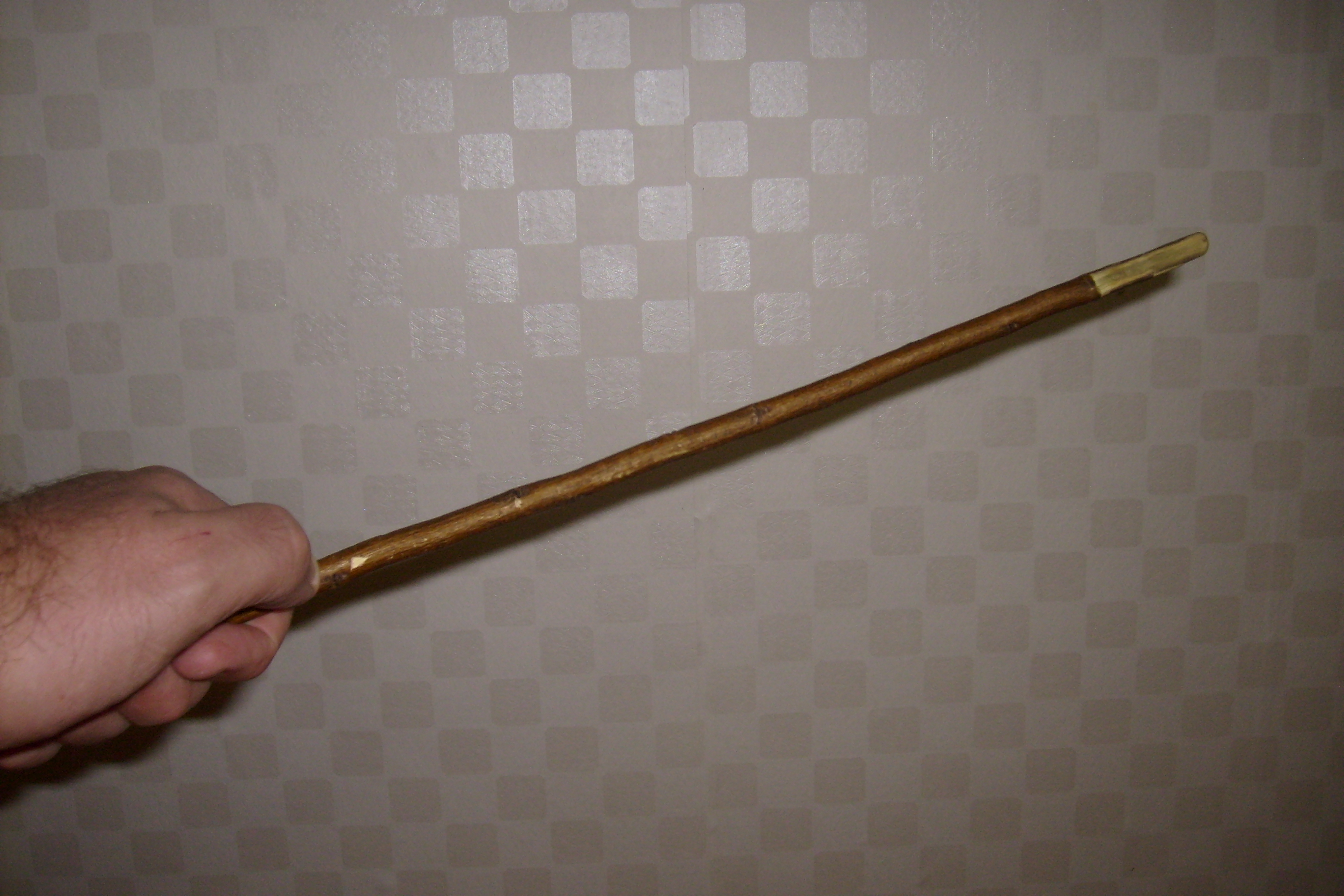
My stick, 'Billy.'
Ah, Korea. A different world where for most cases, even the most horrible student is an angel by comparison. And instead of being shunned like a leper when out shopping, Korean students want to introduce their parents to you or simply say hello. Today, a student’s mum bought me a large cake, last week I received a bag of six homemade soaps, and so forth. Anyone who has taught in Korea will have been presented gifts such as these. In the UK, I didn’t even get a fucking apple from the class creep! So, when I have been confronted by ‘disrespect’ from Korean students who have studied abroad, it’s more like ‘indifference’ and familiarity than lack of respect. I have frequently had to interview high school students and a substantial number of those who have studied abroad will slouch in front of you, talk to you in a familiar way and are the quickest to tut or talk back. On a few rare occasions, I’ve even heard them mutter expletives under their breath.
Experience of the west must have a profound effect on them as it exposes them to a range of experiences, not all of which are bad, which are denied them in Korea. Most will have been exposed to drugs, anti-intellectual attitudes, educational mores that encourage and prompt them to be sexually active, homosexuality, trans-gender, a society that empowers students well in advance of them being able to yield that power responsibly, and a system that often polarizes teachers and students and charges that relationship with antagonism and distrust most pertinent the notion that every adult is a potential perv. In the UK, Billy would have been assassinated! There is no doubt students would have sought him out when not in my company and snapped him in half. More disturbing, they would have done so with glee.
The Times Newspaper (UK), conducted a survey in 2008 which revealed a fifth of all teachers support the use of corporeal punishment. This week in New Zealand (May 15 2020), it was revealed half the population support the return of the cane especially in the light of figures highlighting the corresponding rise in crimes within school that has occurred since corporeal punishments was banned.
Ministry of Justice statistics for pre-teen violence released just last month also showed a disturbing trend. From 1998-2008, the number of police apprehensions for grievous/serious assaults by 10-13 year olds increased by more than 70%. For each of the most recent two years, there has been almost 1,000 apprehensions for 10-13 year olds for all violent offences, which include aggravated robbery, sexual violation, indecent assault, and serious assaults – an increase of a third since 1998. (link to NZNEWSUK)
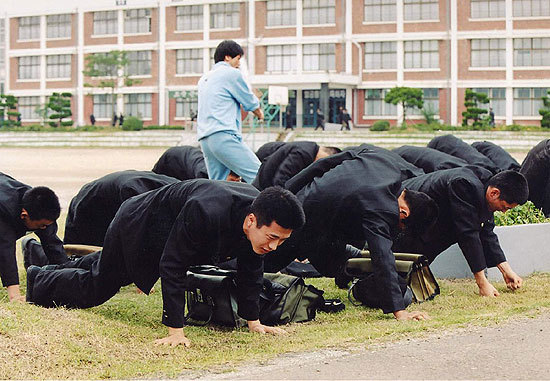
High School discipline: harsh but less severe than two years compulsory military service!
If you care for the development of children, the occasional smack is absolutely necessary. If my son or daughter were caught sticking their fingers in the electric socket, I would administer them a good clout as failure to instill in them the danger of doing this, puts their lives at risk. It is widely believed in Korea, that corporeal punishment reflects caring for youngsters’ development and the stick is often referred to as the ‘stick of love’. Personally, reflecting on some of the hideous scum I have had the misfortune to teach in the UK, it is clear we neither respect them, ourselves or other members of society – most notably other students. Of course British teachers can’t say they ‘love kids,’ not without having to spout a diatribe to explain themselves, which is just as well as judging by the scum we have allowed to pollute wider society, we clearly don’t. You will hear the phrase ‘spare the rod and spoil the child’ far more in Korea than you do in Britain. The politically correct lobby has compelled us to obsess about the rights of bad children and generally bad people in a plethora of contexts, has helped facilitate a society where all of us, including children, in one way or another, are now victims of, or held ransom by, the very scum we molly-coddled and subsequently empowered.
Postscripts
This is true, a few weeks ago my boss gave her class a vocabulary test. One of the words requiring translation into English was, ‘몽둥이.’ (stick). Two students answered, ‘Billy.’
I don’t know how long this link will remain on Daum, but here is a brief recording of a very disturbing, and brutal corporeal punishment.
http://tvpot.daum.net/clip/ClipView.do?clipid=13660273&lu=m_rc_main_recentcommentlist_10
Fat is Here
A Bathhouse Ballad
In the ebente-tang, the aroma of the day is lavender (라벤더). I’m wallowing while I see some guy stood in the cold pool snot-up into his hand and casually just wash it off – into the pool water. Filthy twat! I occasionally take in a mouthful of that water, I guess most people do and, I open my eyes underwater! Pissing in the baths is one thing, at least you are unaware of people doing it, but if you’re going to snot up, be discrete! The snotting incident made me wonder if the water is filtered. It is certainly changed on a regular basis and probably filtered. Neither is it chlorinated but as most people shower before entering the baths this doesn’t bother me. I can remember seeing a few turds in British swimming pools but despite the chlorinated water, I wasn’t going to swim anywhere near them! Often I notice children, usually unaccompanied, get straight into a bath without showering. Last Thursday, which was the eve of Buddha’s birthday, and a public holiday, there were about 10 teenagers running around. Usually, adults get irritated by raucous behaviour but the atmosphere was jovial and I noticed several men lounging in surrounding pools watching them and smiling. There was a definite holiday spirit; they held the door shut to the ice room door trapping friends inside and threw bowls of freezing cold water at each other. For almost an hour the bathhouse, the noisiest I have ever heard it, despite it not being very busy, resonated with their laughter. Then a fat guy walked in and I started thinking…
At one time, when there were few other wayguks around, I used to be the fattest man in Song-So and one of my companions, a woman from Australia, was probably the fattest woman. Though she was excellent company, I hated walking around with her. A fat person, especially one who is 1.95 cm tall, attracts attention but two fat people together, well, the assumption is they are a couple and that all western wayguks are fat. Two fat wayguks together loose their identity in the conflation that reduces them to, ‘they’ and ‘fat.’ If you’re sweating, unable to buy clothes that fit, if you’re seen eating, if you don’t like walking up four floors to your place of work, well, it’s all because you’re fat! And eating an ice-cream in public! No wonder you’re fat! I happen to take size 14 (UK) shoes. You can’t buy them in Korea, apart from perhaps in Seoul. And the reason my feet are so big, despite being the leanest parts of my body? I’m fat, of course! When Koreans see a fatty or a fatty couple, this is how they probably think, and I assume this, as in the west, it is how we think. Even if I see a fat person eating an ice cream on a hot summer’s day, even if I am eating one myself, my immediate thought is, ‘go on a diet, fat arse!’ Two fat people with backsides like hippopotami, holding hands on the beach front promenade, and wobbling like jelly… ‘gross! The contradictory nature of my thought, doesn’t even sully the flavour of my ice-cream.
Maybe I’m paranoid, but when my fat female friend and I took a taxi, along with two petit Koreans, and her and I ended up sitting on the same side of the cab, it was clear what caused the problem, and it wasn’t paranoia! The window on our side of the taxi looked directly onto the tarmac while the opposite window framed the full moon. After a hundred meters and a few grating sounds from some part of the vehicle now in contact with the road, the taxi driver evicted us.
In 2000, and probably until fairly recently, I was the fattest person I ever saw in a bathhouse. Even proportionately, no Korean ever came close to my dimensions. This isn’t because I have the girth of Jabba the Hutte, but because Koreans were, and to some extent still are, smaller than westerners. My diary pages from that period provide several references to there being a distinct lack of fat people. In the school at which I taught there was one fat boy, I even remember his name, Jack; a photo of him hangs in my bedroom bathroom, back in the UK. In my taekwondo school was another chubby. Neither boys were particularly fat and today, just ten years later, would be classified as fairly normal.
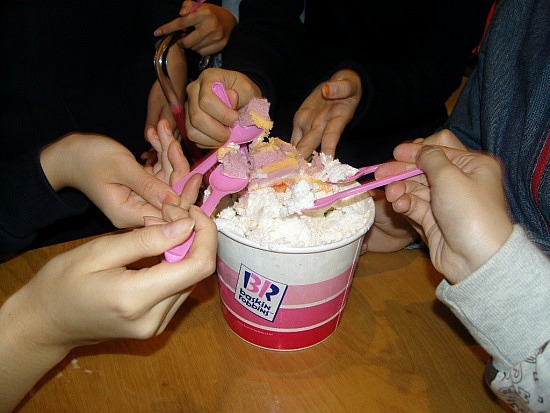
I need no helpers for this size portion!
In the last few months, I have noticed that on almost every visit to a bathhouse there are one or two Koreans proportionately the same size and sometimes fatter than I. Very often, other fatties are kiddies. Burger bars, fried chicken, Baskin Robbins, Dunkin Donut and plenty of other western style fast food outlets have proliferated, and the price Korea is paying, especially their youth, is the bulging waistline. Ten years ago I went into a Baskin Robbins in downtown Daegu. I was with a Korean friend and her daughter and when I arrived at their table with a tray containing three, what I considered ‘normal’ size ice creams, they starred in amazement. One tub, they told me, would have been enough for all three of us but to me, they were the sort of size you would buy yourself back home. In the ten years interim, I now have two Baskin Robbins within a 7 minutes walk of my home and occasionally I will treat myself to an 11.000Won (£5.50), pot of ice cream. I think it holds about 5 scoops. I can easily eat this and could also finish off one of their larger buckets. Even if I buy the smaller pot, smaller than a Macdonald milkshake cup, staff will ask how many spoons I want. Shame prevents me from replying’ ‘one’ so, pondering in thought for a moment, as if counting the number of people back home waiting for me to deliver, I reply, ‘four.’
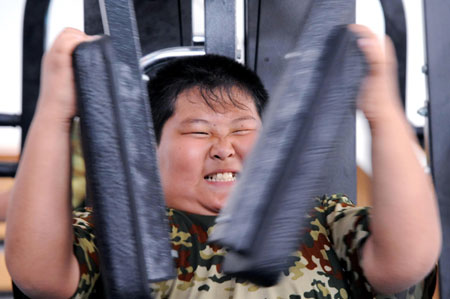
Along with the western fast food diet, fat has finally arrived in Korea
Korean proportions are always piddly and I’m not really into the act of sharing my food, especially ice cream. I don’t think I’ve ever eaten a Korean meal, even at a buffet restaurant, and left feeling properly stuffed, stuffed western style where you can’t breathe properly and feel you’ve mutated into an enormous maggot. In the west, there are countless times I’ve gone for a meal and reached the point where Mr Creosote, in Monty Python’s, The Meaning of Life, cannot eat another chocolate wafer. But in the midst of a Korean public, usually much skinnier than I, being a fatty fills me with guilt and curbs my glutenous instincts. The fatties I now see around me at the bathhouse, and who attract more attention than I because, they are Korean and fat, which is novel, and not wayguk western and fat, which is common, certainly know what it feels to be ‘stuffed’ and all I am left pondering, as I wallow in my scented bath, feeling more like a warthog than large bottomed hippopotamus, is how do you pig out on Korean food? Fat has finally arrived and the blubberier it becomes, the slimmer I feel.
Link to Crazy Fat Korean Video
Laura (1) Korean Teenagers
Not suitable for pumpkin people
If there’s one thing I love about Korean teenage girls, it’s that you rarely meet one who is a slag. No doubt slags exist in Korea and no doubt there are examples of Korean 15-year-old girls who trowel on make-up, wear Satan’s panties and are promiscuous, but I haven’t met any. In the UK, unless you teach in a top girls school, and I was fortunate enough to have taught stints in two of the top schools, notably Colchester Royal Grammar School (a boys school) and Colchester Girls’ High School, a large percentage of the girls are strumpets. Many of them were good students and decent kids but they still dressed and behaved in a way I didn’t think appropriate: obsessed with their bodies, with looking sexy, obsessed with sex, with behaving in a sexual manner and in flaunting their undeveloped bodies all of which comprised to denude them of personality. From childhood recollections to my more recent experiences as a teacher, being a slapper, in the UK at least, drastically improves a girls popularity among both other girls, and naturally, among the boys. My sister is convinced that had she been in those elite ranks, she’d have had a more interesting life. Amusing though this comment is, I’m glad she wasn’t.
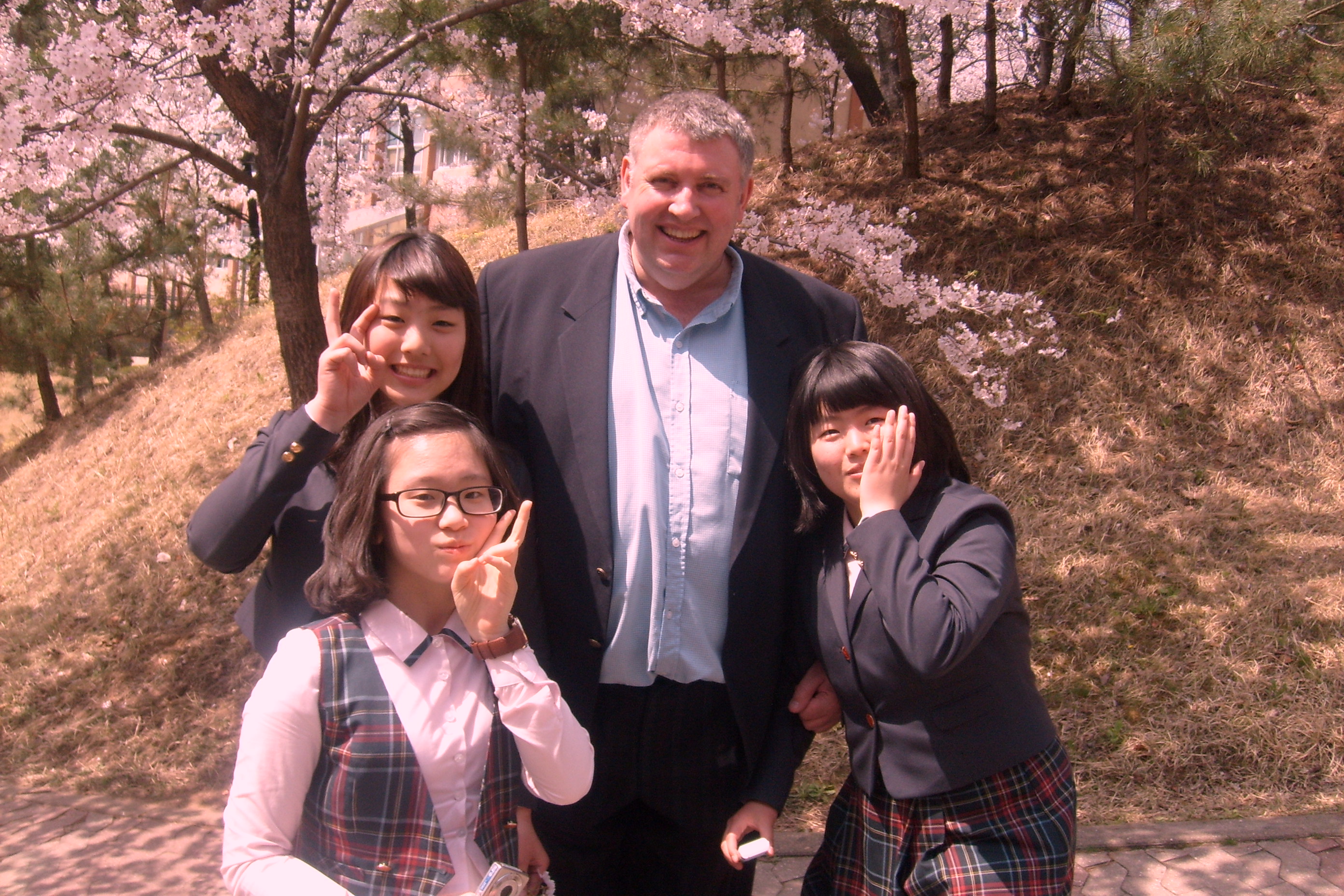
High school students in the 2nd grade. ( aged around 16-17) Absolutely no make-up at all was permitted in this particular school.
Laura, one of my Korean students, is 15 and totally adorable and like many Korean teenagers, a country with the lowest rate of teen pregnancy in the world, she is, in the cute Korean way, ‘innocent.’ Laura definitely has an interest in boys and one of our regular conversation topics centers on which boy band she is currently into and which boys she finds attractive. Recently, she has started using perfume which I would imagine she applies after leaving her school and before she comes to the haggwon in which I teach. The ‘safest’ place for her to do this is probably on the elevator up to the third floor, where the school is located. Her perfume predilection started about 2 months ago and in the initial stages of pioneering application, I think she doused herself in it. The smell was ‘in your face’ and strong enough to remain in class and around the school, long after she had left.
To compliment the perfume, she has also started wearing the faintest traces of make-up, basically lipstick and some mascara. The make up isn’t applied in the manner many English strumpet’s apply it, which is by slapping it on in the manner a plasterer might plaster a wall. I’ve seen plenty of young teenage girls with such thick mascara it looks more like cladding and usually little pebbles of it will be stuck to their eyelashes or face and will occasionally flake off like little pieces of a crusty, albino scab. The art of teenage make-up, like their interest in sex, is uniquely British, which is to say, is an overstatement and hence pots of mascara and eyeliner and all the other accouterments of teen tartery are used with as much subtlety as that of a circus clown. For the most part, Korean teenage girls, certainly under the age of 18, are discouraged and often forbidden from make-up and so when a little is used, forced into subtlety of application, it often enhances their features. You probably wouldn’t notice Laura’s make-up if it weren’t for the fact that when applied, she’s incredibly sheepish and self-conscious. As for her lipstick, it is so faint I imagine it’s simply lip balm with the slightest trace of added colour.

One particularly common style of British teen make-up
Discerning how much make up Korean girls do wear, is difficult as girls, like children everywhere, will ‘push the limits’ and hence I hear stories of girls wearing ‘short’ skirts to school or who wear make up but in Korea a ‘lot’ of make-up is actually very little and a ‘short’ skirt doesn’t mean you can see their knickers.
In British schools, I often saw tell-tale signs that girls were wearing a pair of Satan’s panties and it wasn’t unusual to see that flimsy bit of ‘string’ riding above a girl’s waistband. This is a sight I’ve never seen in Korea and Korean adults are often mortified to know that western girls, often not yet teenagers, are permitted to wear, or even want to wear, such sexualised clothing. Indeed, in Korea, I’ve never caught glimpse of a girls knickers. While it is solely an opinion based on my observations, and which doesn’t include routing through the children’s underwear section in my local E-Marte, I would imagine that Laura’s knickers, like those of her friends, are void of the translucent panels, little bows and lacy frill edges that are used to sexualise the bodies of little kids. Her knickers probably reach to her navel and are styled like the baggy blue things, British girls were compelled to wear for PE in the 60’s and 70’s.
I mention knickers, panties and thongs, not for any perverse reason but to highlight the divergence of social values between Korean and western societies. How children ‘choose’ to adorn their bodies, the extent to which this adornment is encouraged or tolerated, how it is subsequently received by societies both at home and abroad, expresses and exposes important attitudes and values. In Britain at least, there is a difference between ‘knickers’ and ‘panties;’ ‘knickers’ are functional whereas the purpose of ‘panties’ is two-fold, to induce arousal in the observer and a sense of sexiness in the wearer. Satin’s panties take this to a totally different level. In Britain, many girls, will tart up their twat with ‘sexy’ panties or a thong while still children and often before using make up. In Korea, while a little experimentation with make-up might occur whilst still at school, the transition from knickers to panties, from innocence to awareness, probably occurs at about the same time a girl becomes an adult.
Over the duration of a week or so, Laura’s perfume gradually mellowed until it was actually quite pleasant and on a few occasions, when it hung faintly in the air, I was reminded of my mother who always wore floral type perfume. It has become a regular habit of hers to hold her wrist under my nose and ask for my opinion on her latest scent. I then discovered, from her brother, that the various perfumes she parades, are her mother’s and are sneaked on when no one is at home.
'Psychedelic' Exercises (이벤트탕) E-Bente-Tang

A Bathhouse Ballad
The e-bente-tang (이벤트탕) today was scented with ginseng (인삼). For some reason the bathhouse has been incredibly busy this week . The steam room has varied between 51-54 degrees and I made my first venture into the ice room (어름굴) since last summer. The ice room is simply a large freezer with some chairs around the edges and as the weather becomes hotter and more humid, it is usually a good place to finish off a session as it both dries your body and stops you sweating.
I have thought about several things this week as I wallowed: I am interested to know whether people dry themselves in a random fashion in which one might use a towel just a moment before used to dry their arse, on their face, or whether, in a sequence such as, head to toe. Yes, there’s so much going on in the world that I consider this pointless trivia! I don’t particularly care! In the west I was always moaning and ranting about the nastier aspects of life but in Korea I don’t even bother reading about world news and I’m a lot happier. Ignorance is quite a pleasant state of mind especially as the more I have studied, the more exams I have taken, the un-happier it has made me. It seems that once the clutter of mans’ inhumanity to man is removed, which is usually the contents of most world and national news, and the tools encouraged to analyze that world decommissioned or at least limited, pondering the sound of one hand clapping, or the manner in which a towel is used, is wonderfully liberating. Thinking has never done me any favours and often quite the contrary. Thinking can actually be harmful to your health and in retrospect has probably ruined my life, it certainly hasn’t made me happier. I would say an insect has more propensity to happiness than a human with a working brain especially if that brain is influenced by ethical issues. Despite what we are told, thinking is both anti-social and disliked and most bosses, even in education, dislike either thinkers or those who are ‘educated.’ Most of the thoughts I have had in the last twenty years, basically since going to university, have set me in opposition against other people.
I think a lot wallowing in the e-bente tang but have to cast much of it aside as people don’t like to be remind of their impotency especially within a democracy. But what you do with your bath towel, where you put it and in what order, apart from being a totally inane topic, is vastly more original in concept than the impending destruction of our environment and is far less likely to raise any hackles. Pondering the pointless is a new therapeutic philosophy I am pursuing. At the moment, my concerns about how towels are used is a subject in a state of infancy. Moving on…
Have you ever noticed that when Koreans do little exercise routines, especially in the bathhouses, they look like they have mad cow disease? Privates on Parade, a British black comedy movie (1982), contains a hilarious scene where John Cleese, a mad army officer, performs a very strange exercise routine. So complex and awkward is this routine that mastering it entails highly developed muscle coordination. Being a taekwondo instructor at the time I first watched this movie, I bought the video and set about learning the routine in the privacy of my bedroom. It was far too ridiculous to practice in a gym. At the same time as instructing taekwondo, I was also a military musician and my musical skills were beneficial in analyzing the rhythmical structures that were used. Basically, the legs started off in a wide ‘lunge’ position, in many martial arts known as a ‘front stance’ and this stance changed from right to left, at approx 1-2 changes per second.

A typical, left front stance
Independent of the legs (moving in musical terminology of 2/4 or 4/4 time), the arms performed a routine in 3/4 time but with each arm separated by one beat. The left arm began the sequence which consisted three parts, each synchronised with the changing stance of the legs: (1) slapping the thigh, (2) ‘pointing’ to the ceiling, (3) ‘pointing’ horizontally to the left. As the left arm ‘pointed’ to the ceiling, the right arm slapped the right thigh and so at all times the right arm was one movement behind the left arm Now, I describe the arm movement as slapping and ‘pointing’ except the pointing was limp-wristed and the elbows never straightened. The arms were more thrown out as if casting something unpleasant off the hand or waving something away. What makes the routine so amusing is the rhythmic asymmetry caused by the lower half of the body moving in 2/4 time and the top half of the body, both in 3/4 but with a displacement between the right and left arms. I never really persevered with the sequence to perfect it and to have done so would have been a small accomplishment requiring considerable focus. Apart from its merits as an exercise it was also highly comical, even more so performed by John Cleese and for me, it is the most memorable part of the film, even more so than the fact the entertainment troop Cleese commands, all get killed.

John Cleese and the famous Ministry of Silly Walks
If you performed this sequence in a British gym, you would undoubtedly attract some attention but in Korea psychedelic exercise routines are quite common. indeed, if you were to walk around the pools in a Ministry of Silly Walks fashion, I don’t think anyone would pay much attention.
This week, I have seen several people performing exercises that at first suggested some mental incapacity. I have seen two men standing in a corner performing an exercise in which alternating arms are shaken as if flicking a turd off of the fingers. In this exercises, after approximately 10 flicks, the cheeks are vigorously slapped. Standing in the cold pool, holding onto the side and water jogging is also a common sight. Stretching is also very common especially in a steam room or sauna though this form of exercise is identical to those practiced in the west. Laying supine and raising the knees to the chest or swinging the legs over the head until your knees are by yours ears isn’t unusual, unless of course, your naked. However, more amusing, is laying on ones back, pointing the knees to the ceiling with a 90 degree angle between the back of the calf and thigh and in this position doing small rapid steps in the air with the feet while concurrently tapping the scalp and face with the hands. Perhaps the most common psychedelic exercise, more common around apartment complexes and in fitness centers, but which may be seen in bathhouse with treadmills in rest areas, is walking in a brisk manner, palms open, and hands raised to face level pictured below. Even though I know it provides a better workout than conventional western style walking/jogging, I find adopting this custom as alien as wearing a face mask.

The typical Korean walking style
Penis Paradise. Palgongsan National Park
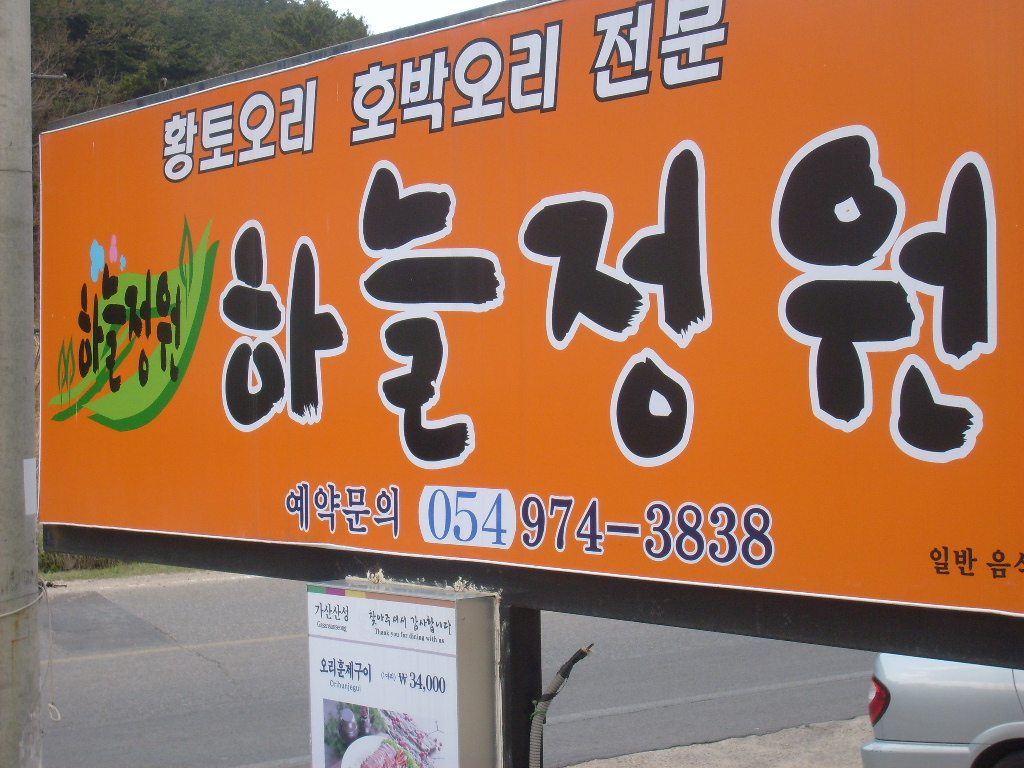
Highly recommended
If there’s one thing I’ve learned about life in Korea, it’s that cocks can turn up in the oddest places and at the most unexpected times. Of course, if you’re a westerner you might be surprised as we so often perceive Korea as conservative in its values. Well of course it’s freaking conservative! If you’ve been socialised and educated in one of those degenerate moral and ethical cesspits, such as the UK or USA, you cannot fail to perceive Korea as naive and innocent. Most westerners, myself included, are so used to cesspit values we hardly notice the toilet paper and bits of turd clinging to our bodies as we travel the globe. Being British and from the land where teenage pregnancy and STI’s are at ‘epidemic proportions,’ in Korea, with one of the lowest teen pregnancy rates in the world, 2.1 per thousand, it is quite natural to perceive the country as conservative and even innocent. Ironically, despite Korea’s low rate of STI’s and teenage pregnancy, the existing figures are a current social and political concern! I am neither religious nor particularly moralistic but, I prefer my students, especially ones under 14, to be innocent as opposed promiscuous, predatory, precocious, tarty and cheap.
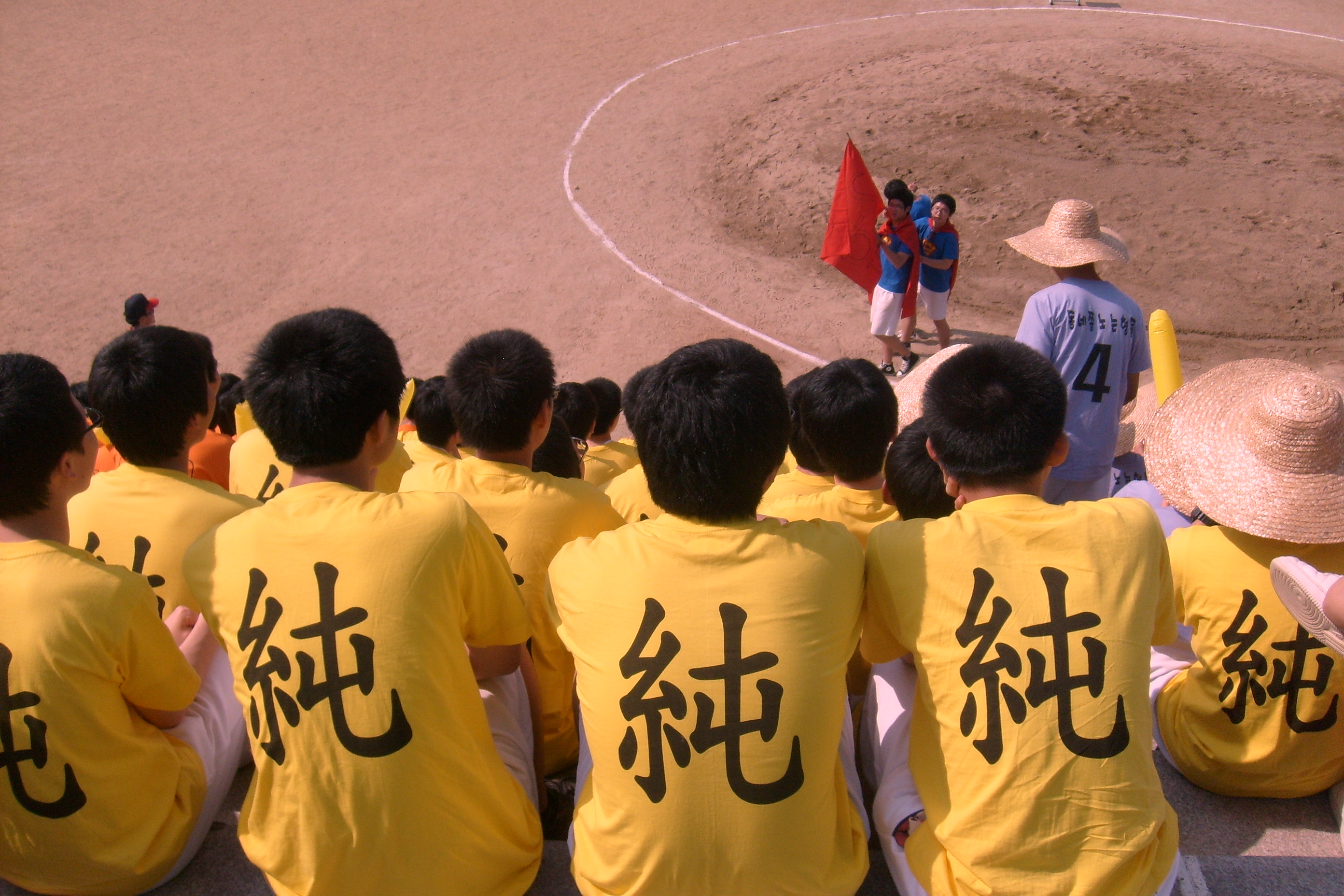
純 순수한 - 'Innocent '
In Autumn last year, I visited Palgongsan National Park, on the edge of Daegu. After a very delicious smoked duck barbecue, I took a little troll around the restaurant grounds only to discover 42 penises, (yes, I actually counted them!), all poking skywards and congregated in an area about the size of a large living room. This little patch of cock I endearingly referred to as Penis Paradise. On my initial trip, I’d forgotten to take my camera and all year I’d been planning to go back and capture, albeit it on a digital, the only cocks I am probably likely to get close enough to touch between now and the grave. You can imagine how gutted I was when I enthusiastically arrived at my little paradise, tucked away in some obscure corner of the mountains, only to discover all but one cock remained. The adjoining restaurant had made some alterations but even after trolling around the building and snooping in tucked away corners, it became apparent I’d missed my one and only opportunity.
Where a patch of proud penises had majestically stood there remained one solitary cock which poked up pathetically from a surrounding pile of junk robbing it of any remaining grandeur. Up closer it retained an air of pride despite probably being the poorest specimen with a shaft looking hacked, holed and even split as if old or simply unfinished. The other ones had been smooth, perfected and each imbued with particular qualities suggested by both the nature of their wood as well as their individual design; qualities that only someone who likes natural wood and cock could appreciate.
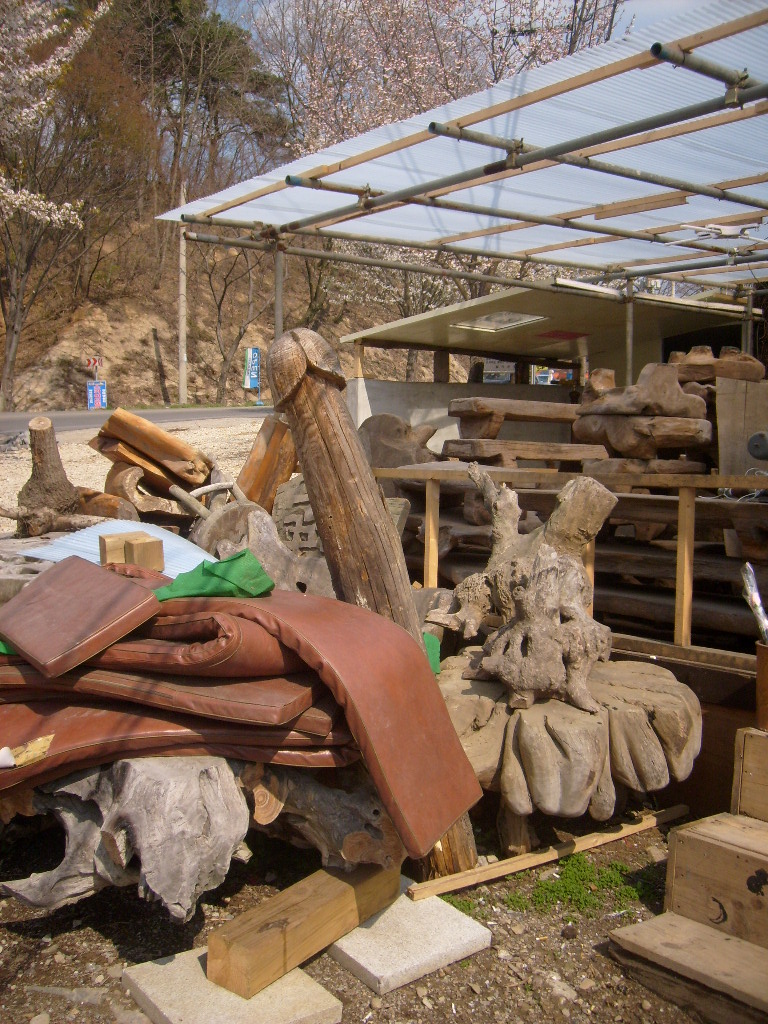
Surrounded by junk - Sacrilege!
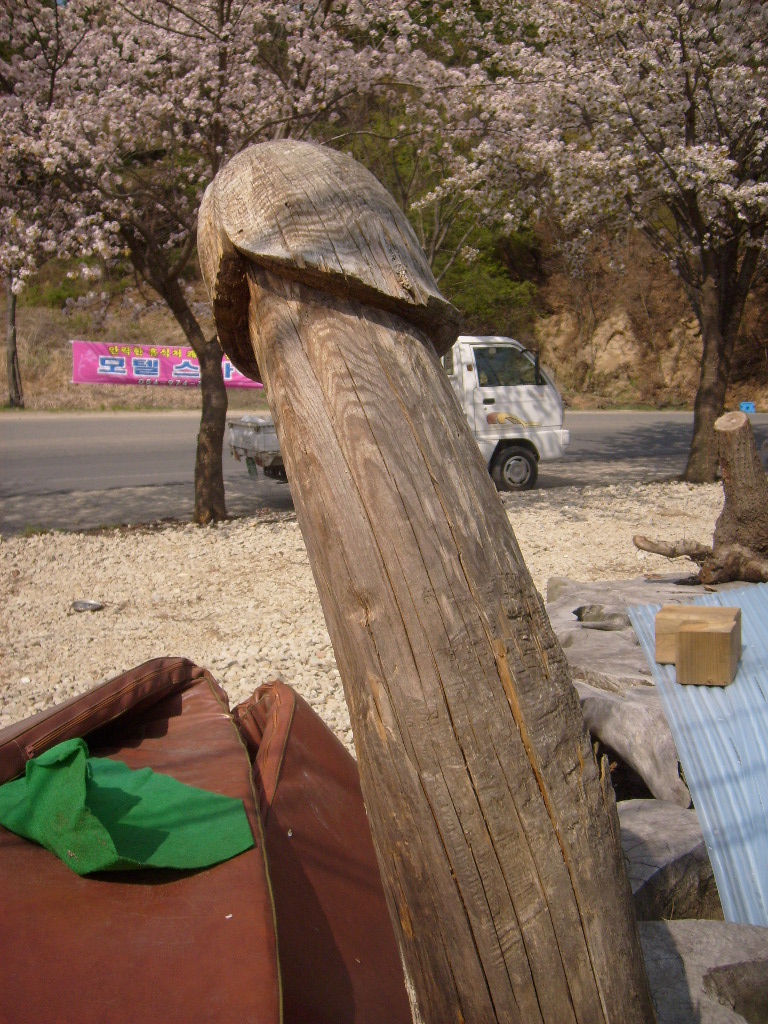
A badly hacked shaft in need of some oil!
Penis Paradise had originally stood outside a carpenter’s workshop/gallery and inside I found another penis. It was a big fat number, somewhat interesting but with a face carved on one side which I didn’t particularly like but it had the bonus of and added appendage ….yet another cock.
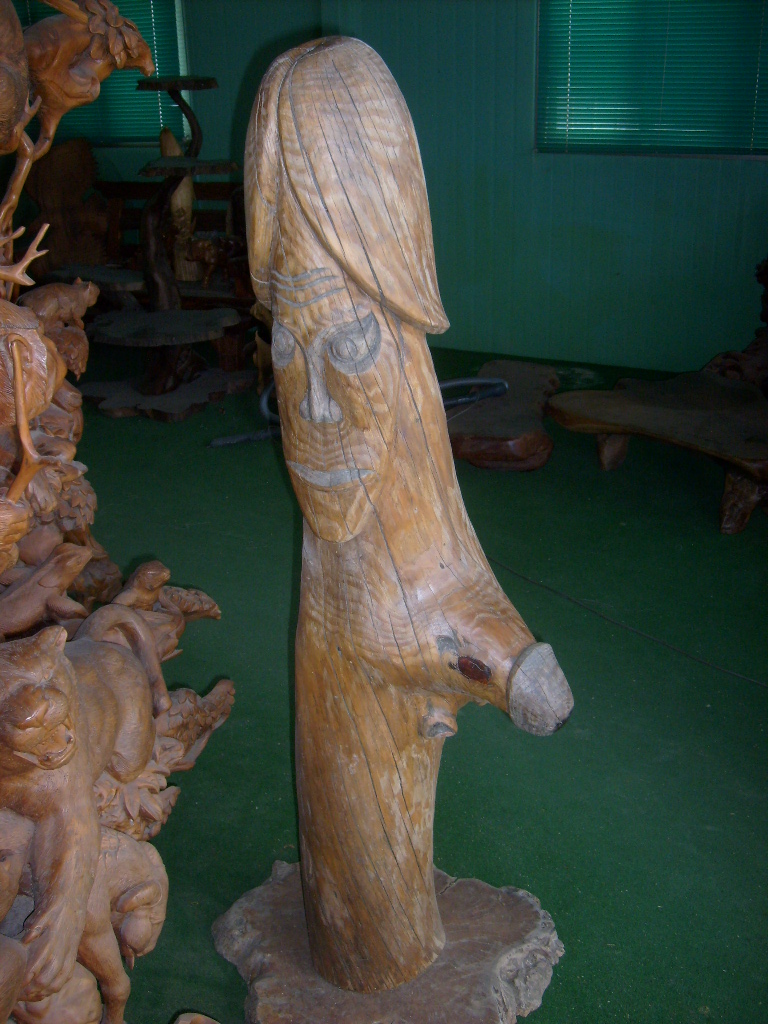
Two for the price of one
The epitomisation of Korea
Knotted and gnarled were the qualities that had enamored me when I first encountered that patch of penises. Korean wood is invested with a strange quality probably induced by struggling into life in quite difficult surroundings. Back in England, near where I live, are some examples of the most enormous oak trees and in a five-minute cycle I can be stood under trees that Constable himself painted. Korean mountain forests exude a sense of gargantuan Bonsai and walking in one, especially when daylight is ebbing, is like wandering through a Mahler symphony, most especially, his fourth. It’s a dark, warped, and knotted world, with craggy imposing crops of rock, mossy and lichened, the perfect background for goblins, ghosts and other imaginary forest creatures. There are no immense oaks on those rugged rocky slopes where every tree has had to fight its way into existence with roots seeking out and voraciously burrowing into nutritious gaps and fissures in that dense, granite-like base. Tress are wind swept, stunted, knotted, gnarled and twisted in manners which betray both pain and tenacity.
In my last high school, the top class of first, second and third year students, were called, ‘so-namu’ (소나무), ‘pine tree, classes,’ and the boys affectionately called, ‘so-namu.’ ‘He’s ‘so-namu’ would be used to describe and explain a boy’s exam success or identify the fact he was in the top class. That pained-tenacious existence, evident in Korean forests where life has been fought for, exists on other plains: you see it in the bodies of old men and women, bodies muscled and knotted, damaged and strengthened by an arduous life, yet supple enough to sit cross-legged, all a rarity in the west. I have seen old grannies who cannot stand up straight and are forced to walk with a right angle between their spine and legs, bodies damaged by a lifetime of carrying children or heavy loads on their backs, sit into a cross-legged position, and rise, without using their hands or moving their feet. Even at forty, I had to get on all fours to escape this position. Sometimes you see it in the bodies of younger children, but this is without doubt rapidly disappearing. I have several nine-year olds, usually ones whose hobbies are taekwondo, hapkido, or komdo, with six packs and thighs looking like they regularly squat. You see it in the faces of students as they trudge, bleary eyed from school to haggwon and on to another haggwon and then to the reading room, life a constant round of tests and assignments. Pain and tenacity are features of Korea which are engraved into the education system, their martial arts, encapsulated by the popular phrase ‘fighting!’ and also a reflection of their history. Penis Paradise was intriguing because wrought in the bodies of each penis, in both the nature of the wood and their design, was a sense of that pain-and tenacity – the struggle for life and triumph at its persistence.

'Tenacity' is often a key concept in Taekwondo, Hapkido and Komdo tenets

A reflection of Korea on many levels
Only one cock stood, an epitaph to its vanished members. Where had they gone? In fact, they’d been sold for exhibition at the Haeshindang Folk Village, Samcheok, also known as Penis Park.

Family Fun at Penis Park
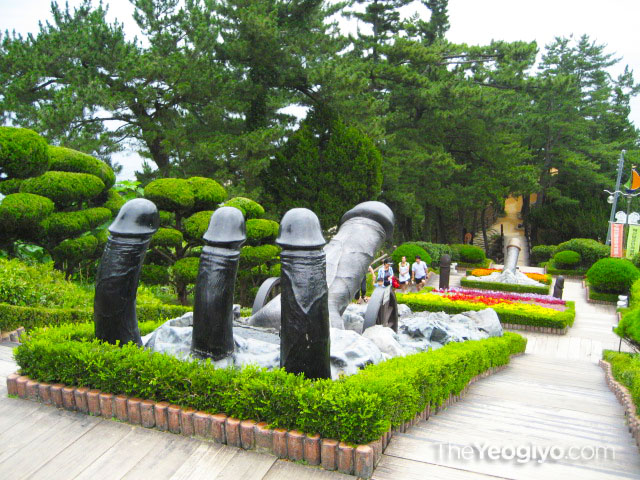
Penis Park, Samcheok, A Collection of colossal Cocks
With only one cock standing, the juicy aroma of barbecued smoked duck, attracted my attention. Putting my camera away, I went and enjoyed a wholesome meal. It’s no substitute for the real thing, but here is the menu:
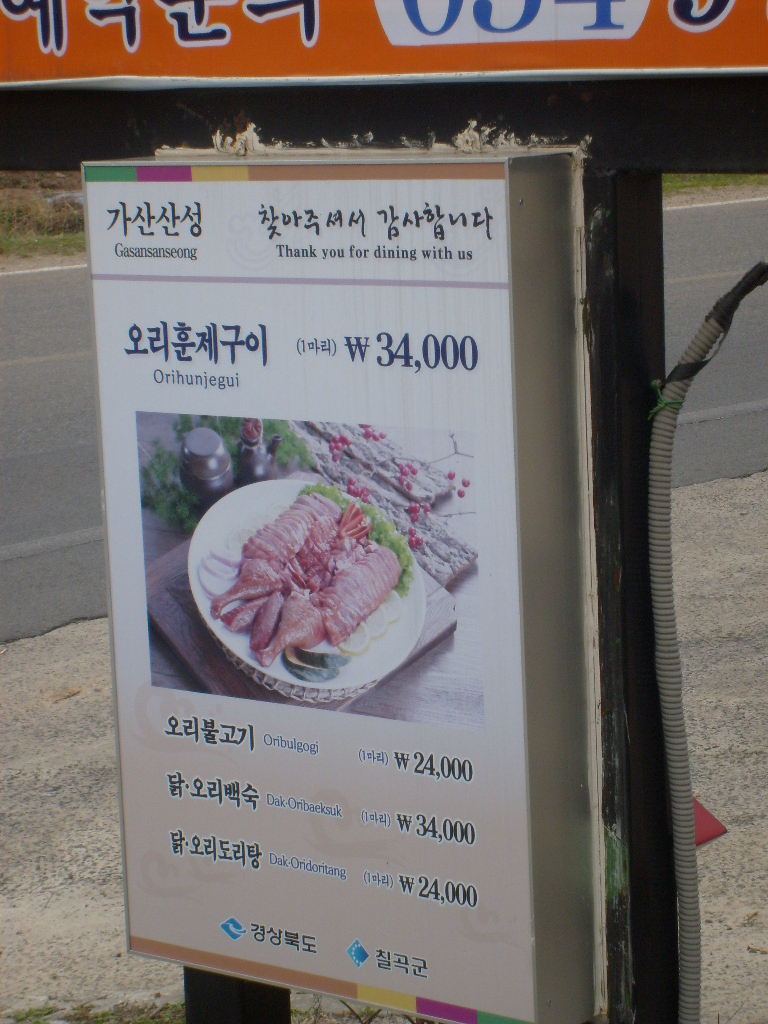
Smoked barbecued duck a specialty


 Elwood 5566
4 comments