Magnolias (목련) and 'Sudden Spring Colds' (꽃샘추위)

The glorious magnolia (목련) provides a sure sign that spring is here. This is one of my favourite flowers but unfortunately, as magnificent as it looks with large, waxy, petals, it’s has a strange, low-key, chemical scent. Early spring is typified by cool or cold mornings and evenings and increasingly warmer days but temperatures can change suddenly – a phenomenon known as (꽃샘추위). From my understanding this means ‘sudden spring colds’ or, what in English we might call ‘cold snaps’ except a cold snap can occur throughout the year. Any further insight into this term would be appreciated.
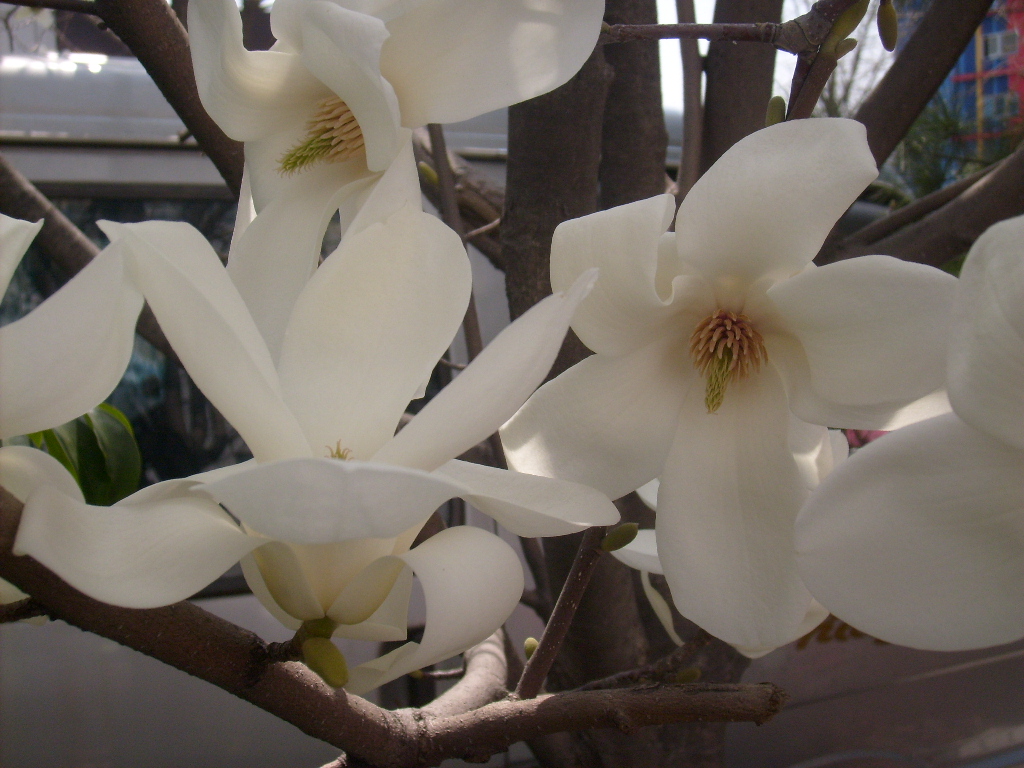
Magnolias
The Last Taboo
 Recently, I changed my routine so I often go to my favourite bathhouse (목욕탕) after I finish work, around 8.pm, rather than in the morning. However, I prefer the morning as it is quieter and unless it’s a holiday or a weekend there are rarely any kids or university students. As I lay in the ‘special event bath,’ this week scented with lavender, another westerner entered. In four years of fairly daily bathing, this is only the second time I have seen a westerner in a bath house. He probably saw me but as usual, didn’t acknowledge my presence. Most westerners will walk straight passed you even on an early Sunday morning when the streets are empty. I’ve given up being friendly as a cold shoulder is the usual treatment if you are polite. There are exceptions, of course, but this has been my experience. I didn’t particularly want him talking to me anyway; I don’t mind being naked in front of Koreans but have never relished the idea of bumping into a westerner when nude as we tend to be critical and judgmental about nudity and the bodies of others as well as our own. In reality, the westerners who do use bathhouses, especially if alone, probably have healthier attitudes to bodies than those who avoid them. I don’t think he felt particularly comfortable in my presence as he left after only a few minutes which was a shame as, my apprehension aside, it would have been a good opportunity to exchange experiences.

Usually, I have to wiggle my backside like a gigantic duck in order to disengage that little seat from my bum.
I don’t think he was a bathhouse novice, either. From the lavender bath in which I was relaxing, I could see him drying off in the area immediately beyond the bathhouse exit. He had no problem bending over to dry his feet and calves and did so without maneuvering his backside into a corner, thus censoring that most private place from public view. One of my remaining inhibitions, though not as acute as it was, is exposing or touching this area in public. Perhaps I need to set myself the task of prostrating myself 5 times a session and soaping my backside in a position where my neighbours can see, as a therapy to neutralise this remaining inhibition. I would like to squat right down, Korean fashion, and give my entire undercarriage a thorough scrubbing, if it were not for the fact that I find deep squatting both easy to topple over in and difficult to stand up from. I have enough problems standing after sitting on the bucket sized seat from which you wash yourself as often it remains stuck to my arse as I stand. Then, if it clangs to the floor, it attracts unwanted attention. I have a similar, though quieter problem, if I sit on a towel as this too will remain in the grip of my buttocks, as I stand. The term, ‘taking in washing’, which is used to describe the backside’s ability to grip things, usually underwear, comes to mind, but bathhouse furniture and towels is taking it too far! Maybe it’s my arse, I don’t know and I’ve never paid much attention to what Koreans do after sitting on a towel. I have a niggling suspicion that the propensity for my buttocks to grip towels and seats, even the large plastic type, similar to the ones we use in gardens in the UK in summer and which are often found in the steam rooms and saunas, have more to do with my dimensions than my ethnicity; I have a large arse to put it mildly. Of course, I don’t know how other westerners conduct themselves in a bathhouse as I’ve never observed any but I would imagine that many would find it disconcerting to drop the soap and have to pick it up. This chap was quite at ease, as at ease as the Koreans around him, at prostrating himself right in front of the glass doors to the bathhouse and in full view of everyone lounging in the baths. Whoever he was, he left the bathhouse with my admiration.
 © Nick Elwood 2010 Creative Commons Licence.
A Touch of Heaven

If this were back home, this restaurant would be in my back garden!
I recently went home to the UK for a Christmas break. I live in a rather attractive village on the south coast with a reputable university and a medium-sized town 3 miles away. I’m not the type of character to bore easily as I always have things to do which is just as well as I find British culture exceedingly boring. Unless you live in one of the major cities there is often little to do in the UK and pubs and restaurants are fairly expensive. For 2 pints of beer you can expect to pay around 12.000W and a fairly average meal will coast you 40.000W, minimum. In the last year in which I lived in the UK, I probably went out in an evening on only a few occasions. In the UK, high prices, poor transport networks, expensive taxis, violence and lack of amenities, are all barriers to stepping outside your front door. I have lived in places in Korea where isolation and boredom were a problem and my sole point is simply that my present location in Daegu, provides a very comfortable lifestyle.
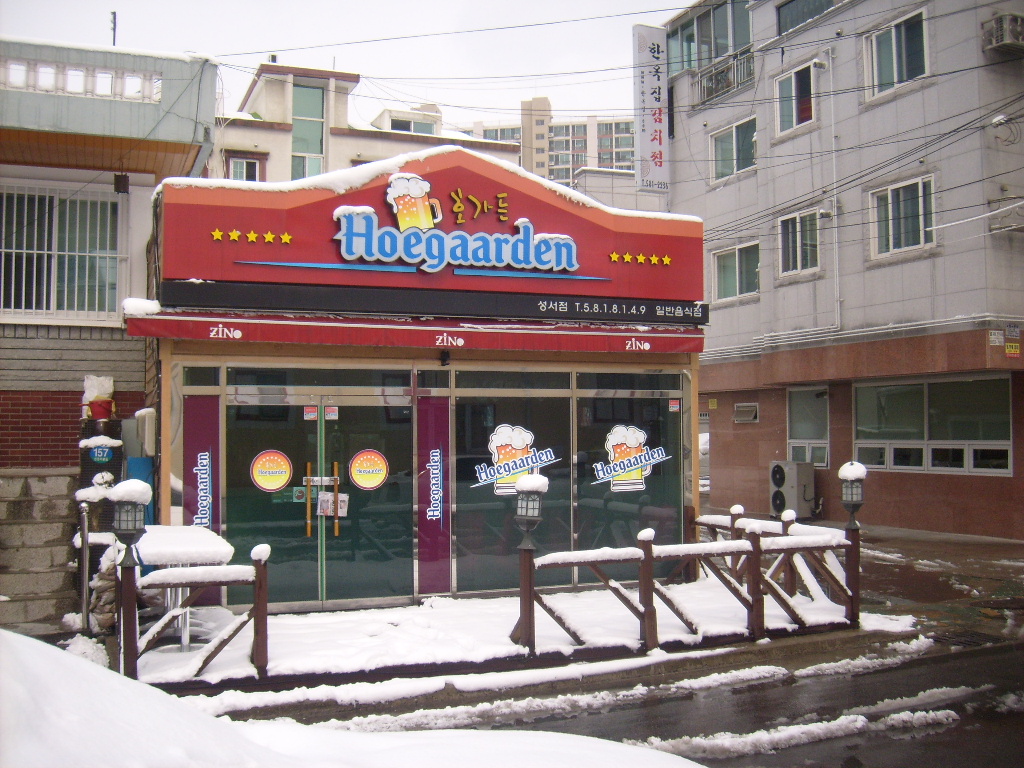
My next door neighbour - a bar
So,,in the particular area of Daegu in which I live, I am totally spoilt. The parameters of my world extend approximately 600 paces in 3 directions and approx 1000 in another. Everything I need is contained within this space. I can comfortably walk 100 paces in a minute. Before any blog-bullies assault my calculations as inaccurate, they are only estimations. If I leave my apartment on my trip to my favourite sports complex, I pass the following facilities:
47 paces, 25 seconds – Kimchi jjim restaurant
65 paces, 35 seconds – a bar
75 paces, 40 seconds – a barbecue restaurant
106 paces, 1 minutes 5 secs – a 24 hour store
146 paces, 1 minutes 25 secs – chemist
247 – paces, 2 minutes 25 secs – a tailor and dry cleaner
250 paces, 2 minutes 30 secs – a bakery
324 paces, 3 minutes 25 secs – a 24 hour kimbap restaurant
348 paces, 3 minutes 30 secs – a dentist
390 paces, 3 minutes 55 secs – my school
433 paces, 4 minutes 20 secs – 24 hour restaurant
450 paces, 4 mins 30 secs – my doctors
520 paces, 5 mins 12 secs – E-mart supermarket
601 paces, 6 minutes – my sports complex, containing a bathhouse and jjimjilbang. In the interim I have passed 4 different and luxurious coffee houses, a small hospital, numerous doctors, singing rooms, bars, internet cafes and dentists as well as around 15 different private academies.

6 minutes walk: gym, squash courts, martial arts classes and 24 hours bathhouse and jjimjilbang
On a Monday:
150 paces, 1 min 30 secs takes me to an extensive street market.
In another direction:
60 paces, 30 secs – a barbecue restaurant.
72 paces, 31 secs – a fish restaurant.
110 paces, 1 minute 6 secs – a computer repair shop
302 paces, 3 minutes (plus the lift) – a 24 hour jjimjilbang and gym.
330 paces – 3 minutes 20 secs – my bank
380 paces, 3 minutes 40 secs ( plus the lift) – a multi complex cinema, seafood buffet restaurant and a large pizza restaurant.
890 paces, 8 mins 55 secs – underground railway system.
And approx 1000 paces, 10 minutes, in the opposite direction takes me to the local swimming pool besides which lays the tranquility of the mountains.
Many of the amenities I am pampered with here I would not experience even in the major cities of the UK. If 24 hour restaurants or food delivery services exist they are very rare and I have never seen a MacDonald’s 24 hour home delivery service. Apart from the odd spa amenity, difficult to access, expensive and basic by comparison, jjimjilbangs and bathhouses are all unheard of in the UK. Likewise, singing rooms, where families, friends and children can go, do not exist and neither do decent internet cafes. Britain’s main pastime is premised around boozing and watching TV which is ironic considering British people, as most westerners, have significantly more free time than do Koreans.
However, I still miss a good indian curry, a decent pizza and Cantonese style Chinese food and roast potatoes make me drool excessively.
White Day March 14th (회이트데이)
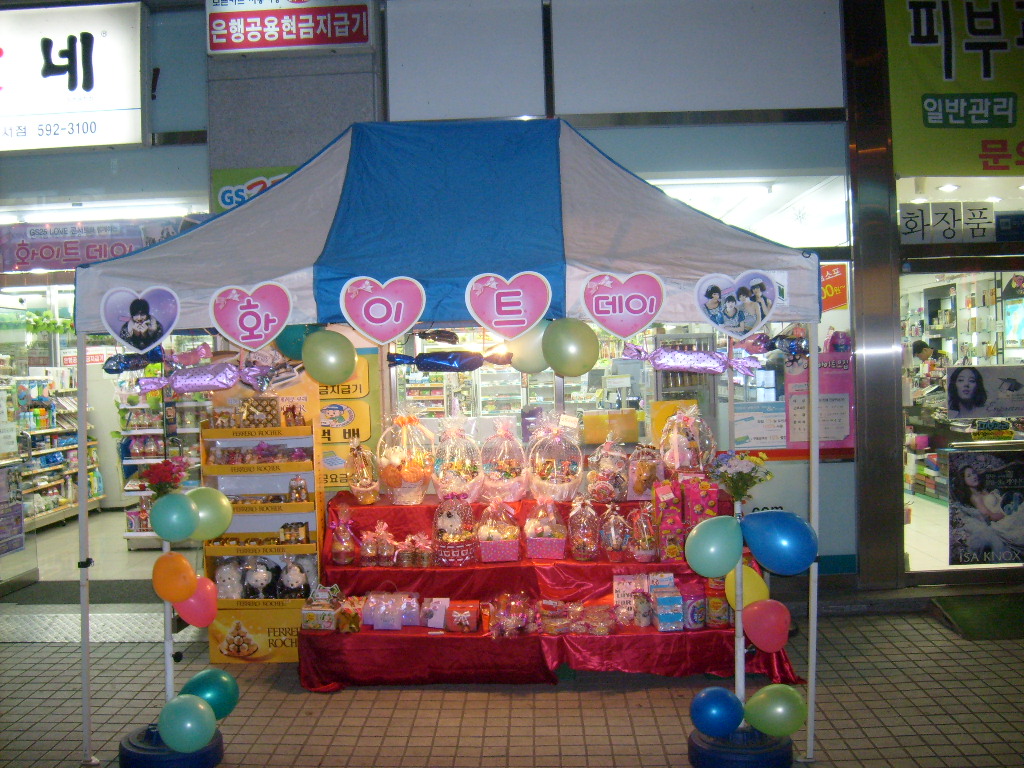 March 14th, White Day, is when men who were given Valentines gifts on February 14th (Red Day), reciprocate, usually with gifts of chocolate, white lingerie or other presents. Like many of the silly days we celebrate around the world, Mother’s Day, and Father’s Day, for example, White Day is a fairly recent invention, not as usual an innovation by a card company, but by a confectioners based in Fukouka, Japan which launched the first White Day in 1978. For saddo men, myself included, April 14th, Black Day, is the day to ‘celebrate’ being sad and single. Considering the animosity many Koreans express for Japanese history, if not Japanese people, I am surprised White Day has become so popular. Although it might not manifest itself in a significant way, even the small store near my apartment has appropriate gifts and I have seen several market stalls this week selling various chocolate items. So, like Valentines Day, for me at least, White Day passed by almost unnoticed.
Am I Really That Dumb?
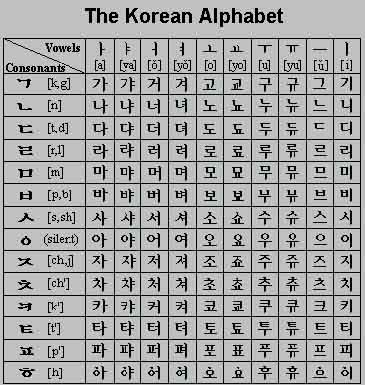
Korean alaphabet
I think I must be pretty dumb when it comes to learning foreign languages though the skills I do have are clearly above average. I claim this because recently, European Union research highlighted only 5% of British people can count to 20 in a foreign language. Apparently, Americans fair worse! As I can count to 20 in 4 languages, though in two that’s all I can do, I can designate myself a polyglot.
Anyone who has lived in Korea long enough and is battling to learn the language will have met those ‘linguists’ who seem to have picked the language up in a few weeks. Don’t they depress you! I met a chap last summer who told me he’d learned the Korean alphabet in ‘a couple of hours!’ My God! I’ve been struggling with it for years. When I tried to clarify whether he meant he was familiar with it or could actually read it, he insisted his abilities were sufficient to read text though not understand it. I remember another passing acquaintance, a very colourful character, who insisted the language was ‘easy’ and all you had to do was add ‘yo’ onto the end of everything – which also included English words. And then there are those who tell you their level even though they don’t go to classes and have never been assessed. Of course, they’re never a beginner like you are and usually pitch themselves at ‘intermediate’ or if a little humbler, ‘lower intermediate.’ This always reminds me of the cartoon character Peggy, from King of the Hill, who says she has: ” an IQ of 180, give or take a few points because she assessed herself.”
No language is easy and Korean, with a totally different alphabet, three speech levels, honorifics, dialects, the numerous pronunciation exceptions created by certain sound combinations and then the fact that many sounds, ㄷ ㅌ ㄸ ㄱ ㅋ ㄲ ㅓ, to name a few, cannot be rendered by an English equivalent. Or at least this is my humble understanding. So it is neither ‘Daegu’ or ‘Taegu’ and indeed the only way to write the city’s name free of ambiguity is as 대구. Of course, if you want to be really flash you can write it in hanja, 大邱. Recognising sounds is another skill and one I find my weakest. The way Koreans cut short particular final consonants often causes me great confusion so I end up muddling ‘ginger’ with ‘thinking’ and ‘acorn curd’ with ‘eagles.’ Asking the market stall owner how much the ‘eagle curd’ is or, if they have any ‘thinking?’ raises eyebrows. And ‘persimmons’ I am always confusing with ‘liver.’ Talking of 감 and 간, I still find it difficult to hear 홍시 and 혼시. The thought I am a slow learner suddenly intensifies as I remember a two-hour session trying to hear and replicate ㄲ as in ‘꿀” (honey). And if you really want to test your ability to use the Korean alphabet try spelling the most difficult words of the lot – English loan words. I find broccoli, coat, shirt and yogurt especially awkward. Yogurt! Now is that 요구르트 or 요그르트 or even 요구르터?
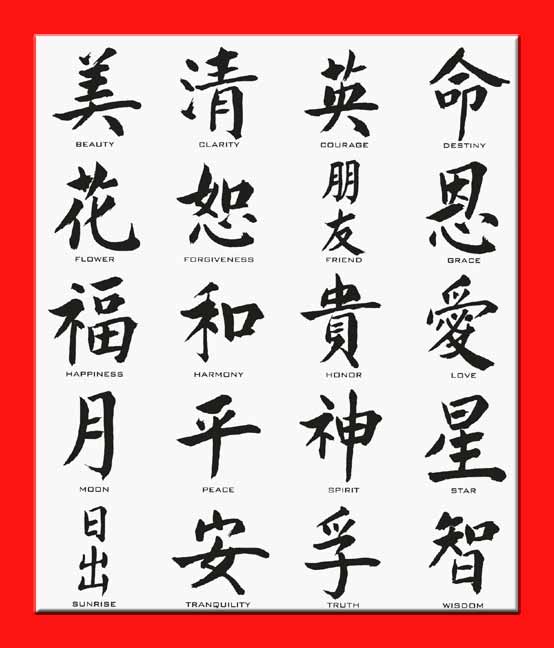
Hanja
No matter how hard you study Korean you will constantly meet those who can speak it better than you. I don’t mean the pretentious linguist types who master the basics in five minutes – you rarely hear them speaking unless it’s in English and telling you how easy Korean is, but those with a genuine talent for languages and who have also made an effort. You read about those who study every moment they can, running on the treadmill listening to dialogues or reciting conversations as they walk to work. It takes me all my effort not to fall off the treadmill and on the pavement, at least in the city, one needs all mental faculties to avoid being smashed to pieces by one of the numerous meals on mopeds maniacs. However, if you really want to impress people, Hanja has few foreign followers. You will have to learn Korean for a few years to truly impress other westerners but with Hanja you can do it with a handful of characters. I’ve met westerners who could speak fairly good Korean but didn’t know any Hanja and I know Korean adults whose Hanja skills are rudimentary. I currently know around 600 characters but at anyone time will have forgotten around a third of them and many of the characters comprising this third will change on a daily basis. The educated Korean should know approximately 1,800 characters; 900 learned in middle school and another 900 in high school. I’ve spent ten years, on and off, studying Hanja – all a total waste of time especially as with every 5 new characters I learn I tend to forget three or four old ones. If I can study Hanja for another 30 years I ‘ll be ‘averagely educated.’ Some of my Koreans friends try to suggest that it is not how many characters I know that is important but that fact I study them. Personally, learning Hanja is a little like learning Latin or Greek, an exercise of the mind but with attractive squiggly little patterns. At the end of the day, Hanja provides few benefits to my spoken Korean but it certainly impresses both westerners and Koreans and to be honest I do get a little thrill when I see some characters and actually recognise them.
I take my hat off to those individuals who can communicate in Korean at any level especially as there are plenty of foreigners living in Korea who see no point at all in learning the language. I even know one teacher, with post-graduate qualifications, who insisted he came to Korea to better understand Korean culture and not to learn Korean. But those who warrant my greatest respect are those individuals who have mastered the intricacies of Korean from a Speak Korean in Five Minutes, (paper back, 50 pages, no cassette), read on the flight to Korea.
Winter Returns to Daegu

Top of Apsan Mountain (앞산)
Just when you thought it was safe to ditch the duck down thermal anorak, and winter suddenly reappears. After several afternoons with spring in the air, Sunday morning saw Apsan Mountain, Daegu, dusted in snow. So, after an invigorating bowl of chicken and ginseng soup, we took the cable car to one of Apsan’s summits. It was freezing with icy patches underfoot and a wind that stung the ears. Icicles hung from the summit buildings and surrounding trees were covered in a powdery snow.

Frosted!

Daegu and even much of the lower mountain however, remained spring-like, if not a little cold.
When the sun rose on Thursday morning, most of the city was under snow. Unlike England however, the buses were all running and no schools closed.

Close to Mega Town, Song-So
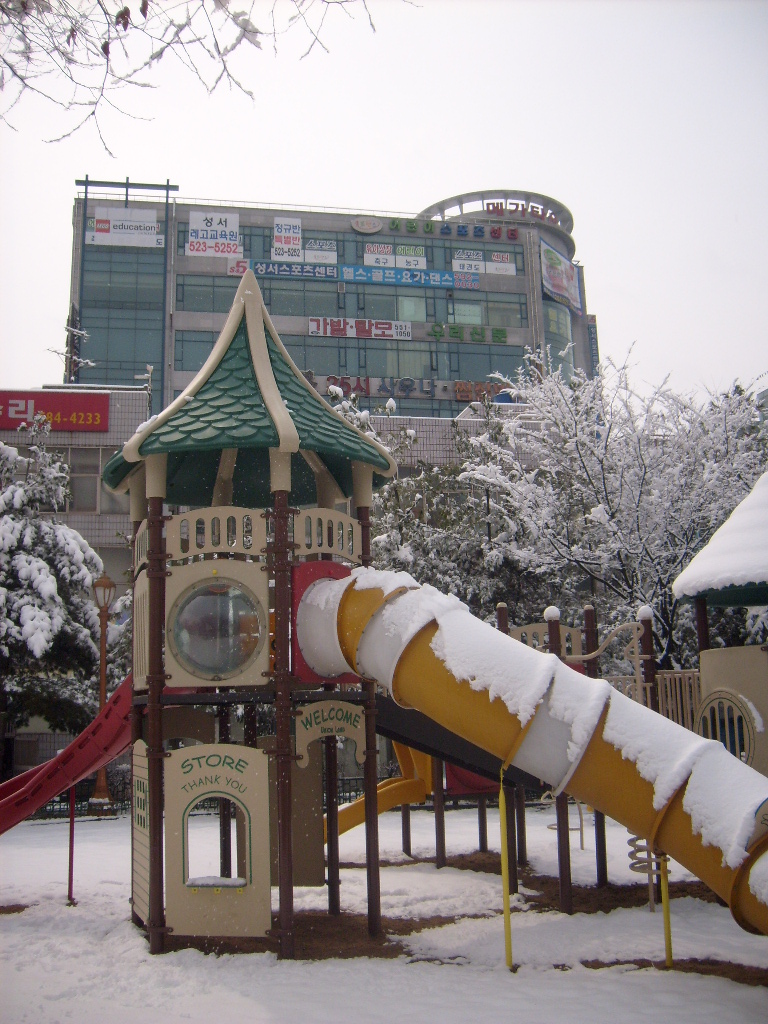
A Small park

Through the trees

By mid-morning the world was slushy!
!
Samil Public Holiday. March 1st
(삼일 운동) Samil – (3-1) relates to March 1st 1919, which saw the emergence of the Korean Independence Movement. On this day, Korean independence fighters declared their independence from the colonial rule of Japan. The Japanese having been in occupation of Korea since 1910. The declaration, sparked widespread processions and demonstrations which Japanese authorities harshly supressed. In one village. Jeam-Ri, all male sympathizers were herded into a church and then burnt. However, in the aftermath the Japanese authorities changed some of their policies especially those deemed particularly obnoxious by the independence fighters. Military police were replaced with a civilian police force and a limited press freedom was allowed. The march 1st Movement was significant in the establishment of the Republic of Korean Provisional Government, in Shanghai, in April 1919.
For those interested in taekwon-do, especially the patriotic and original taekwon-do as practiced by the ITF, the history of which seems unknown here in Korea, Samil is the name given to one of the advanced patterns. The pattern contains 33 movements which represent the original 33 patriots who planned and penned the declaration.
Celebration of the First Full Moon

Full moon
Sunday the 28th of February (2010) is the celebration of the new year’s first full moon. (대보름). This occurs on the 15th day of the lunar new year. I was wondering why the markets and supermarkets were suddenly full of nuts, walnuts being the most popular, and discovered that one of the celebration’s traditions is to crack open nuts with one’s teeth as this is supposed to guarantee their health throughout the coming year. Other traditions include mountain climbing, especially to see the rising moon as well as eating five grain rice (오국밥). Yakshik (약식), a tasty rice cake containing chestnuts, pine nuts, honey and sesame oil, is also eaten. Celebration is more noted in rural areas where dried grass is burnt. Originally, this occurred between rice fields and was probably a means of killing insect pests.
Back to the Treadmill
새해 복 많이 받으세요! ‘Happy New Year.’ I’ve been practicing this for the last week knowing that it’s a phrase I can’t use for another year. I returned from the UK with a nasty cough, several weeks ago. My first job when I returned was to buy a new PC monitor to replace the car size contraption sitting on my desk. I bought a 23 inch plasma screen from E-Mart at 198.oooW (£111 sterling) which was around the same price as one I recently bought in the UK. Luck would have it that two days later my antediluvian hard drive decided to pack in. I don’t have much patience with inanimate objects and after kicking it and administering it a hefty palm heel strike, I proceeded to smash the DVD loading trays with a six-foot bo (a martial art staff). I must admit I lost it for a few moments and was surprised I didn’t suffer coronary. In my defence however, my defunct hard drive had plagued me all year and the work I can now do in a day, previously took me three. I have a fleeting suspicion that when I tried to reboot it, I may have inadvertently turned off my monitor and diagnosed the lack of activity as death. By the time I had viciously assaulted it, it was quite useless.
Half an hour later and a PC technician was installing a new PC in my apartment. A local PC shop, like most other services and facilities, is only a two-minute walk from house. I brag about the convenience of Korea when I’m back home and though I think services and culture here outstrip what’s on offer in the UK, I am especially well located. The unit cost 424.000W (£237 sterling) and as usual, the call out installation was free. In addition, he uploaded all the programs I use with the operating system and Word 7 in English. In rip-off-Britain and probably most of the western world, the Microsoft Word Package alone would have cost me a hundred pounds. I have no sympathy for money grabbing Microsoft and the constant changes of software, deliberately made incompatible with operating systems or other software, are analogous to having to buy a new car every time the road markings are changed or re-painted.
I spent two intense weeks re-organising the various blogs I write and nursing an annoying cough which has almost cleared up. This morning I decided it was time to start doing some exercise so, at 7.30, I walked the 5 mins to a local sports complex, a five storey complex owned by the father of one of my students. I plan to give a full account of this facility at a later stage as Korean bathhouses and jjimjilbang, a speciality of mine, warrant some lengthy posts. The gym, situated on the top floor is luxurious and not representative of all Korean gym facilities. Naturally this is reflected in the fee. My last gym, actually on the floor under my school, was both a little grotty and tended to pump out pop music, in competition with the TV’s mounted on the treadmill machines, at such a volume your MP3 was rendered useless. Pak Sang-il is the trainer usually on duty when I train. He’s a lad of about 24 and like many Korean men he is gentle and attentive. In summer he would regularly bring me new towels when I was sweating on the treadmill or top up my water bottle with cold coffee or water. Often, he beckons me into his office for breakfast; sometimes fruit, boiled chicken or hard-boiled eggs. And when I ‘m aching or have tight muscles, like many Korean men, he thinks nothing of massaging my legs or back. Many westerners would interpret this as a sign of homosexuality and probably find the intimacy threatening.
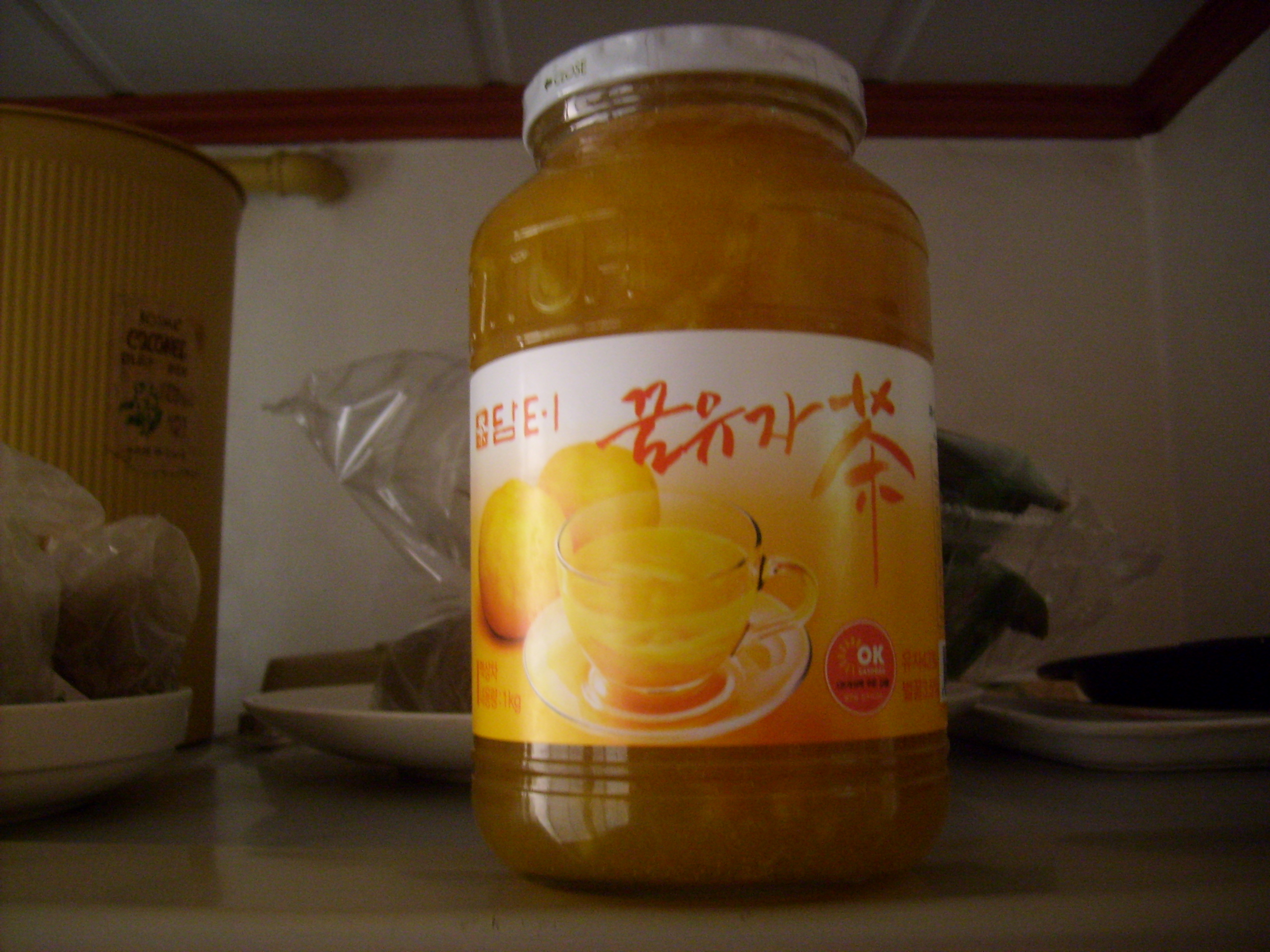
유가 자
On the day I left for the UK he gave me an especially big hug. Pak Sang-il is quite masculine with a good body, six-pack, pec’s and muscles that many men would love to posses. The combination of masculinity and effeminate personality, which is probably the best way to describe it, make an alluring combination and again, a combination that characterises many Korean men. I have trained enough in gyms in the UK and taekwon-do schools throughout Europe to know that such intimacy is deemed suspect and if anything, the combination of men and gyms usually results in increased aggression and machoism.
I took Pak Sang-il a large pineapple as a small gift, not an unusual thing to do in Korea. After my session we had a coffee in his office and he told me he had ‘thought a lot about me’ and ‘wanted to see me’. No! Nothing homo-ey! This is Korea and men can be quite intimate both physically and verbally without it implying they are gay. So, he insists that after my visiting the bathhouse, on the floor below, I return to his office. When I finally oblige him he presents me with a jar of grapefruit tea neatly wrapped up. It resembles jam and is a remedy for bad coughs and sore throats. Accompanying the tea is a handwritten note wishing me good health and a Happy New Year. Then, as I step into the lift, he shyly thrusts a hard-boiled egg into my palm. ‘You haven’t eaten breakfasts,’ he reminds me.

Pak Sang-il's note
© Nick Elwood 2010. This work is licenced under a Creative Commons Licence.


 Elwood 5566
leave a comment