Pomegranate
Throughout 2010 I took regular photos of a pomegranate tree near my one-room. Boring! Perhaps, but in the UK I have never seen this tree growing except in my garden. I planted this from a seed I took from a fruit bought in a supermarket some 13 years ago. Although the bush has never fruited, it regularly flowers and I’m told that last summer it was covered in a magnificent display of red flowers.

May 3rd 2010
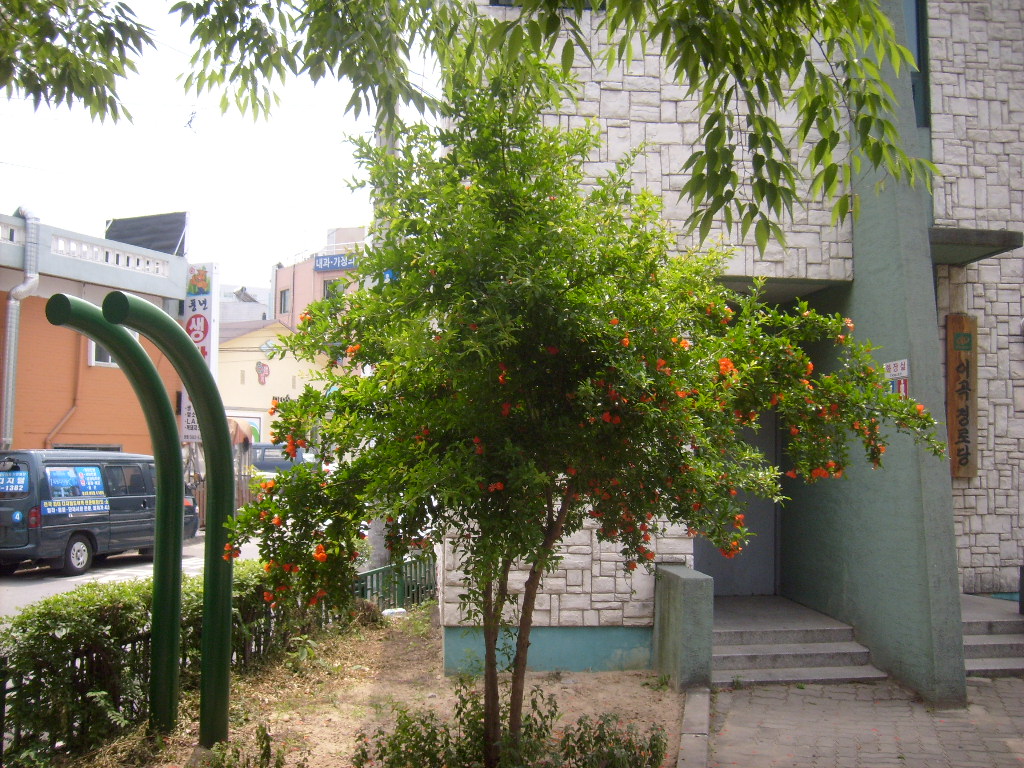
July 20th 2010

July 20th 2010
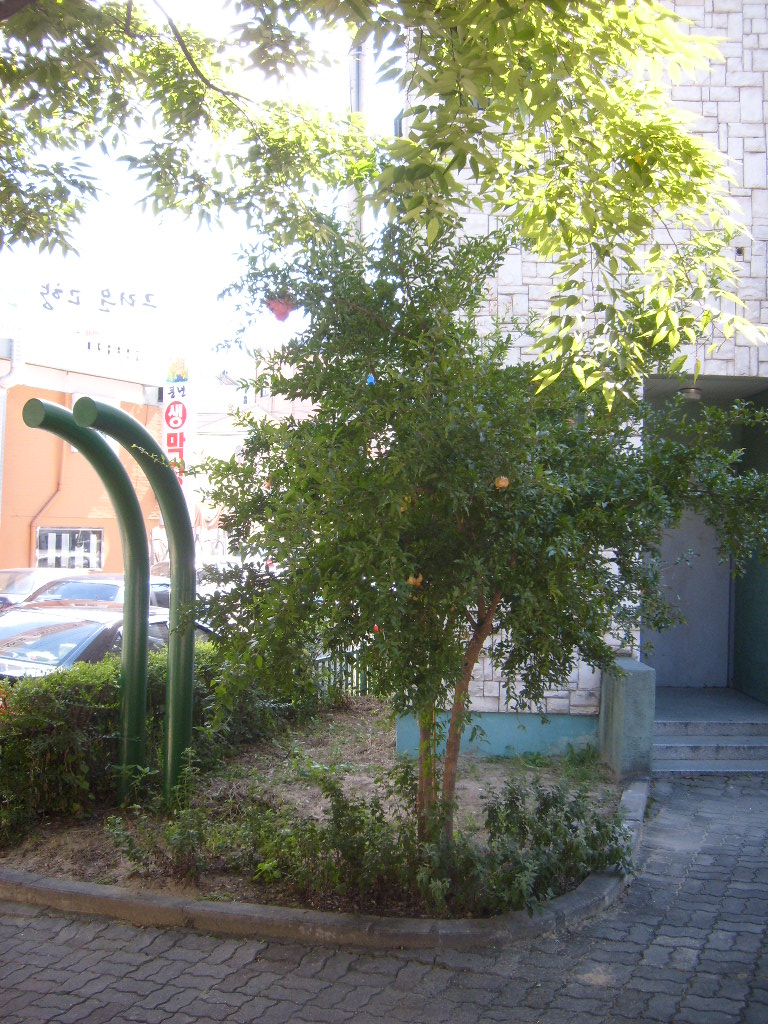
August 2010
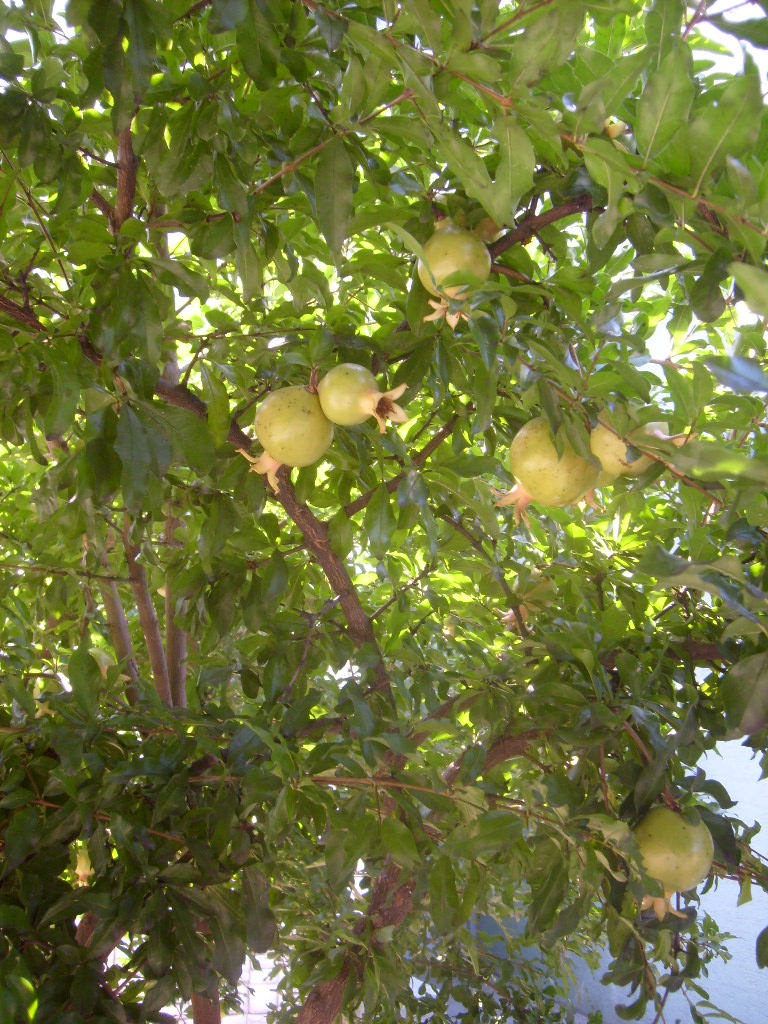
September 2010
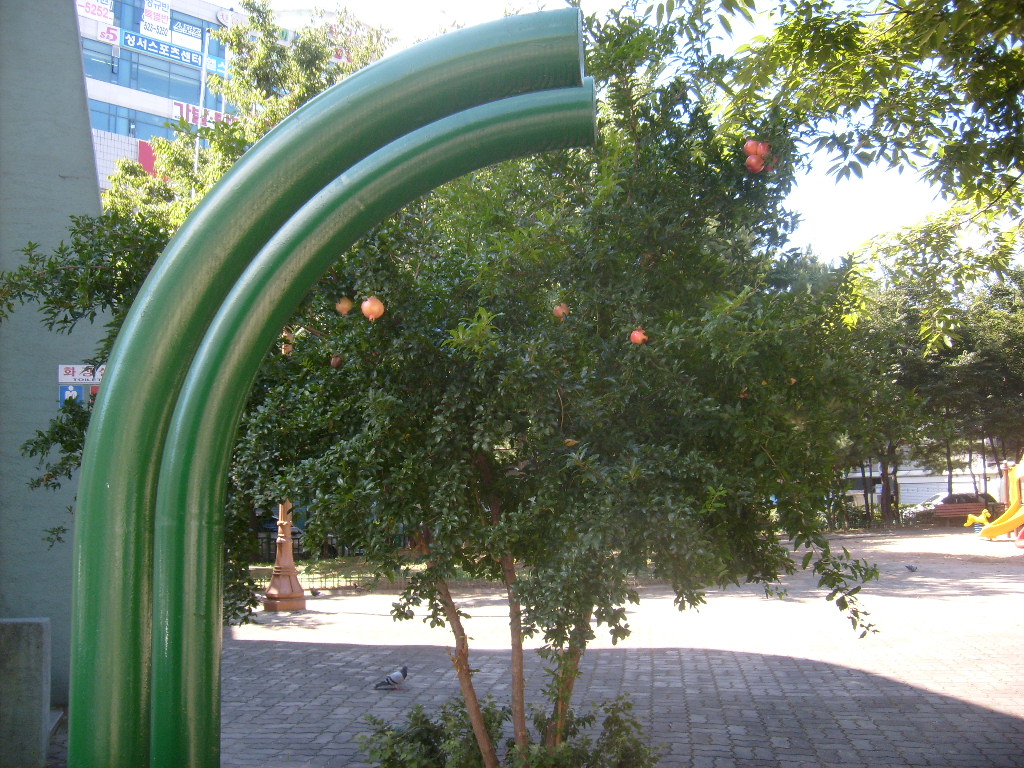
September 24th 2010
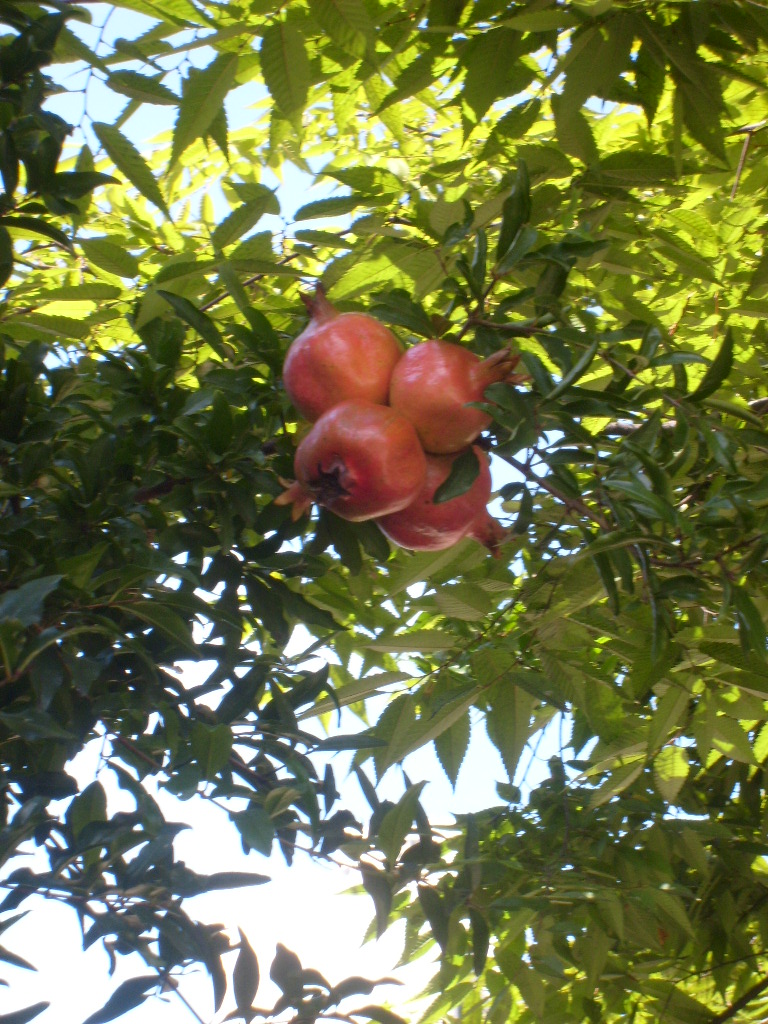
September 24th 2010

September 24th 2010
Though the fruits were red and shiny, when I picked one last year and tasted the fruit I immediately spat it back out. As delicious as they look, pomegranates growing on street corners tend to be horridly bitter despite their juicy appearance.
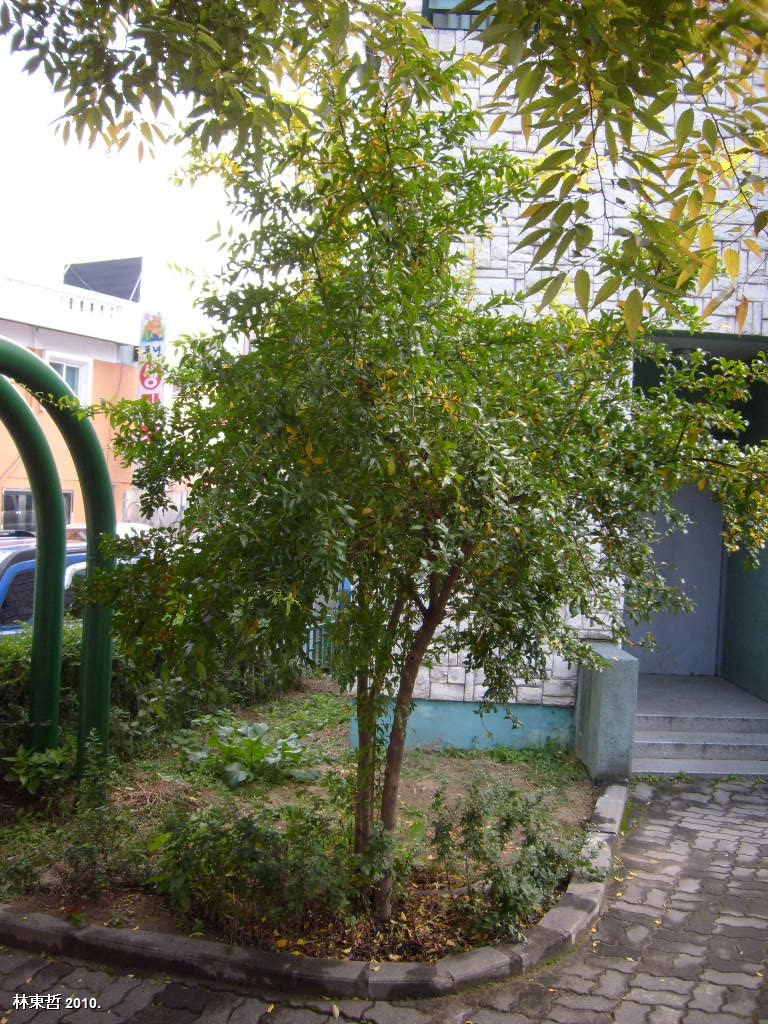
October 23rd 2010
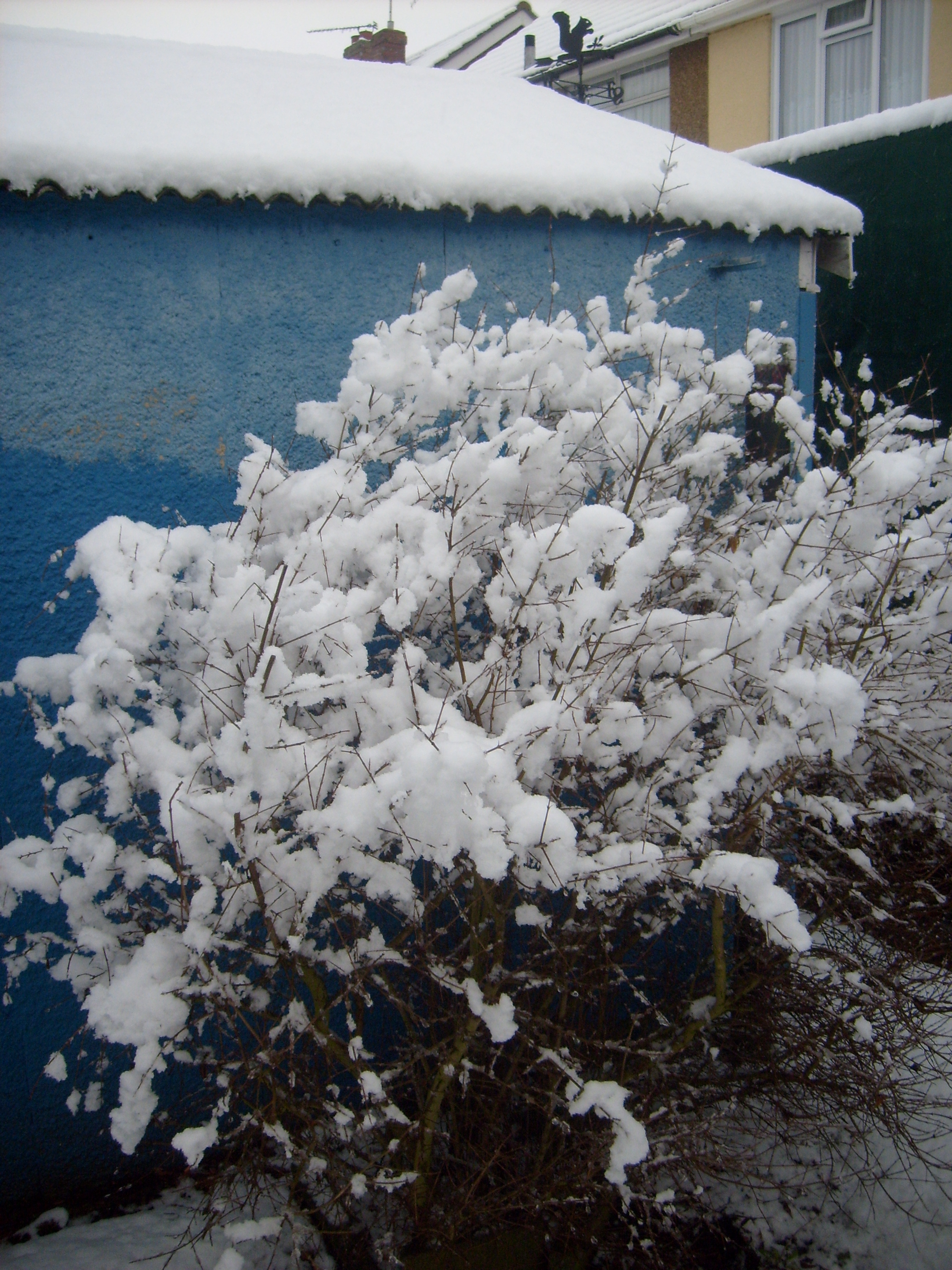
My UK pomegranate, January 2010. (12 years of age)

© 林東哲 2010 Creative Commons Licence.
Monday Market – Apples (사과)
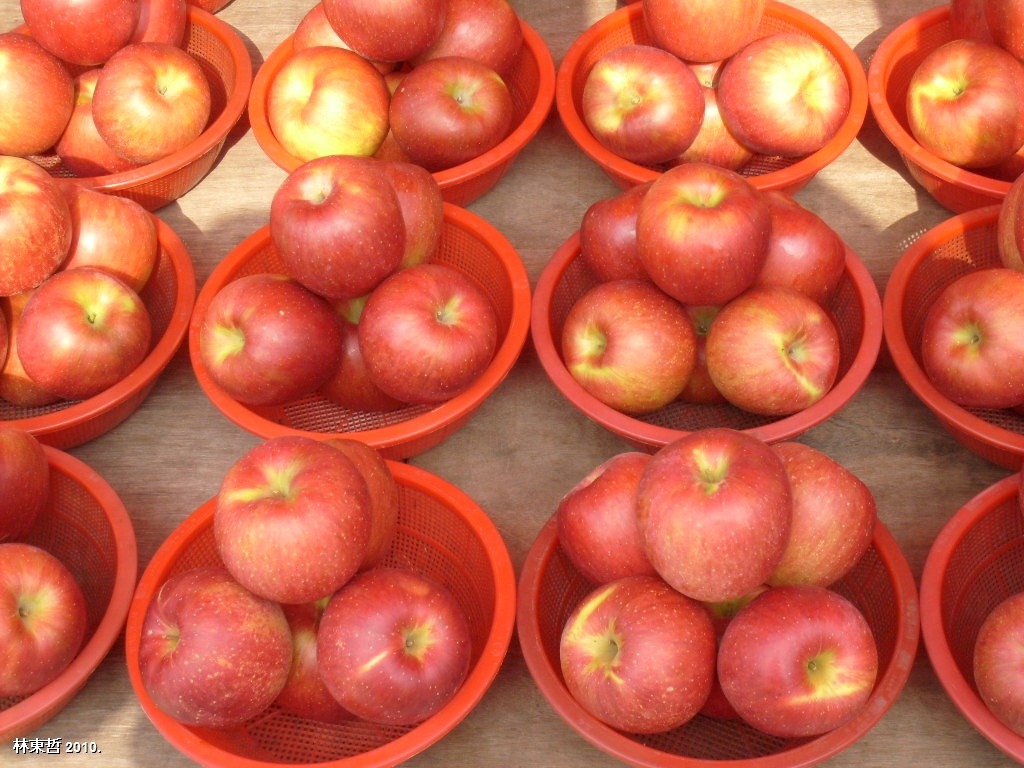
early autumn apples
When I first visited Daegu in 2010, the city’s link with apples, a local product, seemed very strong. Ten years later, and on the odd occasion I have mentioned Daegu in relation to apples, and some people look at me blankly. Regardless, apples in Daegu, and perhaps further afield, are delicious. I rarely buy apples back home partly as the varieties are never constant and the taste and texture never guaranteed. Like many fruit and vegetables in Britain, they are rarely home produced. There is a lot to be said for seasonal fair as the quality is far superior and at the moment, cabbages (배추), apples, Asian pears (배), persimmon (감) and oranges (귤) from Jeju-do) are all in season. I have become quite used to watching the passing season through what’s available in the street markets and am currently waiting to see an abundance of of ginkgo nuts (은행).

Crispy, sweet and delicious
Korean apples are big, crispy, sweet and juicy. I’ve never had an apple that is soft or sour and would imagine sweetness is guaranteed because of the hot summers. Most apples are best about Christmas time and there are five popular varieties all grown in Korea:
‘National Glory’ (국광) – deep red with green stripes
‘Golden Delicious,’ (골덴 딜리셔스) – clear yellow
‘Huji’ or ‘Pusa’ (후지 / 부사) – light red
‘Indian’ (인도) – green
‘Red Jade’ (홍옥) – bright red which is best slightly earlier than Christmas.

Monday market
However, as I write, I read that in the UK, this years season of apples, though outstripped by imports, are especially delicious as they generally tend to be approximately once every seven years.
© 林東哲 2010 Creative Commons Licence.
Related Articles
- Consuming Issues: Why English apples are the pick of the crop (independent.co.uk)
Interlude (6) The coolest chili -the ‘cucumber’ chili. 오이고추
Okay, this is a really tasty chili with absolutely minimal heat probably just a few steps up from the green paprika (green pepper). It is usually slightly lighter in colour than hotter chillies, long and fat and fairly juicy. Rather boring on its own, but instantly transformed if dipped in ssam-jang (쌈장).
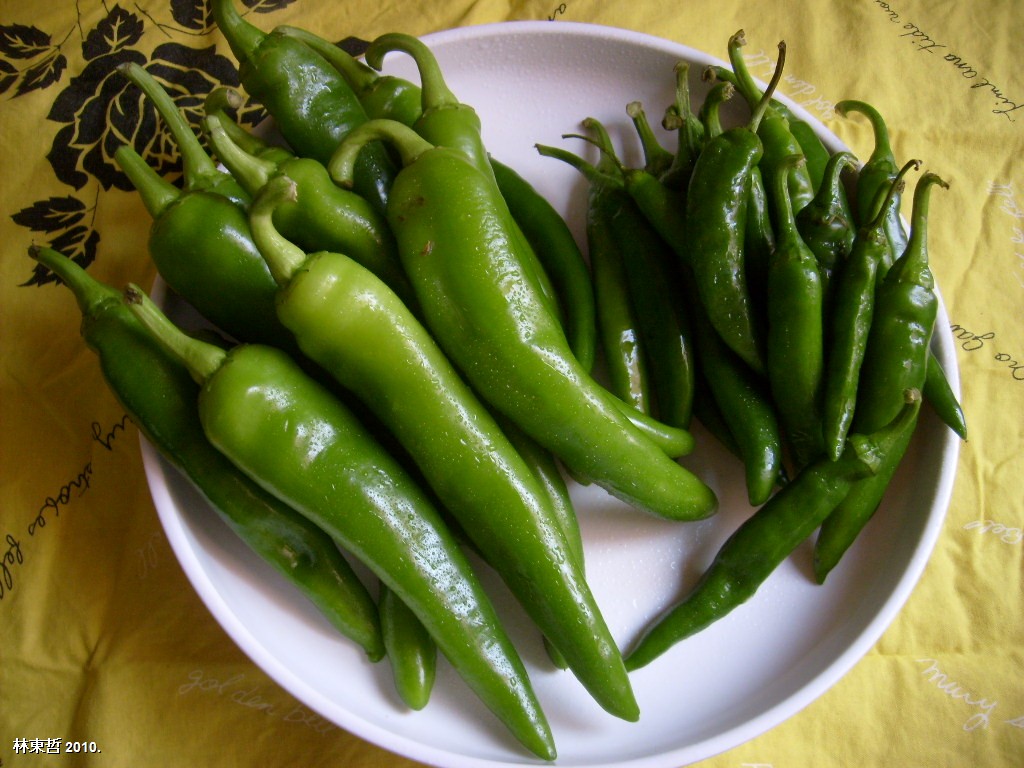
the 'cucumber' chili (left) and hottest Korean chili (청량)

'cucumber chili' (오이고추) and bean paste (쌈장) - an excellent combination
Ssam-jang (쌈장) is widely available and is usually in a green container differentiating it from other pastes. It is is a great dip for otherwise boring ‘well-being’ snacks such as carrot or celery.
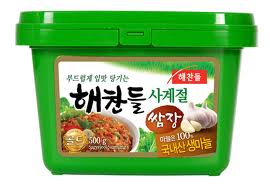
ssam-jang (쌈장)
As someone permanently struggling with Korean these are my notes on words and phrases I find useful and which are usually not in a dictionary. Any amendments, recommendations or errors, please let me know.
© 林東哲 2010 Creative Commons Licence.
It's Kimchi Time – November 2010
Usually, around this time of year I make a new batch of kimchi. The last batch was made in May and since August or thereabouts, I have occasionally had to wash mold from the top leaves, which has been excellent in kimchi-stew. However, I didn’t really enjoy it as a side-dish. To be honest, my May batch had a bad start as once again the first process, salting the leaves, didn’t go well. This time I consulted a couple of grandmothers who recommended the coarsest salt. So, after finding two very tight, and heavy cabbages, at 6000 Won, (£3), I sprinkled the leaves with salt and rather than immerse them in water, just sprinkled a cup’s worth over the top. The cabbages took about 24 hours to completely flop but this might not be unusual as the temperature was quite cool, if not cold, in my kitchen.
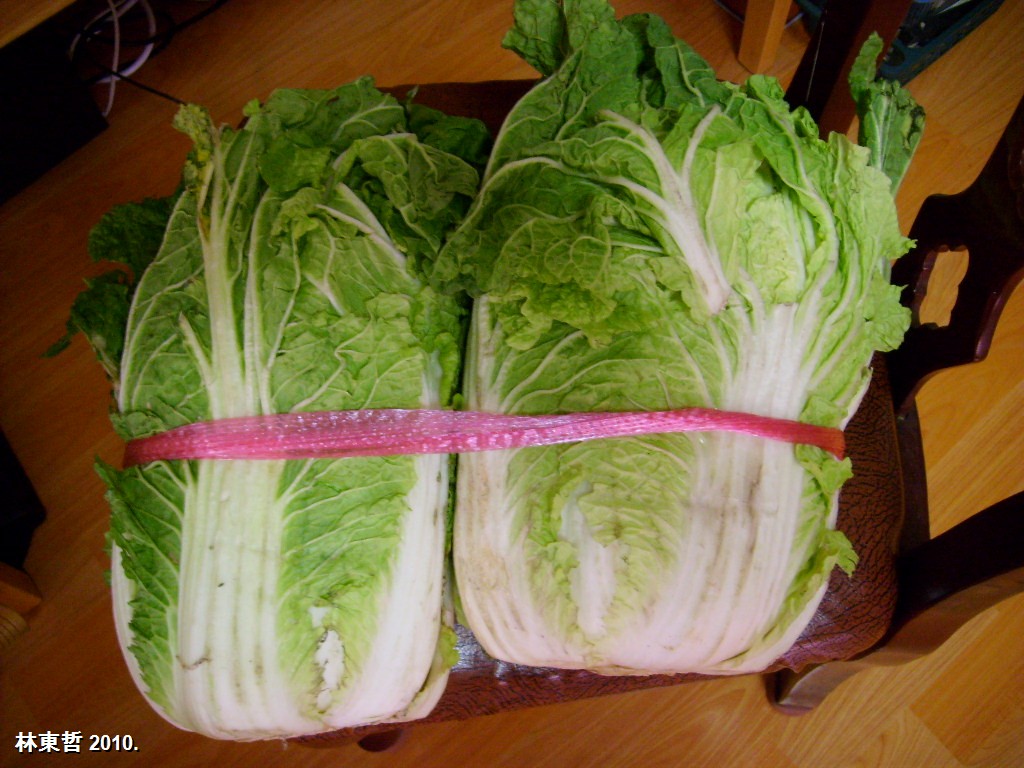
tight and heavy

salting process

suitably limp
I was also extra careful making the paste and this time used twice as much of everything except the fish sauce which I reduced a little. I was also careful to wash the salt off the cabbages and let them stand in water for an hour as in the past they have remained salty.

ready to paste the leaves
The sauce was slightly sweeter than usual and the consistency much thicker which I think was the result of carefully draining the leaves and using double the ingredients stipulated in Maangchi’s recipe. I didn’t alter the recipe and simply made double the amount. A few friends suggested it needs some additional salt which is fine as too little can be remedied but too much can’t.

the finished product
Don’t forget, for a great recipe for making kimchi, visit Maangchi.
Related Articles
- Emergency Chinese cabbage saves South Korean kimchi (telegraph.co.uk)
© 林東哲 2010 Creative Commons Licence.
Monday Market – Peaches 복숭아
Like the persimmon, which is just starting to appear, peaches have different names for different types: some are hard, some medium and the most prized, very soft, is white.
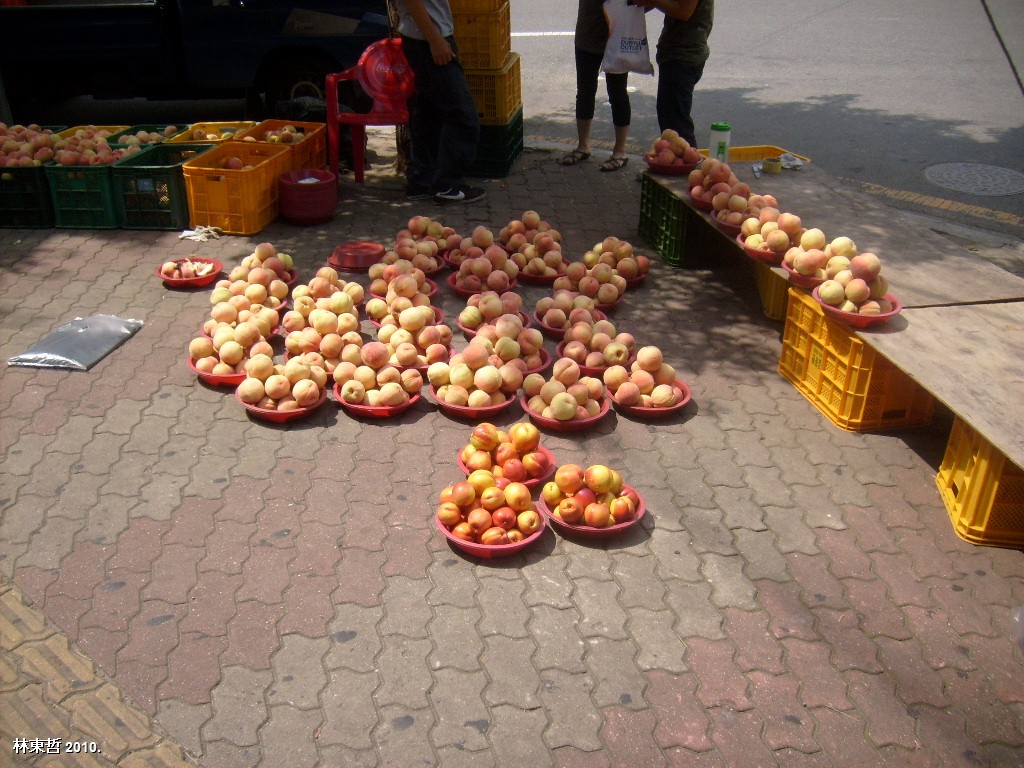
Peaches towards the end of the season
© 林東哲 2010 Creative Commons Licence.
Monday Market – Groundnuts (땅콩)

Groundnuts
The ‘fruits’ which epitomize autumn are peanuts, pumpkins, persimmon, apples and the Chinese or Napa cabbage of which there is currently a shortage. In the last week peanuts have become very prolific in street markets. They are somewhat unlike the monkeynuts (ground nuts) you buy in the UK in that they are still moist and have an earthy taste to them. Koreans often boil them for a few minutes, un-shelled, after which they taste much nicer. In this state they can be frozen. I still have a few in my freezer from last year though I do not know how long they safely keep.
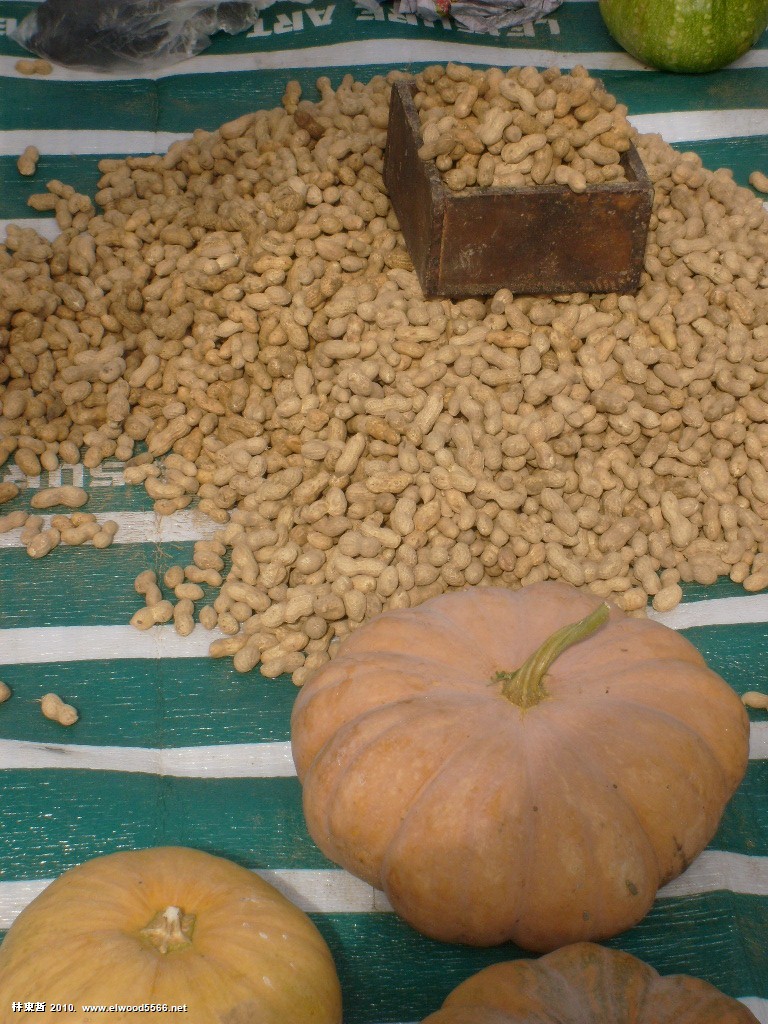
Groundnuts at 4000 Won a boxful (sterling - 2 pounds)

Peanuts and pumpkins
Ersatz Kimchi in a State of Emergency
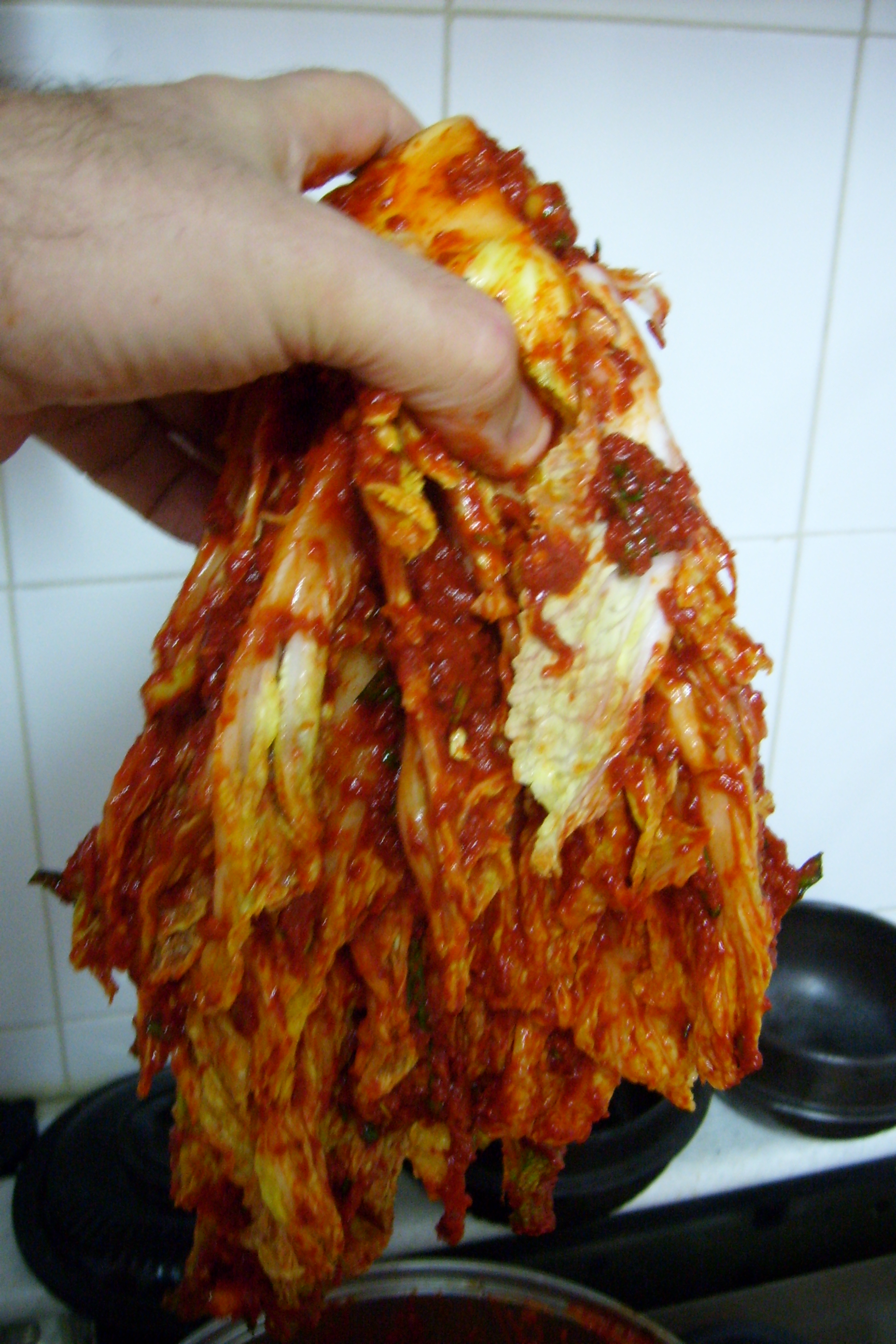
Kimchi-ism
I’m tempted to do some stealing! With an almost total absence of any police on the street I doubt I’d get caught. The only thing that puts me off is that being a waygukin, I stand out. It would only take one Korean to see me humping ‘the goods’ to my one room, for my visa to be relinquished.

Rooftop shopping? Either would fit in a carrier bag
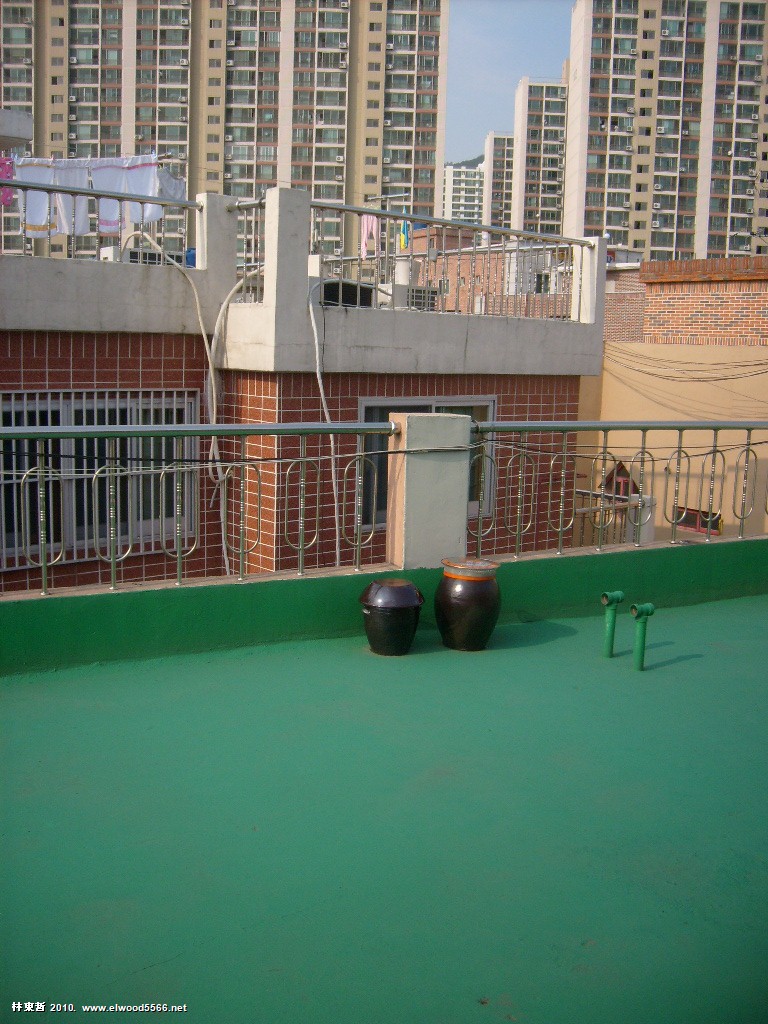
Rooftop shopping? These require a trolley
I haven’t eaten cabbage kimchi in several days and I’ve noticed either a stark absence, or drastic reduction of any in restaurants. Korea without kimchi, unbelievable! You have to live here to understand the cultural and culinary significance caused by a cabbage shortage. You might find it amusing that a lack of cabbage can fuck a nation, especially when you come from a country like Britain where once upon a time, when families practiced that barbaric ritual of eating meals together, children had to be forced to ‘eat their greens.’ While Kimchi is the national food of Korea and has almost iconic status, its deficiency is not the equivalent of Germany without bratwurst, or Britain without fish and chips, it deeply more devastating. I would go for months without a bratty when I lived on Mainland Europe and sauerkraut was something you ate occasionally. Koreans eat kimchi with every meal and in some cases it is a core component of specific meals. To understand the significance of a kimchi-less Korea, you have to envisage Britain without any form of cooking oil, or potatoes, the USA without hamburgers, or perhaps even a nation without petrol or alcohol! Whatever item you choose in an attempt to elicit empathy, it has to be something fundamental enough to strike at the very heart of a country.

Napa Cabbages October 2008
And of course, it isn’t just the Chinese (or Napa) cabbage that’s suffered a devastating season, cucumbers, lettuce and mooli (무), all of which are used in other forms of kimchi or in accompanying barbecues, are also in short supply. Two weeks ago, I bought a rather small cabbage for 5000 Won (£2.50) which is a massive increase on the hearty one I bought in January, costing 1000 Won (50 pence). Yesterday, in E-Mart, there were no cabbages at all and the vegetable section looked somewhat deserted. And all at a time when cabbages should be one of the most prolific items being sold by street vendors.
President, Lee Myung-Bak’s, recent declaration that he will only eat kimchi made from the European type of cabbage (양배추), until the shortage abates, suggests the problem is a national emergency. However, before we join the rebellion or start lynching farmers, it is worth remembering there was a temporary shortage last year and in 2007, when chili and cabbage suffered bad harvests, it cost me a small fortune to make a batch of kimchi.
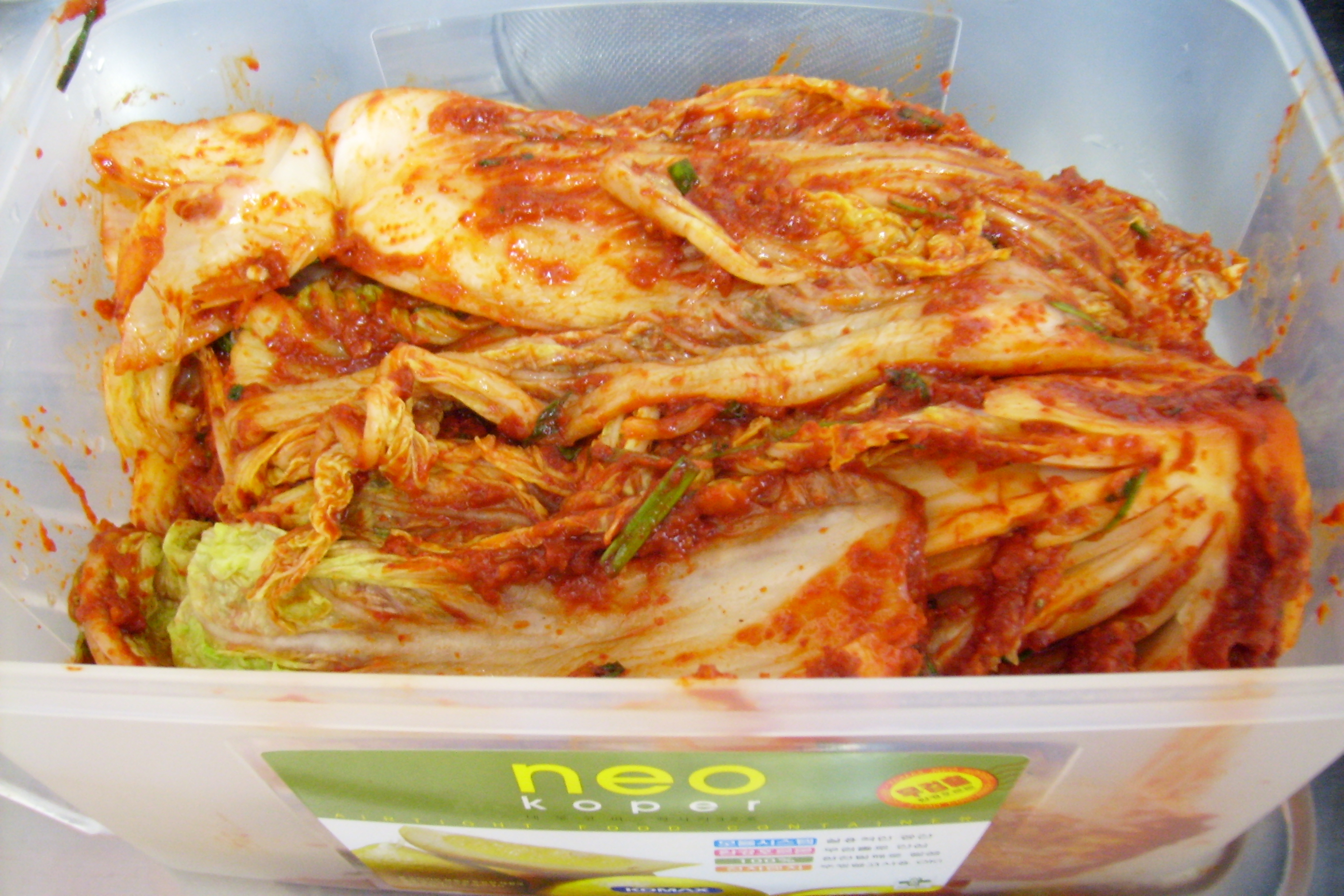
My January batch of kimchi
Meanwhile, restaurants that rely on kimchi and other forms of lettuce and cabbage have had to reduce their portions and in some cases, rather than raise prices, are compensating customers by providing larger amounts of meat. As a meat guzzling waygukin, I’d much rather have less rabbit food and a larger platter of barbecued pork, especially as kimchi made from European cabbage is totally ersatz.
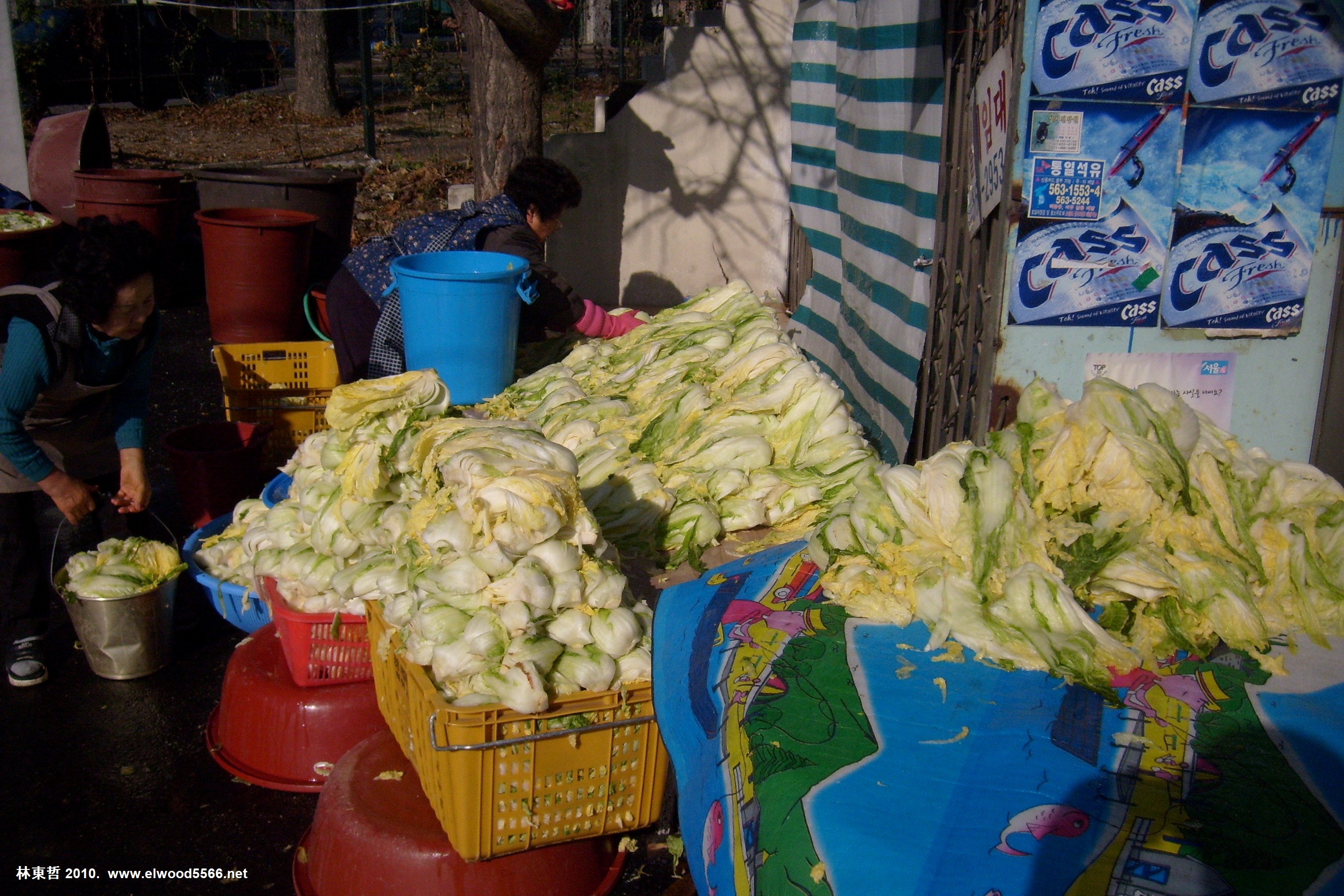
Cabbages being salted. October-November 2008
I’m out of fresh kimchi and intended making my winter batch this month and while I have kimchi in my ceramic pot, made in January, it is the ‘stagnant’ type best used in cooking. So, do Koreans ever steal each others kimchi ? There are a number of pots on my roof top and indeed pots stand on most rooftops as well as in recesses and corners of buildings. I’m very tempted to pinch a pot, not because I need kimchi but because nicking kimchi is both outrageous and comical. A waygukin stealing a pot of someone’s homemade kimchi during a cabbage shortage smacks of pro-Korean-ism and a love powerful enough of driving you to theft could be construed as a crime of passion.

There might not be any kimchi in the supermarkets, but there's a feast of it on every rooftop.
Related Articles
- Surging Kimchi Prices Bite Restaurants (online.wsj.com)
© Nick Elwood 2010 Creative Commons Licence.
Korean Teas – Cassia Tora Linne (결명자차)

with a fruity, sweet aroma
Specifics: Cassia Tora Linne / cassia obtusifolia linne Senna obtusifolia (Chinese Senna or Sicklepod) 決明子茶. Made from roasted seeds.
Personally, I prefer this tea chilled when it is very refreshing with a fruity, sweet aroma. The taste is slightly dark with the very slightest bitterness in the back ground. The fruity taste, quite distinct and pleasant, resembles lychee and this remains for quite a while, as an after taste.

Cassia Tora Linne (결명자)
The plant is a legume and resembles the ground nut with yellow buttercup-like flowers. The plant has some medicinal uses such as combating ringworm and also has laxative properties. However, drinking the commercial tea won’t leave you running for the loo.
Tea bags are readily available in places like E-marte where I have uses between 2 and 3 large tea bags per 3 liters of water.
© Nick Elwood 2010 Creative Commons Licence.
Grapes – 포도. Monday Market

Grapes – Autumn is approaching!
With the scent of black grapes drifting on the air, you know that autumn is not to far off. Korean grapes are quite different from varieties available in Europe; the skins are much thicker and slightly chewy and often removed. The flesh is juicy and sweet and the seeds, big, crunchy and bitter. As a fruit, I certainly prefer the seedless variety but the juice of Korean grape, usually the Kyoho grape, is ‘thicker’ and carries both the scent and taste of the grape British children will be familiar with. Personally, the smell and taste of Korean black grapes always reminds me of Pez candy, which was popular when I was a child. Korean grape juice is very popular as is Welch’s Grape Juice. Welch’s is an American company which uses a variety of grape, Concord, which is similar to the Kyoho grape.

Korean black grape juice
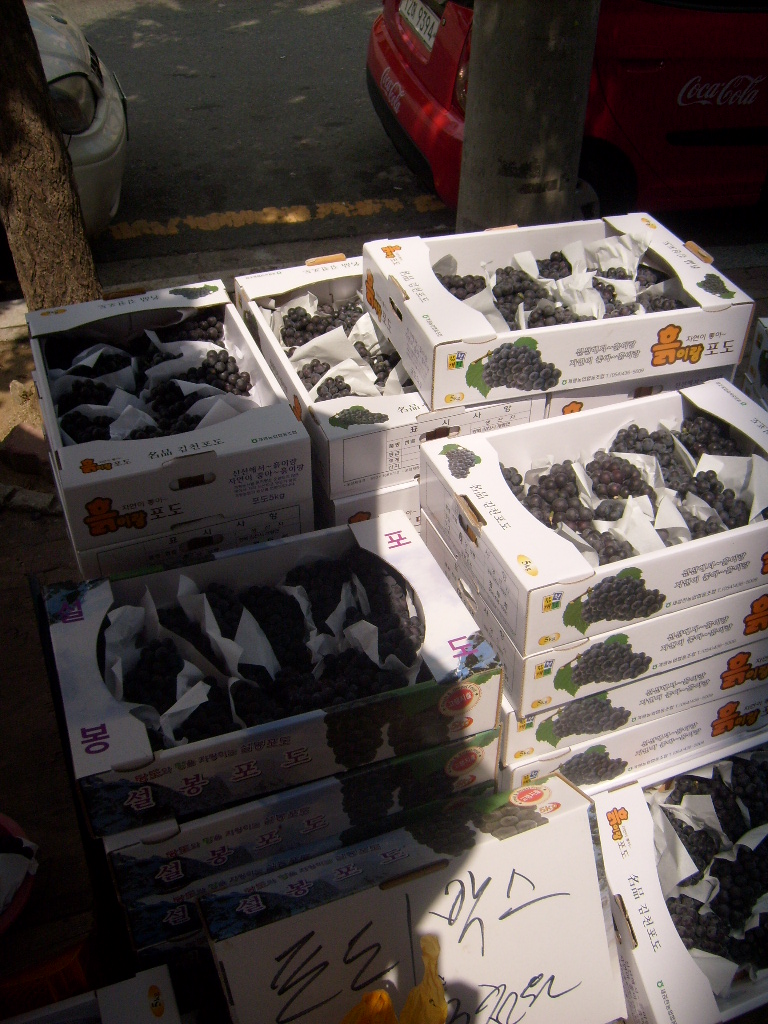
Grapes, fat and juicy
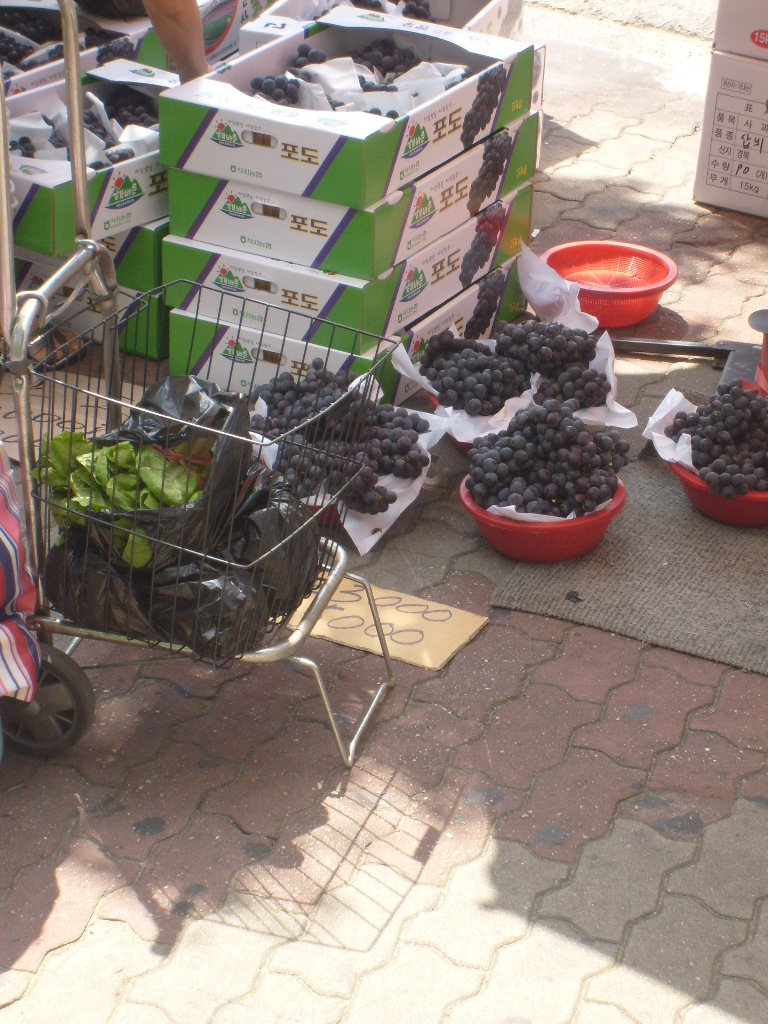
Grapes in the shade

Remember Pez?
© Nick Elwood 2010 Creative Commons Licence.
Kimchi-ism
It smells bad, it can taste revolting, and is a major cause of conflict in university accommodation kitchens worldwide, where the sharp smell oozing from refrigerators upsets non-Koreans. It hangs on your breath with greater offence and persistence than any French gastronomical delight. Garlic can certainly be rude but enhanced and enlivened by numerous chemical processes and suspend in cabbage water and the pungent juices of fermented anchovy, the power to offend becomes a chemical and biological capability. Nothing is polite about it, it is totally ‘in your face’ in its onslaught of your taste buds, nasal passages and doesn’t look too pleasant either. It lacks any refinement or subtlety and amongst ‘offensive’ foods ranks as a weapon of mass destruction. You wouldn’t gorge or binge on it, indeed I wouldn’t even call it delicious and I could certainly live without it. If I were to be isolated on a dessert island for a year it wouldn’t be on my list of essential items. And yet paradoxically, it is one of the most exciting taste sensations in the world. If there is one food so aptly capable of defining a nation, so synonymous with a people, it is cabbage kimchi(배추 김치).
There are many types of kimchi, and of those types many variations, and of those variations many permutations depending on a range of factors. Kimchi is one of numerous Korean, fermented foods, others including makkalli, bean paste (된장), and soy sauce (간장). Only when kimchiis old enough for the initial processes of fermentation to have ceased, will the flavour be consistent. At all other times, you can’t eat the same kimchi twice as the taste is always in a state of transition. Canned and packeted kimchi are available but these should only ever be eaten as a last resort. Canned kimchi, often from China, is especially disgusting!

Welcome to Korea!
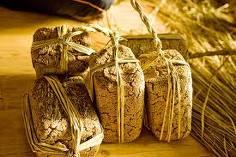
Traditional fermented beans (메주)
The most popular type of kimchi, and the one most armed in terms of offensive capability, is cabbage kimchi (배추 김치). Cabbage is well known for its powers to unleash unpleasant odours once its fibers have traversed the intestinal tract and are approaching a transmuted reincarnation via the human Cloaca Maxima. With cabbage kimchi however, your digestive organs can take a break as most of the chemical process which release those aromas, have already been activated and are in a chemical flurry approximate to final stages of processing via the large intestine. Indeed, I would go as far as suggesting that function of that plastic Tupperware tub or kimchi pot in which kimchi is stored upon being made, is basically a portable large intestine containing the numerous biological processes. In that Pandora’s box of mischief: the most infamous kiss-killer of all, garlic, is present in its most potent form, crushed! Added to this is minced ginger, a Korean type of chive (실파) and mooli (무) which while not individually notorious, collectively possess powers of repetition which help strengthen the garlic and intensify its potency. Even at this stage, a burp of this concoction is lethal. Added to this, is the cabbage which after having been submersed in salted water, is already chemically active.
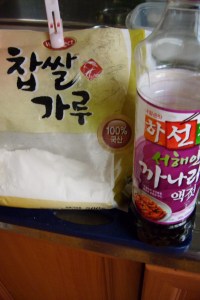
Kkanari - fish sauce - the concentrated odour of a million sweaty feet
The addition of fish sauce, (액젓) famous across the Asia, which is another fermented product made from anchovy or kkanari (까나리 – sand lance), completes the recipe. Of all the noxious odours added to kimchi, anchovy or sand lance sauce is the most vile. I’ve often entertained myself by inviting guests to sniff an open bottle as I’m casually cooking, with a little encouragement such as: ‘smell this, it’s lovely,’ or, ‘this has got to be my most favourite smell.’ Usually, a good whiff will propel them back a few meters with as much force as would a couple of hundred volts of electricity. Once amassed and fizzling away, the flavours and smells blend in a process which can last a considerable amount of time, depending on temperature.
Comparing the kimchi pot (김치독) or Tupperware tub to a colon is not an exaggeration. I have slept in the same room as as my gestating kimchi and in the first week of fermentation, gasses produced within the Tupperware colon would cause the lid to pop-off about once every twenty-four hours. If this occurred at night, the escaped aroma was initially enough to wake me. I have since become quiet comfortable sleeping in the same room as fermenting kimchi and find the smell highly evocative – ironically, not evocative of life in Korea, but life back in the UK where living with friends necessitated containing kimchi smells to my bedroom and not the shared kitchen.
Kimchi encapsulates Korea at many levels. Many countries have a national food with which they are identified: Italy – pizza, Germany – sausages or sauerkraut (which is also fermented cabbage), France – smelly, soft cheeses, frog legs, snails and cordon-bleu cooking, England – fish and chips, roast beef and tea, Scotland – shortbread and haggis, but few have the ability to represent their nation with such precision as does kimchi. While kimchi comes in blaze of spicy colour, the foods of other nations, delicious as they are, remain purely monochrome.
Kimchi is a pot-pourii of Korea, a culinary collage of so many integral Korean elements – garlic, ginger, Korean chili powder (고추 가루), mooli (무) and fish sauce. These ingredients are the basis of almost all Korean cooking and representative of so much of the peninsula’s farming. You can hardly step in a direction without seeing pots of chili, patches of mooli and even on the mountains sides I’ve seen small plots painstakingly hoed out of the rocky soil, blossoming with such vegetables. Local variation on the cabbage kimchirecipe, as well as banchan side dishes in general, and most other Korean foods, adds a further interesting dimension. While many national foods are now factory produced, often resulting in grossly inferior products (shortbread is a good example), kimchi, even when sold in markets, is homemade and its production evokes a great sense of pride. Korean women, and even some men, are proud of their kimchi making prowess and whenever a gift of kimchi is given, it should be respected.
The making of kimchi is very much determined by the seasons with particular kimchibeing made at certain times of year, and for cabbage kimchi, this is late Autumn to early winter. One of my most memorable images of Korea was seeing an enormous stack of Chinese cabbage (배추) outside Shinoo Supermarket, in Song-So, swathed in wintry mist and beside which a couple of store workers huddled around a bonfire burning on the pavement. I’ve never see such a sight since. And when it is time to make kimchi, members of the family or friends, sometimes communities, females more than males, are brought together.
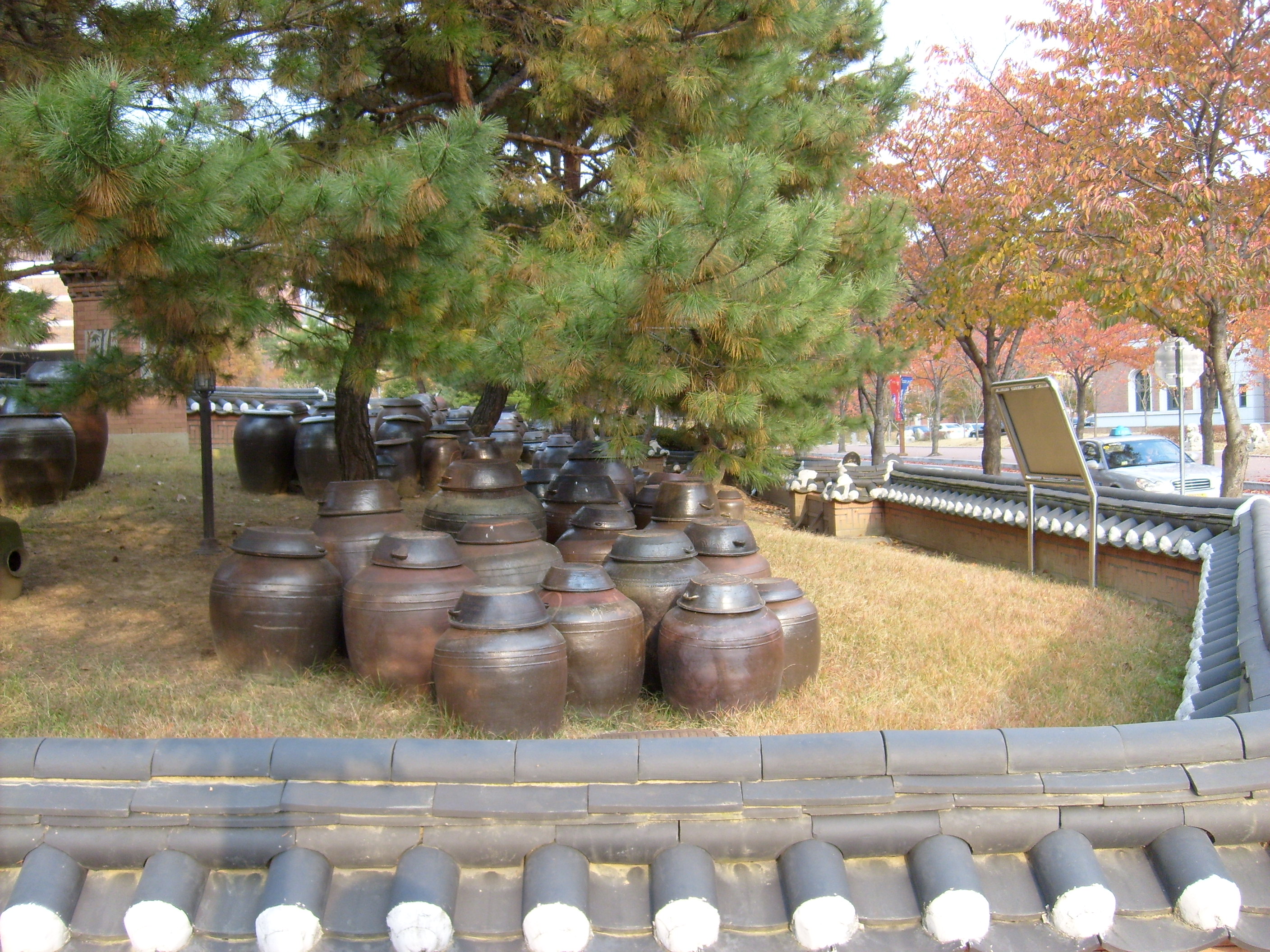
Kimchi pots (김치독) at Keimyung University
There is always a random element in kimchi production, something beyond the control of the ‘cook’, and hence tasting the final product is always an exciting moment. Like making English tea, you can follow the recipe and time the brewing meticulously, but the production is influenced by factors beyond the recipe, it might be the temperature, the humidity or the quality of ingredients of that particular season. Part of the fun involved in kimchi making is the pursuit of perfection in the light of random influences. And if the kimchi itself isn’t synonymous with Korea, the pots (김치독) in which it is traditionally stored, can be seen sitting in vacant corners, on rooftop and apartment verandas across the entire peninsula. The kimchi pot is as Korean as soju, mountain temples and the cawing of the magpie and their production an ancient and noble art. But the making of kimchihas also kept abreast of modern developments. Kimchi has traveled into space and the kimchi refrigerator is now a popular sight in many Korean homes.

My kimchi 'colon'
Learning how to make kimchi and any of the extensive range of side dishes collectively known as banchan (반찬) and of which cabbage kimchi is the King, is difficult. In my area of Daegu are three small shops which produce homemade banchan but they staff don’t like being photographed or watched whilst working. My grandmother, the daughter of a Scottish baker, was just as defensive about her shortbread which was superior to any factory produced shortbreads.
Waygukins and Koreans alike will never grasp the potential of their smelly delicacy until they are able to eat and smell it in isolation, basically, outside of Korea. Like, garlic, the best defense from the offensive smell is to ingest it yourself and once you do that you no longer notice it. You can walk in and out of Koreans homes and their restaurants and never really smell kimchi and yet the whole nation reeks of it and everywhere everyone chuffes out its pungent odours. The only reason you don’t smell it is partly because you have acclimatised to it and because you eat it. I remember arriving at Kimpo International Airport after a holiday, and as I walked into the arrivals hall I suddenly noticed the smell of kimchibut no sooner had I noticed it, than it disappeared. But if you visit Korean friends in the UK, or they visit your house, the odour of kimchiand of garlic is very strong and even unpleasant. I often notice how Korean Air and Emirates, provide Korean meals and kimchi on flights into Seoul and wonder if this is to acclimatise passengers to the guff of garlic and kimchi, prior to landing.
The taste of kimchi has a bizarre appeal and every Korean has a liking for a particular type; for some it’s fresh kimchi in which the fermentation hasn’t really started, for others it’s the tangy bite of old kimchi which draws your tongue like cold tea or strong red wine. And it can be used in a multitude of ways: barbecued, added to stews, used for soup, put into pancakes, fried with rice, minced into hamburger patties, rinsed in water and added to cold soups chilled with ice cubes. When the fermentation process has stopped, and kimchi is left standing, sometimes for months, it is often attacked by a glueppy white mold which lays over the uppermost leaves. At this stage the kimchi is at its sourest and is ideal for cooking kimchi stew (김치찌개), the mold simply being washed off. I don’t think any westerner truly enjoys kimchi first time, but the more we familiarise ourselves with its guises, idiosyncrasies and long and ancient history, the more entrenched our love affair with it becomes and the more we defend it to those barbarians who claim it stinks or tastes revolting!

Kimchi Stew
Twisting and weaving into Korea’s distant past, like one of the gnarled and knotted roots on the mountains, Kimchi, like its people, has endured and adapted. Originally it wouldn’t have contained chili, this being an addition sometime after 1500, when the chili plant arrived in Korea. Of all the foods capable of representing a nation, kimchi is the most personal, the most intimate and the most capable of embodying Korea. It transcends simply being a product of the soil, its production etches out a seasonal calendar, it brings families and communities together, it provides both national and regional identity with space for a little individual flare, and at tables across the country people bond as individual batches are critiqued, compared and celebrated. Even the frosty bite of winter and the hot balmy days of hanyorum (high summer) have a role to play in determining the flavour. In the past, Koreans believed that the foods that suited individuals best were the ones grown in the soil in which their ancestors had both toiled and been buried. It was the ‘fruits’ of the soil which powered families across the generations. When companies produce canned kimchi, or even packeted kimchi, they grossly miss the mark because not only is it supposed to be alive and active, but it has to be Korean. Dead kimchi, kimchi castrated of its chemical process is not kimchi and indeed Koreans have taken foreign kimchi producers to international court over such issues. You can eat French brie or Camembert made in Spain and probably not notice a difference, but kimchi that is dead or not even from Korea, is simply not kimchi.
Useful Resources:
Beyond the Blog – Maangchi: Queen of Korean Cooking
© Nick Elwood 2010 Creative Commons Licence.



 Elwood 5566
7 comments