2.7 cms! A Load of Cock!
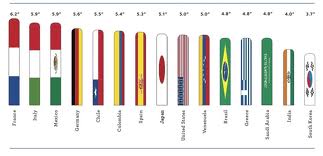
one example of the many surveys
One of the best means of purging a society with the obsession it has for the length of male genitalia is nudity. I think it’s probably safe to say that wherever social mores have preferred people to keep their clothes on, myths about dicks size proliferate. I would imagine there are far fewer Korean teenagers with hang ups about the size of their tool than there are in British society where lads never see each other, or any other male naked unless it’s through the medium of porn where size is one of the primary employment specs.
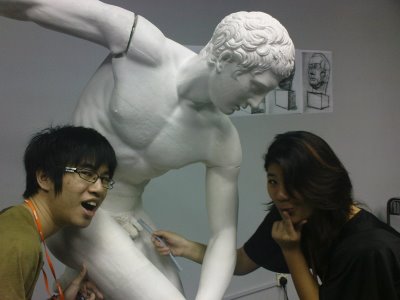
the Ancient Greeks had a healthy attitude, big dicks were comical and often associated with ugliness and depravity
I have never considered Korean men to have particularly small penises and only yesterday saw a Korean guy with such a big tool it was obscene and I was instantly reminded of donkeys, horses and Greek satyrs. I actually felt sorry for him. I wasn’t starring but was intrigued and even though I was very discrete and tried to pretend I was looking somewhere else or day dreaming, he knew what I was doing. He must get that all the time!
I recently read an article on Koreans and dick size which claimed that Korean men have one of the smaller statistics for that appendage compared to men of other nations. If you’re interested you can ‘Google’ it and will find plenty of studies into dick length. In my delving into bathhouse culture, I often come across jibes made by western men about Korean dick size but dismiss them as they reveal more about the western psyche than that of Korea. That Koreans have smaller dicks should come as no surprise: Koreans are smaller. The average weight of an American male is 86.8 kilograms (CDC 2002 – and is now probably higher) while a Korean male weighs-in at to 68.6 kgs (Chungnam Univ. Medical School, 2007). Indeed, the 2002 CDC survey cited a typical American 15-year-old boy as weighing 68.3 kilograms, basically the same as a fully grown Korean adult. Correspondingly, Koreans are shorter than the average American (male) by about 1.5 inches. I would imagine Koreans have smaller ears, fingers, feet and indeed noses but for a significant number of westerners such observations evaporate when the subject has a smaller penis.
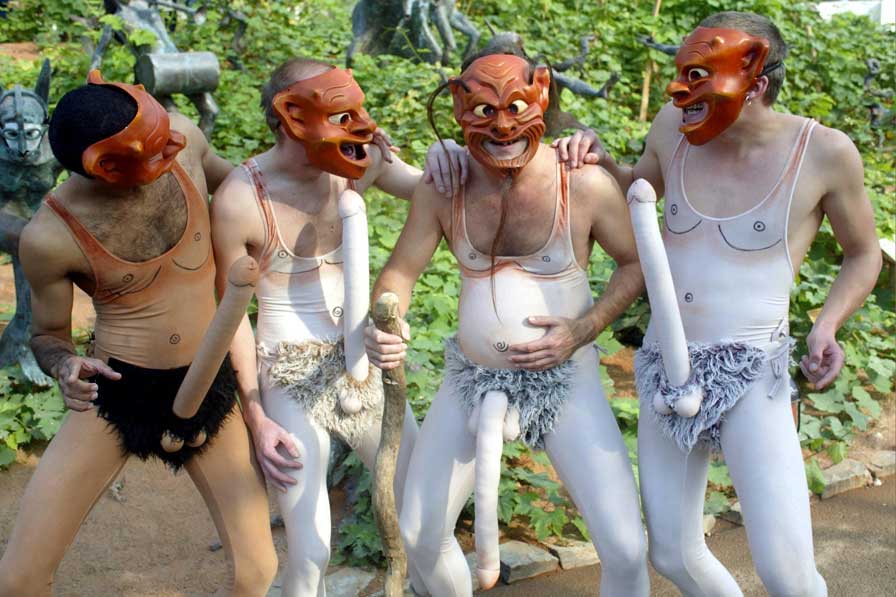
a modern play mocks big dicks in an Aristophanic fashion (Paul Wignall's 'Bursting the Grape)
Trawling Google looking for statistics on penis size, it is clearly evident that immense resources are wasted on such irrelevancies. The results vary slightly but cite Korean and American flaccid lengths at an average of 2.7 and 3.5 inches, respectively. Having seen thousands of Korean dicks, I find 2.7 to be surprisingly small but perhaps this is because the Korean source of statistics is from 19-year-old military conscripts, who by western calculations, are only 18 years old. The US study used a sample with a far greater age range the youngest of which were mid twenties. And how are statistics gathered? I can very much imagine how the Korean conscripts were measured as much as I can imagine the American statistics being gathered via confidential questionnaires.
So, this week, in my regular sessions in the bathhouse, I’ve been trying to estimate the lengths of dicks. It isn’t easy. First, you can’t be seen to be peeping and second, dicks appear to change size depending on the angle from which they are viewed. Then there is the problem of variation because like the Korean specialty known as the ‘dog dick,’ a turgid, worm-like sea animal, one moment they are looking a healthy ‘big,’ next they are positively ‘small.’ In the end I gave up firstly, because my long distant vision has deteriorated and either I need to take my glasses poolside or I will have to start squinting – which naturally I don’t want to do. Secondly, the one thing that stops you making a decent estimate is the nature of their pubic hair. Forget the boring twaddle about penis length because all that separates us is around three-quarters of an inch. But when it comes to the length of pubic hair, Koreans win outright. I’ve seen Koreans with such long pubes they could braid them and often it sticks out straight as if gelled in situ. Korean pubic hair is not just water proof but resilient enough to remain in place even when being doused in the shower.
Koreans have smaller dicks! If they do – big deal! They have smaller toes, too. Meanwhile, a great many western men will take solace in the fact they are bigger than Koreans. You have to be some kind of uber-dork to feel better than another guy because your wadge of fat happens to be a little longer. It’s all irrelevant and relative and last time I looked at my ruler, 3.5, 4.5 or even 6.5 are pathetically small lengths on which to base any sense of national or masculine superiority.

© 林東哲 2011 Creative Commons Licence.
Related articles
Honestly! I’m not a trainspotter!
In December 2010, I took some photos for a post I intended writing on the KTX (KTX – Gold Standard. Jan 2011). After downloading them on to my UK computer, a glitch erased them. Then this week, I discover that I hadn’t erased the file but transfered it to my palm-reader which as a white elephant, rarely gets used.
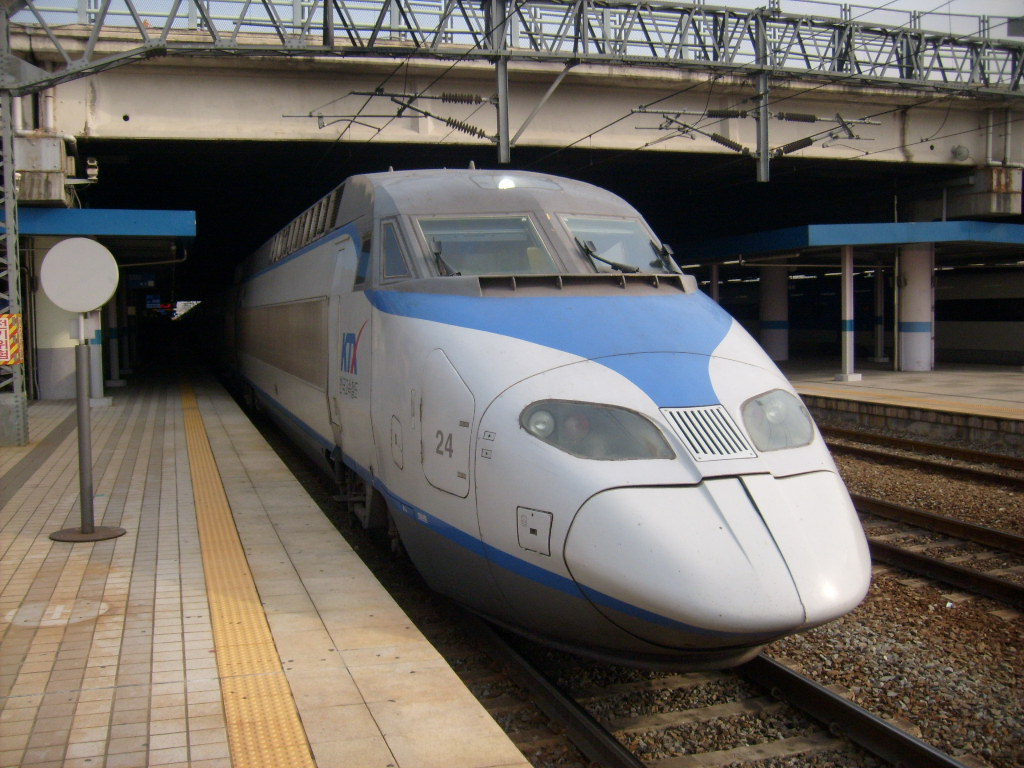
The older type KTX, the sleek design inspired by the snout of a shark
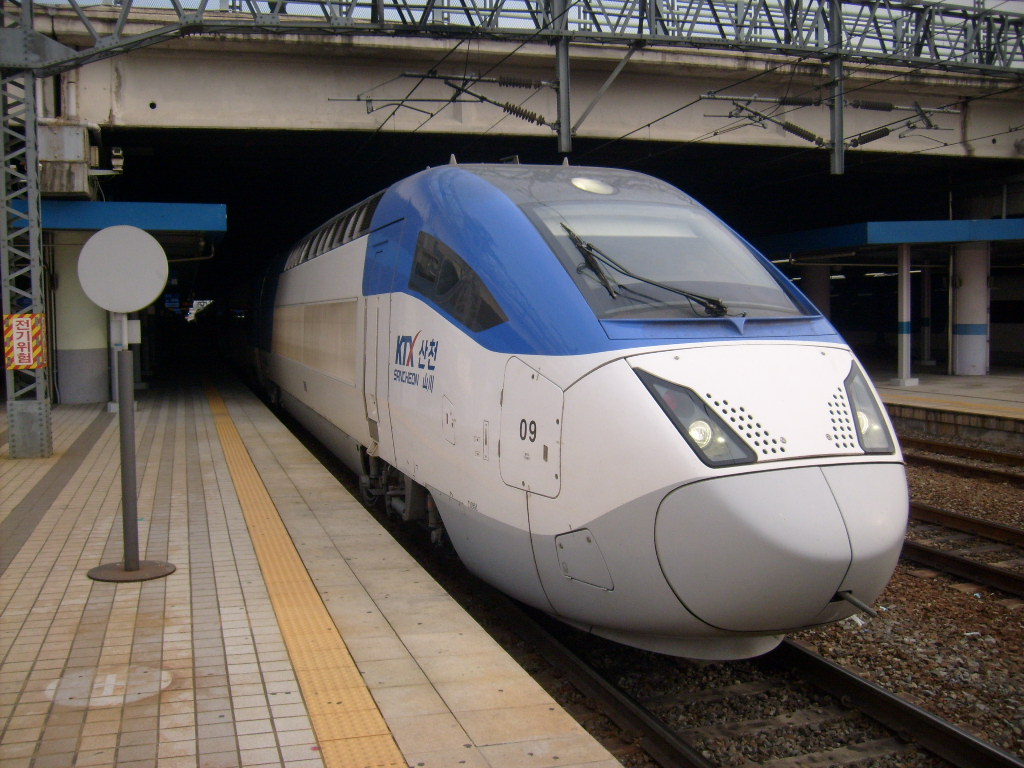
The KTX San Ch'eon class engine
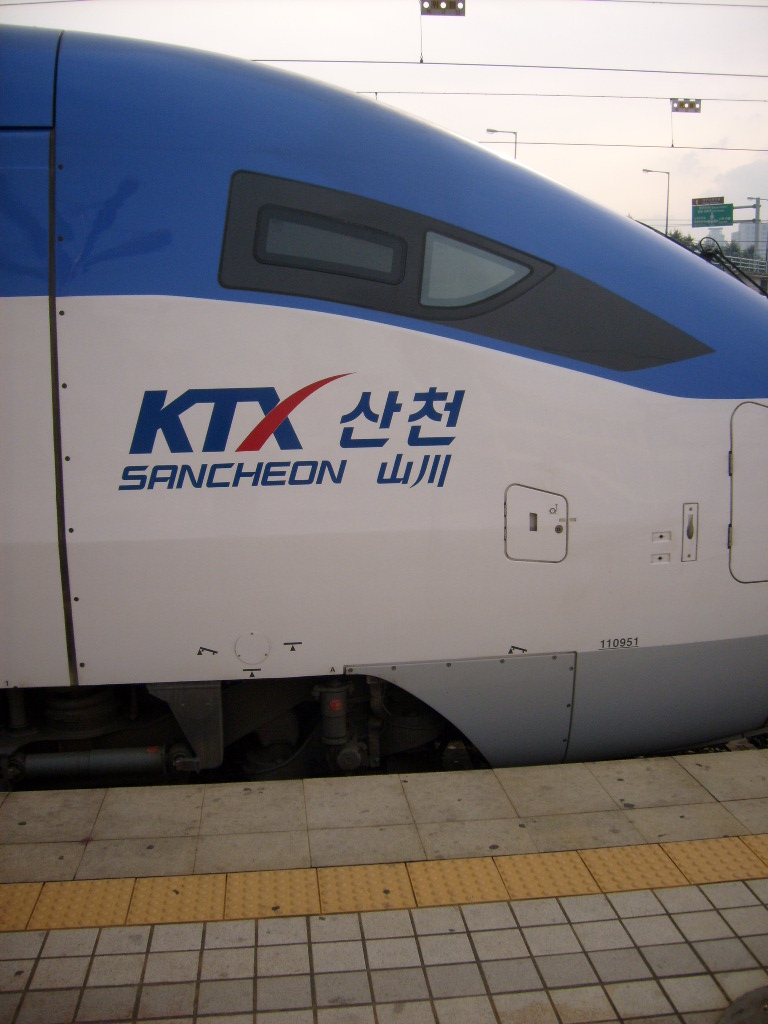
The San Ch'eon class was launched in March 2010
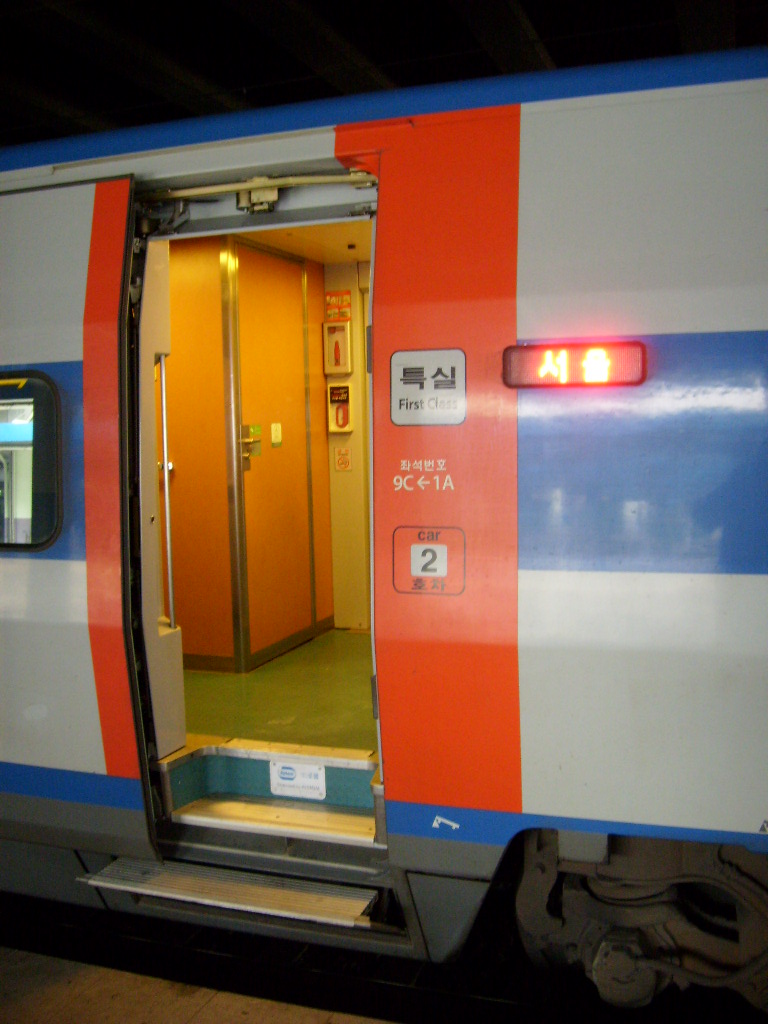
carriage entrances where there are usually free bottles of water, computer re-charging booths
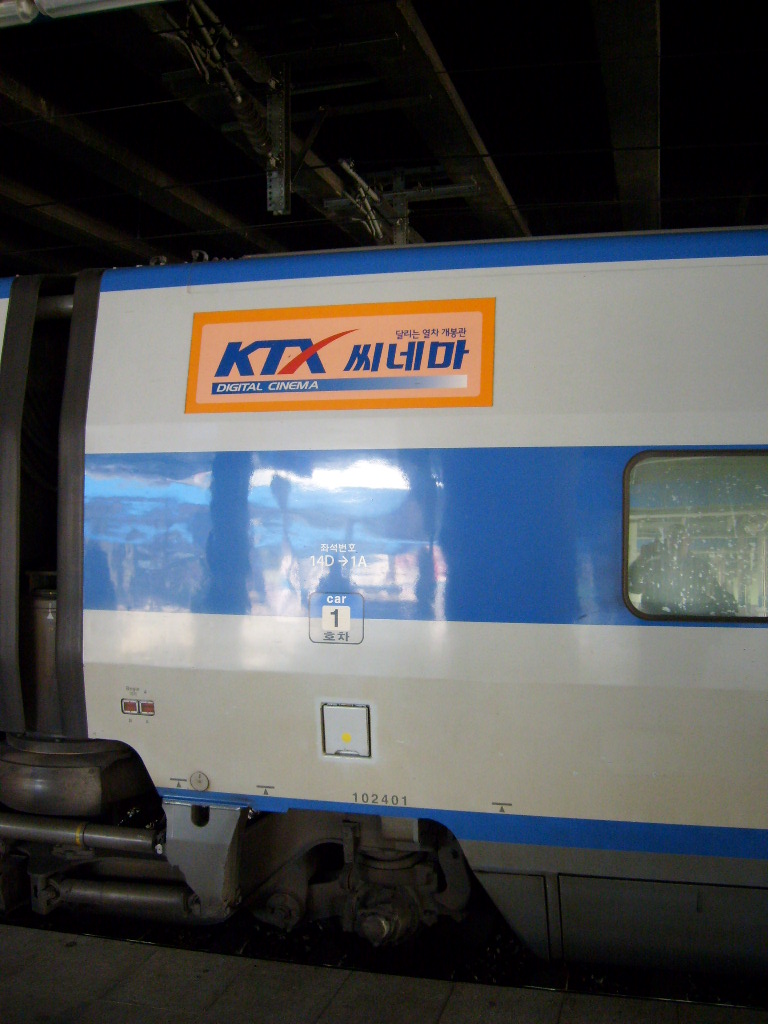
one of the most impressive features: the on-board cinema
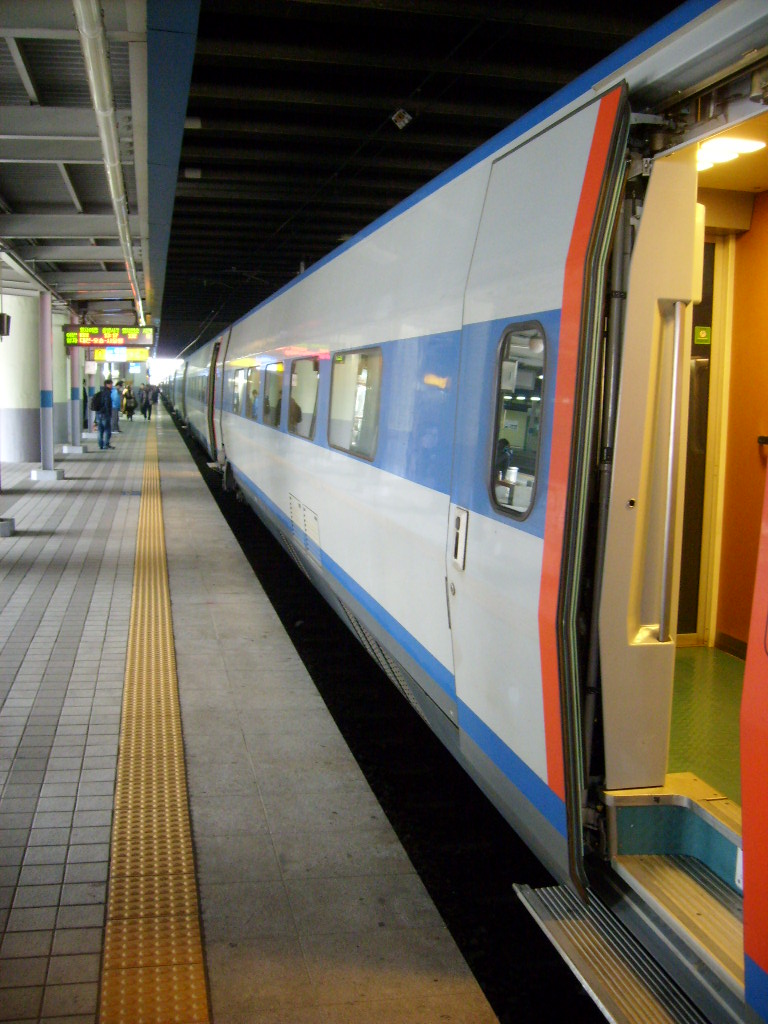
usually there are around 12 carriages not including two engines and a cinema.
I’m not in the least interested in trains in general and didn’t make a special trip to take these photos. I took them on my way to London back in December 2010. In the UK, train spotting is a hobby, uniquely British and which has a long tradition. Trainspotters have their own fashion’ frequently derided and spend weekends standing on the ends of platforms equipped with cameras and notebooks. I imagine, though it might be a falsehood, that they get extremely excited exchanging chassis numbers or discussing changes in livery. They are the butt of numerous jokes and to be called a ‘trainspotter’ is not complimentary.
© 林東哲 2011 Creative Commons Licence.
Screw the air con! Give me some Korean lessons!
Speech impediments have always amused me and as a child I knew a shop in Edinburgh, where I holidayed every summer with my sister, that provided us a double treat because not only was it a sweet shop, but the owner had a massive problem pronouncing sibilants. Visiting her shop for a bag of cinnamon balls and some sour plums was one of our first adventures when we arrived in the city, for summer. Even to this day, my sister and I still reminisce about the, ‘Yesh lady,’ and the various means we used to illicit her to say ‘yesh’ or ‘shower plumsh.’

don’t expect to be ‘fed’ in return
If I still had a childish sense of humour, and was ignorant to the detrimental effects such humour has on successful second language acquisition, I could have such fun taking the piss out of badly pronounced ‘Engrish.’ Let’s see, ‘I’m pine!’ is a very common blunder. Then there’s ‘I like flied lice’ or ‘egg flied.’ ‘Pacuum-creaner’ always fucks them as does ‘pish and chips.’ Unfortunately, my professionalism stifles the potential for amusement.
But have you noticed that Korean kids will take the piss out of your attempts at Korean. Almost on a daily basis I will hear students commenting on my pronunciation and even mimicking my attempts. Okay, the kids I can tolerate but when adults do it, though never ill-intended, it gradually grates. I have numerous friends, truly good friends, who nonetheless will ridicule my best efforts. I’ve even had friends write down my mistakes so they can subsequently recount them. Some of my gaffs concern confusing ‘eagle’ with ‘oak’ and ‘ginger’ with ‘thinking’ which have resulted in my asking for ‘eagle curd’ and ‘thinking’ in the supermarket. Then there is the confusion between ‘Dan Goon’ (단군) the legendary founder of Korea and ‘dang geun’ which is the common garden carrot! Indeed, the moment you start to use any languages that veers from the basic, especially idioms or snippets from the Thousand Character Classic (千字文 – 천자문), and you can guarantee you will deemed highly amusing.
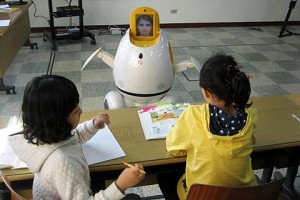
robot English teacher
And if I make an amusing cock-up the chances are its nature will be shared with every class in my school. I don’t mind someone having a giggle at my gaffs but have the decency, after you’ve had a laugh, to help me correct them! I used to criticise those foreigners who’ve spent ten years in Korea and can’t string a sentence together and now I am approaching my sixth year on the peninsula I am beginning to realise that it’s probably much easier to learn Korean back in England than it is in Korea.
As a nation, Koreans are immensely selfish at turning every encounter with a foreigner into an opportunity for them to learn English. How many times have I discovered a Korean who spoke little English and could tolerate my ponderous Korean only to have them ask several days later, if I could teach them English. I’m sure a great many friendships between Koreans and native English speakers are inspired through the desire to extend English speaking skills and though I admire conviction and single-mindedness, some of my friends have forgotten the original ‘contract,’ namely, that friendship was mutually beneficial in terms of our respective languages. In more than one case, I have friends who used my help and years later are now competent English speakers while I’m still waiting for my first lesson. And the boredom that flits across their faces if I ask a Korean-language related question deters all but the most important inquiry.
It might be assumed that living in Korea would be a massive advantage, and it probably is if you are working or studying in a Korean speaking environment, but for English language teachers it is often the case that they are dissuaded from making an effort to learn Korean. The less Korean you speak the greater your value for money and the less you will understand your working life – something which seems to empower some bosses. On ESL job boards for China or the Middle East, lessons in the native language are often included in the employment package along with other standard incentives such as internet connections or air conditioning. In Korea however, though there are exceptions and more enlightened employers, there seems a complete ignorance that many westerners come to Korea not just because it’s a job but because they want to experience and better understand Korean culture.
Koreans treat language as an academic tool, as almost exclusively a qualification the mastering of which provides a rung up the academic and social ladder. This is evident by the structuring of Korean-English exams where the emphasis isn’t on an ability to communicate, but to identify and correct grammatical errors. Occasionally, the questions that have to be answered would puzzle and bewilder the most proficient and articulate of native English speakers. Recently, a top Korean school attempted to change the nature of its instruction and to focus on effective communication. Parents however, weren’t happy and demanded a return to rote learning and grammar because English in Korea is not about communication and is treated in much the same way as classical Latin or Greek, in other words, as a ‘dead language’. Not forgetting that both the USA and UK have the world’s poorest second language acquisition, there are westerners on the Korean peninsula for whom learning Korean is not an academic tool but a means of communication which has the potential to help better understand Korean culture and the Korean psyche.
How Koreans perceive second language acquisition has been influenced by their experience of the language learning process. If language is about grammar, is predominantly written rather than spoken, if it is taught in isolation of history and culture, it if is about grades and exams, if written English is given more importance than spoken English, then it is understandable why they should be so negative or dismissive of a foreigner’s interest in learning Korean. Of all the potential approaches to the study of a language, Korea has managed to extract and venerate the most boring and I would imagine the learning of classical Greek or Latin, where at least you are treated to primary sources, would be more engaging. Considering the number of years Korean kids learn English, I rarely meet ones whose command of spoken English impresses me. On the other hand, a great number of them have superior writing skills to their native English speaking peers. And we should not forget, Koreans do better job learning languages than we do in dumbass Britain where a recent report claim 10% of ten year old boys have the reading age of a seven year old – and that’s in their native language!
In Korea, if you want to learn Korean you’re very much on your own! And though you would think it easy to find a Korean student or adult to help you in your quest, the reality is few have sufficient free time. Koreans are either too obsessed with the development of their own English skills, too busy using you to earn money, or too constrained by other pressures, to help you learn Korean. Of course there are exceptions! Korea is an amazing country but personally, of the numerous places I have lived for an extended period of time, Koreans have been the least helpful in improving my skills and the most demanding in the pursuit of improving their own. And if you find a Korean friend who has not the slightest interest in learning English, and they do exist, you are truly blessed.
© 林東哲 2011 Creative Commons Licence.
Fit fathers, fat sons
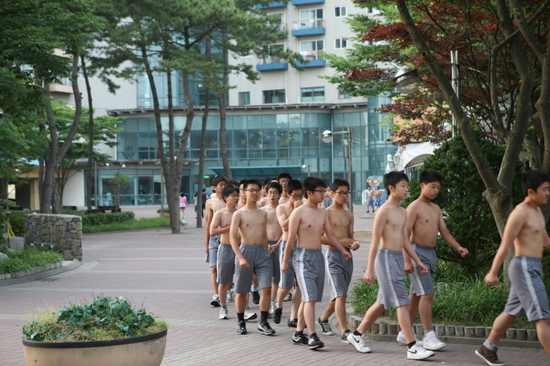
the fit, fat and flabby
I arrived in back in Korea after my UK holiday a few days before work is due to begin and spent several sessions lazing in bathhouses. On Sunday, I spent almost two hours in a cool, massage pool drifting in and out of sleep and watching the weekend cleaning rituals between fathers and sons and friends. At one point, there were three fathers busy scrubbing their teenage sons but what was most interesting was that while the fathers were slim and fit looking, especially as I reckon they were aged in their 40’s or 50’s, their sons were all pudgy and fat. Neither was it puppy fat but quite copious amounts of well established lard which far exceeds the requirements of puberty. One father and his son came and sat in my pool and the lad, despite being a foot shorter than I, was equally as broad.
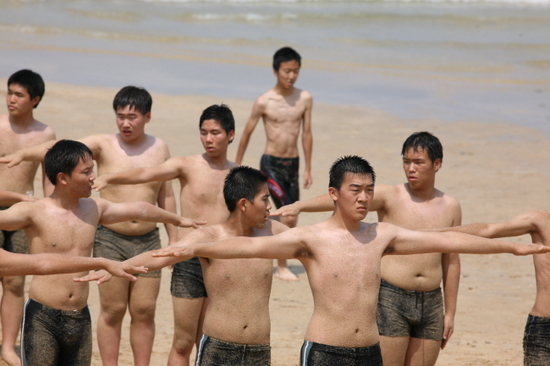
flabby tummies at my old high school
The UK debate about obesity still stirs the emotions and a convenient theory is that fat parents produce fat kids. No doubt there is a correlation but my observation is a reminder that kids can turn fat independent of their parents and that the roots of obesity are complex and compound and not to be explained by one grand ‘theory.’
© 林東哲 2011 Creative Commons Licence.
Ancient Korea – 2000 AD
My relationship with Korea began 11 years ago this September when I arrived for my first one year English teaching contract. I subsequently returned in 2003, 2005 and have remained here since 2007. In the UK a stretch of ten years doesn’t seem that noticeable. I recently returned to the town where I spent my childhood and even after ten years absence the changes weren’t that remarkable. In Korea however, changes are so rapid and widespread that the point at which the past becomes another country can be measured in a couple of years, not generations.
The Korea of 2000 was indeed another country and my memories, like old photos found in an antic, are faded and yellow. Apart from one year, when I lived in Ch’eon-an, I have lived in the same block on and off over 11 years. I spent my first year teaching in what was the largest and most successful haggwon in Song-so, Daegu and must have taught several hundred students and yet I’ve only met one former student since the end of 2001. Not only have buildings and businesses changed and disappeared, but so too have the people. In the entire area with which I am intimately acquainted there are only a handful of business that were trading in 2000 and high rise commercial blocks now stand in plots that were once deserted and home to nomadic soju tents.
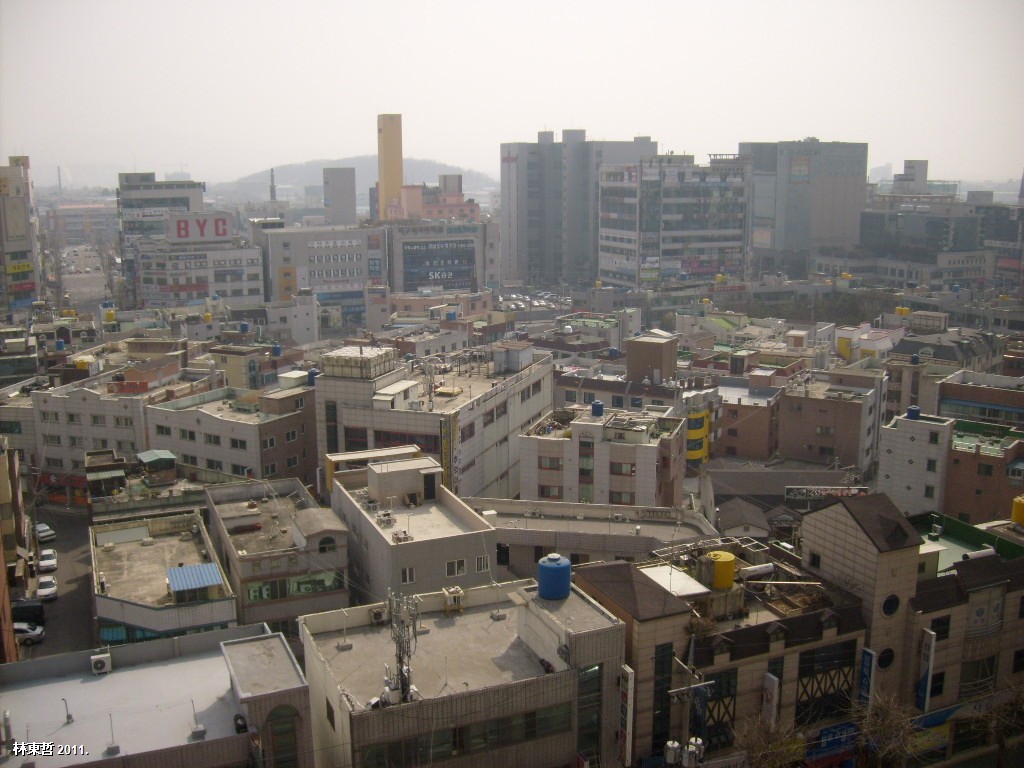
in the foreground are the three one rooms I have occupied between 2000 and today
When I arrived in 2000, I flew into Kimpo International Airport. It was old, small and dingy and you could walk from one end of the main building to the other in less than two minutes. At the time, Korean Air flew from Britain’s Stansted Airport which outside London surmised Korea’s global insignificance. Today, Air Korea operates out of both Gatwick and Heathrow and a host of other airlines run daily services to the peninsula most of which fly into the amazing, and massive, Inch’eon International. In 2000, with the KTX, high speed rail network still several years from completion, there were two flights an hour from Kimpo to Daegu or you could opt for the lengthier rail or bus journeys.
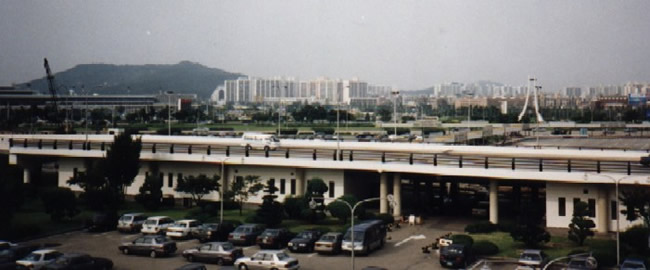
Kimpo International Airport around 1994 (courtesy of, Rants in your Pants)
Being stared at was an intense and continuous experience, especially outside Seoul or away from US military bases. EPIK had yet to provide most schools with foreign English teachers and many students had never met a foreigner. I remember one boy, Duk-hyeon, who was so terrified of me that he would sit out my lessons in the main office. Whenever Korean teachers tried to integrate him into my class he would start shaking and then breakdown in a flood of tears. Despite months of friendly smiles, funny faces or kind acts, he could not be pacified. On the streets, fellow foreigners were few and unlike today, where many shroud themselves with a sense of being the only foreigner in Korea and subsequently blank you, most were only too eager to talk. In my area of Song-so there were a handful of foreigners and we all knew each other. Life in Korea was so alien, so different and was so much further from home than it is today, that most westerners had a need to talk to each other. Today, fellow foreigners seem to regard each other as a threat and blatantly shun each other perhaps because other foreigners are a reminder how un-unique and tame your experience really is.
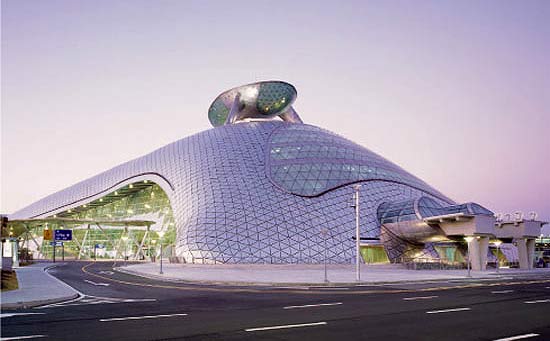
Inch’eon International – voted 5 consecutive times the world’s leading airport
The navigation of daily life, and especially traveling, was both challenging and exciting because so little was written in English. I remember a trip to Pohang in December 2000, where the bus terminal only provided information in Korean and hanja and the tickets for trains and buses weren’t bilingual. Ordering food was just as challenging and other than large western style fast food restaurants which provided accompanying photos or English translations, everything was in Korean. Ordering food was usually a culinary mystery tour.
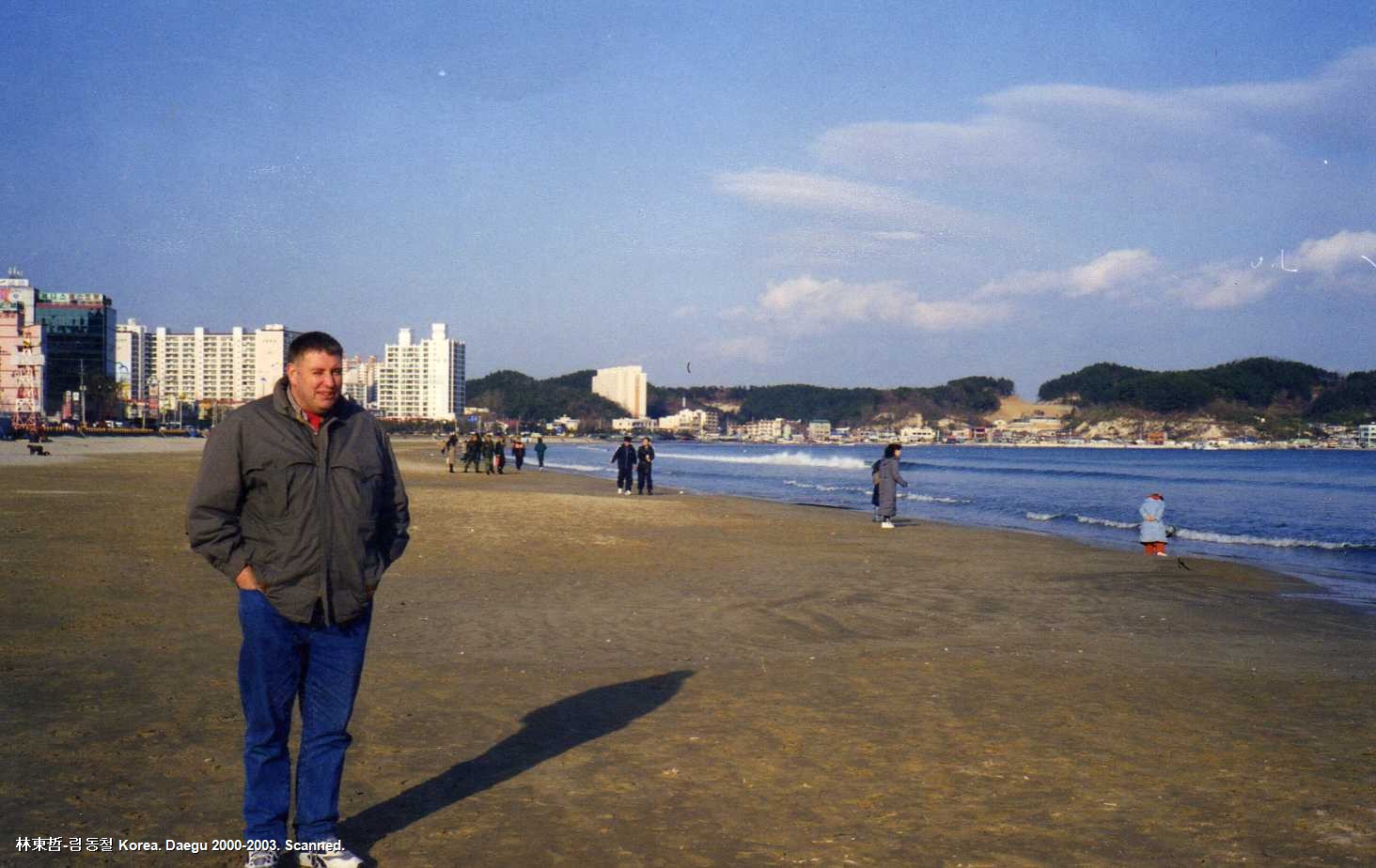
Pohang. Christmas Eve 2000
Fermenting foods, such as kimchi and makkeoli required a small hole in the packet or bottle to release the build-up of gas. On my first trip back to the UK, I put a small packet of kimchi that had been served with the in-flight meal, into my top pocket. When I woke an hour later, to a strong and unpleasant smell, I discovered it had leaked down the front of my shirt. Today, the fermentation process is curtailed and packaging subsequently sealed.
‘Video Bangs’ were prolific and probably as common today as are mobile telephone stores. In the absence of digital photography, there were numerous photo stores which very often had a large photograph of a naked baby boy in their window. On this topic, there was also a shop in downtown Daegu which amongst other things, had plaster casts of little lads dicks. I vaguely remember seeing one or two houses with chillies hanging from the front door, which was the traditional way to advertise the birth of a boy and imagine the prestige of having a son could be immortalized by making a cast of his dick, spraying it gold or silver, and mounting it in a small frame. How widespread this custom was I don’t know but I know several students and Korean men who have a photograph of themselves as a toddler, on the wall of their living room or hallway in which they are naked.
On the streets, at pedestrian crossings, the red man ruled with absolute sovereignty and on deserted roads pedestrians patiently waited until the green man, who was often turquoise, appeared. Today, I am often the only person left standing and even elderly citizens will jay walk. And teenagers holding hands with the opposite sex and being affectionate was an absolute social taboo.
In the classroom, western obscenities and terms such as ‘gay,’ ‘homo’ or ‘fuck’ were either unheard off or simply never uttered. I have yet to hear the four letter ‘c’ word but like fat Koreans and other social problems, its arrival is inevitable And ten or eleven years ago, Harisu (하리수), Korea’s first trans-gendered celebrity, was a popular enough to have ‘pin-up statue among teenage boys.

between 2000 and 2003, Harisu was popular with many teenage boys
In the days before Tesco’s Home Plus, even the largest supermarkets lacked anything but a few solitary bottles of wine and western beer. The only cheese one could buy was plastic play cheese or the likes of ’Einstein’ cheese slices which were believed to increase the cognitive abilities of children. Decent butter was unobtainable and coffee beans were not just expensive but difficult to buy. Around 2001, the Song-so, E-Mart, had a working coffee ‘peculator’ on display which used to attract a small crowd of intrigued customers.
English teaching contracts did not include air-conditioning as part of the package and split shifts were a regular teaching condition. However, I used to make up to a weeks haggwon salary in a couple of hours on a Saturday or Sunday afternoon teaching small groups of students in my free time. Everyone wanted to learn English and as the haggwon industry hadn’t exploded, there were plenty of students and parents looking for English teachers. I’ve been offered jobs in KFC, MacDonalds, in the bathhouse and on street corners but in the last four years I’ve not once been offered a paid teaching job by a stranger.
But the greatest difference between the sepia tinted Korea of 2000 and today, was the absence on the internet, certainly in English, of anything pertaining to Korean culture or life. Google Earth, Youtube, Wikipedia, WordPress and Blogger etc, were either in their infancy or hadn’t been released. There were no online language resources and indeed to write in Hangeul on a computer in the UK, even until around 2004, demanded the purchase of Microsoft Proofing Tools. Until fairly recently, if you wanted any information on Korean food, making kimchi, the Korean language, Hanja, taekwondo, etc, you had to buy books and even then there were topics that weren’t translated into English. The Korea of 2000, even 2005, had to be physically explored but today there is little about Korea that is secret or shrouded. A million blogs, vlogs, podcasts, and a myriad of sites provide the most comprehensive coverage of Korean life. The internet has very much tamed and demystified Korea making it accessible and user friendly. Today, you can explore every facet of Korean culture without even leaving your home country.
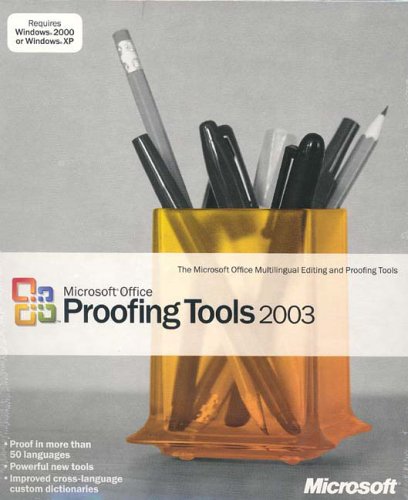
from the days when you needed a package to write in Korean and Hanja
How I wish I’d arrived in the 1990’s or 1980’s. Our Korean experiences, serialized in the posts of our blogs and video-casts are increasingly trivial, familiar and often mundane but to have experienced the ‘Hermit Kingdom’ before it met EPIK, before it was so rudely exposed by the internet, before it was ‘made simple’ and subsequently accessible to an army of people who would have otherwise stayed away… now that’s the stuff of travel books, autobiographies and the content for real adventures.
© 林東哲 2011 Creative Commons Licence.
Migwang Update, August 2011
The first thing needed after returning from dirty Britain, was a lengthy session at the bathhouse, this time one of my favourites, Migwang Spolex, in Song-so, Daegu.
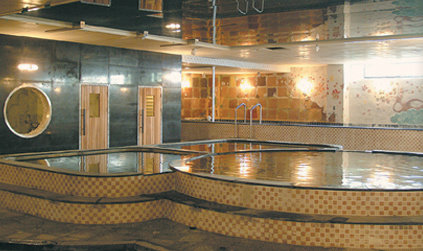
The warm and hot pools in the female complex
I’ve only been absent three weeks but it is sufficient time for numerous changes to take place. Most noticeable was the level of lighting in the male bathhouse. Previously, the lighting was fairly subdued but now yellow and light blue ceiling panels have increased the levels substantially and the overall effect is much brighter. At first, I didn’t like the brightness but it is growing on me. A new mural has replaced an old one on a wall of the cold pool and most pools have had their bottoms re-tiled.
© 林東哲 2011 Creative Commons Licence.
The Changing Face of Song-so, Daegu
I returned to the UK for a summer break to the usual welcome. This time, the train company that carries me on the last leg of my journey, to Wivenhoe, Essex (UK), had changed from First Connect to National Express and for the third consecutive time, the train’s only toilet was out of order. In the winters of 2009 and 2010 it was locked. This summer, I took my wash-bag to the toilet, put shaving cream on my face in preparation of having a shave, only to discover there was no water. Indeed, there was more water swilling on the floor and the lip of the toilet was decorated with shit. A big thank-you to National Express and British standards! Then, a few days later the riots began. Britain is indeed a dirty, second-rate nation and I no longer intend bemoaning the state of the country.
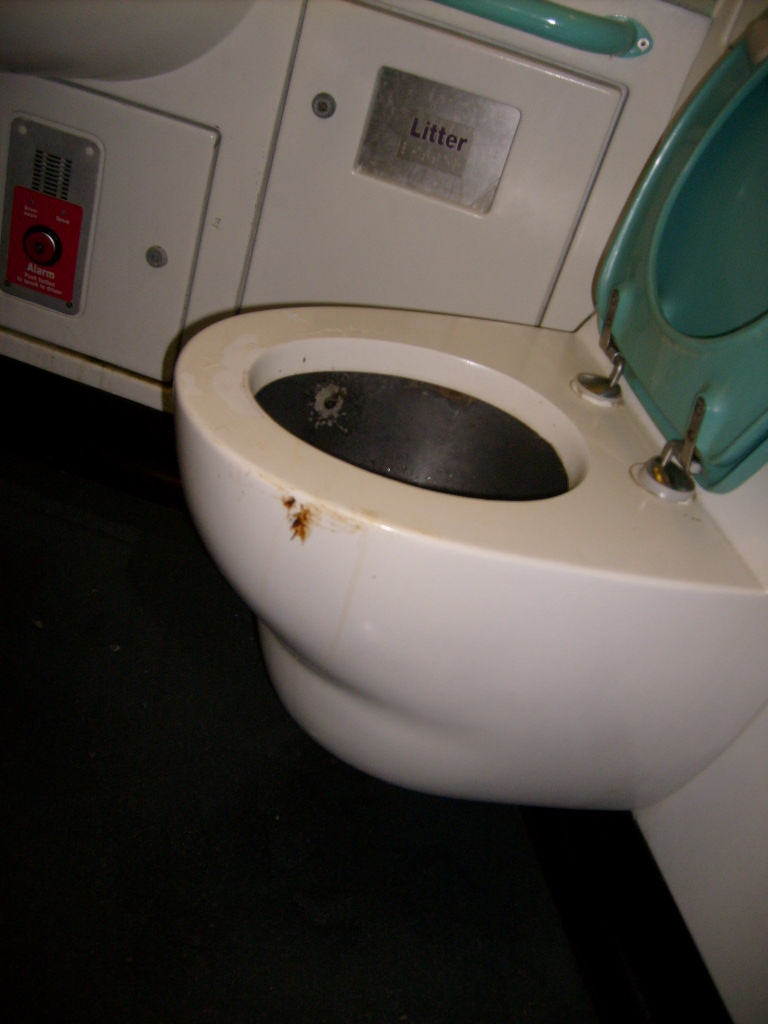
great to see standards maintained over a number of years
Three weeks later and I return to Korea and to Song-so, Daegu. Mr Big has opened as a mobile telephone shop, Mutory, where you can sit and drink coffee while pondering which hand-phone to buy. The high-rise block which began in February 2011 is almost complete and the butcher’s in my local Dream Mart has closed. Meanwhile, Migwang Spolex, the sport center and bathhouse I use, has been given a face lift (Migwang Face-lift, August 2011).
© 林東哲 2011 Creative Commons Licence.
As a note, it is now autumn 2012. In summer 2012 I travelled back to the UK and on both trips to and from the airport, British rail toilets were again either in a filthy state or could not be used.
Forget About Fat People. What about Fat Supermarkets?
Recently, there has been some coverage in the British press about the findings of a twenty year study into weight gain. The findings reveal that over 20 years the average weight of the population has increased by sixteen pounds. Further, it seems that rather than weight gain being the product of lazy people lacking will power, an approach the media and many of the moronic public have taken in their attempt to stigmatise and persecute the overweight, it is more the case that gradual changes in eating patterns, and what is available on shop shelves, over a long period of time, increase weight.
The speed at which Koreans are becoming fatter is quite alarming and while I only saw a few chubby kids 10 years ago, I now see obese Koreans on a daily basis. At the same time the girth of Koreans is expanding, changes are occurring in shops and you can almost see corresponding ballooning of Korean bellies as new foods are introduced. It is quite clear that obesity is a product not of sloth and ill-discipline, but the western-style diet which with its fried chicken, pizzas and burgers, has already made an impact on the Korean peninsula.
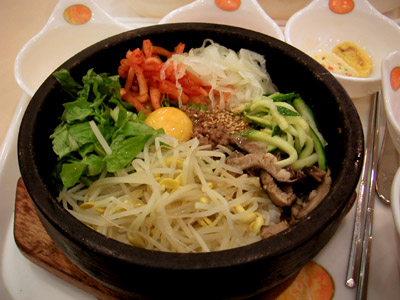
traditional Korean food is gradually being usurped by high sodium, high fat, western food.
My local E-Mart used to have one frozen food chest cabinet the contents of which were not very enticing, mostly mandu, pork cutlet and ice cream. In the last few weeks the amount of frozen food has tripled and now includes numerous micorwave-able options such as black noodles, spaghetti Bolognese, garlic bread, curry and rice etc. For the first time, I saw a co-worker eating a microwave meal for dinner. I also notice the introduction of cheeses and butter both of which were formerly difficult to obtain. Now, Monterrey Jack, British Cheddar, Brie, Camembert and Gouda are all available plus Danish Lurpak butter. I wonder how long it will be before there are the 35 different types of butter and 46 different types of cheese I counted yesterday in the Waitrose in my hometown.
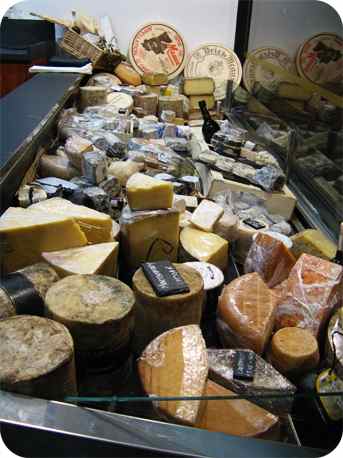
a British cheese counter probably contains more calories than the entire food section of a Korean supermarket
I have written before about the absence of tinned foods in Korea but no doubt their introduction, along with those enormous slabs of chocolate, almond, fruit and nut, Belgian white, Milky Bar etc, which will join the lonely double Snicker bar, are pending. Today, in my hometown Tesco’s One Stop, I counted 33 different brands of chocolate weighing between 125 and 250 gr per bar.
How the average person becomes 16 pounds heavier over 20 years ago ,(and the average weight is still increasing), is not rocket science. Along with an increasingly sedentary lifestyle and the many changes in what is available around us, the pounds gradually accumulate. The Big Mac and Whopper, former bulwarks of the fast food industry are now pathetic little things, dwarfed by subsequent generations of super and mega burgers. Burger King’s, triple Whopper with cheese packs 1250 calories, Hardee’s 2/3 pound Monster Thickburger contains 1320 calories along with a massive 3.20mg of sodium while the humble cheese burger has psychologically shrunk to the size of a coin and seems a positively healthy morsel by comparison.
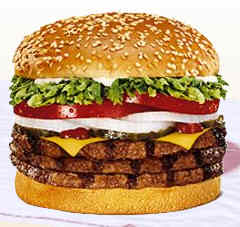
the equivalent to around 8 kimbaps
In my last stint in Korea, my weight has not only dropped by some 20 kg, but I have managed to keep it off without any real effort. The goodies that tempt me back home simply don’t exist and a trip to the supermarket, even the largest, isn’t half the temptation it is back home. It seems quite apparent to me that the more westernized the Korean palate becomes, the fatter their girths expand.
Currently, there in an obsession with obesity and attacking the obese has become a form of entertainment. Forget fat people and focus on fat supermarkets! It is abundantly clear there is a link between culture and weight so much so that it is perhaps time we demanded our supermarkets produce statistics which reveal not just the percentage of fat and sodium in their food, but its average calorific value. If the weight of the average British person is rising it probably because the places where they shop for the bulk of their food is providing a greater range of items high in calories. And if you shop in a fat supermarket, or live in a fat society, it should hardly come as a surprise. Fat supermarkets make fat people!
Further references
Na-Seong Hawaii Bathhouse (Jinch’eon. Daegu)
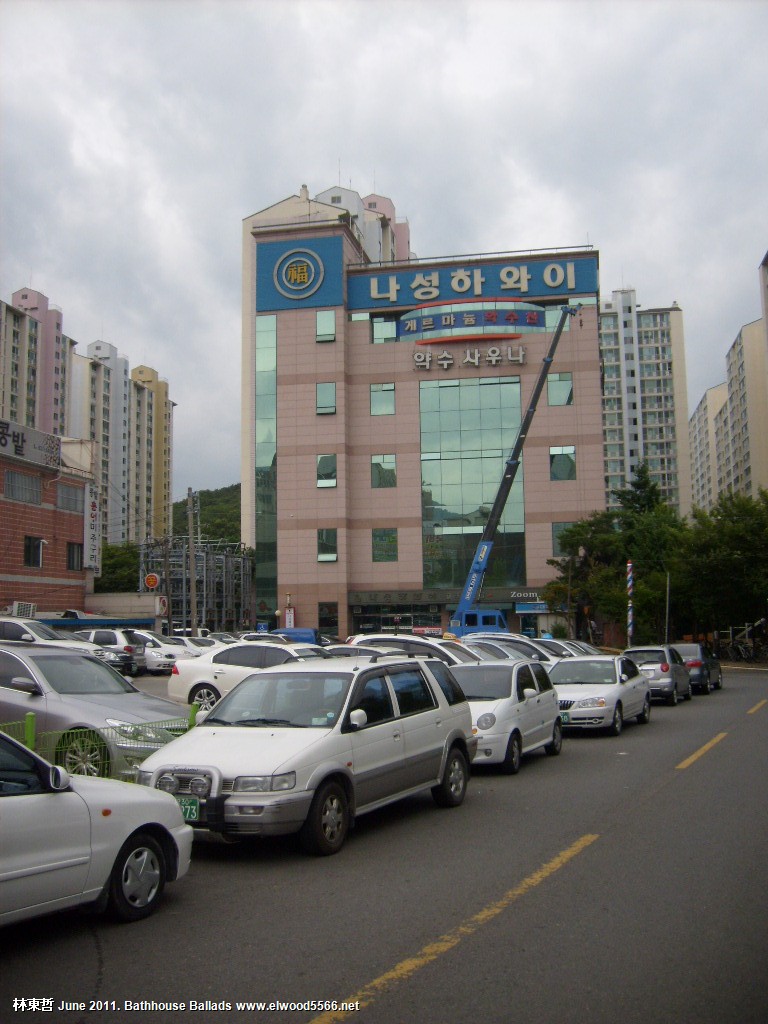
Na Seong Hawaii – Jin-ch’eon.
Rating: Excellent
(First visited 7th of June 2011. Last visited 25th of July 2011). Despite the fact that you are likely to see more right angles in Na-seong Hawaii than in most other bathhouses, the atmosphere is calm and relaxing with a pervading sense of balance and lightness. Entering the atrium from the changing room, four pools occupy the centre contained within one large rectangle. The largest is the warm pool behind which lays a small bench massage pool and two smaller hot pools. At the far end of the pools, and contained within the rectangle are six ondol heated plinths made of jade. The large rectangle encompassing these features is mirrored by glass vaulted roof around the edges of which are small trees. The vaulted roof provides natural light and has the effect of both ‘opening’ the atrium and giving it a sense of lightness. Sitting in the pools or lying on the jade plinths and being able to look up at the sky is quite relaxing but this feature is only present in the male complex.
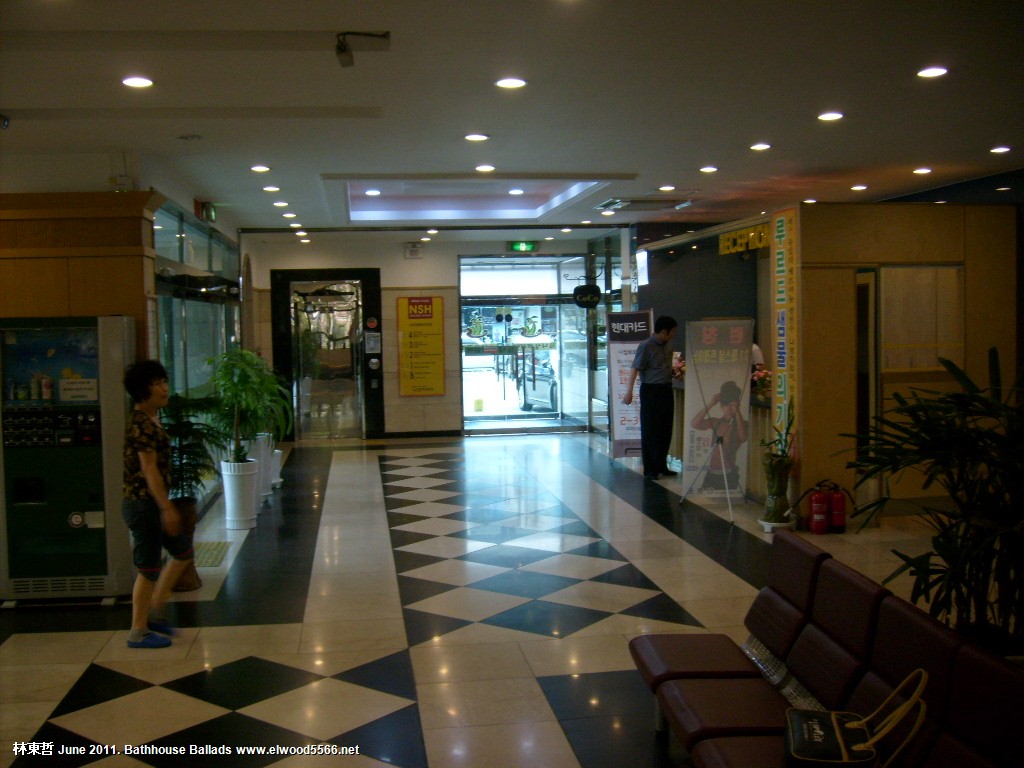
the first floor lobby
The use of angles is continued with both square windows on the right hand wall and by the long rectangular mirrors on the sit down showers which run beneath them. Even the stand up shower mirrors, which flank either side of the entrance and exit, are square and the only point at which the domination of right angles is broken is at the head of the atrium where three large semi-circular designs mark each sauna. The saunas are an interesting speciality of Na-seong and each is jewelled. The right hand sauna is a steam room predominantly of rose quartz with additional patterns in jade. The central sauna, a dry sauna has a pyramid-shaped roof the wall as being tightly studded with black, smoky quartz. The left hand sauna, an even hotter dry sauna is walled with another gem stone and the furthest wall contains several partitions with tightly packed charcoal and cinnamon.
On the left hand side of the atrium is a sleeping room and a long cold pool which on the occasions I visited was substantially colder than other bathhouses. The far wall of this pool has large widows which overlooks the adjacent no-cheon. The entrance to the no-ch’eon, another speciality of Na-seong, is in the left hand corner but as with the nearby Saeng-hwal, this is an enclosed no-ch’eon and not the type fully open to the elements.
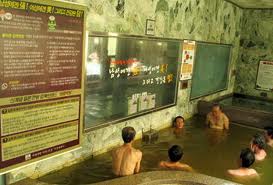
the medicine bath in the no-cheon
The no-ch’eon area contains a salt sauna and three pools. The event pool has a different aroma everyday, including strawberry on a Saturday. There is a wooden sleeping area and a medicine bath which on my first visit contained a rather smelly sulphur additive. Finally, in the corner is a cold sea bath.
Overall, this is an excellent bathhouse with some interesting features and a very pleasant atmosphere. For anyone interested in bathhouses or who simply enjoys spa lounging, Na-seong is well worth a visit.
Getting there – Na Seong Hawaii is five minutes walk from Saeng Hwal On-ch’eon. (Wikimapia link) It is close to Jinch’eon subway. From Song-seo, Lotte Cinema, it is about 5500 Won by taxi.
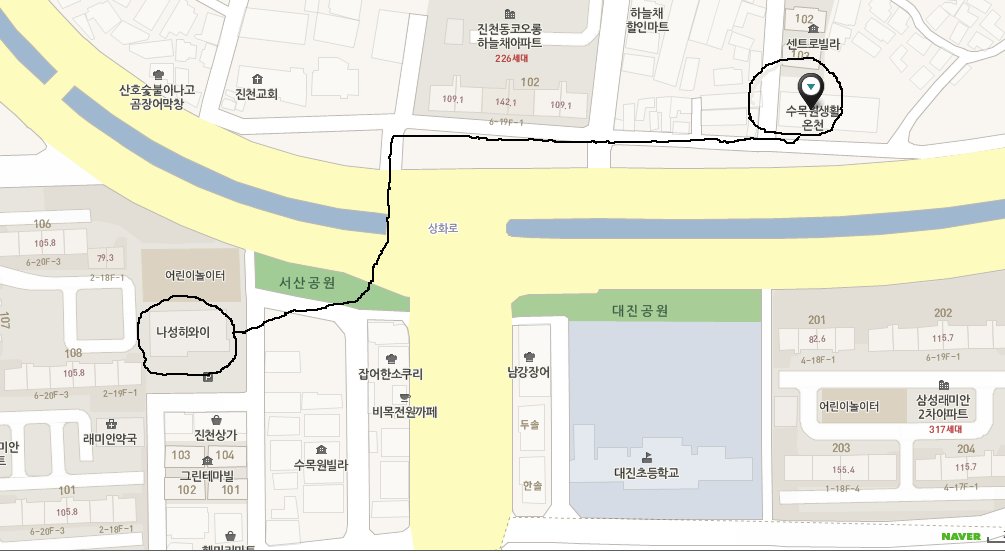
Na seong on the left and Saeng Hwal on the right

Daegu subway map (click to enlarge)
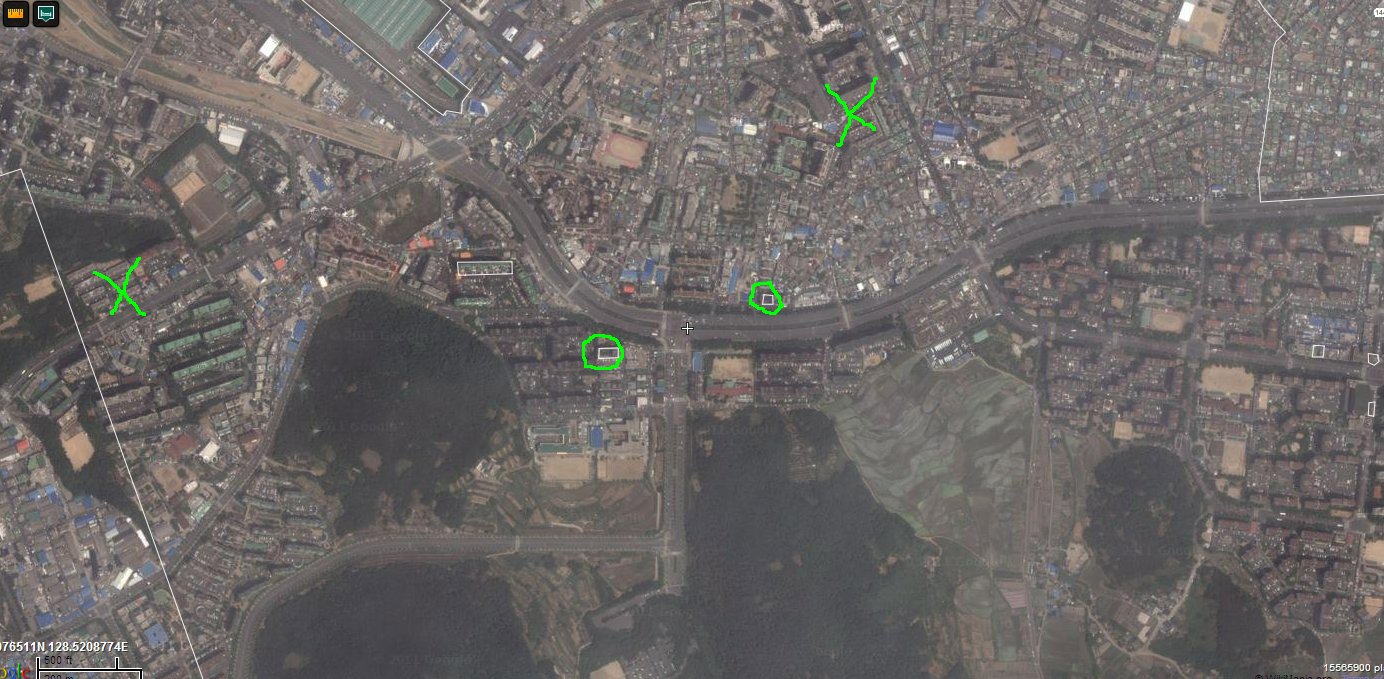
The x’s mark subway stations. Na-seong is on the left.
Times – Unsure, but it is not a 24 hour establishment.
Facilities – bathhouse, sports center, barber, shoe-shine, parking, screen golf.
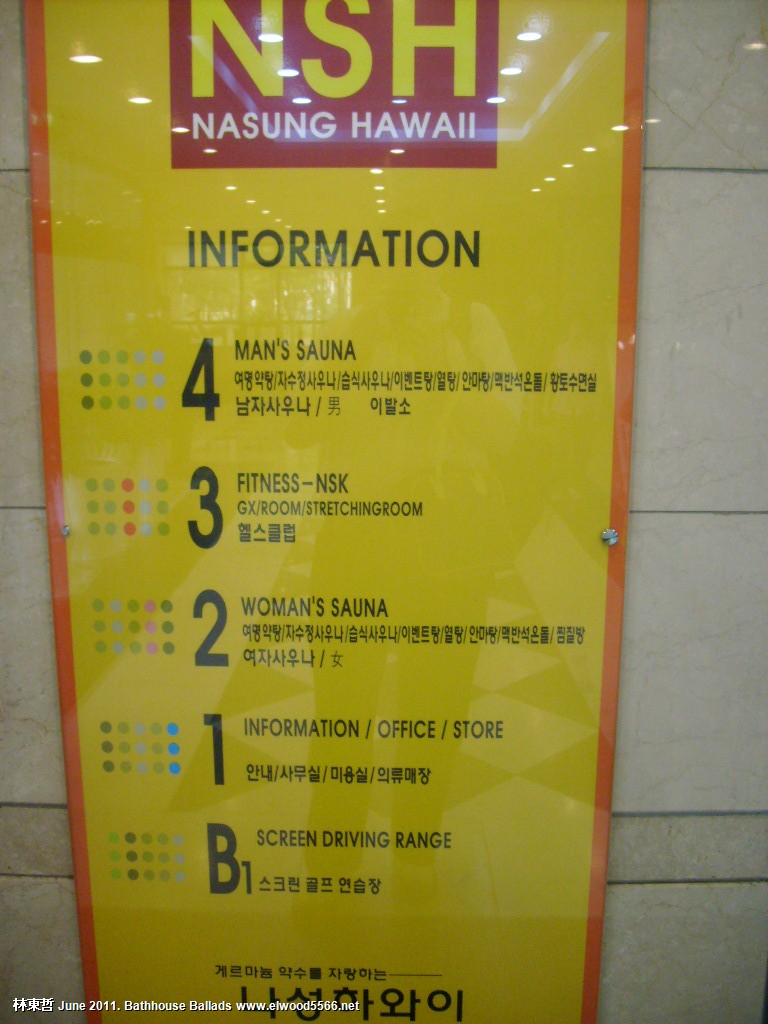
floor guide
Jjimjilbang – no jjimjilbang.
Bathhouse (men) – around fifty stand up and
Cost – 5000 Won
Ambiance – very relaxing, light and open.
Waygukin -None
Address –
Website –
Layout (Male Bathhouse) – coming
Updates
|
© 林東哲 2011 Creative Commons Licence.
Red Pepper and Bean Paste Stew – My Recipes
Key Features: Korean fusion / very healthy / adaptable

red pepper and bean paste stew and black bean tea (까만콩 자)
This is probably one of my favourite Korean meals and it originated from a recipe for o-geo-chi kalbi doen-chang guk (우거지 갈비 된장국). It is very versatile and I often eat if for breakfast but with a larger portion, rice and side dishes it becomes a filling dinner. O-geo-chi is basically the outer leaves of cabbage (Napa/Chinese) or any other vegetables.
I have found Koreans tend to be quite rule bound when it comes to cooking and I have even be critcised for putting pepper in food. Indeed, a number of Korean women have found the idea of combining bean paste and red pepper paste strange even though I originally found this recipe in a Korean-Korean cookbook. You can use pork, especially belly pork (cut sam-kyeop style – that is the same cut as bacon before it is turned into bacon) or simply tofu. I have used numerous vegetables and sometimes even made it without o-geo-chi. I recently added some black beans at the same time I was making black bean tea (까만콩 자) and was reminded of German bean soup.
INGREDIENTS (for one)
• some outer leaves or spinach
•a pinch of small anchovies (myeolchi. Failing this use some form of stock)
• pork, (a few slices or pieces) and or tofu
• 1 desert spoonful of bean paste (mild) 된장
• 1 or 2 diced garlic cloves
• 1 desert spoon of sesame oil (optional)
• 1 desert spoonful of soy sauce (again I often omit this)
•1 teaspoon of red pepper (고추가루)
•a handful of any chopped vegetables, carrot, potato, leek, onion, mushroom, etc.
•small piece of chopped ginger.
•salt and pepper to taste (the pepper actually part of the original recipe)
•1 teaspoon of green perilla seed powder (들깨) or ground sesame
•sesame seeds
•3 cups of water
METHOD
1. Put everything, except the sesame seeds into a pot, bring to boil and then simmer for up to 30 mins depending on the type of meat, if any, you are using.
2. Remove from heat, add salt and pepper to taste and if you wish a teaspoon of extra sesame oil (sometimes I don’t add any oil until this stage). Finally, sprinkle with some sesame seeds.
This stew can be eaten alone or with rice and side dishes.
OBSERVATIONS
VARIATIONS
Add kidney beans or black beans
Replace meat with some mackerel


 Elwood 5566
2 comments