Cereal Teas – Black Bean Tea (까만콩)
I’ve only seen this tea in bottles though I believe you can buy it in tea bag form. The bottled variety is quite an unusual tea in that it is creamy, almost like milk, while being totally watery. Most drinks with zero calories are ‘just’ okay, this one is actually more and has a very distinct and enjoyable taste.
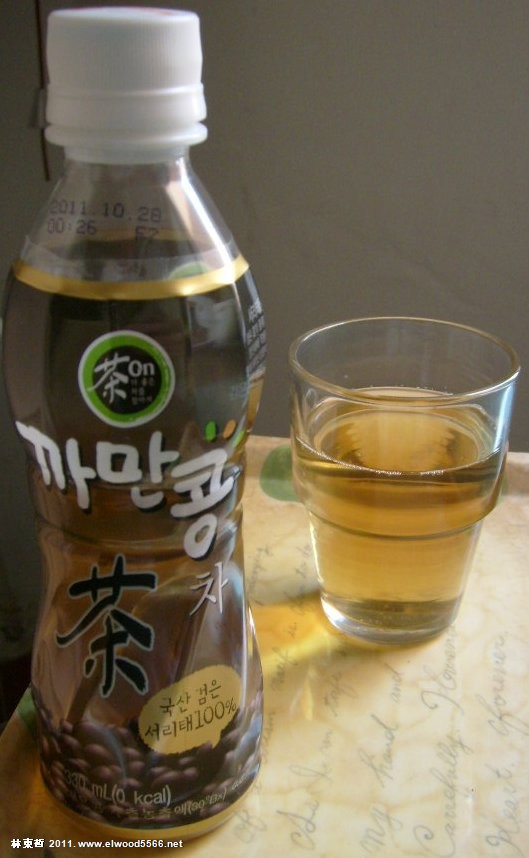
black bean tea

© 林東哲 2011 Creative Commons Licence.
A Cake of Soap and Korean Hierarchical Collectivism

podcast 87
A few weeks ago, I was showering in the bathhouse. The soap is always provided which is something which irks many westerners. Somehow, we seem to find pollution everywhere but on ourselves and are quick to condemn a number of Korean habits, including the ones concerning communal hard soap as opposed liquid soap. I have cited, on numerous occasions, the research on the hygiene of British people where a culture of super-clean toilets seems to mitigate the need to actually wash your hands. When you take a dump in a nice clean toilet with white tiled walls, devices that automatically jettison a fragrance into the air to mask unpleasant smells, and mop up with two ply, scented toilet paper, it is easy to forget how dirty shit is. In 2008, a major British study revealed 25% of those tested had faecal matter on their hands and 33% of home work surfaces were contaminated by faecal matter and strains of E-coli (Daily Telegraph). It is no exaggeration to say that British people have so much shit on their hands they might as well have mucked themselves out manually especially when international research ranks Britain as the third most contaminated society after India and Malaysia and more contaminated than Arabic countries where one traditionally cleans their bum with a hand and water. So, among Brits at least, I always titter when they bang-on about how dirty it is to use communal soap because only 43% of British mothers see fit to wash their hands after changing their baby’s nappy. The chances are, a great number of people who condemn communal hard soap are the same people who ‘shit and go,’ without bothering to wash their hands.
So, there I am using one of a hundred bars of communal soap and I notice it is rather hairy; in fact it’s so hairy I can feel the coarseness on my skin. For a moment, and it is brief, I am repulsed but then I’m pacified by the thought, it’s only hair, Korean hair and in that moment, not only do I continue using it, but I start to reminisce.
My family shared soap in the bathroom as well as towels and I can even remember we shared bath water. Back in the 60’s you didn’t shower every day, but on a weekly basis. For many children of the 50’s and 60’s, Sunday was traditionally bath day and for me that meant stepping into second-hand, scummy-gray water and wanting to get out as quickly as possible; not because the water was gross, but because by the time I got to use the bath the hot water had expired.
Maybe it’s the memory of the bathing experience as a child which makes me wallow in the luxury of a Korean bathhouse. I am not surprised we bathed on a weekly basis and hated the process. In the days when central heating was an emerging luxury, and before double glacéing and hot-water-on-demand heating systems, bathing, especially in cold weather, was unpleasant. Then there were the damp towels, the dubious face cloth and sponges whose possible journeys and uses, as a child, I never contemplated. Eventually, when the final dregs of gray scud whirled and gurgled down the drain, the final bather had to prostrate themselves at the edge of the bath, Ajax in hand, and scour away the crusty tide mark. Drying my face with the ‘family’ bath towel and detecting an odour, the origins of which I don’t wish to recall, was an experience a lot less traumatic than had the odour belonged to an outsider. I think most of us are more tolerant of ‘dirt’ and ‘pollutants’ when we are either related genetically or are familiar with the owner. In sexual relationships, most people will happily rub their faces in the gutters of the human body but the moment they have to wash their hands with a communal bar of soap and they are offended. I have known numerous dog owners who would happily let their dog lick their face and lips, or lick their ice cream, after it had sniffed and tasted the back-end of every other dog in the neighbourhood. Familiarity has powers of sanitation far superior to the most stringent bleaches and cleaning agents, and as for sexual passion, the atomic bomb of hygienics, in its radiance all filth and the veiny, mucous-lined channels from which it oozes, are deified.
I want to see that bar of soap as a Korean sees it, not because I want to be Korean but because in its comprehension lies something of the mystery of what it means to be Korean as a Korean and which as a cultural phenomena, eludes all outsiders. How Koreans perceive a simple bar of communal soap, I am beginning to think, shares a proximity to communal plates and bowls, the communal bowl of odeng which has almost disappeared, the act of drinking a shot of soju from another person’s glass, sharing water in the bathhouse, dipping your toothbrush into a communal bowl of salt, and cascades down through various other social interactions far removed from ablutions and yet intrinsically connected through their relationship with the community. This is not to say Korea doesn’t have taboos and social mores, it does. You can cough in someone’s face and share food from the same plate, picking at it with your chopsticks, but suck the end of your pen and you’re ‘dirty.’
The bar of soap reminds me how human reactions to ‘pollution’ are affected by familiarity and hence a mother will find the contents of her baby’s nappy much less disturbing than if it belonged to that of a stranger. I have quite often seen Korean men pick an Italy towel or razor out of a bathhouse bin and proceed to use it and indeed, some of my friends do this. It’s easy to condemn this as a disgusting act but we have all used each others’ Italy towels and razors and the only difference between using your friend’s towel and a discarded one, is that your friend has a relationship with you and you know for sure they haven’t got face fungi.
Korean society is far more homogeneous than that of the UK where our gene-pool has been thoroughly mongrelised. Many Brits, often comment on how ‘orientals’ all look alike but the fact is Koreans, Japanese, Chinese, Thais etc, all have their own distinguishing features and it is only ignorance and lack of familiarity, which masks them. I can tell apart a Korean from a Chinese or Japanese person, with far greater accuracy than I can a Russian, Frenchman, Englishman or German. And the process of mongrelization in Britain, started well before the Viking raids and French conquest of 1066. That Koreans are more homogeneous genetically, plus their isolationist past, the influences of Confucianism and recent history in which their national identity was suppressed, have conspired to produce a society with a strong sense of group identity.
There are many points at which you can observe Koreans expressing their identity through a shared framework and one of the most obvious is through the values surrounding education. Regardless of social position, every Korean parent has much the same academic expectations for and of their children. In Britain, educational values, and sometimes the lack of them, tend to divide society. Other examples, if practiced in the UK would be deemed archaic, even invasive. I don’t think I have ever heard a British school child talk about their future aspirations in terms of ‘their country’ but Korean students often tell me they want to do something to ‘help’ or ‘better’ their nation. The National anthem is not only heard more often that it would be in the UK but most people can sing the verses. The national flower, the mugunghwa (Rose of Sharon – 무궁화), is a well know image. National Service is often perceived by many, though indeed not all, as a duty towards ones country. Even kimchi and Korean martial arts are important facets of Korean identity. Perhaps, because the formation of modern Korea and its struggles with both foreign aggressors and internal political fracture, are relatively recent events, the important historical figures, the Korean founding fathers, are well know to all Koreans. If you should praise Korean society, many Koreans will be quick to thank you. Meanwhile, back in the UK, political correctness has tarnished the Union Jack and anything British with slurs of imperialism, racism, and oppression. Indeed, I think it not wrong to claim that in Britain, British culture is a dirty word and British culture the most inferior of all the cultures now inhabiting the British Isles. Meanwhile, the influences which shaped European and British history have been discarded and the significance of Marathon, Thermopylae and anything else pertaining to ancient civilizations are deemed crusty, boring and thoroughly elitist.
In western society, we value individuality and see its development as worthwhile and important and whenever we cooperate or interact with others we very much do so as individuals working with in a group. And if a person were to exhibit characteristics which conflicted with the group, their subsequent labelling as ‘an individual’ could be very positive. We respect ‘individuality’ even if we don’t agree with its content. For westerners, it is possible to develop as a respected individual without any need of group associations and one can forge an identity in isolation. For Koreans however, it is the group which defines their roles and gives them their identity and they can be quite lost without the security of its parameters. I have on numerous occasions seen students ‘shut down’ or socially paralyzed because group dynamics weren’t quite right. Identities articulated around work, the army, school and university, ferrying individuals through the various stages of life are integrally important, lifelong points of reference.
And at all times in Korean society, you notice the importance of hierarchy. You can chuck western kids together, mixing ages, abilities and gender randomly and they will basically work but Koreans are likely to suffer almost a trauma if the groups aren’t structured properly. Difference, for Koreans, is much more difficult to deal with. Age cohorts are incredibly important and Koreans constantly refer to their position either currently or in the past, not only through age cohort terms like ‘first grade’ or ‘sixth grade’ but by larger structural ones such as ‘high school student’ or ‘university student.’ That you can address a young person as ‘student’ is reflective of both the pivotal role of education and age banding. I have know a number of Korean high school students who, after spending a year abroad, returned to Korea to be put back a year into a class with students younger than them and they found the experience quite difficult.
The importance of age in Korean society can never be underestimated and it is for this reasons they always want to know how old you are. Without knowing your age, a Korean is not only unsure what language to use addressing you, but is unsure how to act towards you. Knowledge of your age allows them to place you in the appropriate group from which they know how to treat you. And don’t necessarily expect relationships determined by such factors to change over time or with familiarity, as they would in the west. I’ve taught English students who very quickly treated me in manner which in Korean would be seen as intimate; that is they use familiar terms of address and treat you as an equal. But Korean ‘friends’ I taught almost 12 years ago, when they were high school students, still address me as ‘teacher’ and some find it difficult not to. Another, who will use my first name, finds it difficult to smoke in my presence and may turn their head while drinking alcohol. And you will be sorely reminded if you make a blunder and assume students belong to the same age cohort when in fact they occupy adjacent ones.
The Korean Language expresses both collectivism and hierarchical stratification. Indeed, Korean is a language of built-in deferentially and when using it you are constantly aware of your position in relation to others. The terms to address people are rarely their names, but their function within the group. Koreans rarely uses personal pronouns as these are seen as intimate and in the wrong context rude, and position, rank, family relationships or specific occupations commonly replace these. In terms of collectivism, Koreans refer to their parents, schools, universities and the largest structural unit of all, nation, by way of ‘our’ rather than ‘my.’ Whenever I refer to ‘my mother’ as ‘our mother’ I am a little unsure whether this is correct, or possibly bizarre, as I am not Korean and not part of the collective.
There is probably no better example of the differences between ‘collective’ and individualistic’ ideologies than in the conflict westerners often encounter when the ‘interest’ of the ‘individual’ clash with the ‘interest’ of work. In the west, we are used to a very clear division between work and ‘play’ and it is not appropriate to spring meetings on people at the last moment, ask them to change their plans for that evening, or expect them to ‘stand a friend up’ in order to work. If this is a necessity, financial recompense can be expected. When Koreans expect westerners to behave in the same manner as Koreans, they do not really understand the sacrosanct nature of free time and the importance of individuality as an expression of identity. Koreans however, will suppress all individual pursuits, interests or engagements, if work requires some additional input. Koreans do not divide work and free time so absolutely and they will work way past their contracted time if the organisation requires this and not expect a financial reward for doing so – though I suspect they would expect their diligence to be acknowledged and perhaps foresee some in-lieu benefit at a future date. (Of course, it is equally as plausible to interpret this work ethic as exploitative and manipulative). And, in terms of obesity, the collective ideology is definitely more judgmental. I sense, that whenever I am in the presence of a Korean who is proportionally fatter than I, I can relax because it seems a far greater social offence to be a fat Korean betraying the parameters of the Korean frame, than a fat foreigner.
In the West, the rights of the individual are so crucial that it is almost the case that the rights one person can easily trample on the rights of another. I am reminded of the time I witnessed an argument about someone playing loud music at an inconvenient time and where the perpetrator claimed playing loud music was, his ‘right.’ As with many facets of life in Korea and life back home, there is a clear polarization where both extremes each seem too extreme. As much as I love living in a society that is a collective hierarchy, and enjoying the benefits it brings, it is as a foreigner and outsider who is absolved from transgressions and given leniency. I would certainly hate to be part of that collective and stripped of those component parts which I believe are integral to my individuality and identity. I actually shudder to think how my Korean friends, and especially my boss, perceive my passions and would imagine that for all the importance I attribute them, they probably view them as trite and puerile and in some way detracting from my responsibilities.
And so my little sojourn returns to the bar of hairy soap where this epic began. I realise of course, that most of the other bars are hairless and that I suspect the hairs are mine. Westerners, we’re gross! I love the Korean physical homogeneity because my western body, my British body is riddled with the mutations of cross breeding, of mongrelism. And, I’ve inherited that horrid propensity for chest hair, and worse, back hair which is just too great a reminder of my primate past. I can tolerate the soap with Korean hair attached, but with those western straggles matting the surface of the soap, I’m both revolted and ashamed. Westerners, we’re just too different, not just physically but mentally. We cling to immobile markers of identity and individuality, our sexuality, our colour, our religious and political affiliations, mountain dew, pop groups, and a ton of other crap, with such passion that our differences and the importance of our affiliations hinder and obscure that which we do share. When we do identify with each other to the extent of it representing some tangible community, it tends to be through trivia such as the royal weddings, football, Big Brother or Pop Idol. For so many westerners, their name and their sexual, political, religious, ethical or sporting affiliations are fundamental components of any social introduction are often of more importance than work. For many Koreans, the most important topic is work and for most adults life comprises of little much else.
And so I come to the conclusion that if my Korean friends can use someone else’s Italy towel, they can just as easily tolerate the hairy soap and do so because they are familiar with the hair’s owner, who was in all probability, a Korean and possibly a distant relative with whom they have much in common. Meanwhile, the westerner perceives that last person as anything but a relative or countryman and instead a dirty fucking stranger who probably has a hideous skin disease.
© 林東哲 2011 Creative Commons Licence.
Park Life
I visited Warayong Park, Song-so, a few weeks ago.
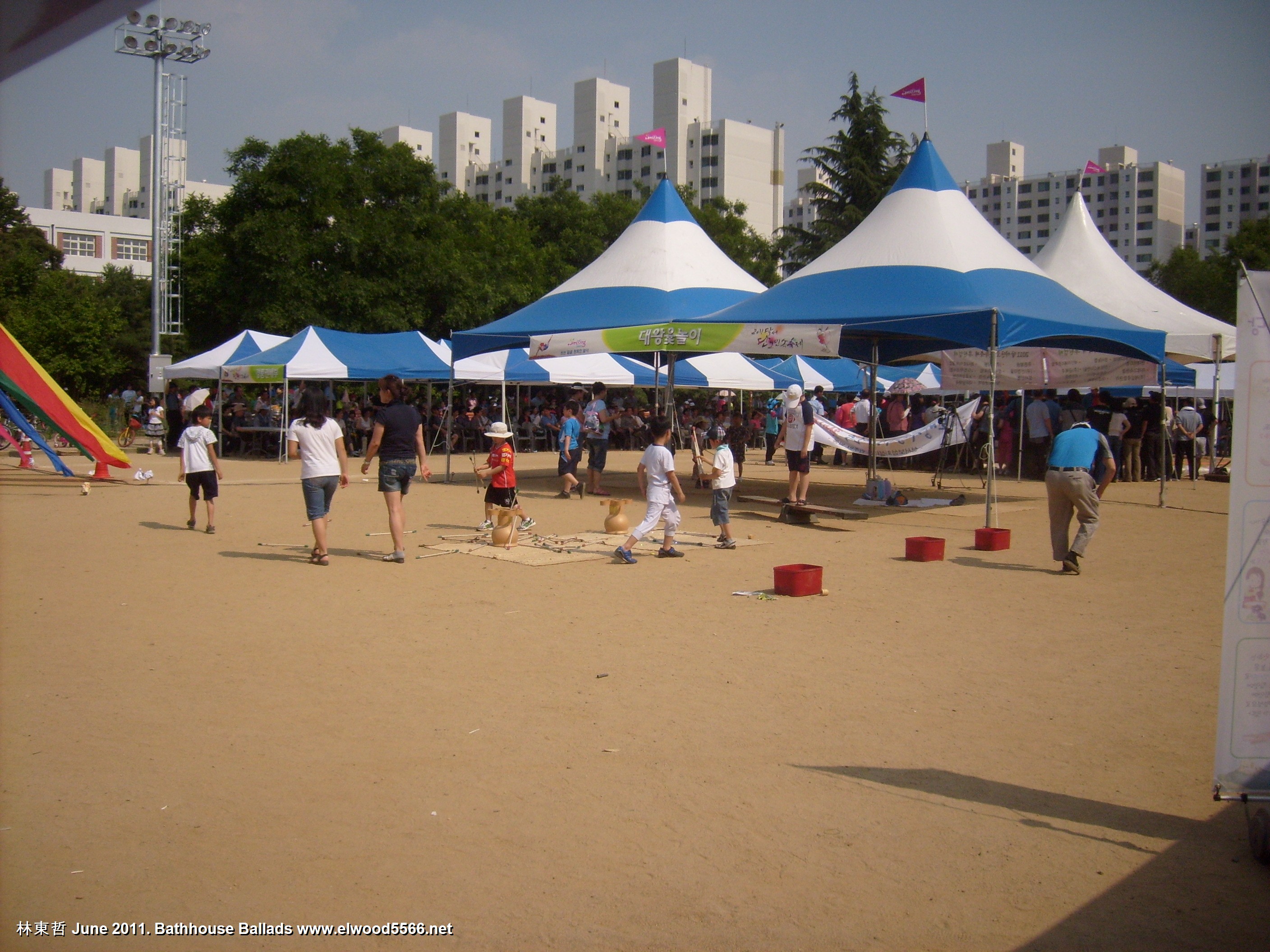
Saturday afternoon in Warayong Park
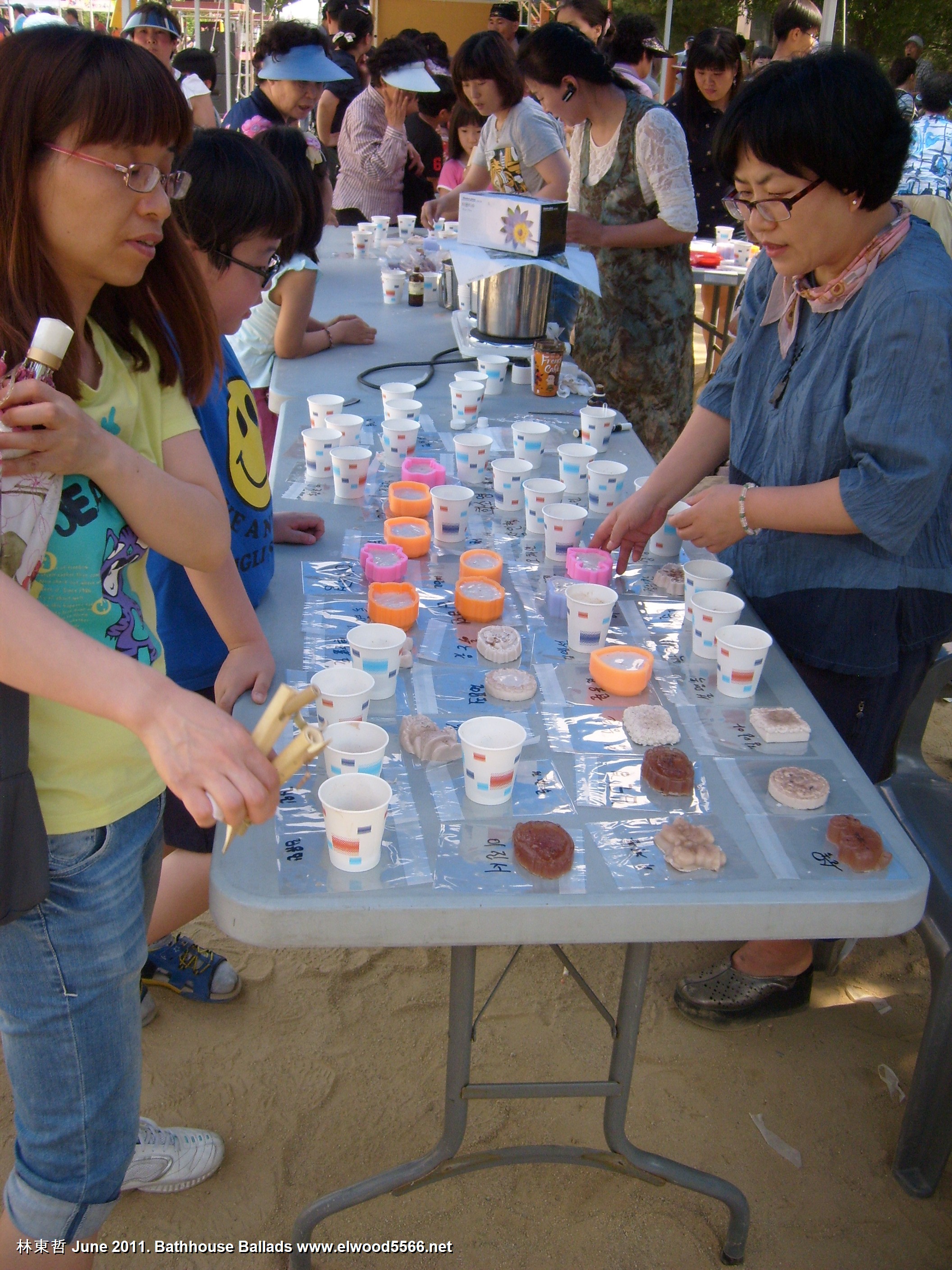
soap making stall
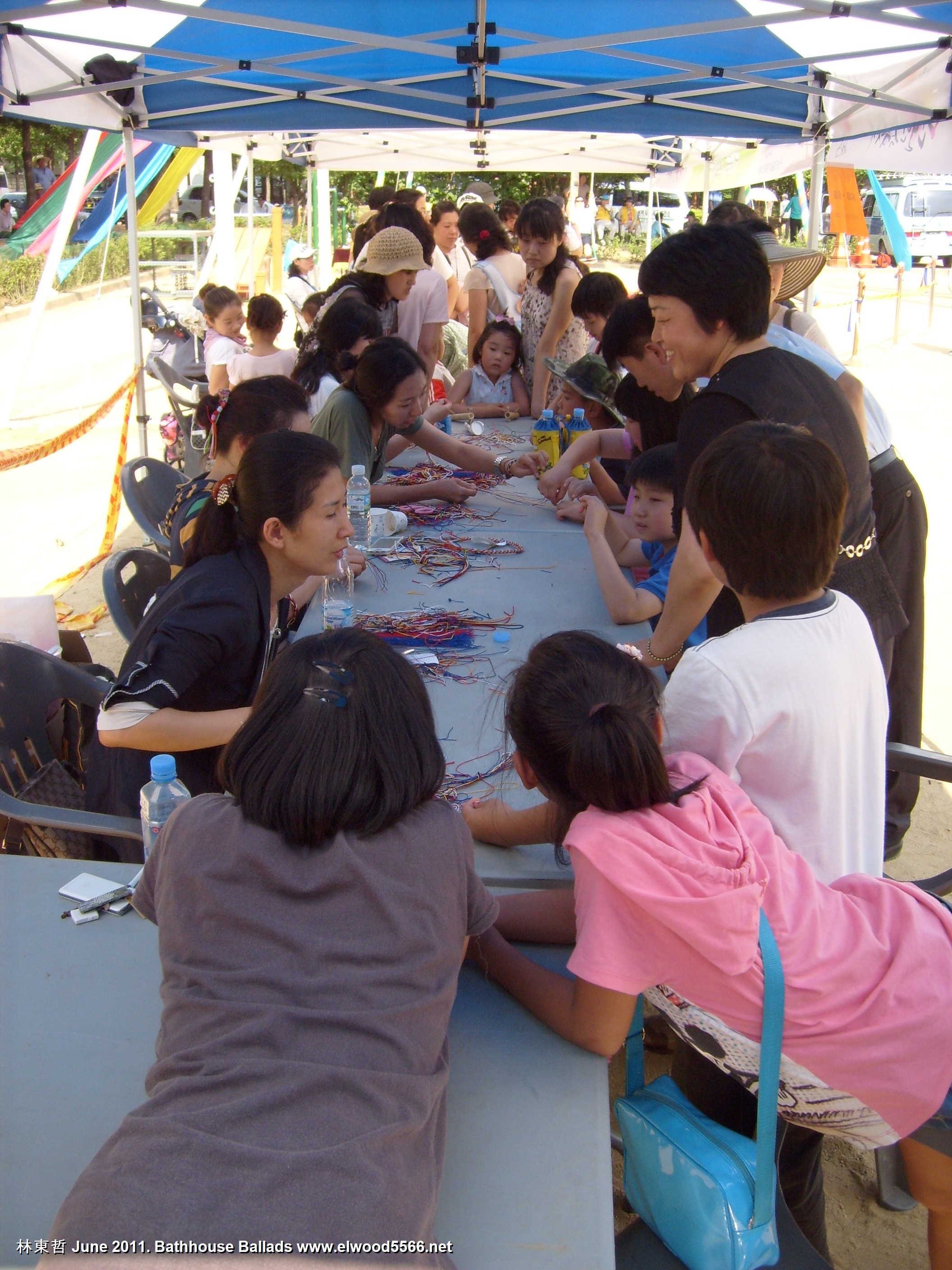
frienship bracelet making stall
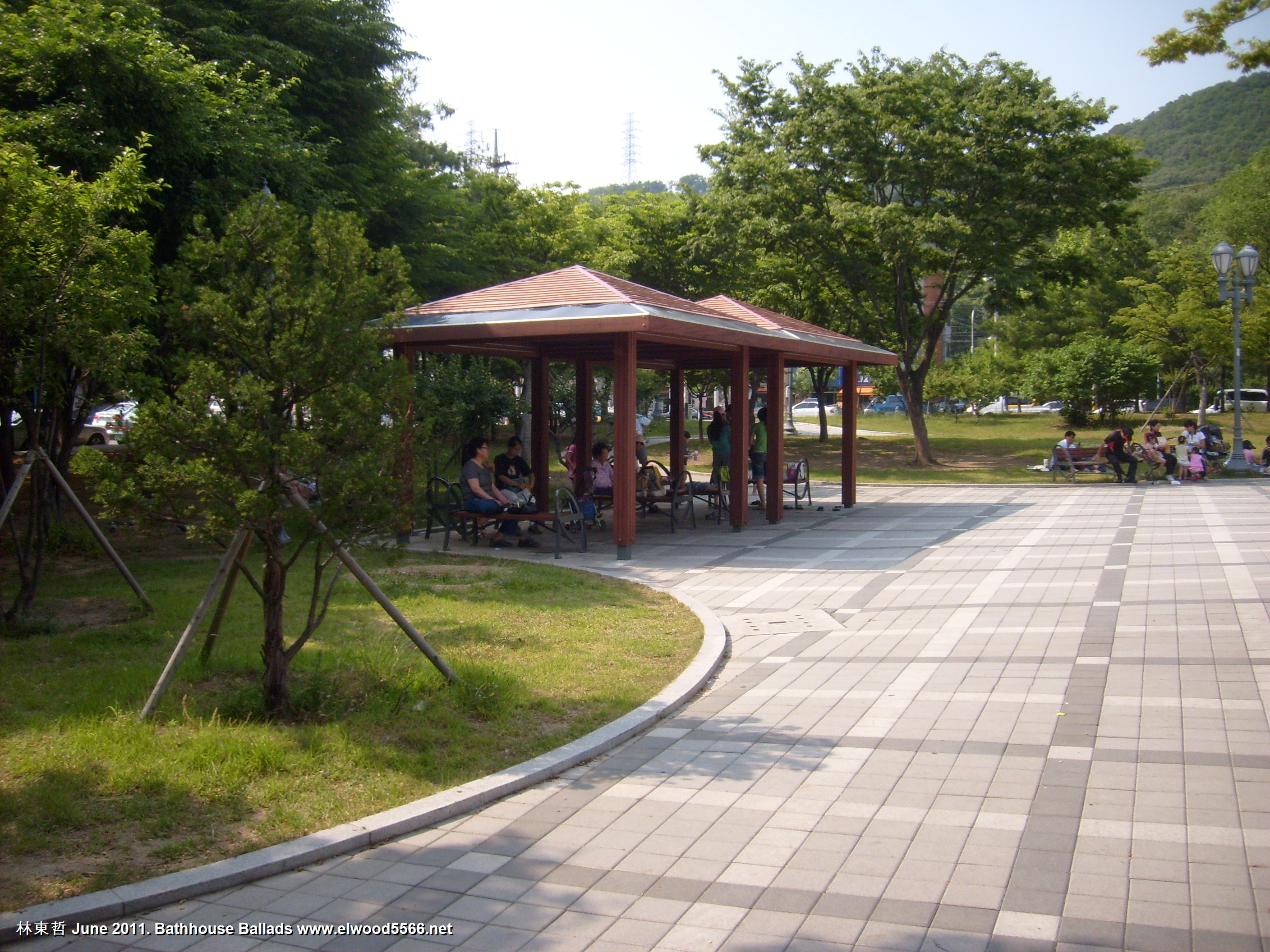
escaping the sun under the arbors (정자)
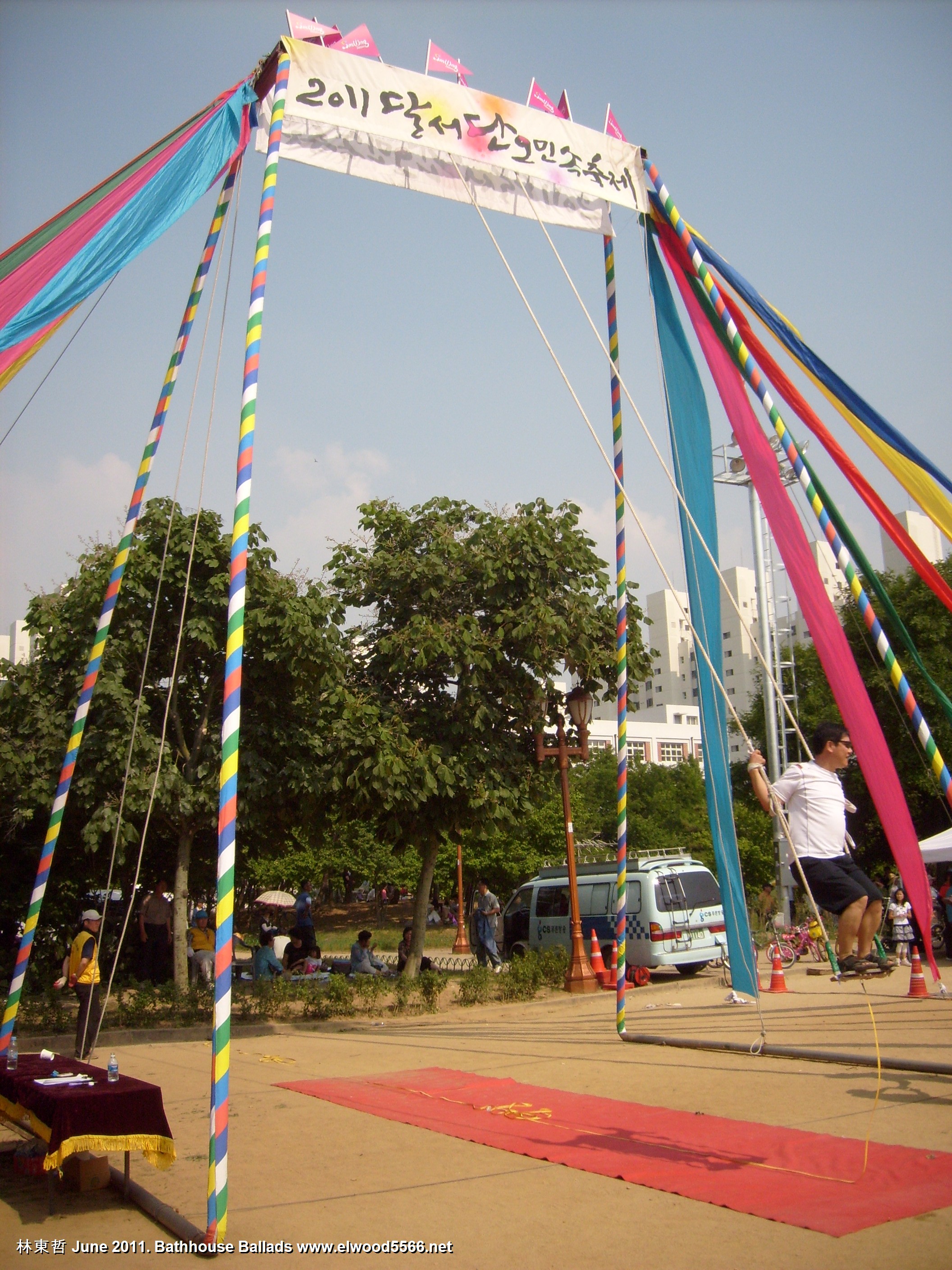
giant swing
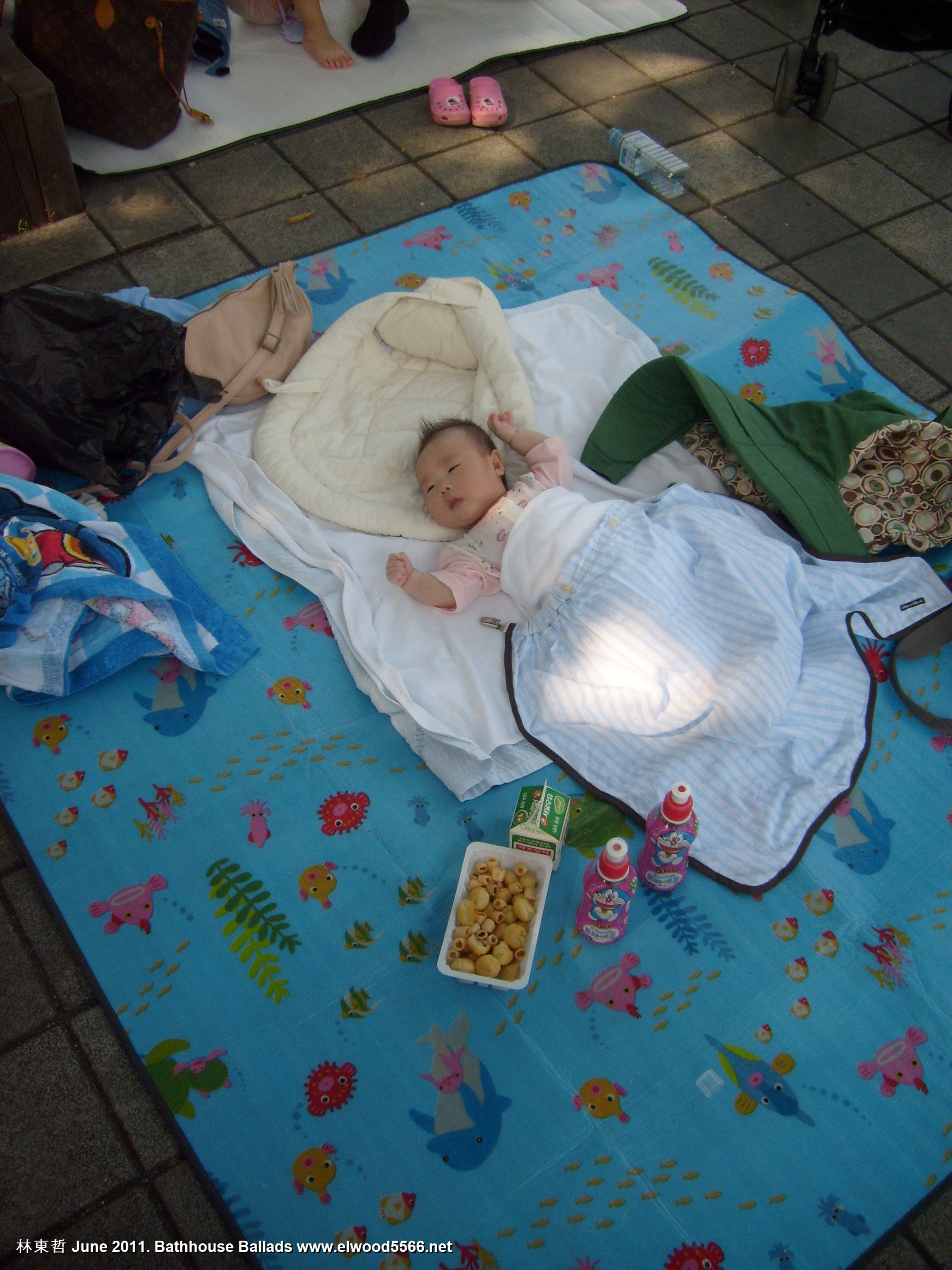
6 week old baby girl
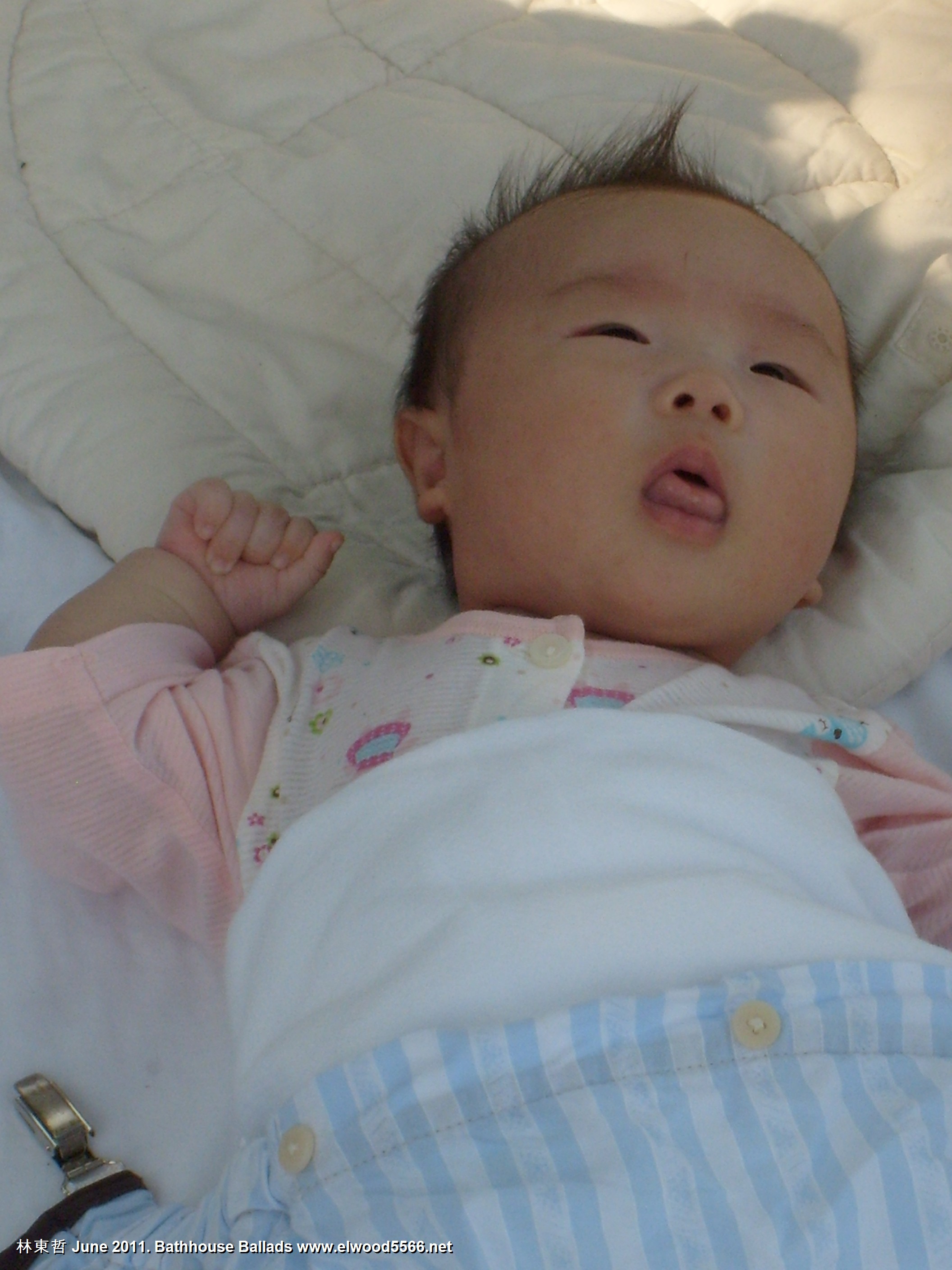
cute
© 林東哲 2011 Creative Commons Licence
Westphalian Winters

a great photo capturing Phil Watson and Andy Coombs at a significant moment
I have special memories of winters in Osnabrück. I think these photos must have been taken around 1978 because Dave Smith and I went to Kneller Hall in 1979 and Andy Coombs had transferred to another band by the time we returned.
Osnabrück winters were severe with heavy snow appearing usually at about the same time we were playing in the Hallemünsterland show, which was every December. The snow hung around for months and I clearly remember chunks of compacted snow, the remnants of that which had been swept to the side of pavements, loitering into early April.
Then, there were odd occasions when the finest drizzle fell onto the freezing ground and everything was glazed in a fine sheet of black ice. I only remember this kind of weather twice over a 10 year period but it was memorable because for several hours everything was suspended; all traffic stopped and the pavements were so treacherous that even walking a short distance was dangerous.
There were a numbers of photos taken at the same time as the two I have added here, the others included Knocker Patterson, Bones and Mick Pickering.
Both photos are intensely familiar to such a point I can almost feel the nip of a Wesphalian winter and smell dinner as its aroma drifts from the nearby cookhouse. In the photo above, to the left of Phil Watson’s head, are the birch trees around which I practiced taekwondo over 7 years.

Bob Hallett and John Adye on the edge of the Regimental Square
Silver Birch trees were so prolific in northern Germany, they covered Imphal Barracks and I remember an enormous, somewhat desolate forest of silver birch surrounding Bergen-Belsen. In autumn and spring, Amanita Muscaria mushrooms, which grow in a symbiotic relationship with silver birch, would spring up around them. In spring, the Catkins, laden with pollen, were a great source of irritation for Mick Henderson and on a blowy afternoon, I recall watching the trees around the Regimental Square swing and sway in the wind agitating a cloud of yellow pollen.
© 林東哲 2011 Creative Commons Licence.
Eat Like a Dinosaur in Daegu

Dinosaur Buffet - a meat eaters heaven
Sometimes, I just want to indulge in some ‘western style eating’ – a euphemism for eating unhealthily. Korea has plenty of unhealthy western-style junk foods, most commonly fried chicken and pizza, but it’s never quite right and has been Korianised to make it more appealing to the home market. While the fried chicken often comes very close to satisfying my British taste-buds, I have never really taken to the way the bird is chopped up. That leaves the nastiest junk food of all, indeed the King of Junk, the Burger! Let’s face it, a real burger is vastly superior to corporate anatomical slurry patties containing up to one thousand different cows per burger, a claim made in the documentary movie, Food Inc. And while corporate burgers can be ‘okay,’ they’re not that great unless of course, you’ve had your taste buds seriously dumbed down.
And the thing I miss most about western eating is a good plateful of meat. Most Korean meals contain much smaller portions of than we would eat back in the UK and I reckon that with a meaty breakfast and evening meal, I can consume more meat in one day, than I do in a week in Korea. However, I recently discovered the ideal place to eat as much meat as you want; a carnivore’s paradise; Dinosaur Grill Meat Buffet. Here, salad, rice, and side dishes are minimal but the meat comes by the carcass. For 15.000 Won (£7) per person, you can just help yourself to the meat at the ‘in-house’ butcher’s counter and barbecue it at your table. There are burgers, real ones and not the pallid, dry one found in Mac D’s, great, spicy sausages, various cuts of sam-kyeop, pork steaks, and even cuts of beef.
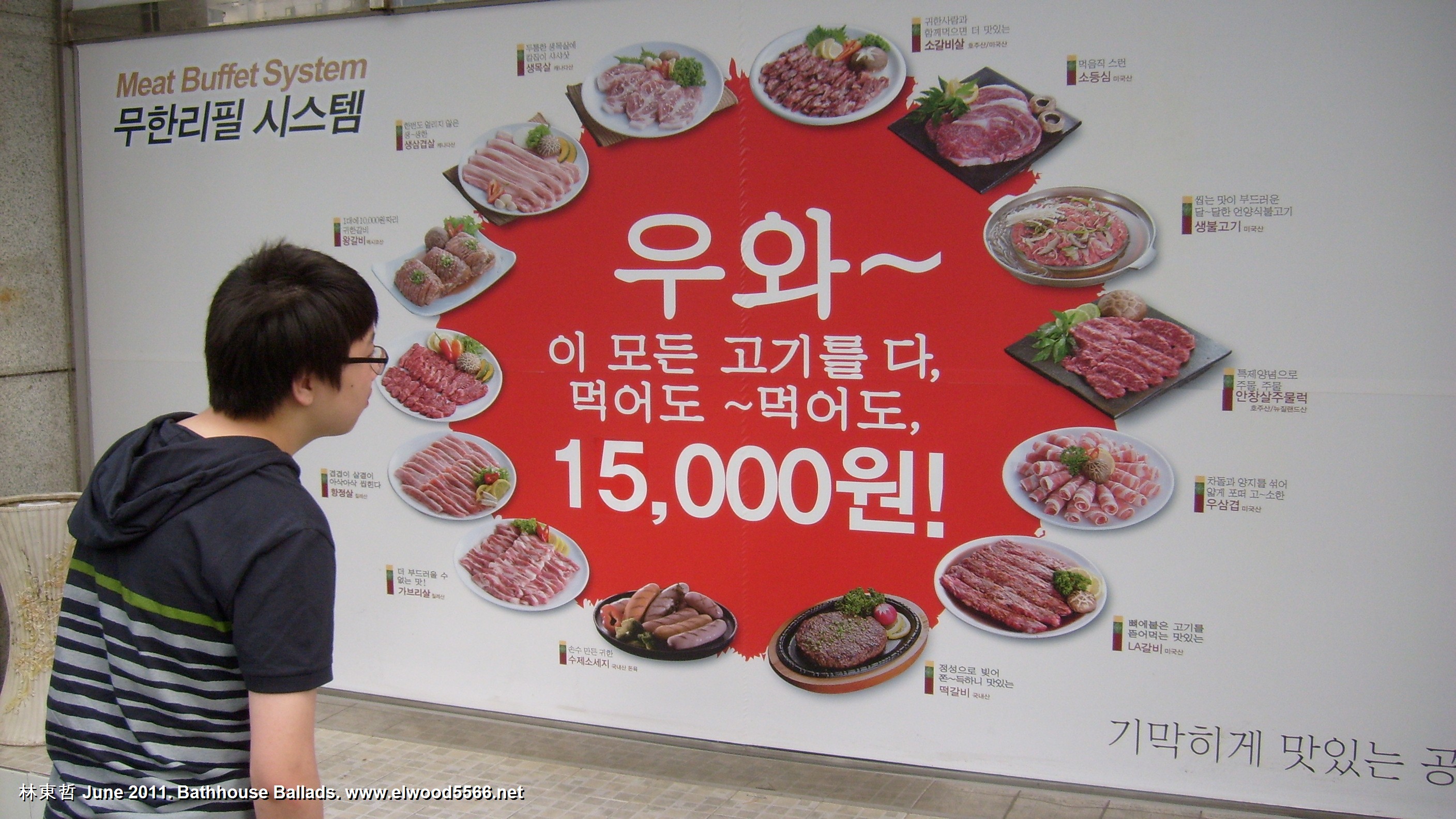
a wide choice of meat
A few Koreans I recommended this establishment to ask me about the quality. I have to remind them I’m from Britain where the majority of pork has been bloated with water so that the moment you start cooking, it pisses all over the charcoal. Most British pork or bacon can no longer be fried because by the time the pan has heated, the meat is floating in a puddle of additional water, thereafter it simply boils. And then there is the pork from Poland, wadges of fat with the occasional slither of meat. In Britain, meat has been adulterated forcing you to pay extra for what it should have been in the first place. Naturally, I find Korean meat of superior quality and after a bottle of makgeolli, it tastes even better.
Last week, the buffet bill for 3 adults plus 4 beers and 2 bottles of makgeoli amounted to a little over 60.000 Won (£30). The restaurant has both traditional floor seating and tables.

5 minutes walk from Wonderful Spa Land Bathhouse
Dinosaur Grill Buffet is very close to Wonderful Spa Land and indeed you can walk between them in around 5 minutes. For the Wikimapia link click here. Both Jincheon and Wolbae subway stations are nearby.
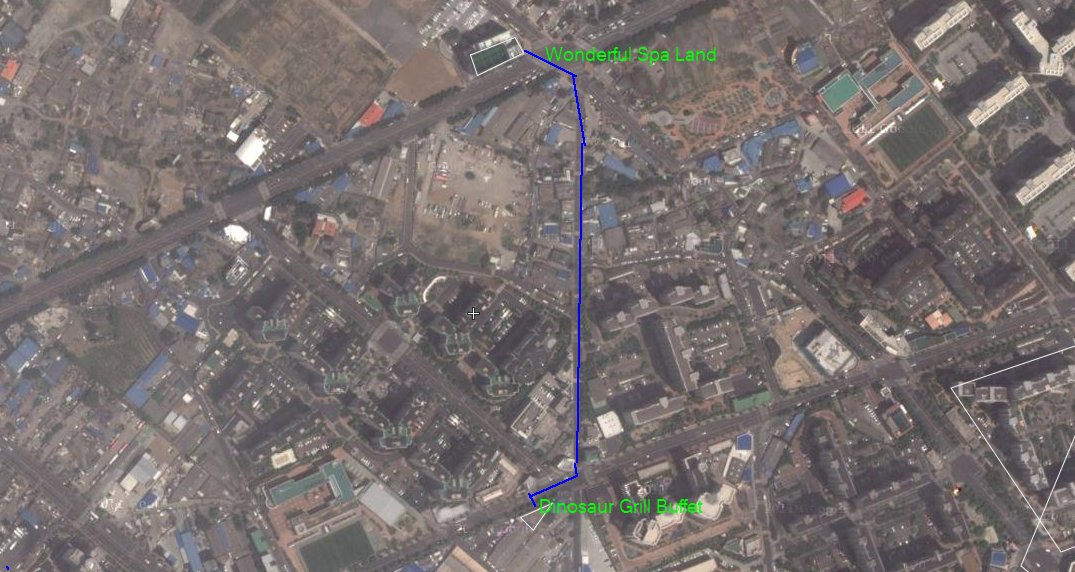
Jincheon and Wolbae subway stations lie this side of the restaurant
© 林東哲 2011 Creative Commons Licence
Just (그냥) Some interesting photos
No! They’re not mine and are simply amusing photos I’ve discovered while browsing.
Even though junk food burgers can taste okay, but are never delicious, I dislike their imperialism and subsequent dumbing down of our taste buds. However, I find this advert amusing…

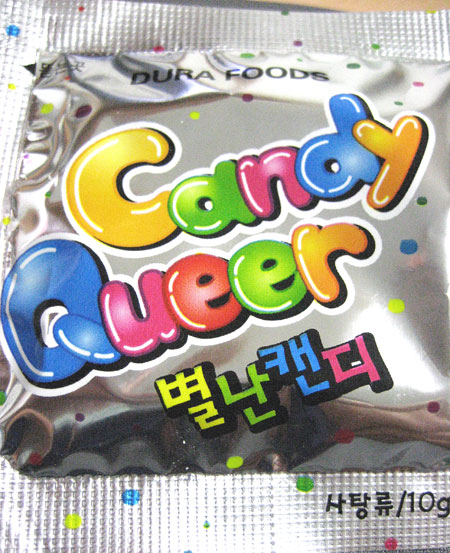
a politically incorrect candy
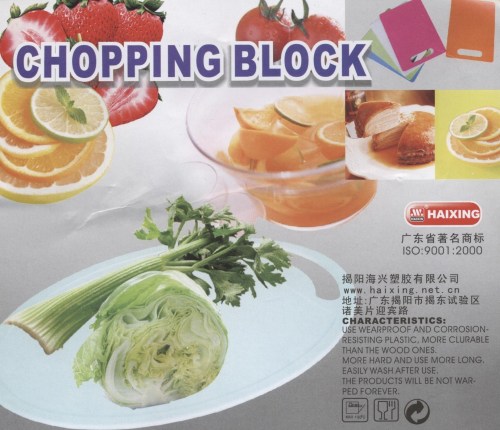
brilliant!
© 林東哲 2011 Creative Commons Licence.
Arrival of the Memi 2011
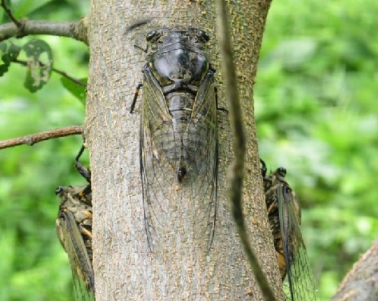
memi (매미 – cicadas) are more colourful in flight
Has the weather been a little strange? Until a few days ago, especially with the arrival of the boknal period, on July 14th, it hadn’t been particularly unpleasant and as I haven’t lived in Korea long enough to notice changing weather patterns, less the fact that copious hours sat in steam rooms and the number of years I have spent here, may have resulted in my being somewhat acclimatised, I haven’t really being splashing sweat all over the place.
Last year, I heard the first memi (매미 – cicadas) on July 22nd. Of course, this is not the first memi to sing in Daegu per-se, but the first I heard and I am consistent at standing in a small park everyday in the lead up to their appearance. Last year, the temperature was scorching as I heard what was actually a solitary song. This week, on July 14th, it seems cooler, though certainly above the memi song threshold of 29 degrees Celsius, and I heard my first song for 2011 and it was a full, if somewhat half-hearted chorus.
Memi song can damage your hearing and I advise you to turn down your volume if you activate the video!
The memi will continue to sing into the hanyeoreum (한여름) period, which occurs in August and by which time the rainy has fully moved north and the evenings are hot a balmy. The chang-ma (장마) rain reappears in early September, only for a few weeks after which the memi song will gradually fade away as the temperature decreases.
© 林東哲 2011 Creative Commons Licence
Related articles
- Waiting for Summer’s Herald – the Memi (elwood5566.net)
- Beating Boknal (4) 2011 (elwood5566.net)
I was Butt Plugged by a Korean Kiddy…
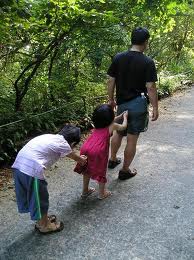
dirty,dirty!
Pinch a Korean man or boy’s nipple and they’ll accuse you of perversion (변태) but you can stroke and touch them everywhere else (except in the most obvious of places), and they won’t see anything wrong with it. Even the bum hole isn’t exempt a digital delving though this is a jokey pastime of kids and much more likely to occur between children or from children to adults. It would be extremely odd for an adult to start surprising his or her work colleagues with a digital ‘ddong-ch’im.’ Apparently, manual butt-plugging, as a form of humour, is widespread across east Asia and has a long history. Naturally, there is an association between the ddong-ch’im, and that other Korean obsession, poo!
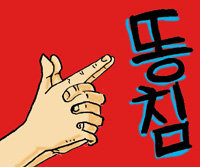
ddong ch'im - shit needle / shit injection

a popular perversion
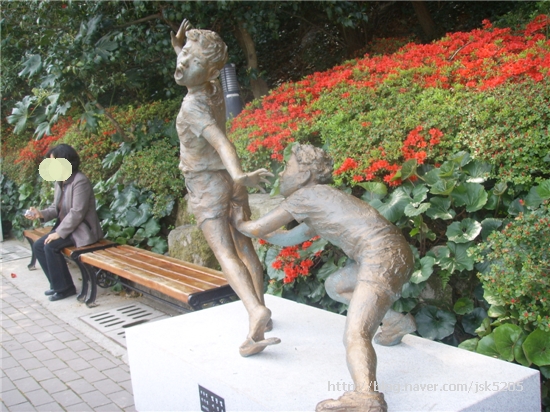
note, how the buttocks are tightly clenched. I'm not sure about the facial expression as it somewhat resembles a blow up doll
But the actual purpose of this post was to expose an excellent Korean game I discovered, entitled JJileo-jjileo which being at the juncture where poo meet ‘the finger,’ brilliantly demonstrates more Korean customs and humour. Enjoy… (Note– I have recently noticed the game breaks down after several minutes, hopefully this is only temporary – for an interesting insight however, it is still worth a visit).

click to enter game
© 林東哲 2011 Creative Commons Licence.
Related articles
- Kids’ Dictionaries (Bathhouse Ballads August 2010)
Ch’eonchiwon Jewel Sauna (천지원보석사우나) Dae-myeong, Daegu
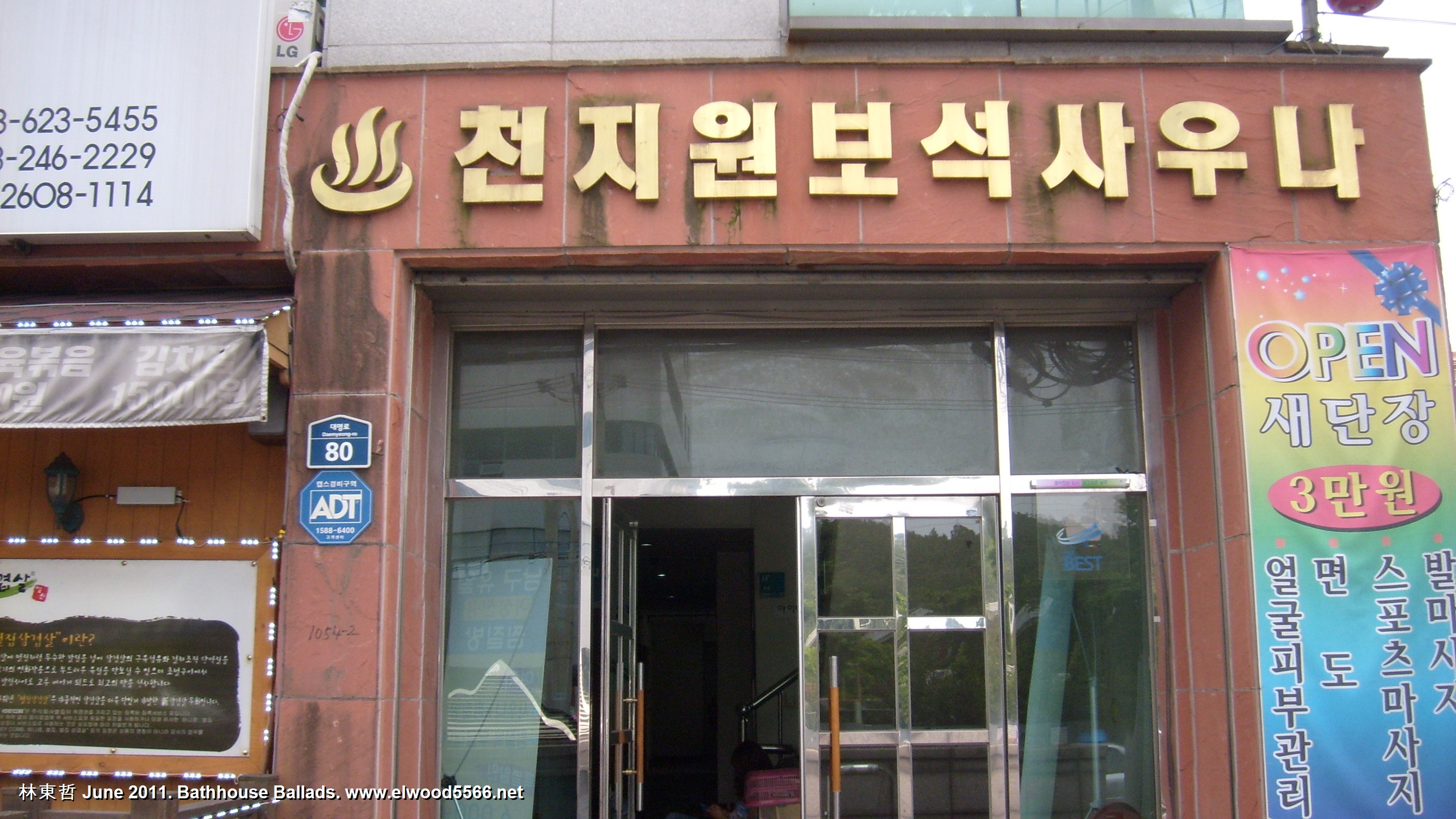
Ch’eonchiwon Jewel Sauna
Rating – Functional
(First visited on Memorial Day Monday 6th of June 2011). This day started out bad as I’d set out with a student to find what was supposed to be an interesting Sauna in Seong-dang-mot (성당못) area of Daegu only to end up walking to Dae-myeong (대명) where our consolation prize was Ch’eonchiwon Jewel Sauna (천지원보석사우나). On a public holiday after a busy term we were looking for something special but even if our mission had been ‘the ordinary,’ Ch’eonchiwon would have scored a very low. In fairness, we didn’t view the jjimjilbang, which may have had redeeming qualities but the bathhouse was more functional than recreational and as a result we only stayed half an hour.
This is sort of establishment would perhaps be fine if it is in your local area and suitable for washing and a little lounging but other than this it is probably only of interest as an example of older bathhouse and as a reminder that not all establishments are equal. An occasional visit to such bathhouses makes you more appreciative of larger establishments.
The changing rooms were small and though not a ‘squeeze,’ I felt uncomfortable. The bathhouse was one of the oldest I’ve probably been in and though it was clean and tidy, I missed the luxury of bigger establishments. The pools were small and consisted of a circular warm pool and event pool and two small massage pools capable of holding 4 people. The cold pool was the largest pool. There was a steam room and salt room and a sleeping area which may have had a jade floor.
Location – (Wikimapia link ) Come out of Dae-myeong subway station (line 1), exit 4 and the sauna is a few blocks ahead of you on the right.
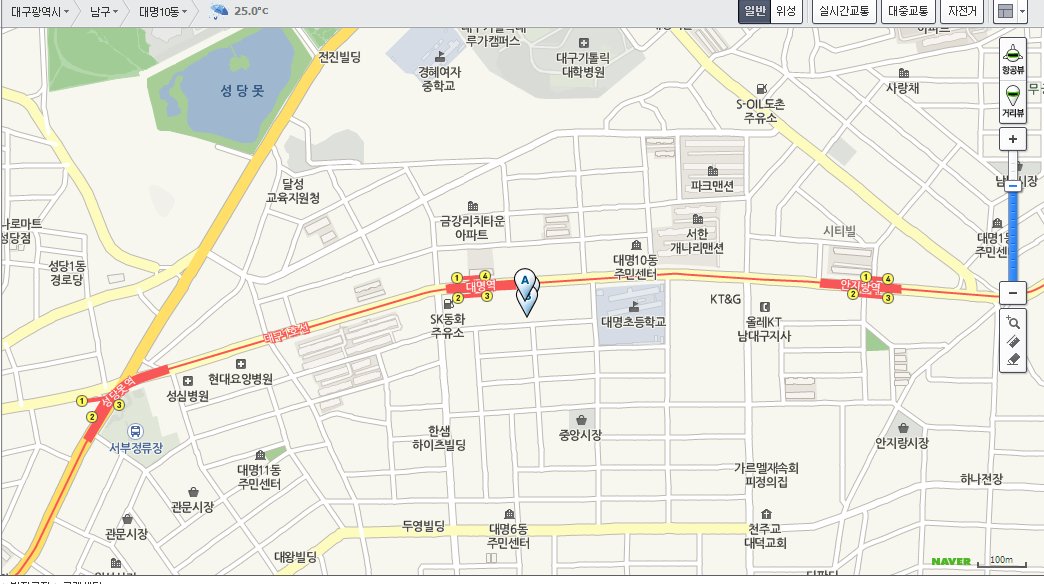
Ch’eonchiwon Po-sok Sauna 1
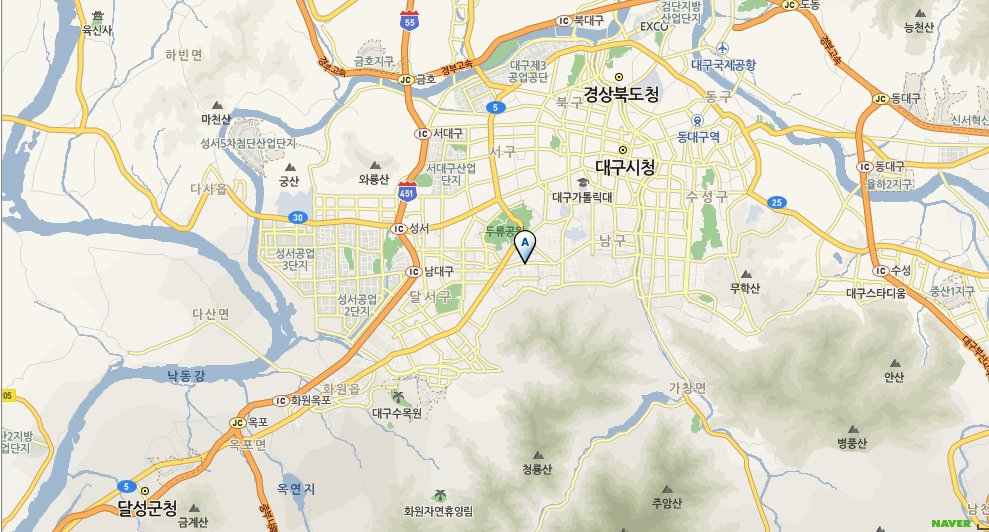
Ch’eonchiwon Po-sok Sauna 2
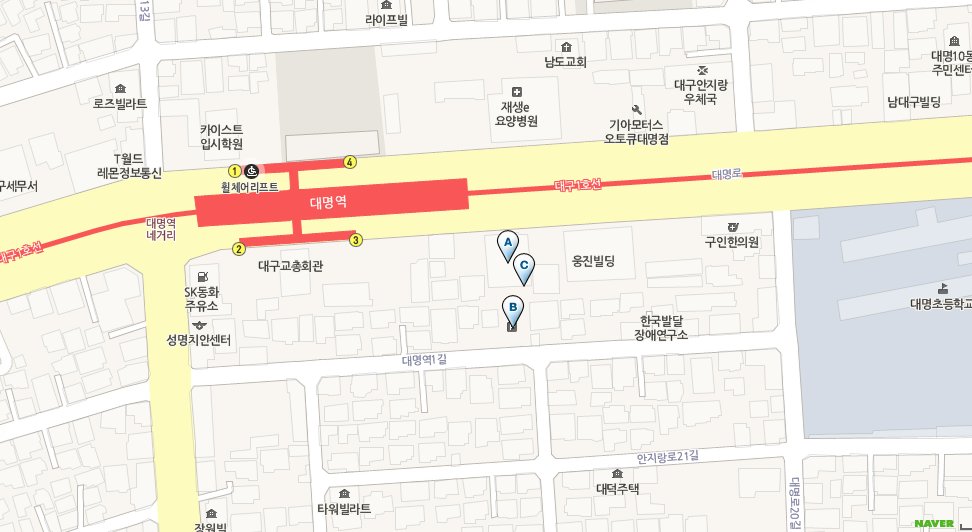
Ch’eonchiwon Po-sok Sauna 3
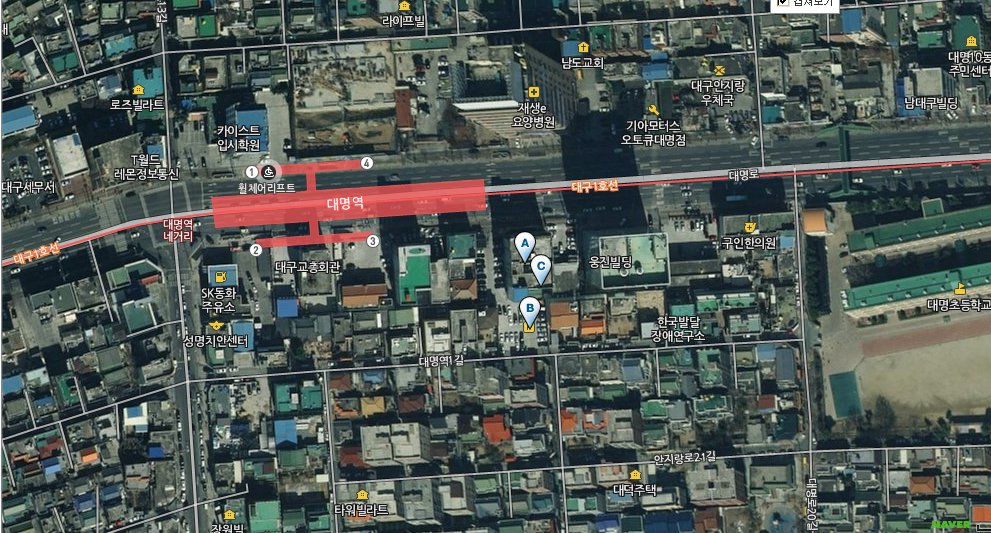
Ch’eonchiwon Po-sok Sauna 4
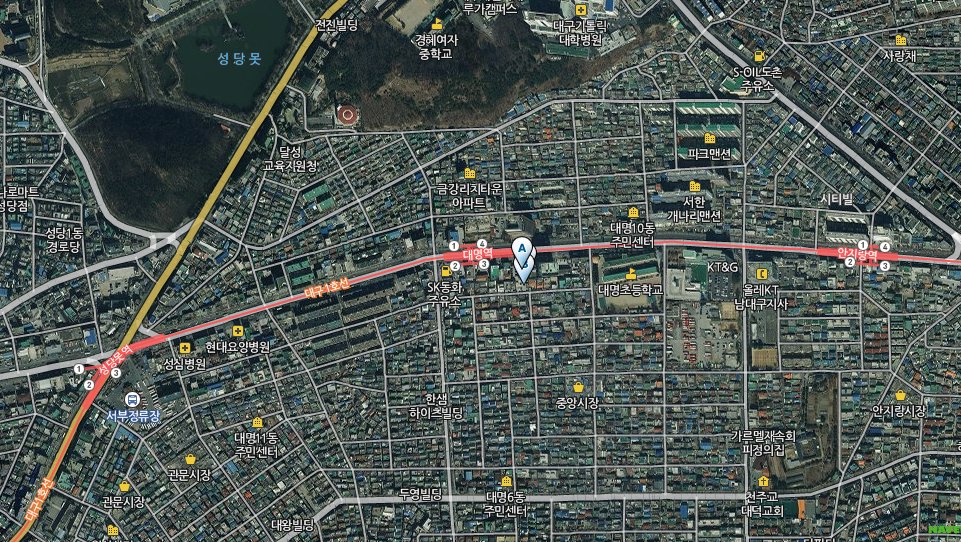
Ch’eonchiwon Po-sok Sauna 5
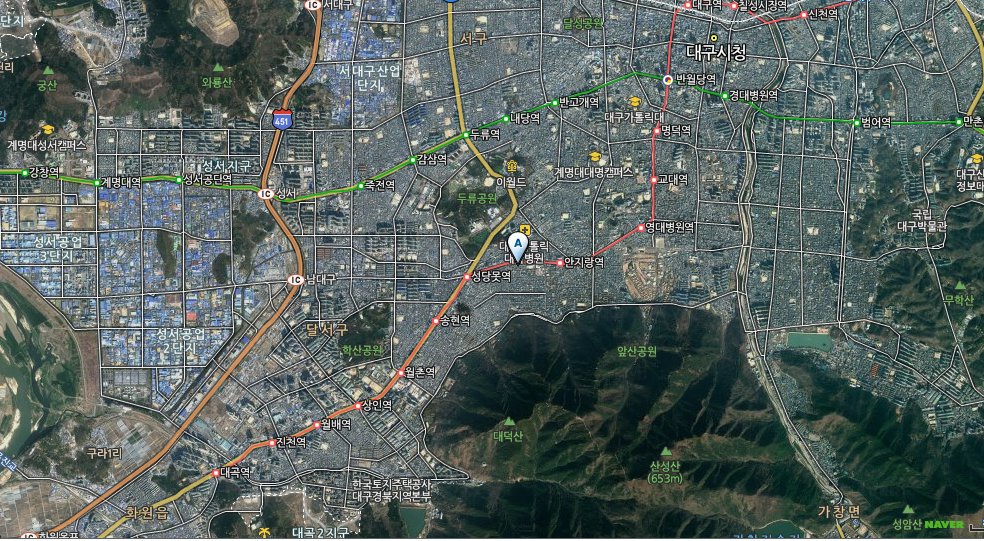
Ch’eonchiwon Po-sok Sauna 6
By taxi from Song-so, Lotte Cinema, Mega Town, approx 7000 Won (£3.50)
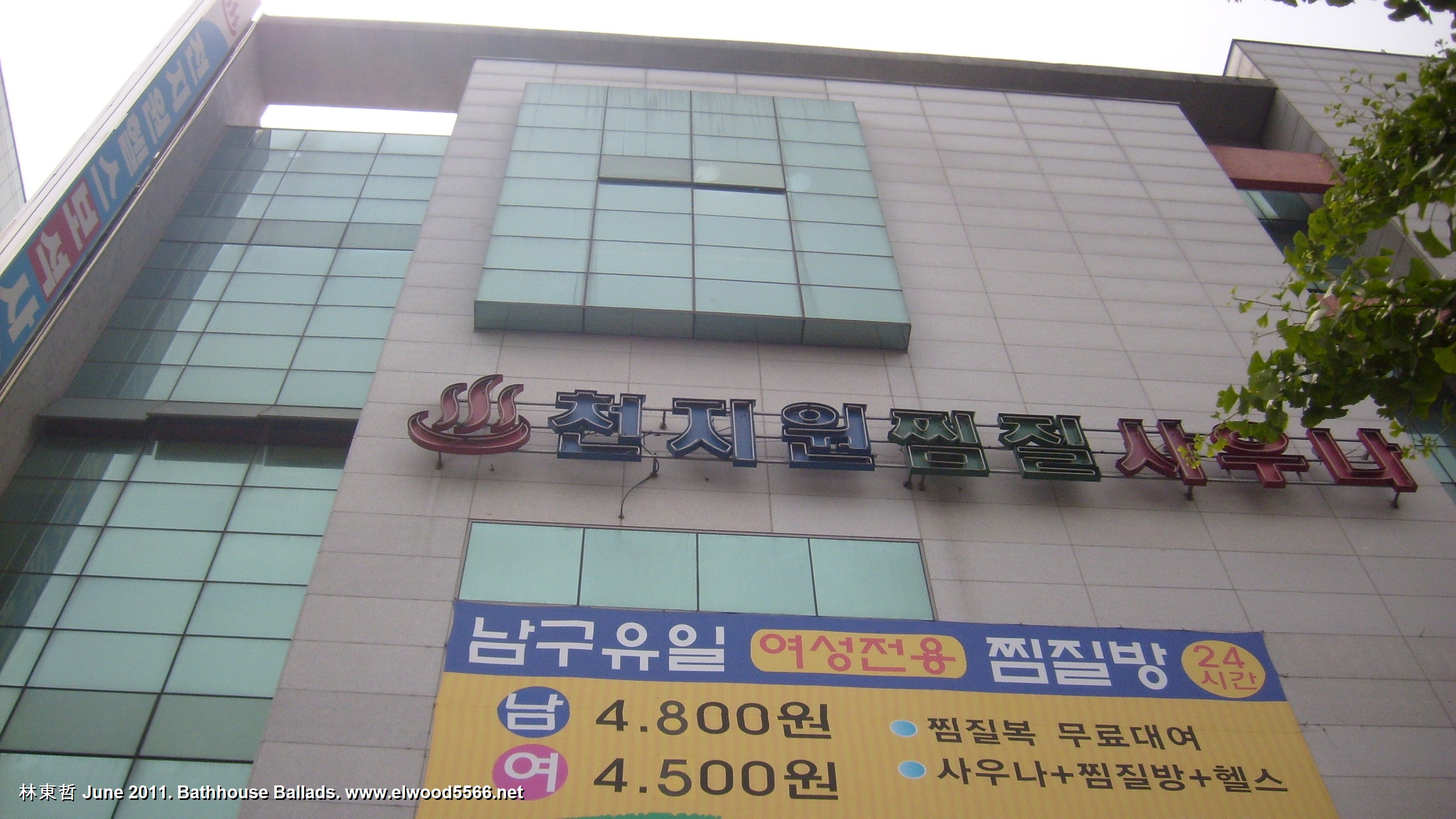
The front of the building
Times – 24 hour
Facilities – jjimjilbang, health club
Bathhouse (men) – about 10 stand up showers and perhaps 30 sit down ones. Warm-pool, event pool, cold pool, sleeping area, salt sauna, and steam room (? I think). A sleeping area in the bathhouse and a small massage pool that had another small pool next to it (?).
Cost – 4800 Won (which may be inclusive of jjimjilbang)
Others –
Ambiance – very local and functional and though clean a little grim.
Waygukin – none (a brief first visit).
Address – 대구광역시 남구 대명6동 1054-2. Tel: 053-628-8831
Website –
Layout (Male Bathhouse) Pending
Updates
© 林東哲 2011 Creative Commons Licence.
Beating Boknal (4) 2011

Boknal (복날) is coming!
The hottest period of Korean weather will begin in mid-July when the chang-ma (장마 – monsoon season) has begun to move north towards Manchuria. The hottest period, lasting 2o days, known as boknal (복날), begins on ch’obok (초복) which this year is July 14th. 10 days later is chung-bok ( 중복 – July 24th) followed another 10 days later by mal-bok (말복 – August 3rd). The three days, ch’o, chung and mal, (초, 중, 말) are known as sambok (삼복), ‘sam’ being the Sino-Korean for ‘three.’
Two add confusion, there is Hanyorum (or hanyeoreum, 한여름) which is basically ‘midsummer’ and this begins once the chang-ma (monsoon) has fully moved north. Hanyorum, usually in August, is typified by hot days and balmy evenings. Though the monsoon has gone, it is still humid but perhaps I notice it more being British.
Boknal is supposed to be uncomfortable but personally, I find the humid monsoon season just as horrid. I suppose with boknal you know the end of summer is in sight.
Ways to beat boknal – or at least make it bearable:
sleep with a ‘wooden wife’ – she’ll only cost you about 10.000 Won and apart from being lazy she’s totally mute!
Korean teas, chilled are wonderfully refreshing if not a little ‘just’ in terms of taste.
iced coffee
wear silver summer trousers – I’ve heard the material these suits and trousers are made sometimes called ‘kal-ch’i (갈치) after the silver cutlass fish seen in markets. I’ve had two pairs of these made and they lower body heat considerably.

handkerchiefs and towels – in cheapo ‘dollar shops’ you can buy handkerchiefs for about 1000 Won. I usually find Koreans regard sweat almost as nasty as urine – which is basically what it is!
ice rooms and cold pools – a brilliant way to cool down.
cold showers – pretty obvious, really.
hand fans – plenty to choose from
Then there are a range of foods for combating heat known as bo-yang-shik (보양식). Fight heat with heat (이열치열); Ginseng chicken, and stews including dog stew (보신탕), are the foods typically eaten on three days marking boknal and chicken ginseng is a big favourite right through summer.
Alternatively, fight heat with cold and cool down with patpingsu (받빙수), naeng myeon (cold noodles) and plenty of water melon.
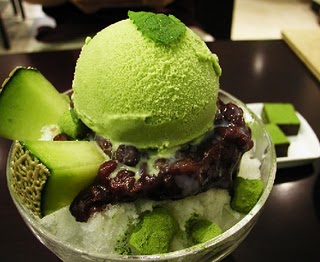
Green tea patpingsu
Chill out in one of the numerous cheong-cha (arbors – 정자), they are great at capturing what little breeze is in the air.
Best of all, get naked and lie in the blast of the air-con!
© 林東哲 2011 Creative Commons Licence.
Related articles
- How to Stay Healthy in the Summer Heat According to Chinese Medicine (acurelief.wordpress.com)


 Elwood 5566
leave a comment