Bathhouse Basics (13) – The Ice Room (어름방)
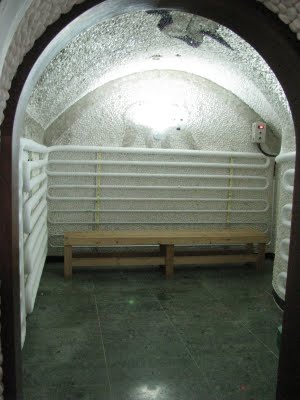
chill!
I don’t use the ice room (어름방 or 어름굴) much during the winter but in summer it is a heavenly sanctuary. An ice room, which can appear in both a jjimjilbang (찜질방) or in a bathhouse (목욕탕), is a bit of a specialty and many do not have them. However, the chances are that one exists in your area. In the Song-So area of Daegu, Migwang (미광) has ice rooms in both the jjimjilbang and bathhouse (mogyoktang).
In the summer months ice rooms are usually iced up and scrapping off the ‘snow’ and rubbing it over your face is an exhilarating experience more so when you appreciate that outside the temperature is that of a muggy sauna.
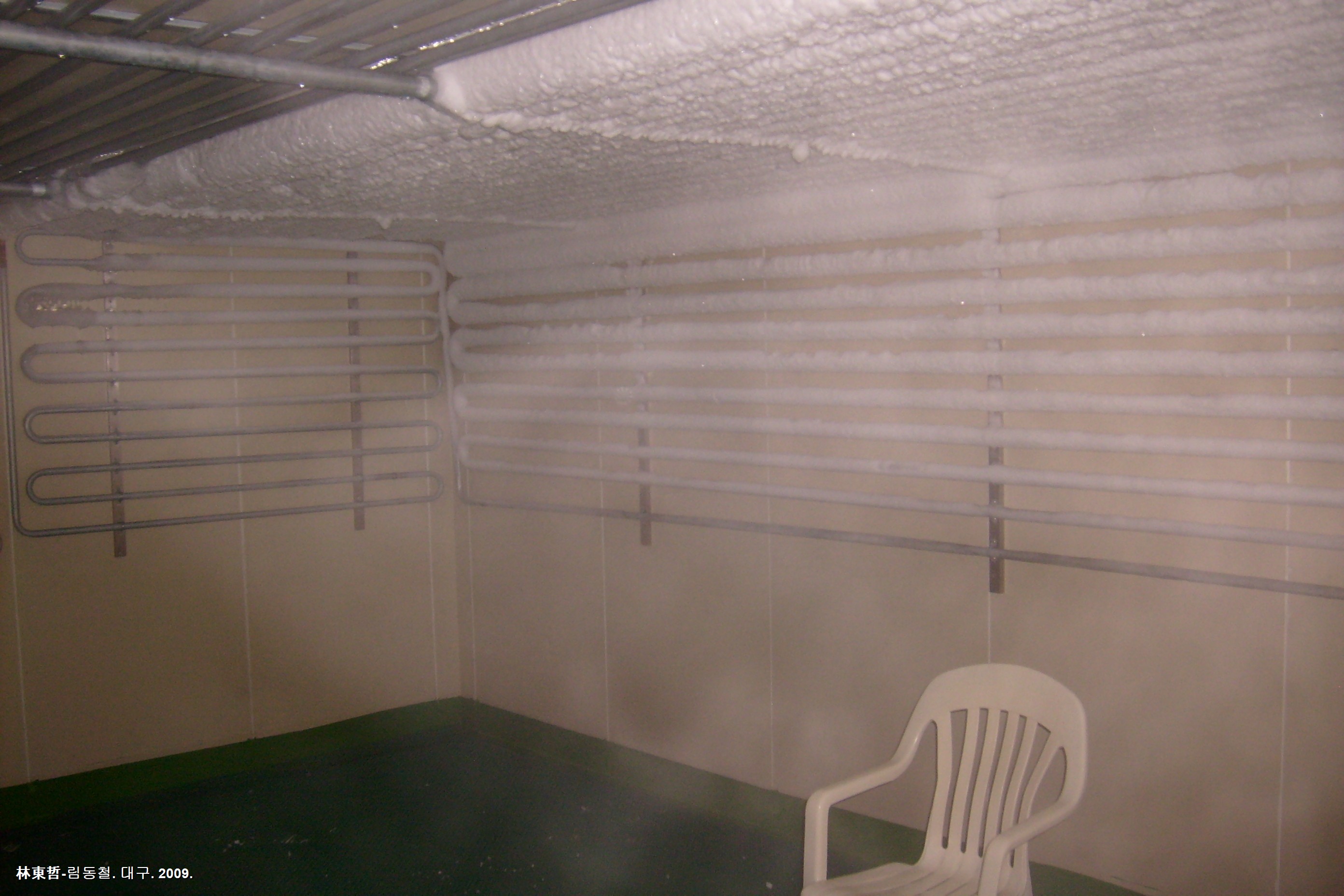
a large jjimjilbang ice room
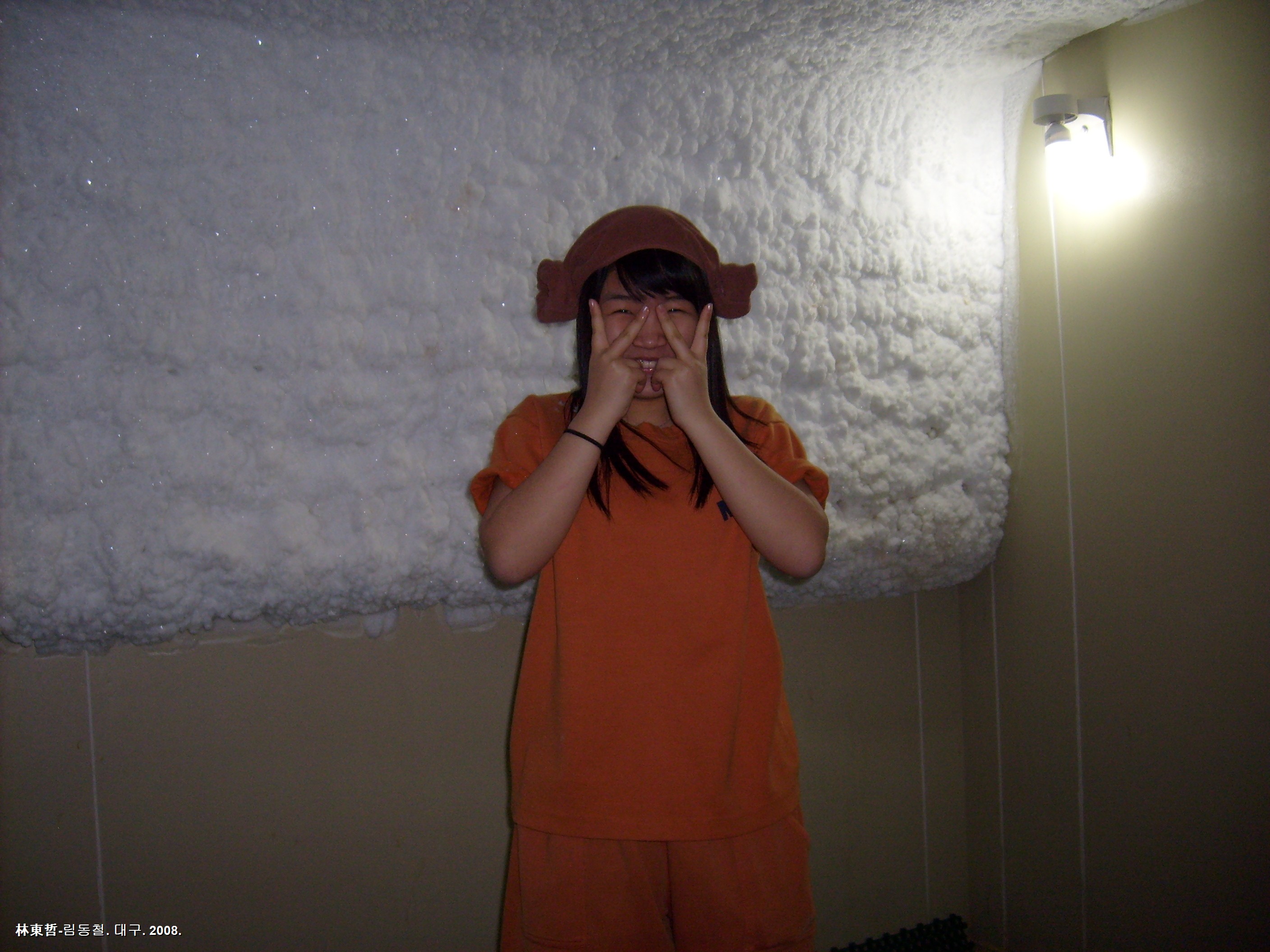
chilly

© 林東哲 2011 Creative Commons Licence.
Patriotic Taekwon-do – Dan Gun Hyong (단군형)
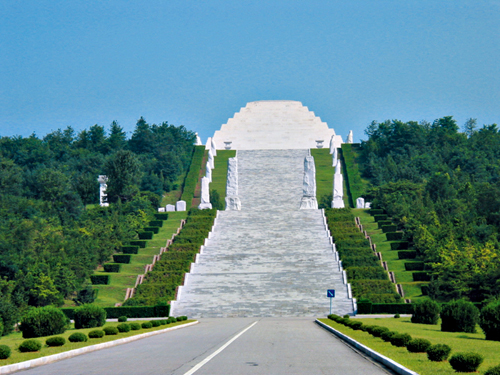
The Tomb of Dan Gun near Pyongyang, North Korea (authenticity disputed)
ITF TKD
Dan Gun (단군) is the second pattern (형) of the International Taekwon-do Federation (ITF) and is used to promote beginners to yellow belt. Dan-Gun Wang-geom (단군왕검) is the legendary founder of Korea who is associated with the founding of the first Korean kingdom, the Gojoseon in 2333 BC. The origins of Dan Gun (pronounced more like ‘Dan Goon’), are steeped in rich myths involving bears and tigers. Dan Gun’s lineage was heavenly and his father had descended to Earth via Baekdu-san (백두산, 白頭山), a volcanic mountain on the borders between North and South Korea. Baekdu is a common destination for school trips and family outings and is especially beautiful as the caldera is occupied by Heaven Lake. Dan Gun was himself born from a woman who had originally been a bear and ascended the throne to form the Gojoseon Kingdom, near Pyongyang.
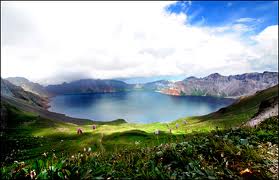
Heaven Lake, Baekdu Mountain, where Dan Gun's father ascended to Earth
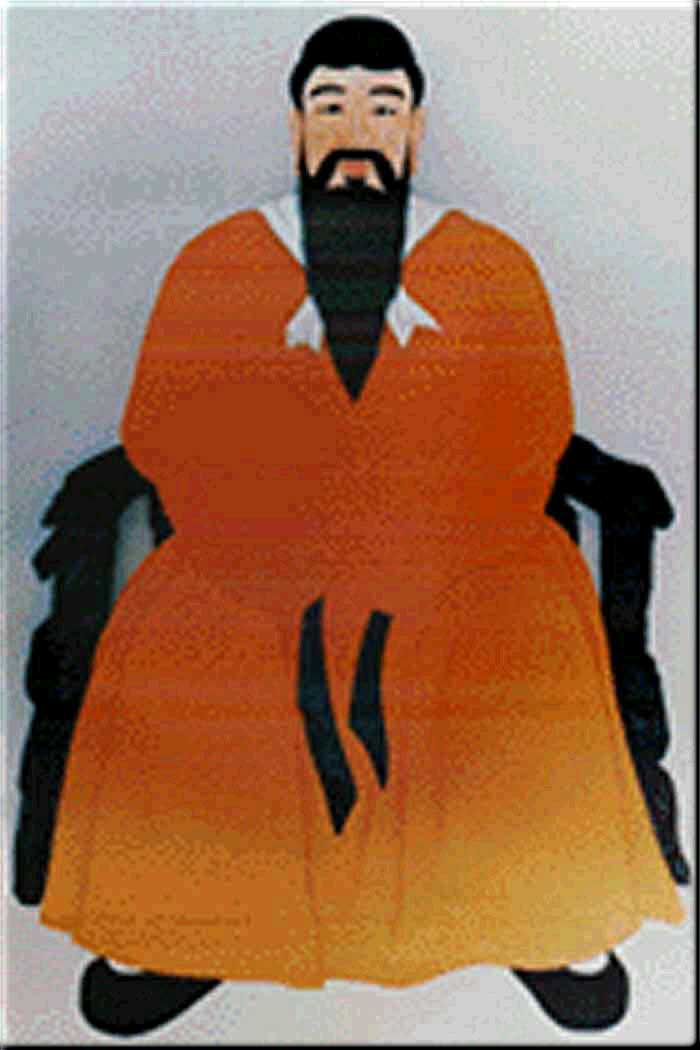
the man himself
The ITF pattern Dan Gun builds on the foundations laid by the first pattern ch’eon-ji-hyeong (천지형 – Heaven and Earth – ie, the creation). Dan Gun is the only ITF pattern where all strikes are to head height representing Dan Gun climbing a mountain. The pattern operates on the diagram, 工, this being the hanja character (장인 – 공 – labour: workman) which is an important radical conveying the concept of labour and work and is often present in characters associated with scholars, study,building, achievement, production and examination.

Dan Gun
DAN GUN HYONG (ITF) DEMONSTRATION
Related Articles
- Patriotic Taekwon-do and Sam-Il (삼일 March 1st) (elwood5566.net)
- A Tale of Philosophers and Carrots (elwood5566.net)
- An interesting site on information on Dan Gun and Korean myths.
© 林東哲 2011 Creative Commons Licence.
I don’t know why I’ve bothered to set up a separate Facebook account for Bathhouse Ballads; perhaps because it seems the thing to do and I want to eventually remove such entries from my personal Facebook site. I do note however, a significant number of hits are from this source.

Bathhouse Ballads at Facebook
© 林東哲 2011 Creative Commons Licence.
A Tale of Philosophers and Carrots

podcast 74
There is a Korean ‘idiom, dang-guen-i-ji (당근이지 – that’s the carrot, or absolutely!). Now, this isn’t directly borrowed from English but is apparently a development, by children, of dang-hyeon ha-ji (당연 하지 – absolutely!) If you say them repeatedly and alternatively, dang-guen-i-ji is definitely easier.

dang-guen (당근) the carrot, a familiar Korean crudité
So, one day I am buying something in a shop and use my newly acquired idiom and proudly ‘joke, ‘ ‘dan-goon-i-chi ‘(단군이지). The old lady serving gives me a funny look, no doubt amazed at my ability to use colloquial Korean. That day, I use the phrase several times and not just overdo its use but probably use it in slightly odd situations and this, so I believe, accounts for the bemused faces it induces.
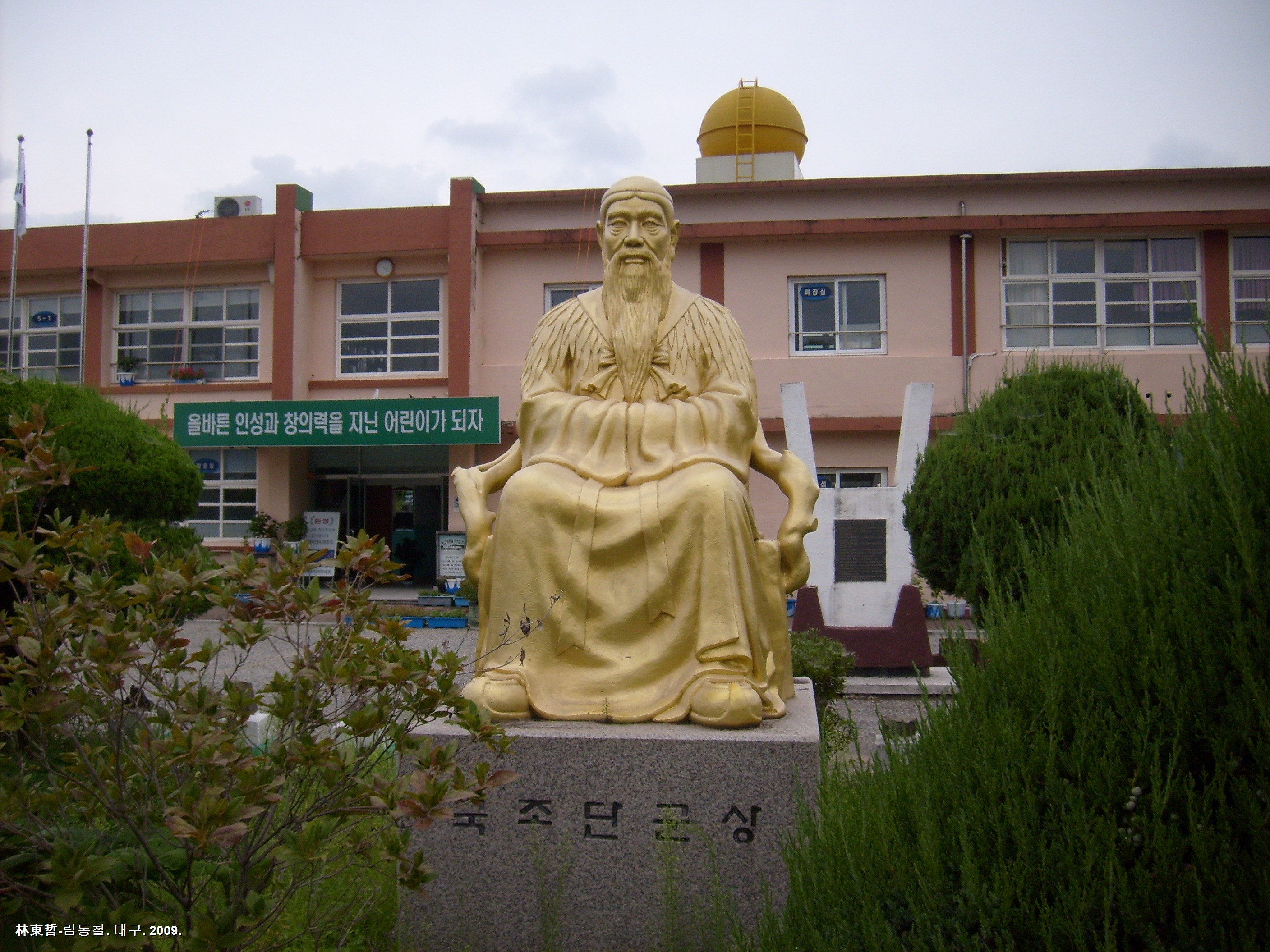
Dan Goon (단군), legendary founder of Korea, 2333 BC
A week or so later, I use it after having my hair cut and then I discover, I’ve been confusing the Dan-goon Wang-geom (단군왕검), the revered emperor-philosopher with dang-guen (당근), the common carrot. In translation, I suppose Dan Goon-i-ji might be rendered, ‘that’s the Socrates,’ or ‘that’s the Wittgenstein,’ depending on your current taste in philosophical schools. I should have realised my mistake earlier as I have a long history of confusing the legendary founder of Korea with Bugs Bunny’s favourite crudité.
Part of the course in learning a language is that you make mistakes and some of them can be amusing even if they do cause embarrassment. I’m probably quite famous in the area in which I live for entertaining locals with my bumblings. One of the local Monday morning market vendors was very bemused when she realised that the ‘eagle jelly’ I was asking for, was in fact ‘acorn jelly’ and on more than one occasion I’ve asked for, ‘some thinking,’ rather than ‘some ‘ginger.’
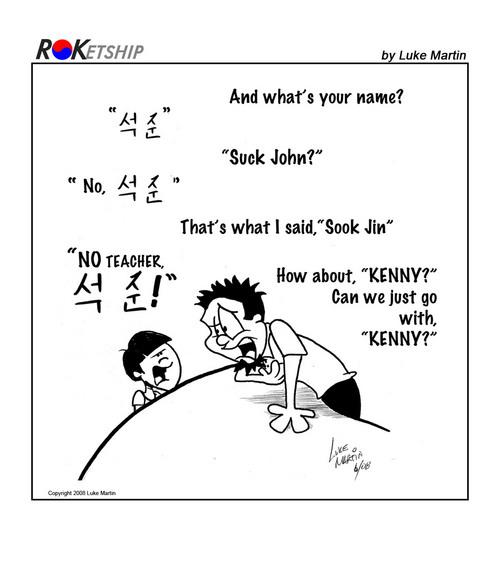
I’ve been there so many times! (link to Lulu)
In English the sounds ‘kan’ (간) and ‘kang’ (강) or ‘tan’ (탄) and ‘tang’ (탕) are very easy to distinguish but this is not the case in Korean. For years I’ve heard and read silly arguments between western taekwondo students quibbling about the transliteration of terminology into English without realizing that the relationship between many Korean letters and English ones is an approximation and that many simply cannot be effectively captured with a letter of the English alphabet. English script isn’t adequate enough to differentiate the sounds of its own language let alone those of another as is borne out by the discrepancies between the ‘a’ in ‘cat and ‘father’ which result in disagreements between those speaking northern and southern variations of British English. Koreans for example, finalise a word ending in ‘n’ with the tongue between their teeth and distinguishing between some sounds often necessitates watching the mouth closely. So, I often mispronounce ‘soy-sauce’ and end up asking for ‘liver sauce’ and confuse ‘soup’ with ‘briquette.’ ‘The reason I’ve spent so long mispronouncing Dan Goon (단군) is because it was one of the first 10 Korean words I learnt some 30 years ago when I began training in taekwon-do. Many non-Korean TKD teachers mispronounce the word because the transliteration often rendered it ‘Dan Gun.’ If you want to pronounce Korean accurately you have to learn the Korean script or at least study the systems of transliteration used closely so as to avoid simply producing ‘approximate’ pronunciations.
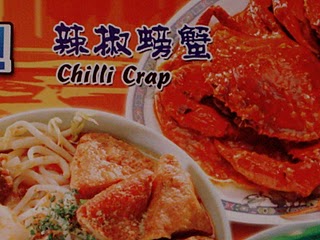
Tasty!
And then there’s ‘ddong’ ( 똥 – shit)! A westerner only has to attempt the combination ‘dong’ (동 – east) to elicit laughter and hence ‘dong-sa’ (동사 – verb) and ‘dong-wui-o’ (동의어 – synonym) have the potential to temporarily disrupt English lessons. Maybe it’s just my lack of ability, but it seems no matter how hard you try, Korean kids seem to choose to hear ‘dong’ (east) as ‘ddong’ (shit).
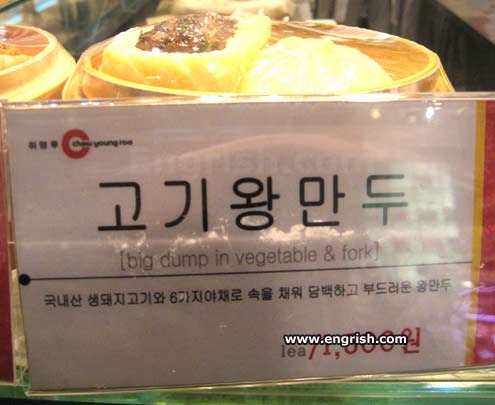
and I love mandu
Some Koreans, can be quite cruel in their derision should you attempt to speak their language and even ‘sounding’ a word or phrase in a Korean manner, can elicit sniggers and subsequent mimickery. I’ve even known friends write my blunders down so they can narrate them to others but I don’t mind as I too have learnt such blunders, regardless of nationality, are cute and on occasion my pen comes out to record mistakes.
First, there are the obvious ones:
I’m fine – I’m pine
I like fish – I like pish.
Last week a new student appeared in a class and a student informed me, ‘there is a new pace in the class.’
‘I like crab’ usually always sounds like, ‘I like crap.’
And there is always the older boy who tries to impress you with his knowledge of ‘naughty English’ and proudly states, ‘puk-you! On the subject of four letter vulgarity, ‘vacuum cleaner’ becomes ‘pak-um creaner.’
How about, ‘make a mistake,’ which students often repeat as ‘make a steak’ or similarly, ‘be careful,’ which becomes ‘big apple.’ I hadn’t thought of combining the two but there’s a laugh when I want to exact some revenge; ‘be careful not to make a mistake’ – ‘big apple not to make a steak.’
However, the one I remember best was years ago when a colleague was teaching a class to sing, Queen’s, ‘We Will Rock You.’ The kids were thoroughly enjoying the sing along as they loudly sang, ‘we will, we will LOCK you.’
© 林東哲 2011 Creative Commons Licence.
Monday Market – Shepherd's Purse (냉이)

a tasty weed
I now realise I have an intimate relationship with this weed developed through years of mowing lawns. Shepherd’s Purse, which has tiny white flowers, is considered a lawn pest in the UK and numerous British gardening websites devote space to facilitating its annihilation.
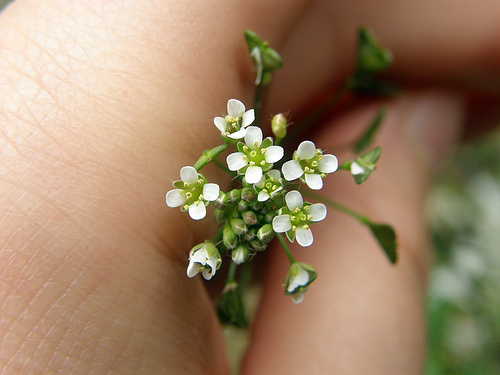
the plant usually stands higher than surrounding grass and is easily identified
Such a shame! All I needed to do to clear my lawn of this ‘pest’ was to pull it up and consume it. I have never tired it in British cooking but I’m sure with creativity it could have uses. In Britain, there is a long history of Shepherd’s Purse as an herbal remedy and in China it is used in both soup and as a wonton filling.
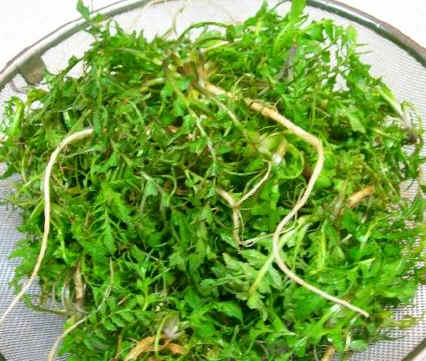
Korean 'naeng-i' (냉이)
I wrote a brief post on Shepherd’s Purse (냉이) last year and made it clear I wasn’t sure how much I liked it. However, I actually bought several bundles and froze them and there was ample to last the entire year. Like many seasonal oddities, especially ones used by grandmothers, as is naeng-i, it’s a case of ‘here today – gone tomorrow.’ Only a few weeks after noticing it, it will have disappeared until next year. Naeng-i really livens-up a bowl of bean curd soup (됀장찌게) and I was quite excited to buy it fresh yesterday. I can’t be bothered trimming off the roots and have one of those mesh balls in which I put whole plants and simply immerse the ball in the soup. Quite a few of my students love naeng-i and apart from telling you how their grandmothers use it, are often excited recounting its flavour.
© 林東哲 2011 Creative Commons Licence.
DoS Disruption

DoS attack
This week WordPress suffered a massive DoS (distributed denial of service) attack. At the same time the Korean government issued an alert after 29 South Korean ‘agencies’ were attacked including the Blue House and US military. Obtaining information on the WordPress attack is hindered because it’s difficult to open any site which has ‘wordpress’ in the title. Yesterday I googled 5 sites using the title ‘blogger’ and all opened but out of 10 sites bearing the title ‘wordpress,’ but not WordPress in the URL, only three would open and then only after a substantial wait.
I am not able to access any WordPress blogs from the PC I normally use and that includes this blog and yet I can access them from a netbook using the same internet connection. I’m not sure if my problem is related to the DoS attack or the result of some firewall or security issue blocking my access which developed on the same day as the cyber attacks. Needless to say I spent 9 hours trying to resolve the problem before I even discovered there had been a DoS attack.
Time to make some backups in the event of a massive meltdown!
© 林東哲 2011 Creative Commons Licence.
Nothing God Makes is Useless
more stuff on Korean pooh
I’ve read Puppy Pooh (강아지똥), politely renamed in English, The Dandelion Story, in Korean, I have the book, and though I didn’t understand much, the pictures were great. Naming it the Dandelion Story, as the play production was named in Edinburgh, so as not to offend British sensibilities, does a great job of predicting the direction the story is going to take. If I was the author I’d be pissed off at a title that destroys all expectations before you even get a chance to formulate them.
I recommend watching the animation in Korean before watching it in English; even if you don’t understand Korean, or very little, the Pooh seems cuter speaking Korean and like the dandelion, will quickly endear themselves to you. Honestly, you wouldn’t believe a dog shit could be so lovable!
ORIGINAL IN KOREAN
ORIGINAL KOREAN ANIMATION IN ENGLISH
© 林東哲 2011 Creative Commons Licence.
Sports Afternoon in the King’s Head, Richmond
Circa 1975. On a Wednesday afternoon, ‘sports afternoon,’ we (Taff Coleman, Woolie, Lofty, Pete Middleton, Daz, Adrian Dawson), used to go into Richmond. Adrian, Pete and Woolie had cars. Usually, we had pate and toast or a ploughman’s lunch in the King’s Head though if we were early and had not eaten in the barracks, we would eat in one of the numerous cafes and restaurants around the square. I remember a place that sold pork chops, gravy and mashed potato and the Bell Nook springs to mind, probably because of its name which we changed to ‘bell end.’ I think it may have been a pizza restaurant.

The quaint 'square' which gives Richmond, Yorkshire, so much of its character
Often, we’d then go to the auction room which was in one corner of the square near the Chinese take-away and Barclay’s Bank. We bought all sorts of things there, a piano, a Baby Belling cooker which consisted of one hotplate, a grill and a tiny oven, electric bar heaters etc. There was a friendly old lady who worked there who took a liking to us and would refer to us as ‘my boys.’ The auctions were held on a regular basis and I went to a few and I remember the shop, which was stepped the further you went back into it, was enormous with all sorts of curiosities.

The King's Head, Richmond, Yorkshire - still there in 2006.
© 林東哲 2011 Creative Commons Licence.
Patriotic Taekwon-do and Sam-Il (삼일 March 1st)
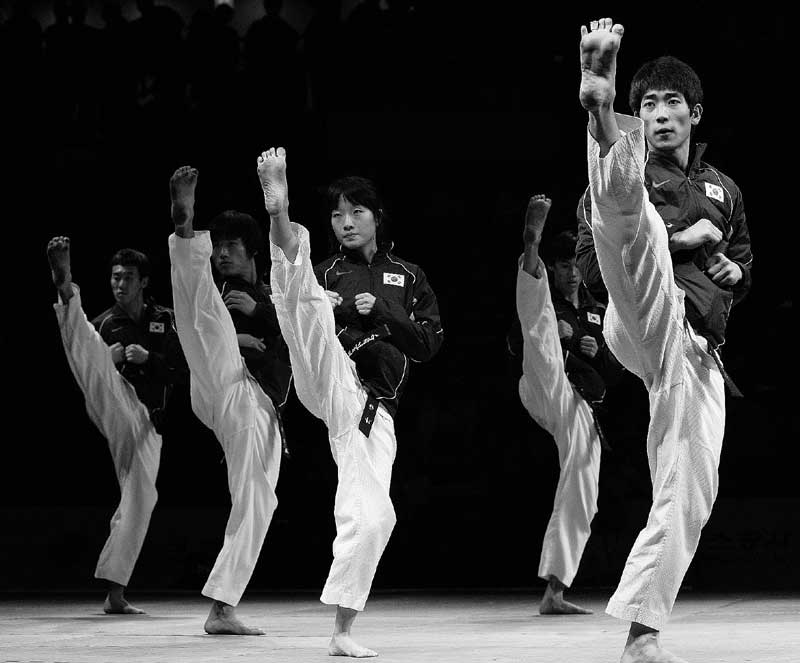
Remembering Sam-Il International Taekwon-do Style
It may be of interest to know that there exist two ‘spellings’ for Korea’s most famous martial art; namely ‘taekwondo’ and ‘taekwon-do.’ Here in Korea, ‘taekwondo,’ basically sport taekwondo, is the most popular style with most practitioners, however not only does another major style of taekwon-do exists, but there were originally 9 different schools of TKD.
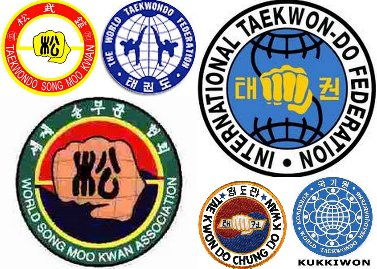
emblems of various kwans and federations
In the 1940’s, 5 major schools (kwans) had survived Japanese colonization where their practice had been banned. A ‘kwan’ was a school or group of martial artists following one particular style or leader. Kwan members were forced to study Korean systems, such as taekkyon, in secret, or learn Chinese or Japanese styles often in Japan, Manchuria or Okinawa. During this period, the future of Korean martial arts were significantly influenced by this exposure and most especially the exposure to Japanese Shotokan karate, the practice of which had been allowed. After WW2, when Japanese colonization ended, five major kwans emerged:
Soeng Moo Kwan (성무관) ‘Pine School.’ Founded by Ro Byung-jik, in 1944. Influenced by shotakan karate. Popular in the army.
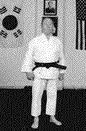
Roh Byong-jik
Cheong Do Kwan (청도관) sometimes spelt Chung Do Kwan, ‘Blue Wave School.’ Founded by Lee Won-kyuk, in 1944. Lee practiced taekkyon (Korean traditional kicking) and Okinawa te. Popular in the police as Lee was a teacher at the Korean Police Academy.
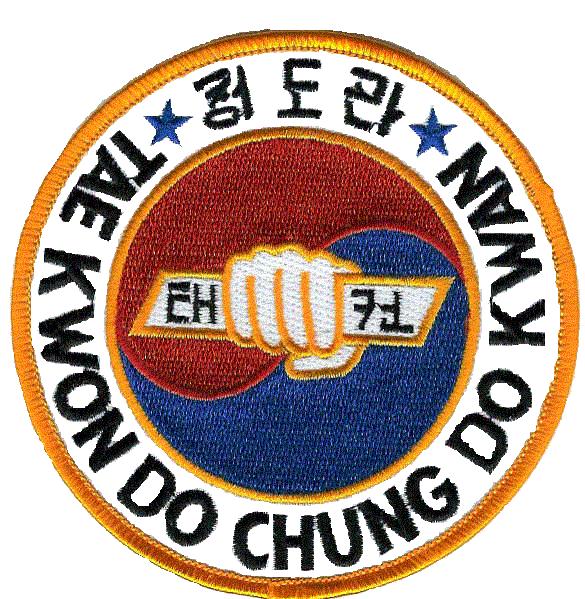
Chung Do Kwan emblem
Moo Duk Kwan (무덕관) (from which Tang Soo Do is derived). Founded by Hwang Kee, in 1946. Hwang practiced taekkyon, tai chi and kung fu.
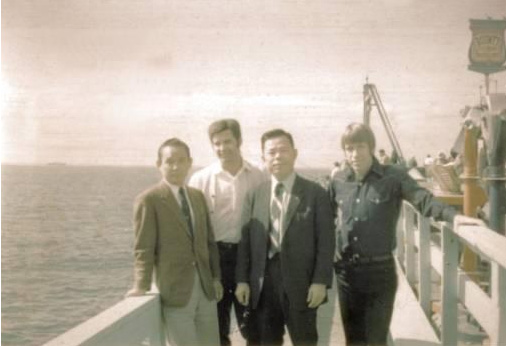
Hwang Kee, Martinov, Jae Joon Kim and Norris
Moo Duk Kwan
Kwon Bop Kwan – later became Chang Moo Kwan. Founded by Yoon Byeong-in, in 1946. Yoon studied kung-fu and karate andof all the kwan styles, early Chang Moo was the most heavily influenced by Chinese kung-fu.
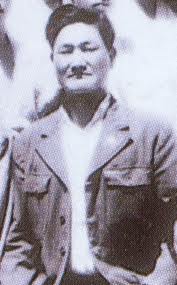
Yoon Byeong-in
Yun Moo Kwan / Jidokwan – Founded by Chun Sang-sup, in 1946.
Jidokwan (Yun Moo Kwan)
By the end of the Korean War, four other schools were established but these emerged from the original 5 kwans. The ‘new’ styles were:
Han Moo Kwan – Founded August 1954 by Lee Hyo-yoon. This kwan derived from Yun Moo Kwan / Jidokwan.
Oh Do Kwan – Founded by Choi Hong-hi (죄홍희) and NamTae-hi (남태희) in 1955 who were originally Chung Do Kwan (Cheong) exponents.
Jung Do Kwan – founded by Lee Yong-woo, in 1956 and also emerging from the Chung Do Kwan.
Kang Duk Kwan – founded in 1956 by Park Chul-hee and Hong Jong-pyo, emerging from Kwon Bop Kwan.
In the early 1950’s, President Syngman Rhee instructed Choi (Oh Do Kwan) to introduce martial arts to the Korean army where he was a senior officer. On April 11th 1955, either Choi (Oh Do Kwan) or Song Duk-son (Chung Do Kwan) proposed the name ‘taekwon-do’ as the term to identify the styles practiced by the kwans. Though not all adopted this name and continued using terms such as tang soo do, it was broadly used. In the mid 50’s, Syngman Rhee then instructed Choi to unify the nine kwans which led to the establishment of the Korean Taekwon-do Association (KTA) in 1959-60.
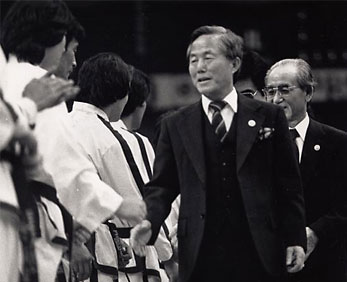
ITF's Choi Hong-hi
In the early 1960’s, The KTA and Korean Government dispatched a team of 12 taekwon-do ‘diplomats,’ known as The Original Masters of Taekwon-do, on a world tour to promote taekwondo and Korea. The twelve were: Choi Chang Keun, Choi Kwang Jo, Han Cha Kyo, Kim Jong Chan, Kim Kwang Il, Kong Young Il, Park Jong Soo, Park Jung Tae, Park Sun Jae, Rhee Chong Chul, Rhee Chong Hyup, and Rhee Ki Ha. The group was led by Choi Hong-hi and Nam Tae-hee of the Oh Do Kwan. Members of this group became instrumental in introducing and establishing taekwondo in countries such as Vietnam, Singapore, Germany the UK and Ireland.
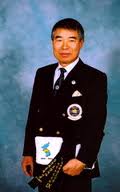
Rhee Ki-ha, UKTA
In 1966, Choi (Oh Do Kwan), and other senior members founded the International Taekwondo Federation (ITF). In the early 1970’s, other members founded the official governing body, the World Taekwondo Federation (WTF). Their headquarters became the Kukkiwon. The WTF is supervised by the Sports Division of the Ministry of Culture.
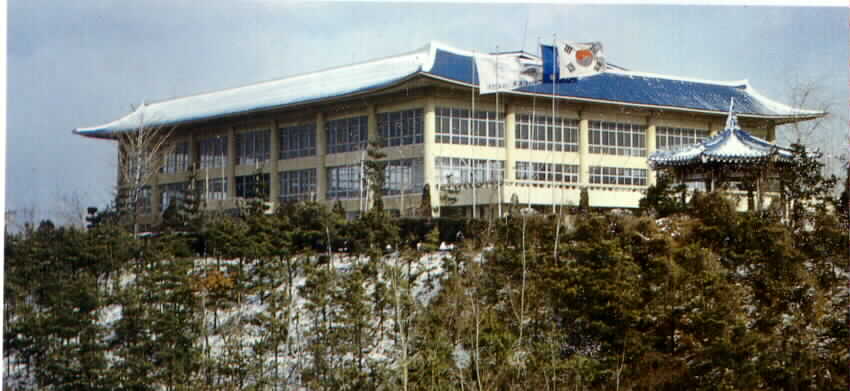
Kukkiwon, headquarters of the WTF, Seoul
On January 8, 1977, the nine kwans unified, recognizing the Kukkiwon as the black belt promotional body for Taekwondo. The WTF replaced kwan names and gave them a numerical designation: (1) Song-Moo-Kwan, (2) Han-Moo-Kwan, (3) Chang-Moo-Kwan, (4) Moo-Duk-Kwan, (5) O-Do-Kwan, (6) Kang-Du-Kwan, (7) Jung-Do-kwan, (8) Ji-Do-Kwan, and (9) Chung-Do-Kwan.
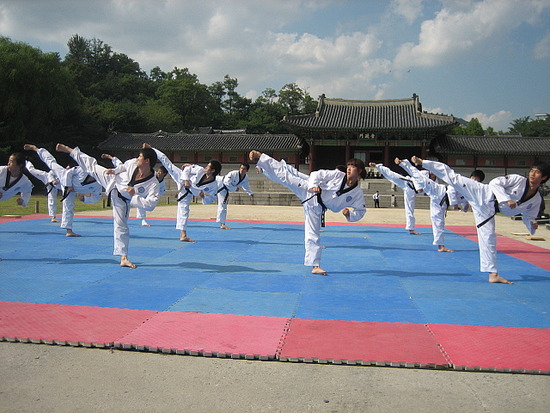
Korean demonstration team
WTF taekwondo emerged largely because of political machinations between the various kwans and its subsequent popularity, especially in Korea, was enhanced by the introduction of taekwondo into the 1988 Seoul Olympic Games. In 2010, taekwondo became a sport in the Commonwealth games. ITF taekwon-do has suffered division since Choi’s death in 2002 and now has three competing organizations, two in Austria and one in Canada all claiming direct decent from Choi and the ITF. The ITF, structured on Oh Do Kwan practices and most especially retaining the 24 patterns originally practiced by the Cheong Do Kwan, also came to dominate North Korean taekwon-do. Pyongyang is the unofficial headquarters of ITF taekwondo training.
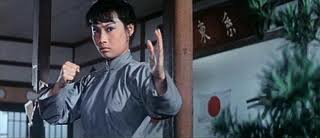
When Taekwondo Strikes (1973) broached the subject of the Japanese occupation
Although I have trained in both WTF and ITF styles, I have a preference for ITF which is perhaps not unusual as I took my black belt in this style and taught it for a number of years. The reason for my preference is that for many ITF practitioners, practicing at a time when Korea was isolated and mysterious, learnt about Korea came from the Choeng Do school (Blue Wave School) of patterns which were taught throughout the Korean army and in universities. All the patterns imparted some aspect of Korean history. Though my knowledge was superficial, I at least knew who founded Korea, who the Hwa Rang-Do were and who Ahn Joong-gun was at a time when you’d have found it difficult to locate any relevant information whatsoever. A few years ago I quite impressed a Korean teacher when they asked me if I knew who, in tradition, was reputed to have founded Korea. I instantly replied, somewhat like a robot, ‘the holy Dan Gun’ legendary founder of Korea, 2333 BC.’ When taking my junior grading in Germany, you were required to know the relevance of each pattern.
Today is Sam-Il, which the anniversary of the birth of the Korean Independence Movement which was initiated when 33 nationalists signed a Declaration of Independence, telephoned the local Japanese police to tell them what they had done, and were subsequently arrested. The event not only led to some softening of harsh Japanese rule, but led to further displays of nationalism both in Korea and further afield.
We herewith proclaim the independence of Korea and the liberty of the Korean people. We tell it to the world in witness of the equality of all nations and we pass it on to our posterity as their inherent right.
We make this proclamation, having 5,000 years of history, and 20,000,000 united loyal people. We take this step to insure to our children for all time to come, personal liberty in accord with the awakening consciousness of this new era. This is the clear leading of God, the moving principle of the present age, the whole human race’s just claim. It is something that cannot be stamped out, stifled, gagged, or suppressed by any means.
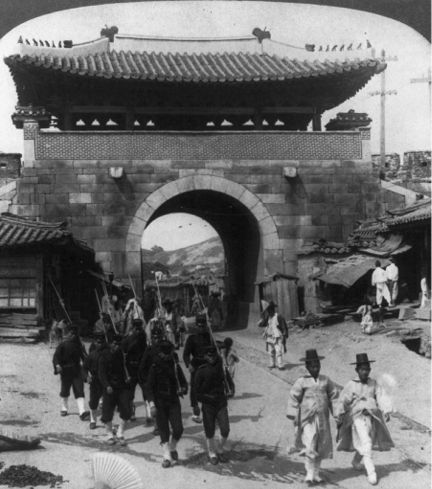
Japanese troops at West Gate, Seoul, 1904
Sam Il, (which means 3,1, ie March 1st), is the 16th pattern of the International Taekwon-do Federation and the pattern used to test black belts for their 3rd dan. It comprises 33 movements, as a reminder of the 33 activists who had the courage to sign their name to a document that they knew would lead to imprisonment, and possibly their torture and death.
I no longer train in TKD but I feel its spirit and I miss it. My own teacher, Georg Soupidis, trained under one of the Original Masters of Taekwondo, namely Rhee Ki-ha and gained his black belt under him. Rhee is still the leading figure in the British International Taekwon-do Federation and I once spoke to him at a grading in the UK. And General Choi Hong-hi once stayed at Georg’s house when he was visiting Germany. Further, if you should find a copy of Choi’s ‘bible’ of taekwon-do, on one of the back pages, Georg can be seen among the ITF black belts representing West Germany.
There are twenty four patterns in ITF taekwon-do, all descended from the original Cheong Do Kwan (Blue Wave School). ‘One pattern for each hour of the day.’ All have a significance in terms of Korean history and it’s struggles against oppression and diversity and I have certainly found no other form of martial more patriotic or more insistent on developing decent citizens, via a code of conduct, than taekwondo and none more so than taekwon-do. If you want a potted history lesson, read through the meanings of the 24 patterns, below…
| Name | Meaning | Level |
| CHON-JI | means literally “the Heaven the Earth”. It is, in the Orient, interpreted as the creation of the world or the beginning of human history, therefore, it is the initial pattern played by the beginner. This pattern consists of two similar parts; one to represent the Heaven and the other the Earth.It is said that the pattern was named after Lake Chon-Ji, a beautiful lake in North Korea with water so clear and calm that you can literally see the Heaven meeting the Earth. | 9th Gup |
| DAN-GUN | is named after the holy Dan-Gun, the legendary founder of Korea in the year of 2333 B.C. | 8th Gup |
| DO-SAN | is the pseudonym of the patriot Ahn Chang-Ho (1876-1938). The 24 movements represent his entire life which he devoted to furthering the education of Korea and its independence movement. | 7th Gup |
| WON-HYO | was the noted monk who introduced Buddhism to the Silla Dynasty in the year of 686 A.D. | 6th Gup |
| YUL-GOK | is the pseudonym of a great philosopher and scholar Yi I (1536-1584) nicknamed the “Confucius of Korea”. The 38 movements of this pattern refer to his birthplace on 38o latitude and the diagram represents “scholar”. | 5th Gup |
| JOONG-GUN | is named after the patriot Ahn Joong-Gun who assassinated Hiro-Bumi Ito, the first Japanese governor-general of Korea, known as the man who played the leading part in the Korea- Japan merger. There are 32 movements in this pattern to represent Mr. Ahn’s age when he was executed at Lui-Shung prison (1910). | 4th Gup |
| TOI-GYE | is the pen name of the noted scholar Yi Hwang (16th century), an authority on neo-Confucianism. The 37 movements of the pattern refer to his birthplace on 37o latitude, the diagram represents “scholar”. | 3rd Gup |
| HWA-RANG | is named after the Hwa-Rang youth group which originated in the Silla Dynasty in the early 7th century. The 29 movements refer to the 29th Infantry Division, where Taekwon-Do developed into maturity.The meaning of this pattern sometimes causes confusion as it refers to two time periods, the Hwa-Rang youth group of the 7th century and the Korean 29th Infantry Division formed by General Choi in 1953. | 2nd Gup |
| CHOONG-MOO | was the name given to the great Admiral Yi Soon-Sin of the Lee Dynasty. He was reputed to have invented the first armoured battleship (Kobukson) in 1592, which is said to be the precursor of the present day submarine. The reason why this pattern ends with a left hand attack is to symbolize his regrettable death, having no chance to show his unrestrained potentiality checked by the forced reservation of his loyalty to the king. | 1st Gup |
| KWANG-GAE | Is named after the famous Kwang-Gae-Toh-Wang, the 19th King of the Koguryo Dynasty, who regained all the lost territories including the greater part of Manchuria. The diagram (+) represents the expansion and recovery of lost territory. The 39 movements refer to the first two figures of 391 A.D., the year he came to the throne. | 1st Dan |
| PO-EUN | is the pseudonym of a loyal subject Chong Mong-Chu (1400) who was a famous poet and whose poem “I would not serve a second master though I might be crucified a hundred times” is known to every Korean. He was also a pioneer in the field of physics. The diagram ( – ) represents his unerring loyalty to the king and country towards the end of the Koryo Dynasty. | 1st Dan |
| GE-BAEK | is named after Ge-Baek, a great general in the Baek Je Dynasty (660 A.D.). The diagram ( | ) represents his severe and strict military discipline. | 1st Dan |
| EUI-AM | is the pseudonym of Son Byong Hi, leader of the Korean independence movement on March 1, 1919. The 45 movements refer to his age when he changed the name of Dong Hak (Oriental Culture) to Chondo Kyo (Heavenly Way Religion) in 1905. The diagram ( | ) represents his indomitable spirit, displayed while dedicating himself to the prosperity of his nation. | 2nd Dan |
| CHOONG-JANG | is the pseudonym given to General Kim Duk Ryang who lived during the Lee Dynasty, 14th century. This pattern ends with a left-hand attack to symbolize the tragedy of his death at 27 in prison before he was able to reach full maturity. | 2nd Dan |
| JUCHE | is a philosophical idea that man is the master of everything and decides everything, in other words, the idea that man is the master of the world and his own destiny. It is said that this idea was rooted in Baekdu Mountain which symbolizes the spirit of the Korean people. The diagram ( | ) represents Baekdu Mountain. | 2nd Dan |
| KO-DANG | is the pseudonym of the patriot Cho Man Sik who dedicated his life to the independence movement and education of Korea. The 39 movements of the pattern show the number of times of his imprisonment as well as the location of his birthplace on 39 degrees latitude.Ko-Dang was replaced by Juche in the early 1980s, either in the year 1982 or 1983. | 2nd Dan |
| SAM-IL | denotes the historical date of the independence movement of Korea which began throughout the country on March 1, 1919. The 33 movements in the pattern stand for the 33 patriots who planned the movement. | 3rd Dan |
| YOO-SIN | is named after General Kim Yoo Sin, a commanding general during the Silla Dynasty. The 68 movements refer to the last two figures of 668 A. D., the year Korea was united. The ready posture signifies a sword drawn on the right rather than left side, symbolizing Yoo Sin’s mistake of following his king’s orders to fight with foreign forces against his own nation. | 3rd Dan |
| CHOI-YONG | is named after General Choi Yong, Premier and Commander-in-Chief of the Armed forces during the 14th century Koryo Dynasty. Choi Yong was greatly respected for his loyalty, patriotism, and humility. He was executed by his subordinate commanders headed by General Yi Sung Gae, who later become the first king of the Lee Dynasty. | 3rd Dan |
| YON-GAE | is named after a famous general during the Koguryo Dynasty, Yon Gae Somoon. The 49 movements refer to the last two figures of 649 A. D., the Year he forced the Tang Dynasty to quit Korea after destroying nearly 300,000 of their troops at Ansi Sung. | 4th Dan |
| UL-JI | is named after general Ul-Ji Moon Dok who successfully defended Korea against a Tang’s invasion force of nearly one million soldiers led by Yang Je in 612 A.D., Ul-Ji employing hit and run guerilla tactics, was able to decimate a large percentage of the force. The diagram ( L) represents his surname. The 42 movements represents the author’s age when he designed the pattern | 4th Dan |
| MOON-MOO | honors the 30th king of the Silla Dynasty. His body was buried near Dae Wang Am (Great King’s Rock). According to his will, the body was placed in the sea “Where my soul shall forever defend my land against the Japanese.” It is said that the Sok Gul Am (Stone Cave) was built to guard his tomb. The Sok Gul Am is a fine example of the culture of the Silla Dynasty. The 61 movements in this pattern symbolize the last two figures of 661 A.D. when Moon Moo came to the throne. | 4th Dan |
| SO-SAN | is the pseudonym of the great monk Choi Hyong Ung (1520-1604) during the Lee Dynasty. The 72 movements refer to his age when he organized a corps of monk soldiers with the assistance of his pupil Sa Myung Dang. The monk soldiers helped repulse the Japanese pirates who overran most of the Korean peninsula in 1592. | 5th Dan |
| SE-JONG | is named after the greatest Korean king, Se-Jong, who invented the Korean alphabet in 1443, and was also a noted meteorologist. The diagram (Z) represents the king, while the 24 movements refer to the 24 letters of the Korean alphabet. | 5th Dan |
| TONG-IL | denotes the resolution of the unification of Korea which has been divided since 1945. The diagram ( | ) symbolizes the homogenous race. |
VARIOUS PERFORMANCES OF SAM-IL HYOENG (삼일형) ‘BLUE WAVE SCHOOL.’
Some Interesting links
Link to ITF taekwon=do patterns taken from here
World Taekwondo Federation link
International Taekwon-do Federation link (1)
International Taekwon-do Federation (2)
© 林東哲 2011 Creative Commons Licence.
Sucking a Crystal Failed to Realign my Wonky Teeth (Kombucha and Pas 파스)
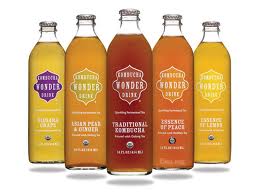
commercial kombucha

Podcast 73
You can probably buy them back home, I’ve never looked, and you can certainly buy something similar in spray form. Medicines work better when you haven’t a clue what they do. The addition of a language you can’t read plus the fact the ‘medicine’ is traditional, and we all know the allure of oriental traditions in western culture, lends a mystique to the product in which we tend to put more faith than in western medicine, and in which some put excessive faith. Of course, there may be some truth in the power of positive thinking which can boost our health and possibly rid our bodies of cancers and impurities so, I don’t want to be too dismissive of products which help to wish yourself well.
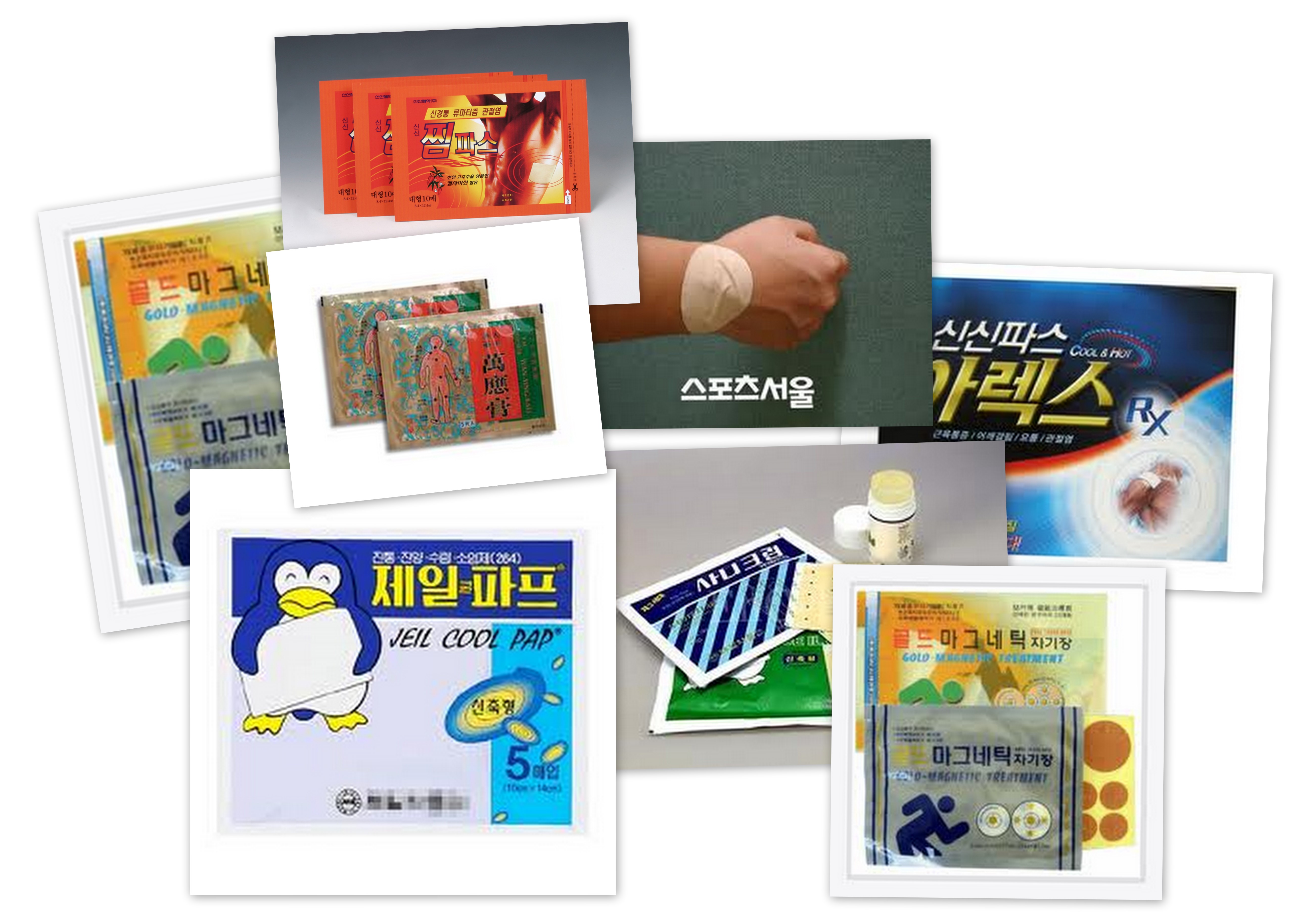
a wide choice of ‘pase’ (파스)
So, for the last month I’ve been laid up with painful knees caused by too many trips down the local mountainside. My injuries stem from October, shortly after an eye infection (red-eye) stopped me using the gym and bathhouse. Instead, I took to the mountains and overdid it and because I go down uneven ground, left-leg leading, I’ve had persistent problems with that knee. The bout of red-eye I contracted began on the very evening of the autumn festival (ch’u-sok), so it was only to be expected that the problems with my knees would flare up on the very eve of the Lunar New Year.
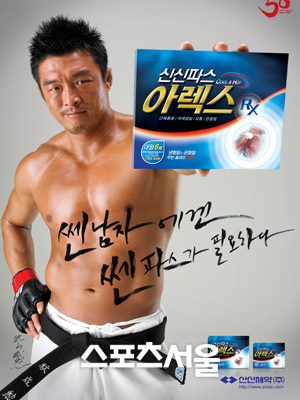
as advertised on TV
Then I was recommended these large patches (파스) that you basically stick wherever you have a pain. You can buy them in any chemist where they are available in different sizes. And though I can’t read what the patches are supposed to do, I am confident that the miraculous powers of crystal crap are at work. Not only do some of the patches chill the area under them, numbing any pain, but they smell like they might work. There are many different brands and while some are impregnated with conventional analgesics, others seem to be based on oriental formulas or possibly an east meets west medicinal fusion a little similar to pizza and jam or don gasse and tinned fruit. On my second night of wearing them, I went to bed looking like something from Curse of the Mummy’s Tomb, and on every area of my body where I had an ache or soreness, and I discovered a few, I stuck a plaster. I was sure they were working, that was until my doctor (of western medicine) told me all theywould do is reduce pain and totally lacked any further potential.
wtf?
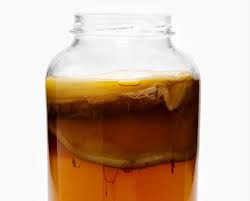
Where the cold light of science doesn’t shine to dismiss the incredible, we find sanctuary and it’s amazing the things we will subject ourselves to once we’ve taken solace in the concept – which is really no different from religion. A few years ago I spent 18 months brewing a living jelly mold in a warm, dark corner of my house. Every few days I would tap off the liquid on which it floated. Kombucha is a drink believed to have numerous health benefits if drunk on a regular basis but it is difficult to prompt a thirst for it when it’s basically moldy water. However, in fairness, it was palatable and a cross between a mild vinegar and apple juice. It is also mildly alcoholic (0.5%). I have since tried commercial kombucha and it was very refreshing, if not expensive. Kombucha tea is easy to grow and you can birth yourself a batch with a cup of cold, sweetened tea and within a month or so, you too can have a ‘mother’ sized jelly pancake from which you can make other batches at an accelerated rate. I have also heard of people eating the mold, also known as a SCOBY (Symbiotic Colony of Bacteria and Yeast), by frying it. I found it too gelatinous and phlegmy to enjoy. Interestingly, kombucha has a long history throughout various parts of the world, including Russia, Japan and Korea. Indeed, according to Wikipedia, the name ‘kombu’ may have derived from Korea and mold in Korean is kom-bang-i (곰팡이).
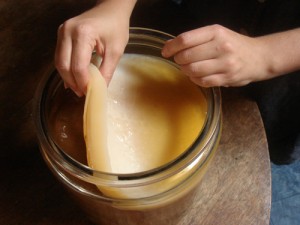
a kombucha ‘scoby’ which provides the culture for future offspring
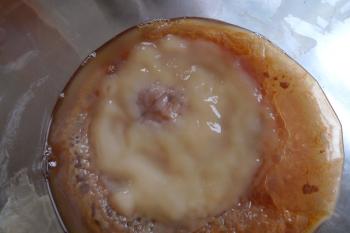
a ‘scoby’ looking somewhat scabby
My faith in both the kombucha and passe patches (파스) of the non-analgesic variety is borne out of my faith in the mystical powers of eastern medicine and it is the same faith which spurs crystal crap in general as well as the wider interest in Feng Shui (known in Korea as 풍수). The one problem with alternative medicine is that credible practices are lumped together with totally loony ones. I am skeptical, but selectively so and for example; with muscle aches, strains and sprains, or joint problems, I go to an oriental doctor before a western one. Crystal crap however, just seems to lack credibility. I have had several friends give me small crystals with instructions on where to place them and then been told they would ‘heal me’ or help promote ‘good health.’ What I find rather amusing is that in the west such crystals are always pretty and do make lovely ornaments, if that’s your thing, but no one ever suggests you to put a lump of charcoal by your bed, and charcoal is used in Korean bathhouses, and no one ever tells you to use something ugly like coal or a chink of flint. And neither would I mind being recommended some crystal therapy with an ounce of jade except for the fact I’ve bathed and saunaed in, and slept on a couple of tons of it. Every time I go to the bathhouse I end up bathing in one pool or another, or one sauna room where the walls are made from something, jade being the most common, which is supposed to benefit the body, yet I seem no more benefited by such elusive powers than someone who has never set foot in a bathhouse. Perhaps I lack the faith to will myself well when it comes to crystals but, until sucking a crystal can rectify a badly rotted set of teeth, I will retain my scepticism.
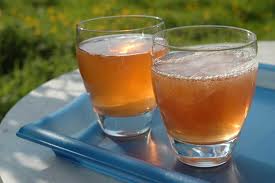
homemade kombucha, actually, quite palatable
Yes, the patches reduced pain and the the kombucha was fun to make and tasted okay!
Chinese names for kombucha include:
红茶菌 – red fungus tea
红茶菇 – red mold tea
茶霉菌 – tea mold.
In Japanese it is known as ‘red tea mushroom‘ – 紅茶キノコ
Interested in kombucha – click this link.
© 林東哲 2011 Creative Commons Licence.


 Elwood 5566
4 comments